

 12 C
Phys.org
Elections 2026Top News / Phys.org
The last bird to go extinct in Aotearoa New Zealand was a tiny wren that disappeared from a small island off the southern tip of Rakiura Stewart Island around 1972.

Climate change is a global reality, but people often encounter it through different local realities. For some, it enters everyday life through social media feeds, news reports, scientific findings and public discussion. For others, it is through water scarcity, food insecurity, floods, heat waves, wildfires or the loss of a home or a loved one.
The U.S. Naval Research Laboratory-developed Navy Environmental Prediction sysTem Utilizing a Nonhydrostatic Engine, known as NEPTUNE, is poised to become an operational Navy weather prediction capability, providing improved environmental forecasts to support naval operations around the globe.
A week before Hurricane Melissa slammed into Jamaica last fall, the forecast models couldn
AI companions could help reduce loneliness by creating a greater sense of belonging and improving self-esteem, according to new research from Durham University Business School.

Academic journals are flooded with papers. At publishing giant Elsevier, the number of submissions rose 56% in just three years
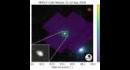
The first data from a U.K.-built instrument heading to Mercury have provided observations of one of the brightest X-ray sources in the sky from aboard the ESA/JAXA BepiColombo spacecraft in the inner solar system.
Researchers are calling for lasting investment in healthy seas to support food security, protect coastlines and strengthen economic resilience.

Cattails are a familiar sight in wetlands, where they thrive in both brackish and freshwater marshes. But surviving in waterlogged soil presents a challenge; their roots need oxygen in an environment where very little is available.
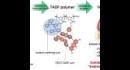
A research team led by professor Youhei Takeda at the University of Osaka, in collaboration with professor Zachary M. Hudson at the University of British Columbia (UBC) in Canada, has developed a polymer material that combines fluorescent cell imaging with the potential to kill cancer cells when activated by light. The material could offer a simpler approach to developing

After meerkats emerge each morning from their burrow to warm in the early sun, there

University of Michigan researchers have discovered a mechanism that enables microscopic organisms like bacteria and fungi to produce drug-like molecules
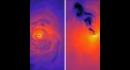
Scientists have hypothesized that, in the fraction of a second following the Big Bang, minute black holes may have been forged within tiny, dense pockets that collapsed under their own gravity. If these primordial black holes are ever found, they could represent a significant component of dark matter

Tiny chemical marks on histones

Chronically lonely people are less likely to buy products that benefit others, such as fair-trade or child-labor-free goods, according to a new study by researchers at Concordia and the University of the Fraser Valley. The team ran four studies involving more than 1,400 participants across North America. Each person completed a standard loneliness questionnaire, then chose between ordinary products and versions that cost 15% to 20% more but carried an ethical or environmental label. Items includ

For patients with head and neck cancer, treatment can come at a high cost to their quality of life, affecting their ability to speak, swallow and even breathe due to invasive procedures. Now, Penn State researchers have developed a light-activated nanoparticle system with the long-term goal of shrinking tumors while limiting exposure to healthy tissue and improving patients
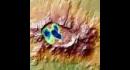
Experts were puzzled when satellite observations showed a volcano in Ethiopia emitting huge quantities of methane despite not erupting, but a team of researchers led by the University of Bristol believe they have discovered why this happened

Recent cyberattacks targeting commercial refrigeration systems and smart temperature controllers in supermarkets across Europe remotely raised their temperatures

As Giving Tuesday approaches, a recent study led by a University of Massachusetts Amherst public policy researcher finds that communities with greater economic disadvantage typically see less private charitable giving
Mosquitoes play a major role in spreading malaria, and understanding how they adapt to climate change is important for improving malaria prevention and control.
Though we may fight with our siblings sometimes, for most people a sibling is a constant companion throughout childhood and often for one

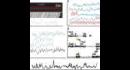
Large, complex genomes remain difficult to characterize accurately, even with modern DNA sequencing. Researchers at Chalmers University of Technology have now extended an optical genome mapping approach, previously demonstrated for bacterial genomes, to more complex eukaryotic genomes. Using two yeast species, they generated optical maps covering entire chromosomes, including large repetitive regions that are particularly difficult to reconstruct.
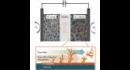
Water, at least in its purest form, contains hydrogen and oxygen. In 1800, scientists first used electricity to split water into hydrogen and oxygen gases. Today, this process, known as water electrolysis, is widely used to produce hydrogen for industrial purposes, including manufacturing ammonia for agricultural fertilizers that sustain global food production.
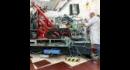
A research team has traced how a molecule rearranges its electrons when excited by light. The findings, published in Angewandte Chemie International Edition, help clarify a long-standing question and open new possibilities for studying chemistry in motion, such as bonds breaking or forming

A park two miles (3.2 kilometers) from home might seem close enough for a Saturday outing. In metropolitan Detroit, though, park visits had already fallen to about half their modeled peak by that distance. In metropolitan Minneapolis, the same drop took nearly five miles (8 kilometers). And in the New York metropolitan area, with its extensive transit network, visitation fell by half at about 2.3 miles (3.7 kilometers). A park
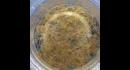
Plant scientists know that what grows above the soil doesn

As they move and push against obstacles, cells generate forces. These forces originate in their internal skeleton, some parts of which behave like wool. This mechanical property has been revealed by scientists from the CNRS, Universit

An international team of scientists has developed a method that can find pulsars in publicly available NASA data about a million times faster than before. This opens the door to discovering many more of these rapidly spinning objects. A paper describing the results was published in Physical Review Letters.

Men outnumber women by four to one among performers booked at live music venues, but a new study by the University of Portsmouth has found no evidence that audiences systematically prefer male singing voices.
For Arctic researchers, counting beluga whales from the air can mean painstakingly examining thousands of aerial images

Neanderthal DNA makes up about 2% of the genome of most non-Africans. When and how did that mixing take place, and what does it mean for modern humans?

Corporate CEOs are collecting enormous paychecks, even when their companies struggle to deliver results. New research from Case Western Reserve University suggests the problem isn

Bacteria have many strategies for defending themselves against antibiotics. Some destroy the drug, others pump it out or alter its target. They can also, more simply, prevent it from getting in. A team at the University of Geneva (UNIGE) has discovered how Pseudomonas aeruginosa, a bacterium responsible for infections that are often difficult to treat, very rapidly restricts the entry of imipenem, an antibiotic reserved for the most critical cases. Published in the Proceedings of the National Ac

Magnets are usually associated with a familiar property: they produce a magnetic field because the magnetic moments of their electrons align. But nature allows much more unusual forms of magnetic order. An international research team has now identified compelling experimental evidence for p-wave magnetism in europium silicide (EuSi), a chemically simple metallic compound.
Michael Templeton is professor of public health engineering in the Department of Civil and Environmental Engineering at Imperial College London and co-chair of the Imperial Global Development Lab Advisory Board. He holds the Oxfam and Water for People / Royal Academy of Engineering Research Chair in Global Sanitation Technology and is currently head of the environmental and water resource engineering section within the department.
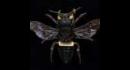
More than 1,700 bee species are found only on islands, the first global checklist of island bees shows. If you like bees and island destinations, the best places to visit are in the Mediterranean. Islands like Sicily and Cyprus are where you find the highest diversity of bee species in the world. Bee connoisseurs will also appreciate large tropical islands like Hawaii and Madagascar, where they

NASA tested RS-25 engine No. 10001 on Nov. 18 on the Fred Haise Test Stand at NASA
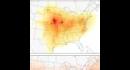
The rapid expansion of data centers for artificial intelligence causes negative health and air quality impacts in regions far from where the brick-and-mortar facilities are located, according to a new study by MIT researchers.

Researchers Alessandra Buja and Sohail Akhtar at the University of Padova in Italy conducted a meta-analysis of studies looking at aging adults

A fleck-sized chip at the bottom of a test tube can provide researchers with data for every second of a chemical reaction while it is occurring.

Researchers have developed a blockchain-based system to improve the security of cross-border renewable energy trade and environmental certificates. A blockchain is a digital record-keeping system in which information is stored in linked blocks and shared across computers, making records very difficult, if not impossible, to alter secretly. Although associated with cryptocurrencies, it has wider applications.

In the Federal Court of Australia, applications by self-represented litigants, many using artificial intelligence to research and draft their claims, have skyrocketed.
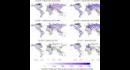
New research from the University of Aberdeen suggests weight-loss medications could deliver a double benefit, improving people
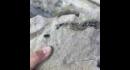
An unassuming fossil discovery in Wyoming caused quite a stir: Was it a baby dinosaur, a prehistoric snake or perhaps an entirely new species? Neutron imaging at the Paul Scherrer Institute PSI and the trained eye of a paleontologist eventually provided the answer: the 156-million-year-old fossil is that of a previously unknown species of reptile.

Several years ago, the U.S. economist Raj Chetty and his team at Harvard University analyzed billions of ties on Facebook in a bid to learn more about social mobility. Their findings highlighted an important link between cross-class friendship and social mobility. Specifically, they found that people from low-income backgrounds who have more friends from wealthier backgrounds tend to have better chances of earning more as adults.
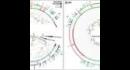
Human and animal digestive systems host vast communities of microorganisms, including bacteria and viruses. Some are harmful, others are beneficial, and many remain poorly understood. In a recent study, scientists found an entirely new group of viruses without even having to go anywhere near anyone
The Tancat de la Pipa, an artificial wetland designed as a