



Chinmay Sutar's 400: From Mumbai Struggle to Ranji History
Chinmay Sutar, representing Mizoram, achieved a historic 400 not out in a Ranji Trophy Plate Group match against Nagaland, becoming only the second Indian batter to score a quadruple century. This monumental innings came after years of struggle and near misses, fulfilling his dream of playing red-ball cricket.

Mizoram: Salvation Army General Lyndon Buckingham, wife to inaugurate two churches in Aizawl
Aizawl: The Salvation Army General, Lyndon Buckingham, and his wife, Commissioner Bronwyn Buckingham, World President of Womens Ministries, will arrive in Mizoram on Tuesday for a week-long visit that includes church dedications and a Territorial Congress, church sources said on Monday. The couple, arriving from the organisations international headquarters in London, is scheduled to land [] The post Mizoram: Salvation Army General Lyndon Buckingham, wife to inaugurate two churches in Aizawl appeared first on NorthEast Now .
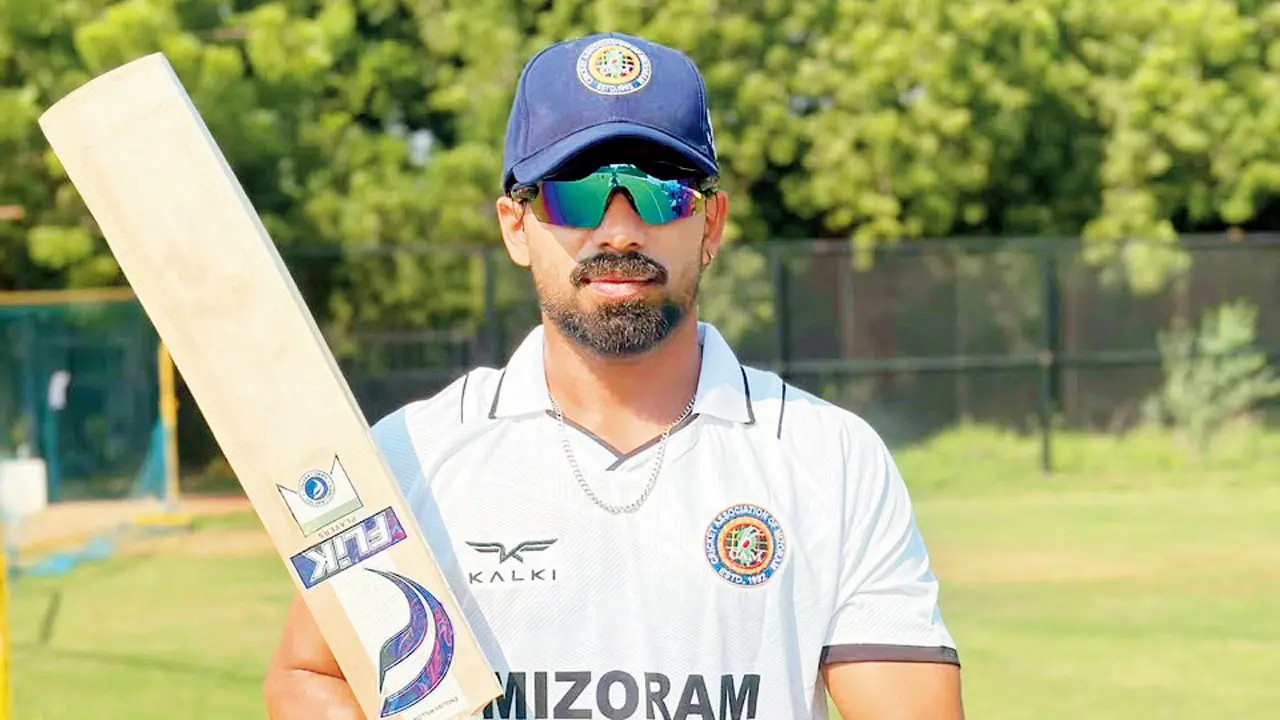
Chinmay Sutar becomes second Indian cricketer to score a quadruple century in f
Mumbai-based Mizoram batter Chinmay (400 not out) becomes only second Indian to get quadruple first-class ton; says hes grateful to northeast side for dream feat
DRI seizes 432 cases of foreign cigarettes worth Rs 8.64 crore smuggled into Mizoram
Guwahati: The Directorate of Revenue Intelligence (DRI) seized 43.2 lakh sticks of foreign-origin cigarettes worth Rs 8.64 crore in Mizoram, intercepting a truck suspected of carrying smuggled tobacco from Myanmar to Aizawl. The seizure was made at Tuirial village along the ChamphaiAizawl road following an intelligence-led operation by the DRIs Aizawl Regional Unit. Acting on [] The post DRI seizes 432 cases of foreign cigarettes worth Rs 8.64 crore smuggled into Mizoram appeared first on NorthEast Now .

Who Is Chinmay Sutar? Mizoram Batter Creates Ranji Trophy History With 400
Sutar became only the 10th batter in First-Class cricket history to score 400 in an innings, joining a list featuring Brian Lara and Don Bradman.

Nagaland Cricket Stadium: Mizoram's Chinmay Sutar became only the second batter in Ranji Trophy history to hit a quadruple century, while Delhi captain Ayush Badoni struck a double hundred and India batters Sarfaraz Khan and Rajat Patidar notched up centuries on an eventful day two of the second round of the Ranji Trophy on Monday. Playing in just his second first-class match, Sutar remained unbeaten on 400 against Nagaland in a Plate group game at the Nagaland Cricket Stadium in Sovima, and become only the second Indian to score a quadruple hundred in first-class cricket. The left-hander went past Prithvi Shaw's 379 to post the second-highest individual score in the history of the competition. Only Bhausaheb Nimbalkar's unbeaten 443 for Maharashtra against Kathiawar in Pune in 1948-49 remains ahead of him. Sutar was on 392 at tea and brought up his 400 in the 155th over, prompting Mizoram to declare at 581/9. He faced 517 balls in all and struck 46 fours and seven sixes. Mizoram, who ended day one on 331/5, slipped to 391/9 and Sutar was on 231 when last man Lalrempuia Chhakchhuak joined him. The pair put on an unbroken 190-run stand to take the game away from Nagaland. It has entered the record books as the third-highest last-wicket partnership in Ranji Trophy history, 43 runs short of the record 233 set by Ajay Sharma and Maninder Singh for Delhi against Mumbai in 1991-92. Sutar also became only the 10th batter to score 400 or more in a first-class innings, joining a list that features batting greats such as Brian Lara and Don Bradman. Sutar made his Ranji debut for Mizoram in last week's season opener against Manipur after obtaining a no-objection certificate from the Mumbai Cricket Association (MCA). He scored 35 and 99 in that game, as Mizoram recovered from a 68-run first-innings deficit before going down narrowly by three wickets. Sutar had played for Mumbai in the Vijay Hazare Trophy last season on the back of strong showings in Mumbai's local leagues. By the time stumps were called in Sovima, Nagaland reached 50/1. Elsewhere in the Plate group, Parth Palawat and Nilesh Lamichaney scored hundreds as Sikkim piled up 477/4 against Arunachal Pradesh's 121. Meanwhile, Karnajit Yumnam's unbeaten 93 led Manipur's strong reply of 173/2 to Meghalaya's 380, in which Pheiroijam Jotin bagged five wickets in a 29-over spell. In Elite Group A, Patidar's unbeaten 107, studded with 13 fours, took Madhya Pradesh to 302/5 and their lead swelling to 125 against Puducherry. Chanchal Rathore and Shubham Sharma also made half-centuries for Madhya Pradesh. Ravikumar Samarth's 143 rescued Vidarbha in a sensational fashion and took them past Jammu and Kashmir's 260, with number nine Rajneesh Gurbani making an unbeaten 64. Umar Nazir and Sunil Kumar took four wickets each for the hosts and leave Vidarbha at 133/7, before Samarth bailed Vidarbha out of trouble. Nachiket Bhute then rocked J&K's top order to leave them reeling at 7/4 in Srinagar, as the defending champions still trail by 38 runs. In Kanpur, Zeeshan Ansari's five-wicket haul helped Uttar Pradesh bowl out Goa for 164 and take a 38-run lead. At stumps, UP reached 102/4 in their second innings. Priyanshu Moliya's 132, backed by fifties from Mahesh Pithiya and Deepak Hooda, gave Baroda a 250-run lead over Bihar. At stumps, Bihar reached 4/0 in one over of their second innings and still trail by 246 runs. In Group B, Salil Arora (107 off 226 balls) and skipper Uday Saharan (161 off 299 balls) steered Punjab to 456 against Chhattisgarh, with Arora scoring his second hundred in as many games. Left-arm spinner Dharmendrasinh Jadeja sent down nearly 56 overs for his seven wickets, but got little support from the rest of the attack. Harpreet Brar then ripped through the Chhattisgarh batting with 5-21 in just eight overs, and leave the visitors at 76/5 at stumps, as they still trail by 384 runs. At Alur, resuming on 281/8, Karnataka were bowled out for 342, with Manvanth Kumar hitting 135 off 214 balls, including 11 fours and six sixes, in what is also his maiden first-class century. Saurashtra's openers Hetvik Kotak (46 off 127 balls) and Harvik Desai (77 off 78 balls) gave a strong start with a 110-run stand. Karnataka, however, hit back either side of tea to reduce the visitors to 128/4, before Arpit Vasavada (25 batting) and Prerak Mankad (13 batting) took them to 164/4 at stumps, as Saurashtra are still 178 runs behind. Tanay Thyagarajan continued his fine start to the season with a five-wicket haul as Hyderabad bowled out Andhra for 184 to take a 91-run lead. Hyderabad were 78/2 at stumps. Assam bowled out Tripura for 62, with Mukhtar Hussain taking 3-23, as the hosts enforced the follow-on. Tripura were 143/5 in their second innings at stumps, but are still 129 runs behind. In Group C, Badoni's 217 off 246 balls powered Delhi to declare at 648/6 against Gujarat, with Sumit Mathur and Anuj Rawat also scoring half-centuries. Gujarat ended the day on 98/2 in 35 overs and trail by 550 runs in Palam. Shahbaz Ahmed and Aamir Gani took four wickets apiece as Bengal dismissed Services for 122. Left-arm spinner Rahul Singh then claimed five wickets to bowl Bengal out for 146 in their second innings, leaving Services needing 209 to win and they reached 12/0 in five overs at stumps. Mohammed Azharuddeen remained unbeaten on 139 as Kerala made 404 against Odisha, while sharing a 99-run stand with Aditya Sarvate, who also scored a fifty. Odisha were 114/3 and trail Kerala by 290 runs. Digvijay Patil's 148 and another century from Ankit Bawne took Maharashtra to 403/5 and get a lead of 234 runs against Jharkhand. In Group D, Sarfaraz's unbeaten 139 off 213 balls, his 18th first-class hundred laced with 18 fours, put Mumbai in complete control at 398/4 against Himachal Pradesh at the Luhnu Cricket Ground, Bilaspur and stretch their lead to 258. Captain Siddhesh Lad (87 off 188 balls) and Musheer Khan (57 off 137 balls) had earlier put on 122 runs for the third wicket. Lad shared a 68-run stand with Sarfaraz for the fourth wicket, while Sarfaraz and Akash Anand (58 not out off 152 balls) then added an unbroken 176 for the fifth wicket to bat Himachal out of the contest. In Chennai, Pradosh Ranjan Paul's gritty 136 off 279 balls, including 12 fours, helped Tamil Nadu take a 179-run first-innings lead over Uttarakhand, before being all out for 313. Resuming on 85/2, Paul curbed his usual attacking instincts and, along with Baba Indrajith (77), shared a 171-run stand for the third wicket. Off-spinner Avneesh Sudha (4-34 in 20 overs) and Mayank Mishra, who took five wickets, were the standout bowlers for Uttarakhand. Captain R Sai Kishore removed opener Aarav Mahajan in the first over of Uttarakhand's second innings to leave them at 9/1 at stumps. Karan Lamba and Sachin Yadav were both dismissed for 194 after a 338-run third-wicket stand, as Rajasthan made 497 against Railways, who were 46/1 in 24 overs of the first innings and still trail by 451 runs. Off-spinner Avneesh Sudha (4-34 in 20 overs) and Mayank Mishra, who took five wickets, were the standout bowlers for Uttarakhand. Captain R Sai Kishore removed opener Aarav Mahajan in the first over of Uttarakhand's second innings to leave them at 9/1 at stumps. Also Read: Special Cricket Stories Article Source: IANS

Chinmay Sutar scores unbeaten 400 for Mizoram in Ranji Trophy
The News Mill

Indian Batter Chinmay Sutar Joins Bradman, Lara In First-Class 400-Run Club
Chinmay Sutar joined an elite group of batters that includes Don Bradman and Brian Lara after scoring an unbeaten 400 for Mizoram against Nagaland in the Ranji Trophy Plate Group on Monday, October 19.
Ranji Trophy: 400 Not Out! Chinmay Sutar Joins Elite Club
Mizoram's Chinmay Sutar achieved a rare feat by scoring an unbeaten 400 runs in a first-class Ranji Trophy match against Nagaland, becoming only the second Indian batter to reach this milestone after Bhausahab Babasaheb Nimbalkar in 1948.
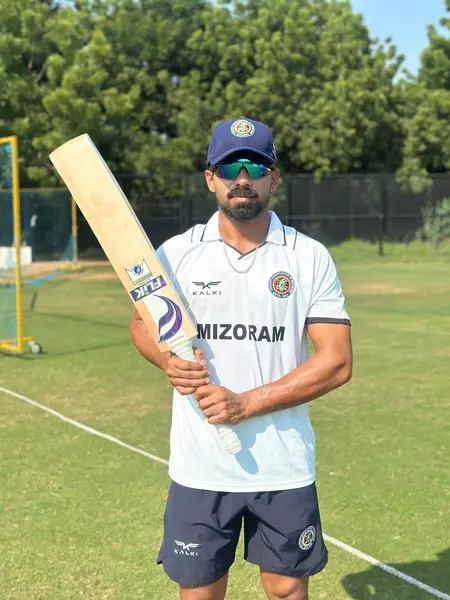
Ranji Trophy: Mizoram's Chinmay Sutar becomes second Indian batter to hit quadruple ton
Digital Desk | Sovima, Oct 19 (IANS) Mizoram batter Chinmay Sutar on Monday has become only the second Indian batter to score a quadruple century in first-class cricket. Sutar achieved this landmark feat when he struck an unbeaten 400 against Nagaland in a Ranji Trophy Plate group match at the Nagaland Cricket Stadium in Sovima. Playing in just his second first-class game, left-handed Sutar surpassed Prithvi Shaw's 379 to register the second-highest individual score in Ranji Trophy history. Only Bhausaheb Nimbalkar's unbeaten 443 for Maharashtra against Kathiawar in Pune in 1948/49 stands ahead of Sutar's effort in the competition's record books. Sutar, who was on 392 at tea break, reached the 400-run landmark in the 155th over, after which Mizoram declared at 581/9. In all, he faced 517 balls and hit 46 fours and seven sixes. He was on 231 when the last man, Lalrempuia Chhakchhuak, walked out, and the pair went on to add an unbroken 190 for the tenth wicket. Mizoram, who had ended the opening day on 331/5, slipped to 391/9 on day two before Sutar and Lalrempuia took the game away from Nagaland. Its also a record for the third-highest last-wicket stand in Ranji Trophy history, 43 runs short of the record 233 put on by Ajay Sharma and Maninder Singh for Delhi against Mumbai in 1991/92. Sutar became only the tenth batter to score 400 or more in a first-class innings, joining a list that includes batting greats such as Brian Lara and Don Bradman. Lara holds the record for the highest first-class score with his unbeaten 501 for Warwickshire against Durham in 1994, and also made 400 not out for the West Indies against England in a Test match in 2004. Pakistan's Hanif Mohammed fell one short of 500, and made 499 for Karachi against Bahawalpur in 1959. Sutar had made his Ranji debut for Mizoram in last week's season opener against Manipur after securing a no-objection certificate from the Mumbai Cricket Association (MCA). He scored 35 and 99, being run out one short of a hundred in the second innings, as Mizoram fought back from a 68-run first-innings deficit before losing narrowly by three wickets. Sutar had represented Mumbai in the Vijay Hazare Trophy in the previous domestic season on the back of strong performances in Mumbai's local leagues. In June, he helped MSC Maratha Royals defend their Mumbai T20 League title and hit back-to-back half-centuries. He finished the season with 212 runs from six innings at a strike rate of nearly 120.

Chinmay Sutar scores 400* for Mizoram in Ranji Trophy
The Mizoram batter became the second India batter to hit a quadruple century after Bhausaheb Nimbalkar in 1948

Mizoram's Chinmay Sutar creates history, becomes 2nd batter to hit 400 in Ranji
Mizoram's Chinmay Sutar creates history, becomes 2nd batter to hit 400 in Ranji

Charting Mizorams political journey| Review of Sanjoy Hazarikas Lal Thanhawla
Thanhawlas life story in large measure encapsulates the States evolution
Hnahsin Kut, also known as the Cosmos Festival, recently concluded in Champhai after eleven days of celebration. Organised by Champhai Nature Conservancy, the festival highlighted the importance of community-led tourism initiatives. The event attracted significant participation, boosting local tourism and economy through stalls and entertainment. Visitors were encouraged to explore Champhai's natural and cultural attractions beyond the festival grounds.
Mizoram records 2,051 drug-related deaths since 1984; IDUs at 12,839

NCB busts two synthetic drug labs in Greater Noida, arrests two accused
The accused have been identified as Destiny Abraham Dumbiri, who claimed to be Nigerian national, and Lallawmzuali alias, Olivia Lalchawimawii, a resident of Mizoram

The Mizoram government is exploring technical cooperation with NBCC (India) Limited to strengthen landslide mitigation measures and develop disaster-resilient infrastructure across the state. Mizoram Minister for Disaster Management and Rehabilitation Prof. Lalnilawma held a meeting with NBCC Chairman and Managing Director Dr. K. P. Mahadevaswamy at Mizoram House in New Delhi on Friday to discuss... The post Mizoram Seeks NBCCs Technical Support To Mitigate Landslide Risks first appeared on Northeast Today .

SUMAN Roadmap 2030 launched in Mizoram to reduce maternal and newborn deaths
Aizawl: Mizoram on Thursday launched the SUMAN Roadmap 2030, aimed at reducing preventable maternal and newborn deaths and ensuring timely, dignified and quality healthcare for women during pregnancy and childbirth. State Health and Family Welfare Minister Lalrinpuii launched the roadmap at a state-level review meeting of the Reproductive, Maternal, Newborn and Child Health (RMNCH) programme [] The post SUMAN Roadmap 2030 launched in Mizoram to reduce maternal and newborn deaths appeared first on NorthEast Now .
Mizoram Strawberry Farmer Mari ZT Lalrithangi Honoured By FAO In Rome
Aizawl, Oct 17: Mari ZT Lalrithangi, a 35-year-old teacher-turned-strawberry farmer from Sangau village in Mizorams Lawngtlai district, has been honoured by the Food and Agriculture Organisation (FAO) in Rome for her remarkable success in fruit cultivation. She was named among the FAO 100 Women Heroes in Agrifood Systems and Rural Development during the World Food... The post Mizoram Strawberry Farmer Mari ZT Lalrithangi Honoured By FAO In Rome first appeared on Northeast Today .
Aizawl, Oct 17: The Public Works Department (PWD) of Mizoram has initiated the disbursement of supplementary compensation amounting to 7.4 crore for landowners impacted by the construction of the Aizawl bypass between Sihhmui and Muallungthu. Officials confirmed that 185 landowners are set to receive the payments, with the process being carried out by the... The post Mizoram PWD Begins 7.4 Crore Compensation Disbursement To Aizawl Bypass-Affected Landowners first appeared on Northeast Today .
Hnahsin Kut 2026: As Champhai Blooms, Mizoram Finds New Ways To Tell Its Tourism Story
Hnahsin Kut 2026 concludes, celebrating the States natural beauty, cultural vibrancy and community-led enterprise while opening new avenues for sustainable tourism and local livelihoods Aizawl, October 17: The 2026 edition of Hnahsin Kut, also known as the Cosmos Festival, concluded today after eleven days of celebrating Champhais natural beauty, cultural richness and community spirit.... The post Hnahsin Kut 2026: As Champhai Blooms, Mizoram Finds New Ways To Tell Its Tourism Story first appeared on Northeast Today .
Mizoram Police headquarters adopts e-office system to streamline workflow
Mizoram CM Lalduhoma launches 4 digital finance initiatives
Mizoram Chief Minister Lalduhoma launched four digital financial management initiatives aimed at ensuring transparency and accountability. These initiatives include the Mizoram Integrated Works Accounts System, e-Sanction, e-Budget, and 100% Direct Benefit Transfer. The new systems will streamline public financial management across various state departments for better efficiency. Payments under state schemes will now be directly transferred to beneficiaries' bank accounts after Treasury approval.
VFS Global To Open First Visa Application Centre In Guwahati
Serving applicants from Assam, Arunachal Pradesh, Meghalaya, Manipur, Mizoram, Nagaland, Tripura and Sikkim, the centre strengthens regional access to visa services through a strategically located facility with strong air, rail and road connectivity.

Mizoram Chief Minister Launches Four Digital Financial Management Initiatives
Mizorams Chief Minister Lalduhoma unveils four digital initiatives to enhance financial transparency and efficiency in public spending. Mizoram Chief Minister Launches Four Digital Financial Management Initiatives
Mizoram CM Lalduhoma launches four digital financial initiatives for transparency and efficiency
Mizoram Chief Minister Lalduhoma has launched four digital financial management initiatives aimed at improving public finance management. These initiatives include Mizoram Integrated Works Accounts System, e-Sanction, e-Budget, and 100% Direct Benefit Transfer. They will streamline budget proposals, expenditure sanctions, and beneficiary payments through digital channels for efficiency.
Minister Highlights Drug Crisis, Urges Students To Stay Clean
Mizoram Excise and Narcotics Minister Lalnghinglova Hmar urged college students to avoid drugs, highlighting the growing concern over cannabis use among young people and the high demand for drugs in the Champhai district. Official data reveals a significant number of injecting drug users and drug-related deaths in the state, with a 2022 survey showing cannabis use among children as young as 10-14.
Mizoram guv calls for long-term plan to strengthen border trade
40,000 Displaced People A Financial Challenge In Mizoram: Chief Minister
Thousands of people from Myanmar, along with several thousand from Manipur and Bangladesh, have currently taken shelter in Mizoram.
Mizoram's Chief Minister Lalduhoma stated that providing shelter for 40,000 refugees from neighboring countries is a burden. He highlighted the state's efforts to manage financial liabilities inherited from previous administrations. The Chief Minister emphasized the importance of understanding border dynamics, particularly regarding tribal communities. Discussions with the central government show cooperation regarding the refugee situation despite challenges.
Mizoram targets 5-7% tourism share in GSDP by 2047
Mizoram targets 57% tourism share in GSDP by 2047, opens new investment pathways
Mizoram plans to enhance tourism's contribution to its economy by leveraging cultural and natural assets. The government is executing tourism infrastructure projects worth over Rs 681.16 crore to support this initiative. Targeting to welcome 10 lakh visitors by December 31, local benefits are prioritized alongside visitor numbers. Various tourism events are scheduled to attract a diverse range of tourists throughout the year.
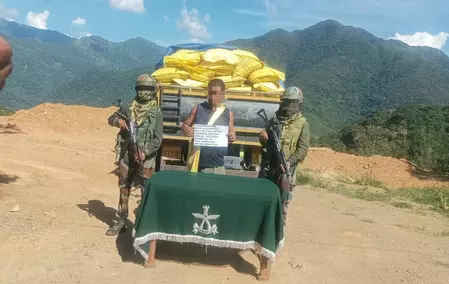
Assam Rifles seizes contraband worth Rs 6.19 crore in Mizoram, six held
Digital Desk | Aizawl, Oct 14 (IANS) The Assam Rifles, in coordination with other law enforcement agencies, has seized highly addictive methamphetamine tablets, foreign-made cigarettes and illegally transported urea fertiliser worth around Rs 6.19 crore in three separate operations in Mizoram and arrested six smugglers and drug peddlers, officials said on Wednesday. A defence spokesman said that, acting on specific intelligence inputs regarding the smuggling of contraband items, the Assam Rifles launched an operation in the Khawlailung area under Serchhip district on Tuesday night. During the operation, the Assam Rifles recovered 226 cases of smuggled foreign-origin cigarettes, with an estimated market value of approximately Rs 5.42 crore. Three suspected smugglers were also apprehended during the operation. The seized cigarettes and the apprehended individuals were subsequently handed over to the Legal Metrology Department in Serchhip for further investigation and necessary legal proceedings. In the second operation, the Assam Rifles, in a joint operation with the Mizoram Police, apprehended two women, including one Myanmar national, and seized 950 grams of methamphetamine, comprising 9,200 tablets, worth approximately Rs 76 lakh at Ramhlun South in Aizawl. The apprehended women, along with the seized narcotics, were formally handed over to Bawngkawn Police Station for further legal proceedings under the Narcotic Drugs and Psychotropic Substances (NDPS) Act, 1985. In the third operation, the Assam Rifles, acting on specific intelligence inputs received from its own sources, launched an operation in the Ngopa area of Saitual district. During the operation, the Assam Rifles personnel recovered 109 bags of illegally transported urea fertiliser, valued at approximately Rs 98,000. The operation also resulted in the apprehension of one person and the seizure of a vehicle allegedly used to transport the fertiliser. The recovered fertiliser, the seized vehicle and the apprehended individual were subsequently handed over to the District Agriculture Officer in Saitual for further legal proceedings under the applicable provisions of law. According to an Assam Rifles statement, the seizures reflect the force's continued commitment, in coordination with civil agencies, to curbing illegal smuggling activities and ensuring the safety and security of the border population in Mizoram. The coordinated operations are part of the ongoing efforts by security forces and law enforcement agencies to check the smuggling of narcotics and other contraband items in the northeastern region, particularly in areas vulnerable to cross-border illegal trade. Mizoram and Manipur have emerged as major drug-trafficking corridors in the Northeast because of their long and porous international borders with Myanmar and their proximity to the Golden Triangle, one of the world's major illicit narcotics-producing regions. The Golden Triangle, comprising parts of Myanmar, Laos and Thailand, has long been associated with the illicit production and trafficking of narcotic drugs and psychotropic substances. The region's proximity to India's Northeastern states has posed persistent challenges for security forces and drug enforcement agencies. Six districts of Mizoram and five districts of Manipur share around 910 km of international border with Myanmar, much of which remains unfenced, making the region vulnerable to cross-border smuggling of narcotics, cigarettes, fertiliser and other contraband items.

How long Mizoram will bear refugee burden depends on geopolitics, says Lalduhoma
Chief Minister Lalduhoma said Mizorams political parties and social organisations remain opposed to fencing the India-Myanmar border because of their ethnic ties with people on the other side
Mizoram seeks sustainability as tourism booms
The Mizoram government plans expansion of community-based tourism projects after economic and social impact assessment studies
Mizoram is seeking to promote tourism by easing regulations during upcoming winter and Christmas festivals. The state reported significant growth in tourist arrivals during the first eight months of 2026. Investments in tourism-related infrastructure are expected to support the sector's development in the coming years. A series of cultural festivals and initiatives aim to extend visitor engagement beyond Aizawl.
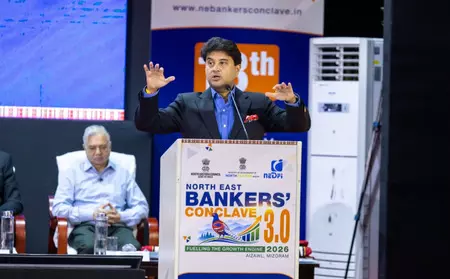
6,905 of 9,479 identified villages in Northeast linked to banking, postal services: Scindia
Digital Desk | Aizawl, Oct 13 (IANS) Union Minister for Development of North Eastern Region (DoNER) Jyotiraditya Scindia said on Tuesday that 131 new bank branches had been opened and 126 new ATMs installed across the Northeastern region between December 2024 and March 2026. He added that 6,905 of the 9,479 villages identified for connectivity through banking and postal services had already been covered. Addressing the 'North East Bankers' Conclave 3.0' in Aizawl, the DoNER Minister announced that to ensure more people benefit effectively from banking services, the existing guideline requiring a minimum population of 3,000 to establish a brick-and-mortar branch has been lowered to a population threshold of 2,000 specifically for the Northeastern states. He also noted that 90.2 per cent of non-branch transactions in the Northeastern states are conducted through the Unified Payments Interface (UPI). Along with these positive developments, Scindia stressed the need to accelerate efforts to quickly connect the remaining 2,574 villages that lack bank or postal service links. Targets have been set to increase the Credit-Deposit (CD) Ratio of banks from 47 per cent to 60 per cent for Tripura, 60 per cent for Arunachal Pradesh, and 67 per cent for Mizoram, he said. The Union Minister noted that raising the CD Ratio increases the circulation of money within the state, making it a vital tool for development, and remarked that the acronym CD Ratio could even stand for 'Credit for Development'. Scindia highlighted that the Northeastern states possess a large working-age youth population, high literacy rates, and abundant natural resources. He shared that this marks his 35th visit to the Northeastern states during his tenure of 2 years and 8 months as the DoNER Minister. He emphasised the crucial importance of collaboration between banks and the government for the development of the region. The DoNER Minister said that during the North East Bankers' Conclave 2.0 held in Agartala (Tripura), various targets were set, including opening new bank branches, installing more ATMs, and connecting unbanked rural villages to banking systems. He added that the DoNER Secretary Katikithala Srinivas held individual consultations with representatives of each state to set specific targets. Scindia lauded Mizoram as a state successfully implementing digital payments, as well as the Pradhan Mantri Jeevan Jyoti Bima Yojana (PMJJBY) and Pradhan Mantri Suraksha Bima Yojana (PMSBY) schemes. At the same time, he stressed the importance of boosting efforts for registration under the PM Jan Dhan Yojana and PM Vishwakarma, noting that banking operations must place greater emphasis on expanding credit and lending. Scindia said that the deliberations at Tuesday's NE Bankers' Conclave 3.0 were divided into four session themes: Last Mile, Loans, Livelihoods, and Lifelines. These encompass connecting unbanked villages to banks, Business Correspondents, or the India Post Payments Bank; intensifying loan disbursements to MSMEs and women entrepreneurs; undertaking initiatives to ensure sustainable livelihoods for farmers; and building better connectivity and infrastructure. The Union Minister urged the gathering to formulate ten recommendations from each of the four sessions on Tuesday, along with forty (40) actionable paths to fulfill them. He asked them to set timelines and clear metrics to execute these proposals, expressing his hope that the North East Bankers' Conclave 4.0 will showcase even greater progress. Mizoram Chief Minister Lalduhoma in his address said that the most important function of a bank is not merely safeguarding the public's money, but creating opportunities for human upliftment and empowerment. He described banks and financial institutions as crucial drivers of state development, catalysts for various businesses, pillars of support for entrepreneurs, avenues for wealth creation, and vital tools for establishing sustainable livelihoods. He said that during the 2025-26 fiscal year, while Assam's Credit-Deposit Ratio stood at 73.52 per cent, Nagaland's at 61.1 per cent, and Tripura's at 61 per cent, Mizoram lagged behind at 55.83 per cent. The Chief Minister added that this highlights the urgent need to step up efforts, with a target set to scale it up to 67 per cent by the 2028-29 fiscal year. Lalduhoma stressed that banks must expand their footprint beyond Aizawl into other districts and rural areas to remain easily accessible to those in need. Given that Mizoram boasts a high loan recovery rate, the Chief Minister urged banks to leverage this positive trait effectively.

Union Minister Jyotiraditya Scindia discusses Viksit Bharat with students at Mizoram University
The News Mill

Human Trafficking Attempt Foiled at India-Nepal Border; Two Minors Rescued
A major human trafficking attempt was thwarted at the India-Nepal border, leading to the rescue of two minors from Mizoram. Human Trafficking Attempt Foiled at India-Nepal Border; Two Minors Rescued
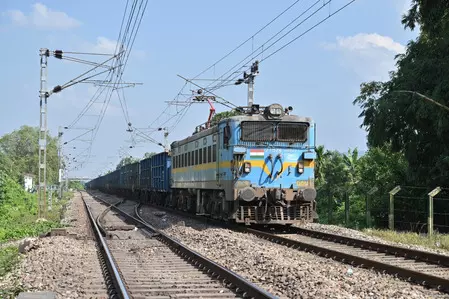
NFR unloads 1,094 freight rakes in September, Assam accounts for 585
Digital Desk | Guwahati, Oct 12 (IANS) The Northeast Frontier Railway (NFR) unloaded 1,094 freight rakes across its zone in September 2026, ensuring the supply of essential commodities and industrial goods to the Northeastern states and strengthening regional supply chains, officials said on Monday. According to NFRs Chief Public Relations Officer (CPRO) Kapinjal Kishore Sharma, food grains, food-grade items, fertilisers, sugar, coal, salt, tank wagons and other commodities were handled at various goods sheds across the zone during the month, facilitating their timely distribution and supporting economic activities. Assam accounted for the highest number of unloaded freight rakes at 585, highlighting the crucial role of the Railways in meeting the requirements of public distribution systems, industries and consumers, he said. Sharma said that during September, 102 freight rakes were unloaded in Tripura, 28 in Manipur, 15 in Nagaland, six in Arunachal Pradesh and five in Mizoram. Outside the mountainous Northeastern states, West Bengal recorded the unloading of 208 freight rakes, while Bihar accounted for 145, further strengthening trade connectivity and regional supply chains, he stated. The CPRO said that for NFR, the uninterrupted movement of essential and other commodities was vital for meeting daily requirements and supporting industrial and commercial activities across the region. He added that regular monitoring at various levels had helped reduce turnaround time and improve unloading efficiency, contributing to the smooth handling and distribution of goods. The freight operations underline the Railways' role in supplying essential commodities to the Northeast, where rail connectivity remains important for transporting goods from other parts of the country, the NFR official said. The Northeast Frontier Railway (NFR), headquartered at Maligaon near Guwahati, operates across the Northeastern states as well as in seven districts of West Bengal and five districts of north Bihar.
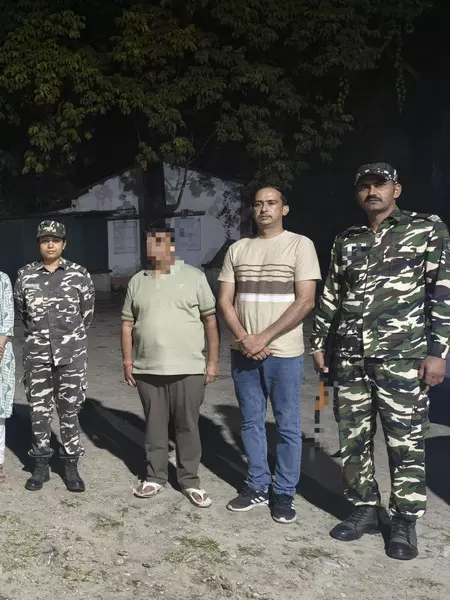
Bengal: SSB rescues two minors from Mizoram in human trafficking attempt
Digital Desk | Kolkata, Oct 12 (IANS) Troops of the Sashastra Seema Bal (SSB) foiled a human trafficking attempt across the India-Nepal Border. Two minor girls were rescued, and two accused were taken into custody. One of those arrested is suspected to be the key conspirator. Around 5 pm on October 11, personnel of the Border Intelligence Team (BIT), 41 Bn, SSB, who were deployed on the New Bridge, Panitanki, in West Bengal, intercepted a silver-coloured Toyota Hyryder proceeding from India towards Nepal. There were three persons travelling in the vehicle. One of them was Mahesh Bhuralal Tanna (61), a resident of Ahmedabad in Gujarat. The second was Navin Kumar (34), from Muzaffarpur in Bihar. He was driving the vehicle. The third occupant was a 17-year-old girl, a resident of Mizoram. During an on-the-spot preliminary inquiry, the minor girl revealed that she was travelling to Nepal with Tanna, an acquaintance of her father, supposedly for shopping and visiting a casino. She further stated that she had been staying with him at a rented flat near Salugara, Siliguri, lured by promises of employment at his spa centres in Mumbai and Goa, a senior SSB official said. The officials at the site sensed something amiss and alerted the Anti-Human Trafficking Unit (AHTU) of Sector Headquarters, SSB, at Ranidanga and NGO partner Kosi Lok Manch, Siliguri. Teams immediately rushed to the SSB post at Panitanki for joint counselling and questioning. During sustained interrogation, Tanna confessed that an agent based in Mizoram had sent the minor girl to him about ten days earlier. He claimed that as she was underage, he engaged her as domestic help for Rs 4,000 until she attained majority. However, inspection of the suspect's mobile phone (iPhone) revealed compromising photographs and videos of the minor girl and another unidentified female stored in the 'Recently Deleted' folder, indicating gross sexual exploitation under the guise of employment, the official said. On being shown this evidence, Tanna was forced to admit that a second minor girl had been kept at his rented accommodation near Salugara, Siliguri. The SSB team immediately got into action and sent the information to the local police and NGO team in Salugara. Help was sought from the police as the area in Salugara was beyond the jurisdiction of the SSB. A police team, accompanied by members of the Kosi Lok Manch, raided the rented flat in Salugara in Siliguri and successfully rescued the second minor girl, the official said. Both rescued minors were taken to Kharibari Rural Hospital, where mandatory medical examinations were conducted in coordination with 41 Bn SSB personnel and the NGO team members. Subsequently, the girls, along with Tanna and Kumar, as well as the seized vehicle, were handed over to the Kharibari Police Station. An FIR was registered with the active assistance and coordination of 41 Bn SSB personnel for further investigation and prosecution under relevant statutory provisions. The NGO is coordinating with child welfare bodies for safe institutional care, counselling, and family repatriation of the two minors. Senior officials have appreciated the role played by the SSB personnel at Panitanki. It was their alertness and prompt action in coordinating with other agencies that resulted in the rescue of both girls and the arrest of the person behind the racket. Human trafficking is a major issue along the India-Nepal Border. Recently, six girls from Tripura, including three minors, were rescued while being taken to Nepal to work at a dance bar. The SSB has sensitised its troops and has strengthened intelligence gathering to prevent such crimes. It also works with NGOs working in this field to help the innocent victims.
2 Mizoram minors rescued from suspected trafficking bid in Bengal
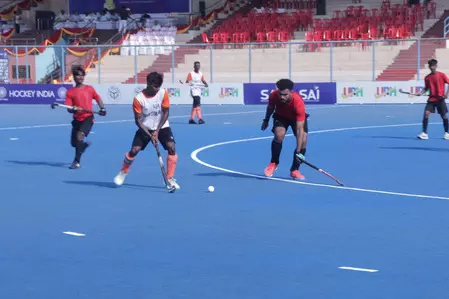
Sr Men Hockey Nationals: Kerala, Jharkhand held to draw; Rajasthan beat Gujarat 6-2 on Day 3
Digital Desk | Jhansi, Oct 12 (IANS) Two draws in Division B and a last-quarter turnaround in Division C, where Bihar (BSSA) edged past Hockey Andhra Pradesh, were the highlights of Day 3 in the 16th Hockey India Senior Men National Championship 2026 in Jhansi. The day also saw Rajasthan and Mizoram record victories. The two matches in Division B produced draws, with Kerala Hockey held by Chhattisgarh in Pool A while Hockey Jharkhand and Telangana Hockey were locked 1-1 at the end of the game. Kerala, beaten 0-9 by Odisha on Day 2, fought back to earn a point. Anoop Kumar Maurya put Kerala ahead with a field goal in the 29th minute. Chhattisgarh equalised through captain Sandeep Kumars penalty corner in the 45th minute and went ahead when Sonu Nishad scored from open play in the 48th. Sandeep Yadav converted a penalty corner in the 59th minute to level the match. In the Pool B clash, Dilbar Barla gave Jharkhand the lead with a penalty corner in the 26th minute. Telangana captain Shiva Kumar Shivangi equalised from a penalty corner in the 56th minute. Jharkhand are unbeaten after a 4-1 win over Goa on Day 2, and Telangana picked up their first point after losing to Arunachal on Day 1. In Division C, Bihar (BSSA) prevailed over Hockey Andhra Pradesh 4-3 in a Pool B match. Andhra Pradesh, 8-0 winners on Day 1, led twice through Metta Sai Kumars penalty corners (11', 38') and a field goal from captain Lekkala Hitesh Rao (25'). Bihar replied through Jony Kumars penalty corner (26') and Md Sidiks penalty corner (29') to level at 2-2 and 3-3 after Jony scored a field goal in the 43rd minute. Jony completed his hat-trick and scored the winner with a penalty stroke in the 53rd minute. It was Bihars first win of the championship after their 2-3 loss to Rajasthan on Day 1. In a Pool B match in the same division, Hockey Rajasthan defeated Hockey Gujarat 6-2 on Day 3. Prathambhai Patel put Gujarat ahead in the 8th minute, but Kunal Koundal equalised with a penalty corner in the 22nd. Rajasthan scored three times in the third quarter through Pawan Kumar Yadav (36', 39') and Ankit Rawat (42'), and Rawat added another in the 48th minute. Patel pulled one back for Gujarat in the 54th minute, and Rawat completed his hat-trick on the stroke of full time (60'). Rajasthan have now won both of their matches. In a Pool A match in the same division, Hockey Mizoram edged Hockey Jammu & Kashmir 2-1. Captain Karanjit Singh gave J&K the lead in the 9th minute. Dharmendra Pal turned the match with two penalty corners in the 15th and 28th minutes, and Mizoram defended the lead for the rest of the game. Mizoram bounced back from their 2-4 loss to Himachal on Day 2, and J&K lost for the first time after their 6-3 opening win.
Bankers conclave will unlock new opportunities for Mizoram: Scindia
Assam Rifles seizes weapons, ammo in Mizoram

Census 2027: Mizoram to enumerate refugees separately
Mizoram has more than 38,000 refugees from Bangladesh, Myanmar and Manipur, but local organisations put the figure at over 60,000
Mizoram to count Myanmar, Bdesh refugees & Manipur IDPs in census
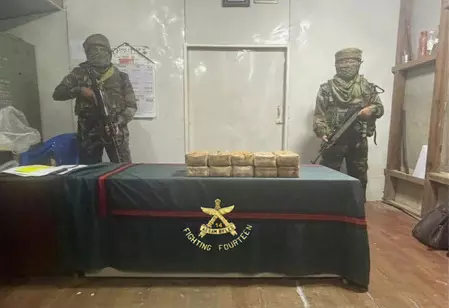
Drugs, foreign cigarettes worth Rs 10 crore seized in Mizoram; two arrested
Digital Desk | Aizawl, Oct 10 (IANS) The Assam Rifles, in coordination with other law enforcement agencies, seized methamphetamine tablets and foreign-made cigarettes worth around Rs 10 crore in three separate operations in Mizoram and arrested two alleged smugglers and drug peddlers, officials said on Saturday. A defence spokesman said that based on credible intelligence regarding transhipment of narcotics in Tlangsam areas in bordering Champhai District, troops of Assam Rifles launched a targeted operation. During the operation, the team carried out thorough checking of the suspected area and recovered 11 kg of methamphetamine tablets, a highly dangerous narcotic substance, packed in ten boxes. The recovered contraband has an estimated market value of approximately Rs 8.80 crore. The seized contraband was subsequently handed over to the Excise and Narcotics Department in Champhai for further investigation and requisite legal proceedings. The highly addictive methamphetamine tablets (also called Yaba tablet or party tablet) contain a mix of methamphetamine and caffeine and are misused as high-dosage drugs in neighbouring Bangladesh and neighbouring countries, besides India. This drug is banned in India. In the second operation, based on specific intelligence regarding smuggling of contraband items, Assam Rifles launched an operation in the Bethel areas of the same Champhai District. During the operation, the team recovered 30 Cases of illegal foreign-origin V Cigarettes, valued at approximately Rs 72 lakh. One individual was also apprehended during the operation. The seized contraband and the apprehended individual were subsequently handed over to the Legal Metrology Department in Champhai district for further investigation and requisite legal proceedings. In the third operation, based on specific intelligence regarding smuggling of cigarettes, Assam Rifles, in a joint operation with Aizawl District Executive Force, conducted an operation at Seling. During the operation, the team recovered 14 Master boxes and 249 boxes of foreign-origin cigarettes, containing a total of 1,89,800 cigarette sticks, valued at approximately Rs 47.45 lakh. One person was apprehended, and one car carrying the contraband was seized. The apprehended individual, along with the seized cigarettes and vehicle, was subsequently taken into custody by Aizawl District Executive Force for further legal proceedings. These successful operations reflect the continued commitment of Assam Rifles, in close coordination with civil agencies, towards curbing the smuggling of contraband and maintaining security in Mizoram, an Assam Rifles statement said. Mizoram and Manipur have emerged as major drug-trafficking corridors in the Northeast because of their long and porous international borders with Myanmar and their proximity to the Golden Triangle, one of the world's major illicit narcotics-producing regions. Six districts of Mizoram and five districts of Manipur share around 910 km of unfenced international border with Myanmar, making the region vulnerable to cross-border smuggling of narcotics and other contraband.

Mizoram aims to be first state to complete Census 2027
Chief Secretary Khilli Ram Meena chaired a State-level conference here to review preparations for the second phase of the census, including training and field arrangements

Mizoram aims to be first state to complete Census 2027
Chief Secretary Khilli Ram Meena chaired a State-level conference here to review preparations for the second phase of the census, including training and field arrangements
Major Drug Haul In Mizoram By Assam Rifles
Assam Rifles seized methamphetamine tablets valued at Rs 3.55 crore in Mizoram's Champhai district. The seizure, weighing 4.4 kg, occurred near Zokhawthar along the India-Myanmar border on Friday, following a tip-off. The drugs have been handed over to the state's Excise and Narcotics Department for further legal action, highlighting ongoing efforts to combat drug trafficking.
Mizoram Police's Cybercrime Success: Rs 1 Crore Recovered
Mizoram police have successfully recovered over Rs 1 crore for cybercrime victims this year and arrested nine alleged cybercriminals. The state has also established a dedicated State Cyber Crime Coordination Centre (S4C) to enhance its efforts in detection, investigation, and public awareness against cybercrime.
Mizoram explores sending more youths to Japan for jobs

Assam Rifles Arrest Ten Smugglers in Mizoram, Seize Drugs Worth
Assam Rifles, in collaboration with law enforcement, arrested ten smugglers in Mizoram, seizing drugs valued at 2.86 crore during multiple operations. Assam Rifles Arrest Ten Smugglers in Mizoram, Seize Drugs Worth 2.86 Crore
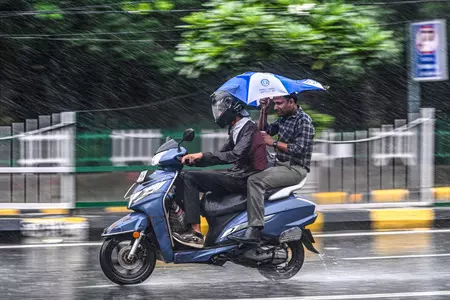
Delhi-NCR likely to witness light rain, strong winds; AQI remains moderate to poor
Digital Desk | New Delhi, Oct 9 (IANS) The plains of North India, including Delhi, Uttar Pradesh, Punjab and Haryana, may experience light rain, overcast skies, and strong winds over the next few days as weather conditions change amid the withdrawal of the southwest monsoon. Cyclonic activity associated with the retreating monsoon is expected to bring heavy rainfall over the next three days, particularly across Uttarakhand, Bihar and Jharkhand. The India Meteorological Department (IMD) has issued rain alerts for 14 states, warning of heavy showers in several regions. The effects of the retreating monsoon are likely to be felt across West Bengal, Bihar and Jharkhand over the next three to four days. Meanwhile, Karnataka, Kerala, Tamil Nadu, Puducherry and Karaikal are expected to receive heavy rainfall between October 9 and 11. Delhi, Punjab and Haryana are likely to witness cloudy skies and light rain till October 14. Western and eastern Uttar Pradesh may receive rainfall from October 9 to 11. Light rain is expected in eastern Rajasthan on October 12, while Delhi-NCR may experience light showers accompanied by strong winds on October 10 and 11. Western Rajasthan is also likely to witness strong winds on October 11. According to the IMD, Uttarakhand is likely to receive heavy rainfall till October 14, while Jammu and Kashmir and Ladakh may experience heavy showers on Friday and Saturday and again on October 13 and 14. In Uttarakhand, districts including Pithoragarh, Chamoli and Rudraprayag have been placed under a heavy rain alert. The department has advised pilgrims undertaking the Char Dham Yatra, particularly those visiting Kedarnath and Badrinath, to remain vigilant. In Himachal Pradesh, Chamba, Kullu, Manali and Shimla are likely to receive rainfall on October 13 and 14. Jammu and Kashmir may also witness significant weather changes, with thunderstorms, lightning and strong winds forecast in areas including Doda, Pulwama, Anantnag, Poonch, Udhampur and Srinagar. Bihar and Jharkhand are likely to receive light to moderate rainfall in some areas till October 11. Patna, Ranchi and Dhanbad are among the places where thunderstorms and lightning are possible. The IMD has also warned of heavy rainfall in Bihar and the Gangetic plains of West Bengal. Rainfall is expected to continue in Arunachal Pradesh, Assam, Meghalaya, Nagaland, Mizoram and Tripura until October 14. Eastern Madhya Pradesh may receive rain till October 11, while Chhattisgarh is likely to witness showers on October 14. Rewa, Satna and Shahdol in eastern Madhya Pradesh may experience rainfall accompanied by winds reaching speeds of up to 50 kmph. Meanwhile, Delhi's air quality remained in the moderate to poor categories, with monitoring stations recording varying levels of pollution. Dwarka Sector 8 recorded an Air Quality Index (AQI) of 231, followed by R.K. Puram at 219, Punjabi Bagh at 211, Narela at 210, and Pusa and NSUT Jaffarpur at 203 each. Other stations, including Burari, Badarpur, Mandir Marg, Aya Nagar, CRRI Mathura Road, Chandni Chowk, JNU, Burari Crossing, Ashok Vihar, Dr Karni Singh Shooting Range, Jahangirpuri and Rohini, recorded AQI readings ranging from 115 to 198.
Amit Shah planned to bring ZPM under BJP fold: Mizoram Cong chief
Mizoram charts new roadmap for hydrocarbon exploration
Mizoram students explore perfect blend of tradition & technology
RTI cornerstone of governance, not instrument of confrontation: Mizoram guv
SIR: Mizoram launches special drive for those left out
Mizoram has started a special drive to identify and enroll eligible voters not listed in electoral rolls. This follows the completion of the Special Intensive Revision process to update the voter list.

Mizoram PSC Tourist Officer Final Answer Key 2026 Released - Download PDF
Mizoram PSC Tourist Officer Final Answer Key 2026 has been released on 7 October 2026 for the Competitive Examination held from 14 to 16 July 2026. Candidates can check the final answers for General English, General Studies and Technical Papers in the official PDF at mpsc.mizoram.gov.in.

ED attaches properties worth Rs 8.12 crore in Myanmar-origin areca nut smuggling case
Digital Desk | New Delhi/Aizawl, Oct 7 (IANS) The Enforcement Directorate (ED), Aizawl Sub-Zonal Office, has provisionally attached 10 immovable properties worth Rs 8.12 crore under the Prevention of Money Laundering Act (PMLA), 2002, in connection with an organised cross-border smuggling network involving dry areca nuts of Myanmar origin (Burmese betel nut), the central probe agency said on Wednesday. An official statement said that the ED investigation was initiated on the basis of an FIR registered by the Anti-Corruption Branch (ACB) of the Central Bureau of Investigation (CBI), Imphal and the subsequent chargesheet on August 29, 2025. The CBI investigation alleged large-scale smuggling of dry areca nuts from Myanmar into India through Mizoram by use of fraudulent e-way bills, forged documents and other means. According to the statement, the investigation revealed alleged smuggling of 3103 MT (approx.) of dry areca nuts, having an assessable value of about Rs 1,022.25 crore, resulting in alleged loss of Basic Customs Duty of Rs 408.90 crore (approx). Investigation has revealed that an organised network wherein Myanmar/Burmese suppliers smuggled areca nuts into India through the Tiau River and border areas around Zokhawthar in Champhai district. Local facilitators based in Mizoram procured the smuggled areca nuts, arranged their storage and transportation and facilitated their onward movement towards Assam and other destinations. Investigation also revealed alleged use of local persons as claimants/owners of intercepted consignments before Customs authorities and routing of substantial funds through bank accounts and money exchangers for settlement of payments with suppliers situated in Myanmar, the statement said. Earlier, during the search proceedings, various bank accounts maintained by the accused and other beneficiaries were frozen under the provisions of PMLA, wherein bank balances to the tune of Rs 1.20 crore (approx.) were found and frozen. Investigation under PMLA, scrutiny of bank accounts and examination of material seized during searches revealed substantial financial transactions, cash deposits and withdrawals and acquisition of immovable properties out of proceeds generated from the smuggling activities. The investigation revealed involvement of Zosangpuii, Thangkhanmunga, Zonsanga and Sangneihvela in procurement, transportation, storage and trading of smuggled areca nuts of Myanmar origin and generation of substantial monetary benefits therefrom. Further investigation has revealed that several immovable properties were acquired directly or indirectly out of such proceeds. Significantly, the attached properties include Hotel Jade situated at Bethel Veng, Champhai, together with the underlying land, which has been valued at Rs 6.29 crore (approx). Investigation revealed that Hotel Jade was constructed from the money generated through the illegal smuggling and trading of areca nuts of Myanmar origin. Accordingly, under the Provisional Attachment Order on September 4, 2026, ED provisionally attached 10 immovable properties having an aggregate value of Rs 8,12,74,399 comprising Hotel Jade, residential land and other landed properties situated in and around Champhai district in Mizoram. The properties have been identified as direct Proceeds of Crime and value thereof and have been attached under the provisions of PMLA, 2002. Thus, with the provisional attachment of immovable properties worth Rs 8.12 crore and freezing of bank balances of Rs 1.20 crore (approx.), the total value of Proceeds of Crime secured in the case stands at Rs 9.33 crore (approx.). Further investigation is underway.
Mizoram to cancel licences of erring pharma dealers: Minister
Amid illegal foreigners, refugees entry, Mizoram steps up checks on hotels, homestays
Sainik School Chhingchhip Recruitment 2026 - Apply Offline for Ward Boys and GE Posts
Sainik School Chhingchhip has released the Recruitment 2026 notification for 05 Ward Boys and GE (Ayah) posts. The offline application process will be close on 23-10-2026. Eligible candidates can apply through the official website, sschhingchhip.mizoram.gov.in.

Mizorams Hockey Stars Honored After Historic Asian Games Victory
Mizorams hockey players Lalremsiami and Lalthanthluangi celebrated for their gold medal win at the 2026 Asian Games. Mizorams Hockey Stars Honored After Historic Asian Games Victory

ED searches 16 places linked to smuggling of foreign-origin betel nut via the Indo-Myanmar border
Dried areca nut consignments were brought overland to the Indo-Myanmar border opposite Champhai in Mizoram, and ferried across the Tiau river at Zokhawthar in small lots, bypassing the Land Customs Station, in a well-organised racket, the ED alleges
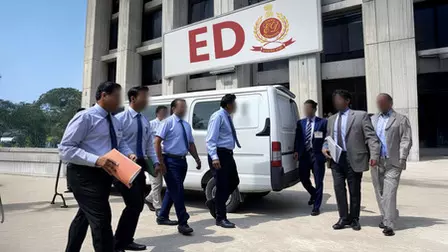
ED busts Rs 1,000-crore betel nut smuggling syndicate across Northeast
Digital Desk | Guwahati, Oct 5 (IANS) The Enforcement Directorate (ED) on Monday said it has unearthed a well-organised, multi-layered syndicate allegedly involved in smuggling foreign-origin areca nut into India through the India-Myanmar border and laundering the proceeds, with bank credits exceeding Rs 1,000 crore identified in accounts linked to the network. According to officials, the EDs Guwahati Zonal Office conducted searches on October 1 at 16 premises in Guwahati, Siliguri, Bagdogra, Phansidewa and Cooch Behar under the Prevention of Money Laundering Act (PMLA), 2002. The investigation was launched based on 11 FIRs registered by the Assam Police and West Bengal Police under various sections of the IPC/BNS and the NDPS Act against persons allegedly involved in smuggling, transporting and selling Indonesian, Thai and Burmese-origin areca nut. According to the ED, the consignments were brought into Mizoram through Myanmar and then transported to West Bengal, Bihar, Uttar Pradesh, Maharashtra and other states using forged GST invoices, e-way bills and transport documents. The agency said dried areca nut was ferried across the Tiau River at Zokhawthar in small lots, bypassing the Land Customs Station. Agents on the Myanmar side allegedly sold the consignments to front firms in India. These firms were allegedly registered in the names of local residents of Champhai who had no real stake in the business. The GST registrations and bank accounts were allegedly controlled by persons based in Silchar, Assam. From Silchar, the consignments were allegedly moved to godowns around Guwahati, where they were re-bagged and re-documented before being transported through the Siliguri corridor to consuming states. The ED said the operation involved Bikaner Assam Roadlines India Ltd and associated concerns allegedly controlled by Sushil Daga. Their bank accounts showed credits of several hundred crores from areca nut traders. The agency also alleged that protection money was collected from transporters to ensure safe passage of smuggled consignments. Searches at the premises of DNG Biotech Pvt Ltd, Jai Karni Tradings Pvt Ltd, Purvottar Agro Pvt Ltd, N R Associates and others led to the seizure of approximately Rs 95 lakh in unaccounted cash, digital devices, property and investment documents and bank records. Fixed deposits worth approximately Rs 85 lakh were also frozen. Further investigation is underway.

SCERT Mizoram Driver (PE) Answer Key 2026 - Check Paper-I and Paper-II PDF
SCERT Mizoram has published the answer keys for Driver (PE) under SCERT, School Education Department. Check Paper-I and Paper-II answer key PDF links, how to compare your answers, and what the notice does and does not mention.
Mizoram woman left teaching for farming; now she is being honoured by UN
Z T Lalrithangi hails from Sangau and initially struggled to secure a government job post-education. Redirecting her passion, she delved into strawberry farming, ultimately cultivating over 10,000 plants from her original 1,000 in just a few years. Her remarkable journey has earned her a spot among the FAO's 100 Women Heroes, highlighting her path to empowerment and financial independence through agriculture.

CIJW School trains NCC Cadets of Mizoram, building confidence and national spirit
Counter Insurgency and Jungle Warfare School (CIJWS), Vairengte, conducted an intensive training programme for 83 NCC cadets from Mizoram from September 21 to October 4, providing young boys and girls an opportunity to train in the professional environment of one of the Indian Army

CIJWS trains 83 NCC cadets from Mizoram in jungle warfare skills
The News Mill

BJP Aims to Form Govt in Mizoram in 2028, Says New State In-Charge Karad
Karad said the BJP's state and central units were connected and that problems faced at the grassroots level were also a concern for the party's central leadership.
Second water bodies census: Maharashtra records 4.74 lakh, UP 2.86 lakh; five states see decline
Maharashtra's water bodies rose to 4.74 lakh, nearly five times the first census total. Uttar Pradesh also recorded an increase, with over 2.86 lakh water bodies noted. In contrast, states like Mizoram and Arunachal Pradesh showed significant declines in their water body counts. The second Census of Water Bodies aims to support water management and policy-making efforts.
Second Water Bodies Census: Maharashtra Records 4.74 Lakh, UP 2.86 Lakh; 5 States See Decline
Five states -- Mizoram, Arunachal Pradesh, Jharkhand, Telangana and Rajasthan -- recorded a decline in the number of water bodies

Mizoram PSC Answer Key 2026 - Download Senior Horticulture Demonstrator
Mizoram PSC has released the final answer key for the Senior Horticulture Demonstrator and Subordinate Agriculture Service-I (SAS-I) exam held on 27-28 August 2026. Check Paper-I (Part-B), Paper-II (General Knowledge), Paper-III and Paper-IV answers, important dates and FAQs.
Doordarshan, PIB officials among three dead in Mizoram road accident
The vehicle they were travelling in plunged into a deep gorge near a village about 30 km south of Aizawl
Tripura to Import Power from Mizoram During Durga Puja Festival
Tripura plans to import electricity from Mizoram to meet the increased demand during the Durga Puja festivities starting October 16. Tripura to Import Power from Mizoram During Durga Puja Festival
Press Information Bureau, Doordarshan Officials Killed In Mizoram Accident
Authorities are investigating the circumstances that led to the accident. Further details on the injured persons and the cause of the crash are awaited.
Presented by Mizoram Tourism in association with the Department of Horticulture, Government of Mizoram, the festival, being held from October 1 to 3, is designed to take visitors beyond a conventional flower festival into mountain trails, flower gardens, traditional games, local villages, food, crafts and the living cultural heritage of the State.
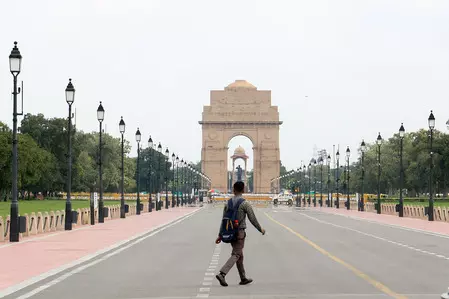
Dry weather to persist in Delhi with cooler nights ahead; AQI remains moderate
Digital Desk | New Delhi, Oct 1 (IANS) The weather in the national capital has turned quite dry, with bright sunshine keeping daytime temperatures warm. However, a slight drop in night temperatures is likely. The India Meteorological Department (IMD) has predicted clear skies throughout the coming week, with no possibility of rain in Delhi. Bright sunshine was observed across most parts of Delhi from Wednesday morning. However, with northwesterly winds prevailing over the region, the weather has become increasingly dry. The maximum temperature at Delhi's standard observatory at Safdarjung was recorded at 34.2 degrees Celsius, which was 0.5 degrees below normal. The minimum temperature was recorded at 22.4 degrees Celsius. The IMD has said that the southwest monsoon season had ended with a 13 per cent rainfall deficit. However, monsoon rains continue to withdraw from different parts of the country. As the monsoon retreats, parts of southern and northeastern India are expected to receive rainfall on Thursday, according to the IMD. Heavy rainfall is very likely at isolated places over Kerala, South Interior Karnataka, Tamil Nadu, Puducherry and Karaikal. In IMD's terminology, 'isolated' refers to rainfall occurring over a small proportion of locations, generally up to 25 per cent of weather stations in a region. Meanwhile, Kerala, coastal Karnataka and the southern parts of Karnataka are expected to receive rainfall at several places on Thursday. Tamil Nadu, Puducherry and Lakshadweep are likely to receive rain at a few places. Karnataka has already experienced a wet spell during the 24 hours ending at 8:30 a.m. on Wednesday. Kibbanahalli in Tumakuru district recorded 10 cm of rainfall, the highest recorded by the IMD during the period. Thunderstorms, lightning and gusty winds of 40-50 kmph are very likely at isolated places over Kerala and Mahe, Rayalaseema, and Tamil Nadu, Puducherry and Karaikal. Winds of 30-40 kmph are expected over Andhra Pradesh, Interior Karnataka and Odisha, while strong surface winds may also prevail over parts of Andhra Pradesh. In the Northeast, thunderstorms and lightning are likely over Assam and Meghalaya, as well as Nagaland, Manipur, Mizoram and Tripura. Similar conditions are also expected over East Madhya Pradesh. Scattered rainfall is likely over Arunachal Pradesh, Assam, Meghalaya, Nagaland, Manipur, Mizoram and Tripura. The southwest monsoon normally begins withdrawing from northwest India in mid-September and completely retreats from the country by mid-October. This year, the withdrawal line currently passes through Gurdaspur (Punjab), Chandigarh, Muzaffarnagar (Uttar Pradesh), Aligarh (UP), Dholpur, Udaipur and Deesa (Rajasthan) before extending to Naliya in Gujarat. The IMD said conditions are likely to become favourable over the next two to three days for the withdrawal of the monsoon from the remaining parts of Punjab, Haryana, Rajasthan and Uttar Pradesh. Similar conditions are expected to develop over most parts of Gujarat and Madhya Pradesh, as well as the entirety of Jammu and Kashmir, Himachal Pradesh and Uttarakhand. Some parts of Bihar, Jharkhand, Chhattisgarh and Maharashtra may also witness further withdrawal. Meanwhile, Delhi's air quality remained in the moderate category, with several monitoring stations recording elevated pollution levels. The AQI readings included Mandir Marg (150), Aya Nagar (135), CRRI Mathura Road (198), Pusa (22), Sirifort (171), IGI Airport T3 (155), Commonwealth Sports Complex (179), IIT Delhi (249), Anand Vihar (98), Najafgarh (144), Jahangirpuri (207), Jawaharlal Nehru Stadium (173), Sonia Vihar (151), Cantonment Area (106) and Narela (189).
Sonam Wangchuk meets Zoramthanga, wants to study Mizo Peace Accord
Sonam Wangchuk held a significant meeting with Zoramthanga, the former Chief Minister of Mizoram, to delve into the Mizo Peace Accord. He showed keen interest in examining the landmark Memorandum of Settlement from 1986, which successfully ended two decades of insurgency and established permanent peace in Mizoram, officially making it the 23rd state of India on February 20, 1987. The accord has garnered attention from scholars passionate about conflict resolution.
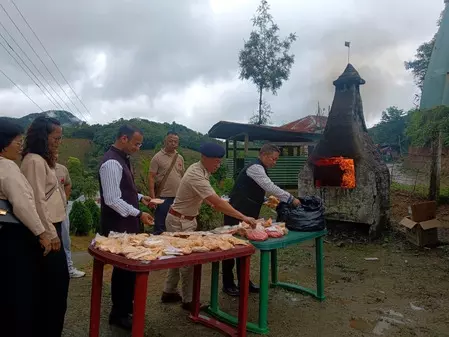
Mizoram destroys seized drugs worth over Rs 11.82 crore in Aizawl
Digital Desk | Aizawl, Sep 30 (IANS) Mizoram on Wednesday destroyed seized narcotic substances worth more than Rs 11.82 crore in Aizawl as part of the states intensified crackdown on drug trafficking, officials said. An official said that the Mizoram Excise and Narcotics Department destroyed the seized drugs at Bethani Multipurpose Farm, Phunchawng, following disposal of cases before the courts and in accordance with Section 51A of the Drugs and Psychotropic Substances (NDPS) Act, 1985 and the NDPS (Seizure, Storage, Sampling and Disposal) Rules, 2022. The destruction included 5.356 kg of heroin, 19.430 kg of ganja, 1.985 kg of methamphetamine tablets, 89.9 kg of codeine-based cough syrup, 0.418 kg of alprazolam, 0.04 kg of nitrazepam and 6.830 kg of opium, with a combined estimated value of Rs 11,82,13,173. The substances came from 106 cases that had already been disposed of by courts. The national campaign has also placed particular emphasis on the Northeast frontier. Recent operations by the Directorate of Revenue Intelligence (DRI) have resulted in major methamphetamine tablet seizures in Mizoram, including 15 kg in July and 20 kg in August on the AizawlChamphai route, with investigators indicating that the consignments had entered Mizoram from Myanmar through the ZokhawtharChamphai sector. According to the official, Mizoram has simultaneously strengthened its state-level response. On September 28, the state launched the State Action Plan to Combat Drug Menace 2026-2029, while Tlangmawi in Khawzawl district was declared Mizorams first drug-free village. Commissioner of Excise and Narcotics Z. Lalhmangaiha said the destruction reflected cooperation among the Mizoram Police, Central YMA, voluntary organisations and other agencies, while calling for continued public support in strengthening the fight against drugs. Mizoram and Manipur have emerged as major drug-trafficking corridors in the Northeast because of their long and porous international borders with Myanmar and their proximity to the Golden Triangle, one of the world's major illicit narcotics-producing regions. Six districts of Mizoram and five districts of Manipur share around 910 km of unfenced international border with Myanmar. The highly addictive methamphetamine tablets (also called Yaba tablet or party tablet) contain a mix of methamphetamine and caffeine and are misused as high-dosage drugs in Bangladesh and neighbouring countries, besides India, while various types of cough syrups containing Codeine Phosphate are used as common drugs illegally in Bangladesh. This drug is banned in India. Besides the methamphetamine tablets, heroin and other narcotic substances are smuggled from Myanmar through Mizoram and transported to other parts of India and abroad through clandestine routes.

Mizoram Public Service Commission has released the provisional answer key for the Group 'B' (Gazetted) General Services Combined Competitive Examination 2026 for Inspector of Excise & Narcotics and State Tax Officer. Check exam dates, papers covered, how to raise objections within 3 working days, and what is not mentioned in the notice.
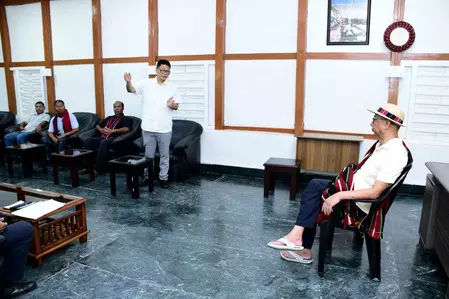
Peace must come first for development, administrative processes, says Manipur CM
Digital Desk | Imphal, Sep 30 (IANS) Manipur Chief Minister Yumnam Khemchand Singh, on Wednesday, while interacting with a delegation of the Hmar tribal community, stressed that peace must come first and said restoration of peace and stability was essential for taking forward development and administrative processes in the state. The Chief Minister assured the delegation that the issues raised by them would be looked into, and necessary action would be taken. Tipaimukh Assembly Constituency MLA Ngursanglur Sanate, along with representatives of various Civil Society Organisations (CSOs) from tribal-inhabited Pherzawl district, called on Khemchand Singh at the Chief Ministers Bungalow and apprised him of various issues and grievances concerning the people of the area. Manipurs Pherzawl district shares its inter-state borders with Assam and Mizoram and is predominantly inhabited by the Hmar tribal community. It may be noted that the peace initiative involving representatives of the Meitei and Hmar communities, held in Jiribam district in April in the presence of the Chief Minister, has contributed to maintaining peace and harmony between the two communities, who continue to live together peacefully since then. The MLA briefed the Chief Minister on issues relating to road connectivity, electricity and banking services, and sought his intervention to address the difficulties faced by the people. Regarding road connectivity, the delegation sought the upgradation of the Jiribam (along southern Assam)-Tipaimukh road, presently a district road, to National Highway status. They highlighted that the road would provide an important link between National Highway-37 and NH-2, thereby improving connectivity between Jiribam, Tipaimukh and adjoining areas. The delegation also raised issues concerning power connectivity in the area. Among the demands was the proposed power-line connection from Sipuikaun Power Station to Parbung. They also highlighted the need to extend power supply to other areas through the proposed power line connections. The delegation further apprised the Chief Minister of the need to establish a bank in the area, highlighting the difficulties faced by the people due to the absence of banking facilities. The members also raised matters concerning the Pherzawl Autonomous District Council (ADC) and conveyed their concerns and aspirations regarding its establishment. The delegation comprised representatives of ITAC (Indigenous Tribes Advocacy Committee), Pherzawl, and Jiribam, Hmar Inpui Hmarram Region and Hmar Inpui Vangai Region; Secretary, Hmar Inpui Hmarram Region and Rothangkhum, President, Hmar Inpui Vangai Region.
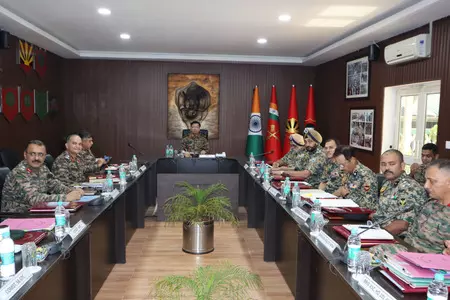
Army, BSF hold strategic seminar in Shillong to strengthen border coordination
Digital Desk | Shillong, Sep 30 (IANS) A crucial seminar between the Army and the Border Security Force (BSF) was held in Shillong for better operational coordination. The Army-BSF Synergy Seminar 2026 was hosted by the 101 Area of the Army's Eastern Command. Participants included senior officers from the BSF's Meghalaya, Guwahati, Mizoram, and Cachar and Tripura Frontiers. The BSF is in charge of managing the 4,096 km border with Bangladesh. Of this, 856 km lies in Tripura, 443 km in Meghalaya, 318 km in Mizoram, and 262 km in Assam. The remaining 2,217 km of the border is managed by the South Bengal and North Bengal Frontiers of West Bengal. The terrain through which the border runs makes management difficult. It comprises riverine, forested, and hilly stretches, where fencing is difficult. According to the Ministry of Home Affairs, about 3,232.2 km, or approximately 78 per cent of the border, is fenced. There is little possibility of fencing the 174.5 km that has water bodies, marshes and dense forests. Apart from intensive patrolling, the BSF now uses advanced surveillance equipment to keep a check on criminal activities and illegal immigration. While the Army is not directly involved in management of the India-Bangladesh border, some of its vital installations and assets along the northeastern states lie close, requiring greater coordination with the BSF. Regular sharing of intelligence is key to effective border management. In the past, forces inimical to India's interests have used this border. It is a difficult border to manage, given the terrain, similarities in languages and cultures, and other factors. A coordinated effort is required for better handling of the situation, an official said. Espionage and sabotage are issues that both the Army and BSF are extremely concerned about. In the past, the border has been used by agencies of other countries to gather intelligence about Indian military assets and movements in the northeastern states. The 101 Area of the Army plays a crucial role in combat logistics and operational maintenance of units based along the northern border. It is keen to keep all movement details confidential. The seminar focused on enhancing operational coordination, strengthening joint synergy, improving information sharing and fostering an integrated approach to effective border management, the Eastern Command posted on X.

Mizoram PSC Admit Card 2026 - Download Assistant and Other Posts Hall Tickets at mpsc.mizoram.gov.in
Mizoram PSC has released Admit Card Download Notification 6 of 2026-27 dated 25 September 2026. Check admit card download dates, exam dates for Soil Conservation Ranger (13-15 October), Assistant & UDC (2 November) and Veterinary Assistant Surgeon (3-5 November), and how to download from mpsconline.mizoram.gov.in.
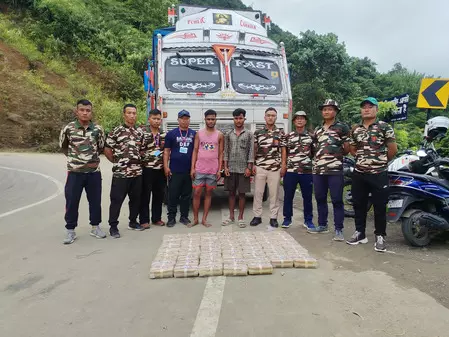
Mizoram: Drugs worth over Rs 846 crore seized, 930 arrested in eight months
Digital Desk | Aizawl, Sep 30 (IANS) Security forces, including the Mizoram Police, have seized various drugs, including highly addictive methamphetamine tablets and heroin, worth over Rs 846 crore and arrested 930 drug peddlers in the state between January and August this year, officials said on Wednesday. A senior Home Department official said that of the 930 people arrested during the first eight months of this year in connection with drug-related cases, 111 were foreigners, mostly Myanmar nationals. He said a total of 635 cases were registered during the January-August period under the Narcotic Drugs and Psychotropic Substances (NDPS) Act, 1985. According to the official, 45 people, including seven women, died in Mizoram due to drug consumption till August this year. In 2025, 118 people, including 18 women, died due to drug consumption in the state, he said. The official said the state government and security agencies have intensified their efforts to curb drug trafficking and consumption, particularly along the international border with Myanmar. Mizoram Home Minister K. Sapdanga, while addressing a drugs-related awareness campaign in Aizawl, said that the state recently renewed the pledge to safeguard the state and its people from the menace of drugs. Describing Mizoram as a 'gateway of drugs', he highlighted the severe suffering inflicted on many young people and stressed the need for collective action involving enforcement agencies, NGOs and churches. The Home Minister said that beyond targeting drug peddlers and carriers alone, all those associated with the trade must also be thoroughly investigated and dealt with. He called upon all stakeholders to give their best efforts starting today to ensure effective implementation of the State Action Plan, which was formally launched by Mizoram Governor General (Dr) Vijay Kumar Singh (Retd) on Monday. Special emphasis, he noted, would be placed on intensifying operations along the borders to curb the inflow of drugs. While underscoring the need for strict legal action against drug offenders, Sapdanga also emphasised that those struggling with addiction must be approached with compassion and care so they can return to normal life. He further stressed the importance of intensifying drug awareness campaigns in educational institutions to protect the youth. The Minister praised the people of Tlangmawi village for their unity and courage in striving to make their village drug-free, describing their effort as an inspiring message for the entire state and a pure challenge to others. He called upon the youth to recommit themselves so that drugs do not destroy their future, urged parents to remain vigilant over their children, and appealed to NGOs, churches and community leaders to work together with unity in the fight against drugs. Mizoram and Manipur have emerged as major drug-trafficking corridors in the Northeast because of their long and porous international borders with Myanmar and their proximity to the Golden Triangle, one of the world's major illicit narcotics-producing regions. Six districts of Mizoram and five districts of Manipur share around 910 km of unfenced international border with Myanmar.

Mizoram PSC Group B Answer Key 2026 - Download Provisional Key PDF at mpsc.mizoram.gov.in
Mizoram PSC Group B Answer Key 2026 was released on 29 September 2026. Download the provisional key, check answers and submit objections within 3 working days.
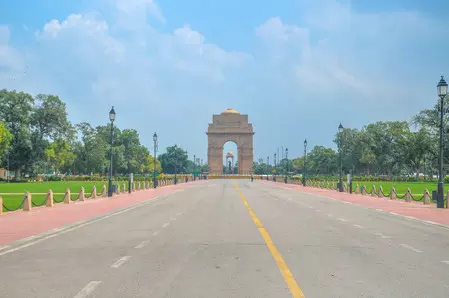
Delhi-NCR likely to turn dry as rains ease; air quality remains in moderate category
Digital Desk | New Delhi, Sep 30 (IANS) Delhi-NCR is likely to witness a significant shift in weather from Wednesday, with the recent spell of rain and thunderstorms expected to give way to predominantly dry conditions. The India Meteorological Department (IMD) has forecast mainly clear skies over the national capital and neighbouring areas, with dry weather likely to prevail across Delhi, Haryana and Chandigarh through the first week of October. The change comes after showers on Tuesday brought a noticeable chill to Delhi, with temperatures briefly giving the national capital a winter-like feel. However, the latest weather forecast indicates that rainfall activity is likely to subside from Wednesday, particularly over northwest India. Delhi, Haryana, Punjab and parts of Uttar Pradesh are expected to remain largely dry as the recent rain and thunderstorm activity weakens. Delhi is likely to record a minimum temperature of around 24 degrees Celsius and a maximum temperature of nearly 33 degrees Celsius on Wednesday. While northwest India is expected to remain mostly dry, weather conditions across the rest of the country are likely to remain varied. Rain and thunderstorms are expected to continue over parts of southern, eastern and northeastern India. According to the IMD forecast, isolated heavy rainfall is likely over several areas of the Northeast and southern peninsula on Wednesday. The southern peninsula is expected to remain one of the major rain-affected regions, with some areas likely to receive heavy showers. The IMD has classified Haryana, Chandigarh and Delhi as dry on Wednesday. Similar conditions are expected over Punjab, Rajasthan and most parts of Uttar Pradesh. The contrasting weather conditions across different regions are being influenced by several atmospheric systems currently active over the country. A depression over coastal Myanmar and the adjoining Bay of Bengal was moving rapidly north-northwestwards on Tuesday. The system was expected to weaken into a well-marked low-pressure area later on September 29 and continue moving towards southeast Bangladesh and adjoining northeastern parts of India. At the same time, a western disturbance and associated upper-air systems continue to influence parts of north India. Another circulation and trough are extending across southern India. The interaction and movement of these systems are contributing to the contrasting weather patterns being observed across the country. The IMD also recorded heavy to very heavy rainfall at isolated places over Haryana during the 24 hours ending Tuesday morning. The rainfall highlights the intensity of the recent spell over parts of north India, even as the broader weather pattern is now expected to turn predominantly dry. The southwest monsoon is also continuing its gradual withdrawal from the country as the rainy season approaches its conclusion. With the monsoon retreating, northwest India is expected to gradually transition towards predominantly dry weather. However, rainfall activity is likely to persist in several other parts of the country. Uttarakhand may experience isolated rain and thunderstorms through October 4, while Jammu and Kashmir and Ladakh could witness similar weather conditions between October 2 and 4. Himachal Pradesh may also receive isolated showers during the period. In central India, rain and thunderstorms are likely over parts of Madhya Pradesh, Vidarbha and Chhattisgarh in the coming days. The Northeast is expected to remain relatively wetter, with rainfall forecast over Assam, Meghalaya, Arunachal Pradesh, Nagaland, Manipur, Mizoram and Tripura through October 4. Some areas may also receive heavy rainfall. Southern India is likely to remain another significant zone of rainfall. The IMD has forecast isolated heavy showers over parts of the southern peninsula during the next four to five days, with Tamil Nadu, Kerala and South Interior Karnataka among the areas likely to receive heavy rainfall. Meanwhile, Delhi's air quality remained in the 'moderate' category. The Air Quality Index (AQI) readings included Mandir Marg at 97, Aya Nagar at 79, Punjabi Bagh at 113, CRRI Mathura Road at 138, Pusa at 149, Sirifort at 105, IGI Airport (T3) at 101, Commonwealth Sports Complex at 122, North Campus at 122, R K Puram at 122, ITO at 86, IIT Delhi at 140, DTU at 100, Wazirpur at 134, Jahangirpuri at 153, Jawaharlal Nehru Stadium at 105, Anand Vihar at 105 and Cantonment Area at 105.