



Garbage dumped at Kalpalli crematorium in Bengaluru
The garbage trucks sport a banner of Seva Sankalp Abhiyan, a month-long campaign launched in September. Residents allege that each vehicle has a picture of S. Raghu, C.V. Raman Nagar BJP MLA, and Prime Minister Narendra Modi.
We love nature, yet we forget to live in harmony with it
SC gives green signal for Blue Line project work in Bengalurus Hebbal
Construction costs up 33%; Builders in Bengaluru face margin squeeze as sales slow down
Construction material shortage post TN ban hits Blue Line work in Bengaluru
Body Found in JC Nagar Stormwater Drain Identified as 22-Year-Old Man
Spurt in Elders Act cases: HC urges awareness, property registration norms

146 Players, 27 Slots: WPL Teams Gear Up for Auction Day
The Women's Premier League (WPL) mini-auction in Kochi on Wednesday will see 146 players, including capped Indian and international cricketers, go under the hammer. Teams like UP Warriorz, Gujarat Giants, Royal Challengers Bengaluru, Delhi Capitals, and Mumbai Indians will bid for 27 available spots, with a focus on Indian talent and strategic backups for the WPL 2027 season.
Two more sim box sites busted in Tamil Nadu; 10 devices seized
Nelamangala villages near Bengaluru on edge as Leopard sightings rise; Cub rescued
Devanahalli farmers plan indefinite protest against land acquisition
Examination board opposes postponing exams for census work in Karnataka
500km of new roads planned in Bengaluru: Shivakumar
Eastern Ghats see rising wildfires, Western Ghats record 10.8% annual decline: Study

Bengalurus electorate plunges from 1.03 crore to 59 lakh after SIR
The final electorate comprises 28,68,670 male voters, 30,40,431 female voters and 674 third-gender voters.
SIR cuts Bengaluru voter count by 43%; city accounts for 40% of statewide deletions

WPL 2027: G. Kamalini Fully Available As Four New Names Added To Player Auction Pool
Delhi Premier League: Four more players have been added to the Womens Premier League (WPL) 2027 auction list at the request of the five franchises, while India wicketkeeper-batter G. Kamalini will be available for the entire season, a source told IANS. The new entrants in the 2027 WPL auction pool, which now stands at 150 players, are Delhi all-rounders Medhavi Bidhuri and Samaira Raghav, New Zealand pacer Bree Illing and Uttar Pradesh bowler Avanya Jain. The auction will start at 5:30 pm in Kochi on Wednesday. Yes, during the auction briefing held today, the late addition of four players was made, and all five teams were informed about it. All five teams were also told that G Kamalini is fully available for the 2027 WPL season as she will not be playing in the 2027 U-19 World Cup, which was the case before, further said the source to IANS on Tuesday. Kamalinis availability for 2027 WPL had been in question before she was understood to be in contention for next years Under-19 World Cup, which directly clashes with the tournaments fifth season running from January 14 to February 7. Two-time winners, Mumbai Indians had released Kamalini, who had a contract of Rs 1.1 crore, during last months retention deadline. But with Kamalini, who has set her base price at Rs 40 lakhs, fully available for the WPL, it means that she can get a good payday at the auction, where 27 slots are to be filled, and wicketkeeper-batters will be in great demand. While Medhavi, who bowls leg-spin, has gone viral for her 6-7 celebration in the Delhi Premier League (WPL) womens competition, Samaira is coming off a good showing in the U19 Womens T20 Trophy and is also believed to be selected for the U19 Womens T20 Challengers tournament, which prompted her late addition to the WPL auction pool. The 2027 WPL auction will open with a full round of capped players, and is followed by a full round of uncapped players. After the 50th player, the accelerated rounds may begin. With each teams overall purse at Rs 15 crore, UP Warriorz, who finished last in 2026 and have never reached the final in four seasons, have the most to spend at Rs 3.75 crore. The Meg Lanning-led side has eight slots to fill -- five Indian and three overseas spots. Gujarat Giants have a purse of Rs 1.25 crore available to fill three slots -- one of which is overseas. Defending champions and two-time winners Royal Challengers Bengaluru have Rs 1.15 crore available to fill five slots -- two of which are overseas. Four-time runners-up Delhi Capitals have Rs 1.10 crore in hand to fill five slots -- one of which is overseas. Mumbai Indians have Rs 90 lakh purse available to fill six Indian player slots. Australias T20 World Cup-winning captain Sophie Molineux, who has listed herself at a base price of Rs 50 lakh, and Jess Jonassen, who missed the 2026 season with a shoulder injury, are the biggest overseas names in the auction pool. Scotland wicketkeeper-batter Sarah Bryce is another name that will keep five teams interested, as well as Indias off-spin bowling all-rounder Sneh Rana. Uncapped batters Vrinda Dinesh, Gongadi Trisha, Saanika Chalke, and Mumbais 15-year-old batting sensation Ira Jadhav could draw strong bidding interest from the five franchises. Australias T20 World Cup-winning captain Sophie Molineux, who has listed herself at a base price of Rs 50 lakh, and Jess Jonassen, who missed the 2026 season with a shoulder injury, are the biggest overseas names in the auction pool. Also Read: Special Cricket Stories Article Source: IANS

Increase womens representation in Police force, says Bengaluru Police Commissioner
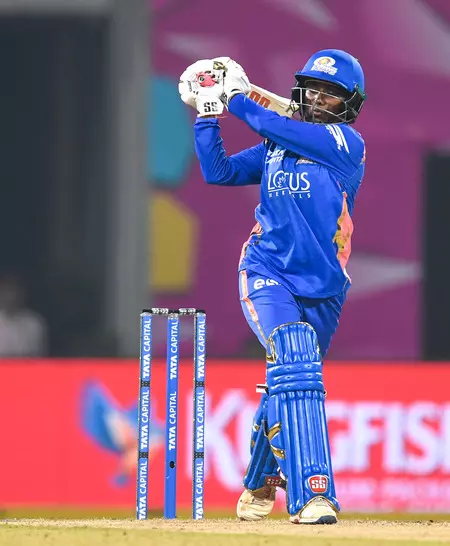
G. Kamalini fully available as four new names added to WPL 2027 auction pool
Digital Desk | New Delhi, Oct 27 (IANS) Four more players have been added to the Womens Premier League (WPL) 2027 auction list at the request of the five franchises, while India wicketkeeper-batter G. Kamalini will be available for the entire season, a source told IANS. The new entrants in the 2027 WPL auction pool, which now stands at 150 players, are Delhi all-rounders Medhavi Bidhuri and Samaira Raghav, New Zealand pacer Bree Illing and Uttar Pradesh bowler Avanya Jain. The auction will start at 5:30 pm in Kochi on Wednesday. Yes, during the auction briefing held today, the late addition of four players was made, and all five teams were informed about it. All five teams were also told that G Kamalini is fully available for the 2027 WPL season as she will not be playing in the 2027 U-19 World Cup, which was the case before, further said the source to IANS on Tuesday. Kamalinis availability for 2027 WPL had been in question before she was understood to be in contention for next years Under-19 World Cup, which directly clashes with the tournaments fifth season running from January 14 to February 7. Two-time winners, Mumbai Indians had released Kamalini, who had a contract of Rs 1.1 crore, during last months retention deadline. But with Kamalini, who has set her base price at Rs 40 lakhs, fully available for the WPL, it means that she can get a good payday at the auction, where 27 slots are to be filled, and wicketkeeper-batters will be in great demand. While Medhavi, who bowls leg-spin, has gone viral for her 6-7 celebration in the Delhi Premier League (WPL) womens competition, Samaira is coming off a good showing in the U19 Womens T20 Trophy and is also believed to be selected for the U19 Womens T20 Challengers tournament, which prompted her late addition to the WPL auction pool. The 2027 WPL auction will open with a full round of capped players, and is followed by a full round of uncapped players. After the 50th player, the accelerated rounds may begin. With each teams overall purse at Rs 15 crore, UP Warriorz, who finished last in 2026 and have never reached the final in four seasons, have the most to spend at Rs 3.75 crore. The Meg Lanning-led side has eight slots to fill -- five Indian and three overseas spots. Gujarat Giants have a purse of Rs 1.25 crore available to fill three slots -- one of which is overseas. Defending champions and two-time winners Royal Challengers Bengaluru have Rs 1.15 crore available to fill five slots -- two of which are overseas. Four-time runners-up Delhi Capitals have Rs 1.10 crore in hand to fill five slots -- one of which is overseas. Mumbai Indians have Rs 90 lakh purse available to fill six Indian player slots. Australias T20 World Cup-winning captain Sophie Molineux, who has listed herself at a base price of Rs 50 lakh, and Jess Jonassen, who missed the 2026 season with a shoulder injury, are the biggest overseas names in the auction pool. Scotland wicketkeeper-batter Sarah Bryce is another name that will keep five teams interested, as well as Indias off-spin bowling all-rounder Sneh Rana. Uncapped batters Vrinda Dinesh, Gongadi Trisha, Saanika Chalke, and Mumbais 15-year-old batting sensation Ira Jadhav could draw strong bidding interest from the five franchises. Jess, though, is down with a neck injury, which has ruled her out of the upcoming WBBL. Though her return to play is set for the new year, it may be too close to comfort for teams to pick her for 2027 WPL. Ira's availability for WPL 2027 will also be doubtful if she is selected for India's U-19 Women's T20 World Cup squad.
47-year-old DRDO scientist dies by suicide in Bengaluru
A 47-year-old scientist with the DRDO's Aeronautical Development Agency, Sharad Katiyar, died by suicide in Bengaluru on October 21. His family informed police that he was suffering from mental distress due to work-related pressure and was undergoing treatment for a depressive episode. Police have registered an unnatural death case.
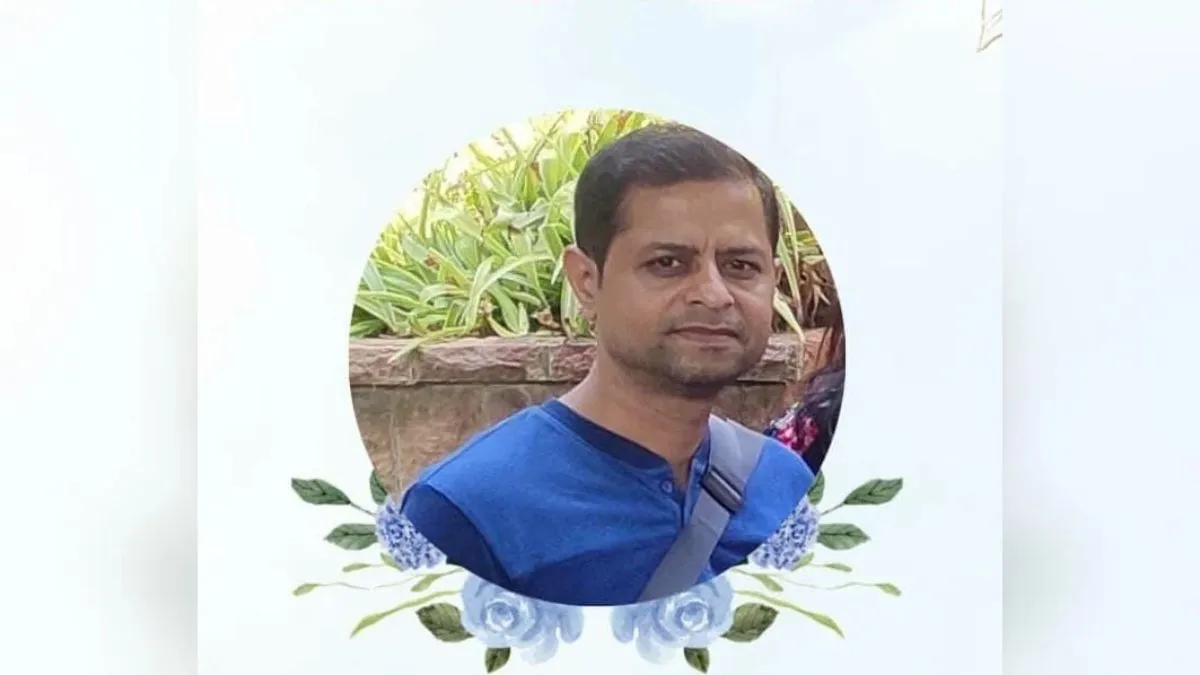
47-year-old DRDO scientist dies by suicide in Bengaluru, family alleges severe work stress
A 47-year-old senior scientist working with the Defence Research and Development Organisation's (DRDO) Aeronautical Development Agency (ADA) in Bengaluru died by suicide on October 21 after allegedly jumping from a residential building in Seegehalli. His family has alleged that intense work-related stress had taken a toll on his mental health.The deceased was identified as Sharad Katiyar, who served as a Scientist 'F' in ADA's programming department. He lived with his family on the fourth floor of a residential building in Seegehalli.

Bengalurus Kempegowda International Airport is trialling Digi Yatra for eligible passengers on select international departures. Trials are available on the Beta app, with a regular-app rollout planned for November 1, 2026.
KIA launches Digi Yatra trials for international departures from Bengaluru

SIR: Over 61,000 marked ineligible; foreign citizen count remains undetermined
Hearings were conducted for all the cases, and while43,20,957 names were retained for the final roll, another 61,867 were marked as ineligible
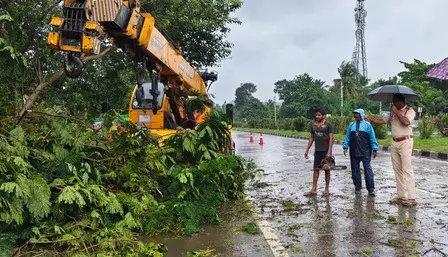
Cyclone Arnab impact: Several flights from Vizag, Vijayawada cancelled
Digital Desk | Visakhapatnam, Oct 27 (IANS) Very severe cyclonic storm Arnab in the Bay of Bengal has disrupted air services in Andhra Pradesh, with airlines cancelling several flights at Alluri Sitarama Raju International Airport at Bhogapuram near Visakhapatnam and Vijayawada International Airport on Tuesday. With heavy rains accompanied by gusty winds lashing the coastal region under the impact of the cyclone on Tuesday, various airlines have cancelled their services as a precautionary measure. Sixteen flights scheduled to depart from Bhogapuram on Tuesday have been cancelled. Services to destinations like Delhi, Hyderabad, Kurnool, Tirupati, Bengaluru, Kolkata and Chennai were cancelled. Five flights from Gannavaram Airport in Vijayawada were also cancelled in view of the cyclone. Airlines have cancelled Chennai, Hyderabad, Bengaluru, Kadapa and Bhogapuram flights. With the cyclone set to cross the coast on Wednesday, more flights are likely to be cancelled. Authorities had already issued an advisory that, in view of the approaching cyclonic weather, heavy rainfall and strong winds may affect flight schedules and travel to and from Alluri Sitarama Raju International Airport. Passengers were advised to check flight status with their airline before leaving for the airport. They have been advised to allow additional travel time, subject to local weather and road conditions. Passengers have been asked to contact their airline directly for rescheduling or cancellation assistance. Air India and Air India Express said in their advisories that weather conditions associated with Tropical Cyclone Arnab may impact flights to and from Visakhapatnam and Vijayawada on 27 October. They advised passengers to check their flight status on the websites of the airlines. As road travel may also get affected due to inclement weather, passengers have been advised to allow extra time for their journey to the airport. Meanwhile, a review meeting was held by the Airports Authority of India to assess preparedness at airports located in the potential impact zone of severe cyclonic storm Arnab and ensure readiness to address any possible disruptions to civil aircraft operations. The meeting was chaired by Puneet Kansal, Chairman and attended by Regional Executive Directors of Eastern Region and Southern Region, Airport Directors of Kolkata, Chennai, Tirupati, Raipur, Kadapa, Bhubaneswar, Vijayawada, Rajahmundry and Jharsuguda airports, along with ATC In-charges of Bhogapuram and Hyderabad airports.
College student sexually harassed by motorcyclist in daylight, followed for 2km in Bengaluru
Goat-butting row: Man gets life term for punching neighbour to death in Bengaluru

'That's Why I Praised My Team': Sammy Backs His 2-2 Praise For Windies Against 'dangerous' India
Papua New Guinea: West Indies head coach Daren Sammy backed his praise for the West Indies earning a 2-2 draw in the T20I series against dangerous India after the reigning two-time T20 champions made a mockery of New Zealand in the third T20I of the ongoing five-match series in Wellington. Indian batters -- Abhishek Sharma and Vaibhav Sooryavanshi -- headlined a 199-run chase at Hnry Stadium with a marvellous 133-run stand that came from just 7.1 overs and nearly killed the game. Abhishek was particularly in carnage mode as he smashed 113 from 38 balls, while Sooryavanshi made 45 from 19 deliveries in India's six-wicket win. The victory helped the Men in Blue take an unassailable lead of 3-0 in the T20I series. Before this, the West Indies managed to settle India for a 2-2 stalemate in the recent T20I series in India, with the final match getting washed out. Hailing India's performance against the Blackcaps in the third T20I, Sammy highlighted the magnitude of his team's 2-2 draw against the Men in Blue. Wow. Thats why I praised my team for what they accomplished in India. India is a dangerous team. 1. Smaller boundaries 2. Batting paradise pitches 3. Wet ball for bowlers, Sammy wrote on X. After the completion of the series against India, Sammy had praised the West Indies for their 2-2 draw. It's a true reflection of how all the teams have played, especially for our guys, Sammy said after the fifth match in Bengaluru was washed out. I'm pretty sure when the series started, we probably didn't have a chance. But that was just the opinion of others. We understand what success means to us; we don't ever take for granted where we are as a team and the challenges that we face. We just look to make those strides, and I think after this series we've taken a massive step. We played against the defending champions, and we've matched them (and) in certain areas we've outplayed them, especially in their backyard, he had added. Meanwhile, India had a record-breaking outing against the Blackcaps in the third match when they chased down 199 in just 13.2 overs. The Men in Blue smashed the highest-ever team total in the powerplay in a Men's T20I, hitting 118/0 in the first six overs. This has broken the previous highest powerplay score of Romania, who had made 116/0 against Serbia in a T20I in 2021. Abhishek and Sooryavanshi made a mockery of the depleted New Zealand bowling attack as they went hammer and tongs behind the target. India also breached the 100-run mark in just five overs, which is the second-fastest by any team in the world, behind Eswatini, who had completed their team hundred in 4.5 overs against Mozambique earlier this year. The Men in Blue also brought up their fifty off just 2.2 overs, which is now the joint-fastest by any team in the world. Papua New Guinea made a team fifty in 2.2 overs against Vanuatu, while Romania had also completed their 50 in 2.2 overs against Serbia. Abhishek and Sooryavanshi made a mockery of the depleted New Zealand bowling attack as they went hammer and tongs behind the target. India also breached the 100-run mark in just five overs, which is the second-fastest by any team in the world, behind Eswatini, who had completed their team hundred in 4.5 overs against Mozambique earlier this year. Also Read: Special Cricket Stories Article Source: IANS

Bengaluru-based Nova Spectral AI has raised 21.2 Cr ($2.3 Mn) in a seed funding round led by Shastra VC, with
No voters name deleted based on Form 7 In DK
Electoral roll saw an increase of 32k voters after SIR

Divya Decodes: No Jobs for Kannadigas? Bengalurus IT Hiring Row Explained
Are Kannada-speaking candidates being overlooked by IT companies in Bengaluru? A viral video has sparked a debate about local employment, language requirements and merit-based hiring in India's technology capital.Karnataka Chief Minister D.K. Shivakumar has warned of action against companies found deliberately sidelining Kannadigas. But what does the evidence actually show?In this episode of Divya Decodes, we break down the allegations, examine the eSthenos Technologies job advertisement at the centre of the controversy, and explain why the debate has revived Karnataka's earlier push for local-job reservations in the private sector.The allegations of systematic discrimination have not been established by verified industry-wide evidence. A language requirement may be relevant to a particular role, but whether it is justified depends on the actual job and recruitment practices.Watch till the end for the larger debate over local opportunities, merit and fair hiring.Divya Decodes | The Times of IndiaAnchor: Divya KocharEditor: Pramod KaushikProducer: Amanpreet Singh#Bengaluru #Kannadigas #Karnataka #HiringBias #ITJobs #DivyaDecodes #TimesOfIndia #TOI

Bengal: Two Bangladeshi women arrested for illegally entering India
Digital Desk | Kolkata, Oct 27 (IANS) Two Bangladeshi women were arrested on Tuesday for illegally entering India from Bangladesh and boarding a long-distance train to Keralam. The Railway Police conducted a joint operation at the New Jalpaiguri (NJP) station in north Bengal's Siliguri and arrested them. Police said that the names of the arrested are Rabia Akhtar and Shiuli Akhtar. Both are residents of Narayanganj district of Bangladesh. According to Railway Police sources, based on information received through sources, the Special Operation Group of Siliguri GRP and NJP GRP jointly conducted a search operation in the general compartment of a long-distance train bound for Bengaluru at NJP station. At that time, the two women were arrested from the train. Later, when they were brought to the Siliguri GRP police station for questioning, they could not show any valid documents to enter India. The police finally arrested them as they did not have valid documents. Initial investigation and interrogation revealed that after illegally entering India through the Indo-Bangladesh border in Meghalaya, the two women first went to Assam to leave for Keralam. They took a train from Kamakhya in Assam. However, it is still unclear why or with whose help they entered India and what was the main motive behind going to Keralam. The investigating officers are probing whether there is any major smuggling ring or any other international link behind this. Regarding the incident, Deputy Superintendent of Railway Police, Anupam Majumdar, said that the two Bangladeshi women were arrested after a raid at NJP station on a tip-off. No valid documents related to their stay or entry into India were found with them. An investigation has been started along with interrogation to find out the purpose for which they entered India and were going to Keralam, said the officer. Police sources said that the arrested women are being questioned to find out whether anyone else has entered the country illegally along with them and who had helped them gain entry to the country.
Family meets MP seeking help to find Mangalurean missing in Israel
Mysuru Kambala winner turns prize gold into gift of compassion

Hyatt to add 600 new rooms in Bengalurus hospitality market

Tredence Named as an Industry Leader in ISG Provider Lens Agentic AI Services
San Jose (California) [US]/ Bengaluru (Karnataka) [India], October 27: Tredence, a leading AI and data science company, has been recognized as a Leader in the inaugural 2026 ISG Provider Lens Agentic AI Services Specialists. This recognition underscores Tredence's continuous market leadership, robust agentic AI capabilities, and commitment to driving true business transformation and absolute value for its clients.
Digital Desk | Bengaluru, Oct 27 (IANS) The Office of the Chief Electoral Officer (CEO), Karnataka, on Tuesday published the final electoral roll of the state with 4,55,00,011 electors following the completion of the Special Intensive Revision (SIR)-2026 of electoral rolls. It can be noted that Karnataka's electorate is down from 5,54,32,314 voters before the SIR commenced, as more than 99.32 lakh names have been dropped as part of the SIR exercise. According to the final electoral roll published, the state has 2,25,40,493 male voters, 2,29,12,355 female voters and 2,841 voters belonging to the third gender. The number of service electors stands at 44,322. The revision was undertaken in all 224 Assembly constituencies in accordance with the directions of the Election Commission of India, with October 1, 2026, as the qualifying date. The final roll includes 6,83,364 young electors aged 18-19 years, comprising 3,64,551 males, 3,18,795 females and 18 voters belonging to the third gender. In the 20-29 age group, there are 86,56,838 electors, including 45,08,240 males, 41,47,863 females and 735 voters belonging to the third gender. The state has 5,65,340 electors with disabilities, comprising 3,26,716 males, 2,38,589 females and 35 voters belonging to the third gender. The number of electors aged 85 years and above is 3,92,134, including 1,62,522 males, 2,29,609 females and three voters belonging to the third gender. There are also 3,252 Non-Resident Indian (NRI) electors, comprising 2,043 males and 1,209 females. The draft electoral roll was published on August 24 with 4,46,35,975 general electors and 44,176 service electors. Enumeration forms had been generated for 5,54,32,314 electors whose names were on the electoral rolls as of June 16, 2026. Of these, 4,46,35,975 electors, accounting for 80.52 per cent, submitted their enumeration forms to Booth Level Officers (BLOs). The remaining 1,07,96,339 electors, or 19.48 per cent, whose forms were not submitted, were not included in the draft electoral roll. The CEO's office categorised these 1,07,96,339 electors as absent, permanently shifted, deceased or duplicate entries. The figures include 19,00,926 absent electors (3.43 per cent), 65,45,679 permanently shifted electors (11.81 per cent), 16,39,864 deceased electors (2.96 per cent) and 7,09,870 duplicate entries (1.28 per cent). During the claims and objections process, 43,82,824 notices were generated and delivered, and hearings were held in all 43,82,824 cases. A total of 61,867 electors were marked ineligible for inclusion in the final roll. The Form-7 data on deletion requests recorded 1,091 cases relating to death, 762 duplicate entries, 1,24,327 cases involving permanent shifting, 184 cases of absenteeism and 61,960 cases under other categories, including ineligible cases identified during hearings. The SIR was conducted in several phases, including house-to-house verification, digitisation of enumeration forms, publication of the draft electoral roll, and the subsequent processing of claims and objections, hearings and disposal of notices by the EROs. The house-to-house visits by BLOs were conducted from June 30 to August 17. The period for filing claims and objections ran from August 24 to September 23, while the notice and disposal process continued until October 22. The final electoral roll was published on October 27. The CEO's office attributed the successful completion of the exercise to the coordinated efforts of officials and election personnel across the state. The exercise involved district election officers from all 34 election districts, 34 roll observers, chief executive officers of 31 Zilla Panchayats, 224 EROs, 336 Assistant Electoral Registration Officers (AEROs), 3,926 additional AEROs, 6,092 BLO supervisors and 60,923 BLOs deployed at 60,923 polling stations. The exercise was also supported by volunteers and 1,33,092 booth-level agents representing the seven registered and recognised political parties, including their office-bearers. Copies of the final electoral rolls have been shared with representatives of political parties, the CEO's office said. The office also clarified that the electoral roll would remain open for continuous updation. Applications can be submitted throughout the year for enrolment of names, correction of entries, objections, change of residence, marking electors as Persons with Disabilities and replacement of Elector Photo Identity Cards (EPICs) without corrections. Persons aggrieved by an ERO's decision can appeal to the District Magistrate under Section 24(a) of the Representation of the People Act, 1950, read with Rule 23 of the Registration of Electors Rules, 1960. If dissatisfied with the District Magistrate's order, they can file a second appeal before the Chief Electoral Officer under Section 24(b) of the Act, read with Rule 27 of the Rules.

ISL 2026-27: FC Goa look to regain momentum against Sporting Delhi
Digital Desk | Margao, Oct 27 (IANS) FC Goa return to Indian Super League 2026-27 action on Wednesday as they host Sporting Club Delhi, who are searching for their first points after two consecutive defeats. FC Goa have played just once in the league so far, drawing 1-1 with Chennaiyin FC, and will be eager to rediscover their rhythm after a spell away from domestic action that ended in an exit from the AFC Challenge League. Head coach Gouramangi Singh stressed the importance of returning with a win, insisting his side must show the same intensity, commitment and concentration they expect of themselves. Every game is important. Our game against Delhi is particularly important for us. Since we are back now (from Asian competition), we want to start with a win, he said. Forward Christian Chiki Borrego has been in good scoring form, finding the net in his last four games across competitions. However, the attacker is focused on the teams results rather than his individual tally. I prefer scoring goals for getting wins, he said. Sporting Club Delhi, however, will be no pushovers. Their opening two matches have followed a similar pattern: they led Bengaluru FC 2-1 at half-time before losing 3-2, then took a 1-0 lead against Mohun Bagan Super Giant before suffering a 2-1 defeat. Despite those results, head coach Tomasz Thorez remains confident in his sides performances. I am very happy with the performance of the team. I think we played a very good game. We repeated what was a very good first-half performance in Bengaluru. We were dangerous and created a lot of chances against a strong opponent, but unfortunately we couldn't score more goals. Defender Clarence Fernandes acknowledged the need to see games through after SCD let leads slip in both outings. We should know how to hold the lead, he said The fixture also marks a return to familiar surroundings for SCD defender Sanatomba Singh Yanglem, who previously represented FC Goa. The Gaurs won the sides last meeting 1-0 in February, with Dejan Drai scoring the winner. Bob Jackson Raj is expected to be available for Goa, while Harsh Patre and Aakash Sangwan are set to be sidelined for a while.

Bengaluru-based Nova Spectral AI raised $2.25 million to develop short-wave infrared sensor chips in India. Using colloidal quantum dots, the startup aims to make sensors up to 100 times cheaper than conventional models, with a field-ready prototype planned within 18 months.

BJP slams Congress over sharing deepfake videos on China, Arunachal Pradesh
Digital Desk | New Delhi, Oct 27 (IANS) Senior advocate and BJP leader Nalin Kohli on Tuesday criticised the Congress for sharing videos falsely claiming Chinese incursions into Indian territory and alleged that the opposition party was spreading misinformation on matters concerning national security. Speaking to IANS, Kohli said the Congress leaders had posted the videos without verifying their authenticity and accused the party of using sensitive national security issues for political gains. It is very unfortunate that the Congress party and its leaders tweet false things without even gathering information, even when it is against the national interest, to spread fear by saying, Look at what is happening between India and China. This video itself is false. It is AI-generated and far from the truth. They posted it immediately without any application of mind, he said. The BJP leader also referred to the Congress's criticism of previous military operations, including Operation Sindoor, the Balakot airstrikes and the surgical strikes, questioning whether the party was placing political considerations above national interest. Do these Congress party leaders think it is right to put the national interest aside and do this for their own politics? Kohli asked. Earlier, Union Minister Kiren Rijiju also condemned the Congress after the Indian Army debunked videos shared by a Congress leader alleging that China had taken control of parts of Arunachal Pradesh. He demanded that Congress apologise for the move. Previously, a Congress spokesperson from Bihar, Ritu Choudhary, in a post, claimed that Chinese vehicles had entered Indian territory. In a fake video, it was alleged that China had taken control of areas in Arunachal Pradesh and that the Indian Army was being denied essential supplies. The Indian Army clarified that the video showed Chinese commercial vehicles at Nathu La Pass in Sikkim, an authorised India-China border trade point, and did not depict a military intrusion. The movement of commercial vehicles at an authorised border trade route is being misrepresented as evidence of a Chinese military intrusion, the Army said. In a separate fact-check issued on Sunday, the Army also dismissed a video circulated by Pakistan-linked social media accounts that purportedly showed Chinese soldiers searching Indian Army personnel in Arunachal Pradesh and claimed that Indian troops needed Chinese permission to move through the state. The Army clarified that the footage was actually from a counter-terrorism mock drill conducted in Bengaluru in May 2026 and had no connection with Chinese forces or military activity in Arunachal Pradesh. It cautioned people against confusing a security exercise with an actual military confrontation. The Army also debunked a video featuring Lieutenant General Girish Kalia, General Officer Commanding of the Spear Corps, which falsely portrayed him as saying that China had taken control of parts of Arunachal Pradesh. According to the Army, the original footage was from a press briefing in Kupwara, Jammu and Kashmir, on October 27, 2023, concerning foiled infiltration attempts across the Line of Control. The officer had made no statements about Chinese control over Arunachal Pradesh or the denial of supplies to Indian troops.

Bengaluru: Ashoka flags Rs 112.99-cr lapse in garbage tender
Bengaluru: Karnataka Leader of Opposition R. Ashoka has called for a Lokayukta investigation into alleged irregularities in the Greater Bengaluru Authoritys tenders worth Rs 133 crore for garbage and waste transfer centres, raising questions over security deposits, bidder selection and compliance with Finance Department instructions. In a letter to Chief Minister D.K. Shivakumar, Ashoka alleged Get the latest updates in Hyderabad City News , Technology , Entertainment , Sports , Politics and Top Stories on WhatsApp & Telegram by subscribing to our channels. You can also download our app for Android and iOS .

NCPAs Connections India Brings Young Theatre-Makers to the Stage in Bengaluru
The festival features contemporary plays that explore themes such as friendship, identity, grief, climate change, social inequality and the choices that shape young lives.

WPL 2027 Auction: UP Warriorz Eye Squad Overhaul As 146 Players Go Under The Hammer In Kochi
Royal Challengers Bengaluru: With 27 slots up for grabs and several prominent Indian and overseas cricketers in the fray, the Womens Premier League (WPL) 2027 auction is set to trigger intense bidding battles as the five franchises look to complete their squads ahead of the fifth edition of the tournament, beginning in January. The auction, scheduled to take place in Kochi on Wednesday, will feature 146 players, with teams having contrasting purse sizes and squad requirements. UP Warriorz will head into the auction with the most slots to fill, while defending champions Royal Challengers Bengaluru (RCB), Delhi Capitals (DC) and Gujarat Giants (GG) will look to make targeted additions after retaining most of their core players. Among the players expected to attract attention are Indian cricketers G Kamalini, Sneh Rana and Sushma Verma, along with Australian stars Grace Harris, Jess Jonassen and Sophie Molineux. UP Warriorz have eight slots available and a remaining purse of Rs 3.75 crore, putting them in a position to make several additions to their squad. Mumbai Indians (MI), meanwhile, have six slots to fill but only Rs 90 lakh left to spend, which could make their auction strategy more selective. RCB, who won the previous edition, will have Australian all-rounder Ellyse Perry available for the upcoming season and will look to strengthen their bench, particularly with Indian backups, as they aim to add another title to their tally. Delhi Capitals and Gujarat Giants will also seek to address specific squad requirements while retaining the nucleus of their teams. The auction comes at a time when the WPL is increasingly contributing to India's talent pipeline, with young players gaining exposure to high-pressure matches alongside international stars. India vice-captain Smriti Mandhana highlighted the league's role in identifying emerging talent and stressed the need to develop promising players into match-winners for the national team. The WPL has been a huge benefit in that we have found quite a few players in the WPL, but now it's our responsibility to figure out how we take them forward and make them into bigger match-winners. We definitely have exciting talent in our team right now, Mandhana said on JioStar's programme 'Follow the Blues: The Dawn of Captain Smriti'. She added that eight to nine players in the current Indian setup are aged between 19 and 24 and have impressed in India A matches. They have all played good cricket during the India A series. We have followed everything, and they have played very good cricket. So now it's on us to take them forward and make them lead the way for India, she said. Former India cricketer and JioStar expert Veda Krishnamurthy expects Indian wicketkeepers to be among the players in demand, with multiple franchises looking to strengthen their options behind the stumps. I think Indian wicketkeepers, especially, will be in demand, with quite a few teams looking for them. There are a couple of domestic players I'm interested in seeing how they go about things in the auction. Of course, Sophie Molineux is a big name to look forward to, given the kind of experience she brings. She's a match-winner and has already won the WPL with RCB, Krishnamurthy said. She also pointed to the interest surrounding young wicketkeeper G Kamalini and the importance of franchises identifying alternatives for each role before the bidding begins. The options and the number of slots available are very limited. Teams know exactly what they're looking for, so it's important for them to filter the names from the available cricketers and identify their options. They need to have at least three or four names for each proficiency because the auction can go in any direction, she added. The fifth edition of the WPL will be held from January 14 to February 7, 2027. Four-time finalists Delhi Capitals, Gujarat Giants and UP Warriorz will aim to secure their maiden title, while two-time champions RCB and Mumbai Indians will look to add to their trophy collections. The options and the number of slots available are very limited. Teams know exactly what they're looking for, so it's important for them to filter the names from the available cricketers and identify their options. They need to have at least three or four names for each proficiency because the auction can go in any direction, she added. Also Read: Special Cricket Stories Article Source: IANS

Women take the wheel of pink e-autos in coastal Karnataka
Mangaluru: A women-focused transport initiative is opening up new livelihood opportunities in Dakshina Kannada, where pink electric autorickshaws operated by women are now plying in Sullia and Bantwal under Rotary International District 3181s Sakhi project. Designed specifically for women drivers, the vehicles aim to advance economic self-reliance while providing women passengers and students with a Get the latest updates in Hyderabad City News , Technology , Entertainment , Sports , Politics and Top Stories on WhatsApp & Telegram by subscribing to our channels. You can also download our app for Android and iOS .
Bengaluru ED attaches Rs 23.35 crore in assets linked to illegal online betting
Digital Desk | Bengaluru, Oct 27 (IANS) In fresh action against the illegal online betting ecosystem, the ED has attached movable and immovable properties worth Rs 23.35 crore linked to a larger conspiracy involving proceeds of crime (PoC) totalling Rs 2,300 crore, an official said on Tuesday. The Directorate of Enforcement (ED), Bengaluru Zonal Office, provisionally attached the assets under the Prevention of Money Laundering Act (PMLA), 2002, in the case of K.C. Veerendra and Others, the official said in a statement. The attachment has been made vide Provisional Attachment Order (PAO) No. 42/2026 dated October 23, representing the equivalent value of proceeds of crime (PoC), found in the possession of K.C. Veerendra, Gulshan Khattar and Neha Tandon, the ED said. The attached movable properties are valued at Rs 13.76 crore and immovable properties are valued at Rs 9.58 crore, the ED said. The ED investigation was initiated based on multiple FIRs alleging cheating, cheating by impersonation, criminal conspiracy and extortion through online betting and gambling platforms. Investigation revealed a nationwide network of betting websites, payment gateways, shell companies and mule accounts allegedly controlled by Veerendra and his associates for generating and laundering PoC, the ED said. The suspected proceeds derived from the scheduled offences were allegedly layered through complex financial transactions and utilised for acquisition of assets and personal enrichment, leading to registration of ECIR and commencement of investigation under the provisions of the PMLA, it said. The investigation carried out by the ED has revealed that Veerendra and his associates operated illegal online betting platforms, including King567, through a network of payment gateways, shell companies and mule accounts, whereby players were induced to deposit funds and subsequently cheated through manipulated betting operations and blocked withdrawals. The investigation traced proceeds of crime exceeding Rs 2,300 crore, which were layered through multiple accounts, hawala channels and offshore entities, and utilised for acquisition of luxury assets, business investments, foreign remittances and personal expenses, thereby establishing the accused's involvement in concealment, possession, use and projection of proceeds of crime as untainted property, constituting the offence of money laundering under Section 3 of the PMLA, the ED said. In the instant case, proceeds of crime were found to be received in the hands of Fonepaisa Payment Solutions Private Limited, beneficially owned by Gulshan Khattar, who had received a huge amount of commission for providing services as a key payment gateway and financial intermediary in the illegal online betting ecosystem, the ED said. Out of the PoC received, assets worth approximately Rs.33 crore were attached through an order dated January 29, 2026, the ED said. During the investigation, SimTech was found to have received credits from identified mule bank accounts linked to king567. Neha Tandon, director of SimTech IT Solutions Private Limited, had no active role in its management and the same was handled by her husband, Gulshan Khattar, the ED said. The receipt of tainted funds by SimTech, coupled with Khattar's control over the entity and his role in the generation and movement of PoC through Fonepaisa, forms the basis that properties held by or in the name of Neha Tandon constitute or represent Proceeds of Crime, the ED said. Earlier, in the case, ED had conducted extensive search and seizure operations across more than 60 premises in several States under Section 17 of PMLA, during which large quantities of cash, gold bullion, gold and silver jewellery, balances lying in mule accounts, vehicles, digital devices and incriminating documents were seized/frozen. The ED had also arrested Veerendra under Section 19 of PMLA. Investigation under PMLA resulted in filing of a Prosecution Complaint dated October 18, 2025 and a Supplementary Prosecution Complaint dated February 20, 2026, pursuant to which cognisance was taken by the Special Court, PMLA, on May 4, 2026. In continuation of the seizure/freezing of movable/immovable assets, earlier, this directorate had provisionally attached properties worth Rs 177.30 crore, which was subsequently confirmed by the Adjudicating Authority, MLA, New Delhi. Further, vide the instant PAO, additional movable and immovable properties valued at Rs 23.35 crore have also been attached, said the statement. Accordingly, the aggregate value of properties attached/seized/frozen till date exceeds Rs 343 crore, under the provisions of the PMLA, 2002. The instant provisional attachment has been made to safeguard the value of the Proceeds of Crime, in accordance with the provisions of PMLA, 2002, the ED said.

Karnataka SIR: 99.32L voters excluded from final electoral roll
Bengaluru: Karnatakas final electoral roll, released on Tuesday, October 27, after the Special Intensive Revision (SIR), has recorded a steep decline in the number of registered voters, with 99.32 lakh names excluded from the list. The states electorate has dropped from 5.54 crore before the revision to 4.55 crore in the final list. The scale Get the latest updates in Hyderabad City News , Technology , Entertainment , Sports , Politics and Top Stories on WhatsApp & Telegram by subscribing to our channels. You can also download our app for Android and iOS .
Mahindra Lifespaces to develop North Bengaluru project with Rs 1,250 crore GDV
Mahindra Lifespace Developers Ltd has entered into a joint development agreement for a 10.05-acre land parcel in North Bengaluru. The development project will have an estimated gross development value of Rs 1,250 crore. It is expected to provide approximately 1 million square feet of saleable area, focusing on premium residential apartments. This project will enable the company to expand its presence in the growing North Bengaluru market.

How A Damaged Curd Packet On Blinkit Led To An Alleged
A 56-year-old Bengaluru resident lost 98,000 after dialling an unverified customer care number of Blinkit found on Google to seek a refund for a damaged curd packet.

Mahindra Lifespace adds 10.5-acre land in Bengaluru for housing project worth 1,250 cr
The project is estimated to offer about 1 million (10 lakh) sq ft of saleable area, and is expected to have a revenue potential of around 1,250 crore

Karnatakas final electoral roll published after SIR
More than 99.32 lakh names have been knocked off the rolls as part of the Special Intensive Revision (SIR) in Karnataka.

Cent raises $15 million to scale preventive health screening business
Bengaluru-based preventive health startup Cent raised $15 million in a Series A round led by Blume Ventures and South Park Commons. It plans to invest in research, AI radiology and screening technology, and expand from three centres to 710 across Bengaluru, Mumbai and Gurugram by mid-2027.
Mahindra Lifespace adds 10.5-acre land in Bengaluru for housing project
Real estate firm Mahindra Lifespace Developers Ltd will jointly develop a housing project in Bengaluru with an estimated revenue of Rs 1,250 crore. In a regulatory filing on Tuesday, the company announced joint development of a 10.05-acre land parcel in North Bengaluru. Mahindra Lifespace did not name the landowner with whom it has entered into the joint development agreement. The project is estimated to offer about 1 million (10 lakh) sq ft of saleable area, and is expected to have a revenue potential of around Rs 1,250 crore. With this addition, the company now has three projects in the Bengaluru region, with a combined development potential of approximately 3 million sq ft of saleable area. Established in 1994, Mahindra Lifespace Developers Ltd's development footprint spans 55.90 million sq ft (saleable area) of completed, ongoing and forthcoming residential projects across seven Indian cities. It also has over 5,000 acres of ongoing and forthcoming projects at industrial ..
Karnataka CM DK Shivakumar Warns Bengaluru IT Firms After
A viral video alleging that Bengaluru IT companies favour Telugu and Tamil speakers over Kannada-speaking candidates has prompted Karnataka Chief Minister D.K. Shivakumar to warn of action.
A Bengaluru man who spent Rs 3.13 lakh on health insurance policies for his parents disputed Star Health's rejection of his mother's medical claim after she underwent endoscopy and colonoscopy procedures. He alleged that the insurer repeatedly sought documents already submitted. The Insurance Ombudsman had identified Rs 27,921 in hospital and pre-hospitalisation expenses.
Amazon plans 3,000 electric trucks with Tata Motors for India logistics
The rollout will begin in Delhi and later expand to key highways, with Amazon targeting electrification of the 2,800-km Delhi-Bengaluru-Chennai freight corridor
Karnataka loses nearly 1 crore voters after SIR
Karnataka has witnessed a noteworthy change following the Special Intensive Revision, with the voter count receding by approximately 99.76 lakh from a starting figure of 5.5 crore. Among these, 86.56 lakh voters fall within the 20-29 age demographic, complemented by 6.83 lakh fresh registrations. The majority of the removed voters, totaling 65.45 lakh, were identified as permanently shifted. The process concluded with 43.
Karnataka deputy CM G Parameshwara hospitalised after feeling unwell
Couples Charred Bodies Found Two Days After Bengaluru Shop Fire
After extinguishing the fire on October 24, the rooms in the building were checked. At the time, it was believed that everyone had come out of the building, and there was no information about anyone having died in the incident
SIR final list for Karnataka is out: Check your name
Karnataka has completed the Special Intensive Revision of the electoral roll after 129 days of processing. More than 20% of voters were removed for various classifications, including permanently shifted residents. During the review, nearly 7.87 lakh citizens applied for inclusion in the final voter list by using Form 6. A significant number of voters also requested modifications to their details in the electoral roll.

Todays Gold Rate in India October 27: Gold prices up in Delhi, Mumbai, Kolkata, Chennai, Bengaluru
22, 24 carat Gold prices up across metro cities on October 27
Blackstone opens second India office in Bengaluru
Blackstone has established its second office in India, specifically a global capability centre in Bengaluru. This centre aims to improve the firm's operational capabilities and support its global businesses effectively. Susan Yung, a senior managing director, will manage the new centre, leveraging her extensive experience. The company has been a significant investor in India, expanding across various sectors over the past two decades.

Karnataka CM Shivakumar to meet Pralhad Joshi over sugarcane pricing issue, says
Karnataka Chief Minister D K Shivakumar on Tuesday said farmers and sugar factory owners had agreed to accept the price fixed by the Central Government, adding that he would meet Union Minister Pralhad Joshi to discuss the demand for an increase in sugar prices. Speaking to the media at the Circuit House in Belagavi before leaving for Bengaluru, Shivakumar said discussions with sugarcane farmers and factory owners had brought the two sides closer to a resolution. He emphasised that the state government would stand by farmers while also addressing the concerns raised by sugar factories.
Mahindra Lifespaces to develop 10-acre North Bengaluru project with Rs 1,250 crore GDV
Mahindra Lifespace Developers has announced plans to develop a 10.05-acre land parcel in North Bengaluru. The expected gross development value of the project is Rs 1,250 crore, offering around 1 million sq ft of residential apartments. The project, located about 8 km from the airport, is set to launch within the next nine months. With this addition, Mahindra now has three projects in the area, enhancing its market presence.

Film craze puts Seegigudda under pressure, visitor curbs likely
Hassan: Seegigudda, a scenic hill near Hassan that featured in the Kannada blockbuster Premada Oorali, is witnessing a massive influx of visitors, prompting authorities to consider restricting public access to the area. The films popularity has transformed the shooting location into a major attraction, drawing crowds over the past three weeks. The sudden surge has Get the latest updates in Hyderabad City News , Technology , Entertainment , Sports , Politics and Top Stories on WhatsApp & Telegram by subscribing to our channels. You can also download our app for Android and iOS .

Road rage turns fatal near Bengaluru
Bengaluru: A late-night road-rage dispute near Electronics City ended in tragedy when a 25-year-old chef was allegedly dragged for around 150 metres beneath a car and later died of his injuries. Police have arrested three suspects, while a search is under way for the vehicles owner. Ranjith Kumar Sahu, who worked as a cook at Get the latest updates in Hyderabad City News , Technology , Entertainment , Sports , Politics and Top Stories on WhatsApp & Telegram by subscribing to our channels. You can also download our app for Android and iOS .
Karnataka MLC Polls: Counting Begins for Four Seats
The four constituencies that went to polls on October 23 are South-East Graduates', West Graduates', North-East Teachers' and Bengaluru Teachers
An Indian office boy based in Bahrain is among four Indian expatriates who have each won a 200-gram, 24-carat gold bar in Abu Dhabis Big Ticket October e-draw. Aruna Krishnappa Kidiyoor, Jijoy Viswan, Sadathulla Sharief and Manisha Harshal Kasat are the winners. Here is what they plan to do with their prizes, how much the gold bars are worth and how eligible participants can buy Big Ticket tickets from India.

Meet the duo giving unsold food a second life across Bengaluru and Hyderabad
Hyderabad-based Replate connects restaurants and bakeries with customers through surprise bags of unsold food, turning end-of-day surplus into affordable meals while keeping good food out of the bin

Blackstone opens new India office to support global operations
The Bengaluru office will support functions including private wealth and credit and insurance
The grease hunters of Bengaluru wantleftover fryer oil to fuel Indias jets

Gold, silver prices today, 27 October: Check the retail price of 18K, 22K and 24K gold and 999 Fine silver on Tuesday in Ahmedabad, Bengaluru, Chennai, Delhi, Hyderabad, Kolkata, and Mumbai.
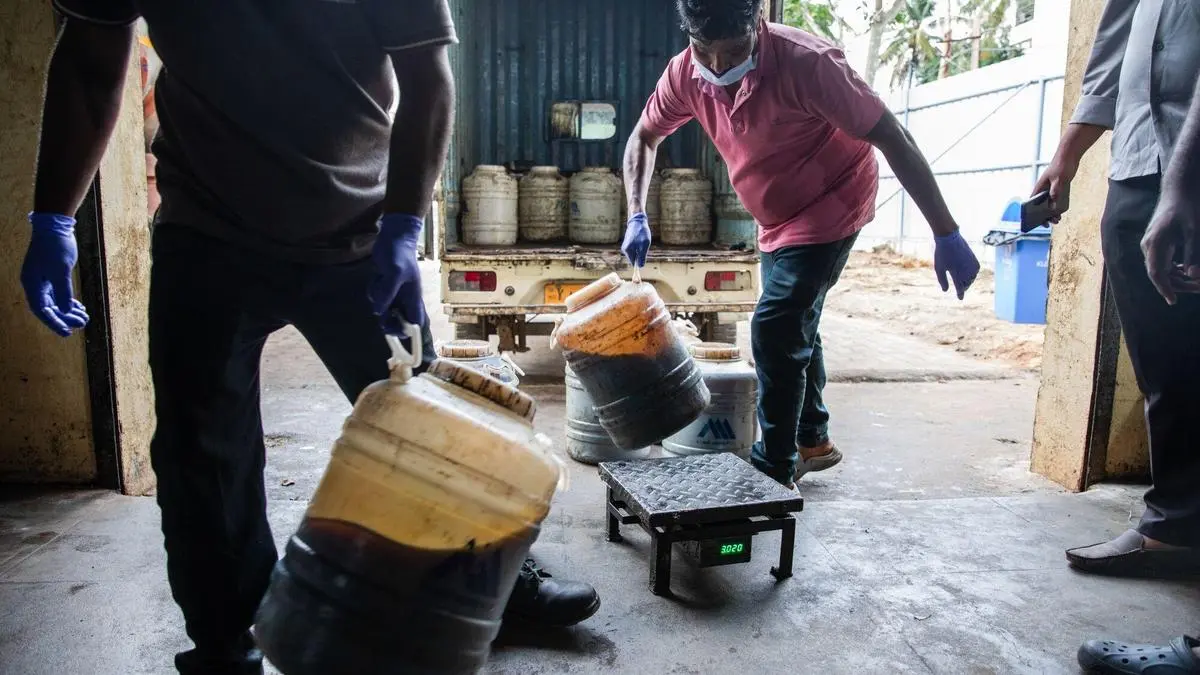
The grease hunters of Bengaluru want Leftover fryer oil to fuel Indias Jets
Bengaluru has become a hub for innovative biofuel initiatives as collectors harvest old cooking oil from restaurants for energy production. With Indias substantial reliance on imported crude oil, the drive to tap into domestic energy sources grows stronger. Major oil enterprises are setting lofty targets for integrating sustainable aviation fuel and biodiesel into their operations.

Inside Israel-linked call centre in Turkey that scammed Indians
Istanbul:The pitch almost always began with USD 250. Put that in and watch it grow, the caller would say. For many investors in India who picked up the phone, it was the first step into a scheme that did not let go until their savings were gone, two people who worked inside the fraud said. Get the latest updates in Hyderabad City News , Technology , Entertainment , Sports , Politics and Top Stories on WhatsApp & Telegram by subscribing to our channels. You can also download our app for Android and iOS .

Results of Karnataka Legislative Council polls to be announced today
As many as 43 candidates, including three sitting members, are in the fray

Results of Karnataka Legislative Council polls to be announced today
As many as 43 candidates, including three sitting members, are in the fray
Blackstones GCC in Bengaluru anchors fresh $50bn India plan
A dash of pink, a drive for change
DYFI threatens stir over Mangaluru revenue rules, corruption
Dakshina Kannada unit calls land conversion norms unscientific, flags problems with approvals
Hennur-Bagalur road concretising works get two-month deadline
Comfy seats, Wi-Fi, higher fares: Sarjapur commuters say yes to premium BMTC buses
Bengalurus frontline workers battle lung, metabolic health risks
Garbage collection suffers over tender standoff with contractors
Passenger caught at KIA with ganja hidden in shoes
From traffic jams to construction dust, doctors assess pollution risks
Love thy neighbour, no ego clash over flat utilities: HC
Bengaluru hit-and-run: Cook dies after being dragged 150 metres under car, 3 held
Yakshagana-clad Ullal youth raise 2L for childs surgery
Mangaluru man missing in Israel for 10 days, kin seek Embassy help