


Hassan dist administration invites Deve Gowda to Hasanamba festival

Global cyberscams cost Americans billions as US recovery efforts lag
The US government isn't doing enough to fight the surge in cyberscams, and partnerships with the private sector remain fragmented and voluntary, an investigation into the global scam industry led by the Joint Economic Committee of the US Congress has found. The government doesn't even have a unified accounting of how much money has been seized from overseas scam compounds, nor how much has been returned to victims, according to the report, released Tuesday by ranking Democrats Senator Maggie Hassan and Rep Don Beyer. Citing findings from a yearlong investigation into global scams by The Associated Press and FRONTLINE, the report called for greater collaboration across agencies, support for victims, and deeper private sector engagement. Transnational criminal organisations run massive compounds that exploit US technology, including AI, to carry out scams against Americans with devastating consequences, Hassan said in an email. The scale of this exponentially growing challenge ...

Muneeba Ali To Lead Pakistan In ICC Womens Emerging Nations Trophy
Emerging Nations Trophy: Wicketkeeper-batter Muneeba Ali will captain Pakistan at the ICC Womens Emerging Nations Trophy 2026 after the Pakistan Cricket Board (PCB) announced a 14-member squad for the tournament on Tuesday. The 10-team competition will be held in Ajman, United Arab Emirates, from November 12 to 25. Pakistan will make their debut in the tournament, which was launched in 2025, with Ayesha Zafar named vice-captain. The squad features six other batters alongside Muneeba and Ayesha: Eman Naseer, Eyman Fatima, Sadaf Shamas, Saira Jabeen and Shawaal Zulfiqar. Gull Feroza, recently named the best wicketkeeper-batter at the National Womens T20 Tournament, has also been included. Left-arm spinner Nashra Sundhu will spearhead the bowling attack, supported by fellow spinners Momina Riasat, Tuba Hassan and Umm-e-Hani. Tasmia Rubab and Waheeda Akhtar are the frontline pace options. Pakistan will be without regular captain Fatima Sana, who is set to feature in her maiden Womens Big Bash League season in Australia. Twelve players have retained their places from the teams previous assignment, while Sadaf Shamas and Waheeda Akhtar have been recalled. Pakistan, who recently won the bronze medal at the Asian Games in Japan, have been placed in Group B alongside defending champions Thailand, Bangladesh, the Netherlands and Zimbabwe. Group A comprises Sri Lanka, Ireland, Scotland, Papua New Guinea and hosts the UAE. The tournament will feature 30 matches, beginning with a single-league round-robin stage. The top three teams from each group will advance to the Super Six stage, where each side will play three matches. The top two teams will then contest the final on November 25. The Pakistan squad will assemble in Lahore on November 6 and undergo a three-day training camp from November 7 to 9 before travelling to the UAE. The tournament will feature 30 matches, beginning with a single-league round-robin stage. The top three teams from each group will advance to the Super Six stage, where each side will play three matches. The top two teams will then contest the final on November 25. Also Read: Special Cricket Stories Article Source: IANS

Film craze puts Seegigudda under pressure, visitor curbs likely
Hassan: Seegigudda, a scenic hill near Hassan that featured in the Kannada blockbuster Premada Oorali, is witnessing a massive influx of visitors, prompting authorities to consider restricting public access to the area. The films popularity has transformed the shooting location into a major attraction, drawing crowds over the past three weeks. The sudden surge has Get the latest updates in Hyderabad City News , Technology , Entertainment , Sports , Politics and Top Stories on WhatsApp & Telegram by subscribing to our channels. You can also download our app for Android and iOS .

Muslim Personal Law Board J&K appoints Syed Khalid Geelani to executive committee
Srinagar, Oct 26:The Muslim Personal Law Board J&K has appointed Syed Khalid Geelani, Sajjada Nishin of Peer Dastageer (RA), Khanyar Sharief, to its executive committee and named five other members as part of an organisational restructuring exercise. The appointments approved by the Boards chairman and Grand Mufti J&K, Mufti Nasir-ul-Islam Farooqi, and its Apex Committee, take effect immediately. The statement reads that in pursuance of the organisational restructuring and strengthening of the Muslim Personal Law Board J&K, the following dignitaries and members are hereby appointed with immediate effect. The names were submitted by PRO Syed Shabir Geelani and recommended for approval by Vice Chairman Syed Mohammad Aslam Andrabi. The appointments have been duly approved by Chairman and Grand Mufti J&K, Mufti Nasir-ul-Islam Farooqi; Vice Chairman Syed Mohammad Aslam Andrabi; General Secretary Prof. M. Yaseen Kirmani; and the Apex Committee of Muslim Personal Law Board J&K. The approved appointments are Syed Khalid Geelani Sajjada Nishin, Peer Dastageer (RA), Khanyar Sharief to the Executive Committee, Syed Mudasir Geelani Imam-o-Khateeb, Dastgeer Sahib (RA), Khanyar Sharief. Member, Syed Ahmed Rizvi Member, Ganderbal, Syed Shahid Shafi Geelani Member, Baramulla, Syed Javeed-ul-Hassan Bukhari Member, Kupwara and Syed Akhtar Hussain Shah Member, Anantnag. All appointed members are expected to uphold the constitution, principles, and institutional objectives of the Board and contribute towards strengthening its organisational framework, promoting unity, and serving the religious, legal, and social interests of the Muslim community.

Ghulam Hassan takes J&K Soft Tennis from grassroots to global stage
Srinagar, Oct 25: As three players from Jammu and Kashmir gear up to represent India at World Soft Tennis Championship in China, another name from the Union Territory will be part of the national contingent Dr. Ghulam Hassan, whose journey from grassroots organiser to international official mirrors the rise of soft tennis in J&K. Dr. Hassan has been appointed as Coach/Manager of the Indian team for the forthcoming World Championship in China, a fresh international assignment after serving as an official with the Indian team at the 9th Asian Soft Tennis Championship in South Korea held from September 13 to 23, 2025. The appointment was confirmed by the Amateur Soft Tennis Federation of India (ASTFI). His selection assumes significance as J&K will have triple representation on the playing front, Sidhani Singh, Shreemai Bhatt and Madhvender Singh Sambyal, who have been selected in the Indian team for the World Championship following their performance at national-level competitions. Their selection was widely reported in October and they were felicitated during the 21st Junior National Soft Tennis Championship at SKISC, Srinagar. While the spotlight will be on the athletes, officials like Dr. Hassan form the backbone of international campaigns, managing team coordination, athlete welfare, discipline and logistics to ensure players can focus on performance. A founding figure of the J&K Amateur Soft Tennis Association, Dr. Hassan has been instrumental in expanding the sport beyond traditional sporting centres. Under his stewardship, the Association has focused on rural outreach, district-level competitions and creating a structured competitive pathway, an effort documented by the J&K Sports Council. Taking the game to rural areas and providing a platform to budding sportspersons has been our priority, Dr. Hassan has maintained, underscoring a grassroots model that is now bearing fruit. The results are visible. At the Junior National Championship held in Srinagar, Shreemai Bhatt won two bronze medals while Madhvender Singh Sambyal secured a bronze, underlining the impact of sustained exposure and structured training. For J&K, where young athletes often battle geographical and infrastructural constraints, the simultaneous presence of three players and an official from the UT in the national contingent for a World Championship marks a watershed moment. It signals that J&K is no longer on the periphery but is steadily contributing to Indias international sporting pool. Sporting experts view the development as a case study in how sustained administrative effort, coupled with institutional support from the J&K Sports Council and ASTFI, can translate into international representation. As Team India prepares for China, the achievement is two-fold, it celebrates the merit of three young athletes wearing India colours, and acknowledges the quiet, persistent work of those who built the stage for them. The challenge now, stakeholders say, is to convert this milestone into a lasting ecosystem, more certified coaches, better infrastructure, wider district participation and a larger talent pool capable of competing at national and international levels. For hundreds of youngsters picking up a soft tennis racquet in courts across the UT, the message is clear: from a local court in Srinagar to the world stage in China, the distance is now bridgeable. Dr Hassans evolving role in Indian soft tennis, alongside the emergence of three J&K players on the world stage, offers a timely reminder that sporting progress is built by both those who compete and those who dedicate themselves to creating the conditions in which others can excel.
Equal freedom of speech for all?: Gh Hassan Mir questions Farooq Abdullahs remarks on Kashmir
Srinagar, Oct 25: Apni Party leader Gh Hassan Mir has questioned whether ordinary Kashmiris enjoy the same freedom of expression as influential political leaders, referring to Dr Farooq Abdullahs statement thanking Pakistan for raising the Kashmir issue at international forums. In a statement, Mir urged people to reflect on the difference between the freedom enjoyed by prominent political figures and the risks ordinary citizens may face for expressing similar views. Are the rules really the same for everyone? he asked, questioning whether an ordinary Kashmiri making similar remarks would enjoy the same freedom to speak or face police action, legal proceedings or detention under laws such as the Public Safety Act (PSA) or the Unlawful Activities (Prevention) Act (UAPA). Mir said Dr Farooq Sahib and other influential leaders could make controversial statements, while ordinary Kashmiris might fear the consequences of expressing similar opinions. Is this equal freedom, or a privilege reserved for a select few? he asked, stressing that every citizen deserved equal protection under the law. Calling for equal treatment, Mir said democracy must ensure equal rights, freedom and justice for all citizens, irrespective of their position or influence.
SKUAST-K establishes two community units to conserve Karnah sheep in border villages
Tangdhar, Oct 23: Sher-e-Kashmir University of Agricultural Sciences and Technology of Kashmir (SKUAST-K) has established two community-based conservation and multiplication units for indigenous Karnah sheep in Batlan village, alongside distributing livestock feed, mineral supplements and veterinary medicines to support sheep breeders in the remote border region. The initiative was undertaken on October 2223 by Division of Animal Genetics and Breeding, Faculty of Veterinary Sciences and Animal Husbandry (FVSc & AH), Shuhama, under ICARNBAGR Network Project on Animal Genetic Resources, under the leadership of Vice-Chancellor Prof. Nazir Ahmad Ganai. Each conservation unit comprises four ewes and one ram, bringing the total to eight ewes and two rams. The programme also provided 60 bags of feed, 100 packets of mineral mixture and essential veterinary medicines to support flock health and productivity. Prof. Reyaz Ahmad Shah, Dean, FVSc & AH, Shuhama, who attended as Chief Guest, underscored the importance of conserving indigenous livestock breeds for climate resilience, sustainable livestock production and rural livelihoods. Prof. Syed Shahnaz Shafi, Professor and Head, Division of Animal Genetics and Breeding, stressed the need for scientific breeding and systematic conservation of Karnah sheep, which are adapted to the challenging agro-climatic conditions of the Kashmir Himalayas. Scientists conducted field surveys and visited sheep flocks in Dildar, Gomal, Hajitra, Chota Kursi, Batlan and Jabdi villages, assessing flock management practices and identifying farmers breeding, nutrition and animal healthcare needs. Dr. Shahid Ahmad Shergojry, Associate Professor-cum-Senior Scientist, also sensitised breeders on genetic improvement, balanced nutrition, disease prevention and scientific flock management. More than 60 sheep breeders benefited from the awareness and field-level activities, while 10 technical consultations addressed concerns related to breeding, feeding, flock management and animal healthcare. The programme was attended by Dr. Fasal Hassan Dedmare, Sheep Development Officer; Dr. Meraj Ahmad Bhat, Veterinary Assistant Surgeon, Tangdhar; Dr. Saba Bukhari; departmental officials; and local sheep breeders, including women beneficiaries. The initiative reinforces SKUAST-Ks efforts to conserve the genetic identity of Karnah sheep while strengthening community participation and supporting livestock-based livelihoods in the border region. The programme concluded with a vote of thanks by Dr. Fasal Hassan Dedmare, who acknowledged the contributions of all participating stakeholders.

Shivakumar, Kharge conspired to frame me: Kumaraswamy on sting operation
Shivakumar, Kharge conspired to frame me: Kumaraswamy on sting operation Hassan: Union Minister H.D. Kumaraswamy on Saturday accused Karnataka Chief Minister D.K. Shivakumar and Home Minister Priyank Kharge of conspiring to implicate him in the sting operation case involving former chief minister and Congress Working Committee member Siddaramaiah. He alleged that the state government was [] The post Shivakumar, Kharge conspired to frame me: Kumaraswamy on sting operation appeared first on Mangalorean.com .

State Neglect Brings Mushk Mahal Closer to Collapse
The two-storied palace was constructed by Miyan Malik Mishk, a commander of Carnatic forces of Abul Hassan Tana Shah, the last of the Qutb Shahi dynasty, in a six acre site to the south of Musi river in 1678.
Hassan Mir urges govt to hike pension of widows, orphans and other vulnerable sections
Srinagar, Oct 23: Apni Party leader Ghulam Hassan Mir has urged the Jammu and Kashmir Government to enhance the monthly pension for widows, orphans, elderly people and other vulnerable sections of society, while calling for the immediate release of pending payments. Mir said the National Conference (NC) government had been in office for nearly two years but had yet to fulfil its manifesto promise of increasing the monthly pension from Rs 1,000 to Rs 3,000. He said that, according to ground reports, beneficiaries had not received their monthly pensions for the past four months, causing considerable hardship to those who depend on the assistance for their daily needs. The monthly pension may not mean much to the government, but for these people, it means a lot, he said, questioning the delay in disbursement and urging the government to investigate the reasons behind it. Mir also criticised what he termed the government's apathy towards vulnerable sections of society, asking why their hardships were not being addressed on priority. If the salaries of senior government officials are withheld, there is an immediate outcry everywhere. Why, then, is there silence when the pensions of the most vulnerable people are delayed? he questioned. He urged the government to take immediate steps to clear all pending pension payments and fulfil its commitment to enhancing the monthly pension to Rs 3,000.
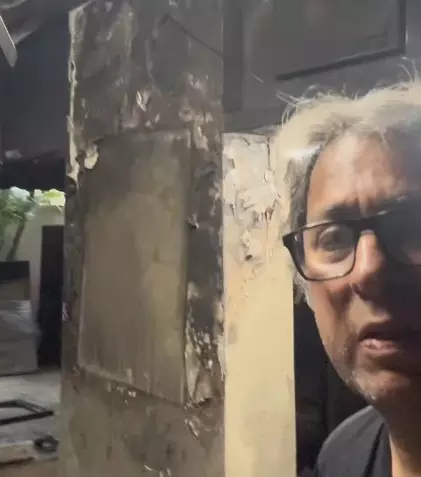
Talat Aziz shares glimpse of fire-ravaged home, says no amount of money can replace memories
Digital Desk | Mumbai, Oct 23 (IANS) Singer Talat Aziz has shared photographs of the devastation caused by a fire that engulfed his home, destroying treasured belongings, artefacts and memories accumulated over the years. Talat took to Instagram, where he shared a string of videos and pictures from his home. The ghazal maestro said the family now faces the daunting task of rebuilding their home from scratch, with faith, patience and hope. He wrote: Sharing some photographs of the devastation caused by the fire that engulfed our home and destroyed so much of what we had cherished over the years. The loss is not merely material. Along with our possessions, we have lost countless memories, precious artefacts and treasured belongings, each with a story and an emotional attachment that no amount of money can ever replace. He expressed gratitude to Allah for sparing their lives. Yet, amidst all this devastation, my heart is filled with gratitude to Allah Almighty for sparing our lives. It is His Will, and I firmly believe that there is a greater wisdom and purpose behind everything that happens, even if we are unable to comprehend it at this moment. We now face the daunting task of rebuilding our precious home from scratch, picking up the pieces and moving forward with faith, patience and hope. My heartfelt thanks to all our friends, relatives and well-wishers who have reached out with messages of love, concern, prayers and support. Your kindness has meant more to us than words can express. May Allah give us the strength to overcome this difficult time and bless and protect you all. Alhamdulillah for the gift of life. Aziz took his initial training in music from Kirana Gharana. He was trained primarily by Ustad Samad Khan and later by Ustad Faiyyaz Ahmed Khan. After his initial training, Aziz learnt music from the Ghazal singer Mehdi Hassan. He released his first album in 1980, under Jagjit Singh titled Jagjit Singh presents Talat Aziz. In 1981, he sang in the film Umrao Jaan.He has sung many songs for composers LaxmikantPyarelal and Rajesh Roshan. He has released many albums and has collaborated with singers such as Sonu Nigam, Lata Mangeshkar, Asha Bhosle, Ghulam Ali, Hariharan and Pankaj Udhas.
Apostle of Light on Sheikh-ul-Aalam released at Chrar-e-Sharief
Chrar-e-Sharief , Oct 22: Chairperson of the Jammu and Kashmir Waqf Board, Dr Syed Darakhshan Andrabi, on Thursday released Apostle of Light , an English-language biographical book on the life, teachings and spiritual legacy of Hazrat Sheikh-ul-Aalam Sheikh Noor-ud-Din Noorani (RA), authored by noted writer Baba Ghulam Nabi Adfar. The book was unveiled at a literary and academic event organised by Kashmir Markaz-e-Adab-wa-Saqafat at the Sheikh-ul-Aalam Conference Hall of the J&K Waqf Board in Chrar-e-Sharief. The event was attended by eminent scholars, writers and academicians, including Prof. G. N. Khaki, Dr Satish Vimal and Ghulam Hassan Talib, along with other intellectuals and admirers of Kashmirs Rishi-Sufi heritage. Noted author Inayat Gul moderated the programme and delivered the welcome address. Speaking on the occasion, Dr Andrabi appreciated the authors efforts to document the life and message of Sheikh-ul-Aalam in English, saying such literary works could help introduce Kashmirs spiritual and cultural heritage to a wider international audience. We need to tell our story of spiritual excellence to the world. Kashmir has a rich legacy of Rishi-Sufi thought, spiritual wisdom, compassion and universal human values, she said, adding that preserving and communicating this heritage was a collective responsibility. Dr Andrabi said the teachings of Sheikh-ul-Aalam transcended geographical, social and sectarian boundaries and continued to hold relevance in contemporary society. She highlighted the saints emphasis on spirituality, humility, compassion, human dignity, harmony and devotion to the Creator, noting that these values offered important guidance, particularly for younger generations. She also stressed the importance of documenting Kashmirs spiritual and intellectual traditions in languages such as English to raise awareness beyond Jammu and Kashmir. Our saints and spiritual masters have given us a universal message of peace, tolerance, coexistence and service to humanity. Their contribution should not remain confined to our local memory; it must reach readers, scholars and seekers across the world, she said. Dr Andrabi congratulated Baba Ghulam Nabi Adfar on the publication and expressed hope that the book would encourage further research and literary work on the lives and contributions of Kashmirs prominent Rishi-Sufi figures.
MP Er Rashid fulfils commitment, provides bus to GDC Handwara
Handwara, Oct 21:Government Degree College (GDC) Handwara received a college bus on Wednesday, fulfilling a commitment made by Baramulla Member of Parliament (MP) Er Rashid during his visit to the college last year. The bus has been funded under the Members of Parliament Local Area Development Scheme (MPLADS) and was handed over to the college authorities by MLA Langate Sheikh Khursheed in the presence of a team from the MPs office, including former BDC Chairman Langate Showkat Hassan Pandit, former Municipal Committee Langate Chairman Advocate Shahnawaz Abdullah and other dignitaries. Principal GDC Handwara Professor Aijaz Hussain Kanth was also present on the occasion. Speaking on the occasion, MLA Sheikh Khursheed said Er Rashid had promised to provide a bus for GDC Handwara during his visit last year. The commitment stands fulfilled today and hopefully it can turn out to be beneficial for college students, he added. During his two tenures as MLA Langate, Er Rashid consistently prioritised education and student welfare by providing free coaching to scores of students in Langate constituency, he said. MLA Khursheed also thanked the district administration and college authorities for facilitating the procurement of the vehicle and supporting the inauguration process. Asked about MPLADS funds, he said the funds were being recommended equitably across all 18 Assembly constituencies falling under the Baramulla Parliamentary Constituency, with the objective of addressing local needs and ensuring balanced development. Students expressed gratitude to Er Rashid for fulfilling his commitment, saying the bus would ease their daily commute. The facility would certainly improve student safety and reduce travel time from main town Handwara to our college. Although the bus was brought to the campus some 20 days ago, the inauguration was held today, a female student told the media. Principal Professor Aijaz Hussain Kanth and the college staff also appreciated the initiative, stating that improved transportation facilities would benefit students and contribute to a better academic environment.

'U.S & Zionist Regime Can't Protect Arabs': Iran Shuts Door On Nuclear Compromise After Lavrov Visit
Iran has ruled out nuclear negotiations for now, insisting that talks with the United States are focused exclusively on conditions for reopening the Strait of Hormuz. Hassan Ghashghavi, spokesperson for Irans parliament National Security and Foreign Policy Commission, said nuclear issues were not on Tehrans diplomatic agenda with Washington, Europe or any other party. He said the immediate focus was on seven conditions that the United States must fulfil before Iran reopens the strategic waterway, adding that diplomatic efforts were being conducted within the framework of a memorandum of understanding signed in Islamabad. Ghashghavi also dismissed reports of discussions over the transfer of nuclear materials during Russian Foreign Minister Sergey Lavrovs visit, describing such claims as untrue. Separately, he said regional countries were exploring new security arrangements involving Iran, arguing that existing mechanisms had become outdated and that the United States and Israel were not providing regional security.
'If Provoked, We Will Hit Europe': Iran Warns European Nations Amid U.S. Tensions
Iran has warned that European capitals could face missile strikes if European or regional powers take provocative action against Tehran. Iranian parliamentary commission spokesperson Hassan Ghashghavi also highlighted seven undersea internet cables beneath the Strait of Hormuz, claiming Iran has the capability to target critical communications infrastructure. The warning follows similar remarks by the Islamic Revolutionary Guard Corps. Tehran says negotiations with Washington remain conditional on seven demands, while disagreements over maritime security continue to obstruct diplomatic progress.#Iran #Europe #IranMissiles #StraitOfHormuz #IRGC #IranNews #BreakingNews #UnderseaCables #InternetSecurity #USIranTensions #MiddleEastCrisis #Geopolitics #WorldNews #CyberSecurity #GlobalSecurity
Ranji Trophy 2026-27: Vidarbha beat J&K by 3 wickets, Bhutes 8-wicket haul seals win
Srinagar, Oct 20:Jammu and Kashmir suffered a dismal batting collapse in their second innings before Vidarbha chased down the target to register a three-wicket victory in their Ranji Trophy Elite Group match at the Sher-i-Kashmir Cricket Stadium here on Tuesday. After securing a 45-run first-innings lead, Vidarbha bowled out J&K for 123 in their second innings, setting themselves a target of 79 runs. Although J&Ks frontline pace duo of Umar Nazir and Sunil Kumar fought hard to keep their side in the contest, the total proved too small to defend as Vidarbha reached 81 for seven to seal the victory on day 3. Vidarbha opener Ravikumar Samarth was named Player of the Match for his century and a total of 149 runs across the match, while Nachiket Bhute delivered a decisive performance with the ball, finishing with eight wickets. Resuming their second innings after conceding a first-innings lead, J&Ks batting line-up crumbled against Vidarbhas disciplined bowling attack. The collapse was particularly damaging at the top, with Yawer Hassan, nightwatchman Umran Malik and Lone Nasir all dismissed for ducks, leaving J&K in serious trouble early in the innings. Qamran Iqbal offered some resistance with 38 off 111 balls, while Abdul Samad provided a brief counterattack, scoring 39 off just 30 deliveries, including three fours and four sixes. However, neither contribution was enough to prevent the innings from falling apart. Kawalpreet Singh managed four runs, captain Paras Dogra was dismissed for six, and wicketkeeper Rydham Sharma scored five. Abid Mushtaq made eight, while Umar Nazir contributed 16 before falling as the innings folded for 123 in 39.2 overs. Bhute was the chief destroyer, claiming five wickets in the second innings to finish the match with eight wickets. He received support from other bowlers, maintaining pressure on the J&K batters. With only 79 runs to defend, J&K needed early breakthroughs to have any realistic chance of turning the match around. Umar Nazir and Sunil Kumar responded with spirited spells, giving their side a fighting chance despite the modest target. Umar removed two batters, while Sunil led the attack with four wickets in the chase, repeatedly troubling Vidarbhas batting line-up. Sunil finished with figures of four for 30 in 11 overs, while Umar took two for 50 in 11.5 overs. Vidarbha, however, held their nerve despite losing seven wickets. Harsh Dubey remained unbeaten on 22, while Bhute contributed an unbeaten 13, helping the visitors cross the line at 81 for seven in 22.5 overs. For J&K, the defeat will be a reminder of the importance of batting partnerships and resilience under pressure. While the pace attack showed determination in trying to defend an inadequate total, the second-innings collapse left the bowlers with little margin for error. Samarths match-winning contribution with the bat and Bhutes incisive bowling proved decisive as Vidarbha completed a hard-fought victory, leaving J&K to reflect on a disappointing batting display on home soil.

1998 Coimbatore Blasts Convicts Get Parole, BJP Jabs With Betrayal Remark
The Tamil Nadu government, led by Chief Minister Vijay, allowed the 60-day break from jail to Mohammed Ansari, Mohammed Ali, Monappa alias Mohammed Hassan, Mohammed Ajam and Nawab Khan, who were convicted for orchestrating the blasts.
FIFA Suspends Egypt Coach Hassan, Forward Zico For Three And Five Matches
Hassan was sanctioned after blaming refereeing errors for his country's elimination from the tournament in the last 16, while Zico insulted the referee in a post-match interview

District Health and Family Welfare Society, Hassan (DHFWS Hassan) has announced 24 vacancies across various posts. The recruitment drive includes Pharmacist, Staff Nurse, Multi-Purpose Worker, Specialist Doctor, and other positions. The offline application process will begin on 19 October 2026, and the last date to apply is 05 November 2026. Further details are available at hassan.nic.in.

Soccer-FIFA suspends coach Hassan and forward Zico for three and five matches
FIFA has suspended Egypt coach Hossam Hassan
Over 97,500 Students Appear in JKBOSE Class 10th Exams, 1,003 Centres Set Up
Srinagar, Oct 19 : More than 97,500 students are appearing for the Class 10 annual examinations across Jammu and Kashmir, with around 1,003 examination centres established across the Union Territory, JKBOSE Secretary Sheikh Ghulam Hassan said on Monday. The examination centres have been set up across the 10 districts of the Kashmir Valley, seven districts of the Jammu division, and the twin districts of Leh and Kargil, JKBOSE Secretary said. He said students were appearing for the examinations in a positive atmosphere and expressed hope that they would perform well. JKBOSE secretary Hassan said the Jammu and Kashmir Board of School Education (JKBOSE) had made special arrangements for Children with Special Needs (CWSN), including a dedicated examination centre at the board office. Such candidates are provided a relaxation of five marks in the passing criteria, 20 minutes of additional time and scribes, depending on the nature of their disabilities, he said. The secretary said the board was committed to ensuring that students with special needs could pursue their academic goals without facing unnecessary difficulties. He said decisions regarding examination arrangements and reforms were taken collectively after consultations with officers, joint secretaries and deputy secretaries to ensure the smooth conduct of examinations. Our effort is to ensure that stakeholders, especially students, do not face any problems and can continue their academic journey, Hassan said. The Class 10 annual examinations are being conducted across Jammu and Kashmir amid arrangements aimed at ensuring their smooth and hassle-free conduct, he added. (KNS)

JKBOSE Exams: Around 2.69 Lakh Students to Appear Across 2,602 Centres
SRINAGAR: Around 2.7 lakh students are expected to appear in the Jammu and Kashmir Board of School Education (JKBOSE) examinations for Classes 10, 11 and 12, with 2,402 examination centres established across 10 Kashmir districts and six winter-zone districts of Jammu division. JKBOSE Chairman Ghulam Hassan Sheikh said the Class 10 examinations would begin on []

Hassan Minister holds meeting on temple premises to finalise expenses for Hasanamba festival
The Minister says expenditure should be kept to a minimum this year because the State was facing severe drought, and asked officers to be vigilant about the money spent on arrangements.
Ranji Trophy 2026-27: J&K lose both openers early after Vidarbha opt to field
Srinagar, Oct 18:Defending champions Jammu and Kashmir made several changes to their playing XI for their second Ranji Trophy Elite match against Vidarbha at Sher-i-Kashmir Stadium in Srinagar on Sunday, with India pacer Umran Malik returning to the side. Vidarbha won the toss and elected to field first, putting J&K in to bat. J&K have left out Shubham Khajuria and Shubham Pundir, while Yawer Hassan, Kawalpreet Singh and wicketkeeper Rydham Sharma have been brought into the playing XI in place of Kanhaiya Wadhawan and other players. The bowling attack has also been reshuffled, with Abid Mushtaq returning to strengthen the spin department and Umar Nazir coming in place of Auqib Nabi who is leaving for New Zealand. Umran's inclusion adds pace to the J&K attack. J&K, however, got off to a shaky start with both openers departing early. They were 40 for two at the time of reporting this report, leaving the middle order with the responsibility of rebuilding the innings. Squads J & K - Playing XI - (Abdul Samad, Abid Mushtaq, Kawal Preet Singh, Lone Nasir Muzaffar, P K Dogra (C), Qamran Iqbal, Rydham (Wk), Sunil Kumar, Umar Nazir, Umran Malik, Yawer Hassan) Vidarbha - Playing XI - (A Mokhade, A V Wadkar (C, Wk), Bhute, Danish Malewar, Dhruv Shorey, Harsh Dubey, Mandar Mahale, Praful Hinge, R N GURBANI, Samarth R, Y R Thakur)

Dasara festival: Special trains between Arsikere and Mysuru
The trains will stop at Habanghatta, Bageshapura, Hassan, Mavinkere, Holenarsipur, Annechakanahalli, Sravanur, Mandagere, Birahalli, Akkihebbalu, Hosa Agrahara, Arjunahalli, Hampapura, Krishnarajanagara, Dornahalli, Sagarkatte, Kallur Yadahalli, Krishnaraja Sagara and Belagula stations
Fodder worries mount in drought-hit Hassan
Youth and Choir Members of St Mary
Youth and Choir Members of St Marys Church, Marianagar, Visit Eucharistic Shrine at Vilakkannur Hassan: In a spirit of deep faith and Eucharistic devotion, the youth and choir members of St Marys Church, Bellame, Marianagar, in the Diocese of Chikmagalur, undertook a devotional pilgrimage to the Eucharistic shrine at Vilakkannur, Kerala, accompanied by their parish [] The post Youth and Choir Members of St Marys Church, Marianagar, Visit Eucharistic Shrine at Vilakkannur appeared first on Mangalorean.com .

2.7 lakh students to appear in BOSE exams
Confidential material reached local police stations: Chairman Srinagar, Oct 16: Jammu and Kashmir Board of School Education (BOSE) Friday said at least 2,70,000 students are all set to appear in upcoming board exams of 10th, 11th and 12th standard. Addressing a press conference, JKBOSE Chairman, Ghulam Hassan Sheikh said the examination of 10th class is []
Goliath Roller Coaster HORROR: The Safety-Bar Theory Emerging After Hassan Kariems Death
A former Six Flags Over Georgia operator has shared a possible theory about the fatal Goliath roller coaster accident that killed Hassan Jihad Ibn Kariem. Brycen Whatley explains how the rides safety restraints and locking mechanism work, raising the possibility of pin-slipping after riders reported unusual clicking sounds. He stresses that such a failure would be very unlikely. The fatal incident remains under investigation, and no official cause has been confirmed. Here are the key details.
Hassan gears up for Hasanamba fest, 1,200 revenue staff readied
DJMC IUST organises national-level Film Festival 2026
Awantipora, Oct 15: The Department of Journalism and Mass Communication (DJMC), Islamic University of Science and Technology (IUST), organised the national-level Film Festival 2026 on Thursday. The festival brought together aspiring filmmakers and students from diverse educational institutions to celebrate cinema and creative storytelling. As many as 27 short films and documentaries were screened on the occasion, of which 22 were shortlisted for the competition among school, college and university students participating from various states of India. A film from IUST titled Deception by Afnan Manzoor bagged the best film award, Compulsion from Amar Singh College received second film award, Bindiya from Central University of Haryana received third best film award, while DJMC IUSTs Lemonade received the special Jury-mention award. Prof. Shahid Rasool, Dean Academic Affairs, Central University of Kashmir, Bollywood actor-director Mir Sarwar and filmmaker and Founder, Renzu Films, Danish Renzu were the jury members for the competition. In his presidential address, Prof. Shakil Ahmad Romshoo, Vice Chancellor, IUST, underlined the importance of film making and storytelling through cinema to promote skilful creativity among students and institutions. He stressed that inherent creativity is often stifled by the conventional education system. However, universities are now building ecosystems for innovation and entrepreneurship while keeping in view the ethical use of technology and media, said Prof. Romshoo, who was the chief guest on the occasion. Dean Academic Affairs, IUST, Prof. Sheikh Ajaz Bashir, and Dean School of Humanities and Social Sciences, IUST, Dr. Afroz Ahmad Bisati joined as the guests of honour. Earlier, welcoming the guests and participants, Dr. Rabia Noor, Head, DJMC, stressed that media education must extend beyond the classrooms and textbooks, adding that the Film Festival 2026 is one such initiative, designed to provide a platform to emerging filmmakers to showcase their talent, and learn from experienced practitioners of the art and craft of filmmaking. Meanwhile, a special edition of Times Echo, IUST news magazine, titled IUST@2047: Special Edition on Institutional Development Plans was unveiled on the occasion. The edition brings together the IDPs of various departments, centres and offices of IUST, reflecting their roadmap for growth towards a developed India by 2047. The participating institutions included DJMC IUST, Government College for Women M.A. Road, GDC Anantnag, Amar Singh College, Green Valley Educational Institute, Heritage School Jammu, SRM Welkin School Sopore, Media Education Research Centre, University of Kashmir, Central University of Haryana, Central University of Punjab, and Government Medical College and Hospital, Chandigarh and Government College for Women, Jammu, among others. Besides, five other films produced by DJMC IUST were screened on the occasion. The screening was followed by a post-film panel discussion of jury members, moderated by Dr. Haifaa Mohammad Ahsan, Assistant Professor, DJMC, IUST. Formal vote of thanks addresses were presented by Dr. Ruheela Hassan, Dean Outreach and Dr. Sayar Ahmad Mir, Assistant Professor, DJMC, IUST. Dean of Students, Dr. Monisa Qadiri, Dean Research Dr. Aabid Shalla, Finance Officer, Sameer Wazir, CEO CIED-IUST, Prof. Parvaiz Mir, Coordinator Community Radio Station, Dr. Mujeeb Liyakat, among other University officials, were also present on the occasion.
SIX FLAGS DEATH SHOCK: Witnesses Recall Victims FINAL LOOK Before HORRIFIC FALL
Six Flags Over Georgia is preparing to reopen just days after the fatal Goliath roller coaster accident that killed 42-year-old teacher Hassan Jihad Ibn Kariem. Witnesses are now describing the terrifying moments surrounding his fall, including claims that he locked eyes with people as he plunged from the ride. Riders also recounted a bloody aftermath, while Kariems devastated family is pleading with the public to stop sharing images of his final moments as they grieve their sudden loss.
'$14 million autism fraud & $465K meal scheme': Somali woman Asha Farhan Hassan charged in Minnesota
38 identity documents found partially burnt in Sakleshpur
Hassan administration orders FIR and probe; officials say documents do not appear linked to SIR
Six Flags Dads Final Hours REVEALED: Hassan Kariems Last Post Surfaces After Fatal Goliath Fall
Hassan Jihad Ibn Kariems final social media post has resurfaced after the 42-year-old Georgia father died in a fall from Six Flags Over Georgias Goliath rollercoaster. According to The Mirror, Kariem was riding beside his young son while his wife and daughter watched from below. Witnesses told WXIA about the horrifying incident, while Atlanta Public Schools remembered Kariem as a cherished member of its community. As authorities investigate the circumstances of his death, nine comparable rollercoasters across six theme parks were temporarily shut down as a precaution.
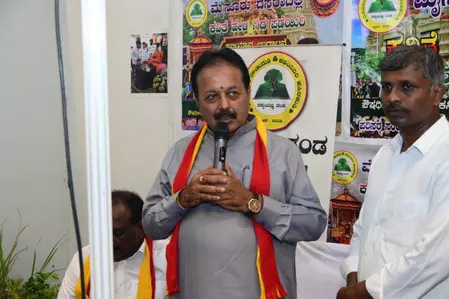
JDS behind sting op: Ktaka Minister hits back at Kumaraswamy
Digital Desk | Mandya, Oct 15 (IANS) Karnataka Water Resources Minister N. Cheluvarayaswamy on Thursday alleged that the Janata Dal (Secular) was behind the alleged sting operation targeting Chief Minister Siddaramaiah and launched a sharp attack on Union Minister H.D. Kumaraswamy over his remarks on the states political developments. Who is Kumaraswamy? Who is he to refuse to accept D.K. Shivakumar as Chief Minister? What does he have to do with this? Cheluvarayaswamy, a close associate of CM Shivakumar, asked while responding to questions from the media on Kumaraswamys reported reluctance to accept Shivakumar as Chief Minister. He is a Union Minister. Let him do his job. He must be out of his mind to make such statements instead of concentrating on his responsibilities, he said. Alleging that the JD(S) was behind the sting operation, Cheluvarayaswamy said, Who else could carry out such a sting operation if not the Janata Dal? A video claiming that a sting operation had been conducted against Siddaramaiah is being circulated through their social media pages. The police have arrested those accused of circulating the video. What is wrong with that? Questioning the timing of the video's release, he asked why footage reportedly described as old was being released now. Siddaramaiah would never violate the law or engage in any wrongdoing that could cause embarrassment. The Congress as a whole would not indulge in such activities, he said. Challenging Kumaraswamy to take up the matter with the Prime Minister and refer it to investigative agencies, Cheluvarayaswamy said, Let Kumaraswamy speak to Prime Minister Narendra Modi and hand over the matter to the investigative agencies for a probe. The minister also questioned Kumaraswamy's expressions of concern for Siddaramaiah, alleging that he had not shown such sympathy earlier. How has Kumaraswamy suddenly developed such concern and affection for Siddaramaiah when he had shown none until now? He is the one who creates a problem and then pretends to be helping resolve it, Cheluvarayaswamy alleged. Referring to the controversy surrounding the pen drive case involving former Hassan JDS MP Prajwal Revanna, the minister accused Kumaraswamy of showing concern only for his nephew while ignoring the alleged victims. Kumaraswamy claims that injustice was done only to Prajwal Revanna in the Hassan pen drive case. He has not shown even the slightest concern for the hundreds of women who were victims, Cheluvarayaswamy alleged. Siddaramaiah has obtained a court order restraining the circulation of a defamatory video targeting him and has also lodged a police complaint. The Congress government has detained JD(S) workers in connection with the case, prompting Union Minister H.D. Kumaraswamy to launch a scathing attack on Chief Minister D.K. Shivakumar and Home Minister Priyank Kharge. The controversy has stirred up state politics.
Six Flags Takes Drastic Action: Nine Rides Closed After Dad's 200-ft Death Fall
A fatal 200-foot roller coaster plunge has sent shockwaves through Six Flags, forcing the temporary shutdown of nine rides across six amusement parks after 42-year-old Hassan Jihad Ibn Kariem was thrown from the Goliath at Six Flags Over Georgia. The October 12 tragedy left Kariem dead and several other people injured, triggering an investigation by local authorities. Six Flags Entertainment Corporation said similar attractions were closed out of an abundance of caution, adding: We are deeply saddened by the guest incident at our park today. The company said it was supporting affected guests and staff as investigators work to establish what happened. Fresh eyewitness reports about earlier maintenance checks and unusual clicking from the rides restraints have added to the scrutiny, although no restraint failure has been confirmed.
Six Flags Roller Coaster DEATH: Riders Reveal Strange Restraint Issues Before Fatal Fall
New eyewitness accounts are raising questions after Hassan Jihad Ibn Kariem, 42, died in a fall from the Goliath roller coaster at Six Flags Over Georgia. Riders say the safety restraints repeatedly clicked and were checked several times before the ride began. The teacher and father had reportedly survived a car fire with his daughter just weeks earlier. Investigators are examining the fatal incident as witnesses recount the terrifying moments aboard the roller coaster.
Athletics-Olympic champion Hassan withdraws from NYC Marathon
Olympic
Hundreds of voter IDs, Aadhaar, PAN cards burnt in Hassan
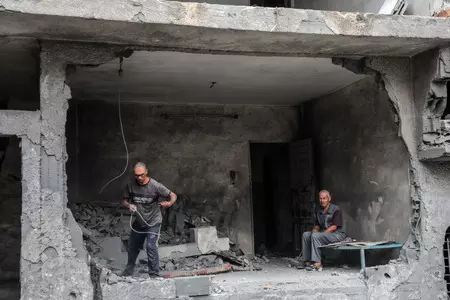
Israeli military says killed Hamas Commander in Gaza City
Digital Desk | Jerusalem, Oct 14 (IANS) The Israel Defence Forces (IDF) said in a statement on Wednesday that it had killed a Hamas commander in an airstrike in Gaza City. The commander, identified as Momen Ahmad Salameh Ay, allegedly held Israeli hostages in Hamas captivity in Gaza City and served as an aide to commanders of Hamas's Gaza Brigade. According to the Israeli military, he had recently advanced attacks against Israeli soldiers and civilians and attempted to restore Hamas's capabilities. The IDF said it had taken steps to minimize civilian casualties ahead of the airstrike, which was carried out Tuesday, Xinhua news agency reported. In a separate statement, the IDF said infantry soldiers operating in the village of Kfar Shouba in southern Lebanon had located a ready-to-detonate explosive device, a Hezbollah position, and additional weapons used by the group. On Friday, the IDF said in a statement that it had killed three militants in Gaza City. The IDF said two of the men were identified as Hassam Walid Hassan Abu Al-Ata, allegedly a commander in the rocket unit of the Palestinian Islamic Jihad's military wing, and Magdi Moein Yousef Al-Ayoubi, also a member of the group's military wing. The third was identified as Muhammad Aja, a company commander in Hamas' military wing, it added. According to the IDF, the militants, killed in aerial strikes on Thursday, had recently advanced attacks against Israeli soldiers and worked to restore the capabilities of the two groups. In a separate statement, the IDF and the Shin Bet domestic security agency said they had dismantled four weapons storage facilities belonging to Hamas and Islamic Jihad across the Gaza Strip. The facilities contained dozens of weapons and other military equipment, including rockets, explosive devices, mortars, and Kalashnikov rifles, the statement said. /as
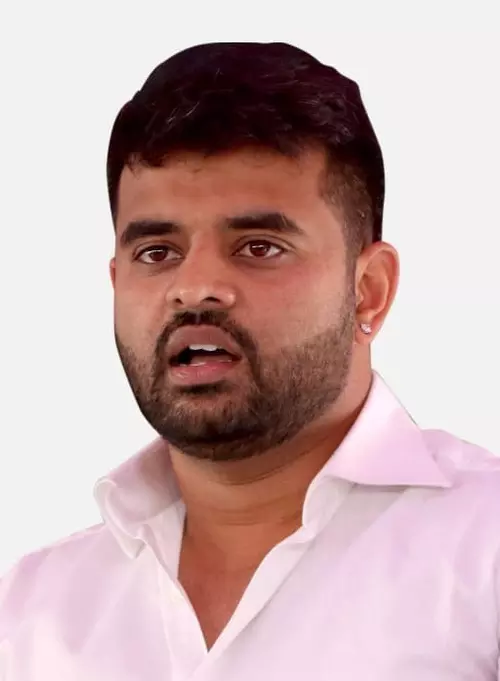
Digital Desk | Bengaluru, Oct 14 (IANS) Karnataka Water Resources Minister N. Cheluvarayaswamy on Wednesday accused Union Minister for Heavy Industries and Steel H.D. Kumaraswamy of showing sympathy towards rape accused former Hassan MP Prajwal Revanna while ignoring the plight of the women allegedly victimised by him in the Hassan pen drive case. It can be noted that former JD(S) MP Prajwal Revanna is Kumaraswamy's nephew. Prajwal Revanna, who is also the grandson of former Prime Minister H.D. Deve Gowda, is convicted in a rape case and currently lodged in Bengaluru Central Jail. Cheluvarayaswamy said Kumaraswamy should file a complaint if he had information about those responsible for distributing the pen drives, assuring that action would be taken and an investigation could be initiated. H.D. Kumaraswamy seems to think Prajwal Revanna is an innocent boy. He asks who was behind the Hassan pen drive controversy. Let him file a complaint against those who distributed the pen drives, and action can be taken. If he files a complaint, I will personally request the Chief Minister to order an investigation, Cheluvarayaswamy said. The Minister said the Union Minister appeared to have sympathy for Prajwal Revanna but not for the hundreds of women who allegedly suffered injustice because of him. He has sympathy for Prajwal Revanna, but not for the hundreds of women who suffered injustice because of him. What about the lives of those women? Where are they today? What is the condition of their families? What has happened to their personal lives? Does he know the hell they are going through? he asked. Cheluvarayaswamy said the Congress had refrained from repeatedly raising the Hassan case, considering its sensitivity, but accused Kumaraswamy of bringing up the issue repeatedly. It can be recalled that Union Minister for Heavy Industries and Steel, H.D. Kumaraswamy, on Tuesday questioned the timing of developments related to rape accused former MP, Prajwal Revannas prison transfer, alleging that such issues were being brought to the fore to divert public attention when matters such as the Bidadi farmers protest came up for discussion. Addressing a press conference in Bengaluru, Kumaraswamy asked what the authorities had been doing for nearly one-and-a-half years regarding the alleged incidents at Parappana Agrahara Central Prison and why the issue surfaced when the Bidadi farmers protest began. Referring to media reports about Prajwal Revanna being shifted to Hindalga prison and subsequently brought back, he sought clarity on who had ordered the transfer, who had directed his return and who had made the relevant phone calls. He urged the state government to provide answers. Kumaraswamy clarified that he had not criticised the formation of a Special Investigation Team (SIT) to probe the Prajwal Revanna case. However, he insisted that the same level of seriousness should be shown in other cases as well. Questioning the progress of the investigation into the circulation of pen drives linked to the case, he asked how many people had been arrested for producing and distributing them, how many women had filed complaints and what the investigation had revealed.
Ghulam Hassan Mir hits out at NC govt over unfulfilled poll promises | GKTV Interviews
Senior Apni Party leader Ghulam Hassan Mir hits out at the ruling National Conference government, accusing it of being 'unable to deliver' on its pre-poll promises. In an interview with GKTV, Mir said ever since its formation in 2020, Apni Party has made all possible efforts to safeguard rights of J&K's residents, with regard to their rights over land and jobs. The veteran politician said return of statehood was imminent, while he stressed that need of the hour was good governance. Mir said dual power structure, as witnessed in J&K is a tried and tested formula in places such as Delhi, where it never hampered developmental works. The senior leader recollected his association with PDP and pointed fingers on how the party, which came into formation as a political alternative, has succumbed to become 'yet another example of dynasty politics'. Host: Saqib Malik. Camera: Mubashir Khan Edit: Afnan Habib

Hassan police arrest one in connection with murder of elderly woman in Arkalgud taluk
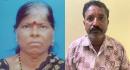
Hassan murder case: Man held for killing lender over unpaid loan
Hassan: A 58-year-old man has been arrested for allegedly killing a 67-year-old woman over a loan repayment dispute and throwing her body into a canal in Arakalagudu taluk. Police identified the accused as Ramesh, who allegedly murdered Lakshmamma and stole approximately 120 grams of her gold jewellery. The case came to light after Lakshmammas body Get the latest updates in Hyderabad City News , Technology , Entertainment , Sports , Politics and Top Stories on WhatsApp & Telegram by subscribing to our channels. You can also download our app for Android and iOS .
Hassan SP inspects hotel, notices violations
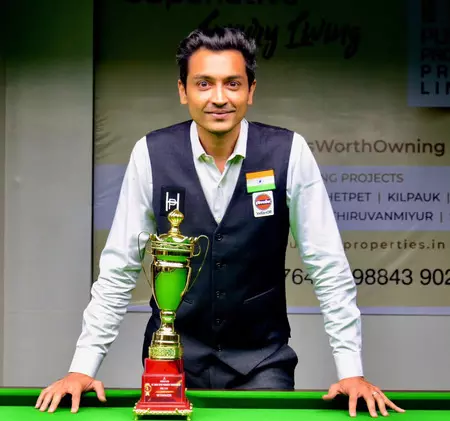
India tops Commonwealth Cue Sports Championships with 13 medals
Digital Desk | Ahmedabad, Oct 10 (IANS) India finished on top with 13 medals, comprising three gold, five silver and five bronze, at the Commonwealth Cue Sports Championships 2026, which concluded at the Veer Savarkar Sports Complex in Ahmedabad on Saturday. Hosted by the Billiards & Snooker Federation of India (BSFI), the Championships were held under the endorsement of the World Confederation of Billiards Sports (WCBS) and Commonwealth Sport. The medal ceremony was graced by Indian Olympic Association (IOA) President Dr PT Usha, who attended the occasion as the Chief Guest. Indias campaign was headlined by Aditya Snehal Mehta, who won gold in Mens Snooker after defeating fellow Indian Dhvaj Haria 3-0 in an all-Indian final. Anupama Ramachandran also clinched gold in Womens English Billiards, overcoming compatriot Revanna Umadevi 1-0 to claim the title. Rayaan Razmi added another gold for India in Mens English Billiards, defeating Siddharth Sailesh Parikh in the all-Indian final. In Mens Snooker, Haria finished with the silver medal, while Laxman Singh Rawat claimed bronze alongside Sri Lankas Mohamed Thaha Irshath. Indias womens snooker contingent also enjoyed a strong showing, with Keerthana Pandian winning silver after losing 0-3 to Great Britains Rebecca Kenna in the final. Ishika Shah and Shruthi Lakshminarayanan secured bronze medals to add to Indias tally. In Womens English Billiards, Umadevi took silver following her final against Ramachandran, while Great Britains Mhairi Roberta Mackay and Australias Julie Watson claimed bronze medals. India also secured a silver and bronze in Mens Heyball, with Paras Gupta finishing runner-up after a closely contested 5-6 defeat to South Africas Jason Theron. Uzair Khan claimed bronze alongside Malaysias Mohd Hassan. In Mens 10-Ball Pool, Great Britains Mark Foster claimed the title with a 6-3 victory over compatriot Sheridan Burmester. Indias Divya Sharma secured bronze alongside Great Britains Paddy McLoughlin. In Womens 10-Ball Pool, Australias Meng-Hsia Hung won gold after edging South Africas Elzette Joen 5-4 in the final, while Singapores Neo Yue Xuan and Canadas Nathalle Chabot claimed bronze medals. Great Britain also celebrated titles in Womens Snooker and Mens Blackball, with Kenna defeating Pandian 3-0 and Lee Shepherd overcoming South Africas Shaun Martheze 7-3. Rwandas Frederic Ngaboyisonga and Namibias Curtis Izaaks secured bronze in Mens Blackball. In Womens Blackball, Ugandas Naiga Rukia defeated South Africas Prudence Nkosi 5-3 to win gold, while Australias Kolbe Poole and Great Britains Emma Cunningham claimed bronze. In Womens Heyball, Great Britains Kelly Fisher claimed the title after defeating Ugandas Rashidah Mutesi in the final. South Africas Marina Jacobs and Great Britains Mary Talbot secured the bronze medals. The Commonwealth Cue Sports Championships brought together 144 players from more than 40 nations for four days of competition across English Billiards, Snooker, Heyball, 10-Ball Pool and Blackball. The event marked the first time the multi-discipline Championships were staged in India and formed a centrepiece of the Billiards & Snooker Federation of Indias centenary celebrations. Indias 13-medal haul, including three gold, five silver and five bronze, underlined the countrys strength across multiple cue sports disciplines, with Indian players reaching finals and securing podium finishes on home soil. The Championships concluded with a celebration of international talent and Indias growing presence on the global cue sports stage.
JD(S) workers stage protest against Hassan DC
Israeli Flag Removed In European Parliament; Chaos Over Gaza War As MEP Blasts 'Hypocrisy'
French MEP Rima Hassan has sparked a major political controversy inside the European Parliament after removing an Israeli flag during an unofficial event in Strasbourg. Hassan says the gesture was a protest against the ongoing war in Gaza, alleged violations of international law and what she calls Europes double standard toward Israel.The incident escalated after Israeli artist Yaron Bob reportedly told Hassan: Palestine does not exist. It is a chimera, like unicorns... there are no Palestinian refugees, nor Palestinians.

Body Of Missing Woman Found In Canal; Murder Suspected
The body of a 67-year-old woman, Lakshmamma, was discovered stuffed in a plastic bag and dumped in the Hemavathi canal in Hassan, Karnataka. Police have registered a murder case and are investigating potential motives, including robbery or the involvement of an acquaintance, after she went missing on October 3.

Old womans body recovered from canal in Hassan
Hassan: A missing-person case took a grim turn in Arkalgud taluk after the body of a 67-year-old woman was recovered from a canal near Bettadahalli village. The body had allegedly been packed in a plastic bag and thrown into the water. The deceased was identified as Lakshmamma from Hirehallikoppalu village. She had been living with Get the latest updates in Hyderabad City News , Technology , Entertainment , Sports , Politics and Top Stories on WhatsApp & Telegram by subscribing to our channels. You can also download our app for Android and iOS .
DC Serves Notice On SP Over Permission For Ganesh Idol Immersion At Sacred Pond
Hassan DC K.S. Lathakumari served a notice to SP Shubhanwita over permission for Ganesh idol immersion at Devi Kere despite a ban order.
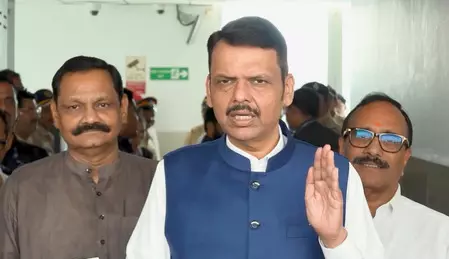
Digital Desk | Mumbai, Oct 6 (IANS) Maharashtra Chief Minister Devendra Fadnavis on Tuesday launched a sharp attack on the Opposition and Leader of the Opposition (LoP) in Lok Sabha Rahul Gandhi over the ongoing protests in New Delhi, alleging that a deliberate narrative was being created to undermine public faith in Indias constitutional institutions. Speaking to reporters after chairing the weekly Cabinet meeting, Fadnavis claimed that the Congress and the INDIA Bloc were attempting to spread chaos across the country and foster negativity towards constitutional institutions. He alleged that their objective was to repeatedly discredit constitutional bodies so that people would lose confidence in them, ultimately paving the way for the rejection of the Constitution itself. According to the Chief Minister, the narrative being promoted was that constitutional institutions were collapsing and incapable of delivering justice. Commenting on the Maharashtra Public Service Commission (MPSC) students agitation, Fadnavis said the state government had acted proactively and had accepted the demands raised by tribal students. However, he alleged that certain political elements were using students as instruments to further their own leadership ambitions. Addressing demands for the removal of the current MPSC Chairman, Fadnavis clarified that under Article 317 of the Constitution, the state government does not have the authority to directly remove the Chairman. He explained that such removal requires a recommendation to the President following an inquiry by the Supreme Court. The Chief Minister noted that the current Chairman was not in office when the alleged examination paper leak occurred. Nevertheless, he said the government had requested the Governor to initiate an inquiry into both serving and former chairpersons of the commission in order to instil confidence among aspirants. Fadnavis criticised opposition leaders and protest organisers for continuing the agitation even after the government had addressed the principal demands raised by students. He described the ongoing protests as being driven by political ego rather than genuine concern for student welfare. Despite constitutional limitations, he said, the government had requested the Governor to order a comprehensive inquiry into both current and former MPSC chairpersons and into the functioning of the commission during the period when the paper leak allegedly occurred. The Chief Minister assured students that the government had no intention of protecting anyone. He said that if the inquiry establishes wrongdoing or procedural lapses warranting action under Article 317, the state government would immediately recommend appropriate constitutional action to the President. Questioning demands for the Chairmans removal without an inquiry, Fadnavis said it would be unfair to seek the dismissal of an official who was not even in office when the alleged paper leak took place. At the same time, he reiterated that the government was prepared to investigate both current and former commission members and would not hesitate to act if any wrongdoing was established. Commenting on drought-relief measures, Fadnavis said the state had completed a review of drought conditions covering more than 23,000 surveyed villages. He added that ensuring drinking water availability remained the top priority. The Chief Minister said a Central government team is scheduled to visit Maharashtra on October 11 to assess the situation and facilitate financial assistance. On the Gokul Dairy elections, Fadnavis clarified the position of the ruling alliance and confirmed that the Mahayuti alliance would contest the Kolhapur Gokul Milk Union elections jointly under the leadership of Hassan Mushrif.
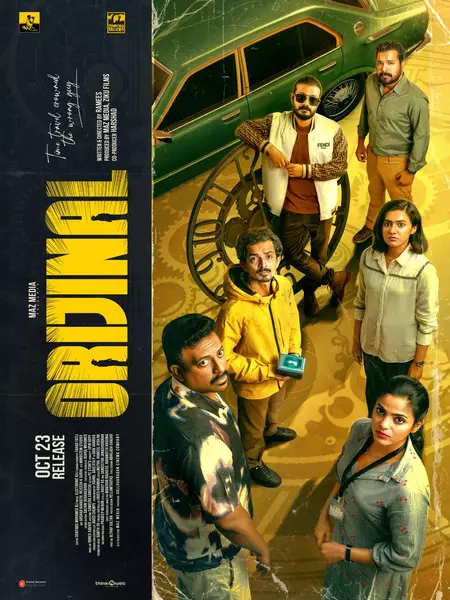
Sreenath Bhasis time-travel thriller 'Orijinal' to hit screens on October 23
Digital Desk | Chennai, Oct 6 (IANS) The makers of director Ramees's eagerly awaited time-travel thriller 'Orijinal', featuring actor Sreenath Bhasi in the lead, have now announced that their film will hit screens worldwide on October 23 this year. Actor Sreenath Bhasi shared the release date announcement poster put out by the makers, who, in their post, had said, Finally, the TIME has come.#orijinal hits the BIG screen on Oct 23rd. The film has triggered huge interest in fans ever since the makers released a teaser. The teaser that the was released took audiences deeper into the films unusual world of time travel, fantasy, humour, thrills and emotions. The teaser was unveiled through Think Musics official YouTube channel. The teaser offered a glimpse into the time-bending world of Orijinal, with Sreenath Bhasi appearing in two distinct looks, immediately raising questions about the connection between the characters and the films central premise. His dialogue, Ini nammade samayaa, was among the teasers standout moments, while the visuals hinted at unexpected events triggered by shifts in time. Having already generated curiosity with its unconventional title and the question of whether it is Original or Orijinal, the film continues to build intrigue around its premise. Sources close to the unit say that the title itself offers a clue to the films exploration of time, reality and the boundaries between them. Blending time travel with fantasy, humour, thriller elements and emotional moments, Orijinal, sources claim, will look to deliver a distinctive cinematic experience to audiences. Produced under the banners of MAZ Media and Ziku Films, the film has been written and directed by Ramees, with Harshad serving as co-producer. The film features an ensemble cast led by Sreenath Bhasi, alongside Abhiram Radhakrishnan, Rajesh Madhavan, Saaf Boi, Binu Pappu, Femina George, Sreekanth Vettiyar, Gokulan, Aneesh G, Salim Hassan, Dinesh Prabhakar, Rajesh Paravoor, Shameer (Chooral), Subin Tarzan, Arun Pradeep, Lala Malappuram, Stini Francis, Haris Saleem and Viru Vivek in pivotal roles. On the technical front, the film has music by Electronic Kili and editing by Shafique Mohamed Ali. Cinematography for the film is by Fahad Fatli and art direction is by Arshad Nakkoth and Rejeesh K. Surya. Visual effects is by Mindstein Studios and Ashra Mohammed has served as the film's Executive Producer. The film has sound design by Sachin Sudhakaran and Hariharan M of Sync Cinema.

Hassan Ganesh immersion row sparks confrontation between DCP, SP
Bengaluru: A dispute over the immersion of the historic Pendal Ganesh idol at Devigere in Hassan has triggered a confrontation between the district administration and police department, with Deputy Commissioner KS Latha Kumari issuing a notice to Superintendent of Police Subhanvita. The dispute concerns the immersion of the Gauri-Ganesha idol associated with the Pendal Ganapati Get the latest updates in Hyderabad City News , Technology , Entertainment , Sports , Politics and Top Stories on WhatsApp & Telegram by subscribing to our channels. You can also download our app for Android and iOS .
Hassan DC issues notice to SP over violation of prohibitory orders
Digital Desk | Cairo, Oct 5 (IANS) The leaders of Egypt, Sudan, Eritrea and Somalia have issued a joint declaration on state sovereignty, Red Sea governance, and water rights, stressing the necessity of adhering to international law as the foundation for regional stability and cooperation. In the El Alamein Joint Declaration issued following the quadrilateral consultative summit in Egypt's New Alamein on Sunday (local time), the leaders rejected interference in the internal affairs of the region's states under any pretext. The summit was attended by Egyptian President Abdel Fattah El-Sisi, Eritrean President Isaias Afwerki, Somali President Hassan Sheikh Mohamud, and Abdel Fattah Al-Burhan, chairman of Sudan's Transitional Sovereign Council, reports Xinhua news agency. The leaders discussed regional and international developments and ways to strengthen political, economic, trade and cultural cooperation among the four countries, and addressed a number of regional issues. On Sudan, the leaders support the unity, sovereignty, territorial integrity, and national institutions of the Republic of Sudan, rejecting the establishment of any parallel entities. They reject any recognition of or support for the so-called Somaliland and affirm that the governance of the Red Sea is the exclusive responsibility of the littoral states. The declaration also stressed the importance of respecting international law regarding transboundary rivers, including the Nile River, particularly the principle of o harm and the obligation to cooperate through prior notification, consultation, and consensus. They categorically reject any unilateral measures that harm the existing water uses of the two downstream Nile states. The summit came amid growing Egyptian efforts to strengthen coordination with countries in the Horn of Africa and the Red Sea region over regional security and stability.
A 40-year-old man named Manish Patel staged a kidnapping plot to extort money from his father. He informed his father about a trip to Gadag and later claimed he was abducted. The father received ransom demands totaling Rs 90 lakh, prompting him to contact the police. Authorities traced the calls to Hassan, where they found Manish safe with two accomplices.

Central team visits drought-hit farms in Hassan

ILT20 Season 5: Fazalhaq, Livingstone, Gurbaz, Du Plessis headline big money moves in Player Auction
Digital Desk | Dubai, Oct 1 (IANS) Big bucks and blockbuster bids lit up the ILT20 Season 5 Player Auction, with Fazalhaq Farooqi, Liam Livingstone, Rahmanullah Gurbaz and Faf du Plessis among those shattering the record of USD 260,000 set by Andre Fletcher and MI Emirates in Season 4. Farooqi led the way as MI Emirates splashed USD 380,000 on the Afghanistan star, followed by Englands Livingstone at USD 350,000 with Gulf Giants. Gurbaz fetched USD 310,000 through the Giants Right-to-Match option, while Faf du Plessis joined Dubai Capitals for USD 300,000. Adding to the star-studded atmosphere, ILT20 Season 5 ambassador Brett Lee was joined at the auction by cricketing greats AB de Villiers, Allan Donald, Shoaib Malik and Usman Khawaja. Babar Azam, Naseem Shah, Shadab Khan and Fakhar Zaman made their way to the Desert Vipers, with all four Pakistan stars secured at their USD 80,000 base price. Babar will make his DP World ILT20 debut in Season 5, while Naseem and Fakhar return to the defending champions for another campaign. The six franchises showed immense faith in UAE players, led by Muhammad Waseem, who became the highest-priced UAE player in DP World ILT20 history after MI Emirates used their Right-to-Match option to secure him for USD 210,000. Alishan Sharafu followed at USD 110,000 with Abu Dhabi Knight Riders. Muhammad Rohid and Aayan Khan both commanded USD 95,000 deals with the Knight Riders and Dubai Capitals, respectively. Khuzaima Bin Tanveer was secured by Desert Vipers for USD 75,000 through RTM, with Vriitya Aravind joining the Vipers for USD 70,000. Talent from Associate Member Nations also made a statement. USAs Amshi De Silva joined Abu Dhabi Knight Riders for USD 100,000, while fellow USA all-rounder Hassan Khan was secured by Dubai Capitals for USD 90,000. Scotlands Brandon McMullen was picked up by Sharjah Warriorz for USD 80,000, while Namibias David Wiese joined Gulf Giants for USD 70,000. Abu Dhabi Knight Riders further splashed out on English all-rounder Moeen Ali, securing the southpaw for USD 80,000. Afghanistan's Gulbadin Naib (USD 75,000) and Arab Gul (USD 80,000) lead the Afghanistan contingent, while West Indies' Andre Fletcher and New Zealand's Colin Munro were both signed for USD 40,000. Saudi Arabias Abdul Mannan Ali also joined the Knight Riders, while Kuwaits Ravija Sandaruwan was bought at his base price of USD 10,000. Desert Vipers prioritised retaining their winning combination, exercising their Right-to-Match option for David Payne at USD 150,000. They also secured Englands Aneurin Donald and wicketkeeper-batter Joe Clarke for USD 40,000 each. Saudi Arabias Ishtiaq Ahmed was secured for USD 12,000, while Bilal Tahir of Kuwait was retained at USD 10,000. The Dubai Capitals used their Right to Match option on all-rounder Dasun Shanaka at USD 100,000. They further bolstered their batting stocks with Max Holden at USD 100,000 and the dangerous English opener Phil Salt at his base price of USD 80,000. Meanwhile, Afghanistan's Sediqullah Atal and Karim Janat were roped in at USD 70,000 and USD 40,000 respectively. Kuwaits Anudeep Chenthamara and Saudi Arabias Usman Najeeb were both secured for USD 10,000. After making their intent clear with Livingstone and Gurbaz, the Giants continued to invest heavily, bringing in West Indies pacers Alzarri Joseph for USD 230,000 and Shamar Joseph for USD 80,000. Afghanistan's Ibrahim Zadran also joined for USD 65,000, while Ireland all-rounder Curtis Campher was secured for USD 22,000. Saudi Arabias Imtiaz Khan joined for USD 10,000, while the Giants deployed a Right-to-Match option on Kuwaits Meet Bhavsar at the same price. MI Emirates made moves in the accelerated rounds, going for Chris Jordan at USD 170,000 and South Africas Lizaad Williams at USD 110,000. The Season 4 finalists also retained Afghanistans Allah Ghazanfar through their Right-to-Match option for USD 150,000. They also secured England's James Coles for USD 100,000 and Sri Lankas Kusal Perera for USD 40,000. Saudi Arabias Zain Ul Abidin and Kuwaits Mohammad Shafeeq were both signed for USD 10,000 The Warriorz strengthened their squad with a strong English core, securing Richard Gleeson for USD 180,000, Paul Walter for USD 110,000, and Tom Banton, Craig Overton and Adil Rashid at their USD 80,000 base price. Afghanistan all-rounder Mohammad Nabi was acquired for USD 140,000, while South Africas George Linde and UAE all-rounder Ali Naseer joined for USD 40,000 each. Saudi Arabias Mohammad Saqib and Kuwaits Arunraj Selvaraj completed the haul at USD 10,000 apiece. Complete squad list: Abu Dhabi Knight Riders Total Spent: USD 1,549,000 Auction Signings: Alishan Sharafu (USD 110,000), Amshi De Silva (USD 100,000), Muhammad Rohid (USD 95,000), Moeen Ali (USD 80,000), Arab Gul (USD 80,000), Usman Tariq (USD 80,000), Gulbadin Naib (USD 75,000), Ibrar Ahmed (USD 46,000), Andre Fletcher (USD 40,000), Ajay Kumar (USD 40,000), Colin Munro (USD 40,000), Michael Pepper (USD 40,000), Qais Ahmad (USD 38,000), Jakeem Pollard (USD 10,000), Abdul Mannan Ali (USD 10,000), Ravija Sandaruwan (USD 10,000), Abdullah Tarakhail (USD 10,000), Lorcan Tucker (USD 10,000) Retentions + Direct Signings: Finn Allen, Jason Holder, Matthew Tromp, Sunil Narine Desert Vipers Total Spent: USD 1,544,000 Auction Signings: David Payne (USD 150,000), Fakhar Zaman (USD 80,000), Naseem Shah (USD 80,000), Babar Azam (USD 80,000), Shadab Khan (USD 80,000), Khuzaima Bin Tanveer (USD 75,000), Vriitya Aravind (USD 70,000), Aneurin Donald (USD 40,000), Abdullah Ahmadzai (USD 40,000), Joe Clarke (USD 40,000), Nangeyalia Kharote (USD 28,000), Sanjay Pahal (USD 22,000), Harry Tector (USD 12,000), Ishtiaq Ahmed (USD 12,000), Nilansh Keswani (USD 10,000), Saleem Safi (USD 10,000), Bilal Tahir (USD 10,000), Wali Muhammad (USD 10,000) Retentions + Direct Signings: Andries Gous, Dan Lawrence, Mujeeb-ur-Rahman, Shimron Hetmyer Dubai Capitals Total Spent: USD 1,834,000 Auction Signings: Faf du Plessis (USD 300,000), Max Holden (USD 100,000), Dasun Shanaka (USD 100,000), Aayan Khan (USD 95,000), Hassan Khan (USD 90,000), Phil Salt (USD 80,000), Sediqullah Atal (USD 70,000), Mark Adair (USD 55,000), Karim Janat (USD 40,000), Luke Wood (USD 40,000), Tom Moores (USD 40,000), Haider Ali (USD 38,000), Zuhaib Zubair (USD 26,000), Darwish Rasooli (USD 10,000), Muhammad Arfan (USD 10,000), Matt Potts (USD 10,000), Usman Najeeb (USD 10,000), Anudeep Chenthamara (USD 10,000), Masood Ul Rahman Gurbaz (USD 10,000) Retentions + Direct Signings: Marcus Stoinis, Mustafizur Rahman, Noor Ahmad, Rovman Powell Gulf Giants Total Spent: USD 1,972,000 Auction Signings: Liam Livingstone (USD 350,000), Rahmanullah Gurbaz (USD 310,000), Alzarri Joseph (USD 230,000), Shamar Joseph (USD 80,000), David Wiese (USD 70,000), Ibrahim Zadran (USD 65,000), Tabraiz Shamsi (USD 40,000), Curtis Campher (USD 22,000), Dhruv Parashar (USD 10,000), Matiullah Khan (USD 10,000), Haider Razzaq (USD 10,000), Imran Mir (USD 10,000), Imtiaz Khan (USD 10,000), Meet Bhavsar (USD 10,000), Shubham Ranjane (USD 10,000), Wahidullah Zadran (USD 10,000), Awais Ahmed (USD 10,000), Sagar Kalyan (USD 10,000), Alick Athanaze (USD 10,000) Retentions + Direct Signings: Azmatullah Omarzai, Blessing Muzarabani, David Miller, Heinrich Klaasen MI Emirates Total Spent: USD 2,000,000 Auction Signings: Fazalhaq Farooqi (USD 380,000), Muhammad Waseem (USD 210,000), Chris Jordan (USD 170,000), Allah Ghazanfar (USD 150,000), Lizaad Williams (USD 110,000), James Coles (USD 100,000), Jonny Bairstow (USD 80,000), Kusal Perera (USD 40,000), Jordan Thompson (USD 40,000), Zahoor Khan (USD 30,000), Wasim Akram (USD 10,000), Zain Ul Abidin (USD 10,000), Muhammad Shafeeq (USD 10,000), Asa Tribe (USD 10,000), Raizal Nadir Nather Shah (USD 10,000), Sanjay Krishnamurthi (USD 10,000), Faridoon Dawoodzai(USD 10,000), Ross Adair (USD 10,000) Retentions + Direct Signings: Nicholas Pooran, Rashid Khan, Romario Shepherd, Sherfane Rutherford Sharjah Warriorz Total Spent: USD 1,792,000 Auction Signings: Richard Gleeson (USD 180,000), Mohammad Nabi (USD 140,000), Paul Walter (USD 110,000), Adil Rashid (USD 80,000), Brandon McMullen (USD 80,000), Tom Banton (USD 80,000), Craig Overton (USD 80,000), George Linde (USD 40,000), Ali Aamer Naseer (USD 40,000), Fareed Malik (USD 40,000), Sharafuddin Ashraf (USD 40,000), Logan van Beek (USD 40,000), Junaid Siddique (USD 10,000), Tanish Suri (USD 10,000), Nabeel Aziz (USD 10,000), George Dockrell (USD 10,000), Mohammad Saqib (USD 10,000), Arunraj Selvaraj (USD 10,000), James Rew (USD 10,000)

Ktaka: Bengaluru-Goa Vande Bharat extension boosts coastal connectivity
Digital Desk | Bengaluru, Oct 1 (IANS) Rail connectivity between Bengaluru, coastal Karnataka and Goa has received a major boost with the extension of the existing MadgaonMangaluru Vande Bharat Express up to Bengaluru via Hassan, Udupi and Karwar, Union Minister for Heavy Industries and Steel H.D. Kumaraswamy said on Thursday. The development follows a proposal by Kumaraswamy to Union Railway Minister Ashwini Vaishnaw seeking Vande Bharat connectivity between Bengaluru and Madgaon via Hassan, Mangaluru, Udupi and Karwar, in view of growing passenger demand along the corridor. Kumaraswamy said he had highlighted the route's importance for tourism, pilgrimage, education and commerce, as well as the need for stronger connectivity between Bengaluru and the major commercial, port and tourism centres of coastal Karnataka and Goa. Thanking Vaishnaw for his prompt and positive response, Kumaraswamy said the existing Madgaon-Mangaluru Vande Bharat Express had now been extended to Bengaluru. The service will operate as Train No. 26655/26656 YesvantpurMangaluruMadgaon Vande Bharat Express with revised timings. The extension will connect Bengaluru with key destinations in coastal Karnataka and further link the region with Madgaon in Goa. Kumaraswamy said his original proposal aimed to address growing demand for passenger services along the Bengaluru-coastal Karnataka-Goa corridor. In his communication to the Railway Minister, he had pointed out that the route caters to a diverse passenger base, including tourists, pilgrims, students and professionals. He had also urged the authorities to examine the feasibility of the service and initiate the necessary administrative process. Vaishnaw, in his communication dated September 28, 2026, referred to Kumaraswamys letter of December 23, 2025, and informed him that the MadgaonMangaluru Vande Bharat Express had been extended up to Bengaluru via Hassan, Udupi and Karwar. Kumaraswamy said the enhanced connectivity would benefit passengers travelling between Bengaluru, Hassan, Mangaluru, Udupi, Karwar and Madgaon. He said the service would also support tourism, regional economic activity and inter-state connectivity by strengthening rail links between Bengaluru, coastal Karnataka and Goa. Under the leadership of Prime Minister Narendra Modi, this is another step towards strengthening modern rail connectivity and bringing Bengaluru, coastal Karnataka and Goa closer, Kumaraswamy said. He added that the extension would further strengthen the integrated and modern rail network connecting Karnatakas interior and coastal regions with Goa.
Belagavi woman allegedly killed by husband after seeking divorce
Digital Desk | Belagavi (Karnataka), Sep 29 (IANS) A 31-year-old woman was allegedly killed on Tuesday by her husband after she sought a divorce, in Amaturu village of Bailahongala taluk in Belagavi district. The deceased has been identified as Lakshmi Madamageri, a resident of Gollara Oni in Bailahingala town. Her husband, Raju Madamageri, allegedly attacked her with a stone, killing her on the spot, and fled from the scene. He is currently absconding. According to police, Raju and Lakshmi had fallen in love and got married around five years ago. However, the couple had developed differences over the past few years, following which Lakshmi had reportedly sought a divorce from Raju. Police said Raju allegedly took Lakshmi from her work place near Amaturu on the pretext of dropping her home. He then allegedly attacked her with a stone and bludgeoned her to death before fleeing the spot. Following the incident, Bailahongala police launched a search for Raju and are making efforts to trace and arrest him. A case has been registered and further investigation is underway. It can be recalled that in December 2025, in Bengaluru, Bhuvaneshwari, a 39-year-old bank assistant manager, was shot dead on a road in west Bengaluru by her estranged husband, Balamurugan, a week after she sent him a divorce notice. The accused surrendered at the Magadi Road police station. The victim, Bhuvaneshwari, 39, was an assistant manager at the Basaveshwaranagar branch of Union Bank of India and lived in Rajajinagar with her two children. She was shot at close range by her husband, Balamurugan, 40, on 1st Main Road in the Rajajinagar Industrial Area around 6.30 p.m. Police said the accused fired four rounds at close range as she was returning home from work. He used to work at Capgemini, a multinational IT company. In January 2026, a divorced woman named Ranjita was stabbed to death in Yellapur after she allegedly refused a marriage proposal from a man named Rafiq. The accused later died by suicide, and the incident led to local protests. In August 2022, a 24-year-old woman, Chaitra, was hacked to death by her estranged husband, Shivakumar, inside the Holenarsipur court premises in Hassan district immediately following a divorce mediation session.

Ben-Gvir enters Palestinian prisoner
Israeli National Security Minister Itamar Ben-Gvir has published a video showing himself inside the prison cell of Palestinian prisoner Hassan Salameh, whom he threatens to kill and execute. I want to kill you. I want to execute you, Ben-Gvir tells Salameh in the footage posted on Sunday, September 27. Salameh is shown handcuffed and surrounded Get the latest updates in Hyderabad City News , Technology , Entertainment , Sports , Politics and Top Stories on WhatsApp & Telegram by subscribing to our channels. You can also download our app for Android and iOS .
Israel minister Ben-Gvir threatens to execute jailed Hamas figure
Itamar Ben-Gvir confronted Hamas operative Hassan Salameh in an Israeli prison, where Salameh is serving time for his involvement in lethal attacks. In a dramatic moment he described as closure, Ben-Gvir expressed his wish for Salameh to face execution. This incident underlines Ben-Gvirs hardline approach to security regarding Palestinian prisoners, especially following recent legislation pushing for the death penalty for terrorists in military courts.

Actor Lakshmipriya booked for allegedly defaming Ansiba Hassan
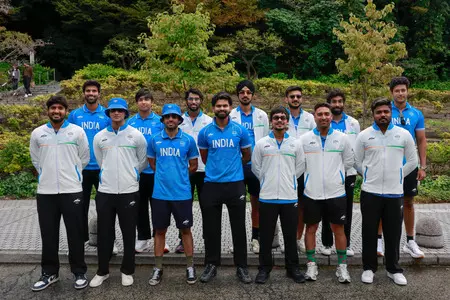
Asian Games: Full-strength India open gold medal defence against second-string Afghanistan (Preview)
Digital Desk | Nisshin, Sep 27 (IANS) A near-full-strength Indian team will be facing a wounded second-string Afghanistan side in the second quarterfinal of the cricket event at the ongoing Asian Games 2026 on Monday at the Korogi Sports Park. With the gold medal defence on the line, India have opted to send their first-choice T20I team for the continental showpiece, meaning some ODI regulars will miss the simultaneous ODI series against the West Indies at home, which begins on Sunday. Not only as the defending gold medallists, but India also come into this showpiece as reigning double T20 World champions, something which wasn't the case when they sent a second-string side under Ruturaj Gaikwad for the Hangzhou Games in 2023. During this time, they have set batting benchmarks which are hard to replicate for even the best of the sides. And now they have a teenage sensation in Vaibhav Sooryavanshi making an impact in his initial days. On the other side is a second-string Afghanistan side playing under 33 T20I-capped Darwish Rasooli, with mostly new faces. They came into the quarterfinal on the back of a win against Japan and a loss against Nepal in the group stage and did not qualify as Group A toppers; rather, they were the second-placed side in the league stage. They were hammered by Nepal in their second game and now will face a much stronger Indian side, which on paper is no match for this Afghanistan side. However, things haven't been very simple for India in Japan. They were recently given a major scare in the rain-hit one-off T20I against Japan when they managed to put 32/4 in five overs and scraped through with a two-run win. The Men in Blue would have to adapt to the conditions as soon as possible, as they were left embarrassed when they failed to do it earlier in Ireland and England, where they lost all six completed T20Is. Eyes will also be on the playing combinations as it seems that Sanju Samson will continue opening with Abhishek Sharma after two half-centuries against Afghanistan, which means Sooryavanshi might have to wait for his hit in Japan. It would also be interesting to see if and when Jasprit Bumrah takes the field after being benched for the Japan T20I. When: Monday, Sep 28, 10 AM IST Where: Korogi Sports Park, Nisshin Where to watch: The match will be shown live on the Sony Sports Network, while the live streaming will be available on the Sony LIV app and website. Squads: India: Shreyas Iyer (c), Abhishek Sharma, Sanju Samson, Ishan Kishan, Shivam Dube, Tilak Varma, Vipraj Nigam, Axar Patel, Washington Sundar, Ravi Bishnoi, Jasprit Bumrah, Harshit Rana, Arshdeep Singh, Vaibhav Sooryavanshi Afghanistan: Darwish Rasooli (c), Abdullah Ahmadzai, Mohammad Akram, Ismat Alam, Faridoon Dawoodzai, Hassan Eisakhil, Mohammad Ishaq, Karim Janat, Faisal Khan, Nangyal Kharoti, Imran Mir, Arab Gul Momand, Farmanullah Safi, Khalid Taniwal, Najibullah Zadran

Left parties stage protest against CEC in Hassan, demand his removal

Magistrate court directs police to investigate actor Ansiba Hassans petition against Lakshmi Priya
NIA court sends 4 to life term in 2016 Hindu Munnani spokesperson murder
Digital Desk | Chennai, Sep 25 (IANS) The Special Court for NIA cases, Poonamallee, Chennai, on Thursday convicted and sentenced four active cadres of the banned outfit Popular Front of India (PFI) to life imprisonment in connection with the murder of C. Sasikumar, spokesperson of Hindu Munnani, Coimbatore. The convicted individuals Sadam Hussain, Subair, Mubarak and Mohammad Rafiqul Hassan have each been sentenced to life imprisonment along with a fine of Rs 30,000, the NIA said in a statement. This verdict marks NIA's first conviction involving PFI operatives since the Government of India officially banned the organisation. On September 22, 2016, Sasikumar was hacked to death in Coimbatore. The targeted killing was executed with the clear intent to strike terror among a section of society and incite communal disruption across the region, it said. The incident sparked widespread violence across 6 districts, including Coimbatore City and Coimbatore Rural, prompting state authorities to register over 300 FIRs. The case was initially registered at Thudiyalur Police Station, Coimbatore, and was later investigated by CB-CID, Tamil Nadu. On the orders of the Central government, the case was entrusted to NIA and re-registered as RC-03/2018/NIA/DLI on January 22, 2018. Investigation established that the accused, being active members of PFI, entered into a criminal conspiracy and executed the targeted killing. After meticulous investigation, NIA filed a charge sheet and 2 supplementary charge sheets against 5 accused persons. The trial commenced in 2019, during which 75 prosecution witnesses and 2 defence witnesses were examined. The trial has now culminated in the conviction of 4 accused for offences under sections 302, 120-B and 153-A of the IPC, and sections 16, 18 and 20 of the Unlawful Activities (Prevention) Act. The Special Court acquitted one co-accused, identified as Abu alias Syed Abuthagir. NIA is currently reviewing the judgment and exploring all available legal avenues to challenge the acquittal in the appellate court.
Hassan district wing of JD(S) gets new office-bearers
DGP Alok Kumar visits Hassan Prison
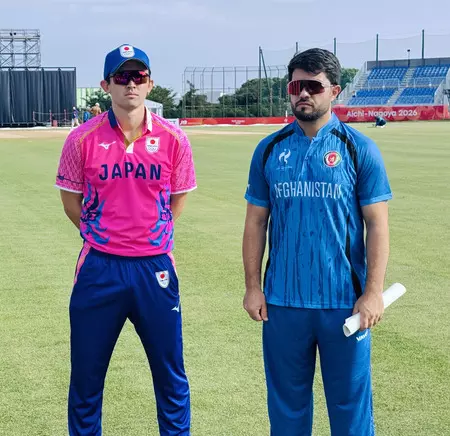
Asian Games: Afghanistan men outclass Japan in men's cricket opener
Digital Desk | Nisshin, Sep 24 (IANS) Afghanistan trounced an impressive Japanese side in the mens cricket opener at the Asian Games 2026 as they beat the hosts in a Group A clash by 48 runs at the Korogi Sports Park on Thursday. The second-string Afghanistan team, led by Darwish Rasooli, defended a modest 129 after a decent start from Japan, with spinners doing the work to bowl the hosts out for 81 in 19.3 overs. Debutant leg-spinner Arab Gul Momand picked up four wickets, while left-arm finger spinner Nangeyalia Kharoti, pacer Abdullah Ahmadzai, and Najibullah Zadran shared the other six wickets. After being asked to bat first, Afghanistan managed to put 129/6 on the board. Debutant opener Mohammad Akram scored 34 from 29 balls, while Hassan Eisakhil laboured to three from 10 deliveries. Afghanistan were reeling at 79/4 in 15.1 overs. Captain Darwish Rasooli and wicketkeeper Mohammad Ishaq put a strong 44-run stand in 25 balls to give the much-needed impetus in the final overs after they were kept at under six an over. While Rasooli made 29 from 27 balls, it was Ishaqs 17-ball 25 which took Afghanistan to 129/6 in their 20 overs. For Japan, off-spinner Ibrahim Takahashi was the pick of the bowlers for his 2-19, while Shoma Sugaya-Slater scalped 2-18. Japan lost opener Lachlan Yamamoto-Lake in the first over to Abdullah Ahmadzai for a duck, but Japan were not out of the chase as Reo Sakurano-Thomas (23), Kendel Kadowaki-Fleming (14) and Benjamin Ito-Davis (17) kept ticking the scoreboard as Japan were 53/1 in 7.3 overs and needed 77 in 75 balls however, left-arm spinner Nangeyalia Kharoti and Najibullah, playing his first international outing over two years, picked one wicket each before the debutant leg-spinner Gul wrecked havoc with four wickets. At 60/3, Japan lost their three wickets without scoring and were 63/8 as they completely lost their way, with Gul bowling two double-wicket maiden overs to bring the game in Afghanistans favour. The little fight ended soon when pacer Ahmadzai and spinner Kharoti took the final two wickets as Japan were bowled out for 81. Afghanistan have now started the tournament with a win. Both the teams will be playing the third side in the group, Nepal, later. The top two teams from the group will make it to the quarterfinals. Brief Scores: Afghanistan 129/6 in 20 overs (Mohammad Akram (34 from 29 balls, Darwish Rasooli 29 from 27 balls; Ibrahim Takahashi 2-19, Shoma Sugaya-Slater 2-18) beat Japan (Reo Sakurano-Thomas 23 from 24 balls, Benjamin Ito-Davis 17 from 8 balls; Arab Gul Momand 4-8, Nangeyalia Kharoti 3-19) by 48 runs
Irans Bold Retaliation: IRGC Seizes U.S. Ships In Naval Action; Tehran Plans Auction For Victims
Iran says confiscated U.S. and Israeli vessels and cargo are now up for sale, with Iranian judicial official Hassan Abdolianpour saying proceeds could be directed to families of those killed in the war. At the same time, Irans Islamic Revolutionary Guard Corps is warning that any new U.S. or Israeli attack could change the geography of the war by opening new fronts.
Houthi Leaders Warn Of Strikes Deep Inside Saudi Arabia, Threaten Energy Infrastructure
Houthi-appointed military leaders have issued a fresh warning to Saudi Arabia, saying their forces could target locations deep inside the kingdom if what they describe as continued Saudi attacks and the blockade of Yemen persist. In a joint message marking the anniversary of Yemens September 21 Revolution, Mohammed Nasser al-Atifi and Youssef Hassan al-Madani claimed that Houthi ballistic missiles and combat drones can reach Saudi territory and potentially threaten economic and energy infrastructure. The statement comes amid renewed tensions around Yemens western coastline and the Bab al-Mandab Strait. Houthi-affiliated outlets have also reported territorial and maritime developments, although those claims have not been independently verified. The latest warning signals a potential escalation in tensions between the Houthis and Saudi Arabia.
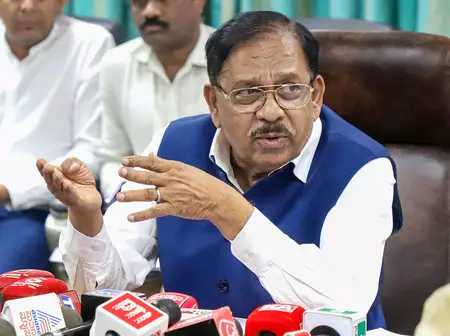
Ktaka Dy CM urges council to take objective stand on Kasturirangan report
Digital Desk | Bengaluru, Sep 21 (IANS) Deputy Chief Minister and Revenue Minister G. Parameshwara on Monday urged the Karnataka Legislative Council to take an objective stand on the Kasturirangan report after discussing its advantages and disadvantages, stressing the need to protect both the environment and the livelihoods of people living in the Western Ghats. Participating in the discussion, Parameshwara said Karnataka had repeatedly rejected the report, but the Centre kept issuing draft notifications. We have to protect the environment while also protecting the interests of people living in the Western Ghats and future generations. The survival of mountain ranges such as the Western Ghats, Eastern Ghats, Aravallis, Vindhyas and the Himalayas is linked to our own survival. At the same time, we must protect the lives and livelihoods of people who have been living there for generations, he said. He recalled that the Western Ghats Ecology Expert Panel headed by Madhav Gadgil was constituted by the Union Ministry of Environment and Forests in 2010 under the Environment Protection Act, 1986. The panel submitted its report on August 30, 2011, identifying 1,29,037 sq km of the Western Ghats and classifying the area into three ecological sensitivity zones. Following opposition from state governments, local people and elected representatives, the Centre constituted an 11-member High Level Working Group headed by K. Kasturirangan in August 2012 to review the Gadgil committee report. The group submitted its report on April 15, 2013, recommending around 59,940 sq km across six states as Ecologically Sensitive Areas. In Karnataka, the Kasturirangan report identified 20,668 sq km as an Ecologically Sensitive Area covering 1,576 villages across 10 districts and 33 taluks, including Belagavi, Uttara Kannada, Shivamogga, Udupi, Chikkamagaluru, Dakshina Kannada, Hassan, Kodagu, Mysuru and Chamarajanagar. Parameshwara said the recommendations included a ban on new mining, quarrying and sand mining activities, while existing mining leases were to be phased out within five years. Restrictions were also proposed on new thermal power projects and expansion of certain red industries. The report also proposed restrictions on new large construction projects, townships and area development projects, while permitting new hydropower projects subject to conditions, including a minimum distance of three kilometres between projects. He said Karnataka had been opposing the report since 2014 because of concerns over its impact on the lives and development of people in the Western Ghats. A Cabinet sub-committee was constituted in 2014 and visited Western Ghats districts during January and February 2015. It held public meetings, collected peoples views, and submitted a report, which the state government accepted and communicated to the Centre. Parameshwara said the state had subsequently written to the Centre on several occasions opposing the Kasturirangan recommendations and successive draft notifications. He noted that the Centre constituted another committee headed by Sanjay Kumar on April 18, 2022. The committee visited Karnataka in May that year and was informed of the states objections. It is carrying out satellite-based surveys as well as physical verification of residential areas, plantations and agricultural land located amid forests. According to Parameshwara, the Kasturirangan report had identified 20,668 sq km in Karnataka. After correcting technical errors, the area would come down to 19,252.16 sq km. Of this, 16,114.08 sq km is already covered under national parks, wildlife sanctuaries, reserve forests and other protected categories, leaving 3,108.08 sq km for further consideration. He said village-wise verification and survey-number-wise mapping should be undertaken to establish the actual ground situation and submit the findings to the Centre. We have to protect the Western Ghats as well as the lives of the people who have lived there for thousands of years. If the environment is protected, the lives of the people living there can also be protected, Parameshwara said, urging the Council to discuss the issue and offer suggestions to help the government take further decisions.

Controversial remark: Plaint against minister reaches Governor
Bengaluru: The controversy over Karnataka Excise Minister and Hassan district in-charge K.M. Shivalinge Gowdas remarks on giving something to government officials has escalated, with social activist Dinesh Kallahalli approaching Governor Thawar Chand Gehlot seeking action against the minister. Kallahalli has reportedly sent an email complaint to the Governor, alleging that Gowdas remarks made during a Get the latest updates in Hyderabad City News , Technology , Entertainment , Sports , Politics and Top Stories on WhatsApp & Telegram by subscribing to our channels. You can also download our app for Android and iOS .
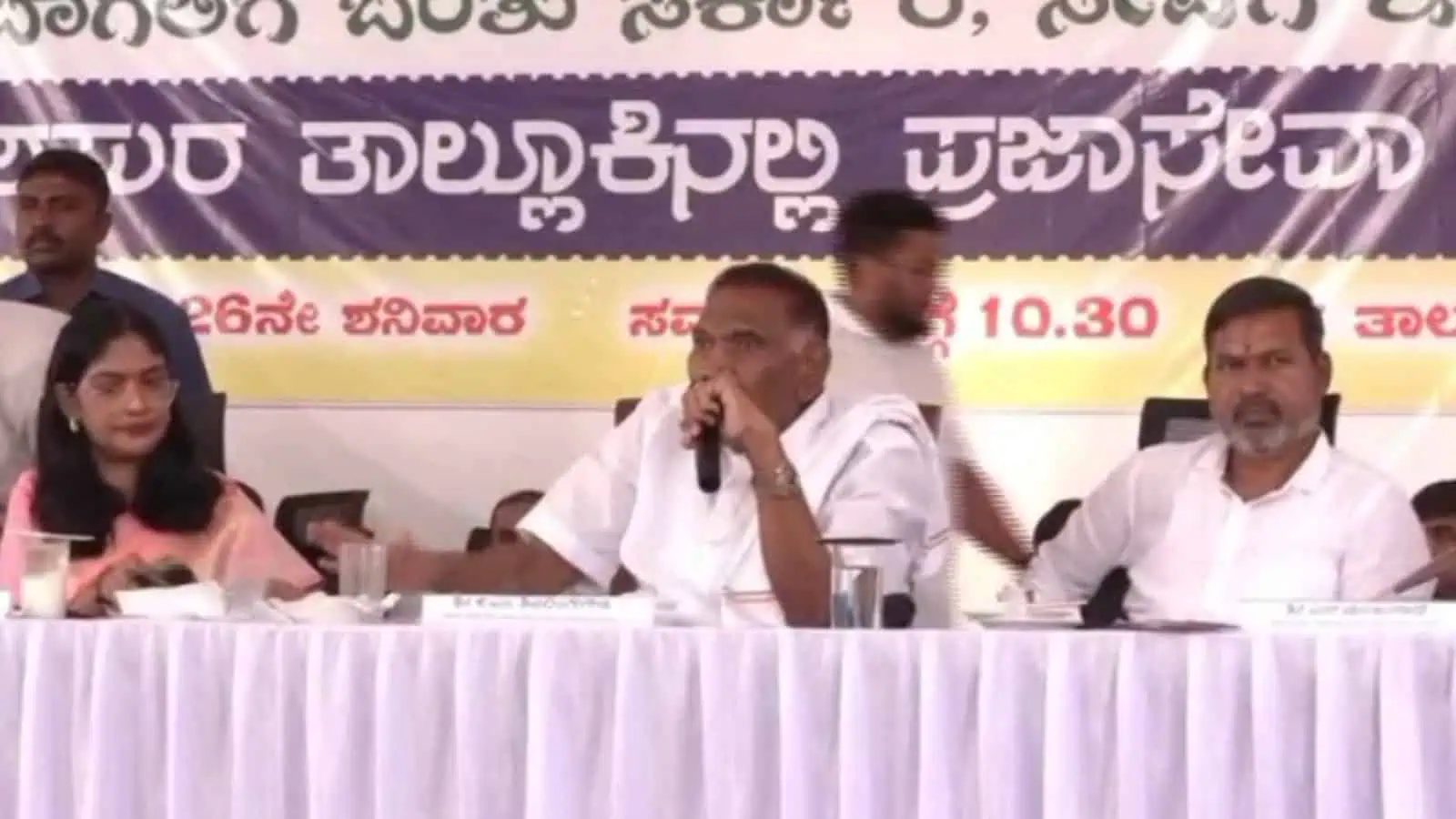
Public questions minister over remark on giving money to officials
Hassan: A comment by Minister K.M. Shivalinge Gowda during a Praja Seva programme at Sakleshpur sparked a confrontation with a member of the audience after the latter questioned the need for citizens to pay or honour government officials for getting their work done. Addressing the gathering at the Sakleshpur tahsildars office on Saturday Shivalinge Gowda Get the latest updates in Hyderabad City News , Technology , Entertainment , Sports , Politics and Top Stories on WhatsApp & Telegram by subscribing to our channels. You can also download our app for Android and iOS .
Police in J&Ks Rajouri arrest 3 for harbouring terrorists involved in 2023 Chassana encounter
Digital Desk | Jammu, Sep 18 (IANS) Police in Jammu and Kashmirs Rajouri district said on Friday that their team busted a Lashkar-e-Taiba logistics module by arresting three persons involved in harbouring terrorists involved in the 2023 Chassana encounter. Officials said on Friday that in a major breakthrough, police have busted a logistic support module linked to Lashkar-e-Taiba in Rajouri and arrested three persons for allegedly harbouring and facilitating the movement of terrorists. During further investigation in case FIR No. 95/2026 of Police Station Dharamsal, Rajouri, it has emerged that three accused persons, all residents of Kot Charwal, were allegedly part of the module linked to the proscribed terrorist outfit Lashkar-e-Taiba. The accused have been identified as Mohd Azam son of Ali Bahadur, Zakir Hussain son of Ghulam Hussain and Mohd Mushtaq son of Mohd Iqbal. According to the investigation, the accused harboured and facilitated the movement of terrorists associated with the proscribed outfit. Their role in assisting, harbouring and facilitating the movement of terrorists who were subsequently killed in an encounter at Chassana, had come to the fore. The Chassana encounter took place on September 4, 2023, in the Gali Sohab area of Upper Tulli, Chassana, in the Reasi district of Jammu and Kashmir. The encounter took place in Saab Gali/Gali Sohab near the Kalaban area, Upper Tulli Chassana. The joint operation was carried out by the Reasi Police and the Indian Army's 33 Rashtriya Rifles (33RR). In that encounter, one policeman and one Army personnel were injured during the initial exchange. One unidentified terrorist was found dead at the site the following morning after an overnight firefight. Investigation further revealed that the accused had allegedly provided shelter and logistical assistance to multiple terrorist groups and facilitated their movement across Rajouri-Reasi districts and through the Pir Panjal region up to Shopian. During the course of investigation, one pistol along with a magazine and ammunition, besides two Chinese grenades, were also recovered on the disclosure of the accused. Further investigation into the case is going on.
Pakistani forces kill three civilians in Balochistan amid rising atrocities
Digital Desk | Quetta, Sep 17 (IANS) Another three civilians were extrajudicially killed by Pakistani forces in Balochistan, a leading human rights organisation alleged on Thursday. This latest incident comes against the backdrop of a growing wave of extrajudicial killings and enforced disappearances across the province. Paank, the human rights department of the Baloch National Movement (BNM), revealed that three dead bodies were found dumped in the Kuldan area of Dannuk in Gwadar district. The deceased, identified as Hassan Rafiq, Ehsan Hassan and Nadil Baloch, had previously been forcibly disappeared by Pakistani security forces. Paank accused the Pakistani security forces of carrying out their enforced disappearance, unlawful detention, and subsequent killing. According to the rights body, Hassan Rafiq was released on bail from Turbat Jail on August 24. However, immediately after his release, he was taken away from outside the jail by Pakistani security forces. He remained forcibly disappeared until his body was recovered in Dannuk. Additionally, Ehsan Hassan, son of political figure Muhammad Hassan Baloch, was forcibly disappeared along with his brother Balach Hassan during a late-night raid on their family home in the Jiwani region of Gwadar on January 22. Separately, Nadil Baloch, a 20-year-old student from the Panwan area in Gwadar, was forcibly disappeared from his home on April 19, during a security raid. Paank said that Nadils disappearance, together with that of several other residents of Panwan, was documented by human-rights monitors, who identified Pakistans Frontier Corps and military-intelligence personnel as responsible for taking them from their homes. The bodies of Hassan, Ehsan and Nadil were subsequently found together in Kuldan, Dannuk. A piece of paper bearing each victim's name had reportedly been placed inside the pocket of each body, indicating that those who disposed of the bodies knew their identities, the rights body noted. Describing the sequencefrom enforced disappearance and secret detention to the recovery of their bodies, Paank said that the development constitutes an extremely grave human-rights violation requiring urgent international scrutiny. The rights body called for an immediate, independent, impartial and transparent investigation into the enforced disappearance, detention, torture and killing of Hassan Rafiq, Ehsan Hassan and Nadil Baloch in line with international human-rights standards. All forensic evidence and detention records must be preserved, those responsible must be identified and prosecuted through fair proceedings before civilian courts, and the families must be provided with truth, justice and full reparations, it added. Condemning the incident, Paank further said, Enforced disappearance cannot be followed by execution and the dumping of bodies with impunity. It also urged the United Nations and other international human-rights mechanisms to intervene urgently, press Pakistan to end enforced disappearances and extrajudicial killings in Balochistan, and ensure accountability for those responsible.
Watch the trailer of Kannada movie 'Bingo' starring RK Chandan, Ragini Dwivedi and Raksha Nimbargi. Directed by Shankar Konamanahalli, the film is produced by RK Studios and Mutharaa Ventures. The movie also features Rajesh Nataranga, Shravan Kumar, Pavan Kumar, Apoorva, Murali Poorvik and Mithun Tejaswi in pivotal roles. Music for the film is composed by Hithan Hassan. To know more about 'Bingo', watch the trailer video.

Heavy rain lashes Bengaluru; IMD forecasts more showers across K'taka
Digital Desk | Bengaluru, Sep 16 (IANS) Heavy rains lashed Bengaluru, inundating several residential areas and causing damage in parts of the city, even as the India Meteorological Department (IMD) forecast widespread rainfall, including heavy showers, across several districts of Karnataka over the next 24 to 48 hours. The heavy downpour in Bengaluru on Tuesday night resulted in the collapse of a military compound wall in the Domlur area, leaving three cows dead and Muniraju, the owner, seriously injured. Muniraju suffered fractures in both legs and is undergoing treatment in the ICU. Residents said they had repeatedly urged authorities to repair the compound wall, which they claimed had remained in a vulnerable condition for several years. They also alleged that the wall had been constructed without an adequate foundation and that there was no proper arrangement for the drainage of rainwater. Residents said water rushes into nearby residential areas whenever there is heavy rainfall. Following the incident, several residents have reportedly moved out of their homes temporarily, fearing that the remaining portion of the compound wall could collapse. Personnel from the State Disaster Response Force (SDRF), National Disaster Response Force (NDRF), Fire and Emergency Services have taken up rescue and relief operations at the spot. Local MLA N.A. Haris visited the affected area and took stock of the situation. Meanwhile, the IMD has forecast widespread rainfall across coastal, Malnad and interior districts of Karnataka under the influence of the southwest monsoon and a low-pressure area. Heavy rainfall accompanied by strong winds is likely in Udupi, Mangaluru and Karwar districts. The IMD has also warned of rough sea conditions and advised fishermen not to venture into the sea. Moderate to heavy rainfall is expected in the hilly and mountainous areas of Shivamogga, Chikkamagaluru, Madikeri and Hassan districts, where a yellow alert has been issued. Several districts in southern and central Karnataka, including Bengaluru Urban, Bengaluru Rural, Ramanagara, Kolar, Chikkaballapur, Mysuru, Mandya, Tumakuru and Chamarajanagar, are likely to receive moderate rainfall. In north Karnataka, Belagavi, Dharwad, Haveri, Gadag, Vijayapura, Bagalkot, Kalaburagi, Yadgir and Ballari districts are likely to receive moderate rainfall accompanied by thunder and lightning. Strong winds with 30-40 kmph speed are also possible in some areas. Weather experts said rainfall activity is expected to increase across various parts of the state from Wednesday due to a cyclonic circulation at sea level and increased wind speeds. In Bengaluru, partly cloudy weather is expected during the day, with moderate to heavy rainfall likely during the evening or night.
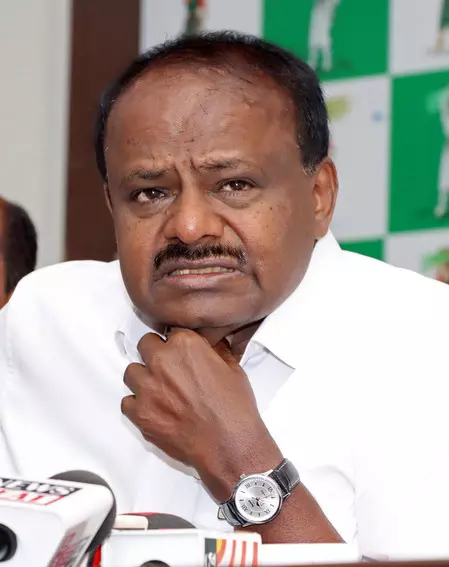
No question of backing down from exposing illegalities in Karnataka, claims Kumaraswamy
Digital Desk | Hassan (Karnataka), Sep 15 (IANS) Union Minister for Heavy Industries and Steel, H.D. Kumaraswamy, on Tuesday said he would not back down from exposing alleged scams and illegalities in Karnataka. Speaking at Mavinakere village in Hassan district, Kumaraswamy said he had sought the blessings of Lord Ranganathaswamy before beginning what he described as a fight against injustice. I am committed to my statement of exposing something that will shake the entire state and the country. There is no question of stepping back from exposing and bringing before the people scams and illegalities, he said. Kumaraswamy said he would place documents relating to alleged illegalities before the people and questioned who would take the issues forward and bring them to their logical conclusion. I am an individual. I cannot give a logical end to everything. God has to give a logical end to this fight against injustice. The question is who will take these issues forward and bring them to their logical conclusion, he said. He said nobody could remain silent about alleged illegalities and cited the controversy surrounding recruitment through the Karnataka Public Service Commission (KPSC) as an example. Kumaraswamy claimed that he had raised the issue of alleged irregularities in the appointment of Assistant Executive Engineers (AEE) even before he travelled to the United States. He alleged that the irregularities had taken place during the tenure of the present government and right under the nose of its ministers. Referring to the investigation into the recruitment of veterinary doctors, he said the Special Investigation Team (SIT) had been constituted and money had been seized during the investigation. Whose money is it? It belongs to poor youth who dream of securing government jobs. Their emotions have been played with and they have been extorted. Should I remain quiet? Kumaraswamy asked. He also alleged irregularities in the recruitment of 24 AEE candidates and claimed that documents supported the charges. He criticised Home Minister and IT and BT Minister Priyank Kharge, alleging that he had not answered the questions raised over the recruitment issue. My objective is to expose illegal scams before the people. They will decide. I am not imposing anything on anyone, Kumaraswamy said. He said he was making the statements in the presence of God and denied having any personal grudge or acting out of jealousy against anyone. Kumaraswamy also addressed claims that he was opposing Chief Minister D.K. Shivakumar out of jealousy because a person from his own community had become Chief Minister. Without naming Shivakumar directly, Kumaraswamy said he had no objection to the Chief Minister continuing in power. Many people tell me that a person from our own community should not be tortured. I want to make it clear that I am not exposing these issues to torture anyone. I am doing it in the interest of the people, he said. He said he would cooperate with the government if it ruled efficiently and without scams. If they rule efficiently and without scams, I will cooperate. But I will not hesitate to question the misuse of power in the state. There is no question of jealousy, Kumaraswamy said. He also said the sentiments and concerns of the people of Karnataka should not be diverted from the issues being raised.
Ekta Kapoor poses with TV OG villains Urvashi Dholakia, Anita Hassanandani at Ganpati celebrations
Digital Desk | Mumbai, Sep 15 (IANS) Television czarina and producer Ekta Kapoor brought together some of the most familiar faces from the Hindi TV industry as she hosted friends and colleagues for Ganpati celebrations at her residence on Monday. Actress Anita Hassanandani who attended the Ganesh poojan at Kapoor's place, shared a series of pictures from the gathering, featuring Ekta Kapoor along with many other popular names from the television fraternity. The pictures captured the group posing together and celebrating the festival in an intimate setting. Among those seen in the pictures shared by Anita were Urvashi Dholakia, Krystle D'Souza, Mushtaq Sheikh, Tanishaa Das Gupta, Vishal Singh and Ruchika Kapoor, apart from Anita and Ekta. The gathering also brought together two of television's much-loved former onscreen antagonists, Urvashi, who became synonymous with the iconic character Komolika in Kasautii Zindagii Kay, and Anita, who was loved for her character portrayal as Shagun in Yeh Hai Mohabbatein. For the uninitiated, Urvashi's association with Ekta goes back more than two decades, with their professional relationship beginning with Kasautii Zindagii Kay. Anita's pictures also featured Vishal Singh, best known for playing Jigar Modi in the show Saath Nibhaana Saathiya. Anita, who has been closely associated with Ekta, has been a part her television universe through shows such as Kkavyanjali, Kyunki Saas Bhi Kabhi Bahu Thi, Kahaani Ghar Ghar Kii, Yeh Hai Mohabbatein and Naagin, shared the pictures on her social media account. Ekta later reshared Anita's post on her own social media account. On Tuesday morning, Ekta was seen visiting Mumbai's iconic Lalbaugcha Raja pandal with actor Sidharth Malhotra to seek the blessings of Lord Ganesha. Sidharth and Ekta are all set to collaborate for their upcoming movie, Vvan which also stars actress Tamannaah Bhatia.
Amazon expands operations network across India ahead of festive season
E-commerce major Amazon on Monday announced an expansion of its operations network across India ahead of the upcoming festive season, launching 20 fulfilment centres, 6 sort centres, and 150 last-mile delivery stations. The expansion is part of the company's announced investment of over Rs 2,800 crore to bolster its pan-India operations and infrastructure, Amazon said in a statement. The expansion will increase Amazon's total storage capacity in India by 50 per cent to 64 million cubic feet. The facilities will be operated and managed by third-party logistics service providers. All 6 new sort centres situated in Chikkaballapur, Hassan, Meerut, Ramanagar, Raipur and Varanasi, as well as seven of the 20 new fulfilment centres are coming up in non-metro cities. To handle the anticipated surge in consumer demand during the festive period, the e-commerce firm had earlier announced the creation of over 1.6 lakh seasonal work opportunities across 400 cities, spanning both metropolitan are
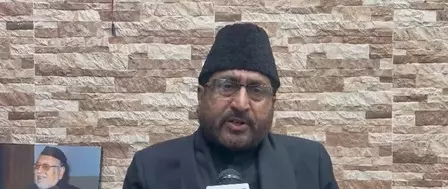
Digital Desk | Lucknow, Sep 12 (IANS) All India Shia Personal Law Board General Secretary Maulana Yasoob Abbas said that the BRICS Summit being held in New Delhi will help India emerge as a new force by bringing several countries together. Speaking to IANS, Maulana Abbas said the meeting between Prime Minister Narendra Modi and Iranian President Masoud Pezeshkian sent a significant message about the growing importance of India-Iran ties. The picture of Iranian President Masoud Pezeshkian and Prime Minister Modi meeting will send the message that the BRICS will not end, but the domination and bullying of America and Israel will end. India will emerge as a new force by bringing several countries together, Abbas said. He expressed hope that India and Iran would further strengthen their relations, adding that people in Iran had great affection for Indians. I have been travelling to Iran since childhood. The special thing is that no Indian has ever felt any difficulty there, he said. Abbas said he regularly visited various Iranian cities, including Tehran, Mashhad, Isfahan, Nishapur and Kermanshah, and had crossed the Khosravi and Qasr-e Shirin border areas several times. He reiterated that the people of Iran had a deep affection for Indians. On the demolition of a mosque in Saharanpur, Abbas expressed concern over the incident and said it was unfortunate that the mosque located alongside the district collectorate wall had been demolished. He said the mosque was believed to date back to around the 18th century and that a well had also been found inside it. He noted that wells were traditionally found inside mosques when modern water facilities such as handpumps were not available. Abbas urged the Congress and Rahul Gandhi to speak openly on the Saharanpur issue. At the same time, he said religious places, whether temples or mosques, should not become subjects of political exploitation. Politics should not be done over centres of faith. But those doing politics are looking for vote banks even in such matters, he said. Meanwhile, Shia cleric from Kashmir Aga Syed Hassan Mosavi said scholars, intellectuals, members of the business community, and prominent personalities from different faiths in India had participated in discussions with the Iranian President. He said participants had unanimously condemned what they described as injustice and brutality by the United States against Iran and expressed grief over children killed in the conflict and the death of Irans Supreme Leader. Mosavi said India and Iran shared longstanding ties and expressed hope that the relationship between the two countries would continue to strengthen.

Who is Zahra Pezeshkian? All about Iranian President Masoud Pezeshkian's daughter visiting India
Zahra Pezeshkian, daughter of Iranian President Masoud Pezeshkian, is in New Delhi during her father's India visit for the BRICS Summit. Along with her husband Hassan Majidi, she visited the Pradhanmantri Sangrahalaya in New Delhi,...

680 bags of subsidised fertiliser seized in Karnataka, Kerala diversion suspected
Digital Desk | Bengaluru, Sep 12 (IANS)Karnataka's Agriculture Department has seized 680 bags of subsidised fertiliser worth around Rs 18 lakh near Siruguppa in Ballari district, with preliminary investigations indicating that the stock was being diverted to Kerala, officials said on Saturday. The department's vigilance squad conducted a late-night raid on Thursday, following directions from Agriculture Minister P.M. Narendra Swamy to intensify action against the illegal trade and diversion of agricultural inputs. According to the department, officials intercepted a lorry near Siruguppa and seized 680 bags of fertiliser suspected of being transported illegally outside Karnataka. Preliminary findings suggest that the subsidised fertiliser had been procured from a distributor and was being moved to industrial units in Kerala. A police complaint has been lodged in connection with the case. The department said the crackdown forms part of a wider drive to curb the sale of substandard seeds and pesticides, as well as the illegal stocking and black-market sale of fertilisers. According to the department, agricultural inputs worth a total of Rs 2.88 crore, including seeds, fertilisers and pesticides, were seized during the past month. A total of 49 cases have been registered in connection with the violations. The department said 113.05 quintals of seeds valued at Rs 50.22 lakh were seized during the period. Of these, seeds worth Rs 50.13 lakh were found to have been sold without valid licences. Paddy and maize seeds were seized in Chikkaballapur, Hassan and K.R. Pet in Mandya district. The department also seized 487.8 metric tonnes of fertilisers valued at Rs 1.89 crore. Among the major seizures was 86.2 metric tonnes of subsidised urea worth Rs 51.52 lakh, which had allegedly been stocked for transportation for non-agricultural purposes. The urea was seized in Kalaburagi and Ballari districts. In another case, 139.02 metric tonnes of mixed fertilisers valued at Rs 86.49 lakh were seized for being stocked without a valid licence. A case has been filed before a court in Davanagere district in connection with the seizure. The department also seized 2,640 litres of bio-products valued at Rs 9.12 lakh and 662.9 litres and 2,492 kg of pesticides worth Rs 49.46 lakh. Officials also seized pesticides worth Rs 32.24 lakh, comprising 375 litres and 1,982 kg, in Koppal, Raichur and Vijayapura districts. The pesticides were allegedly being sold without being included in the relevant licence and included expired products. The Agriculture Department said vigilance and enforcement operations would continue across the state to prevent the illegal diversion and sale of agricultural inputs and ensure that farmers receive quality seeds, fertilisers and pesticides.

Gauhati High Court says talaq-e-hassan is a valid form of divorce
The court has directed the petitioner to register his divorce under the Assam Compulsory Registration of Muslim Marriages and Divorce Act, 2024

Women's Asia Cup: Harshita, Dilhari power Sri Lanka into final
Digital Desk | Dubai, Sep 11 (IANS) Harshita Samarawickrama and Kavisha Dilhari produced a crucial 67-run partnership to steady Sri Lanka after a shaky start and guide the defending champions to a four-wicket win over Pakistan, booking their place in the final of the Womens Asia Cup 2026 against India on Sunday at the Dubai International Stadium in Dubai. Sri Lanka were in trouble early in the chase of 131 after Fatima Sana dismissed Chamari Athapaththu (5) and Sanjana Kavindi (0) within the second over. Sadia Iqbal then got rid of Hasini Perera (3), and Sri Lanka were 31 for 3 at the end of the Power-play. Imesha Dulani offered some resistance with a 22 in the seventh over, but Harshita and Dilhari took the chase by the scruff of the neck with a composed partnership. The duo kept the scoreboard ticking and ensured Pakistan could not add to the pressure. Harshita made 36 and Dilhari 33 as the pair put on 67 runs before being sent back by Fatima in the 17th over. Sri Lanka still needed runs, and Kaushani Nuthyangana came out to join Nilakshi de Silva at the crease. Pakistan crumbled under the pressure, losing their composure as the pair held their nerve to take the contest to the wire. Sri Lanka reached 131 in 18.4 overs with four wickets in hand, Nilakshi not out on 18 and Nuthyangana on 10. Fatima bowled with plenty of heart for Pakistan and finished with figures of 4-38, but her efforts were not enough to defend the total. Earlier, Sri Lanka elected to bowl and Sugandika Kumari gave them an early breakthrough by getting Muneeba Ali out for a couple of runs. Shawaal Zulfiqar got off to a positive start, scoring a quickfire 24 off 16 balls before departing in the fifth over. Ayesha Zafar (7) and Sadaf Shamas (8) also couldn't get going as Pakistan slumped to 52/4 in the 10th over. Gull Feroza (21) and captain Fatima Sana then revived the innings with a 40-run stand before Feroza got out in the 16th over. Fatima took control at the back end of the innings, hitting some lusty blows to be unbeaten on 47 off 36. Tuba Hassan joined her and remained unbeaten on 12 as the pair took Pakistan to 130/5. Skipper Chamari Athapaththu (2-24) and Chamudi Praboda (2-25) snapped a couple of wickets each for Sri Lanka, while Sugandika Kumari (1-20) bowled a good spell and grabbed a scalp. Sri Lankas batters then held their nerves under pressure to complete the chase and seal their place in the final, where they will face India on Sunday. Brief scores: Pakistan Women 130/5 in 20 overs (Fatima Sana 47 not out, Shawaal Zulfiqar 24; Chamari Athapaththu 2-24, Chamudi Praboda 2-25) lost to Sri Lanka Women 134/6 in 20 overs (Harshitha Samarawickrama 36, Kavisha Dilhari 33; Fatima Sana 4-38) by four wickets.