



Airport in Saudi capital has been attacked again, officials say
Cairo, Oct 10: The airport in the Saudi capital has been attacked again, two regional officials said Saturday, two days after three Saudi citizens including a pilot were killed there. One official said the Riyadh airport had been evacuated, and the other said air traffic had stopped. They spoke on condition of anonymity because they weren't authorised to speak to the media. King Khalid International Airport has been targeted in an extraordinary series of attacks in the week since a Saudi-led coalition launched a major military offensive against Iran-backed Houthi rebels in neighbouring Yemen. The Houthis claimed responsibility for the earlier attacks, including another on Wednesday that killed a Sudanese national and wounded eight other people. There was no immediate Houthi statement Saturday. A Riyadh resident, Ahmed Sayed, told The Associated Press he heard at least two loud explosions that rocked the capital. The airport issued a terse alert telling passengers to check their flight status with airlines before heading to the airport. Fighting in Yemen between the Houthis and the Saudi-backed Yemeni government forces has escalated, with the Saudi-led coalition providing air support for government forces in an attempt to reverse recent Houthi gains along the Red Sea. (AP)
Budgam man goes missing in UAE, family seeks help
Budgam, Oct 10: A 36-year-old man from Daharmuna village in Budgam district, identified as Jamsheed Ali, son of Ali Mohammad Wani, has reportedly been missing in the United Arab Emirates (UAE) since October 6, leaving his family worried about his whereabouts. According to his wife, Jamsheed contacted her in the early hours of October 6 and informed her that he had a flight ticket to return home that day. She said the family waited for two days for his arrival, initially assuming that he might have been delayed during his journey. However, when he failed to return, she contacted her brother-in-law and informed him about the situation. Following this, Jamsheeds brother contacted the company where he was employed. The company reportedly informed him that Jamsheed had been absent from work for the previous two days. Meanwhile, his brother has lodged a complaint with Budgam Police regarding his disappearance. He has also emailed a complaint to the Indian Embassy, seeking assistance in tracing Jamsheed and establishing his whereabouts.
124 former IAS, IFS officers write open letter to citizens, defend EC, SIR
New Delhi, Oct 10: A total of 124 former IAS, IFS and allied services' officers have issued an open letter to the citizens of India, strongly defending the Election Commission (EC) and the Special Intensive Revision (SIR) of the electoral roll, while questioning allegations of vote rigging without credible evidence. Highlighting India's transformation from an era of booth capturing, ballot-box stuffing and poll violence, the officers said today's electoral system has multiple layers of checks and safeguards, including polling agents, EVM sealing, strong-room security and VVPAT verification. They cited last year's Bihar Assembly polls, which recorded no re-polling and the highest voter turnout since 1951. A system cannot be honest when you win and rigged when you lose, the letter said, pointing out that under the same EC, the ruling Bharatiya Janata Party (BJP) at the Centre lost several state polls as well as its parliamentary majority in 2024. The signatories to the letter include former foreign secretary Kanwal Sibal and former Indian Administrative Service (IAS) officers R D Kapur, Samirendra Chatterjee, Gopal Krishna, Vivek Bhardwaj and Navneet Sehgal.
Mechanised apple packing threatens livelihoods of traditional packers in Kashmir
CJP stir against CEC: Delhi Police detains around 500 protestors
New Delhi, Oct 10: Delhi Police on Saturday detained around 500 protesters, who were trying to reach Jantar Mantar for the proposed CJP stir against Chief Election Commissioner Gyanesh Kumar. Sources said the protestors were detained across the New Delhi area, where police are using drones to monitor movement of people attempting to reach the protest site. The protestors were detained from several places, including near Regal Cinema, Minto Bridge and near Akashwani Bhawan. Ahead of the Cockroach Janta Party's (CJP) proposed protest at Jantar Mantar, police sources said over 600 people with criminal records were also detained across all 15 districts of the national capital as part of preventive measures. The preventive action is aimed at ensuring that people with criminal backgrounds do not create a law-and-order situation during the proposed demonstration, the sources said. Police are also keeping a close watch on the movements of certain people, who could mobilise crowds or influence others to participate in the proposed protest, the sources said. Surveillance has been intensified outside the residences of such people as part of the security measures, they added. Special Commissioner of Police (Law & Order) Devesh Srivastava told PTI, We have made elaborate security arrangements today and areas neighbouring bordering states have been picketed in coordination with neighbouring police force. Senior officers have been deployed. Along with that we are getting cooperation from citizens and our community policing teams like Aman Committee are working. Police have appealed to citizens to not participate in the protests, he said. The situation is under control. People who are going to Jantar Mantar are being detained as we had already said that no permission for such protest is granted, the senior police officer said. Police personnel have been deployed at strategic locations across the city, particularly in areas leading to Jantar Mantar and other sensitive locations, to prevent any untoward incident. The security arrangements include heightened surveillance and monitoring of the movement of people suspected of attempting to disrupt law and order. Police are also keeping a close watch on possible mobilisation efforts ahead of the proposed demonstration. Police have said that prohibitory orders are in force in the New Delhi area and appealed to people to abide by the restrictions. Security arrangements have been tightened across Delhi in view of the proposed protest, with personnel deployed to maintain law and order and prevent any unauthorised gathering, the sources added. The CJP has called the proposed demonstration against the CEC over allegations of voter-list manipulation during the Special Intensive Revision (SIR) of electoral rolls and changes relating to Form 6, used for voter registration.
Stone pelting at police personnel near Akashwani Bhawan; two police personnel injured
New Delhi, Oct 10: Protesters allegedly stone-pelted security personnel at Imtiaz Ali Marg near Akashwani Bhawan after toppling barricades during the proposed Cockroach Janata Party (CJP) stir against Chief Election Commissioner Gyanesh Kumar in the national capital on Saturday, officials said. Around noon, 25 to 30 protesters jumped barricades on Imtiaz Ali Marg and stone-pelleted at security personnel, they said, adding that some of them have been detained and two police personnel were injured in the process. Police have detained about 500 people as protesters attempted to reach Jantar Mantar despite authorities denying permission to protest and enforcing strict security measures across the New Delhi district. Several protesters were chased and detained as they tried to regroup at different locations and evade the security cordon. The protest was scheduled to begin at 10.30 am, but police and paramilitary personnel prevented participants from reaching the designated area, where prohibitory orders are in force. Several protesters were detained from locations including Connaught Place, while many others were sent back.

Modi at 25: Small signs, big challenge
Multiple headwinds make the turbulence Mr Modi is battling as he steps into his 26th year in public office. This has brought the three-point Modi proposition under the greatest pressure since 2014

Finding her aim | India's new shooting star Neeru Dhanda
Finding her aim | India's new shooting star Neeru Dhanda

The longest run | Trail runner Sannat Sachdev
The longest run | Trail runner Sannat Sachdev

Modernism anew | DAG Delhi's 'Freedom to Form: Baroda Modern' exhibition
Modernism anew | DAG Delhi's 'Freedom to Form: Baroda Modern' exhibition
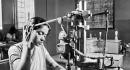
Nation building | Ahmed Ali's 'At Work' by PHOTOINK, New Delhi
Nation building | Ahmed Ali's 'At Work' by PHOTOINK, New Delhi

A celebration of love | KNMA's dance festival @ Sunder Nursery, Delhi
A celebration of love | KNMA's dance festival @ Sunder Nursery, Delhi

Global rhythms | Jodhpur RIFF turns 20
Global rhythms | Jodhpur RIFF turns 20
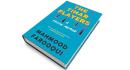
Theatre behind bars | Mahmood Farooqui's 'The Tihar Players: A Prison Memoir'
Theatre behind bars | Mahmood Farooqui's 'The Tihar Players: A Prison Memoir'

Shoe town chronicles | Paramita Sen's 'Batanagar: A Personal History of India's Forgotten Company Town'

Q&A with Sudhir Patwardhan | Drawing the human condition
Q&A with Sudhir Patwardhan | Drawing the human condition
Eight NIT Srinagar faculty members feature in Worlds top 2% Scientists list
Srinagar, Oct 9: NIT Srinagar organised a cyber security awareness session for students of the Department of Civil Engineering to sensitise them about safe, responsible and secure use of digital technologies. The session was conducted by Dr. Vivek, Assistant Professor, who discussed cyber hygiene, online safety, password security, phishing, social-engineering attacks, protection of personal data, safe use of social media and responsible use of digital platforms. Students were advised to remain vigilant against suspicious links, messages, emails and applications and to adopt secure digital practices. The session concluded with an interactive discussion in which students raised queries related to cyber fraud, online safety and protection of personal information. Srinagar, October 9: Eight faculty members of the National Institute of Technology (NIT) Srinagar have been featured in the 2026 edition of the Worlds Top 2% Scientists database, compiled by researchers associated with Stanford University and Elsevier, marking a significant recognition of the institutes research contributions. The faculty members recognised in the database are Dr. Vijay Kumar, Department of Physics; Dr. Neeraj Gupta, Department of Electrical Engineering; Dr. Pravan Kumar Katiyar, Department of Metallurgical and Materials Engineering; Dr. Sandeep Samantaray, Department of Civil Engineering; Prof. Bashir Ahmad Mir, Department of Civil Engineering; Dr. Sandeep Rathee, Department of Mechanical Engineering; Prof. M. A. Shah, Department of Physics; and Dr. Tawseef Ayoub Shaikh, Department of Computer Science and Engineering. Released this week, the database uses standardised citation indicators derived from Scopus data to assess researchers scientific impact and contributions across disciplines. The evaluation considers multiple bibliometric parameters, including citations, h-index, co-authorship-adjusted h-index, career-long impact and single-year research performance. Congratulating the faculty members, Director NIT Srinagar, Prof. Anurag Misra, said the recognition reflected the Institutes sustained efforts to promote quality research and academic excellence. He said the achievement was a matter of pride for the institute and acknowledged the faculty members contributions to advancing knowledge in their respective fields. Their inclusion in the global database, he added, would further strengthen NIT Srinagars academic and research profile and encourage a culture of innovation and scientific inquiry, Prof. Misra added. Registrar NIT Srinagar, Prof. Atikur Rehman, also congratulated the faculty members, describing the recognition as an encouraging reflection of the institutes research environment and academic commitment. He said the achievement demonstrated the importance of sustained research, collaboration and scholarly engagement in strengthening the institutes academic standing. Prof. Rehman also expressed confidence that the recognition would motivate students, research scholars and young faculty members to pursue innovative research and contribute to scientific advancement.
New Delhi, Oct 9: An unprecedented security clampdown has been enforced in the Capital ahead of Saturday, after Delhi Police denied permission to the Cockroach Janta Party to hold a protest at Jantar Mantar, with the deployment of 25,000 police and paramilitary personnel, closure of 57 metro stations, suspension of internet services and intensive checks at city's border points, railway stations, bus terminals, hotels and other sensitive locations. According to police, the elaborate security arrangements are aimed at preventing protesters from staging an unauthorised sit-in at Jantar Mantar and to maintain law and order across the city amid the possibility of large-scale mobilisation of people. Internet services will be suspended within a 4-kilometre radius of Jantar Mantar from 10 pm on October 9 to 10 pm on October 10, sources said. The Union home ministry has approved the decision, they said. The suspension will apply to all mobile internet services. Internet services in the rest of Delhi will remain unaffected, they said. The New Delhi district has been divided into 20 zones to strengthen security arrangements and maintain law and order. Each of the 20 zones will be monitored by a Joint Commissioner of Police, a Deputy Commissioner of Police and an Additional Deputy Commissioner of Police to ensure close supervision of the security arrangements, the sources said. Special Commissioners of Police heading various units will also closely monitor the zones and coordinate with senior officers whenever required to respond to any law-and-order situation, they added. Addressing a press conference, Joint Commissioner Nupur Prasad said on Friday that police have denied permission for the proposed October 10 demonstration, citing the short notice given for the event and alleged violations of rules and directions during an earlier protest. She said the application seeking permission for the demonstration was submitted on October 7, just three days before the proposed gathering, adding that according to rules, such applications have to be submitted at least 10 days in advance Police said the application did not meet the stipulated notice period and that the conduct of the July demonstration had raised concerns over compliance with directions issued by authorities. The restrictions have been proposed in view of the Cockroach Janata Party's protest at Jantar Mantar on October 10 against Chief Election Commissioner Gyanesh Kumar. Kumar is facing allegations of voter-list tampering under the guise of the Special Intensive Revision (SIR) of electoral rolls and of bypassing his two colleagues to alter Form 6, a key document to register as a voter. As part of the security arrangements, Delhi Police conducted mock drills at several locations. More than 120 companies of Central Armed Police Forces are expected to be involved in the security arrangements. Liquor shops across Delhi have been ordered to remain closed on October 9 and 10 as a preventive measure. Entry and exit gates at 57 Delhi Metro stations, including Rajiv Chowk, New Delhi, Central Secretariat, Patel Chowk and Kashmere Gate, will remain closed from 9 pm on Friday till further notice. According to the Delhi Metro Rail Corporation (DMRC), restrictions will also continue on October 10, with the interchange facility remaining available at all affected stations except for the New Delhi metro station. Other prominent stations where entry and exit gates will remain closed include Janpath, Mandi House, Barakhamba Road, Supreme Court, Indraprastha, ITO, Delhi Gate, Khan Market, Jama Masjid, Chandni Chowk, Hauz Khas and INA. The list also includes Shaheen Bagh, Jamia Millia Islamia, Okhla Vihar, Kalindi Kunj, Lajpat Nagar, Ashram, Sarai Kale Khan-Nizamuddin, Welcome, Shahdara, Rithala, Rohini, Azadpur, Kashmere Gate and Shivaji Stadium, among others. Railway services are also expected to be disrupted, with several trains scheduled to arrive at or depart from New Delhi and Hazrat Nizamuddin railway stations between 4 am and 2 pm on Saturday reported cancelled. The restrictions are intended to prevent large groups from converging on sensitive locations and moving towards areas where demonstrations are not permitted. The proposed measures could affect office-goers, students, shoppers and other commuters who rely on the metro for daily travel. Passengers have been advised to check official announcements. Meanwhile, police have stepped up monitoring of social media platforms, with more than 200 content creators reportedly under scrutiny in connection with mobilisation for the protest. Borders of the national capital will also face heightened surveillance and additional security cameras have been installed. There is a possibility of restrictions on vehicles entering New Delhi after 6 am on Saturday, depending on the security assessment and the situation on the ground, police sources said. Hotels, lodges, guest houses and dharamshalas are being checked as part of the preventive security exercise. Police are also issuing appeals from various mosques and temples, urging people to maintain peace. Bus terminals across the Capital will witness heightened vigilance, with security personnel monitoring passengers and vehicles arriving from neighbouring states. The airport and its approach roads are expected to remain under heightened security, with additional checks and surveillance to ensure that passenger movement remains orderly. Travellers heading to the airport have been advised to account for possible congestion and security checks while planning their journeys. Police will keep a close watch on people associated with the protest and assess attempts to mobilise supporters through social media platforms. More than 200 content creators have reportedly come under scrutiny as part of the monitoring exercise. Police teams are examining online posts and messages relating to mobilisation, gathering points and the proposed demonstration. Police said security personnel will monitor developments throughout Saturday and respond to any incidents, including crowd build-up, traffic obstructions and attempts to breach barricades.
SC seeks response of States, UTs on plea alleging prolonged vacancies in power regulatory bodies
New Delhi, Oct 9: The Supreme Court on Friday sought a response from 15 states and the Union Territories of Jammu and Kashmir and Ladakh on a PIL filed by NGO Energy Watchdog seeking directions to ensure that their state electricity regulatory commissions are properly constituted under the law. The bench comprising Chief Justice of India Surya Kant and Justices Joymalya Bagchi and V Mohana issued notice on the PIL filed by the NGO through lawyer Pranav Sachdeva. The petitioner has sought the apex court's directions directing the states and UTs to take all steps to comply with the provisions of the Electricity Act, 2003, and with the directions of the apex court in a verdict of April 2018 regarding composition of State Electricity Regulatory Commissions (SERCs). The plea said there were several statutory infractions, such as prolonged vacancies in the offices of chairperson and members and the complete absence of a person of law on the Commission, across 230 SERCs in the 15 states and the UTs. In the 2018 ruling, the Supreme Court held that SERCs have the rappings of the court and must have a suitably qualified person of law as a member, the plea said. It said the commissions across several states, including West Bengal, Tamil Nadu, Andhra Pradesh, Kerala, Himachal Pradesh, Meghalaya, Manipur, Mizoram and Nagaland, continue to lack a person of law despite this ruling. The plea said in Tamil Nadu, all three offices are vacant, while in Andhra Pradesh, the chairperson and member (technical) posts are vacant, and the Commission functions with a sole member (finance). It said that in West Bengal, only the chairperson's office has been created, and the incumbent does not have the required legal background. The plea said the failure strikes at consumers' access to justice under Articles 14 and 21 of the Constitution and, without the mandated person of law, consumers cannot get lawful adjudication of complaints under the Electricity Act. Consumers' access to that remedy cannot be made dependent upon indefinite executive inaction, the plea said. It sought directions to the states of West Bengal, Madhya Pradesh, Tamil Nadu, Andhra Pradesh, Odisha, Kerala, Jharkhand, Chhattisgarh, Haryana, Himachal Pradesh, Meghalaya, Manipur, Nagaland, Mizoram and Sikkim, and to the UTs of Jammu and Kashmir and Ladakh, directing the authorities concerned to file a reply disclosing the steps taken to ensure that their SERCs had been constituted in compliance with the Electricity Act provisions.
India could be among first countries to roll out 6G: Jio
New Delhi, Oct 9: Indian telecom giant Jio is gearing up for the 6G era. The company says India could be among the first countries to roll out 6G when global standards are finalised in 2030. Jio has already developed its pre-6G stack and Giga MIMO Radio, both of which are on display at the ongoing India Mobile Congress (IMC) 2026 in New Delhi. According to Jio, 6G networks could offer up to five times the capacity of current 5G networks, with a target to reduce latency by nearly 10 times. In simple terms, networks could handle much more data and many more users simultaneously, while responding to commands significantly faster. Data speeds are also expected to improve. These advances could unlock new possibilities for real-time AI, holographic video, healthcare, education and other next-generation digital services. A major highlight of Jio's IMC showcase is its Giga MIMO Radio, which the company describes as India's first. Jio has also unveiled a common baseband unit that can support both 5G and 6G. But the race to 6G isn't just about greater capacity or faster response times. It's also about helping shape the technology and global standards that will define the next generation of connectivity. Jio says it has filed more than 8,000 patents, including hundreds related to 6G. The company also claims to have made over 934 contributions to global standards. Jio expects 6G to make AI-powered services more responsive, particularly in situations where instant information or quick answers matter. At IMC, the company highlighted potential AI applications for farmers, doctors and students. Jio is also working towards AI-native and quantum-safe networks, aiming to combine faster connectivity with stronger security. Jio's 6G ambitions go beyond simply operating the next generation of mobile networks. The company wants to build a stronger presence across four key areas: hardware, software, patents and global standards. Jio describes its vision through two themes: 'India's 6G in the Making' and 'From India to the World'.
GCC seeks changes to J&Ks Ease of Doing Business Act, citing environmental concerns
Srinagar, Oct 9: Inspector General of Police (IGP) Kashmir Zone, Sujit Kumar Singh on Friday distributed commendation certificates, appreciation letters and rewards to police personnel of District Budgam in recognition of their exemplary work and contribution towards effective policing. The event was held in the presence of DIG Central Kashmir Range Rajiv Pandey. The recipients included SSP Budgam Hariprasad KK; SDPO Magam Ashrif Lissery; SHO Police Station Beerwah Mudassir Nassar; SHO Police Station Magam Khurshid Awan; and 17 other police officials. The team of Police Station Beerwah was recognised for its significant contribution in exposing a fake employment syndicate, while Police Station Magam was appreciated for adopting the Digital Beat Policing System, reflecting a commitment to technology-driven and citizen-centric policing. The recognition underscores the importance of professional dedication, proactive investigation and innovation in policing, while motivating police personnel to continue working towards the safety and security of the public.
4 trains running from Jammu Railway Division for Oct 10 cancelled
Jammu, Oct 09: Due to anticipated severe road traffic congestion around New Delhi and Hazrat Nizamuddin Railway Stations on October 10, 2026, the Railway administration has decided to cancel some trains, including few of those running from Jammu Railway Division. As per this decision, four trains running from Jammu Railway Division have been cancelled. These include train number 12446 (departure time 7.50 pm), train number 04082 (departure time 9 pm) and train number 22462 (departure time 11.25 pm) running between Shri Mata Vaishno Devi Katra Railway Station and New Delhi and train number 12426 Rajdhani Express (departure time 9.25 pm) running between Jammu Tawi and New Delhi. All these trains will not run from their originating stations on Friday, October 9, 2026, informed Public Relations Inspector (PRI), Jammu Railway Division, Raghvender Singh. Passengers have been asked to plan their journey accordingly. In this regard, help desks have been set up at all important railway stations and information is also being continuously provided to passengers through the Public Announcement System. Passengers can also check the train status on Railway Helpline 139 or NTES App, Singh said.
Navanethem 'Navi' Pillay wins the Nobel Peace Prize
Oslo, Oct 09: Former UN human rights chief Navanethem Navi Pillay, a judge on the International Court of Justice, won the Nobel Peace Prize on Friday in Oslo, Norway. The award is often considered the most prestigious honour on the planet. This year marks the 125th anniversary of the peace prize.
Sikhs protest in Srinagar, demand official status for Punjabi
CISF personnel succumbs to injuries after gunshot wound in Reasi
Reasi, Oct 09: A Central Industrial Security Force (CISF) personnel succumbed to his injuries after sustaining a gunshot wound while on duty in Jammus Reasi district on Friday, officials said. An official said that the CISF personnel sustained a gunshot wound in Reasi and later succumbed to his injuries. He said the injured personnel was shifted to District Hospital Reasi for treatment, where he later died. He was identified as Mohammad Mushtaq, a resident of Mari village in Reasi district. Meanwhile, an investigation into the incident has been initiated.(KNO)
No major weather activity expected in J&K till October 20, says MeT official
Trump administration suspending Microsoft from green card program, alleging fraud
Washington, Oct 09: President Donald Trump's administration announced Thursday it was suspending Microsoft and several other firms from a programme allowing foreign workers to apply for green cards as it also lashed out at universities that bring international students to the US on exchange programs. The announcement by Vice President JD Vance marks the latest swing from the Trump administration at employers and universities that welcome foreign students and workers into the country. Such programs have frequently been targeted by some Trump supporters who argue they undercut American students and workers. Supporters say they allow the US to attract the best talent from around the world and fill important hiring gaps. Supporters of the Republican president have long argued that various programs like H-1B visas which Vance accused Microsoft of abusing essentially empower American companies to recruit foreign workers for jobs that end up undercutting Americans. In the wide-ranging announcement, Vance and other top administration officials also called out universities over their use of J-1 visas for international students and information technology outsourcing firms. The announcement came hours before Trump awarded the National Medal of Technology and Innovation to Microsoft CEO Satya Nadella, part of an event at which he granted some of the nation's most prestigious science and technology awards to his tech billionaire allies. Vance says US workers are replaced with foreign indentured servants' Vance said the program from which Microsoft is being suspended requires companies to advertise jobs in America before applying to the Department of Labour to show they need to give a foreign worker a green card because of a lack of American workers. They'll put an advertisement in a small-town newspaper. They'll go out there and say that We have advertised for a position with our company, and nobody is responding to it.' And they will use that lack of response to then go and replace American workers with what is effectively foreign indentured servants, Vance said. There has been no company in the United States, unfortunately, that has used this system more than Microsoft. Microsoft is No. 5 among US employers when it comes to using H-1B visas, according data from US Citizenship and Immigration Services. Amazon is No. 1. Vance said Microsoft last year laid off 6,000 American workers but also obtained 6,300 H-1B visas and almost 3,000 green cards. If you do the math, for every worker that Microsoft laid off, they replaced that worker with one and a half foreign indentured servants, Vance said in a White House news conference announcing the decision. Our message to Microsoft is: You're a great American company, but you've got to hire great American workers. Vance said H-1B workers are effectively foreign indentured servants because if they lose their jobs, they have to leave the country, and they earn less than Americans in the same position. Microsoft, which is based in Redmond, Washington, said of the approximately 6,000 H-1B visa applications it submitted in the last fiscal year, 80 per cent were to extend or change the status of existing Microsoft employees. These were not to hire new people, Microsoft said in a statement. The remaining filings for new employees were for individuals already legally in the United States who decided to come work for us, and they equal only 1 per cent of our US workforce. They are not new arrivals to our country. The company added that it only files H-1B petitions for those who meet the rigorous standards of this visa category. Doug Rand, a former senior adviser at USCIS during the Biden administration, called Vance's announcement incoherent. If the Trump administration were truly concerned that H-1B workers are indentured servants,' then the last thing they would do is block companies from helping their own H-1B workers get green cards, he said. Once you have a green card, you're no longer dependent on your employer for your immigration status you're a permanent resident who can change jobs and negotiate higher wages without fear. H-1B programme has been scrutinised The H-1B program has long been a target of Trump supporters who say that the program undercuts American workers and is rife with abuse. H-1B visas are meant for high-skilled jobs that are difficult to find American workers to fill. Technology companies are the biggest users, with nearly three-quarters of approvals going to workers from India. Trump last year attempted to ratchet up the fee for H-1B work visas to USD 100,000, saying it would protect American workers from losing their jobs to lower-paid foreigners, but a federal judge struck that down in June. The administration has since tried a different tack, announcing plans in August for a USD 103,265 fee. The proposed regulation described the new fee as a dedicated revenue mechanism to help recover a portion of the federal government's costs of administering the lawful immigration system. The rule isn't yet final and is expected to face a legal challenge, like the one before it. Ron Hira, a Howard University political science professor and longtime critic of the H-1B programme, called the move against Microsoft very significant.'' Hira noted the White House last month issued a little-noticed executive order directing government agencies to implement appropriate measures to protect American workers from abuse of the H-1B program and ensure that the programme serves the national interest.'' There are supposed to be protections for US workers that say: If you hire an H-1B, you are promising that you are not adversely affecting similarly employed US workers,'' Hira said. That's never been enforced.'' Besides Microsoft, Vance said the government was similarly suspending Adobe and tech consulting firms Cognizant, Infosys, Tata, Wipro, HCL and Capgemini. The companies did not immediately respond to messages seeking comment. Trump also has targeted international students The Vance announcement came a day after Trump's administration launched another broadside against international students and their ability to work in the US. The Department of Homeland Security on Wednesday proposed a USD 70,000 fee for international students seeking to work in the United States. The proposed rule would require schools to pay the fee for every student who participates in the Optional Practical Training program, which allows students to work in jobs related to their major during or after their time in school. Vance also called out universities, suggesting that they were abusing a program to allow international students to come to the US. These temporary visas, called J-1 visas, allow international visitors to temporarily come to the US for work and study exchange programs. Vance singled out nine universities that he said merited further investigation for J-1 visa fraud, saying they used the program in greater proportions than their counterparts. The universities were Harvard; Yale; Stanford; Brown; the University of Pittsburgh; the University of California, Davis; the California Institute of Technology; Arizona State; and the Massachusetts Institute of Technology. Stanford said it would cooperate with the investigation. MIT and Brown said they had received and were reviewing subpoenas from the government related to programs for foreign workers. Of note, each J-1 visa holder at MIT has been vetted and authorized to come here by the US government, and we take seriously our obligations to follow US law, MIT spokesperson Kimberly Allen said in a written statement.
Five injured as gas leak triggers fire in hostel on IIT Bombay campus
Mumbai, Oct 09: Five persons, including two children, suffered injuries after a gas leak from a cylinder pipe triggered a fire at a hostel on the Indian Institute of Technology Bombay campus in Powai here, officials said. They said the incident was reported at around 10.25 pm on Thursday from hostel number 6. The injured were taken to BMC-run Rajawadi Hospital in Ghatkopar, an official said. Four of them were later shifted to civic body-run Kasturba Hospital at Chinchpokli. One remains admitted to Rajawadi Hospital. The five have been identified as Ansh Ahirwar (12), Tahjib Aalam (9), Ishwar Singh (37), Shivkumar Singh (34) and Anilkumar Yadav (23), the official said. Police personnel and Brihanmumbai Municipal Corporation staffers were mobilised following the incident, he added.
TSP 10K Kathua Marathon Competition: DPS Junior Kathua students shine
Kathua, Oct 8:Students of Delhi Public School Junior, Kathua, brought laurels to the institution with their impressive performance at the TSP 10K Kathua Marathon Competition, showcasing remarkable determination, stamina, discipline and sporting spirit. The young athletes, as per a statement, participated with great enthusiasm and secured medals in the competition, making their school proud. Their commendable achievement reflects their dedication, perseverance and commitment to excellence in sports. Former MLA and Chairperson of DPS Kathua, KantaAndotra, congratulated the medal winners and appreciated their outstanding performance. She emphasised the importance of sports in fostering discipline, confidence, physical fitness and a spirit of healthy competition among young learners. School Administrator, Gauri Thakur, applauded the students for their dedication and sporting spirit. She encouraged them to continue exploring their potential and actively participating in sporting activities, highlighting the schools commitment to nurturing talent and promoting holistic development.
SMVDU chess team finishes runner-up at inter-university competition
Jammu, Oct 8:Continuing its impressive sporting achievements, the Chess Team of Shri Mata Vaishno Devi University (SMVDU) secured an outstanding second position at the Inter-University Chess Competition held at Jaypee University, Solan, Himachal Pradesh. The SMVDU chess contingent, as per a statement, displayed commendable skill, strategic thinking and competitive spirit throughout the tournament, finishing as runners-up among the participating universities. The team was accompanied by Dr. Kamaldeep, Vice President, Board for Sports Activities (BSA), SMVDU, who supported and guided the players
Womens Inter-College Volleyball, Mens Football tournaments conclude at KU
Srinagar, Oct 8:The University of Kashmir (KU) witnessed the conclusion of its Inter-College tournaments in Womens Volleyball and Mens Football as part of the Annual Sports Calendar 2026, with teams from various colleges across Kashmir Division participating with enthusiasm and exuberance. As per a statement issued, in the Womens Inter-College Volleyball Tournament, a total of 23 teams participated, receiving an overwhelming response from young women athletes, who showcased their skill, determination and sporting talent throughout the competition. The final was played between GDC,Shopian and Government College of Physical Education (GCOPE), Ganderbal. GDC, Shopian made a strong start, taking a 20 lead by winning the first two sets. However, GCOPE Ganderbal staged a remarkable comeback, winning three consecutive sets to defeat GDC Shopian 32 in a thrilling and nail-biting final and lift the championship trophy. Meanwhile, in Mens Football tournament , a total of 23 teams participated. GDC Sopore emerged victorious in the Inter-College Mens Football Tournament, defeating GDC Sumbal in the final played at the University of Kashmir. In the final match GDC Sopore took an early lead through Zaid, who scored in the initial minutes of the game. GDC Sumbal made determined efforts to equalise and created several opportunities but could not convert them into goals. In the final moments of the match, Farman doubled the lead for GDC Sopore, sealing a 20 victory and confirming the title for his team. Prof. Majid Zaman Baba, Controller of Examinations KU presided over prize distribution ceremony held at Ground B Speaking on the occasion, Prof. Majid congratulated both the winning and participating teams and appreciated their enthusiasm and sporting spirit. Prof. Majid further informed that the University is in the process of introducing academic credits for sports participation in tune with the National Education Policy, 2020, aimed at giving due academic recognition to students engagement in sports and physical activities. Director, Directorate of Physical Education and Sports KU Prof. Raies Ahmad Qadri, in his address highlighted the multifarious benefits of sports and physical activity. He said that sports play a vital role in shaping individuals and society at large by inculcating values of dedication, determination, discipline, teamwork and perseverance. Earlier, Assistant Directors of DPES, Dr. Basharat Ali and Tausif Bhat, gave a detailed account of the tournaments, highlighting the scale of participation and the competitive spirit displayed by the participating colleges and athletes. The medals and trophies were distributed among the winners and runners-up by Prof. Majid Zaman and Prof. Raies Ahmad Qadri. The proceedings of the prize distribution ceremony were jointly conducted by Football Coach, Sajid Yousuf Dar and Volleyball Coach, Muneer Alam.
Kashmir Swing Legends win inaugural Royal Springs Golf League title
Srinagar, Oct 8:The Kashmir Swing Legends emerged as the champions of the inaugural Royal Springs Golf League (RSGL), lifting the coveted title after an exciting week of competitive team golf at the Royal Springs Golf Course, Srinagar. The first edition of the Royal Springs Golf League, as per a statement issued, brought together leading amateur golfers and created a new platform for competitive team golf in Kashmir. The tournament witnessed intense matches, close contests and an excellent display of sportsmanship throughout the competition. The Kashmir Swing Legends maintained their composure during the crucial stages of the league and knockout rounds, producing consistent performances to secure the championship. The tournament featured players competing across different handicap categories, making the league both competitive and inclusive. The matches were played under match-play conditions in accordance with the applicable Rules of Golf, along with the local rules governing the tournament. Speaking on the successful conclusion of the tournament, Shabir A. Bhat, associated with the organisation of the league, said that the response from the golfing community had been extremely encouraging. The first edition of the Royal Springs Golf League has been a tremendous success. Our objective was to create a competitive yet enjoyable team-golf environment for the members of Royal Springs Golf Course, and the response has exceeded our expectations. Congratulations to the Kashmir Swing Legends and to every team and player who contributed to making this inaugural edition memorable. The organisers also acknowledged the support of the Royal Springs Golf Course management, participating teams, sponsors, officials, caddies and volunteers for their contribution towards the successful conduct of the tournament. The league concluded with a prize presentation and high tea on October 8, bringing the inaugural edition to a fitting close. With the success of its first edition, the Royal Springs Golf League is expected to become a regular feature on Kashmir's golfing calendar and further strengthen the culture of competitive team golf in the region.
Sajad Lone raises concern over lack of awareness about Forest Rights Act
Srinagar, Oct 8:A delegation comprising members of the National Alliance on Community Forest Resources & Minor Forest Produce (NACM) and the J&K Climate Action Group met Sajad Gani Lone, MLA Handwara, and submitted a memorandum seeking his intervention for the effective implementation of the Forest Rights Act (FRA), 2006 in Jammu & Kashmir. Sajad Lone during the meeting raised concern about lack of awareness about this great rights based legislation and assured that he will pay his great role to get this law implemented in J&K. The delegation, as per a statement issued on Thursday, apprised MLA Sajad Gani Lone about the proceedings and key findings of the two-day National Workshop on the Forest Rights Act, organised by the J&K Climate Action Group in collaboration with NACM in Poonch, which concluded on October 4. The workshop brought together rights advocates, legal experts, environmentalists, civil society representatives and forest-dependent community members from several states, including Himachal Pradesh, Madhya Pradesh, Odisha, Maharashtra and Jharkhand.
JKAACL hosts discussion on Dara Shukohs life, intellectual legacy
Srinagar, Oct 8: The Jammu & Kashmir Academy of Art, Culture and Languages (JKAACL) on organised a literary programme featuring the release of Dara Shukoh: The Faqir and the Throne of Thorns, authored by noted academic, poet and writer Dr Amit Ranjan, followed by an extensive discussion on the book at the Academys Seminar Hall, Lal Mandi, Srinagar. The programme, as per a statement, brought together eminent academicians, historians, scholars, writers, students and literary enthusiasts, providing a platform for an engaging discussion on the life, intellectual legacy and cultural significance of Dara Shukoh, the eldest son of Mughal Emperor Shah Jahan. Prof M H Zaffar, eminent academic and writer, was the Chief Guest on the occasion, while Harvinder Kour, (JKAS), Dr Sameer Hamdani, Dr Amit Ranjan and Dr Abid Ahmad were also in the Presedium. The book was formally released by the dignitaries in the presence of the author and the gathering of scholars and literary enthusiasts. The programme commenced with a welcome address by Secretary JKAACL, Harvinder Kour (JKAS), who outlined the Academys vision of nurturing a vibrant literary and cultural ecosystem through sustained engagement with writers, artists, scholars, students and young people. She highlighted the Academys continuing efforts to promote literature and cultural expression in the diverse languages of Jammu and Kashmir and reiterated its commitment to providing meaningful platforms for literary discourse, creative expression and intellectual exchange. She emphasised that programmes of this nature are integral to preserving, promoting and interpreting the regions rich multilingual and multicultural heritage, while also encouraging wider engagement with significant literary and historical works. Speaking on the occasion, Prof M. H. Zaffar described the book as an important addition to the literature on Dara Shukoh, a historical figure whose intellectual and cultural legacy, he said, deserves to be revisited, documented and disseminated among wider audiences. He underlined Dara Shukohs valuable contribution to literature, culture, comparative thought and translation, particularly his efforts towards exploring the affinities found in the intellectual and spiritual traditions of Islam and Hinduism. Prof Zaffar also appreciated the Academy for taking up significant literary works for discussion and promotion. Author Dr Amit Ranjan spoke about the historical injustices and political circumstances that shaped Dara Shukohs life and eventual fate. He also dwelt upon the larger intellectual and cultural dimensions of Daras personality, highlighting his engagement with philosophy, spirituality, literature and translation. He explained the perspective from which the book approaches Dara Shukoh and seeks to revisit his personality beyond the conventional narratives. Dr Sameer Hamdani, the Guest of Honour, spoke at length about Dara Shukohs association with and legacy in Kashmir. He highlighted Daras Sufi leanings and his intellectual engagement with spiritual traditions, observing that his ideas and interests occupy an important place in understanding the broader spiritual and cultural landscape associated with Kashmir. He also touched upon the continuing relevance of Dara Shukohs syncretic and intellectual approach.
KFTA seeks PC President Sajad Lones intervention over concerns of local film fraternity
Srinagar, Oct 8: A high-level delegation of the Kashmir Film & Television Association (KFTA) Thursday called on Sajjad Ghani Lone, President of the Jammu & Kashmir Peoples Conference, and apprised him of the concerns and grievances of the indigenous film fraternity of Jammu & Kashmir. The delegation, as per a statement, was led by Mushtaaque Ali Ahmad Khan, Founder & Director of the Kashmir World Film Festival (KWFF) and Chairman, KFTA, and comprised prominent members of the KWFF Management Committee, including Zameer Ashai, Mushtaq Bala, Hussein Khan and other members of the Valleys film fraternity. During the meeting, the delegation expressed a deep sense of alienation and neglect among local filmmakers, artists and technicians, particularly over what it described as the complete exclusion of the indigenous film fraternity from the recently held government-sponsored international film festival. The delegation conveyed its concern that, despite substantial expenditure from the public exchequer, local filmmakers, technicians and other film professionals were neither adequately consulted nor meaningfully involved in the planning and execution of the event. The delegation stressed that an international film festival is a specialised professional and artistic undertaking requiring experience, creative vision, technical expertise and sustained engagement with the filmmaking community. It, therefore, urged that such initiatives should not be treated merely as bureaucratic exercises.
J&K-PSA thanks Govt for easing school NOC norms, raises pending issues
Kulgam, Oct 8:A delegation of the (Regd.) Jammu & Kashmir Private Schools Association (J&K-PSA), led by Association Secretary and District President Shopian Hilal Ahmad Khan, met Health & Education Minister Sakeena Itoo on Thursday at her residence in DamhalHanjipora, Kulgam and conveyed the Associations gratitude for the Governments recent decision to simplify and rationalise several No Objection Certificate (NOC) and compliance requirements for private schools in J&K. The delegation, as per a statement, thanked Chief Minister Omar Abdullah, Education Minister Sakeena Itoo, Lieutenant Governor Manoj Sinha, Cabinet Ministers and administration for addressing a long-pending demand of the private education sector. The Association also conveyed special thanks on behalf of veteran educationist & PSAJK Chief Patron Dr G N Var, President Bilal Ahmad Bhat and the entire State Executive body for the decision, which it described as an important step towards reducing unnecessary procedural burdens on educational institutions. The J&K Government has recently amended the School Education Rules to ease several permission and certification requirements for private schools, including replacing certain documentary requirements with self-attested certificates, while retaining safeguards relating to areas such as student safety, structural safety, traffic safety and fire protection. J&K-PSA Secretary Hilal Ahmad Khan said the Association viewed the reform as a significant development for the private education sector and appreciated the Government for responding to concerns that had been raised repeatedly through representations, meetings and policy discussions. On behalf of the entire Jammu & Kashmir Private Schools Association, I sincerely thank Chief Minister Omar Abdullah, Education Minister Sakeena Itoo, Lieutenant Governor Manoj Sinha, our Chief Patron Dr G N Var, President Bilal Ahmad Bhat and the entire Government for addressing this long-pending issue. Rationalising unnecessary NOCs and compliance requirements will reduce procedural difficulties and allow schools to devote greater time and resources to academics, student development, sports, skills and infrastructure. This is an important step towards Ease of Doing Business in the education sector, Hilal Khan said. The PSA delegation said the latest reform follows a series of education-sector decisions taken by the present Government, including the change in the academic session and the passage of the Jammu & Kashmir Private Universities Bill, 2026. The Assembly passed the Bill in April 2026 to provide a framework for establishing and regulating private universities in J&K. The Association said these measures indicate a policy approach aimed at facilitating educational institutions while retaining necessary standards of academic quality, student safety and institutional accountability. During the meeting, the delegation also raised several other issues concerning private schools. H.A Khan urged that Kalami Sheikh-ul-Alam (RA) should be incorporated into the school syllabus up to the middle-school level, emphasising the importance of acquainting students with Kashmirs spiritual, literary and cultural heritage. The delegation further discussed the State land and Khacharia land issue, seeking early resolution of the long-pending matter and reiterated the Associations demand for a 10-year validity period for school registration certificates to reduce repetitive administrative procedures for recognised institutions. The Education Minister, patiently heard the issues raised by the Private Schools Association and assured the members that the Government would examine the remaining pending matters and continue working for the welfare of students and the education sector in Jammu & Kashmir. The PSA delegation expressed hope that the J&K Governments continued engagement with the private-school fraternity would help resolve outstanding regulatory and infrastructure-related issues and further strengthen cooperation between the Government and private educational institutions. Meanwhile, J&K Private Schools Association (PSA) as per a separate statement called for greater collaboration between J&K Waqf Board educational institutions, private schools, government schools and cultural organisations to promote quality education while strengthening students connection with Jammu & Kashmirs rich literary, spiritual and cultural heritage. During a meeting with Dr Darakhshan Andrabi, Chairperson, J&K Waqf Board and Dr Owais Mattoo, Director Media & Communications, J&K-PSA and District President Budgam, discussed several important issues concerning the education sector, institutional collaboration and the preservation of Kashmirs rich literary and cultural heritage. He emphasised the need for stronger collaboration between J&K Waqf Board schools, private educational institutions and government schools to promote quality and value-based education while ensuring that students remain connected with the regions language, literature, cultural traditions and moral values. Dr Mattoo appreciated the work being carried out under the leadership of Dr Darakhshan Andrabi and acknowledged the visible efforts towards strengthening and developing J&K Waqf Board and their educational infrastructure. He said that the transformation being witnessed in the Waqf system reflects sustained efforts and leadership over the past several years. While congratulating J&K Waqf Board Chairperson, Dr Owais Mattoo referred to the importance of leadership qualities such as courage, vision and a strong commitment to public service. Quoting Allama Iqbals well-known verse, Nigahbulandsu handil-nav zjaapur-soz; yah haira ht-e-safarm r-e-k rv ke liye, he underlined the importance of vision, compassion and dedication in leadership. Speaking from his perspective as an educationist and representative of the private-school sector, Dr Mattoo said that education cannot remain confined to textbooks and academic achievement alone. He stressed the need to connect students with language, literature, cultural heritage, moral values and the intellectual traditions of Kashmir. He said that his institution and Jammu & Kashmir Private Schools Association (J&K-PSA) member schools had already undertaken several initiatives aimed at connecting students with literature and cultural traditions and that such programmes had produced positive changes in students behaviour and overall outlook. Dr. Mattoo thanked Dr. Darakhshan Andrabi and the J&K Waqf Board managing body for the opportunity to discuss these issues and reiterated the willingness of J&K-Private Schools Association to contribute to collaborative educational and cultural initiatives.
I.N.D.I.A bloc leaders detained in Reasi before protest against ECI, released
Jammu, Oct 8:I.N.D.I.A bloc leaders and workers were briefly detained in Katra before their scheduled protest against Election Commission of India (ECI) in Reasi district on Thursday while in Jammu, JKPCC leaders protested while observing black day against the arrest of LOP Rahul Gandhi, Priyanka Gandhi and other opposition leaders in the union capital. In Jammu city, the Police and Jammu and Kashmir Pradesh Congress Committee (JKPCC) leaders on Thursday had a minor scuffle during a protest demonstration, as part of the nationwide call for black day in democracy and detention and manhandling of the Leader of Opposition (LOP) in Lok Sabha Rahul Gandhi, Priyanka Gandhi and other opposition leaders in New Delhi during past two days. Led by senior leaders of PCC and DCC Jammu urban and Jammu rural, the Congress workers demonstrated at Shaheedi Chowk Jammu, leading to a minor scuffle with a heavy contingent of Police personnel, who prevented their march. Speaking to the media, JKPCC working president Raman Bhalla lashed out at the central BJP leadership accusing it of crushing the dissent in the country. The action against LOP Rahul Gandhi and around 300 MPs, peacefully marching in New Delhi, shows the frustration of the BJP government. But Congress and I.N.D.I.A Bloc leaders will continue their fight to save democracy and the right to vote for all citizens. There is a need to check and streamline the system to save the Right to Vote of every citizen and free and fair elections through ballot paper under an impartial Election Commission by removing Gyanesh Kumar, Bhalla demanded. Former minister and DCC president Jammu urban Yogesh Sawhney termed the actions of the central government as utter frustration due to the mass movement of Congress and joint opposition. JKPCC chief spokesperson and ex MLC Ravinder Sharma accused the central government of imposing an undeclared emergency in the country out of the fear of public upsurge over the vote Chori and illegal deletion of over 13 crores of voters through SIR. DCC Jammu rural president Neeraj Kundan maintained that the Congress workers and younger generation would not tolerate, what he alleged, the hijacking of democracy by the BJP and the protests would continue to save democracy. Meanwhile, several senior I.N.D.I.A. Bloc leaders including former ministers Jugal Kishore Sharma, Jagjeevan Lal, ex-MLA Mumtaz Khan, DCC president Ajay Salalia and Bhupinder Singh Jamwal; Raj Kumar and Tariq Bhat of National Conference; Om Prakash of CPM and various others were detained at Police Station Katra and at other places before their scheduled protest in Reasi district on Thursday. JKPCC chief spokesperson Ravinder Sharma, while speaking to media in Jammu, termed the action of Police as arbitrary and illegal and maintained that such dictatorial policies would be opposed tooth and nail to save democracy. He said that before detention, the lelater,aders and workers held protests at Balni Gate on Katra-Reasi Road as part of the Save democracy campaign. All the detained leaders were released later.
Fencing work underway, Badamwari to reopen for morning walkers: MLA Tanvir Sadiq
Srinagar, Oct 8: MLA Zadibal and Chief Spokesperson JKNC Tanvir Sadiq Thursday visited Badamwari Park and reviewed the ongoing work of raising the rear-side fencing of the park. The fencing work, being undertaken at a cost of Rs 24.37 lakh, has been funded through the MLAs CDF and other sources to strengthen the security of the park. During his visit, Tanvir Sadiq, as per a party statement issued, met local residents and assured them that the work would be completed within this month. He reiterated that, once the work is completed and the park is secured from all sides, Badamwari will be opened for senior citizens, morning walkers and people medically advised to walk during the early morning hours, as has been the practice for decades. He said the objective was to strike a balance between public access and safety, adding that the security concerns raised during meetings with the police and Parks & Gardens officials were being addressed through the fencing work. Badamwari belongs to the people of Downtown. Our effort is to ensure that it remains accessible to our elders, morning walkers and those who depend on it for their health, while also ensuring their safety, Sadiq said.
Zero tolerance towards terrorism biggest takeaway of Modi Govt: R S Pathania
Jammu, Oct 8: Zero tolerance towards terrorism in all its forms has been one of the biggest takeaways of the Modi government, said BJP MLA Udhampur East Ranbir Singh Pathania, while addressing the gathering following a Rangoli competition organised at Ayesha International School, Udhampur. Pathania said that under the decisive leadership of Prime Minister Narendra Modi, a new sense of security and confidence has been created in Jammu and Kashmir. He said that the government has taken firm and uncompromising measures against terrorism, its financing and its support ecosystem. Hawala funding has been curbed; the terror ecosystem has been dismantled and those providing shelter and support to terrorism have also faced decisive action. The message is loud and clear the central government has zero tolerance towards terrorism, BJP MLA said. He said that the demolition and attachment of properties associated with terrorists and their supporters also sent a strong signal that the government would not allow the support infrastructure of terrorism to flourish. PM Modis journey is a story of leadership during crises, said Pathania. Referring to the 25 years of public service of Narendra Modi, he said that his journey has been marked by leadership during some of the most challenging phases faced by the country. He recalled the challenges posed by the COVID-19 pandemic, economic disruptions, demonetisation, geopolitical developments, Central Asian challenges and evolving global circumstances, saying that India emerged from these difficult phases with greater confidence and a stronger global standing. Pathania said that the Prime Minister's clarion call of Viksit Bharat and the vision of making India one of the world's top three economies has provided the nation with a clear developmental direction. He said, PMs We will do it - is not merely a slogan; it is an inspirational vision and an undertaking for every citizen. The journey towards Viksit Bharat has to become a people's movement. Speaking about development in Udhampur East, Pathania said that road connectivity remained one of his foremost priorities. He kick-started road works from Ambi Nallah towards Spa village, Sundla, as well as the main road leading to Shri Sahib Bandagi Ashram at Nakki, despite challenging weather conditions. Roads are the arteries of a nation. Better connectivity means better access to education, healthcare, markets, tourism and employment. I am determined to make Udhampur East a hub of robust road connectivity. Pathania said. He further announced that the Dhar Road would be fully macadamised shortly, while potholes and damaged stretches would also be attended to through necessary patchwork and repair works. Pathania said that the focus would remain on durable and quality infrastructure rather than temporary interventions, adding that improved connectivity would give a major boost to the rural economy, tourism and movement of people. He said that the vision of Viksit Bharat has to begin from the grassroots, with developed villages, better roads, stronger infrastructure and improved public facilities. The MLA also interacted with students and participants during the Rangoli competition and appreciated their creativity and enthusiasm.
Efforts on to preserve, restore religious sites, including ancient shrines, temples across J&K: NC
Srinagar, Oct 8:The Jammu and Kashmir National Conference Womens Wing President and MLA Habba Kadal Shameema Firdous Thursday visited the historic Khanqah-e-Moula in Srinagar and reviewed the proposed conservation and restoration works at the revered spiritual and historical centre associated with Hazrat Mir Syed Ali Hamdani (RA). As per a party statement issued, she said that around Rs 4.93 crore has been earmarked for the preservation, restoration and allied works at the historic Khanqah-e-Moula. The proposed works include conservation of the historic woodwork, restoration of the traditional roof, repair and restoration of Jafri/Panjrakari and papier-mch work, restoration of stonework and Devri flooring, besides drainage, roofing, electrical works, lightning protection and fire-safety measures. A dedicated Fire and Emergency Services quarter is also proposed to strengthen preparedness for emergencies. Shamima Firdous said preserving the historical, spiritual and architectural character of Khanqah-e-Moula is of utmost importance and every possible measure must be taken to safeguard this great heritage for future generations. She said the Jammu and Kashmir National Conference has always played a proactive role in protecting the religious, cultural and historical heritage of Jammu and Kashmir. Referring to the initiatives undertaken during the governments of Sher-e-Kashmir Sheikh Mohammad Abdullah, Dr Farooq Abdullah and Omar Abdullah for the preservation and development of Khanqahs, shrines, temples and other important historical and cultural sites, she said the present government is equally committed to carrying this legacy forward. She added that efforts are continuing across Jammu and Kashmir to ensure the preservation and restoration of religious and historical heritage, including ancient shrines and temples. She further said the ongoing efforts at Khanqah-e-Moula reflect the governments seriousness towards preserving the spiritual sanctity, historic significance and unique architectural heritage of the revered shrine, so that this invaluable legacy can be passed on to future generations in all its glory. Officials from the Archaeology Department, R&B Department and Khuddam-e-Ziyarat Shah-e-Hamadan, besides local residents, were present on the occasion.
Mandatory Police verification of labourers ordered in Kathua
Kathua, Oct 8:The District Magistrate (DM) Kathua has ordered mandatory verification of all labourers and workers engaged by contractors and sub-contractors in the district. The order, issued under Section 163 of the Bharatiya Nagarik Suraksha Sanhita (BNSS), 2023, will come into force with immediate effect. As per an order issued by the DM Kathua, no contractor or sub-contractor will be allowed to engage any labourer without prior verification of their identity and antecedents by the concerned Police authorities. Contractors have been directed to maintain complete records of all workers, including their name, address, mobile number and identity document details. Details of workers must be submitted to the concerned police station for verification before their engagement. New workers will not be permitted to commence work until the required police verification or clearance is completed. Government departments, agencies and local bodies have also been directed to ensure compliance with the order. DM Kathua said the move was aimed at strengthening public safety and security and ensuring proper identification of workers in the district.
J&K Bank branches approved in 2023 in Bani areas, RTI reply contradicts status
Jammu, Oct 8:On April 18, 2023, the Union Minister of State in PMO Dr Jitendra Singh announced that seven new J&K Bank branches were approved for Kathua district in response to a requirement list submitted by his parliamentary office to the banks Chairman. Duggan and Lowang areas of Bani were among seven locations besides Dhar Mahanpur, Hatt, Chakra, Budhi and Sheetal Nagar (Bhoond) for new J&K Bank branches approved for Kathua district, as per the announcement shared by the Union Minister, also an MP from the area. Three years on, people of Lowang, Duggan and surrounding areas have still been waiting for the opening of these bank branches. The status of Jammu and Kashmir Bank branches announced for these areas (Lowang and Duggan in Bani) remains unclear, with a recent RTI response from the bank stating that the two locations do not figure in its list of approved branch locations as on date and as per the available records. However, Dr Jitendra on April 18, 2023, while sharing a list of the locations where these branches would be opened in Kathua, had tweeted, In response to the requirement list submitted by our Parliamentary office to Chairman Jammu & Kashmir Bank # JKB, Sh Baldev Prakash for the location at which there was a public demand for a bank branch, the following 7 branches have been approved for district # Kathua. Union Minister of State in PMO had also mentioned that an ATM counter would come up at Sheetal Nagar (Bhoond). But in response to an RTI application filed on September 1, 2026, the J&K Bank has stated that, as on October 6, 2026, the locations mentioned in the application do not figure in the list of approved branch locations. The RTI applicant had sought certified copies of the 2023 approval, order and proposal, the relevant file number and details of the competent authority, the present status of the proposed branches, reasons for non-establishment if they were not operational, details of premises, ATM, CRM proposals and action taken on subsequent government communications. The issue was also raised at the government level in 2025. On March 22, 2025, Bani MLA Dr Rameshwar Singh wrote to Chief Minister Omar Abdullah seeking J&K Bank branches along with ATMs at locations including Lowang and Duggan. In his letter, he cited the lack of banking facilities and the difficulties being faced by residents. Subsequently, on April 7, 2025, the Chief Ministers Office forwarded the MLAs communication to the Chairman of J&K Bank, requesting that the matter be considered for appropriate action. The latest RTI response has dismayed Bani residents. Mudasar Ali, a social activist from Bani, said the latest RTI response made it important for the bank and the concerned authorities to clarify what happened to the 2023 announcement. People of Lowang, Duggan and surrounding areas have been waiting for improved banking facilities for years. If the branches were approved in 2023, the public deserves to know what happened subsequently. If the proposals were later deferred, cancelled, relocated or otherwise changed, the reasons and relevant records should be made clear, he said. Bani residents added that the issue was not merely about opening bank branches but also about ensuring access to essential banking services for people living in remote and hilly areas. The RTI response, however, did not state that the 2023 announcement was cancelled. It only says that, according to the banks available records as on October 6, 2026, Lowang and Duggan do not figure in the list of approved branch locations. The latest response therefore leaves a key question unanswered: What is the status of the Lowang and Duggan branch proposals announced in 2023?
Diversity, by itself, does not produce unity. A society may contain many languages, religions, customs and communities without granting them equal dignity or a meaningful place in common public life. Diversity becomes pluralism only when difference is accepted as legitimate, when communities encounter one another without seeking to erase one another, and when citizens recognise that their distinct identities can coexist within a shared national framework. That transformation requires more than cultural tolerance. It requires fraternitythe civic willingness to regard those who are different as fellow members of the same political community. And fraternity requires constitutionalism: the discipline that places every citizen, community and government under the authority of equal rights, lawful institutions and accountable public power. Indias diversity is visible everywherein its languages, religions, philosophies, customs, cuisines, dress, literature, music and regional traditions. But beneath this extraordinary variety lies a long, though uneven, history of accommodating difference. The Indian achievement is not that conflict or exclusion disappeared. It is that the subcontinent repeatedly generated cultural practices, intellectual traditions and political arrangements through which difference could be negotiated rather than permanently converted into separation. That is the foundation on which Indian pluralism must be understood. Diversity is a fact. Pluralism is a philosophy. Fraternity is its civic ethic. Constitutionalism is the rule that makes it durable. A diverse society may simply contain many communities. A plural society develops the ethical and institutional capacity to allow those communities to coexist with dignity, engage with one another and contribute to a common public life. Indias achievement has often been to turn diversity into a civilisational resource, although this achievement has never been complete or free from conflict. For thousands of years, the subcontinent has been a site of intellectual disagreement. Its philosophical traditions did not develop around a single universally authorised doctrine. Vedic and Upanishadic texts explored questions about existence, the self and ultimate reality. Buddhism and Jainism challenged established assumptions and developed influential alternative traditions. The schools commonly classified as Vedanta, Samkhya, Yoga, Nyaya and Mimamsa, among others, developed distinct arguments and often debated one another. The Buddhist emperor Ashoka gave one expression to this principle in his edicts. In the 12th Rock Edict, generally dated to the third century BCE, he urged people not to disparage other sects and argued that honouring ones own tradition should not involve denigrating others. His message was not that all beliefs were identical. It was an appeal for restraint, learning and mutual respect in a religiously diverse society. The edict should be understood as evidence of an imperial ethical and political ideal, not as proof that all communities throughout the subcontinent practised equal tolerance. Yet disagreement itself became part of the intellectual culture. This is a significant feature of many Indian traditions. Truth was not always presented as something that could be exhausted by one formulation. The search for truth could proceed through dialogue, debate, experience and contemplation. The dialogues preserved in some Upanishads, Buddhist and Jain traditions of disputation, and the later debates associated with figures such as Adi Shankaracharya reflect the importance accorded to argument. They do not, however, prove that Indian society was uniformly tolerant or free from hierarchy and exclusion. Intellectual openness and social inequality often coexisted. That intellectual pluralism also found expression in Indias literary and cultural traditions. The Ramayana and Mahabharata travelled across the subcontinent, acquiring regional languages, interpretations and artistic forms. Kambans Tamil Ramavataram, Tulsidass Awadhi Ramcharitmanas and Krittibasis Bengali Ramayana are among the best-known examples of retelling. The many versions found across South and Southeast Asia demonstrate how a shared narrative could be adopted without being reproduced identically. Sanskrit interacted with Tamil, Prakrit, Pali and later with Indias many regional languages. Local traditions absorbed wider civilisational themes while retaining their distinctive character. The result was not cultural uniformity. It was a form of cultural federation. Indias diversity is therefore not merely the consequence of geography. It is also the product of centuries of migration, exchange, adaptation and political change. Kashmir provides a particularly important example. The Valley became a major centre of Sanskrit learning, philosophy, aesthetics and spiritual inquiry. Kashmir Shaivism is associated with thinkers such as Vasugupta, Utpaladeva and Abhinavagupta. Abhinavaguptas writings on aesthetics, including his interpretation of rasa, influenced later Indian thinking about drama and artistic experience. Lal Deds verses have been read across religious boundaries, while the teachings associated with Sheikh Noor-ud-din Noorani, or Nund Rishi, became an important part of Kashmirs spiritual heritage. The term Kashmiriyat is often used to describe an ideal of shared Kashmiri belonging across religious communities. Its meaning and historical application are debated, and the regions history includes periods of coexistence as well as conflict, displacement and political violence. Nevertheless, the ideal reflects an aspiration toward a common civic and cultural identity. It should not be presented as an uncontested description of all periods of Kashmiri history. The larger lesson is important. Civilisations can become richer when communities do not merely coexist but encounter one another. Indian pluralism has also been shaped by communities that arrived from outside the subcontinent. Jewish communities established settlements in places including Kerala and Maharashtra, preserving their religious traditions while participating in local society. The Bene Israel community in the Konkan region and the Cochin Jews in Kerala are examples of communities that made India their home over many centuries. Parsis, members of the Zoroastrian faith, migrated to western India from Iran over successive periods, particularly after the Arab conquest of Persia, although the precise chronology and scale of these migrations are matters of historical study. A well-known Parsi tradition recounts that a local ruler symbolised the limits of his kingdom with a vessel filled with milk, and that the Parsi leader responded by adding sugar to it, suggesting that the newcomers would blend into society while enriching it. The story is best treated as cultural memory rather than independently verified history. It nevertheless captures an important element of Parsi self-understanding. Parsis later made major contributions to Indias industrial, philanthropic and public life. The Tata family helped build important enterprises and supported scientific, educational and cultural institutions. Parsi figures such as Dadabhai Naoroji, the first Asian elected to the British House of Commons, played a significant role in public life and the freedom movement. Their history shows how a small community can preserve its identity while contributing substantially to a wider national project. Christianity also has a long history in India. The Saint Thomas Christian tradition in Kerala traces its origins to the early centuries of the Common Era, although the precise historical details of its earliest beginnings remain debated. Christian communities and institutions have contributed significantly to education, healthcare, printing and social reform. Institutions such as St. Xaviers College in Mumbai and Christian Medical College in Vellore are prominent examples, alongside numerous schools, hospitals and charitable organisations serving people of many faiths. Indias Muslim communities have likewise shaped the countrys shared identity in countless ways. Urdu poetry, Hindustani music, qawwali, architecture, cuisine, crafts and scholarship are not external additions to Indian culture; they are part of its living inheritance. Bhakti and Sufi traditions sometimes created spaces of spiritual exchange, although the relationship between them varied across regions and periods. Figures such as Kabir, Guru Nanak, Khwaja Moinuddin Chishti and Amir Khusrau are remembered across community boundaries, even though their historical contexts and religious affiliations should not be collapsed into a single syncretic narrative. The cultural histories of Bengal, Punjab, the Deccan and Kashmir show how interaction produced new forms of language, music and devotion. The Indian experience demonstrates that national identity need not require cultural erasure. One can preserve ones language and still be Indian. One can practise ones faith and still be fully committed to the Republic. One can celebrate ones regional heritage while embracing a larger national identity. This layered belonging is not a weakness. It is one of Indias greatest strengths. The Constitution gave this aspiration a modern democratic and legal framework. It did not simply codify an uninterrupted ancient tradition; it also responded to colonial rule, social inequality, Partition and the demands of a modern republic. The Preamble commits the Republic to justice, liberty, equality and fraternity. Fundamental Rights protect equality and several forms of individual and collective freedom. Article 14 guarantees equality before the law and equal protection of the laws. Article 15 prohibits discrimination by the State on specified grounds, including religion, race, caste, sex and place of birth, subject to constitutionally permitted affirmative-action provisions. Article 16 guarantees equality of opportunity in public employment, again subject to specified exceptions and reservations. Article 17 abolishes untouchability and makes its practice an offence. Article 25 protects freedom of conscience and the freedom to profess, practise and propagate religion, subject to public order, morality, health and the other provisions of Part III. Articles 29 and 30 protect certain cultural and educational rights, including the rights of sections of citizens with a distinct language, script or culture to conserve it, and the rights of religious and linguistic minorities to establish and administer educational institutions of their choice, subject to constitutional interpretation and regulation in the public interest. These provisions are not abstract declarations. They have shaped public life, although their implementation has been uneven and contested. In Kesavananda Bharati v. State of Kerala, decided in 1973, the Supreme Court held that Parliaments power to amend the Constitution does not extend to destroying its basic structure. The judgment did not provide a single exhaustive list of basic-structure features, but later decisions have treated principles such as constitutional supremacy, judicial review, democracy and secularism as part of that doctrine. In S.R. Bommai v. Union of India, decided in 1994, the Supreme Court treated secularism as a basic feature of the Constitution and held that the exercise of Article 356 is subject to judicial review. The judgment also addressed the constitutional limits on the use of state power in circumstances involving partisan or communal politics. Its precise holdings should not be reduced to a general judicial prohibition on all political appeals based on religion, but it remains a major authority on secularism, federalism and constitutional accountability. In cases concerning minority educational institutions, including T.M.A. Pai Foundation v. State of Karnataka and subsequent decisions, the Court has examined the scope of minority rights, the meaning of minority, and the extent to which educational autonomy may be regulated to maintain academic standards and prevent maladministration. The law in this area is detailed and continues to evolve. The constitutional framework has also enabled affirmative action for historically disadvantaged communities. Reservations for Scheduled Castes and Scheduled Tribes were provided from the beginning of the constitutional order, while reservations for Other Backward Classes in central educational institutions and public employment followed later constitutional, legislative and judicial developments. These measures seek to advance substantive equality, although their design, scope and effects remain subjects of public debate. The Constitutions Fifth and Sixth Schedules provide different forms of protection and autonomy for Scheduled Areas and tribal communities. The Sixth Schedule establishes autonomous district and regional councils in specified areas of Assam, Meghalaya, Tripura and Mizoram. These arrangements do not amount to unrestricted self-government, but they recognise that national unity can accommodate differentiated forms of local governance and cultural protection. These constitutional guarantees should not be misunderstood as instruments of fragmentation. They are among the means through which a diverse nation can preserve unity without demanding uniformity. But constitutionalism is the rule that gives pluralism its durable form. It means that no community, majority or minority, stands above the Constitution; that public power must be exercised within legal limits; that rights cannot depend solely on the goodwill of those who govern; and that institutions must protect citizens against arbitrary authority. Constitutionalism converts the moral aspiration of coexistence into an enforceable discipline of government. Without it, pluralism may remain a cultural ideal, vulnerable to the changing preferences of rulers and majorities. With it, diversity can become a foundation for equal citizenship, accountable power and democratic unity. The constitutional idea of India is therefore neither majoritarianism nor competitive communalism. It is equal citizenship under a constitutional order. This distinction is increasingly important. A democracy cannot survive merely by counting numbers. It must also protect the dignity and rights of those who are numerically smaller. The majority has the right to govern through constitutional procedures; it does not have the right to diminish the equal citizenship of others or to disregard constitutional limits. Indias public life offers many reminders of this principle. Citizens from minority communities have served as Presidents, Vice-Presidents, judges, ministers, diplomats, scientists, artists and military leaders. Dr. Zakir Husain and Fakhruddin Ali Ahmed served as Presidents of India. Justice M. Hidayatullah served as Chief Justice of India and later as Vice-President. Sikh, Christian, Parsi, Buddhist, Jain and Muslim citizens have held high constitutional and public offices and contributed to institutions across the country. These examples do not prove that discrimination has disappeared, nor do they by themselves establish equal social or economic outcomes. They do demonstrate that the constitutional imagination of India is larger than any single religious or cultural identity. That is why fraternity is such a profound constitutional value. Equality tells us that every citizen possesses equal civic worth. Liberty protects individual freedom. Fraternity asks citizens to recognise one another as members of a common national community. The Preamble links fraternity with the dignity of the individual and the unity and integrity of the nation. Fraternity does not demand sameness. It demands solidarity despite difference. The freedom movement offered several examples of this solidarity, though it was never free of internal conflict or exclusion. Mahatma Gandhis campaigns drew participation from Hindus, Muslims, Sikhs, Christians, Parsis and people of many regional and linguistic backgrounds. Maulana Abul Kalam Azad argued that Indian nationalism could not be reduced to religious identity. Khan Abdul Ghaffar Khan linked non-violent resistance with an Islamic ethical tradition. The Indian National Army brought together soldiers from different regions and communities under a common political objective, although its composition, political significance and historical legacy require careful study. The national movement contained competing visions, but one of its most influential strands was unmistakably plural. This is where Indias civilisational inheritance can speak powerfully to its constitutional future. Indias diversity, however, should not be romanticised. Pluralism is not automatic. Differences can become sources of mistrust, prejudice and conflict. Caste discrimination, communal tensions, linguistic antagonisms and regional rivalries have all tested Indias social fabric. The Partition of 1947 was accompanied by mass killings, abductions and the displacement of millions, although estimates of the death toll vary widely. The anti-Sikh violence of 1984, the communal violence in Gujarat in 2002, the violence against Christians in Kandhamal in 2008 and recurring violence in different parts of the country show that constitutional ideals require constant defence. The causes, legal findings and historical interpretations of these episodes differ, and each requires careful sourcing rather than rhetorical equivalence. The answer is not to deny these realities. It is to strengthen the institutions and civic culture capable of addressing them. Indias linguistic reorganisation after independence offers an instructive example. Many leaders feared that creating states on linguistic lines would encourage separatism. The States Reorganisation Act of 1956, together with subsequent legislation, reorganised much of the countrys internal boundaries and helped accommodate linguistic aspirations within the Union. Andhra State had already been created in 1953, and later changes created or reshaped states including Maharashtra, Gujarat, Karnataka and Kerala. The process was neither simple nor uniformly peaceful, but it demonstrated that recognition of linguistic identity could, under appropriate constitutional conditions, strengthen rather than weaken the Union. The same principle can be seen in the constitutional accommodation of tribal and regional identities. The Sixth Schedule provides autonomous district and regional councils in specified parts of the Northeast, with powers that include aspects of local administration and, subject to constitutional limits, customary law and cultural affairs. The Eighth Schedule currently lists 22 languages. Its inclusion does not confer exclusive official status at the Union level, nor does it exhaust Indias linguistic diversity. Article 350A directs states and local authorities to provide adequate facilities for instruction in the mother tongue at the primary stage for children belonging to linguistic minority groups, while Article 350B provides for a Special Officer for linguistic minorities. Pluralism requires equal protection of law. It requires political restraint. It requires an independent judiciary, responsible public discourse, effective democratic institutions and an education system that teaches citizens to understand Indias diversity rather than fear it. It also requires political leaders to recognise that social divisions can be easy to exploit but difficult to repair. A nation of Indias scale cannot afford a politics permanently organised around the manufacture of the other. Indias civilisational genius is not that it has always expanded the boundaries of belonging. Rather, its history contains both expansion and exclusion. Its enduring promise lies in the capacity of its people and institutions to widen belonging and correct injustice. This is why Indias national identity should not be understood as a narrow cultural template. It is better understood as a constitutional and civilisational framework capable of accommodating multiple traditions, provided that all citizens remain equal before the law. The idea of Bharat has evolved through successive political and cultural formations. It has shown continuity, but that continuity should not be treated as unbroken or uniform. There is another dimension to this inheritance that deserves attention. Indian society has repeatedly absorbed external influences without becoming culturally indistinguishable from them. Persian, Central Asian, European and other influences entered Indian life in different periods. They changed Indian society, but Indian communities also adapted and transformed what they received. The Mughal period, for example, produced new forms of architecture, painting, administration, literature and cuisine through interaction among Persianate, Central Asian and Indian traditions. The Taj Mahal, the miniature-painting traditions associated with Mughal and Rajput courts, the development of Urdu and the evolution of Hindustani music all reflect complex cultural exchange rather than one-way influence. In the Deccan, Persian, Marathi, Telugu, Kannada and local Islamic traditions interacted in distinctive ways. Under colonial rule, universities, print culture, railways and legal institutions were introduced or expanded within an imperial framework and were subsequently appropriated, contested and reshaped by Indian actors. This is not cultural weakness. It can be a form of cultural confidence. A confident civilisation does not necessarily fear exchange. A contemporary example is Indias scientific and technological life. The Indian Space Research Organisation has conducted significant missions, including Chandrayaan and the Mars Orbiter Mission, and India is among the relatively small number of countries to have demonstrated substantial space-launch and planetary-mission capabilities. It is not possible to attribute these achievements to any single cultural group; they reflect the work of institutions drawing talent from across the country. Indias digital public infrastructure, including Aadhaar and the Unified Payments Interface, has also enabled large-scale participation in common national systems. These systems have expanded access in important ways, but they have also raised legitimate questions concerning privacy, exclusion, cybersecurity, regulation and accountability. Their existence therefore demonstrates institutional scale and integration, not an unqualified success. Indias cultural pluralism is also visible in its public celebrations. Diwali, Eid, Christmas, Gurpurab, Buddha Purnima, Mahavir Jayanti, Onam, Bihu, Pongal, Navratri and many other festivals are observed in different parts of the country, often with participation beyond the communities most closely associated with them. This does not mean that every festival is experienced identically or that social tensions disappear. It does show that Indian public culture has repeatedly created shared spaces around distinct traditions. The India of the 21st century needs precisely this confidence. As Bharat becomes an important economic power, a significant technological actor and an increasingly influential voice in world affairs, its greatest asset will not be its ability to project power alone. Its deeper strength will be its capacity to hold together an extraordinarily diverse population within a democratic constitutional framework. The world is becoming more interconnected, but it is also becoming more anxious about identity. Societies across continents are struggling with migration, religious difference, ethnicity, language and nationalism. India has something valuable to contribute to this global conversation. Its message should not be that differences do not matter. They do. The message should be that differences need not become divisions. The challenge before Bharat is therefore to modernise without homogenising, to strengthen national identity without narrowing it, and to pursue development without sacrificing social trust. This requires a renewed emphasis on fraternity. Economic prosperity cannot by itself create national cohesion. Infrastructure can connect cities; technology can connect people; markets can connect economies. But only mutual respect, equal citizenship and the credible rule of law can create a durable sense of belonging. The young generation must therefore inherit not only Indias achievements but also its civilisational confidence. They must learn that being Indian does not require them to surrender their linguistic, regional, religious or cultural identities. It requires them to place those identities within a larger constitutional and national framework, while respecting the equal rights of others. Indias unity should consequently be understood not as the disappearance of differences but as their coexistence within a shared constitutional order. That is perhaps one of the most distinctive ideas India can offer the modern world. The genius of Bharat is that unity can be spacious enough to accommodate plurality. Its civilisational strength lies not in having produced one way of being Indian, but in having made room for manywhile continuing to struggle over the boundaries of that belonging. The task of our generation is to preserve and deepen this inheritance while adapting it to the demands of a modern constitutional democracy. We should neither romanticise the past nor apologise for our diversity. We should build upon it. A Bharat that guarantees equal citizenship, protects freedom of conscience, encourages dialogue and celebrates its many cultural traditions will be strongernot weakerfor its diversity. For ultimately, diversity becomes pluralism only when difference is treated as legitimate, fraternity turns strangers into fellow citizens, and constitutionalism ensures that this fellowship is protected by rights, institutions and the rule of law. That is the genius Bharat must preserve and deepen: not diversity alone, but the continuing work of converting diversity into pluralism, pluralism into fraternity, and fraternity into constitutional national unity. That is not merely Indias inheritance. It can be Indias gift to the world. Author is a public intellectual and a noted Senior Advocate of Supreme Court of India.
Post accident, Ramban locals seek urgent repairs to Senabathi road
Ramban, Oct 8:A day after a fatal road accident in Senabathi claimed two lives and left seven others injured, local residents on Thursday urged the district administration and the central and Jammu and Kashmir governments to undertake immediate repairs and upgradation of the road, citing its poor condition leading to repeated accidents. Residents said the difficult road conditions had made rescueoperations challenging after a vehicle (Tata Sumo) plunged into a gorge on Wednesday night. They claimed that several accidents, including five to six major incidents, had occurred on the road over the past few years and stressed the need for urgent safety measures. They said the Ukhral-Senabhati road was constructed decades ago and had not received adequate attention and maintenance despite the increasing movement of local residents and visitors. They appealed to the authorities to include the road in priority development and improvement works. Highlighting the importance of the route, residents said the road witnesses considerable traffic during the annual Chamunda Mata pilgrimage, which continues for nearly three months and attracts devotees from different parts of the region. They said the poor condition of the road poses risks to pilgrims as well as local commuters. Residents also raised concerns over the availability of healthcare facilities in the area, stating that patients requiring specialised, emergency or maternity care are often referred to Ukhral or Ramban, causing additional difficulties for families during emergencies. They urged Deputy Commissioner Ramban and the district administration to conduct an on-ground assessment of the road and initiate necessary repair, strengthening and safety works at the earliest. They also sought greater attention to the area in view of the ongoing development of roads and infrastructure in surrounding regions. The residents further demanded the establishment of a police post at Senabathi, saying that permanent Police presence would facilitate vehicle checking, improve traffic regulation and strengthen monitoring of the route, besides enabling a quicker response during accidents and other emergencies. The demands followed Wednesday night's accident in which the vehicle bearing registration number JK14A-9715, travelling from Senabathi towards Chunthan, reportedly skidded off the road and plunged into a gorge. Two of the nine occupants were killed and seven others sustained injuries.
Rethinking Progress: Plans, Policies and Projects
What does progress mean for Jammu and Kashmir? More roads? More tourists? More hotels and townships? More industrial investment? Higher horticultural production? More construction? All of these can contribute to economic development. Jammu and Kashmir unquestionably needs investment, jobs, higher household incomes, better infrastructure and improved public services. But recent events across the Himalayas increasingly compel us to ask a deeper question: Are the conventional ways in which we define, plan and measure development adequate for a fragile mountain region facing accelerating climatic and ecological change? Dr. R. Balasubramaniam, Member of NITI Aayog, raises precisely this question in his recent article, Rethinking Progress. Reflecting on the devastating August disaster in Nepal and other extreme events, he argues that such tragedies should not simply result in stronger bridges, better warning systems and more disaster-response infrastructure. They should make us examine the assumptions underlying the development model itself. His argument moves beyond conventional sustainability towards what he calls regenerative development: instead of asking only how development can do less environmental damage, we should ask how development can strengthen ecosystems, communities and infrastructure together so that the systems upon which society depends become more resilient rather than progressively depleted. For Jammu and Kashmir, this is an important and timely proposition. From more development to better progress The challenge before J&K is certainly not to choose between development and environmental protection. That is a false choice. The challenge is to ensure that economic development produces durable progress. A road that improves connectivity but greatly increases landslide or flood exposure cannot be judged only by kilometers constructed. Tourism that increases visitor numbers and revenues but overwhelms water supplies, mobility systems, waste infrastructure and fragile landscapes cannot be judged simply by arrivals. Urban expansion that creates valuable real estate while removing drainage channels, wetlands or flood-storage areas may increase todays asset values while increasing tomorrows public liabilities. And agricultural intensification that raises production in the short term but depletes soils, water or ecosystem health may not ultimately increase farmer prosperity. Therefore, the question shifts from how much development are we achieving to what kind of progress is that development producing? That distinction should sit at the center of the next generation of planning in Jammu and Kashmir. Our problem is not the absence of plans J&K does not suffer from a shortage of plans, policies and projects. Tourism has policies and destination-development programs. Agriculture and horticulture have productivity strategies. Urban areas have master plans. Roads, industry, housing, water supply, flood management, forestry and conservation have their own programs and institutional machinery. Most address legitimate needs. The underlying weakness is different: we lack a sufficiently strong common ecological and spatial framework within which these sector plans are designed, reconciled and implemented. Government necessarily works departmentally. Landscapes do not. A forested slope may simultaneously regulate runoff, stabilize soil, store carbon, support biodiversity, provide livelihoods and influence downstream water security. A wetland may look like undeveloped land while performing valuable flood-storage and water-quality functions. Tourism generates employment and income but also generates traffic, water demand, wastewater, solid waste and land-use change. When institutions optimize these objectives independently, individually rational projects can collectively produce irrational outcomes. That is fundamentally a planning-architecture problem. Nature performs infrastructure functions. Forests moderate runoff and erosion. Wetlands absorb and store floodwater. Healthy watersheds protect downstream roads, settlements and reservoirs. Healthy soils store water and sustain agricultural productivity. Urban green systems reduce heat and improve human wellbeing. Balasubramaniams call for regenerative development and the Nature-based development planning approach, therefore, converge on an important idea: Progress should leave our economic, social and ecological systems stronger not weaker. For planning purposes, this means designing built and natural infrastructure as complementary parts of the same development system. So, where do we start? Start with the geography that actually connects us Government operates through districts, municipalities, departments and development authorities. Water does not. Floods follow topography. Sediment moves downstream. Forest degradation affects water flows. Urbanization alters runoff. Tourism pressures spill across administrative boundaries. For the Kashmir Valley, the Jhelum River Basin provides an obvious higher-level ecological planning framework. Snow and glaciers, upper catchment forests, springs, tributaries, agriculture, orchards, wetlands, floodplains, Srinagar and Wular are components of one interconnected hydrological system. This does not require another bureaucracy. It requires a nested planning architecture. At the highest level should be J&Ks strategic economic, social and resilience objectives. Basin and landscape planning should establish the underlying resource envelope: water availability, ecological assets, climate and disaster risks, natural infrastructure and broad carrying capacities. Sector strategies for tourism, horticulture, agriculture, forestry, urbanization, transport, industry and energy should then operate within that framework. These strategies should subsequently be differentiated across sub-basins, districts, towns and development-authority areas, while implementation remains with existing departments and agencies. Strategic Environmental Assessment (SEA) should become standard planning practice Changing the architecture also requires changing our assessment tools. Environmental Impact Assessment, or EIA, generally operates at the individual-project stage. By then, many important strategic decisionslocation, development model, scale and investment directionmay already have been made. J&K should, therefore, introduce SEA, as standard good practice for major sector strategies, spatial plans and sub-basin development plans. The difference is significant. An EIA asks: What environmental impacts will this particular road create? An SEA asks: What mobility strategy should this region pursue? Where should new infrastructure go? What alternatives exist? What development will be induced by improved accessibility? And what are the combined consequences for communities, forests, water, climate resilience and disaster risk? Similarly, rather than assessing tourism projects one hotel at a time, an SEA of a destination or tourism strategy would examine its proposed scale and spatial pattern against water availability, waste-management capacity, mobility, ecosystem sensitivity and community needs. Consequently, SEA moves environmental thinking upstream, where fundamental development choices are still open. Look at cumulative impacts, not projects in isolation SEA - Cumulative Impact Assessment (CIA) are essential planning tools: A single hotel may appear acceptable. So might another. And another. But fifty individually acceptable developments can collectively overwhelm a destinations roads, water supply, sewage system, waste infrastructure, landscapes and communities. The same applies to roads, hydropower, urban construction and industrial development. Therefore, our planning system needs to ask not merely what each project does, but what all foreseeable development together will do to a landscape or sub-basin. This brings carrying capacity to the center of planning: How much water is sustainably available? How much tourism can a destination accommodate? How much traffic can its road network absorb? How much waste can be treated? How much construction can occur without increasing flood risk? How will these thresholds change under global warming? These are not merely environmental questions. They are questions about the sustainability of economic assets and public investment. Geo-AI can make this practical We also possess capabilities that earlier generations of planners did not. GIS, remote sensing, digital elevation models, hydrological and climate modelling, sensors and artificial intelligence can combine information on forests, wetlands, rivers, glaciers, snow, orchards, settlements, infrastructure, tourism, pollution and hazards. A J&K Geo-AI-enabled planning platform could allow decision-makers to test alternative development scenarios before investments become locked in. What happens to runoff and flood risk? What additional water and energy will be required? What traffic and waste will be generated? Which natural assets will be lost? Which communities benefit and which assume additional risks? Could Nature-based Solutions reduce or complement expensive engineered infrastructure? Technology will not replace political judgement. But it can greatly improve the evidence upon which judgement is exercised. From sustainability towards regeneration J&K already has part of the institutional foundation for this approach. The Jammu and Kashmir Water Resources (Regulation and Management) Act, 2010 calls for planning on a hydrological-unit basis using multidisciplinary approaches and explicitly incorporates basin-master planning. The opportunity is to extend this principle into the wider development-planning architecture. Balasubramaniams argument adds another important dimension. Perhaps the objective should no longer be merely to make development less damaging. In particularly fragile landscapes, the ambition should progressively become regenerative: restoring watersheds, strengthening communities, improving soils, rebuilding ecological resilience, and making infrastructure safer while simultaneously expanding livelihoods and economic opportunities. So, what should progress mean for J&K? Jammu and Kashmir must seek economic growth and prosperity. But progress in a Himalayan region should mean more than increasing physical assets and economic transactions. It should mean higher household incomes and productive employment; resilient infrastructure; secure water supplies; healthy forests, wetlands and soils; safer settlements; livable cities; stronger communities; and a natural-resource base capable of supporting future generations. That requires our planning system to move: From measuring development to defining progress; from sectoral optimization to system optimization; from project EIA to Strategic Environmental Assessment; from isolated projects to cumulative-impact assessment; from demand-driven expansion to carrying-capacity-based planning; from remediation after damage to resilience before disaster; and ultimately from merely sustaining depleted systems towards regenerating them. Consequently, the challenge before Jammu and Kashmir policy makers and planners is larger than writing another policy or preparing another master plan. It is to rethink and redo the architecture within which all these plans are made. Dr. Balasubramaniam asks us, in effect, to reconsider what progress itself means. For Jammu and Kashmir, that may be precisely the right place to begin. Development we undoubtedly need. But the real test is whether todays development leaves tomorrows Jammu and Kashmir more prosperous, more resilient and ecologically stronger than we found it. That should be our measure of progress. Javed Hussain Mir, Professor of Practice (Sustainable Development), Islamic University of Science and Technology, Awantipora, Kashmir.
From Imperial Transit to Kashmirs Apple Bowl
Shopian is a region defined by rich geography, cultural history, and economic transformation. Siting at an average altitude of 2,146 meters above sea level, Shopian was carved out as an independent administrative district from Pulwama in 2007. The origins of its name reflect its dual identity: English geologist Frederic Drew noted it as a corruption of the Persian Shah (king) and Payan (stay), marking it as a royal rest stop along the historic Mughal Road. Native folklore offers another originSheen-e-Van, meaning snow forestwhich captures its dense woodland and heavy winter snowfall. Historically celebrated as a vital transit stop connecting the Kashmir Valley with Rajouri and Poonch, Shopian has evolved into Kashmirs horticultural centre, earning its title as the regions true Apple Bowl. The historic gateway and demographic tapestry Shopians strategic geography has long made it Kashmirs southern portal. During the 16th and 17th centuries, Mughal emperors Akbar, Jahangir, and Shah Jahan transformed the mountain track across the 11,500-foot-high Peer Ki Gali pass into an imperial highway. Royal caravans featuring thousands of court officials, soldiers, and elephants travelled through Shopian on summer pilgrimages to Srinagar. Its ancient name was Namak (Salt)Road, through which salt was exported from western Punjab to Kashmir. Chinese traveller Aokong visited this place and described it as a pedestrian track. In 1586, Emperor Akbar led the Moghul army from this cart road and invaded and annexed Kashmir by defeating Yusuf Shah Chak. Thereafter Moghul emperors Akbar, Jahangir, Shahjahan and Aurngzeb travelled with caravans through this route. In 659 CE the A network of serais (caravanserais), forts, and rest stations was constructed along the route, with stops at Heer Pora, Dubijan, and Peer Ki Gali. Monuments like Shopian towns Jamia Masjidresembling Srinagars iconic grand mosqueremain physical reminders of this imperial heritage. Moghul era ended in 1751-53 after decline of their rule in Delhi. Ahmad Shah Durrani sent his commander Abdullah Khan Ishk Aqsi who defeated the last Moghul governor in 1752/53. Subsequently Afghan Durranis ruled Kashmir till 1819. Battle of Shopian 1819 The famous Battle of Shopian was fought in July 1819 between the Sikh Empire under Misr Diwan Chand and Akali Phoola Singh on behalf of Maharaja Ranjit Singh, and Afghan Governor Jabbar Khan. Though Afghans had heavier artillery, Sikhs counter-attacked, wounded Jabbar Khan and opened the road to Srinagar on 15 July 1819. This ended 67-year Afghan Durrani Rule (1752-1819), considered the darkest phase of Kashmiri history. Shopian is thus where modern Sikh-Dogra era began in Kashmir. Following the 1947 partition, the Mughal Road fell into disuse, leaving Shopians position as a transit hub dormant for decades. However, the reopening and modernization of the route (Moghul Road)) over the past two decades revived this connection. Beyond cutting travel times between the Jammu border districts and the Valley, the reopened road re-established Shopian as a commercial and cultural crossroads, driving trade, seasonal livestock migration, and tourism. Unlike urban centres in northern and central Kashmir, Shopians social structure is multi-ethnic and semi-nomadic. Ethnic Kashmiri settlers concentrate in the agricultural plains and urban blocks such as Shopian town, Zaina Pora, and Herman, working in settled horticulture, trade, and administration. Meanwhile, Gujjars and Bakar Wals populate high-altitude peripheries like Keller, Sedow, and Heer Pora. The Gujjars are primarily agro-pastoralists, while the Bakarwals are nomads who move their herds across the Pir Panjal passes seasonally. During the summer, high pastures (dhoks) hum with pastoral life. These communities supply essential labour during the peak apple harvest, maintain the livestock trade, and integrate into the broader valley economy. Hydrology: The Lifeblood of the Orchards Shopians landscape is sculpted by mountain streams originating from high-altitude glaciers, alpine tarns like Lake Nandansar, and the snowfields of the Pir Panjal range. The Rambiara cuts through the heart of the district, known for its wide, stony bed and erratic seasonal flows. It serves as the primary irrigation source for hundreds of square kilometres of orchards. Additional streams, including the Veshaw River originating near Aharbal, pass through neighbouring Kulgam and Pulwama. These water channels flow northeast across the South Kashmir plains, carrying nutrient-rich silt before converging near Sangam to empty into the Jhelum River. This network provides the alluvial soil and consistent water needed to maintain the districts high agricultural productivity. The Cultural Legacy and Decline of the Ambri Apple The Ambri appleindigenous to the Kashmir Valley and historically concentrated in Shopians orchardsis widely considered the pride of Kashmiri horticulture. It is renowned for its distinctive, honeyed, floral aroma and a mild, deeply sweet flavour profile, featuring a sugar content between 13- and 16-degrees Brix. Unlike soft modern cultivars, traditional Ambri possesses a thick skin and natural waxiness. This allows it to stay fresh for 4 to 6 months at room temperature and even longer in cold storage without losing crispness or fragrance, making it historically well-suited for long transit routes. Despite its prestige, the pure Ambri variety has almost vanished from commercial markets due to severe economic and biological challenges: Traditional Ambri trees require 12 to 15 years to bear their first commercial harvest, whereas introduced foreign varieties yield fruit within 3 to 4 years. The trees follow a biennial pattern, producing a heavy crop one year and a sparse crop the next, leading to unpredictable annual income. Ambri is highly susceptible to apple scab (Venturia inaequalis) and pest infestations compared to hardier cultivars. Shift to Hybrids: To secure faster returns, orchardists largely replaced pure Ambri trees with foreign cultivars or hybrid clones like Lal-Ambria cross between Red Delicious and Ambri designed to blend early yield with native flavour. The Modern Apple Revolution: Overtaking Sopore Historically, Sopore in Baramulla district held dominance as the Apple Town of Asia. Over the last two decades, Shopian launched an agricultural transformation that challenged and, in key metrics, surpassed northern hubs. Shopians higher elevation (over 2,100 meters) provides colder chill-hour profiles and sharp autumn temperature drops, yielding apples with deeper coloration, superior crispness, and a longer natural shelf-life than valley-floor crops. Furthermore, Shopian became an early adopter of European dwarf rootstock varieties like Italian Red Velox, Gala, and Fuji. High-Density Apple Plantation (HDAP) practices allow growers to harvest fruit within 2 to 3 years while supporting 3,000 to 4,000 plants per hectare, dramatically increasing yield per square kilometre compared to traditional large-canopy trees. To support this volume, Controlled Atmosphere (CA) cold storage infrastructure has expanded throughout Shopian and neighbouring Pulwama. Growers can store tens of thousands of metric tons of produce, enabling them to sell during spring months when national market prices peak rather than panic-selling during the autumn harvest. Concurrently, the Shopian Fruit Mandi has grown into one of North Indias largest direct-trading fruit hubs, attracting buyers directly from major commercial centres across India. Conflict, Transition, and Economic Resilience Shopians orchard landscape stands in contrast to its history as a site of political turbulence. When armed conflict emerged in the late 1980s and early 1990s, Shopians dense forests and mountain tracks leading into Rajouri and Poonch made it a key transit corridor and base for insurgent groups. Over time, the nature of this turbulence shifted. Dense apple canopy across contiguous hectares created complex terrain for counter-insurgency operations. Socio-political incidents and localized unrest between 2014 and 2018 made South Kashmir an epi-centre for local recruitment and civil friction. However, comprehensive security operations, combined with stabilized governance after 2019, local policing, and economic integration, led to a sharp decline in violent incidents and a gradual return to political stability. As peace consolidates, Shopian serves as a primary macroeconomic engine for South Kashmir: The sector employs nearly 80% of the local population and generates substantial annual revenue. Strategic focus remains on expanding high-density rootstocks, organic processing units, and localized packaging plants. As a vital highway node via the Mughal Road and a central fruit dispatch site, future developments centre on all-weather transit solutionssuch as proposed tunnel infrastructure at Peer Ki Galito prevent winter closures. Apple production drives liquidity that powers banking, construction, retail, and transit across South Kashmir. It generates seasonal work for tens of thousands of local residents and migrant labourers. Additionally, combining the scenic drives of the Mughal Road with orchard stays and alpine destinations like the Heerpora Wildlife Sanctuary offers strong potential for eco- and agrotourism. From an imperial rest stop along the Mughal Road to a region navigating decades of transition from Moghuls to Afghans and finally Sikhs and Dogras, Shopian has consistently demonstrated resilience. Driven by its multi-ethnic communities, rich water resources, and modern horticulture, the district has established itself as Kashmirs premier apple centrestanding as a vital gateway of trade, economic growth, and regional stability. Acknowledgement: The author acknowledges the help of Dr Rafeeq Masoodi PhD, recipient of Sahitya Akademi Award and Former Director Doordarshan in providing significant information regarding the importance of Shopian. Prof Upendra Kaul, Founder Director Gauri Kaul Foundation
Kashmirs Vanishing Green Cover: Over 6.6 lakh trees felled in 5 years
Srinagar, Oct 8:Kashmirs tree-felling story is far more extensive than the recent cutting of 14000 Russian poplars. Government records point to lakhs of trees being removed from riverbanks and for infrastructure projects in recent years. The larger question, which remains unasked and unanswered, is: how much green cover has Kashmir lost, and what has actually been restored? Over 5.84 lakh trees were felled along the Jhelum and its associated water channels in five years. This was as per the official Irrigation and Flood Control Department reply to an RTI. The department had identified 6,32,924 trees as encroachments, and chopped down 5,84,153. The largest number of trees, 4,79,074, were identified as encroaching between Panzinara and Banyari, and about 90,000 downstream of Sangam gauge hut at Sampora. There were more- thousands and thousands at other stretches. The felling does not end with the Jhelum. A compliance report filed by the J&K Government before the National Green Tribunal shows that 82,511 trees were felled for 154 infrastructure projects. The compensatory levies remained outstanding, and a total liability of about Rs 49.07 crore was still outstanding. Now, recently, in September, the J&K Government told the Legislative Assembly that 14,255 Russian poplar trees had been felled across seven Kashmir districts in three years. Baramulla had 9,954 of its poplars, followed by Pulwama with 1,648, Anantnag 792, Budgam 754, Srinagar 637, Ganderbal 235 and Kulgam 235. The poplar felling followed restrictions on female Russian poplars. Although the government-constituted committee examining health issues related to poplar trees found no established scientific link between poplar pollen and allergies or asthma, yet it assumed that the cotton-like fluff could carry dust, fungal spores and pollen and cause nuisance. Phased removal of female trees and promotion of male, cotton-free clones was recommended. Illegal logging, encroachment, unauthorised construction, conversion of land and felling of trees on community land are also contributing to loss of green cover. The scale of such loss of trees is harder to quantify; however, the massive change of land-use that Kashmir has seen over the past decade is proof in itself. While the government records trees felled for particular projects or purposes, forest diversion attracts compensatory afforestation. However, there is no readily available record that shows how many mature trees have been felled, how much ecological value was lost, how much compensation was assessed and collected. Government data states that 7.47 crore saplings have been planted under CAMPA (Compensatory Afforestation Fund Management and Planning Authority) since 2010. Over 1.06 lakh hectares have been treated through afforestation. However, compensatory afforestation has a survival of 50-60%. As of March 2024, J&K CAMPA had Rs 851.65 crore available, while Rs 727.66 crore remained unutilized. Saplings however, do not replace the value of mature trees. The question, therefore, is not merely how many trees Kashmir is cutting, but whether, apart from felling of trees, the ecological loss is being measured and compensated.
Several bills by legislatures were introduced during the Assembly session by the ruling party, one of which was about the regulation of social media. Prior to introducing this bill, the political parties and many legislators had been raising concerns regarding the uncontrolled expansion of social media, news portals, Facebook pages and other types of communication channels in the state of Jammu and Kashmir. There are people who can be seen with mics in hand, holding logos, visiting various gatherings and posing as journalists without having any kind of accountability to speak of. The situation gets even murkier when it becomes clear that the administration itself permits these people to visit official gatherings. The information collected from the relevant Deputy Commissioners and Directorate of Information & Public Relations as per the Right to Information Act (RTI) revealed that no registration or permission has been granted by them for the mentioned social media sites/ portals and Facebook pages. Therefore, an important issue needs to be addressed; in case such registration has not been granted by the relevant authorities, then what is the criteria for determining the credentials of the individuals claiming to be media representatives? People have seen many cases in the past regarding fake news, exploitation, black mailing and other forms of misinformation from various sources. With time, the number of such sources only increased, which leads to greater confusion among the citizens. Inspite of the fast growth of digital media, many readers prefer local newspapers like Greater Kashmir. Despite many problems facing the newspaper industry at the moment, such as issues regarding government advertisement and economic viability, the newspapers like Greater Kashmir, along with the team of journalists, play a role in the journalism of the area. The role played by such newspapers in journalism cannot be overlooked in any society that needs accurate information. Social media regulation is not a novel concept in any way. Why is the issue still left ambiguous, and why do political leaders appear to be divided over the necessity of establishing guidelines? In 2022, Prominent civil society organisation J&K Peoples Forum (JKPF) filed a Public Interest Litigation (PIL) with regards to the regulation of social media in relation to fake journalists. The Honble High Court of Jammu and Kashmir and Ladakh ordered the petitioners to provide a representation in detail to the concerned administrative department which he submitted well in time, even after four years from that time, proper guidelines are yet to be established. The lack of guidelines has caused uncertainty amongst media professionals, government departments, and the general public as well. The issue demands serious attention and should not be treated as a political controversy at all. On the other hand, however, any system of regulation must make a distinction between professional accountability and the basic right to freedom of speech. Journalistic work, free reporting, and the exercise of opinion in accordance with the law must not be hindered in the name of regulation. It is necessary for guidelines to be set which provide for transparency, accountability, and protection from misinformation. The social media of an organisation/individuals should operate in a clear legal framework. It is imperative that the administration, especially the Information Department, reaches out to seasoned journalists, media houses, civil society organizations to develop practical guidelines. This should be done in an open and consultative manner, keeping in view the constitutional rights as well. It is also incumbent upon the senior journalists of Jammu & Kashmir to come forward and share their expertise in developing such a framework. The Author is a Senior Journalist Human Rights Activist.
Gusty winds lash Srinagar, over dozen tourists rescued from Dal Lake
Srinagar, Oct 8:A spell of heavy rain accompanied by gusty winds, thunder and lightning disrupted normal life across Srinagar on Thursday evening, ending a prolonged dry spell and catching residents, commuters and tourists off guard. The sudden change in weather triggered brief panic in several areas as strong winds swept through the city, forcing pedestrians to seek shelter while vendors rushed to cover their stalls. Two-wheeler riders were seen taking shelter under flyovers, shopfronts and other covered spaces as rain intensified. The impact of the strong winds was particularly visible in the Hazratbal and Harwan areas, where residents reported falling tree branches and movement of rooftops and other structures. On Dal Lake, the strong winds created choppy waters, leaving Shikaras swaying and tourists stranded amid the sudden deterioration in weather. Officials said more than a dozen tourists were rescued after a Shikara got stranded near Nehru Park. Rescue teams from the SDRF and CRPF immediately launched an operation after receiving information about the incident and safely evacuated all the stranded tourists, an official said, adding that all those rescued were safe and no injuries were reported. The weather also caused damage in the Abi Guzar-Press Enclave area, where a large Chinar branch fell inside a multi-level parking facility, damaging a parked Hyundai i10. We suddenly heard a loud bang. When we came out, we saw a huge tree branch had fallen on the vehicle. Thankfully, nobody was standing there at that moment, said a shopkeeper near Press Enclave. Residents and shopkeepers later cleared the fallen branches from the parking area and adjoining road to restore movement. Traffic moved slowly at several places as heavy rain reduced visibility and motorists drove cautiously. The sudden downpour also led to brief congestion on several roads as commuters sought shelter from the weather. The rain provided some relief from the prolonged dry spell, even as the sudden weather change disrupted normal activity across the city.
One of my earliest memories of Nana Patekar is his National Award-winning performance in Krantiveer. I still remember the scene where he confronts a frenzied crowd with those unforgettable lines: Yeh Musalman ka khoon, yeh Hindu ka khoon... bata, ismein Musalman ka kaunsa, Hindu ka kaunsa, bata! As Pratap Narayan Tilak, he gave a performance that stayed with me long after the film ended. His courtroom speech on Hindu-Muslim unity was fierce, angry and deeply human. I was quite young when I first saw it but those words stayed somewhere in my mind. They shaped the way I came to look at religious and communal differences. The scene made me realise that no identity should be allowed to make us forget our shared humanity. For me that was the power of Nana Patekar. He was not merely acting a part, but seemed to be saying things that needed to be said and saying them in a way that made you listen. He was first and foremost an artist and perhaps it is apt that his life and work also be seen through three roles that he played the movie actor, the theatre personality and the social worker. Each brought out a different side of Nana Patekar, the actor who could command the screen, the theatre artist who remained rooted in his craft and the social worker who chose to use his voice and resources for people in need. Known for his intense performances and unmistakable dialogue delivery, Patekar brought something raw and deeply human to the screen. He did not merely play characters he inhabited them. He made his film debut with Gaman in 1978 and spent several years doing relatively small roles. Then came Parinda in 1989. His portrayal of the volatile gangster Anna changed everything. The performance earned him his first National Film Award and a Filmfare Award. The 1990s saw him at his finest. He was Major Chauhan in Prahaar, a film he also directed. He played the menacing Majid Khan in Angaar. In Tirangaa, he became the fiery patriot audiences remembered. And just when audiences thought they had understood his range, he surprised them again. In Khamoshi-The Musical, he played a deaf and mute father with extraordinary restraint. There were no long speeches. His silence did the talking. His finest performances were repeatedly recognised at the highest level, three National Film Awards for Parinda, Krantiveer and Agni Sakshi and four Filmfare Awards, including Best Actor for Krantiveer. But perhaps his greatest achievement was that audiences rarely saw the star. They saw the character. However, before cinema made Nana Patekar a household name there was theatre. The stage was where he learnt his craft. It taught him discipline, timing and the importance of every word, every pause and every gesture. These lessons stayed with him throughout his film career. Patekar became closely associated with Marathi theatre and worked with some of its finest practitioners including the celebrated director Vijaya Mehta. His performance in Hamidabai Chi Kothi established him as an actor of unusual intensity and depth. He went on to appear in important productions such as Maha Sagar and Purush. His association with Purush lasted for many years. The play also reflected something fundamental about Patekar as an artist. He was never afraid of difficult subjects or uncomfortable questions. Even after becoming a major film star, he retained the instincts of a theatre actor. His performance in Natsamrat was a later reminder of this. As an ageing stage actor confronting loneliness, rejection and the loss of identity, he brought to the role a lifetime of theatrical experience. For Patekar, acting was never simply about fame. It was a craft and theatre remained the place where that craft was forged.His contribution to Indian cinema was recognised with the Padma Shri in 2013. There was yet another side to Nana Patekar that audiences saw less often. Away from the cameras, he increasingly devoted his time and public standing to people struggling far from the world of cinema. Farmers, rural families and communities affected by drought became an important part of this journey particularly Maharashtra. In 2015, Patekar joined hands with fellow actor Makarand Anaspure to establish the NAAM Foundation. The initiative emerged at a time when Maharashtra was witnessing severe agrarian distress and a painful number of farmer suicides. The response was not limited to writing cheques. NAAM worked with affected families and rural communities. Its efforts included financial assistance, water conservation and restoration of water resources and village development. The larger aim was to help rural communities become more secure and self-reliant. The actor who had spent much of his career playing angry men, rebels and troubled characters showed a different kind of intensity in his social work. It was quieter, more personal and often far away from the cameras. Nana Patekar will not only be remembered for Anna in Parinda, Pratap Tilak in Krantiveer, Major Chauhan in Prahaar and many other unforgettable characters but will also be remembered as a theatre actor who never forgot where he came from. Beyond all of that, he will still be remembered for trying to use his fame for people who had none. The applause will belong to the actor. The gratitude will belong to the people he helped. Dr Arun Manhas, Director Industries & Commerce, Jammu
Hailstorm damages apple crop in south Kashmir villages
Shopian: Oct 8:A hailstorm on Thursday evening lashed parts of south Kashmirs upper reaches, damaging apple orchards just weeks before the harvesting season. Farmers said hailstones battered Kellar, Chowan, Mastpora and Nasarpora villages at around 7 pm, causing damage to hundreds of apple orchards in the area. Mohammad Ashraf Wani, president of the Fruit Mandi Shopian, said the hailstorm lasted for around five to seven minutes but was intense enough to damage fruit in several orchards. The hailstones damaged the apple crop just weeks before harvesting, he said. Wani said the timing of the hailstorm had added to farmers concerns, as the fruit was at a critical stage of maturity and even minor injuries could affect its quality and market value. At this stage, the apples are almost ready for harvesting. Any bruising or marks caused by hail can reduce the quality of the fruit and result in losses for growers, he said. Farmers in the affected villages said the hailstones hit orchards with considerable intensity, leaving visible marks on apples and causing some fruit to fall from the trees. They said they were assessing the extent of the damage and were worried that the affected fruit could fetch lower prices in the market. The latest hailstorm comes as growers in the upper reaches of south Kashmir are preparing for the peak apple harvesting period. The region accounts for a significant share of apple production, with thousands of farming families dependent on the crop for their annual income. For growers, damage at this stage can be particularly costly because the fruit has already gone through most of the cultivation cycle and farmers have incurred expenses on fertilisers, pesticides, labour and orchard management. Javed Ahmad, a farmer, said the authorities should assess the damage in the affected areas and provide assistance to growers if the losses were found to be significant. The farmers have already invested heavily in the crop. When a hailstorm hits just before harvesting, they have very little time to recover from the loss. The authorities should assess the affected orchards and see what support can be provided to the growers, he said.
Heavy hailstorm damages orchards, crops in Bandipora
Bandipora, Oct 8:A heavy hailstorm accompanied by strong winds and rain lashed parts of north Kashmirs Bandipora district on Thursday afternoon, damaging orchards, fruit trees, vegetables and other standing crops in several areas. The storm struck around 4 pm, bringing a sudden change in weather after a bright and sunny afternoon. What began as light drizzle quickly intensified into a hailstorm that lasted several minutes. Eyewitnesses said visibility dropped sharply as hail blanketed roads, rooftops and vehicles. Commuters were forced to slow down, with several motorists switching on hazard lights and parking along roadsides. Visibility was reduced and commuters had to struggle a lot, with drivers turning their hazard lights on and parking cars by the roadside, said Mohammad Usman, a resident of Ajar on the outskirts of Bandipora town. The hail accumulated rapidly in several areas, covering roads and open spaces in a thick white layer. It was an intense storm. I was praying for the safety of everyone caught in it, said a resident of Gamroo. Videos circulated after the storm showed damage to orchards, with apple-bearing trees shedding large quantities of fruit that was nearing harvest. The hailstorm, accompanied by heavy rain, also caused waterlogging in several areas. The worst-affected areas reportedly included Bandipora town, Ajar, Pazalpora, Banakoot, Kaloosa, Aloosa and Onagam, besides several other hamlets. The Sonawari area also experienced strong and gusty winds. The devastating hailstorm this evening has caused extensive damage to orchards, fruit-bearing trees and standing crops across Bandipora, said local resident Waseem. For our farmers, this is not just crop loss but the loss of months of hard work, investment and livelihood. The administration must undertake an immediate assessment of the damage and provide timely relief and support to the affected farming community, he said. Bandipora MLA Nizamuddin Bhat appealed to Prime Minister Narendra Modi, Chief Minister Omar Abdullah and Lieutenant Governor Manoj Sinha to ensure early assessment and compensation for affected growers. The intense storm coupled with torrential rains devastated whatever was left of the seasons crops, paddy, vegetables and fruits. Deprived farmers and growers should get adequate support to sustain, Bhat said. Chief Agriculture Officer Bandipora M M Bhat told Greater Kashmir that official estimates of agricultural damage would be compiled by Friday. He said paddy harvesting in the district was almost complete and, therefore, significant damage to the crop was unlikely. We are yet to receive reports from the upper areas, and they will be compiled by tomorrow, Bhat said, adding that the affected agricultural belts primarily included Ajas, Nadhila and Bandipora. Chief Horticulture Officer Pawan Thakur said the hailstorm affected the entire Bonakoot block, the entire Bandipora area and around four to five villages in Arin block. Around 7080 percent of the apple crop has already been harvested, which is a positive factor. The hailstorm lasted from about five minutes in some villages to 1015 minutes in other areas. Traditional apple varieties have suffered losses, but the exact extent of the damage will be ascertained during field visits tomorrow, he said.
Winds drive heavily laden clouds, the clouds deliver showers of natures mercythe rain that fertilises hitherto dead soil. The winds, the clouds, the rain are but Allahs glad tidings in physical and spiritual sense: It is He Who sendeth the Winds like heralds of glad tidings, going before His Mercy: when they have carried the heavily laden clouds, We drive them to a land that is dead, make rain to descend on, and produce every kind of harvest there with: thus shall We raise up dead: perchance ye may remember (Al Araf: 57) In the Holy Verse quoted above winds herald glad tidings as they drive clouds laden with rain. The rain irrigates hitherto dead land bringing it to life. This is what the parable conveys in its physical sense. In the spiritual sense, winds are akin to great motive forces in the mind of a man or in the world around him, while clouds they drive are akin to Allahs mercies which descend to fertilise souls, hitherto spiritually dead. The argument is enforced in the Holy Verse following the one quoted above: From the land that is clean and good, by the Will of its Cherisher, springs up produce, (rich) after its kind, but from the land that is bad, springs up nothing but that which is niggardly: thus do We explain the Signs by various (symbols) to those who are grateful (Al Araf: 58) The parable yet again has physical as well as spiritual sense. From the land that is clean and good springs forth the rich produce, while bad land may have little or no yield. In the spiritual sense a clean soul evokes positive responses of all kind, while as from a soul that has chosen evil, such responses may not be expected, as it remains polluteda spiritual hazard.
GCC Summit raises hopes of reversing J&Ks youth exodus
Srinagar, Oct 8:As Jammu and Kashmir prepares to host the Global Capability Centre (GCC) Summit at IIM Jammu on October 9 and 10, the initiative outlined by Chief Secretary Atal Dulloo has rekindled memories of an ambitious technological vision conceived nearly five decades ago, when Kashmir was being developed as a destination for advanced electronics, precision manufacturing and export-oriented industries. In a recent article 'Building J&K's Place in India's GCC Future', Dulloo emphasised attracting major multinational enterprises through dedicated facilitation, time-bound approvals, ready infrastructure and industry-linked skill development. Industry stakeholders believe that securing even a few pioneering GCC investments could build confidence among other global companies, opening opportunities in software development, artificial intelligence, engineering, research, financial services and other knowledge-based sectors. Veteran industrialists and former officials associated with Kashmir's industrial development recall that the Electronic Industrial Estate at Rangreth was conceived after Sheikh Muhammad Abdullah's return to power in 1975 as a hub for technology-driven, export-oriented manufacturing. Developed through SIDCO, the estate attracted ventures in integrated circuits, computer discs, television sets, push-button telephones, electronic racks and precision engineering, at a time when such industries were still emerging elsewhere in India. Among the pioneering investments recalled by veteran industrialists was a project reportedly involving approximately Rs 20 crore by the Goenka group in the early 1980s, which incorporated robotic technology through collaboration with an American company. Continental Devices India Ltd was associated with integrated-circuit manufacturing, while another enterprise imported sophisticated machinery from the United States for computer-disc production. Diamond cutting and polishing units, including Swiss-linked ventures reportedly employing around 300 workers, also formed part of Rangreth's technological landscape. The estate's relatively dust-free environment was considered an advantage for precision electronics, and veterans even recall a visiting Japanese delegation comparing its potential with that of Silicon Valley. Rangreth later accommodated software enterprises and institutions, including NIELIT and Software Technology Parks of India, reflecting the original vision of an integrated electronics and technology ecosystem. Although some early investment details await documentary verification, the history of Rangreth shows that Kashmir had envisioned a technology-driven industrial economy long before Bengaluru, Hyderabad and other cities emerged as India's principal technology centres. The turmoil that followed, however, disrupted this journey and deprived successive generations of opportunities that might otherwise have developed at home. Stakeholders point to the transformation of Karnataka, Telangana, Maharashtra and Tamil Nadu through IT, engineering, research and GCC operations as evidence of what sustained policy support, dependable infrastructure and responsive governance can achieve. They believe that establishing just a few credible anchor enterprises in J&K could set off a wider investment ecosystem, generating direct professional employment alongside opportunities for local entrepreneurs and supporting services. The urgency, they say, extends well beyond economic growth. Thousands of highly educated and skilled young people from J&K have built successful careers in metropolitan cities across India and abroad, largely because comparable opportunities remain unavailable at home. Their achievements have often come at a considerable emotional and social cost. Families increasingly find themselves separated across cities and continents, with ageing parents left without the everyday companionship and care of their children. Young professionals gradually settle their own families elsewhere, weakening their ties with ancestral homes, neighbourhoods, language and cultural traditions. What begins as economic migration, stakeholders say, is increasingly becoming a social concern with consequences across generations. The predicament is particularly difficult for qualified young people who cannot relocate because of responsibilities towards elderly parents or dependent family members. At the same time, many experienced professionals working outside J&K would welcome the chance to return, bringing expertise, international exposure and entrepreneurial capabilities. Representatives of educated youth believe that competitive professional opportunities within J&K could address both concerns, allowing talented young people to pursue meaningful careers without sacrificing family responsibilities or cultural roots. Industry representatives have welcomed the recently unveiled Ease of Doing Business reforms, undertaken with the active support of the Chief Secretary, and the progress towards finalising the new Industrial Policy. They caution, however, that even these measures may fall short of the expectations of major technology investors, who require assured infrastructure, reliable utilities, transparent regulations, competitive operating conditions and uninterrupted administrative support. Another concern is continuity beyond the tenure of the present administrative leadership. Stakeholders maintain that prospective investors must be assured that the current enthusiasm, commitment and responsiveness will become permanent institutional features rather than depend on individual officers. Long-term investments, they argue, require confidence in enduring policies and reliable institutions. The summit, they suggest, should therefore culminate in a measurable, time-bound programme that identifies prospective anchor companies, ready-to-occupy facilities, dedicated facilitation mechanisms, and partnerships involving multinational enterprises, local entrepreneurs, universities and technical institutions. Active engagement by the Lieutenant Governor, the Chief Minister and senior administrative leadership would further reinforce confidence in a coordinated governmental commitment, they added. Ultimately, stakeholders say, the success of the initiative must be judged not by investment announcements or agreements signed, but by functioning enterprises and sustainable, well-paid employment generated within J&K. Nearly five decades after Rangreth was envisioned as a pioneering electronics and technology centre, Jammu and Kashmir once again stands before an opportunity to take part in a major transformation of India's knowledge economy. Having already lost decades of industrial and technological opportunity, the region can scarcely afford another missed chance. For thousands of young professionals working away from home, and for countless parents longing for their return, the GCC initiative holds a promise that extends well beyond industrial development: a future in which professional success no longer demands separation from home, family and roots.
DIG SSB flags off Bharat Darshan Tour for Kashmir youth
Ganderbal, Oct 8:In a major youth outreach initiative aimed at promoting national integration and cultural awareness, Deputy Inspector General (DIG), Sector Headquarters, Sashastra Seema Bal (SSB), Imtiaz Ismail Parray, flagged off the Bharat Darshan Tour organised by 13 Battalion SSB for youth and students. The flag-off ceremony was held at the 13 Battalion Headquarters and was attended by Senior Superintendent of Police Ganderbal Sudhanshu Dhama, senior SSB officials, participating youth and their families. Speaking at the event, DIG Imtiaz Ismail Parray emphasised the significance of exposure visits for young minds in broadening their horizons. He highlighted that the Bharat Darshan Tour is a flagship initiative of the SSB designed to deepen engagement with local communities and strengthen the forces connection with the youth of Jammu and Kashmir. This initiative helps us build a strong, meaningful bond with our youth, DIG Parray remarked. Giving these young minds an opportunity to travel across the country, witness Indias rich history, diverse cultures, and rapid modern growth, instils a deeper sense of national unity and confidence. During the educational tour, the youth will visit several historic and cultural landmarks across major Indian cities, including Delhi and Bhopal. He said around 30 student participants will get the opportunity to visit important historical monuments and prominent cities across India. He further informed that during the tour, the students will also have the opportunity to interact with senior dignitaries and leadership, including the Governor and the Director General of the Sashastra Seema Bal, which will serve as a source of inspiration and motivation for the young participants. The participating youth expressed gratitude to the Sashastra Seema Bal for organising the initiative, noting that for many, it would be their first opportunity to explore major metropolitan cities across India. Adequate security, travel and logistical arrangements have been made by the force to ensure a safe and enriching experience for the group.
NCs symbolic participation in Delhi protests puts INDIA bloc ties under scanner
Srinagar, Oct 8:The National Conference (NC)'s participation in the Congress-led protest demanding the resignation of Chief Election Commissioner (CEC) Gyanesh Kumar remained limited to the opening day, bringing into focus NC's engagement with the INDIA bloc mobilisation. On Thursday, the agitation entered its third day in New Delhi. On Tuesday, the NC was represented by its Rajya Sabha member and Parliamentary Party Leader Chowdhary Muhammad Ramzan, who joined the Leader of Opposition in Lok Sabha and Congress leader Rahul Gandhi, Congress President Mallikarjun Kharge, and other opposition leaders in a march from Parliament towards the Election Commission. Ramzan described the participation as being on behalf of the NC's parliamentary party. Representing the NC as the partys Parliamentary Party Leader, joined my INDIA bloc colleagues in a protest march from Parliament House to the Election Commission, he said. Ramzan said national leaders and MPs from both Houses of Parliament, along with thousands of people, had participated in the protest demanding the resignation of the CEC and Election Commissioners over allegations of vote theft. However, NC's other MPs, including Lok Sabha members Main Altaf and estranged leader Aga Syed Ruhullah, and Rajya Sabha members Gurwinder Singh Oberoi and Sajad Kitchloo, were conspicuous by their absence. After the protests on the first day on Tuesday, none of the NC leaders participated in the Delhi protests, even as Congress and several opposition parties continued the mobilisation. The NC's symbolic presence on Tuesday is notable as the party is a constituent of the INDIA bloc and has publicly criticised the Election Commission over electoral-roll revision and related issues. The party's absence from the continuing Delhi protest also comes despite its participation in opposition activities on the issue in Jammu and Kashmir. However, the NC is not the only major Kashmir political party absent from the Delhi agitation. The opposition People's Democratic Party (PDP), led by Mehbooba Mufti, the People's Conference (PC), led by Sajad Gani Lone, and Member of Parliament Abdul Rashid Sheikh's Awami Ittehad Party (AIP) have also stayed away from the Congress-led protests in the national capital despite all of them being vocal against SIR. Even NC's estranged leader, Aga Syed Ruhullah, who has emerged as one of the party's more vocal internal critics and has criticised the Election Commission, has not joined the Delhi mobilisation. This means that the Congress-led protest has not translated into continuous participation by the main ruling party or the principal opposition parties from Jammu and Kashmir. The NC's approach also resembles that of the Samajwadi Party in the unfolding Delhi protests. SP President AkhileshYadav joined the INDIA bloc's opening-day march on Tuesday, following which he was detained. However, the SP was absent from a Congress-hosted opposition lunch and the subsequent protests. Tuesday's march was attended by several prominent INDIA bloc leaders, including TMC's Abhishek Banerjee and Derek O'Brien, SP chief AkhileshYadav, Shiv Sena (UBT)'s Sanjay Raut, CPI(M)'s John Brittas, and NCP-SP's SupriyaSule, besides Congress leaders and MPs. With its presence on the opening day followed by its absence on the second and third days of the Congress-led protest, the NC has sent mixed signals to the INDIA bloc. That limited participation comes against the backdrop of the party's continuing alliance with Congress and other opposition groups, leaving its role in the sustained Delhi campaign demanding the removal of the CEC under the scanner.
Unauthorised conversions, building violations in Balgarden: HC warns of coerciveaction for defiance
Srinagar, Oct 8: The High Court of J&K and Ladakh has granted the Srinagar Municipal Corporation (SMC) three weeks as a final opportunity to comply with the directions it passed regarding unauthorised conversions, building violations and illegal parking in the Balgarden area of Srinagar city. In apparent displeasure over the failure to report compliance, a bench of Justice Wasim Sadiq Nargal, while hearing a petition by Ghulam Rasool Zargar and others, warned that defiance could invite coercive action. The Court observed that its directions had not been complied with in letter and spirit despite a timeline having been prescribed by the authorities themselves. The Court pointed out that in its earlier order dated November 26, 2025, it had directed the authorities to submit an action plan for implementing the recommendations of a committee aimed at curbing unauthorised conversions, violations and illegal parking in Balgarden, Srinagar. The Court had also directed the Chief Secretary to constitute a committee headed by the SMC to identify officials responsible for the alleged violations and fix accountability. The Court noted that the requisite report fixing responsibility had not been placed before it and that the earlier order remained unimplemented in its entirety. As part of the proposed three-month action plan, the SMC had undertaken to issue final show-cause notices to owners of identified structures, scrutinise building permissions, initiate legal action where documents were not produced, halt fresh and renewal trade registrations in unauthorised cases, and strengthen enforcement monitoring. The plan also envisaged preparation of a parking plan in consultation with the Traffic Department and Srinagar Smart City Limited, including designated parking slots, no-parking zones, a parking inventory and deployment of traffic wardens. Moreover, the Court directed the authorities to comply with its direction regarding the constitution of the accountability committee, holding that although the matter had been referred to the Administrative Department, the Chief Secretary himself was required to act on the Court's order. Joint Commissioner (Planning) Gulzar Ahmad, Chief Enforcement Officer Suhail Nabi Chintsaz and the concerned Ward Officer Niyaz Ahmad appeared in person during the hearing and assured the Court that the directions would be brought to their logical conclusion without further delay. They sought three weeks' final opportunity for compliance. In response to the submission, the Court granted the authorities three weeks to submit final compliance, making it clear that failure would constrain it to initiate appropriate coercive measures for wilful disobedience and non-compliance with its order.
Officers face accountability as Govt sets 21-day clock on building permission NOCs
Srinagar, Oct 8:The government on Thursday prescribed a uniform timeline of 21 days for the disposal of 18 categories of No Objection Certificates (NOCs) required for building permissions, a move that brings clearances from a dozen departments under a fixed service-delivery deadline. In a notification issued as S O 256, the General Administration Department (GAD) said the timelines, designated officers, first appellate authorities and second appellate authorities had been notified under Sections 4 and 8 of the Jammu and Kashmir Public Services Guarantee Act, 2011, read with Rule 17(2) of the Jammu and Kashmir Public Services Guarantee Rules, 2011. The notification covers clearances from the Revenue, Forest, Wildlife, Environment, Pollution Control, Cooperative, Relief and Rehabilitation, Jal Shakti, Power Development, Culture, Public Works, and Housing and Urban Development departments. Besides fixing a 21-day period for every category, it creates a three-tier accountability framework consisting of a designated officer and two levels of appellate authorities. Under the Revenue Department, the NOC for land title verification will be handled by the concerned Assistant Commissioner Revenue or SDM, with the Additional Deputy Commissioner as the first appellate authority and the Deputy Commissioner as the second. For land verification by the Nazool Department, the Assistant Commissioner (Nazool) is the designated officer, followed by the Deputy Commissioner and the Divisional Commissioner on appeal. In the case of the Custodian Land Department, the Deputy Custodian will dispose of applications, with the Custodian and the Custodian General as the appellate authorities. In the Forest, Wildlife and Environment segment, the Divisional Forest Officer has been designated for land verification, with the Conservator of Forests and the Chief Conservator of Forests hearing appeals. The Wildlife Warden will process Wildlife Department NOCs, with the Regional Wildlife Warden and the Chief Wildlife Warden as appellate authorities. For the Department of Ecology, Environment and Remote Sensing, the Regional Director is the designated officer, the Director is the first appellate authority, and the Chief Conservator of Forests, PCCF and Head of Forest Force, is the second. At the Pollution Control Board, the District Officer will decide applications, while the Regional Director and the Member Secretary will hear appeals. Two Cooperative Department clearances are also covered. For the J&K Sainik Cooperative Society, the Administrator, SCHBS, is the designated officer, with the Deputy Registrar and the Additional Registrar as appellate authorities. For the J&K Cooperative Society, the Managing Director will dispose of applications, with appeals going to the Additional Registrar and then the Registrar. For the NOC from the Provincial Rehabilitation Officer, that officer will be the designated authority, while the Assistant Commissioner Relief and the Deputy Commissioner Relief will serve as the first and second appellate authorities, respectively. In the Jal Shakti Department, the Executive Engineer has been designated for both Irrigation and Flood Control and Public Health Engineering (water pipeline) clearances. Appeals will lie with the Superintending Engineer and then the Chief Engineer. The Power Development Department's NOC for power cables and related infrastructure follows a similar pattern, with the Executive Engineer (Electrical) as the designated officer and the Superintending Engineer and Chief Engineer (Electrical) as appellate authorities. For heritage buildings and monuments, the Director, Archives, Archaeology and Museums, will decide applications, with the Special Secretary, Culture, and the Administrative Secretary, Culture, as the first and second appellate authorities. For the Public Works Department (R&B), the Executive Engineer is the designated officer, with the Superintending Engineer and Chief Engineer hearing appeals. Three clearances fall under the Housing and Urban Development Department. For the Town Planning Organisation in Jammu and Kashmir, the Assistant or Senior Town Planner concerned is the designated officer, with the Chief Town Planner and the Administrative Secretary, H&UDD, as appellate authorities. At the Srinagar Development Authority, the Secretary is the designated officer, followed by the Vice Chairman and the Administrative Secretary, H&UDD. For the Katra Development Authority, the NaibTehsildar will dispose of applications, with the Chief Executive Officer, KDA, and the Administrative Secretary, H&UDD, as appellate authorities.
Rajbagh residents seek permanent solution to recurring leakage in Post Office Lane
Srinagar, Oct 8:Residents of the Raj Bagh area have appealed to Chief Minister Omar Abdullah to ensure a permanent solution to recurring water leakage in Post Office Lane near Comrade Hotel. The residents have alleged that no proper repairs of the leaking water supply pipes is being carried out, and the leakage has been recurring, almost two times a month. Precious water is being wasted on a busy road. The pipe has leaked approximately 10 to 12 times this year, the residents said. They pointed out that the pipe has been laid on the road surface instead of beneath it, leaving it exposed to vehicles in this busy lane. Residents said the reason for the recurring damage is evident. The pipe remains unprotected on the surface, yet no lasting corrective action has been taken, they said. Residents expressed concern that such wastage continues while many localities face water shortages. They demanded a prompt, long-term solution to the chronic issue, alleging that civic problems were addressed more promptly earlier. Why must the residents be forced to seek media attention to an issue that is so basic, yet remains unattended to, they said. Public representatives must be on-ground and the departments must be held responsible for such serious lapses by the Chief Minister, they urged. They called for effective supervision of officers and field staff and a clear deadline for completing the work. If the present system creates obstacles, those obstacles should be clearly identified and solutions pursued. People expect action on matters within your authority. Precious water cannot be allowed to flow down the road while residents wait for basic services, they added.
Josh Teams launched across J&K to strengthen TB elimination efforts
Srinagar, Oct 8:As part of the TB Mukt Bharat Abhiyaan, the Josh Teams initiative was launched at the national level by Union Minister for Health and Family Welfare J P Nadda from New Delhi. c The state-level launch was attended by Mission Director, National Health Mission (NHM) J&K, Akriti Sagar (IAS); Director of Health Services Kashmir Dr Nighat Yasmeen; State Tuberculosis Officer (STO) Kashmir Dr Basra Mir; World Health Organisation (WHO) Consultant Dr Ishfaq Nazir; representatives of the National Cadet Corps (NCC) and MyBharat; NHM programme managers; and members of the State National Tuberculosis Elimination Programme (NTEP) team. Following the state-level launch, events were held across all districts of the Kashmir Division with the participation of district administrations and Members of the Legislative Assembly. The events were attended by Chief Medical Officers, District Panchayat Raj Officers, District Youth Officers, Block Medical Officers and frontline workers, including Panchayat Secretaries, MyBharat volunteers, NCC cadets, NTEP staff, ASHA workers, TB Vijetas and Nikshay Mitras. During the events, orientations were provided to the newly constituted block-level Josh Teams. Each team comprises five NCC cadets and five MyBharat volunteers and has been tasked with community mobilisation, grassroots awareness and strengthening anti-TB campaigns. A major highlight of the events was the felicitation of communities and field personnel who have contributed to tuberculosis elimination efforts. As part of the programme, 2,061 Panchayats in the Kashmir Division were felicitated for attaining certified TB-Free Status. Several Nikshay Mitras and frontline workers were also honoured for their contributions towards tuberculosis elimination. The initiative seeks to leverage the participation of youth volunteers and NCC cadets to promote timely testing and treatment and strengthen community-level efforts towards achieving a TB-free Kashmir, in line with the national TB Mukt Bharat vision.
GST Council decisions will strengthen J&Ks fiscal position: CM Omar
New Delhi, Oct 8:Chief Minister Omar Abdullah on Thursday said that the GST Council decisions would strengthen Jammu and Kashmir's fiscal position and support growth. Attending the 57th meeting of the GST Council, chaired by Union Minister for Finance and Corporate Affairs Nirmala Sitharaman, in New Delhi, in his capacity as Finance Minister of Jammu and Kashmir, Chief Minister Omar Abdullah expressed confidence that the decisions taken by the Council would further strengthen J&Ks fiscal position, support economic growth, accelerate development, and public welfare. The meeting was attended by Chief Ministers and Finance Ministers from across the country, along with senior officials of the Ministry of Finance, Government of India. The council held detailed deliberations on key GST-related issues, with discussions focused on strengthening the fiscal capacity of states and Union Territories, improving revenue mobilisation and advancing balanced fiscal federalism.
New Delhi, Oct 8:The GST Council on Thursday approved a sweeping overhaul of tax administration, removing GST officers' power to arrest taxpayers, raising the threshold for criminal prosecution to Rs 5 crore, and providing a faster 3-day refund for most claims. The council has approved an easier process for small suppliers to register on e-commerce platforms. This includes a simplified procedure for making changes to GST registration, a reduction in penalties, and the establishment of a committee of officials to address the transition towards invoice matching for input tax credit claims. A Committee of Officers, expected to submit its report within 3 months, will examine the issue of protecting a genuine buyer who holds a proper invoice, has received the goods and has paid his supplier in full. Also, the council has approved aRs 10,000 threshold for serving GST notices. Addressing reporters after the 57th GST Council meeting, Sitharaman said the process reform under GST 2.0 has been driven by the principle of trust and is part of the 'Reform Express' under Prime Minister NarendraModi. The process reforms will be implemented from April 1, 2027. Business has to be trusted. Taxpayers have to be trusted. And businesses among themselves with trust if they do it, we shouldn't be too intrusive...In GST next gen reform, 99 per cent issues have been addressed, (both in) rate or process, Sitharaman said. The Council, chaired by Sitharaman and comprising her state counterparts, met after a little over a year since the tax rate rationalisation. GST rates have settled, and revenues are growing with stability despite the rate changes announced last year, she said.Announcing the second set of reforms under GST policies, Sitharaman said she expects process reforms, announced on Thursday, to take one year to stabilise. Sitharaman said the Council agreed on faster refunds, wherein the acknowledgement period will come down from 15 to 10 days. If neither an acknowledgement nor a deficiency memo is issued in 10 days, the claim is treated as acknowledged. Based on risk assessment, it is expected that the system will sanction 90 per cent of all the claims within 3 working days of acknowledgement, Sitharaman added. So, refunds will become automatic and enhance working capital for businesses, she added. The minister said the Council approved a concept note on an optional scheme for businesses with a turnover of up to Rs 5 crore, supplying only to consumers. This will entail filing only one annual return with quarterly tax payments. The detailed framework will come for a decision before the next Council meeting. The package marks a significant shift in approach to indirect-tax enforcement, nearly a decade after the goods and services tax was introduced. The removal of arrest powers is particularly significant. Under the existing Central GST Act, Section 69 allows the Commissioner, subject to specified conditions, to authorise a central tax officer to arrest a person suspected of certain offences. The change effectively separates tax recovery from personal liberty. Tax authorities will continue to assess and recover tax, interest and applicable penalties, but an ordinary tax dispute will no longer expose a taxpayer to arrest at the investigation stage. The enforcement overhaul is also part of a wider push to make GST administration increasingly faceless and technology-driven, reducing direct interaction between taxpayers and individual tax officers. The shift is intended to reduce discretion, improve consistency across jurisdictions and limit the scope for unnecessary interaction between taxpayers and officials. For businesses, the move could mean that GST compliance becomes less dependent on the approach of individual officers and more closely tied to data generated through returns, invoices, e-way bills, input-tax-credit claims and other digital records. The decisions represent a significant change from the enforcement architecture created when GST was launched in July 2017. Another key recommendation of the Council was that input tax credit will now be available on health and life insurance taken for employees. The credit will also be available on telecommunication towers and on pipelines laid outside a factory, both of which are large items for those sectors. The Council also recommended input credit on free samples, and on stock written off on expiry of shelf life where a law requires the goods to be destroyed. On goods in transit, the Council recommended that a vehicle should be stopped only on specific intelligence, and the decision to stop must be authorised in advance by an officer not below the rank of Joint Commissioner. Only the State the goods started from (source state) and the destination state may inspect the goods moving in a conveyance. States along the route will not be able to stop the conveyance. The Finance Minister further said that the Central Board of Indirect Taxes and Customs (CBIC) is working to implement a centralised assessment system for about 2 lakh taxpayers registered under central GST jurisdiction but having businesses in multiple states by April 1. Currently, there are about 69.5 lakh taxpayers exclusively in CGST jurisdiction. Amongst those, about 2 lakh are under multiple CGST jurisdictions either within one state or across different states. Going forward, we intend to bring a centralised tax administration for these multiple CGST jurisdiction taxpayers with a unified window for all their CGST-related functions, she said. Stressing that the process reforms under the next-generation GST framework are expected to stabilise over the next one year, Sitharaman said the changes will improve ease of doing business while ensuring stable revenue for the Centre and states. Sitharaman said tax rate reduction effected last year had not resulted in any loss of revenue, with collections growing steadily and becoming less dependent on festival months.
World has not forgotten 9/11, 26/11, Pahalgam attacks: India at UN
United Nations, Oct 8: Exposing Pakistans doublespeak on terrorism at the UN, India has called out Islamabads efforts to gloss over its state support for terror by announcing rewards for JeM chief Masood Azahar, underlining that the world has not forgotten 9/11, 26/11 and Pahalgam attacks. India on Wednesday exercised its Right of Reply in response to the Pakistan representatives statement in the Sixth Committee of the UN General Assembly on the Agenda Item: Measures to Eliminate International Terrorism. Pakistan speaks of combating terrorism while seeking to obscure the very question that this committee must confront: What happens when terrorists are financed, facilitated, trained, sheltered, or supported from the territory of a state? First Secretary in the Permanent Mission of India to the UN Raghoo Puri said. He said India has been consistent on this question, underscoring that terrorism cannot be defeated by declarations and instead requires action against its perpetrators, organisers, financiers, and sponsors. For years, Pakistan has presented itself as a frontline state in combating terrorism and as a victim while masking the fact that the Frankensteins the Pakistani state has created and lost control over have moved from wreaking havoc in neighbouring countries to doing the same in Pakistan, Puri said. Calling out Pakistans doublespeak on terrorism, Puri said the country glosses over its state support for terrorism by announcing enhanced rewards for apprehending UN-listed head of Jaish-e-Mohammed terrorist and mastermind of several attacks against my country, Masood Azhar. He said the world is aware of Pakistans financial support to terrorism. Yet, we also remember that just a few months ago, Pakistani representatives used this forum to call the Jaish-e-Mohammed a defunct organisation. The world has seen the script play earlier, and we are clear-eyed that this time also it is going to be no different, he said. Puri said that when the media can reach Azhar and get confirmation from him about the success of Operation Sindoor, surely the Pakistani state knows his whereabouts. In May last year, India had launched Operation Sindoor targeting terror infrastructure in Pakistan and Pakistan-occupied Kashmir in retaliation for the dastardly April 22 terror attack in Pahalgam in Jammu and Kashmir perpetrated by The Resistance Front, a proxy of Pakistan-based terror group Lashkar-e-Taiba, in which 26 civilians, mostly tourists were killed. ExploreHistory Earlier this month, India had dismissed as gimmicks Pakistans fresh announcement of a bounty of seven million rupees on Azhar, demanding that Islamabad take concrete action to combat terrorism. India has for years accused Pakistan of sheltering Azhar, while Pakistan has maintained that he fled to Afghanistan a claim rejected by Afghanistans Taliban government. For the last few years, Islamabad has claimed that the JeM founder has been operating from Afghanistan. However, the Taliban regime dismissed Pakistans repeated claims, with a senior Afghan Foreign Ministry official saying he is not in the country. Islamabads fresh announcement on the reward for information on Azhar came as it faces pressure from the Financial Action Task Force (FATF) to crack down on terror groups and their leadership. The Paris-based global watchdog is set to review Pakistans anti-terrorism efforts at its upcoming plenary. Pakistan was placed under the FATF grey list between 2018 and 2022 for its systemic deficiencies in anti-money laundering and its failure to counter-terror financing. Puri also recalled a recent statement by Punjab Chief Minister Maryam Nawaz, daughter of former Pakistan prime minister Nawaz Sharif, who had said,The unfortunate thing is that the threat [Punjab] faces comes less from my neighbouring countries and more from my neighbouring provinces. Exposing this dark secret, Puri said, You cannot run with the hares and hunt with the hounds. Reality never works like that. When terrorist groups are allowed to operate under state political power, international commitments become meaningless and when perpetrators are provided safe havens, the victims of terrorism are denied justice, he said. The world has not forgotten 9/11 and where its perpetrators, including Osama bin Laden, were caught. The world has not forgotten 26/11. The world has not forgotten Pahalgam, Puri said, adding that the list, unfortunately, is painfully long. The victims in Pahalgam were not asked about their political orientation, they were asked about their religion. It is therefore deeply ironic that Pakistan speaks of combating religious hatred while allowing the conditions that enable it to persist and thrive, especially by fomenting cross-border terrorism, he said. Pakistan continues with its narrative building, misinformation, and disinformation. If bombed-out airfields and cratered runways look like victory to Pakistan, they are of course welcome to enjoy it, Puri said. Any regime against terrorism to be effective must do two things: assign responsibility and ensure accountability. India will defend its people, and continued terrorism against India will have consequences, he added. In another Right of Reply, Puri said India rejected Pakistans circular economy of words and narratives. If this much effort had actually been made in countering terrorism rather than narrative building, misinformation, and disinformation, the world would have been a better place. But nothing more can be expected from a Form 47 government, he said, referring to a term used to describe allegations of rigging and manipulation in Pakistans 2024 general elections.
Islamia College hosts Gen Z conversation on Srinagars World Craft City status
Srinagar, Oct 8:The Design and Innovation Cell (DIC) of Islamia College of Science and Commerce, Srinagar, in collaboration with EdRAAK, organised a creative conversation on Kashmirs arts, crafts and heritage as part of celebrations marking the anniversary of Srinagars recognition as a World Craft City. Titled Mashq-e-Paaeez Naqsh-o-Nigar, the interaction brought together students, craft practitioners, designers and heritage enthusiasts to explore Kashmirs traditional crafts and discuss the opportunities and challenges involved in preserving the regions cultural legacy, particularly in Srinagars Old City. The programme was organised against the backdrop of the World Crafts Councils recognition of Srinagar as a Craft City and the upcoming World Heritage Week. Through conversations on crafts, cuisine, fashion and oral literature, participants explored different dimensions of Kashmirs heritage and shared personal experiences of traditions and cultural practices. The event was inaugurated by Islamia College Principal Aijaz Ahmad Hakak, who said the institution had been encouraging young people to take an active role in arts, crafts and heritage. He appreciated EdRAAK for conducting initiatives aimed at sensitising students about the significance of Srinagars World Craft City status. Dr Zahoor Ahmad Jhat, Head of the Department and Head of the Design and Innovation Cell, highlighted the importance of international recognition for Srinagars craft heritage and said the collaboration with EdRAAK provided students a platform to engage with art, design and heritage beyond the classroom. S Iliyas Rizvi, craft and heritage consultant, student of papier-mch at the Design and Innovation Cell of Central University and founder of EdRAAK, presented Srinagar: The Craft City. He said engaging Gen Z with Kashmirs crafts was essential for ensuring their continuity and using Srinagars World Craft City recognition to position Kashmir on the global craft map. NIFT graduate and visiting faculty at DIC, Central University, Jasirah Qadri spoke on Branding Kashur Crafts, stressing the need to involve younger generations in documenting, marketing and promoting traditional crafts. Master craftsman of papier-mch Ustaad Syed Sajjad Hamedani also interacted with students on skill recognition and the need to create platforms connecting traditional artisans with younger audiences. Students and young entrepreneurs, including Mir Nabeeena, Reyan-ul-Rafiq, Nadiya Zehra and Muneeb, shared experiences related to pashmina, crochet, handicrafts and heritage documentation. EdRAAK, or Educational Revival through Arts and Aesthetics in Kashmir, has been conducting heritage walks, arts and crafts workshops and other multidisciplinary initiatives involving young people for over a decade.
GST Reforms: CAIT Kashmir hails proposed relief for traders, small businesses
Srinagar, Oct 8:The Confederation of All India Traders (CAIT), Kashmir Chapter, has welcomed the key proposals emerging from the 57th GST Council meeting, saying the measures could simplify compliance, reduce procedural hurdles and improve ease of doing business for traders and small enterprises. CAIT Kashmir Chapter President Farhan Kitab said the proposed measures address several long-standing concerns of the trading community, particularly those relating to penalties, refunds, registration and inspections. According to CAIT Kashmir, the proposals include removal of GST arrest powers, raising the prosecution threshold from Rs 1 crore to Rs 5 crore and reducing the general penalty from Rs 25,000 to Rs 10,000. It said around 65 per cent of routine registration amendments are also proposed to be approved automatically. On refunds, the traders body said 90 per cent of eligible refunds are proposed to be processed automatically within three working days, while the acknowledgement period is proposed to be reduced from 15 days to 10 days. Refunds under the inverted duty structure are also proposed to cover input services from November 1, 2026. The proposals, according to CAIT Kashmir, also envisage relief for small businesses with turnover of up to Rs 5 crore that supply exclusively to consumers by providing an optional annual return facility with quarterly tax payments. Small sellers are also expected to get easier access to inter-state e-commerce platforms. The chapter said the proposals would allow GST credit on employee health and life insurance, telecom towers and pipelines located outside factories. It added that goods vehicles are proposed to be stopped for inspection only on the basis of specific intelligence and prior authorisation. On exports, CAIT Kashmir said benefits are proposed to be extended to specified overseas services and work carried out on foreign-owned goods. It said no GST rate changes have been proposed at present, while annual reviews of rates are envisaged. These key takeaways are encouraging for the trading community. Faster refunds, simpler compliance and reduced procedural hardships will support traders working capital and business confidence, Kitab said. We urge the timely implementation of these measures so that the intended relief reaches traders and small businesses on the ground, he added. CAIT Kashmir reiterated its commitment to raising issues concerning traders and working with the government towards a simpler, fairer and more predictable GST regime with lower compliance costs and greater ease of doing business.
KTMF welcomes Ease of Doing Business framework, urges effective implementation
Srinagar, Oct 8:A delegation of the Kashmir Traders & Manufacturers Federation (KTMF), led by its President Mohammad Yaseen Khan, called on Chief Minister Omar Abdullah at the Civil Secretariat here and welcomed the recently passed Ease of Doing Business Bill, while stressing that its effective implementation would be crucial to delivering tangible relief to the business community. The delegation comprised senior KTMF functionary Qazi Tauseef, Bashir Ahmad Rather, Sheikh Rashid and KTMF District President Baramulla Er. Tariq Mugloo. During the meeting, the KTMF presented a range of issues confronting traders across Kashmir, including regulatory hurdles, power supply, traffic congestion, parking, rental and tenancy disputes, taxation and urban infrastructure. Welcoming the Ease of Doing Business Bill, the federation described it as a significant step towards simplifying regulatory processes and reducing unnecessary procedural hurdles for businesses. It, however, emphasised that the success of the legislation would depend on its effective and uniform implementation by government departments and field offices. We welcome the Ease of Doing Business Bill, but implementation will be the real test. The business community needs to experience the change at the ground level. Traders should be able to obtain permissions, renewals, approvals and other services through a transparent, time-bound and hassle-free system, Khan said. The KTMF called for clear timelines, greater accountability, reduction of unnecessary inspections and permissions, digitisation of processes wherever possible and an effective grievance-redressal mechanism to ensure that genuine concerns of traders are resolved without prolonged procedural delays. The delegation also highlighted power-related issues faced by the business community and stressed the need for reliable and uninterrupted electricity supply, particularly for commercial establishments, manufacturing units and other business activities. Issues concerning Smart City works, traffic congestion and parking shortages in Srinagar were also raised. The federation pointed out that increasing traffic pressure and inadequate parking facilities in commercial areas, particularly Downtown Srinagar, were affecting customer movement as well as the functioning of businesses. The KTMF further raised concerns regarding rental and tenancy-related difficulties faced by traders occupying properties belonging to various government departments and agencies, including the Srinagar Municipal Corporation (SMC), Estates Department and Srinagar Development Authority (SDA). The federation urged the government to examine such cases sympathetically and establish mechanisms for the timely resolution of long-pending disputes between traders and government agencies. The KTMF also urged the Chief Minister to place business revival at the centre of the governments economic priorities, stating that the trading community plays an important role in employment generation, revenue mobilisation and sustaining the local economy. The delegation called for a coordinated approach among concerned departments to address issues related to power, traffic, parking, rentals, taxation, permissions, urban infrastructure and market development in a time-bound manner. The KTMF expressed hope that the issues discussed during the meeting would receive due consideration and translate into concrete measures to improve the business environment, strengthen commercial infrastructure and support the revival of trade and commerce across Jammu and Kashmir.
Shahnawaz Qadir, Feroz Ahmad Mir develop JKCSR app for easy access to service regulations
Srinagar, Oct 8:In a move aimed at making government rules and regulations more accessible, Shahnawaz Qadir, Assistant Accounts Officer, Codes Division, and Feroz Ahmad Mir, Joint Director, Codes, have developed a dedicated JKCSR App providing mobile-based access to the J&K Civil Services Regulations, 1956. The application is intended to simplify access to an important set of service and financial regulations frequently referred to by government officers and officials in the course of their duties. The app provides a digital alternative to the voluminous physical volumes of the JKCSR, allowing users to access relevant provisions through mobile devices anytime and from anywhere. Designed with an emphasis on simplicity and ease of navigation, the application provides structured access to the Regulations through part-wise, chapter-wise and article-wise navigation. Users can locate specific provisions without having to manually search through the physical volumes. A key feature of the app is its search functionality, including customised search options, enabling users to quickly locate provisions relevant to their requirements. It also offers article-wise viewing and a simple reading interface for convenient reference. Other features include quick access to provisions, copy and share options, an Article of the Day feature and notifications, along with other tools aimed at improving the user experience. The mobile platform is expected to be particularly useful for officers and officials who frequently refer to the Regulations while dealing with service, pension, financial and other related matters. The developers said the initiative is aimed not only at reducing the time and effort required to locate specific provisions but also at encouraging greater familiarity with applicable rules among government employees and promoting informed and rule-based decision-making. By bringing the JKCSR onto a mobile platform, the application provides an additional digital reference facility that can complement existing sources of official rules and regulations. The developers have encouraged government employees to use the application and share feedback and suggestions for further improvement. They said user feedback would help make the application more comprehensive and user-friendly and facilitate the addition of new features in subsequent updates. The JKCSR App is currently available on the Google Play Store for Android users. An iOS version is expected to be made available subsequently. The initiative marks an effort to leverage technology to improve access to government regulations and support more convenient and efficient functioning of government offices.
Hailstorms wreak havoc on this year's apple crop in Kashmir, growers seek relief
CAPF Act that governs officer posts, deputation comes into force
New Delhi, Oct 8: The Central Armed Police Forces (General Administration) Act, 2026, which provides a common framework for recruitment and conditions of service of Group-A general duty officers and other officers in the CAPFs, came into force on Thursday, according a government notification. The notification came at a time when the Supreme Court is hearing a bunch of petitions filed by thousands of CAPF officers challenging the validity of the law that was passed by the Parliament in April. In exercise of the powers conferred by sub-section (2) of section 1 of the Central Armed Police Forces (General Administration) Act, 2026, the Central Government hereby appoints the 08th day of October, 2026, as the date on which the provisions of the said Act shall come into force, said the notification issued by the Ministry of Home Affairs. The CAPF Act provides for regulation of recruitment, promotion, deputation and other conditions of service of officers in the Central Reserve Police Force (CRPF), Border Security Force (BSF), Central Industrial Security Force (CISF), Indo-Tibetan Border Police (ITBP) and Sashastra Seema Bal (SSB). The Centre recently told the apex court through an affidavit that the appointment of Group 'A' general duty officers in the respective CAPFs is now regulated by the CAPF (General Administration) Act. It had said that the Act expressly empowers the Central government to prescribe the method, manner and mode of recruitment, including by deputation, and the conditions of service of officers in the five CAPFs-- CRPF, BSF, CISF, ITBP and SSB. The cadre officers of these forces have petitioned the top court, including by filing a contempt petition, that the Act continues to restrict their career progression in comparison to the Indian Police Service (IPS) officers brought on deputation. They have also asked the apex court to direct the Union government to implement its May 2025 judgement that said that the deputation of IPS officers up to the rank of inspector general in the CAPFs should be progressively reduced over a period of two years in order to give more opportunities to cadre officers whose delayed promotions can adversely impact the morale of these forces. Under the new legislation, 50 per cent of the posts in the rank of inspector general are to be filled through deputation from the IPS, while a minimum of 67 per cent of posts at the additional director general level are to be filled through deputation. The posts in the ranks of special director general and director general are to be filled through deputation only. The Act comes against the backdrop of the Supreme Court's May 2025 judgment on the deputation of IPS officers in the CAPFs. In October last year, the apex court dismissed the Centres plea seeking a review of its 2025 verdict. The court had said the number of posts earmarked for deputation in CAPF cadres up to the SAG level should be progressively reduced over a period of time, with an outer limit of two years, and had directed a cadre review. The Statement of Objects and Reasons of the legislation said the expanding functional and operational requirements of the CAPFs had resulted in a distinct organisational structure for the forces. In recent years, due to the absence of an umbrella law, regulatory provisions have evolved in a fragmented manner, resulting in several litigation on service-related matters, leading to some functional and administrative difficulties, it said. The law replaces the fragmented framework governing service matters with a common legislative framework for Group-A general duty officers and other officers in the five CAPFs. A group of retired CAPF officers had also approached the Supreme Court with a contempt plea against then Home Secretary Govind Mohan over alleged non-implementation of the apex court's October 2025 order. The group had said any legislative intervention affecting the command structure, service conditions and leadership opportunities within the CAPFs would have implications for institutional morale and the operational effectiveness of forces responsible for internal security and border security.
Crime Branch files chargesheet in visa fraud case against consultancy owners in Jammu
Jammu, Oct 8: The Crime Branch has filed a chargesheet against two siblings in an alleged visa fraud case involving a consultancy firm based in Janipur here, officials said on Thursday. The case was registered after Jaspal Singh of Digiana alleged he paid the accused Rs 2.30 lakh by cheque to secure an Australian work visa for his son, according to officials. Investigators found that the accused, Poonam Sharma, allegedly provided a fake job offer letter purportedly issued by Drillfit Energy Queensland, Australia to induce the complainant to pay the money. The investigation by Deputy Superintendent of Police Vishal Sharma revealed alleged fraudulent activities by Futuristic Education Consultancy, run by the accused siblings, Poonam Sharma and Akash Sharma, both residents of Janipur. Records obtained from the Deputy Labour Commissioner, Jammu, showed that the consultancy was registered only up to March 31, 2015, and allegedly operated thereafter without valid authorisation or renewal, they said. The investigation further revealed that Akash operated the unauthorised consultancy as its proprietor, while Poonam allegedly acted as an agent, luring unemployed youth with promises of overseas employment, officials said. The Crime Branch said it completed the investigation and submitted the chargesheet before the court of the 13th Financial Commissioner, Jammu. The chargesheet relates to an FIR registered in 2026 under Sections 420 (cheating), 468 (forgery), 120-B (criminal conspiracy) and 201 of the RPC ( causing disappearance of evidence), as well as Sections 10 ( Prohibition on emigration of certain persons) and 24 (penalties) of the Emigration Act, 1983.
IGP Kashmir felicitates Srinagar Police for busting organised inter-state narcotics network
Srinagar, Oct 8: Inspector General of Police (IGP) Kashmir Zone Sujit Kumar Singh on Thursday felicitated the Srinagar Police team, led by SSP Srinagar Dr. G.V. Sundeep Chakravarthy for successfully busting an organised inter-state narcotics network operating in Downtown Srinagar. The felicitated team included Zonal SP Showkat Ahmad, SDPO M.R. Gunj Junaid Wali, along with the SHOs and Investigating Officers of Police Station M.R. Ganj, who played a significant role in unearthing the network during the investigation of FIR No. 135/2026 of Police Station Safakadal. The investigation led to the arrest of 08 accused persons and the recovery of huge quantities of narcotic substances, cash, gold and other valuable assets worth crores of rupees. The investigation also exposed inter-state linkages and financial channels associated with the organised drug-trafficking network. IGP Kashmir appreciated the professionalism, dedication and sustained investigative efforts of the Srinagar Police team, and encouraged the officers to continue their determined action against organised crime and narcotics trafficking. Srinagar Police reiterated its unwavering commitment to dismantling drug-trafficking networks, targeting their financial infrastructure and ensuring stringent action against those involved in the narcotics trade.
Rains, snow likely from tonight in J&K: MeT
Srinagar, Oct 08: Jammu and Kashmir is likely to receive light rainfall and snowfall from tonight till October 10, the Meteorological Centre Srinagar said in an advisory issued on Thursday. From tonight, a fairly widespread spell of light to moderate rain is expected across 7080% of Jammu and Kashmir, with snowfall likely in higher reaches, an MeT spokesperson said. According to the MeT advisory, the Union Territory is likely to receive brief spells of light rain from October 8 to 10, while some places in the higher reaches may receive light snowfall. The weather is expected to turn dry again from October 11 and remain so till the evening of October 13. The weather is predicted to change once again on October 14-15, with a wet spell likely to last for a couple of days. As per the advisory, light rain is likely over the plains and light snowfall over the higher reaches at many places. Thunderstorms and gusty winds are also expected at several places. On October 16, the weather is expected to turn dry again and remain so till October 18, the advisory said.
Loans worth Rs 14.71 Cr provided to artisans, weavers in Q1 & Q2 of current financial year
Srinagar, Oct 08: Artisans and weavers across Kashmir are receiving a fresh boost of working capital, with the Handicrafts and Handloom Department extending loans worth 14.71 crore under its flagship Credit Card Scheme in the first two quarters of the current financial year, officials said. Of the 3,885 applications sponsored to banks, 1,332 have been sanctioned and 1,054 disbursed by the end of September 2026. Sharing details in a press release issued here today, spokesman of the Department stated that the department is working with lead banks and other financial institutions to widen access to this facility. The funds are meant to help craftspeople set up independent units and buy raw material and tools in a sector that remains heavily labour-intensive, he said. The spokesman further stated that the beneficiaries also receive interest subvention of 7% on a tapering basis for five years, designed to help new units become self-sustaining. Since the credit limit was raised from 1 lakh to 2 lakh in 2020, in line with the Wool Processing, Handloom and Handicrafts Policy, more than 10,000 craftsmen have taken loans totalling 151 crore, he said. Over the same period, the department has provided interest subvention of 19 crore to support these unit-holders, he added. The scheme is aimed at reducing dependence on informal credit and giving traditional crafts a more stable financial footing. By easing access to formal loans for tools, raw material and small production units, the department hopes to help artisans and weavers expand output, retain younger craftspeople in the trade and strengthen Kashmirs handloom and handicraft economy. Artisans and weavers can apply online at singlewindow.jk.gov.in to avail the benefits of the scheme. Common Service Centres set up across districts are available to help with registration. The spokesman urged the financial institutions and lead banks to treat the craft sector as under priority lending and extend timely, hassle-free credit so that small unit-holders can build a stronger and more self-reliant base.
Israel says British Consulate in east Jerusalem ceases to function after dispute
Jerusalem, Oct 08: Israel said on Thursday that the British Consulate in east Jerusalem has ceased to function in that capacity and that 20 staffers would leave the country, the latest in what has been the biggest diplomatic friction between the close allies in decades. Britain said the building would continue to deliver vital services and work with Palestinians, and that it would not retaliate by expelling Israeli diplomats as it seeks to rebuild its staff. The sign outside the consulate was taken down. The dispute began last month when the United Kingdom banned trade with Israeli settlements in the occupied West Bank. The United Nations and much of the international community consider all settlements as illegal. Israel will no longer turn its cheek to diplomatic attacks against it, Israeli Foreign Minister Gideon Saar said in a statement, adding that the building would continue to operate with a task force of seven diplomats and a very limited scope of activity. Twenty British diplomats will leave Israel, including the consul general. British Foreign Secretary Ed Miliband said in a statement that the building will be known as the UK Mission, Jerusalem after discussions with Israel's government, and a small team of diplomats would continue to operate there. This will ensure that we maintain our longstanding British presence and the UK's role in support of a two-state solution, Miliband added. Britain had threatened to expel Israeli diplomats if the consulate was closed, but said it would not do so for now because it's in talks with Israel about increasing the UK presence at the mission. We will work in the coming months to build back up our presence, Miliband said. Meanwhile, our diplomats are going to be able to carry out their important work in relation to, for example, relations with the Palestinians, but also supporting British nationals visiting the area, Middle East Minister Stephen Doughty told Times Radio. Miliband made clear that Britain does not accept that the government of Israel has the legal right to close the British Consulate General in Jerusalem, which has been there for nearly 200 years. The foreign secretary added that the UK government reiterates its view that east Jerusalem is occupied territory. Israel captured the West Bank, along with Gaza and East Jerusalem, in the 1967 Middle East war, territories the Palestinians want for a future state. Since then, the Israeli government has built scores of settlements that are home to well over 500,000 Jewish settlers. Many settlements resemble fully developed suburbs. The current government under Prime Minister Benjamin Netanyahu, the most nationalist and religious in Israel's history, views the West Bank as the biblical and historical homeland of the Jewish people and sees the settlements as key to maintaining security.
Hill Kaka residents still without power as electrification work yet to begin: Mian Altaf
Poonch, Oct 8: Residents of Hill Kaka village in Poonch district continue to await electricity, with work on the proposed electrification project yet to begin despite funds having reportedly been released last year. Raising the issue, National Conference MP from Anantnag-Rajouri Mian Altaf Ahmad said he had taken up the matter with the Principal Secretary of the Power Development Department (PDD). According to Mian Altaf, the Principal Secretary assured him that work on the project would commence soon. Even in 2026, electricity remains a distant dream for the residents of Hill Kaka village in Poonch district. Had released some funds last year, the work hasnt been started, Mian Altaf said in a post on X. He said he had taken up the matter with the Principal Secretary, PDD, who assured that the work would start soon.
Tata Sumo accident in J&Ks Ramban leaves one dead, eight critically injured
Banihal, Oct 08: One person was killed and eight others critically injured when a Tata Sumo carrying nine persons met with an accident near Senabati in Pogal Paristan tehsil of Ramban district late Wednesday night. According to police, the Tata Sumo, bearing registration number JK14A-9715, was travelling from Senabati towards Chunthan around 10 pm when it skidded off the road and plunged down a roadside slope. One person died on the spot, while the eight injured were initially shifted to PHC Ukhral. They were subsequently referred to higher medical facilities for specialised treatment. Police identified the deceased as driver Vijay Singh, 30, son of Raj Singh, a resident of Chunthan. The injured were identified as Soni Chand (32), Anand Singh (26), Anil Chand (26), Naresh Singh (24), Jatinder Singh (24), Ravinder Singh (24), Sunil Singh (26) and Ravjit Singh (27), all residents of Chunthan, Senabati, in Ukhral Pogal Paristan tehsil of Ramban district. Soni Chand and Sunil Singh were referred to Jammu, while the remaining injured were referred to GMC Anantnag for further treatment. The body of the deceased was shifted to the mortuary at PHC Ukhral. Police have taken cognizance of the incident.
From the Acropolis, Rubio urges Europe to defend Western values and strengthen alliance with US
Athens, Oct 08: US Secretary of State Marco Rubio, in a sweeping speech against the backdrop of the Acropolis in Athens, called for the nations of the West to return to their civilisational roots and restore the values that drove the rise of Europe and North America to global dominance for centuries. In Greece to discuss deepening economic, energy and security cooperation, Rubio made the case for nationalism while emphasising the importance of global alliances during a dramatic speech about ancient civilisation that appeared to reflect his political aspirations beyond being America's top diplomat. Rubio aimed to remind listeners of qualities he says were born in Greece and later defined the West, such as curiosity, courage, ambition, a restless spirit of exploration and a drive to discover the unknown. It has become fashionable today to believe that enlightened foreign policy means prioritizing the global community' over one's own people, Rubio said. And I think here, too, we have much more to learn from the men of ancient Greece. They knew that there was nothing selfish or wrong about loyalty to your nation, nor anything selfish or wrong about fighting to defend its interests above all else. Rubio touts alliances with Europe but says US pursues 'national power' In his current role, Rubio is seen by many as the gentle face of the Trump administration and has been frequently dispatched to clarify or otherwise address concerns about the president's frequently undiplomatic statements. He is on the second leg of a three-nation tour of NATO allies that has already taken him to Iceland and will end in Portugal on Thursday, aiming to reassure US partners that the Trump administration is committed to their success and security despite what has been an often brusque approach to traditional friends that has stirred unease. We must strengthen an alliance capable of confronting threats of our age. And we can, Rubio said Wednesday, maintaining that the US administration wanted Europe to join its bold vision of the future. He also was clear, however, about the United States acting in its own interests around the world. We will either choose to act now, or lose the choice to act at all, he said. Under President Trump, the United States has made its choice. We choose the unapologetic pursuit of national power. Rubio warned European countries that the decisions made in the next decade will determine whether the West maintains its place at the head of the world, or resigns itself to a future of atrophy and servitude and decline. But he also argued that despite passions having strained US-Europe relations, allied countries must work to rebuild our institutions and our alliances to face these threats together. The Trump administration has repeatedly accused countries in Europe of backsliding on their traditional values and democratic principles by stifling the free speech of conservatives and falling short on commitments to international partners like the United States. Many of those countries have rejected the complaints and accused the US under Trump of being guilty of similar behavior and worse with its staunch anti-immigration stance that some believe is racist. Rubio's speech offers presidential overtones The tone and tenor of Rubio's remarks, the symbolic backdrop and the State Department's hiring of a local television crew to provide different angles of the speech, including a camera-mounted swiveling crane, were more reflective of a stump speech during a presidential campaign than a public address while on a diplomatic trip. The former Republican senator, who previously ran for the White House in 2016, touched on the history of Western civilization while making mention of his own family's immigration journey, at one point marveling how a son of Cuban immigrants could become the US secretary of state. Two and a half centuries after the founding of the American Republic, halfway across the world from where I stand now, I stand here today as the Secretary of State of that Republic, and as the great-grandson of settlers who arrived in the New World from Spain, Rubio said. I stand here to testify to a debt that no lapse of time, no distance of space, can ever extinguish. Along with Vice President JD Vance, Rubio is seen as one of the leading contenders to assume Trump's mantle at the top of the Republican Party, which faces stiff challenges in next month's congressional midterm elections. The speech, however, contained several historically dubious points, including that the founders of the United States had embraced the direct democracy that Athens was known for. The founders were suspicious of direct democracy and so created the Electoral College as a check on the popular will. Rubio also hailed the Spanish conquistador Hernn Corts as an heir to the Athenian concept of exploring and pursuing knowledge for knowledge's sake. Cortes is viewed much differently in Latin America, where his toppling of the Aztec empire and other bloody conquests are remembered for huge numbers of dead and the theft of treasure. Visit follows allegations of misconduct by US ambassador Before his speech, Rubio declined to comment when asked about allegations of misconduct leveled at US Ambassador to Greece Kimberly Guilfoyle. At a joint news conference with the Greek foreign minister, Rubio said he would not address the matter while visiting a foreign country, but added, Suffice it to say our embassy here is doing a great job. Our ambassador has been a strong ambassador here. The top Democrats on the Senate Foreign Relations and House Foreign Affairs committees, Sen. Jeanne Shaheen and Rep. Gregory Meeks, have initiated probes into claims reported last month by the Wall Street Journal that Guilfoyle acted improperly while serving as the top US envoy to Greece. The Journal reported that Guilfoyle told guests at a reception that the US could undermine the Greek government if it chose to, promoted the business interests of one particular Greek construction and energy company, and allowed its lobbyist into private diplomatic meetings. Guilfoyle, a former Fox News Channel host and California prosecutor who was once engaged to Trump's son Donald Jr., has denied any wrongdoing and Rubio has defended her before. Ahead of his visit, about 1,500 people gathered to protest Rubio's presence and the war in Iran, chanting American killers! The demonstration was organized by a communist labor union and other left-wing groups and was held ahead of extensive road closures planned in Athens. Organizers said similar protests were held in at least 12 other Greek cities. Police banned public demonstrations Wednesday in central Athens.
India salutes IAF's courage: PM Modi on Air Force Day
New Delhi, Oct 08: Prime Minister Narendra Modi on Thursday said India is proud of its air warriors and that the nation salutes their courage and commitment to protecting the skies. On the occasion of Indian Air Force Day, Modi highlighted that the force is adept at stunning adversaries not only with weaponry, but also with data and drones. Indian Air Force Day is observed on October 8 to commemorate the establishment of the force and the sacrifices made by air warriors. India is proud of our Air Warriors. On Air Force Day, we salute their courage and commitment to protect our skies, Modi said in a post on X. In a short video posted on his social media handles, the prime minister said he wanted to convey his heartfelt greetings to every air warrior serving the nation, as well as their families, on the occasion of Indian Air Force Day. They have impressed every Indian with their exemplary work in the skies. They have made us feel secure, he said. Modi added that over the past decade, the world's best technologies have been made available to the Air Force and all armed forces of the country. The Air Force is an expert in giving shock to the enemies not only through weapons, but also through data and drones. Every moment of Operation Sindoor gives proof of the might of the Indian military, he said.
How has prose, poetry documented socio-economic and political changes witnessed in Kashmir?
How has prose and poetry documented the socio-economic and political changes witnessed in Kashmir, and celebrated Valleys pluralistic nature? In the second episode of The Kashmir They Remember, veteran author and writer Ayaz Rasool Nazki shares his literary journey with GKTVs Saqib Malik. Belonging to a family, that has to its name three Sahitya Akademy awards, Nazki delves deep into the nostalgic lane, highlighting the special character Srinagar has traditionally been associated with. A conversation where the writer expresses concern over losing ethos of Kashmiri culture, in terms of language, architecture and daily life. Host: Saqib Malik Camera: Khan Mudasir Edit: Afnan Habib
Leh Apex Body proposes Oct 1214 dates for key MHA Sub-Committee talks on Ladakh powers
Jammu, Oct 08: The Leh Apex Body (LAB) has proposed October 12, 13 and 14 as possible dates for the next meeting of the Sub-Committee of the Union Ministry of Home Affairs (MHA) on the ongoing dialogue over constitutional safeguards and an elected Union Territory-level body for Ladakh. The development comes after the MHA asked the LAB to suggest dates convenient for the Ladakh representatives for the next round of discussions. LAB Chairman Tsering Dorjay Lakruk said that the organisation has conveyed all three dates to the Home Ministry and is now awaiting final confirmation. We have been told that the Sub-Committee meeting will be held in Leh. The MHA representatives asked us to suggest convenient dates, and we have proposed October 12, 13 and 14, Lakruk said. The MHA is expected to select one of the proposed dates and formally schedule the meeting. Next meeting to be held in Leh The venue for the upcoming round of talks has also been finalised. During the previous Sub-Committee meeting held in New Delhi last month, it was decided that the next discussions would take place in Ladakh, either in Leh or Kargil. The meeting will now be conducted in Leh. Sources said the MHA is likely to communicate the final date to both the Leh Apex Body (LAB) and the Kargil Democratic Alliance (KDA) shortly. LAB-KDA Finalise Joint Response to Nine MHA Questions The LAB and KDA are also preparing to respond to nine questions raised by the MHA during the previous Sub-Committee meeting. Lakruk said the two Ladakh-based bodies have finalised their response and will submit a joint reply covering the issues raised by the Home Ministry. The questions relate to the proposed structure and functioning of the UT-level elected body being discussed for Ladakh. Demand for elected UT-level body with legislative, financial powers The upcoming meeting assumes significance as the LAB and KDA are seeking an elected Union Territory-level institution with legislative, financial and executive powers, along with constitutional safeguards concerning Ladakhs land, culture, environment and natural resources. The Ladakh representatives are also seeking safeguards on the lines of provisions associated with Articles 371A, 371F and 371G. The LAB and KDA are understood to be expecting the MHA to provide greater clarity on the proposed structure of the UT-level body during the Leh meeting. However, sources indicated that a complete draft may take additional time, even as discussions are expected to move forward on its broad framework. Direct election for proposed UT-level body During the September 9 Sub-Committee meeting in New Delhi, the Ladakh representatives were informed that the proposed UT-level body would have directly elected representatives, rather than representatives being selected by members of the existing Autonomous Hill Development Councils. Sources said the issues on which the MHA sought suggestions from the Ladakh bodies were limited in scope and did not cover all the powers that the proposed elected body could ultimately exercise. The September discussions also covered the proposed role of the UT-level body in matters concerning land, culture, heritage, forests, environment and natural resources under the constitutional framework being discussed. May understanding on constitutional safeguards The ongoing dialogue follows the May 22 meeting in New Delhi, where the LAB and KDA reached an in-principle understanding with the Government of India on measures aimed at strengthening democratic and constitutional safeguards in Ladakh. The discussions included the proposed creation of a UT-level elected body with legislative, financial and executive powers, along with constitutional protections concerning the regions distinctive land, culture and other interests. Two subsequent meetings were also held by the MHA in Leh to discuss the proposed UT-level institution. However, the Home Ministry has so far not finalised or publicly detailed key elements such as the name of the proposed body, total number of seats, precise powers and other structural provisions. Seven Hill Councils already notified Meanwhile, the Ladakh administration has notified seven District Hill Development Councils. Earlier, the region had two Hill Councilsone each for Leh and Kargil. The Kargil district currently has an elected Hill Council, while the term of the Leh Hill Council ended in October last year. The proposed October meeting in Leh is therefore expected to provide another opportunity for the LAB, KDA and MHA to deliberate on the structure, powers and constitutional safeguards of the proposed UT-level elected body for Ladakh.(KNC)
Ragging crackdown: GMC Anantnag suspends 7 MBBS students
Srinagar, Oct 7: Government Medical College (GMC) Anantnag has suspended seven MBBS students of the 2025 batch from academic activities and evicted them from the boys hostel following reports of alleged ragging on the intervening night of Sep 28 and 29. The disciplinary action was ordered by the Principal, GMC Anantnag, on Oct 3 after the colleges Anti-Ragging Committee conducted an inquiry into the incident. The Principal ordered that the students shall stand suspended from all academic activities, including theory and practical classes, clinical postings and examinations, with immediate effect and till further orders. They shall stand suspended from the Boys Hostel, GMC Anantnag and shall stand evicted from their hostel accommodation with immediate effect till further orders, the order said. The action was taken in order to ensure a safe and secure environment for hostel residents, it said. The Anti-Ragging Committee took cognisance of the matter and conducted a detailed, impartial and exhaustive enquiry, affording the students due opportunity and acting without prejudice to any party. The committees findings, submitted to the Principal GMC Anantnag, Dr Junaid Salam Wani established the involvement of the seven students, according to the order. It does not detail the nature of the alleged ragging or the specific acts attributed to them. Their parents or guardians have been directed to accompany their wards and appear before the Anti-Ragging Committee on Oct 12 at 2:30 p.m. for further proceedings. Failure to comply shall consequently result in initiation of further disciplinary action as envisaged under the extant National Medical Commission (NMC) Anti-Ragging Regulations and institutional statutes, the order said. A copy of the order was forwarded to members of the Anti-Ragging Committee, the Registrar Academics and the Chief Warden of GMC Anantnag. The Warden of the Boys Hostel was directed to ensure the eviction of the students from the hostel. The finding is an internal disciplinary determination by the college and does not amount to a criminal conviction. The action comes days after SKIMS Medical College Hospital, Bemina, suspended five MBBS students and interns for a week over a separate reported ragging case, imposing aRs 10,000 fine on each and summoning their parents before its Anti-Ragging Committee. SKIMS Principal Prof. FazlQadir Parry had said the institution followed a zero-tolerance policy towards ragging, with the safety and well-being of students its priority. Anti-Ragging Committees operate across professional and other higher-education institutions, and students are required to furnish anti-ragging undertakings as part of the admission process. Under the Jammu and Kashmir Prohibition of Ragging Act, 2011, ragging is a punishable offence carrying up to two years imprisonment, a fine of up to Rs 10,000, or both.
Power sector faces leadership vacuum as key posts remain vacant
Srinagar, Oct 7:Several key leadership positions in Jammu and Kashmirs power sector have remained vacant or are being managed through additional charge arrangements, raising concerns over decision-making and administrative efficiency, according to the Jammu & Kashmir Electrical Engineering Graduates Association (JKEEGA). The association has sought the intervention of Chief Minister Omar Abdullah, who also holds the Power portfolio, for filling the vacant positions on a regular basis. According to JKEEGA, the posts of Managing Director of JKPTCL and JKPCL remain vacant or are being managed through additional charge. The post of Joint Managing Director, Chenab Valley Power Projects Limited (CVPPL), is also vacant. The association said all four Executive Director (Electrical) posts in KPDCL, JPDCL, JKPTCL and JKPDC have remained vacant since the unbundling of the erstwhile Power Development Department. Two Chief Engineer posts and the post of Secretary (Technical) are also vacant. JKEEGA said vacancies have also persisted at the levels of Superintending Engineer, Executive Engineer, Assistant Executive Engineer and Assistant Engineer. The association said prolonged vacancies at senior levels were placing additional responsibilities on serving officers and could delay administrative and technical decisions related to project execution, financial management, transmission and distribution reforms and loss reduction. JKEEGA General Secretary ErPirzada Hidayatullah urged the Chief Minister to intervene and ensure early appointments to the key positions. He said stable institutional leadership was essential for improving accountability and strengthening public service delivery in the power sector. Hidayatullah reiterated the associations willingness to work with the government on measures aimed at strengthening the sector.
Major administrative reshuffle: 49 IAS, JKAS officers transferred in J&K
Srinagar, Oct 7:The Jammu and Kashmir Government on Wednesday ordered a major administrative reshuffle, transferring and posting 49 IAS and JKAS officers with immediate effect. The orders were issued by the General Administration Department through Government Order No. 1612-JK(GAD) of 2026, dated October 7, 2026. Among the key changes, Financial Commissioner (Additional Chief Secretary), Jal Shakti Department, Shaleen Kabra has been given additional charge of the post of Administrative Secretary, Revenue Department, while Financial Commissioner (Additional Chief Secretary), Tourism Department, Ashish Chandra Verma has been shifted to the Agriculture Production Department. The order said Kabra, who is Financial Commissioner (Additional Chief Secretary), Jal Shakti Department, and also holds additional charge of Financial Commissioner, Revenue, J&K and Administrative Secretary, Estates Department, will additionally hold charge of Administrative Secretary, Revenue Department, relieving Kumar Rajeev Ranjan, IAS, of the additional charge. Dr Ashish Chandra Verma, IAS (AGMUT: 1994), Financial Commissioner (Additional Chief Secretary), Tourism Department, who was holding additional charge of Administrative Secretary, Agriculture Production Department, has been transferred and posted as Financial Commissioner (Additional Chief Secretary), Agriculture Production Department. M Raju, IAS (AGMUT: 2005), Commissioner/Secretary to the Government, General Administration Department, who was holding additional charge of Administrative Secretary, Health and Medical Education Department, has been divested of the additional charge of Health and Medical Education. He will hold additional charge of Administrative Secretary, Hospitality and Protocol Department and also additional charge of the Department of Disaster Management, Relief, Rehabilitation and Reconstruction, relieving Chandraker Bharti, IAS, of the additional charge. R Alice Vaz, IAS (AGMUT: 2005), Commissioner/Secretary to the Government, Planning, Development and Monitoring Department, who was holding additional charge of Administrative Secretary, Information Department, has been transferred and posted as Commissioner/Secretary to the Government, Transport Department. She will also hold additional charge of Administrative Secretary, Civil Aviation Department and Commissioner, Civil Aviation, besides continuing to hold charge of Administrative Secretary, Information Department. Saugat Biswas, IAS (AGMUT: 2006), awaiting orders of posting in the General Administration Department, has been posted as Commissioner/Secretary to the Government, Health and Medical Education Department, relieving M Raju of the additional charge. SarmadHafeez, IAS (AGMUT: 2009), Commissioner/Secretary to the Government, Social Welfare Department, has been transferred and posted as Commissioner/Secretary to the Government, Youth Services and Sports Department. Ramesh Kumar, IAS (AGMUT: 2011), Divisional Commissioner, Jammu, who was holding additional charge of Additional CEO, Jammu Metropolitan Regional Development Authority and Resident Commissioner, J&K Government, New Delhi, has been transferred and posted as Secretary to the Government, Department of Rural Development and Panchayati Raj. He will also hold additional charge of Administrative Secretary, Culture Department and continue to hold the charge of Resident Commissioner, J&K Government, New Delhi. Naveen S L, IAS (AGMUT: 2012), Secretary to the Government, Civil Aviation Department, who was also holding additional charge of Commissioner, Civil Aviation, has been transferred and posted as Commissioner of Enquiries, J&K. AvnyLavasa, IAS (AGMUT: 2013), Secretary to the Government, Transport Department, who was holding additional charge of Administrative Secretary, Hospitality and Protocol Department and Tribal Affairs Department, has been transferred and posted as Secretary to the Government, Tourism Department. She will continue to hold the charge of Administrative Secretary, Tribal Affairs Department. Anjali Sehrawat, IAS (AGMUT: 2013), Mission Director, Jal Jeevan Mission, has been transferred and posted as Secretary to the Government, Public Grievances Department. VikasKundal, IAS (AGMUT: 2013), Chairman, J&K Services Selection Board, has been transferred and posted as Divisional Commissioner, Jammu. He will also hold additional charge of Additional CEO, Jammu Metropolitan Regional Development Authority. Majid Khalil Ahmad Drabu, IAS (AGMUT: 2013), Commissioner of Enquiries, J&K, has been transferred and posted as Inspector General of Registration, J&K, relieving Dr. Sagar Doifode Dattatray, IAS, of the additional charge. Rahul Yadav, IAS (AGMUT: 2014), Managing Director, J&K Power Development Corporation Limited, who was holding additional charge of MD, JK Power Corporation Limited, has been transferred and posted as Administrative Secretary, Information Technology Department, relieving Saurabh Bhagat, IAS, of the additional charge. He will also hold additional charge of Managing Director, J&K Power Development Corporation Limited. Owais Ahmed, IAS (AGMUT: 2014), Director, Skill Development J&K, who was holding additional charge of Special Secretary to the Government, Planning, Development and Monitoring Department, has been transferred and posted as Administrative Secretary, Planning, Development and Monitoring Department. He will also hold additional charge of Director, Skill Development J&K. Dr Sagar Doifode Dattatray, IAS (AGMUT: 2014), Special Secretary to the Government, Agriculture Production Department, who was holding additional charge of Mission Director H&DP, JKCIP, Agristack and Inspector General of Registration, J&K, has been transferred and posted as Administrative Secretary, Social Welfare Department. Dr Devansh Yadav, IAS (AGMUT: 2016), Commissioner, Jammu Municipal Corporation, who was holding additional charge of CEO, SPV, Jammu City and Mission Director, Swachh Bharat Mission (Urban), has been transferred and posted as Deputy Commissioner, Rajouri. Rakesh Minhas, IAS (AGMUT: 2016), Deputy Commissioner, Jammu, has been transferred and posted as CEO, State Health Agency, J&K, with additional charge of Managing Director, Ayushman Bharat Digital Health Mission, J&K. Shrikant Balasaheb Suse, IAS (AGMUT: 2016), Deputy Commissioner, Kupwara, has been transferred and posted as Chairman, J&K Services Selection Board. Akriti Sagar, IAS (AGMUT: 2016), Managing Director, National Health Mission, J&K, who was holding additional charge of Special Secretary to the Government, Health and Medical Education Department, has been transferred and posted as Managing Director, J&K Tourism Development Corporation, with additional charge of CEO, J&K Economic Reconstruction Agency (ERA). Athar AamirUlShafi Khan, IAS (RJ: 2016), Deputy Commissioner, Budgam, has been transferred and posted as Managing Director, National Health Mission, J&K. Basharat Qayoom, IAS (JH: 2016), Deputy Commissioner, Pulwama, has been transferred and posted as Commissioner, Srinagar Municipal Corporation, with additional charge of CEO, SPV for Srinagar City for implementation of the Smart City Project. Ayushi Sudan, IAS (AGMUT: 2017), Deputy Commissioner, Samba, has been transferred and posted as Commissioner, Jammu Municipal Corporation, with additional charge of CEO, SPV, Jammu City and Mission Director, Swachh Bharat Mission (Urban). Minga Sherpa, IAS (AGMUT: 2017), Deputy Commissioner, Udhampur, has been transferred and posted as Deputy Commissioner, Jammu. FazLulHaseeb, IAS (AGMUT: 2018), Commissioner, Srinagar Municipal Corporation, has been transferred and posted as Additional Secretary to the Government, Agriculture Production Department. He will hold additional charge of Mission Director H&DP and JKCIP. Abhishek Sharma, IAS (CG: 2018), Deputy Commissioner, Rajouri, has been transferred and posted as Deputy Commissioner, Kupwara. Dr Rupesh Kumar, IAS (AGMUT: 2019), Vice Chairman, Jammu Development Authority, has been transferred and posted as Deputy Commissioner, Samba. Jatin Kishore, IAS (AGMUT: 2020), Deputy Commissioner, Ganderbal, has been transferred and posted as Deputy Commissioner, Budgam. Shreya Singhal, IAS (AGMUT: 2020), Managing Director, J&K Tourism Development Corporation, who was holding additional charge of CEO, JK ERA and Director, Information, J&K, has been transferred and posted as Deputy Commissioner, Ganderbal. Ananth Dwivedi, IAS (AGMUT: 2021), CEO, State Health Agency, J&K, who was holding additional charge of MD, Ayushman Bharat Digital Health Mission, J&K and Additional Secretary to the Government, Revenue Department, has been transferred and posted as Deputy Commissioner, Udhampur. Mamta Yadav, IAS (AGMUT: 2021), awaiting orders of posting in the General Administration Department, has been posted as Director, Information, J&K. Mahima Madan, IAS (AGMUT: 2021), Additional Deputy Commissioner, Kathua, has been transferred and posted as Additional District Development Commissioner, Anantnag. Vidhu Shekhar, IAS (AGMUT: 2021), Additional Deputy Commissioner, Jammu, has been transferred and posted as Vice Chairman, Jammu Development Authority. Pranjal J Hazarika, IAS (AGMUT: 2021), Additional District Development Commissioner, Baramulla, has been transferred and posted as Director, J&K Archives, Archaeology and Museums. Vivek Agarwal, IAS (AGMUT: 2021), Additional District Development Commissioner, Budgam, has been transferred and posted as Director, Employment, J&K, with additional charge of CEO, Mission YUVA. Ishita Rathi, IAS (AGMUT: 2022), awaiting orders of posting in the General Administration Department, has been posted as Additional Deputy Commissioner, Jammu, vice Vidhu Shekhar, IAS. Vikas Ahlawat, IAS (AGMUT: 2022), Additional Deputy Commissioner, Anantnag, has been transferred and posted as Labour Commissioner, J&K. Prince Kumar, IAS (AGMUT: 2023), Sub-Divisional Magistrate, Uri, has been transferred and posted as OSD, Shri Amarnathji Shrine Board (SASB). Gaurav Yadav, IAS (AGMUT: 2024), awaiting orders of posting in the General Administration Department, has been posted as Sub-Divisional Magistrate, Uri. SeeratBaji, IAS (AGMUT: 2024), awaiting orders of posting in the General Administration Department, has been posted as Sub-Divisional Magistrate, Srinagar (West). Leena Padha, IAS (AGMUT), Mission Director, Skill Development Mission, has been transferred and posted as Registrar, Cooperative Societies, J&K, vice Md Shafiqa Chak, who has been directed to report to the General Administration Department for further posting. Rajinder Singh Tara, IAS (AGMUT), Secretary in the Department of Forest, Ecology and Environment, has been transferred and posted as Secretary in the Revenue Department. The order also transferred eight JKAS officers. Anoop Malhotra, IAS (AGMUT), Director General, Rural Sanitation, J&K, has been transferred and posted as Mission Director, Jal Jeevan Mission. Kuldeep Krishan Sidha, JKAS, Director, J&K Archives, Archaeology and Museums, has been transferred and posted as Deputy Commissioner, Pulwama. Charandeep Singh, JKAS, Labour Commissioner, Jammu and Kashmir, has been transferred and posted as Deputy Commissioner, Shopian. Rakesh Kumar, JKAS, Additional Deputy Commissioner, Reasi, has been transferred and posted as Special Secretary, LokBhawan. SachinJamwal, JKAS, Additional Secretary, JKPSC, has been transferred and posted as Additional Deputy Commissioner, Kathua. Sushil Kesar, JKAS, Deputy CEO, SASB, has been transferred and posted as Additional Deputy Commissioner, Reasi. Irfan Bahadur, JKAS, Sub-Divisional Magistrate, Srinagar (West), has been transferred and posted as Assistant Commissioner (Revenue), Budgam. Afroza Bano, JKAS, Assistant Commissioner (Revenue), Budgam, has been transferred and directed to await further posting in the General Administration Department. The order, issued by the General Administration Department on behalf of the Lieutenant Governor, said the transfers and postings would take effect immediately.
Massive fire engulfs Virat Mata temple in Dachhan, investigation underway
Ramban, Oct 7:A massive fire broke out at the historic Virat Mata temple at Dilgoot in the Dachhan area of Kishtwar district, causing extensive damage to the sacred structure and evoking deep concern and sorrow among the local population. The fire reportedly broke out late Wednesday night. According to officials, the temple was predominantly constructed with wooden logs and tin sheets, allowing the flames to spread rapidly. Soon after receiving information about the fire, police and civil administration officials reached the spot and initiated necessary measures. Senior police officers also visited the site and took stock of the situation. No loss of life was reported in the incident. Officials said the exact cause of the fire could not be ascertained and a detailed investigation was underway. A comprehensive assessment is also being carried out to determine the extent of damage caused to the temple and its belongings. The Virat Mata Temple holds considerable religious significance for the people of Dachhan and is regarded as an important part of the region's cultural and heritage landscape. The incident has left residents deeply saddened over the damage to the revered place of worship. Reacting to the incident, MLA Paddar-Nagseni Sunil Sharma expressed deep sorrow over the damage to the sacred temple and described it as a painful loss for the people. He said that with faith, unity and collective efforts, the temple would be rebuilt soon. MLA Kishtwar Shagun Parihar also expressed deep sadness over the incident, terming it an unfortunate fire that caused significant damage to a place associated with faith, culture and heritage. Shagun Parihar said she had spoken with the Tehsildar, Dachhan and taken an update on the situation. She expressed relief that there had been no loss of life and said collective efforts would be made to rebuild the sacred temple and restore its significance. Officials reiterated that the exact circumstances and cause of the fire would be established only after completion of the ongoing investigation.
PPAF confers Marghoob Adabi award on Dr Abid, Dr Rahi, Moulana Nazir
Banihal, Oct 7:The Jammu & Kashmir Academy of Art, Culture & Languages (JKAACL) organised a grand literary gathering at Boys Higher Secondary School, Banihal, in collaboration with the Pir Panjal Adabi Forum (PPAF), Banihal on October 4. The programme was attended by a large number of prominent literary personalities, poets, writers and litterateurs from Banihal and other parts of Pir Panjal sub-region. The literary gathering featured the release of books, presentation of honours, a grand mushaira and felicitation of literary personalities, offering a vibrant celebration of literature, language, culture, books and the rich poetic traditions of the region. Prof Ayaz Rasool Nazki presided over the function, while Dr Ghulam Nabi Ittoo, former Director, Education Department, J&K government was the chief guest. Mansoor Banihali, Dr Abid Ahmad, Riyaz Ibn-e-Nishat Kishtwari and Rasikh Sharjeel were also in the presidium. Dr Abid Ahmad formally welcomed the distinguished guests, writers, poets and other participants on behalf of the Academy. On the occasion, Satire and Humour in Kashmiri Language by Dr Zahir Banhali, an English translation of Partavistan by Dr Abid Ahmad and Aabshgar, the annual publication of the Pir Panjal Adabi Forum, were released. Dr Abid Ahmad, Dr Shakeel Rahi and Moulana Nazir Ahmad were honoured with the Marghoob Adabi award for the year 202526 in recognition of their contribution to literature. A lively mushaira was also held in which prominent poets including Ayoub Sabir, Manshoor Banihali, Zahir Banihali, Khalid Rasool, Muzammil Yazdani, Muhammad Yousuf Bambur, Adil Armaan, Bahar Ahmad Bahar, Jawad Banihali, Shaida Banihali and Shams Majroor recited their poetry and enthralled the audience. A musical segment featuring prominent folk singer Bashir Ahmad and his accompanying artists also added colour to the programme, highlighting the rich folk and musical traditions of the Pir Panjal region. In his presidential remarks, Prof Ayaz Rasool Nazki dwelt at length on the literary and cultural contributions of the Banihal region. Recalling prominent personalities associated with literature, art, music and other creative fields, he lauded the Pir Panjal region for its outstanding contribution to the cultural and literary landscape of Jammu and Kashmir. Dr Ghulam Nabi Ittoo appreciated the JKAACL initiative of taking literary and cultural programmes to far-flung areas and providing platforms for local writers, poets and artists. He also appreciated the books released on the occasion and underlined the importance of such initiatives in strengthening literary and cultural engagement at the grassroots level. The speakers emphasised the significance of sustained literary activities for the promotion and preservation of literature, languages, culture and the mother tongue, while appreciating the efforts of the JKAACL in reaching out to literary communities across the region. At the conclusion of the programme, Zahir Banihali, president of the Pir Panjal Adabi Forum, expressed heartfelt gratitude to the distinguished guests, writers, poets, artists and members of the audience for their participation and support. The proceedings of the programme were conducted by Muzammil Yazdani, secretary, Pir Panjal Adabi Forum, and Master Shaukat.
GOC 16 Corps, PCDA Prayagraj inaugurate 20th Raksha Pension Samadhan Ayojan at Akhnoor
Akhnoor, Oct 7:The 204th Raksha Pension Samadhan Ayojan (RPSA) was inaugurated at Tanda, Akhnoor by General Officer Commanding, White Knight Corps Lieutenant General Mohit Seth and Principal Controller of Defence Accounts (PCDA), Prayagraj Himanshu Shankar, in the presence of senior military and pension authorities. The two-day Ayojan, being conducted on October 7 and 8, 2026, brings together Defence Forces veterans, Veer Naris, dependents of ex-servicemen and civilian defence employees of the Union Territories of Jammu & Kashmir and Ladakh on a common platform for prompt, accessible and time-bound resolution of pension-related grievances, said PRO Defence Jammu Lt Col Suneel Bartwal. The inaugural event was also attended by Maj Gen Y S Sekhon, General Officer Commanding, 10 RAPID (H) and Ravinesh Kumar, Principal Controller of Defence Accounts, Northern Command, Jammu. The initiative reaffirms the enduring commitment of the defence forces towards the welfare, dignity and well-being of its veterans, under the guiding ethos, Your Pension - Our Commitment. The RPSA provides a single-window platform for veterans and their families to directly engage with concerned authorities for resolution of grievances related to pension, service-record updation, family pension and digital pension services, including SPARSH, Lt Col Bartwal stated. Emphasis was placed on in-situ grievance redressal, with cases being resolved at the venue itself, wherever feasible, while matters requiring further action were being pursued with the concerned agencies. A comprehensive facilitation network comprising 36 dedicated stalls has brought together Records Offices, ECHS, Rajya Sainik Board, AWPO, DGR, banks, SPARSH Service Centre, Veer Parivar initiatives and various central and UT government departments, providing veterans and their families access to pension, healthcare, welfare, resettlement and other support services under one roof, he said. The Ayojan, according to Lt Col Bartwal, also focuses on awareness and empowerment of veterans and their families through dedicated lectures and interactive sessions on pension entitlements, welfare schemes, digital services, resettlement and employment opportunities. A free medical camp with specialist doctors, organised by an NGO, was also conducted for the benefit of veterans. The Raksha Pension Samadhan Ayojan goes beyond grievance redressal, reaffirming the enduring bond between the nation and its veterans and the resolve to ensure that those who served the
No voter to be left behind: J&K CEO
Jammu, Oct 7: With the objective of ensuring that no eligible voter is left behind, Chief Electoral Officer (CEO), Jammu and Kashmir, Sanjeev Verma on Wednesday announced a two-day special intensive voter enrolment drive across the Union Territory on October 10 (Saturday) and October 11 (Sunday), 2026, marking the beginning of a regular weekend voter facilitation initiative. The special drive will be conducted at all polling stations across Jammu and Kashmir from 9 am to 5 pm on both days, providing eligible citizens with an accessible opportunity to enrol themselves as voters and update or correct their electoral particulars. The announcement was made during a review meeting chaired by the CEO with District Election Officers (DEOs), Electoral Registration Officers (EROs) and Assistant Electoral Registration Officers (AEROs) to review and finalize arrangements for the special drive. Sanjeev Verma directed the election machinery to ensure extensive outreach and effective facilitation so that no eligible citizen remains outside the electoral rolls. As part of the initiative, weekend voter enrolment and facilitation drives will be organised regularly, providing citizens with a convenient opportunity to approach their nearest Polling Station for enrolment and updation of electoral details. The CEO directed DEOs and EROs and AEROs to undertake extensive institutional and public outreach to create awareness about the initiative. He also called for regular ground-level updates through official social media platforms, with posts carrying relevant polling station, assembly constituency and district details to enable citizens to easily access information regarding the facilities available in their respective areas. During the two days drive, Booth Level Officers (BLOs) will remain stationed at all Polling Stations from 9 am to 5 pm to assist citizens with the submission of Forms 6, 7 and 8 and facilitate enrolment, deletion and correction or updation of electoral details. Citizens will be provided assistance for both physical submission of forms and digital submission through the Voter Helpline App. The CEO further directed BLOs to undertake door-to-door outreach to identify and assist eligible citizens who may have been left out of the electoral rolls, with particular focus on youth, first-time voters, women, Persons with Disabilities (PwDs) and other eligible citizens requiring assistance. Urging citizens to make full use of the initiative, Sanjeev Verma called upon all eligible persons to visit their nearest polling station on October 10 or 11 and avail the enrolment and facilitation services available there. He emphasised the importance of active citizen participation in ensuring that the electoral rolls remain completely accurate and inclusive. The Election Department has reiterated its commitment to making voter enrolment more accessible at the grassroots level and ensuring that every eligible citizen has a convenient opportunity to become part of the electoral process.
LG Saxena flags off Indias first high-altitude Ladakh Snow Leopard Safari
Leh, Oct 7:Indias first high-altitude wildlife safari in Ladakh has become a reality, with Lieutenant Governor, Vinai Kumar Saxena on Wednesday flagging off six vehicles for the Ladakh Snow Leopard Safari. This marks a major step towards promoting responsible wildlife tourism and community-based conservation in the Union Territory, while creating sustainable livelihoods for the local youth and communities. The decision to introduce wildlife safaris in Ladakh was announced on August 5 this year and the same has been executed in just 2 months. This unique initiative by the Lieutenant Governor is being conducted by the Snow Leopard and High-Altitude Nature Conservation (SHAN) Society, in collaboration with the Department of Forest, Ecology and Environment, UT Ladakh. The vehicles will initially operate in identified areas like Rumbak, Shang and Uley, where snow leopards are frequently sighted. This will provide the visitors with a rare guided opportunity to witness Ladakhs distinctive flora and fauna. Specially designed open-back vehicles, trained local drivers and wildlife guides will be deployed, with suitable routes being identified across Hemis National Park, Changthang and Karakoram Wildlife Sanctuary, besides Nubra, Zanskar, Sham, Kargil and Drass districts. According to the official spokesperson, the objective behind introducing guided safaris is to prevent incidents of illegal off-roading and disturbing wildlife, besides strengthening sustainable and responsible eco-friendly tourism and enhancing visitor experience. It envisages a unique model of environmental conservation in Ladakh, where the government alone will not be responsible for environmental protection; local communities will be active partners in protecting Ladakhs fragile ecosystem and wildlife. This will instil a sense of custodianship among the people, while creating sustainable livelihood opportunities for them. Emphasising that the initiative is not merely about increasing tourism, LG Saxena said the safari is designed to make wildlife tourism responsible, regulated and compatible with conservation. Regulated visitor numbers, approved routes and trained local personnel will help minimise disturbance to wildlife while creating direct livelihood opportunities for local communities. Wildlife should not be protected at the cost of people, nor should development come at the cost of wildlife. We must create a model in which both can thrive together, said Lieutenant Governor Ladakh, adding that a local guide earning from a snow leopard sighting, a woman earning through conservation-linked handicrafts and a village benefiting from protecting its wetland are examples of how conservation can become an economic opportunity. Notably, Ladakh has the countrys largest snow leopard population, with 477 snow leopards out of an estimated national population of around 718. The region is also home to more than 38 mammal species, over 340 bird species and around 1,800 vascular plant species. The Lieutenant Governor said protecting this natural heritage is an investment in Ladakhs ecological security, local livelihoods and future economy. LG Saxena said tourism promotion and environmental protection must go hand in hand, stressing that the administration welcomes visitors but will act firmly against activities that damage Ladakhs fragile ecology. The snow leopard safari vehicles were flagged off during the Wildlife Week 2026 celebrations at Choglamsar Protected Forest, Leh, being observed under the theme Connecting Habitats, Thriving Wildlife. The Wildlife Week programme also highlighted the administrations efforts to build a conservation economy by linking wildlife protection with local livelihoods. Twenty local youth are being trained in bird identification, birdwatching and spotting and will be provided binoculars, while bird-watching hides will be developed at major hotspots. The initiative aims to create opportunities for young people as wildlife guides, bird guides, nature interpreters and eco-tourism entrepreneurs. The Wild Animal Felting Programme, involving 50 women from Turtuk, Photoksar, Sangrah, Chushul and Shargole, was also highlighted as an example of connecting traditional skills and local wool with conservation-linked enterprises. The Lieutenant Governor called for greater focus on design, branding, market access and e-commerce to strengthen such women-led enterprises. Calling for a shift towards high-value, low-impact and knowledge-based tourism, LG Saxena emphasised that carrying capacity, visitor numbers, wildlife disturbance, waste management and plastic pollution must be strictly regulated. When habitats remain connected, wildlife thrives. When wildlife thrives, communities benefit. And when communities benefit from conservation, conservation itself becomes sustainable, the Lieutenant Governor said. During the event, cheques were handed over to the Chief Education Officers of Leh and Kargil for distribution to 50 schools for conservation education through Eco Clubs supported by SHAN Society. Certificates were presented to winners of poster painting, quiz, wildlife and nature conservation reel-making and logo designing competitions. The Lieutenant Governor also inaugurated an AI-based human-wildlife conflict mitigation device developed by the Wildlife Division, Kargil, in technical collaboration with the University of Ladakh, Kargil campus; released the documentary on the Himalayan Brown Bear and released a brochure on wildlife tourism packages offered by SHAN Society. The second edition of the Ladakh Black-necked Crane Festival was also announced on this occasion.
Letter of gratitude to VC, UoK
Respected Madam Vice Chancellor, A doctoral degree is earned through years of research, discipline and sacrifice. Once it is awarded, a scholar assumes the struggle is over. Mine was not. I write this open letter to thank you for the fairness with which you handled my case, and to record what happened so that other scholars may understand it. The case in brief I completed my M.Tech in Computer Science and Engineering (CSE), and the University of Kashmir awarded me a PhD in Computer Science and Engineering. That degree was already in my hands. Later, however, some university authorities decided to change the discipline on my degree from Computer Science and Engineering to Computer Science. This was far more than a change of wording. In academic hiring, the discipline on a degree decides eligibility. Many engineering colleges and technical institutions require a PhD in an engineering discipline for faculty positions. A degree renamed Computer Science would have closed those doors to me, years after I had earned my qualification in good faith. Why the change was not justified The University of Kashmir had been awarding PhDs in Computer Science to all scholars in this field, whether they came with an MCA or an M.Tech in CSE. That was the universitys habitual practice. But a practice is not a rule, and the universitys own statutes are clear. They provide that MPhil and PhD degrees are to be awarded in the discipline in which the student holds the masters degree, and that this discipline continues into the PhD. My masters degree was in Computer Science and Engineering, so under the statutes my PhD belongs in that discipline. Nothing in my record, and nothing in the statutes, justified treating my case differently. Changing my degree to Computer Science would have meant setting the statutes aside in favour of a habit. The resolution When the matter reached you, Madam, you looked past the habit and examined the case on its merits. You understood the principle at stake: a scholar with an M.Tech in Computer Science and Engineering should be awarded a PhD in Computer Science and Engineering, regardless of how the university had previously issued degrees in this field. You supported that position clearly, and the case was resolved in the shortest possible time. It did not linger in files and committees, where a scholars career can wait for months. Your decision protected more than one certificate. It protected my professional future, and it reaffirmed that the universitys statutes, and not convenience or past habit, decide a scholars degree. A tribute to a steadfast supporter I must also thank Dr. Ashfaq Ahmad Zarri, Special Secretary to the Vice Chancellor, who stood by me through thick and thin. From the day this difficulty began until its resolution, he followed my case closely and never let me feel alone. Dr. Zarri did more than sympathise. He advocated my case. He took the time to understand the facts, studied the statutes, and presented the matter clearly and firmly before the authorities, pointing out that the statutes require the PhD to follow the discipline of the masters degree and that mine was Computer Science and Engineering. When the case risked being lost in files and formalities, he kept it moving and made sure it reached the right desk with the right arguments. He did this without any personal interest, and without ever making me feel that I was a burden on his time. In moments when I doubted whether a fair outcome was possible, his confidence steadied me. He reminded me that a genuine case, argued honestly, deserves to be heard. The prompt resolution of my case owes much to his effort, and I say so with full sincerity. His support was patient, principled and unwavering, and I will remember it all my life. Scholars are fortunate when they find someone in the administration who stands with them on the strength of the facts alone. I was fortunate to find that in Dr. Zarri. A closing word Madam, my case was one among many at a large university, yet you gave it the attention it deserved. I hope my experience encourages other scholars to bring genuine concerns forward with confidence, and I hope the University of Kashmir remains a place where merit is protected and fairness is practised. With sincere gratitude and deep respect, Dr. Muneeba Afzal Mukhdoomi, Research Scholar, Department of Computer Sciences, University of Kashmir