


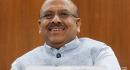
Delhi Assembly speaker urges gender-neutral rules and reforms
The News Mill

CM, Cong Govt Incompetence Led To Drought: KTR
Criticising the Chief Minister for prioritising trips to Delhi over addressing the hardships faced by farmers, Rama Rao said Revanth Reddy was not a regular Chief Minister, but rather a renewal Chief Minister who could stay in power only if he pays his EMIs to the leadership in Delhi.

INDIA bloc plans to hold a 'public impeachment' programme against Chief Election Commissioner Gyanesh Kumar at Mallikarjun Kharge's Delhi residence on October 30, followed by a rally at Ramlila Maidan on November 1 over alleged electoral irregularities.

Indias balancing act risks eroding Russias trust
New Delhis performative diplomacy could undermine its longstanding friendship with Moscow

BRICS forum condemns Pahalgam attack, calls for global action against terrorism
Leaders bat for UN reforms, international cooperation against terrorism New Delhi, Oct 27: Calling for comprehensive reforms of the United Nations, including its Security Council, the 12th BRICS Parliamentary Forum on Tuesday unanimously condemned the April 2025 Pahalgam terror attack in Jammu and Kashmir that left 26 people dead. In a joint declaration adopted [] The post BRICS forum condemns Pahalgam attack, calls for global action against terrorism appeared first on Northlines .

Delhi may raise agricultural land circle rates to 5 crore per acre
The proposed changes seek to bridge the gap between official land valuations and market prices across Delhis districts and localities

40 FIRs over anti-SIR protests in Delhi; police scan CCTV footage to identify demonstrators
Cases include alleged violations of prohibitory orders, vandalism and obstruction of public servants; separate FIRs filed over alleged assaults on demonstrators
Hyderabad overtakes Delhi, Mumbai in office leasing as Wise, DE Shaw sign big deals
Wise and DE Shaw signed leases for large office spaces in Hyderabad, indicating a rise in demand. The gross office leasing volume reached 4.21 million sq ft in the September quarter, surpassing previous figures. Hyderabad's leasing activity has now outpaced that of Delhi and Mumbai, positioning it as a strong market. This trend is attributed to global corporates establishing Global Capability Centers in the city.

Congress alleges Delhi Police denied INDIA bloc permission for mocj impeachment session against CEC
Congress accused Delhi Police of denying the INDIA bloc permission to hold a mock impeachment session against CEC Gyanesh Kumar at two venues. Leaders are considering alternatives, including Mallikarjun Kharges residence. KC Venugopal alleged attempts to silence the Opposition, while preparations continued for the November 1 rally. Rahul Gandhi separately met people reportedly affected by electoral roll revisions.

Delhi Government May Hike Agricultural Land Circle Rates After 18 Years
Delhi's agricultural land circle rates could rise to Rs 5 crore per acre in some districts as the government considers revising valuations unchanged since 2008.
Congress Claims Fight is for Voting Rights, Not Against Traders: Ravinder Sharma
Congress spokesperson Ravinder Sharma emphasizes the partys commitment to voting rights ahead of a major rally in Delhi. Congress Claims Fight is for Voting Rights, Not Against Traders: Ravinder Sharma
Congress Asks Party Cadre To Protect Genuine Voters During SIR
The AICC observer asked active Congress party cadres to reach Delhi at any cost by using any mode of transport: Reports
Delhi Assembly Met For Just 17 Days In 2025. Speaker Backs 30-Sitting Target
This was among the proposals discussed on Tuesday at a meeting of Assembly Speakers working on a common rulebook for legislative bodies.
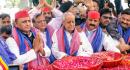
A Delhi event unveils fault lines in the Dalit-OBC formulation of SP politics
The brouhaha over Rajkumar Bhati reciting Ambedkars vows shows the limits of the SPs revival of the Lohiate policy of numerical aggregation
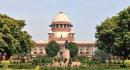
Supreme Court needs transparent roster system, says former Judge Oka
Former Supreme Court Judge Abhay Oka was speaking at a discussion on judicial accountability organised by the Campaign for Judicial Accountability and Reforms at the India International Centre in New Delhi
Cong seeks strong turnout at Nov 1 rally in Delhi
185 Stolen Vehicles Recovered In 72 Hours In West Delhi; 44 Arrested
Man Robbed of Rs 70 Lakh by Bike-Borne Duo in North Delhis Roop Nagar
3,000 Police Personnel To Be On Watch At Congs Ramlila Rally
NGT Directs Removal of Encroachments, Restoration of Kanganheri Pond in SW Delhi
Police unearth cyber fraud racket; seven held for laundering funds via crypto and hawala
Culpable homicide charge added in Harsh Vihar building collapse case
Security guard dies after bike accident in Delhi Cantt
Railways to launch door-to-door parcel services
Indian Railways plans to introduce a door-to-door parcel service using the Rail Parcel App in eight cities. Customers in Delhi, Mumbai, Kolkata, Chennai, and other cities can book pickups and deliveries. Logistics partners will manage first-mile and last-mile services, while the railways will transport parcels. Bookings can be made online, easing the logistics burden for customers. Refunds for cancellations will also be available under specific conditions.
Delhi to have over 1,400 Chhath ghats this year, basic preparations by Nov 6
Voting rights being snatched away, Oppn will continue fight for citizens: Rahul
Illegal firecracker unit busted in NE Delhi, three held
Myanmar national bound down for hosting 28 foreigners without mandatory reporting
Truck hits height barrier at RTR flyover hours after reopening, driver flees
Delhi Sees Coolest Oct Morning in Three Years; Gurgaon coldest Oct night at 12 degrees
IOC chapters mobilise for Rahul Gandhis Delhi Chalo rally

146 Players, 27 Slots: WPL Teams Gear Up for Auction Day
The Women's Premier League (WPL) mini-auction in Kochi on Wednesday will see 146 players, including capped Indian and international cricketers, go under the hammer. Teams like UP Warriorz, Gujarat Giants, Royal Challengers Bengaluru, Delhi Capitals, and Mumbai Indians will bid for 27 available spots, with a focus on Indian talent and strategic backups for the WPL 2027 season.

Nitin Gadkari said a road project opening next month could cut travel between Delhi and Haridwar to 90 minutes. He also highlighted faster journeys to religious destinations and warned that poor highway construction will bring penalties and blacklisting.

Delhi SIR: Over 94% of electors flagged for discrepancies cleared for final electoral roll

Delhi High Court issues notice to Centre on Instagram handle withheld since October 10
The News Mill
IT push: 200 capability centres, 6 lakh skilled youths, 2 tech districts in draft policy

Delhi HC seeks response from Centre in plea against withholding Instagram handle 'Bring Back Ballot'
The Delhi High Court on Tuesday issued notice to Central Government in a plea challenging the withholding of the Instagram handle @bring_back__ballot in India. The

Updated SSC Exam Schedule: Junior Engineer and Delhi Police SI Dates Revised
The Staff Selection Commission (SSC) has revised the exam schedules for the Junior Engineer and Delhi Police Sub-Inspector recruitment examinations. The Junior Engineer exam will now be conducted in two phases, while the Delhi Police SI exam dates have also been adjusted. Candidates are advised to stay updated on admit card releases and check the official SSC website for the latest information. This article provides essential details about the new exam dates and what candidates can expect.
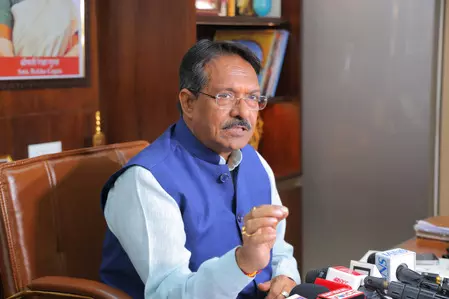
Harsh Malhotra slams Congress, AAP 'discomfort' over Delhi BJPs anti-anarchy march tomorrow
Digital Desk | New Delhi, Oct 27 (IANS) Delhi BJP president Harsh Malhotra criticised the Opposition Congress and the Aam Aadmi Party for objecting to the BJPs proposed Loktantra Bachao Arajakta Hatao Padyatra (Save Democracy Remove Anarchy March) to be organised in Chandni Chowk on Wednesday. Malhotra said, Those who have held Delhis businesses and the general public hostage by blocking Delhis roads for weeks, sometimes in the name of students and sometimes in the name of removing the Election Commissioner, are today opposing a symbolic two-hour padyatra. This is not opposition; it is hypocrisy. He said that there is a stark difference between the protests of the opposition and those of the BJP, as their events involve anti-national slogans, violence, stone-pelting, and damage to public property, while the BJPs march will be a peaceful and disciplined padyatra within the framework of the Constitution. We will not throw stones but shower flowers in honour of democracy, said Malhotra. Pointing to another difference between the protests by the Opposition and the Delhi BJP, Malhotra said their objective is to hold Delhi hostage by creating an atmosphere of anarchy. Our objective, on the other hand, is to remove anarchy, save democracy, and raise the voice of the people, he said. Announcing that the BJP march will not lead to any disruption of business activities in Chandni Chowk, Malhotra said this is in contrast to the Oppositions stirs that cause traffic jams, disruption of businesses and inconvenience to the common people. He said that on Wednesday the workers of the Yuva Morcha and Trade Cell will ensure that business activities in Chandni Chowk continue as normal. Our programme is symbolic and will conclude peacefully within two hours, he said. Malhotra said, In a democracy, everyone has the right to dissent, but no one has the right to create anarchy. The BJP has always stood for dialogue, peace, and democratic propriety.
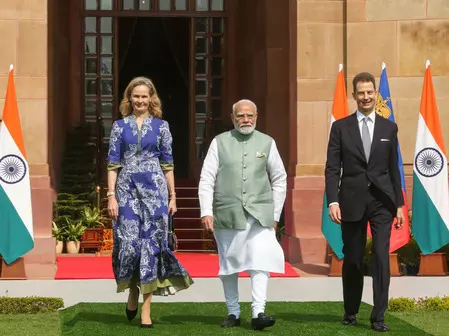
Liechtenstein backs Indias UNSC bid; both nations condemn Pahalgam attack, cross-border terrorism
Digital Desk | New Delhi, Oct 27 (IANS) India and Liechtenstein have unequivocally condemned terrorism in all its forms, including cross-border terrorism, and the April 2025 Pahalgam terror attack, while the European nation expressed readiness to support Indias candidature for a non-permanent seat on the UN Security Council for 2028-29. The two sides made the commitments in a Joint Statement issued on Tuesday during the State Visit of Liechtensteins Hereditary Prince Alois, the European nations Acting Head of State, to India. The two sides unequivocally condemned terrorism and violent extremism in all their forms and manifestations, including cross-border terrorism. They condemned the terrorist attack in Pahalgam, Jammu and Kashmir, on 22 April 2025, expressed solidarity with the victims and their families, and stressed the importance of bringing those responsible to justice, the Joint Statement read. The two sides also underlined the importance of international cooperation in combating terrorist financing. Prime Minister Narendra Modi thanked H.S.H. Hereditary Prince Alois for Liechtensteins readiness to support Indias candidature for a non-permanent membership of the UN Security Council for the term 2028-29, it stated. Reaffirming their support for reform of the UN Security Council to make it more representative, inclusive, transparent, efficient, effective, democratic and accountable, the two leaders agreed to work together to reform and strengthen multilateral institutions, including through initiatives such as UN80. Both sides also agreed that the governance of Artificial Intelligence (AI) should be grounded in international law, including human rights law, and should contribute to improving lives, empowering citizens and advancing sustainable development. Prince Alois extended an invitation to PM Modi to undertake a bilateral visit to Liechtenstein at a mutually convenient date. India also acknowledged receipt of a draft Double Taxation Avoidance Agreement (DTAA) from Liechtenstein, and both sides expressed readiness to consider the option of such a pact to provide greater legal certainty and predictability for investors and businesses.

Apple unveils 14-inch MacBook Pro with M6 chip, promises up to 30 pc faster graphics
Digital Desk | New Delhi, Oct 27 (IANS) Apple on Tuesday announced the new 14-inch MacBook Pro powered by its M6 chip, promising significant improvements in processing speed, graphics performance, on-device artificial intelligence (AI) capabilities and connectivity. The new MacBook Pro is aimed at college students, business professionals and creators, with Apple positioning it as a performance-focused laptop offering enhanced capabilities for demanding workloads. The company said the M6-powered device delivers up to 30 per cent faster graphics performance and up to 25 per cent faster AI workloads compared with the previous-generation M5 model. The M6 chip features an advanced 12-core CPU, which Apple describes as having the world's fastest CPU core. The processor is designed to improve responsiveness across everyday productivity tasks as well as more demanding professional workflows. Its 12-core GPU further boosts graphics performance and AI processing capabilities. For users upgrading from MacBook Pro models powered by the M1 chip, Apple said the new device delivers up to 11 times faster graphics performance and up to 13 times faster AI performance. The M6 chip also incorporates additional Neural Accelerators within the GPU and a dual 16-core Neural Engine, strengthening the laptop's ability to handle AI tasks directly on the device. These capabilities are designed to support Apple Intelligence features across applications and macOS, as well as the local execution of large language models (LLMs), while maintaining user privacy. The new MacBook Pro also introduces Wi-Fi 7 and Bluetooth 6 connectivity. Apple said its faster storage is designed to improve workflows involving large files, project exports and computationally intensive AI applications. The new 14-inch MacBook Pro will run macOS 27 and be available in space black and silver finishes. Apple said pre-orders will begin on October 28, with availability starting November 6. The 14-inch MacBook Pro is the pro laptop of choice for a wide range of users from college students, to business professionals across every industry, to multidisciplinary creators doing it all on one device, said Shelly Goldberg, Apple's vice president of Hardware Engineering.
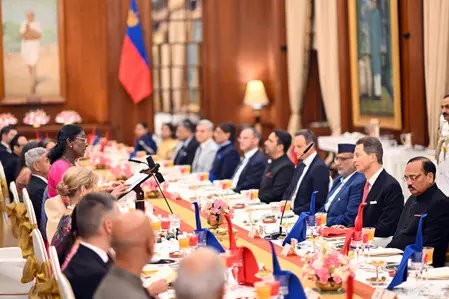
President Murmu hosts Liechtensteins Prince Alois, says TEPA can combine strengths of both nations
Digital Desk | New Delhi, Oct 27 (IANS) President Droupadi Murmu on Tuesday received Liechtensteins Hereditary Prince Alois and Hereditary Princess Sophie at Rashtrapati Bhavan and hosted a banquet in their honour, saying the two countries could build a beneficial partnership under the India-EFTA Trade and Economic Partnership Agreement (TEPA). President Droupadi Murmu received H.S.H. Hereditary Prince Alois and H.R.H. Hereditary Princess Sophie of Liechtenstein at Rashtrapati Bhavan and hosted a banquet in their honour, Rashtrapati Bhavan posted on X. The President said that with the new opportunities created by the India-EFTA TEPA, we can develop a beneficial partnership by combining Liechtensteins expertise in advanced manufacturing, innovation, and financial services with Indias skilled workforce, manufacturing capacity, and rapidly growing market. The two leaders agreed that close bilateral cooperation can bring immense benefits to our people, it added. According to a Joint Statement issued during the visit, TEPA, signed in March 2024 and in force since October 2025, carries the shared objective of mobilising $100 billion in investments into India over 15 years and facilitating the creation of one million direct jobs in the country by EFTA countries. The two sides identified areas such as advanced manufacturing, machinery and machine tools, precision industry, medical technology, space-related industries, clean technologies, artificial intelligence and financial services for deeper collaboration, where Liechtensteins specialised capabilities could complement Indias scale and growth opportunities. This is Prince Aloiss second visit to India this year, after he attended the AI Impact Summit in New Delhi in February, the statement noted. Earlier in the day, Prince Alois was accorded a ceremonial welcome at the forecourt of Rashtrapati Bhavan. President Droupadi Murmu and Prime Minister Narendra Modi warmly welcomed Prince Alois upon his arrival. Speaking to the reporters, Prince Alois expressed gratitude to President Murmu and PM Modi for the invitation and warm welcome and said, I am very honoured to be in India on the occasion of Liechtensteins first state visit to this remarkable country. This historic visit bears testimony to the importance that Liechtenstein attaches to the relationship with India, he said. Speaking about the conclusion of the Trade and Economic Partnership Agreement (TEPA) with India, which entered into force a year ago, the Prince called it a significant milestone in strengthening bilateral ties. We are determined to build on this momentum and strengthen our ties with India even further.

Delhi lawyers call indefinite work abstention demanding suspension of Shahdara ACP and SHO
The News Mill
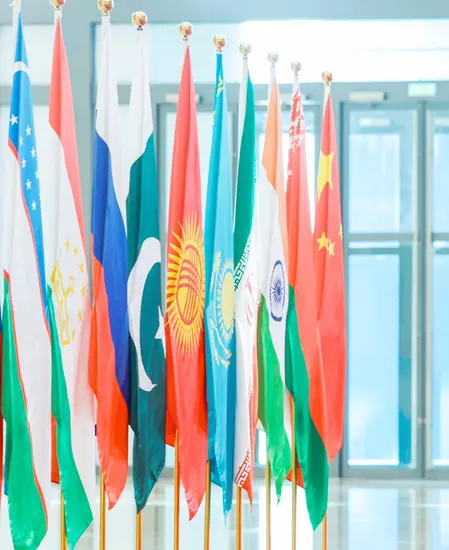
India to host SCOs first Civilisational Dialogue Forum; Pakistan Minister invited
Digital Desk | New Delhi, Oct 27 (IANS) India will host the Shanghai Cooperation Organisations (SCO) first Civilisational Dialogue Forum in New Delhi from November 20 to 22, with Pakistans Minister for National Heritage and Culture, Aurungzeb Khan Khichi, among those invited to attend, diplomatic sources said. Prime Minister Narendra Modi is expected to inaugurate the three-day forum, which will bring together representatives from more than 25 countries at Purana Quila, the historic 16th-century fort in the national capital. The Ministry of Culture is partnering with the Ministry of External Affairs to organise the event. The choice of Purana Quila as the venue underscores Indias emphasis on highlighting its historical and civilisational continuum while hosting a major multilateral cultural event. The gathering is expected to feature discussions on civilisational linkages, cultural diplomacy and collaborative initiatives in the fields of heritage, education and traditional knowledge systems. The initiative was proposed by Prime Minister Modi at the SCO leaders summit in Tianjin in 2025 and was subsequently adopted by the grouping. Culture ministers from all 10 SCO member states, including Russia, China, the UAE, Iran and Belarus, have been invited, along with representatives from observer and dialogue partner countries. Pakistan has yet to confirm who will represent it at the forum. If Minister Khichi attends, it would mark the first visit by a Pakistani minister to India since the SCO foreign ministers meeting in Goa in 2023, which was attended by Bilawal Bhutto. Despite strained bilateral relations, India has continued to engage with Pakistan within the SCO framework. In September 2026, India sent its SCO National Coordinator Alok Dimri to Islamabad for a meeting ahead of Pakistans presidency of the grouping and the planned SCO leaders summit scheduled for August 2027. Officials said the Civilisational Dialogue Forum aims to promote cultural understanding, shared heritage and people-to-people exchanges among SCO member states and partner countries. With participation expected from a wide range of countries, the forum is being viewed as an important platform for dialogue under Indias SCO engagement.
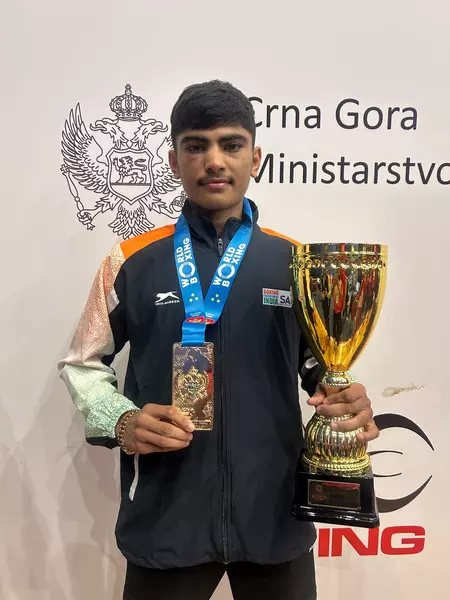
Digital Desk | New Delhi, Oct 26 (IANS) Aditya was crowned the mens 55kg champion in the 2026 World Boxing U-19 Championships in Budva, Montenegro, as India finished with a gold, one silver and two bronze medals. Aditya, the Asian U-19 silver medallist, fought back after narrowly losing the opening round to beat Islam Magomedov of Russia 4:1 in the summit clash on Tuesday. I was trailing 3-2 after the first round, but I stepped it up to take the next one 4-1. Thats when the belief hit me that I could win this bout. Im truly grateful to all the coaches and my teammates here at the World Championships in Montenegrotheir support throughout the camp made all the difference, said Aditya in his first reaction after the victory. Later, Indias chances of winning the second gold were shattered after Megha Sheokand lost her womens 80kg final against Ekaterina Frolova of Russia 0:5. Indias two bronze medals came through Harshika (womens 65kg) and Prachi Tokas (womens 80+kg). Aditya had reached the final in his weight category in the 2026 World Boxing U-19 Championships by defeating Nihat Gasimov of Azerbaijan in the mens 55kg semifinals. Aditya, the Asian U-19 silver medallist, was dominant through the three rounds to bag a 5:0 verdict from the judges and will now face Islam Magomedov of Russia in the gold medal bout. Megha Sheokand had earlier clinched her spot in the final of the womens 80kg category with a RSC win over Meerim Chynybekova of Kyrgyzstan in the semifinals. Sheokand outclassed Chynybekova of Kyrgyzstan to reach the final of the womens 80kg category on Sunday. Megha dominated the opening round, and her opponent received the count thrice in the second round before the referee stopped the bout. Harshika secured the first bronze medal, as a gallant fight against USAs Lauryn Elmore was not enough, and she ended on the wrong side of the 3:2 verdict in the womens 65kg semifinals. Prachi Tokas had bagged a bronze medal in the womens 80+kg category after losing her semifinal bout. Prachi will come home with a bronze medal after she lost the womens 80+kg category in the semifinal, 1:4, against Samira Itonieva of Russia.

At Delhi meet, HYDRAA pitches for CSR funds for lake restoration
New Delhi: Underscoring the critical role lakes play in preventing flooding during the monsoon and drought during summers, HYDRAA (Hyderabad Disaster Response and Asset Protection Agency) Commissioner A V Ranganath said on Tuesday, October 27, that the state government has undertaken restoration of lakes and nalas (stormwater drains) on a large scale. Participating in a Get the latest updates in Hyderabad City News , Technology , Entertainment , Sports , Politics and Top Stories on WhatsApp & Telegram by subscribing to our channels. You can also download our app for Android and iOS .
12th BRICS Forum Adopts Joint Declaration on UN Reform, Counter-Terrorism
LOK SABHA SPEAKER HANDS OVER BRICS PARLIAMENTARY FORUM CHAIRSHIP TO CHINA Andalib Akhter / New Delhi The 12th BRICS Parliamentary Forum on Tuesday adopted a Joint Declaration reaffirming the member countries commitment to reforming the United Nations Security Council, combating cross-border terrorism and strengthening cooperation on digital technologies and sustainable development. The declaration, adopted at []

WPL 2027: G. Kamalini Fully Available As Four New Names Added To Player Auction Pool
Delhi Premier League: Four more players have been added to the Womens Premier League (WPL) 2027 auction list at the request of the five franchises, while India wicketkeeper-batter G. Kamalini will be available for the entire season, a source told IANS. The new entrants in the 2027 WPL auction pool, which now stands at 150 players, are Delhi all-rounders Medhavi Bidhuri and Samaira Raghav, New Zealand pacer Bree Illing and Uttar Pradesh bowler Avanya Jain. The auction will start at 5:30 pm in Kochi on Wednesday. Yes, during the auction briefing held today, the late addition of four players was made, and all five teams were informed about it. All five teams were also told that G Kamalini is fully available for the 2027 WPL season as she will not be playing in the 2027 U-19 World Cup, which was the case before, further said the source to IANS on Tuesday. Kamalinis availability for 2027 WPL had been in question before she was understood to be in contention for next years Under-19 World Cup, which directly clashes with the tournaments fifth season running from January 14 to February 7. Two-time winners, Mumbai Indians had released Kamalini, who had a contract of Rs 1.1 crore, during last months retention deadline. But with Kamalini, who has set her base price at Rs 40 lakhs, fully available for the WPL, it means that she can get a good payday at the auction, where 27 slots are to be filled, and wicketkeeper-batters will be in great demand. While Medhavi, who bowls leg-spin, has gone viral for her 6-7 celebration in the Delhi Premier League (WPL) womens competition, Samaira is coming off a good showing in the U19 Womens T20 Trophy and is also believed to be selected for the U19 Womens T20 Challengers tournament, which prompted her late addition to the WPL auction pool. The 2027 WPL auction will open with a full round of capped players, and is followed by a full round of uncapped players. After the 50th player, the accelerated rounds may begin. With each teams overall purse at Rs 15 crore, UP Warriorz, who finished last in 2026 and have never reached the final in four seasons, have the most to spend at Rs 3.75 crore. The Meg Lanning-led side has eight slots to fill -- five Indian and three overseas spots. Gujarat Giants have a purse of Rs 1.25 crore available to fill three slots -- one of which is overseas. Defending champions and two-time winners Royal Challengers Bengaluru have Rs 1.15 crore available to fill five slots -- two of which are overseas. Four-time runners-up Delhi Capitals have Rs 1.10 crore in hand to fill five slots -- one of which is overseas. Mumbai Indians have Rs 90 lakh purse available to fill six Indian player slots. Australias T20 World Cup-winning captain Sophie Molineux, who has listed herself at a base price of Rs 50 lakh, and Jess Jonassen, who missed the 2026 season with a shoulder injury, are the biggest overseas names in the auction pool. Scotland wicketkeeper-batter Sarah Bryce is another name that will keep five teams interested, as well as Indias off-spin bowling all-rounder Sneh Rana. Uncapped batters Vrinda Dinesh, Gongadi Trisha, Saanika Chalke, and Mumbais 15-year-old batting sensation Ira Jadhav could draw strong bidding interest from the five franchises. Australias T20 World Cup-winning captain Sophie Molineux, who has listed herself at a base price of Rs 50 lakh, and Jess Jonassen, who missed the 2026 season with a shoulder injury, are the biggest overseas names in the auction pool. Also Read: Special Cricket Stories Article Source: IANS
The 15th meeting of the Narmada Control Authority Review Committee was held on Tuesday under the chairmanship of Union Minister for Jal Shakti, CR Patil. Rajasthan Chief Minister Bhajanlal Sharma, Maharashtra Chief Minister Devendra Fadnavis, Madhya Pradesh Chief Minister Mohan Yadav, and Gujarat Chief Minister Bhupendra Patel, along with senior officials, participated in the meeting via video conference, according to a press release. Patil stated that under the leadership of Prime Minister Narendra Modi and the guidance of Union Home Minister Amit Shah, new dimensions have been established in long-pending inter-state water cooperation. The agreement reached on July 7, in New Delhi, in the presence of the Chief Ministers of Rajasthan, Gujarat, Madhya Pradesh, and Maharashtra, is being effectively implemented by the Narmada Control Authority Review Committee. He noted that decades-old water agreements have finally taken concrete shape through mutual consensus, coordination, cooperation,...
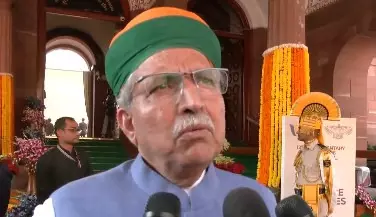
NDA, Oppn hail 12th BRICS Parliamentary Forum, call it India's opportunity to voice opinion
Digital Desk | New Delhi, Oct 27 (IANS) Leaders across party lines on Tuesday hailed the success of the 12th BRICS Parliamentary Forum, referring to it as a platform for India to voice its opinion as a leader and for exchanging success stories with the participating countries. The Forum concluded on Tuesday with the adoption of a Joint Declaration, a day after its inauguration by Lok Sabha Speaker Om Birla. The declaration formally reaffirmed the member countries' commitment to the principles of the United Nations Charter, including sovereign equality, mutual respect, non-interference in internal affairs, and the peaceful resolution of international disputes. Speaking to reporters, BJP MP Anurag Thakur said: This is yet another success on the international stage; the 12th BRICS Parliamentary Forum has proven to be a highly successful event. It provides an opportunity to showcase the strides being made globallywhether by our Parliament, our government, or our nationand to highlight that India, rather than just being a follower, is now a leader. He observed that the forum provided a platform for India to keep forward its opinions on global issues, while adding that through the G20 Summit in 2023, the BRICS Summit in September and the 12th BRICS Parliamentary Forum, India has shown the world that it is capable of successfully organising global events. Union Law Minister Arjun Ram Meghwal called it an excellent opportunity, not just for India, but for all the participating nations to learn about the discussions taking place within the Parliaments of BRICS nations and to exchange success stories. Over the years, India has also made significant strides in this regard; consequently, other nations gain the chance to understand Indias positive aspects, best practices, as well as its rules and procedures, he said. Expressing his happiness at being able to participate in the event, Union Minister K Ram Mohan Naidu said: We have all seen how important BRICS is turning out to be for the development of developing nations and the Global South. He asserted that India is playing a solid role in not only developing itself but also other nations. Mentioning the concept of 'Vishwa Bandhu', he said: We have always carried the concept of everyone growing together. Naidu stated that delegations from all the participating countries have high regard for India. Thanks to Prime Minister Narendra Modi's leadership, the nation has grown tremendously, he added. Congress MP Shashi Tharoor also termed the forum as a very successful event. What has happened essentially is that just as we had an agreement during the BRICS Summit in the summer, they had an agreement on the language here. There was some discussion about the joint declaration...in the end everything was handled amicably, and India peacefully handed over the chair to China, he told reporters. Tharoor added: We look forward to India's continued role in international cooperation and parliamentary diplomacy through BRICS as well as through other forums. Samajwadi Party MP Rajeev Kumar Rai cautioned that the global order will lose relevance if the voice of the BRICS nations goes unheard. I hope everyone will sincerely act on the points discussed, read and heard here and convey a new message. The BRICS forum covers nearly one-third of the worlds geographical area. If its voice goes unheard, the global order loses its relevance, he told IANS.

MoRTH introduces concessional local pass for National Highway users living near fee plazas
New Delhi, Oct 27: Residents living within 20 km of a National Highway toll plaza can now obtain an annual concessional local FASTag pass starting November 1, 2026, the Ministry of Road Transport and Highways (MoRTH) said on Tuesday. The annual fee for the concessional pass is Rs 1,500 for toll plazas outside municipal or local town limits, and Rs 3,000 for those within municipal limits, according to a notification by the ministry. Under the new provision, eligible non-commercial vehicle owners with a valid and functional FASTag, residing within a 20 km range, can choose between the existing monthly pass and the concessional Local Pass for commuting through a specific fee plaza. The pass will be valid only for that fee plaza and will not be transferable to any other plazas. Currently, eligible residents can obtain a monthly pass for Rs 360, amounting to Rs 4,320 annually. The ministry further said that no such concessional local pass shall be issued for commuting on a national highway or expressway on which a fee is levied based on the closed user fee collection system. It will also not be issued where a service road or alternative road is available for use by commuters. With over 13 crore FASTags issued across the country, the new provision aims to provide an option for eligible residents living near toll plazas to make travel more economical and enhance Ease of Commuting for local residents, MoRTH said. The amendment has been notified through the National Highways Fee (Determination of Rates and Collection) (Fifth Amendment) Rules, 2026, under the powers conferred by the National Highways Act, 1956.
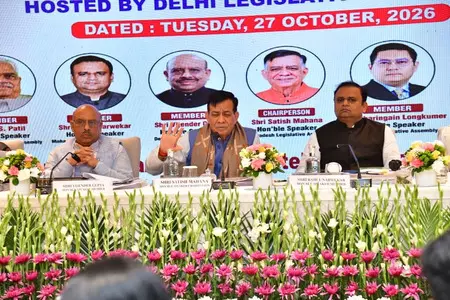
Delhi Speaker calls for gender-neutral parliamentary rules
Digital Desk | New Delhi, Oct 27 (IANS) Speaker of the Delhi Legislative Assembly Vijender Gupta has called for gender-neutral parliamentary rules, constitutional safeguards and modernisation of legislative procedures, an official said on Tuesday. Speaking about the initiative to draft model rules for legislative bodies, Gupta said that uniform rules must not mean identical rules. Our endeavour should be to strengthen common democratic standards while preserving the constitutional autonomy and institutional distinctiveness of every Legislature, he said. He made the observations while presenting Delhis recommendations at the meeting of the Committee on Formulation of Model Rules for Uniformity in the Procedure and Conduct of Business in Legislative Bodies in India. Calling for comprehensive parliamentary reforms, he emphasised the need for gender-neutral legislative rules, arguing that masculine expressions retained under conventions derived from the General Clauses Act, 1897, must give way to language reflecting contemporary democratic realities. He observed that recognition of Nari Shakti must extend to the rules governing Indias democratic institutions. The meeting was chaired by Speaker of the Uttar Pradesh Legislative Assembly Satish Mahana and attended by Rahul Narwekar, Speaker of the Maharashtra Legislative Assembly; Kuldeep Singh Pathania, Speaker of the Himachal Pradesh Legislative Assembly; and G.S. Patil, Speaker of the Karnataka Legislative Assembly, along with senior legislative officials and delegates. Welcoming the Presiding Officers, Gupta recalled the Committees preliminary meeting in Mysore on May 12 2026, following the decision at the 85th All India Presiding Officers Conference in Patna to develop a common procedural framework. Appreciating the Uttar Pradesh Legislative Assembly Secretariat for preparing the draft report, he stressed that the exercise must identify ambiguities, draw upon effective parliamentary practices and deliver substantive institutional reforms. The meeting was conducted in a paperless manner, reflecting the growing adoption of digital practices in legislative institutions. According to an environmental impact assessment done by the Delhi Legislative Assembly Secretariat, the digital circulation of 12 sets of documents, comprising 1,521 pages each, resulted in estimated savings of 18,252 sheets of paper, the equivalent of approximately 4.4 trees and 18,252 litres of water, along with an estimated reduction of 182.5 kg of CO-equivalent emissions. Emphasising constitutional safeguards, Gupta maintained that the Model Rules must recognise the distinct legal frameworks of Delhi, Puducherry and Jammu and Kashmir, whose Legislatures function under constitutional provisions and specific statutes, including the Government of National Capital Territory of Delhi Act, 1991. He sought appropriate provisions for bicameral Legislatures, including Legislative Councils, their Presiding Officers, Secretariat officials and reciprocal arrangements. He also recommended clarity on elections to presiding offices, the nomination of the Panel of Chairpersons, and the delegation of the Speakers functions. Cautioning that quorum requirements could be changed only through legislation, he opposed unnecessary duplication of constitutional and statutory provisions, including those governing Addresses by the President, Governor and Lieutenant Governor. On legislative functioning, Gupta supported three annual sessions Budget, Monsoon and Winter and a minimum of 30 sittings for all State Legislatures, as discussed at the 86th Conference of Presiding Officers, while protecting higher statutory requirements and the quality of deliberations. With the growing adoption of Digital Sansad, e-Vidhan and the National e-Vidhan Application (NeVA), he advocated formal recognition of electronic notices, summons, petitions and procedural communications. He also called for distinguishing the Roll of Members from the daily Attendance Register and retaining effective existing parliamentary arrangements. Welcoming the proposed recognition of Vande Mataram at the commencement of proceedings and Jana Gana Mana at the conclusion of a session, he noted that both practices were followed in the Delhi Legislative Assembly. Seeking greater procedural flexibility, Gupta recommended avoiding duplication between Zero Hour and Special Mentions, limiting Adjournment Motions to one per sitting, and leaving debate duration to the Speakers or Houses discretion.
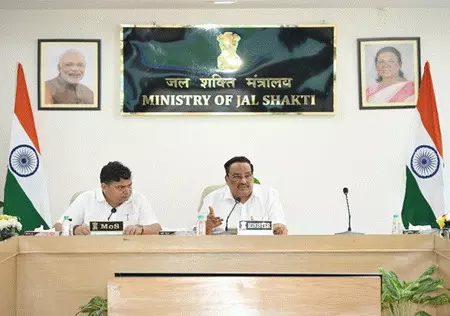
Minister CR Patil stresses expeditious completion of Jal Shakti projects
Digital Desk | New Delhi, Oct 27 (IANS) Union Jal Shakti Minister C.R. Patil chaired a review meeting with department heads, emphasising the need for expeditious completion of projects and removal of bottlenecks causing delays, an official said on Tuesday. The review was conducted by Patil in the presence of Minister of State for Jal Shakti Raj Bhushan Choudhary. The exercise was related to the Department of Water Resources, River Development and Ganga Rejuvenation to assess the overall progress of projects, programmes, schemes and initiatives being undertaken by the Department and its various wings and organisations, said an official statement. During the meeting, Flood Management Wing (FM Wing), Farakka Barrage Project, National Water Mission, Modernisation of Command Area Development and Water Management (M-CADWM), Basin ManagementI & II, National Water Development Agency, KenBetwa Link Project Authority, BrahmaputraBarak River Matters, Brahmaputra Board, Minor Irrigation Statistics, and National Institute of Hydrology (NIH) gave detailed presentations on their ongoing projects and activities. The discussions focused on the status of ongoing projects, including progress of projects under the Flood Management and Border Areas Programme (FMBAP), progress of major works, including replacement of barrage gates and anti-erosion measures, and implementation-related challenges under the Farakka Barrage Project, said the statement. Patil also reviewed priority activities and initiatives of the National Water Mission, implementation, status of 35 pilot clusters under M-CADWM, status of the KenBetwa Link Project, including the link canal, Daudhan Dam and progress of preparation of master plans/DPRs by Brahmaputra Board, progress of four ongoing censuses under the Minor Irrigation Statistics programme, targets and progress of major programmes and activities of NIH, etc. The Minister issued directions and recorded decisions aimed at expediting project implementation and strengthening coordination with the States for completion of projects in a time-bound manner. Emphasising the need for expeditious implementation, the Union Minister directed that the bottlenecks affecting the progress of projects be identified and resolved speedily in order to ensure timely completion of projects. He called upon senior officers and heads of the concerned wings and organisations of the Department to ensure effective follow-up on the decisions taken during the review and maintain close monitoring of implementation, with a focus on achieving the desired outcomes within stipulated timelines.
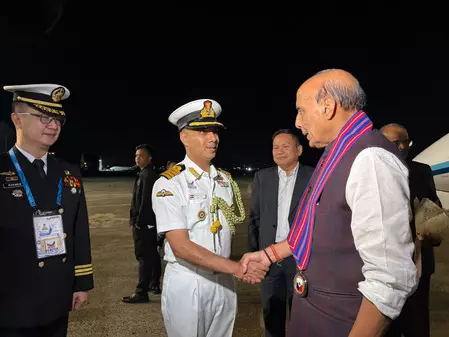
Rajnath Singh arrives in Philippines for Asean Defence Ministers' meeting
Digital Desk | Cebu (Philippines), Oct 27 (IANS) Defence Minister Rajnath Singh on Tuesday arrived in Cebu on a three-day visit to the Philippines, during which he will attend the 13th Association of Southeast Asian Nations (ASEAN) Defence Ministers Meeting-Plus (ADMM-Plus) and hold several bilateral meetings on the sidelines. Raksha Mantri Shri Rajnath Singh landed in Cebu on a three-day visit to Philippines. He will attend the 13th ASEAN Defence Ministers Meeting Plus during his visit and also hold several bilateral meetings on the sidelines, the Defence Ministers office posted on X. Singh, who left New Delhi earlier in the day, will lead the Indian delegation at the two-day meeting on October 28 and 29 and address the forum on shared regional and international security issues. Sharing details of his visit, the Defence Minister said India remained committed to strengthening regional security cooperation, promoting ASEAN centrality and ensuring peace and stability in the Indo-Pacific region under its Act East Policy. During my visit, I will also be holding several bilateral meetings with my counterparts from participating nations. These interactions will be a great opportunity to review our ongoing defence ties and explore new avenues to strengthen our strategic partnerships, the Defence Minister posted on X. According to the Ministry of Defence, the ADMM is the highest defence consultative and cooperative mechanism within ASEAN. The ADMM-Plus brings together the 11 ASEAN member states, Brunei, Cambodia, Indonesia, Laos, Malaysia, Myanmar, the Philippines, Singapore, Thailand, Timor-Leste and Vietnam and eight Dialogue Partners: India, the United States, China, Russia, Japan, South Korea, Australia and New Zealand. India became a Dialogue Partner of ASEAN in 1992, while the inaugural ADMM-Plus meeting was held in Hanoi, Vietnam, on October 12, 2010. Since 2017, the defence ministers participating in the forum have been meeting annually to strengthen defence cooperation between ASEAN member states and the eight partner countries. The Philippines is chairing the ADMM-Plus in 2026. India is also co-chairing the Experts Working Group on Counter-Terrorism with Malaysia for the 2024-2027 cycle. Indias participation in the forum reflects its continued engagement with Southeast Asian countries on defence and strategic issues, as well as its efforts to deepen regional partnerships under the Act East Policy.
Congress leader K.C. Venugopal says permission for October 30 programme was denied after police intervention, threatens to conduct it outside PM and Home Ministers residence; senior officials of Delhi Police tellThe Hinduno specific request for mock impeachment has been sought
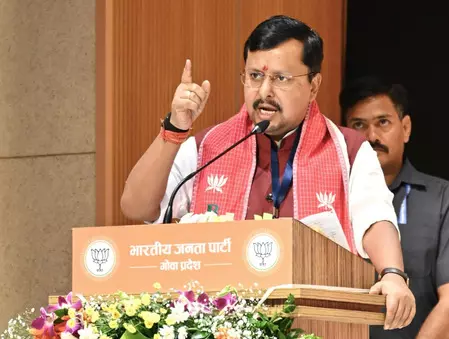
Digital Desk | Panaji, Oct 27 (IANS) BJP president Nitin Nabin on Tuesday remarked that the nationwide 'Save Democracy, Remove Anarchy' campaign has been launched by the party to counter the Gandhi family's functioning of working only for its own interests, while accusing the Congress of being frustrated and desperate. Nabin made the remarks during a BJP event in Panaji. He is on a two-day visit to Goa. Addressing a gathering, the BJP chief criticised Congress president Mallikarjun Kharge's aap remark, saying: Whenever Congress leaders become frustrated and desperate, they resort to insulting Prime Minister Narendra Modi's parents by making derogatory remarks. I would like to tell the Congress president that it is because of this culture and conduct that the party is declining today. There is still time to introspect and reform. Otherwise, there may come a time when there will be no one left willing to associate with the Congress. Referring to the person whose remark Kharge was responding to at the Bihar event, Nabin said: He was a Congress worker himself who admitted that if the party continues on this path, Narendra Modi will continue to remain in power, while adding that Congress workers themselves are holding up a mirror to the leadership, but the party refuses to learn. Accusing Congress of sidelining democracy with the imposition of 'Emergency' under then-Prime Minister Indira Gandhi, Nabin targeted the Gandhi family. For them, the Constitution only means the wishes of one family. Whatever that family desires, they want it to become the law of the land. But that will never happen. The people of India understand this very well...This family lives for itself and works only for its own interests. That is why the BJP has decided to launch the campaign Save Democracy, Remove Anarchy across the country. We believe in directly engaging with the people and exposing the true faces of those who mislead them, he said. Further accusing the grand old party of adopting double standards, Nabin said: When the public elects them, they say democracy is alive. When voters reject them, they claim democracy is under threat. If they win in Tamil Nadu, Kerala, or West Bengal, democracy is functioning. If they lose, democracy is endangered. The public can clearly see this double standard and hypocrisy. He alleged that Congress leaders often walk away after coming up with presentations and allegations, saying: I would like to say that even a BJP 'Mandal President' is capable of answering Rahul Gandhis questions. We are ready for debates in Parliament, on the streets, or on any platform. Maintaining that the Special Intensive Revision (SIR) of electoral rolls have been conducted earlier as well, the BJP chief underlined that India's electoral system has a process which ensures that citizens exercise their right to vote. Decisions regarding proper voter identification and voter rolls are made through an established process, he emphasised. He said that the Congress also conducted the SIR during its tenure and was supported by the then-Opposition rather than being questioned. Accusing the Congress of misusing Constitutional institutions, Nitin Nabin alleged: There is a long list of Election Commission officials who, after retirement, were rewarded by Congress governments. The party cannot answer questions related to it. But the people of the country have all the answers and give a befitting reply to the Congress from time to time. Stating that Prime Minister Narendra Modi is focused towards working on women-based development that focuses on welfare and empowerment, Nabin said: That is why numerous schemes have been launched to empower women, enhance their skills, and improve their rights and opportunities. We believe that when a woman becomes empowered, not one but two families become stronger, and consequently, society itself becomes stronger. While reiterating PM Modi's resolve to implement the 'Nari Shakti Vandan Adhiniyam', the BJP chief stated: We are confident that under the BJP-led governance, women will receive their rightful representation (in the Parliament and state Assemblies). Meanwhile, Nabin referred to Lok Sabha Leader of Opposition Rahul Gandhi's Smash the Patriarchy remark, questioning the Congress party's hesitation surrounding discussions related to women's rights and dignity. I would also like to ask Rahul Gandhi and Congress leaders why they remain silent when allegations of misconduct against 11 female students emerged at Delhi's JNU, involving a Congress MP? Why is the Congress mute on such matters? he asked. One can understand that their (Congress) sole purpose is to spread anarchy in the country. This shows that they are not genuinely concerned about womens dignity. If they truly cared, they would have sought immediate action against the MP and taken a clear stand, he stated. Citing the BJP-led government's schemes for women, skill development programmes for youth, and startup initiatives, the BJP chief said: Congress, however, continues to focus on dividing the youth. Their political strategy revolves around creating divisions in society...But the youth of India reject this approach. They support the vision of an Atmanirbhar Bharat (self-reliant India) and a Developed India rather than anarchy. They see the expansion of entrepreneurship and new opportunities taking place under PM Modi's leadership. Therefore, so-called attempts to spread negativity and divide society will not succeed, he asserted. Moreover, Nabin accused the LoP of insulting the tribal community while citing the Congress leader's Goa visit. When Rahul Gandhi visited Goa and was presented with a Kunbi shawl as a symbol of respect for the tribal community, he could not handle it properly. He had done something similar with a 'gamosa' in Assam as well. Someone who has insulted the countrys first tribal woman President would hardly understand the significance of symbols of respect, he remarked. Meanwhile, the BJP president urged party workers in Goa to set up 'Jan Samvad' programmes over the next two months to inform the public about the work undertaken by the party at the national, state and booth levels and also organise a separate programme to reach out to first-time voters. The dream of a Viksit Bharat by 2047 can be realised only if the BJP remains strong, because the Opposition lives only for itself. The party will fulfil its resolve to make the lotus bloom once again in Goa in 2027, he asserted.
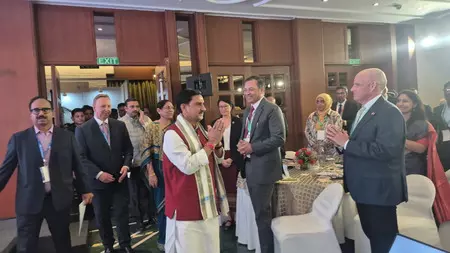
India calls for building sustainable cities to meet global climate goals
Digital Desk | New Delhi, Oct 27 (IANS) Indias Minister of State for Housing and Urban Affairs, Tokhan Sahu, on Tuesday called for collective efforts to develop sustainable cities to fulfil global climate commitments and create better opportunities for future generations. He was addressing the second edition of the ARISE Cities Forum, which kicked off at the India Habitat Centre here, bringing together over 200 delegates from more than 50 cities across 18 countries representing the Global South. From resolve to planning, from planning to implementation, and from implementation to resultsthat should be our way of working. Our goal is to build cities where development reaches every section of society and creates, the minister said. Themed From Bharat to Antalya Commit. Implement. Deliver, the Forum features 3 technical plenaries and 14 technical sessions, focusing on the experiences of local governments from the Global South region in advancing urban resilience, sustainability, and equitable and low-carbon development. The discussions feed into the Delhi Declaration on Local Action for Global Climate Goals 2026, which will be adopted on Wednesday at the forum and presented at COP31 in Antalya, Trkiye. Country Representative, UN Women India Shoko Ishikawa, called for gender-responsive and inclusive urban development. She said, Drawing on the lessons gained from our initiatives in India, there are three priorities: integrate gender equality into urban planning, climate policies and investments; invest in urban infrastructure and services that strengthen women's safety, mobility and economic participation; and institutionalise women's leadership and accountability in urban climate action. She added that UN Women looks forward to working with the ARISE Cities Forum to carry this agenda forward so that women and girls help shape the cities of tomorrow she s Director of the National Institute of Urban Affairs, Debolina Kundu, noted that the theme of this year's Forum, From Bharat to Antalya Commit, Implement, Deliver, reflects the urgency of moving from climate commitments to action. As we look towards COP31, it is important that the experiences, priorities and solutions emerging from our cities find a stronger place in national and global climate conversations, she remarked. Secretary General of ICLEI, Gino Van Begin, also spoke of the potential of urban local governments, stating, Cities are developing innovative solutions, building functioning partnerships and demonstrating pathways towards more resilient, inclusive and sustainable futures. Their experiences and priorities must have a stronger voice in global processes such as the UNFCCC COPs, and this is what the ARISE Cities Forum aims to achieve. Day 1 of the ARISE Cities Forum 2026 featured 2 Plenary sessions and 8 technical sessions. The discussions, featuring high-level representatives from city governments, state-level bodies, embassies, UN agencies, development institutions, and experts, spanned topics such as the need for strengthening multilevel action to translate global climate commitments into measurable action on the ground, climate-resilient water management and sustainable energy transition in cities, urban biodiversity and nature-positive cities, positioning entertainment and culture as an actionable lever for systemic urban resilience, building resilient coastal cities and communities, and integrating public health and child- and youth-focused initiatives with climate-resilient urban planning. A Memorandum of Understanding was also exchanged between Global Buildings Performance Network (GBPN) and ICLEI South Asia.
Delhi Student Found Hanging, Police Probe Foul Play
A 17-year-old Class 12 student was found hanging from a ceiling fan at her home in Wazirpur JJ Colony, northwest Delhi, on Tuesday. Her family suspects foul play, and police are investigating the incident, with no suicide note found.


DelhiHaridwar road link to open in two months: Gadkari
Gadkari said improved road connectivity to religious destinations would help boost tourist arrivals and create jobs.
New Delhi Metro figures among CNN
In 24 years since 2002, the services have undergone phenomenal expansion By T N Ashok NEW YORK: A great metro system is much more than a railway: it changes how a city grows, where people live and work, how businesses attract customers, and how public spaces evolve. The Delhi Metro illustrates this [] The post New Delhi Metro figures among CNNs 18 best metros in the World appeared first on Northlines .
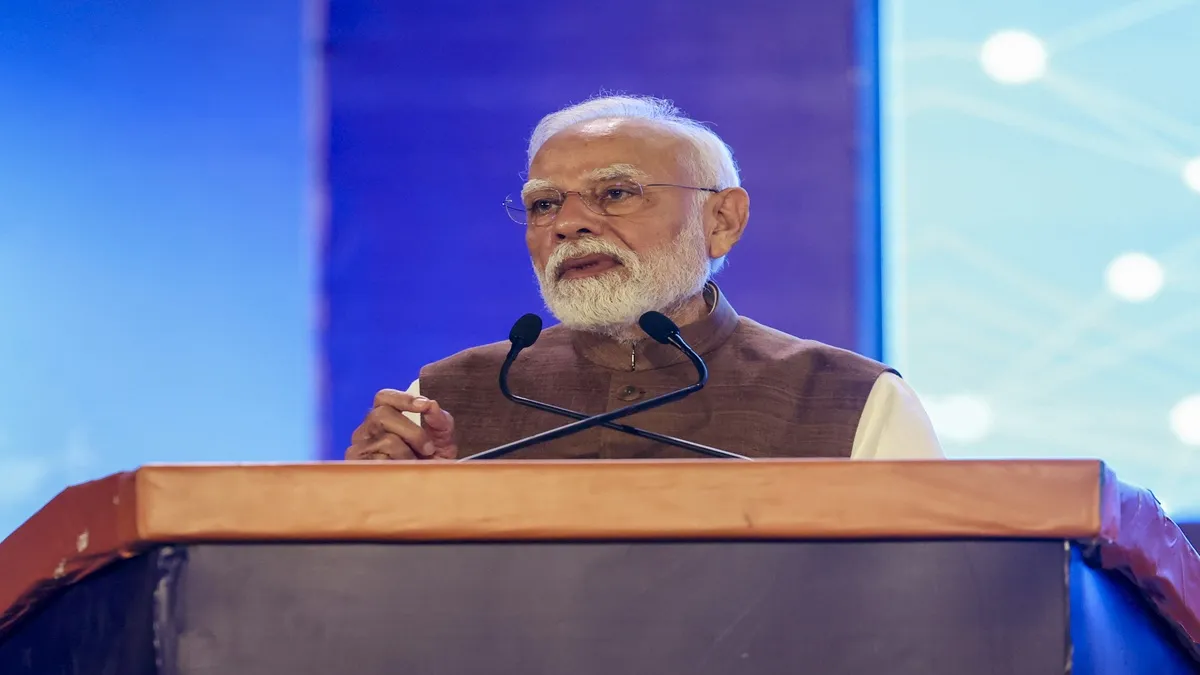
'Innovate boldly, lead the world': PM Modi's call to India on future technologies
Prime Minister Narendra Modi on Tuesday called on India to take the lead in developing next-generation technologies, saying the country must move beyond adopting innovations created elsewhere and focus on building solutions that address challenges faced by the world. Addressing the Emerging Science, Technology and Innovation Conclave 2026 in Delhi, the Prime Minister said India was entering a new phase of scientific and technological progress, driven by the confidence, ambition and ideas of its young innovators. Reflecting on his interaction with startup representatives ahead of the event, PM Modi praised the scale of their ambitions and their confidence in pursuing new ideas. The scale at which the youth of India are thinking, and the confidence with which they are moving forward, is truly inspiring, he added.

Army Equestrian Championships 2026 marks historic first in New Delhi
Army Equestrian Championships 2026 marks historic first in New Delhi

Local residents near toll plazas to get annual passes for Rs 1,500-Rs 3,000 from November 1
New Delhi [India], October 27 (ANI): The Government of India will introduce a concessional annual pass for eligible non-commercial vehicle owners living within 20 km of National Highway fee plazas from November 1, 2026, allowing them to commute through designated toll plazas at a fixed annual fee of Rs 1,500 or Rs 3,000, depending on the location of the plaza. The Ministry of Road Transport and Highways said the initiative aims to make travel more economical for residents living near toll plazas and improve ease of commuting. The annual fee will be Rs 1,500 for fee plazas located outside municipal or local town limits and Rs 3,000 for plazas situated within these limits. Under the new provision, eligible vehicle owners with a valid and functional FASTag can choose between the existing monthly pass and the concessional local pass for a specific fee plaza. The pass will be valid only for the designated plaza and cannot be transferred to other toll plazas. The facility will not be available on National Highways and expressways where toll collection follows a closed user-fee system. It will also not be issued at locations where a service road or alternative road is available for commuters. The annual local pass will be available at eligible toll plazas from November 1, while the facility will be accessible through the Rajmargyatra mobile application from December 1, 2026, according to the ministry. The provision has been notified through the National Highways Fee (Determination of Rates and Collection) (Fifth Amendment) Rules, 2026, under the National Highways Act, 1956. The Central Government may revise the annual pass rates every year, with any revised rates taking effect from April 1, the ministry said. The move comes as FASTag adoption continues to expand across the country, with more than 13 crore FASTags issued. The concessional pass is intended to provide an additional payment option for residents who frequently travel through toll plazas located close to their homes. The scheme is limited to eligible non-commercial vehicle owners residing within the prescribed 20-km radius, and its benefits will depend on the location and eligibility conditions of the individual fee plaza. The ministry said the initiative is aimed at enhancing ease of living for local residents by making frequent journeys through designated National Highway fee plazas more affordable. (ANI)

Army Equestrian Championships held in Delhi for the first time in historic milestone
Army Equestrian Championships held in Delhi for the first time in historic milestone

India's domestic air passenger traffic falls 6.5 pc in September
Digital Desk | New Delhi, Oct 27 (IANS) India's domestic aviation sector witnessed a further moderation in passenger demand in September, with domestic air passenger traffic falling 6.49 per cent to 1.18 crore passengers from the previous month, according to the latest data released by the Directorate General of Civil Aviation (DGCA). IndiGo continued to dominate the domestic skies, carrying 77.30 lakh passengers during the month and commanding a market share of 65.4 per cent. The airline maintained a significant lead over all competitors and accounted for nearly two-thirds of the country's domestic air traffic. The Air India Group remained the second-largest player in the market, carrying 31.65 lakh passengers and securing a market share of 26.8 per cent. Together, IndiGo and the Air India Group accounted for more than 92 per cent of total domestic passenger traffic during September. Akasa Air retained its position as the third-largest domestic carrier, transporting 6.64 lakh passengers and holding a market share of 5.6 per cent. SpiceJet continued to face challenges, with its market share slipping to 0.6 per cent after carrying around 73,000 passengers during the month. The September figures follow a similar trend witnessed in August, when domestic passenger traffic declined 6.34 per cent month-on-month to 1.21 crore passengers. During that month, IndiGo carried 78.87 lakh passengers with a 65 per cent market share, while the Air India Group flew 32.32 lakh passengers and held a 26.7 per cent share of the market. Akasa Air had transported 6.68 lakh passengers in August, accounting for 5.5 per cent of the market, while SpiceJet carried 1.40 lakh passengers and held a market share of 1.2 per cent. Domestic passenger traffic grew 13 per cent year-on-year to 153.6 million passengers in FY24 before moderating to 7.7 per cent growth in FY25, when traffic reached 165.5 million passengers. Growth slowed further to just 1.2 per cent in FY26, with passenger numbers rising to 167.5 million. The moderation has become more pronounced in the current financial year. Domestic passenger traffic declined 5 per cent year-on-year in April 2026 before rebounding with 9 per cent growth in May. However, demand weakened again thereafter, with traffic falling 1 per cent in June, 5 per cent in July, 6 per cent in August and 7 per cent in September.
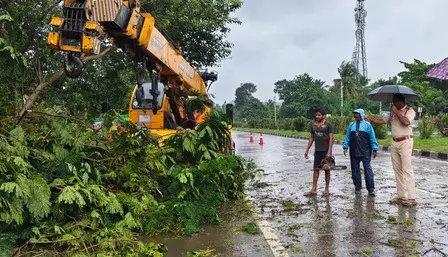
Cyclone Arnab impact: Several flights from Vizag, Vijayawada cancelled
Digital Desk | Visakhapatnam, Oct 27 (IANS) Very severe cyclonic storm Arnab in the Bay of Bengal has disrupted air services in Andhra Pradesh, with airlines cancelling several flights at Alluri Sitarama Raju International Airport at Bhogapuram near Visakhapatnam and Vijayawada International Airport on Tuesday. With heavy rains accompanied by gusty winds lashing the coastal region under the impact of the cyclone on Tuesday, various airlines have cancelled their services as a precautionary measure. Sixteen flights scheduled to depart from Bhogapuram on Tuesday have been cancelled. Services to destinations like Delhi, Hyderabad, Kurnool, Tirupati, Bengaluru, Kolkata and Chennai were cancelled. Five flights from Gannavaram Airport in Vijayawada were also cancelled in view of the cyclone. Airlines have cancelled Chennai, Hyderabad, Bengaluru, Kadapa and Bhogapuram flights. With the cyclone set to cross the coast on Wednesday, more flights are likely to be cancelled. Authorities had already issued an advisory that, in view of the approaching cyclonic weather, heavy rainfall and strong winds may affect flight schedules and travel to and from Alluri Sitarama Raju International Airport. Passengers were advised to check flight status with their airline before leaving for the airport. They have been advised to allow additional travel time, subject to local weather and road conditions. Passengers have been asked to contact their airline directly for rescheduling or cancellation assistance. Air India and Air India Express said in their advisories that weather conditions associated with Tropical Cyclone Arnab may impact flights to and from Visakhapatnam and Vijayawada on 27 October. They advised passengers to check their flight status on the websites of the airlines. As road travel may also get affected due to inclement weather, passengers have been advised to allow extra time for their journey to the airport. Meanwhile, a review meeting was held by the Airports Authority of India to assess preparedness at airports located in the potential impact zone of severe cyclonic storm Arnab and ensure readiness to address any possible disruptions to civil aircraft operations. The meeting was chaired by Puneet Kansal, Chairman and attended by Regional Executive Directors of Eastern Region and Southern Region, Airport Directors of Kolkata, Chennai, Tirupati, Raipur, Kadapa, Bhubaneswar, Vijayawada, Rajahmundry and Jharsuguda airports, along with ATC In-charges of Bhogapuram and Hyderabad airports.
Stringent MCOCA Invoked Against Delhi's Mukesh Bhola Gang
Delhi Police has invoked the stringent Maharashtra Control of Organised Crime Act (MCOCA) against the alleged Mukesh Bhola gang, accused of various organised crimes including murder, kidnapping, and extortion in Jahangirpuri. Three members, including Mukesh alias Bhola, Vipin, and Suraj alias Dhela, have been arrested, with police actively identifying other syndicate members.
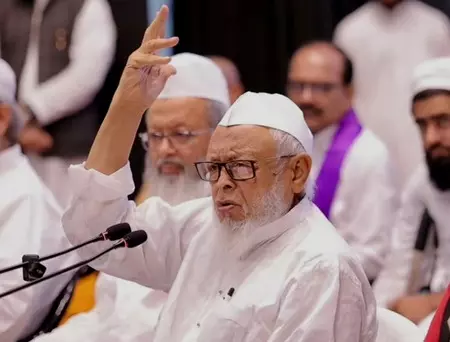
Mosques under threat will rise again; Muslims must stay firm: Arshad Madani
Digital Desk | New Delhi, Oct 27 (IANS) Jamiat Ulama-i-Hind president Maulana Arshad Madani has strongly asserted that mosques facing destruction or threats today will, God willing, flourish once more, and the call of Allahu Akbar will again resound within them. In a recent post on X, he said those currently in power will not remain forever, emphasising that governments come and go but no power on earth has ever succeeded in erasing Islam, nor will any be able to do so in the future. Madani observed that while previous governments had targeted Muslims, the present administration is targeting not only the community but Islam itself, along with the religious identity and institutions of Muslims. He advised communal forces to learn a lesson from the fate of the Soviet Union, noting that those who once dreamt of eradicating Islam have themselves been reduced to mere footnotes in history, while Islam continues to live and thrive. Highlighting the critical role of Islamic seminaries, Madani said Madaris-e-Islamia serve as guardians of the faith and religion and as custodians of religious identity. However, he stressed that protecting the faith, beliefs and morality of the new generation is not the sole responsibility of these institutions. Parents must also fulfil their own obligations in this regard, he added. In a message of resilience, the Jamiat Ulama-i-Hind president urged Muslims not to despair in the face of current circumstances. Instead, he called upon them to remain steadfast in their faith and religion, exercising patience, unity, wisdom and perseverance. Madanis remarks come against the backdrop of growing concerns among Muslim organisations over threats to historic places of worship, including the recent controversy surrounding Delhis Race Course Mosque (also referred to as Hujra Kuan near the Race Course). AIMIM president Asaduddin Owaisi has urged Union Minority Affairs Minister Kiren Rijiju to intervene, pointing out that the mosque has been a gazetted waqf property since 1977 and is protected under the principle of waqf by user. A delegation of Jamiat Ulama-i-Hind has also met the minister and submitted a memorandum seeking protection for the mosque and the adjoining graveyard behind Safdarjung Tomb. Caretaker Mohammed Haroon, associated with the mosque for nearly four decades, has said authorities asked him to vacate within six days, with electricity and water connections disconnected and gates closed by the Land and Development Office. No formal notice of demolition has been issued, yet worshippers are being prevented from offering namaz. Madanis statement reflects a broader call for calm and continuity of faith amid these tensions, underscoring that institutional and personal responsibility together form the foundation of community resilience.
Tarun Khosla, a Delhi-based ticketing agent, was arrested by the Enforcement Directorate in October 2025. He was involved in facilitating illegal immigration through the Dunkey Route, which includes dangerous crossings. The ED's investigation revealed Khosla's coordination with various agents and local contacts in South America. Over 300 Indians were deported from the USA after illegally entering via this route.

Delhi Traffic Police proposes four new circles to cut travel time by 20% on major corridors
Plan proposes redrawing jurisdictional boundaries, unified management of key flyovers including Dhaula Kuan, and augmenting manpower from 1,000 to 1,800 personnel

Delhi Traffic Police proposes four new circles to cut travel time by 20% on major corridors
Plan proposes redrawing jurisdictional boundaries, unified management of key flyovers including Dhaula Kuan, and augmenting manpower from 1,000 to 1,800 personnel

Delhi High Court seeks Centres response to plea against Race Course mosque demolition

Delhi High Court seeks Centres response to plea against Race Course mosque demolition

Delhi High Court seeks Centre and Waqf Board response on Race Course Masjid plea
The News Mill
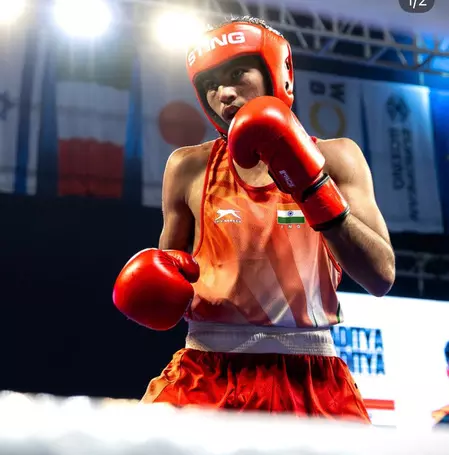
Boxing: Aditya bags gold in U19 World Championships with dominant win
Digital Desk | New Delhi, Oct 27 (IANS) Aditya won on points 4:1 against Islam Magomedov of Russia in the Mens 55kg final to clinch the gold medal in the U19 World Boxing Championships being held at Budva, Montenegro on Tuesday. This is India's first gold medal of this edition of the U19 World Boxing Championships. India are already assured of two bronze medals. Aditya had become the second Indian boxer to make it to the final of his weight category in the 2026 World Boxing U-19 Championships by defeating Nihat Gasimov of Azerbaijan in the mens 55kg semifinals. Aditya, the Asian U-19 silver medallist, was dominant through the three rounds to bag a 5:0 verdict from the judges and will now face Islam Magomedov of Russia in the gold medal bout. Megha Sheokand had earlier clinched her spot in the final of the womens 80kg category with a RSC win over Meerim Chynybekova of Kyrgyzstan in the semifinals. Sheokand outclassed Meerim Chynybekova of Kyrgyzstan to reach the finals of the womens 80kg category on Sunday. Megha dominated the opening round, and her opponent received the count thrice in the second round before the referee stopped the bout. Harshika secured the first bronze medal, as a gallant fight against USAs Lauryn Elmore was not enough, and she ended on the wrong side of the 3:2 verdict in the womens 65kg semifinals. Prachi Tokas had bagged a bronze medal in the womens 80+kg category after losing her semifinal bout. Prachi will come home with a bronze medal after she lost the womens 80+kg category in the semifinal, 1:4, against Samira Itonieva of Russia. Late on Saturday evening, Harshita had reached the semifinal and assured India a medal with a clinical 5:0 win over Irelands Grace Bailey in the womens 65kg category.

Centre Transfers Two Senior IAS Officers From Jammu Kashmir To Delhi
SRINAGAR: The Government of Indias Ministry of Home Affairs has ordered the transfer of two senior IAS officers of the AGMUT cadre from Jammu and Kashmir to the Delhi segment with immediate effect. According to an order issued by the Ministry of Home Affairs on October 27, 2026, Ashwani Kumar, a 1992-batch IAS officer, and []
With just three days left before the closing of the claims and objections phase of the Special Intensive Revision (SIR) exercise, it said that the remaining notices will be disposed of before the deadline. The claims and objections phase started with the publication of draft rolls of 70 Assembly constituencies on August 31. The last date for filing claims and objections is October 30.
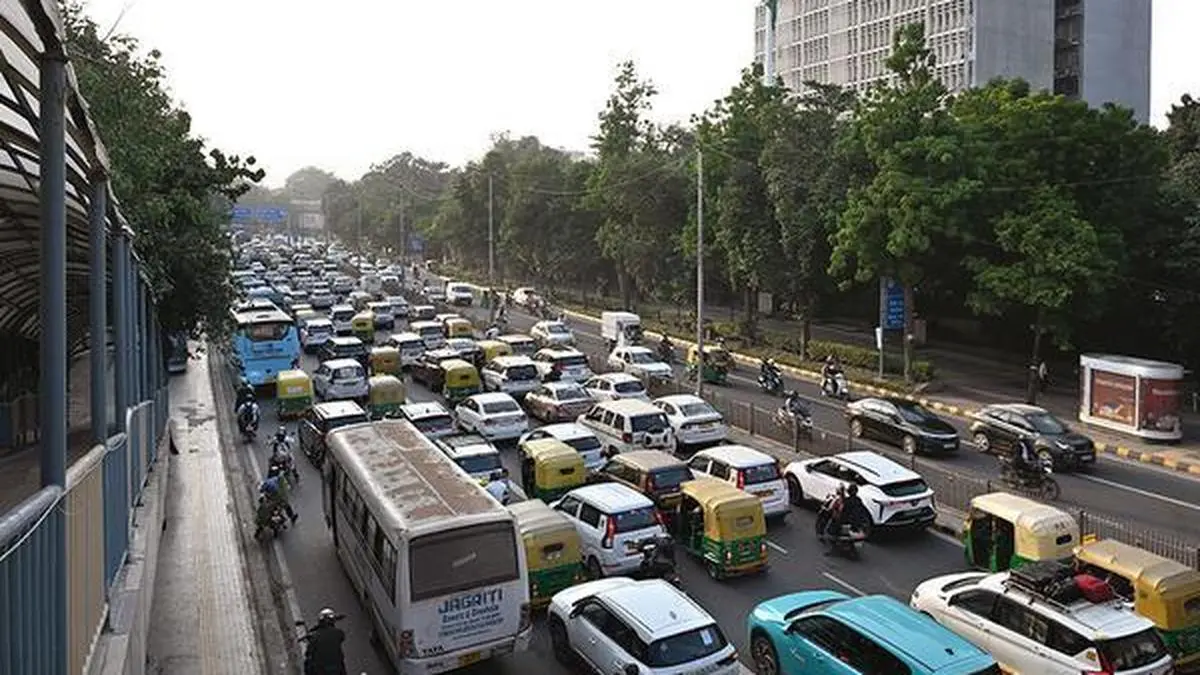
Delhis BS-IV entry ban may disrupt NCR commuters and businesses, traders warn
The restriction, which will remain in force until January 31, 2027, is part of the Delhi governments winter pollution action plan
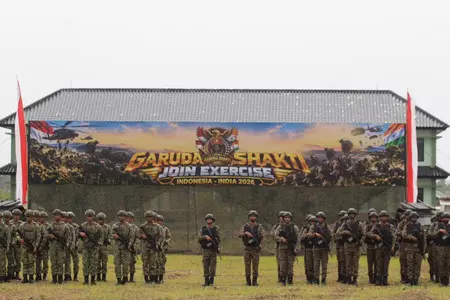
India-Indonesia Special Forces exercise Garuda Shakti begins in Banyuwangi
Digital Desk | New Delhi, Oct 27 (IANS) The India-Indonesia Joint Special Forces Exercise Garuda Shakti commenced at Banyuwangi in Indonesia on Tuesday, with the Special Forces of the two nations set to train together in jungle warfare operations until November 6, the Ministry of Defence (MoD) said. The Indian contingent comprises troops from the Parachute Regiment (Special Forces), while the Indonesian side is represented by personnel from the Indonesian Special Forces, the ministry said. The exercise aims to strengthen mutual understanding, cooperation and interoperability between the Special Forces of the two nations. The training focuses on tactics, techniques and procedures for special operations in jungle environments, including obstacle crossing, combat marksmanship, mountaineering, air assault training and combat-hardening sessions, the MoD stated. The training also includes the exchange of expertise and information on weapons, equipment and operational practices, it said. The joint training will culminate with a validation exercise designed to simulate realistic operational scenarios and assess the endurance, coordination and combat readiness of both contingents, the ministry added, noting that the exercise would further strengthen defence cooperation and bilateral ties between India and Indonesia. On Sunday, the Indian Army contingent, comprising Special Forces personnel, departed for Indonesias Banyuwangi to participate in the exercise. The exercise will enhance interoperability between the armies of the two nations through the exchange of tactics, techniques, and procedures for special operations in jungle terrain under counter-insurgency and counter-terrorism scenarios, according to an Indian Army statement. Indian Coast Guard Ship (ICGS) Shaunak was on a goodwill visit to Jakarta from October 17-19, strengthening cooperation between India and Indonesia, the Indian Coast Guard (ICG) stated. Its port call to Jakarta included productive professional interactions and mutual exchanges aimed at bolstering bilateral maritime cooperation and enhancing regional maritime security. Commanding Officer of ICGS Shaunak and the Defence Attach called on the Head of Bakamla and discussed augmenting bilateral Coast Guard cooperation, according to a statement released by the Indian Embassy in Indonesia. Indian Coast Guard and Bakamla just renewed the MoU for Maritime Safety and Security Cooperation, during the State Visit of Prime Minister Narendra Modi to Indonesia from 06-08 Jul 2026; signifying the importance the two maritime neighbours give to regional maritime safety and security, the Embassy stated on X.

ED arrests Delhi-based agent in 'donkey route' case linked to Indians deported from US
The Enforcement Directorate (ED) on Tuesday said it has arrested a Delhi-based ticketing agent in connection with the 'donkey route' case involving Indians deported from the United States in February 2025. The accused, identified as...
BRICS Parliamentary Forum Marks Success, Shashi Tharoor Praises Indias Role
The BRICS Parliamentary Forum in New Delhi saw political discussions intensify, with Shashi Tharoor highlighting Indias international contributions. BRICS Parliamentary Forum Marks Success, Shashi Tharoor Praises Indias Role
India must embrace future technologies, lead world in creating them: PM Modi
New Delhi, Oct 27: India must embrace future technologies, innovate boldly and lead the world in developing them, Prime Minister Narendra Modi said on Tuesday and asserted that the country is moving forward with a new mindset and a newfound self-confidence in the field of science and technology. Addressing the Emerging Science, Technology and Innovation Conclave (ESTIC)-2026 here, he also said the countrys goal is to create new technology and shape its direction for India, for the world, for today, and for tomorrow. India must embrace technology of the future, innovate boldly, and lead the world in creating them, Modi said. Today, 21st-century India is moving forward with a new mindset and a newfound self-confidence, he said. During his address, the prime minister highlighted that from the discovery of zero to the development of the number system and advancements in astronomy, Indias culture has always been rooted in knowledge and discovery. The country is currently carrying this scientific heritage forward with modern technology and renewed confidence, he said. Speaking about nuclear energy, he stated that building a Viksit Bharat requires nuclear energy on a large scale, and thats why India is developing fast breeder reactor technology. The prime minister noted that it was a significant milestone when the countrys first indigenous prototype fast breeder reactor (PFBR) in Kalpakkam, Tamil Nadu, attained criticality in August this year. Modi also said the countrys successes achieved across different sectors are unprecedented. For instance, first shipments of chips made in India have now started reaching the world, he said. In the field of battery storage as well, we are working on capacity building using what is available in India, said the prime minister. Underlining the milestone achieved in the space sector, Modi said the July mission of Indian firm Skyroot Aerospace, which involved the launch of the countrys first privately developed orbital rocket Vikram-1, and placing of multiple technology demonstration payloads in low Earth orbit. From nuclear to space, from AI to semiconductors... The needs of all these sectors are different, but the message from all of them is the same. India is enhancing both its strength and its confidence in emerging technologies, said Modi.
Union Finance Minister Nirmala Sitharaman and Union Minister of State Jayant Singh met Hereditary Prince Alois of Liechtenstein in New Delhi on Tuesday, as India and the European nation seek to strengthen bilateral ties and expand cooperation across trade, investment, technology and other key sectors. Union Minister of State Jitin Prasada also met Sabine Monauni, Deputy Prime Minister and Minister of Foreign Affairs, Environment and Culture of Liechtenstein. Meanwhile, Krishna S Vatsa, Member and Head of Department at the National Disaster Management Authority (NDMA), held a meeting with Hereditary Prince Alois. The meetings followed discussions between Prime Minister Narendra Modi and Hereditary Prince Alois and Hereditary Princess Sophie at Hyderabad House, where the two sides reviewed the India-Liechtenstein partnership and explored opportunities for further cooperation. In a post on X, the Ministry of External Affairs (MEA) said the discussions focused on deepening cooperation in t...

278 in a T20 match: 17-year-old Delhi cricketer Tanmay keeps breaking records
278 in a T20 match: 17-year-old Delhi cricketer Tanmay keeps breaking records
Ayush Badoni on Tuesday joined Virat Kohli and Gautam Gambhir in the elite list of batters who have scored a double hundred in back-to-back first-class innings

Ranji Trophy: Badoni, Mathur spearhead a perfect day for Delhi
The skipper extends his purple patch with an unbeaten 210; the No. 7 batter hits an unconquered 150 during their unbroken 334-run sixth-wicket alliance as the visitor posts a mammoth total