



Fouled waters: On Rajasthans river pollution
River pollution from industrial effluents indicates state failure

SUFA terror module case: Rajasthan HC upholds charges against accused
Digital Desk | Jaipur, Oct 27 (IANS) The Rajasthan High Court has dismissed appeals filed by the accused in the SUFA terror module case, upholding the trial courts order to frame charges against them. The court observed that a trial can proceed when prima facie evidence raises serious suspicion regarding alleged activities, including the procurement of explosives and involvement in a terrorist conspiracy. A division bench comprising Chief Justice Sanjay K. Agrawal and Justice Sameer Jain dismissed the appeals, holding that the allegations and material on record warranted a trial. The court clarified that the credibility and reliability of the evidence would be examined during the proceedings. The case dates back to March 30, 2022, when police from Nimbahera Sadar police station in Chittorgarh district recovered approximately three kilograms of explosive material from a car during a checkpoint operation at Wander Square. Watches, batteries, wires, bulbs, and other items were also reportedly recovered from the vehicle. The National Investigation Agency (NIA) subsequently investigated the case and named 11 individuals as accused. Eight were arrested, while three remain absconding. Counsel representing the accused argued that several of them were not present in the vehicle when the explosives were recovered and that no incriminating materials had been seized directly from them. The defence also questioned the evidentiary value of call detail records, location data, alleged travel tickets, and electronic evidence, arguing that these materials did not establish a direct or legally sufficient connection between the accused and the alleged crime. The lawyers contended that the trial court had framed charges without adequate evidence and urged the High Court to discharge the accused. Opposing the appeals, the NIA alleged that approximately 70 youths in Ratlam had formed an organisation called SUFA. According to the agency, the group sought to influence and radicalise young people by showing them videos associated with the Islamic State of Iraq and Syria (ISIS). The NIA further alleged that a secret meeting was held on March 25, 2022, during which a conspiracy was hatched to procure improvised explosive devices (IEDs), transport them to Jaipur, and carry out terrorist activities in the city. According to the agency, the alleged operation was also intended to be recorded on video, and recordings linked to the conspiracy were subsequently recovered during the investigation. The Rajasthan High Court observed that, at the stage of framing charges, a court must assess whether the available material establishes a prima facie case or creates grave suspicion against the accused. A detailed assessment of the evidences authenticity, credibility, and reliability is undertaken during the trial. The bench also noted the seriousness of the allegations concerning the proposed transportation of explosive devices to a major city such as Jaipur. By dismissing the appeals, the High Court upheld the trial courts decision to frame charges, allowing the proceedings to continue. The allegations against the accused will be tested through the judicial process, and the decision to frame charges does not, by itself, establish their guilt.

Maritime Training Institute in Jaipur loses DGMA approval following irregularities
Digital Desk | Kolkata, Oct 27 (IANS) Approval granted to a Maritime Training Institute (MTI) in Jaipur, Rajasthan, has been withdrawn by the Directorate General of Maritime Administration (DGMA) for alleged irregularities. M/s R R Marines Academy, located at Singhu Nagar, Murlipura, Jaipur, was granted approval by the DGMA for conducting Basic Safety Training, Proficiency in Survival Craft and Rescue Boats (PSCRB), Refresher for Proficiency in PSCRB, Refresher Training for Proficiency in FPFF, Refresher Training for Proficiency in PST, and Security Training for Seafarer with Designated Security Duties. After receiving complaints, the directorate had issued a Show Cause Notice dated November 14, 2025, to the MTI for alleged violation in the conduct of the exit examinations. Furthermore, the Directorate General, Shipping (DGS) had advised the MTI against admitting any new candidates, pending completion of the investigation. The MTI has, however, knowingly admitted a fresh batch of candidates who would not be able to appear for the exit exams and therefore cannot be issued with the certificate of the courses to which they had enrolled. The response to the show cause notice received from the MTI clearly indicates serious dereliction on the part of the MTI, and the explanation that it was the manager who had committed all the violations is difficult to comprehend and accept, the DGMA has stated in an order. It has been clearly noted that the DGMA's established procedures for approval of any maritime training institutes in India are underpinned by strict compliance and quality control. The DGMA directives are issued for the MTIs to implement the same in the interest of the Indian seafarers without any negligence, willful or otherwise. The DGMA monitors the institutes to ensure they maintain the set standards and may take disciplinary action if they do not comply. The DGMA has received complaints from three seafarers who had undertaken the basic safety courses at the MTI and have alleged that the promoter of the MTI had promised them jobs onboard ships and has been demanding lakhs of rupees as service charge. These seafarers claimed to have paid the promoter in cash and by electronic means. They have shared documents to support their claim, the order stated. The directorate claimed that the evidence available prima facie indicated serious illegality in the actions of the MTI. Taking cognisance of the aggregated violations, and in the interest of limiting further damage to the seafarers, the MTI was suspended, pending investigation. It was served with another show cause notice, to which the institute replied. Meanwhile, the Mercantile Marine Department in Kandla carried out a detailed investigation into the matter and submitted a report to the DGMA. This was regarding alleged malpractices detected during the exit examination of the MTI. The MMD also recommended the withdrawal of the approval accorded to the MTI. The recommendation of MMD Kandla was deliberated before the 72nd Standards of Training, Certification, and Watchkeeping (STCW) Compliance Board Meeting. The recommendation of MMD Kandla was accepted by the STCW Board. Accordingly, the MTI approval, which was under suspension, has been withdrawn on the e-governance system, the DGMA has said. In the notice, the directorate has clearly announced that all existing approvals granted to M/s R R Marines Academy for all DGMA-approved courses stand withdrawn.
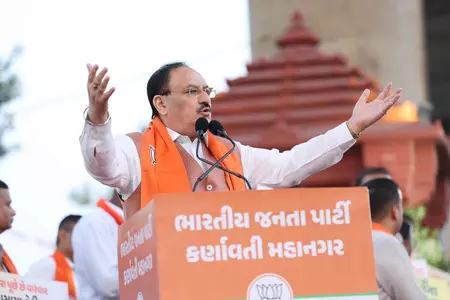
Gujarat: JP Nadda targets Congress over appointments linked to poll body
Digital Desk | Ahmedabad, Oct 27 (IANS) Union Health and Family Welfare Minister Jagat Prakash Nadda on Tuesday accused the Congress of attempting to influence the Election Commission through appointments to public offices during its tenure in power, while defending the poll body's functioning amid the Opposition's criticism of the Special Intensive Revision (SIR) of electoral rolls. Addressing the BJP's Save Democracy, Remove Anarchy rally in Ahmedabad, attended by Gujarat Chief Minister Bhupendra Patel and Deputy Chief Minister Harsh Sanghavi, Nadda cited several former election officials who, he alleged, had subsequently received positions in government or public institutions under Congress administrations. He referred to former Chief Election Commissioner T.N. Seshan, who contested against BJP veteran L.K. Advani from Gandhinagar on a Congress ticket, and former Chief Election Commissioner M.S. Gill, who was nominated to the Rajya Sabha and later served as Union Sports Minister. Nadda also cited former Rajasthan chief minister Ashok Gehlot's alleged allotment of six acres of land to Naveen Chawla for an educational trust. He referred to the appointments of former Election Commissioner Sukumar Sen as vice-chancellor of Burdwan University, K.V.K. Sundaram as an adviser to the Union Home Minister, and Nagendra Singh as India's representative to the United Nations General Assembly. He further cited V.S. Ramadevi's appointments as Governor of Himachal Pradesh and Karnataka, arguing that he Congress had attempted to bring the poll body under its influence through such appointments. Defending the BJP-led government's changes to the appointment process, Nadda said: Prime Minister Narendra Modi had, in accordance with a Supreme Court judgment, included the Leader of the Opposition in the Lok Sabha in the process of selecting the Chief Election Commissioner and Election Commissioners. The Union minister accused the Congress of questioning constitutional institutions whenever their decisions went against it. The party's criticism of the Election Commission is part of a broader pattern of challenging institutions, including the judiciary and the Comptroller and Auditor General (CAG), he said. Referring to the Congress-led government's handling of the 2G spectrum and coal allocation controversies, Nadda alleged that the party had threatened the CAG and its officials over their reports. He also recalled former Prime Minister Rajiv Gandhi's reported description of the Planning Commission as a group of buffoons, noting that Manmohan Singh was its chairman at the time. Nadda accused the Congress of undermining constitutional authority through the establishment of the National Advisory Council (NAC), which he said had been placed on a footing comparable to the Prime Minister's Office. He also referred to Rahul Gandhi publicly tearing up an ordinance brought by the Manmohan Singh government. The minister cited the dismissal of elected state governments under Article 356 of the Constitution as another example of what he described as the Congress's record on democratic institutions. Congress governments had dismissed elected governments on 100 occasions, with former Prime Minister Indira Gandhi responsible for 50 of those instances, he said. Nadda also invoked the Emergency, alleging that around 1.3 lakh people had been imprisoned under the Maintenance of Internal Security Act and the Defence of India Rules without trial for prolonged periods. He questioned the Congress's present claims to defend democracy in light of that period. The BJP leader said, The Congress should reflect on its electoral performance instead of blaming the Election Commission and electronic voting machines for defeats. He argued that elections were decided by voters and not by rallies or protests, and asserted that the BJP would seek another mandate under PM Modi in 2029. The rally was part of the BJP's nationwide campaign against what it describes as attempts by the Congress and the INDIA bloc to undermine democratic institutions.
Digital Desk | Jaipur, Oct 27 (IANS) Rajasthan Police is conducting an extensive campaign to make the state drug-free and dismantle narcotics trafficking networks. Under the campaign being carried out under the direction of Director General of Police (DGP) Rajiv Kumar Sharma, 7,695 cases related to narcotic substances had been registered and 8,842 accused arrested as of Monday. During this period, 220 wanted criminals were arrested, and raids were conducted at 335 hotspots. Along with seizing narcotic substances, the police have also taken action against illegal assets allegedly acquired through drug trafficking. As part of the campaign, a one-day special operation was conducted across Rajasthan on October 26. During the operation, 262 cases were registered, and 278 accused were arrested. Eight kingpins and traffickers were identified, and action was taken at six hotspots. As part of an extensive inspection drive, 3,496 locations were checked. During the special operation conducted on Monday, the police seized 14.68 kg of opium, 365.33 kg of poppy husk, 65.74 kg of cannabis, 124 cannabis plants, 352.82 grams of smack, 112.78 grams of heroin and 177.57 grams of MD. A total of 1,717 intoxicating tablets were also seized. The police additionally seized Rs 4,98,105 in cash. The estimated value of the recovered narcotic substances was 2,91,18,247. During the operation, 15 vehicles and eight mobile phones were also seized. According to the figures, 7,695 cases related to narcotic substances had been registered and 8,842 accused arrested as of October 26, 2026. In addition, 220 wanted criminals, including absconders, history-sheeters and proclaimed reward offenders, were arrested. Raids were conducted at 335 hotspots during this period. During the overall campaign, Rajasthan Police recovered 1,010.55 kg of opium, 131.46 tonnes of poppy husk and 274.13 kg of MD. The total estimated value of the narcotic substances recovered during the period stood at Rs 1,244.20 crore. As part of targeted action against the illegal drug trade, 35 MD manufacturing units were busted, while raids were conducted at 144 locations to curb illegal cultivation. A total of 2,125 vehicles were seized during the period. Rajasthan Police has also taken action against illegal assets linked to narcotics trafficking. According to the figures available up to October 26, action was taken against 75 properties in 250 property-related cases. The estimated value of the properties concerned was approximately Rs 30.25 crore. Additionally, 149 actions were initiated under Section 68-F of the Narcotic Drugs and Psychotropic Substances (NDPS) Act, while 101 proposals were prepared under the Prevention of Illicit Traffic in Narcotic Drugs and Psychotropic Substances (PIT-NDPS) Act. These measures aim to curb assets allegedly acquired through drug trafficking and disrupt the financial networks supporting the illegal trade. Alongside law enforcement, Rajasthan Police is focusing on public awareness and community participation in the fight against drugs. As of October 26, a total of 363,547 citizens had been engaged through the campaign, of whom 358,682 took a pledge to help build a drug-free society. During this period, 3,966 awareness programmes were organised. Under the direction of DGP Sharma, Rajasthan Police is pursuing the campaign to effectively curb narcotics trafficking, take action against those involved in the illegal trade and protect young people from the harmful consequences of drug abuse.
RU to introduce PG course in Rajasthani from next academic session

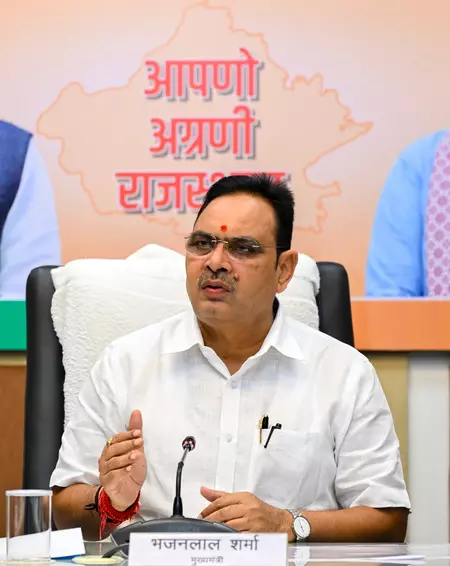
The 15th meeting of the Narmada Control Authority Review Committee was held on Tuesday under the chairmanship of Union Minister for Jal Shakti, CR Patil. Rajasthan Chief Minister Bhajanlal Sharma, Maharashtra Chief Minister Devendra Fadnavis, Madhya Pradesh Chief Minister Mohan Yadav, and Gujarat Chief Minister Bhupendra Patel, along with senior officials, participated in the meeting via video conference, according to a press release. Patil stated that under the leadership of Prime Minister Narendra Modi and the guidance of Union Home Minister Amit Shah, new dimensions have been established in long-pending inter-state water cooperation. The agreement reached on July 7, in New Delhi, in the presence of the Chief Ministers of Rajasthan, Gujarat, Madhya Pradesh, and Maharashtra, is being effectively implemented by the Narmada Control Authority Review Committee. He noted that decades-old water agreements have finally taken concrete shape through mutual consensus, coordination, cooperation,...
Rajasthan: Woman killed for 15 tolas of gold in Bhilwara; accused burns body, dumps ashes in river
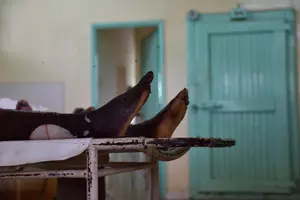
Digital Desk | Jaipur, Oct 27 (IANS) An elderly woman was allegedly strangled to death by her neighbour in Rajasthans Bhilwara district for her gold jewellery weighing 15 tolas. After the murder, the accused allegedly took her body to the rooftop of his house, doused it with petrol and set it on fire. They then dumped the remains and ashes into the Kothari River in an attempt to destroy evidence. The incident took place on October 12 in the Veer Savarkar Nagar area under the Bhimganj police station limits. Police have arrested the victims neighbour, Ravi Tapadia, 43, and his alleged accomplice, Heera Sindhi, in connection with the case. On Tuesday, acting on information provided by the accused, police used a JCB machine to search the Kothari River near the Paldi bridge, around two kilometres from the scene, and recovered the womans remains. According to Bhimganj Station House Officer Sunil Chaudhary, Ravina Kankariya had lodged a missing persons report on October 15 regarding her mother-in-law, Kamala Devi Kankariya. Kamala Devi lived alone. Her husband, Tej Singh Kankariya, had died four years ago, while her son, Saurabh Kankariya, died in a road accident two years ago. Ravina lives in Bhilwaras Azad Nagar area with her two children. A domestic worker employed by Kamala Devi alerted Ravina on October 15 that the house had remained locked and unoccupied since October 12. During the investigation, police discovered that Ravi Tapadia, who lived in the neighbourhood, frequently visited Kamala Devis house. CCTV footage reportedly showed the two leaving together on the evening of October 12. When questioned, Ravi initially told police that Kamala Devi had asked him to drop her at the market and that he had done so. However, investigators found that she had not left Bhilwara. During further questioning, he allegedly confessed to the crime. According to police, Ravi had his eyes on Kamala Devis gold jewellery, weighing approximately 15 tolas. He allegedly lured her away on October 12 and, with the help of Heera Sindhi, strangled her to death. After the murder, the accused allegedly took the jewellery and carried the body to the rooftop of Ravis house. They reportedly poured petrol over the body and set it on fire before disposing of the remaining bones and ashes in the Kothari River near the Paldi bridge. Police collected the recovered remains in a container as part of the investigation. Kamala Devis daughter-in-law, Ravina, said she had last spoken to her mother-in-law on October 6. She regularly visited her and said Kamala Devi had asked her to bring the children along during her next visit. According to Ravina, her mother-in-law would also frequently discuss repairs needed around the house. The accused were taken into custody and produced before a court. Photographs published with the report showed the two men smiling while being escorted by police. Police are investigating the circumstances of the murder and the alleged destruction of evidence.
Rajasthan High Court clarifies transfer rules for prisoners convicted of rape, POCSO crimes
Rajasthan HC seeks action-taken report on stray dog management

Tragic Family Dispute: Uncle Kills Niece
A 16-year-old girl was allegedly hacked to death by her uncle with an axe in Rajasthan's Didwana district on Tuesday after an argument. Her grandmother, who tried to intervene, was seriously injured. The accused later attempted suicide by consuming pesticide and is now undergoing treatment under police custody.
Bhilwara Gold Murder: Neighbour Held, Body Burnt
Police in Bhilwara, Rajasthan, have arrested two men, including a neighbour, for the alleged murder of a 70-year-old woman. The victim was reportedly strangled, robbed of her gold jewellery, and her body was burnt to destroy evidence before the remains were dumped in a river.

Missing Hyderabad girl traced to dargah in Ajmer
Hyderabad: A 13-year-old girl from Hyderabad, who went missing on October 24, has been traced to a dargah in Ajmer, Rajasthan. Samreen Begum, a student at a local madrassa, went missing from Aman Nagar. Her family approached the Rein Bazar Police on Sunday, following which a missing person complaint was registered. During the investigation, CCTV Get the latest updates in Hyderabad City News , Technology , Entertainment , Sports , Politics and Top Stories on WhatsApp & Telegram by subscribing to our channels. You can also download our app for Android and iOS .
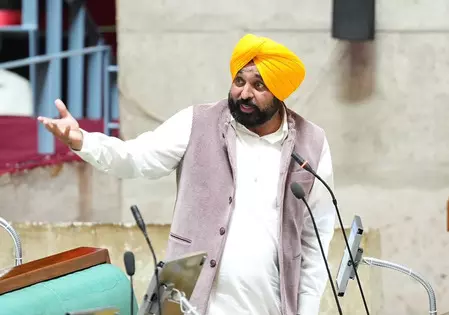
Not a single drop of states rightful share will be surrendered, Punjab CM informs Assembly
Digital Desk | Chandigarh, Oct 27 (IANS) Punjab Chief Minister Bhagwant Mann on Tuesday drew a firm line on the states river waters, declaring that not a single drop of the states rightful share would be surrendered as the Assembly passed a resolution asserting the states rights. Vowing to fight from courts to streets, he questioned Rajasthans continued access to Punjabs water without payment, pegged the states outstanding royalty claim at Rs 1.43 lakh crore, and asserted that Rajasthan and Haryana had no share in the waters of the Ravi and the Beas. The Chief Minister pointed out his government is strengthening the states own irrigation network, expanding canal water access from 22 to 80 per cent of fields in four years and laying 14,000 km of underground pipelines. Participating in discussions on resolutions concerning river waters and other important issues on the final day of the Assembly session, CM Mann said Punjab would no longer tolerate injustice in the distribution of its precious water resources. Water is a state subject, and the control of headworks rests with the states. Punjab will vigorously pursue its legitimate rights and will not allow the states interests to be sacrificed, he said. Questioning Haryanas claim over Ravi-Beas waters, the Chief Minister said, It is unfair that Haryana stakes its claim over Ravi-Beas waters while Punjabs rightful share in Yamuna waters is ignored, despite the Yamuna being part of undivided Punjab. Highlighting the transformation in irrigation, CM Mann said when his government assumed office in 2022, only 22 per cent of Punjabs water resources were being utilised, whereas the figure had now risen to nearly 80 per cent. We have undertaken an extensive overhaul of Punjabs irrigation network to ensure that canal water reaches even the tail-end fields. By cleaning rajbahas, laying 14,000 km of pipelines and rejuvenating canals and watercourses, we have strengthened the irrigation system and improved access to water for farmers. The Chief Minister said the government has revived the Kandi Canal after nearly four decades and operationalised eight new canals in Pathankot, Amritsar and Gurdaspur districts. These initiatives have significantly improved irrigation access, with 60.80 lakh acres of land being irrigated through the governments efforts. Our commitment is to ensure that every drop counts, strengthen agriculture and provide much-needed relief to farmers, he said. The Chief Minister asserted that the government would pursue every legitimate avenue to protect Punjabs water rights and secure justice for its people.

Who is Vijay Vaghela? I am intrigued because he gets a mention in Street of Shame, my favourite section in Private Eye where readers learn what is going on behind the scenes in the newspaper world (Fleet Street was once the home of Britains national newspapers). And newspapers still matter because they collectively shape the way British Asians are perceived by society at large. Referring to the financial problems at the Standard (once known as the Evening Standard), Private Eye reports: In 2024 financial adviser Vijay Vaghela was given 702,000 to come up with a plan that ended with the closure of the daily paper in favour of a once-a-week effort that few Londoners are aware still exists. The Evening Standard was once a great newspaper, where Sam White wrote a column, Sam Whites Paris, for 41 years, on French politics, society and diplomacy. According to the online only i newspaper, Russian origin owner Evgeny Lebedev, who acquired the Evening Standard in 2009, closed the daily paper after pressure from Saudi investors. With the new Saudi influence also pushing for radical plans to rescue it, a team including external consultants was brought in. Vijay Vaghela, the former chief operating officer at the National World newspaper group, and Evening Standard chairman Paul Kanareck, worked on different options. Private Eye also comments on job cuts at the Telegraph: The Guardian reported last week that Axel Springer CEO Mathias Dpfner plans to make between 50 and 100 Telegraph journalists redundant and the Eye is told the chopping is imminent. Thats rather a change in tone from April, when Axel Springer ended the broadsheets almost three-year limbo by pledging to invest significantly in the Telegraphs editorial excellence and international growth. The grim reaper has now struck. In an all-company briefing and email on Friday morning, staff were told the title would rely increasingly on technology, data and AI to reinvent the reader experience. Newsroom insiders said they expected as many as 100 people to lose their jobs, the Guardian reported, adding, A source from inside the Telegraph said the atmosphere in the newsroom was like a morgue. Senior Telegraph journalists might have made a mistake in previously turning down the offer of Arab money from International Media Investments (IMI), an investment fund controlled by Sheikh Mansour bin Zayed Al Nahyan, the vice president and deputy prime minister of the UAE. They felt culturally more comfortable with German owners. Truss on Tory traitors Cover of Liz Truss' Bank Job Eastern Eye Most commentators usually use the word delusional to describe Liz Truss. She has written another book, Bank Job: A short book on how the Bank of England broke the bond market and brought down the government (Free Speech Press), alleging that Michael Gove, Mel Stride and James Cartlidge plotted to remove her as prime minister because they were probably promised jobs under Rishi Sunak. In Bank Job, Truss has a chapter titled Tory Traitors, in which says: A large share of the Conservative parliamentary party had voted for Rishi Sunak in the summer 2022 leadership election. They regarded my victory among members as an error to be corrected. The self-appointed compassionate Conservatives could not bear to touch welfare. Speaking to the Daily Telegraph before the books release on Monday (26), Truss elaborated: All three of those people [Gove, Stride and Cartlidge], and there are many more, I was just naming them as examples, but all three of those people, either on the media, in Parliament, or in meetings like the 1922 committee, attacked me rather than holding the system to account. And the fundamental problem was that not all of the Conservative Party, but a lot of people in the Conservative Party sided with the system. These were people who had backed Rishi Sunak, who probably had been promised jobs under Rishi Sunak, and that was their motivation. How seriously should one take Truss, whose premiership lasted only 45 days? She is the one who said US President Donald Trump is right about everything. Hanif Kureishi on a Shattered life Lunch with Hanif Kureishi doesnt come cheap. The Financial Times had to pick up a bill for nearly 400 for the privilege of interviewing Kureishi, who has written a new book, Are You with Me Now?, as a sequel to Shattered. The bill at the River Caf on the Thames Wharf for Squid 36; Mozzarella 35; Carpaccio 37; Pappardelle 42; Cappellacci x2 68; John Dory 68; Mixed leaves 16; Glass Pinot Bianco x2 26.50; Fresh lemonade 6; Fresh mint tea 4; Cappuccino x2 10 came to 392.08. Of course, Kureishi, who has been tetraplegic since an accident on December 26, 2022 while on vacation in Rome, had to be helped by his son, Carlo Kureishi. Waking up one day to find out youre tetraplegic: its completely devastating and sort of unbelievable, said Kureishi. The writing was an attempt to reconstitute myself as a person, as opposed to a body that was severely damaged and would never recover. To try and work out what that means, and who I am. Asked how he channelled his rage, the author of The Buddha of Suburbia and Oscar-nominated screenwriter of My Beautiful Laundrette said: I remember discussing this with Salman Rushdie [who was attacked the same year as Kureishis accident], and he said, Well, you have to learn to be patient. And I think of that when Im lying there . . . theres a lot of rage about your lack of agency, your impotence, your failure all the time, the fact that youre a burden. Most people probably dont realise that a life changing accident could happen to anyone. Both Kureishi and Rushdie have shown remarkable and inspiring strength of character in dealing with their respective tragedies. Pinto turns Pirelli girl Freida Pinto in 2027 Pirelli calendar Pirelli The Slumdog Millionaire actress Frieda Pinto, who turned 42 last week, features in Pirellis 2027 calendar. In fact, the whole calendar has an Indian theme, which is probably a reflection of the countrys growing prominence in the global economy. Frieda is one of nine women in the calendar, Beyond a Single Gaze, which presents a multifaceted portrait of India. The others are models Bhavitha Mandava and Lakshmi Menon, musician Anoushka Shankar, poet and performer Rupi Kaur, actresses Aditi Rao Hydari and Avantika Vandanapu, and cookery writer Padma Lakshmi, who also happens to be one of Salman Rushdies four ex-wives. All eight have been photographed by Norwegian artist Slve Sundsb at Jaigarh Fort in Jaipur and Ajabgarh village in Rajasthan. She photographed Freida in a fuchsia mini dress against a backdrop of bougainvilleas. Freida expressed pride in the project, noting that the calendar helps dismantle stereotypes by portraying Indian women with complexity and diversity. The other images were taken in the streets of Old Delhi by Avani Rai, who appears both behind and in front of the camera. Her father was the late photographer Raghu Rai, whose books can be seen in all the luxury hotels shops in India. The glamour girls in Pirelli calendars are normally admired in working mens changing rooms. This is the first time in the calendars 53-year-history that an entire calendar has been devoted to India. The guiding idea is to show Indias civilisation, the multitude and the multi-existence of life itself avoiding reduction to a single narrative by embracing what Avani calls the contradictions and multiple coexisting universes of the country. I suppose it is just a coincidence that the Indian women picked by Pirelli all happen to be glamorous. Emergency store in case of war Now that the government has urged people to stockpile three days worth of stores for emergencies, what should British Asians get? It might be useful to include turmeric, ginger, cumin and chilli powder, along with masala chai and the right flour for samosas.

Rs 3.93 Cr Cyber Heist Busted: Delhi Police Arrest 7 Across Rajasthan
In a major breakthrough against organised cybercrime, the Delhi Police have dismantled a sophisticated cyber fraud network, arresting seven individuals involved in draining Rs 3.93 crore from a single victims bank account. The investigation, which spanned seven days of coordinated raids across Bikaner, Jodhpur, Phalodi, and other parts of Rajasthan, uncovered a complex web of [] The post Rs 3.93 Cr Cyber Heist Busted: Delhi Police Arrest 7 Across Rajasthan appeared first on Pragativadi I Latest Odisha News in English I Breaking News .
Major Cyber Fraud Busted By Delhi Police
Delhi Police have arrested seven men for their alleged involvement in a Rs 3.93 crore cyber fraud that targeted a Delhi-based businessman. The investigation uncovered a sophisticated network involving mule accounts, cash withdrawals, a foreign money-exchange application, and a hawala channel used to convert illicit funds into cryptocurrency. Police recovered numerous banking instruments and mobile phones during fieldwork in Rajasthan, with further investigation ongoing.
Direct Connectivity to Rajasthan and Gujarat Announced for Barauni-Bhuj Route
Punjab Passes Resolution Demanding Payments From Rajasthan, Eyes Supreme Court Over Yamuna
CM Bhagwant Mann Demands 1.44 Lakh Crore Water Royalty From Rajasthan

Rajasthan Govt Declares 80 Tehsils Across 14 Districts Drought-Affected Amid Rainfall Deficit
Rajasthan has declared 80 tehsils across 14 districts drought-affected for six months, with 69 facing severe conditions following deficient monsoon rainfall and crop damage.
Major Drug Haul In Gurugram, Two Held
Gurugram police have arrested two men and seized 673 kg of ganja, valued at approximately Rs 1.25 crore, from a truck. The contraband was being transported from Odisha to Rajasthan, concealed under plastic granules. The accused are currently in police custody for further interrogation regarding the trafficking network.

Jaipur (Rajasthan) [India], October 27: Every Indian kitchen runs on a short list. Atta for the rotis, dal for the evening meal, a spoon of mustard oil for the tadka, a pinch of haldi, and a jar of dry fruits kept aside for guests. Change any one of them and the family notices. Let any one of them be adulterated, and the family pays the price, often without ever knowing.
CURAJ Incubation Foundation, Central University of Rajasthan has invited online applications for 3 vacancies, including Project Coordinator, Project Assistant, and Office Assistant posts. Applications can be submitted from 26 October 2026 to 15 November 2026.

Rajasthan's Electric Bus Fleet Set To Reach 1,150 Across Jaipur, Jodhpur, And Seven Other Cities
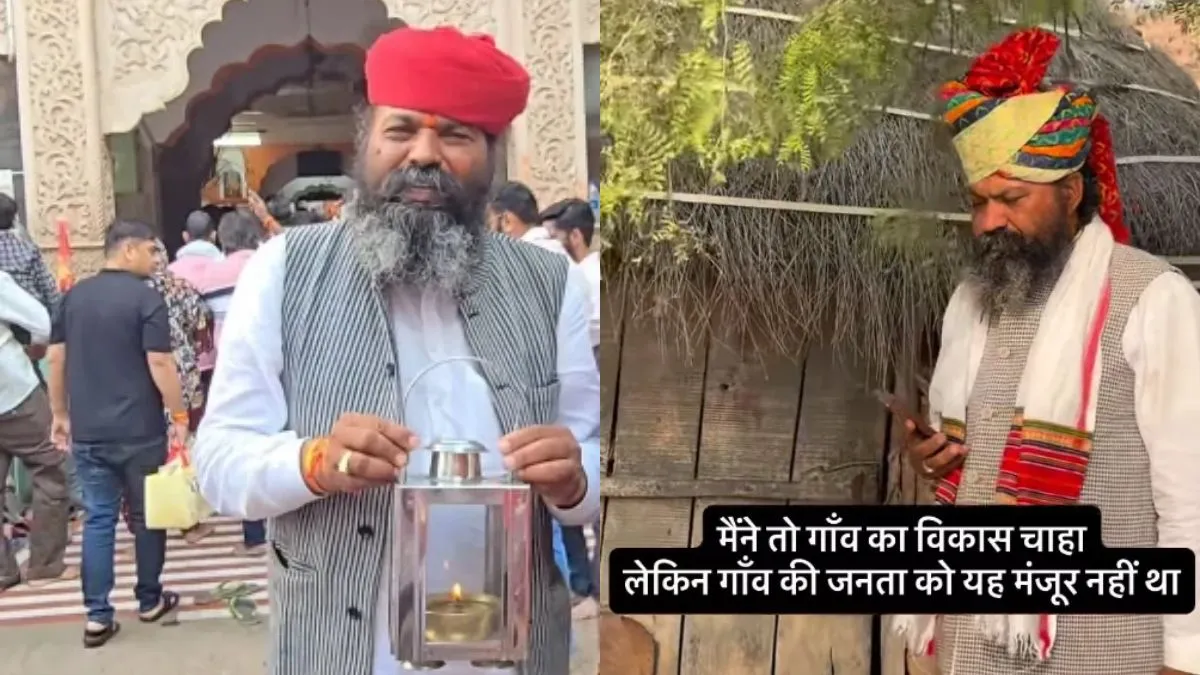
26 lakh followers, just 33 votes: Rajasthan influencer Omprakash Bishnoi's poll result goes viral
Social media influencer Omprakash Bishnoi's defeat in Rajasthan's panchayat elections has drawn attention after he reportedly received just 33 votes despite having millions of followers online. Bishnoi, who is known for his viral videos featuring traditional food and generous amounts of ghee, contested the sarpanch election from Indron Ki Dhani-2 panchayat in the Phalodi area.
Rajasthan Man Killed By Woman's Husband
A man was stabbed to death in Rajasthan's Jhunjhunu district by the husband of a woman with whom he was in a live-in relationship. The accused, Satish Jat, attacked Rajesh Kumawat alias Sonu alias Michael while he was sleeping. Satish was apprehended by family members and later taken into police custody.

2.1 Million Social Media Followers, Just 33 Votes: Rajasthan Man Suffers Stunning Electoral Defeat
Omprakash Bishnoi, however, is taking the electoral defeat in his stride. He said contesting an election for the first time had taught him how important it was to connect with voters.
Wheat sowing lags at 11,000 hectare so far amid deficient monsoon; rabi acreage down
Wheat sowing in India has reached 11,000 hectares as of October 23, against 27,000 hectares a year earlier, as a deficient southwest monsoon raises concerns over soil moisture and irrigation availability. Punjab and Rajasthan face particular risks, while overall rabi crop coverage has also fallen, Agriculture Ministry data showed.

PHDCCI Kashmir seeks policy safeguards, procurement preference for local businesses
Srinagar, Oct 26:The Kashmir chapter of the PHD Chamber of Commerce and Industry (PHDCCI) has called for policy safeguards, preferential government procurement and tax incentives to protect local entrepreneurs from competition with businesses from outside Jammu and Kashmir. The demand was raised at a members meet held at Amarsingh Club, where the Chamber welcomed its reappointed leadership and discussed challenges facing local enterprises, including the need for a supportive industrial policy and measures to improve the ease of doing business. A P Vicky Shaw, Chairman of PHDCCI Kashmir, and Co-Chairs Himayoun Wani and Javaid Anim were felicitated on their reappointment. The Chamber also proposed nominating convenors to form an expert committee to address sector-specific issues. The nominations will be finalised at the next meeting. Addressing the gathering, Shaw said the Chamber was awaiting the new industrial policy and guidelines on ease of doing business. We are eagerly waiting for the new industrial policy and guidelines for the Ease of Doing Business policy. The Chamber will meet the administration and take up the issues, bringing to them the plight of each and every sector as per the domain, he said. A major part of the deliberations focused on the need to strengthen the local business ecosystem, particularly as limited government employment opportunities have prompted more young people to explore entrepreneurship. Members argued that Jammu and Kashmirs relatively small economy and the limited scale of many local enterprises made them vulnerable to competition from larger businesses with greater financial and market resources. The Chamber called for a legislative framework to provide local enterprises with preferential access to government procurement, along with suitable tax incentives and other safeguards. Drawing a comparison with Ladakh, members demanded that government tenders be reserved for agencies based in Jammu and Kashmir. They also urged political parties across the spectrum to work towards legislation that would strengthen local businesses and expand economic opportunities for young people. Citing procurement policies in other states and Union Territories, the Chamber highlighted several models that it said could inform a framework suited to Jammu and Kashmir. These included Rajasthans reported provision for splitting orders between the lowest bidder and local micro and small enterprises (MSEs), subject to price-matching conditions; Mizorams price preference for eligible local MSEs; Bihars provision for local bidders ranked L2 or L3 to match the lowest bid in specified tenders; and Tamil Nadus relaxations in eligibility requirements and fees for certain categories of bidders. Members also cited Ladakhs reported practice of reserving certain tenders for local agencies. The Chamber said such measures could include price preferences, allocation of portions of procurement orders to local enterprises and relaxed eligibility criteria, rather than an outright ban on businesses from outside the Union Territory. PHDCCI Kashmir maintained that local enterprises needed time and policy support to strengthen their competitiveness and build capacity to compete with larger businesses on an equal footing. It also expressed concern that the region was lagging in adapting to changes associated with the industrial revolution. The meeting concluded with members calling for a coordinated effort to press the administration and political parties for measures aimed at improving the competitiveness and long-term economic security of local enterprises.
For many in the country, a recent statement by ShatrujeetKapur, the Director General of the Indo-Tibetan Border Police (ITBP), regarding face-off situations along the Chinese border in Arunachal Pradesh served as a revealing exercise. The situation suggests that while the distressing pre-and-post-Galwan Valley episodewhich lasted well over four and a half yearsis not repeating exactly, a new trap is being set: the Eastern Ladakh syndrome. This syndrome refers to the sensitive border friction in Ladakh that began in AprilMay 2020 and lasted until October 2024. That standoff was resolved following a meeting between Prime Minister NarendraModi and Chinese President Xi Jinping on the sidelines of the BRICS summit in Kazan, Russia, where both leaders pledged to work toward a peaceful resolution of the decades-old boundary dispute. In the aftermath of that summit, and during subsequent high-level meetings, matters appeared to be moving toward a resolution. The brutal clashes in the Galwan Valleyfought in steep gorges at dizzying heights of 14,000 to 17,000 feet on the night of June 1516, 2020had initially generated hope that an Eastern Ladakh-type crisis could be permanently averted. However, the context of this new syndrome is different. It is not necessarily the immediate repetition of a war-like theater along the borders, but rather the constant, lingering threat that it might happen. In military strategy, the psychological impact of such uncertainty is often greater than actual combat conditions. This syndrome cannotand should notbe wished away. Today, China is aggressively upgrading its technology-driven military software and hardware. While these advancements are not exclusively India-specific, the fact that India sits in Chinas immediate neighbourhood cannot be ignored, especially given past betrayals. It should also not be forgotten that China and Pakistan are all-weather friends who have stood by each other in all seasons. Chinese support to Pakistan during Operation Sindoor in May 2025 is a matter of record, opening new vistas of threat for India. China-Pakistan relations are not just standard bilateral relations; they have been further fostered by both countries controlling the occupied territories of Jammu and Kashmir on the other side of the Line of Control (LoC) in the Karakoram range. They are also partners in the China-Pakistan Economic Corridor (CPEC), which illegally passes through Pakistan-occupied territories of Jammu and Kashmir. That aspect should not be ignored. The ITBP chief did not state anything entirely new; border friction has long existed due to the largely un-demarcated Line of Actual Control (LAC). Nevertheless, his remarks exposed a critical fault line that must be taken seriously, rather than dismissed as a routine occurrence on a borderline where perceptions matter more than ground reality. Addressing troops in Alwar, Rajasthan, the ITBP chief noted, In the past few days, a situation arose where a face-off happened at several locations in Arunachal Pradesh, and it still continues. This statement implies that China has returned to the playbook it deployed in eastern Ladakh prior to the full-fledged military standoff of 2020. It reinforces the reality that patrolling in these sensitive sectors remains far from settled. Crucially, the admission that these face-offs are ongoing means the threat is active and demands a more robust response to prevent a repeat of Eastern Ladakh. It should be averted not only physically but also psychologically. Kapur also highlighted the obvious while praising the capabilities of the ITBPs new combat unit, the Shaurya Commandos, for their skills during these face-offs with the Peoples Liberation Army (PLA). He unequivocally described China as Indias biggest adversary and the China front as the forces most difficult assignment. In sensitive matters of national security, neither underplaying nor overplaying a threat is helpful. The intention behind these face-offs matters more than the immediate physical action. Even if PLA troops pitch tents, display banners, and subsequently retreat, these actions should be read as exploratory steps to test Indias response times and military readiness. They serve as a stark reminder of the early days of the 2020 Ladakh crisis, the memories of which remain deeply etched in Indias military and civil psyche. The Ministry of External Affairs (MEA) provided necessary clarity on the matter. MEA spokesperson RandhirJaiswal observed: As we have noted in the past, the situation in the India-China border areas gets disturbed from time to time when Chinese forces diverge from established patrolling patterns. He added that both sides continue to use diplomatic and military mechanisms to avoid miscalculation along the LAC, while agreeing to discuss better border management. Domestically, the Arunachal situation has triggered two unhelpful extremes. On one side, certain opposition figures and analysts have rushed to draw alarmist parallels to the 2020 standoff, using the crisis to score political points against the government without realizing that their rhetoric inadvertently aids the adversary and confuses the public. Equally distressing is the counter-narrative from certain retired generals and security commentators who dismiss the entire development as a routine event requiring no alarm. The real picture lies somewhere in between, requiring both context and long-term perspective. As the international landscape shiftswith the US and China actively engaging in new military dialogues between the Pentagon and the PLANew Delhi must look toward a strategic reset. International observers note that India and China must engage in more frank diplomatic and military talks, keeping trade and bilateral interests functional without letting past conflicts entirely dictate the present. India possesses the capacity to manage this balance. Moving forward, Chinese attempts to manufacture an Eastern Ladakh syndrome in the east must be countered through an unyielding combination of sophisticated diplomacy and enhanced military capability.
SC pulls up Rajasthan over Jojari river pollution, warns of CBI probe
Supreme Court had earlier directed the State government to seal and dismantle all illegal and unauthorised discharge points into the river, including bypass arrangements, manholes, chambers, pipelines and conduit
Punjab Assembly to take up 5 resolutions on water rights, dams and Rajasthan dues
Rajasthan orders verification of Rs 3,000cr MGNREGA dues pending with Centre
Rajasthan man arrested in Gujarat by Adilabad police in cyber fraud case
Rajasthan Panchayat Elections 2026: 214 Candidates in Fray Across Four Udaipur Panchayat Samitis
Udaipur, October 26, 2026 (Udaipur Kiran): The candidate list for the third phase of the Rajasthan Panchayati Raj General Elections 2026 in four panchayat samitis of Udaipur district Rajasthan Panchayat Elections 2026: 214 Candidates in Fray Across Four Udaipur Panchayat Samitis

Jaipur, October 26, 2026 (Udaipur Kiran): Indian Railways has launched a new weekly express train connecting Khatipura in Jaipur with Santragachi in West Bengal via Tatanagar. The inaugural New KhatipuraSantragachi Express Connects Rajasthan with West Bengal
SC warns Rajasthan of CBI probe over illegal mining, misrepresentation of river demarcation orders
The Supreme Court on Monday warned that it may order a CBI investigation into alleged illegal mining and regularisation of mining leases along Rajasthan
Supreme Court warns Rajasthan of CBI probe over illegal mining and river order misrepresentation
The News Mill

Ranji Trophy: Badoni Slams Second Successive Ton, Saranshs Seven-for Puts MP On Top
JSCA International Stadium: Batting all-rounder Ayush Badoni continued his rich vein of form by hitting a second consecutive hundred, while India off-spinner Saransh Jains seven-wicket haul gave Madhya Pradesh firm control on day one of the third-round Ranji Trophy matches on Monday. Fresh from a career-best 217 against Gujarat, Badoni struck an unbeaten 106 off 122 balls, laced with 11 fours and two sixes, to take Delhi to 309/5 against Jharkhand at the JSCA International Stadium in Ranchi. Badoni, 26, previously hit 205 against the same opponents in the 2024/25 season. A chanceless knock, Badonis sixth first-class hundred, anchored Delhis recovery. He found a reliable ally in all-rounder Sumit Mathur, who was unbeaten on 50, as the pair put together an unbroken 128-run stand for the sixth wicket. Mathur had a lucky escape on 36 when he was caught at long-on, only to be recalled because Anukul Roy had overstepped. At Holkar Stadium in Indore, Saranshs 7-40 helped Madhya Pradesh bowl Bihar out for just 99. The hosts, still looking for their first win of the season after two draws, then reached 261/3 with a lead of 162, after bowling out Bihar for 99. Wicketkeeper-batter Saksham Purohit was unbeaten on 113, and his opening partner Yash Dubey made 84. At the BKC Ground, Mumbai also made a strong start against Haryana at home after being put in to bat first. Angkrish Raghuvanshi made 114 off 180 balls with 13 fours and a six, while Musheer Khan scored 109 off 185 balls with 12 fours and a six. The pair added 208 runs for the second wicket to steer Mumbai to 290/3 at stumps. Defending champions Jammu and Kashmir, also in search of their first win, were frustrated by Priyanshu Moliya at the Reliance Ground in Vadodara. Moliyas patient unbeaten 113 lifted Baroda to 259/6 after they had slipped to 197/6 at one stage. Vidarbha, who have two wins so far, had Goa in trouble at 84/6 after Nachiket Bhute ripped through the top order with four wickets. But Darshan Misal and Yash Kasvankar then struck half-centuries and shared a stand of 104 runs for the seventh wicket to help the visitors reach 204/8. On a rain-hit day, Pondicherry reduced Uttar Pradesh to 67/4. In Mysuru, Karnataka recovered from a sluggish start to bowl Tripura out for 194 at the SDNR Wadiyar Stadium. The hosts, who sprang a surprise by leaving out pacers Vidwath Kaverappa and Abhilash Shetty to accommodate spinners Shikhar Shetty and Ritesh Bhatkal, failed to make use of the new ball as Tripura moved comfortably to 88/2 in the first session. Left-arm spinner Shikhar then claimed his third first-class five-wicket haul, while pacer Manvanth Kumar took three. Karnataka lost Mayank Agarwal early and were 10 for one at stumps. At the DVR Ground in Mulapadu, Chhattisgarhs spinners made full use of a helpful pitch to bowl Andhra out for 231. Veteran off-spinner Jayant Yadav led the way with 4-75, while Ajay Mandal and Dharmendrasinh Jadeja took three and two wickets respectively. In reply, Chhattisgarh lost Ayush Pandey early when he was run out going for an unnecessary quick single. Captain Anuj Tiwary and Mayank Verma then negotiated the final half-hour to take the visitors to 35/1. Wicketkeeper-batter Prabhsimran Singh laid the foundation with 81 off 126 balls, hitting nine fours and a six, while fifties from Salil Arora and Ramandeep Singh then guided Punjab to 289/6 against Hyderabad in Secunderabad. Denish Das made 90 off 165 balls, with 14 fours, to take Assam to 235/6 against Saurashtra in Rajkot. For the hosts, veteran pacer Jaydev Unadkat picked up three wickets, while Ravindra Jadeja and Arth Yadav took one wicket each. In Thiruvananthapuram, where only 50 overs were possible due to rain, Kerala reduced Bengal to 172/6, with Aditya Sarwate taking three wickets and Nedumankuzhy Basil two scalps. Maharashtra bowled out Gujarat for 233 in Pune, with Siddhesh Veer taking four wickets, while Rajvardhan Hangargekar and Vicky Ostwal claimed three apiece. Maharashtra were 24/1 when stumps were called. Services off-spinner Pulkit Narang returned 6-47, his second five-wicket haul of the season, to bowl Odisha out for 194 in Bhubaneswar. The visitors were 13/0 at stumps. Tamil Nadu bowled out Railways for 184 in Chennai, with R Sai Kishore and Sonu Yadav taking three wickets each, but slipped to 71/3 till stumps arrived. Devendra Singh Boras six-wicket haul helped Uttarakhand dismiss Rajasthan for 272 in Dehradun despite skipper Kartik Sharmas 73. Uttarakhand were 18/0 at stumps. Centuries from Arjun Azad and Nehal Pajni powered Chandigarh past 350 for the loss of three wickets against Himachal Pradesh. In the Plate group, Meghalayas Ajay Duhan (167) and Kishan Lyngdoh (144) shared an unbroken 308-run stand for the second wicket as their side piled up 385/2 against Mizoram in Nadiad. Tamil Nadu bowled out Railways for 184 in Chennai, with R Sai Kishore and Sonu Yadav taking three wickets each, but slipped to 71/3 till stumps arrived. Devendra Singh Boras six-wicket haul helped Uttarakhand dismiss Rajasthan for 272 in Dehradun despite skipper Kartik Sharmas 73. Uttarakhand were 18/0 at stumps. Also Read: Special Cricket Stories Article Source: IANS

Rajasthan youth held for cheating Telangana man of Rs 4.20 lakh
Hyderabad: A Rajasthan youth has been arrested for defrauding a Telangana resident in Adilabad of Rs 4.20 lakh through unauthorised transactions from the latters bank accounts. The accused, Dinesh Patel, aged 23, was arrested in Gujarat and has been connected with at least 220 complaints across India and 20 in Telangana alone. Akhil Mahajan, Adilabad Get the latest updates in Hyderabad City News , Technology , Entertainment , Sports , Politics and Top Stories on WhatsApp & Telegram by subscribing to our channels. You can also download our app for Android and iOS .
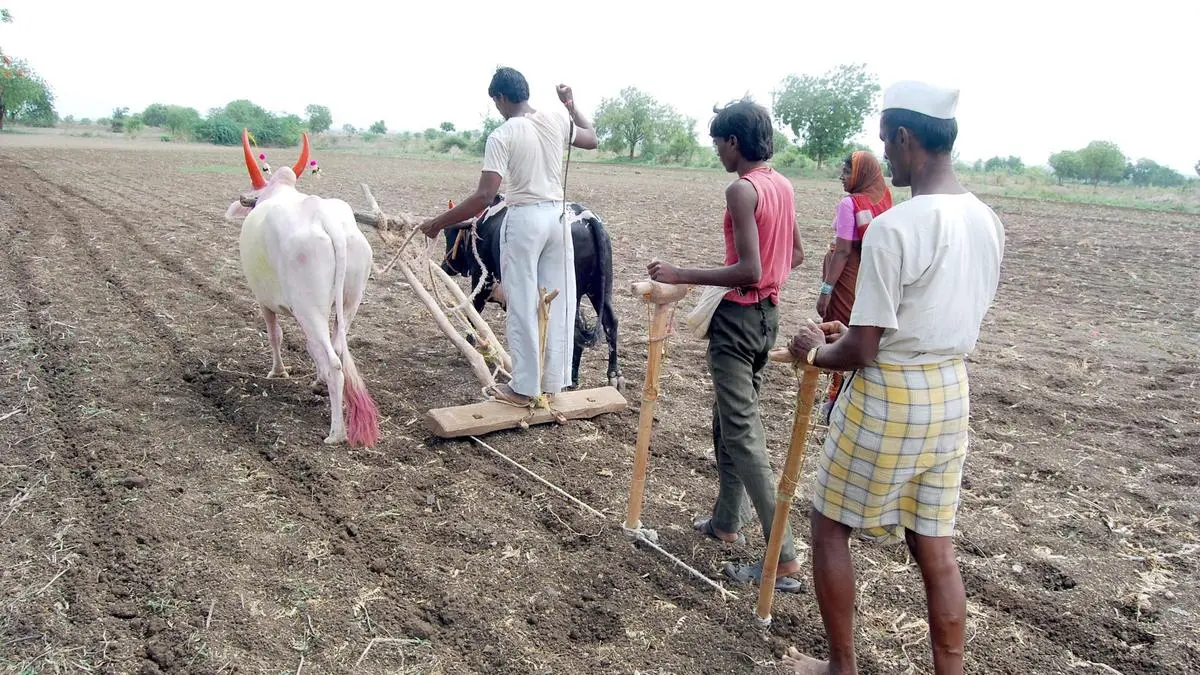
Slack mustard coverage drags Indias rabi acreage as sowing begins
Area under chana, moong, wheat and rice trail as Rajasthan, UP, M.P., Gujarat, Maharashtra and Karnataka report deficient rainfall
In Rajasthan Panchayat Polls, A 'Marriage' Promise Unmasks Deeper Issues
In Jhunjhunu district, Congress MLA from the Surajgarh constituency, Sharvan Kumar, promised to arrange engagements for unmarried men during an election meeting held in support of a Congress candidate.
Rohtak (Haryana) [India], October 26: What began as a small juice centre has grown into a retail network of more than 500 mobile stores. The journey of Bhatia Mobile is a story of resilience, family dedication and customer trust. After establishing a strong presence in Gujarat, Maharashtra, Rajasthan and Madhya Pradesh, the company has now opened its first Haryana store in Rohtak, the hometown of the Bhatia family.
Rajasthan to align quality of polytechnic colleges with industry demands
Recently, 'Samvad' (dialogue) programme was held in Jaipur, chaired by Srinivas, to discuss the strengthening of government polytechnic colleges and improvement of the quality of technical education

Nick Jonas gives a peek into family life with Priyanka Chopra Jonas and Malti Marie; see post
Nick Jonas recently gave fans a glimpse into his personal and professional life through a new Instagram post, sharing moments with wife Priyanka Chopra and their daughter, Malti Marie. Amid a busy schedule of back-to-back concerts with his brothers, the singer also offered a look at the quieter moments he spends with his family and behind the scenes. Nick kept the caption brief, writing, I am on one. The Instagram carousel featured several moments from Nick's life, including pictures of him performing alongside his brothers and bandmates, Joe Jonas and Kevin Jonas. Alongside the concert photographs, the singer shared glimpses of his downtime, including a quiet morning with a cup of coffee and a skincare session featuring a face mask. View this post on Instagram A post shared by Nick Jonas (@nickjonas) Among the pictures were also personal moments with Priyanka. One photograph showed the couple spending some time together, while another captured Nick holding their daughter, Malti Marie. The father-daughter picture offered a glimpse into their family life away from the stage. Malti has often featured in glimpses of the couple's life shared on social media. Nick and Priyanka first met at the Vanity Fair Oscars party in February 2017 and began dating in May 2018. They got engaged in July that year before marrying in December 2018 in Jodhpur, Rajasthan. Their wedding celebrations included both Christian and Hindu ceremonies. In January 2022, the couple announced the birth of their daughter, Malti Marie, through surrogacy. Since then, they have occasionally shared glimpses of their family life, balancing their personal moments with their respective professional commitments. Also Read : Priyanka Chopra Jonas celebrates Dussehra with Nick Jonas and daughter Malti Marie at home; shares heartfelt Maa Durga blessing

Jyoti Structures bags 949-crore Power Grid orders for transmission lines in Rajasthan
The contracts cover turnkey execution of two transmission line packages under the Bipole Barmer-II and South Kalamb projects in Rajasthan.
Rajasthan man arrested in interstate ATM theft case
Hyderabad: A 30-year-old man from Rajasthan has been arrested in connection with an interstate ATM theft in which miscreants allegedly used a gas cutter to break open an ATM and fled with five cash boxes in a black Mahindra Scorpio, police said on Monday, October 26. The accused, identified as Rashid, was arrested by a Get the latest updates in Hyderabad City News , Technology , Entertainment , Sports , Politics and Top Stories on WhatsApp & Telegram by subscribing to our channels. You can also download our app for Android and iOS .
Bharatiya Janata Party (BJP) National President Nitin Nabin on Monday pledged full Union government backing to nationwide anti-addiction initiatives, declaring that the Union Government is firmly committed to eradicating substance abuse from the country by 2029. Speaking at the valedictory ceremony of the Brahma Kumaris' Global Summit 2026 (From Awakening to Action) at the Shantivan campus in Sirohi district, Rajasthan, Nabin highlighted the administration
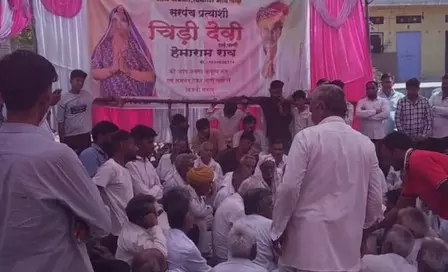
Digital Desk | Jaipur, Oct 26 (IANS) In a remarkable example of social bonding, villagers in Nagaur district have raised Rs 25 lakh for Chidi Devi after she lost the sarpanch election by just 162 votes. The gesture has drawn attention to the spirit of community support and solidarity in rural Rajasthan. Amid the results of the 2026 Panchayati Raj elections in Rajasthan, an inspiring story of social unity has emerged from Nagaur district in Bhadaura Gram Panchayat, under Mundwa Panchayat Samiti. Villagers came together to honour Chidi Devi, a 45-year-old woman from a farming family, after she narrowly lost the sarpanch election. While electoral defeats often leave candidates and their supporters disappointed, residents of Modi village chose to turn the occasion into a celebration of community spirit. Following a village assembly, residents collectively raised Rs 25 lakh as a gesture of respect and appreciation for Chidi Devi and her family. Village elders, young people and prominent community members subsequently gathered with the money arranged on a ceremonial platter. Accompanied by music and celebrations, they visited Chidi Devis home to present the amount, turning her electoral defeat into an occasion of honour. The gesture has become a topic of discussion in Nagaur district and beyond, highlighting how community relationships can extend beyond the outcome of an election. Chidi Devi, a resident of Modi village in Bhadaura Gram Panchayat, comes from a modest farming family. Her husband, Hemaram Rao, is also a farmer. In the sarpanch election, Chidi Devi contested against Girija Sandu, daughter-in-law of Madho Singh, a retired police Inspector from Bhadaura village. The contest was closely fought. Girija Sandu secured 1,317 votes, while Chidi Devi received 1,155 votes, resulting in a defeat by a margin of just 162 votes. Although the result disappointed her supporters, the villagers decided to respond differently. Rather than allowing the electoral outcome to overshadow their relationships, they came together to recognise the candidates standing within the community. Following the election results, a special panchayat was organised in the village. During the gathering, villagers and prominent local residents emphasised that electoral victory and defeat were temporary, while brotherhood, mutual respect and social unity were far more enduring. The gathering was marked by a shared sentiment: If there is a win, the entire village wins; if there is a loss, the entire village loses. Inspired by this spirit of solidarity, residents began contributing money collectively. They eventually raised Rs 25 lakh and presented the amount to Chidi Devi and her husband, Hemaram Rao, at their home. The contribution was intended as a gesture of appreciation and respect, demonstrating that the villagers valued their relationship with the family beyond the result of the sarpanch election. According to villagers, the affection shown towards Hemaram Rao and his family reflects their longstanding involvement in local welfare activities. Around two years ago, Hemaram Rao reportedly donated a new tractor to the villages gaushala (cow shelter) using his personal savings. He also established a facility providing drinking water to villagers and passersby. In addition, he announced plans to fund the drilling of a borewell to help address the villages drinking-water needs. These contributions to local welfare are believed to have strengthened the familys ties with residents and contributed to the widespread support they received after the election. For the villagers, the decision to raise Rs 25 lakh was not simply about compensating a candidate for an electoral loss. It was also a way of acknowledging the familys social contributions and reinforcing a sense of shared responsibility. The unexpected gesture left Chidi Devi and Hemaram Rao deeply moved. Speaking to the media, Hemaram Rao acknowledged that the family had felt disappointed by the election result. However, the villagers response transformed that disappointment into a moment of pride and gratitude. He expressed the view that holding political office was not the only measure of success and that the affection, respect and support of the people around him were far more valuable. The villagers gesture has highlighted a broader message about rural life in Rajasthan: Political competition does not necessarily have to divide communities, and social relationships can remain strong even when election results disappoint individual candidates. The story offers a striking example of how collective goodwill, community participation and mutual respect can take precedence over electoral victory or defeat.
CBI court sentences bank fraud accused to seven years' rigorous imprisonment
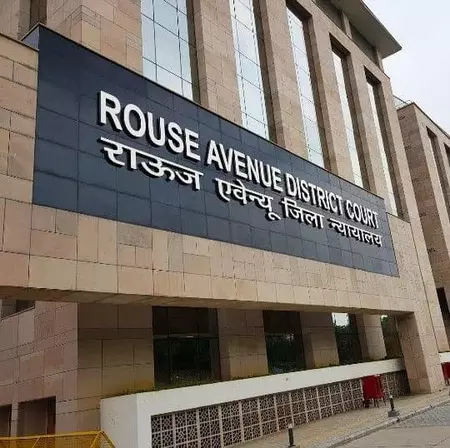
Digital Desk | New Delhi, Oct 26 (IANS) A special CBI court at Rouse Avenue, New Delhi, has convicted and sentenced bank fraud accused Sanjeev Dixit alias Sanjay Sharma to seven years' rigorous imprisonment and imposed a fine of Rs 1.6 lakh, the Central Bureau of Investigation (CBI) said in a statement on Monday. According to the CBI, the case was registered on July 11, 2013, against Dixit, proprietor of M/s Shankar Metals; Sanjay Sharma, proprietor of M/s Super Machines; Indra Rani; and other unknown persons. The agency alleged that the accused, acting in criminal conspiracy, fraudulently obtained a cash credit facility of Rs 4 crore from Punjab National Bank's Jor Bagh branch in New Delhi using forged property documents. The loan amount was diverted for purposes other than those for which the credit facility had been sanctioned, the statement said. The CBI said that in 2016, Dixit escaped from judicial custody while being produced before a court in Sonipat in connection with another case. He subsequently absconded and was declared a proclaimed offender by the trial court on November 23, 2017. In January 2026, the agency received information that the proclaimed offender was living in Vadodara under a fake identity as Pankaj Bhardwaj, son of Brij Mohan Bhardwaj. Acting on the tip-off, the CBI traced him to Mata Tripura Sundari Mandir in Rajasthan's Banswara district and arrested him on January 30. During the trial, Dixit pleaded guilty to charges of criminal conspiracy, cheating by personation, cheating, forgery of valuable security, forgery for the purpose of cheating, and using forged documents as genuine. Following his plea, the Rouse Avenue court on October 24 convicted him and sentenced him to seven years' rigorous imprisonment along with a fine of Rs 1.6 lakh.

Rajesh Naik was in his early 40s when he got the opportunity of a lifetime to have breakfast with superstar Shah Rukh Khan, not just for a day, but for an entire week! This extraordinary experience took place on the sets of Asoka (2001) in Jaipur, Rajasthan. As the period drama, co-starring Kareena Kapoor Khan, completed 25 years on October 26, Bollywood Hungama exclusively spoke to Rajesh Naik, now 66, about how a common man landed this enviable opportunity and came away with memories to cherish for a lifetime. Rajesh Naik began by saying, I was deputed by the board of directors of Exide Industries Ltd to Jaipur, Rajasthan, to take over the operations. Initially, I was alone in Jaipur. My wife, Bhavna, and son, Hardik, had not joined me yet. Meanwhile, one of my close friends, the late Ravi Indulkar, was Shah Rukh Khans personal makeup man. We used to call him Ravi Dada. Shah Rukh also called him the same. Ravi Dada was aware that I had shifted from Mumbai to Jaipur. He called me one day at 8:45 in the morning and told me, We are in your city and Sahab bhi hai. By Sahab, he meant Shah Rukh. I asked him the purpose of the visit. He replied, We are here for the shoot of Asoka. You should join us and have breakfast with Shah Rukh and us! Rajesh Naik immediately agreed. When asked whether Kareena Kapoor Khan was also present at the breakfast table, he replied, I dont remember if she was there, but the child actor (Sooraj Balaji) was present. You wont believe how Shah Rukh treated me. He was so happy that I accepted his invitation when it should have been the other way round! After we were done, he asked, We are here for 7 more days. Aap roz hamare saath breakfast karne aayenge kya?! The offer was very tempting, but I suddenly remembered that I had to be at work early in the morning. So, I told him, Thank you so much, but unfortunately, I wont be able to change my routine. He understood my reason and told me, Sure. Aapse ho sakta hai, toh hi aaiye. But I insist that you should join us. Rajesh Naik revealed, I couldnt resist, and I ended up going for breakfast all 7 days! The shoot of Asoka was taking place 22 km outside the city. He used to call me Sir. During one of our breakfast sessions, he asked me, Sir, would you and your office people like to come and see the shoot of our movie?. I accepted this invitation too. I went to my office and asked my team if they were interested. Obviously, they agreed but requested that we go on a Saturday, which was an off day. He added, My team had a total of 17 members. A minibus was booked, and we went to witness the shoot. The battle sequence was being shot. Even back then, he was a huge star, and yet, he was so kind to each one of them, as if we were VIPs. Food was arranged for us. A couple of people even went to his vanity van and shook hands with Shah Rukh! Rajesh Naik laughed as he shared, My team was so charged up after that meeting and Shah Rukh's behaviour towards them that their efficiency increased. Our sales increased by almost 24% that year. The credit for it goes to Shah Rukh and Ravi Dada! Shah Rukh surely has some effect. Did he get a chance to click a picture with the superstar? Rajesh Naik said, Yes, I clicked a picture with him. I asked him if he would put his hand on my shoulder. He laughed and was more than happy to accept my request (laughs). Rajesh Naik then got a couple of chances to meet the superstar, though those meetings were brief. Meanwhile, he also recalled a touching incident that Ravi Dada had narrated to him. He revealed, While the shoot of Asoka was going on, his assistants mother passed away. Shah Rukh flew to Mumbai to pay his last respects. He even gave some money to the assistant. Then, he returned to Jaipur immediately. No one in the team was aware of his visit. Ravi Dada knew about it, and he told me. He said that this is how Shah Rukh treats every person in his team.
From Abusive Marriage To DSP: Haryana
After returning to her parental home, raising her son and losing her husband, Haryanas Anju Yadav pursued competitive examinations and became a DSP in Rajasthan.

Jaipur, October 26, 2026 (Udaipur Kiran): Rajasthan is witnessing contrasting weather conditions in the final week of October. While falling night temperatures are bringing a gradual increase in Rajasthan Weather Update: Dry Conditions for Three Days, Rain Alert for Jaipur, Bharatpur and Kota Divisions from October 29

Rajasthan Declares 80 Tehsils Drought-Affected Amid Low Monsoon Rainfall
Rajasthans government has declared 80 tehsils as drought-affected due to insufficient rainfall, impacting agriculture and livestock. Rajasthan Declares 80 Tehsils Drought-Affected Amid Low Monsoon Rainfall

BJP president Nitin Nabin, Rajasthan CM attend Brahma Kumaris summit
The News Mill
Bharatiya Janata Party (BJP) National President Nitin Nabin and Rajasthan Chief Minister Bhajanlal Sharma arrived at the Brahma Kumaris headquarters in Rajasthan on Monday to participate in the valedictory ceremony of the 'Global Summit 2026'. Both leaders are scheduled to address the concluding session of the international event hosted by the spiritual organisation in the Sirohi district. Chief Minister Sharma, in a post on X, noted that the leaders held discussions covering comprehensive regional development and party organisational strengthening.
Rajasthan declares 80 tehsils across 14 districts drought-affected; Jalore, Jodhpur among worst-hit
Digital Desk | Jaipur, Oct 26 (IANS) Rajasthan has declared 80 tehsils across 14 districts drought-affected following deficient monsoon rainfall and damage to standing crops. The affected areas include parts of Jodhpur, Jalore, Barmer, Balotra, Pali, Dungarpur, Jaisalmer and other districts. According to a state government notification issued on Sunday, the tehsils have been classified as severely or moderately drought-affected. The decision comes amid concerns over crop losses, water shortages and the availability of fodder for livestock. Chief Whip Jogeshwar Garg said drought-like conditions had developed in several parts of the state, prompting the government to take measures to address the situation. He said fodder depots would be established in affected areas and all possible assistance would be extended to farmers and livestock owners. Garg also confirmed that 10 tehsils in Jalore district had been declared drought-affected. The district-wise distribution of the affected tehsils include Jodhpur: 12 tehsils; Jalore: 10 tehsils; Barmer: 10 tehsils; Balotra: 9 tehsils; Pali: 8 tehsils; Dungarpur: 7 tehsils; Jaisalmer: 7 tehsils; Phalodi: 7 tehsils; Banswara: 3 tehsils; Beawar: 2 tehsils; Churu: 2 tehsils; Bikaner: 2 tehsils; one tehsil each in Nagaur and Sirohi. The notification brings the affected areas under the applicable drought-related provisions for six months from the date of its publication, according to the supplied details. The Disaster Management and Relief Department issued the notification after assessing factors such as rainfall deficiency, groundwater levels, surface water availability and crop losses. The declaration is expected to facilitate administrative and relief measures in the affected areas. These may include arrangements for livestock fodder and water, along with other assistance under the applicable government provisions. According to the rainfall figures cited in the report, Pali recorded a rainfall deficit of 58 per cent, while Jaisalmer recorded a deficit of 54 per cent compared with normal levels. Jalore received 50 per cent less rainfall than normal, followed by Banswara at 39 per cent and Sirohi at 36 per cent. The reported deficits were 28 per cent in Balotra, 27 per cent in Jodhpur and 24 per cent in Dungarpur. The rainfall shortfall has affected agricultural activities in several areas, with standing crops reportedly withering due to insufficient moisture. The resulting losses have added to farmers' concerns over their livelihoods and the availability of water for agriculture and livestock. The drought declaration is expected to help district administrations initiate necessary relief measures. Farmers and livestock owners are looking to the authorities for support, particularly in securing fodder and water.

Rajasthan CM Bhajanlal Sharma to Visit Udaipur, Sirohi and Banswara Today, Attend Global Summit 2026
Udaipur, October 26, 2026: Rajasthan Chief Minister Bhajanlal Sharma will visit Udaipur, Sirohi and Banswara on Monday. His schedule includes attending the Global Summit 2026 at Brahma Kumaris Rajasthan CM Bhajanlal Sharma to Visit Udaipur, Sirohi and Banswara Today, Attend Global Summit 2026
Accused escapes from Raj police lock-up, 2 cops suspended
A dramatic escape unfolded in Dholpur district, Rajasthan, as 45-year-old Srinivasan T eluded police custody while facing serious charges related to narcotics worth 1.30 crore. The incident took place between 3 am and 6 am on Sunday morning. Police constables Vishnu and Jogesh were overseeing the lock-up, and it was Constable Manoj who discovered Srinivasan was missing during an early morning check.
Rajasthan rolls out winter water plan as reservoir levels drop 30%
Rajasthan Pravasi Divas to host 5k members on Dec 10

New Delhi, October 25, 2026: Delhi is being planned as a major hub for the Namo Bharat Regional Rapid Transit System (RRTS), with eight proposed corridors intended to Namo Bharat Rapid Rail Network: 8 Corridors to Connect Delhi with Haryana, Uttar Pradesh and Rajasthan
At least 1 lakh workers to participate in November 1 Delhi rally: Rajasthan Congress
The assurance was given by Rajasthan Congress president Govind Singh Dotasra during a meeting chaired by AICC general secretary (organisation) K C Venugopal at the Constitution Club in Jaipur to discuss preparations for the rally and ensure maximum participation from the state.
Hacker Group Claims Access to 86.3 Lakh Rajasthan Police Emails
Rail Connectivity Boost: 2 New Express Trains Connecting UP, Rajasthan, Bengal
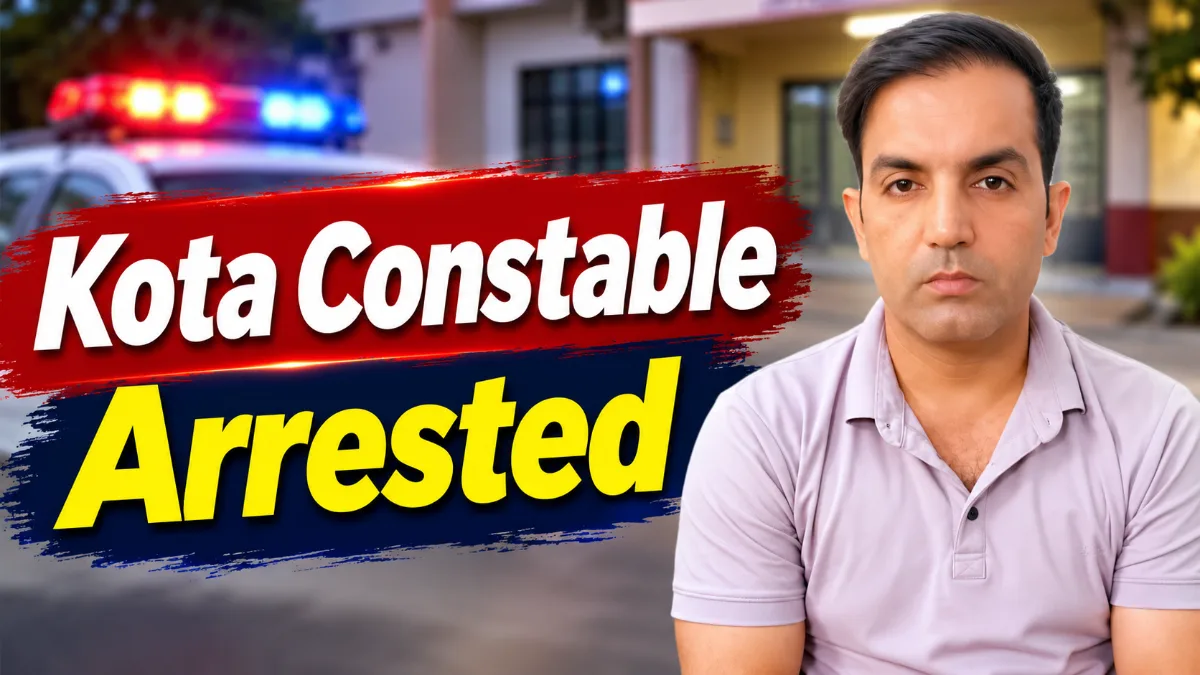
Kota Constable Arrested for Allegedly Accepting
Kota, October 25, 2026: The Rajasthan Anti-Corruption Bureau (ACB) arrested Constable Abhay Singh posted at the Badgaon Police Outpost under Nanta Police Station in Kota City after allegedly Kota Constable Arrested for Allegedly Accepting 2,000 Bribe at Badgaon Police Outpost
Rajasthan gram panchayat polls: second phase held amid reports of minor clashes, protests
Only elected ward panch members are eligible to vote in up-sarpanch elections, and ordinary voters do not participate in the process
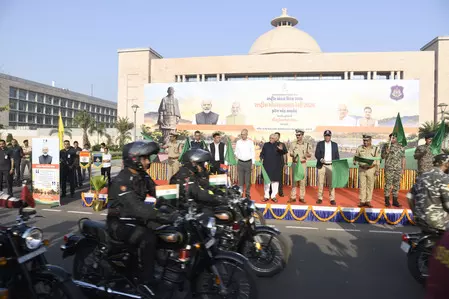
Nationwide anti-drug bike rally heads to Statue of Unity to join parade on October 31
Digital Desk | Gandhinagar, Oct 25 (IANS) More than 550 personnel from states, union territories and Central Armed Police Forces (CAPFs) are taking part in a national motorcycle rally to spread awareness against drug abuse ahead of the National Unity Day parade at Ekta Nagar on October 31. Gujarat Chief Minister Bhupendra Patel on Sunday flagged off the rally from the Secretariat complex in Gandhinagar, with participants set to travel to the Statue of Unity in Ekta Nagar, also known as Kevadia, under the theme Fight Against Drugs. Director General of Police (DGP) Gyanendra Singh Malik said 45 teams are participating in the rally through four zones, with more than 275 motorcycles. Five bikers from each participating state had joined the event, including participants from Ladakh, Jammu and Kashmir, Punjab, Delhi, Uttar Pradesh and Rajasthan, alongside CAPF personnel. Teams from across the country will reach Ekta Nagar today with the message Fight Against Drugs, DGP Malik said, adding that awareness programmes and pledge-taking activities were being organised at various locations along the route to encourage people, particularly young people, to stay away from drugs. The rally is part of preparations for the National Unity Day celebrations on October 31, which mark the birth anniversary of Sardar Vallabhbhai Patel, widely regarded as the architect of India's political integration after Independence. The annual event is held at Ekta Nagar, home to the Statue of Unity. The motorcycle rally follows the flag-off of the North Zone contingent by Union Home Minister Amit Shah in New Delhi on October 21. The contingent travelled through Haryana and Rajasthan before reaching Gandhinagar. From there, the rally will proceed through Anand and Vadodara before reaching Ekta Nagar. Participants are scheduled to take part in the National Unity Day parade on October 31. The campaign carries the message, Say No to Drugs, Say Yes to Life, with a focus on discouraging drug abuse through public awareness and community engagement. Sanjeev Kumar, Principal Secretary of the Home Department and Principal Secretary to the Chief Minister, along with senior police officers, government officials and security personnel, was present at the flag-off ceremony. The National Unity Day parade is held annually to commemorate Sardar Patel's contribution to national unity and integration. The celebrations bring together security forces and other contingents at Ekta Nagar, in Gujarat's Narmada district.

Delhi U-19 Coach Nayyar Seeks Two-week Camp To Iron Out Flaws Before Cooch Behar Trophy
Cooch Behar Trophy: New Delhi, Oct 24 (PTI) Delhi U-19 mens team coach Rajeev Nayyar said he has requested the Delhi and District Cricket Association (DDCA) to set up a two-week camp for improving their fielding and fitness for the Cooch Behar Trophy. He added that the association has assured him of time for having a camp ahead of the red-ball competition starting on November 26. The development comes after Delhi had a disappointing Vinoo Mankad Trophy campaign, where they finished at the bottom of their group. These kids have not grown up yet. They listen to their coaches. A 16 to 19-year-old kid listens. So, I had time and spoke to the officials. I said, See, its Diwali, and there are more holidays in between, like Karva Chauth. I told them that I want a camp for one to two weeks. We are lacking in fielding and fitness, so we will work on it, as well as do match simulations, because when you play practice matches, you are playing against each other, and you have already played against each other before. We are not playing friendly matches against other states. We will be playing intra-squad games because we dont have time. I told them this is better. The rest is up to the DDCA officials - the final call is theirs. It will be as per what they say. Whenever the camp is set up, I will share my playing experiences of 20 years with all the players, Nayyar told IANS in a free-wheeling chat. Nayyar said fielding and fitness would take priority over skills whenever the camp happens. When a kid plays cricket, I first check whether he is fit or not. If he is fit, then he will bat, bowl and field. Secondly, I will look at his fielding. Fielding is very important because even after making 100 runs, if you give away 10 runs in the field and drop a catch, that batter can go on to score a hundred. So, skills come later, and thats why I was thinking that this time, God willing, we will get a camp of two weeks, and I will work on our fielding and fitness. After that, skills work will continue, but I will pay more attention to fielding and fitness. Nayyar wants his players to use the camp to identify their own weaknesses, so they head into the four-day competition without any glaring flaws. Being a coach, no matter how the team is, I have to share my experiences and keep the players motivated, because we are in a very good pool. We have Himachal and Chandigarh. Our first match is against Punjab at Ropar. Then we have a match in Hyderabad, and then a match against Rajasthan. There are five good teams. But we dont say their team is good and our team isn't. We will say our team is better than theirs. I always tell the kids to believe in themselves. You have to believe in yourself. You are the best. When you walk onto the ground, you shouldnt have any flaws. Errors should be rectified before the match, in the nets. If there is a camp, players should tell us, Sir, I want high catches. I want slip catches. I want short catches. I am weak against left-arm bowling, off-spin, or the short ball. I just want the boys to practise a lot so that there are no weaknesses when the Cooch Behar Trophy begins. The request for a longer build-up to the Cooch Behar Trophy comes after Delhi were left short of preparation time for the Vinoo Mankad Trophy. The side opened with a commanding chase of 339 against Gujarat but then lost to Himachal Pradesh by 35 runs and were routed by Karnataka by 198 runs. Their match against Jharkhand was washed out, and a five-wicket defeat to Chandigarh left them at the bottom of the Group E table. Nayyar said the team had only a brief period to come and practise together, before playing for the age-group tournament. In the elite stage, all the teams were good Karnataka, Jharkhand, Himachal Pradesh, Chandigarh and Gujarat. But our start to the season was good. We won the first game against Gujarat by chasing 339. I was so happy with such a good start, because I had been a coach with the UTCA team before, and then I was the coach of the Ranji Trophy team. When I got the responsibility of coaching the under-19 teams, I understood that this is the phase where we get to know whether a kid will play for India or not and whether he is focused or not. In the under-19s, players can get to play for India in the World Cup as well. That is a very important tournament for them. He also felt the washout against Jharkhand proved costly. In the remaining four matches, we had to win the fourth game. They batted first and scored 280. But what happened? I mean, with VJD, we needed 80 runs in 10 overs. We should have changed that. But, unfortunately, by the time we had 230 runs, it rained heavily. So, we missed out on that game. If we had won that match, we would have got two points, and we would automatically have finished third, ahead of UTCA. This happened because they won two matches from the fourth game onwards. If we had won the fourth match against Jharkhand, we would have got the two points as well and finished third. That was it. With the Cooch Behar Trophy next on the calendar, Nayyar stressed the importance of red-ball cricket in young players by stating that the IPL alone would not take them into the Indian team. I was in Delhi and had a word with the officials, because I know a lot about red-ball cricket. I have played more than 100 matches. But nowadays, players are not interested in playing four-day games. They just love to play T20s and are more interested in it because they are only watching the IPL. But we have to make the kids understand that red-ball and first-class cricket are very important, because the IPL alone wont take you into the India team. How many people get to play for India? In the IPL, they perform well. They are selected for Indias T20 and one-day teams as well. But Indias Test teams are selected on the basis of four-day matches. See, if you know how to play a four-day game, you can play one-day and T20 cricket easily. But for those who only know how to play one-day and T20 cricket, the longer format is difficult. There are very few kids who are able to play T20, one-day, Test and four-day games. It is very difficult to play all of them, but it is not impossible. Nayyar said Delhis talent pool had thinned since his playing days but credited the DDCA for taking the initiative to create more playing opportunities. At one time, when I used to play Ranji Trophy, there were 10 Test players in the Delhi dressing room who had played for India. It is not like that now. But there is potential. The DDCA is doing a lot for the players. Now there is the DPL, which is just like the IPL. I am very thankful to the president, Rohan Jaitley Sir, who has done such a great job for the kids and the officials as well. I was watching all the games. Every year, the DPL is improving. When players are getting everything from the association, they have to give back to the association as well. This is very important. It is a very good platform. I am not blaming the academies, but kids go to an academy, bat, bowl and come back home. The DDCA is doing a lot for the players. Now there is the DPL, which is just like the IPL. I am very thankful to the president, Rohan Jaitley Sir, who has done such a great job for the kids and the officials as well. I was watching all the games. Every year, the DPL is improving. Also Read: Special Cricket Stories Article Source: IANS

Chittorgarh, October 25, 2026: The Central Government has released its new opium policy for the 2026-27 crop year, ending a long wait for opium-growing farmers in Rajasthan, Madhya New Opium Policy 2026-27: Farmers Can Cultivate on Leased Land; Higher Morphine Output Required for Licences

Adani Group refutes social media claims over alleged tree felling near Bhimashankar Temple
Digital Desk | Ahmedabad, Oct 25 (IANS) The Adani Group has refuted social media claims linking the Group to alleged tree felling near the Bhimashankar Temple in Maharashtra's Pune district, calling them false and misleading as they have no project in the area. In a statement posted on X, a company spokesperson said the videos circulating on social media linking Adani Group to alleged tree felling and displacement near the Bhimashankar Temple are false, misleading and fabricated. The group has no project, proposed or ongoing, in the area or its vicinity, and is in no way associated with the activities depicted in the circulating videos, according to an Adani Group spokesperson. We strongly urge everyone to verify facts and refrain from sharing false and unverified content, the spokesperson added. The Adani Group statement came in response to misleading social media posts. Meanwhile, Adani Enterprises Ltd (AEL) has planted more than 1.6 million trees and saplings across 568 hectares at the Parsa East and Kanta Basan (PEKB) mine in Chhattisgarh's Surguja district, transforming the area into a green landscape. Once an active mining site, the area has now been transformed into a lush green landscape. Under the ecological restoration, 40 trees are planted for every tree removed for mining activities. Native species, including Sal, Mahua, Tendu, Amaltas and Sidha have been replanted, with the company reporting a survival rate of about 88 per cent. AEL operates the mine as developer and operator for Rajasthan Rajya Vidyut Utpadan Nigam Ltd (RVUNL). According to officials, its greening project has demonstrated how mined land can be restored after coal extraction. It aims to increase the green cover to more than 4 million trees by the end of the decade. The Adani Group has also developed a 3.5-hectare nursery, housing about 5,00,000 saplings and achieved successful regeneration of Sal forests in the area. According to officials, it has undertaken compensatory afforestation across more than 4,000 hectares in the Surguja, Korea, Balrampur and Surajpur forest divisions, while over Rs 259 crore has been deposited with the Chhattisgarh government towards afforestation, wildlife management and other environmental measures.
Rajasthan CM Bhajanlal Sharma outlines development plans for Shekhawati region
The News Mill
FIAs PRAGATI programme combines AI, life skills and career exposure to help government-school students in Rajasthan prepare for future opportunities.

NCB Strengthens Joint Strategy Against Drug Trafficking in Rajasthan
The NCBs recent meeting in Jaipur focused on enhancing cooperation and enforcement against drug trafficking networks. NCB Strengthens Joint Strategy Against Drug Trafficking in Rajasthan
Idea From Shahid Kapoor's 'Farzi', Paper From Alibaba: 6 Arrested For Making Fake Notes
Rajasthan Police have arrested four more people, including the alleged mastermind of a fake currency racket inspired by the web series 'Farzi' . The mastermind was caught in Punjab after a 1,300-km chase.
Vaibhav Sooryavanshi has become one of cricket's most talked-about young talents, but his roots remain in Tajpur, Bihar. From his two-storey family home and his father's efforts to support his cricket training to family moments shared on Instagram, here's a look at the Rajasthan Royals batter's life away from the IPL spotlight and what is known about his house.

RSSB Women Supervisor Result 2026: Rajasthan Board May Announce Results Soon, Check Latest Update
RSSB Women Supervisor Result 2026: Thousands of candidates awaiting the Rajasthan Women Supervisor recruitment examination results may soon receive an important update. The Rajasthan Staff Selection Board (RSSB) is reportedly making efforts to announce the results before Diwali. However, the board h...

Three killed and 19 injured as minibus collides with trailer on NH-48 in Rajasthan
The News Mill
A foreign traveller has praised India's road network, saying the country now has some of the best roads in the world after completing a journey of more than 2,500 km from Tamil Nadu towards the Himalayas. The drive took him through several states, including Karnataka, Maharashtra, Gujarat and Rajasthan, as India continues to expand its National Highway network.