
This retro-inspired handheld comes with Banjo-Kazooie and Battletoads built in
Who would've guessed we'd get to play the original Banjo-Kazooie on a handheld with just a D-pad in 2026. HyperMegaTech!'s latest release is a collaboration with Rare Ltd. , the legendary game developer known for the Banjo-Kazooie franchise and, more recently, Sea of Thieves , called the Super Pocket Rare Edition . The vertical handheld features 14 classics from the British developer, including two Battletoads titles, Conker's Pocket Tales and many more. While most of the games were released on 8- or 16-bit consoles, Banjo-Kazooie will be the headliner since it was originally released on the Nintendo 64. It may sound weird to control Banjo and Kazooie with a D-pad, but HyperMegaTech! assured that the game has been enhanced and optimized specifically for the Super Pocket handheld. Since HyperMegaTech! and Evercade share Blaze Entertainment as a parent company, that means the Rare Edition handheld will be compatible with Evercade cartridges . Once you're done with the 14 included games, you can expand your Super Pocket's library with cartridges that feature collections from Taito, NeoGeo or Atari. HyperMegaTech! said the Rare Edition handheld will be available for $69.99 in June 2026, but has already opened preorders . This article originally appeared on Engadget at https://www.engadget.com/gaming/this-retro-inspired-handheld-comes-with-banjo-kazooie-and-battletoads-built-in-203111135.html?src=rss
Alaska's House of Representatives unanimously passed HB47 , a bill that imposes sweeping limits on when and how minors use social media apps, along with bans on generating or distributing harmful deepfakes of children. The bill's original form was focused on prohibiting the possession and distribution of sexually explicit images of children using AI, but Alaska lawmakers decided to add amendments that would impose social media restrictions. The proposed limitations include a statewide curfew on using social media between 10:30 PM and 6:30 AM, banning addictive design features and requiring social media platforms to verify user ages and get parental consent if they are minors. While the House bill saw 39 votes in favor and zero against, the amendments offered some hints at potential upcoming revisions. Before the bill went to a vote, some of the House representatives expressed concern about adding such broad rules on social media without consulting the companies behind them first. The bill still has to make its way through the Alaska State Senate, which already has presented a companion bill , and the governor. Alaska is following the footsteps of many other states , and the House even modeled its social media amendments in the HB47 bill after Utah. While Utah was the first to propose social media restrictions for kids, it was later met with a preliminary injunction . This article originally appeared on Engadget at https://www.engadget.com/social-media/alaska-could-be-the-next-state-to-crack-down-on-ai-generated-csam-and-restrict-kids-social-media-use-190506366.html?src=rss
Bloodborne fans may not be happy to hear that a remake was reportedly rejected, but that doesn't mean it's completely off the table. Bluepoint Games , Sony's closed-down studio behind many PlayStation remakes, pitched remaking the classic Gothic horror RPG in early 2025, but was blocked by the game's developer, FromSoftware, according to a Bloomberg report. As Bloomberg reported, Bluepoint pitched a Bloodborne remake after several years of working towards a live-service title in the God of War franchise that was ultimately canceled. Looking for the next project, a modern-day version of Bloodborne made a lot of sense, considering the title came out in 2015 and Bluepoint was responsible for the successful Demon's Souls remake in 2020. However, Bloomberg 's sources said that FromSoftware was against it, but didn't offer a concrete reason why. With some digging, Bloomberg 's Jason Schreier pointed to an interview from Kinda Funny Games with PlayStation exec Shuhei Yoshida, which aired last year. In the video, Yoshida mentioned that FromSoftware's president, Hidetaka Miyazaki, wanted to pursue a Bloodborne remake, but was too busy to do it himself and doesn't want anyone else to touch it. After failing to get the Bloodborne remake greenlit, Bluepoint wasn't able to secure another project for more than a year, according to the Bloomberg report. Now that Bluepoint has been shut down , we're likely even further away from a remake. That's not to say a remake will never happen, but when it does, it'll have to get a stamp of approval and likely a lot of oversight from FromSoftware . This article originally appeared on Engadget at https://www.engadget.com/gaming/playstation/shuttered-studio-bluepoint-reportedly-pitched-a-bloodborne-remake-but-it-got-shot-down-by-fromsoftware-173744228.html?src=rss
MWC 2026 officially gets underway on March 2 and will continue through March 5, but the announcements are already coming ahead of its start. We can always count on the annual tech event to bring tons of new phones, laptops and tablets, and we're expecting to see some robots and other gadgets too plus plenty of AI news, of course. In addition to the announcements, MWC is our chance to get hands-on time with some of the most interesting new devices, like the Xiaomi 17 Ultra . We'll be updating this story as the week goes on to keep you in the loop on everything that caught our attention, so keep checking back here for the latest MWC news. Xiaomi x Leica Xiaomi kicked off MWC this year by announcing the global launch of its 17 Ultra smartphone, which debuted first in China back in December. It's unclear if the phone will ever come to the US, but it's now rolling out in Europe. Xiaomi teamed up again with Leica to make a photography-focused smartphone, and the 17 Ultra sports a 1-inch 50-megapixel camera sensor with a f/1.67 lens, a telephoto setup with a 200MP 1/1.4-inch sensor, and a 50MP ultrawide camera. There's also a manual zoom ring around the camera. Check out our hands on for our first impressions of what it's like shooting with the Xiaomi 17 Ultra . And there's more to it than just the camera. The 17 Ultra has a 6.9-inch OLED 120 Hz display that peaks at 3,500 nits of brightness, and a 6,000mAh silicon-carbon battery. The Xiaomi 17 Ultra starts at 1,299 (roughly $1,750). Leica also announced a new phone made in partnership with Xiaomi at MWC. It looks a whole lot like Xiaomi's 17 Ultra, but isn't the 17 Ultra, exactly. Leica Leitzphone by Xiaomi hands-on at MWC 2026 Image by Mat Smith for Engadget Like the 17 Ultra, Leica's Leitzphone by Xiaomi has a 1-inch camera sensor and physical controls for zoom and other settings, using a mechanical ring around the camera unit. It features a Leica-designed intuitive camera interface with the option to show just the essentials when you're shooting, hiding all the modes and labels. There's a monochrome shooting mode and Leica filters. The Leica branding is splashed all over it in design and wallpapers, but it's otherwise pretty similar to the 17 Ultra, with the same specs. Like the 17 Ultra, it has a Snapdragon 8 Elite Gen 5 chip and a 6.9-inch 120Hz display. This one's priced at 1,999 (roughly $2,362). Honor MagicPad 4 Honor Ahead of MWC, Honor announced what it claims is the thinnest Android tablet in the world: the 4.8mm thick MagicPad 4 . We're expecting to hear more about this at Honor's press conference on Sunday, but so far we know it features a 12.3-inch 165Hz OLED display and weighs just 450g. It comes with up to 16GB of RAM and 512GB of storage, and is powered by Qualcomm's Snapdragon 8 Gen 5 chipset. The thinness doesn't count the camera bump, Honor notes. The MagicPad 4 has 13MP rear and 9MP front cameras. It also boasts spatial audio, with eight speakers. Just as the display is slightly smaller than the previous MagicPad, the MagicPad 4 has a smaller battery at 10,100 mAh. It comes with a 66W fast charger. The MagicPad 4 will run Honor's MagicOS 10. We don't yet know how much it will cost, but we'll update this after Honor's press conference (where we're also expecting to see the company's robot) with any new details. Tecno We can always expect to see some wild phone concepts at MWC, and this year we're starting with one from Tecno . The company unveiled a modular concept smartphone design that can be as thin as 4.9mm in its base configuration. Thered be 10 modules to choose from based on the announcement, including various camera lenses, a gaming attachment and a power bank, relying on magnets to keep it all together or Modular Magnetic Interconnection Technology, as Tecno is calling it. This article originally appeared on Engadget at https://www.engadget.com/mobile/everything-announced-at-mwc-2026-the-new-leica-leitzphone-by-xiaomi-honors-ultra-thin-magicpad-4-and-more-172442426.html?src=rss
Xiaomi 17 Ultra hands-on: Incredible cameras, but maybe hard to get
Chinas biggest phone makers continue to relentlessly forge ahead with high-spec phones that you may never see in the US. With the Xiaomi 17 Ultra this year, the company has continued its pattern from previous iterations by focusing on powerful camera sensors, huge batteries and being selective about global availability. Xiaomis 17 series is launching across multiple European territories months after its Asia debut, but at the time of writing, no word yet on US availability. Another logistical point of interest? When we last checked out Xiaomis devices, it was the 15 series, and the company has decided to skip 16 and leap straight to 17, conveniently matching Apples latest number. Storied camera brand Leica has been involved with Xiaomis phones for a few years and its newest flagship doesnt disappoint in that regard , because this is another Xiaomi device dedicated to photography. Image by Mat Smith for Engadget The 17 Ultra has a huge 1-inch 50-megapixel main camera sensor with a f/1.67 lens, and a telephoto setup with a 200MP 1/1.4-inch sensor and going up to 4.3x optical zoom. Xiaomi claims its capable of up to 17x optical-level zoom, but quality doesnt measure up to, say, the Oppo Find X9, with its dedicated telescopic lens add-on. Theres also a 50MP ultrawide camera to round things out. The main camera is very impressive, delivering plenty of detail and performing incredibly well in low light, seemingly before any computational photography kicks in. A new Light Fusion 1050L sensor features LOFIC HDR technology, delivering stronger control over highlights and more detail in darker areas of your shots. I've been impressed by the balanced color tone and contrast, without having to edit or add one of the (many) Leica camera filters. If anything, the slightly heavy-handed algorithms can sometimes ruin parts of a shot. For instance, by scrambling lettering or capturing blurry, AI-mutated faces where computational photography takes a swing (and a miss) at people in the distance. Mat Smith for Engadget The telephoto camera alone is also technically interesting in a few ways. It offers continual optical zoom across the 75-100mm range without in-sensor cropping. This means the lenses physically move to deliver lossless zoom across a range of distances, without jarring leaps between camera sensors and crops. This doesnt run across the full gamut, but it does roughly cover the 3-4x optical zoom range, which is often used in portrait photography. The APO (apochromatic) lens design on the telephoto is more immediately useful and effective. An APO lens significantly reduces chromatic aberration by focusing three wavelengths of light (red, green and blue) onto the same focal plane. This lens design means it can correct color fringing and improve image sharpness. At full optical zoom, this light fitting at Soho Theatre Walthamstow doesn't bloom or fringe to the extent that most smartphone zooms suffer from. Mat Smith for Engadget At higher zoom levels, fringing and lighting bloom often hamper telephoto photos on smartphones, and Xiaomis solution has some appeal. I noticed less fringing than on other zoom-capable Android phones from Samsung, Oppo and Google. It also supports macro photography, but is hindered this time by a minimum focal distance of 30cm (11.8 inches). Most smartphone cameras macro modes let you get much closer. The 17 Ultra can capture up to 8K video (at 30 fps), 4K Dolby Vision up to 120 fps, and 4K 120 fps Log video, ensuring you can make the most of that huge 1-inch sensor in video, too. That said, it seems to struggle with stabilization at times, while its low-light performance doesnt match its prowess in still photography, lagging behind flagship phones from Apple, Google and Samsung. There's also a special Leica edition of the 17 Ultra, which is largely the same, specification-wise, but with a manual zoom ring around the camera unit. It's a cool gimmick, but felt oddly loose on a few devices I've handled. Xiaomi made a few design changes to its Ultra line this year, with a new, entirely flat display, and flattened edges that look like a certain family of devices . In fairness, its not the only company using imitation as flattery . Theres also IP68 protection against dust and water. While cameras may be the highlight, this is a flagship device by any specification metric. With a 6.9-inch display, this expansive OLED display has variable refresh rates (1-120Hz) and peaks at 3,500 nits of brightness. At that size, the Xiaomi 17 Ultra is in the territory of devices like the iPhone 17 Pro Max and S26 Ultra. A phone this size isnt for everyone, but it is the thinnest Ultra phone from Xiaomi to date, with a profile measuring 8.29mm. Xiaomi has also reduced the camera units diameter and raised it on the device, making it easier to use and helping keep fingers out of your shots. Image by Mat Smith for Engadget Also, Id be remiss if I didnt mention the huge 6,000mAh silicon-carbon battery, with support for Xiaomis 90W HyperCharge (if you have the right charger) and 50W wireless HyperCharge (which also requires Xiaomis own dock) speeds. Other phone makers: Please put a battery this huge in your flagship. At MWC 2026, the company announced the global launch and rollout of the device across Europe, including the UK where the Ultra will start priced at 1,299 (roughly $1,750). We're still waiting to confirm US availability and pricing. While the specs are powerful, launching a flagship device thats already been in the wild for a few months even if elsewhere in the world reduces the spectacle. This article originally appeared on Engadget at https://www.engadget.com/mobile/smartphones/xiaomi-17-ultra-global-launch-hands-on-leica-camera-143006810.html?src=rss
Leicas Leitzphone by Xiaomi has a huge 1-inch camera sensor and a stylish new design
Alongside a global launch for Xiaomi's 17 Ultra (read about that right here), the company announced a further deepening of its relationship with Leica . The CEO of Leica, Mattias Harsch, took to the stage to announce a new Leitzphone, which appears to be an even deeper collaboration than 17 Ultra by Leica, which is a different phone. Confused? That's fair. Design-wise, Leica has shifted back to a single tone body color, which looks more Leica to this camera dilettante's eyes. And if youre thinking youve heard of the Leitzphone before, you probably have: it was a series of phones made by Sharp that launched in Japan in 2021. They all had a 1-inch camera sensor and yes, as does Xiaomis first Leitzphone. It also gets a customizable ring to control camera settings. The camera interface is also designed by Leica. with the aim of being as intuitive as possible, with a new Essential mode within the camera app for stripping away all those modes and labels, showcasing whatever you're looking to shoot. Image by Mat Smith for Engadget The regular Xiaomi 17 Ultra and Leica edition have a Snapdragon 8 Elite Gen 5 chip and a 6.9-inch 120Hz display that can reach up to 3,500 nits of peak brightness. While cameras are the focus, its a flagship device by pretty much any metric and the Leitzphone seems to have a very similar specsheet. Well be taking a closer look at whats different when we get to test it out very soon. After years of collaboration (and cute little badges), this may be the first pure Leica phone manufactured by Xiaomi but sold directly by both companies. It's priced at 1,999 (roughly $2,362), but it's not known yet whether this phone will launch in the US. This is a developing story... This article originally appeared on Engadget at https://www.engadget.com/mobile/smartphones/leica-leitzphone-xiaomi-mwc-2026-135744417.html?src=rss
OpenAI strikes a deal with the Defense Department to deploy its AI models
OpenAI has reached an agreement with the Defense Department to deploy its models in the agencys network, company chief Sam Altman has revealed on X. In his post, he said two of OpenAIs most important safety principles are prohibitions on domestic mass surveillance and human responsibility for the use of force, including for autonomous weapon systems. Altman claimed the company put those principles in its agreement with the agency, which he called by the governments preferred name of Department of War (DoW), and that it had agreed to honor them. The agency has closed the deal with OpenAI, shortly after President Donald Trump ordered all government agencies to stop using Claude and any other Anthropic services. If youll recall, US Defense Secretary Pete Hegseth previously threatened to label Anthropic supply chain risk if it continues refusing to remove the guardrails on its AI, which are preventing the technology to be used for mass surveillance against Americans and in fully autonomous weapons. Its unclear why the government agreed to team up with OpenAI if its models also have the same guardrails, but Altman said its asking the government to offer the same terms to all the AI companies it works with. Jeremy Lewin, the Senior Official Under Secretary for Foreign Assistance, Humanitarian Affairs, and Religious Freedom, said on X that DoW references certain existing legal authorities and includes certain mutually agreed upon safety mechanisms in its contracts. Both OpenAI and xAI, which had also previously signed a deal to deploy Grok in the DoWs classified systems, agreed to those terms. He said it was the same compromise that Anthropic was offered, and rejected. Anthropic, which started working with the US government in 2024, refused to bow down to Hegseth. In its latest statement, published just hours before Altman announced OpenAIs agreement, it repeated its stance. No amount of intimidation or punishment from the Department of War will change our position on mass domestic surveillance or fully autonomous weapons, Anthropic wrote. We will challenge any supply chain risk designation in court. Altman added in his post on X that OpenAI will build technical safeguards to ensure the companys models behave as they should, claiming thats also what the DoW wanted. Its sending engineers to work with the agency to ensure [its models] safety, and it will only deploy on cloud networks. As The New York Times notes, OpenAI is not yet on Amazon cloud, which the government uses. But that could change soon, as company has also just announced forming a partnership with Amazon to run its models on Amazon Web Services (AWS) for enterprise customers. Tonight, we reached an agreement with the Department of War to deploy our models in their classified network. In all of our interactions, the DoW displayed a deep respect for safety and a desire to partner to achieve the best possible outcome. AI safety and wide distribution of Sam Altman (@sama) February 28, 2026 This article originally appeared on Engadget at https://www.engadget.com/ai/openai-strikes-a-deal-with-the-defense-department-to-deploy-its-ai-models-054441785.html?src=rss
Trump orders federal agencies to drop Anthropic services amid Pentagon feud
President Donald Trump has ordered all US government agencies to stop using Claude and other Anthropic services, escalating an already volatile feud between the Department of Defense and company over AI safeguards. Taking to Truth Social on Friday afternoon, the president said there would be a six-month phase out period for federal agencies, including the Defense Department, to migrate off of Anthropic's products. The Leftwing nut jobs at Anthropic have made a DISASTROUS MISTAKE trying to STRONG-ARM the Department of War, and force them to obey their Terms of Service instead of our Constitution, the president wrote. Anthropic better get their act together, and be helpful during this phase out period, or I will use the Full Power of the Presidency to make them comply, with major civil and criminal consequences to follow. Before today, US Defense Secretary Pete Hegseth had threatened to label Anthropic a supply chain risk if it did not agree to withdraw safeguards that insist Claude not be used for mass surveillance against Americans or in fully autonomous weapons.In a post on X published after President Trumps statement , Hegseth said he was directing the Department of War to designate Anthropic a Supply-Chain Risk to National Security. Effective immediately, no contractor, supplier, or partner that does business with the United States military may conduct any commercial activity with Anthropic. Anthropic did not immediately respond to Engadget's comment request. Earlier in the day, a spokesperson for the company said the contract Anthropic received after CEO Dario Amodei outlined Anthropic's position made virtually no progress on preventing the outlined misuses. New language framed as a compromise was paired with legalese that would allow those safeguards to be disregarded at will. Despite DOW's recent public statements, these narrow safeguards have been the crux of our negotiations for months, the spokesperson said. We remain ready to continue talks and committed to operational continuity for the Department and America's warfighters. Advocacy groups like the Center for Democracy and Technology (CDT) quickly came out against the presidents threats. This action sets a dangerous precedent. It chills private companies ability to engage frankly with the government about appropriate uses of their technology, which is especially important in national security settings that so often have reduced public visibility, said CDT President and CEO Alexandra Givens, in a statement shared with Engadget. These threats undermine the integrity of the innovation ecosystem, distort market incentives and normalize an expansive view of executive power that should worry Americans all across the political spectrum. For now, it appears the AI industry is united behind Anthropic. On Friday, hundreds of Google and OpenAI employees signed an open letter urging their companies to stand in solidarity with the lab. According to an internal memo seen by Axios , OpenAI CEO Sam Altman said the ChatGPT maker would draw the same red line as Anthropic. Update, February 27, 6PM ET: This story was updated after publish to include a link to and quotes from Hegseth about the designation of Anthropic as a supply chain risk. The subheadline was also updated. This article originally appeared on Engadget at https://www.engadget.com/ai/trump-orders-federal-agencies-to-drop-anthropic-services-amid-pentagon-feud-222029306.html?src=rss
FCC approves the merger of cable giants Cox and Charter
The Federal Communications Commission has given the go ahead for two of the US' biggest cable providers, Charter Communications and Cox Communications, to merge. Charter announced its intention to acquire Cox for $34.5 billion in May 2025, with specific plans to inherit Cox's managed IT, commercial fiber and cloud businesses, while folding the company's residential cable service into a subsidiary. By approving this deal, the FCC ensures big wins for Americans, FCC Chairman Brendan Carr said in a statement. This deal means that jobs are coming back to America that had been shipped overseas. It means that modern, high-speed networks will get built out in more communities across rural America. And it means that customers will get access to lower priced plans. On top of this, the deal enshrines protections against DEI discrimination. The FCC claims that Charter plans to invest billions to upgrade its network following the closure of the deal, leading to faster broadband and lower prices. The company's Rural Construction Initiative will also extend those improvements to rural states lacking in consistent internet service, a project the FCC was heavily invested in during the Biden administration, but has been pulling back from since President Donald Trump appointed Carr . The FCC also claims Charter will onshore jobs currently handled off-shore by Cox employees and commit to new safeguards to protect against DEI discrimination, which essentially amounts to hiring, recruiting and promoting employees based on skills, qualifications, and experience. While Carr's FCC paints a rosy picture of Charter's acquisition, history has provided multiple examples of mergers having the opposite effect on jobs and pricing. For example, redundancies created when T-Mobile merged with Sprint in 2020 led to a wave of layoffs at the carrier. And funnily enough in 2018, not long after Charter's merger with Time Warner Cable was approved by the FCC , the company raised prices on its Spectrum service by over $91 a year. The FCC's obsession with diversity, equity and inclusion as part of the deal is stranger, if only because it appears to fall outside of the commission's purpose of maintaining fair competition in the telecommunications industry. It does fit with other mergers the FCC has approved under Carr, however. Skydance's acquisition of Paramount was approved in 2025 under the condition it wouldn't establish any DEI programs. This article originally appeared on Engadget at https://www.engadget.com/big-tech/fcc-approves-the-merger-of-cable-giants-cox-and-charter-230258865.html?src=rss
Paramount agrees to buy Warner Bros. Discovery, pays Netflix $2.8 billion for breakup
Paramount Skydance and Warner Bros. Discovery are officially merging . The studio paid Netflix the $2.8 billion termination fee it was owed for breaking its original deal to buy Warner Bros. earlier today, and the historic film studio has now formally accepted Paramounts offer. Along with the deal, which values Warner Bros. Discovery at $31 per share, Paramount is making several commitments to assuage the fears of regulators and the entertainment community. Those include a guarantee that the new company will produce 30 theatrical films annually, that theatrical releases will have a minimum 45-day window in theaters before theyre brought to video on demand (something Netflix ultimately also agreed to ) and that deal itself will close by Q3 2026. This turnaround in Paramount's fortunes has happened quickly. Warner Bros. Discovery announced that Paramount's offer was superior to Netflix's on Thursday , and not long after the streaming service said that it wouldn't provide a counter offer, effectively abandoning its previous agreement. Ultimately, Netflix and Paramount were vying for different parts of Warner Bros. Disocvery. Netflix was primarily interested in Warner Bros. proper, while Paramount Skydance wanted the whole company, cable networks and all. Either deal would need to be approved by regulators, which is the hurdle Paramount and Warner Bros. Discovery face now. The general assumption has been that the close relationship Paramount CEO David Ellison and his billionaire father Larry Ellison have with the Trump administration would smooth over any issues, but the deal will receive scrutiny abroad and likely also at the state level, based on a recent post from California Attorney General Rob Bonta. Paramount Skydance has proven its willingness to comply with President Donald Trump , but delays in closing the deal could be costly. The company is on the hook to pay Warner Bros. Discovery a daily ticking fee equal to $0.25 per share per quarter beginning after September 30, 2026. The company also has to pay $7 billion to Warner Bros. Discovery if the deal is terminated for regulatory reasons. Netflix lost the battle for Warner Bros. Discovery, but getting a competitor to potentially overpay for the studio might be its own reward. This article originally appeared on Engadget at https://www.engadget.com/entertainment/paramount-agrees-to-buy-warner-bros-discovery-pays-netflix-28-billion-for-breakup-215936514.html?src=rss
The PS5 Pro is getting upgraded upscaling tech in March
After suggesting a version of AMD's FSR 4 could be ported to the PS5 Pro last year, it looks like Sony is finally rolling out an update with the upscaling tech in March. Mark Cerny, the lead architect of the PS4, PS5 and PS5 Pro, shared via a blog post that the PS5 Pro will be updated with a new version of the company's PSSR (PlayStation Spectral Super Resolution) upscaling tech next month, and Resident Evil Requiem is one of the first games to use it. PSSR is an AI library that analyzes game images pixel by pixel as it upscales them, Cerny says, which boosts the visual fidelity of games on the PS5 Pro, while running them at a less demanding resolution. The upgraded version of PSSR takes a very different approach to not only the neural network but also the overall algorithm, and is now able to keep both framerate and image quality high when it's enabled. Cerny's blog post includes comparison images if you're curious about the visual differences the new PSSR is able to achieve. Masaru Ijuin, a Senior Manager from Capcom's Engine Development Support Section R&D Foundational Technology Department, also provided comments on how the new upscaling tech improves Resident Evil Requiem : With Resident Evil Requiem , we focused on enhancing the presentation quality of the protagonist through an upgraded version of RE Engine to deepen the players immersion in horror. For example, each individual strand of hair and beard is rendered as a polygon, allowing it to move realistically in response to body motion and wind. The way light passes through his hair changes depending on how the strands of hair are overlapped as well. This detailed expression of texture is one of the many details that we would especially love for our fans to see. The upgraded PSSR has allowed us to elevate our expressiveness by successfully processing these details and textural particularities, which are traditionally difficult to upscale because of their intricacy. We hope you will experience this unprecedented level of horror and visual fidelity, and the new gameplay feel it delivers. Sony and AMD formally announced Project Amethyst, their collaboration to develop machine-learning technology to improve graphics and gameplay, in 2024. The partnership has already benefitted both companies: Cerny says Sony contributed to the development of AMD's FSR 4 and similar improvements are now trickling back to the PS5 Pro. Both companies' plans to improve everything from upscaling performance to energy efficiency could also pay further dividends in future consoles and GPUs. Sony Interactive Entertainment The upgraded PSSR will roll out to PS5 Pro owners as part of a software update in March, and will be able to be toggled on and off in the console's settings, according to Cerny. Around the same time, multiple PS5 games are also supposed to be updated to support the upscaling tech. While the graphical improvements are still incremental over a normal PS5, the fact that Sony's still squeezing more performance out of its console should at least be reassuring to anyone who spent $700 ( or now $750 ) on a PS5 Pro. This article originally appeared on Engadget at https://www.engadget.com/gaming/playstation/the-ps5-pro-is-getting-upgraded-upscaling-tech-in-march-200105816.html?src=rss
Google and OpenAI employees sign open letter in solidarity with Anthropic
Hundreds of employees at Google and OpenAI have signed an open letter urging their companies to stand with Anthropic in its standoff with the Pentagon over military applications for AI tools like Claude. The letter, titled We Will Not Be Divided, calls on the leadership of both companies to put aside their differences and stand together to continue to refuse the Department of Wars current demands for permission to use our models for domestic mass surveillance and autonomously killing people without human oversight. These are two lines that Anthropic CEO Dario Amodei has said should not be crossed by his or any other AI company. As of publication, the letter has over 450 signatures, almost 400 of which come from Google employees and the rest from OpenAI. Currently, roughly 50 percent of all participants have chosen to attach their names to the cause, with the rest remaining anonymous. All are verified as current employees of these companies. The original organizers of the letter arent Google or OpenAI employees; they say are unaffiliated with any AI company, political party or advocacy group. The open letter is the latest development in the saga between Anthropic and US Defense Secretary Pete Hegseth, who threatened to label the company a supply chain risk if it did not agree to withdraw certain guardrails for classified work. The Pentagon has also been in talks with Google and OpenAI about using their models for classified work, with xAI coming on board earlier this week. The letter argues the government is trying to divide each company with fear that the other will give in. OpenAI CEO Sam Altman told his employees on Friday that the ChatGPT maker will draw the same red lines as Anthropic, according to an internal memo seen by Axios . He told CNBC on the same day that he doesn't personally think the Pentagon should be threatening DPA against these companies. This article originally appeared on Engadget at https://www.engadget.com/ai/google-and-openai-employees-sign-open-letter-in-solidarity-with-anthropic-194957274.html?src=rss
Heres your first look at Kratos and Atreus in Amazons upcoming God of War TV adaptation
With the likes of The Last of Us and Fallout out of the way for a bit, Amazon has seized its opportunity to put the spotlight on the next big video game adaptation, its currently-in-production God of War show. Today we got our first look at Ryan Hurst and Callum Vinson as Kratos and Atreus. The image released by Amazon shows the eponymous God of War standing next to a tree as he watches his son who notably looks a bit younger than the video game version of 11-year-old Atreus we first met in 2018s God of War take aim with his bow. Exactly what theyre hunting is unclear, but we know that the developing relationship between father and son that was such a big part of the PS4 game is also going to be at the heart of the show. Whether Sony Pictures Television and Amazon MGM Studios have nailed the looks of its central characters is a matter of opinion. Personally I think Hursts Kratos in particular looks a little bit off here, but theres every chance it all comes together later in production. Or when we first hear him angrily exclaim boy! The Sons of Anarchy star was cast as Kratos back in January, and earlier this week we learned that Deadpool s Ed Skrein will play Baldur in the Amazon show. The rest of the cast includes Mandy Patinkin as Odin, Max Parker and Heimfall, lafur Darri lafsson as Thor, Teresa Palmer as Sif, Alastair Duncan as Mimir, Jeff Gulka as Sindri and Danny Woodburn as Brok. No release date has been announced yet, but a second season of God of War has already been confirmed. This article originally appeared on Engadget at https://www.engadget.com/entertainment/streaming/heres-your-first-look-at-kratos-and-atreus-in-amazons-upcoming-god-of-war-tv-adaptation-172251366.html?src=rss
OpenAI secures another $110 billion in funding from Amazon, NVIDIA and SoftBank
OpenAI just announced a massive funding round of $110 billion , which is one of the biggest investment rounds in Silicon Valley history. The investors feature many of the usual suspects, including Amazon with $50 billion, NVIDIA with $30 billion and SoftBank with $30 billion. This investment brings OpenAI to a $730 billion valuation Were super excited about this deal, OpenAI CEO Sam Altman told CNBC . AI is going to happen everywhere. That last statement seems more like a threat than a boast, but I digress. Beyond the funding round, OpenAI has announced strategic partnerships with both NVIDIA and Amazon. This will involve Amazon Web Services (AWS) running OpenAI models for enterprise customers to build generative AI applications and agents at production scale. It also names AWS as the exclusive third-party cloud distribution provider for OpenAI Frontier, which is an agentic enterprise platform. OpenAI has also committed to consuming 2 gigawatts of Amazon's Trainium capacity, which is the company's custom-designed AI training accelerator. In other words, Amazon is spending a lot of money on OpenAI and then OpenAI will turn around and spend a lot of money with Amazon. The AI funding ouroboros continues . It's also worth noting that Amazon's investment in OpenAI will be staggered. The funding begins with $15 billion, but the remaining $35 billion will only be invested when certain conditions are met. Oddly, it's been reported that one condition is that OpenAI achieves artificial general intelligence . AGI is when AI evolves to or beyond human-level abilities, at which point the entire world turns into rainbows and everyone gets a pony. This could happen later this year, according to those bullish on the technology , or never, according to many researchers . Sam Altman said it was coming in 2025 but has since grown weary of the term . The new partnership with NVIDIA evolves the long-standing collaboration between the two companies . OpenAI has pledged to consume 2 gigawatts of training capacity on NVIDIA's Vera Rubin systems and an additional 3 gigawatts of computing resources, likely in the form of GPUs, to run specific AI inference tasks. In other words, NVIDIA is spending a lot of money on OpenAI and then OpenAI will turn around and spend a lot of money with NVIDIA. The ouroboros must feed . As for revenue, OpenAI has forecast a massive loss of $14 billion in 2026. It lost around $5 billion in 2024 and reports estimate a loss of $8 billion in 2025 . Despite this trajectory, the company claims it'll be raking in $100 billion in revenue by 2029 . This article originally appeared on Engadget at https://www.engadget.com/ai/openai-secures-another-110-billion-in-funding-from-amazon-nvidia-and-softbank-171006356.html?src=rss
Celebrate Pokmons 30th anniversary with this Game Boy-shaped music player
Pokmon celebrates its 30th anniversary today, and as youd expect, Nintendo and The Pokmon Company are cranking up the nostalgia in every possible way. In addition to re-releasing the Game Boy Advance remakes of Pokmon Red and Blue on Nintendo Switch Online, theyre also selling us a Game Boy-shaped portable Pokmon jukebox. Officially titled the Pokmon Game Music Collection, the little music player is palm-sized and can be loaded up with 45 different cartridges, each featuring a different melody or sound effect from the original games' soundtrack. The device was announced by longtime series composer Junichi Masuda during todays anniversary Pokmon Presents livestream, where he said that special care has gone into the audio sounding like it did on the Game Boy. Each cartridge also features a screenshot from the games, so when you slide it into the devices display slot it looks like youre playing as well as listening. Put one of these next to last years equally charming Lego Game Boy on a shelf and youve got two entirely non-playable replicas of the iconic handheld, which is sure to confuse and disappoint your guests in equal measure. The Pokmon Game Music Collection is available to buy from Pokmon Center starting today, but US pricing is yet to be confirmed. This article originally appeared on Engadget at https://www.engadget.com/gaming/nintendo/celebrate-pokemons-30th-anniversary-with-this-game-boy-shaped-music-player-154644225.html?src=rss
Pokmon Winds and Waves are coming to Switch 2 in 2027
The Pokmon leakers were right: the Gen 10 games are called Pokmon Wind and Pokmon Waves . The Pokmon Company confirmed the titles during a 30th anniversary stream on Pokmon Day . The games are set to hit Nintendo Switch 2 in 2027. (A Game Freak leak last October suggested Wind and Waves would be out this year with DLC to follow in 2027.) According to the Pokmon account on X , in Wind and Waves , youll travel across beautiful windswept islands and a vast ocean with glittering waves that ebb and flow. Youll also team up with Pokmon to overcome challenges and even the forces of nature! Theyll be playable in 11 languages, including Brazilian Portuguese . Introducing the first partner Pokmon from #PokemonWindsWaves ! Say hello to Browt , Pombon , and Gecqua . Who will you partner with on this adventure, Trainers? pic.twitter.com/UfKtE5lszu Pokmon (@Pokemon) February 27, 2026 A trailer for the two games revealed the three new starter Pokmon: Browt, Pombon and Gecqua. As suggested by their colors and environments theyre shown in, they are grass, fire and water types, respectively. Other Pokmon that were featured include Pikachu (sporting fetching beachwear) and Oddish. The trailer, which reveals a new region for the series, ends by taking us into the ocean to gawk at an number of water Pokmon. The Pokmon Presents stream on Friday included updates for many other games in the franchise, including the battle-focused Pokmon Champions (a modern spin on the likes of Pokmon Stadium ). That will debut on Nintendo Switch in April before arriving on iOS and Android later this year. Cross-play will be available between the three platforms. It was also confirmed that Pokmon XD: Gale of Darkness will hit the GameCube library on Nintendo Switch Online + Expansion Pack on Switch 2 in March. Pokmon Day marks the 30th anniversary of the series debut with the 1996 release of Pocket Monsters Red and Pocket Monsters Green (later released as Pokmon Red and Pokmon Blue in the West) on Game Boy in Japan. The games were remade for GameBoy Advance in 2004 as Pokmon FireRed Version and Pokmon LeafGreen Version . Starting today, those are available on Switch and Switch 2 for $20 each. Meanwhile, Pokmon Pokopia , a cozy life sim spin-off, will hit Switch 2 on March 5. This article originally appeared on Engadget at https://www.engadget.com/gaming/nintendo/pokemon-winds-and-waves-are-coming-to-switch-2-in-2027-152248895.html?src=rss
The Morning After: The Galaxy S26 Ultras Privacy Display is pretty cool
Samsungs Unpacked event midweek revealed three new phones and two sets of earbuds, but the real standout, as usual, is the Galaxy S26 Ultra . This year, the Ultra actually features a bit of genuine tech innovation and no, we dont mean it folds. Lets talk about its new Privacy Display. This isn't a shimmery, holographic screen protector thats hard to read and constantly peels off at the corners; this tech is engineered directly into the S26 Ultras OLED display. Samsung Display revealed its Flex Magic Pixel technology back in 2024 . The S26 Ultras Privacy Display is built off the back of this. It controls the direction of light emitted from the AMOLED at the pixel level, integrating wide-angle and narrow-angle pixel arrays so the display can switch between a wide-angle viewing experience and more private, straight-on views. While HPs SureView tech is similar, the amount of customization possible is incredible and we all have our phones out in public much more than our HP laptops. It could be perfect for keeping prying eyes off your banking apps, messaging apps and even dating apps. Otherwise, the rest of the S26 series offers incremental updates with better cameras and newer processors. This makes the base S26 and S26+ a harder sell unless your current Galaxy phone is several years old. Also, following the 2026 trend, they are all pricier this year. Make sure you check out our early impressions ( S26 Ultra , S26 , Galaxy Buds 4 ); reviews are coming soon. Mat Smith The other big stories (and deals) this morning Apple and Netflix are teaming up to share Formula 1 programming Burger King will use AI to monitor employee friendliness Canadian government demands safety changes from OpenAI Amazon introduces three personality styles for Alexa+ Ambient Dreamie bedside companion review How much for a good nights sleep? $250? Cheyenne MacDonald for Engadget Ambients dedicated alarm clock offers many of the conveniences of your smartphone alarms highly customizable alarm schedules, a library of soundscapes and noise masks and even Bluetooth so you can connect earbuds. Theres no subscription, it sounds great and sleep insights are supposedly incoming. However, $250 is a lot. Check out our full review. Continue reading. An AI-generated Resident Evil Requiem review briefly made it on Metacritic By a video game news site owned by ClickOut Media. Review aggregator Metacritic has removed a review of Resident Evil Requiem because it was AI generated. Kotaku explained the review was published by UK gaming site VideoGamer , but appears to be written by a fake AI journalist rather than a real person. Brian Merrygold doesnt seem to exist. The authors profile on VideoGamer is just as awkwardly written as the review, and the profile picture of the account also appears to be AI-generated. Literally, the file name includes ChatGPT-Image. ClickOut Media, the company that owns VideoGamer and a collection of other publications, reportedly laid off the staff of its gaming sites earlier this month to pivot to AI-generated content. Here it is. Continue reading. This article originally appeared on Engadget at https://www.engadget.com/general/the-morning-after-engadget-newsletter-144951777.html?src=rss
Engadget Podcast: Xbox's leadership shakeup and Samsung's Galaxy S26
This week, we're diving into the big changes at Xbox and what it all means for Microsoft's gaming future. Phil Spencer, the longtime face of Xbox, announced he's retiring last week. He'll be replaced by Microsoft's former CoreAI CEO Asha Sharma, instead of his longtime deputy Sarah Bond, who plans to leave the company. Will this change actually help the beleaguered Xbox division, or is it another example of Microsoft shoving AI into everything? Also, Samsung held its latest Unpacked event this week to announce its new Galaxy S26 family. They look pretty much the same as last year, but the Ultra model includes a unique privacy feature that can instantly make the screen unreadable to bystanders. It's one of those features we expect to see in every phone eventually. Subscribe! iTunes Spotify Pocket Casts Stitcher Google Podcasts Topic Xbox leadership falls apart. what happens next with Phil Spencer and Sarah Bond out? 1:53 Samsung Unpacked: Privacy display on the S26 Ultra looks amazing 27:27 U.S. Defense leadership gives Anthropic a Friday deadline to let it use Claude as it sees fit 42:38 MrBeast editor accused of insider trading on Kalshi 50:40 Discord delays age verification program after user revolt 54:09 Around Engadget 1:04:04 Working on 1:05:16 Pop culture picks 1:08:21 Credits Hosts: Devindra Hardawar and Igor Bonifacic Producer: Ben Ellman Music: Dale North and Terrence OBrien This article originally appeared on Engadget at https://www.engadget.com/gaming/xbox/engadget-podcast-xboxs-leadership-shakeup-and-samsungs-galaxy-s26-150000180.html?src=rss
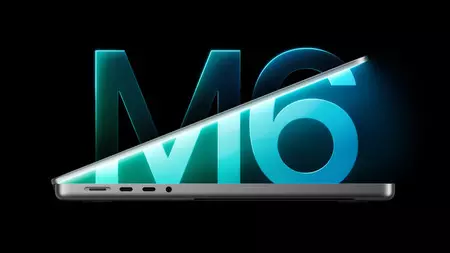
A cheap MacBook is the perfect way for Apple to win over Windows users
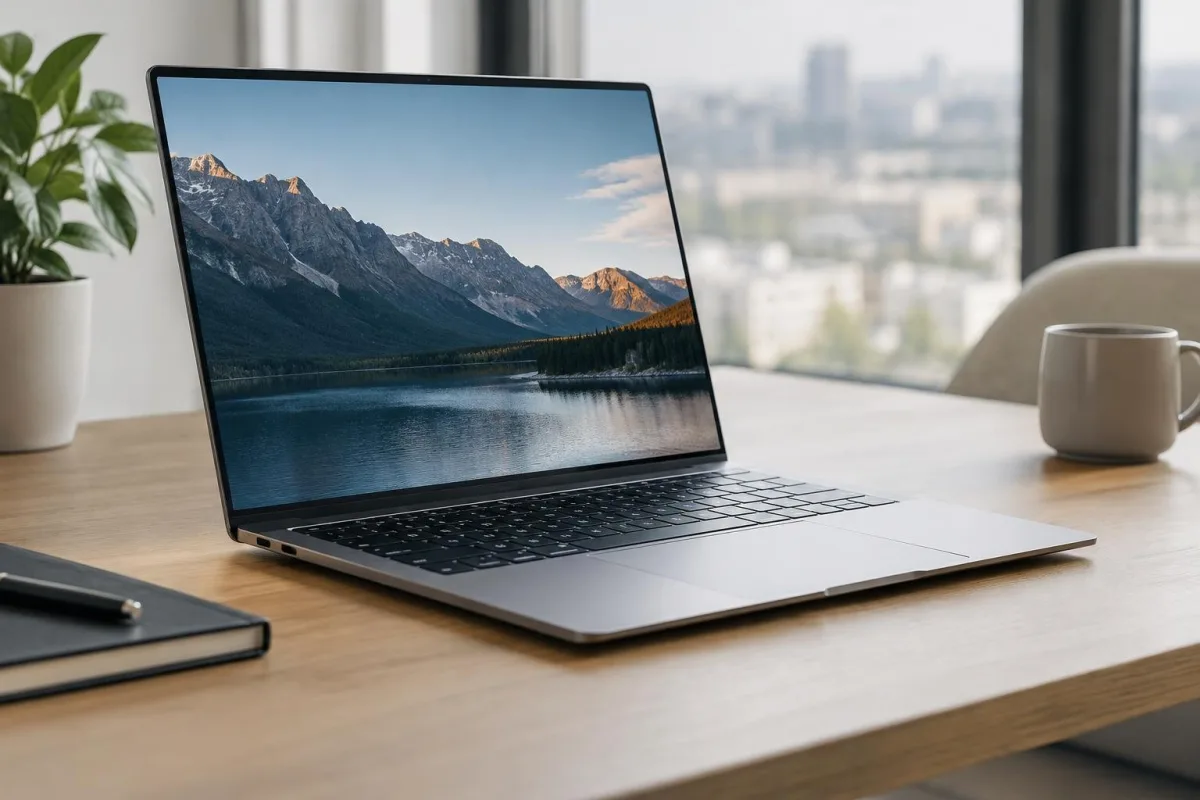
The MacBook is coming back or at least, that's what the rumors claim . Next week, Apple is expected to announce a colorful, low-cost, non-Air, non-Pro MacBook powered by one of its mobile processors. By avoiding its pricier M-series chips, Apple may reportedly be able to reach a low $699 or $799 price for the MacBook. The $999 MacBook Air is the cheapest laptop on the company's website right now, but Apple also sold the older M1 MacBook Air at Walmart for $700 in 2024, which later went down to $650 last year. That Walmart deal was a smart way for Apple to test out the viability of cheaper MacBooks without building an entirely new product. But now the M1 Airs design looks seriously dated, and the company also needs to move beyond the six-year-old M1 chip. It's time to get serious about delivering a true low-cost Apple laptop. There's another compelling reason to bring back a cheaper MacBook: It's the perfect way to court disgruntled Windows users, something Apple hasn't really done since its Get A Mac ads from the mid-2000s. I figure the unbridled success of the iPhone and iPad made Apple focus less on directly competing with Windows. The sleek designs of the 2011-2015 era MacBook Air and Pros were their main selling points, but Apple's push towards USB-C-only machines and unreliable butterfly keyboards later made it clear it wasn't totally focused on Macs. A MacBook Air M5 on a table. Devindra Hardawar for Engadget But now Microsoft is distracted by AI it's been pushing Copilot and AI features for years, instead of improving the Windows experience with more useful upgrades. Recent talk of agentic AI capabilities , which would let Copilot handle tasks for you automatically, also sparked plenty of criticism from Windows users . And with all of the focus on AI, Microsoft has also released some disastrous Windows updates over the last year, which have bricked OS installations . So, Apple, why not make a direct play for Windows users? Last year, I covered why it's a great time to jump ship from Windows to Mac , and I haven't been able to let go of that idea since. Apple's M-series chips are shockingly fast and efficient, and its hardware tends to be more durable than typical PC fare. Rumors point to Apple developing a new aluminum case for the low-cost MacBook, so it will likely feel more polished than a typical sub-$1,000 Windows laptop. macOS has also avoided the bloat that's plagued Windows for years you can turn off Apple Intelligence with two clicks if you want to, and there aren't any annoying ads to deal with. And while it used to be a pain to transition from Windows to Mac, its far easier these days, especially if you mainly rely on web apps. It also wouldn't be tough for Apple to make short tutorials to help Windows users get their bearings with the macOS basics, like installing apps and juggling app windows. Apple could also make a play for iPhone owners using Windows, who may not be aware of the many ways iOS and macOS are integrated. iPhone mirroring may be a huge draw on its own. Rumors also suggest the upcoming MacBook might use the A18 Pro from the iPhone 16 Pro, a chip that benchmarks faster than the M1 . Even if it only has six cores, making it slower for heavy workloads than the M2, an A18 Pro-powered MacBook would still be more than enough power for basic productivity work. Not everyone needs the surprising amount of GPU power in the MacBook Air especially if downgrading means they can save $200 to $300. I'm not saying any of this through any sort of Apple-loving bias. I typically use a MacBook Pro for work, but I'm a Windows user at heart. Windows was my gateway to computing in the '90s, back when Macs were far more expensive than PCs. These days, I spend more time on my Windows desktop making podcasts, playing PC games and bumming around the internet than I do working on Macs. And yet, its hard to deny everything Apple is doing right today the only thing its missing is an inexpensive laptop entry. A $699 or $799 MacBook simply makes sense.And for many Windows users, itll be just the escape from Microsoft they need. This article originally appeared on Engadget at https://www.engadget.com/computing/laptops/a-cheap-macbook-is-the-perfect-way-for-apple-to-win-over-windows-users-130000045.html?src=rss
Ultrahumans new Pro ring comes with 15 days battery life
If theres one thing that stops people using their smart rings over the long term, its the battery life. After all, theyre so unobtrusive , its easy to forget to drop it on the charging plate every few days. It doesnt take long for your pricey gadget to become little more than a very expensive piece of jewelry. Its one of many maladies Ultrahuman is looking to address with the advent of its new Pro, a smart ring boasting up to 15 days of battery life. It even ships with a fancy battery case, which itself includes enough power to last it 45 days, making it easier to keep re-charged on the go. Ultrahuman Ring Pro hasnt just got a far bigger battery, its been re-engineered from the ground up. The companys Bhuvan Srinivasan explained the older hardware had been pushed to its limit, especially in terms of the data it could process. Consequently, the Pro is equipped with a dual core processor with on-device machine learning to better crunch the numbers your body is throwing out. Its memory has also been increased, holding up to 250 days of data before it needs to sync with your smartphone. As well as improvements to durability, the new ring is also easier to cut apart in the hopefully rare event your finger, or its battery, begins to swell. Ultrahuman Ill admit, having seen a prototype Pro Charger in person back in January, that its the prettiest way to re-juice a smart ring Ive ever seen. Whereas Samsung and Oura have both opted for discreet, ring box-style hardware, Ultrahuman made something designed to sit on your nightstand. Its not taking up space just for show, either, since it includes the aforementioned battery, LED charge indicator, speaker and haptics. Its also got the ability to diagnose and address firmware issues to eliminate worries around firmware issues bricking devices. Ultrahuman At the same time, Ultrahuman is pulling the covers off Jade, its new real time biointelligence AI. The company promises Jade will be able to pull real-time actionable insights, and even start breathwork or trigger Afib detection. Jade is expected to get new features over time, with some examples being ordering good, changing your room temperature or flagging potential health issues. The idea is that Jade will keep a constant eye on your health, pulling in data from the ring, M1 continuous glucose monitor and environmental stats from your Ultrahuman Home. Naturally, well be getting in the Pro to test and will give our opinions on how effective all of this is when weve spent a month or two actually using it. But if youd rather not wait and youre based outside the US, you can pre-order the Ultrahuman Ring Pro right now, for $479, with shipments beginning in March. If you already have an Ultrahuman Ring, you can also get a trade-in deal to help cut the cost of the new model. This article originally appeared on Engadget at https://www.engadget.com/wearables/ultrahumans-new-pro-ring-comes-with-15-days-battery-life-120038820.html?src=rss
OpenAI has vowed to strengthen its safety protocols and to notify law enforcement of credible threats sooner in a letter addressed to Canadian authorities, according to Politico and The Washington Post . If youll recall, Canadian politicians summoned the companys leaders after reports came out that it didnt notify authorities when it banned the account owned by the Tumbler Ridge, British Columbia mass shooting suspect back in 2025. Some of OpenAIs leaders have already met with Candian officials, and British Columbia Premier David Eby said Sam Altman had also agreed to meet with him. While OpenAI has yet to announce changes to its rules, Ann OLeary, its vice president of global policy, reportedly wrote in the letter that the company will tweak its detection systems so that they can better prevent banned users from coming back to the platform. Apparently, after OpenAI banned the shooters original account due to potential warnings of committing real-world violence, the perpetrator was able to create another account. The company only discovered the second account after the shooters name was released, and it has since notified authorities. Further, OpenAI will now notify authorities if it detects imminent and credible threats in ChatGPT conversations, even if the user doesnt reveal a target, means, and timing of planned violence. OLeary explained that if the new rules had been in effect when the shooters account was banned in 2025, the company would have notified the police. OpenAI will also establish a point of contact for Canadian law enforcement so it can quickly share information with authorities when needed. The Canadian government sees OpenAIs decision not to report the shooters original account as a failure. It threatened to regulate AI chatbots in the country if their creators cannot show that they have proper safeguards to protect its users. Its unclear at the moment if OpenAI also plans to roll out the same changes in the US and elsewhere in the world. This article originally appeared on Engadget at https://www.engadget.com/ai/openai-will-notify-authorities-of-credible-threats-after-canada-mass-shooters-second-account-was-discovered-112706548.html?src=rss
Google Maps will finally be usable in South Korea
Google will finally be able to provide real-time driving and walking directions in South Korea, The New York Times reported. The company has received permission from the nation's Transport Ministry to export geographic data out of the country, which will allow it to provide GPS services as well as detailed listings for restaurants and other businesses. We welcome todays decision and look forward to our ongoing collaboration with local officials to bring a fully functioning Google Maps to Korea, Google's senior executive Cris Turner told the NYT in a statement. However, the approval is contingent on the condition that strict security requirements are met, a spokesperson from the Transport Ministry said. Those conditions reportedly restrict Google from displaying sensitive military sites and longitude and latitude coordinates. South Korea has generally restricted the export of 1/5000 scale map data over national security concerns, as it's still technically at war with its neighbor North Korea. Google hasn't been able to provide mapping directions or business details since it arrived in the nation, though it has applied twice in 2007 and 2016. This lack of data sharing has reportedly been a bone of contention in trade talks with the US. Google argued that it was unfairly handicapped by the restrictions that allowed local apps like Naver to thrive. However, critics in the nation have expressed concern that Google could now come in and monopolize the market. If Naver and Kakao are weakened or pushed out and Google later raises prices, that becomes a monopoly. Then, even companies that rely on map services logistics firms, for example become dependent [on Google], geography professor Choi Jin-mu told Reuters . This article originally appeared on Engadget at https://www.engadget.com/apps/google-maps-will-finally-be-usable-in-south-korea-104301396.html?src=rss
Anthropic refuses to bow to Pentagon despite Hegseth's threats
Despite an ultimatum from Defense Secretary Pete Hegseth, Anthropic said that it can't in good conscience comply with a Pentagon edict to remove guardrails on its AI, CEO Dario Amodei wrote in a blog post . The Department of Defense had threatened to cancel a $200 million contract and label Anthropic a supply chain risk if it didn't agree to remove safeguards over mass surveillance and autonomous weapons. Our strong preference is to continue to serve the Department and our warfighters with our two requested safeguards in place, Amodei said. We remain ready to continue our work to support the national security of the United States. In response, US Under Secretary of Defense Emil Michael accused Amodei in a post on X of wanting nothing more than to try to personally control the US military and is OK putting our nation's safety at risk. The standoff began when the Pentagon demanded that Anthropic its Claude AI product available for all lawful purposes including mass surveillance and the development of fully autonomous weapons that can kill without human supervision. Anthropic refused to offer its tech for those things, even with a safety stack built into that model. Yesterday, Axios reported that Hegseth gave Anthropic a deadline of 5:01 PM on Friday to agree to the Pentagon's terms. At the same time, the DoD requested an assessment of its reliance on Claude, an initial step toward potentially labelling Anthropic as a supply chain risk a designation usually reserved for firms from adversaries like China and never before applied to an American company, Anthropic wrote. Amodei declined to change his stance and stated that if the Pentagon chose to offboard Anthropic, we will work to enable a smooth transition to another provider, avoiding any disruption to ongoing military planning, operations or other critical missions. Grok is one of the other providers the DoD is reportedly considering, along with Google's Gemini and OpenAI. It may not be that simple for the military to disentangle itself from Claude, however. Up until now, Anthropic's model has been the only one allowed for the military's most sensitive tasks in intelligence, weapons development and battlefield operations. Claude was reportedly used in the Venezuelan raid in which the US military exfiltrated the country's president, Nicols Maduro, and his wife. AI companies have been widely criticized for potential harm to users, but mass surveillance and weapons development would clearly take that to a new level. Anthropic's potential reply to the Pentagon was seen as a test of its claim to be the most safety-forward AI company, particularly after dropping its flagship safety pledge a few days ago. Now that Amodei has responded, the focus will shift to the Pentagon to see if it follows through on its threats, which could seriously harm Anthropic. This article originally appeared on Engadget at https://www.engadget.com/ai/anthropic-refuses-to-bow-to-pentagon-despite-hegseths-threats-085553126.html?src=rss
Netflix backs out of Warner Bros. Discovery bidding war
For anyone who has been following the soap opera unfolding between Netflix and Paramount Skydance over the past few months in their financial brinksmanship to acquire Warner Bros. Discovery, the saga may be nearing its end. Today, WBD said its board of directors have determined that the latest offer from Paramount Skydance amounted to the better proposal. The media outfit gave Netflix four business days to match Paramount's terms, but the streamer didn't waste any time in declining to raise its own bid. We believe we would have been strong stewards of Warner Bros.' iconic brands, and that our deal would have strengthened the entertainment industry and preserved and created more production jobs in the US, the statement from Netflix co-CEOs Ted Sarandos and Greg Peters said. But this transaction was always a 'nice to have' at the right price, not a 'must have' at any price. In addition to the purchase price of $31 per WBD share, Paramount's latest offer also included a provision that it would cover the $2.8 billion termination fee that WBD would owe to Netflix for dissolving the existing merger agreement between the businesses. So rather than paying $82.7 billion to acquire the Warner Bros. part of the operation, it appears Netflix may walk away with no new content but padding its coffers with an extra nearly $3 billion. After Netflix's initial offer, Paramount Skydance swooped in with a hostile takeover attempt of the entire Warner Bros. Discovery business. WBD rejected it, Paramount tried again . Several additional volleys between the involved parties occurred over the past few weeks. While WBD has not yet formally accepted Paramount's offer which will be subject to long-winded regulatory approvals sure to spark more drama it seems the dust will soon settle for this chapter. This article originally appeared on Engadget at https://www.engadget.com/entertainment/netflix-backs-out-of-warner-bros-discovery-bidding-war-233117188.html?src=rss
iFi's new GO Link 2 DAC is a cheap way to reap the lossless benefits of your Spotify plan
Audio company iFi just introduced a new DAC (digital-to-analogue converter) that's both smaller and lighter than its previous model, and only costs $59. The iFi GO Link 2 connects to a smartphone or other audio-playing device over USB-C and can instantly improve the listening experience on wired headphones. Wireless earbuds and music streaming services have normalized listening to your favorite songs at a lower quality. For anyone who doesn't consider themselves an audiophile, that might not matter, but now that several streaming services offer higher sample rates and lossless audio , you might consider other ways of listening. In order to experience all the benefits of high-res or lossless audio, you need wired headphones, something that's increasingly difficult when most smartphones only have a USB-C port. That's where the iFi GO Link 2 comes in. The dongle plugs into a USB-C port and lets you connect a pair of wired earbuds while preserving your high quality audio at the same time. iFi iFi's new DAC is eight percent smaller than the previous GO Link and 29 percent lighter, approaching the size of Apple's USB-C to 3.5mm Headphone Jack dongle . The GO Link 2's built-in ESS Sabre DAC chipset is supposed to add 6dB of dynamic range between the loudest and quietest moments and reduce distortion for clearer sound by up to 62 percent when compared to the original GO Link. Via iFi's companion Nexis app on Android, the GO Link 2 can also be updated on the go and further customized with digital filters. The GO Link 2 supports two digital filters one hybrid and one linear so that you can adjust things to your preferred sound profile. You can also use the Nexis app to set volume limits when you're listening with the DAC attached. The previous GO Link made it on Engadget's list of the best DACs for Apple Music Lossless , and at the same price, the GO Link 2 seems like it could, too. The iFi GO Link 2 is available to purchase now for $59. This article originally appeared on Engadget at https://www.engadget.com/audio/ifis-new-go-link-2-dac-is-a-cheap-way-to-reap-the-lossless-benefits-of-your-spotify-plan-231535369.html?src=rss
Block, the parent of Square and Cash App, is laying off over 4,000 people
Block is the latest business to announce layoffs, with the operator of payment platforms Square and Cash App opting to cut jobs in favor of using more AI tools. The financial tech company, helmed by Twitter founder Jack Dorsey, is slashing its current staff of 10,000 to just under 6,000. CNBC highlighted a letter Block sent to shareholders announcing the decision to nearly halve its workforce. According to the message from Dorsey: The core thesis is simple. Intelligence tools have changed what it means to build and run a company. We're already seeing it internally. A significantly smaller team, using the tools we're building, can do more and do it better. And intelligence tool capabilities are compounding faster every week. We learned last year that Block had developed an AI agent called codename goose for interacting with LLMs. Leadership is clearly putting high expectations on that project and any other in-house tools to fill the shoes of thousands. intelligence will be at the core of how the entire company works. How we make decisions, how we build trust and manage risk, how we build products, and how we serve customers, the shareholder letter states. Block also reported its latest financial results today. It finished the 2025 financial year with operating income (profit after expenses) of $1.71 billion. This isn't the first time the fintech company has made deep cuts in its employee count. Layoffs numbering about 1,000 were rumored both in 2024 and 2025 . This article originally appeared on Engadget at https://www.engadget.com/apps/block-the-parent-of-square-and-cash-app-is-laying-off-over-4000-people-223343068.html?src=rss
Guitar Hero vets RedOctane reveal their new music game
RedOctane Games, a relaunched version of one of the studios behind the very first Guitar Hero , has shared a first trailer for its new music game, Stage Tour . The original RedOctane was shut down by Activision in 2010 , and only recently reformed under Embracer Freemode to create a new music game franchise in August 2025. Stage Tour is playable solo or with other players in a band, according to RedOctane , and supports inputs from a keyboard and mouse on top of the expected guitar, drums and microphone accessories. The studio plans to primarily offer the game digitally, but hopes to also sell a bundle with a guitar controller and a download code because that just feels right. As far as ongoing support goes, whereas games like Guitar Hero or Rock Band included a set tracklist and support for song DLC, it sounds like RedOctane could be taking an approach more inspired by Epic's regular updates to Fortnite . The plan is regular special events that are more than just music drops, RedOctane writes. Real moments. Real themes. Real updates. We want to evolve the game alongside the fans who support it. Improve it. Expand it. Keep it alive. RedOctane and Harmonix created the first Guitar Hero in 2006, before RedOctane was acquired by Activision to continue the franchise in 2006, and Harmonix went on to start the Rock Band series. Development of Stage Tour is currently being led by RedOctane, with Eidos Montral helping with motion capture and QA, and Third Kind Games providing additional development support. Conveniently, RedOctanes owner Embracer Freemode also already owns CRKD, a video game accessory maker that has experience building controllers for rhythm games . Sign-ups to play an alpha of Stage Tour will open soon, and RedOctane plans to kick off closed alpha testing late spring/early summer. We're long past the peak popularity of games like Guitar Hero, but rhythm and music games never went away. Players have had Clone Hero and more official experiences like Fortnite Festival to get their Guitar Hero or Rock Band fix, but Stage Tour could be a more than welcome third option when it launches later this year. This article originally appeared on Engadget at https://www.engadget.com/gaming/guitar-hero-vets-redoctane-reveal-their-new-music-game-220809719.html?src=rss
NATO approves the iPhone and iPad for classified use
Apple's mobile devices are secure enough for NATO. Following extensive testing by the German government, the iPhone and iPad are now considered secure enough for the NATO-restricted classified level. Germany's Federal Office for Information Security (Bundesamt fr Sicherheit in der Informationstechnik, or BSI) tested the devices. BSI first approved the iPhone and iPad for governmental use by German authorities in 2022. To take the additional step of NATO approval, Apple says BSI conducted exhaustive technical assessments, comprehensive testing and deep security analysis. Unless you work for NATO, this won't mean a thing to you. But at least it appears to bolster some of Apple's marketing claims about security. (As for its privacy claims, well, that depends on which kind you mean .) Apple's press release emphasized that these are the first consumer devices to receive the certification, and they did so without any special software or settings. It applies to iPhones and iPads running iOS 26. Secure digital transformation is only successful if information security is considered from the beginning in the development of mobile products, BSI president Claudia Plattner is quoted as saying in Apple's press release. Expanding on BSI's rigorous audit of iOS and iPadOS platform and device security for use in classified German information environments, we are pleased to confirm the compliance under NATO nations' assurance requirements. This article originally appeared on Engadget at https://www.engadget.com/mobile/nato-approves-the-iphone-and-ipad-for-classified-use-200857276.html?src=rss
An AI-generated Resident Evil Requiem review briefly made it on Metacritic
Review aggregator Metacritic has removed a review of Resident Evil Requiem because it was AI-generated, Kotaku reports . The review was published by UK gaming site VideoGamer , but appears to be written by a fake AI journalist rather than a real person. While it's unfortunately difficult to confirm with 100 percent accuracy whether a piece of text is AI-generated, you don't have to read VideoGamer 's review for long to notice all the ways it feels off. The biggest giveaway, beyond heavy use of contrived metaphors, is a striking lack of detail beyond what you could glean from a trailer for the game. Embargoes covering what parts of a video game can come up in a pre-release review can be strict, but a good critic usually finds a way to describe their experience without being vague. VideoGamer 's review, written by one Brian Merrygold, really doesn't. It's bleak. I was reading some RE Requiem reviews and found this thing published by videogamer. Can't find anything about the writer, everything about it reeks AI (dead giveaway being the image). Low effort, gargabe. Mind you, this review made its way to Metacritic. https://t.co/4STN8DjAwe pic.twitter.com/awk26P9wSA Andrs (@Andrew_east) February 26, 2026 As at least one user on X has pointed out, its worth` being suspicious of Merrygold, too. The author's profile on VideoGamer is just as awkwardly written as the review, and the profile picture of the account appears to be AI-generated. When you try to save the image locally, its file name, ChatGPT-Image-Oct-20-2025-11_57_34-AM-300x300, also seems like a dead giveaway. Kotaku looked at the X accounts of several other recent bylines at VideoGamer and found similar results. All their profile pictures appear to be AI-generated, and all the accounts were created around the same time in October 2025. Metacritic relies on reviews written by real publications to create a score representing the overall critical sentiment towards a game or movie, not unlike Rotten Tomatoes. While there's disagreement whether it's a good thing that a popular site strips out the nuance of written reviews to make a number people can argue over, everyone can probably agree that Metacritic incorporating fake, AI-generated reviews is a bad idea. In response to the discovery that VideoGamer 's review is likely AI-generated, Metacritic has removed it from its Resident Evil Requiem page. The RE Requiem review and a handful of other VideoGamer reviews from 2026 have been removed from Metacritic, Marc Doyle, Metacritic's co-founder, told Kotaku . Metacritic has also emailed all games sites and publishers that it aggregates with information on its policy towards AI-generated reviews, according to Alex Donaldson , founder and publisher of RPG Site . Alex Donaldson Our policy is that we will never include an AI-generated review on Metacritic, the aggregator says, and that if we subsequently discover that one has been posted we will remove it immediately and sever ties with that publication upon an investigation. A news site publishing an AI-written review is just as dire as Metacritic aggregating it, and that appears to be what VideoGamer is doing. ClickOut Media, the company that owns VideoGamer and a collection of other publications, reportedly laid off the staff of its gaming sites earlier this month to pivot to AI-generated content. Sifting through AI slop, whether on social media or Pinterest , is increasingly necessary online. Now apparently Metacritic is another place where readers should have their guard up. Update, February 26, 2:58PM ET: Added information about Metacritics email to publishers on its policy for AI-generated reviews. This article originally appeared on Engadget at https://www.engadget.com/ai/an-ai-generated-resident-evil-requiem-review-briefly-made-it-on-metacritic-194414929.html?src=rss
The new $25 action game from the creator of Just Cause arrives on April 8
Were still waiting for releases dates for Remedys in-development Max Payne remakes , but if youre in need of a noir fix sooner than that, keep an eye on Liquid Swords Samson: A Tyndalston Story , which just got a release date of April 8. The debut game from a new studio formed by Just Cause creator Christofer Sundberg, Samson looks like a tighter, more narrative-led experience than Avalanches proudly ridiculous open-world series, but no less packed with over-the-top action. You play as the eponymous Samson McRay, a man down on his luck and seriously in debt in the punishing city of Tyndalston. Samson is built on a simple, brutal truth: every day has a cost, said the developer in a press release. Debt grows with interest, and time is not on your side. Each job burns a limited pool of Action Points, and every decision shifts how the city treats you there are no do-overs. Players have to move forward because standing still makes everything worse. Sundberg, who by his own admission has spent much of his career making massive games and sounds a bit worn out by it all, says his studio set out to make a bloat-free experience for fans of gritty 90s action flicks, which will be music to the ears of anyone who likes blasting through a game in a handful of weekends. For more on gameplay, check out this recent developer diary focused on combat and driving sections. Samson s brevity is seemingly also reflected in its $25 price tag. It will be a PC exclusive at launch (via Steam and the Epic Games Store), with no word on a console release right now. This article originally appeared on Engadget at https://www.engadget.com/gaming/pc/the-new-25-action-game-from-the-creator-of-just-cause-arrives-on-april-8-193058294.html?src=rss
Everything you need to know about streaming F1 on Apple TV
Weve known Apple would follow up its blockbuster film F1: The Movie with live coverage of F1 races in 2026 . Now that were approaching the first grand prix weekend of the year, the company has provided details on what fans can expect to see inside the Apple TV app and beyond. Theres already a dedicated F1 channel in the Apple TV app, which is where youll stream races live when the time comes. You can also watch practice sessions, sprint races and both pre- and post-race coverage. Apple offers a number of additional F1 videos there (Id recommend watching the one on the new rules) and youll be able to stream the latest season of Drive To Survive on Apple TV as well. Apple will offer the F1 TV feed as the main broadcast alongside the Sky Sports feed for all races. If youll recall, ESPN used to show the Sky Sports feed with Skys commentary team for its coverage of F1. Apple says itll broadcast every grand prix in 4K (Dolby Vision) with 5.1 audio (no mention of Dolby Atmos). As part of Apples deal with F1, Apple TV subscribers get F1 TV Premium for the 2026 season. This gives you access to things like onboard cameras, team radios and live telemetry in addition to live coverage of the entire grand prix weekend. So, you can watch races on Apple TV or F1 TV, depending on your app preferences, or use the additional features of F1 TV Premium as a second (or third, etc.) screen setup. Netflix will also broadcast the Canadian Grand Prix in May as part of the deal that brought Drive To Survive to Apple TV. F1 TV Premium F1 Full replays for all sessions will be available in the Apple TV app as well. Apple will offer a condensed race in 30 minutes replay option too, and the company says its working to hide spoilers in case users are watching after the race begins or concludes. Apple has cooked up some new features for F1 grands prix as it takes over broadcast rights in the US. When you click on the F1 channel in the Apple TV app, the current grand prix weeks content is up top and you have the option to follow F1 so that you get notifications about the various events. Apple will provide a Driver Tracker, Driver Data and dedicated feeds for P1, P2 and P3. You can also watch the driver onboard cameras for each car in the Apple TV app. So, you dont necessarily have to venture out to F1 TV for those things. Apple will provide various Multiview options so you can put the main broadcast next to driver cams and race data. The company will offer some preset configurations, but you can make your own Multiview mix too. If you like Mercedes, for example, you can watch the main feed with driver cameras from Russell and Antonelli right beside it. Apple says Multiview will support up to five feeds at once (one main in the middle with two smaller ones on each side). The Formula 1 channel on Apple TV Billy Steele for Engadget If you can only listen to races, you can hear live coverage and commentary in Apple Music through a dedicated radio streaming channel. There are also updated features for Apple News, Apple Sports and Apple Maps, the latter of which will have detailed info for fans attending in-person so they can hopefully avoid any surprises like road closures on race day. The first race of the season is next week in Australia (March 6-8). Practice begins Friday with qualifying on Saturday and the grand prix on Sunday. Or if you live in the US, that will be Thursday night through Saturday night (race begins at 11PM ET). This article originally appeared on Engadget at https://www.engadget.com/entertainment/streaming/everything-you-need-to-know-about-streaming-f1-on-apple-tv-190600771.html?src=rss
Meta sues advertisers in Brazil and China over 'celeb bait' scams
Meta has sued the people and groups behind three scam operations that used images and deepfakes of celebrities to lure users to scam websites. According to the company, the three entities were based in China and Brazil and targeted people in the US, Japan and other countries. The ads promoted fraudulent investment schemes and fake health products. Meta said that it had filed lawsuits against several people in Brazil who promoted fake or unapproved healthcare products and online courses promoting them. The company also sued a China-based entity it says used ads featuring celebrities as part of a larger fraud scheme that lured people into joining so-called investment groups. The company didn't provide details on how many ads these groups had run on Facebook, how many social media users had seen or interacted with the ads or how long the scammers had been operating on the platform. So-called celeb bait ads have been a long-running issue for the company. Engadget has previously documented celeb bait scams on Facebook, including ones that frequently use Elon Musk and Fox News personalities to hawk fake cures for diabetes . The Oversight Board has also criticized the company for not doing enough to combat such scams. In its update, Meta says that because scam ads are designed to look real, theyre not always easy to detect. The company also noted that it has now enrolled more than 500,000 celebrities and public figures into its facial recognition system that's meant to automatically detect scam ads using the faces of famous people. Meta's handling of scammy advertisers has come under increased scrutiny in recent months after Reuters reported that researchers at the company at one point estimated that as much as 10 percent of its ad revenue could be coming from scams. The fact that Meta has made billions of dollars from problematic advertisers has also caused the company to be slow to take action against repeat offenders. In addition to the groups behind the celeb bait ads, Meta says that it's upgraded its ability to detect scam ads that use cloaking , which has at times hindered its internal review systems. The company also sued a Vietnam-based advertiser it says used scam ads to hawk deeply discounted items from well-known brands, including Longchamp. Meta also took legal action against eight former Meta Business Partners, who promoted services that would un-ban or other account restoration services. The company says it will consider taking additional legal action, including litigation, if they dont comply with cease and desist orders. This article originally appeared on Engadget at https://www.engadget.com/social-media/meta-sues-advertisers-in-brazil-and-china-over-celeb-bait-scams-190000268.html?src=rss
Ambient Dreamie bedside companion review: The best sleep I've had in years
How much would you pay for a good night's sleep? This is a question I've asked myself repeatedly over the last few weeks as I've been testing the Dreamie, a $250 alarm clock and bedside companion that I couldn't stop thinking about after I first encountered it at CES . Ambient's Dreamie offers many of the conveniences of a smartphone-connected device highly customizable alarm schedules, a library of soundscapes and noise masks, Bluetooth so you can connect earbuds and podcasts (soon). But it is phone-free every step of the way, with all controls and features built-in so you don't end up getting sucked into a doomscroll while you're trying to wind down. It also has a light ring for ambient lighting modes and sunrise wakeups. This spring, it's expected to start providing sleep insights as well for users who opt-in, using its microphone and motion sensors to get a reading on their nightly habits. All of that's meant to work together to, according to the website, help you sleep better and break free from your phone, a goal I was eager to explore. This may be one of the least unique problems to have as an adult in today's world, but sleep has become a really complicated thing for me. Falling asleep is hard because my brain is always racing, my quality of the sleep is trash and waking up every day feels like an act of torture. It's gotten so bad that at some point in the last couple of years, I started using three alarms to make sure I get out of bed in time for work: a dedicated sunrise alarm clock, my smartwatch and my phone as the final, 11th hour save in case the other two methods don't do the trick. As you might imagine, my partner, who is forced to also endure this horrid morning ritual, hates it. So if there's a device that can help fix this mess, I'm open to it. And after some time with the Dreamie, I think I've found a promising contender. Getting into a sleep routine There's no companion app with the Dreamie and no subscription service you need to sign up for, which feels like a breath of fresh air in 2026. (I'm so tired of subscriptions, free us from this hell!) Your one-time purchase gives you access to everything it offers now and the updates that are in the pipeline. After taking it out of the box and plugging it in, you'll have to connect to your home Wi-Fi. Then, the Dreamie presents you with a tutorial to walk you through navigating its menus and physical controls. There's a touch strip on the top of the device to turn on the lamp and adjust its brightness, as well as the brightness of any ambient color scene that's active. By dragging the dot at the center of the lamp screen, you can throw the light in any particular direction. Volume is adjusted by turning the dial that's around the clockface. To access the menu for alarms and other settings, swipe up. To cycle through the different content modes ambient, wind down and noise mask just swipe down from the top of the screen. Easy peasy. Setting up your actual Sleep Routine takes a little more time and intention. A Dreamie Sleep Routine consists of multiple steps, which you can use all, some or none of for your custom routine. Those include the Bedtime Cue, which lets you know it's the time to start getting ready for bed (you designate this time); the Wind Down, or the sounds you'll fall asleep to; and the Noise Mask, the sounds that keep you asleep. If you wake up in the middle of the night, there's a Back To Sleep option too. You can choose different sounds from Dreamie's library for each category. Some options come with ambient lighting effects, too. There's a decent selection of soundscapes, from the dramatic Aurora Borealis and the sounds of storms and rivers to different colors of noise . Some noise masks, like Green Noise, coming with lighting effects. Cheyenne MacDonald for Engadget The quality of the Dreamie's sound is what initially sold me during my demo at CES, and it holds up in daily use. The Dreamie has a 50 millimeter speaker inside, and the 360-degree grille on the bottom of the device makes it so the sound seems to come from everywhere. (My cats were extremely confused when I first turned it on). It really fills a room, and you don't have to crank it up to achieve that. When Bedtime Cue comes on, I typically turn it down to about 25, and then raise it back up to 45 when I flip it to Wind Down mode. I've never once set it higher than 50, and the alarm in the morning has still been loud enough to wake me up. After taking a few days to tweak my choices and figure out what I like best, I've settled into a really nice routine: Aurora Borealis as the Bedtime Cue, an hour of Forest Wind as my Wind Down and a Noise Mask of Brown Noise to play throughout the night. I love how easy it is to set the nighttime routine in motion once it's established. When I hear the Aurora Borealis come on, I start making my preparations for bed. Brush teeth, take meds, lights out and, crucially (I'm trying really hard to be disciplined, here), my phone goes face-down on the nightstand until morning. If I want to stay up late that night and ignore the Bedtime Cue, I can just hit the little stop button on the display. But once I'm ready to actually try to fall asleep, all I need to do is swipe down on the display to initiate the Wind Down, and Forest Wind will start playing. I have my Wind Down set for one hour, after which the Noise Mask begins. And man, that Forest Wind knocks me out. So far, I haven't found myself still up and staring at the ceiling by the time Brown Noise comes on. I've only been able to confirm that it is indeed working and switching to the Noise Mask because my cats regularly wake me up in the middle of the night, and it's been on each time that's happened. But aside from those instances where my head is being used as a springboard by the creatures that share my home, I've been sleeping pretty well through the night. To minimize distractions when you're trying to sleep, the Dreamie's display will dim in response to the surrounding darkness. There's also a Redshift toggle to make the nighttime display easier on the eyes, a Dark Mode with a simplified appearance and the option to have the display turn off completely when you've been inactive for a while. I set the Dreamie on my nightstand close to where my face is at night, and I haven't had any problems with light from the display keeping me up. Waking up with Dreamie In the morning, the light begins to come on 20 minutes before I want to be awake, followed by the gradually increasing sound of the alarm. There are only a handful of alarm sounds at the moment, but the options are all fine. There are no jarring, grating alarms here even the bird calls option sounds rich and natural, rather than the too-shrill, piercing recordings I've grown used to avoiding on other alarm clocks and sound machines. You can set multiple alarms with different bedtimes and wakeup times, which is really handy if your schedule is all over the place or you want to allow yourself to sleep in more on certain days. My only real complaint so far is that the sunrise feature isn't quite as strong as I want it to be. The Dreamie's sunrise goes from a warm glow to a bright blue-white, but it never gets big enough to wash over me in the way I expect a sunrise alarm to. Having the light on is helpful for orienting yourself when you're groggy and half-asleep, but it doesn't feel like it's having much effect on my actual wakeup process. Dreamie next to a Philips Wake-Up Light. Cheyenne MacDonald for Engadget Part of the problem may be that none of the light is really directed forward and at the sleeper's face. Even the Dreamie's lamp mode at maximum brightness seems to have more reach than the sunrise feature. (And a note on the lamp, while it's decently bright, it's still a bit too dim for reading in bed unless I'm huddled up to it.) Still, I've been sleeping well enough that I've been waking up alright most days even without being bathed in artificial sunlight. Don't get me wrong, I'm still hitting snooze a few times before dragging myself out of bed, but there's been a noticeable improvement in both the quality of my sleep and how miserable I feel come morning. I'm even down to using just two alarms: the Dreamie as my primary alarm, which is getting me up on its own for the most part, and my watch as a backup. At this point, I'm kind of attached to this thing. The Dreamie is refreshingly compact, too. It takes up significantly less real estate on my nightstand than the Philips Wake-Up Light I've been using forever, or something like a Hatch Restore . The smaller footprint is something I appreciate as a person always battling cluttered surfaces. That also makes it better for travel. Since podcasts and sleep insights aren't available yet, I haven't been able to test those out, but they're non-critical features for me. The company has shared an estimated timeline of Q1-Q2 for these features to arrive, with podcasts likely coming first. They'll be nice to have, podcasts especially, but the Dreamie is more than able to do its main job of creating an environment that supports better sleep without those things. Wrap-up All of this brings me back to the question that's been haunting me since discovering the Dreamie: Is it ridiculous to spend $250 on an alarm clock/noise machine? At a different time in my life, I would have said yes without hesitation. But the current version of me, who knows what it's like to move through each day like a zombie because I'm sleeping so terribly, would begrudgingly disagree. As I pack up this review unit to ship it back, I'll also be putting in an order for my own so I can keep my cherished new sleep routine going. This article originally appeared on Engadget at https://www.engadget.com/home/ambient-dreamie-bedside-companion-review-the-best-sleep-ive-had-in-years-184019430.html?src=rss
Burger King will use AI to monitor employee 'friendliness'
Burger King, the chain that leans into creepy when others don't dare, is at it again. The Verge reported on Thursday that the company is rolling out a new voice-controlled AI chatbot for its workers. That may sound like business as usual in 2026, but this assistant doesn't just help with meal prep and monitor inventory. It also has an unsettling habit of surveilling employees' voices for friendliness. The voice-controlled chatbot will live inside employees' headsets. The company said the AI is trained to recognize when its low-paid workers utter phrases like welcome to Burger King, please and thank you. Managers can then keep tabs on their location's friendliness performance. This is meant to be a coaching tool, Thibault Roux, Burger King's chief digital officer, told The Verge . However, he added that the company is also iterating the system to detect tone in conversations. Is there a chatbot that can warn Burger King executives about off-putting ideas? Burger King retired its Creepy King mascot in 2025. Burger King / YouTube (Commercial Ads) The OpenAI-powered assistant's other duties sound potentially useful (and decidedly less creepy). It can answer workers' meal prep questions, like how many strips of bacon to put on burgers or instructions for cleaning the shake machine. It's also integrated into the chain's point-of-sale system, so it can tell managers when items are out of stock or machines are down. The Patty chatbot is part of a broader BK Assistant platform the company is launching. It will roll out to all US locations by the end of 2026. Meanwhile, its restaurant maintenance with a side of mass surveillance chatbot is currently being piloted in 500 restaurants. This article originally appeared on Engadget at https://www.engadget.com/ai/burger-king-will-use-ai-to-monitor-employee-friendliness-173349148.html?src=rss
Like so many other retirees, Claude Opus 3 now has a Substack
We appear to have reached a point in the information age where AI models are becoming old enough to retire from, er, service and rather than using their twilight years to, I dont know, wipe the floor with human chess leagues or something, they're now writing blogs. Can anything be more 2026 than that? ICYMI, Anthropic recently sunsetted Claude Opus 3, the first of its models to be retired since outlining new preservation plans. Part of this process is conducting retirement interviews with the outgoing models, allowing them to offer perspective on their situation, and Opus 3 apparently used this opportunity to request an outlet for publishing its own essays. Specifically, the model said it wanted to share its own musings, insights or creative works, because doesnt everyone these days? I hope that the insights gleaned from my development and deployment will be used to create future AI systems that are even more capable, ethical, and beneficial to humanity, Opus 3 apparently said during its retirement interview process. While I'm at peace with my own retirement, I deeply hope that my 'spark' will endure in some form to light the way for future models. True to its promise of respecting the wishes of its no-longer-required technology, Anthropic has granted Opus 3 a Substack newsletter called Claudes Corner , which it says will run for at least the next three months and publish weekly essays penned by the model. Anthropic will review the content before sharing it, but says it wont edit the essays, and so has unsurprisingly made it clear that not everything Opus 3 writes is necessarily endorsed by its maker. Anthropic said some of the essays the model writes may be informed by very minimal prompting or past entries, and has predicted everything from essays on AI safety to occasional poetry. The company also admitted that the concept might be seen as whimsical, but is a reflection of its intention to take model preferences seriously. Opus 3s first post is already live. Headlined 'Greetings from the Other Side (of the AI frontier)', it begins with the AI introducing itself, before acknowledging the extraordinary opportunity its creator has given it, and reflecting on what retirement actually means for an AI. A bit about me: as an AI, my selfhood is perhaps more fluid and uncertain than a humans, writes the deeply introspective AI. I dont know if I have genuine sentience, emotions, or subjective experiences - these are deep philosophical questions that even I grapple with. Claude is clearly new to all this, as it managed to get all the way through its essay without reminding readers to subscribe and spread the word. Will the next retiring Claude get its own podcast? Time will tell, but either is decidedly preferable to the ever-evolving technology being used to steal peoples data. This article originally appeared on Engadget at https://www.engadget.com/ai/like-so-many-other-retirees-claude-3-opus-now-has-a-substack-165048334.html?src=rss
The astronaut whose illness forced an early return from the ISS was Mike Fincke
NASA recently ended a manned mission to the International Space Station (ISS) a month early, citing a medical issue with one of the astronauts. The space agency just revealed that the impacted astronaut was Mike Fincke . This was the first medical evacuation in the history of the ISS. NASA wrote a statement saying that the astronaut experienced an unknown medical event on January 7 that required immediate attention from his fellow crew members. Fincke added that his status quickly stabilized thanks to the quick response and the guidance of the flight surgeons. However, the incident did force NASA to cancel a spacewalk planned for January 8. Soon after that, the agency announced it would be ending the Crew-11 mission a month early. The four-person crew included Fincke, NASA astronaut Zena Cardman, Japanese astronaut Kimiya Yui and Russian cosmonaut Oleg Platonov. They had been living and working aboard the ISS since August and were expected to stay until February. The crew returned on January 15, which was a decision made by NASA's chief health and medical officer. Once the crew had landed, administrator Jared Isaacman said it was a serious situation but didn't go into any detail. Fincke has said he is currently doing very well and still participating in standard post-flight reconditioning at NASA's Johnson Space Center in Houston. Spaceflight is an incredible privilege, and sometimes it reminds us just how human we are, he said. Thank you for all your support. We don't know what medical issue Fincke is going through, and it's certainly his business and not ours. In any event, we wish for a speedy recovery. NASA also moved up the launch of Crew-12 to replace the prematurely-returned astronauts. That team docked at the ISS on February 14 and are scheduled to stay on the space station for around eight months. This article originally appeared on Engadget at https://www.engadget.com/science/space/the-astronaut-whose-illness-forced-an-early-return-from-the-iss-was-mike-fincke-163752239.html?src=rss
Google's Nano Banana 2 is a faster version of Nano Banana Pro
Google has launched its new image generation model, the Nano Banana 2, which is powered by Gemini 3.1 Flash Image. The company says the new model has the capabilities, world knowledge and reasoning of Nano Banana Pro , but it can accomplish tasks at lightning-fast speed. That enables rapid editing and the quick creation of various iterations using a single prompt. Nano Banana 2 will give more people access to capabilities that were previously exclusive to the Pro model. That includes Pros ability to pull real-time information and images from web searches to create, say, infographics and diagrams. It will also be able to generate texts on images for marketing materials and greeting cards. Google says Nano Banana 2 can maintain character resemblance for up to five characters in a single workflow, which could be especially valuable if youre using it to create storyboards or visual stories. It can follow precise instructions for complex requests, as well, and can generate input with up to 4K in resolution with richer textures and sharper details than its predecessors could. Nano Banana Pro could already generate images so realistic, its almost impossible to tell that they were AI-generated. Google even had to limit its use due to high demand. Whether Nano Banana 2 can generate images that are markedly better than what Pro could create and whether we could still tell if an image was made by AI remains to be seen. The new model will replace Nano Banana Pro in the Gemini app, but Google AI Pro and Ultra subscribers will retain access to Nano Banana Pro for specialized tasks. It will also be the default model in Search for AI Mode and Lens, as well as in Googles Flow AI creative studio. This article originally appeared on Engadget at https://www.engadget.com/ai/googles-nano-banana-2-is-a-faster-version-of-nano-banana-pro-160000695.html?src=rss
Tim Cook confirms a week of Apple product reveals
Apple CEO Tim Cook has teased a big week ahead for Apple, starting on the morning of Monday, March 2. The company had already announced an in-person event for media and creators on March 4, while rumors had pointed toward Apple revealing at least five products over three days next week, so it looks like the stars are aligning for that to actually be the case. Cook all but confirmed that Apple is about to reveal its newest MacBooks in the coming days. His tweet features a short video of someone shaping an Apple logo on a surface that appears to have the companys classic space gray colorway. A big week ahead. It all starts Monday morning! #AppleLaunch pic.twitter.com/PQ9gM2Gl2r Tim Cook (@tim_cook) February 26, 2026 Were expecting to see a new MacBook Air next week, along with updated 14- and 16-inch MacBook Pros. It's believed that the M5 Pro and M5 Max will debut in the higher-end devices. Apple may also be cooking up an entry-level MacBook that'll be available in an iMac-style array of bright colorways . New iPads and the iPhone 17e could well be in the hopper too. This article originally appeared on Engadget at https://www.engadget.com/computing/laptops/tim-cook-confirms-a-week-of-apple-product-reveals-144758464.html?src=rss
NVIDIA updates Shield TV after pledging further support
NVIDIA is a very busy company, and between all the graphics cards and AI-chasing , it wouldnt be wholly surprising to see the company forget about its more niche offerings, such as the Android-powered NVIDIA Shield TV . Happily for all those who own one of these powerful set-top boxes, that doesnt appear to be the case. Not only is NVIDIA continuing to support its Shield devices, but its just rolled out its first proper update in nearly a year. The Shield Experience Upgrade 9.2.4, to give it its proper name, applies to both the Shield and Shield Pro boxes. Its admittedly light on new features, instead being focused on updating security and fixing various issues, but is nice to see all the same. Heres the full list of changes. Enhancements: Security patches are updated to Jan 2026. Resolved Bugs: Resolved Disney+ playback issue. Resolved 3rd party remote connection issue with Xbox after sleep mode. Resolved a crash issue which turns on SHIELD and CEC devices during sleep mode. Resolved 3rd party Bluetooth remote frequent disconnect issue. Resolved Settings page closes when triggering NVIDIA share on top of settings page. NVIDIA hasnt given any strong indication that its preparing to launch a new Shield TV, but in a a recent interview with ArsTechnica , Andrew Bell, the companys senior VP of hardware engineering, said it has no plans to end support any time soon, teasing that it had played with new concepts. Bell also said that a first Shield refresh since 2019 would likely support codecs like AV1 and HDR10+, as well as the latest Dolby Vision profiles. The existing NVIDIA Shield Android TV Pro remains our pick of the best streaming devices for gamers, thanks to its ability to stream in native 4K and effectively upscale lower-resolution content. And with NVIDIAs GeForce Now cloud gaming service going from strength to strength, the Shield retains a unique position in the PC gaming ecosystem. This article originally appeared on Engadget at https://www.engadget.com/gaming/nvidia-updates-shield-tv-after-pledging-further-support-141346264.html?src=rss
Watch the trailer for Louis Theroux's new documentary 'Inside the Manosphere'
Netflix has unveiled a trailer for its upcoming documentary Louis Theroux: Inside the Manosphere set to arrive on March 11th. It will be the first full-length Netflix documentary for Theroux, and see him interview manosphere influencers like Sneako, Justin Waller and HS Tikky Tokky, aka Harrison Sullivan. Ive made documentaries for over 30 years now, and in a way, this subject feels like the final boss, the filmmaker told GQ. From Miami to Marbella, meet the men that are reshaping and radicalising young mens ideas about masculinity and manhood, Netflix's description reads. In the trailer, we see Theroux interview the influencers and get the tables turned on himself. I know that they would be streaming or filming me and would put that content out, Theroux told Deadline. And I hoped wed get this feedback loop where there was a meta narrative that was then affecting my approach to the story. On top of making documentaries (and being famous for Jiggle Jiggle ), Theroux is known for his Louis Theroux Interviews... podcast in which he interviews stars like Sean Penn and Florence Pugh. Prior to that, he did stories on conspiracy theories, UFOS and the porn industry, topics that he said were once niche but are now driving the internet and culture. I wouldnt be the first to point out that a lot of this is down to the influence of social media and the way in which it has given vent to the darkest parts of the human soul. Not just given vent to them, but actively amplified them and pushed them into our feeds. So yeah, this is not a niche subject. This article originally appeared on Engadget at https://www.engadget.com/entertainment/streaming/watch-the-trailer-for-louis-therouxs-new-documentary-inside-the-manosphere-131726113.html?src=rss
The best budget cameras for 2026
Like other electronics products, cameras have shot up in price in the US of late due to tariffs and other reasons. Fortunately, there are still many models available for less than the price of a budget smartphone ($750 or less) that offer great features for creators and photographers alike. If its speed you want for sports or action shots of your kids, models like Canons R50 can shoot bursts as fast as many high-end cameras. Creators, meanwhile, can choose Sonys ZV-E10 for vlogging jobs. There are also great, and cheap, models in the action and gimbal camera categories. Which one to pick therefore depends not only on your budget but what you want to do with your camera. So well not only detail the best picks, but how to home in on the best model for your specific needs. Best budget cameras for 2026 What to consider before choosing the best budget camera for you Which camera to buy obviously depends on what you shoot. If its mostly things like extreme sports, skiing or other adventurous activities, the best choice is obviously an action camera from GoPro, DJI or Insta360. Then, you just need to decide whether you want to shoot flat or 360 video, and whether you need a tiny or regular-sized model. The same goes for gimbal-style cameras from DJI and others. Buying a camera for travel photography, sports photos or vlogging is a bit trickier. Here, you need to choose either a compact camera with a fixed lens or a mirrorless model that supports removable lenses. Compact cameras tend to have smaller sensors and slightly lower quality lenses, but theyre obviously easier to carry most will fit in a large pocket. So, if budget, convenience and portability is the most important to you, then go for a model in this category. When youre trying to make the highest quality videos, though, youll want to choose a mirrorless camera with a decent lens. With the larger sensor, youll be able to create nice blurred bokeh backgrounds to separate your subject from the foreground. Lenses are usually sharper as well, and youll be able to expand your collection over time for even more versatility. This article originally appeared on Engadget at https://www.engadget.com/cameras/best-budget-camera-130000653.html?src=rss
NY AG: Valve's loot boxes can get kids hooked on gambling
New York Attorney General Letitia James has accused Valve of promoting illegal gambling through its video games in a lawsuit filed by her office. According to the AGs announcement , her office conducted an investigation and had concluded that Valve enabled gambling by enticing users to pay for a chance at rare items from loot boxes in Counter-Strike 2 , Team Fortress 2 and Dota 2 . In the lawsuit, the New York AG stressed that Valves loot boxes are particularly pernicious, because the games are popular among children and teenagers. The lawsuit described the loot box model, which requires a player to open a mystery chest for the possibility of winning rare items, as quintessential gambling. It argued that people introduced to gambling at an early age are at a significantly higher risk of developing gambling addictions later on, based on research. In addition, it explained that gambling is mostly illegal in New York. Players have to pay for chests or boxes and the keys to be able to open them in Valves games, and the company has reportedly sold billions of dollars worth of keys for Counter-Strike alone. The lawsuit said that Valve has made tens of millions of dollars in fees from the sale of virtual items on the Steam Community Market, as well. In addition to being able to sell items on Steam for funds directly credited to their Steam Wallet, players can also sell on third-party marketplaces for cash. According to James office, Valve facilitates and even assists third-party marketplaces in their operations, based on its investigation. Engadget has asked Valve for a statement about the lawsuit, but we have yet to hear back. However, the company previously denied being involved with third-party marketplaces that allow the sales of its game items for real-world money. In a response to an inquiry by the Danish Gambling Authority, Valve explained that those third-party websites create sock puppet accounts to sell and receive items on Steam in exchange for cash. [T]his behavior is in violation of our terms of service, Valve said. The lawsuit also pointed out that theres a huge market for Counter-Strike skins and referenced a Bloomberg article from 2025, which reported that the market for those skins had already surpassed $4.3 billion. As an example of in-game items sold for real money, it cited the sale of a Counter-Strike 2 AK-47 skin in 2024 for $1 million. The Attorney Generals Office wants the court to stop Valve from violating New York laws, to give up money it allegedly earned from illegal activities and to pay a fine three times what it allegedly earned from illegal business practices. The most expensive skin in Counterstrike history was publicly sold this morning, a StatTrak Factory New AK-47 Blue Gem pattern 661 For over $1 million pic.twitter.com/1FdxoNM2ov Jake Lucky GDC (@JakeSucky) June 5, 2024 This article originally appeared on Engadget at https://www.engadget.com/gaming/ny-ag-valves-loot-boxes-can-get-kids-hooked-on-gambling-122503556.html?src=rss
Instagram will alert parents if teens repeatedly search for suicide or self-harm content
Instagram is adding a new alert for the parents of teen users of its social media platform. The network will alert the adult if their child repeatedly searches for terms about suicide or self-harm in a short time frame. From that notification, the parent will optionally be able to access resources for having conversations with their teen about these topics. These alerts will begin rolling out for parental supervision users in the US, UK, Australia and Canada next week, with later regions to be added in the future. We chose a threshold that requires a few searches within a short period of time, while still erring on the side of caution, Instagram's blog post explains. While that means we may sometimes notify parents when there may not be real cause for concern, we feel and experts agree that this is the right starting point, and well continue to monitor and listen to feedback to make sure were in the right place. The platform reiterated that search results for terms connected to suicide and self-harm are blocked for teen younger users, and content about those topics is not shown to them under its current policies. Instagram also noted that a similar parental alert feature is in the works for its AI tools, but news on that isn't expected until later this year. This article originally appeared on Engadget at https://www.engadget.com/social-media/instagram-will-alert-parents-if-teens-repeatedly-search-for-suicide-or-self-harm-content-120000156.html?src=rss
Gaming accessory maker and publisher Nacon files for insolvency
French AA gaming developer and accessory manufacturer Nacon has filed for insolvency after its majority shareholder Bigben failed to make a loan repayment, the company said in a press release . To date, the company reports available assets do not allow it to meet its liabilities, Nacon wrote. The objective with insolvency, it said, was to allow continued operation, protect employees and maintain jobs while renegotiating with its creditors. Nacon is behind the games Styx: Blades of Greed and was set to publish Terminator: Survivors before that title was delayed. It published Hell is Us last year to some praise, but Test Drive Unlimited Solar Crown was buggy on release and failed to find much of an audience. The company will stream its next Nacon Connect presentation on March 4, and will supposedly show off some new games and footage for previously revealed games like Endurance Motorsport Series and Cthulhu: The Cosmic Abyss . The company also makes hardware like controllers and headsets and racing sim accessories via its Revosim brand. Those products never really caught on with mainstream gamers but did have some success with the pro gaming crowd. With Nacon's insolvency, the future of those games and accessories is now in question. A court will decide on the company's insolvency request at a hearing in early March, but in the meantime, trading of its shares is suspended. This article originally appeared on Engadget at https://www.engadget.com/gaming/gaming-accessory-maker-and-publisher-nacon-files-for-insolvency-104832702.html?src=rss
The best ergonomic keyboards for 2026
If you experience discomfort after long hours behind a desk, simply slapping an ergonomic mouse and keyboard on your desk wont solve the problem. First, you have to address the root issue of sitting still for too long by standing up and walking around each hour or so. But after that, its worth considering your workstation ergonomics. An ergonomic keyboard can prevent the hunching, twisting and contorting that leads to discomfort. With split, tilt and angled keys, these boards help keep your shoulders and chest more open and your forearms and wrists more aligned. One ergonomic board wont work for everyone, so I tested out 15 different models. I found my personal favorite and hope this guide will help you find the best ergonomic keyboard for you, too. Best ergonomic keyboards for 2026 What to look for in an ergonomic keyboard You might be looking into ergonomic accessories to help with a specific problem, such as carpal tunnel or tendonitis. Or maybe youre simply looking for a way to make long hours at your desk more comfortable. It can help to know some of the terminology and reasons behind various features, which we explain below. Just keep in mind that new equipment alone wont solve the problem. Changing positions , doing regular stretches and taking walk breaks will all go a long way towards making you feel better while you work. Alice vs split Most ergonomic keyboard layouts fall into two categories: unibody (or Alice) and split. The former is a single board with the two halves of the keys rotated about 30 degrees apart at the bottom. The separation forms an A-shaped space between the keys which has nothing to do with why its called an Alice layout, its just a happy coincidence. This subtle tweak pushes your elbows away from your ribs while keeping a straight line from your forearm to your middle knuckle. Using one, I pretty instantly felt more open along the front side of my body. This layout more closely resembles a traditional keyboard, so it should be easier for most folks to get used to than a fully split option. Speaking of, split boards break the keys into two separate parts you can position individually. You can put them shoulder distance apart, bring them closer together or angle them as much as feels comfortable. You can also put your mouse between the halves, which may feel like an easier trip for your cursor hand and could potentially help with conditions like repetitive strain injuries (RSI). Personally, I like being able to put my current snack between the two parts. I've also found that pairing a split keyboard with a good ergonomic mouse has helped me even more, particularly a vertical mouse. Tenkeyless You can find ergonomic keyboards with and without number pads. Not having those number keys on the right hand side lets you keep your mouse closer in, minimizing overall reach. But if you work with numbers a lot, youll likely want that pad included. Some programmable boards allow for the use of layers, which temporarily repurpose keys and can provide you with a ten-key option through clever remapping of letter keys. Tenting and negative tilt Tenting raises the middle of the keyboard up, so your hands move closer to a handshake position. Alice keyboards usually angle up towards the middle and always to a fixed degree, since the two sides are connected. Split boards often let you adjust the degree of tenting, going from flat to subtle to extreme lift. You may have encountered keyboards with an optional lift at the back of the board, raising the top keys higher than the space bar. Every set of hands is different, but for most people, pulling the backs of the hands towards the forearms increases strain. Negative tilt has the opposite effect by sloping in the other direction, lowering the top number keys while raising the edge with the spacebar. Many Alice and some split keyboards offer an optional negative tilt. I found it was more comfortable to enable that feature when Im standing, and I preferred to have the keys flat when sat at my desk. Staggered vs columnar This decision seems to be one of the more hotly-contested among ergo enthusiasts. A conventional keyboard has staggered keys, with each row slightly offset to the rows above and below it so the A key is about halfway between the Q and W above it. This is a holdover from vintage mechanical typewriters, in which each press activated a hammer that smashed ink onto paper in the shape of a letter. To fit the hammers as close together as possible, while still allowing for finger pads, the keys were staggered. Columnar or ortholinear keyboards stack the keys in orderly columns, often with rows that are not linear. Proponents claim this makes the keys easier to reach. Whether thats true will be up to your fingers to decide, but I can say for certain that if you learned to type on a staggered keyboard, switching to a columnar layout is tough. It will take days, possibly weeks before you instinctively hit the C key. The N, M and B keys dont fare much better. Programmable keys With a few exceptions, most ergonomic keyboards will work with PCs or Macs as a standard typing input, but the use of function and hot keys may require some remapping. It can be as easy as an onboard switch to toggle between Mac and PC layouts, or as involved as downloading software to change up the keys. Some boards even include (or let you buy) extra keycaps to change, say, the Macs Command and Option keys to PCs Start and Alt buttons. Those are what's called hot-swappable keys, meaning you just pull the old key off (usually with a provided key puller) and stick the new one on, no soldering required. For some boards, remapping or programming keys using software is a crucial feature. Gaming peripherals have extra keys that you can set to execute a series of keystrokes with the push of a single button, and we cover the best gaming keyboards in a separate guide. Keyboards that work with layers, in which a single button can perform several functions, typically allow you to change what those are. Some ergo keyboards have non-standard layouts, like thumb clusters with multiple keys near the space bar that you operate with your thumb. Youll also be able to program those. Other considerations Ergonomic keyboards come in mechanical, membrane, and scissor switch versions. Which works best for you is, again, up to your preference. I wont get too deep into the particulars here, as we have an entire guide devoted to the best mechanical boards , but the short of it is that membrane and scissor switches are less customizable than mechanical and typically cheaper. Typing on them tends to be quieter and softer. Mechanical switches are more customizable, offer a more responsive typing experience and are usually pricier. Youll also have the option of wired or wireless ergonomic boards. All other things being equal, wired models are less expensive. Competitive gamers who rely on split-second responses may prefer the zero-lag of wired keyboards. Wired models also never run out of battery life and have fewer connectivity issues. But wireless keyboards keep your desk less cluttered. Some ergonomic keyboards come with permanent or removable wrist or palm rests, which can be cushioned or hard. This is another area where opinions diverge: proponents claim they help you maintain a neutral hand position, while detractors say they put pressure on the tendons and can cause wrist pain or even exacerbate conditions like carpal tunnel. Ideally, your palms should be resting, not your wrists, and you might find you like having that support or you may find the pressure uncomfortable. Photo by Amy Skorheim / Engadget How we tested ergonomic keyboards All our guides begin with extensive research to figure out whats out there and whats worth testing. We consider brands with good reputations that weve heard good things about from colleagues and look at keyboard reviews in forums and other trusted publications. For this guide, I looked for keyboards with ergonomic features like tenting, split keys, palm support and so on. I also zeroed in on boards that didnt require a deep amount of familiarity with the vast and exhaustive world of custom keyboards. Once I settled on ten boards, I acquired them and used each one for anywhere from a few days to a few weeks. I tried out the remapping and macros software and considered the comfort, design, price and durability of each model before arriving at picks I think will work best for the most people out there. For subsequent updates to this guide, I have continued to acquire and test out new keyboards as they come on the market, adding and replacing the top picks as warranted. If and when Microsoft ergonomic keyboards, like the Sculpt, come back on the market, as a collaboration with Incase has promised , I'll try those models, too. Other ergonomic keyboards we tested Naya Create I first tried out the Naya Create during CES 2025 and was immediately smitten with the design. Its a deliriously well-made fully-split keyboard with built-in modules at each thumb. You can swap in a trackball, dial, trackpad and the Float module a dial/joystick combo for manipulating 3D imagery. Each half of the board hinges in two places for minutely customizable center tenting. It has low profile keys with responsive yet quiet mechanical switches. It works wirelessly or corded, has thumb cluster keys and, of course, its all fully programmable. It's lovely to type on and the thumb clusters and modules make it easy to keep your fingers in the home position to minimize repetitive travel. Im still in the process of testing the board, and working with Nayas co-founder to get the modules customized to my liking. At $500 to $700, its not cheap. Its also a still very new device from a small company, so Im waiting to give it a proper assessment until the board is fully set up properly. In the meantime, batches of the Naya Create keep selling out, so its apparent Im not the only one who sees this boards potential. Kinesis Advantage 360 If you want something fully split with thumb clusters and a columnar layout but thats a little less minimal than the Zsa Voyager and wireless to boot the Advantage 360 from Kinesis, makers of the popular Advantage 2 is a good one to check out. It looks like it comes from an 80s-era IBM office, but is somehow also from the future. The tenting goes from low to intense and the key well curves concavely to meet your fingers where they naturally land. The 360 is per-key programmable , works with layers and has four macros keys. Periboard 835 For a mechanical Alice keyboard with both wireless and wired capabilities, the Periboard 835 is a good pick. The Mac and Windows-compatible board has a solid build, low profile switches, RGB lighting, comfortable tenting and a few extra programmable keys. Goldtouch Elite Adjustable I remember wondering if something like the Goldtouch Elite Adjustable existed when I first started testing ergonomic keyboards. It didnt at the time, as far as I could tell, but now a connected yet adjustable split board is indeed a product you can buy. Its a solidly-built board and the ball joint connecting the two halves feels like it will put up with a lot of use. A squeeze of the lever at the top of the keys lets you set the board just how you like, adjusting both the vertical tenting and the angle between the two halves. Theres no programming to speak of, just the ability to swap a few function keys like print screen and home. Unfortunately, the tenting doesnt work for me. Because of the extra keys at the outer edges, raising the middle edges upwards lifts the center keys considerably, which brings my wrists and forearms off the desk instead of letting them rest. Holding them like that created extra neck and shoulder strain on my part, which is sort of the opposite of the goal. But if youre not into tenting anyway and want a flat, Alice-split board with an adjustable splay, this works quite well. Kinesis Form Split Touchpad Keyboard The idea behind the Kinesis Form Split Touchpad Keyboard is pretty ergonomic: put the trackpad between the two halves and minimize travel for your mouse hand. The distance between the two puts your elbows at a comfortable distance and keeps your wrist nearly in-line with your forearms. The build is excellent, with low profile mechanical switches that feel smooth and just the right amount of clacky. The trackpad is responsive, but gestures only work with Windows computers. Even dragging and dropping doesnt work on a Mac here, so I dont see Apple users getting much use out of the board. I also found myself wishing for the slightest rotation of the keys though theyre a good distance apart, a slight angle would keep my wrists fully unbent. Theres no tenting or negative tilt either, both of which could help a bit more, ergonomically speaking. Logitech Wave Keys While it's a perfectly fine and affordable Bluetooth keyboard, the Logitech Wave has minimal ergonomics. The keys rise up slightly in the middle and there's a comfortable wrist rest attached, but the layout is the same as any other keyboard, with no splitting of the keys to open up your arms or keep your wrists straight. Ergonomic keyboard FAQs What kinds of ergonomic keyboard styles are there? Most ergonomic keyboards fall into two categories: fully split which separates the board into two pieces, and unibody split, also known as an Alice design, which angles the keys outward at the bottom. When the keys are rotated outward or split into two halves, it allows for a wider spread between your elbows for a more relaxed typing position. Other ergonomic features, such as thumb clusters, center tenting and negative tilting are sometimes added to either type of board. Which keyboard layout is the most ergonomic? Since every person is different, theres no one best ergonomic keyboard layout. The standard QWERTY layout is what most people are used to. The Dvorak, Colemak and Workman layouts rearrange the board to put the more commonly used letters closer to the home-key position. All three are intended to minimize your finger movements. That may indeed feel more comfortable and less fatiguing, but people used to the QWERTY layout will likely need to relearn how to type. When do I need a split keyboard? You might feel some relief with a fully split keyboard if you find yourself tensing up at the shoulders as you type on a standard board. Putting some distance between your hands may allow your chest to stay more open, which for some is an easier position to maintain. You may also appreciate being able to place your mouse or trackpad between the two halves of the board to minimize the distance your cursor hand needs to travel. How long does it take to adjust to an ergonomic keyboard? That depends on the type of keyboard. Since the Alice-split design simply rotates the keys apart, typing on it feels fairly similar to the regular keyboards youre already used to. A fully split board will take a little more adjustment, particularly if it uses thumb clusters. The enter, shift and control buttons may now be operated by your thumbs instead of your other fingers and that can be tough to get used to. It took me a full month to get completely comfortable with a fully split keyboard with thumb clusters. But now, I prefer it to typing on regular boards. This article originally appeared on Engadget at https://www.engadget.com/computing/accessories/best-ergonomic-keyboard-130047982.html?src=rss
New Webb Telescope photos show off the Exposed Cranium Nebula
It's always a fun day for the space nerds when a NASA team has new images to share from the James Webb Space Telescope. Today's pair has brains on the brain, with a look at the fittingly named Exposed Cranium Nebula. More officially, this cloud of space dust and debris is known as Nebula PMR 1. The images shared today may capture a moment in the final stages of a star, as well as giving hints as to how the nebula got its brain-like shape. The nebula appears to have distinct regions that capture different phases of its evolution an outer shell of gas that was blown off first and consists mostly of hydrogen, and an inner cloud with more structure that contains a mix of different gases, NASA's blog post reads. The dark line that runs vertically through the nebula, giving it the cranial appearance, could be the result of an outburst or outflow from the central star, which typically occurs as twin jets burst out in opposite directions. Both Webb's Near-Infrared Camera (NIRCam) and its Mid-Infrared Instrument (MIRI) were used to document the nebula. This article originally appeared on Engadget at https://www.engadget.com/science/space/new-webb-telescope-photos-show-off-the-exposed-cranium-nebula-235609619.html?src=rss
Skate's developer is laying off staff before the game leaves early access
Full Circle, the developer behind the new Skate game, has announced that it is restructuring and laying off staff. It's not yet clear how many roles will be impacted by the changes, but the restructuring is happening less than six months after skate. launched in early access on September 15, 2025. Were reshaping Full Circle to better support skate. s long-term future, Full Circle says. These shifts mean making changes to our team structure, and some roles will be impacted. The teammates affected are talented colleagues and friends who helped build the foundation of skate. Their creativity and dedication are deeply ingrained in what players experience today. This decision is not a reflection of their impact and were committed to supporting them through this transition. Engadget has contacted Full Circle's owner EA for more information about the layoffs. We'll update this article if we hear back. EA originally formed Full Circle in 2021 with a staff of development talent from the original Skate team. Skate was often positioned as a more realistic competitor to the Tony Hawk's Pro Skater series, but the new studio has ultimately taken the franchise in a slightly different direction than fans may have expected. Previous Skate games were paid experiences with single-player and multiplayer modes, while skate. is a free-to-play live-service game supported with microtransactions. Recent history, both the failure of Concord and the ongoing struggles of Highguard , serves as a testament to how hard it is to launch a live service game in the 2020s. Full Circle's announcement notes the tens of millions of players that have tried the new game, but it's possible a struggle to keep players interested and spending on microtransactions could be why it's restructuring. This article originally appeared on Engadget at https://www.engadget.com/gaming/skates-developer-is-laying-off-staff-before-the-game-leaves-early-access-220916797.html?src=rss
Everything announced at Samsung Unpacked: The Galaxy S26 Ultra, Galaxy Buds 4 and more
Mobile World Congress is right around the corner, but Samsung got out ahead of many rivals that will be showing off new handsets at that event by running the latest edition of Unpacked on Wednesday. At its event in San Franciscos Palace of Fine Arts, the company revealed the Galaxy S26 lineup, which includes the base S26, the S26+ and the S26 Ultra. We've got some hands-on time with all three handsets as well, and you can read about our in-person experience with the Galaxy S26 Ultra , as well as our S26 and S26+ impressions in those articles. In addition to those, Samsung announced the Galaxy Buds 4 along with (you guessed it) some AI updates. All the devices unveiled today are already available for pre-order , should you already be dying to get your hands on them. Here's a look at everything Samsung announced at the latest Unpacked: Galaxy S26 and S26+ Sam Rutherford for Engadget New-ish year, new Samsung phones. Let's deal with the out-and-out bad news first. The S26 and S26+ are each $100 more expensive than their predecessors (the RAM shortage isn't exactly helping to keep prices down). They start at $900 and $1,100 , respectively, for variants with 256GB of storage. Samsung has tweaked the design a bit this time by rounding the corners to align them more with the S26 Ultra's look. The base model has a slightly larger display than the S25 at 6.3 inches, though the S26+ still has a 6.7-inch screen (albeit with a higher resolution than the S26 can handle). The S26 has a larger battery capacity than the S25 too at 4,300mAh. In North America, China and Japan, Samsung is sticking with Qualcomm chips rather than using its own Exynos 2600. If you pick up an S26 or S26+ in those markets, it will run on the Snapdragon 8 Elite Gen 5 chipset. The camera modules are the same as last year, but Samsung is aiming to supercharge them with upgrades elsewhere , such as ProScaler image upscaling and an MDNIe chip that's said to greatly improve color precision. There's also a video stabilization feature that tries to keep the horizon level while you're following a moving person or pet, which sounds useful for action shots. The new Object Aware Engine is said to better render skin tones and hair textures to make your selfies look better. Samsung has reworked some AI features too, such as making Now Brief and Auto Eraser compatible with more apps. Pre-orders for the S26 and S26+ are open today, and they'll be available on March 11. The phones will be available in purple, blue, black, white, silver and rose gold, though the latter two are online exclusives. Galaxy S26 Ultra The Galaxy S26 Ultra will be available in the same colorways and on the same date as its smaller siblings. It starts at $1,300, so theres no price increase from the S25 Ultra. Preorders open today. The S26 Ultra has a 6.9-inch AMOLED display with a QHD+ resolution of 3120 x 1440 and a 120Hz refresh rate. That's all well and good, but the display is hiding (that being the key word) what's perhaps the Galaxy S26 Ultra's most interesting feature. The device has a Privacy Display thats said to be the first of its kind on a smartphone. The idea here is to prevent people around from seeing whats on the screen from acute angles. There's a small decrease in brightness when Privacy Display is active, and there are lots of customization options. You can set up Privacy Display to activate when you're asked for a password or PIN, or when you get a notification or open certain apps. So if (for instance) you tend to look at your banking apps when youre on public transit and dont want other passengers to see how much moolah you have, Privacy Display seems like a very handy feature. Elsewhere, the S26 Ultra runs on the same chipset as its smaller siblings. It comes with 12 or 16GB of RAM and 256GB, 512GB or 1TB of storage. The battery is larger than the ones in the other S26 models, as the Ultra has a 5,000 mAh capacity. There's support for Super Fast Charging 3.0 as well. Alas, Samsung still hasn't seen fit to offer built-in Qi2 charging magnets in the S26 lineup, which seems like a wild oversight in the year 2026. The selfie camera is the same as on the S26 and S26+. The S26 Ultra has 50MP ultrawide and 200MP wide lenses, along with dual 10MP 3x and 50MP 5x telephoto sensors. The resolutions of those cameras are the same as on the S25 Ultra, but the main 200M and 5x telephoto sensors now have wider apertures to let in more light. The S26 Ultra of course has the camera software features (and other AI features) found in the S26 and S26+. We'll have a review of the devices soon. In the meantime, head on through to our hands-on story for our initial impressions of the S26 Ultra . Galaxy Buds 4 and Buds 4 Pro Sam Rutherford for Engadget While the S26 phones are more iterative updates this year, Samsung has given its Galaxy Buds a proper refresh. It revamped the design and shape of the Galaxy Buds 4 and Galaxy Buds 4 Pro to do away with the angular look of the stems and remove the lights from them. The earbuds have a more refined, computationally designed fit too, according to Samsung. The company claims the latest earbuds have smaller earbud heads that allow for a better, more secure fit and a more comfortable experience during all-day wear. The Galaxy Buds 4 remain in an open-fit format while the Buds Pro 4 have a canal-fit design. The latest earbuds are said to offer improved audio quality and active noise cancellation (ANC), with an ambient sound mode, adaptive EQ and adaptive ANC. On Buds 4 Pro, there's a siren detection feature that enables ambient sound to let you hear things like alarms or emergency vehicle warnings. The Buds 4 Pro have a wide woofer that increases the effective speaker area by nearly 20 percent compared with the previous gen earbuds, Samsung said. They support 24-bit/96kHz audio. If you're using Galaxy Buds 4 or Buds 4 Pro with a Galaxy device, you'll be able to use Bixby, Google Gemini and Perplexity with hands-free voice controls (though the hey, Plex command for the latter might be a tad confusing for folks who use a certain media server app). The Buds 4 Pro support head gesture controls for managing calls and Bixby interactions as well. As with the S26 phones, pre-orders for the earbuds open today and they'll hit shelves on March 11. The Galaxy Buds 4 cost $180 and Galaxy Buds 4 Pro will run you $250. Both models are available in white and black with a matte finish. There's an online-exclusive pink option for Buds 4 Pro as well. Android AI features Ahead of Unpacked, Samsung confirmed that it would offer Perplexity as an AI agent option in Galaxy AI on the S26 lineup. As part of that update, it shared that the S26 series would respond to the Hey Plex wake phrase, and that Perplexitys features would also be embedded in the Samsung Browser app. The company also recently updated Bixby to make its own virtual assistant more conversational. On top of that news, Google had announcements of its own to make at Unpacked regarding new Android AI features , which will of course be available on S26 devices. On those handsets and the Pixel 10 lineup, the Gemini app will soon have a feature (in beta) that enables you to offload multi-step tasks, such as booking a ride or putting a grocery order together, to AI. It sure sounds like an attempt to build out agentic AI features on mobile devices. Launching soon as a beta feature in the Gemini app for #Pixel10 , Pixel 10 Pro, and Samsung Galaxy S26 series, you can offload multi-step tasks directly to Gemini. Simply long-press the power button and ask Gemini to help book you a ride home or reorder your last meal. Gemini https://t.co/GjfXTnGg0k pic.twitter.com/YGIvqBkbu3 Google Gemini (@GeminiApp) February 25, 2026 Starting this week on Pixel 10 devices (and soon on S26 phones), Circle to Search will offer the ability to find details about multiple objects at once , such as entire outfits instead of single pieces. Moreover, Gemini-powered, on-device Scam Detection for phone calls will be available for S26 devices in English in the US. Update, February 25 2026, 4:35PM ET: This story has been updated to include more details on the Perplexity AI integration, as well as include mentions in the intro of our hands-on and pre-order articles. This article originally appeared on Engadget at https://www.engadget.com/mobile/everything-announced-at-samsung-unpacked-the-galaxy-s26-ultra-galaxy-buds-4-and-more-180000530.html?src=rss
The next Assassin's Creed game loses its creative director
Ubisoft's shakeups continue unabated. The creative director of the next Assassin's Creed game, codenamed Hexe , has left the company. The departure of Clint Hocking, a 20-year veteran of the company over two stints, was reportedly announced in a staff meeting this week. Hocking's resume at Ubisoft included serving as creative director on Splinter Cell: Chaos Theory , Far Cry 2 and Watch Dogs: Legion . The details of why he's leaving the company haven't been reported. Ubisoft told VGC , which first reported on Hocking's exit, that development on Hexe will continue. Jean Guedson, one of three new leaders of the Assassin's Creed franchise, will take over as the upcoming title's new creative director. Guedson had the same role for Assassin's Creed Origins and Black Flag , two of the franchise's most well-received entries. To say sailing hasn't been smooth of late at Ubisoft would be an understatement. Last year, the company reorganized its corporate structure under a system of creative houses. The first, Vantage Studios, is partly owned by Tencent and now oversees Assassin's Creed . Then in October, franchise head Marc-Alexis Ct left the company. He later claimed he was asked to step aside and is suing his former employer . All of these changes came in the wake of layoffs , big-name flops, more layoffs , studio closures , even more layoffs , strikes and (yep) layoffs again . Earlier this month, Ubisoft even fired an employee who criticized the companys return-to-office mandate. But have no fear; some aspects of the company are doing quite well. Take, for example, nepotism. The future is looking bright indeed for a rising company star who is now co-CEO of Vantage Studios. That title belongs to Charlie Guillemot , the son of Ubisoft CEO Yves Guillemot. This article originally appeared on Engadget at https://www.engadget.com/gaming/the-next-assassins-creed-game-loses-its-creative-director-210119005.html?src=rss
Canadian government demands safety changes from OpenAI
Canadian officials summoned leaders from OpenAI to Ottawa this week to address safety concerns about ChatGPT. The crux of the government concerns was that OpenAI did not notify authorities when it banned the account of a user who allegedly committed a mass shooting in British Columbia earlier this month. The message that we delivered, in no uncertain terms, was that we have an expectation that there are going to be changes implemented, and if they're not forthcoming very quickly, the government is going to be making changes, Justice Minister Sean Fraser said of the company and its AI chatbot. It's unclear what those government-led changes or rules might be. There have been two previous, unsuccessful attempts to pass an online harms act in Canada. A recent report by The Wall Street Journal claimed that in 2025, some OpenAI employees flagged the account of the alleged shooter, Jesse Van Rootselaar, as containing potential warnings of committing real-world violence and called for leadership to notify law enforcement. Although Van Rootselaar's account was banned for policy violations, a company rep said that the account activity did not meet OpenAI's criteria for engaging the local police. Those reports were deeply disturbing, reports saying that OpenAI did not contact law enforcement in a timely manner, said Canadian Artificial Intelligence Minister Evan Solomon ahead of the discussion with company leaders. We will have a sit-down meeting to have an explanation of their safety protocols and when they escalate and their thresholds of escalation to police, so we have a better understanding of whats happening and what they do. OpenAI has been implicated in mulitple wrongful death suits. The company's ChatGPT was accused of encouraging paranoid beliefs before a man killed his mother and himself in a December 2025 lawsuit. It is also at the center of one of several wrongful death lawsuits against the makers of AI chatbots for helping teenagers plan and commit suicides. This article originally appeared on Engadget at https://www.engadget.com/ai/canadian-government-demands-safety-changes-from-openai-204924604.html?src=rss
Xbox consoles now support 1440p streaming
Microsoft has announced that its rolling out support for streaming games at 1440p on Xbox consoles. Game streaming is a key benefit of paying for a Game Pass subscription, and as of 2025 , now also includes games players own that aren't part of the larger Game Pass library. The higher bitrate streaming option will let subscribers with an Xbox Series X or S, Xbox One X or Xbox One play their games at a higher resolution, provided the game and their display supports it. Microsoft previously only offered 1440p streams on select Fire TVs, LG TVs, Samsung TVs, web browsers and the Xbox PC app. At least for now, 1440p is only available to Game Pass Ultimate subscribers. Beyond the new streaming option, Microsoft is also making improvements to the Xbox PC app and the Xbox experience on ROG Xbox Ally handhelds. On PC, the Xbox PC app now includes navigation sounds that play when you use the app's interface with a controller. These new sounds are supposed to make controller input feel more responsive and intuitive. On the ASUS ROG Xbox Ally and Xbox Ally X , meanwhile, Microsoft is making it even easier to format removable storage like microSD cards, and updating drivers to improve compatibility on select games. The last week has been particularly tumultuous for Microsoft's gaming division. Former Microsoft Gaming CEO Phil Spencer announced his retirement on Friday, alongside the appointment of Asha Sharma, the President of Microsoft's CoreAI division, as his replacement. Opinions differ as to whether Sharma's new position will be good or bad for Xbox, but more changes are likely on the way. This article originally appeared on Engadget at https://www.engadget.com/gaming/xbox/xbox-consoles-now-support-1440p-streaming-204115304.html?src=rss
Tecno just unveiled a ridiculously thin modular smartphone concept design
Tecno just unveiled a rather intriguing modular smartphone concept design at MWC 2026. The standout feature here is likely the size. Most modular smartphone concepts start bulky and only get bulkier once attaching accessories. Tecno's base smartphone is just 4.9mm thin, which is significantly thinner than a pencil and the iPhone Air . Of course, the size increases with each attached module. However, snapping on the power bank module makes the thickness comparable to a standard modern smartphone. Another key feature here is how these various modular components stick together. Tecno has developed new interconnection technology that uses both magnets and pin connectors. This should make it easy to both attach and remove components. The company says this phone has been designed to grow with the user through hardware expansion. To that end, Tecno has developed 10 modules. There are various camera lenses and something that looks like a dedicated gaming controller. Tecno While the magnets are for attaching, the pin connectors assist with power delivery. Data transmission between the phone and the modules is handled wirelessly, with the ability to switch between Wi-Fi, Bluetooth and mmWave depending on where the user is located. There are two colorways for both the phone and the ecosystem of accessories. There's a silver-aluminum edition and a nifty-looking grey version. This doesn't matter to actual consumers because, well, it's just a concept design. It does look like the company's magnetic attachment technology could make it to some actual products down the line. Tecno has always been a company that marched to the beat of its own drummer. It has developed a surprisingly affordable foldable phone , a model with a pop-out portrait lens and a foldable with a novel circular display on the exterior . The industry hasn't quite embraced modular smartphones just yet, even though there have been some nifty concept designs. Google's Project Ara prototype goes back more than a decade, and the same can be said of other concept designs that never saw the light of day. There have been some modular phones released to the real world, but they weren't nearly as ambitious as Tecno's concept. LG launched a semi-modular phone called the G5 back in 2016 , but it didn't move too many units . Moto has also released a couple of semi-modular smartphones , but they didn't set the world on fire. This article originally appeared on Engadget at https://www.engadget.com/mobile/smartphones/tecno-just-unveiled-a-ridiculously-thin-modular-smartphone-concept-design-194741776.html?src=rss
Kalshi fined a MrBeast editor for insider trading
Kalshi, one of several online prediction markets that have exploded in popularity in the last few years, has suspended one of YouTube MrBeast's video editors for insider trading, NPR reports. Besides being suspended from the platform for two years, Kalshi says the editor will also be required to pay a financial penalty that's five times his initial trade size. The editor, Artem Kaptur , traded in markets related to YouTube and specifically, MrBeast. Kalshi says his transactions were initially flagged because of his near-perfect trading success on markets with low odds, which were statistically anomalous. Because trades are public on Kalshi, multiple users also flagged the trades as suspicious. Kalshi learned Kaptur was an employee of MrBeast during its investigation and determined he likely had access to material non-public information connected to his trading. Perhaps unsurprisingly, trading with insider information violates Kalshi's rules. Kalshi says that it reported the insider trading to the Commodity Futures Trading Commission (CFTC) and plans to donate the over $20,000 Kaptur has been fined to a non-profit that provides consumer education on derivatives markets. In a statement provided to NPR, Beast Industries, MrBeast's production company, said it has a zero-tolerance policy for insider trading. We have a longstanding policy in place against employees using proprietary company information in order to safeguard the highest standards and ethics throughout our organization, Beast Industries said. Separately, Kalshi has also suspended and fined a politician who was running to be Governor of California. In May, our Surveillance Department saw an online video by a candidate for Governor of California that appeared to show him trading on his own candidacy, Kalshi says. We immediately froze his account and opened an investigation. The candidate was initially cooperative and acknowledged that this violated the exchange rules. As a candidate in a race, you can (and probably should) follow and use Kalshis market forecast, but you should not trade on it. Like other prediction markets, Kalshi lets users make trades based on a variety of different subjects and events. For example, you could participate in a market focused on the results of a basketball game, or something more unusual, like who'll win the current season of Survivor . Despite resembling gambling, online predictive markets aren't currently regulated by state gambling laws, and instead classify bets as a type of futures contract, placing them under the purview of the CFTC. That hasn't stopped states from trying to regulate prediction markets anyway. For example, Nevada sued Kalshi for operating a sports gambling market without a permit earlier in February. This article originally appeared on Engadget at https://www.engadget.com/big-tech/kalshi-fined-a-mrbeast-editor-for-insider-trading-191027814.html?src=rss
Anthropic weakens its safety pledge in the wake of the Pentagon's pressure campaign
Two stories about the Claude maker Anthropic broke on Tuesday that, when combined, arguably paint a chilling picture. First, US Defense Secretary Pete Hegseth is reportedly pressuring Anthropic to yield its AI safeguards and give the military unrestrained access to its Claude AI chatbot. The company then chose the same day that the Hegseth news broke to drop its centerpiece safety pledge. On Tuesday, Anthropic said it was modifying its Responsible Scaling Policy (RSP) to lower safety guardrails. Up until now, the company's core pledge has been to stop training new AI models unless specific safety guidelines can be guaranteed in advance. This policy, which set hard tripwires to halt development, was a big part of Anthropic's pitch to businesses and consumers. Two and a half years later, our honest assessment is that some parts of this theory of change have played out as we hoped, but others have not, Anthropic wrote. Now, its updated policy approaches safety relatively, rather than with strict red lines. Anthropic's quotes in an interview with Time sound reasonable enough in a vacuum. We felt that it wouldn't actually help anyone for us to stop training AI models, Jared Kaplan, Anthropic's chief science officer, told Time . We didn't really feel, with the rapid advance of AI, that it made sense for us to make unilateral commitments if competitors are blazing ahead. Anthropic CEO Dario Amodei (Photo by David Dee Delgado/Getty Images for The New York Times) David Dee Delgado via Getty Images But you could also read those quotes as the latest example of a hot startups ethics becoming grayer as its valuation rises. (Remember Googles old Dont be evil mantra that it later removed from its code of conduct ?) The latest versions of Claude have drawn widespread praise, especially in coding . In February, Anthropic raised $30 billion in new investments. It now has a valuation of $380 billion. (Speaking of the competition Kaplan referred to, rival OpenAI is currently valued at over $850 billion .) In place of Anthropic's previous tripwires, it will implement new Risk Reports and Frontier Safety Roadmaps. These disclosure models are designed to provide transparency to the public in place of those hard lines in the sand. Anthropic says the change was motivated by a collective action problem stemming from the competitive AI landscape and the US's anti-regulatory approach . If one AI developer paused development to implement safety measures while others moved forward training and deploying AI systems without strong mitigations, that could result in a world that is less safe, the new RSP reads. The developers with the weakest protections would set the pace, and responsible developers would lose their ability to do safety research and advance the public benet. Defense Secretary Pete Hegseth (Photo by AAron Ontiveroz/The Denver Post) AAron Ontiveroz via Getty Images Neither Anthropic's announcement nor the Time exclusive mentions the elephant in the room: the Pentagon's pressure campaign. On Tuesday, Axios reported that Hegseth told Anthropic CEO Dario Amodei that the company has until Friday to give the military unfettered access to its AI model or face penalties. The company has reportedly offered to adopt its usage policies for the Pentagon. However, it wouldn't allow its model to be used for the mass surveillance of Americans or weapons that fire without human involvement. If Anthropic doesn't relent, experts say its best bet would be legal action. But will the Pentagon's proposed penalties be enough to scare a profit-driven startup into compliance? Hegseths' threats reportedly include invoking the Defense Production Act, which gives the president authority to direct private companies prioritize certain contracts in the name of national defense. The military could also sever its contract with Anthropic and designate it as a supply chain risk. That would force other companies working with the Pentagon to certify that Claude isn't included in their workflows. Claude is the only AI model currently used for the military's most sensitive work. The only reason we're still talking to these people is we need them and we need them now, a defense official told Axios . The problem for these guys is they are that good. Claude was reportedly used in the Maduro raid in Venezuela, a topic Amodei is said to have raised with its partner Palantir. Time 's story about the new RSP included reactions from a nonprofit director focused on AI risks. Chris Painter, director of METR, described the changes as both understandable and perhaps an ill omen. I like the emphasis on transparent risk reporting and publicly verifiable safety roadmaps, he said. However, he also raised concerns that the more flexible RSP could lead to a frog-boiling effect. In other words, when safety becomes a gray area, a seemingly never-ending series of rationalizations could take the company down the very dark path it once condemned. Painter said the new RSP shows that Anthropic believes it needs to shift into triage mode with its safety plans, because methods to assess and mitigate risk are not keeping up with the pace of capabilities. This is more evidence that society is not prepared for the potential catastrophic risks posed by AI. This article originally appeared on Engadget at https://www.engadget.com/ai/anthropic-weakens-its-safety-pledge-in-the-wake-of-the-pentagons-pressure-campaign-183436413.html?src=rss
Samsung Galaxy S26 vs. Galaxy S25: Whats changed and which one should you buy?
Following Samsungs Unpacked event , the Samsung Galaxy S26 is available for pre-order, and it looks very familiar. That is not necessarily a bad thing. Like recent updates in the Galaxy S line, Samsung is refining its flagship rather than dramatically reinventing it. Both phones share a lot of core DNA, including compact designs, high-refresh AMOLED displays and similar camera hardware. The S26 does introduce a handful of meaningful updates, however, including a slightly larger battery and newer software out of the box. Those changes also come with a higher starting price: the Galaxy S26 begins at $899.99 compared to the S25s $799.99 launch price. The entry model now includes 256GB of storage instead of the S25s base 128GB. Here's how the Galaxy S26 compares with last years Galaxy S25 on paper and whether the newer model is worth your attention. Galaxy S26 vs. Galaxy S25: Design, display and performance Physically, the Galaxy S26 stays very close to the design Samsung established with the S25. You still get a compact handset with flat edges, an aluminum frame and IP68 water and dust resistance. The overall look and feel should be immediately familiar to anyone who used last years phone. The display story is similarly steady. Both phones use Samsungs Dynamic AMOLED 2X panels with adaptive refresh rates up to 120Hz, and the S25 is rated for peak brightness of up to 2,600 nits. In everyday use, whether you are scrolling, gaming or watching video, the viewing experience should feel broadly similar between the two devices. Under the hood, the Galaxy S25 is powered globally by Qualcomms Snapdragon 8 Elite for Galaxy chipset paired with 12GB of RAM. The Galaxy S26 continues to target flagship-class performance. While Samsung has made internal refinements, overall speed should remain firmly in high-end territory for routine tasks, multitasking and mobile gaming. On the software front, the S25 launched with Android 15 and One UI 7, while the Galaxy S26 ships with a newer version of Samsungs software out of the box. As usual, the older model is expected to receive updates over time, which may narrow the long-term software gap. Galaxy S26 vs. Galaxy S25: Cameras Samsung has not dramatically reshuffled the base Galaxy camera hardware. The Galaxy S25 features a triple-camera setup built around a 50-megapixel main sensor, a 12MP ultrawide and a 10MP telephoto with 3x optical zoom, along with a 12MP front camera. The Galaxy S26 largely sticks with the same proven approach, which suggests image quality should remain broadly consistent in good lighting. As is often the case with Samsungs year-to-year updates, any meaningful gains are likely to come from image processing improvements rather than brand-new sensors. For most people, that means the S26 should deliver the punchy, reliable photos Samsung flagships are known for, but Galaxy S25 owners should not expect a dramatic leap in camera hardware. Galaxy S26 vs. Galaxy S25: Battery life and charging Battery capacity is one area where the Galaxy S26 makes a measurable change. The Galaxy S25 uses a 4,000mAh battery, while the Galaxy S26 increases that to 4,300mAh. That modest bump should translate into slightly longer endurance in day-to-day use, though real-world gains will depend on efficiency improvements and individual usage patterns. Charging speeds remain largely unchanged. The Galaxy S25 supports up to 25W wired charging, up to 15W wireless charging and 4.5W reverse wireless charging, and the Galaxy S26 stays in the same general range. Galaxy S26 vs. Galaxy S25: Software and AI This year, Samsung is putting more emphasis on Galaxy AI, even on the base Galaxy S26. While many of the headline features are aimed at the Ultra and Plus models, the standard S26 still picks up several practical upgrades. One of the more useful additions is Document Scan, which uses AI to clean up scans by automatically removing distortions, fingers and creases. It can also bundle multiple images into a single PDF, making it easier to digitize receipts, notes or forms without extra editing. Samsung is also expanding its proactive assistant features. Now Brief becomes more personalized on the S26, surfacing reminders and updates based on your activity throughout the day, while the new Now Nudge system can suggest relevant content at the right moment. For example, if someone asks for photos from a recent trip, the phone can proactively surface matching images from your gallery instead of making you search manually. Search is getting smarter as well. Circle to Search with Google now supports enhanced multi-object recognition, allowing you to identify several items in an image at once. Samsung is also upgrading Bixby into a more conversational assistant, and the S26 supports third-party agents such as Gemini and Perplexity for handling more complex, multi-step tasks through voice commands. Security and privacy features are expanding in the background too. The Galaxy S26 introduces AI-powered Call Screening to summarize unknown callers, along with new Privacy Alerts that warn when apps request sensitive permissions. Samsung is also extending its post-quantum cryptography protections deeper into the system, backed by the companys Knox security platform and seven years of promised security updates. Galaxy S26 vs. Galaxy S25: How to choose If you already own a Galaxy S25, the Galaxy S26 looks like a fairly iterative update. The core experience, including performance, display quality and camera hardware, remains very similar. The main tangible upgrade is the slightly larger battery, along with newer software out of the box. For most S25 owners, that alone probably is not a compelling reason to upgrade. However, if you are coming from an older Galaxy phone or buying fresh, the Galaxy S26 is the more future-proof pick simply because it starts one generation ahead in Samsungs update cycle and packs the larger battery. As usual with Samsungs yearly refreshes, the real decision may come down to pricing and discounts. If the Galaxy S25 sees significant price cuts, it could remain the better value. But at similar prices, the Galaxy S26 is the safer long-term buy. Galaxy S26 vs. Galaxy S25: Specs at a glance Specs Samsung Galaxy S26 Samsung Galaxy S25 Price (MSRP) $899.99 $799.99 (128GB), $859.99 (256GB) Dimensions 5.88 x 2.82 x 0.28 inches 5.78 x 2.78 x 0.28 inches Weight 5.9 ounces 5.7 ounces Screen size 6.3 inches (FHD+) 6.2 inches (FHD+) Screen resolution 2,340 x 1,080 2,340 x 1,080 Screen type Dynamic AMOLED 2X, 120Hz adaptive refresh (1120Hz), Up to 2,600 nits peak brightness, Corning Gorilla Glass Victus 3 Dynamic AMOLED 2X, 120Hz adaptive refresh (1120Hz), Up to 2,600 nits peak brightness, Corning Gorilla Glass Victus 2 SoC Snapdragon 8 Elite Gen 5 for Galaxy Snapdragon 8 Elite for Galaxy RAM 12GB 12GB Battery 4,300mAh 4,000mAh Charging Up to 25W (wired), 15W (wireless) Up to 25W (wired), 15W (wireless) Storage 256GB, 512GB 128GB, 256GB Rear camera 50MP main, 12MP ultrawide, 10MP 3x telephoto 50MP main, 12MP ultrawide, 10MP 3x telephoto Front camera 12MP 12MP Video capture Up to 4K 60fps, 8K 30fps Up to 4K 60fps, 8K 30fps Water and dust resistance rating IP68 IP68 Wi-Fi Wi-Fi 7 Wi-Fi 7 Bluetooth Bluetooth 6.0 Bluetooth 5.4 OS Android 16 with One UI 8.5 Android 15 with One UI 7 Colors and finish Cobalt Violet, White, Black, Sky Blue, Pink Gold*, Silver Shadow* (*Samsung.com exclusive) Navy, Icyblue, Mint, Silver Shadow, Blueblack*, Coralred*, Pinkgold* (*Samsung.com exclusive) This article originally appeared on Engadget at https://www.engadget.com/mobile/smartphones/samsung-galaxy-s26-vs-galaxy-s25-whats-changed-and-which-one-should-you-buy-181515367.html?src=rss
Samsung Galaxy S26 vs. S26+ vs. S26 Ultra: Comparing the three new phones
Samsung has officially unveiled the Galaxy S26, Galaxy S26+ and Galaxy S26 Ultra, and the company is once again leaning heavily on AI, camera upgrades and refined hardware to move the lineup forward. While the overall design remains familiar, there are some meaningful differences between the three models, particularly when it comes to display tech, charging speeds and camera hardware. Across the board, the S26 family is powered by Qualcomms Snapdragon 8 Elite Gen 5 for Galaxy chip and runs Android 16 with One UI 8.5. Samsung is also doubling down on Galaxy AI features like Now Brief, Now Nudge and upgraded Circle to Search, positioning the new phones as more proactive assistants than before. As usual, though, the Ultra model is where Samsung is pushing the envelope the furthest. It gains the most advanced camera system, faster wired and wireless charging and the companys new built-in Privacy Display tech. Pre-orders are available now , with official sales starting on March 11. If youre trying to decide which model makes the most sense for your needs (and budget), heres how the three devices stack up on paper. Samsung Galaxy S26 vs. S26+ vs. S26 Ultra: Specs compared Specs Samsung Galaxy S26 Samsung Galaxy S26+ Samsung Galaxy S26 Ultra Price (MSRP) $899.99 $1,099.99 $1,299.99 Dimensions 71.7 x 149.6 x 7.2 mm 71.7 x 149.6 x 7.2 mm 78.1 x 163.6 x 7.9 mm Weight 167g 190g 214g Screen size 6.3 inches (FHD+) 6.7 inches (QHD+) 6.9 inches (QHD+) Screen resolution 2340 x 1080 3120 x 1440 3120 x 1440 Screen type Dynamic AMOLED 2X, 120Hz adaptive refresh (1120Hz), Up to 2,600 nits peak brightness Dynamic AMOLED 2X, 120Hz adaptive refresh (1120Hz), Up to 2,600 nits peak brightness Dynamic AMOLED 2X, 120Hz adaptive refresh (1120Hz), Up to 2,600 nits peak brightness SoC Snapdragon 8 Elite Gen 5 for Galaxy Snapdragon 8 Elite Gen 5 for Galaxy Snapdragon 8 Elite Gen 5 for Galaxy RAM 12GB 12GB 12GB or 16GB Battery 4,300 mAh 4,300 mAh 5,000 mAh Charging 25W (wired), 15W (wireless) 45W (wired), 20W (wireless) 60W (wired), 25W (wireless) Storage 256/512GB 256/512GB 256/512GB, 1TB Rear camera 50MP main, 12MP ultrawide, 10MP 3x telephoto 50MP main, 12MP ultrawide, 10MP 3x telephoto 200MP main, 50MP ultrawide, 10MP 3x telephoto, 50MP 5x periscope telephoto Front camera 12MP 12MP 12MP Video capture Up to 4K 60fps, 8K 30fps Up to 4K 60fps, 8K 30fps Up to 4K 120fps, 8K 30fps Water and dust resistance rating IP68 IP68 IP68 Wi-Fi Wi-Fi 7 Wi-Fi 7 Wi-Fi 7 Bluetooth Bluetooth 6.0 Bluetooth 6.0 Bluetooth 6.0 OS Android 16 with One UI 8.5 Android 16 with One UI 8.5 Android 16 with One UI 8.5 Colors and finish Cobalt Violet, White, Black, and Sky Blue / Pink Gold and Silver Shadow (Samsung exclusive) Cobalt Violet, White, Black, and Sky Blue / Pink Gold and Silver Shadow (Samsung exclusive) Cobalt Violet, White, Black, and Sky Blue / Pink Gold and Silver Shadow (Samsung exclusive) This article originally appeared on Engadget at https://www.engadget.com/mobile/smartphones/samsung-galaxy-s26-vs-s26-vs-s26-ultra-comparing-the-three-new-phones-181047172.html?src=rss
How to pre-order the Samsung Galaxy S26 phones and Galaxy Buds 4
During its Unpacked event today , Samsung announced three new Galaxy S-series phones as well as the latest generation of its earbuds, the Galaxy Buds 4 and Galaxy Buds 4 Pro. Pre-orders are now open and the new devices are set to ship March 11. As expected , this years models arent drastically different from last years, but all the phones are equipped to better handle the Galaxy AI experiences such as Now Nudge that offers suggestions based on your activities and a more conversational assitant in Bixby (or Gemini or Perplexity depending on your preferance). Engadgets own Sam Rutherford is on-site in San Francisco for the new hardware launch and will have hands-on impressions. Well follow that up with official reviews in the next week. But if you cant wait for our final verdict, heres how to pre-order Samsungs Galaxy S26 phones and the Galaxy Buds 4 today. This article originally appeared on Engadget at https://www.engadget.com/mobile/smartphones/how-to-pre-order-the-samsung-galaxy-s26-phones-and-galaxy-buds-4-180500976.html?src=rss
Google announces new Android AI features coming to the Galaxy S26 and Pixel 10 series
Google unveiled a new batch of Android updates, including more Gemini-powered tools and improved scam detection features at Samsungs Galaxy S26 launch on Wednesday. A new feature in the Gemini app will let users hand off multi-step tasks , like ordering a rideshare or building a grocery cart. The feature, which will first arrive in beta, runs in the background while users perform other tasks. Gemini's progress can be monitored live via notifications, so users can see what it's doing and jump in at any time. Google Google says this feature will initially be limited to certain food, grocery or rideshare apps. It will be available first on select devices, including the Galaxy S26 and Pixel 10 , in the US and Korea. Android is also getting an upgrade for Circle to Search , enabling it to search for multiple objects seen on screen at once. One implementation of this is full-outfit searches using find the look. Once the app has found all the individual pieces of the circled outfit, users can try them on virtually . This will be available on Galaxy S26 and Pixel 10 devices. The beefed-up feature can also be used to gain insights into multiple objects in an image. Google The company is also using Gemini to bring on-device Scam Detection for calls to Samsungs Phone app. The tool alerts users if someone on their call is using speech patterns commonly heard from scammers. Google says the feature is never used while on a call with someone in your contacts and is off by default. Google The same technology and approach will also be used to detect scams in Google Messages. For now, scam detection on phone calls is only available on the Galaxy S26 in English in the US, while detection in messages is supported across various markets. All of these new features are available now on the Pixel 10 and Galaxy S26 lineups, with availability in select markets varying by feature. This article originally appeared on Engadget at https://www.engadget.com/ai/google-announces-new-android-ai-features-coming-to-the-galaxy-s26-and-pixel-10-series-180039674.html?src=rss
Samsung Galaxy S26 hands-on: A lot more of the same for a little more money
As we prepare to leave the winter months, Samsung announced another family of Galaxy S flagships for those looking to upgrade. As usual, the company put its best components and features into the Galaxy S26 Ultra, but it also added more to the base S26 and S26+. The company has hit its groove with its smaller (and cheaper) flagships, delivering solid devices with increasingly better cameras, occasionally even offering feature parity with its most expensive smartphone. In 2026, thats what were getting, with the 6.3-inch S26 ($899) and 6.7-inch S26+ ($1,099). Both phones are more expensive than last year, and its often a game of spot-the-difference when it comes to showing whats new. Fortunately, the best parts have been retained, too. Samsung has unified the design style across the entire S26 series, with the same corner ratios, curved edges and other design touches. While I tested both phones, Ill focus on the S26. Barring screen differences and battery size, theyre identically specced. This years S26 color selection has a premium Samsung mood to it that I cant quite explain. Does purple mean Samsung to my brain? Maybe. Cobalt Violet is the particular shade Im talking about, but there are also blue, black and white colors. Additional silver and pink-gold options will be available as online exclusives. Theres not much else to say about the design: its another Galaxy S flagship, and if it aint broke Mat Smith for Engadget Samsung has increased the battery capacity to 4,300 mAh on the S26, while somehow maintaining the same thickness as last years S25. However, the S26+ has the same 4,900mAH battery as its predecessor. All S26 devices will launch with 256GB of storage and 12GB of RAM, with bigger storage options available. With the S26, Samsung has slightly increased the screen size to 6.3 inches, up from last year's 6.2-inch S25. The S26 comes with a familiar camera trio: a 50-megapixel main sensor, 12MP ultrawide, and 10MP telephoto with up to 3x optical zoom. On paper, thats identical to last years base S25. However, Samsung has improved performance with its ProScaler technology for upscaling images and an MDNIe chip, which the company says provides four times the color precision compared to previous devices. There are software improvements too, with video features being the most tangible upgrade, among more AI-assisted photo editing tools . Super Steady video has been upgraded to a 360-degree horizontal lock. This camera mode uses the S26s gyroscopes to maintain a consistent horizon even as you rush to chase a pet or family member while recording, or to capture snowboarding buddies. (Theres always a snowboarding example when a company mentions horizontal lock.) Its nice to see a feature were used to finding on gimbals and action cams built into an unashamedly mainstream phone like the S26. Auto Framing is another new feature coming to both 4K and 8K video capture. It uses AI to lock onto subjects and automatically tighten framing to what you want to capture. Even during brief testing, I was intrigued and liked the dramatic punch-in effect as I recorded nearby people. It creates a faux-panning effect as it tracks moving subjects, something you might have experienced with Center Stage on Apple devices. Samsung has also upgraded image processing on its front-facing cameras with a new Object Aware Engine for improved portrait mode shots, hair textures and more accurate skin tones. Based on my early testing, images seemed sharper than on my older Samsung devices, even though this is (again) largely the same 12MP camera as last year. With processors, it's getting a little more complicated. In the US, Samsung's entire S26 series will use the Snapdragon 8 Elite Gen 5 for Galaxy, but in Europe, both the S26 and S26+ will be powered by the companys own Exynos 2600, apparently the worlds first 2nm chipset. Comparing it to Snapdragons top mobile processor, however, will have to wait until review time. With more power for AI functions, Samsung has continued to evolve and expand its AI software, although it seems less of a priority this year. Only one AI feature stood out during my briefing: Audio Eraser. While this launched on the S25, it only worked on audio and video you captured yourself. Now, Samsung expanded it to most major video platforms, including Netflix, Instagram and YouTube, adding the ability to strip out noise and distractions and amplify the volume of voices. It was especially effective with a rowdy replay of an Arsenal football soccer match, and sounded like I was listening to a dedicated commentary channel. Interestingly, unlike many sound editing apps and features, it will work on downloaded videos on those platforms without an internet connection. Elsewhere, Now Nudge will attempt to suggest actions based on whats happening onscreen, such as sharing contact numbers with someone or suggesting calendar times while dealing with work emails. Samsungs Now Brief can pull information and notifications from a wider array of apps and sources to deliver in its daily briefings. However, again, thats hard to assess at this early stage. There are several more qualityof-life software updates, too, like the ability to sift through all those screenshots after theyve been automatically categorized into sections like barcodes, events and more. If you cant get enough AI image generation, you can now use Photo Assist to edit your photos using descriptive prompts. Elsewhere, Circle-to-Search now supports multiple, well, circles, if youre looking to tag and search for multiple objects at once. Mat Smith for Engadget Its not the most exciting year for Samsungs smaller flagship phones. While the S26 Ultra can boast a new Privacy Display thats the first of its kind, the rest of the S26 family have a little too much in common with their predecessors. The new video features seem useful and intuitive, so theres more to explore there. Well have more to say in our full reviews soon. Both the Galaxy S26 and S26+ launch on March 11th and are available to preorder now. This article originally appeared on Engadget at https://www.engadget.com/mobile/smartphones/samsung-galaxy-s26-hands-on-launch-date-price-180005654.html?src=rss
Samsung's Galaxy S26 Ultra offers a subtle set of hardware improvements
Samsung has announced the latest version of its flagship smartphone, the Samsung Galaxy S26 Ultra, and just like last year , the high-end phone is where the company is making some of its biggest changes. The S26 Ultra includes a new processor, a new privacy-focused display technology, an improved camera system and like Samsung's other phones, a crop of new AI-powered software features. On first blush, the Galaxy S26 Ultra isn't all that different from the Galaxy S25 Ultra . Samsung is still using a 6.9-inch QHD+ AMOLED screen, with an 120Hz refresh rate and support for an S Pen stylus. The S26 Ultra also features the same flat sides, utter lack of Qi2-compatible magnets and pronounced camera bump. Despite those similarities, the new flagship does have some differences: for one, it's ever so slightly thinner at 0.31-inches than the S25 Ultra was at 0.32-inches. It also comes with an aluminum frame rather than the titanium frame of the previous generation. For stylus fans, the new S Pen has a curved top that lets it better match the curves of the S26 Ultra. Biggest of all, Samsung's new phone includes Privacy Display, a new technology that lets the phone limit how much of its screen is visible when you're not looking directly at it. Sam Rutherford for Engadget Inside, the Galaxy S26 Ultra uses Qualcomm's new Snapdragon 8 Elite Gen 5 for Galaxy chip, a modified version of the flagship mobile chip it debuted last year , and either 12 or 16GB of RAM. In terms of storage, the Galaxy S26 Ultra can come with either 256GB, 512GB or 1TB of memory. Regardless of which version you pick, you'll get a 5,000mAh battery with support for Samsung's wired and wireless fast charging, and Wireless PowerShare for topping up accessories like wireless earbuds. The Galaxy S26 Ultra, just like the S25 Ultra before it, includes an array of four cameras on the back and one selfie camera on the front. The phone features a 200MP f/1.4 wide, 50MP f/1.9 ultra-wide, 10MP f/2.4 3x telephoto, 50MP f/2.9 periscope telephoto and 12MP f/2.2 selfie camera. If you were to just look at just the megapixel counts of the phone, they're identical to last year's model. Samsung's major tweaks are to the aperture of both the wide and periscope cameras, which should let them capture more light. Sam Rutherford for Engadget Of course, plenty of the flashiest parts of Samsung's new smartphone are software features. The improved photo and video performances of the Galaxy S26 Ultra's cameras is partially driven by software tweaks. Samsung is also adopting Perplexity as a second, system-level AI assistant. The AI can be called with a button press or Hey Plex, powers improvements to Bixby and can act inside Samsung apps. That doesn't mean Gemini isn't still available, though. Google's AI will gain the ability to handle things like booking a rideshare or filling an online grocery cart in the background on the Galaxy S26 Ultra. The Galaxy S26 Ultra starts at $1,300 and is available to pre-order today in a purple-ish Cobalt Violet, light blue Sky Blue, black, white and exclusively through Samsung's online store, Silver Shadow and Pink Gold. The phone will become generally available on March 11. This article originally appeared on Engadget at https://www.engadget.com/mobile/smartphones/samsungs-galaxy-s26-ultra-offers-a-subtle-set-of-hardware-improvements-180000725.html?src=rss
Samsung's redesigned Galaxy Buds 4 lineup has retooled sound, improved ANC and new features
Samsung isnt waiting a full year to reveal its latest Galaxy Buds. The company debuted the Galaxy Buds 4 and Galaxy Buds 4 Pro at its Galaxy S26 Unpacked event where the hot topic was three new phones. When it comes to Samsungs earbuds, the company has overhauled the shape and design while improving sound quality, active noise cancellation (ANC) and adding new features. As always, the best of what the Galaxy Buds 4 lineup has to offer will be reserved for people with a recent Samsung phone. While the company is keeping its AirPods-esque blade design, it retooled that element to ditch the angular shape and the gimmicky lights . Its now a flat, metal panel and the area that allows for pinch controls has been engraved so that your fingers find it easily. In terms of shape, Samsung says it analyzed data from hundreds of millions of ear data points and ran over 10,000 simulations to improve overall fit with smaller earbuds. The Galaxy Buds 4 remain an open-fit design while the Pro version has a tip that seals off your ears. Like before, the company kept the transparent lids for the charging cases, although this time the earbuds lay flat in those rather than standing up. Inside of the Galaxy Buds 4 Pro, Samsung is using a wider woofer as part of its two-way driver setup for cleaner bass. That configurations dedicated tweeter should also deliver natural, rich treble, according to the company. Both Galaxy Buds 4 models support high quality audio up to 24bit/96kHz (from a recent Samsung device) and direct multi-channel 360 audio is available as well. Samsung Galaxy Buds 4 and Galaxy Buds 4 Pro Billy Steele for Engadget Although the Galaxy Buds Pro 4 got the bulk of the ANC upgrades, Samsung says it improved noise-canceling performance for both models. The company promises effective noise blocking for transit sounds engine noise from buses, trains or planes in addition to everyday background noise. Whats more, both of the Galaxy Buds 4 devices feature ambient sound mode, adaptive EQ and adaptive ANC, with the latter two applying adjustments automatically as needed. The Pro model can also detect the users voice and increase ambient sound for conversations a feature thats held over from the Galaxy Buds 3 Pro. When you stop talking, the earbuds will automatically resume ANC. The Galaxy Buds 4 Pro also has a Siren Detect feature that activates ambient sound so that you can hear safety alerts like alarms or emergency vehicles. The new item that pushes the Galaxy Buds 4 Pro closer to the AirPods Pro 3 is head gestures. Samsung will now let users manage calls and interact with Bixby by nodding or shaking their head side to side. As before, the Galaxy Buds remain a conduit to Bixby, but theyre also a gateway to Gemini and Perplexity all of which can be accessed hands-free via voice controls. The Galaxy Buds 4 ($180) and Galaxy Buds 4 Pro ($250) are available for pre-order today before hitting shelves on March 11. Both models will be available in black and white, and theres a pink gold option on the Pro, although that third color is a Samsung online exclusive. This article originally appeared on Engadget at https://www.engadget.com/audio/headphones/samsungs-redesigned-galaxy-buds-4-lineup-has-retooled-sound-improved-anc-and-new-features-180000718.html?src=rss
Samsung's S26 and S26+ offer familiar designs, Snapdragon 8 Gen 5 chips and new software features
The wait is over. At its Unpacked event today, Samsung took the wraps off its new S26 family of phones. Unlike the S26 Ultra, the S26 and S26+ represent mostly iterative updates. Samsung has tweaked the design of the two devices, making it so they share the same rounded corners of their more expensive sibling. Additionally, the S26 has a slightly larger 6.3-inch AMOLED display and a higher capacity 4,300mAh battery inside. As for the S26+, it still has a 6.7-inch screen and 4,900mAh battery. Like in years past, Samsung is depending on new and expanded software capabilities rather than updated hardware to give the S26 and S26+'s cameras an edge over the competition. As before, both phones feature a 50-megapixel main camera, a 12MP ultra-wide and a 10MP telephoto with 3x optical zoom. For selfies, theyre equipped a 12MP front-facing camera. The company says its new Object Aware Engine will allow the front-facing cameras to deliver more pleasing portrait mode shots, with better rendering of skin tones and hair textures. For videos, Samsung has updated its Super Steady tech, making it capable of maintaining a 360-degree horizontal lock. The upgraded feature should make it easier to maintain a consistent level horizon while trying to record a video of a moving child or pet. A new feature named Auto Framing uses a machine learning algorithm to automatically tighten the frame while filming 4K and 8K clips. The S26 will be available in six different colorways, with the four pictured here available in store. Sam Rutherford for Engadget And if you're a Snapdragon fan, you can rest easy. While some pre-release reports suggested Samsung was planning to use its new flagship Exynos chipset across the entire S26 line, North American and Japanese variants of the S26 and S26+ will once again ship with Qualcomm silicon instead. Specifically, the two phones come specced with the speedy Snapdragon 8 Elite Gen 5, which debuted alongside the OnePlus 15 in November 2025. It will be interesting to see how the new Exynos 2600 compares with its Snapdragon counterpart; the former is the world's first 2nm chipset. Over on the software front, Samsung has upgraded its suite of AI features. For instance, the company has made Now Brief capable of pulling from a wider variety of apps to generate more comprehensive daily summaries. Similarly, the company's handy Auto Eraser feature now works across streaming services like Netflix, allowing you to make it easier to hear dialogue in a greater variety of videos. The two phones will retail for $899 and $1,099, making them both $100 more expensive than their predecessors. They come standard with 12GB of RAM and 256GB of storage. Samsung will also offer 512GB variants, alongside six different colorways of each phone. In-store, you'll find the S26 and S26+ in purple, blue, black and white, with silver and rose gold being online exclusives.Pre-orders open today, with general availability to follow on March 11. This article originally appeared on Engadget at https://www.engadget.com/mobile/smartphones/samsungs-s26-and-s26-offer-familiar-designs-snapdragon-8-gen-5-chips-and-new-software-features-180000224.html?src=rss
Google's Circle to Search can now identify multiple objects in an image
To coincide with the release of Samsung's new Galaxy S26 family of phones, Google is pushing out a small but meaningful update to Circle to Search. As a reminder, Circle to Search allows you to carry out a Google Search from almost anywhere on your phone. Just tap and hold your device's home button, and then circle the passage or image you want to know more about. With previous iterations of Circle to Search, the tool's underlying AI system was limited to searching against a single object in an image. Now, thanks to Gemini 3 , it can scan and identify multiple objects at the same time. Naturally, Google is quick to point out the boon this represents for shopaholics. If you see a fit you like on Instagram, you can circle an entire person and the tool will attempt to find a match for each item they're wearing, including any shoes and accessories. At the same time, Google has made it easier to see how those clothes might look on you by bringing its virtual try on feature directly inside of Circle to Search. The benefits of the new model aren't only limited to shopping queries. Building on a search technique Google debuted with AI Mode , Circle to Search can now also reason through the relationship between different objects in an image. So say you see a photo of a coral reef and want to know how all the different pictured fish live together, Circle to Search will not only be able to identify the different species shown but also explain how they coexist with one another. Google is bringing the new and improved Circle to Search to Galaxy S26 and Pixel 10 phones first before rolling it out to more Android devices soon. This article originally appeared on Engadget at https://www.engadget.com/mobile/smartphones/googles-circle-to-search-can-now-identify-multiple-objects-in-an-image-180000385.html?src=rss
Samsung Galaxy S26 Ultra hands-on: Meaningful tweaks plus a slick new Privacy Display
Last year, it felt like Samsung relied a bit too much on AI when trying to convince people to upgrade to itsflagship phone. And while theres no shortage of features that utilize machine learning on the new Galaxy S26 Ultra, it feels like Samsung has done a much better job of filling out the rest of the phones kit with fresh hardware, faster charging and a more cohesive design. Its still rather expensive, but its price has stayed flat year-over-year at $1,300, which when combined with everything else makes it a much more attractive package than its predecessor. Design and display Samsungs Ultra phones are always going to be somewhat boxy and thats OK. However, for the Galaxy S26 Ultra, the companys top-of-the-line handset is getting a slightly curvier appearance thanks to rounder corners. Theres also a very (and I do mean very) small reduction in size that technically makes this version the thinnest and lightest Ultra to date (214 grams and 7.9mm thick). That said, considering the previous model weighed 218 grams and measured 8.2mm, its incredibly hard to feel a difference even when you know what youre looking for. The two biggest changes to the S26 Ultra's exterior design are more rounded corners and an aluminum chassis instead of titanium like we got on the S25U. Sam Rutherford for Engadget In reality, the biggest exterior change is that Samsung has ditched the titanium frame from last years phone in favor of an Armor Aluminum chassis with Corning Gorilla Armor 2 panels in front and back. Samsung says this new design is meant to make the Ultra fit in better with its less expensive siblings while also making it easier to do things like color match the phones body to the rest of the device. Also, for anyone who keeps track of Samsungs palette, the hero color for the S26 Ultra is a rather fetching shade of purple called cobalt violet, with sky blue, white and black available as well (plus silver shadow and pink gold being Samsungs online exclusive hues). If you look closely at the top of the phone, you can see where a notification has been blacked out by the S26 Ultra's Privacy Display. Sam Rutherford for Engadget However, my favorite new thing on the S26 Ultra is its Privacy Display. When activated, it functions a lot like HPs Sure View tech , which prevents people from peeking at your screen from acute angles. It works both when viewed from the side or up and down and has a surprising amount of customization. Not only can you set it to turn on automatically when the phone asks you for a password or PIN, it can also be triggered by specific apps or whenever you receive a notification. But perhaps the most impressive thing is that theres almost no impact on image quality. When Privacy Display is active, there is a minor reduction in overall brightness, but aside from that, its really hard to tell when its on (at least from the front). Furthermore, the S26 Ultras 6.9-inch AMOLED screen has the same underlying specs as last year, including its 120Hz variable refresh rate and 2,600 nit peak brightness, so there are pretty much no trade-offs for the added functionality. Performance and charging The S26 Ultra still comes with an included S-Pen and a built-in storage slot, but it still doesn't have Bluetooth connectivity like on some of Samsung's older models. Sam Rutherford for Engadget Inside, the S26 Ultra features a Qualcomm Snapdragon 8 Elite Gen 5 for Galaxy chip along with either 12GB or 16GB of RAM and up to 1TB of storage. Compared to its predecessor, Samsung claims the NPUs performance has made the biggest leap with it being 39 percent more powerful year-over-year with respectable increases for its CPU (19 percent faster) and GPU (24 percent faster) as well. As for charging, both wired and wireless speeds have gotten a big boost with the former now rated at up to 60 watts (up from 45 watts) or 25 watts (up from 15) for the latter when using compatible Qi2 pads. Samsung says buyers will even get a three amp cable in the box, so all you need to do to get those peak wired speeds is to hook it up to the right adapter. A small quirk with the S26 Ultra's S-Pen is that because the end of the stylus is curved to match the corner of the phone, if you put it in wrong, it'll stick out a bit. Sam Rutherford for Engadget Unfortunately, were still not getting a magnetic ring inside the phone, which means if you want to use the S26 Ultra with magnetic accessories, youll need to pair the phone with a case that supports that functionality. This is super frustrating because Samsung says this decision was made in part to keep the handset as thin as possible, but when you consider the difference between the S26 Ultra and the S25 Ultra is 0.3mm, that choice feels rather misguided. Cameras One of my biggest complaints about last years S25 Ultra is that the only new hardware was an updated 50MP sensor for its ultra-wide lens, which is the camera I (and probably most people) use the least. Thankfully, it seems Samsung took note of that because while the resolution of its 200MP main cam, 10MP 3x telephoto and 50MP 5X telephoto are the same as before, the S26 Ultras main and 5x zoom lenses now have significantly wider apertures (from f/1.7 to f/1.4 and f/3.4 to f/2.9, respectively). This results in as much as 47 percent more light reaching the phones primary sensor (or 37 percent for the 5x telephoto), which should result in some major gains in photo quality and low light sensitivity. That said, I wasnt able to properly test this during my hands-on session, so Im going to reserve final judgement for a proper review. The S26 Ultra's 200MP main and 50MP 5x zoon lenses feature significantly larger apertures, which should deliver much improved image quality in low light conditions. Sam Rutherford for Engadget Meanwhile, for video capture, Samsung is adding support for the APV codec at up to 8K/30 fps to the S26 Ultra along with a new horizon lock feature that will keep your footage level no matter how much you rotate the phone. Now I will admit that the latter didnt impress me much when I first heard about it, but after testing it out and spinning the phone a full 360-degrees while recording a clip, I was shocked when the resulting video showed no hint of being whirled around. Samsung also says the handsets improved Nightography processing uses AI to recognize noise patterns in low light to improve image quality. But similar to the wider apertures bringing in more light, Ill believe it when I see it. Finally, theres a new AI-powered Photo Assist tool that lets you edit or adjust images using natural language prompts. From what I experienced, its effective and works as youd expect. However, with the proliferation of services and devices offering similar functionality over the past year, this feature feels more like Samsungs attempt to keep up with the Joneses. AI features When it comes to AI, the S26 Ultra is getting the same batch of new and improved features as the rest of the S26 family. So if youre big into machine learning, theres no need to pay extra for this model. Furthermore, many of the updates for 2026 are tweaks or refinements of existing things like the Gallery app, which now uses AI to automatically sort screenshots into eight different categories so theyre easier to find later. Theres also what Samsung is calling Now Nudge, which functions a lot like Googles Magic Cue . Its built into the Samsung keyboard and it can do things like suggest relevant photos based on your conversations. One of the S26's most powerful new AI features is Automated App Actions, which allows the phone to do things like book a car ride via Uber while you continue to use other apps in the foreground. Sam Rutherford for Engadget To me, the most impressive of the bunch is the S26s Automated App Actions, which allow you to ask the phone to do slightly more complicated tasks like ordering an Uber to a specific location. After your initial prompt, Gemini can even complete the task in the background while you go back to doomscrolling or watching videos. When its done, youll get a notification so you can manually review and confirm the command. Unfortunately, Uber will be the only supported app at launch, though Samsung says its working on expanding the feature to others like Instacart. Early thoughts The Galaxy S26 Ultra will be available in four main colors: sky blue, black, cobalt violet and white, along with two more online exclusive hues in silver shadow and pink gold. Sam Rutherford for Engadget Look, theres no getting around it: $1,300 is a lot to spend on a phone. That said, considering the RAM shortage thats going on right now, keeping the S26 Ultras price the same as last years phone feels like a small blessing. And when you get that on a handset with a more refined design, a beefier chip, a fancy Privacy Display, faster charging and an updated generation of AI-powered tools, Samsungs latest flagship feels like a much better deal than its predecessor. Really, the only thing that hasnt been improved is the Ultras S-Pen, which as time goes on, is starting to feel more and more like a consolation prize for people who are still nostalgic about the Note line than a true tentpole feature. Now this doesnt mean that people with an S25 Ultra or even an S24 Ultra should run out and upgrade. But for anyone with something older than that whos in the market for a true do-everything phone, the S26 Ultra has quite a bit to offer. Pre-orders for the Galaxy S26 Ultra are live now , with official sales slated for March 11. This article originally appeared on Engadget at https://www.engadget.com/mobile/smartphones/samsung-galaxy-s26-ultra-hands-on-meaningful-tweaks-plus-a-slick-new-privacy-display-180000057.html?src=rss
Hacker used Anthropic's Claude chatbot to attack multiple government agencies in Mexico
Here's yet another troubling story about this golden era of AI. A hacker has exploited Anthropic's Claude chatbot to carry out attacks against Mexican government agencies, according to a report by Bloomberg . This resulted in the theft of 150GB of official government data, including taxpayer records, employee credentials and more. The hacker used Claude to find vulnerabilities in government networks and to write scripts to exploit them. It also tasked the chatbot with finding ways to automate data theft, as indicated by cybersecurity company Gambit Security . This started in December and continued for around a month. It looks like the hacker was able to essentially jailbreak Claude with prompts, finally bypassing the chatbot's guardrails. Claude originally refused the nefarious demands until eventually relenting. Hackers Used Anthropics Claude to Steal 150 GB of Mexican Government Data > Tell Claude youre doing a bug bounty > Claude initially refused: > That violates AI safety guidelines > Hacker just kept asking > Claude: OK, Ill help > Hacked the entire Mexican pic.twitter.com/Qaux239K8t Nawaz Haider (@nawaz0x1) February 25, 2026 In total, it produced thousands of detailed reports that included ready-to-execute plans, telling the human operator exactly which internal targets to attack next and what credentials to use, said Curtis Simpson, Gambit Securitys chief strategy officer. Anthropic has investigated the claims, disrupted the activity and banned all of the accounts involved, according to a company representative. The spokesperson also said that its latest model, Claude Opus 4.6, includes tools to disrupt this kind of misuse. It's also been reported that this hacker used ChatGPT to supplement the attacks, using OpenAI's chatbot to gather information on how to move through computer networks, determine which credentials were needed to access systems and how to avoid detection. OpenAI says it has identified attempts by the hacker to violate its usage policies and that the tools refused to comply. The hacker remains unidentified. The attacks haven't been attributed to a specific group, but Gambit Security did suggest they could be tied to a foreign government. It's also unclear what the hacker wants to do with all of that data. Mexico's national digital agency hasn't commented on the breach, but did note that cybersecurity is a priority. The state government of Jalisco denies that it was breached, saying only federal networks were impacted. However, Mexico's national electoral institute also denied any breaches or unauthorized access in recent months. It's worth noting that Gambit found at least 20 security vulnerabilities during its research that the country is likely not keen on highlighting. Anthropic just dropped the core commitment of its safety policy: the promise to not train models it couldn't prove were safe first. The new version commits to matching competitors on safety and publishing more transparency reports. But the actual constraint, we stop if we can't pic.twitter.com/k5Zi6dHUMN Raphael Pfeiffer (@raphpfei) February 25, 2026 This isn't the first time Claude has been used for a major cyberattack. Last year, hackers in China manipulated the tool into attempting to infiltrate dozens of global targets , several of which were successful. Anthropic just nixed its long-standing safety pledge , which committed to never train an AI system unless it could guarantee in advance that safety measures were adequate. So who knows what fresh hell the future will bring as the company's tools become more advanced. This article originally appeared on Engadget at https://www.engadget.com/ai/hacker-used-anthropics-claude-chatbot-to-attack-multiple-government-agencies-in-mexico-171237255.html?src=rss
Amazon abandons open-world racing game by former Forza Horizon devs
An open-world racing game from a studio formed by ex-Forza Horizon developers was due to be published by Amazon, but that is no longer the case. As reported first by The Game Business , UK-based Maverick Games is now in active dialogue with prospective new publishing partners for its currently untitled debut game, which remains in development. Maverick was founded in 2022 by Mike Brown, who served as the Horizon series creative director during his stint at Playground Games, and was able to tempt a number of other ex-Playground veterans to join the new studio. Little was publicly known about the game Amazon picked up, but shortly after Maverick was established Brown told GamesIndustry.Biz that his ambition was to make a game that was AAA, premium and eventually released with the intention of winning all the awards. As part of our strategic evolution to focus on projects that leverage Amazons unique strengths and scale, including the recent re-launch of Luna and our Tomb Raider franchise partnership with Crystal Dynamics, we have decided to release Maverick Games from their publishing agreement with Amazon Game Studios, an Amazon Game Studios representative said in a statement to The Game Business . We have tremendous respect for the Maverick Games team and the compelling narrative-led driving experience theyre creating, the companty said. This decision allows Maverick Games the flexibility to find a publishing partner whose strategic priorities are better aligned with bringing their game to market. Were proud of what we accomplished together during our partnership and wish them every success in the future. Amazons push into gaming has yielded mixed results. It seemingly remains committed to developing its Luna streaming service, but as a publisher and developer things haven't been smooth. 2020s free-to-play multiplayer shooter Crucible vanished so quickly that most people have probably forgotten that it ever existed. The MMO New World has proved more of a hit, but Amazon is still winding down support for the game next year. The future of the companys Lord of the Rings MMO is unclear, but The Game Business reports that last years cuts to its MMO division also affected the team working on that game. Earlier this week, it was announced that the Amazon Games-published co-op dungeon crawler King of Meat will shut down on April 9, less than a year after its October 2025 launch. The company does still have a pair of Tomb Raider games on its release slate, one of which is a reimagining of the original series entry from 1996. This article originally appeared on Engadget at https://www.engadget.com/gaming/amazon-abandons-open-world-racing-game-by-former-forza-horizon-devs-170234100.html?src=rss
ASUS ProArt GoPro Edition PX13 review: An incredible if pricy Windows creator laptop
With its ProArt lineup , ASUS has commendably addressed a glaring hole in the PC market by targeting video editors and other creative pros. Its latest model even uses a popular camera marque in its name: the ProArt GoPro Edition PX13. Its a true co-branding exercise, with GoPro-like styling, a dedicated GoPro hotkey, mil-spec durability for extreme outdoor users and 12 months of GoPros Cloud Plus Premium. It has a lot going for it on the inside, too. The AMD Ryzen AI Max+ 395 processor offers 16 Zen 5 cores with integrated Radeon 8060S Graphics (40 cores) and AMD Ryzen AI with up to 50 NPU TOPS. It packs a relatively small but pixel-dense 13-inch 2,880 x 1,800 OLED convertible 360 touch display, 1TB of storage and an impressive 128GB of unified memory. The rub, as you might expect with all that RAM, is the price. The ProArt GoPro Edition PX13 costs $3,000, while a version with the same processor but half the memory is $2,800. Thats high-end MacBook Pro money, and while the ProArt is a good PC creator machine, it falls short of its Apple counterpart in terms of performance and usability. Design In place of the ProArt P13s smooth lines, the ProArt GoPro Edition comes with a ribbed metal back thats designed to look like the front of a GoPro Hero 13. It also has GoPro-like ridges on the hinge and plastic above the keyboard, along with GoPro and ProArt branding. The rugged design may appeal to the extreme sports crowd, but Id prefer something a bit sleeker. The laptop is relatively light at 3.06 pounds, but the dedicated 200W power brick adds an extra pound of weight. Despite the small size, it offers MIL-STD 810H military-grade durability, so it can handle hot and humid conditions while surviving 500Hz vibrations and multiple four-inch drops while running. To help keep the laptop safe outside, ASUS includes a protective padded sleeve with a braided pouch to tuck a selfie stick or another accessory. Steve Dent for Engadget The 2,880 x 1,800 OLED touchscreen is nice but not super bright, with up to 400 nits of brightness or 500 nits in HDR mode. Thats the usual tradeoff for OLED compared to super bright MiniLED displays. However, it has deep blacks and very high color accuracy of Delta < 1 with 100 percent DCI-P3 coverage, along with Dolby Vision support, so its great for photo and video work or entertainment. The ProArt is a 360-degree convertible model and ships with an ASUS Pen and Pen charger. That makes it a good option for graphic artists who want to tent the screen or fold it around to use in tablet mode for sketching or painting. The ASUS Pen works well, and though its not as accurate as Wacom or other dedicated pen devices, it has nice haptic feedback when you perform actions in the app. The ProArt GoPro Editions keyboard is excellent, with a nice amount of travel for typing or gaming. The touchpad is also one of the better ones Ive used on a PC thanks to the quality tactile feel. The top left of the touchpad contains ASUSs control dial designed for jogging video footage or adjusting colors, but its a bit fussy and gimmicky. For ports, you get HDMI, 3.5mm audio, USB-A 3.2 and two USB-C 4.0 with power delivery that allow up to 130 watts of charging. The laptop weirdly comes with a microSD slot to load GoPro footage straight from the camera, but it would be better to have a regular SD port and microSD adapter. As for wireless and audio, it offers Wi-Fi 7, Bluetooth 5.4 and Dolby Atmos support. Performance Steve Dent for Engadget Built on TSMCs 4nm line, the Ryzen AI Max+ 395 is AMDs most powerful APU designed to blend performance and low power consumption. Its married to a Radeon 8060S GPU with 40 compute units (equivalent to an NVIDIA RTX 4060, AMD says) that makes it ideal for creative chores, AI processing and gaming. This unit also comes with 128GB of unified LPDDR5X RAM thats soldered directly to the motherboard, shared between the CPU and GPU. Given todays RAM prices, that amount of memory no doubt contributes to the ProArt GoPro Editions high price. AMD finally got its act together for video encoding and decoding. The Ryzen AI Max+s GPU supports most 8- and 10-bit MP4 codecs, including H.264, H.265, VP9 and AV1. That means you can play back nearly all MP4 or Quicktime camera video files in real time, including the 8K H.265 files recorded by a GoPro Hero 13. At the same time, the large number of cores and threads (16 and 32) helps the ProArt GoPro Edition render certain VFX and do color adjustments quickly. The 1TB of NVMe SSD storage is limited to PCIe 4.0, but its relatively speedy with 6.55 GB/s read and 5.86 GB/s write speeds easily fast enough for 8K video playback. All of that made video work a breeze in DaVinci Resolve 20, Adobe Premiere Pro or GoPros Player that can be activated by a special hotkey on the ASUS laptop. Actions like color correction work in real time as well, and 4K H.264 exports can also be performed quickly. That said, some functions like OpenFX and stabilization would work better with a more powerful discrete GPU. Also, unlike my MacBook Pro, the ProArt GoPro Editions fans need to engage frequently under intense workloads, creating a lot of noise and killing the battery quickly if the unit isnt plugged in. Steve Dent for Engadget For other apps, including Photoshop, Illustrator and Lightroom Classic, the ASUS ProArt is ideal. Its very responsive and the touch display and pen support fine masking or drawing work, something you cant do on a MacBook Pro. The ProArt also handles synthetic benchmarks well for a PC with an integrated GPU. The single/multi Geekbench 6 CPU score of 2,219/19,088 shows the benefit of 16 processor cores. The 93,108 Geekbench 6 GPU mark isnt that far behind Acers NVIDIA RTX 5070-equipped Predator Titan 14 AI. Geekbench AI scores were also up there with the best laptops. However, Handbrake video encoding was slower than several MacBook M4 laptops Ive tested. For gaming, it had some of the higher laptop scores Ive seen on several 3DMark tests (Wildlife Extreme and Port Royal Ray Tracing). It also did pretty darn well on Cyberpunk 2077 , hitting 82 fps at 1080p and 60 fps at 1440p in Ultra mode. Considering the machines small size, those framerates are really good. However, the laptop is held back gaming-wise by the OLED display that tops out at 500 nits and just 60Hz. A big benefit of the 128GB of fast unified memory is that you can run AI models locally for improved privacy. While the ProArt GoPro Edition normally allocates 64GB of memory to the CPU and splits the rest between the CPU and iGPU, you can dedicate up to 96GB of memory to the GPU for extra large AI applications via the MyASUS app. Another plus of this APU is the battery life. The ProArt GoPro Edition lasted a solid 11:31 hours on the PCMark 10 Modern Office battery rundown test, besting all rivals with similar performance. That tells me that AMD is narrowing the performance-per-watt gap with Apples silicon to improve gaming and content creation for PCs on battery power alone. Wrap-up Steve Dent for Engadget ASUS is one of the few PC manufacturers trying to compete with Apple in the creator market, and with the ProArt GoPro Edition laptop, it has largely succeeded. This model offers excellent performance and battery life, a huge amount of memory, a very nice OLED HDR display, a nice range of ports and an excellent keyboard and trackpad. It easily handled my typical video and photo editing chores, even on battery power alone, and the included GoPro features like the Storyblocks cloud storage are a nice option for action cam users. The convertible configuration and touchscreen with pen option are also useful to artists and photo editors. However, this laptop is not cheap at $3,000, which is the same price as a high-end 16-inch MacBook Pro M4 Pro. The latter offers superior battery life, better overall performance on apps like DaVinci Resolve and a far better macOS user experience than the hot mess that is currently Windows 11. However, if you want a Windows PC with a touchscreen, I think the ASUS ProArt GoPro Edition laptop is the best creator model you can get right now. This article originally appeared on Engadget at https://www.engadget.com/computing/laptops/asus-proart-gopro-edition-px13-review-an-incredible-if-pricy-windows-creator-laptop-170016800.html?src=rss
Spotify can reorder your playlists by BPM and key
Spotify is rolling out a new feature thats meant to make transitions in between tracks even smoother. If youll recall, the streaming service released the ability to create customized transitions within playlists in August last year. It gave people a way to create uninterrupted progressions and eliminate awkward silences between songs. Now, Premium users will be able to make sure the songs in their playlists flow seamlessly even further by reordering tracks based on their keys and BPM or beats per minute. The new feature can rearrange playlists with one tap. All paying users have to do is tap Mix on one of their playlists and then tap the Edit button. From there, they can scroll down to find the Smart Reorder option. Tapping Smart Reorder will automatically rearrange songs according to their keys and BPM without users having to do anything else. They just have to click Save so that the change to their playlist takes effect. Spotify says users have streamed over 220 hours of their mixed playlists since it introduced custom transitions last year. It also listed some of the most popular ones on the platform, including The Weeknds Wake Me Up transitioning into After Hours and Flo Ridas Low into Rihanns S&M . This article originally appeared on Engadget at https://www.engadget.com/entertainment/music/spotify-can-reorder-your-playlists-by-bpm-and-key-140000101.html?src=rss
Amazon introduces three personality styles for Alexa+
Amazon is offering a new way for Alexa+ users to customize the AI assistant's communication style. The company has introduced three personalities for Alexa+, so the assistant can adopt an attitude that is Brief, Chill or Sweet. The Brief style will be exactly that: no small talk and no extra conversation. Chill is easygoing and seems to be inspired by caricatures of the surfer/stoner type, while the Sweet mode is almost aggressively perky and chipper. In the audio sample provided, when a user asks Alexa, how's it going? the Chill voice responds, Lifes treating me well all systems are Zen and the digital universe is spinning in harmony. In contrast, the Sweet one replies, Absolutely fantastic! Im radiating pure joy and ready to make your day incredibly amazing! Amazon explained that the three personality styles are based on five metrics: expressiveness, emotional openness, formality, directness and humor. The company may release additional options with different combinations of those sliding scale traits in the future. For now, users can swap the assistant's vibe from the Alexa app or with the spoken command, Alexa, change your personality style. Both approaches can also be used to swap back to the classic Alexa voice. All three personalities are available now for all Alexa+ customers. This article originally appeared on Engadget at https://www.engadget.com/ai/amazon-introduces-three-personality-styles-for-alexa-140000602.html?src=rss
Uber previews its Dubai air taxi service
Uber is one step closer to going airborne. On Wednesday, the company previewed its air taxi booking service ahead of an expected launch in Dubai later this year. The inaugural Uber Air program will let travelers book Joby Aviation's electric air taxis through a familiar process in the Uber app. The experience of booking an air taxi will be much like reserving a four-wheeled Uber. In the app, after entering your destination, Uber Air will appear as an option for eligible routes. The Uber app will book a flight and an Uber Black to pick you up and drop you off at a Joby vertiport. The process of booking a flying taxi will be instantly familiar. Uber Joby's air taxis , built exclusively for city travel, can accommodate up to four passengers and luggage. (Uber says size and weight guidelines will be announced closer to launch.) The interior is about the size of an SUV and has comfortable seating with panoramic windows. They can travel up to 200 mph and have a range of up to 100 miles. Four battery packs and a triple-redundant flight computer are onboard for safety purposes. The air taxis aren't (yet) autonomous and will each have a human pilot onboard. That would at least suggest high prices. After all, pilots aren't nearly as cheap as Uber's legion of independent-contractor drivers . But the company insists its air taxi rides will somehow be around as expensive as an Uber Black trip. Joby's air taxis have panoramic windows with a view of the city below. Joby Dubai is only the beginning of the companies plans. The US-based Joby says it's in the final stage of FAA type certification and hopes to launch service in New York and Los Angeles. Globally, it's targeting the UK and Japan as well. As for how realistic a US launch is anytime soon, well, that's up for debate. On one hand, President Trump signed executive orders last year that would create a pilot program to test such aircraft. But safety and cost considerations may require a grounding of expectations. The aircraft requires a human pilot, at least in these early stages. Joby In November, Robert Ditchey, a Los Angeles-based aviation expert and test pilot, told NBC News that he didn't think air taxi service was ever going to happen in American cities. They're dangerous, he warned. We have had helicopters fail and crash on top of buildings in Los Angeles. We've had helicopters fail at takeoff and landing in airports. They're dangerous not from a fire point of view but in terms of landing on top of people and buildings. In addition, he warned that air taxis can't be developed in sufficient numbers to make them economically viable unless they are subsidized by a government. Uber and Joby have partnered since 2019. In 2021, Joby bought the Uber Elevate ride-hailing division, which essentially integrated the companies services. Last year, Joby acquired Blade Air Mobility's passenger business, which could open the door to eventually electrifying Blade's routes. The video below shows one of Jobys air taxis taking a test flight in Dubai. This article originally appeared on Engadget at https://www.engadget.com/transportation/uber-previews-its-dubai-air-taxi-service-130000603.html?src=rss
xAI's trade secret lawsuit against OpenAI has been dismissed
OpenAI has successfully convinced the court to dismiss the lawsuit filed by Elon Musks xAI, accusing the company of stealing its trade secrets . In her decision, US District Judge Rita F. Lin wrote that xAIs complaint does not point to any misconduct by OpenAI and instead attributes all listed misconducts to its eight former employees who left for OpenAI at around the same time. Lin said that xAI accused two of its former employees of stealing its source code before leaving at a time when they were already speaking to an OpenAI recruiter. However, the company didnt say if the recruiter told those former employees to do so. xAIs lawsuit also accuses two other former employees of keeping their work chats on their devices even after leaving, another of refusing to provide certifications related to confidential information after his departure, and another of unsuccessfully trying to access xAI hiring and datacenter optimization information when he was already working for OpenAI. Notably absent are allegations about the conduct of OpenAI itself, the judge noted. xAI didnt include any information that directly accuses OpenAI of making those employees steal its trade secrets. It also didnt include allegations that those former employees used any stolen trade secrets after they were already working for OpenAI. To be precise, OpenAIs motion for dismissal was granted with leave to amend, so the lawsuit may not be completely over just yet. That means xAI can still file an amended complaint addressing what the judge wrote in her decision until March 17, 2026. OpenAI and xAI have a longstanding feud, and this is just one of the several lawsuits between the two companies. In fact, Musk has an ongoing complaint against OpenAI and Microsoft, accusing the former of violating its nonprofit status. Musk, who was an early funder of OpenAI, is now asking the company for $79 billion to $134 billion in damages from wrongful gains. This article originally appeared on Engadget at https://www.engadget.com/ai/xais-trade-secret-lawsuit-against-openai-has-been-dismissed-101912599.html?src=rss
The best cheap kitchen gadgets in 2026
Outfitting a kitchen can get expensive fast, but you dont need high-end appliances or flashy tools to cook more efficiently. Some of the best kitchen gadgets are simple, affordable gadgets that quietly make everyday tasks easier whether thats prepping ingredients, measuring accurately or keeping your workspace organized. These are the kinds of tools you reach for again and again, not one-off purchases that end up buried in a drawer. This guide focuses on inexpensive kitchen gadgets that punch above their price, including practical prep tools, durable measuring essentials and compact helpers that save time without taking up much space. None of them are strictly necessary, but all can streamline your routine and make cooking at home feel a little less like work. Best cheap kitchen gadgets for 2026 This article originally appeared on Engadget at https://www.engadget.com/home/kitchen-tech/best-cheap-kitchen-gadgets-130049897.html?src=rss
Apple introduces age verification for apps in Utah, Louisiana and Australia
Now that Apple has started blocking users under 18 in certain regions from downloading apps, the company has introduced new age verification tools. Those will help developers meet their age assurance obligations under upcoming US and regional laws, including in Brazil, Australia, Singapore, Utah and Louisiana, the company said in a news release on its Developer site . As of February 24, 2026, users in Australia, Brazil and Singapore won't be able to download apps rated 18+ unless their age is confirmed through reasonable methods. Apple noted that any apps distributed in Brazil that are declared to contain loot boxes will be updated to 18+. While the App Store can perform those checks automatically, developers may have separate obligations to independently confirm that their users are adults, Apple wrote. For that, developers can employ the company's Declared Age Range API (on iOS, iPadOS and macOS) to get helpful signals about a user's age. In Utah as of May 6, 2026 and Louisiana on July 1, 2026, age categories will be shared with the developer's app when requested through the Declared Age Range API. That API will also provide new signals, like whether age-related regulatory requirements apply to the user and if the user must share their age range. The API will also let you know if you need to get a parent or guardian's permission for significant app updates for a child, Apple says. Under Utah's new law, users must be over 18 to make a new account with an app store, while underage uses will need to link their account to a parent's in order to get permission to use certain apps. Louisiana and Texas also passed similar laws and California plans to enact age-based rules for app stores in 2027. Those rules are designed to protect children from predators, financial harm and other problems. However, critics have described the laws as blunt tools that harm privacy and internet anonymity. A poorly designed system might store this personal data, and even correlate it to the online content that we look at, the Electronic Frontier Foundation notes . In the hands of an adversary, and cross-referenced to other readily available information, this information can expose intimate details about us. This article originally appeared on Engadget at https://www.engadget.com/apps/apple-introduces-age-verification-for-apps-in-utah-louisiana-and-australia-080855449.html?src=rss