


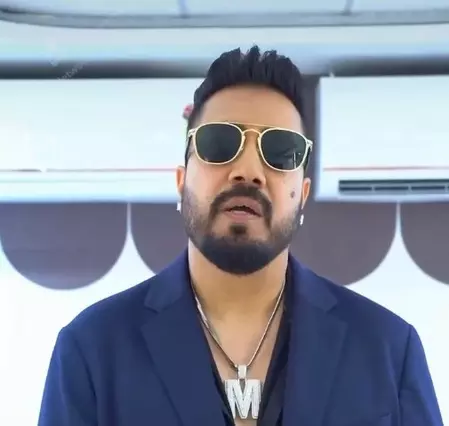
Digital Desk | Mumbai, Oct 23 (IANS) Singer Mika Singh has said that his brother Daler Mehndi does not want the Uttarakhand controversy to be dragged further following Chief Minister Pushkar Singh Dhamis apology on behalf of state minister Subodh Uniyal. Speaking exclusively to IANS, Mika said he has brought the Daler Mehndi controversy to a close after CM Dhamis apology. He added that Daler called him on Friday morning and asked him not to let the matter be dragged further. He further said that CM Dhami has invited both brothers to Uttarakhand, and they would soon visit the state to perform. Talking about an artists responsibility towards the audience, Mika raised the question of whether a performer should take the stage when unwell, given their accountability to the people who come to watch them perform. He also held a press conference, where he said, Just this morning, I spoke with my elder brother, dear friend, and someone I hold in high regard, the Chief Minister of Uttarakhand, Pushkar Singh Dhami. Whenever I visit Dehradun, he meets me with great warmth and is extremely down-to-earth. The way he communicated with Daler Paaji and me was very polite and humble. He offered an apology on behalf of the Minister, and though I told him it wasn't necessary since he made no mistake. Mika added, The problem is that this happened to my brother, who is completely innocent and did nothing wrong. What was I supposed to doif I kept making video statements back-to-back, people would say this is all I do. However, I carefully thought it through and recorded a video at night, and when I called Paaji the next day, he broke down crying because he was emotional. On top of that, I can be quite straightforward and tend to scold him for agreeing to things, but before I could even say anything, he started crying like a child... He further mentioned, I want to express my deepest gratitude to the entire Bollywood industry, the people of Punjab, and all of Daler Paajis fans for the immense support shown after watching the video where he was scolded. It felt very wrong to see Daler Paaji spoken to in that manner, as reprimanding someone publicly nowadayswhether at school or collegesparks widespread controversy. Even during my 23 years of struggle, no one ever scolded me like that, except once in my childhood at a wedding when I ate before the guests arrived, which was my mistake. For the unversed, Daler Mehndis performance at the Siddhpeeth Maa Kunjapuri Tourism and Development Fair in Uttarakhand became a subject of controversy after state minister Subodh Uniyal stopped his show midway. The minister alleged that Mehndi was under the influence of alcohol and lip-syncing during the religious Navratri event. Following the incident, several personalities from the entertainment industry, including Mika Singh, Palash Sen, Kapil Sharma, Ila Arun, Anupam Kher, and Sudesh Lehri, voiced their support for Daler Mehndi.

GEU Office Executive Recruitment 2026
Graphic Era University Dehradun (GEU) has invited applications by email for the post of Office Executive. Applications can be sent till 26 October 2026.
Uttarakhand CM Dhami leads Ravan Dahan and Dussehra events in Dehradun
The News Mill

Video: Driver Allegedly Mistakes Hoarding For Road, Crashes Truck On Delhi-Dehradun Expressway
It appeared that the container truck driver failed to distinguish where the real highway ended and the painting began.
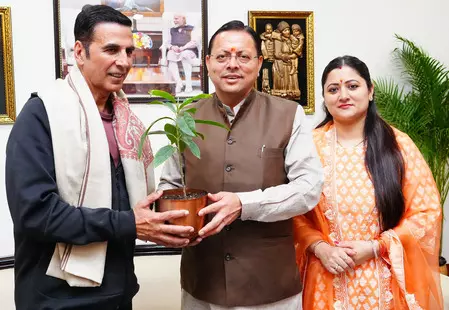
Akshay Kumar meets CM Dhami, discusses promoting film production in U'khand
Digital Desk | Dehradun, Oct 18 (IANS) Bollywood actor Akshay Kumar met Uttarakhand Chief Minister Pushkar Singh Dhami at his official residence in Dehradun on Sunday, and both discussed and explored ways to enhance film production in the hilly state, given its myriad scenic beauty and picturesque locations. The actor, currently shooting for his upcoming film in Mussoorie and the Landour area, paid a courtesy visit to the Chief Minister. During the meeting, discussions were held regarding Uttarakhand's film policy, the potential for film production in the state, and ways to promote the film industry, read an official statement. The Chief Minister stated that Uttarakhand has established itself as a premier film-shooting destination in the country. The state's natural beauty, rich cultural heritage, diverse geographical landscape, and film-friendly environment continue to attract filmmakers. The Chief Minister noted that 'Uttarakhand Film Policy-2024' is yielding positive results, stating that film shoots have only strengthened the state's reputation as a preferred film destination. Under the policy, filmmakers are being provided with various facilities, including shooting permits granted through a 'single-window system'. Additionally, provisions for financial grants have been introduced to encourage film production. The Chief Minister further emphasised that the state government's objective is not only to promote more film shoots in Uttarakhand but also to create new employment and self-employment opportunities for local artists, technicians, and the youth. The growth of film production activities has also benefitted multiple associated sectors including tourism, the hospitality industry, transportation, and other local businesses. The Chief Minister reiterated that the state government remains committed to providing all possible support to filmmakers. Notably, the hilly state of Uttarakhand is renowned for its beautiful valleys, mountains, rivers, and natural landscapes -- locations offering excellent backdrops for film shoots. If the state is developed as a film production hub, it could prove significant in generating both tourism and employment in the state.

Congress to launch 'Nyay Yatra' in Uttarakhand, Kumari Selja attacks Dhami government
Uttarakhand Congress in-charge Kumari Selja, during a press conference in Dehradun, sharply targeted the Modi government at the center and the Dhami government in the state. She also announced the program for the upcoming agitation.Kumari Selja targets the Uttarakhand governmentUttarakha...

Uttarakhand minister Rekha Arya files FIR against husband over assault
The FIR was registered on October 15 at the Cantt police station in Dehradun, under relevant sections of law.

National Commission for Women Launches Dialogue Program for Youth Engagement on Womens Issues
The National Commission for Women is set to engage youth on womens issues through a dialogue program starting in Dehradun on October 30-31. National Commission for Women Launches Dialogue Program for Youth Engagement on Womens Issues
Dehradun to host the Times of India Sports Awards on December 6
The Times of India Sports Awards (TOISA) will return for its ninth edition in Dehradun on December 6, 2026. The awards will recognise Indias sporting achievements across disciplines, with the Asian Games in Aichi-Nagoya and the Commonwealth Games in Glasgow among the major events shaping the year. The ceremony will bring together athletes and teams whose performances have represented India on national and international stages.
Uttarakhand women empowerment minister accuses husband of cheating, violence and murder conspiracy
Uttarakhand minister Rekha Arya has accused her husband, Girdhari Lal Sahu, of assault, cheating, forgery and plotting to kill her. The FIR also cites alleged threats against her minor children, caste-based abuse and fabricated company documents. Police registered the case in Dehradun on Thursday evening under provisions of the IPC and the SC/ST (Prevention of Atrocities) Act.
Hours after she posted a video on Facebook on Thursday in which she broke down describing the allegations, she was admitted to Krishna Medical Centre in Dehradun, where she was undergoing tests.
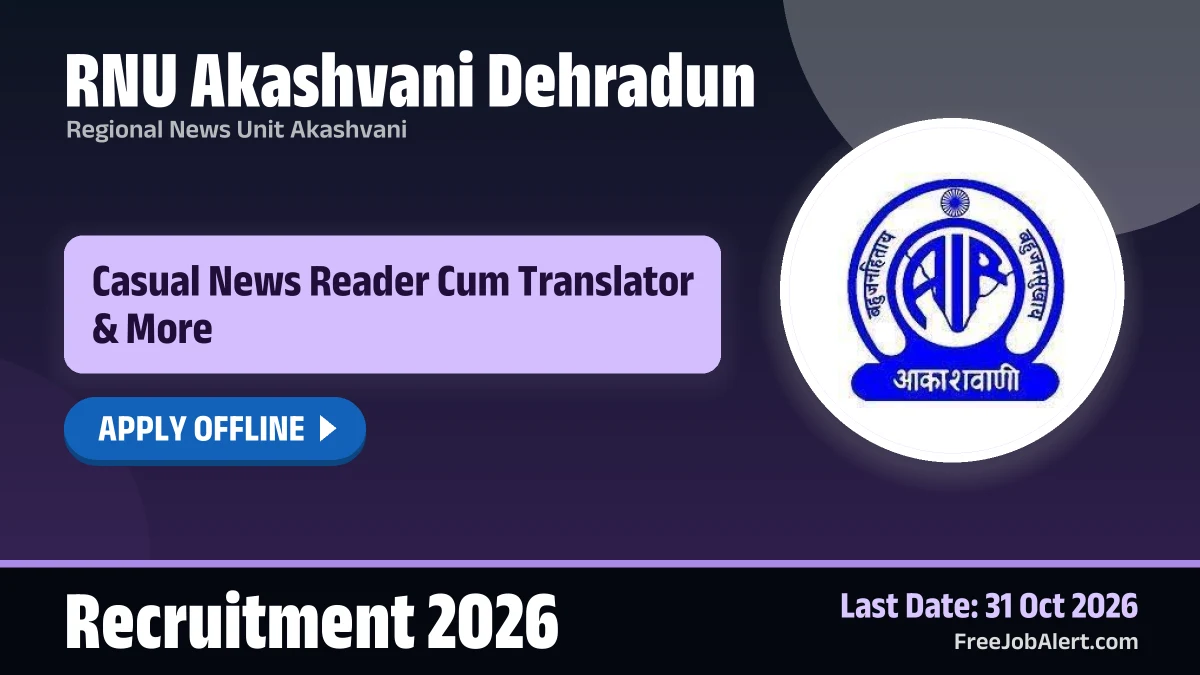
RNU Akashvani Dehradun Casual News Reader Cum Translator Recruitment 2026
Regional News Unit Akashvani has invited offline applications for Casual News Reader Cum Translator posts. Applications can be submitted till 31 October 2026. For complete details, candidates can visit prasarbharati.gov.in.

Dehradun Zoo adjusts animal diets and installs heaters to protect wildlife in winter
The News Mill
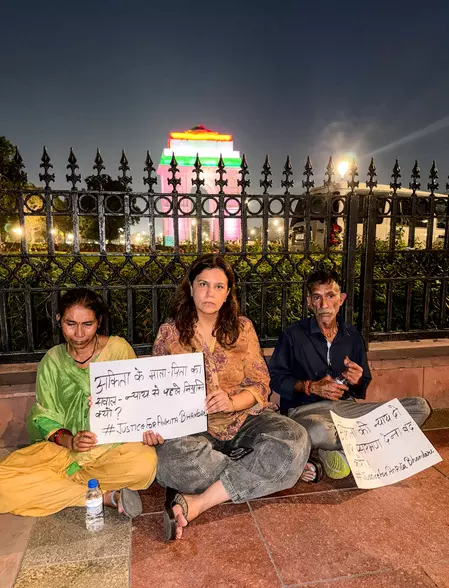
Ensured punishment for accused in Ankita Bhandari's murder, says Uttarakhand's Dhami govt
Digital Desk | New Delhi/Dehradun, Oct 14 (IANS) As parents of Ankita Bhandari, who was allegedly murdered at a resort in Uttarakhand in 2022, staged a protest near the India Gate here on Wednesday, the Pushkar Singh Dhami-led government asserted that ensuring the sentencing the guilty to life imprisonment in the case proves that it worked with utmost seriousness from day one to ensure punishment for the perpetrators. The statement came as the Leader of the Opposition in the Lok Sabha, Rahul Gandhi, went to meet Bhandari's family, who are staging a sit-in near the India Gate. An Uttarakhand government statement noted that the accused in the case were sent to jail within 24 hours, and a Special Investigation Team (SIT) was constituted to conduct a fair and thorough probe. Action was also taken against the accused under the Gangster Act. During the investigation, a detailed charge sheet spanning approximately 500 pages was prepared, incorporating crucial evidence and statements from around 100 witnesses. It noted that a strong case presented by the prosecution led to the repeated rejection of the accused's bail pleas and ensured that they remained behind bars throughout the trial. Subsequently, Bhandari's killers were sentenced to life imprisonment. Throughout the entire process, the state government accorded the highest priority to the sentiments of Bhandari's parents and family, the statement said. It mentioned that public prosecutors were changed three times in accordance with the family's requests. Furthermore, after her parents demanded a CBI inquiry, Chief Minister Dhami ordered the same. Further, the state government provided financial assistance of Rs 25 lakh to the family. Additionally, it also provided government jobs to the victim's brother and father. Moreover, Chief Minister Dhami had maintained that no matter how influential the perpetrator might be, they would be brought to justice and given the strictest punishment. Amidst questions raised regarding the investigation, the process was deemed satisfactory at the judicial level as well, and the prosecution ensured that the guilty were punished. Meanwhile, the Uttarakhand government accused certain Congress leaders and journalist Ashutosh Negi of attempting to spread confusion among the public by repeatedly raising questions about a so-called 'VIP'. If anyone possessed concrete facts or evidence regarding this matter, it should have been presented before the investigative agencies and the court. Making allegations outside the court for political gain and misleading the public is not a fight for justice, but rather the politicisation of a highly sensitive case involving Ankita, the statement said. It further said that the Dhami government did not limit itself to mere assurances in the fight to secure justice for Bhandari and instead, it stood firmly with the family, backing its stance with concrete action, robust legal representation, and decisive results.
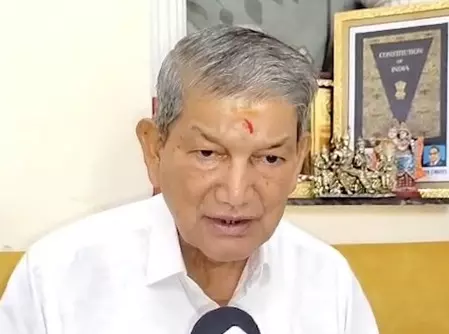
Digital Desk | Dehradun, Oct 14 (IANS) Veteran Congress leader and former Uttarakhand Chief Minister Harish Rawat on Wednesday hit back at Union Home Minister Amit Shah's allegations that Leader of Opposition in Lok Sabha Rahul Gandhi was attempting to shield infiltrators, urging for the deportation of illegal Bangladeshis staying in the country. Rawat also said that there is no point in questioning Rahul Gandhi as it is the Bharatiya Janata Party (BJP)-led NDA which has been in power for the past 12 years. On Tuesday, Home Minister Shah said: I want to tell Rahul Gandhi that his strategy to protect infiltrators through the Special Intensive Revision (SIR), has been very well understood by the people and they will now not fall into your trap. Also, I want to tell Rahul Gandhi to prepare himself for losing in the 2029 (Lok Sabha) polls. Union Minister Shah's reaction came as Chief Election Commissioner Gyanesh Kumar continues to face heat over allegations of irregularities in the SIR of electoral rolls. Speaking to IANS, Harish Rawat said: Border security is in your (BJP-led Centre's) hands. No matter how strict the steps you take, we will support those actions. If infiltration is increasing and terrorism is still flourishing inside Kashmir, then questions should be asked to those who have been in power for the last 10 to 11 years. What is the point of directing these questions at Rahul Gandhi? Strict action should be taken against infiltrators. If possible, as we have been saying, deport them. There are crores of illegal Bangladeshis residing in India, why are you not deporting them? he added. Further referring to the BJP's counters against the Opposition's vote chori allegations, Rawat said: Their anger is understandable as their (BJP's) vote theft has been caught. Rahul Gandhi has been raising his voice against it earlier as well, and today, he is leading the INDIA bloc. Now, the one who was made to carry out the theft stands openly exposed as a perpetrator, and the faces of those who were orchestrating the theft are also becoming clear, the former Uttarakhand CM remarked, targeting the Chief Election Commissioner Gyanesh Kumar and the BJP-led Union government. Meanwhile on Tuesday, Home Minister Shah had lashed out at Rahul Gandhi, who had asserted that he would continue the fight to restore democracy in the country, saying that the Congress has been losing polls ever since he assumed the party's leadership.
Who is the lady hiding in Dehradun? Rahuls cryptic remark sparks questions, promises surprise
'Lady hiding in Dehradun': Who was Rahul referring to at INDIA bloc presser?
During the INDIA bloc's press conference, Rahul Gandhi's reference to a lady hiding right now in Dehradun raised questions about whom he was referring to. The remark came amid the opposition's campaign against CEC Gyanesh Kumar over alleged electoral-roll irregularities.
Akashvani Dehradun Part Time Correspondent Recruitment 2026
Akashvani Dehradun has released the notification for the post of Part-Time Correspondent (PTC). Eligible candidates can submit their offline applications till 31 October 2026. Further details are available at newsonair.gov.in.

Uttarakhand Pradesh Congress Committee (UKPCC) President and Congress Working Committee (CWC) member Ganesh Godiyal on Tuesday announced a one-hour silent fast in Dehradun to protest the appointment of a person as Governor, whom the parents of Ankita Bhandari had named as the VIP in her alleged murder case. In a post on X, Godiyal said the appointment had deeply hurt the sentiments of the common people of the state.
Absconding for 18 years, B Ed fraud accused held in Dehradun
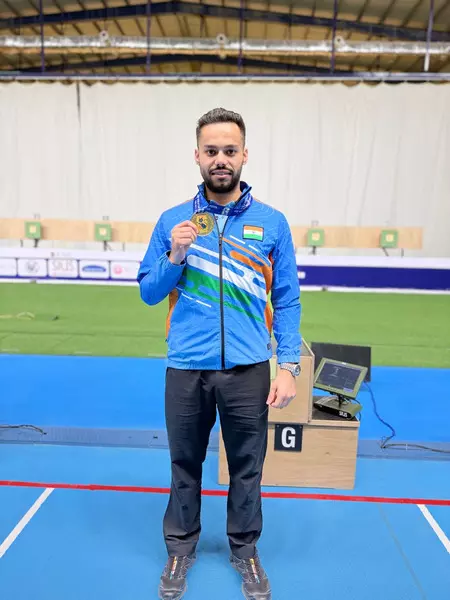
ISSF World Cup: Udhayveer Singh clinches gold in men's 10m air pistol
Digital Desk | Cairo, Oct 11 (IANS) India's Udhayveer Sidhu clinched the gold medal in the Men's 10m Air Pistol at the International Shooting Sport Federation (ISSF) World Cup Rifle/Pistol on Sunday. The 24-year-old produced a determined performance in the medal match to finish with a score of 240.6. He edged past Germany's multi-Olympic medallist Christian Reitz by 0.5 points in a dramatic finish. Reitz secured the silver medal with a tally of 240.1. Italy's Paolo Monna took bronze with 219. 8. Udhayveer held his nerve during the closing elimination stages. Trailing Reitz by 0.3 points going into the final two shots, the Indian fired 10.2 and 9.8. Reitz recorded twin scores of 9.6, handing Udhayveer victory on the final shot. Earlier in the day, Udhayveer qualified for the eight-man final in fourth position. He posted a total of 585 across six series (99, 98, 98, 97, 97, 96). India's Jonathan Gavin Antony, competing for Ranking Points Only (RPO), shot an impressive 586 to tie for the top score in qualification with Monna. Among the other Indian participants in the field, Ajendra Singh Chauhan finished 14th with a score of 580. Olympic medallist Sarabjot Singh placed 31st with 574, while Kumar Yogesh posted 573 in the RPO section. The final also featured Turkey's Paris 2024 Olympic medallist Yusuf Dikec, who finished seventh with 138.0. Greece's Georgios Gampierakis placed fourth on 198.7, followed by Latvia's Emils Vasermanis in fifth position with 177.6. The ISSF World Cup is being held from October 8 to October 16, 2026, in which India has sent a 24-member team. The squad travelled to Cairo after completing an intensive national camp in Dehradun. The camp was held from October 1 to October 7, 2026, at the Maharana Pratap Sports College. Shooters spent the week working on match simulations and fine-tuning technical routines. India is competing across eight individual Olympic disciplines and two mixed team events.

Recognising women as Shakti important part of our culture: CM Dhami on International Day of Girl Child Dehradun: Uttarakhand Chief Minister Pushkar Singh Dhami on Sunday highlighted the importance of respecting and empowering girls, saying that reverence for daughters and recognition of women as embodiments of strength have been integral to Indias cultural heritage. His [] The post Recognising women as Shakti important part of our culture: CM Dhami on International Day of Girl Child appeared first on Mangalorean.com .
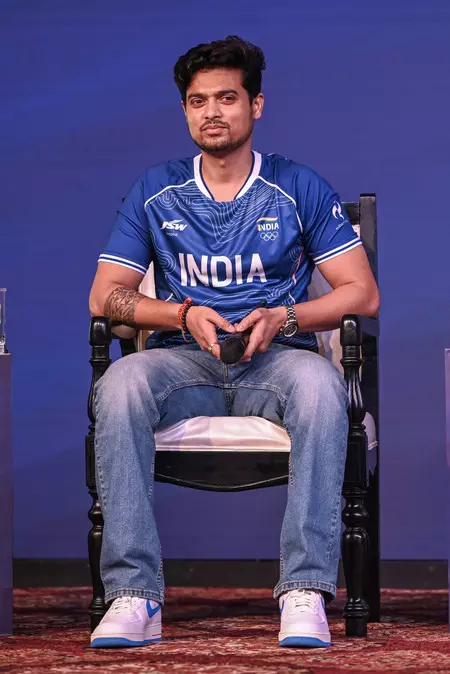
Shooting: Swapnil Kusale, Sarabjot Singh to spearhead India at ISSF World Cup
Digital Desk | New Delhi, Oct 9 (IANS) Olympic bronze medallists Swapnil Suresh Kusale and Sarabjot Singh will lead a 24-member Indian contingent at the ISSF World Cup Rifle/Pistol in Cairo, Egypt. The international event is being held from October 8 to October 16, 2026. The squad travelled to Cairo after completing an intensive national camp in Dehradun. The camp was held from October 1 to October 7, 2026, at the Maharana Pratap Sports College. Shooters spent the week working on match simulations and fine-tuning technical routines. India will compete across eight individual Olympic disciplines and two mixed team events. The contingent combines seasoned Olympians with promising young shooters. Swapnil Kusale headlines the Men's 50m Rifle 3 Positions squad alongside Akhil Sheoran and Adriyan Karmakar. Olympian Arjun Babuta leads the Men's 10m Air Rifle unit alongside Deaflympics champion Dhanush Srikanth and Paarth Makhija. Babuta won silver at the 2026 Asian Shooting Championships in New Delhi. In the women's rifle events, two-time Olympian Anjum Moudgil anchors the 50m Rifle 3 Positions team with Ayushi Podder and Manini Kaushik. Emerging shooter Arya Rajesh Borse, who won silver at the Buenos Aires World Cup, features in the Women's 10m Air Rifle alongside Khyati Chaudhary and Ismita Bhowal. In the men's pistol section, Paris 2024 bronze medallist Sarabjot Singh will spearhead the Men's 10m Air Pistol line-up alongside Ajendra Singh Chauhan and Udhayveer Sidhu. Vijayveer Sidhu will lead the challenge in the 25m Rapid Fire Pistol alongside Suraj Sharma and Ankur Goel. The women's pistol unit features Asian Games champion Palak, who will contest the Women's 10m Air Pistol alongside Muskan and Surbhi Rao. Olympian Rhythm Sangwan, former World Cup gold medallist Chinki Yadav and Divya TS form the line-up in the Women's 25m Sports Pistol. Following official pre-event training and technical meetings today, competitive firing begins on Saturday. The opening day features finals in both the 10m air pistol mixed team and the 10m air rifle mixed team competitions. Ajendra Singh Chauhan will partner Palak, while Udhayveer Sidhu teams up with Muskan in the 10m Air Pistol Mixed Team event. Paarth Makhija and Arya Rajesh Borse, alongside Dhanush Srikanth and Khyati Chaudhary, will contest the 10m air rifle mixed team event. Individual qualification rounds and finals across the 10m, 25m and 50m ranges will continue through 15 October 2026. Indian Squad for ISSF World Cup Cairo 2026: 10m Air Rifle Men: Paarth Makhija, Dhanush Srikanth, and Arjun Babuta 10m Air Rifle Women: Arya Rajesh Borse, Khyati Chaudhary, Ismita Bhowal 50m Rifle 3 Positions Men: Akhil Sheoran, Adriyan Karmakar, Swapnil Suresh Kusale 50m Rifle 3 Positions Women: Anjum Moudgil, Ayushi Podder, Manini Kaushik 10m Air Pistol Men: Sarabjot Singh, Ajendra Singh Chauhan, and Udhayveer Sidhu 10m Air Pistol Women: Palak, Muskan, Surbhi Rao 25m Rapid Fire Pistol Men: Suraj Sharma, Vijayveer Sidhu, Ankur Goel 25m Sports Pistol Women: Divya TS, Rhythm Sangwan, and Chinki Yadav 10m Air Rifle Mixed Team: Paarth Makhija and Arya Rajesh Borse; Dhanush Srikanth and Khyati Chaudhary 10m Air Pistol Mixed Team: Ajendra Singh Chauhan and Palak; Udhayveer Sidhu and Muskan
Swapnil Kusale and Sarabjot Singh to Spearhead India at ISSF World Cup in Cairo
Olympic bronze medallists Swapnil Suresh Kusale and Sarabjot Singh will lead a 24-member Indian contingent at the ISSF World Cup Rifle/Pistol in Cairo, Egypt. The international event is being held from 8 October to 16 October, 2026. The squad travelled to Cairo after completing an intensive national camp in Dehradun, according to a press release. The camp was held from October 1 to 7, 2026 at the Maharana Pratap Sports College. Shooters spent the week working on match simulations and fine-tuning technical routines. India will compete across eight individual Olympic disciplines and two mixed team events. The contingent combines seasoned Olympians with promising young shooters. Swapnil Kusale headlines the Men's 50m Rifle 3 Positions squad alongside Akhil Sheoran and Adriyan Karmakar. Olympian Arjun Babuta leads the Men's 10m Air Rifle unit alongside Deaflympics champion Dhanush Srikanth and Paarth Makhija. Babuta won silver at the 2026 Asian Shooting Championships in New Delhi. In the w...

The Ride to Work: A Journey from Cycling for Health to a Healthier India
Every morning, while most commuters in Delhi prepare themselves for another battle with traffic, fuel costs and pollution, there is one commuter who chooses a different routeone powered not by petrol or diesel, but by his own legs. For him, cycling to work is not merely a means of commuting. It is a way of life, a commitment to health and an expression of concern for the environment. The journey began in December 2012, when he decided to cycle from Millennium Apartment, Sector-9, Dwarka, to his workplace at Bhikaji Cama Place, New Delhi. The daily round trip was more than 35 kilometres. What began as an experiment for better health gradually became a passion, and eventually a personal mission to encourage others to embrace cycling. I started cycling to improve my health, he recalls. After a few days of riding on the busy roads of Delhi, I started enjoying it. The rides became joy rides. From necessity to passion Cycling was not entirely new to him. His first association with the bicycle goes back to his student days in Allahabad, when he rode nearly 40 kilometres a day to attend college and tuition classes before returning home. A second phase followed in Dehradun, where cycling became a convenient way of travelling to different places while giving tuition. But the third and most enduring phase began when he was posted to the Employees Provident Fund Organisations Head Office at Bhikaji Cama Place, New Delhi. After years of service, he found himself becoming less active and gaining weight. It was his batchmate and Regional Commissioner in EPFO, Shri Subhash Sharma, who suggested cycling as a way to improve his health. That suggestion changed his routineand eventually much more. The 35-kilometre daily commute soon became a regular part of life. On one occasion, he even rode nearly 50 kilometres at a stretch, taking only a brief ten-minute break. What began as a personal health initiative gradually acquired a larger purpose: Health and Environment. A bicycle can say much about a society For him, cycling is also a measure of how a society thinks about quality of life. He believes that a society that encourages cycling is investing simultaneously in health, environmental sustainability, productivity and happiness. A healthy citizen, he argues, is more productive and less vulnerable to lifestyle-related illnesses. Every bicycle replacing a motorised vehicle also means less fuel consumption and less pollution. He points to countries such as the Netherlands and Denmark, where cycling has become an integral part of everyday life. In Utrecht, for example, cycling infrastructure has been developed on a scale that makes the bicycle a practical mode of daily transportation. The lesson, he believes, is relevant to India as well. Cycling is not simply about exercise, is the underlying message of his campaign. It is about creating healthier people and healthier surroundings. Taking the message beyond the bicycle His journey did not stop with his own daily rides. During his posting in Madhya Pradesh, he began involving government officials, educational institutions, social organisations and citizens in cycling initiatives. Collectors, Superintendents of Police, Commissioners, students and members of various organisations participated in cycle rallies. The first major cycle rally in Gwalior, organised in November 2015, brought together more than 600 cyclists. Several organisations participated, including the BSF, Air Force, educational institutions, universities, professional organisations and the EPFO. Over time, cycling events were organised in several places, including Gwalior, Morena, Shivpuri, Bhind, Datia, Dabra, Sagar, Rajgarh, Narwar and Jaura. In all, 16 cycle rallies were organised in different parts of Madhya Pradesh. The purpose was never simply to organise an event. The larger objective was to make cycling visible and socially acceptableto demonstrate that a bicycle can be a serious mode of transport for students, professionals, government officers and ordinary citizens alike. From 35 kilometres to 600 kilometres The passion also took him into the world of endurance cycling. Under Audax India events, cyclists attempt long-distance rides of 200, 300, 400 and 600 kilometres within prescribed time limits. Those who successfully complete the required series are recognised as Super Randonneurs. He successfully completed the 200 km, 300 km, 400 km and 600 km events in 2016. What makes the achievement particularly interesting is that he undertook these challenging rides on relatively inexpensive hybrid bicycles, whereas road bicycles are more commonly associated with such endurance events. His experience demonstrates that cycling need not always be an expensive pursuit. Determination, consistency and willingness to ride can matter as much as sophisticated equipment. Can Delhi become more cycle-friendly? Delhi has wide roads and, in his view, has the potential to become a much more cycle-friendly city. The bigger challenge is the increasing pressure from motorised vehicles and the limited availability of dedicated cycling infrastructure. While commuting from Dwarka towards Bhikaji Cama Place, he often used bylanes and could cover approximately 22.5 kilometres in about an hour. His suggestion is straightforward: create dedicated cycling lanes wherever possible, provide secure bicycle parking and make cycling a practical choice rather than merely a recreational activity. He also believes that workplaces can contribute by providing facilities such as secure bicycle parking and bathing or changing facilities for employees who cycle to work. Making cycling a national movement His vision extends beyond individual cyclists. He believes that the government can encourage cycling through public recognition, cycling events, incentives for employees who cycle to work, bicycle subsidies, dedicated tracks and better parking facilities. Cycling, in his view, should become part of a broader national programme involving health, environment, sports, education, tourism and urban planning. He proposes publicly recognising people who cycle extraordinary distances to work, organising cyclathons, promoting cycling alongside other health initiatives and encouraging Indian manufacturers to produce world-class bicycles. Most importantly, he believes that cycling should be made attractive to young people. Rather than beginning with extremely demanding endurance events, he suggests that organised 50-kilometre and 100-kilometre events could bring more newcomers into the cycling movement. Leading by example Cycling to work as a senior government officer has occasionally attracted different opinions from friends and colleagues. But he says that he has never regarded this as a serious obstacle. For him, the choice is personaland purposeful. At a time when traffic congestion, pollution, stress and lifestyle-related illnesses are increasing, he believes that public servants and other professionals can play an important role by leading through personal example. The bicycle, in his philosophy, is therefore more than a vehicle. It represents discipline, simplicity, health, sustainability and personal responsibility. A simple message After years of cycling, organising rallies and participating in long-distance events, his message remains remarkably simple: Life is beautiful; make it more beautiful through consistent effort. He believes that people should strive for happiness, health and self-development rather than constantly pursuing material wealth. His daily ride to work is perhaps the most visible expression of that philosophy. For more than a decade, the bicycle has taken him through Delhis roads, the towns of Madhya Pradesh and hundreds of kilometres of endurance rides. But the destination has never been only a workplace or a finishing line. The destination is a healthier individual, a cleaner environment and, ultimately, a happier society. And tomorrow morning, as Delhi's traffic begins another crowded day, the wheels will turn again.

Muzaffarnagar's Urban Transformation: How Numax City is Shaping a New-Age Integrated Township
Muzaffarnagar (Uttar Pradesh) [India], October 8: Muzaffarnagar is witnessing a gradual transformation in its urban and real estate landscape, driven by improving connectivity, changing consumer aspirations and the growing demand for organised, well-planned communities. As the city and surrounding regions evolve, integrated developments that bring residential, commercial, lifestyle and social infrastructure together are emerging as an important part of this transformation. At the centre of this shift is Numax City Muzaffarnagar, a 100-acre integrated township located along the Delhi-Dehradun Highway.
Weather Tomorrow: Heavy Rain Likely In Tamil Nadu, Kerala. Yellow Alert In 8 Uttarakhand Districts
In Uttarakhand, Dehradun, Haridwar, Tehri, Pauri Garhwal, Almora, Nainital, Champawat and Udham Singh Nagar are likely to get moderate rain over the next four days.

ECHS Dehradun Recruitment 2026
Ex Servicemen Contributory Health Scheme (ECHS) has published the Recruitment 2026 notification for 4 vacancies, including Medical Specialist, Female Attendant, Safai Wala, and Peon posts. Offline applications will be accepted till 23 October 2026. For complete details, candidates can visit echs.gov.in.
Video: Thief Steals iPhone From Dehradun Home, Later Texts Family To Ask For Passcode
The sender repeatedly asked for the phone's passcode, apparently because the device could not be unlocked.
An 80 year old retired ordnance factory manager, his wife and their house help were murdered at their Dehradun home on Tuesday after a plumber got into an argument over payment for repair work he had done. Accused allegedly stabbed all three with a screwdriver before fleeing with a gold chain, and was caught by neighbours soon after.

UK07 Rider Case: What Happened Between Anurag Dobhal And His Wife's Cousin In Dehradun
A fight on Dehradun's Haridwar Bypass Road has put YouTuber Anurag Dobhal, better known as UK07 Rider, back at the centre of a family dispute that has played out in public for months. Dobhal, who rose to wider fame on Bigg
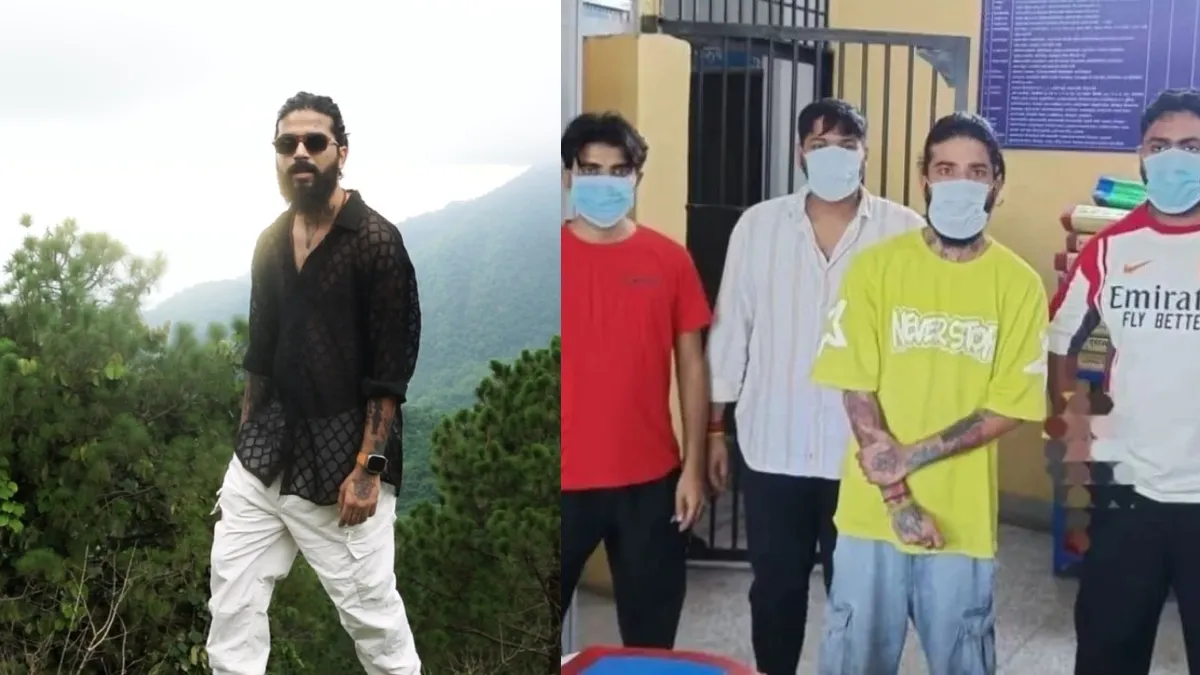
YouTuber and Bigg Boss 17 fame Anurag Dobhal, aka UK07 Rider, has been arrested by Dehradun Police along with three others for allegedly assaulting his wife Ritika's cousin, Raj Singh Chauhan.
Uttarakhand CM Dhami interacts with SC, ST communities; directs officials to resolve issues
Uttarakhand Chief Minister Pushkar Singh Dhami interacted with members of Scheduled Caste (SC) and Scheduled Tribe (ST) communities at Mukhya Sevak Sadan at the Chief Minister's residence and directed officials to ensure the early resolution of their concerns. On Tuesday, people from various parts of the state, particularly remote and hilly areas including Tehri, Dehradun, Uttarkashi, Chakrata and Kalsi, apprised the Chief Minister of issues related to development, roads, education, employment, drinking water, livelihoods and basic infrastructure. Dhami heard their concerns and directed the concerned officials to resolve the issues on priority, as far as possible. The Chief Minister said the state government's primary objective is to bring every section, region and individual of Uttarakhand into the mainstream of development. The government is working with a mission of integrated and inclusive development, with ensuring that welfare schemes reach the last person in society among its t...

Dehradun Home Invasion: Elderly Couple, Help Killed
An elderly couple and their domestic help were allegedly stabbed to death with a screwdriver by an intruder in their Raipur home in Dehradun. All three victims succumbed to their injuries after being rushed to the hospital. Police and forensic teams are investigating the scene.
Bus conductor took his suitcase, it vanished: 11 years later, commission orders Rs 43k
The Uttarakhand state consumer commission found the bus conductor negligent for losing a passenger's suitcase. The passenger filed a complaint after his suitcase went missing on a Delhi-Dehradun bus journey in 2015. Initially awarded Rs 57,500, the compensation was reduced to Rs 25,000 when the passenger failed to prove actual costs. The transport corporation must pay Rs 43,000 in total compensation and litigation charges.

Weather Shift in Dehradun: Yellow Alert Issued for Eight Districts
Dehradun experiences weather changes post-monsoon, with a yellow alert for rain and strong winds across eight districts. Weather Shift in Dehradun: Yellow Alert Issued for Eight Districts
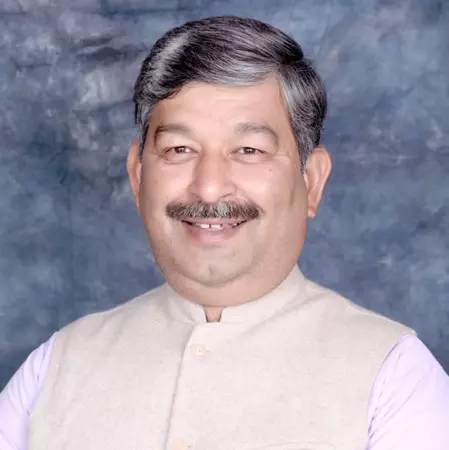
BJP's Dinesh Arya to file nomination for RS seat in Uttarakhand today
Digital Desk | Dehradun, Oct 6 (IANS) Bharatiya Janata Party (BJP) Rajya Sabha candidate Dinesh Arya will file his nomination for the Upper House election in Uttarakhand at the state Assembly here on Tuesday. According to the schedule, all BJP MLAs are expected to reach the Assembly by 10 a.m., following which Arya will submit his nomination papers at 11 a.m. for the Rajya Sabha election. Uttarakhand Chief Minister Pushkar Singh Dhami, along with senior BJP leaders and key office-bearers of the party, will be present during the nomination process. Arya's nomination is being viewed as an important show of the BJP's electoral strategy and organisational unity in the state. The presence of the party's legislators and senior leadership during the filing of the nomination is also expected to underline the BJP's coordinated approach towards the Rajya Sabha election. Earlier on Sunday, the BJP announced Arya as its candidate for the 2026 Rajya Sabha biennial election in Uttarakhand. The election in Uttarakhand has been necessitated by the completion of the term of sitting Rajya Sabha member Naresh Bansal. The Election Commission of India (ECI), on September 22, announced the schedule for biennial elections to 11 Rajya Sabha seats, along with a by-election for one seat from West Bengal, to be held on October 16. Of the 11 seats going to polls in the biennial elections, 10 are from Uttar Pradesh, and one is from Uttarakhand. The election in West Bengal is being held to fill a casual vacancy in the Upper House. As per the election schedule, the scrutiny of nomination papers will be conducted on October 7. Candidates will be able to withdraw their candidature until October 9. Polling for the Rajya Sabha seats will be held on October 16 from 9 a.m. to 4 p.m. Counting of votes will begin at 5 p.m. on the same day. With Arya's nomination, the BJP is set to formally begin the electoral process for the Uttarakhand Rajya Sabha seat.

Haryana Hurricanes Wrap Up Training Camp Ahead of VCL Season 1
Noida (Uttar Pradesh) [India], October 5: The Haryana Hurricanes have completed an intensive training camp in Dehradun, marking an important phase in their preparations for the inaugural season of the

BJP Picks Dhamis Former PRO for Rajya Sabha
A senior state BJP organisation secretary in Dehradun said even senior leaders were taken aback by the decision and had no inkling that Aryas name was under consideration.
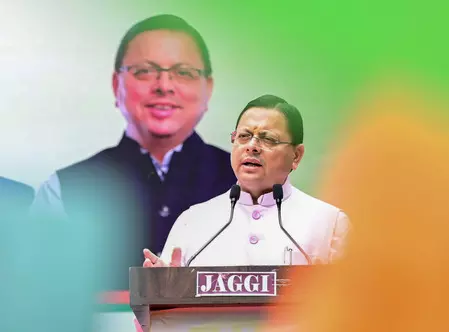
'Rahul Gandhi has turned into a comedian': CM Dhami (IANS Exclusive)
Digital Desk | Dehradun, Oct 4 (IANS) Uttarakhand Chief Minister Pushkar Singh Dhami on Sunday hit out at Lok Sabha Leader of Opposition (LoP) Rahul Gandhi over his Indore 'Chhatron Ki Goonj' event, remarking that the Congress MP has urned into a comedian. A political row had erupted after a comedian allegedly mimicked Prime Minister Narendra Modi while sharing the stage with LoP Gandhi during the Indore event. Speaking exclusively to IANS, CM Dhami referred to the LoP as Yuvraj. 'Yuvraj' (Rahul Gandhi) is completely unacquainted with India's culture and values. It is not reflected in his conduct or his upbringing. After all, would anyone mock the gesture of a Prime Minister offering a chair to an elderly mother? he asked. The Chief Minister added: He is no longer acting like a leader. He aspires to be a comedianor rather, he has turned into a comedian on public platforms. He is engaging in such low-level antics and displaying such undignified behaviour. Referring to Rahul Gandhi's remarks on National Security Advisor (NSA) Ajit Doval at the same event, CM Dhami said: NSA Ajit Doval is the son of Uttarakhand who brought pride to the entire nation. He has dedicated his entire life to India's securityboth internal and external. Rahul Gandhi had claimed at the Indore event that NSA Ajit Doval, controls citizens' digital and phone communications and feeds tapped information to the Prime Minister (Narendra Modi) and Home Minister (Amit Shah). According to CM Dhami, the language which has been used to describe the NSA Doval, is appalling. I believe that not only the citizens of the country but especially the people of Uttarakhand will never forgive him (Rahul Gandhi). Making such comments is extremely hurtful, the Chief Minister said. The Uttarakhand CM recalled that Congress leaders had previously used terms akin to street thug to describe the late General Bipin Rawatthe first Chief of Defence Staff (CDS)who also belonged to the state. This reveals their (Congress') true mentality, he said. In 2017, Congress leader Sandeep Dixit had used the objectionable remark against the then Army Chief Bipin Rawat. However, he had later issued an apology. The Chief Minister also spoke on Opposition staging protests in different parts of the country, demanding the resignation of Chief Election Commissioner Gyanesh Kumar over alleged irregularities in the Special Intensive Revision (SIR) of electoral rolls. He said that no issue was ever raised regarding the electoral process when it was conducted earlier. This time, fake entries are being removed, and the votes of infiltrators are being deleted. Those who have their names registered in multiple places are being brought down. Earlier, elections were influenced through these (fake) votes. There used to be electoral malpractices and bogus voting, he added. The Uttarakhand Chief Minister asked why daughters who are married and have moved elsewhere, should still remain in the electoral rolls at their parental home? And for those who have passed awaywhy should their votes still exist? Why should votes exist for people who have moved away? CM Dhami asked. So, their (Opposition's) modus operandi is to oppose everything, sometimes they oppose the Election Commission, sometimes EVMs, sometimes our administration or the official machinery, and at other times, they make remarks against the High Court or the Supreme Court, the Chief Minister said.
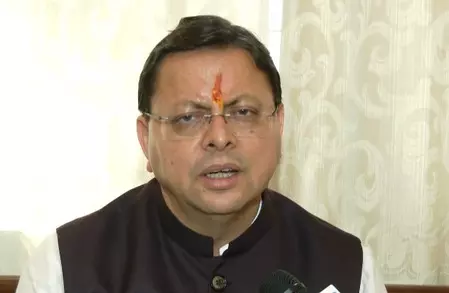
'Congress exposed itself on shuddhikaran row': U'khand CM Dhami (IANS Interview)
Digital Desk | Dehradun, Oct 4 (IANS) Uttarakhand Chief Minister Pushkar Singh Dhami on Sunday lashed out at the Congress, accusing it of fabricating issues, while claiming that the grand old party has exposed itself over the alleged purification ritual performed at the Haldwani event venue of party President Mallikarjun Kharge. In an exclusive interaction with IANS at Uttarakhand's border town of Banbasa, the Chief Minister spoke on a range of issues, including the implementation of the Uniform Civil Code (UCC) and Lok Sabha Leader of Opposition Rahul Gandhi. IANS: This is the first time that a government in Uttarakhand has held a Cabinet meeting near the India-Nepal border. Any specific reason behind choosing Banbasa? CM Dhami: Prime Minister Narendra Modi had pledged to bring border areas into the mainstream for their development, prioritising them as first villages. He (PM Modi) had declared from the Mana village, that it along with similar border villages, would henceforth be designated as first villages and that their development would be prioritised. The villages would be comprehensively established, and planned by capitalising on their future potential. On those lines, the state government visited the Banbasa-Tanakpur region, home to the revered 'Maa Purnagiri Dham' and situated along the sacred banks of the Sharda river. This area is historically significant as it shares border with Nepal, and hosts an Army cantonment board and a large contingent of paramilitary forces. The region also serves as a route for the Kailash-Mansarovar and Adi Kailash pilgrimages. It boasts of numerous religious sites and also borders Uttar Pradesh. Holding the Cabinet meeting here has been a positive experience and has been well-received by the public. We intend to continue this practice, demonstrating that the Uttarakhand government can make crucial state decisions from any location. We believe that the Uttarakhand government should go to every place, big or small. The government's work should be decentralised. As the 'Mukhya Sevak' (chief servant), there are many places in the state where no one had ever gone before, but I have reached those places. We will continue making such efforts in the future as well. IANS: Uttarakhand is the first state in India to implement the Uniform Civil Code (UCC). How do you look back at the process? CM Dhami: Under the leadership of Prime Minister Modi, we contested the elections in Uttarakhand in 2022. Then, we had promised the people here that we would bring a Uniform Civil Code (UCC) law. The people of Uttarakhand blessed us with their mandate, and we fulfilled the promise we had made to them. The draft for UCC was prepared under the chairmanship of Justice Ranjana Prakash Desai, after consulting with everyone and holding discussions with all stakeholders. We are happy that under the leadership of PM Modi, the people of the state blessed us with their mandate and we fulfilled the promise made to them. Now it is being followed by others (BJP and NDA-ruled states). IANS: Rahul Gandhi has made series of allegations against the Narendra Modi government during several of his programmes, including 'Chhatron Ki Goonj'. What are your views on the LoP's campaign? CM Dhami: The 'Yuvraj' (Rahul Gandhi) is completely unacquainted with India's culture and values. It is not reflected in his conduct or his upbringing. After all, would anyone mock the gesture of a Prime Minister offering a chair to an elderly mother? He (Rahul Gandhi) is no longer acting like the Leader of Opposition. He aspires to be a comedianor rather, he has turned into a comedian on public platforms. He is engaging in such low-level antics and displaying such undignified behaviour. Ajit Doval (National Security Advisor) is the son of Uttarakhand who brought pride to the entire nation. He has dedicated his entire life to India's securityboth internal and external. The language which has been used to describe him (NSA Ajit Doval) is appalling. I believe that not only the citizens of the country but especially the people of Uttarakhand will never forgive him (Rahul Gandhi). Making such comments is extremely hurtful. Members and leaders of the Congress previously used terms akin to street thug to describe the late General Bipin Rawatthe first CDSwho also belonged to our state. This reveals their true mentality. IANS: Congress President Mallikarjun Kharge had alleged purification ('shuddhikaran') of his event venue in Uttarakhand's Haldwani. The Opposition had accused the BJP of playing a role in it. What are your views on this matter? CM Dhami: In Haldwani, members of the Scheduled Caste communityour artisan brothers and Valmiki brothersperformed a 'Shuddhi Havan' (purification ritual) because 'jihadi' slogans were being raised there. Mess is created at the rallies; liquor bottles are thrown, and other forms of trash and litter are left behind. It was a religious site, yet it was politicised with claims of insults to individuals or casteseven though there was no such incident before or after the event, nor any press release or video evidence was available. In fact, members of the Dalit and Scheduled Caste communities themselves participated in it. When the truth came to light, the Congress party was completely exposed. They have no real issues, so they fabricate them. So after a few days, they have to face embarrassment. IANS: The Opposition is staging protests demanding the resignation of Chief Election Commissioner Gyanesh Kumar over alleged irregularities in the Special Intensive Revision (SIR) of electoral rolls. How do you view it? CM Dhami: No issue was ever raised while SIR was conducted earlier in the country. This time, fake entries are being removed, and the votes of infiltrators are being deleted. Those who have their names registered in multiple places are being brought down. Earlier, elections were influenced through these (fake) votes. There used to be electoral malpractices and bogus voting. Daughters who are married and have moved elsewhere, why should their votes remain on the rolls? It should be at their new location. And for those who have passed awaywhy should their votes still exist? Why should votes exist for people who have moved away? So, their (Opposition's) modus operandi is to oppose everything, sometimes they oppose the Election Commission, sometimes EVMs, sometimes our administration or the official machinery, and at other times, they make remarks against the High Court or the Supreme Court.

Panchkula TT tournament retains National-ranking status
The ad hoc committee strips the ranking status of the remaining two proposed tournaments at Phagwara and Dehradun
Dehradun Car Accident: 100 . , LIVE !
khabar_news About NDTV India (Hindi News Channel): NDTV , , , , - . NDTV , , , - , - . NDTV India is a 24-hour Hindi news channel. NDTV India established its image as one of India's leading credible news channels, and is a preferred channel by an audience which favours high quality local and world news, rather than sensational infotainment. NDTV India's popular shows revolve around: news, politics, economy, sports, entertainment, panel discussions with eminent personalities and noteworthy commentaries. Videos : https://www.youtube.com/playlist?list=PLpSN4vP31-Ku10h9c8jrTjSRFbFdQ8TR6 NDTV : https://www.youtube.com/@ndtvindia/playlists?view=50&sort=dd&shelf_id=5 NDTV : https://www.youtube.com/playlist?list=PLpSN4vP31-KvAM2r9mcbxfN7Jz9Dq3152 : https://www.youtube.com/playlist?list=PLpSN4vP31-Kv_xJpLn-dyJCVlTkqXB72R NDTV , 49 , . Subscribe to our channel to get latest news updates. Watch NDTV India live news 24x7 for the latest from across the world. Follow us on Social Media: Facebook: https://www.facebook.com/ndtvindia/ Twitter: https://twitter.com/ndtvindia/ WhatsApp: https://whatsapp.com/channel/0029Va4W2Dn6GcG6c6XL9s38 Instagram: https://www.instagram.com/ndtvindia/ Telegram Messenger: https://t.me/NDTVbot/?start=hi Follow us on Google News for Breaking and Latest News Updates: NDTV India (Hindi News): https://bit.ly/3mNVwMY NDTV: https://bit.ly/3e5ngbP Download NDTV Mobile Apps: http://www.ndtv.com/page/apps #News #LatestNewsInHindi #LiveNews #BreakingNews #Bulletin #NDTV #ndtvindia $MetaTags$1#TV Clips4#Shivani Kajania$MetaTags$
In a significant announcement, Uttarakhand Chief Minister Pushkar Singh Dhami revealed a raise in stipends for Senior and Junior Resident doctors, elevating them from around Rs 75,000 to exceeding Rs 1 lakh. Furthermore, the deadline for regularising 'Class B' lands in areas like Dehradun has been prolonged by one year.
Uttarakhand CM Dhami holds first cabinet meeting outside Dehradun
The News Mill
In a first, Uttarakhand CM Pushkar Singh Dhami chairs State cabinet meeting outside Dehradun
Uttarakhand Chief Minister Pushkar Singh Dhami on Sunday chaired a State cabinet meeting at the NHPC complex in Banbasa, Champawat. Notably, this marks the first time a State cabinet meeting is being held outside the capital city of Dehradun, in Banbasa along the Indo-Nepal border. The Chief Minister has taken a new initiative to take governance closer to the state

Odisha Releases WII-Adani Foundation Olive Ridley Study
Odishas Minister for Forest, Environment & Climate Change, Labour & ESI, Ganesh Ram Singh Khuntia, released the first-year report of a three-year research initiative led by the Dehradun-based Wildlife Institute of India (WII). The research brought together satellite telemetry, boat-based surveys and shoreline analysis to understand how Olive Ridley turtles used Odishas coastal waters and [] The post Odisha Releases WII-Adani Foundation Olive Ridley Study appeared first on Pragativadi I Latest Odisha News in English I Breaking News .
Uttarakhand Chief Minister Pushkar Singh Dhami on Friday attended a meeting with BJP state morcha office-bearers, district morcha presidents, state cell cluster coordinators and co-coordinators, and state convenors of various cells at Hotel Le-Oval in Kuanwala, Dehradun, and welcomed the appointment of the party's new state in-charge and other organisational leaders. The meeting was held under the chairmanship of BJP Uttarakhand State President and Rajya Sabha MP Mahendra Bhatt. Newly appointed state in-charge and national vice-president Ram Madhav, co-in-charges Arvind Menon and Bansuri Swaraj, and state general secretary (organisation) Phanindranath Sharma were also present. Speaking after the meeting, CM Dhami praised the organisational experience of the newly appointed leaders and said their guidance would help strengthen the BJP's organisation in Uttarakhand and bring fresh energy among party workers. Our in-charge, Ram Madhav Ji, possesses vast and long-term experience. He has w...

Pushkar Singh Dhami Pays Tribute To Mahatma Gandhi And Lal Bahadur Shastri
Uttarakhand CM Pushkar Singh Dhami paid floral tribute to Mahatma Gandhi and former Prime Minister Lal Bahadur Shastri at the CM Residence in Dehradun on their birth anniversaries.
Rare Blue-Eyed White Tiger Tejas Reaches Dehradun Zoo After 556 Km Journey
Rare blue-eyed white tiger Tejas has arrived at Dehradun Zoo from Gwalior Zoological Park after a 556 km journey, becoming Uttarakhand's first white tiger.
Rare blue-eyed white tiger Tejas travels 550 km to become Dehradun Zoo star
Dehradun Zoo has announced the arrival of Tejas, a magnificent white tiger from Gwalior Zoo. To ensure his well-being, Tejas will undergo a 20-day quarantine for careful observation. The zoo is dedicated to wildlife education and conservation, enticing visitors with outdoor experiences. After quarantine, Tejas will share his habitat with Bhola, the Royal Bengal tiger, offering wildlife enthusiasts an opportunity to explore the beauty of nature.
India Energy Week (IEW) has emerged as a global platform for addressing the country's rapidly rising energy requirements, challenges and technology needs, with its fifth edition scheduled to be held in Kolkata in January 2027, Oil and Natural Gas Corporation (ONGC) Director (Exploration) Om Prakash Sinha said. The fifth edition of IEW will be held from January 28-31, 2027, at the New Town Convention Centre in Kolkata, with curtain-raiser events being organised in Ahmedabad, Dehradun and Delhi as part of preparations for the main event. Speaking on the sidelines of a curtain-raiser event for IEW 2027, Sinha said India's position as the country with the highest incremental energy demand globally has increased the importance of a platform that brings together stakeholders from across the energy sector.
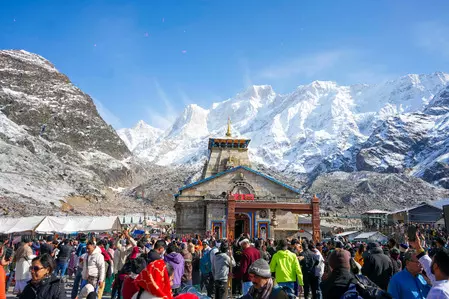
Char Dham Yatra draws record pilgrims, Badrinath and Gangotri set new highs
Digital Desk | Dehradun, Sep 28 (IANS) The Char Dham Yatra in Uttarakhand is witnessing a record influx of pilgrims this year, with devotees visiting Badrinath and Gangotri crossing previous records amid enhanced arrangements by the state government. According to the state government, over 18.10 lakh pilgrims have visited Badrinath Dham so far, while Gangotri has recorded its highest-ever footfall of 8.41 lakh devotees. Pilgrimage footfall at Yamunotri has crossed 7.5 lakh, while 15.57 lakh devotees have visited Kedarnath. Overall, 53,23,401 pilgrims have visited the four Char Dham shrines so far this pilgrimage season. During the corresponding period last year, the combined footfall was around 46 lakh. With nearly one-and-a-half months of the pilgrimage season remaining, the state government expects pilgrim numbers to rise further. The Hemkund Sahib pilgrimage has also witnessed strong participation, with 3,52,765 devotees visiting the shrine so far. The government said this is the first time in several years that the number has crossed the three-lakh mark. The pilgrimage is being conducted with heightened monitoring and preparedness, with devotees' safety as the top priority. The Disaster Management Department has been kept on round-the-clock alert in Rudraprayag, Chamoli and Uttarkashi districts, which are among the key districts linked to the Char Dham route. Chief Minister Pushkar Singh Dhami said the first phase of the Char Dham Yatra was highly successful and that many pilgrims were arriving during the second phase as well. Keeping this in view, all necessary arrangements have been made for a safe, smooth, and organised pilgrimage. The Disaster Management Department has been kept on alert in all districts connected with the yatra, Dhami said. He added that senior officials at the state and district levels were continuously reviewing the pilgrimage arrangements to ensure the safety and convenience of devotees.

Char Dham Yatra Resumes After Two-Day Weather Halt
DEHRADUN, Sept 28: The Char Dham Yatra in Uttarakhand resumed on Monday after remaining suspended for two days due to adverse weather conditions, officials said. The pilgrimage was suspended from the afternoon of September 26 till September 27 as a precautionary measure to ensure the safety of pilgrims and travellers following a weather forecast issued [] The post Char Dham Yatra Resumes After Two-Day Weather Halt appeared first on Northlines .
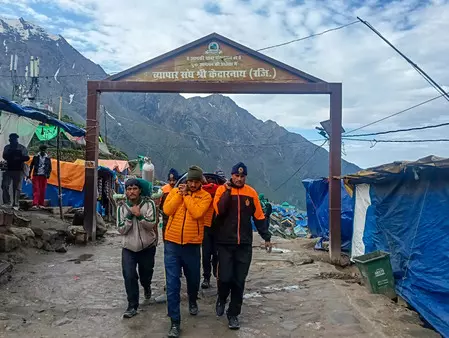
Five-year-old dies in rockfall on Kedarnath route; around 1,000 pilgrims rescued
Digital Desk | Rudraprayag, Sep 28 (IANS) A five-year-old boy died on the spot after being struck by a falling stone from a hillside near Chirbasa on the Kedarnath trekking route in Uttarakhand, officials said on Monday. The deceased has been identified as Yash, son of Rohtash Yadav, a resident of Etah in Uttar Pradesh. According to the District Disaster Management Officer, the police control room received information about a sudden rockfall from a hill near Chirbasa. Yash was hit by the falling stone and succumbed to his injuries at the spot. Following the incident, a rescue team deployed in the area transported the child's body by palanquin to the MRP Bhairav Temple in Junglechatti. The trekking route near Chirbasa has also been blocked by debris and rocks following the rockfall. Rescue teams have been continuously conducting operations in the area to ensure the safety of pilgrims and facilitate their evacuation to safer locations. The route remained blocked by falling debris and rocks from late Sunday evening into the night. Officials said around 1,000 pilgrims have been rescued so far, while some others remain on the route. Rescue personnel are working to evacuate them safely. The Chirbasa area remains vulnerable, with a possibility of intermittent rockfalls from the surrounding hills. Rescue teams have urged pilgrims to exercise extreme caution while moving through the area. Meanwhile, the Char Dham Yatra in Uttarakhand was suspended for the second consecutive day on Sunday (September 27) due to incessant heavy rainfall across the state. As a result, only a limited number of pilgrims returning towards Gaurikund are currently using the route. Rescue teams are monitoring their movement and supervising the evacuation process. Rafting activities in the Ganga near Rishikesh were also suspended after heavy rainfall caused the river's water level to rise rapidly. The India Meteorological Department (IMD) had issued a red alert on Sunday for Chamoli, Rudraprayag, Champawat, Nainital and Pauri districts, forecasting heavy to extremely heavy rainfall. Heavy rain has been lashing several parts of Uttarakhand since Saturday, while snowfall in higher-altitude areas has led to a significant drop in temperatures. In Dehradun, the maximum temperature on Sunday was 21.1 degrees Celsius, around nine degrees below normal, while the minimum temperature was 18.2 degrees Celsius. In view of the heavy rainfall warning, Chief Minister Pushkar Singh Dhami directed officials to remain on high alert round the clock and ensure the safety of people and pilgrims across the state.
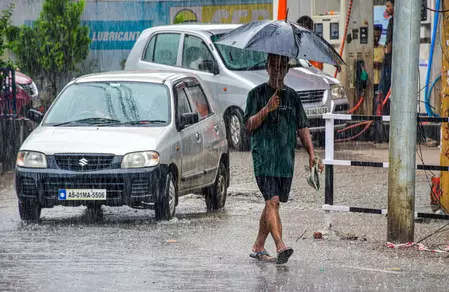
IMD issues red alert in U'khand; heavy rain likely in Himachal, UP
Digital Desk | New Delhi, Sep 27 (IANS) The India Meteorological Department (IMD) on Sunday issued a warning regarding torrential rain and thunder strikes in Uttarakhand. Heavy rainfall is also anticipated in Himachal Pradesh and western Uttar Pradesh. IMD has predicted rainfall in Delhi over the next three days. As rains lashed Uttarakhand on Saturday, the Meteorological Department issued a 'red alert' for the districts of Dehradun, Tehri, Haridwar, and Pauri. The Char Dham Yatra has been suspended in view of the adverse weather conditions. Meanwhile, temperatures have dropped sharply due to snowfall in the high-altitude areas of Pithoragarh, Chamoli, Rudraprayag, and Uttarkashi. Due to the impact of a depression formed over north-eastern Madhya Pradesh and adjoining northern Chhattisgarh, heavy to very heavy rainfall -- and in some places, extremely heavy or exceptionally heavy rainfall -- is expected in Uttarakhand and parts of northern Uttar Pradesh on Sunday. According to the information shared by the IMD on the social media platform 'X', the depression formed over south-eastern Uttar Pradesh has moved north-northwestwards at a speed of 12 km/h over the past six hours. Consequently, it was located approximately 40 km southeast of Lucknow, 80 km east-northeast of Kanpur, 110 km south-southwest of Bahraich, and 260 km southeast of Bareilly. There is a high probability that it will continue moving north-northwestwards across eastern Uttar Pradesh and gradually weaken into a 'well-marked low-pressure area' in the same region over the next six hours. According to the Meteorological Department, the weather pattern in Delhi-NCR underwent a change following rainfall on Saturday evening. People experienced a slight chill on Sunday morning. The IMD has forecasted rain in the national capital over the next three days. Meanwhile, an 'orange alert' for rain has been issued for Jharkhand for Sunday. Additionally, a 'yellow alert' for rain has been issued for Madhya Maharashtra, Chhattisgarh, Odisha, Telangana, Marathwada, Andhra Pradesh, Kerala, Karnataka, Puducherry, and Tamil Nadu. For Monday, a 'yellow alert' for rain has been issued for Maharashtra, Andhra Pradesh, Karnataka, Tamil Nadu, Uttarakhand, Himachal Pradesh, and Jammu & Kashmir, while strong winds are expected in coastal Andhra Pradesh.
Pushkar Singh Dhami Interacts With Children At Police Lines Helipad
Uttarakhand CM Pushkar Singh Dhami shared a glimpse of his interaction with children at the Police Lines Helipad while returning from Haldwani to Dehradun. He said the children would play an important role in the journey towards a developed Uttarakhand and Viksit Bharat 2047.
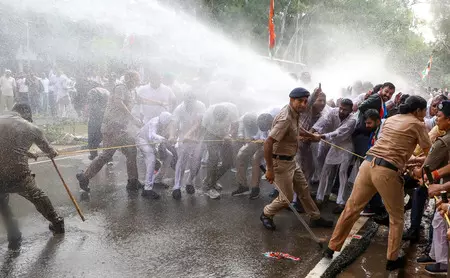
'Gyanesh Kumar should be arrested': Congress stages nationwide protests against CEC
Digital Desk | New Delhi, Sep 25 (IANS) The Congress on Friday staged nationwide protests to demand the resignation and arrest of Chief Election Commissioner (CEC) Gyanesh Kumar over 'vote chori' allegations, asserting that the party would not bow down until action is taken against him. The allegations have gained momentum after a media report claimed differences within the Election Commission of India (ECI) over the Special Intensive Revision (SIR) of electoral rolls. Several Congress leaders and workers were detained during the agitation, including the party's Assam and Punjab chiefs Gaurav Gogoi and Amarinder Singh Raja Warring, respectively. Water cannons were also used to disperse the protesters across states. In the national capital, the Youth Congress held a march demanding the resignation of Gyanesh Kumar. Delhi Congress President Devender Yadav said: The demand is clear that Gyanesh Kumar must be arrested because he has murdered democracy. The essence of a democracy is lost when votes are stolen. We clearly demand that Gyanesh Kumar resign and that the elections conducted over the past year undergo a review, he added. Mahila Congress President Alka Lamba recalled that the party, especially Lok Sabha Leader of Opposition Rahul Gandhi, has been speaking about the heft of votes for months now. On December 14, the Vote Chor Gaddi Chhodo rally was held at Ramlila Maidan in Delhi. The entire Delhi was echoing with the slogan...Today, our only demand is that Prime Minister Narendra Modi should seek Gyanesh Kumars resignation. He should be arrested and sent to jail. The illegal decisions taken by him must be stopped and reversed, Lambae told IANS. Congress leaders and workers attempted to 'gherao' the Election Commission office in Chandigarh. Punjab Congress President Amarinder Singh Raja Warring, who was being detained, told reporters: We have all gathered here demanding the removal of Gyanesh Kumar and his arrest and imprisonment. Our protest is against the SIR. Votes are being stolen across the country, and 20 lakh votes have been deleted in Punjab...Our demand is that SIR should be cancelled and voting should take place without it. Congress Chandigarh President H.S. Lucky asserted that the party would continue the agitation despite the attempts being made by the police to stop them. The police are doing their duty and putting up barricades. Deploy the police, the Army, Income Tax, ED, or any other agency, but the way the people of the country have been wronged, they will not tolerate it. Gen-Z recently held a major protest at Jantar Mantar. Another major movement will emerge in the country. This protest will continue until Gyanesh Kumar resigns, just as (then-Union Education Minister) Dharmendra Pradhan did, Lucky told IANS. Security personnel also used water cannons to disperse agitators in Chandigarh. Leading a protest march in Bhubaneswar, Odisha Congress President Bhakta Charan Das said: This movement is against the stealing of votes, and Gyanesh Kumar will have to resign. Rahul Gandhi has been raising the issue of vote theft from the beginning, but no one was listening. Today, it has been proved how vote theft is taking place. Led by Bihar President Rajesh Ram, Congress workers in Patna marched towards the Election Commission office. However, police put up barricades near the Secretariat to stop them. A heated scuffle broke out between the police and the workers as the latter attempted to break through the barricades and move forward. The police had to use water cannons to bring the situation under control. Speaking to reporters during the agitation, Rajesh Ram said: We are not afraid. We will continue to protest against Gyanesh Kumar, who is a criminal. Another protester alleged that police resorted to 'lathi charge'. Purnia MP Pappu Yadav also took part in the Congress protest in Patna. Criticising the Election Commission, he said: They have committed an injustice against 13 crore people in Bengal, Bihar and Assam. How can they be allowed to go? Former Uttarakhand Chief Minister Harish Rawat took part in the Congress protest in Dehradun. Congress state in-charge Kumari Selja said: We are holding protests across the country. People have seen the revelations that have come out regarding the Chief Election Commissioner. The Election Commission is not functioning in the manner it should. There is no unanimity there, and it is not impartial. Similarly, Congress leaders and workers protested outside the Election Commission office in Shimla. Congress Himachal Pradesh in-charge Rajni Patil also recalled Rahul Gandhi's vote theft allegations, saying: Now we are firmly convinced that there are irregularities in the elections...If things go on like this then the Constitution will be totally destroyed. Similar protests also took place in Assam's Guwahati, where state chief and MP Gaurav Gogoi, along with other party members, was detained while trying to break through police barricades
Election Commission Row Escalates: Congress Takes Protest Nationwide, CEC Under Fire
The Congress-led campaign against the Election Commission intensifies as protests are held across Delhi, Jammu, Kolkata, Lucknow, Dehradun, Guwahati, Patna and Chandigarh. Congress has demanded action against CEC Gyanesh Kumar, while Rahul Gandhi has called for his resignation. The BJP has hit back over Congress's stand on the SIR exercise in Kerala. Meanwhile, a PIL against the CEC has been filed in the Supreme Court.

Congress Launches Nationwide Protests Against CEC Gyanesh Kumar, Demands His Resignation
The confrontation between Congress and the Election Commission has intensified, with Congress launching nationwide protests against Chief Election Commissioner Gyanesh Kumar. Demonstrations are underway in Delhi, Jammu, Kolkata, Lucknow, Dehradun, Guwahati, Patna and Chandigarh. Congress has also put up Gyanesh Hatao, Chunav Aayog Bachao posters in Delhi, while opposition leaders are demanding action against the CEC. Rahul Gandhi has called for Gyanesh Kumar's resignation and accused him of acting against India.
Congress workers staged protests across India on Friday demanding CEC Gyanesh Kumars resignation, a day after Rahul Gandhi accused the Election Commission of electoral wrongdoing. Demonstrations were held in Jammu and Kashmir, Guwahati, Dehradun, Chandigarh and Lucknow, while Delhi saw security deployment ahead of Congress and Youth Congress marches.

Mussoorie Queens and Dehradun Warriors to contest Uttarakhand Premier League 2026 women
The News Mill
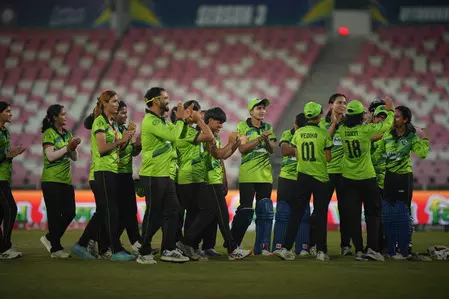
UPL 2026: Unbeaten Mussoorie Queens to face Dehradun Warriors in womens final
Digital Desk | Dehradun, Sep 23 (IANS) Mussoorie Queens and Dehradun Warriors booked their places in the womens final of the Uttarakhand Premier League (UPL) 2026 after finishing as the top two teams in the league stage. Mussoorie Queens topped the standings with a perfect record, winning all their league matches, while Dehradun Warriors finished second with two victories from three games. The two teams will now face each other in the summit clash of the third edition of the UPL on Thursday. Both teams secured victories in their respective matches on Wednesday to confirm their places in the final. In the first match of the day, the Dehradun Warriors won the toss and elected to bowl against Bageshwar Aerial. Bageshwar struggled to build momentum throughout their innings and were restricted to 98/9 in their allotted 20 overs. Dehradun Warriors, chasing 99 for victory, also lost wickets at regular intervals but remained composed during the chase. Neelam Bharadwaj anchored the innings with a valuable 48 off 39 balls and guided her side towards the target. The Warriors eventually reached 99/6 in 18.1 overs to complete a four-wicket victory and secure two crucial points. Bharadwajs match-winning contribution earned her the Player of the Match award. The result kept the Dehradun Warriors firmly in the race for the final, and they eventually finished second in the league standings with two wins from three matches. In the second womens match, Mussoorie Queens faced Pithoragarh Hurricanes after winning the toss and opting to bat first. The Queens found it difficult to score freely against the Hurricanes' bowling attack and finished their 20 overs at 88/9. Despite posting a modest total, Mussoorie produced a disciplined bowling display to keep themselves unbeaten. Pithoragarh struggled throughout their chase and were restricted to 65/9 in 20 overs, handing Mussoorie Queens a 23-run victory. With another win added to their perfect league-stage record, the Mussoorie Queens finished at the top of the table and will now look to complete an unbeaten campaign by lifting the womens title. Dehradun Warriors, meanwhile, will aim to end the Queens winning run when the two sides meet in Thursdays final.

Delhi-Dehradun Expressway To Get Three New Foot Overbridges In East Delhi With Rs 12.90 Crore Outlay

RIMCEE 2026 Applications for Class 8 Admissions - Direct Link to Check Dates Online at rimc.edu.in
RIMCEE 2026 applications for Class 8 admission at Rashtriya Indian Military College (RIMC), Dehradun are open till 30 September 2026. Check important dates and how to apply online through NTA.

Dehradun Warriors and Mussoorie Queens win opening matches of Uttarakhand Premier League 2026
The News Mill
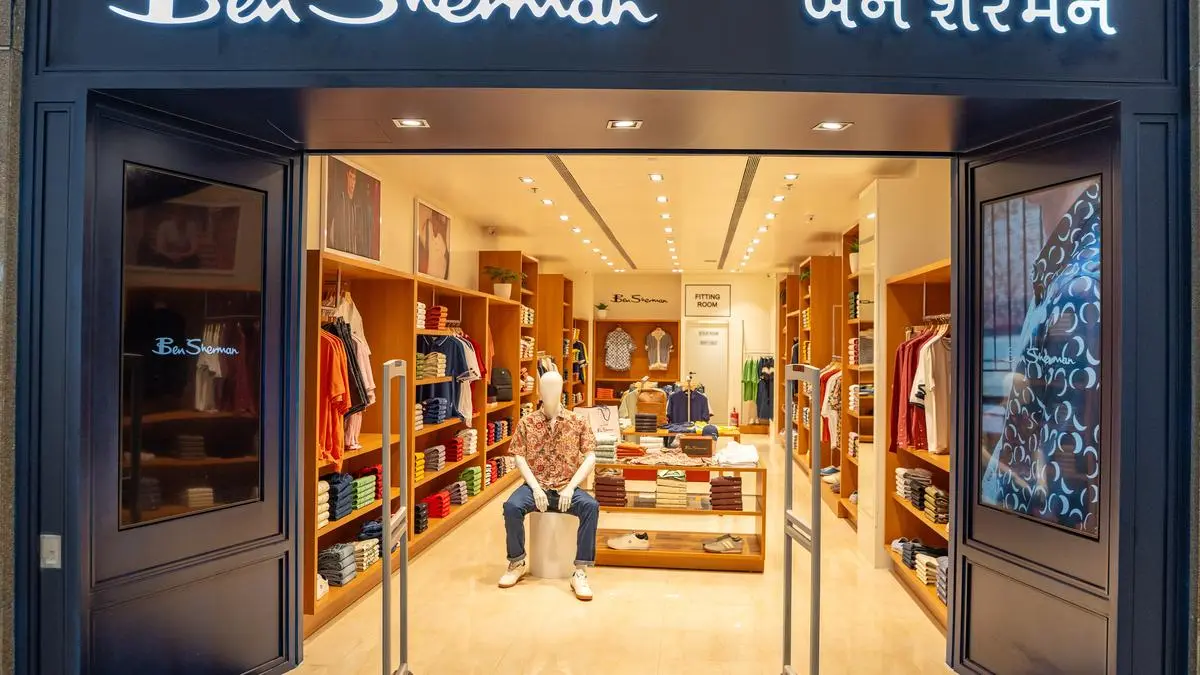
Apparel Group betting big on Ben Sherman as strategic growth driver
As part of the initial store rollout, the company has opened stores in Surat , Indore, Greater Noida West, Lucknow, Thane, Delhi, Bengaluru and Dehradun
Man Shoots Wife Dead, Calls Police Before Fleeing In Dehradun
According to police, the woman's brother Abhishek, who lives near the spot, said his sister and her husband had been locked in a dispute over past several days.
Fake domicile, freedom fighter certificates alleged in Uttarakhand MBBS admissions; SIT probes
Uttarakhand MBBS admissions are under scrutiny over alleged fake domicile and freedom fighter certificates, with a Dehradun SIT probing suspected irregularities in medical college admissions.
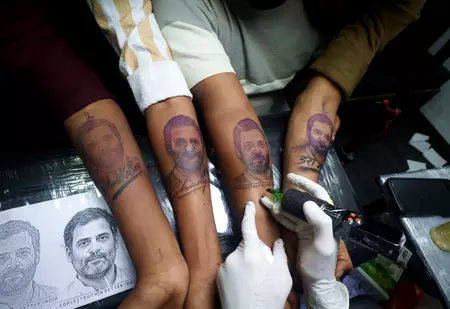
Congress leader says 'Chhatron Ki Goonj' in Indore will be historic; 2.5 lakh registrations received
Digital Desk | Indore, Sep 19 (IANS) Ahead of Congress leader Rahul Gandhis visit to Indore for the 'Chhatron Ki Goonj programme, senior Congress leader Sajjan Singh Verma said the event would be historic and claimed that around 2.5 lakh students had registered voluntarily for the programme. Verma said the programme was non-political and that Leader of the Opposition in the Lok Sabha, Rahul Gandhi, had immense popularity among the youth, particularly students across India. Todays programme will be historic. It is a non-political programme. Rahul Gandhi has immense popularity among the youth, especially students in India. Students believe that there is someone in India who is raising his voice for their rights and fighting for their rights, Verma told IANS. He said similar programmes had been organised in several cities, including Gaya, Pune, Kota and Dehradun, where thousands of students participated voluntarily. Wherever such programmes have been held across India, thousands of students have participated voluntarily, including in Gaya, Pune, Kota and Dehradun. The programme in Indore will be the biggest of them all. Indore is a student hub, and students are registering voluntarily. Around 2.5 lakh registrations have been received, Verma said. Ahead of LoP Rahul Gandhis visit to Indore for the Chhatron Ki Goonj programme, many students got his image tattooed on their hands. However, ahead of the event, posters targeting him were also put up across Indore, but they were quickly removed by Congress workers. Congress leader Digvijaya Singh said the BJP was anxious about the event and described the programme as important for discussions on various issues. Welcoming the participation of students, Digvijaya Singh said a large number of students were joining the programme because they were unhappy with the government and affected by issues in the education sector. A hearty welcome and greetings. Students from here are participating in large numbers because they are unhappy and suffering under this government. They are against paper leaks and the corruption in the education department, he said. LoP Rahul Gandhi is arriving in Indore on Saturday for the Congress Chhatron Ki Goonj outreach programme, with the party seeking to turn the event into a major platform to raise issues concerning students, education, recruitment and unemployment in Madhya Pradesh. The Congress and BJP have traded allegations over the venue issue, adding to the political significance of LoP Gandhis visit to Madhya Pradesh. The event is part of LoP Gandhis wider Chhatron Ki Goonj outreach, with previous editions held in Kota, Dehradun, Prayagraj and Pune. Ahead of Rahul Gandhis visit to Indore, Madhya Pradesh Congress president Jitu Patwari said the programme would provide a platform for young people to raise their concerns. Today is the day of meaningful dialogue with the voices, questions and dreams of the youth in Indore. Come, witness the questions related to education, opportunities and rights reaching the platform of democracy, Patwari said.
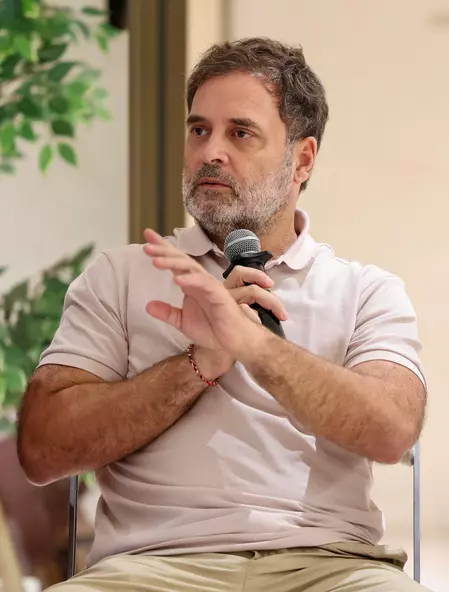
LoP Rahul Gandhi to reach Indore for 'Chhatron Ki Goonj outreach event today (Ld)
Digital Desk | Indore, Sep 19 (IANS) Leader of Opposition (LoP) in the Lok Sabha, Rahul Gandhi, will arrive in Indore on Saturday for the Congress Chhatron Ki Goonj outreach programme, with the party seeking to turn the event into a major platform to raise issues concerning students, education, recruitment and unemployment in Madhya Pradesh. According to the Congress, LoP Gandhi is scheduled to leave Delhi at 12:10 p.m. and reach Indore Airport at around 1:45 p.m. Senior Congress leaders, including Madhya Pradesh in-charge Harish Choudhary, state Congress president Jitu Patwari, Leader of Opposition in the state Assembly Umang Singhar and MLA Arif Masood, will receive him at the airport. After the reception, LoP Gandhi will leave for the Radisson Hotel at around 2:05 p.m. and is scheduled to reach there by 2:30 p.m. Congress workers have planned receptions at five points on the route, including Lavkush Square, MR-10 Square, Vijay Nagar Square and near the Radisson Hotel. He will remain at the hotel until around 5:30 p.m., before leaving for Bharat Jodo Maidan, opposite Regional Park, where the Chhatron Ki Goonj programme will be held. LoP Gandhi is scheduled to spend around two-and-a-half hours at the venue, with his stage programme expected to last about an hour. The Congress has been projecting the programme as a student-focussed initiative and is expected to raise concerns related to examination irregularities, education and employment. The event has also acquired a political edge following the earlier dispute over the venue. The programme was initially proposed at the Jawaharlal Nehru Stadium but was later shifted to the ground opposite Regional Park after permission for the stadium was not granted. The Congress and BJP have traded allegations over the venue issue, adding to the political significance of LoP Gandhi's visit to Madhya Pradesh. The event is part of Gandhi's wider Chhatron Ki Goonj outreach, with previous editions held in Kota, Dehradun, Prayagraj and Pune. After the programme, LoP Gandhi will leave directly for the airport at around 8 p.m. and is scheduled to depart for Delhi at 9 p.m., reaching the national Capital at around 10:30 p.m. Meanwhile, the Indore Police have made extensive security and traffic arrangements for the visit. The traffic diversion plan will come into effect from 1 p.m. and remain operational until the programme concludes. Indore police have also imposed several security conditions covering crowd management, entry and exit, parking, medical facilities, surveillance and emergency arrangements at the venue. Ahead of LoP Gandhis visit, Madhya Pradesh Congress president Jitu Patwari said the programme would provide a platform for young people to raise their concerns. Today is the day of meaningful dialogue with the voices, questions and dreams of the youth in Indore. Come, witness the questions related to education, opportunities and rights reaching the platform of democracy, Patwari said.
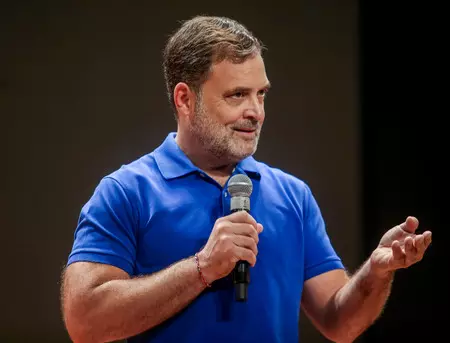
Rahul Gandhi to visit Indore today for 'Chhatron Ki Goonj' event
Digital Desk | Indore, Sep 19 (IANS) Congress leader and Leader of Opposition in Lok Sabha, Rahul Gandhi, will visit Indore on Saturday to interact with students as part of his 'Chhatron Ki Goonj' initiative, which seeks to raise issues concerning education, recruitment and unemployment. Confirming his visit, earlier this week, Rahul Gandhi posted on social media platform X: I'm coming to Indore on September 19 -- to meet students, to hear you, to talk to you. If you or your loved ones are tormented by the education system and want these conditions to change, you know -- 'Chhatron Ki Goonj' is your collective voice, an opportunity to start the change. He urged students to register through the link shared in his social media post and participate in the event. We will discuss in detail every aspect of education and your struggles in Indore, Rahul Gandhi said in the post. The 'Chhatron Ki Goonj' campaign has been used by Rahul Gandhi to engage with students and highlight issues such as question paper leaks, expensive education, alleged irregularities in government recruitment and unemployment. Four editions of the programme have so far been held in Kota, Dehradun, Prayagraj and Pune. The Pune edition, held on August 22, was organised for female students. The Indore programme has also drawn attention after the Congress was denied permission to use the Jawaharlal Nehru Stadium as the venue. The Madhya Pradesh Congress unit has subsequently taken around 12,000 square metres of land in front of the Regional Park on temporary lease from September 17 to 19. As Rahul Gandhi is scheduled to arrive in Indore, politics in the state has intensified. Earlier, Madhya Pradesh Chief Minister Mohan Yadav has criticised Rahul Gandhi ahead of his Indore visit and described the proposed programme as Jhooth Ki Goonj.

Digital Desk | Dehradun, Sep 18 (IANS) The third edition of the Uttarakhand Premier League (UPL) 2026 is set to get underway with an exciting mens opening clash, as Haridwar Elmas lock horns with Nainital Tigers on September 22 at 7:30 PM at the Rajiv Gandhi International Cricket Stadium, Raipur, Dehradun. The League will bring together the leading mens and womens teams from across Uttarakhand, with the tournament scheduled to run until October 1. The womens competition will get the UPL 2026 action underway on September 21, with Pithoragarh Hurricanes taking on Dehradun Warriors at 11:00 AM, followed by Bageshwar Aerial facing Mussoorie Queens at 3:00 PM. The mens competition will begin on September 22, with Haridwar Elmas locking horns with Nainital Tigers at 7:30 PM in the opening mens fixture of the third season. The second mens fixture will see Pithoragarh Hurricanes take on Tehri Titans on September 23, as the seven-team mens competition gets underway. The subsequent days will feature double-header action, providing fans with an extended run of T20 cricket as the teams compete for a place in the knockout stages. The mens competition will feature Pithoragarh Hurricanes, USN Indians, Nainital Tigers, Rishikesh River Kings, Haridwar Elmas, Tehri Titans and Dehradun Warriors. The teams have assembled squads comprising established players, icon players, Under-23 and Under-19 cricketers and uncapped talent following the Players Draft held on September 16. Sunil Joshi, chairperson, Uttarakhand Premier League said, The announcement of the UPL 2026 schedule marks an exciting stage as we get ready for the third edition of the league. With the womens competition opening the tournament on September 21 and the mens action beginning the following day, we are looking forward to a competitive season featuring players from across Uttarakhand. We hope the league provides an engaging platform for both established and emerging cricketers and gives fans an exciting month of T20 cricket. The opening mens fixture promises an intriguing contest, with Haridwar Elmas facing Nainital Tigers on September 22. On September 23, Pithoragarh Hurricanes will face Tehri Titans, with Mayank Mishra representing Pithoragarh Hurricanes as their icon player and Tejasvi Jaiswal headlining the Tehri Titans squad. The league phase will continue with mens double-header fixtures on the subsequent days, with the teams competing for progression into the knockout stage. The Eliminator is scheduled to be played on September 30, before the tournament reaches its climax with the UPL 2026 Final on October 1. The womens competition will feature Mussoorie Queens, Bageshwar Aerial, Pithoragarh Hurricanes and Dehradun Warriors. The four teams will be led by icon players Nandini Kashyap, Prema Rawat, Raghavi Bisht and Sweta Verma, respectively. The September 21 double-header will mark the beginning of the womens competition, with Pithoragarh Hurricanes and Dehradun Warriors meeting in the opening game before Bageshwar Aerial take on Mussoorie Queens in the afternoon fixture. The UPL 2026 will be played from September 21 to October 1 at the Rajiv Gandhi International Cricket Stadium, Raipur, Dehradun. The womens competition will culminate with the Final on September 24, bringing the womens leg of UPL 2026 to a close.
Police Officer Rescues Kitten Trapped Under Car
A heartwarming moment from Dehradun, Uttarakhand, shows a police officer halting a car to rescue a kitten trapped underneath it. The rescue video has since gone viral on social media, drawing praise for the officers quick intervention.

Dehradun traders oppose 0.4% MDR on UPI payments above Rs 2,000
The News Mill
CM Dhami Celebrates PM Modis Birthday at Blessing Lamp Event in Dehradun
Uttarakhand CM Pushkar Singh Dhami honors PM Modi at the Blessing Lamp event, marking his birthday and contributions to modern India. CM Dhami Celebrates PM Modis Birthday at Blessing Lamp Event in Dehradun
PM Modi receiving blessings for his transformation efforts, says BJP chief Nitin Nabin
Digital Desk | Ujjain, Sep 17 (IANS) Bharatiya Janata Party (BJP) President Nitin Nabin on Thursday hailed the ransformation work done by Prime Minister Narendra Modi, asserting that he is receiving the lessings for his own hard work. The BJP chief was in Madhya Pradesh's Ujjain to take part in the 'Aashirwad ka Diya' event, including the 'aarti' ritual of the holy Shipra River, on the Prime Minister's 76th birthday. Speaking to IANS, Nitin Nabin said: I believe that the transformation the Prime Minister has brought into the lives of crores of people today impacts all of us...alongside the form in which PM Modi built housing for the poor, created toilets for sisters, and introduced schemes like Lakhpati Didi. The transformation that has come into the lives of crores of people through such schemes is today returning to the Prime Minister in the form of blessings, he asserted. The 'Aashirwad ka Diya' event, as part of the 'Seva Sankalp Abhiyan', is being organised in various states across the country, where NDA leaders and Ministers are lighting lamps at significant venues and taking part in 'aarti' rituals at the banks of holy rivers to pray for good health and long life of the Prime Minister. The 'Seva Sankalp Abhiyan' has been launched by the Bharatiya Janata Party to mark PM Modi's 25 years of public service. In Lucknow, Uttar Pradesh Chief Minister Yogi Adityanath extended birthday greetings to Prime Minister Modi, while asserting that India has crafted an identity of its own under the latter's leadership. Addressing a gathering, CM Adityanath said: Scores of earthen lamps are being lit across the country to pray for the good health and long life of PM Modi. He further said that the 'Ashirwad ka Diya' is being lit to signify the exemplary work undertaken under the visionary leadership of Prime Minister Modi. Similarly, Uttarakhand Chief Minister Pushkar Singh Dhami referred to Prime Minister Modi as architect of modern India during the 'Aashirwad ka Diya' event held in Dehradun. Meanwhile, Union Home Minister Amit Shah, along with Gujarat Chief Minister Bhupendra Patel, took part in the event in Ahmedabad.
'Architect of modern India': CM Dhami hails PM Modi at 'Aashirwad ka Diya' event
Digital Desk | Dehradun, Sep 17 (IANS) Uttarakhand Chief Minister Pushkar Singh Dhami on Thursday called Prime Minister Narendra Modi the architect of modern India during the 'Aashirwad ka Diya' event, held to celebrate the latter's birthday. The 'Aashirwad ka Diya' event, as part of the 'Seva Sankalp Abhiyan', is being organised in various states across the country, where NDA leaders and Ministers are lighting lamps at at significant venues and taking part in 'aarti' rituals at the banks of holy rivers to pray for good health and long life of the Prime Minister. Addressing a gathering in Dehradun, CM Dhami said: Today is a truly auspicious day because, alongside unveiling the statue of Maa Yamuna, we are also inaugurating the first phase of the construction of ghats. Furthermore, today marks 'Vishwakarma Puja'worship of the deity who sustained the world through his craftsmanship, industry, and artistry. It is also a momentous occasion because today is the birthday of the architect and visionary of modern India, our Prime Minister Narendra Modi. He has elevated India's global stature to a point where today the world awaits India's stance before making any major decision. On his birthday, I extend heartfelt best wishes and congratulations to him on behalf of all of you, the Chief Minister added. CM Dhami also said that PM Modi holds a deep affection for Uttarakhand. Along with the Uttarakhand CM, President and Spiritual Head of Parmarth Niketan Ashram, Swami Chidanand Saraswati and Mahamandaleshwar Avdhoot Baba Arun Giri Ji Maharaj were also present at the occasion. They are here to bestow their blessings upon us all and to offer their best wishes and blessings to the Prime Minister, CM Dhami said. The 'Seva Sankalp Abhiyan' has been launched by the Bharatiya Janata Party (BJP) to mark PM Modi's 25 years of public service. Earlier on Thursday, Uttar Pradesh Chief Minister Yogi Adityanath launched the campaign in Varanasi. Highlighting that Gujarat's Vadnagar is the birthplace of PM Modi, CM Adityanath said that 10 'yatras' will start from Varanasi, where the participants will carry the holy water of the sacred rivers of Kashi and reach the city's Hatkeshwar Mahadev Temple through different routes. Similarly, the holy water from rivers in Gujarat will be carried by the participants of the 'yatra' and offered at the Kashi Vishwanath Temple here, he added.

CASA BACARD Gets Bigger This Year, Taking its Spirit of Music, Culture, and Experiences to Dehradun
CASA BACARD Gets Bigger This Year, Taking its Spirit of Music, Culture, and Experiences to Dehradun
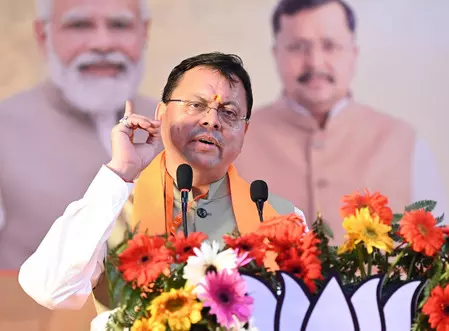
'Will ensure youth don't have to move outside Uttarakhand to fulfill dreams': CM Dhami
Digital Desk | Dehradun, Sep 15 (IANS) Uttarakhand Chief Minister Pushkar Singh Dhami on Wednesday took part in the 'Yuva Sankalp Diwas' event in Dehradun during which he assured that the state government is taking steps to ensure that the youth are not compelled to leave their villages in order to fulfill their dreams. Addressing a gathering, the Chief Minister said: We want to ensure that the youth of Uttarakhand do not have to leave their villages, homes, and state out of compulsion in pursuit of their dreams. We want our youth to become job creators in the future, rather than merely job seekers. Pointing to the emergence of artificial intelligence, robotics, automation, and digital technology that is transforming employment and industry, CM Dhami added: We must prepare our youth not just for the present, but for the world of the future. Accordingly, we are promoting modern skill training aligned with the needs of industries like AI and robotics. Numerous new employment opportunities are being created through tourism, homestays, and local products. Industries are being expanded into hilly regions alongside the plains. We are initiating the establishment of industries in our hilly areas as well. Recently, we decided to develop special industrial zones in areas like Pauri, Chamoli, and Almora, he said. CM Dhami also spoke about the Uttarakhand government's decision to constitute a 'Youth Commission', saying: The decision to constitute the Youth Commission was made with the aim to create new opportunities for employment and self-employment, and to ensure a better future for the youth. We want the youth to be included in the policies formulated for them. This commission will play a vital role in advancing the rights and interests of the youth, as well as fostering opportunities for skill development, employment, entrepreneurship, and innovation. Through this, the youth will gain opportunities to become digitally empowered, he asserted. The Uttarakhand CM also assured that efforts will be made to raise awareness regarding substance abuse, cybercrime, and other social evils. Because I believe that the youth's future should not merely be a subject of discussion; they must now be made active participants in policy-making, he stressed. Chief Minister Dhami referred to the 2023 anti-cheating law in the state, saying that it has been implemented to make the state's recruitment processes ransparent and to safeguard the future of youths. No one should be able to rob a young person of years of hard work and dreams, or commit an injustice against them. After all, an appointment is not merely a statisticit represents a young person's toil and their family's hopes, he said. However, the Chief Minister noted that while the state government can pave way and create opportunities for youths, the journey to reach the destination has to be undertaken by themselves. Invoking a famous quote of Swami Vivekananda, Chief Minister Dhami urged students to work hard, be disciplined and keep the learner within them alive. Today, with a mobile phone in your hand, the world's knowledge is at your fingertips; use it not just for scrolling, but to enhance your skills, he said. CM Dhami mentioned that the Uttarakhand government has launched the 'Yuva Bhavishya Nirman Yojana' to support young people preparing for competitive examinations. They (youth) won't have to spend 60,000 rupees to rent a room far away from home, nor will they need to stay in a hospital or attend classes at a large coaching institute; instead, they will receive that same quality of coaching right in their own homes, villages, neighbourhoods, and cities, he said.

CM Dhami celebrates birthday with children with disabilities, encourages them to pursue their goals
Uttarakhand Chief Minister Pushkar Singh Dhami celebrated his birthday on Wednesday with children with disabilities at the National Institute for the Empowerment of Persons with Visual Disabilities in Dehradun. He cut a cake with the...

Uttarakhand Chief Minister Pushkar Singh Dhami celebrated his birthday on Wednesday with children with disabilities at the National Institute for the Empowerment of Persons with Visual Disabilities in Dehradun. He cut a cake with the children and ...
Uttarakhand to reimburse SGST on 'Hanuman Ansh' tickets
Digital Desk | Dehradun, Sep 16 (IANS) The Uttarakhand government has decided to reimburse the State Goods and Services Tax (SGST) collected on tickets for screenings of the film 'Hanuman Ansh' in cinemas and multiplexes across the state as part of an initiative to promote the film. Director General of Information Banshidhar Tiwari has issued an order in this regard, directing the State Tax Department to take necessary steps for reimbursement of the SGST applicable to ticket sales for the film. According to the order, both Central Goods and Services Tax (CGST) and SGST are levied on ticket sales for screenings of 'Hanuman Ansh' at cinemas and multiplexes in Uttarakhand. The state government has now decided to reimburse the SGST component to encourage and promote the film, which is based on the spiritual journey of a man who later became known as Neem Karoli Baba. 'Hanuman Ansh' tells the story of Laxman Das, who went on to become widely known as Neem Karoli Baba. The film seeks to portray his spiritual transformation and journey from an ordinary life towards devotion and spirituality. The narrative follows the life of a man whose experiences gradually lead him towards a deeply spiritual path, eventually transforming him into a revered figure who became a centre of devotion for millions of followers. The film has been directed by Vishal Chaturvedi. Actor Shobhinav Satya portrays Neem Karoli Baba, while Chandan K. Anand plays the character of Dr Ram Nandan Bhosale. The film also features Purnima Tiwari and veteran actor Anil Rastogi in important roles. 'Hanuman Ansh' has been receiving a strong response from audiences since its theatrical release. The film opened with collections of around Rs 10 lakh in theatres but has continued to draw audiences even after completing more than 35 days of its theatrical run. The film has also witnessed a significant rise in earnings during weekends, with its collections showing an upward trend despite the passage of several weeks since its release. According to the figures cited for the film, 'Hanuman Ansh' has already crossed the Rs 200-crore mark in gross collections in India, adding to its theatrical performance and audience response. Uttarakhand is not the only state to have extended a tax-related benefit to the film. In Chhattisgarh, Chief Minister Vishnu Deo Sai declared 'Hanuman Ansh' tax-free after watching the movie along with members of his Cabinet in Raipur on September 11. The Chhattisgarh government said the film highlights important cultural, spiritual and moral values associated with India's saint traditions. It also noted that the themes presented in the movie could be beneficial for young people and families and encouraged audiences to watch the film.

Uttarakhand Premier League 2026 to begin on September 21 in Dehradun
The News Mill
UPES Dehradun BTech Admissions 2027: UPESEAT Registration Opens, Check Details
The UPESEAT registration process 2027 has been started by the UPES Dehradun. Candidates can apply by visiting the official website, admission.upes.ac.in.
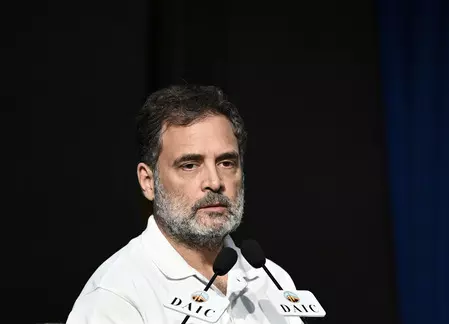
Rahul Gandhi to visit Indore on Sep 19 for 'Chhatron Ki Goonj' event
Digital Desk | Indore, Sep 14 (IANS) Congress leader and Leader of Opposition in Lok Sabha, Rahul Gandhi, will visit Indore on September 19 to interact with students as part of his 'Chhatron Ki Goonj' initiative, which seeks to raise issues concerning education, recruitment and unemployment. Confirming his visit, Rahul Gandhi, through a social media post on Monday, invited students to join the programme in large numbers and share their concerns. I'm coming to Indore on September 19 -- to meet students, to hear you, to talk to you. If you or your loved ones are tormented by the education system and want these conditions to change, you know -- 'Chhatron Ki Goonj' is your collective voice, an opportunity to start the change, the Raebareli MP said in a post on social media platform X. He urged students to register through the link shared in his social media post and participate in the event. We will discuss in detail every aspect of education and your struggles in Indore, Rahul Gandhi said in the post on X. The 'Chhatron Ki Goonj' campaign has been used by Rahul Gandhi to engage with students and highlight issues such as question paper leaks, expensive education, alleged irregularities in government recruitment and unemployment. Four editions of the programme have so far been held in Kota, Dehradun, Prayagraj and Pune. The Pune edition, held on August 22, was organised for female students. The Indore programme has also drawn attention after the Congress was denied permission to use the Jawaharlal Nehru Stadium as the venue. The Madhya Pradesh Congress unit has subsequently taken around 12,000 square metres of land in front of the Regional Park on temporary lease from September 17 to 19. As Rahul Gandhi is scheduled to arrive in Indore, politics in the state has intensified. Earlier on Sunday, Madhya Pradesh Chief Minister Mohan Yadav has criticised Rahul Gandhi ahead of his Indore visit and described the proposed programme as Jhooth Ki Goonj.
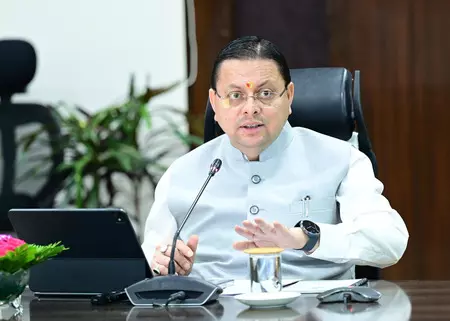
All roads in Uttrakhand must be made pothole-free soon: CM Dhami
Digital Desk | Dehradun, Sep 14 (IANS) Chief Minister Pushkar Singh Dhami on Monday directed officials to ensure that all roads across the state are made pothole-free at the earliest. Reviewing various public interest issues at the Secretariat, he instructed that repair and improvement of roads damaged during the monsoon must be expedited. District Magistrates were asked to regularly review road conditions in their districts and monitor the work of concerned departments and executing agencies. Special attention must be given to quality in construction and repair works. The Chief Minister announced that after October 15, he would personally conduct surprise inspections by travelling on the roads. On arrangements for the Char Dham Yatra, Dhami directed that all facilities be maintained at a high standard. Prioritising the convenience and safety of pilgrims, he ordered regular monitoring of traffic, healthcare, drinking water, sanitation and other essential services along the routes. Relevant District Magistrates and departments must ensure smooth operations through close coordination. The Chief Minister laid special emphasis on making the third phase of the Jan-Jan ki Sarkar, Jan-Jan ke Dwar initiative more effective. He said the maximum number of people should receive benefits of government schemes and services through these camps, with public grievances resolved on the spot wherever possible. The objective, he noted, is to bring the government and administration closer to the people and ensure quick resolution of their problems. Reviewing preparations for the Seva Sankalp Abhiyan, Dhami directed effective implementation of the proposed programmes. He stressed connecting the maximum number of people with government schemes and services, with public service, participation and welfare at the core. Broad public participation must be ensured in campaign events. The Chief Minister also instructed that all necessary preparations be made to prevent infectious and water-borne diseases, including swine flu. District Magistrates should periodically inspect hospitals, review cleanliness standards and the availability of essential medicines and medical supplies. The Health Department and district administrations must work in coordination on prevention, treatment and control measures, with the situation monitored regularly. Dhami underlined that there should be no laxity at any level in public welfare initiatives. Officials must work in coordination to ensure that benefits of government schemes reach eligible beneficiaries in a timely manner, he said. The meeting was attended by Principal Secretaries RK Sudhanshu, L Fanai and R Meenakshi Sundaram, Secretary Shailesh Bagauli, Director General of Police Deepam Seth, Principal Chief Conservator of Forests (HoFF) Kapil Lal, various secretaries, heads of departments and all District Magistrates who joined virtually.
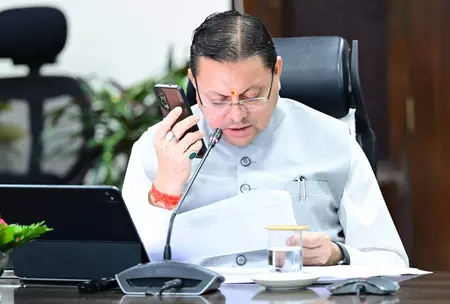
Digital Desk | Dehradun, Sep 14 (IANS) Uttarakhand Chief Minister Pushkar Singh Dhami on Monday directed officials to ensure the prompt, timely and satisfactory resolution of public grievances received through the CM Helpline ('1905'). Reviewing the helpline's functioning at the Secretariat, CM Dhami stressed that the platform is a vital medium for addressing citizens' problems and that resolution must not be limited to formal closure of cases on the portal. A genuine solution to the complainant's issue must be ensured, he said. The Chief Minister instructed District Magistrates to conduct department-wise reviews of the types of complaints most frequently received in their districts, in coordination with relevant departments, and resolve them speedily. He asked them to analyse the reasons for recurring complaints of a similar nature and take effective steps for permanent solutions. Chief Minister Dhami directed all District Magistrates to carry out surprise inspections of Tehsils. During these inspections, special attention should be paid to whether mutation (Dakhil-Kharij) cases are being processed within prescribed timeframes. Complaints related to land fraud must be addressed on priority. He said that the public should not be forced to make unnecessary rounds of offices for revenue-related matters and that prescribed services must be delivered on time. Availability of clean drinking water was accorded top priority, he added. Immediate action must be taken on related complaints. Officials were instructed to complete an audit of pipelines and sewer lines within 15 days and submit a report. Disruptions in water supply, leakages and similar problems must be resolved without delay. Special focus was ordered on grievances pending for more than 30 days. Secretaries, Heads of Departments and District Magistrates should regularly review pending cases at their levels. Accountability must be fixed for officials responsible for delays beyond the stipulated timeframe, the Chief Minister said. Long-pending grievances, including those pending for more than 180 days, should be resolved on top priority. A department-wise status report on such cases was presented during the meeting. The Chief Minister directed that grievances should not be marked 'Special Close' or 'Force Close' unnecessarily. Complainant satisfaction must be given importance, and required action must be confirmed before closure. The feedback mechanism should be strengthened so that the quality of resolution can be assessed through public feedback. Officials performing well in grievance redressal should be encouraged, while accountability must be fixed for those causing delays or showing negligence. Chief Minister Dhami emphasised that the fundamental objective of the CM Helpline is to establish effective communication between the state government and the public and ensure genuine, time-bound and satisfactory resolution of citizens' problems. During the review, the Chief Minister spoke directly to complainants. He contacted Sanjay Kumar Rawat regarding a medical reimbursement case for his late father's treatment that had been closed improperly; Rawat confirmed the bills remained unpaid. Chief Minister Dhami directed officials to take immediate action and ensure payment, warning that similar harassment in sensitive matters would invite accountability. He also spoke with Baby Kotnala of Pauri Garhwal to understand issues related to the pension for abandoned women. They informed the Chief Minister that the issue remained unresolved despite a complaint having been lodged some time ago. Chief Minister Dhami directed the District Magistrate of Pauri Garhwal, Swati S. Bhadauria, to take immediate and appropriate action to ensure the problem was resolved. The Chief Minister also spoke over the phone with Geeta, a resident of Haridwar. She informed CM Dhami that a water tank had been constructed near her home about three months ago, but the supply of drinking water from it had not yet commenced. The Chief Minister instructed the Chief Development Officer of Haridwar Lalit Narayan Mishra to visit the site, inspect the situation, and ensure the immediate commencement of the drinking water supply. Chief Minister Dhami spoke over the phone with Shilpi Saxena, a resident of Dehradun. She mentioned that street lights were installed in her area in a timely manner after she had lodged a complaint regarding them on the CM Helpline. She expressed her gratitude to the Chief Minister for resolving the issue. Meanwhile, Ayush Bisht, a resident of Almora, told Chief Minister Dhami that the department had resolved his grievance regarding his scholarship. While directing an inquiry into the reasons for the delay in the scholarship disbursement, the Chief Minister emphasised the need to ensure that students receive the benefits of government schemes within the stipulated timeframe. Principal Secretaries RK Sudhanshu, L Fanai, and R Meenakshi Sundaram; Secretaries Shailesh Bagauli and Pankaj Kumar Pandey; Director General of Police Deepam Seth; Principal Chief Conservator of Forests (Head of Forest Force) Kapil Lal; other Secretaries; heads of various departments; and all District Magistrates (joining virtually) were present on this occasion.
Your collective voice: Rahul invites students to Chhatron Ki Goonj in Indore
Rahul Gandhi invites students to Indore for 'Chhatron Ki Goonj' on September 19. This event offers a platform for students to voice their education system concerns. He previously held similar sessions in Kota, Dehradun, Prayagraj, and Pune. The upcoming visit has sparked a political debate between Congress and BJP leaders. Gandhi aims to collectively push for necessary changes within the education sector.