



Influencer Amir Shaukeen Sent to Judicial Custody Over Racial Abuse Case in Delhi
Influencer Amir Shaukeen has been placed in judicial custody for one day following his arrest for racial abuse against a youth from Tripura. Influencer Amir Shaukeen Sent to Judicial Custody Over Racial Abuse Case in Delhi
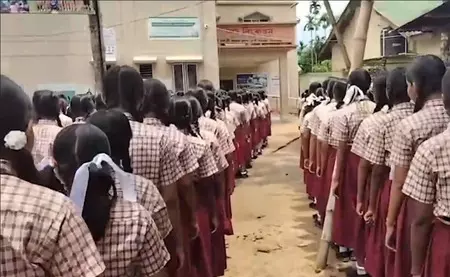
Tripura education dept issues show-cause notices to 3 teachers over alleged private coaching
Digital Desk | Agartala, Oct 23 (IANS) The School Education Department of Tripura has issued show-cause notices to three government school teachers over allegations relating to professional conduct and paid private coaching for candidates preparing for the Teachers' Eligibility Test (TET-I and TET-II), officials said here on Friday. A senior official of the School Education Department said that the notices, issued by the District Education Officers (DEOs) of South Tripura and Sepahijala districts, have directed the teachers concerned to submit written explanations within three days of receiving the notices. Further departmental action, if warranted, will be considered in accordance with the applicable service conduct rules and prescribed procedures. According to information available, one of the cases involves a Post Graduate Teacher (PGT) at Belonia in South Tripura. He has reportedly received a show-cause notice in connection with a video circulated on social media, which has raised questions regarding compliance with the conduct rules applicable to government employees. In two other cases, a Graduate Teacher in Sepahijala district, and a teacher in South Tripura, have reportedly been served show-cause notices over allegations of conducting private coaching classes, tuition sessions and mock tests for TET-I and TET-II aspirants in exchange for payment. The department is understood to be seeking explanations from the teachers before deciding on any further course of action. The specific provisions of the applicable service rules and the evidence relating to the allegations will need to be examined by the competent authority. The teachers have been given an opportunity to respond to the allegations and present their respective explanations. If their replies are found unsatisfactory, the department may consider initiating further proceedings in accordance with the applicable rules. Any disciplinary action, including suspension where legally justified, would be subject to the relevant service regulations and prescribed procedures. The matters are currently at the show-cause notice stage, and the issuance of notices does not, by itself, establish any wrongdoing. The outcome will depend on the explanations submitted by the teachers, the material available to the department and any subsequent proceedings initiated by the competent authority. The development has brought renewed attention to the issue of professional conduct among government employees and compliance with service regulations governing outside employment and private business activities. The department may consider appropriate action in other cases as well, wherever violations are established in accordance with the applicable rules. The Tripura government had earlier prohibited government teachers from engaging in private tuition or coaching, in accordance with the applicable service rules and departmental directives.

Delhi-based content creator Amir Shokeen being brought to Tripura, says CM
Reported by: Mrinal Banik Agartala: Delhi-based content creator Amir Shokeen has been arrested over his objectionable remarks against a youth from Tripuras indigenous community and is in Delhi Police custody, Tripura Chief Minister Manik Saha said. The Chief Minister said a team of Tripura Police had left for Delhi to bring the accused back to [] The post Delhi-based content creator Amir Shokeen being brought to Tripura, says CM appeared first on NorthEast Now .

Court Sends Content Creator Amir Shokeen to Judicial Custody in Racial Abuse Case
Shokeen was arrested over a viral video allegedly showing racial abuse and humiliation of a youth from Tripura, with Delhi Police investigating the roles of several people.

A Delhi court has remanded social media content creator Amir Shokeen to one day of judicial custody in a case involving alleged racial abuse of a youth from Tripura. The order came after Delhi Police...
Delhi-based content creator arrested for alleged racial abuse of Tripura youth

Delhi-based content creator Amir Shokeen who calls himself Amir Shokeen Baba has been arrested after a viral video allegedly showed him racially abusing and humiliating a youth from Tripura. The incident triggered widespread outrage across the Northeast, prompting action by Delhi Police and Tripura Police, condemnation from political leaders and renewed scrutiny of the influencers [] The post Delhi Influencer Amir Shokeen, Who Has A History Of Harassment, Arrested Over Racial Abuse Of Tripura Youth appeared first on The Commune .

JKRLM to host Saras Mela from October 25 in Srinagar
Srinagar, Oct 22:The Jammu and Kashmir Rural Livelihoods Mission (JKRLM), Department of Rural Development and Panchayati Raj is set to organise SARAS AAJEEVIKA Kashmir 2026 from October 25 at Polo View Park, Srinagar, bringing together rural entrepreneurs, artisans and culinary traditions from across India. The ten-day exhibition will offer visitors an opportunity to experience the countrys diverse crafts, handloom traditions and regional cuisines under one roof. Building on the success of previous editions, the mela will feature around 70-80 stalls, with participation from several states and Union Territories, alongside line departments from Jammu and Kashmir. The exhibition will provide a platform for women associated with Self-Help Groups (SHGs) under the Deendayal Antyodaya Yojana-National Rural Livelihoods Mission (DAY-NRLM) to display and sell their products, connect with consumers and explore opportunities to expand their enterprises. Participants from states including Telangana, Uttarakhand, Rajasthan, Jharkhand ,Tripura Odisha and Uttar Pradesh, among others, will showcase products reflecting their regions' traditional skills and local resources. The exhibits will include Pochampally Ikat sarees, Banarasi textiles, Chikankari embroidery, traditional jewellery, handicrafts, home dcor, jute products and other eco-friendly goods. A major attraction of the exhibition will be the Umeed Ka Zaika Food Court, which will bring regional culinary traditions to Srinagar through food enterprises led by women associated with the SHG movement. Visitors will be able to sample traditional delicacies from Himachal Pradesh, Haryana, alongside the cuisine of Jammu and Kashmir. Umeed ka Ziaka initiative is strengthened by JKRLM through capacity-building, improved quality standards and wider market linkages, helping SHG women turn their culinary expertise into sustainable businesses. The ten-day event will also feature cultural and entertainment programmes, along with structured capacity-building sessions for SHG members on key livelihood themes. Expert resource persons will conduct sessions intended to strengthen participants' understanding of enterprise development and help them identify ways to improve their products and business practices. Mission Director JKRLM, Dr. Shubhra Sharma, said SARAS AAJEEVIKA is an important opportunity for SHG members to gain exposure to wider markets, understand consumer preferences and learn about quality standards, product diversification and marketing strategies.Every product displayed at SARAS carries a story of the woman behind it, the skills she has developed, the effort she has invested and the confidence she has gained in building an enterprise of her own. The mela is not simply about showcasing products; it is about recognising the journey through which women, supported by the SHG movement, are finding their place as productive and independent contributors to society, the Mission Director said. Emphasising the wider cultural significance of the event, the Mission Director said SARAS offers visitors an opportunity to experience the traditions of different parts of the country in one place.When people from different states come together, they bring with them much more than their products. They bring their traditions, their food, their craftsmanship and their ways of life. Such events allow us to appreciate cultures beyond our own and in the process, understand our own heritage better, Dr. Sharma said. As Srinagar enters the autumn season, the mela will bring together the colours of India's handlooms, the flavours of its regional cuisines and the entrepreneurial aspirations of rural women, placing their work and achievements at the centre of a shared cultural experience.

The News Mill

Delhi content creator arrested over racial abuse of Tripura youth
The Agartala police have registered a case and are expected to come to Delhi to investigate the matter, according to Additional Commissioner of Police (IFSO) Sanjay Bhatia
Police arrest 'influencer' for racial abuse targeting Tripura man
Delhi Police arrests content creator Amir Shokeen in Tripura harassment case
Amir Shokeen was arrested in Delhi for allegedly racially harassing a tribal youth from Tripura. Political leaders from Tripura condemned his actions as an insult to the state and its people. A case was registered by both Tripura and Delhi police based on the video that went viral. Shokeen apologized, claiming the video was meant to be humorous and not insulting in nature.
Second suspect held in North Tripura double murder case
Tripura journalist, grandson die in road accident

Tripura: Left parties seek deployment of central forces for upcoming civic polls
Reported by Mrinal Banik Agartala: Left parties have urged the Tripura government to deploy central paramilitary forces at every polling station during the upcoming Agartala Municipal Corporation (AMC) and other civic body elections to ensure free, fair and peaceful polling. A delegation of Left leaders met Chief Minister Manik Saha and raised a series of [] The post Tripura: Left parties seek deployment of central forces for upcoming civic polls appeared first on NorthEast Now .
Delhi Police arrest influencer over racial harassment of Tripura youth

Delhi Police arrest influencer Amir Shokeen over alleged racial harassment of Tripura youth
Doomdooma: Delhi Police have arrested social media influencer Amir Shokeen in connection with an alleged case of racial harassment and public humiliation involving a youth from Tripura, following widespread outrage across the Northeast and calls for stringent action against those targeting people from the region. Police said on Thursday, October 22, that Shokeen was apprehended [] The post Delhi Police arrest influencer Amir Shokeen over alleged racial harassment of Tripura youth appeared first on NorthEast Now .

Delhi Police Arrest Content Creator Over Viral Video Mocking Tripura Youth As 'Chinese
A Delhi content creator who allegedly mocked a Tripura youth as Chinese in a viral video has been arrested after police raids across the city.
Delhi based content creator arrested for racial slur to Tripura youth

Creator arrested for racial abuse of Tripura man in viral video
New Delhi: A Delhi-based content creator was arrested for allegedly subjecting a youth from Tripura to racial abuse and humiliation, an official said on Thursday, October 22. Earlier, the Delhi Police had taken suo motu cognisance of a purported video of the incident and launched an investigation after registering a case. The content creator, identified Get the latest updates in Hyderabad City News , Technology , Entertainment , Sports , Politics and Top Stories on WhatsApp & Telegram by subscribing to our channels. You can also download our app for Android and iOS .
Tripura Youth Congress files FIR against Delhi creator over racial harassment
The News Mill
'We Are Indians': Tripura Teen To NDTV On Delhi Influencer's Racist Video
Speaking to NDTV for the first time since the video gained attention on social media, Reang said he did not know he was being filmed until a friend sent him the clip.
Delhi Influencer Arrested Over Racist Video Featuring Tripura Man
Delhi Police's Intelligence Fusion and Strategic Operations (IFSO) unit is investigating the video of the alleged racial abuse.
Veteran Tripura journalist Biman Dhar, grandson die in car crash
Delhi Police nabs Aamir Shaukeen over racial abuse of Tripura tribal youth in viral video
Delhi Police has arrested content creator Aamir Shaukeen in connection with an alleged incident of racial abuse involving a tribal youth from Tripura. The case has triggered widespread outrage after a video showing the young...

Influencer Aamir Shokeen Arrested for Racial Abuse in Tripura Incident
Social media influencer Aamir Shokeen has been arrested for alleged racial abuse against a youth from Tripura, following a viral video. Influencer Aamir Shokeen Arrested for Racial Abuse in Tripura Incident

Content Creator Held For Racial Abuse After Viral Video
A Delhi-based content creator, Amir Shokeen, has been arrested for allegedly racially abusing and humiliating a youth from Tripura in a viral video. Delhi Police took suo motu cognisance of the incident, which has drawn widespread condemnation from political leaders including Union Minister Kiren Rijiju and Tripura CM Manik Saha. The Tripura Students Forum Delhi also filed a complaint seeking urgent investigation into the alleged sexual assault and derogatory remarks.

Women entrepreneurs from across India to sell products at Srinagars Saras Mela from Oct 25
Srinagar, Oct 22: Women entrepreneurs from several states will get an opportunity to sell their products directly to customers in Srinagar as a ten-day Saras Aajeevika Mela begins at Polo View Park on October 25. The exhibition, being organised by the Jammu and Kashmir Rural Livelihoods Mission (JKRLM), will have around 70 to 80 stalls featuring handicrafts, handloom products, traditional jewellery, household items and regional food. According to officials, women associated with Self-Help Groups (SHGs) from Telangana, Uttarakhand, Rajasthan, Jharkhand, Tripura, Odisha and Uttar Pradesh, among other states, will participate in the event. Visitors will be able to purchase products such as Pochampally Ikat sarees, Banarasi textiles, Chikankari embroidery, jute products and traditional handicrafts directly from the participating entrepreneurs. The mela will also have a food court where women running small food businesses will serve traditional dishes from Jammu and Kashmir, Himachal Pradesh and Haryana. Officials said the exhibition is intended to help rural women find customers beyond their local markets and generate income through direct sales. Besides selling products, participants will attend training sessions on improving product quality, packaging, marketing and business management. Mission Director JKRLM Dr. Shubhra Sharma said the event would help women entrepreneurs understand customer preferences and explore opportunities to expand their businesses. She said every product displayed at the exhibition represented the work and skills of women who had established small enterprises through the SHG movement. The mela will also feature cultural programmes during its ten-day run. The exhibition is scheduled to conclude on November 3.

Tripura Parties Demand Action Over Alleged Racial Harassment in Delhi
Political parties in #Tripura closed ranks over the alleged racial harassment in #Delhi of a tribal youth from Gomati district and demanded legal action against social media influencer Amir Shokeen after a video purportedly showing him taunting the young man over his ethnicity circulated online.The clip, which surfaced Tuesday evening, purportedly shows Shokeen asking the youth if he is the president of a neighbouring country. He allegedly also mocks Tripura when the man responds he is Indian.

Delhi Police Files FIR Against Influencer for Racial Comments on Tripura Man
Delhi Police has filed an FIR against influencer Aamir Shaukeen for alleged racial abuse of a Tripura resident in a viral video. Delhi Police Files FIR Against Influencer for Racial Comments on Tripura Man

Tripura Students Forum seeks FIR over alleged racial abuse, assault of youth in Delhi
Guwahati: The Tripura Students Forum Delhi (TSFD) has approached the Delhi Police seeking registration of an FIR and an impartial investigation into allegations of sexual assault, racial harassment and public humiliation involving a person from Tripura in a viral social media video. The complaint was submitted to the Joint Commissioner of Police heading the Special [] The post Tripura Students Forum seeks FIR over alleged racial abuse, assault of youth in Delhi appeared first on NorthEast Now .

No Longer in Politics, No One Can Control Me: Tripura
Agartala, October 22: Tipra Motha Party founder and royal scion Pradyot Kishore Manikya Debbarma on Wednesday declared that he is no longer in politics and could not be controlled by anyone, asserting that the interests of his people would remain his foremost priority. Addressing the traditional Hosom Bhujan programme at Manikya Court in Agartala, Pradyot... The post No Longer in Politics, No One Can Control Me: Tripuras Tipra Motha Founder Pradyot Vows to Prioritise Tiprasa Interests appeared first on Northeast Today .
Tripura Youth Viral Video: Rijiju Vows Action; Amir Shokeen Apologises Over Chinese Remark
A viral video allegedly showing racial harassment and inappropriate touching of a tribal youth from Tripura in Delhi has triggered widespread outrage. Union Minister Kiren Rijiju has warned of action against social media influencer Amir Shokeen, while the Tripura Students Forum Delhi has filed a complaint seeking an FIR and an urgent investigation. Tripura Chief Minister Manik Saha has also directed the state police to coordinate with Delhi Police. Shokeen issued an apology after the clip went viral.

Delhi Police's IFSO to probe viral video of Tripura youth subjected to racial abuse
Police personnel have also visited the residence of the content creator, identified as Amir Shokeen, but a senior police officer said he was found absconding

A Delhi based content creator Amir Shokeen has landed in controversy after a video allegedly showing him making racist remarks against a young man from Tripura went viral on social media, prompting Union Minister Kiren Rijiju to warn of strict action

Kiren Rijiju Vows Strict Action Against Delhi Content Creator Over Racial Abuse of Tripura Youth
Union Parliamentary Affairs Minister Kiren Rijiju, along with Tripura Chief Minister Manik Saha, has promised stern legal action against Delhi-based content creator Amir Shokeen after a video surfaced online showing him racially abusing and mocking a young man from Tripura. The incident has sparked widespread outrage across the Northeast, leading to formal police complaints and [] The post Kiren Rijiju Vows Strict Action Against Delhi Content Creator Over Racial Abuse of Tripura Youth appeared first on Pragativadi I Latest Odisha News in English I Breaking News .
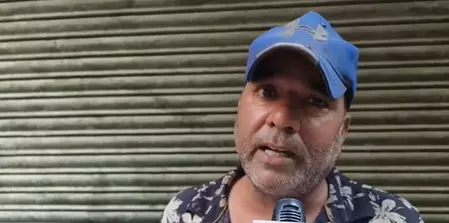
Brothers of accused condemn harassment of Tripura youth, demand strict legal action
Digital Desk | New Delhi, Oct 22 (IANS) The brothers of Amir Shokeen, a Delhi-based content creator accused of making racist and derogatory remarks against a youth from Tripura in a viral video, on Thursday condemned his conduct and demanded strict legal action against him. They said they had been living separately for the past 12-15 years because of his behaviour. Mohammad Waseem Raza, Shokeens brother, said the family had distanced itself from him because of his involvement in hooliganism. Although he is my younger brother, we have been living separately for the past 12-15 years because of his hooliganism. He has a bad reputation in this area. What he said and did was completely wrong. He is a goon, and strict legal action should be taken against him, Raza told IANS. He further alleged that several cases had been registered against Shokeen and claimed that locals were unhappy with his conduct. He engages in hooliganism and nothing else. He has many cases registered against him. People in the area do not support him, and everyone has problems with him. He has a daughter and a son, although I do not know much about them, Raza said. Another brother, Aalishaan, also distanced himself from the controversy and said that Shokeen's conduct was wrong. People know about all these things. I cannot say anything to him. I am 20 years older than him. If someone makes such a video, it would obviously be wrong, he said. Shokeen came under widespread criticism after a purported video showing him making racially derogatory remarks against a youth from Tripura went viral on social media. The video triggered strong condemnation across the Northeast. Amid the backlash, Shokeen released an apology video on Wednesday. He claimed that the video was scripted and that the man featured in it was known to him. According to Shokeen, the man had previously worked at a friend's cafe in Ahmedabad, and their exchange was intended to be humorous, with both participating in the interaction. He maintained that he had no intention of insulting anyone. The controversy prompted Tripura Chief Minister Manik Saha to direct the state's Director General of Police to coordinate with the Delhi Police. Meanwhile, a case has been registered against Aamir Shokeen in Tripura, and Tripura police have left for Delhi to reach his home. Leaders across party lines have also demanded action against the content creator. Union Minister Kiren Rijiju strongly condemned the alleged conduct and called for action against Shokeen. This evil man will be punished. There was a delay in lodging the official complaint, but Delhi Police and Tripura Police will teach him a hard lesson, he said. The Tripura Students Forum Delhi submitted a formal complaint to the Delhi Police on Thursday, seeking registration of an FIR and an urgent investigation into allegations of sexual assault, racial harassment and humiliation of the individual featured in the viral video.
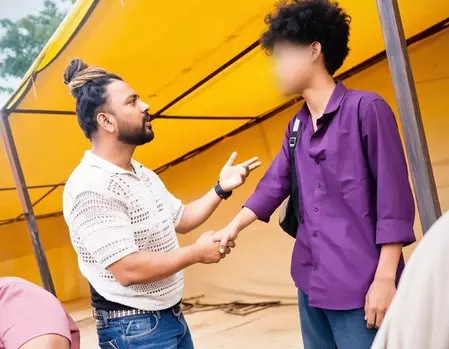
Delhi Content Creator Amir Shokeen Apologises to Tripura People Over Controversial Video
Agartala, October 22: Delhi-based content creator Amir Shokeen has issued an apology to the people of Tripura over a video he described as being made in jest, saying he never intended to hurt the sentiments of the people or insult the state. In a video message, Shokeen folded his hands and sought forgiveness from the... The post Delhi Content Creator Amir Shokeen Apologises to Tripura People Over Controversial Video first appeared on Northeast Today .

Tripura Students Forum seeks FIR after video alleges racial abuse
The News Mill
Tipra Motha Founder Pradyot Demands Amir Shokeen
Agartala, October 22: Tipra Motha Party founder and royal scion Pradyot Kishore Manikya Debbarma on Thursday demanded that Tripura Police bring social media content creator Amir Shokeen from Delhi to Tripura for investigation into alleged derogatory remarks against the state and its people. In a Facebook Live broadcast, Pradyot strongly condemned the language allegedly used... The post Tipra Motha Founder Pradyot Demands Amir Shokeens Transfer to Tripura for Investigation Over Alleged Insult first appeared on Northeast Today .
Students Forum seeks FIR in Delhi over racial abuse viral video; Tripura Police file case
Digital Desk | New Delhi, Oct 22 (IANS) The Tripura Students Forum Delhi on Thursday submitted a formal complaint to the Delhi Police, seeking registration of an FIR and an urgent investigation into an alleged incident of sexual assault, racial harassment and humiliation of an individual from Tripura, reportedly depicted in a video circulating on social media. The development comes after Union Minister Kiren Rijiju raised the issue on social media. Meanwhile, Tripura Police are registering a case under relevant legal provisions, and further action will be taken in accordance with the law. In its complaint, the Tripura Students Forum Delhi (TSF'D) sought the police's urgent intervention, expressing concern over the alleged treatment of the individual by a social media content creator. On behalf of the Tripura Students Forum Delhi (TSF'D), we submit this formal complaint seeking your urgent intervention into a disturbing video circulating on Instagram that allegedly depicts an individual from Tripura being subjected to sexual assault, harassment and humiliating treatment by a social media content creator, the complaint stated. It added that, if established through an investigation, the allegations would raise serious concerns regarding the individual's dignity, bodily autonomy and safety, as well as the protection of people from the Northeast against racial discrimination and harassment. The Forum also alleged that the video contained racially derogatory expressions, including 'Chinki' and 'Chiness', directed at the individual. Such expressions, when used to demean or humiliate a person on account of their perceived ethnic or regional identity, raise serious concerns about racial prejudice, dignity and equal treatment, the complaint stated. The Forum further expressed concern over the alleged use of derogatory language to refer to Tripura in the video, describing it as an insult not only to the individual concerned but also to the people of the state. According to the complaint, such language has caused anguish among members of the Tripura community and is perceived as an affront to the state's dignity, reputation and prestige. The Forum said the circulation of such content on social media could normalise ridicule and contempt towards the state and its people, particularly when accompanied by the alleged acts of harassment and humiliation. It urged the police to determine the applicable legal provisions after examining the material, recording the affected individual's statement, where appropriate, and conducting a thorough investigation. The complaint listed several requests, including formally registering a complaint and taking appropriate legal action, including filing an FIR if warranted by the facts and applicable law. The Forum also called for an urgent and impartial investigation into the alleged sexual assault, harassment, racial humiliation and other acts depicted or reported in connection with the video. It requested the police to establish the identity and role of the person operating the Instagram account in question, along with those who may have participated in, facilitated or recorded the alleged incident. Additionally, the Forum urged authorities to identify and contact the affected individual through a safe and confidential process, record their statement sensitively, and ensure protection against further intimidation, harassment or unwanted public exposure. The complaint also called for the preservation of electronic evidence, including the original recording, metadata, account details, upload history and other relevant digital records, through lawful procedures and appropriate requests to the social media platform. The Forum further sought preventive measures against any threats or intimidation connected to the incident, along with acknowledgement of the complaint and information about the action taken, subject to legal requirements and the individual's privacy. It expressed confidence that the Delhi Police's Special Police Unit for North-Eastern Region (SPUNER) and other competent units would handle the matter with the urgency and sensitivity it requires. Meanwhile, Delhi Police sources said SPUNER had written to the Intelligence Fusion and Strategic Operations (IFSO) unit, requesting an investigation into the viral video. The IFSO unit will now examine the video and investigate the matter further.
Under Fire For Racist Video, Delhi Content Creator Apologises, Cops On Hunt
Amir Shokeen was slammed all across after a video showing him making racially derogatory remarks against a youth from Tripura went viral on social media.
Evil man will be punished: Rijiju warns Delhi man over racial abuse of Tripura youth

Tripura governor urges united effort to create drug-free state
The News Mill

Meghalaya: James Sangma urges Delhi Police to probe alleged racial harassment of Tripura youth
Guwahati: Meghalaya Rajya Sabha MP James P. K. Sangma has urged Delhi Police to register a First Information Report (FIR) and investigate the alleged racial harassment of a youth from Tripura in a viral video involving content creator Amir Shokeen. In a letter dated October 20 to Delhi Police Commissioner Anurag Kumar, Sangma said the [] The post Meghalaya: James Sangma urges Delhi Police to probe alleged racial harassment of Tripura youth appeared first on NorthEast Now .
Racial attack by Delhi influencer on tribal youth roils Tripura
In Tripura, a controversial video featuring influencer Amir Shokeen allegedly mocking a tribal youth has ignited political backlash. Leaders throughout the region voiced their outrage, labeling the incident a racial attack and pushing for swift action. CM Manik Saha has directed the Tripura DGP to collaborate with Delhi Police for a comprehensive investigation.
Delhi Content Creator Racially Abuses Tripura Youth, Minister Vows Strict Action
Kiren Rijiju's remarks came after a purported video showing content creator Amir Shokeen allegedly making racially derogatory remarks against a youth from Tripura went viral on social media, triggering widespread condemnation across the Northeast.
Tripura leaders condemn alleged racial harassment of tribal youth in Delhi
Political parties and leaders in Tripura expressed strong condemnation after the racial harassment of a tribal youth by Amir Shokeen. Chief Minister Manik Saha instructed the Tripura DGP to engage with Delhi police regarding the incident. Youth organisations filed complaints against Shokeen, accusing him of cyberbullying and hate speech. Opposition leaders demanded a formal apology and strict action against the content creator.

Luhnu Cricket Ground: Tanay Thyagarajan finished with 11 wickets, after hitting an unbeaten half-century as Hyderabad thrashed Andhra by 267 runs in an Elite Group B Ranji Trophy match in Mulapadu on Wednesday. Thyagarajan, who had taken five wickets in Andhra's first innings, returned to claim six more as Andhra, set 398 to win, were dismissed for 130. He was named Player of the Match for the second game running, after having won the award against Tripura last week. In Thiruvananthapuram, veteran off-spinner Jalaj Saxena's five-wicket haul helped Kerala beat Odisha by an innings and 36 runs in Elite Group C game. Following on, Odisha resumed on 102/4, and Kerala needed just 23.3 overs on the fourth morning to bowl them out for 143. Mumbai completed their second successive bonus-point win, beating Himachal Pradesh by an innings and 97 runs in Elite Group D at the Luhnu Cricket Ground in Bilaspur, with pacer Mohit Avasthi taking 5-44. Trailing by 388 on the first innings and made to follow on, Himachal resumed on 144/3 and dragged the contest into the second session of the final day. Vaibhav Kalta (63) and Pukhraj Mann (50) offered stout resistance, but Mumbai's experienced attack eventually bowled the hosts out for 291. In New Chandigarh, Aayush Pandey's gritty 111 could not prevent Chhattisgarh from slipping to a seven-wicket defeat to Punjab. Forced to follow on, Chhattisgarh resumed on 123/3 and, on the back of Pandey's century and some handy lower-order runs, posted 335. That left Punjab a target of just 86, which they reached in 16.5 overs, with captain Uday Saharan unbeaten on 40. In the Plate Group, Meghalaya edged Manipur by three runs in a nail-biting finish in Shillong. Chasing 276, Manipur were bowled out for 272 despite half-centuries from Karnajit Yumnam and Rex Rajkumar. Kevin Christopher (3-31), Abhishek Kumar (3-64) and Aryan Bora (2-59) shared the wickets for Meghalaya. In Pune, Shikhar Mohan's 127 led a determined rearguard as Jharkhand batted out on the final day to draw with Maharashtra, who took the first-innings lead and three points. Resuming on 130/1 and still 228 runs behind, Jharkhand finished on 344/8. Utkarsh Singh (58 off 139 balls), Aditya Singh (50 off 159 balls) and Virat Singh (41 off 135 balls) all played long, patient knocks to deny the hosts a shot at victory. Off-spinner Hrithik Shokeen picked up 5-143 as hosts Delhi settled for three points after securing a 169-run first-innings lead over Gujarat in a drawn Elite Group C contest at the Palam 'B' ground. Having won the toss and declared at 648/6, Delhi bowled Gujarat out for 479 after the visitors resumed on 363/5. Following on, Gujarat were 15/1 when the two sides agreed to call it a draw. In Jaipur, an unbeaten century from Mohammad Saif helped Railways save their game against Rajasthan. Railways resumed on 305/6 in their first innings but were bowled out for 338, conceding a lead of 159, with Kukna Ajay Singh taking four wickets. Asked to bat again, they reached 176/2 by stumps as Saif (103 not out) and Eshaan Goyal (59 not out) shared an unbroken 157-run stand for the third wicket. Spinner Parth Bhut claimed eight wickets in the match and was named Player of the Match as Saurashtra took three points from their drawn Elite Group B clash against Karnataka thanks to taking first-innings lead. Resuming on 99/2, Karnataka declared their second innings at 243/7 in 64.1 overs. KL Shrijith made 52 off 76 balls with five fours, KV Aneesh also reached a half-century, and Karun Nair (37) and Manvanth Kumar (31) added useful runs. Bhut returned 3-80 from 25.1 overs, including two maidens, while Sammar Gajjar picked up two wickets and Chetan Sakariya and Ankur Panwar had one scalp each, as Karnataka had to settle for one point. Set 237 to win, Saurashtra comfortably batted out the remaining overs to finish on 137/2 in 42 overs. Chirag Jani anchored the effort with an unbeaten 63 off 117 balls, hitting seven fours and two sixes, while Hetvik Kotak made 25 and Jay Gohil was not out on 22. Manvanth and Shreyas Gopal took a wicket apiece for Karnataka. Bhut returned 3-80 from 25.1 overs, including two maidens, while Sammar Gajjar picked up two wickets and Chetan Sakariya and Ankur Panwar had one scalp each, as Karnataka had to settle for one point. Also Read: Special Cricket Stories Article Source: IANS
Tripura Board Timetable 2027: When Will Class 10, 12 Date Sheets Be Out?
Tripura Board of Secondary Education will release the 2027 Madhyamik and Higher Secondary exam timetable on its official website soon.

Women Celebrate Sindoor Khela Ritual in Delhi, Bengal, and Tripura on Vijayadashami
Women in Delhi, Bengal, and Tripura joyously celebrated Sindoor Khela on Vijayadashami, marking the end of Durga Puja festivities. Women Celebrate Sindoor Khela Ritual in Delhi, Bengal, and Tripura on Vijayadashami
Reported by: Mrinal Banik Agartala: The Youth TIPRA Federation (YTF), the youth wing of the Tipra Motha Party, on Wednesday lodged a complaint with the officer-in-charge of NCC Police Station in Agartala, seeking legal action against social media content creator Amir Shokeen over a racially abusive video targeting an indigenous youngster from Tripura. Addressing the [] The post Tripura: Youth TipraFederation lodges complaint against content creator over racial abuse appeared first on NorthEast Now .
Three Tripura Residents Die in Bengaluru Under Unclear Circumstances; Families Seek Government Aid
Agartala, October 21, 2026: The deaths of three Tripura residents in Bengaluru, where they had reportedly travelled for employment, have raised concerns as their families struggle to bring their bodies back to the state due to financial constraints. The deceased have been identified as Sajjit Debbarma, 43, Lakshmi Debbarma, 22, and Parikshit Debbarma. The circumstances... The post Three Tripura Residents Die in Bengaluru Under Unclear Circumstances; Families Seek Government Aid first appeared on Northeast Today .
Tipra Motha Founder Pradyot Calls for Strict Action Over Alleged Racial Mockery of Tripura Youth
Agartala, October 21: Tipra Motha Party founder and royal scion Pradyot Kishore Manikya Debbarma on Wednesday called for strict action against individuals allegedly making fun of a youth from Tripura through racially offensive remarks, saying such incidents hurt the sentiments of people across the state and should not be dismissed as jokes made for social... The post Tipra Motha Founder Pradyot Calls for Strict Action Over Alleged Racial Mockery of Tripura Youth first appeared on Northeast Today .
Agartala, October 21: The Youth Tipra Federation (YTF) has lodged a formal complaint with the Officer-in-Charge of NCC Police Station in Agartala against social media content creator Amir Shokeen, accusing him of allegedly subjecting an indigenous youth from Tripura to racial harassment, verbal abuse and humiliation in a video circulated on Instagram. In its complaint... The post Youth Tipra Federation Lodges Complaint Against Content Creator Over Alleged Racial Harassment of Tripura Youth first appeared on Northeast Today .
Tripura Targets 6,000 Hectares for Oil Palm Cultivation in 2026-27, Says Official
Agartala, October 21, 2026: Tripura is accelerating efforts to expand oil palm cultivation, with the state government aiming to cover 6,000 hectares during the 2026-27 financial year as part of its strategy to improve farm productivity and create additional income opportunities for farmers. Director of Agriculture and Farmers Welfare and Horticulture departments PB Jamatia said... The post Tripura Targets 6,000 Hectares for Oil Palm Cultivation in 2026-27, Says Official first appeared on Northeast Today .
Agartala, October 21: The Tripura government is making comprehensive arrangements to ensure the smooth and disciplined conduct of Maayer Gaman, the ceremonial immersion procession of Goddess Durga, scheduled for the evening of October 23, with plans to gradually develop the annual event into a national-level cultural attraction and promote the states tourism potential. ICA Secretary... The post Tripura Aims to Elevate Maayer Gaman to National-Level Cultural Event: Kiran Gitte first appeared on Northeast Today .
Agartala, October 21, 2026: Tripura Chief Minister Dr Manik Saha on Wednesday paid tribute to police personnel and security forces who laid down their lives in the line of duty, highlighting the importance of public trust, police modernisation and effective policing to meet emerging security challenges. Addressing the Police Commemoration Day programme in Agartala in... The post Around 222 Tripura Police Personnel Martyred in Line of Duty, Says CM Dr Manik Saha at Commemoration Day first appeared on Northeast Today .

Maiden Durga Puja celebrations at IIT Madras a big success
Digital Desk | Kolkata, Oct 20 (IANS) The first ever Durga Puja held with the campus of the Indian Institute of Technology (IIT) Madras turned out to be a great hit, with more than 2,500 people attending over the last four days. The Durga Puja has been organised by the IIT Madras Bengali community in association with Diganto. Diganto is an independent student body and cultural club under Sangam -- the institute's cultural club umbrella. It celebrates Bengali culture, language and festivals on campus. The five-day festivities bring the vibrant traditions and cultural spirit of Bengal to the campus, from Sasthi evening to Vijaya Dashami, IIT Madras said in a statement. From Vedic chanting, Homam and Arati to the participation of IIT Madras Director V. Kamakoti, who joined the rituals and chanted chapters from the Durga Saptashati, the celebrations are filled with devotion, cultural heritage and community spirit, it said. The Puja was organised at the institute's community hall and everybody, including people from the neighbourhood were encouraged to participate. It has brought together students, faculty, staff, campus families and visitors from across Chennai, reflecting the inclusive spirit of IIT Madras, the institute said. A professor said how attention was paid to every detail. There were some who got the opportunity to participate in a Durga Puja for a first time and all the rituals were explained to them. It turned out to be a cultural melting point. Locals, as well as people from other regions in the country participated wholeheartedly. That is what made the effort a great success, he added. Chennai has about 8-10 prominent Durga Pujas organised by the Bengali community. The scale of the festivities draws people from the state to participate. Durga Puja is primarily celebrated in a big way in the country's eastern states, comprising West Bengal, Odisha, Bihar, Jharkhand, and the Northeastern states of Assam and Tripura. There are subtle variations across the states, though the primary theme remains intact. By organising the Durga Puja for the first time on campus, the students, teachers, and staff have paved the way for an integration of culture. At the same time, Bengali students and families living on campus get a feel of being at home during this festive occassion, the professor noted. The event was not only about religion, but an exchange of culture, he said. People got to learn of the traditional offerings made to the Goddess, such as the concept of Bhog. They got to learn about the significance of rituals like Sandhi Puja. People got to know how the Goddess is treated as a daughter during Durga Puja. Tomorrow, they will witness her send-off, as she sets off for Lord Shiva's abode in Mt. Kailash with her children, the teacher said.
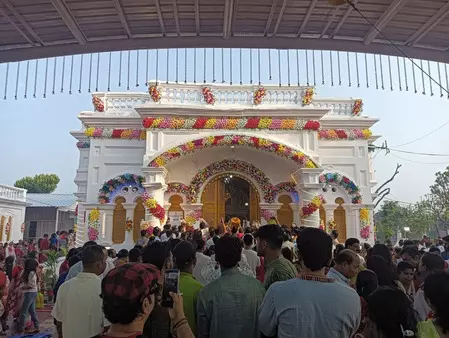
Animal sacrifice tradition continues at Tripura's historic Durgabari temple on Maha Navami
Digital Desk | Agartala, Oct 20 (IANS) A buffalo and a few goats were sacrificed at the historic Durgabari temple here on Tuesday as part of the Maha Navami rituals of Durga Puja, continuing a century-old religious tradition associated with Tripura's former royal family. The rituals were conducted under the supervision of the West Tripura district administration, which took precautions to ensure compliance with court directions. District administration officials said that the animal sacrifice site was covered to prevent public viewing, particularly by children, while hygiene and other prescribed protocols were maintained. West Tripura District Magistrate Vishal Kumar said the tradition had been followed for at least a century and remained deeply rooted in the religious faith of devotees. All directions issued by the court have been followed. The premises have been covered, proper hygiene has been maintained, and healthy animals are brought for sacrifice in accordance with the prescribed protocols, Kumar added. Jayanta Bhattacharjee, the head priest at the temple, said animal sacrifice had been an integral part of the Maha Navami worship for generations. We have a century-old tradition of sacrificing animals to Goddess Durga on the day of Maha Navami as part of the worship. The ritual was conducted at a site concealed from public view. In fact, worshipping of Goddess Durga will remain incomplete without animal sacrifice, he added. The animal sacrifice tradition at temples in Tripura had come under judicial scrutiny in 2019, when a division bench of the Tripura High Court banned animal and bird sacrifices at religious institutions, including the revered Tripura Sundari temple in southern Tripura's Gomati district. The Supreme Court subsequently stayed the High Court's order following a petition, while imposing certain restrictions on the practice. The animal sacrifice ritual at Durgabari temple had also been suspended earlier for administrative reasons before resuming two years ago, according to officials. The temple, associated with Tripura's erstwhile Manikya dynasty, preserves several royal-era religious customs. The Durga Puja is organised by the West Tripura district administration on behalf of the royal family. The temple officials said there was no specific vegetarian or non-vegetarian menu for the deity, as offerings depended on the donations and religious practices of devotees. We offer Goddess Durga whatever devotees donate or sacrifice at the temple. There is no bar on meat and fish here, he added. The temple's rituals also reflect the cultural and religious traditions shared by Bengali and tribal communities in Tripura, officials said. Bhattacharjee said that on Wednesday, the day of Vijaya Dashami, the police would present a guard of honour to Goddess Durga at the temple early in the morning. The holy pitcher would subsequently be escorted to Ujjayanta Palace, where members of the erstwhile royal family would bid farewell to the deity. The Maha Navami observances remain an important part of Durga Puja in Tripura, where customs inherited from the former princely state continue alongside celebrations organised by communities across the state. Held near the magnificent Ujjayanta Palace, the former royal residence, the 150-year-old Durga Puja at Durgabari temple draws thousands of devotees, including visitors from different parts of India and neighbouring Bangladesh. Historian and writer Panna Lal Roy said that government support for the worship at temples associated with the former royal family had continued across successive Left and non-Left governments. He said the merger agreement signed in 1949 between Maharani Kanchan Prabha Devi, the then regent, and the Indian authorities provided for the continuation of certain royal religious traditions.

Suspected Financial Dispute Behind Double Murder of Brothers in Tripura
Two brothers were murdered in Tripura, with police suspecting a financial dispute related to drugs or property. Suspected Financial Dispute Behind Double Murder of Brothers in Tripura

Financial dispute suspected behind killing of two brothers in Tripura, probe on
Digital Desk | Agartala, Oct 20 (IANS) Two brothers were killed, and another person was injured in Tripuras Dharmanagar town, the states second-largest commercial centre after Agartala, police officials said on Tuesday. Police suspect that a financial dispute, possibly linked to drugs or property dealings, may have triggered the killings. Investigators are examining the circumstances surrounding the incident to establish the motive and identify all those involved. The bodies of Subhodip Roy Choudhury (28) and Joydip Roy Choudhury (22) were found in the Baruakandi area under Dharmanagar police station in North Tripura district late on Monday night, amid the Durga Puja festivities. North Tripura district Police officials said that investigators were examining the suspected financial dispute, possible links to drug or property-related transactions and the sequence of events leading to the double murder. According to a complaint lodged by the victims father, Samiran Roy Choudhury, his sons had gone to intervene in a local dispute involving an earlier incident of assault and injury. The complaint alleged that the main suspect, accused Bijan Das (32), had threatened the brothers with dire consequences, including death. The complainant further alleged that his sons received threatening phone calls and later learnt that both had been found dead in Baruakandi. He suspected that Das and a few others were involved in the killings. Police have registered a case under the Bharatiya Nyaya Sanhita (BNS), 2023, and launched an investigation. Bijan Das, who was injured in the incident, is undergoing treatment at a hospital and is being examined as part of the probe. Police have also reportedly arranged additional security for him at the hospital in view of the seriousness of the case. Investigators are examining the alleged threats, the circumstances of the confrontation and any financial dealings that may have led to the violence. The motive behind the killings and the involvement of other persons are yet to be established.
Wave of Accidents, Violence and Fires Casts Shadow Over Durga Puja in Tripura
Agartala, October 20: A series of tragic accidents, alleged violent attacks, thefts, fires and other incidents across Tripura during the past two days has marred the festive spirit of Durga Puja, raising serious concerns over public safety and law enforcement during the celebrations. While thousands of people thronged Puja pandals across the state, incidents reported... The post Wave of Accidents, Violence and Fires Casts Shadow Over Durga Puja in Tripura first appeared on Northeast Today .
Tripura: Father Files Complaint After Two Brothers Found Dead in Dharmanagar; Death Threats Alleged
Agartala, October 20: The mysterious deaths of two brothers in North Tripuras Dharmanagar subdivision have triggered serious concerns, with their father filing a written complaint at the local police station alleging that the youths had received death threats shortly before the incident. The deceased, identified as Subhadip Roy Chowdhury and Joydip Roy Chowdhury, were found... The post Tripura: Father Files Complaint After Two Brothers Found Dead in Dharmanagar; Death Threats Alleged first appeared on Northeast Today .
Tripura Folk Artist Raju Mog Wins National Honour for Sangrain Dance
Agartala, October 20: Tripuras indigenous cultural heritage has received national recognition with folk artist Raju Mog being selected for the prestigious Ustad Bismillah Khan Yuva Puraskar 2025 for his dedicated efforts to preserve and promote the traditional Sangrain dance. A resident of Daspara in Bir Chandra Manu under Santirbazar subdivision of South Tripura district, Mog... The post Tripura Folk Artist Raju Mog Wins National Honour for Sangrain Dance first appeared on Northeast Today .

Indian Army concludes Agniveer recruitment rally in Tripura
The News Mill

Tripura CM Manik Saha opens Rangalal Das Indoor Sports Hall
The News Mill

Tripura-Bangladesh Passenger Train Service Set to Launch Soon
The Northeast Frontier Railway accelerates efforts to establish a passenger train service between Tripura and Bangladesh. Tripura-Bangladesh Passenger Train Service Set to Launch Soon
Tripura gets rail supply of buffer onions ahead of festive season
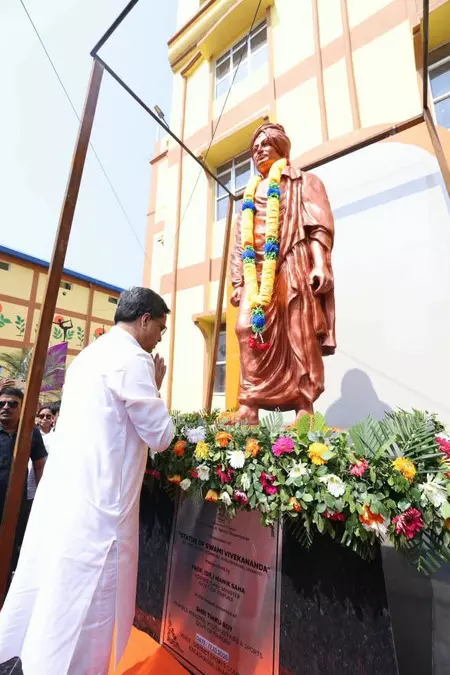
Tripura CM Manik Saha inaugurates indoor sports hall, urges youth to shun drug addiction
Digital Desk | Agartala, Oct 17 (IANS) Tripura Chief Minister Manik Saha on Saturday stressed the importance of promoting sports to prevent drug addiction among youth, build discipline and self-confidence, and ensure the overall development of the younger generation. The Chief Minister said the state government was continuously strengthening sports infrastructure to encourage more young people to take up sports and develop a positive mindset. Chief Minister Saha said this while inaugurating the Rangalal Das Memorial Indoor Sports Hall and unveiling a statue of Swami Vivekananda near the Unakoti District Youth Affairs and Sports Office in northern Tripura's Kailashahar. He added that sports played a vital role in shaping the character of young people and inculcating discipline, self-confidence, self-control, morality and teamwork. Describing the two initiatives, launched on Saptami of Durga Puja, as significant additions to Kailashahar's sports and youth development infrastructure, CM Saha said the state government was naming sports facilities after eminent sportspersons and coaches in recognition of their contributions. The initiative would also help the younger generation learn about Tripura's sporting heritage and draw inspiration from the lives and achievements of distinguished personalities, he added. The Chief Minister cited several such initiatives, including naming the synthetic athletics track at the Dasharath Dev State Sports Complex after Dev Bhakti Jamatia, the synthetic hockey ground at Badharghat after renowned coach Swadeshpriya Nandi, and the synthetic football ground after Pratul Bhattacharya. Similarly, the synthetic athletics track at Panisagar has been named after Arunabha Roy, while the youth hostel in Ambassa has been named after Madhusudan Saha. Naming the newly inaugurated indoor sports hall after Kailashahar's noted footballer Rangalal Das was another step towards honouring personalities who had contributed to the state's sporting landscape, he said. Chief Minister Saha said that several sports infrastructure projects, including a synthetic turf football ground, an athletics track and a swimming pool, were being developed across Tripura. Emphasising the role of sports in combating substance abuse, he added that engaging young people in sporting activities could help them develop discipline, self-control and a constructive outlook towards life. Chief Minister Saha also said that development activities across the country had gained momentum under the leadership of Prime Minister Narendra Modi and that the Tripura government was working to ensure the state's overall development.
Assam eye comeback against depleted Tripura in Ranji Trophy
Centres onion express on way to Tripura, set to calm festive prices

Hyderabad on the cusp of victory as Tripura batters slip up in second innings

Agartala (Tripura) [India], October 17 (ANI): A 72-hour blockade of the Assam-Agartala National Highway, called by the surrendered militant groups of the National Liberation Front of Tripura (NLFT) and All Tripura Tiger Force (ATTF) under the Kaulajoy faction, was effectively foiled by the swift action of the police administration on Saturday. Although tensions arose in the Chandra Sadhup para area of Baramura over the proposed blockade, vehicular movement along the national highway is currently normal. According to reports, as per their pre-announced programme, members of the surrendered militant groups associated with the Kaulajoy faction of the NLFT and ATTF arrived at Chandra Sadhup para in Baramura on Maha Saptami to participate in the 72-hour highway blockade. Upon receiving the information, police officials, accompanied by a Deputy Collector and Magistrate (DCM) from the Jirania Sub-Divisional Administration, reached the spot. The officials held discussions with the protesters a...
Tripura police foil 72-hour Assam-Agartala highway blockade; two officers injured
The News Mill

Ranji Trophy: Hyderabad begins campaign with high hopes
Tripura, on the other hand, looks to shed its underdog tag

Ranji Trophy: Hyderabad begins campaign with high hopes
Tripura, on the other hand, looks to shed its underdog tag

Tripura power utility warns of possible load shedding
The News Mill
Tripura: BSF hands over two detained Bangladeshi policemen to BGB
Two Bangladeshi police personnel inadvertently crossed into Indian territory while conducting an anti-narcotics operation. One officer chased a suspected drug trafficker and crossed the border, followed by his colleague. After being taken into Border Security Force custody, they were questioned overnight at the Ashabari Border Outpost. A flag meeting was arranged between border authorities from both countries for their handover.

Tripura University Result 2026 Out - Check UG
Tripura University has listed provisional results for M..Sc, BVSc & AH, IMDC (Samarth) and M.Com Special Supplementary 2026. See how to check your result on the official portal.

Bank Holiday on October 17, 2026: Banks to Remain Closed in Tripura on Maha Saptami
Banks will remain closed in Tripura on Saturday, October 17, 2026, on the occasion of Maha Saptami, according to the bank holiday calendar mentioned in the source. However, Bank Holiday on October 17, 2026: Banks to Remain Closed in Tripura on Maha Saptami

Tripura CM Manik Saha visits Agartala Durga Puja pandals on Panchami
The News Mill
Tripura CM Manik Saha visits Durga Puja pandals in Agartala on Panchami
Tripura Chief Minister Manik Saha visited multiple Durga Puja pandals throughout Agartala City on the festive evening of Panchami, immersing himself in the vibrant celebrations. His presence underscored the significance of the occasion and fostered a sense of community pride. Amid the vibrant festive atmosphere, the Chief Minister toured different puja pandals across the city, inaugurated pandals and witnessed the enthusiasm and devotion of devotees celebrating Durga Puja. The city has been decked out in colourful decorations and illuminated pandals, drawing crowds of people as the celebrations gather momentum. Panchami marks the beginning of the major festivities, with people coming together to celebrate the occasion with joy and religious fervour. The Hindu festival of Durga Puja, also known as Durgotsava or Sharodotsava, is a yearly celebration that honours the Hindu goddess Durga and commemorates her victory over Mahishasur. Hindu mythology holds that the goddess comes to her earth...
VFS Global To Open First Visa Application Centre In Guwahati
Serving applicants from Assam, Arunachal Pradesh, Meghalaya, Manipur, Mizoram, Nagaland, Tripura and Sikkim, the centre strengthens regional access to visa services through a strategically located facility with strong air, rail and road connectivity.

Some of the most extraordinary culinary traditions are found far away from the restaurants, food festivals and social media trends that dominate the global food industry. In Indias northeastern state of Tripura, Gudok represents one such tradition. Prepared with seasonal vegetables, green chillies and berma, a traditional dried and fermented fish ingredient, Gudok is a [] The post Gudok: Tripuras Fermented Vegetable Dish That Deserves a Global Food Revival appeared first on FoodNosher.Com .