



Three marriages & a live-in: Kanpur woman, 6 kin arrested for fraud
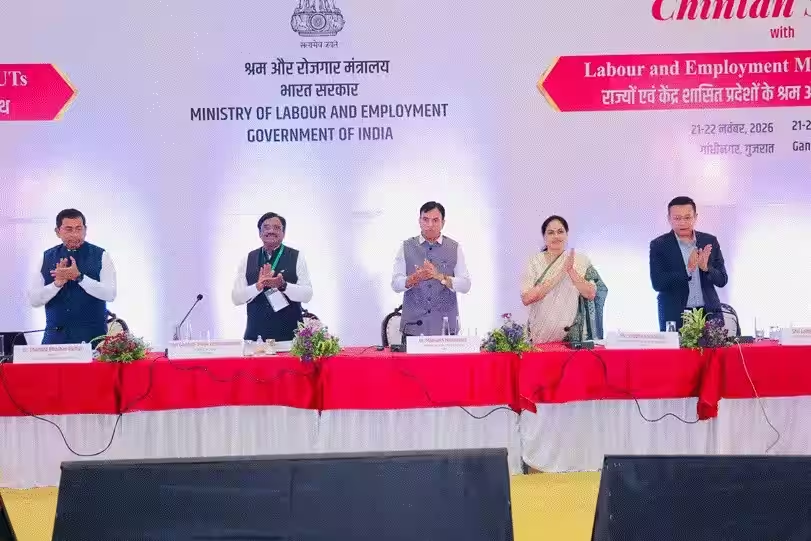
Centre launches NCS ONE Portal, e-Shram module to boost employment
Digital Desk | Gandhinagar, Nov 22 (IANS) Union Minister of Labour and Employment, Mansukh Mandaviya, on Sunday formally launched the National Career Service (NCS) ONE Portal with new features, including the Voice Bot, Chat Bot, and Occupational Shortage Index (OSI), along with the e-Shram Livelihood Profile Module. The initiatives aimed at strengthening India's labour and employment ecosystem were rolled out on the second day of the two-day 'Chintan Shivir' here, in the presence of the Ministers of all the states and Union Territories of the country. The NCS Open Network for Employment (ONE) portal links job seeker apps, employer apps, state employment portals, private job platforms and campuses, while the Occupational Shortage Index (OSI) is a data-driven tool to assess labour market demand and supply gaps. The OSI will help jobseekers with informed career choices, employers in identifying shortage and plan recruitments, education and training institutions to align skilling, re-skilling and up-skilling with industry demand and policymakers with targeted employment and skilling interventions, according to an official statement. The e-Shram Livelihood Profile tracks a worker's livelihood information alongside five essential social security protections (Panch Suraksha): food security, health protection, life insurance, accident and disability protection, and pension security. In a significant expansion of the Ministry's Career Lounges initiative, Union Minister Mandaviya virtually launched eight Career Lounges at Jaipur, Ludhiana, Bhubaneswar, Kanpur, Bengaluru, Varanasi, Hyderabad, and Guwahati. Career lounges are being established as a strategic extension of Model Career Centres (MCCs) under the National Career Service (NCS) framework, with 200 centres to be set up in employment exchanges, universities and educational institutions, particularly in Tier-II and Tier-III cities, in collaboration with industry partners. The Career lounges will provide career guidance, skill and aptitude assessments, mentoring, employability training, industry interactions, internships, apprenticeships and placement support. They will also provide exposure to international employment opportunities, global labour market trends, international skill requirements and occupational standards, including language and cross-cultural preparedness, thereby enhancing the global employability of India's youth and connecting them with emerging opportunities in domestic and international labour markets. Mandaviya also unveiled two publications -- the Addendum to the National Classification of Occupations (NCO-2015) and Compilation of Existing and Emerging Green Occupations at the event. Delivering his closing remarks, the Union Minister said that the two-day Chintan Shivir brought forward a wide range of practical insights, field experiences, and policy perspectives from states and Union Territories. He noted that acting decisively on these deliberations in alignment with the Prime Minister Narendra Modi's vision will guide the nation forward along the path to 'Viksit Bharat', while empowering India's Shram Shakti. Mandaviya also said that the suggestions and learnings exchanged during the conclave will help safeguard and strengthen the interests of workers while supporting more effective ground-level implementation of the Labour Codes. Underscoring the importance of sustained Centrestate partnership, he emphasised that coordinated efforts and shared resolve will help build a responsive, inclusive, and future-ready labour and employment ecosystem across the country. Day 2 of the Chintan Shivir included sessions on the Labour and Employment Stack and Career Lounges for International Labour Mobility. These sessions featured presentations by officials. Participating states also shared best-practice videos. Across both days, thematic plenary sessions covered Labour Codes implementation, employment initiatives and Employees' Provident Fund Organisation (EPFO) reforms, Employees' State Insurance Corporation (ESIC) reforms, and social security for unorganised workers along with labour statistics.

India Can Win Wellington Test Without Batting Again; 8 Wickets Needed
India can win the opening Test against New Zealand at the Basin Reserve in Wellington by an inningswithout needing to bat a second timeif Indian bowlers take the remaining eight wickets before New Zealand wipe out their 233-run deficit on the fifth and final day. After New Zealand reached 119/2 in their second innings at stumps on Day 4 following India's massive first-innings declaration at 720/9, the hosts still trail by 233 runs behind their first-innings 368. For cricket fans across Indiaincluding supporters following the tour closely in Uttar Pradesh cities such as Unnao, Kanpur, Lucknow, Prayagraj, and Varanasithe fifth-day equation turns Basin Reserve into a high-stakes contest between New Zealand's survival resolve and India's attack. The Cricket Rule Behind an Innings Victory Without Batting Again Under standard Test cricket rules governing follow-on and innings victories, a team that bats second and trails by more than 200 runsor in this case, a side batting second after a massive first-innings totalmust outscore the opposing team's total across both innings combined just to force the opposition to bat a second time. Here is how the numbers stand heading into Day 5 at Wellington: Innings / Metric Runs / Status Key Context New Zealand 1st Innings 368 all out Hosts' opening total India 1st Innings 720/9 declared 352-run first-innings lead for India New Zealand 2nd Innings (End of Day 4) 119/2 Still trail by 233 runs to make India bat again India's Win Condition 8 wickets before NZ reach 720 combined Wins by an innings and runs If New Zealand are bowled out in their second innings while their combined match total across both innings remains below 720meaning they fail to add 233 more runs to their Day 4 score of 119India win outright by an innings and runs without stepping out to bat again. What Happens If New Zealand Cross 233 More Runs on Day 5? Because New Zealand already scored 368 in their first innings and 119 by stumps on Day 4, their combined match total at the close of play stands at 487 runs. To erase India's 352-run lead, New Zealand need 233 additional runs in their second innings to reach 720 overall. If New Zealand reach 233 more runs (taking their second innings to 352 and their combined match total to 720), the deficit disappears and India would require 1 run to win if any wickets remain in hand. Conversely, if New Zealand bat through the scheduled overs on Day 5 and hold off India's bowlers without losing all eight remaining wickets or conceding an innings defeat, the match would end in a draw. Day 5 Outlook: New Zealand Resist as India Push for Eight Wickets Having absorbed India's record-setting 720/9highlighted by strong contributions across the top and middle orderNew Zealand showed cautious intent on Day 4 evening, closing on 119/2 with Devon Conway (59)* and Rachin Ravindra (27)* at the crease and still 233 runs behind. With New Zealand focused on digging in to bat out time and save the Test, Shubman Gill's bowling unit faces the challenge of finding early breakthroughs with the ball on Day 5 to prise out the remaining eight wickets and seal an innings triumph in Wellington.

India A vs Pakistan A: Pakistan All Out for 313; Target 314
Pakistan A were bowled out for 313 inside their allotted 50 overs on Sunday, November 22, 2026, leaving India A with a 314-run target in a high-pressure encounter with semi-final implications. After winning the toss and electing to bat first, Pakistan A surged to 64 runs inside the opening six powerplay overs before losing momentum in the middle phase and collapsing latedropping their final three wickets for just nine runs. For India A, Harshit Rana, Vipraj Nigam, and Suryansh Shedge picked up two wickets apiece in a fiery, competitive contest marked by intense exchanges and momentum swings. For cricket followers across Indiaincluding fans in Uttar Pradesh cities such as Unnao, Kanpur, Lucknow, Prayagraj, and Varanasi tracking emerging talentthe high-scoring setup promises a tense chase. Explosive Powerplay Start Gives Way to Mid-Innings Check Electing to bat first, Pakistan A openers Muaz Sadaqat and Shamim Hussain wasted no time putting pressure on the bowling attack, racing to 64 runs in the first six overs with clean strokeplay and brisk running between the wickets. That early blitz set an aggressive tone, but the breakthrough arrived in the eighth over when Shamim Hussain was dismissed. The dismissal immediately slowed Pakistan A's scoring tempo and triggered spirited competitive energy on the field, highlighted by Harshit Rana's charged exchanges with the batters and a vocal send-off after claiming Shamim's wicket. Hasan Nawaz and Farhan Yousuf Power Pakistan Past 300 Despite middle-over resistance from the Indian bowlers, three Pakistan A batters registered half-centuries to keep the scoreboard ticking: Muaz Sadaqat, Hasan Nawaz, and Farhan Yousuf. Hasan Nawaz top-scored for the side with a fluent 79, striking five fours and four sixes, while Farhan Yousuf provided a decisive late surge to lift the total past the 300-run mark. After moving to 24 off 28 deliveries, Farhan accelerated sharply over the closing stagesadding 32 runs across his final 20 ballsbefore Pakistan A folded prior to completing their full 50 overs, losing their last three wickets for just nine runs. Key Bowling and Innings Snapshot Side / Player Key Figures / Contribution Notes Pakistan A Total 313 all out (under 50 overs) Lost last 3 wickets for 9 runs Hasan Nawaz 79 runs (5 fours, 4 sixes) Top scorer for Pakistan A Farhan Yousuf Half-century; 32 in last 20 balls Helped cross 300 after starting on 24 off 28 Harshit Rana (IND A) 2 wickets Fiery spells and spirited exchanges Vipraj Nigam (IND A) 2 wickets Key middle-overs control Suryansh Shedge (IND A) 2 wickets Helped stem late momentum What Lies Ahead for India A in the Chase Set 314 to win, India A's top and middle order face a demanding run chase against an attack defending a competitive total with a semi-final berth on the line. Keeping wickets intact through the powerplay and pacing the middle overs without getting bogged down will be crucial if India A are to overhaul the target comfortably.

Jacob Duffy Sets Unwanted Cricket Record After 201 Runs in Test
New Zealand fast bowler Jacob Duffy experienced a grueling outing against India during the first Test at the Basin Reserve in Wellington, entering an unwanted chapter of international cricket history after conceding 201 runs in a single Test innings. Bowling 33 overs for 1/201 at an economy rate of 6.09 runs per over as India piled up 720/9 declared, the 32-year-old became the first bowler in international cricket history to concede at least 200 runs in a Test innings and at least 100 runs in an ODI innings. For cricket followers across Indiaincluding passionate fans in Uttar Pradesh cities such as Unnao, Kanpur, Lucknow, Prayagraj, and Varanasi tracking Shubman Gill's India squad in New Zealandthe record-setting batting display turned Wellington's first Test into a gripping contest heading into the final day. Breaking New Zealand's Long-Standing Innings Runs Conceded Mark In New Zealand Test history, conceding 200 or more runs in a single innings has occurred only rarelypreviously seen with spinner Stephen Boock (229 runs against Pakistan in Auckland in 1989) and former skipper Daniel Vettori (200 runs against India in Ahmedabad in 1999). Duffy's tally of 201 runs now stands as the most runs conceded by a New Zealand fast bowler in a Test innings, eclipsing the previous pace benchmark held since 1995. Across Test cricket history among pace bowlers, Duffy's figures of 1/201 place him level with Australia's Brett Leewho returned 4/201 from 39.3 overs against India in Sydney in 2004for the fifth-highest runs conceded by a pacer in a Test innings, behind Khan Mahmood (259), Fazal Mahmood (247), Kapil Dev (220), and Ian Botham (217). The overall record for most runs conceded in a Test innings remains with New Zealand's Stephen Boock (229 against Pakistan in 1989). India's Historic 720/9 Declares Unprecedented Batting Milestones Duffy's difficult spell came amid a commanding batting performance by Shubman Gill's Indian side in response to New Zealand's first-innings 368, stretching India's total to 720/9 declared and opening a 352-run first-innings lead. Key contributions powered the visitors to a towering score: KL Rahul anchored the innings with 136 runs. Rishabh Pant counterattacked with an entertaining 128 off 153 balls. Shubman Gill narrowly missed a century, falling for 98the lone wicket claimed by Duffy in the innings. Yashasvi Jaiswal (85), Devdutt Padikkal (80), and Dhruv Jurel (78) added substantial support as India became the first team in Test history to record seven partnerships of 50 or more runs in a single Test innings. The declaration total also set a new highest team score on New Zealand soil and stood as India's highest-ever total in overseas Test cricket. First Bowler With 200+ in a Test Innings and 100+ in an ODI Innings What makes Duffy's statistical footnote unique across formats is his earlier 100-run outing against India in one-day internationals. On January 24, 2023, during the third ODI against India in Indore, Duffy conceded 100 runs in 10 overs while taking 3 wickets (3/100). Pairing that ODI mark with his 201-run innings in Wellington makes him the first bowler in international cricket to cross the 200-run mark in a Test innings and the 100-run mark in an ODI innings. How the Wellington Test Stands Ahead of Day 5 After absorbing a steep first-innings deficit, New Zealand fought back in their second dig, reaching 119/2 at stumps on Day 4still trailing by 233 runs with Devon Conway (59)* and Rachin Ravindra (27)* at the crease. Heading into the final day at the Basin Reserve, the hosts face a stern test to bat out the match and avoid defeat, while India needs eight wickets to push for a series-opening victory.

India-China Military Talks Held on Arunachal Border Ahead of Winter
India and China have held a fresh round of commander-level military discussions aimed at managing friction and preventing localized escalations along the Line of Actual Control (LAC) in the Eastern Sector as harsh Himalayan winter conditions set in across Arunachal Pradesh. The Indian delegation was led by Lieutenant General Girish Kalia, General Officer Commanding (GOC) of the Indian Army's III Corps (headquartered at Rangapahar near Dimapur, Nagaland), alongside senior military officers and a representative from the Ministry of External Affairs (MEA), engaging with Chinese military counterparts to keep operational communication channels open. For strategic affairs observers, defence followers, and news readers across Indiaincluding communities in northern heartland towns such as Unnao, Kanpur, Lucknow, Prayagraj, and Varanasithe talks reflect ongoing efforts to maintain stability along high-altitude frontiers ahead of winter deployments. Preventing Patrol Friction and Escalation Along the Eastern LAC The central focus of these commander-level engagements is establishing clear on-ground protocols, minimizing friction between patrolling parties, and ensuring that tactical disagreements in overlapping or differently perceived stretches of the LAC do not spiral into wider standoffs. Both militaries maintain substantial troop deployments along sensitive sectors of Arunachal Pradesh, where steep mountain terrain, weather extremes, and narrow high-altitude ridges add operational complexity as temperatures drop sharply in late autumn and winter. Sustained military-to-military and diplomatic dialogue has remained an essential mechanism for both sides to clarify ground positions, manage patrol routines, and preserve calm along volatile stretches of the frontier. Building on the September Talks at Wacha-Damai in Kibithu The latest engagement follows earlier Corps Commander-level talks held in the Eastern Sector on September 6 and 7, 2026, at the WachaDamai Border Personnel Meeting (BPM) pointswith Wacha situated in the Kibithu sector of Arunachal Pradesh as India's easternmost BPM point. That September round took place amid reports of heightened sensitivity around areas such as Taksing in Arunachal Pradesh's Upper Subansiri district, underscoring why regular structured interactions between field commanders and diplomatic officials remain crucial in zones where perceptions of the LAC diverge. Across this eastern theatre, the Indian Army's III Corps anchors forward readiness and border management. Historical Roots of the Arunachal Pradesh Boundary Dispute The border question in the eastern sector centers on Beijing's refusal to accept the McMahon Line, which India recognizes as the established international boundary between India and China in the region. Negotiated during the 1914 Simla Convention involving representatives of British India, Tibet, and China, the alignment was later repudiated by successive Chinese authorities. Beijing claims Arunachal Pradesh as Zangnan or South Tibet, whereas New Delhi has consistently and firmly rejected those claims, maintaining that Arunachal Pradesh is an integral and inalienable part of India and that peace and tranquility along the border remain foundational to bilateral relations.

No Sequel to Salman Khan's 'Bajrangi Bhaijaan'; Actor Confirms
Fans hoping for a cinematic follow-up to Salman Khan's emotional 2015 blockbuster Bajrangi Bhaijaan have received a clear answer straight from the superstar: there will be no sequel to the beloved drama. Speaking candidly during promotions for his upcoming theatrical release Maatrubhumi: May War Rest in Peace (also referred to as Matrubhoomi), Salman addressed persistent rumors surrounding a second installment and stated plainly that Bajrangi Bhaijaan should not have a Part 2. For moviegoers and Bollywood followers across northern Indiaincluding cinephiles in Uttar Pradesh cities such as Unnao, Kanpur, Lucknow, Prayagraj, and Varanasithe actor's remarks bring clarity on one of Hindi cinema's most frequently rumored follow-up projects even as anticipation builds for his December 4 big-screen arrival. Why Salman Khan Believes 'Bajrangi Bhaijaan' Should Not Get a Sequel Between 2009 and 2017, Salman Khan delivered a string of massive box-office hits that cemented his commercial dominance, with Bajrangi Bhaijaan standing out as both a critical favorite and a pan-Indian crowd-pleaser. Asked whether the story of Pawan Kumar Chaturvedi (Bajrangi) and little Munni could continue in a sequel, Salman explained that taking a self-contained emotional film into a second part risks inviting unfair comparisons with the original. In his words, creating a Part 2 and inviting comparisons where audiences feel the second film does not match the impact of the first is not the right movewhich is why he does not believe a Bajrangi Bhaijaan sequel should be made. By drawing a firm line on Bajrangi Bhaijaan 2, Salman put an end to years of speculation surrounding a project that had often been discussed by fans and trade circles. Box Office Legacy of 'Bajrangi Bhaijaan' and Contrast With 'Dabangg' Directed by Kabir Khan, Bajrangi Bhaijaan arrived in theaters in 2015 and struck a deep emotional chord across borders and demographics, earning more than 320 crore net in India and crossing 918 crore worldwide. Its blend of warmth, humor, cross-border empathy, and memorable music made it one of the defining theatrical events of Salman Khan's career. While ruling out a sequel to Bajrangi Bhaijaan, Salman has struck a different tone regarding Dabangg, noting that the Chulbul Pandey franchise remains open to fresh ideas and future installments because the team holds the creative reins to take it in new directions. Salman Khan Returns in 'Maatrubhumi' on December 4, 2026 Attention is now centered on Salman Khan's upcoming big-screen drama Maatrubhumi: May War Rest in Peace, directed by Apoorva Lakhia and scheduled to release in cinemas worldwide on December 4, 2026. The film draws inspiration from the 2020 Galwan Valley events and features Salman in a role inspired by Indian Army officer Colonel B. Santosh Babu, who was posthumously honored with the Maha Vir Chakra. Alongside Salman Khan, the cast includes Chitrangada Singh, Mukesh Rishi, Ankur Bhatia, Zeyn Shaw, Saqib Saleem, and Abhilash Chaudhary, with Vijay Raaz lending his voice as narrator. Following months of reshoots, creative revisions, and release shifts from earlier in 2026, Maatrubhumi is slated to test audience appetite in theaters starting December 4.

Rashmika Mandanna's 'Mysaa' Postponed Ahead of Nov 27 Release
Cinema lovers waiting to watch Rashmika Mandanna in her upcoming action drama Mysaa will have to hold out a little longer after the makers officially pushed back its theatrical release just five days ahead of schedule. Originally slated to arrive in cinemas on November 27, 2026, the film's release change was announced by the production banner Unformula Films and director Rawindra Pulle on Sunday, November 22, 2026, triggering an immediate wave of curiosity among fans across India. For moviegoers and entertainment followers across northern Indiaincluding audiences in Uttar Pradesh cities such as Unnao, Kanpur, Lucknow, Prayagraj, and Varanasi tracking pan-India theatrical releasesthe late-hour shift leaves the new arrival date open for now. Why the Makers Decided to Push 'Mysaa' From November 27 In a joint statement shared on social media, the filmmakers and director Rawindra Pullewho also co-wrote the script alongside Rajkumar Kandamudiexplained that they wanted to deliver the film without cutting corners. Pointing to the high technical benchmark set by contemporary releases in Telugu cinema, the team described Mysaa as an ambitious, large-scale action drama built for an immersive big-screen experience. To ensure we bring this vision to audiences without any compromise, we have collectively decided to postpone the film's theatrical release from November 27th, the statement read. While the team did not lock in a replacement date immediately, producers assured viewers that a fresh release date will be announced soon and that the wait will not be overly long. Rashmika Mandanna Reacts: 'I Don't Know When It Will Release Yet' Following the producers' announcement, leading lady Rashmika Mandanna reshared the update on her Instagram Stories with a candid reaction that quickly made rounds online. Admitting that she was equally unaware of the revised timetable at the moment, she wrote that the release appeared to be getting pushed and promised her followers she would share the exact date as soon as she had clarity herself. Cast, Crew, and Pan-India Release Plans for 'Mysaa' Positioned as a multi-language theatrical release across Telugu, Hindi, Tamil, Malayalam, and Kannada, Mysaa features Rashmika Mandanna in a fierce action-driven role as a Gond woman standing up against oppression. The supporting ensemble includes Easwari Rao, Rahul Ravindran, Samuthirakani, Rao Ramesh, Shiva Kandukuri, Karthik Ranjini, Tarak Ponnappa, and Nidhi Singh. Backed by producers Ajay Sayyapureddy, Anil Sayyapureddy, and Veerasai Gopa under Unformula Films, the technical crew features music by Jakes Bejoy, cinematography by Shreyaas Krishna and Naveen Sasi, editing by Karthika Srinivas R, production design by GM Sekhar, and action choreography by Kecha and Mallesh. Ahead of the earlier date, promotional tracks and visualsincluding a recreated rendition of Osey Ramulamma sung by Vandemataram Srinivashad already built notable pre-release buzz. When Will 'Mysaa' Hit Theatres? As of November 22, 2026, no new theatrical release date has been officially announced for Mysaa. The makers have stated only that the revised schedule will be revealed shortly, meaning fans will have to watch for upcoming announcements from the production team and Rashmika Mandanna before booking tickets.

Panchayat Season 5 Trailer Date Out; Banrakas Eyes America for Phulera
Excitement around one of India's most beloved streaming dramas has surged into high gear as Prime Video prepares to drop the trailer for Panchayat Season 5 on Monday, November 23, 2026, ahead of the new season's premiere on December 3, 2026. Building anticipation on Sunday, November 22, the makers unveiled a cheeky promotional video starring Durgesh Kumar as Banrakasnow stepping into the role of Phulera's newly minted Pradhan Pati after his wife Kranti Devi (played by Sunita Rajwar) won the village election at the close of Season 4. In the promo, Banrakas boldly claims he will transform Phulera into a lush garden and even America, turning the familiar power dynamics of Phulera upside down. For streaming fans and viewers across heartland Indiaincluding audiences in Uttar Pradesh cities such as Unnao, Kanpur, Lucknow, Barabanki, and Rae Bareli, whose small-town rhythms and panchayat politics resonate deeply with the show's settingthe shift from old rivalries to fresh ambitions sets up an intriguing new chapter. Banrakas Takes Over Campaign Duties From Sachiv Ji Ahead of Trailer Drop In a playful twist on the series' usual marketing routine, the promotional spotlight for Season 5 has shifted away from Panchayat Sachiv Abhishek Tripathi (Jitendra Kumar) and handed over to Banrakas, who proudly presents himself as the new force running the show in Phulera. Announcing the November 23 trailer launch on social media, Prime Video leaned into Banrakas's larger-than-life swagger as he teases grand plans to modernize and beautify the village. Whether Phulera's grand makeover turns out to be genuine progress, hilarious local grandstanding, or fresh political friction will only become clear once the trailer lands and full episodes begin streaming on December 3, 2026. Power Shifts in Phulera After Kranti Devi's Season 4 Victory The backdrop to Banrakas's big promises lies in the dramatic conclusion of Panchayat Season 4, where the balance of power inside the Phulera Gram Panchayat shifted decisively when Kranti Devi defeated Manju Devi (Neena Gupta). With Manju Devi and her husband Brij Bhushan Dubey (Raghubir Yadav) stepping out of the pradhan chair, Banrakas now claims he will deliver what the previous regime could noteven as familiar faces including Prahlad Pandey (Faisal Malik), Vikas (Chandan Roy), and Bhushan (Durgesh Kumar) remain central to everyday village life. Over four seasons, Panchayat has won nationwide acclaim for blending dry humor, relatable bureaucratic hurdles, and heartfelt human moments rooted in rural India. With the trailer arriving November 23 and Panchayat Season 5 premiering December 3 on Prime Video, fans won't have long to see whether Banrakas's America vision brings harmony or chaos to Phulera.

Sukanya Samriddhi Yojana Calculation: Get Over Rs 70 Lakh at Maturity
Planning early for a daughter's higher education and future milestones is one of the highest priorities for Indian families, especially when balancing market volatility against long-term financial security. Backed by the Government of India's small savings framework, Sukanya Samriddhi Yojana (SSY) remains one of the most popular sovereign-backed instruments for parents seeking tax-advantaged compounding without equity market swings. At the current 8.2 percent per annum interest rate, depositing the maximum permissible 1.5 lakh every year can grow into more than 70 lakh by maturity in 21 years. For households and parents across northern Indiaincluding families planning ahead in Uttar Pradesh cities such as Unnao, Kanpur, Lucknow, Prayagraj, and Varanasi through local post offices or public-sector banksunderstanding the exact math and eligibility rules helps turn disciplined annual saving into a substantial long-term corpus. Who Can Open an SSY Account: Daughter Only, With Age and Family Limits A frequent question among parents is whether a Sukanya Samriddhi Yojana account can be opened for a son or only for a girl child. Under scheme rules, SSY can be opened exclusively in the name of a girl child; an account cannot be opened in the name of a son. Families with both a son and a daughter can open an SSY account strictly in their daughter's name provided she is below 10 years of age at the time of account opening. Natural or legal guardians can open the account through a designated post office or authorized bank branch. Ordinarily, parents can open accounts for up to two daughters in a family, though exceptions apply under prescribed rules in specific cases such as twin or triplet births on the first or subsequent birth order. Core Rules, Deposit Limits, and Tenure of Sukanya Samriddhi Yojana Before mapping out long-term returns, parents should note the essential operational parameters governing SSY: Minimum Annual Deposit: 250 in a financial year (with subsequent deposits in multiples of 50). Maximum Annual Deposit: 1.5 lakh in a financial year across the account. Applicable Interest Rate: 8.2% per annum, compounded annually and reviewed quarterly by the government. Deposit Tenure: Deposits can be made for 15 years from the date the account is opened. Maturity Period: The account matures upon completion of 21 years from the date of opening (or upon the daughter's marriage after turning 18, subject to scheme conditions). Complete Math: How Rs 1.5 Lakh Yearly Grows to Over Rs 70 Lakh in 21 Years Suppose you open an SSY account shortly after your daughter's birth and deposit the maximum 1.5 lakh per year for the full 15-year contribution period: Total Principal Invested (15 Years): 1,50,000 15 = 22,50,000 (22.50 lakh). Years 1 to 15 (Contribution & Compounding Phase): Each annual deposit earns interest compounded annually. If an illustrative 8.2% annual interest rate is assumed consistently throughout the tenure and deposits are made at the start of each financial year, the corpus grows substantially even before the 15-year deposit window closes. Years 16 to 21 (Pure Compounding Phase): Even after annual deposits stop at the end of year 15, the accumulated balance continues to earn interest for another six years until the 21-year maturity mark. Estimated Maturity Corpus (at 8.2% Illustrative Rate): Approximately 71.8 lakh (comprising roughly 22.5 lakh in principal investment and nearly 49.3 lakh in cumulative interest). While the exact rupee figure varies slightly depending on whether deposits are made at the beginning or end of each financial year, the power of compounding over 21 years accounts for more than double the total amount invested. Important Caveats to Keep in Mind Before Investing Although the 71.8 lakh illustration demonstrates the wealth-building potential of disciplined, long-term saving at 8.2%, actual maturity proceeds are indicative rather than guaranteed at a fixed rate for two decades. Small savings interest rates are notified periodically by the government and can be revised over time, and deposit timing within the financial year also influences annual interest calculations. Parents should also review liquidity rulessuch as partial withdrawal provisions after the account holder turns 18 or completes Class 10 for higher education expensesso the plan aligns smoothly with their family's timeline.

India Gold Imports Drop 40% in 7 Months, Saving $16.46 Billion
India's gold import bill fell by nearly 40 percentor $16.46 billionbetween April and October 2026 compared with the same seven-month window a year earlier, according to trade data highlighted on Sunday, November 22, 2026, by the Confederation of All India Traders (CAIT). Over the seven-month period, gold imports declined from $41.24 billion in AprilOctober 2025 to $24.78 billion in AprilOctober 2026, easing pressure on India's external trade account and saving valuable foreign exchange. For households, retail jewelers, and personal-finance readers across northern Indiaincluding families and bullion markets in Uttar Pradesh cities such as Unnao, Kanpur, Lucknow, Prayagraj, and Varanasi, where gold holds deep cultural and wedding significancethe sharp pullback reflects shifting consumer restraint alongside broader market dynamics. Welcoming the moderation in import outflows, CAIT Secretary General and Member of Parliament Praveen Khandelwal linked the trend to Prime Minister Narendra Modi's appeal urging citizens to avoid non-essential gold purchases for a year. According to Khandelwal, the numbers point to growing public awareness around a nation first approach to household spending and economic priorities. October Gold Imports Plunge 62.6% Year-on-Year to $5.51 Billion Commerce Ministry quick estimates underscored an even steeper contraction in the single month of October. Gold imports dropped 62.57 percent (roughly 62.6 percent) year-on-year to $5.51 billion in October 2026, down from $14.72 billion in October 2025. Khandelwal noted that the impact of the Prime Minister's callwhich PM Modi also referenced during an event in Lucknowhas become visible in recent trade numbers. At the same time, market analysts and industry observers have pointed to a combination of influences shaping gold demand during the period, including elevated price levels, a shifted festive calendar, and customs duty changes. Annual Import Trajectory and FY 202627 Outlook India's gold imports had climbed sharply over the preceding two fiscal years, rising from $58.01 billion in FY 202425 to $71.98 billion in FY 202526, according to official trade figures cited by CAIT. Given the slower pace of inbound shipments recorded through the first seven months of the current fiscal year, CAIT estimates that India's full-year gold imports for FY 202627 could moderate to around $35 billion to $40 billion. CAIT National President B. C. Bhartia said the Prime Minister's appeal was intended to encourage prudent consumption aligned with broader national economic interests rather than merely curtailing buying for its own sake, adding that public responsiveness signals greater economic awareness among everyday consumers. Jewellers' Body Highlights Forex Management and Trade Balance Benefits Echoing the macroeconomic perspective from the jewellery trade, Pankaj Arora, National President of the All India Jewellers and Goldsmiths Federation (AIJGF), observed that while gold remains integral to Indian culture, wedding traditions, family savings, and social life, heavy reliance on imported bullion weighs on foreign exchange reserves. Arora stated that measured restraint in gold purchases can support healthier management of India's foreign exchange reserves, help keep the trade deficit in check, and reinforce overall macroeconomic stabilityeven as jewellers adapt to changing buying patterns across retail markets.

Pancreatic Cancer Breakthrough: Daraxonrasib Shows Trial Promise
Oncologists worldwide have long regarded pancreatic cancer as one of the most aggressive and unforgiving malignanciesoften referred to as a silent killer because early symptoms are subtle or absent until the disease has already progressed or metastasized. Now, researchers have reported encouraging clinical trial findings for an experimental oral targeted therapy called daraxonrasib (also referenced in coverage as daroxonasib), which demonstrated notable tumor shrinkage and disease control when paired with standard chemotherapy in patients with advanced pancreatic cancer. For health-conscious readers, patients, and families across Indiaincluding residents in Uttar Pradesh cities such as Unnao, Kanpur, Lucknow, Prayagraj, and Varanasi tracking advances in oncology carethe findings offer a meaningful scientific update even as larger, long-term trials continue. What Was the Daraxonrasib Trial and What Did the Results Show The clinical findings were presented at the EORTC-NCI-AACR Symposium in Barcelona on November 20, 2026, and highlighted in oncology reporting including the European Medical Journal. The study evaluated 61 patients diagnosed with advanced pancreatic cancer that had already spread to other parts of the body. Participants received daraxonrasib alongside two established chemotherapy medicines: gemcitabine and nab-paclitaxel. Reported outcomes from the study included: Disease Control: Tumor progression halted in 90.2% of evaluated patients. Objective Response (Tumor Shrinkage or Disappearance): Tumors shrank measurably or resolved in 60.7% of patients. Complete Scan Response: In 8.2% of patientsroughly 1 in 12tumors were no longer visible on CT scans, a result clinicians describe as a complete radiological response. Because early-stage clinical trials involve limited patient numbers and require extended follow-up to confirm durability, overall survival benefits, and long-term safety profiles, researchers emphasize that these findings represent early promise rather than a definitive cure. How Daraxonrasib Works Compared With Traditional Chemotherapy Mutations in the KRAS gene are a primary driver in the vast majority of pancreatic ductal adenocarcinoma cases, sending continuous growth signals that keep malignant cells dividing. Daraxonrasib is designed as a targeted RAS/KRAS pathway inhibitor intended to interrupt those growth signals at their source. This mechanism sets targeted therapy apart from conventional chemotherapy. While chemotherapy drugs like gemcitabine and nab-paclitaxel act broadly on fast-dividing cells throughout the bodywhich is why side effects can affect healthy tissues such as blood cells, hair follicles, and the gastrointestinal tracttargeted inhibitors aim specifically at molecular pathways fueling tumor survival. What Patients and Families Should Keep in Mind While new targeted therapies are reshaping oncology research, doctors stress that experimental treatments remain subject to regulatory review, clinical trial eligibility criteria, and oncologist guidance. Anyone experiencing persistent upper abdominal or back pain, unexplained weight loss, new-onset digestive changes, or yellowing of the skin or eyes (jaundice) should consult a qualified physician promptly for proper evaluation, and patients exploring clinical trials should discuss suitability and potential side effects directly with their oncology care team.

Healthy Weight Gain Remedy: Acharya Manish Shares 3-Ingredient Mix
While much of the modern wellness conversation revolves around shedding extra kilos, millions of underweight individuals face the exact opposite frustration: trying everything from full-cream milk and ghee to bananas and calorie-dense shakes, yet seeing the weighing scale barely budge. Beyond everyday remarks about looking overly thin, stubborn low body weight often leaves people feeling fatigued and self-conscious. Addressing this common concern in a recent Instagram video, Ayurveda and holistic wellness exponent Acharya Manish shared a straightforward, kitchen-based evening remedy that relies on three everyday pantry staples rather than expensive supplements or synthetic powders. For health-conscious readers across northern Indiaincluding households across Uttar Pradesh in cities such as Unnao, Kanpur, Lucknow, Prayagraj, and Varanasi where roasted chana, gur, and ajwain are staples in almost every kitchenthe remedy offers a practical, digestible way to support natural appetite and healthy muscle-building nutrition. The 3 Kitchen Ingredients Acharya Manish Recommends Every Evening Rather than overloading a sluggish digestive system with heavy, oily foods, Acharya Manish's approach pairs clean plant protein and natural iron with a classic digestive spice: One Handful of Roasted Chickpeas (Bhuna Chana): A budget-friendly, accessible source of plant protein and dietary fiber that supplies amino acids needed for tissue repair and lean mass. Organic Desi Jaggery (Gur): Unrefined jaggery provides natural carbohydrates, warmth, and iron, helping support healthy hemoglobin levels and steady energy. A Pinch of Carom Seeds (Ajwain): Traditionally valued in Indian kitchens for stimulating digestive enzymes, easing bloating, and relieving gas or sluggish bowel movements. Best Time and Right Way to Eat This Weight-Gain Combination According to Acharya Manish, how and when you consume these three ingredients matters just as much as the ingredients themselves. He advises eating the trio together in the late afternoonideally around 4:00 PM to 5:00 PMas an evening snack. Equally important, he stresses chewing the mixture slowly and thoroughly rather than swallowing it in a hurry. Proper mastication mixes food with salivary enzymes, eases the workload on the stomach, and gently kindles hunger so you feel genuinely ready for a wholesome dinner later in the evening. How Chana, Jaggery, and Ajwain Work Together in the Body Individually, each ingredient brings distinct nutritional value, but eaten together they complement one another effectively: Supporting Lean Muscle Over Empty Fat: Healthy weight gain is about building functional muscle tissue rather than merely accumulating body fat. Roasted chickpeas deliver sustained protein and complex carbohydrates to support gradual, healthy tissue growth. Improving Blood Vitality and Stamina: Jaggery supplies natural iron and minerals that support red blood cell production and circulation, helping counter the dullness and low stamina often associated with nutritional gaps. Strengthening Digestive Fire (Agni): In traditional wellness frameworks, poor weight gain is frequently linked to weak digestion and incomplete nutrient absorption rather than a lack of food. Carom seeds (ajwain) help clear gas, heaviness, and indigestion so the gut absorbs nutrients efficiently and natural appetite improves. Adding Pomegranate and Balanced Habits for Sustainable Results Alongside the evening chanagurajwain habit, Acharya Manish recommends including fresh pomegranate (anar) in the daily diet to support blood health, vitality, and physical strength. For sustainable, well-rounded weight gain, nutrition specialists also note that pairing traditional whole-food snacks with balanced main meals, adequate hydration, restful sleep, and basic resistance or bodyweight exercises helps ensure added calories translate into steady strength and energy. If persistent underweight status is accompanied by sudden weight loss, chronic fatigue, or digestive discomfort, consulting a qualified healthcare professional is always advisable to rule out underlying thyroid, metabolic, or absorption issues.

UP TGT Online Form 2026: Last Date Extended to November 28
Teaching aspirants across Uttar Pradesh dreaming of securing a government-aided secondary school post have received a welcome breather from the Uttar Pradesh Education Service Selection Commission (UPESSC), Prayagraj. The commission has officially extended the online application deadline for the UP Trained Graduate Teacher (TGT) Recruitment 2026notified under Advertisement No. 07/2026 to fill 17,735 Assistant Teacher vacanciesfrom November 23 to November 28, 2026. Issued in compliance with interim directions from the Allahabad High Court, the extension gives eligible B.Ed. and TET-qualified candidates across Uttar Pradeshincluding aspirants preparing in Unnao, Kanpur, Lucknow, Prayagraj, Varanasi, Agra, and Gorakhpurfive additional days to complete their registration and fee payment on the official website upessc.up.gov.in. Revised UP TGT 2026 Schedule: Application, Correction, and Exam Dates Alongside pushing back the final registration and fee submission deadline, UPESSC has updated the application correction window while keeping the December written examination schedule intact: Notification Release Date: October 23, 2026 Online Application Start Date: October 24, 2026 Extended Last Date for Registration & Fee Payment: November 28, 2026 Application Form Correction Deadline: November 30, 2026 UP TGT Written Examination Dates: December 23 and December 24, 2026 Applicants who spot any spelling, subject-combination, or personal-detail errors in their submitted forms will be able to modify their entries through the official portal until November 30, 2026. Vacancy Distribution, Eligibility, and Exam Pattern Overview The recruitment drive spans 17,735 Assistant Teacher (Trained Graduate Grade) posts across non-government aided secondary schools in Uttar Pradeshcomprising 16,193 positions in boys' schools and 1,542 positions in girls' schools across 17 subjects including Hindi, English, Mathematics, Science, Biology, Social Science, Sanskrit, Urdu, Commerce, Home Science, Physical Education, Agriculture, Art, and Music. Selected teachers are placed in Pay Matrix Level-7 (44,900 to 1,42,400). To be eligible as of July 1, 2026, candidates must be at least 21 years old (with an upper age ceiling of 62 years as per service rules) and hold a bachelor's degree with the prescribed subject combination, an NCTE-recognized B.Ed. degree, and a valid Upper Primary (Classes 68) TET qualification. The offline written test will carry 360 marks across 120 Multiple Choice Questions (90 questions from the concerned subject and 30 from General Knowledge) to be solved in 2 hours, with 3 marks awarded for each right answer and a negative marking penalty of 1 mark per wrong response. Category-Wise Application Fee Structure Candidates must deposit the prescribed examination fee online according to their reservation category before the November 28 cutoff: General / OBC / EWS / Other State Candidates: 1,000 Scheduled Caste (SC) / Scheduled Tribe (ST): 500 Persons with Disabilities (PH / PwBD): 300 Step-by-Step Guide to Fill the UP TGT Online Form 2026 Visit the official UPESSC website at upessc.up.gov.in. Complete the mandatory One-Time Registration (OTR) under the New Candidate / Create Your ID section if you have not already generated an OTR number. Log in using your OTR ID and password, then select the UP TGT Recruitment 2026 (Advertisement No. 07/2026) application link. Fill in your academic qualifications, subject preference, and personal details accurately. Upload scanned copies of your recent passport-size photograph and signature in the specified format. Pay the applicable category fee online, submit the final application form, and download a clear printout for future reference. With less than a month remaining until the December 23 and 24 written test, candidates who have yet to apply are advised not to wait for the final hours on November 28 and to keep their subject revision in top gear.

Pushkar Fair 2026: Rs 7 Cr Horse Farzand, Gulabo Mare & Chhota Sultan
Rajasthan's world-renowned Pushkar Animal Fair in Ajmer is in full swing this November, transforming the desert town into a dazzling showcase of rural heritage, equestrian pride, and eye-popping livestock valuations. With more than 7,000 prized horses, buffaloes, bulls, and camels arriving from across India, visitors and international tourists have been flocking to the fairgrounds to catch a glimpse of rare breeds whose reported price tags rival luxury sports cars. From livestock enthusiasts across northern Indiaincluding rural breeders, horse lovers, and festival travelers in Uttar Pradesh cities such as Lucknow, Kanpur, and Unnaoto photographers and vloggers filming every arena parade, the 2026 edition of the Pushkar Mela has become a viral sensation across social media. Farzand: The Rs 7 Crore Marwari Stallion Behind the 'Russian Horse' Buzz Among the biggest crowd-pullers at this year's fair is Farzand, a majestic stallion carrying a reported valuation of 7 crore. Although widespread chatter on social media initially dubbed Farzand a Russian horse due to buzz surrounding high-value interest and bids from Russian equine traders, breeders at the fair clarify that Farzand is in fact a purebred indigenous Marwari stallion. Standing over 64 inches tall with classic inward-curving, lyre-shaped Marwari ears and a commanding conformation, Farzand receives royal care tailored for elite show stallions. His daily diet includes mineral water, five liters of indigenous cow's milk served three times a day, soaked chickpeas (chana), lentils, and specialized nutritional supplementsa regimen that keeps his coat gleaming and his stamina sharp during fairground parades. Chhota Sultan: The 800-Kg Murrah Buffalo Valued at Rs 51 Lakh In the cattle enclosures, Chhota Sultan has emerged as one of the most photographed buffaloes at Pushkar Fair 2026. Brought from Gwalior, Madhya Pradesh, this imposing Murrah breed buffalo weighs roughly 800 kilograms, stands nearly five-and-a-half feet tall, and is around three-and-a-half years old. Backed by strong dairy genetics and muscular build, Chhota Sultan's owner has pegged his asking price at 51 lakh, drawing continuous streams of curious farmers and visitors eager to inspect the heavyweight contender. Rana and the Rs 5 Crore Mare Gulabo Dazzle Crowds With Traditional Dance Beyond static valuations, the fairground performance arenas have come alive with traditional equine artistry led by Rana and Gulaboa celebrated dancing mare whose reported valuation stands at 5 crore. Competing in the fair's popular horse-dance showcase without modern film music, Gulabo and Rana mesmerized domestic and foreign spectators by executing intricate, rhythmic footwork, rearing gracefully on their hind legs, and swaying in time with traditional dhol drumbeats and subtle hand cues from their handlers. Clips of their synchronized movements have spread rapidly online, turning both horses into instant stars of the 2026 fair. Panchmukhi Bull Attracts Curiosity With Rs 1 Crore Tag Adding further intrigue to the livestock market is a two-year-old bulllocally referred to as a Panchmukhi bull (jhota)valued by its owner at 1 crore. Standing over five feet tall, the bull has drawn steady crowds around its enclosure as visitors stop to take photos and inquire about its lineage and care. With livestock competitions, camel races, cultural performances, and bustling rural trade continuing across Ajmer's sandy grounds, Pushkar Fair 2026 once again underscores how India's centuries-old animal husbandry traditions remain both a living cultural spectacle and a thriving showcase of prized native breeds.
JK Urbanscapes to invest Rs 1,000 cr to build 6 hotels, plans Rs 4,500-cr housing projects
JK Urbanscapes Developers Ltd is embarking on an ambitious journey with a series of real estate projects that promise lucrative returns. The company aims to launch six hotels in various locations, including Kanpur and Mussoorie, while also working on a sprawling 90-acre township in Kanpur and a senior living initiative in Gurugram.

Pratapgarh Student Saksham Singh Ranks 4th in TCS Rural IT Quiz Finals
Rural talent from Uttar Pradesh's government-run residential schools has once again commanded the national spotlight, as Saksham Singh, a Class 9 student of Jaiprakash Narayan (JPN) Sarvodaya Vidyalaya in Pratapgarh, clinched fourth place across India by scoring 70 points in the national finals of the 27th TCS Rural IT Quiz 2026 held in Bengaluru. Highlighted by the Uttar Pradesh government and Social Welfare Department on Sunday, November 22, 2026, Saksham's podium-contending finish among eight elite regional champions from across the country has drawn warm congratulations from Minister of State (Independent Charge) for Social Welfare Asim Arun and senior departmental officials. Saksham earned his berth on the national stage after emerging as the Uttar Pradesh state champion at the regional finals hosted at Banaras Hindu University (BHU) in Varanasi on October 27, 2026, where he outscored more than 400 meritorious students representing 60 districtswith his schoolmate Kishesh Pandey also sweeping second place at the state level to underscore JPN Sarvodaya Vidyalaya Pratapgarh's dominance. Competing in Bengaluru alongside seven other state finalists from Gujarat, Chhattisgarh, Madhya Pradesh, Telangana, Maharashtra, Karnataka, and Goain an edition that reached over 5.64 lakh rural and semi-urban students nationwideSaksham demonstrated sharp command over emerging technologies, Artificial Intelligence, digital governance, and logical problem-solving across five high-pressure rounds. Congratulating the young achiever, Social Welfare Minister Asim Arun credited Chief Minister Yogi Adityanath's sustained investment in modern digital classrooms, mentorship, and equitable opportunities at Sarvodaya Vidyalayas for enabling students from rural and underprivileged families to compete shoulder-to-shoulder with the nation's sharpest minds. Echoing the sentiment, Social Welfare Department Deputy Director J. Ram noted that the partnership between the state government and Tata Consultancy Services (TCS) is giving government-school learners in Pratapgarh, Varanasi, Lucknow, Unnao, Kanpur, and Prayagraj the confidence and exposure needed to shine on India's biggest academic stages. Saksham Singh at TCS Rural IT Quiz National Finals 2026: Journey, Scores & National Finalists To bring together the verified milestones of Saksham Singh's journey from Pratapgarh and BHU Varanasi to the Bengaluru National Finals, the institutional support of Jaiprakash Narayan Sarvodaya Vidyalaya, and the eight national finalists of the 27th TCS Rural IT Quiz, the tables below summarize the complete achievement: Saksham Singh's Milestone Journey & Institutional Support (OctNov 2026) Milestone / Attribute Verified Details (As of Nov 22, 2026) Educational & Policy Significance Student & School Identity Saksham Singh, Class 9 student at Jaiprakash Narayan (JPN) Sarvodaya Vidyalaya, Pratapgarh (operated by UP Social Welfare Department). Showcases academic excellence in free residential schools serving rural and underprivileged students in Uttar Pradesh. UP Regional Finals (Oct 27, 2026) 1st Place (State Champion) at Banaras Hindu University (BHU), Varanasi, ahead of 400+ students from 60 districts; schoolmate Kishesh Pandey won 2nd Place. Back-to-back top-two finish by JPN Sarvodaya Vidyalaya Pratapgarh highlighted strong IT mentorship in rural UP. National Finals Performance (Bengaluru) 4th Place Nationwide with 70 points in the 27th TCS Rural IT Quiz National Finals 2026 (which engaged 5.64+ lakh students nationwide). Placed Uttar Pradesh among the top four rural technology quiz performers in India. Official Recognition & Leadership Congratulated by UP Social Welfare Minister (Independent Charge) Asim Arun and Deputy Director J. Ram under CM Yogi Adityanath's education vision. Reinforces public-private collaboration between the UP Social Welfare Department and Tata Consultancy Services (TCS). Complete List of Eight Regional Champions at TCS Rural IT Quiz National Finals 2026 State / Region Represented National Finalist Name School & District Uttar Pradesh (4th Place 70 Pts) Saksham Singh Jaiprakash Narayan Sarvodaya Vidyalaya, Pratapgarh Gujarat (National Champion) Kartik Sanjay Avhad Aditya Birla Higher Secondary School, Gir Somnath Chhattisgarh (National Runner-Up) Tanish Kumar Sahu BSP Senior Secondary School, Bhilai Madhya Pradesh Lalit Kumar Yadav PM Shri Govt. Higher Secondary School, Narmadapuram Telangana Sanjay Pratapagiri Nalanda High School, Warangal Maharashtra Yajurva Atul Khade St. John's High School, Wardha Karnataka P. Vibhu Bhat Sri Satyasai Loka Seva High School, Bantwal Goa Anish Nauso Shetye Dr. K. B. Hedgewar Vidyamandir, Sankhalim How Sarvodaya Vidyalayas and TCS Are Bridging the Rural-Urban Digital Divide Launched in 2000 and recognized in the Limca Book of Records as India's first information technology quiz dedicated exclusively to rural and semi-urban school students, the TCS Rural IT Quiz has reached more than 22.4 million students over 27 editions. By integrating this competitive platform across Uttar Pradesh's Jaiprakash Narayan Sarvodaya Vidyalayas, the Yogi Adityanath government has equipped rural adolescents with practical digital literacy, analytical reasoning, teamwork, and real-time quizzing agilityturning district classrooms in Pratapgarh into springboards for national recognition. Why Minister Asim Arun Hailed Saksham Singh's 70-Point Finish as a Milestone for UP Congratulating Saksham Singh on his 70-point national performance in Bengaluru, Minister of State (Independent Charge) Asim Arun noted that Sarvodaya school students are consistently proving that talent in Uttar Pradesh's villages needs only structured guidance and modern infrastructure to flourish. Deputy Director J. Ram added that with smart labs, dedicated teacher coaching, and state-level competitions like the BHU Varanasi regional round, government schools across Pratapgarh, Lucknow, Unnao, Kanpur, Prayagraj, and Varanasi are nurturing a confident new generation of young innovators.
UP Police Transfer: 144 Deputy SPs, ACPs Shuffled Across Districts
Ahead of the 2027 Uttar Pradesh Legislative Assembly elections, the Yogi Adityanath government executed a sweeping police reshuffle on Sunday, November 22, 2026, transferring 144 Deputy Superintendents of Police (DSPs) and Assistant Commissioners of Police (ACPs) belonging to the Provincial Police Service (PPS) cadre across the state. Issued by the Uttar Pradesh Police Department in strict adherence to tenure norms governing officers who have completed their stipulated three-year posting period in a single district, the order reassigns field officers across regular districts, all seven Police Commissionerates (Lucknow, Gautam Buddh Nagar, Ghaziabad, Kanpur Nagar, Prayagraj, Varanasi, and Agra), Provincial Armed Constabulary (PAC) battalions, Special Task Force (STF), UP-112, cyber crime units, Local Intelligence Units (LIU), and state police training academies. Among the prominent field reassignments, Sujeet Kumar Dubey has been shifted from Lucknow Commissionerate to Ayodhya, Dilip Kumar Singh from Kanpur Nagar Commissionerate to Mirzapur, Shobhit Kumar from Bulandshahr to Kanpur Dehat, Atul Kumar Singh-I from Amethi to Maharajganj, Shubham Todi from Azamgarh to Sambhal, Ravi Kumar Gupta from Prayagraj Commissionerate to Gonda, Mahendra Kumar Shukla from Ayodhya to Mahoba, Ashutosh Tiwari from Ayodhya to Hardoi, Nilesh Mishra from Bareilly to Gorakhpur, and Praveen Kumar Singh from Gautam Buddh Nagar Commissionerate to Hapur. Simultaneously, Lucknow Police Commissionerate inducted new ACPs including Vivek Yadav (from Prayagraj), Arvind Kumar-I (from Unnao), Amrish Kumar (from Firozabad), Ramkaran (from Bulandshahr), Pragya Pathak (from Varanasi), and Sameer Kumar Singh (from Barabanki), while Ranjeet Kumar moved from Lucknow Commissionerate to STF Headquarters, Lucknow. For citizens, local administrators, and police observers across Lucknow, Unnao, Kanpur, Ayodhya, Prayagraj, Varanasi, Gorakhpur, Gautam Buddh Nagar, and Ghaziabad, Sunday's 144-officer transfer list marks a decisive step toward tightening law-and-order readiness and election-year policing across Uttar Pradesh. UP Police 144 DSP & ACP Transfer List (Nov 22, 2026): Major District & Commissionerate Postings To bring together the verified postings from Sunday's 144-officer Uttar Pradesh Police transfer list, the tables below categorize key district reassignments, Police Commissionerate changes, and transfers across PAC battalions, STF, UP-112, and training academies: Key District-to-District & Commissionerate-to-District DSP Transfers Officer Name Previous Posting New Posting (Effective Nov 22, 2026) Sujeet Kumar Dubey ACP, Lucknow Commissionerate Deputy SP, Ayodhya Dilip Kumar Singh ACP, Kanpur Nagar Commissionerate Deputy SP, Mirzapur Shobhit Kumar Deputy SP, Bulandshahr Deputy SP, Kanpur Dehat Atul Kumar Singh-I Deputy SP, Amethi Deputy SP, Maharajganj Shubham Todi Deputy SP, Azamgarh Deputy SP, Sambhal Ravi Kumar Gupta ACP, Prayagraj Commissionerate Deputy SP, Gonda Mahendra Kumar Shukla Deputy SP, Ayodhya Deputy SP, Mahoba Ashutosh Tiwari & Rajesh Singh Ayodhya / Bijnor Deputy SP, Hardoi Nilesh Mishra Deputy SP, Bareilly Deputy SP, Gorakhpur Praveen Kumar Singh-I ACP, Gautam Buddh Nagar Commissionerate Deputy SP, Hapur Chaman Singh Chawda & Anita Chauhan Bhadohi / Hapur Deputy SP, Mathura Rajneesh Verma ACP, Lucknow Commissionerate Deputy SP, Baghpat Pradeep Kumar Maurya Deputy SP, Unnao Deputy SP, Lalitpur Raju Kumar Sahu, Jasveer Singh Sirohi & Ashok Kumar Singh Muzaffarnagar / ACP Agra / Balrampur Deputy SP, Barabanki Vivek Ranjan Rai & Ajendra Yadav Cyber Crime Gautam Buddh Nagar / ACP Prayagraj Deputy SP, Bulandshahr Police Commissionerate, PAC, STF & Training Institute Reassignments Police Commissionerate / Specialized Unit Officers Posted In (New Responsibilities) Officers Shifted Out / Key Changes Lucknow Commissionerate & HQ Units ACP Lucknow: Vivek Yadav (Prayagraj), Arvind Kumar-I (Unnao), Amrish Kumar (Firozabad), Ramkaran (Bulandshahr), Pragya Pathak (Varanasi), Sameer Kumar Singh (Barabanki). HQ Units: Ranjeet Kumar to STF HQ; Akhilesh Rajan to UP-112 HQ; Neelam Bisht to Women & Child Security Org; Shashank Shekhar Tripathi to Police Computer Centre; Ritik Kapoor to ACO HQ. Sujeet Kumar Dubey (to Ayodhya), Rajneesh Verma (to Baghpat), Anup Kumar (to Banda), Rajeev Sirohi (to Security HQ, Lucknow). Gautam Buddh Nagar & Ghaziabad Commissionerates ACP Gautam Buddh Nagar: Dipanshi Rathore (Gorakhpur), Anurag Kumar Singh (Gorakhpur). ACP Ghaziabad: Diksha Singh (Gautam Buddh Nagar), Rupali Rao (Muzaffarnagar), Imran Ahmed (Agra), Onkar Dutt Tiwari (Gorakhpur). Praveen Kumar Singh-I (to Hapur), Vivek Ranjan Rai (to Bulandshahr), Priyashree Pal (to Meerut), Ziauddin Ahmed (to ACP Kanpur Nagar). Kanpur Nagar, Prayagraj, Varanasi & Agra Commissionerates ACP Kanpur Nagar: Mahesh Kumar (Aligarh), Ziauddin Ahmed (Ghaziabad). ACP Prayagraj: Anup Kumar Singh (Ambedkar Nagar), Vikant Dwivedi (24th PAC Moradabad). ACP Varanasi: Ravikant Parashar; ACP Agra: Shakeel Ahmed. Dilip Kumar Singh (Kanpur to Mirzapur), Abhishek Kumar Rahul (Kanpur to Aligarh), Priyam Rajshekhar Pandey (Kanpur to Siddharthnagar), Gaurav Kumar (Varanasi to Bijnor). PAC Battalions & Training Institutes (PTC / PTS / Academy) PTC Sitapur: Rohit Yadav (11th PAC), Shailendra Kumar Bajpai (37th PAC Kanpur), Devi Dayal (LIU Gorakhpur). PTS Sultanpur: Ajay Kumar Yadav (25th PAC Rae Bareli). PTS Unnao: Chandra Prakash Mishra; Police Academy Moradabad: Anil Kumar (49th PAC), Shyamjeet Pramila Singh. Jyoti Yadav (Shahjahanpur to Asst Commandant 24th PAC Moradabad), Anuka (4th PAC Prayagraj to Moradabad), Raj Sonkar (Sonbhadra to APTS Chunar). Why Three-Year Tenure Rules Drove Sunday's 144-Officer Reshuffle Ahead of 2027 Polls With the 2027 Uttar Pradesh Assembly elections on the horizon, the Yogi Adityanath administration has systematically rotated civil and police officers who have completed their prescribed three-year tenure in a single district or unit. Moving experienced PPS officers between field districts, urban Police Commissionerates, PAC battalions, intelligence wings, and training academies prevents entrenched local equations, injects fresh supervisory energy into sensitive districts like Ayodhya, Gorakhpur, Maharajganj, Prayagraj, Varanasi, Kanpur, and Gautam Buddh Nagar, and ensures administrative neutrality well ahead of the election cycle. How Commissionerates and Specialized Wings Were Reinforced Across Uttar Pradesh Beyond routine district rotations, Sunday's order notably strengthened metropolitan policing and specialized wings across Lucknow, Gautam Buddh Nagar, Ghaziabad, Kanpur Nagar, and Prayagraj. By inducting fresh Assistant Commissioners of Police into high-density urban commissionerates while reinforcing STF Headquarters, UP-112, Women and Child Security, and police training centers in Sitapur, Unnao, Sultanpur, Chunar, and Moradabad, the Uttar Pradesh Police Department has balanced frontline crime control with institutional training and emergency response.

UP Rural Economy Surges as Over 1.25 Crore Women Lead Businesses
A quiet yet transformative economic revolution is reshaping villages across Uttar Pradesh, where more than 1.25 crore rural women have stepped forward to take charge of enterprises, village-level banking, digital dairy cooperatives, and branded local manufacturing under the leadership of Chief Minister Yogi Adityanath. Highlighted in an official progress review released on Sunday, November 22, 2026, the Uttar Pradesh State Rural Livelihoods Mission (UPSRLM) has organized 11.97 lakh Self-Help Groups (SHGs) across the state, connecting 1.39 crore rural families directly to sustainable livelihoods and breaking generations-old dependence on informal moneylenders. Backed by institutional creditincluding 13,346 crore in bank loans sanctioned to over 11.22 lakh SHGs, alongside 1,393 crore in Revolving Funds (for 7.87 lakh groups) and 8,659 crore in Community Investment Funds (for 7.07 lakh groups) over the past nine yearsvillage women have moved far beyond household budgeting to run scalable businesses. At the forefront of rural financial inclusion, 40,048 active Banking Correspondent (BC) Sakhis (out of more than 51,000 trained women) have brought doorstep banking to gram panchayats, facilitating digital transactions exceeding 48,000 crore and earning over 134 crore in dividends and commissions. Equally striking is women's leadership in the dairy value chain across 31 districts, where over 4 lakh women collect more than 13 lakh (1.3 million) liters of milk daily using digital fat-testing machines and mobile payment appsenabling over 76,000 rural women to achieve 'Lakhpati Didi' status without interference from middlemen. Meanwhile, district-level SHG clusters have turned traditional crafts into recognizable consumer brandsfrom Vindhya Prerna in Mirzapur and Son Prerna in Sonbhadra to Kashi Prerana in Varanasi, Khurja pottery in Bulandshahr, carved woodwork in Saharanpur and Sambhal, glassware in Firozabad, and chikankari apparel in Lucknow. Speaking on the milestone, UPSRLM Mission Director Arun Kumar noted that combining collective capital, skill training, digital transparency, and organized branding has positioned rural women as primary decision-makers driving Uttar Pradesh's grassroots growth. UP Rural Women Empowerment Scorecard (Nov 2026): SHGs, BC Sakhis, Dairy & Local Brands To bring together the verified institutional numbers from the Uttar Pradesh State Rural Livelihoods Mission (UPSRLM), the financial scale of BC Sakhi doorstep banking, the 31-district women-led dairy model, and district-wise SHG product brands, the tables below summarize the complete economic transformation: Institutional Scale, Credit Support & Sectoral Milestones Under UPSRLM Economic Pillar Verified Figures (As of Nov 22, 2026) Impact on Rural Families & Women Entrepreneurs Self-Help Group (SHG) Network 11.97 lakh SHGs formed across UP; 1.39 crore families linked to livelihoods; 1.25+ crore women leading enterprises. Empowers village women with collective capital, peer support, and local economic decision-making. Institutional Credit & Capital Grants 13,346 crore in bank loans (to 11.22+ lakh SHGs); 1,393 crore Revolving Fund (to 7.87+ lakh SHGs); 8,659 crore Community Investment Fund (to 7.07+ lakh SHGs). Eliminates reliance on high-interest village moneylenders and funds micro-enterprises, farming, and food processing. BC Sakhi Digital Banking Network 40,048 active BC Sakhis (51,000+ trained); 48,000+ crore in rural transactions; 134+ crore earned in dividends. Delivers cash deposits, withdrawals, DBT, and pension services at villagers' doorsteps while generating steady village income. Women-Led Dairy Cooperatives 4+ lakh women active across 31 districts; 13+ lakh liters daily milk collection; 76,000+ Lakhpati Didis created. Digital fat/quantity testing and mobile app payment tracking ensure full price transparency and eliminate middlemen. District-Wise SHG Brands & Traditional Craft Enterprises Across Uttar Pradesh District / Region Brand Name / Craft Cluster Key Products Manufactured & Marketed by Women SHGs Mirzapur Vindhya Prerna Handloom saris, roasted gram flour (sattu), pure mustard oil, and chickpeas (chana). Sonbhadra Son Prerna Natural forest honey, incense sticks (agarbatti), and artisanal goat-milk soap. Varanasi Kashi Prerana Traditional incense (dhoop) and decorative ceremonial bandhanwars. Lucknow & Firozabad Chikankari & Glassware Clusters Hand-embroidered Lucknow chikankari suits; decorative Firozabad glass products and lamps. Bulandshahr, Saharanpur & Sambhal Pottery & Woodcraft Clusters Khurja pottery lamps & candle stands (Bulandshahr); lanterns, wooden trays & carved mirrors (Saharanpur); wooden trays (Sambhal). How BC Sakhis and Digital Dairy Co-ops Eliminated Middlemen in UP Villages Two flagship initiatives under the Yogi Adityanath government illustrate how technology has amplified rural women's earning power. First, 40,048 trained BC Sakhis now operate as village-level banking agents, handling over 48,000 crore in digital transactionssaving elderly pensioners and farmers long trips to town branches while earning 134 crore in commissions. Second, across 31 districts, more than 4 lakh women manage every stage of milk procurementcollecting 1.3 million liters daily, verifying fat content on digital analyzers, and tracking direct bank payouts via mobile appsturning over 76,000 women into Lakhpati Didis. Why District Brands Like 'Vindhya Prerna' and 'Kashi Prerana' Are Scaling Up As UPSRLM Mission Director Arun Kumar underscored, linking village artisans with professional branding and wider retail markets has transformed traditional household skills into profitable businesses. Whether packaging forest honey under Son Prerna in Sonbhadra, crafting Kashi Prerana incense in Varanasi, or tailoring chikankari suits in Lucknow, women-led SHGs across Unnao, Kanpur, Gorakhpur, Mirzapur, Bulandshahr, and Saharanpur are proving that empowered rural women are the strongest engine of Uttar Pradesh's economy.
Lucknow to Host International Tribal Festival Nov 2326 at UP Darshan Park
Uttar Pradesh's capital Lucknow is all set to transform into a vibrant confluence of indigenous heritage, folk music, and international cultural exchange as the four-day International Tribal Participation Festival (Antarrashtriya Janjatiya Bhagidari Utsav) gets underway at UP Darshan Park in Gomti Nagar from Monday, November 23 to Thursday, November 26, 2026. Organized under the leadership of Chief Minister Yogi Adityanath's government to commemorate the birth anniversary of tribal icon Bhagwan Birsa Munda (Janjatiya Gaurav Diwas), the grand cultural showcase will bring together hundreds of folk and tribal performers from across India alongside international cultural troupes from Kazakhstan, Zimbabwe, and the Maldives. Sharing full details of the preparations on Sunday, November 22, 2026, Uttar Pradesh Tourism and Culture Minister Jaiveer Singh emphasized that tribal communities' art, music, dance, handicrafts, and sustainable lifestyles represent centuries of accumulated civilizational wisdom. By placing Indian and foreign tribal artists on a shared platformand actively involving school, college, and university studentsthe festival aims both to safeguard endangered folk traditions and connect younger generations with their cultural roots. Proceedings will kick off at 3:00 PM on Monday, November 23 with a colorful cultural gathering procession (Sanskritik Samagam Yatra) marching from 1090 Square (Chauraha) to UP Darshan Park in Gomti Nagar, featuring hundreds of artists in traditional attire. Throughout all four days, visitors can explore a sprawling tribal handicrafts fair open daily from 11:00 AM to 9:00 PM, savor authentic regional delicacies at the Jevnar culinary pavilion, and enjoy evening stage performances starting at 5:00 PM. For families, students, and visitors across Lucknow, Unnao, Kanpur, Barabanki, Ayodhya, Gorakhpur, and Varanasi, the festival promises four unforgettable days of art, flavor, and heritage. International Tribal Participation Festival Lucknow (Nov 2326, 2026): Schedule, Artists & Attractions To bring together the verified four-day schedule at UP Darshan Park, Gomti Nagar, the state-by-state and international artist lineup, and the interactive craft, food, and folk attractions detailed by Minister Jaiveer Singh and organizing departments, the tables below summarize the complete festival guide: Daily Schedule & Cultural Lineup (November 2326, 2026) Date & Timing Key Event / Cultural Lineup Featured Communities, States & Countries Monday, Nov 23 (3:00 PM) Inaugural Cultural Procession (Samagam Yatra) from 1090 Square to UP Darshan Park, Gomti Nagar. Traditional costume parade, folk dances, and live percussion welcoming domestic and overseas troupes. Daily, Nov 2326 (11:00 AM 9:00 PM) Tribal Handicrafts Fair, Workshops & Pavilions at UP Darshan Park. Artisans displaying handloom textiles, tribal jewelry, woodwork, paintings, and live craft demonstrations. Nov 23 & Nov 24 (From 5:00 PM Daily) Indian State Folk & Tribal Performances. Uttar Pradesh: Madal Vadan & Karma (Sonbhadra), Tharu dance (Chandan Chowki, Lakhimpur Kheri), Buksa dance (Kuan Kheda, Bijnor), Jawara & Rai (Chitrakoot), Been Vadan (Prayagraj). Other Indian States: Bohna (Nashik, Maharashtra), Bhagoria (Dhar, Madhya Pradesh), Terawali (Rajasthan), Santhali (West Bengal), Sirmouri & Lambada (Himachal Pradesh), Pandavani singing (Durg, Chhattisgarh), Boda (Odisha), and Jaunsari (Uttarakhand). Nov 25 & Nov 26 (From 5:00 PM Daily) International Troupes & Special Theatre Finale. Foreign Cultural Delegations: Kazakhstan, Zimbabwe, and Maldives. Special Play: Jharkhand's acclaimed drama Dharti Aba on Bhagwan Birsa Munda's life and struggle, plus Jhumar & Domkach (Sonbhadra), Tharu dance (Pilibhit), Gaur Madia & Kaksar (Chhattisgarh), and Baiga Pardhauni (Madhya Pradesh). Special Thematic Pavilions, Cuisine & Organizing Departments Festival Attraction / Organizers What Visitors Will Experience at UP Darshan Park Cultural & Educational Role Jevnar Traditional Food Court Authentic tribal and regional recipes prepared using indigenous grains, forest produce, and traditional cooking methods. Introduces urban visitors to nutritious, time-honored culinary traditions. Exhibitions & Literary Spaces Tribal Photo Ghar (archival & contemporary photographs), Janjatiya Paridhan Pravah (traditional attire showcase), Pothi Ghar (tribal literature & books), and Chai Chaupal. Fosters dialogue, historical awareness, and appreciation of indigenous dress and literature. Nomadic Folk Arts & Instruments Jaipur nomadic artists presenting puppet shows, camouflage acts, acrobatics, and magic shows alongside live demonstrations of Madal, Algoja, and Sapera Been. Preserves rare nomadic performing arts and indigenous musical craftsmanship. Joint Organizing Bodies Directorate of Culture, UP Institute of Folk and Tribal Culture, Department of Social Welfare, Tribal Development Department, Department of Tourism, and Tribal Research Institute (TRI), Lucknow. Coordinated multi-departmental execution under the Yogi Adityanath government. How UP's Tharu and Buksa Communities Join 16 States and Three Nations in Gomti Nagar From Chandan Chowki in Lakhimpur Kheri and Kuan Kheda in Bijnor to Sonbhadra, Pilibhit, Chitrakoot, and Prayagraj, Uttar Pradesh's own vibrant tribal and folk ensembles will take center stage during the opening two days (November 23 and 24) alongside troupes from Maharashtra, Madhya Pradesh, Rajasthan, West Bengal, Himachal Pradesh, Chhattisgarh, Odisha, and Uttarakhand. On November 25 and 26, visiting cultural contingents from Kazakhstan, Zimbabwe, and the Maldives will bring global rhythms to UP Darshan Park, culminating in Jharkhand's moving theatrical tribute Dharti Aba celebrating Bhagwan Birsa Munda's historic struggle. What Visitors Can Explore From 11 AM to 9 PM Beyond Stage Performances Even before the evening stage lights come on at 5:00 PM, visitors arriving at UP Darshan Park between 11:00 AM and 9:00 PM can browse dozens of artisan stalls, attend live handicraft and painting workshops, sample heritage dishes at Jevnar, explore indigenous attire at Janjatiya Paridhan Pravah, and enjoy puppetry, acrobatics, and magic by nomadic performers from Jaipur. Jointly hosted by six state cultural, tourism, and tribal welfare institutions in Lucknow, the festival offers a rare, accessible window into living tribal heritage right in the heart of Uttar Pradesh's capital.

Sensex-Nifty Outlook: Will Rally Continue or Face Profit-Booking
Entering a holiday-shortened four-day trading week beginning Monday, November 23, 2026, India's equity benchmarks are riding powerful bullish momentumyet investors on Dalal Street are weighing whether the rally has room to extend or if near-term profit-booking will set in after four consecutive weeks of gains. During the week ended Friday, November 20, the BSE Sensex surged 2,327.26 points, or 2.85%, to close at 83,919.71, while the NSE Nifty 50 climbed 656.30 points, or 2.61%, to settle at 25,800.60, decisively decoupling from a sharp sell-off across Asian and global technology markets. With both the BSE and NSE closed on Tuesday, November 24, 2026, on account of Guru Nanak Jayanti (Prakash Purab), traders will navigate compressed weekly expiry dynamics across just four active sessions. Fueling India's outperformance is an extraordinary turnaround in overseas capital: according to National Securities Depository Limited (NSDL) data up to November 20, Foreign Portfolio Investors (FPIs) have pumped a record net 1,22,265 crore (1.22 lakh crore) into Indian equities in November so farthe highest single-month inflow ever recorded, dwarfing the previous record of 66,135 crore in December 2023 and reversing heavy outflows of 34,843 crore in October and 35,861 crore in September. Market strategists note that global investors rotating out of overvalued Artificial Intelligence (AI) and semiconductor stocks in the US and East Asia, combined with softer Brent crude oil prices near $91.50 a barrel, a firmer rupee, and attractive large-cap valuations, has propelled the Nifty Bank index to fresh record highs. As Ponmudi R, CEO of Enrich Money, and Siddharth Khemka, Research Head at Motilal Oswal Financial Services, highlight, Monday's HSBC Flash India PMI, US GDP and consumer confidence prints, US Federal Reserve rate signals, and dollar index movements will dictate whether bulls press higher or pause to digest recent gains across Mumbai, New Delhi, Bengaluru, Hyderabad, Lucknow, Unnao, and Kanpur. Sensex-Nifty Weekly Market Outlook (Nov 2327, 2026): Key Drivers, FPI Flows & Global Cues To bring together the verified market numbers from last week's rally, the record 1.22 lakh crore NSDL FPI inflow figures, the Guru Nanak Jayanti trading holiday schedule, and the core domestic and global triggers highlighted by Ponmudi R (Enrich Money) and Siddharth Khemka (Motilal Oswal Financial Services), the tables below summarize the complete Dalal Street outlook: Weekly Benchmark Scorecard & Holiday-Shortened Trading Schedule Market Parameter Verified Figures & Schedule Market Significance BSE Sensex (Week Ended Nov 20, 2026) +2,327.26 points (+2.85%) to close at 83,919.71 Extended winning streak to 4 straight weeks and hit fresh nine-month highs. NSE Nifty 50 (Week Ended Nov 20, 2026) +656.30 points (+2.61%) to settle at 25,800.60 Led by Nifty Bank (record high of 64,635.20), autos, FMCG, and hospitals. Trading Week Calendar (Nov 2327, 2026) 4 Trading Days BSE & NSE closed on Tuesday, Nov 24, 2026 for Guru Nanak Jayanti Shorter week may amplify intraday volatility and derivatives positioning around mid-week. NSDL FPI Equity Flows (Nov 2026) +1,22,265 crore (1.22 lakh crore) net inflow in Nov (vs. -34,843 Cr in Oct & -35,861 Cr in Sept) All-time record monthly FPI buying (1.85x prior Dec 2023 peak), erasing over 40% of 2026's earlier outflows. Five Critical Factors That Will Decide Sensex and Nifty's Next Move Trigger / Factor What Is Scheduled & Analyst View Potential Market Impact 1. FPI Buying vs. Profit-Booking Ponmudi R (CEO, Enrich Money) notes strong FPI inflows, rupee recovery, soft crude, and banking strength support momentum, though sharp gains could invite short-term profit-booking. Sustained FPI buying favors large-cap financials and autos, while stretched valuations could trigger brief consolidation. 2. Domestic Macro: HSBC Flash India PMI HSBC Flash India PMI releases on Monday, November 23, 2026 (manufacturing & services activity). Strong private-sector expansion data will reinforce confidence in India's Q3 growth trajectory. 3. Global AI & Tech Stock Sell-Off Ponmudi R highlights that high AI valuations and capex-return worries triggered global tech outflowsbenefiting India, provided US/Asian tech losses do not spark wider risk aversion. Directs global institutional rotation toward Indian domestic-economy stocks while keeping Nifty IT cautious. 4. US GDP, Consumer Confidence & Fed Cues Siddharth Khemka (Motilal Oswal) flags US GDP, consumer confidence, US Federal Reserve rate outlook, and US Dollar trends as key global monitors. Benign US data and stable Fed expectations keep foreign liquidity flowing into emerging markets like India. 5. Crude Oil & Commodity Prices Brent crude hovering near $91.50/barrel after three weekly declines supports India's inflation and current account outlook. Lower energy and input costs boost margins across aviation, paints, autos, FMCG, and banking. How Record 1.22 Lakh Crore FPI Buying and the Global AI Sell-Off Reshaped Dalal Street The defining catalyst behind the Sensex's 2,327-point surge and Nifty's climb past 25,800 has been an unprecedented pivot in global institutional capital. After pulling out 35,861 crore in September and 34,843 crore in October, foreign portfolio investors poured 1.22 lakh crore into Indian equities in November alonethe largest single-month inflow since NSDL records began in 2002. As Ponmudi R, CEO of Enrich Money, explained, heightened anxiety over stretched valuations and uncertain returns on massive Artificial Intelligence (AI) capital expenditure prompted global funds to pare exposure to crowded US and East Asian tech markets and reallocate into reasonably valued Indian heavyweightsparticularly banks, financials, and consumption leaders. However, Ponmudi cautioned that following four consecutive weeks of gains, traders should stay alert to intermittent profit-booking and mild consolidation at higher levels. Why Monday's HSBC India PMI, US GDP Data and Fed Signals Hold the Key This Week With domestic markets shut on Tuesday, November 24 for Guru Nanak Jayanti, market direction over the four active sessions will hinge on incoming macroeconomic data. Siddharth Khemka, Research Head at Motilal Oswal Financial Services, noted that while record FPI inflows, softer crude oil and commodity prices, and resilient Q2 corporate earnings provide a strong cushion, global cues remain vitalspecifically Monday's HSBC Flash India PMI, upcoming US GDP and consumer confidence releases, US dollar movements, and commentary around Federal Reserve interest-rate policy. For retail and institutional investors in Mumbai, New Delhi, Bengaluru, Hyderabad, Lucknow, Unnao, and Kanpur, staying selective in quality banking, auto, and domestic growth leaders while managing near-term volatility remains the prudent strategy for the week ahead.

Taiwan Stock Market Crash: Worst Drop in 35 Years Triggers Short Ban
Global financial markets and Asian semiconductor supply chains are bracing for a critical Monday opening as Taiwan's benchmark TAIEX index reels from its steepest weekly collapse in 35 years (since January 1991), forcing authorities in Taipei to roll out sweeping emergency restrictions on short selling and derivative trading. Reported across global and Indian business desks on Sunday, November 22, 2026following emergency regulatory consultations chaired by Premier Cho Jung-tai on Saturdaythe sell-off saw the TAIEX plunge 6.23% (2,393.60 points) on Friday, November 20, to close at 36,033.29, extending its five-session weekly loss to 17.5% (roughly 18%, or 7,641.83 points). That brutal slide has dragged Taiwan's tech-heavy benchmark 27% down from its 52-week high while trimming its year-to-date gains to roughly 24%. Sparked by a worldwide reassessment of Artificial Intelligence (AI) capital expenditure returns and stretched chip valuationswhich intensified across Asian tech stocks even after major AI earnings and debutsthe rout triggered over $56 billion in quarterly foreign equity outflows (including NT$218.7 billion in net foreign selling last week alone) alongside a vicious wave of forced retail margin liquidations. To arrest the downward spiral before Monday's session (November 23, 2026), Taiwan's Financial Supervisory Commission (FSC) unveiled its third round of market stabilization curbs in 15 days: prohibiting short sales on margin and borrowed-share sales below the previous trading day's closing price, hiking the minimum short-selling margin requirement from 130% to 150%, suspending applications for new put warrant listings, urging financial institutions to halt and recall share loans, and encouraging corporate share buybackswhile exempting market-making and business hedging by securities and futures firms. Although Taiwan's NT$500 billion (~$15.18 billion) National Financial Stabilization Fund has been intervening since November 6, Barclays warned that leveraged retail margin callsstocks dropping 7% or more carried a margin-financing ratio 4.6 times higher than outperformerscould keep volatility elevated across Mumbai, Bengaluru, New Delhi, Lucknow, Kanpur, and global tech portfolios. Taiwan Stock Market Crash & FSC Short-Selling Curbs (Nov 2026): Key Numbers & New Rules To bring together the verified TAIEX market decline figures, the Financial Supervisory Commission's (FSC) new trading rules taking effect Monday, November 23, 2026, and Barclays' analysis of forced margin-call selling, the tables below summarize the complete financial briefing: TAIEX Index Crash Metrics & Foreign Outflow Data (November 2026) Market Indicator Verified Figure (As of Nov 2022, 2026) Market & Historical Significance Friday, Nov 20 Single-Day Drop -6.23% (-2,393.60 points) to close at 36,033.29 1,058 listed stocks declined on Friday (179 locked at the 10% lower circuit) versus just 16 gainers. Weekly Drop (Nov 1620, 2026) -17.5% to ~18% (-7,641.83 points) from 43,675.12 Worst weekly percentage plunge in 35 years (since January 1991) and largest-ever weekly point drop. Drawdown From 52-Week High Down ~27% from peak; YTD gains pared to ~24% Reflects sharp valuation reset across global AI and semiconductor supply-chain stocks. Foreign Institutional Outflows Over $56 billion sold so far this quarter (Bloomberg data); NT$218.7 billion sold in the week of Nov 1620 Sustained foreign fund exits amplified liquidity strain on heavyweight Taiwanese chipmakers. New Trading Rules Effective Monday, November 23, 2026 (FSC Third Round of Curbs) Regulatory Measure Old / Interim Rule New Rule Effective Nov 23, 2026 Purpose & Exemptions Short-Selling Price Restriction Shorting below prior close banned only after a 3.5% intraday drop Blanket ban on short selling and borrowed-share sales below previous trading day's close across listed & OTC stocks and TDRs Prevents short sellers from pushing falling share prices lower; securities & futures firms' business hedging is exempt. Minimum Short-Sale Margin Raised from 90% to 130% on Nov 9 Increased further from 130% to 150% Forces bearish traders to post substantially higher collateral. Put Warrants & Share Lending New put-warrant applications accepted; securities lending active New put-warrant issuance applications suspended; lenders urged to halt/recall share loans Curbs bearish derivative bets and tightens supply of borrowable stock. State Stabilization & Buybacks National Financial Stabilization Fund buying since Nov 6 State fund support continues alongside encouraged corporate share buybacks Channels institutional and corporate demand into undervalued equities. How Forced Margin Calls and the Global AI Sell-Off Accelerated Taiwan's Slump Because technology and semiconductor companies command over 70% of the TAIEX's market weighting, global investor anxiety over whether massive Artificial Intelligence (AI) infrastructure investments will deliver near-term profits hit Taipei harder than almost any other major exchange. According to Barclays, the downturn was compounded by domestic margin financing: Taiwanese stocks that tumbled 7% or more carried a margin-financing ratio 4.6 times higher than resilient peers. When share prices fell below collateral thresholds, brokers issued margin callsforcing leveraged retail investors who could not deposit extra cash to liquidate holdings, creating a self-reinforcing cascade of selling across the market. What Investors in India and Global Markets Should Watch When Trading Resumes Monday Monday's opening session (November 23, 2026) will be the first real-world test of Taiwan's first blanket short-sale price ban since 2015. While the National Financial Stabilization Fund has noted a gradual moderation in the pace of foreign institutional selling, Barclays cautions that unwinding retail credit positions could continue to spark choppy swingsmaking Taipei's chipmakers a critical barometer for Asian IT sentiment, Indian tech equities on the BSE and NSE, and global AI portfolios in the week ahead.
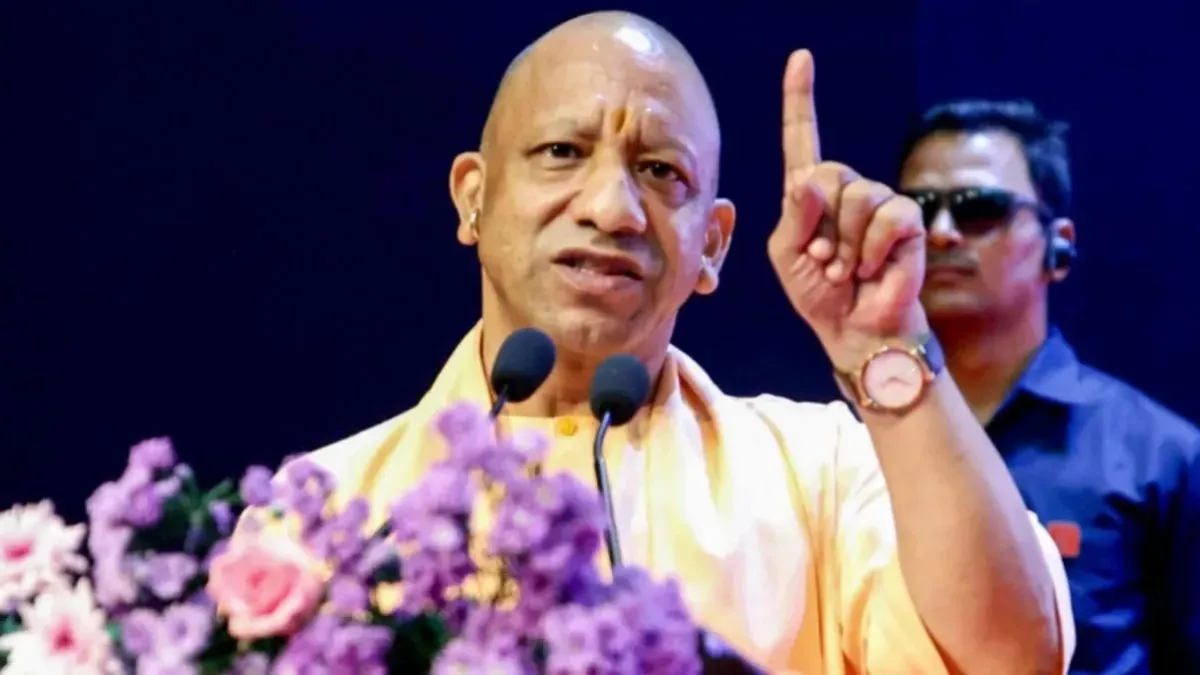
The Uttar Pradesh government has transferred 144 officers in a major administrative reshuffle, assigning new responsibilities across several police commissionerates and districts. The transfers include several Deputy Superintendents of Police (DSPs) and Assistant Commissioners of Police (ACPs), with significant changes in Lucknow, Gautam Buddh Nagar, Ghaziabad, Kanpur, Prayagraj, Agra and Varanasi.

Kanpur Police Capture Suspected Cattle Smuggler After Gunfight
In Kanpur, police apprehended a suspect in a cattle smuggling case after a gunfight on Sunday morning. Kanpur Police Capture Suspected Cattle Smuggler After Gunfight

Kanpur Police Capture Suspected Cow Smuggler After Encounter
In Kanpur, police apprehended a suspect in a cow smuggling case after a morning encounter, recovering weapons and other evidence. Kanpur Police Capture Suspected Cow Smuggler After Encounter

Anti-India content is now an online biz model
Tanvi Jhansi Rajgarhia, a content creator from Mumbai who mixes her music with liberal politics as well as protein targets on social media posts, flew to New York three years ago with an artist visa in her hand and Broadway dreams in her eyes. But she faced something unexpected-vicious online hate. As she made comedic content on Indian American supporters of MAGA over a cup of chai and made political jokes about Donald Trump, his Qatari jet and Indian WhatsApp uncles flabbergasted by tariffs, she faced a barrage of hate comments and even threats. In October 2025, fearing for her safety, she took a flight back to Mumbai.What affected me most was the hate in comments and direct messages that included curses, slurs and threats, recalls Rajgarhia, 31. Once I was even threatened in person by someone who recognised my content.136066001Back in the US, when she scrolled the replies to her Insta posts, she came across a word-pajeet. It looked familiar and sounded innocent, but it was not. A fabricated word, it is a racist slur used online at Indians. The Punjabi-sounding word, which first appeared on an anonymous messaging board of 4chan in 2015, insulting Indians over open defecation, now crops up across posts, videos and memes in mainstream online platforms.While Rajgarhia was at the receiving end of ugly racism, hate is not confined to DMs. Social media posts targeting Indians go viral, garnering millions of views. The massive Indian presence on Meta platforms and X adds fuel to the fire. What lies behind anti-India inflammatory content? Is it racism, engagement farming, or both?136065967Target IndiaOn September 13, Bo French, an anti-immigration Republican politician from Texas, posted on X a photograph of students, who looked like South Asians, celebrating a football victory by the University of Texas. He wrote: I heard UT graduation this year looked like this. I didn't believe it. The problem is now obviously far worse than anyone imagined. While many in the Republican Party have distanced themselves from his xenophobic post, it has got about 55 million views.In such inflammatory posts, Indians are targeted mainly over immigration, poverty and hygiene.The Center for the Study of Organized Hate (CSOH), a think tank based in Washington, DC, studied 680 high-engagement anti-India racist posts on X between July 1 and September 7, 2025. They got over 281 million views in total. The posts about a Florida truck crash involving a Sikh driver in August 2025 alone had about 95 million views.There is a noticeable increase in anti-Indian rhetoric online, says Sumitra Badrinathan, assistant professor of political science at the School of International Service, American University. The rise in online outrage parallels the immigration crackdown by Trump. Joyojeet Pal, professor of information at the University of Michigan, says there has been a dramatic increase in a new kind of anti-immigrant sentiment in US, especially since the second Trump administration.136066004Badrinathan sees three broad narratives recurring in the hate content: economic resentment against Indian immigrants aking American jobs, racialised stereotypes around hygiene, food and poverty with selective or misleading images, and claims of cultural or religious incompatibility between Indians and Western societies.Battle For ViewsFor content creators, engagement means earnings. Says Rajgarhia: Everyone is incentivised by money or fame when they are posting anti-India content. And it works because Indians jump to their own defence. For content creators seeking brand deals, numbers are the dealmaker. Engagement is the currency. Higher engagement translates into higher earnings. If I have a lot of engagement, my manager can negotiate on my behalf and get a bigger deal for me, she adds.Tanmoy Chakraborty, an IIT-Delhi professor who researches hate-speech detection, says hateful online users rely on tightly connected, like-minded groups or echo chambers to quickly boost and spread their posts. The online-outrage business goes beyond direct earnings from posts to paid services. Chakraborty says there are also collusive users who spread misinformation and hate speech at the behest of agencies for money.Why does rage bait work at scale on Indians? Because of their sheer numbers. India and China are the most populous countries-whereas Facebook, Instagram and X are officially blocked in mainland China, Indians are thronging them, falling for clickbait comments, arguing, dissing and, in the process, making even anti-India content go viral.According to online research platform DataReportal, Facebook had 403 million users and Instagram had over 480 million users in India in 2025. X has about 23 million active users from India.Rajiv Ratn Shah, associate professor in the Department of Intelligent Systems at IIT-Kanpur, says, There is a huge presence of Indians on social media platforms. And they engage with content with which they have cultural proximity and familiarity.136066026Even negative reaction is engagement. Prateek Waghre, a Bengaluru-based technology-policy researcher, calls this algorithmic reward. He says platforms treat engagement-whether it's positive or negative, in agreement or in disagreement-as a sign of interest. When more people engage with a content, it's put on more people's feeds, and then even more people engage with it.136066007Now AI has made the field messier because of the ease with which one can create believable, realistic-looking fake content. The believability of posts has increased significantly because of AI, says Chakraborty.An AI-generated video of a man rolling rotis on his bare stomach spread widely enough to be logged in the AI Incidents Monitor of the Organisation for Economic Cooperation and Development.Pamposh Raina, head of the Deepfakes Analysis Unit at Trusted Information Alliance, a Delhi-based information integrity coalition, says that her team focuses on verifying and analysing harmful and misleading AI-generated content.They examined deceptive food-hygiene videos that had real footage stitched with synthetic audio. Some clips were only around 10 seconds long and had background noise or music added, which complicates AI detection.A major news event offers a readymade opportunity for bad actors to get views, she says. They create counter narratives to confuse and mislead people. Some of it, she adds, is a function of people making money out of it.136065973Rules On PaperThere is a caveat, say social media companies in their defence: it is not easy to monetise hate content. At least on paper. In response to ET's queries, a YouTube spokesperson says the platform's hate speech policy prohibits content promoting violence or hatred against people on grounds like ethnicity, nationality, race and religion. Earning advertising revenue requires a membership of the YouTube Partner Programme and compliance with its advertiser-friendly guidelines, the spokesperson adds.In its response, Meta points to Instagram's feed recommendations, which say posts must meet its quality and integrity rules. Content that exploits controversial political or social issues for commercial purposes is also restricted from monetisation.The test of the first point, says Pal, lies in platform data that shows whether people have encountered hate posts through recommendations.(X has not responded to ET's queries at the time of going to press.)While social media platforms can theoretically restrict the reach of violative content, like hate posts on India, its virality means enforcement remains poor, says Waghre. He adds that there are multiple reasons for this: One, they are not detected due to scale or because posters use coded language that platforms don't understand. Two, they are detected but platforms believe they don't violate their community guidelines which could just be a wrong call, or a result of them not having the necessary context or understanding.The social media companies' argument falls apart on further scrutiny. The Global Disinformation Index, a UK-based nonprofit, found that most of the hateful content it tracked on YouTube was permitted and monetised on the platform. It estimates that 100 such English-language channels are on track to earn $13.3 million in ad revenue in 2026, with anti-immigrant hate earning the most.Monetisation on YouTube and Insta happens mostly through brand partnerships, sponsored content, subscriptions and affiliate links, while X reportedly pays according to the number of verified impressions for a post.Real-World ImpactOnline hate has real-world impact, like it did for Rajgarhia. In Carnegie's Indian American Attitudes Survey of 2026, conducted across 1,000 Indian American adults, 48% said they had encountered racist social media posts targeting Indians very or somewhat often. Half the respondents felt angry when they saw such posts, 48% felt anxious and 31% felt fearful. Since 2025, when Trump came to power for his second term, one-third of them avoided political discussions on social media, concerned about discrimination or racism directed towards Indians or Indian Americans.The Indian American Attitudes Survey also recorded direct experiences of anti-Indian hate. About a quarter of Indian Americans said they were called a racial or ethnic slur since the start of 2025, while 9% reported physical threats and 4% reported physical assault.In October, it was on the brink of becoming a mass tragedy. Alexandros Paporakis, a teenager from Illinois, US, who calls himself a white supremacist, told his coworker at Taco Bell that he wanted to kill Indians and that he tried to attack a Hindu temple on the first day of Navratri, but his gun got jammed. He was indicted earlier this week by a jury.The consumption of inflammatory content hurts not just the target audience; it can also deleteriously reinforce biases and prejudices. Rituparna Patgiri, assistant professor of sociology at IIT-Guwahati, says, If you are repeatedly consuming a particular content, your views get influenced.Identifying and removing such content is not easy or straightforward. Badrinathan says platforms must enforce existing rules, make their recommendation systems more transparent and give researchers better data access to check compliance.Until then, the hate mills will keep turning.
Mock drill to be conducted to test handling of emergency situations
UP crushes Hyderabad as Kamran Ali stars with century, 9 wickets
Kanpur South beat PAC Club by 15 runs
CSJMU win Central Zone inter-university football championship
Police officers review security arrangements at ghats for Dev Deepawali festival
White male kangaroo dies in zoo due to suspected snake bite

India's First Deep Tech Hub To Be Opened At IIT Kanpur's Noida Campus
The deep-tech hub aims to transform highly specialised laboratory research into products and companies capable of driving economic growth and wealth creation.
UPSIDA CEO Ravi Kumar NG directs faster industrial development
Private bus kills 2 truck drivers assisting accident victim in Jhansi
EVM demonstration centre inaugurated to familiarise voters with voting process
Body of young man found hanging from tree by roadside
Kanpur CMO urges private hospitals to seek NABH certification
Take effective steps to raise farmers income
Man dies by suicide after dispute with wife
Womans severed head found in forest, sexual assault suspected
UP to get Indias first deep-tech hub at IIT Kanpurs Noida campus, Rs 281cr investment planned
Criminal arrested during police encounter in Jalaun
Dummy drop test planned in Kanpur youths mysterious death case
Kanpur man goes missing after being lured to Russia with drivers job, probe on
Admin boosts rural plastic waste management, recycling
Ganga ghats to be illuminated for Dev Deepawali on Nov 24
KDA puts demolition notice on Radhika Apartment; residents protest
Post office fraud: 4 more complaints take no. of complainants to 31
Khandelwal death: Murder case filed against female friend, kin
UP has carved new identity through devpt: Pathak
Cow slaughter sparks row, 1 detained
2 Khatu Shyam pilgrims killed, 15 injured as bus rams into truck
Students made aware of ill-effects of tobacco
Man falls to death from third floor
2 bodies found on Delhi-Howrah rly route
Kamrans five-for helps UP bundle out Hyderabad for 83
Rain washes out UP-TN U-23 Womens tie
Court denies anticipatory bail to accused in Singhania kidnapping case
2 girls drown in water-filled roadside pit
Jhansi celebrates 198th birth anniv of Maharani Lakshmibai with enthusiasm
Spl programme at CSJMU on Natural Medicine Day
Man attacked in Sept dies, kin accuse cops of inaction
Need to strengthen disease surveillance to eliminate measles-rubella

New Delhi [India], November 19: Billabong High International School, Kanpur, is built on the belief that education should do more than prepare children for examinations. It should help them become

Two killed, 22 pilgrims injured as bus rams truck in UP; three more die in fog-related incident
Two killed, 22 pilgrims injured as bus rams truck in UP; three more die in fog-related incident Kanpur: Two people were killed and 22 others injured after a bus carrying pilgrims from Uttar Pradeshs Unnao district collided with a truck on National Highway-19 in Kanpur Dehat early on Thursday. In a separate incident, three people [] The post Two killed, 22 pilgrims injured as bus rams truck in UP; three more die in fog-related incident appeared first on Mangalorean.com .
Railways Plans MEMU Trains from Lucknow to Ayodhya and Barabanki, More Services for Kanpur
Lucknow: Indian Railways is preparing to introduce MEMU train services from Lucknow to Ayodhya and Barabanki. A route survey is expected to be conducted soon. The railway administration Railways Plans MEMU Trains from Lucknow to Ayodhya and Barabanki, More Services for Kanpur
Kanpur Weather Update: Night Temperature Drops to 10
Kanpur, November 19: Winter is gradually tightening its grip on Kanpur, with temperatures witnessing a significant decline over the past three days. The minimum temperature has dropped by Kanpur Weather Update: Night Temperature Drops to 10C, Minimum Mercury Falls 5.4 Degrees in Three Days
BJP has no issue left to win polls other than religion: Aradhana Mishra
Man uses fake AI video to extort 13.75 lakh from woman, FIR lodged
Four arrested for trafficking narcotics; 127 gm of smack and 10kg of ganja seized
NCPCR stresses awareness drive on Pocso, RTE Acts
CSJMU launches voice-operated SOUL AI library assistant
House fire destroys property worth lakhs
Welding worker dies by suicide
'Suman Didi' AI robot assists Jhansi women in voter awareness drive
Complaints of farmers heard and resolved on spot during Kisan Diwas
ABVP activists, students clash at Orai Medical College; cop among 8 injured
Ink factory fire reignites, triggers evacuation of 20 factories
Police suspend outpost in-charge after cow carcass protest
People will no longer be misled in name of religion, says Congress leader
Kanpur Nagar bags several prizes in various competitions held at Yuva Utsav

Fire Breaks Out At Kanpur Factory, Explosions Reported
A major fire broke out at the Nicholas Pigments and Inks factory in Kanpurs Ruma industrial area, triggering repeated explosions. Firefighters and rescue teams rushed to the spot, while nearby workers and residents were evacuated. No casualties have been reported so far.