
 20 C



UPSC Mains Result: Who made the interview cut?

Gold prices in Delhi jumped by Rs 2,200 per 10 grams to Rs 1,48,800, while silver gained Rs 1,500 per kg to Rs 1,94,500 ahead of Dhanteras 2026.

Mines Ministry launches ninth round of auctions, offers 20 critical mineral blocks
Till date, across the eight tranches of mineral block auctions, 100 unique critical and strategic mineral blocks have been offered, of which 64 blocks have been successfully auctioned.

Mines Ministry launches ninth round of auctions, offers 20 critical mineral blocks
Till date, across the eight tranches of mineral block auctions, 100 unique critical and strategic mineral blocks have been offered, of which 64 blocks have been successfully auctioned.
Auto demand stays in top gear, but ther's a bump

Prices drop at FCIs wheat sales in major growing States as Indian govt doubles quantity
Barring Maharashtra, prices declined by Rs 59-344 a quintal this week, when 1.99 lakh tonnes were offered

CBG blending at 1.7% in H1; pipeline connectivity key to achieving 3% target
India has a target of blending 3% CBG into D-PNG and CNG by the end of current fiscal, 4% in 2027-28 and 5% in the subsequent year.
ArcelorMittal reports USD 391 million loss in July-Sept quarter
ArcelorMittal reported a net loss of USD 391 million for the September quarter due to rising energy costs. The company's sales increased to USD 16,466 million while steel production saw a slight rise. Adjusted net income grew to USD 0.9 billion, indicating improvement in earnings capacity over time. AMNS India, its joint venture with Nippon Steel, also reported increased EBITDA for the same period.

West Bengal unveils new investment policy, offers up to 120% assistance
The policy offers enhanced incentives for priority-sector investments, but excludes an estimated 50,000 crore backlog of industrial incentives promised under previous regimes
Adani CNG price crosses Rs 100 per kg mark in Ahmedabad for first time
Adani CNG prices in Ahmedabad have crossed Rs 100 per kg for the first time in history. This price hike has increased rates from Rs 98.47 to Rs 100.77 per kg. In Vadodara, CNG prices have also risen, reaching Rs 98.95 per kg recently. Currently, petrol prices in Ahmedabad are slightly higher at Rs 101.83 per litre. These changes have brought CNG prices closer to petrol rates in the region.
India beat Japan 4-1 to win sixth hockey title
US tariff relief unlikely for auto parts makers
Why India Needs an Integrated Approach to Corporate Real Estate - And What Vestian Is Solving
JSW Group Chairman Sajjan Jindal met West Bengal Chief Minister Suvendu Adhikari to discuss investments worth 50,000 crore across power, steel, cement, ports and related sectors.
Centre advances 1.09 trillion tax devolution to states for November
Advance tax devolution aims to boost capital spending and meet development and welfare expenditure
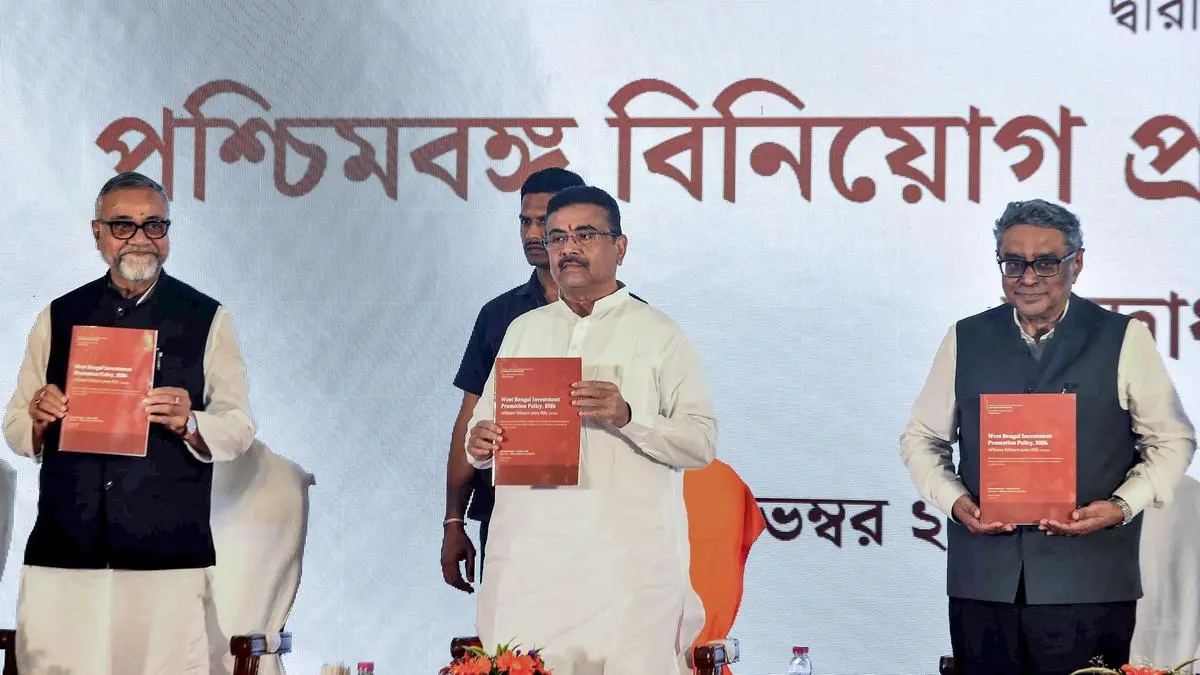
Industry bodies and captains welcomed the new policy, stating that it is pragmatic, forward-looking and investor-friendly

ONGC Q2 net profit jumps 57% on higher crude, gas realisations
Along with the results, the company declared an interim dividend of 8 per equity share.
Katy Perrys ex-husband found guilty of rape
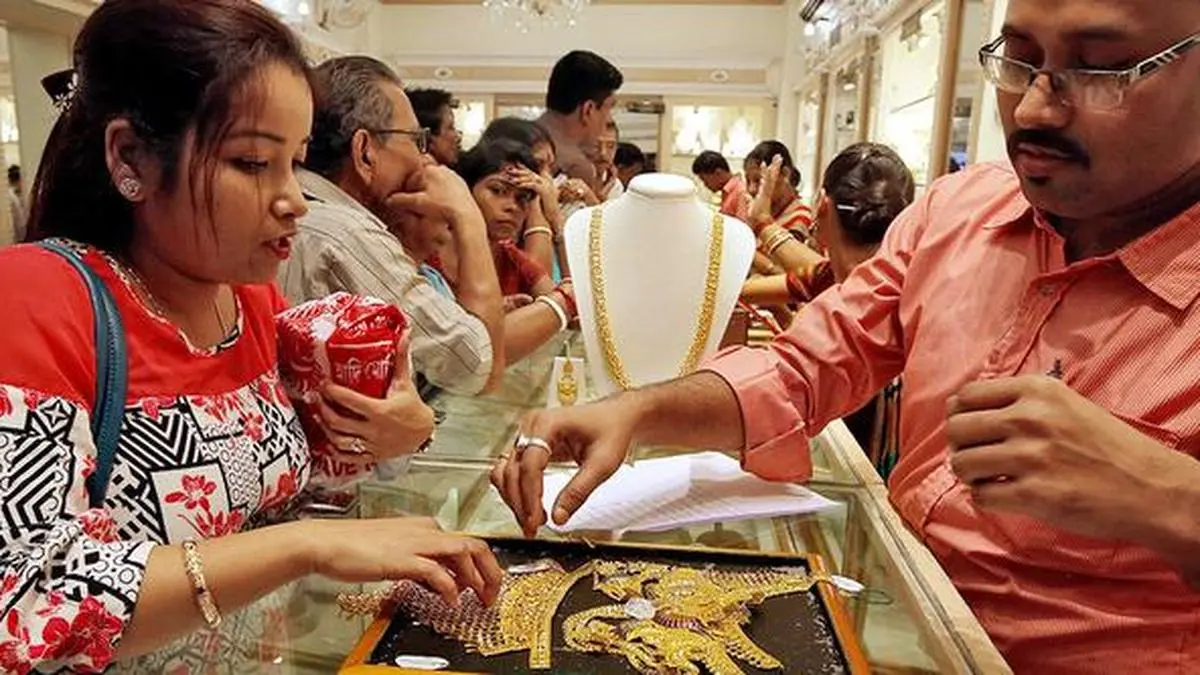
Jewellers expect fall in gold prices to boost Dhantera sales
Coins and bars are expected to lead sales, driven by investment sentiment and gifting traditions, say stakeholders
Speaking to the media on the sidelines of the 'Summit on Global Financial Compliance (FATCA & CRS)' in Mumbai, Debjyoti Das, Principal Director General of Income Tax (Intelligence & Criminal Investigation), highlighted the growing risks associated with non-compliance in cross-border financial reporting.
Developing nations' debt hits record $9.4 tn in 2025
TRAI moots satellite network-as-a-service model, bars infra providers from directly serving users
TRAI has recommended a new framework for satellite communications, which includes authorising satellite network providers. These providers can offer infrastructure and capacity services to eligible telecom operators without directly serving consumers. The framework also enables potential direct-to-device connectivity using satellite and terrestrial mobile spectrum. Authorised providers will have an authorisation period of up to 20 years, with possible renewal.

A Delhi passenger who missed his Bengaluru-bound flight after alleging delays by airline staff has been awarded 71,587 by a consumer commission. The airline claimed he had arrived late for check-in but failed to produce CCTV footage or other evidence to support its position.
Starbucks Red Cup Day 2026: How to get a free cup
India's natural gas demand to decline 2% in 2026 despite 10% rise in LNG imports: IEA
The trend highlights the challenges facing India's gas market as disruptions to global LNG supplies through the Strait of Hormuz and elevated international prices reshape supply and consumption patterns. The IEA said the outlook would remain influenced by global supply availability and domestic production trends.
A Texas family's vision for conservation transformed their cave into the Eckert James River Bat Cave Preserve in 1990, eschewing fertilizer extraction. Annually, about 4 million female Mexican free-tailed bats find refuge here, utilizing the site as their maternity colony during the crucial breeding season from May to September. Dedicated research and management initiatives strive to protect this critical habitat and deepen understanding of bat population dynamics.

NPCI says MDR charge has been imposed to save the UPI ecosystem from turning ouroboric
Zero MDR is no longer sustainable; the magnitude of growth places correspondingly greater demands on the security, resilience, and infrastructural capacity of the system, NCPI tells SC
According to a notification by the Ministry,equity instruments now mean equity shares, convertible debentures, and preference shares issued by an Indian company

UP got maximum out of 1.09 lakh crore paid as tax devolution instalment in advance
Currently, 41 per cent of taxes collected by the Centre are devolved in 14 instalments among States during a fiscal year
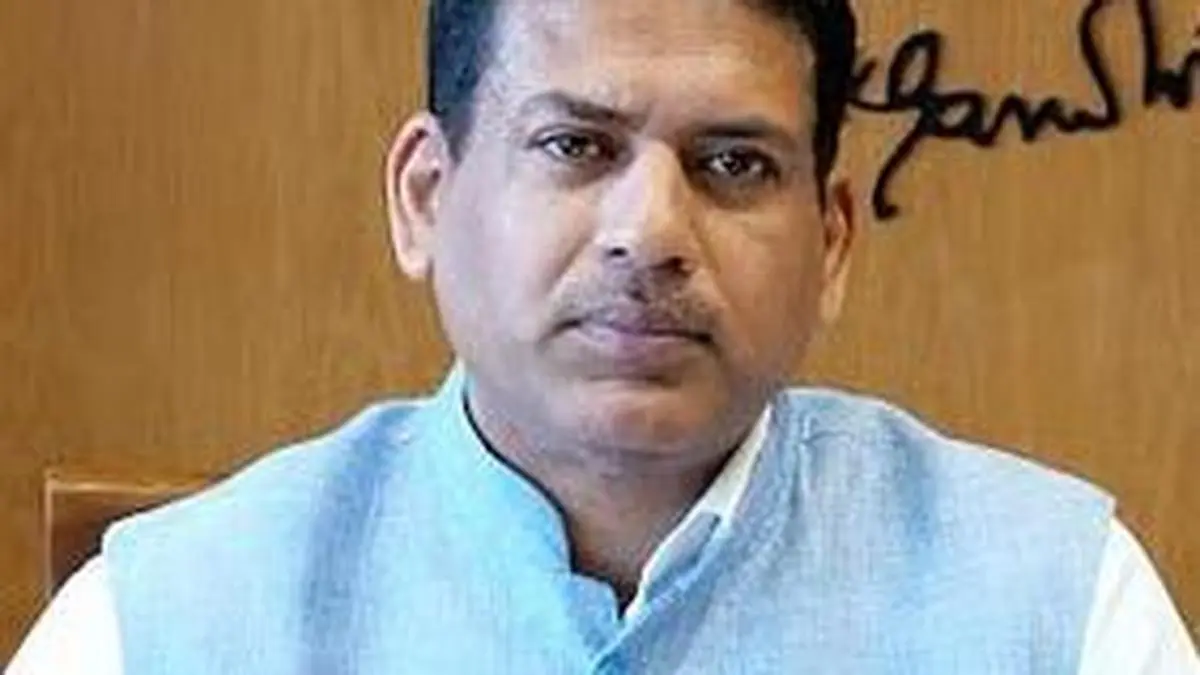
Increasing self-reliance in clean energy manufacturing key theme at Bharat RE Summit: MNRE Secretary
The lesson here is to continue our path of progress in renewable energy, says Santosh Kumar Sarangi
Govt panel proposes sale of MTNL assets worth 1,100 crore to cut debt
An inter-ministerial panel has recommended monetising MTNL's surplus land and building assets worth 1,100 crore, with the proposal awaiting approval from a Cabinet-delegated body

India-ASEAN Summit unlikely to break deadlock on trade pact review
Differences persist over market access, rules of origin and the terms of a more balanced trade arrangement
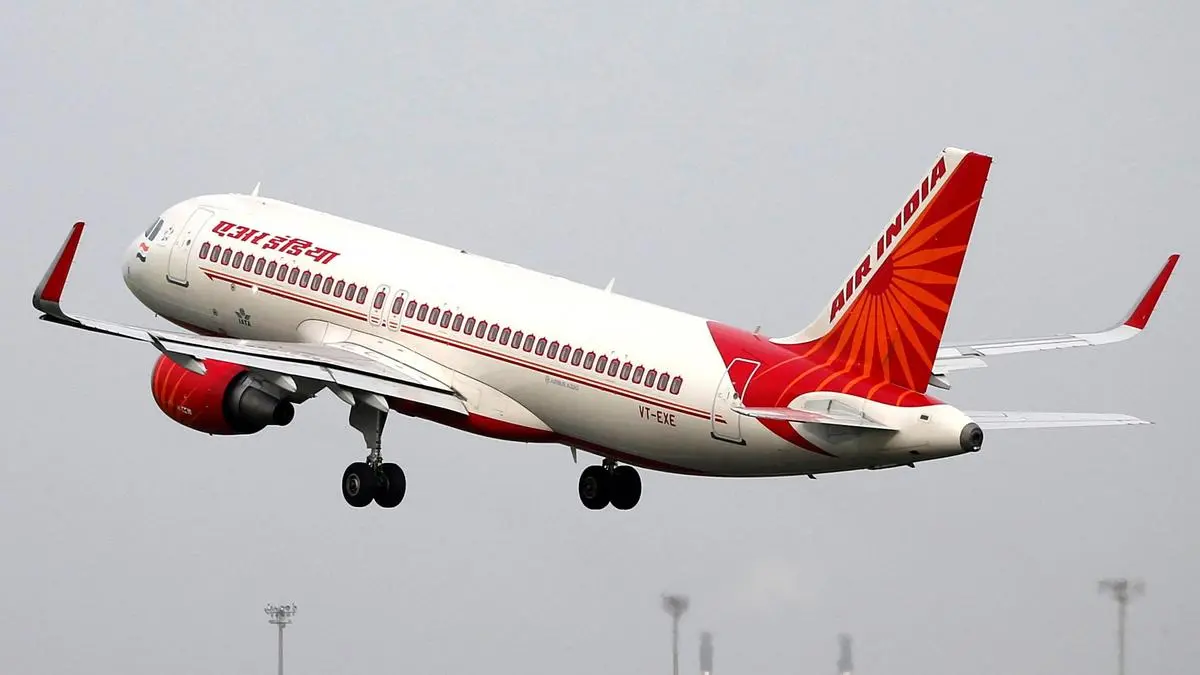
Air India proposes fuel levy to cushion Pakistan airspace closure hit
Proposes using levy collections from foreign airlines to fund fuel discounts for Indian carriers facing longer routes
Canva CEO's 80% wealth donation pledge
American midterm results will not have an impact on India-US interim trade deal: Sources
The Democrats' sweeping victory in the US midterm elections is unlikely to affect the India-US interim trade agreement, as the pact does not require formal Congressional ratification, sources said. However, ongoing Section 301 investigations into forced labour and excess industrial capacity could influence Washington's tariff structure and the finalisation of the agreement.

US Treasury imposes fresh sanctions against Indian, Turkish entities for alleged Iran transactions
MEA says it has taken note of sanctions; not much can be done in case of entities supporting shadow fleets, sources said
Indian scientists discover hidden star clusters
Can India break Chinas grip on specialty fertilisers?
CJP announces SIR-protest in Kochi on Nov 7
Rajasthan's mobile veterinary scheme benefits over 6.8 million livestock
Over 16.8 lakh animals receive doorstep treatment, while 98% of beneficiaries rate the services as good, says state minister
Mahindra realty arm buys 100 acres in Bom
Mahindra Lifespace Developers, the real estate and infrastructure development arm of the Mahindra Group, has acquired 100 acres of land along the Karjat-Murbad road in the Mumbai Metropolitan Region (MMR) for a plotted development project, marking its entry into the segment in the region.The company is likely to start the project around the middle of the next financial year. It is also looking to acquire additional land in the area, according to people familiar with the development.The land acquisition is part of Mahindra Lifespace Developers efforts to expand its residential development pipeline across key markets. The company has been pursuing projects through outright land acquisitions, joint development agreements and partnerships with landowners.In line with our strategy, we look to expand into plotted development in future in MMR, Pune and Bengaluru. Homebuyers today are increasingly seeking greater flexibility and personalization in their residential requirements. Plotted developments offer a compelling proposition through land ownership, customization, and long-term appreciation potential, said Vimalendra Singh, Chief Business Officer - Residential, Mahindra Lifespace Developers.The proposed development will be the companys first plotted project outside Mahindra World City in Chennai. In Chennai, Mahindra Lifespace Developers has established a presence in the segment through two projects.The Mumbai-region project marks the companys entry into a segment that has attracted interest from homebuyers seeking land ownership and the option of building independent homes.Plotted developments have emerged as an alternative to conventional residential projects, with homebuyers showing interest in owning land and having the flexibility to construct homes according to their requirements.Developers are also looking at plotted projects as a way to enter markets where large land parcels are available, without undertaking construction of apartment buildings. The format allows developers to sell individual plots in phases, while buyers can decide the timing and design of construction, subject to applicable regulations.Several developers have been exploring plotted development opportunities as part of their residential portfolios, particularly in locations on the outskirts of major cities, attracting institutional capital and investments from real estate funds into land acquisition and development projects.

Government includes GPUs and related data centre equipment under IFSCA framework
Earlier, IFSCA had released a consultation paper proposing that operating leases, including hybrid structures combining operating and financial leases, of GPUs and connected data centre equipment be notified as financial products
Planning to buy gold this Dhanteras? Experts advise caution amid volatility
Restore your target allocation to gold, maintain realistic return expectations, and be prepared for near-term volatility
3 inches of rain forecast for New York

Dhanteras 2026 falls on Friday, November 6. Families often shop before the evening puja, when worship during Pradosh Kaal is considered auspicious. Check shubh muhurat for making purchases in your city.
Did demonetisation widen India's tax base? A 10-year data review
India's taxpayer base more than doubled and direct-tax collections more than tripled in a decade. But how much of this growth can be attributed to demonetisation? Here's a look at the 10-year data
LIC Q2 Results: Profit jumps 20% YoY to Rs 12,115 crore, NPI grows 16%
Life Insurance Corporation of India (LIC), the country's largest insurer, reported a nearly 20% rise in consolidated net profit to Rs 12,114.78 crore for the September quarter on Thursday, supported by strong growth in premium income and higher investment earnings. The state-owned insurer had reported a net profit of Rs 10,098 crore in the corresponding quarter last year. However, profit declined 11% sequentially from Rs 13,584 crore in the June quarter.Net premium income increased 16.2% year-on-year to Rs 1.47 lakh crore from Rs 1.26 lakh crore in the September quarter of FY26. It rose 15% sequentially from Rs 1.27 lakh crore.The growth in premium income was largely driven by a sharp increase in single-premium collections, reflecting higher contributions from policies where customers pay the entire premium upfront.Single-premium income surged 34% to Rs 68,425 crore from Rs 50,882 crore a year earlier. Renewal premium income increased 5% to Rs 68,718 crore from Rs 65,320 crore in the same quarter last year. However, first-year premium income declined 4% to Rs 10,484 crore from Rs 10,884 crore.LIC also reported an increase in investment income during the quarter, providing additional support to profitability.Net investment income in the shareholders' account increased to Rs 2,855 crore from Rs 2,066 crore a year earlier, representing a rise of about 38%.Total income in the shareholders' account increased 11% to Rs 10,527 crore from Rs 9,454 crore. Meanwhile, the insurer's income from investments in the policyholders' account stood at Rs 1.15 lakh crore, compared with Rs 1.12 lakh crore in the year-ago quarter, an increase of around 2.2%.The company reported a surplus of Rs 10,379 crore in the policyholders' account, compared with Rs 9,503 crore a year earlier. The increase in investment income and policyholder surplus contributed to the company's overall financial performance during the quarter.LIC's benefits paid, including claims and other policyholder payouts, increased to Rs 1.34 lakh crore from Rs 1.06 lakh crore in the corresponding quarter last year.Expenses of management rose to Rs 15,143.38 crore from Rs 13,908 crore, an increase of 9%. Net commission expenses increased to Rs 6,089 crore from Rs 5,807 crore a year earlier.LIC's solvency ratio improved to 2.35 as of September 2026, from 2.13 a year earlier. However, the ratio declined sequentially from 2.42 in the June quarter. The insurer's expense of management ratio improved to 10.26% from 12.05% a year earlier, reflecting better cost efficiency.The 13th-month persistency ratio declined to 67.67% from 68.19% a year earlier, while the 25th-month ratio improved marginally to 63.01% from 62.63%.The insurer's investment yield, excluding unrealised gains, declined to 9.04% in the September quarter from 9.33% a year earlier. However, including unrealised gains, the yield increased to 4.10% from 2.07%.

Pajson Agro India Ltd to acquire Dubai-based Pacific Global FZCO
The Indian firm will buy the cashew processing platform with an installed capacity of 60,000 tonnes of raw cashew nuts per annum in Cote dIvoire for a total consideration of 354.52 crore
Why Melania skipped Trump's election night party
UK PM won't invite Putin to Britains G20 summit
Renewables may save India $240 bn in imports

'It is unfortunate that a Tata is destroying 'Tata': Mehli Mistry
Mehli Mistry has challenged Noel Tata's eligibility to continue as a trustee of the Bai Hirabai Jamsetji Tata Navsari Charitable Institution, alleging he holds Irish citizenship, a UAE Golden Visa, and is a tax resident of the United Arab Emirates, seeking an affidavit from Tata on his citizenship and tax residency status.
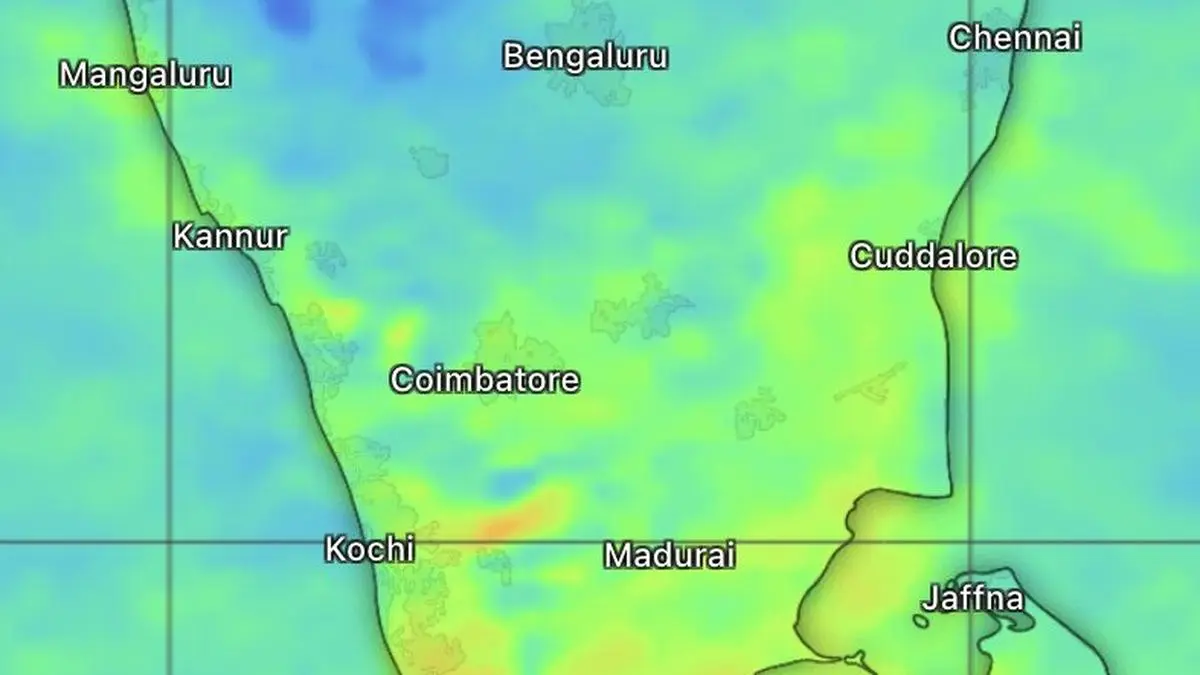
IMD update: More rain for Tamil Nadu, Kerala, Karnataka as easterlies pick up
A remnant circulation from cyclone Murasu may sustain heavy rain over Coastal Andhra Pradesh and Yanam and Tamil Nadu, Puducherry and Karaikal for six days, and over Kerala from Thursday evening
Gadkari wants to change how city roads are built
Mistry challenges removal as SDTT trustee
New Delhi: Mehli Mistry has challenged his removal as a trustee of Sir Dorabji Tata Trust (SDTT) and Bai Hirabai Jamsetji Tata Navsari Charitable Institution before the Maharashtra Charity Commissioner, alleging procedural irregularities and violations of trust governance rules.In three rejoinders and applications filed before the Deputy Charity Commissioner, Mistry has questioned the legality of the decisions leading to his removal, the eligibility of certain trustees and their participation in decisions concerning his reappointment.He has also sought an independent inquiry into SDTT's administration, alleging conflicts of interest, improper retention of financial benefits by trustees and irregularities in decisions involving Tata Group companies and the trust's investments in Tata Sons.A key issue raised by Mistry concerns Venu Srinivasan's participation in the decision on his reappointment. Mistry has argued that Srinivasan's tenure as a trustee ended on October 23, 2025, while he communicated his vote against Mistry's reappointment on October 28.Read more: Tata Sons Chairman Chandrasekaran meets Italian PM Meloni after Iveco acquisitionAccording to Mistry, the trust's own records acknowledged that Srinivasan was no longer a trustee when he cast his vote. He has pointed out that a footnote in the records stated that Srinivasan's vote should be disregarded for this reason.However, Mistry contends that removing the vote from the final count does not address the larger issue, as Srinivasan was still included in the decision-making process. He has argued that the entire resolution was invalid because the body considering his reappointment was not properly constituted.Mistry has also disputed the trust's position that his three-year tenure ended on October 28, 2025, requiring a fresh resolution for reappointment. He has cited the SDTT Trust Deed of March 11, 1932, arguing that it does not prescribe a fixed tenure for trustees.He has further relied on an October 17, 2024, joint resolution of SDTT and Sir Ratan Tata Trust, which provided for the reappointment of trustees after the expiry of their tenure without any limitation on the renewed term, subject to applicable law.Read more: Finance Minister Sitharaman urges Tata to resolve feud amicably, rules out govt interventionIn a separate challenge concerning the Bai Hirabai Jamsetji Tata Navsari Charitable Institution, Mistry has questioned the eligibility of trustees under the trust deed. He has cited provisions requiring trustees to profess the Parsi Zoroastrian faith and meet specified residency conditions.On this basis, he has questioned the eligibility of Venu Srinivasan and Vijay Singh. He has also raised questions about Noel Tata's alleged Irish citizenship and UAE residency, arguing that eligibility requirements should be applied uniformly to all trustees.Mistry has sought affidavits from trustees confirming that they meet the qualifications prescribed under the trust deed. He has also disputed the trust's position that the relevant eligibility provisions are invalid or unenforceable.Separately, Mistry has sought an inquiry into the financial affairs of SDTT, particularly commissions and other benefits allegedly received by trustees serving as nominee directors in Tata Group companies.His application refers to an annual commission of approximately Rs 1.42 crore received by Noel Tata from Tata Sons Private Limited during FY 2024-25, as reflected in corporate filings.He has also raised questions concerning the engagement of Gerry McGovern for Norton Motorcycles, equity infusion into Tata International Limited and alleged deviations from unanimous resolutions on voting the trust's shareholding in Tata Sons.Mistry has argued that such matters could involve conflicts of interest and breaches of fiduciary duties. He has urged the Charity Commissioner to examine corporate filings, declarations of interest, board records and relevant approvals.He has sought rejection of SDTT's preliminary objections and an inquiry or inspection under the Maharashtra Public Trusts Act, 1950.Importantly, Mistry has clarified that he is not seeking reinstatement as an SDTT trustee. Instead, he has sought an examination of the trust's administration and the appointment of an independent administrator, if required, to ensure its proper functioning.Mistry's trusteeship of SDTT and Sir Ratan Tata Trust ended in October 2025 after three trustees opposed his reappointment. On November 4, 2025, he had written to Tata Trusts trustees, including chairman Noel Tata, describing his departure as a harmonious exit and saying he did not wish to drag the charitable institutions into controversy.In the letter, he stressed the need to protect the reputation of the institutions and uphold transparency, good governance and public interest. He also cited a quote attributed to the late Ratan Tata: Nobody is bigger than the institution it serves.Mistry had earlier filed a caveat before the Maharashtra Charity Commissioner, seeking an opportunity to be heard before any changes were made to the register of trustees.
SC sales tax ruling: What it means for businesses with old tax disputes
The ruling clarifies states' powers under pre-GST tax laws and its implications for pending tax demands and refund claims
Ajay Srivastava, Founder of the Global Trade Research Initiative (GTRI) said the election results could push Trump to focus more on trade negotiations and expedite the proposed agreement with India.
Ten years after note ban, how India's cash habit survived the UPI boom
A decade after demonetisation, currency in circulation has more than doubled, even as UPI transactions have surged, showing that Indians are using digital payments without giving up cash

How Pine Labs is building for the agent economy: CTO Sanjeev Kumar on trust, control and execution
At TechSparks 2026, Pine Labs Chief Technology Officer, Sanjeev Kumar showcased how developers, merchants, and teams can put AI agents to work, backed by controls that keep them accountable.
Tata Motors PV says CERT-In-flagged app vulnerabilities addressed through updates
The vulnerabilities identified in the iRA 2.0 and iRA.ev applications have been addressed through software updates and enhanced security measures, a Tata Motors Passenger Vehicles spokesperson told.
Ronaldo's Portugal walkout before retirement
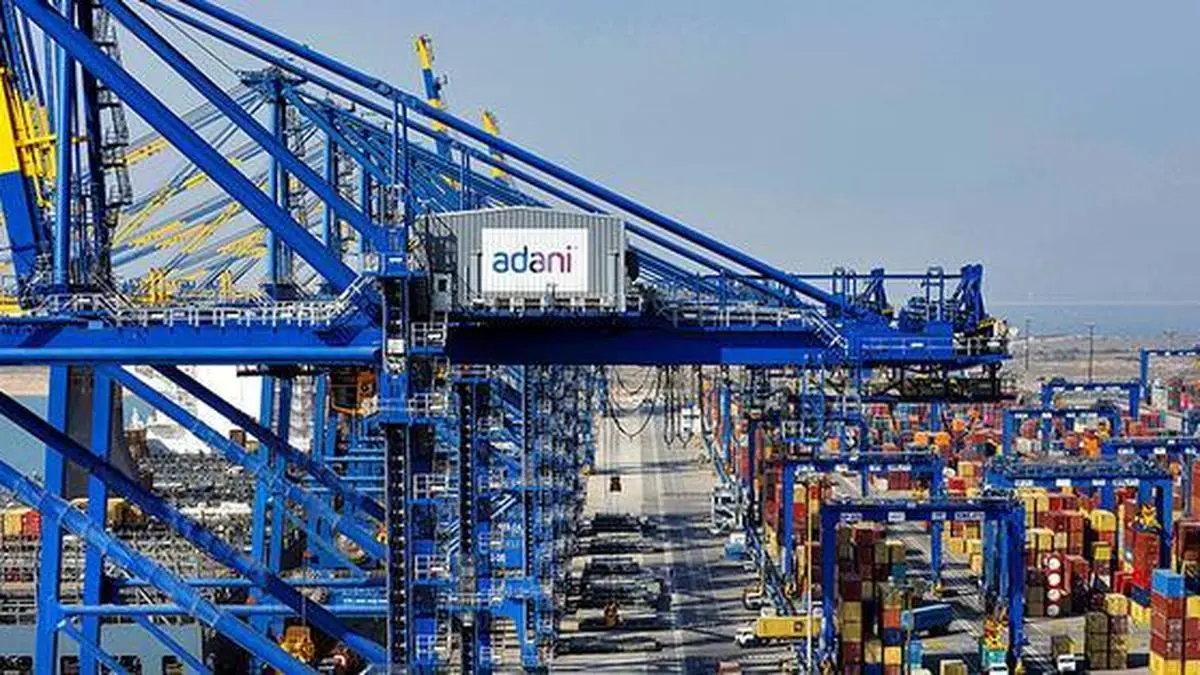
Adani Ports inks 2.56-billion deal to buy Europes second-largest liquid storage operator
Evos is Europes second-largest independent liquid storage operator, running eight port-based terminals across the Netherlands, Germany, Spain, Belgium and Malta

Hyderabad to host Poultry India Expo from November 25 to 27
The platform will provide poultry farmers, equipment manufacturers, feed producers, breeders, veterinarians, technology companies and industry experts to discuss the latest developments in the ecosystem
NY ticket wins $847 million Powerball jackpot
D-Street fireworks: Sensex jumps 2,009 pts, Nifty up over 24,500
Indian benchmark indices, the Sensex and Nifty, witnessed a significant rally, with the Sensex jumping 2,009 points and the Nifty surging 576 points. This surge is attributed to a sharp decline in crude oil prices, hopes for a resolution to the West Asia conflict, and the Democratic Party gaining control of the US Congress in the midterm elections.

US midterms impact on gold, silver ETFs: Why bullion is rallying after Trump's setback
Gold and silver ETFs rallied after the Democrats' US midterm election victory weakened Trump's political position. A softer US dollar, falling bond yields and geopolitical uncertainty supported bullion prices. Here's what drove the rally and what investors should watch.
Microfinance borrowers take bigger loans as ticket size rises 17.5%: CRIF
Average microfinance loan ticket size rose 17.5 per cent to 63,100 in Q2FY27, while disbursements grew 5.1 per cent despite a contraction in the industry's loan portfolio
Bharti Airtel reported a 31% year-on-year (YoY) increase in net profit to Rs 8,887.5 crore for the September quarter (Q2FY27), compared with Rs 6,791.6 crore in the corresponding quarter last fiscal.The telecom major's consolidated revenue for the quarter rose 16.7% YoY to Rs 60,878 crore, up from Rs 52,145 crore reported in Q2FY26.India mobile revenue grew 10.1% YoY, while ARPU increased to Rs 271 in Q2FY27 from Rs 256 in the year-ago quarter, reflecting improved customer realisations.Operating performance remained strong, with earnings before interest, taxes, depreciation and amortisation (EBITDA) growing 17.8% YoY to Rs 35,240 crore in Q2FY27, compared with Rs 29,919 crore in the year-ago period.India revenue increased 9.4% YoY to Rs 42,308 crore, with the company's mobile business continuing to benefit from premiumisation of its customer portfolio, higher average revenue per user (ARPU) and strong additions in smartphone data customers.The company's Homes business remained another key growth driver, with revenue increasing 25.3% YoY. The segment added 676,000 customers during the quarter, taking its total customer base to 15.4 million.Airtel Business reported an 11.4% YoY increase in revenue, driven by broad-based growth across its core connectivity business and digital services portfolio. Digital TV revenue rose 2.4% YoY to Rs 771 crore, supported by growing adoption of IPTV services.Africa continued to deliver strong growth, with revenue increasing 25.7% YoY in reported currency and 20.6% in constant currency. The business had a customer base of 193.9 million.Airtel's balance sheet also strengthened during the quarter. Its consolidated net debt-to-EBITDA ratio, on an annualised basis, improved to 1.18 from 1.63 as of September 30, 2025. The net debt-to-EBITDAaL ratio, excluding lease obligations, stood at 0.70.The company reported consolidated capital expenditure of Rs 12,467 crore during the quarter, including Rs 9,908 crore in India. It also invested Rs 2,826 crore in a strategic land parcel for its data centre expansion plans in the country.Postpaid additions hit record; smartphone data base expandsOn the operational front, Airtel added 2.9 million smartphone data customers sequentially, taking the number of such users to 81% of its overall mobile customer base. Smartphone data customer additions stood at 18.8 million over the past year.The postpaid segment recorded net additions of 1.2 million customers during the quarter, its strongest-ever performance in a single quarter, taking the overall postpaid base to 31.2 million.Mobile data consumption increased 36.5% YoY to 36.5 GB per customer per month.The company added 497 towers and 11,684 mobile broadband base stations during the quarter. Its network expansion over the past year included 5,649 additional towers and 44,718 kilometres of fibre.Across its operations in 15 countries, Airtel's total customer base expanded to 693 million, supported by quarterly net additions of 12 million customers across India and Africa.Management commentaryCommenting on the performance, Gopal Vittal, Executive Vice Chairman of Bharti Airtel, said the company delivered another quarter of consistent growth, supported by its diversified business portfolio.He highlighted Africa's strong performance, with revenue growing 6.7% sequentially in constant currency, attributing the improvement partly to the deployment of Airtel's homegrown technology stack across markets. India business revenue also recorded healthy sequential growth of 2.7%.Vittal said the India mobile business continued to benefit from the company's portfolio premiumisation strategy and focus on acquiring quality customers. The segment recorded 3.4% sequential revenue growth, while postpaid additions touched a record 1.2 million during the quarter.He also pointed to sustained momentum in the Homes business, which added 676,000 customers, and Airtel Business, which reported 3.8% sequential revenue growth.The company's newer growth initiatives, including financial services and data centres, are also gaining traction, Vittal said. Airtel's investment in a strategic land parcel during the quarter is part of its ambition to build 1 GW of data centre capacity.He added that the company remained focused on maintaining a strong balance sheet, supported by robust cash generation and disciplined capital allocation.Bharti Airtel shares end lowerShares of Bharti Airtel ended Thursday's trading session 0.52% lower at Rs 2,056.90, compared with the previous close of Rs 2,067.60 on the NSE.During the session, the stock traded in a range of Rs 2,048-2,084.The telecom major's shares have declined nearly 3% so far this year. At the prevailing market price, Bharti Airtel had a market capitalisation of approximately Rs 12.84 lakh crore.
Ronaldo retires: A look at his Portugal records
Gold's rally linked to $4 tn US debt trouble: WGC

6G could add $1.24 trillion to global economy by 2040: Industry
Digital Desk | New Delhi, Nov 5 (IANS) Sixth-generation mobile technology or 6G could generate an additional $1.24 trillion for the global economy by 2040, but inadequate spectrum allocation could put nearly half of that potential at risk, a report by an industry body showed on Thursday. According to a report by the GSMA estimates that next-generation mobile networks could contribute the equivalent of 0.7 per cent of global GDP by 2040 through advancements in artificial intelligence, industrial automation, immersive digital services and next-generation connectivity. However, the mobile industry body warned that as much as $520 billion or 42 per cent of the projected economic value, could be lost if governments fail to make sufficient spectrum available to support large-scale 6G deployment. Decisions on spectrum policy taken over the next few years would play a critical role in determining how much of that value can ultimately be realised, said GSMA Chief Regulatory Officer John Giusti. In addition, manufacturing and financial services are likely to be the biggest beneficiaries of 6G, accounting for 20 per cent and 19 per cent of its projected economic contribution, respectively, according to the industry body. Construction is expected to contribute 13 per cent, while the information and communications technology sector is projected to account for 12 per cent. The report comes ahead of key international spectrum discussions scheduled for the World Radiocommunication Conference in 2027 where policymakers are expected to determine future spectrum allocations for emerging technologies. 6G is expected to differ significantly from previous mobile generations by being designed around artificial intelligence capabilities, enabling networks to support intelligent decision-making, integrated sensing functions and seamless connectivity across terrestrial and satellite networks, according to the industry association. The report also identified that AI-driven connectivity, industrial robotics, advanced broadband services, integrated sensing technologies and non-terrestrial networks as key drivers of future economic gains. It highlighted the importance of mid-band spectrum which is expected to account for about 70 per cent of 6G's economic contribution. Low-band spectrum is projected to contribute a further 25 per cent by extending coverage to rural areas, indoor locations and underserved regions. To unlock the full benefits of 6G, the GSMA called on governments to release at least 2 GHz of mid-band spectrum by around 2030, including portions of the upper 6 GHz range, while also making the 600 MHz band available to improve coverage and support connected devices. The industry also urged regulators to establish clear national spectrum roadmaps to provide investment certainty for operators planning future network rollouts.
Railway platform ticket at these stations
Aayush Wellness reports 10.6% rise in first-half income
Aayush Wellness experienced an increase in consolidated income and profit for the first half of fiscal 2027. The company reported an impressive rise in both consolidated income and profit after tax. Standalone income also showed significant growth compared to the preceding quarter. Aayush Wellness is launching new products to expand its presence in preventive healthcare and nutraceutical markets.
Hardeep Singh Puri elected to Rajya Sabha from MP
See you! Cristiano Ronaldo retires from Portugal duty
Adani Ports to acquire 100% of Evos BV at enterprise value of 2.56 billion euros
The proposed transaction is an all-cash deal and values Evos at an equity value of 1.18 billion euros, implying an acquisition multiple of 11.7x CY25 EV/EBITDA.
Planning to buy smartphone? Prices to rise 30% soon
AI, data, cyber lead tech hiring at 30.3%
AI, data and cybersecurity represented 30.3% of tech hiring demand in the JulySeptember quarter, up from 25.8% in the preceding quarter, according to a report by staffing and workforce solutions company Quess Corp.Indias global capability centres (GCCs) are directing a greater share of their technology recruitment towards specialists who can deploy AI, manage data and secure enterprise systems, the India GCC Tech Talent Landscape Q2 FY27 report said.Demand for AI, data and analytics professionals grew approximately 14% quarter-on-quarter, while that for cybersecurity and risk management roles increased approximately 12%. Both categories expanded even as overall GCC tech hiring demand declined 3.5%, reflecting continued investment in specialist capabilities within more selective workforce plans.The moderation in demand is consistent with the cyclical hiring patterns of global enterprises, where recruitment typically peaks at the beginning of the calendar year and slows towards year-end.Indias GCC ecosystem continues to expand, but its growth is also changing the skills companies need, said Kapil Joshi, CEO IT staffing at Quess Corp.As centres expand their responsibilities and explore new talent markets, companies will need to combine specialist hiring with reskilling and internal mobility. This will help them build the capabilities needed to support their growing role in global operations, Joshi said.Technology and product GCCs recorded the highest share of postings requiring AI and GenAI skills at approximately 32%. Pharma and healthcare saw a five percentage-point increase to approximately 23%, while professional services and consulting rose four percentage points to approximately 22%. Telecom and networks, manufacturing and industrial, and BFSI recorded quarter-on-quarter declines in overall tech hiring demand of approximately 24%, 9% and 8%, respectively.The proportion of postings seeking AI and GenAI skills increased in each industry segment, showing that high-skill roles are gaining importance.Demand within advanced skill clusters also points towards the practical deployment of AI. Applied data science and model operations grew approximately 19%, while cloud security and AI-infused architecture increased approximately 21%. These roles support the deployment, monitoring and management of AI models, alongside secure cloud and enterprise infrastructure.The report estimates a 3842% supply gap in AI, data and analytics and a 3035% gap in cybersecurity and risk management.It identified pathways to address these shortages through transitions from adjacent roles, including data scientists moving into model operations, data engineers into applied AI, and cybersecurity analysts into cloud security. Structured reskilling and internal career pathways can complement external recruitment as AI requirements deepen across sectors.Tier-1 cities nevertheless account for approximately 8788% of advanced-skill hiring and 8486% of total GCC hiring demand in the country, the report said. But smaller cities are growing faster.Coimbatore stood out with approximately 30% quarter-on-quarter growth in GCC tech hiring demand, helping drive overall tier-2 growth of approximately 13%, compared with 810% in Q1 FY27.Among tier-1 cities, Pune was the only market to grow, recording a modest 2% increase, while all other metros saw demand decline. Hyderabad and Mumbai recorded the steepest declines among metros, at approximately 10% and 9%, respectively.Indias GCC workforce is projected to reach 2.72.8 million by 2030.
In a groundbreaking study, scientists have engineered starfish egg cells to respond to light stimuli, allowing them to dynamically alter their shapes. These cells can morph from elongated squares to contracted forms depending on the intensity of light exposure. This innovative research opens doors for potential advancements in synthetic biology, including tissue repair and targeted drug delivery systems that activate precisely where needed.
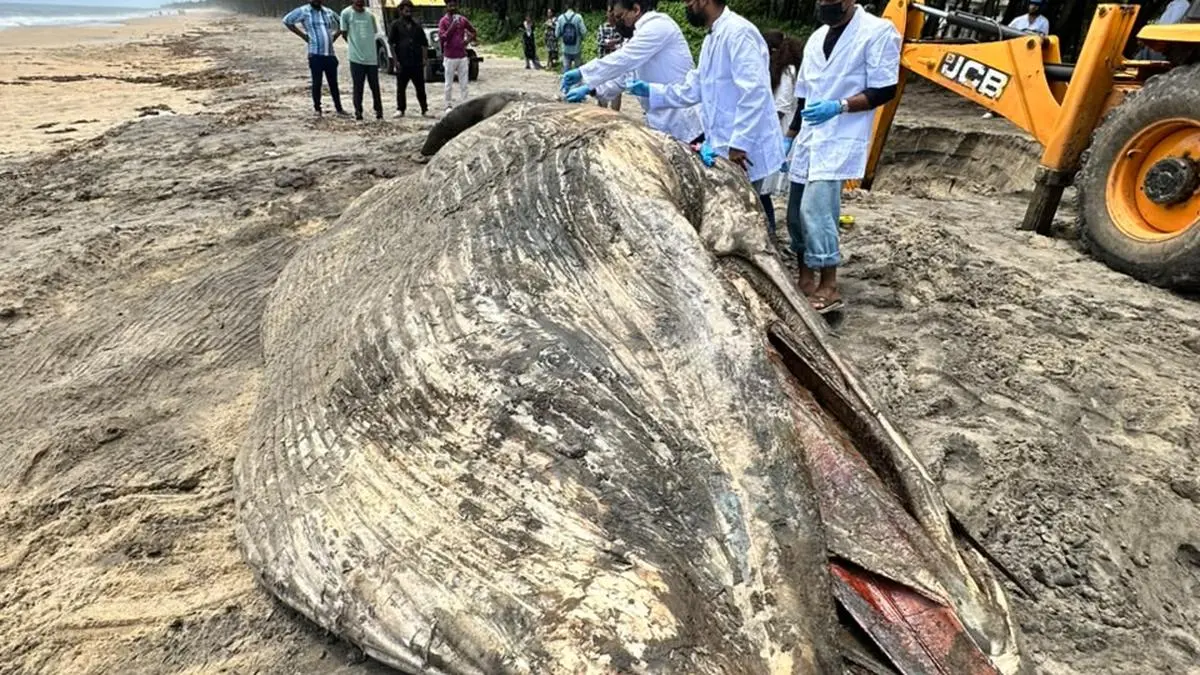
CMFRI records 161 marine mammal stranding along Indian coast in 202425
The study found that humpback dolphins accounted for the highest number of strandings (82), followed by Indo-Pacific finless porpoises with 44 cases
India in final-stage talks to expand BrahMos missile sale to Philippines, sources say
India is in advanced discussions to supply additional BrahMos missile systems to the Philippines by expanding their existing deal. This potential transaction could be valued between $700 million and $800 million, considerably higher than previous contracts. The acquisition comes as the Philippines seeks to modernize its military capabilities amid rising tensions in the South China Sea.
Adani's next port of call: Europe, with a $2.9 bn bet

The case for a level tax playing field between equity and debt
The debate on lowering equity capital gains tax overlooks the higher tax burden on debt investments, even though bonds and bank loans are crucial to corporate funding.
Duty-free gold from Dubai: Limits for men, women
Locker closed, 47L jewellery missing: Lady wins relief
India opens deepwater oil, gas bids, offers to fund up to 50% of well costs
The government is rolling out a special licensing round for deepwater and ultra-deepwater oil and gas blocks, offering monthly bidding windows and relaxed fiscal terms as it prepares to shoulder up to 50 per cent of eligible exploratory well costs under its Rs 84,084-crore Samudra Manthan offshore exploration programme. The special round under the Open Acreage Licensing Policy (OALP) is aimed at accelerating exploration in India's offshore frontier basins by lowering entry barriers, sharing the high costs and risks of deepwater drilling, and making acreage available to investors throughout the year. Under the government's 'Samudra Manthan' National Offshore Exploration Scheme, a Special OALP is being introduced for fast-track award of deepwater and ultra-deepwater (DW/UDW) exploration blocks, the Directorate General of Hydrocarbons (DGH) said in a notice. DGH said details of the bid round will be announced shortly. The Special OALP is a key licensing and investment facilitation .
Barclays infuses Rs 1500 cr into Indian operations

Who Owns the Tata Legacy? Inside the Constitutional Struggle for the Soul of Indian Economy
FOR WELL OVER A CENTURY , the House of Tata occupied a singular moral and structural category in Indian economic life. It is an industrial empire generating over sixteen lakh crore rupees in annual revenue and accounting for roughly four percent of India's gross domestic product, yet its apex holding company, Tata Sons Private Limited, was owned not by billionaires or public stock market speculators, but by philanthropic endowments. Nearly sixty-six percent of the equity of Tata Sons rests with the Tata Trusts, chiefly the Sir Dorabji Tata Trust and the Sir Ratan Tata Trust. Under this arrangement, the dividends of commercial enterprise flowed upward to fund hospitals, scientific institutes, and rural livelihoods, while the trustees acted as the constitutional guardians of the conglomerate's long-term values. On September 17, 2026, what began as a divergence over executive tenure and regulatory compliance has mutated into a fundamental constitutional crisis. The question confronting Indian corporate law is no longer merely whether Noel Tata or N. Chandrasekaran will prevail. It is whether the institutions created by a founding family can be captured from within by professional managers, independent directors, and regulatory circumstances, effectively severing majority ownership from institutional control. The departure of Darius Khambata The gravity of this institutional rupture was laid bare on November 2, 2026, when Senior Advocate Darius Khambata, a former Additional Solicitor General of India and former Advocate General of Maharashtra, announced that he would not seek reappointment as a trustee of the SDTT and the SRTT when his three-year term expires on November 9. In a four-page letter addressed to Noel Tata and Trusts Chief Executive Officer Siddharth Sharma, Khambata offered a devastating insider account of the governance breakdown at the top of the group. He described the September 17 board meeting as a day that will live in infamy, writing that those events had sullied the reputation of Tata Sons and imperilled the image of corporate India. Khambata's departure was not a mid-term resignation, nor was it prompted by a falling out with Noel Tata. Both Noel Tata and Siddharth Sharma had asked him to continue for another term. However, the reappointment of a trustee upon the completion of a fixed term requires the unanimous consent of all existing co-trustees. Submitting his continuation to the approval of trustees whose actions he considered a violation of fiduciary duty was, Khambata wrote, not in his character and would compromise his independence. At the SRTT, renewal was in any event impossible because the Maharashtra Charity Commissioner had barred the trust in May 2026 from altering its board or renewing tenures. Read as an institutional document, Khambata's letter illuminates a vital distinction between personal loyalty to a family scion and principled defense of an endowment's constitution. Khambata noted that he had originally joined the Trusts at the invitation of the late Ratan Tata and had seconded Noel Tata's appointment as chairman in October 2024 despite external pressure to defer the choice. At the same time, he stated candidly that his views had occasionally differed from Noel's, while praising Noel's democratic acceptance of those differences as the authentic old Tata way. By contrasting democratic consensus inside the Trusts with the boardroom stratagem deployed at Tata Sons on September 17, Khambata criticised the dissenting trustees. He recalled that he had been the first to warn on May 28, 2025, that a public listing of Tata Sons posed an existential threat to the Trusts, and had drafted the resolution opposing listing that all trustees, including Srinivasan and Singh, unanimously adopted on July 28, 2025. His exit carries immediate tactical consequences. Without Khambata, the SDTT shrinks to five trustees, narrowing Noel Tata's supporting majority to a three-to-two margin over Venu Srinivasan and Vijay Singh. The SRTT shrinks to four trustees, still outnumber Srinivasan three to one, though that board remains frozen by regulatory order. While Khambata's letter arms Noel Tata with a formidable moral and legal indictment ahead of the crucial November 26 Tata Sons board meeting, his absence deprives the Trusts' boardroom of its sharpest constitutional lawyer at the exact moment the dispute is heading toward the courts. Who holds the balance of power now? In the current Tata standoff, economic power, constitutional corporate power, operational power, and regulatory power have pulled apart into separate camps. In early 2026, N. Chandrasekaran appeared to hold every institutional advantage. As Executive Chairman since 2017, he commanded the operational apparatus of the group, presided over a period of substantial revenue expansion, and enjoyed the backing of the independent directors on the Tata Sons board. Moreover, regulatory gravity favoured his position: the Reserve Bank of India had classified Tata Sons as an Upper-Layer Non-Banking Financial Company, a designation carrying a mandatory requirement to list on the stock exchanges. Yet Noel Tata was far from powerless. Following Ratan Tata's death in October 2024, Noel consolidated institutional authority within the Tata Trusts. On September 11, 2025, a four-trustee majority including Noel and Khambata declined to renew Vijay Singh's tenure as a Trust nominee director on the Tata Sons board, a move Khambata confirmed was taken specifically to safeguard the Trusts' boardroom veto against listing. In October 2025, the trustees blocked the reappointment of Ratan Tata's confidant Mehli Mistry to the two main trusts, and in November 2025, Noel's son Neville Tata was inducted onto the board of the SDTT. The balance tipped dramatically between April and September 2026 due to two developments. First, Venu Srinivasan, the Chairman Emeritus of the TVS Group who serves both as Vice-Chairman of the Tata Trusts and as one of only two remaining Trust nominee directors on the Tata Sons board, shifted his allegiance. In April 2026, Srinivasan and Vijay Singh publicly announced their support for listing Tata Sons , abandoning the unanimous July 2025 resolution. On May 15, 2026, Charity Commissioner Amogh S. Kaloti issued an interim order freezing all board meetings of the SRTT pending an inspector's inquiry. That regulatory freeze paralysed the Trusts' shareholder power and the Trusts could not field a joint representative at the 108th AGM of Tata Sons on August 18, 2026. For the first time in 108 years, the Tata Sons AGM was adjourned for lack of quorum. Can professional management take over without buying the company? The events of September 17 raise a profound doctrinal question: can independent directors and professional management acquire practical control of an unlisted company against the express will of a sixty-six percent shareholder? In a conventional hostile takeover, an outsider acquires a majority of voting shares. What transpired at Bombay House was something quite different: a boardroom coalition shift that neutralised the controlling shareholder's constitutional veto from within. The constitution of Tata Sons is built around three provisions in its Articles of Association: Article 104B, which entitles the Trusts to nominate one-third of the board; Article 118, which mandates a Selection Committee to choose the Chairman; and Article 121, which stipulates that no resolution can pass at the board unless it secures the affirmative vote of a majority of the Trust-nominated directors. In its landmark March 2021 judgment in Tata Consultancy Services Ltd. v. Cyrus Investments Pvt. Ltd . , the Supreme Court of India upheld these affirmative voting rights, recognizing that they were designed to ensure that the philanthropic owners retained an absolute check over the commercial board. On September 17, 2026, however, the six-member Tata Sons board found a seam in those Articles. The two directors nominated under Article 104B split one to one. Noel Tata argued, backed by a legal opinion from former Chief Justice of India D.Y. Chandrachud, that the resolution had failed automatically; the standalone condition precedent under Article 121 was not satisfied. Tata Sons subsequently challenged Mr. Tata with legal opinions from Senior Advocate Sudipto Sarkar, former Supreme Court Justice B.N. Srikrishna, and former Chief Justice of India U.U. Lalit, while also relying on an April 2025 opinion by former Justice R.F. Nariman to argue that under Section 166 of the Companies Act, 2013, a nominee director like Srinivasan owes an independent fiduciary duty to the company that overrides instructions from the nominating trust. Notice, too, that on the day before the meeting, Srinivasan had openly defied a September 16 circular resolution from the SDTT directing him not to vote on listing matters. In a fifth formal letter sent to the Tata Sons board on October 26, 2026, Noel Tata pointed out that legal opinion had been commissioned only after the vote, to validate the conduct at the boardroom. Even more damaging are corporate filings uncovered in late September concerning Hanno One Warehousing Private Limited, an entity incorporated in March 2025 with Chandrasekaran's wife Lalitha and son Pranav as directors. State land and banking records revealed that Hanno One is executing two industrial warehousing and auto-component park projects in Tamil Nadu and Karnataka valued at approximately 436 crore rupees for TVS Motor Company, where Venu Srinivasan is Chairman Emeritus. In his letter, Noel Tata demanded to know why neither Chandrasekaran nor Srinivasan disclosed these conflicts of interests before casting vote for Chandrasekaran's third term on September 17. The regulator and the changing ownership structure In March 2024, when the board and the Trusts were still united against going public, Tata Sons applied to surrender its registration as a Core Investment Company after paying down its debt. On September 11, 2026, six days before the fateful board meeting, the RBI formally rejected that application. On October 23, RBI Governor Sanjay Malhotra publicly reaffirmed that Upper-Layer NBFCs must list to mitigate systemic risk. By October 20, 2026, reports confirmed that Tata Sons had already begun reviewing its Articles of Association to strip out the Trusts' special governance rights in preparation for SEBI compliance. Thus, regulatory compliance via an IPO becomes the exact mechanism through which professional management can permanently extinguish the constitutional authority of the Tata Trusts. Tata Trusts transmitted a comprehensive Strategic Reorganisation Plan to Chandrasekaran and the RBI on September 28, 2026. The plan proposes merging two wholly-owned operating subsidiaries, Tata Electronics Systems Solutions Private Limited (TESS) and Tata Consulting Engineers (TCE), directly into Tata Sons. Based on financial projections as of March 31, 2026, absorbing these two operating businesses would raise Tata Sons direct operating revenues to 64.3 percent of total income, removing it from the RBI's fifty-percent threshold for an NBFC. Simultaneously, its investments in group companies would fall to 88.49 percent of its aggregate net assets, dropping below the ninety-percent statutory threshold for a CIC. As the Trusts noted, until TCS was demerged in 2004, Tata Sons operated under this exact operating-cum-holding model for eighty years. Paired with a 25,000-crore rupee share buyback proposal to provide liquidity to the Shapoorji Pallonji Group, Noel Tata's plan demonstrates that a non-IPO compliance route exists. When corporate governance becomes political On October 28, 2026, Leader of the Opposition Rahul Gandhi alleged on social media that the Tata Group was being criminally destroyed. Finance Minister Nirmala Sitharaman swiftly rebuked Gandhi, to which he responded by asking why a strictly commercial and legal matter had required the leadership of Tata Trusts and Tata Sons to be hosted at the Home Ministers residence. Gandhis reference to the ministerial meeting rested on established fact: on the evening of October 7, 2025, Noel Tata, N. Chandrasekaran, Venu Srinivasan, and Darius Khambata had indeed met Amit Shah and Nirmala Sitharaman at Shah's residence in New Delhi amid rising tensions in the Trusts, and Noel Tata held further meetings with government officials in August 2026. Given that the Tata Group plays a strategic role in semiconductors, defence, and aviation, informal consultations between its leadership and senior Union ministers during a succession crisis are not unprecedented. However, it is undeniable that a public listing of Tata Sons benefits some. Chief among them is the SP Group, which holds an 18.37 percent stake in Tata Sons and carries roughly 55,000 to 60,000 crore rupees in debt. Who speaks for the Tata Trusts? Under the Maharashtra Public Trusts Act of 1950, the Charity Commissioner exercises supervisory jurisdiction over public charitable trusts registered in the state. Historically, this regulatory machinery was designed to prevent the misappropriation of charitable funds and ensure proper administration of temple and philanthropic endowments. In 2026, it has become the decisive fulcrum in the battle for corporate control of Tata Sons. Following the complaints filed in April 2026 by Suresh Tulsiram Patilkhede and Tata Trusts Vice-Chairman Venu Srinivasan alleging that the SRTT held three lifetime trustees (Noel Tata, Jimmy Tata, and Jehangir H.C. Jehangir) out of six in violation of a 2025 twenty-five-percent statutory cap, Charity Commissioner Amogh S. Kaloti ordered an inspector's inquiry under Section 37 on May 13 and issued an ex-parte order under Section 36A(1) on May 15 barring the trust from holding board meetings until the inquiry report under Section 39 is submitted. Five months later, that report is still awaited, and the SRTT remains frozen. Emboldened by the effect of that freeze, Venu Srinivasan and Vijay Singh sent identical email complaints to the Charity Commissioner on September 25, 2026, targeting the larger SDTT. They asked the regulator to investigate Noel Tata's perpetual trusteeship, scrutinize Neville Tata's appointment, examine whether the trust's involvement in the commercial strategy of Tata Sons endangered its charitable tax exemptions, and impose an immediate interim freeze on SDTT's meetings and Noel Tata's participation. Recognizing that a second ex-parte freeze would completely paralyze the Tata Trusts, Noel Tata, Neville Tata, Bhaskar Bhat, and Darius Khambata issued a sharp five-page rebuttal on October 5 accusing Srinivasan and Singh of fiduciary betrayal, while SDTT and seven allied Tata trusts filed more than one hundred caveats across the Charity Commissioner's office, the Bombay High Court, and the Mumbai City Civil Court to ensure no adverse order could be passed without a full hearing. When an administrative inquiry into trustee tenures can indefinitely disable a majority shareholder from voting at a corporate AGM before the merits of the complaint are even adjudicated, regulatory supervision risks becoming an instrument of corporate de-control. Who owns the Tata legacy? When Sir Dorabji Tata and Sir Ratan Tata bequeathed their wealth in the early twentieth century, they deliberately placed their shares into public charitable trusts for the benefit of the people of India rather than creating dynastic family trusts. Furthermore, in 2022, during Ratan Tata's lifetime, the Articles of Tata Sons were amended to prohibit the chair of either principal trust from simultaneously serving as Chairman of Tata Sons, institutionalizing a separation between philanthropic oversight and executive management. Yet it would incorrect to conclude that because the Tata family surrendered proprietary ownership to charity, that family stewardship lacks legitimacy. The founders endowed the Trusts with voting shares in Tata Sons precisely so that the commercial enterprise would remain permanently anchored to a philanthropic purpose. As six Parsi community organisations reminded the Prime Minister in an October 2026 appeal, and as Darius Khambata articulated in his farewell letter, the Tata model is an indivisible combine of industry and philanthropy in which neither limb retains its meaning without the other. Noel Tata turns seventy on November 12, 2026, and will step down from six group operating company boards in compliance with the very retirement norms that the Tata Sons board waived for Chandrasekaran on September 17. The contrast between institutional restraint and managerial entrenchment will now, only sharpen. The precedent for India Inc. Across the country, multi-generational business families, from the Godrej and Bajaj groups to the Mahindra, Birla, and TVS empires, have increasingly separated family ownership from day-to-day professional management while migrating promoter shareholdings into trusts to ensure orderly succession. If the mechanisms deployed at Tata Sons in 2026 are validated by the courts, they will establish a perilous precedent for every promoter-led enterprise in India. If a nominee director appointed by a controlling trust or holding company can invoke Section 166 of the Companies Act to defy the nominator's written mandate, promoter nomination rights will lose their predictability. If an independent director presiding over a meeting can use a casting vote to manufacture a majority among divided shareholder nominees, affirmative veto clauses in shareholder agreements and Articles of Association across India will be rendered fragile. If a dissenting trustee can approach a state Charity Commissioner or civil court to freeze trust board meetings and thereby block the controlling shareholder from establishing a quorum at the company's AGM, any internal family or trustee disagreement can be leveraged by opportunistic individuals. Ironically, Venu Srinivasan himself is now confronting the complexities of family governance, with reports in late October 2026 confirming that he and his daughter Lakshmi Venu have filed caveats against each other over family business matters. The institution beyond its founders An institution must undoubtedly evolve beyond the era of its founders, adapting to modern regulatory standards of financial transparency and minority shareholder fairness. As Darius Khambata observed, Tata Sons could voluntarily adopt every transparency and reporting safeguard of a listed corporation without triggering the nuclear option of an initial public offering. Institutional evolution cannot endorse displacement of a founding philanthropic purpose through procedural stratagems. When a split among trustees, an unannounced agenda item, and an administrative freeze on a charitable trust are weaponised to sideline a majority shareholder and rewrite the company's constitution, that is no longer the natural maturation of corporate governance. It is a form of institutional capture. Whether Indian law will protect the constitutional authority of founders or ratify the autonomy of an boardroom coalition will determine not only the fate of the Tata legacy, but the future architecture of trust and stewardship in Indian capitalism.
Gold loan book triples since 2023, delinquencies rise sharply in 2026
Borrowers with multiple gold loans, smaller tickets and a history of missed payments are more vulnerable, says MD & CEO Bhavesh Jain
Is home loan a guarantee of clear title?