


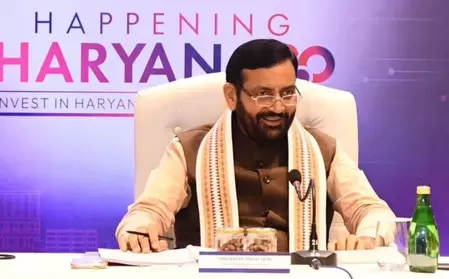
Haryana signs MoUs worth Rs 12,000 crore on first day of Gujarat visit
Digital Desk | Chandigarh/Surat, Oct 27 (IANS) Haryana signed memorandums of understanding (MoUs) involving proposed investments of around Rs 12,000 crore on Tuesday, with commitments spanning defence textiles, renewable energy, industrial machinery and waste-to-energy projects, as the state seeks to attract fresh industrial investment ahead of its global summit in April 2027. The agreements were signed on the first day of a high-level delegations visit to Gujarat, led by Haryana Chief Minister Nayab Singh Saini. The proposed investments include Rs 5,000 crore in defence textiles, Rs 2,000 crore in technical textiles and Rs 500 crore in industrial machinery. A further Rs 4,000 crore has been proposed for the waste-to-energy sector, while solar energy and cosmetics manufacturing together account for investments worth Rs 400 crore. During the visit, Saini held one-to-one meetings with founders, managing directors and chief executive officers of various companies to discuss the expansion of their existing operations in Haryana, the establishment of new industrial units and potential investment proposals. Industries and Commerce Minister Rao Narbir Singh also attended the meetings. The Chief Minister said the state government was committed to supporting investors and entrepreneurs and attracting investment to generate employment opportunities for young people. Haryana is working to improve the ease of doing business and provide a favourable environment for industrial development. The government aims to offer investors a combination of supportive policies, industrial infrastructure, connectivity and essential facilities, while simplifying procedures and ensuring time-bound approvals, he said. Saini said the state is focusing on better coordination between government departments to reduce procedural hurdles and facilitate the establishment and operation of industrial projects. Haryanas single-window clearance system, investment promotion schemes and plug-and-play industrial facilities were among the measures intended to make the state more attractive to businesses. The government is also seeking to ensure that industries investing in Haryana receive applicable incentives, necessary approvals and departmental assistance in accordance with the rules. Feedback from industry representatives would be considered to improve policies and procedures and help companies implement projects on schedule, he said. He described the MoUs signed on Tuesday as steps towards expanding industrial activity, developing ancillary industries and encouraging new business partnerships. Their implementation could create employment opportunities, strengthen the local economy and increase Haryanas industrial capacity. The Chief Minister invited industrialists and investors to attend the 'Happening Haryana Global Summit', scheduled to be held in April 2027. During the meetings, industry representatives discussed investment opportunities across various sectors and expressed interest in Haryanas industrial infrastructure, business facilitation measures and investment promotion policies.
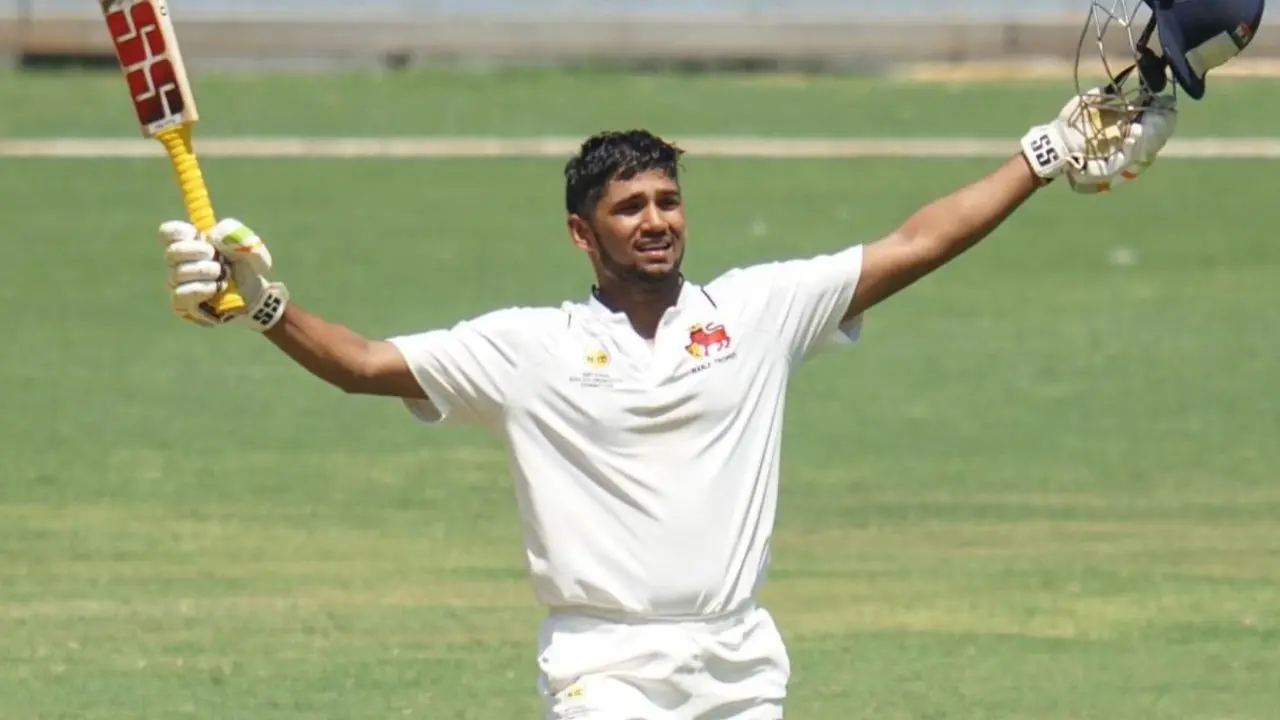
Ranji Trophy: Musheer Khan's all-round show helps Mumbai dominate Haryana
Musheer Khan starred with both bat and ball, taking two wickets after scoring a century to help Mumbai restrict Haryana to 108/2 on Day 2

Kotian and Musheer stand out for Mumbai on a frustrating day
The former scores a patient unbeaten 52 as the host makes 430 against Haryana, while the latter strikes twice in the last hour

Punjab and Haryana HC stays BFI meeting on no-confidence motion against Ajay Singh
The News Mill

Punjab and Haryana HC put BFI meeting on hold over no-confidence motion against president Ajay Singh
The Punjab and Haryana High Court on Tuesday directed the Boxing Federation of India (BFI) to keep in abeyance its General Body meeting scheduled for October 28 to consider a no-confidence motion against its president, Ajay Singh, until the next date of hearing. Justice Tribhuvan Dahiya passed the interim direction while hearing a petition filed by Singh, who has challenged the notice issued on October 8, proposing a no-confidence motion against him and convening the General Body meeting. The court issued notice of motion for November 13 and directed that the meeting remain on hold in the meantime. Singh, represented by Senior Advocate Chetan Mittal along with other counsel, contended that the proposed proceedings were contrary to the BFI
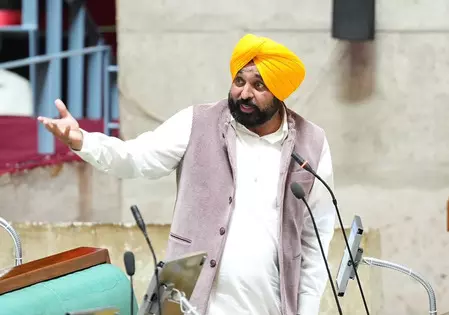
Not a single drop of states rightful share will be surrendered, Punjab CM informs Assembly
Digital Desk | Chandigarh, Oct 27 (IANS) Punjab Chief Minister Bhagwant Mann on Tuesday drew a firm line on the states river waters, declaring that not a single drop of the states rightful share would be surrendered as the Assembly passed a resolution asserting the states rights. Vowing to fight from courts to streets, he questioned Rajasthans continued access to Punjabs water without payment, pegged the states outstanding royalty claim at Rs 1.43 lakh crore, and asserted that Rajasthan and Haryana had no share in the waters of the Ravi and the Beas. The Chief Minister pointed out his government is strengthening the states own irrigation network, expanding canal water access from 22 to 80 per cent of fields in four years and laying 14,000 km of underground pipelines. Participating in discussions on resolutions concerning river waters and other important issues on the final day of the Assembly session, CM Mann said Punjab would no longer tolerate injustice in the distribution of its precious water resources. Water is a state subject, and the control of headworks rests with the states. Punjab will vigorously pursue its legitimate rights and will not allow the states interests to be sacrificed, he said. Questioning Haryanas claim over Ravi-Beas waters, the Chief Minister said, It is unfair that Haryana stakes its claim over Ravi-Beas waters while Punjabs rightful share in Yamuna waters is ignored, despite the Yamuna being part of undivided Punjab. Highlighting the transformation in irrigation, CM Mann said when his government assumed office in 2022, only 22 per cent of Punjabs water resources were being utilised, whereas the figure had now risen to nearly 80 per cent. We have undertaken an extensive overhaul of Punjabs irrigation network to ensure that canal water reaches even the tail-end fields. By cleaning rajbahas, laying 14,000 km of pipelines and rejuvenating canals and watercourses, we have strengthened the irrigation system and improved access to water for farmers. The Chief Minister said the government has revived the Kandi Canal after nearly four decades and operationalised eight new canals in Pathankot, Amritsar and Gurdaspur districts. These initiatives have significantly improved irrigation access, with 60.80 lakh acres of land being irrigated through the governments efforts. Our commitment is to ensure that every drop counts, strengthen agriculture and provide much-needed relief to farmers, he said. The Chief Minister asserted that the government would pursue every legitimate avenue to protect Punjabs water rights and secure justice for its people.

Punjab and Haryana HC directs BFI to keep no-confidence meeting in abeyance

Musheer Khan's all-round brilliance puts Mumbai in command
Musheer Khan delivered a century with the bat and two crucial wickets with the ball, helping Mumbai establish a strong position against Haryana in their Ranji Trophy Elite Group D clash.

Ladakh dry UT demand: Chief Secretary calls for consensus, middle path
Leh, Oct 27: Amid public outcry over the rising number of wine shops and demands for a dry Ladakh, Chief Secretary Ashish Kundra on Tuesday called for wider consultations with religious and industry representatives to build consensus and find a middle path balancing public sentiment with the region's cultural and economic interests. The chief secretary assured that the administration was flexible in its approach to public policy and would be amenable to a middle path solution in the matter. Kundra was speaking at a meeting with women representatives of various religious organisations to discuss issues relating to excise policy. The meeting was attended by Excise Commissioner Romil Singh Donk and representatives of All Ladakh Gompa Association, Ladakh Buddhist Association, Anjuman Imamia, All Ladakh Hotel and Guest House Association (ALGAHA) and All Ladakh Tour Operators Association (ALTOA), an official spokesman said. During the meeting, the women representatives put forth their views and concerns while demanding complete prohibition of liquor in the Union Territory (UT), highlighting the social and cultural considerations associated with the issue. They expressed concern over the large number of bar licences issued. The meeting was informed that in response to public sentiment, the Excise Policy 202627 had been rolled back and now the Excise Policy 202526 was in force, the spokesman said. He said the participants were apprised of the status of liquor licences under the reinstated policy. The meeting was informed that the number of retail liquor vends was two till last year but this year only one retail vend is functional. Similarly, the number of functional bars attached to restaurants offering retail sale of liquor, which was earlier 23, had increased by 17 newly issued licences, taking the total to 40, the spokesman said. The chief secretary acknowledged the concerns expressed by the women representatives and emphasised the importance of giving due consideration to the views and sentiments of the people of Ladakh. He observed that the demand for declaring Ladakh a completely dry UT is a significant matter that requires careful deliberation and consultation with all concerned stakeholders, to which all agreed. The chief secretary cited the experience of other states like Bihar and Haryana where complete prohibition had led to serious consequences of spurious liquor and drugs being proliferated. He suggested that this is also a cultural issue and the community needs careful consideration of the consequences of declaring Ladakh as a dry territory. There are also issues of employment, tourism and economic activity and consultation with the hotel industry is also crucial in this regard, particularly given that tourism is the primary economic activity in the territory, Kundra said. He said any decision on the matter would need to be taken through a broad-based consultative process involving religious organisations, hotel associations, tour and travel operators' associations and other relevant stakeholders, keeping in view the social, cultural and economic dimensions of the issue. He suggested that in the first instance, the Ladakh Buddhist Association (LBA) should convene a wider consultation and build consensus on the way forward, with an endeavour to find a middle ground. The chief secretary reiterated the importance of constructive dialogue and mutual understanding in addressing the concerns raised by the women representatives while ensuring that the perspectives of all affected stakeholders are duly considered. The meeting provided an opportunity for the representatives to present their views and underscored the need for continued engagement and dialogue towards a balanced and informed consideration of the issue, the spokesman said. The chief secretary said if required, another meeting with a larger set of stakeholders would be convened soon.

Digital Desk | New Delhi, Oct 27 (IANS) The Punjab and Haryana High Court, hearing a petition filed by Boxing Federation of India (BFI) President Ajay Singh, on Tuesday directed suspended BFI Secretary General Pramod Kumar to keep the General Body meeting scheduled for October 28 in abeyance until the next hearing on November 13. The order comes after World Boxing, the sport's world governing body, in an email dated October 23, emphasised that any General Meeting of a National Federation must be convened and conducted in accordance with the applicable constitution. Justice Tribhuvan Dahiya on Tuesday issued notice of motion for November 13 in BFI Presidents petition, which challenges a notice dated October 8 proposing a no-confidence motion against him and convening a General Body meeting for that purpose. In the meanwhile, the second respondent is directed to keep the General Body meeting in abeyance till the next date of hearing, the court said in its October 27 order. The order records the petitioners contention that the BFI constitution permits the Presidents removal only through a no-confidence motion supported by at least three-fourths of the General Body members at a meeting specially convened for the purpose. It also records his contention that a Special General Meeting can be convened only by the President or upon a request from two-thirds of the Executive Committee members. BFI has cited Clause 33 (ii), under which the President may call a Special General Meeting (SGM) at his discretion or must cause one to be convened within 30 days following a written request from two-thirds of the Executive Council members. In this case, none of these conditions were met, rendering the purported meeting called by the erstwhile Secretary General unlawful. The Federation also cited Clause 26 (iii), which provides for the Secretary General to convene General Council and Executive Council meetings only under the Presidents advice. BFI has also referred to the powers of the President to suspend under Clauses 24 (xvi), 24 (xxviii) and 24(xxxvi), alongside procedural safeguards. Clause 30 separately provides for the power of the President to suspend Executive Committee members, subject to requirements concerning a hearing, written reasons, ratification and appeal. BFI has urged all members to take pride in Indias glorious success in our sport. It also requests members to follow the constitution of the BFI and comply with the orders of the Honble High Court. BFI believes that members must desist from distractions and focus on Indian boxings dream of Olympic glory.
Court Stays BFI Meeting Amidst Leadership Tussle
The Punjab and Haryana High Court has directed the suspended Boxing Federation of India (BFI) secretary general, Pramod Kumar, to postpone a General Body meeting until November 13. This decision follows a petition by BFI president Ajay Singh, who challenged a no-confidence motion against him, arguing the meeting was unlawfully convened as per the BFI constitution.
Dunkey route case: ED arrests Delhi-based ticketing agent
Digital Desk | New Delhi, Oct 27 (IANS) The ED arrested a Delhi-based ticketing agent involved in money laundering linked to US-deported Indians who crossed the borders of several South/Central American countries illegally through dangerous routes with the help of local donkers and the mafia, also known as the Dunkey Route Case, an official said. The Directorate of Enforcement (ED), Jalandhar Zonal Office, arrested ticketing agent Tarun Khosla on October 23 under the provisions of the Prevention of Money Laundering Act (PMLA), 2002, the official said in a statement. The action was taken in the Dunkey Route Case relating to Indians deported from the US in February 2025. Khosla has been sent to ED custody till October 30 at a Special PMLA Court, the statement said. Investigation has revealed that Khosla was a key facilitator of the Dunkey Route network. He has been involved with multiple agents from Punjab and Haryana who used to collect passports and money from the persons wishing to go to the US and handed them over to him in Delhi, the ED said. He then arranged visas and air tickets to transit countries in South America such as Guyana, Suriname, Ecuador and El Salvador, and further facilitated movement of such persons towards the US border using illegal and dangerous routes, the ED said. He was a key decision-maker on routes and pricing for each person travelling through the Dunkey Route, he said. The ED investigation was initiated based on various FIRs registered by Punjab Police and Haryana Police under various sections of BNS, 2023 (erstwhile IPC, 1860), the Emigration Act, 1983 and after more than 300 Indian nationals were deported from the US for illegally entering the country through the Mexico border. The ED probe revealed that persons wishing to go to the US were induced by agents and middlemen on the false promise of sending them through legal channels, and were instead sent through the Dunkey route on payment of Rs 30 lakh to Rs 60 lakh. Earlier, searches were conducted in this case on July 9, 2025 and July 11, 2025 at 19 locations wherein incriminating documents, records and digital devices and materials were found and recovered, including bogus immigration stamp and bogus visa stamp about Nicaragua and Ethiopia, the ED said. On December 15, the ED had provisionally attached movable and immovable properties worth Rs 5.41 crore, including agricultural land, residential premises, business premises and bank account balances, derived out/equivalent to the Proceeds of Crime generated by various agents who were involved in sending persons to the US illegally. Subsequently, the ED had carried out searches at multiple locations across Punjab, Haryana and Delhi on December 18, 2025 and December 19, 2025, during which cash of Rs 4.62 crore, gold bars and coins weighing about 5.9 kg and silver bars weighing about 313 kg (total values amounting to Rs 19.14 crore), besides incriminating documents and digital devices, were seized from the premises of said Tarun Khosla. In addition, over 50 original passports of third parties, diaries, records of transactions, property documents and digital devices were also recovered from other premises, said the ED. Investigation has revealed that Khosla was a key player in the Dunkey Route network. Data retrieved from his mobile phones revealed his incriminating chats indicating that he acted as an immigration-clearance fixer, said the ED. His chats with an international contact reveal on-ground coordination at foreign airports, including collection of money for immigration clearance, facilitation of tickets, handling of passengers, and payments in dollars, it said. Instructions such as OK to Board endorsements and coordination with airline/immigration personnel further established his operational control over transit arrangements, the ED said. The investigation revealed that Khosla used to make arrangements for sending persons to the US through the illegal Dunkey Route. He arranged VISA clearance for South American countries, arranging fake/forged yellow fever vaccination certificates, booking tickets, and handling the donkers. He had chats with foreign donkers such as Mike in Mexico, Ali in Brazil and another contact in Mexico Kristi, who used to manage donkers in respect of crossing of persons through the Dunkey Route and related payments, the ED said. Cash deposits to the tune of Rs 30.38 crore through 414 cash-credit transactions were found during FY 2022-23 to FY 2024-25 in the bank account of his proprietorship firm BJ International, the ED said.

Kashmiri Pandit Threat Case Takes Dramatic Turn, Community Activist Held in Haryana
The Jammu and Kashmir Police have arrested Rakesh Handoo, a Kashmiri Pandit activist based in Haryana, alleging his involvement in the circulation of terror-linked threats that rattled thousands of employees appointed under the Prime Minister's Special Employment and Rehabilitation Package

Punjab and Haryana HC fines Punjab Chief Secretary Rs 1 lakh over DA arrears
The News Mill

Kashmiri Pandit Activist Held Over Cyber-Terror Threats to Employees
Srinagar, Oct 27: Kashmiri Pandit activist Rakesh Handoo has been arrested in Haryanas Faridabad for his alleged involvement in cyber-terror threats issued against Kashmiri Pandit employees in Jammu and Kashmir, police said. Handoo has been booked under the Unlawful Activities (Prevention) Act (UAPA) and other relevant provisions, with Inspector General of Police Sujit Kumar stating [] The post Kashmiri Pandit Activist Held Over Cyber-Terror Threats to Employees appeared first on Northlines .
CUH PG Result 2026 Out - Direct Link to Check M.A and M.Sc Result Online @ cuh.ac.in
Central University of Haryana released Special Examination September 2026 results on 27.10.2026 on the Samarth portal for M.A Sanskrit (NEP and non-NEP) and M.Sc Yoga (NEP).
Meet Arun Chauhan: Haryana farmer says sweet corn earns him Rs 25 lakh a year
In Manauli, Haryana, Arun Chauhan made a game-changing decision, shifting his farming focus from traditional paddy to sweet corn and vegetables. Inspired by a friend's successful strawberry venture, he now rakes in almost Rs 25 lakh yearly. His transition has sparked a village-wide movement, with more farmers embracing this profitable path. The local markets, notably Delhis Azadpur Mandi, provide lucrative selling avenues while strengthening community sales efforts.
National Junior Athletics: Nishchay Creates Discus Record
Haryana's Nishchay set a new national record in the U18 discus throw at the 41st National Junior Athletics Championships in Chennai on Monday, winning gold with a throw of 66.75m and surpassing the previous record set in 2010.
Police arrest Kashmiri Pandit Activist over terrorist threats to Kashmiri Pandit employees in J&K
Srinagar, Oct 27: Jammu and Kashmir Police arrested a Kashmir Pandit activist in Haryana's Faridabad over his alleged involvement in sending terrorist threats to Kashmiri Pandit employees in the union territory of Jammu and Kashmir, according to an NDTV report. According to the report, the accused, identified as Rakesh Handoo, has been charged under the stringent anti-terrorist and cyber-terror charges. Police have got substantial and serious clues about his involvement. He has been booked under UAPA,'' said Sujit Kumar, Inspector General of Police. Couple of months back, in August, panic gripped Kashmir Pandit employees in Kashmir after purported threat letters against some employees with their names and contact details were circulated. Following threats and safety concerns of Pandit employees, hundreds of employees appointed under the Prime Minister's special employment scheme for Kashmiri Pandits were sent on administrative leave and asked to stay away from duties for almost three weeks. According to the grounds of arrest served to Handoos' wife on October 17, police have said that the accused has been arrested for a non-bailable offence, NDTV reported. Initially, he was asked to appear before the police in Baramulla on September 26 after an FIR was registered on September 21. Sources say despite repeated summons, Handoo failed to appear before police. On October 17, a police team from Baramulla arrested him from Greater Fraidabad in Haryana. Handoo, a pandit activist had unsuccessfully contested the 2008 Assembly elections against National Conference President Farooq Abdullah from the Hazratbal constituency in Srinagar. Kashmiri Pandit leader Sanjay Saraf has termed the arrest as unfortunate and demanded that charges against Handoo are reviewed. He was arrested from his Faridabad residence. It's not good for the community which has suffered due to terrorism, and now a community activist has been booked under cyber terrorism, said Saraf, Lok Janshakti Party leader. Around 6,000 Kashmiri Pandits have been given government jobs under the Prime Minister's special employment package rolled out in 2010. It was aimed at facilitating the return and rehabilitation of Kashmiri pandits displaced from their homeland after the outbreak of the secessionist movement in 1990.
Police recover Rs 9.5 lakh in ATM fraud In Kulgam; two women arrested, main accused on run
Kulgam, Oct 27: Kulgam Police has recovered 9.5 lakh in an ATM fraud case and arrested two women for allegedly receiving the proceeds of crime, while two main accused are absconding. In a handout, the police said that the case was registered under FIR No. 254/2026 under Sections 303(2) and 318(4) of Bharatiya Nyaya Sanhita (BNS) at Police Station Qazigund after a woman, Muneera Reshi, wife of Gulzar Ahmad Shaan, resident of Pati Akhran, Kulgam, lodged a complaint at Police Post Mir Bazar on October 15, stating that her ATM card was fraudulently exchanged by an unknown person at an ATM in Mir Bazar on October 5, and subsequently 9.5 lakh was withdrawn from her account through unauthorised transactions. During investigation, police identified the main accused as Vinender Singh @ Sheenu, son of Roshan Lal, resident of Kesan Colony, Ward No. 12, Barwala, Hisar, Haryana and Mukesh Singh, son of Rajuram, resident of Hansi, District Hisar, Haryana, on the basis of CCTV footage, technical analysis and other leads. A police team from Police Post Mir Bazar was sent to Haryana to trace the accused, however both were found absconding and their houses were found locked. Efforts are on to nab them. Meanwhile, police recovered the entire defrauded amount of 9.5 lakh from two women, identified as Shanti Devi, wife of Nathu Ram, resident of Data Gurana, District Hisar, Haryana maternal aunt-in-law (Mami) of accused Vinender Singh, and Rajpati Devi, wife of Raj Kumar, resident of Sorkhi, District Hisar, Haryana maternal aunt (Masi) of accused Mukesh Singh. Both women have been arrested for allegedly receiving the stolen amount. Further investigation is underway. Kulgam Police have appealed to the general public to share any credible information regarding the whereabouts of absconding accused Vinender Singh @ Sheenu and Mukesh Singh with the nearest Police Station, Police Post Mir Bazar, Police Station Qazigund or PCR on +91 70515 10660, assuring that the information will be kept confidential. SSP Kulgam, Anayat Ali Choudhary, IPS, has advised people to remain vigilant during ATM transactions and not to hand over ATM cards or share PINs, OTPs and banking credentials with unknown persons, and to avoid taking help from strangers at ATMs and immediately report any suspicious activity to bank and police.(GNS)
Haryana Launches UPI Payments, Online OPD In Hospitals
Haryana has rolled out UPI-based digital payment systems and expanded online OPD pre-registration facilities across 610 public healthcare institutions. This initiative aims to reduce queues, simplify registration, and enhance patient convenience, while still retaining traditional cash and walk-in options for those not using digital methods.

73-Year-Old Tourist from Haryana Dies at Srinagar Hospital
SRINAGAR: A 73-year-old tourist from Haryana died after being shifted to SMHS Hospital in Srinagar following a complaint of chest pain, officials said. The deceased, identified as Mahipal Singh, a resident of Gharaunda in Karnal district, was staying with his wife and friends at Houseboat on Dal Lake. He was initially taken to Khyber Hospital []

Chandigarh, October 27, 2026 (Udaipur Kiran): Weather conditions are likely to change across Haryana, with rainfall activity expected to increase from Wednesday, October 28. The Meteorological Department has Haryana Weather Update: Rain Expected from October 28, Yellow Alert for Heavy Rain on October 29 and 30
Haryana celebrates Valmiki Jayanti; CM & governor announce Rs 46L for hostels
449 patients await organ transplants in Gurgaon, 2nd highest in Haryana list
Haryana warns private medical colleges against excess fees
HC orders Haryana varsity to release unmarried womans family pension

Haryana teen Poonam lets her javelin do the talking

Ranji Trophy: Badoni Slams Second Successive Ton, Saranshs Seven-for Puts MP On Top
JSCA International Stadium: Batting all-rounder Ayush Badoni continued his rich vein of form by hitting a second consecutive hundred, while India off-spinner Saransh Jains seven-wicket haul gave Madhya Pradesh firm control on day one of the third-round Ranji Trophy matches on Monday. Fresh from a career-best 217 against Gujarat, Badoni struck an unbeaten 106 off 122 balls, laced with 11 fours and two sixes, to take Delhi to 309/5 against Jharkhand at the JSCA International Stadium in Ranchi. Badoni, 26, previously hit 205 against the same opponents in the 2024/25 season. A chanceless knock, Badonis sixth first-class hundred, anchored Delhis recovery. He found a reliable ally in all-rounder Sumit Mathur, who was unbeaten on 50, as the pair put together an unbroken 128-run stand for the sixth wicket. Mathur had a lucky escape on 36 when he was caught at long-on, only to be recalled because Anukul Roy had overstepped. At Holkar Stadium in Indore, Saranshs 7-40 helped Madhya Pradesh bowl Bihar out for just 99. The hosts, still looking for their first win of the season after two draws, then reached 261/3 with a lead of 162, after bowling out Bihar for 99. Wicketkeeper-batter Saksham Purohit was unbeaten on 113, and his opening partner Yash Dubey made 84. At the BKC Ground, Mumbai also made a strong start against Haryana at home after being put in to bat first. Angkrish Raghuvanshi made 114 off 180 balls with 13 fours and a six, while Musheer Khan scored 109 off 185 balls with 12 fours and a six. The pair added 208 runs for the second wicket to steer Mumbai to 290/3 at stumps. Defending champions Jammu and Kashmir, also in search of their first win, were frustrated by Priyanshu Moliya at the Reliance Ground in Vadodara. Moliyas patient unbeaten 113 lifted Baroda to 259/6 after they had slipped to 197/6 at one stage. Vidarbha, who have two wins so far, had Goa in trouble at 84/6 after Nachiket Bhute ripped through the top order with four wickets. But Darshan Misal and Yash Kasvankar then struck half-centuries and shared a stand of 104 runs for the seventh wicket to help the visitors reach 204/8. On a rain-hit day, Pondicherry reduced Uttar Pradesh to 67/4. In Mysuru, Karnataka recovered from a sluggish start to bowl Tripura out for 194 at the SDNR Wadiyar Stadium. The hosts, who sprang a surprise by leaving out pacers Vidwath Kaverappa and Abhilash Shetty to accommodate spinners Shikhar Shetty and Ritesh Bhatkal, failed to make use of the new ball as Tripura moved comfortably to 88/2 in the first session. Left-arm spinner Shikhar then claimed his third first-class five-wicket haul, while pacer Manvanth Kumar took three. Karnataka lost Mayank Agarwal early and were 10 for one at stumps. At the DVR Ground in Mulapadu, Chhattisgarhs spinners made full use of a helpful pitch to bowl Andhra out for 231. Veteran off-spinner Jayant Yadav led the way with 4-75, while Ajay Mandal and Dharmendrasinh Jadeja took three and two wickets respectively. In reply, Chhattisgarh lost Ayush Pandey early when he was run out going for an unnecessary quick single. Captain Anuj Tiwary and Mayank Verma then negotiated the final half-hour to take the visitors to 35/1. Wicketkeeper-batter Prabhsimran Singh laid the foundation with 81 off 126 balls, hitting nine fours and a six, while fifties from Salil Arora and Ramandeep Singh then guided Punjab to 289/6 against Hyderabad in Secunderabad. Denish Das made 90 off 165 balls, with 14 fours, to take Assam to 235/6 against Saurashtra in Rajkot. For the hosts, veteran pacer Jaydev Unadkat picked up three wickets, while Ravindra Jadeja and Arth Yadav took one wicket each. In Thiruvananthapuram, where only 50 overs were possible due to rain, Kerala reduced Bengal to 172/6, with Aditya Sarwate taking three wickets and Nedumankuzhy Basil two scalps. Maharashtra bowled out Gujarat for 233 in Pune, with Siddhesh Veer taking four wickets, while Rajvardhan Hangargekar and Vicky Ostwal claimed three apiece. Maharashtra were 24/1 when stumps were called. Services off-spinner Pulkit Narang returned 6-47, his second five-wicket haul of the season, to bowl Odisha out for 194 in Bhubaneswar. The visitors were 13/0 at stumps. Tamil Nadu bowled out Railways for 184 in Chennai, with R Sai Kishore and Sonu Yadav taking three wickets each, but slipped to 71/3 till stumps arrived. Devendra Singh Boras six-wicket haul helped Uttarakhand dismiss Rajasthan for 272 in Dehradun despite skipper Kartik Sharmas 73. Uttarakhand were 18/0 at stumps. Centuries from Arjun Azad and Nehal Pajni powered Chandigarh past 350 for the loss of three wickets against Himachal Pradesh. In the Plate group, Meghalayas Ajay Duhan (167) and Kishan Lyngdoh (144) shared an unbroken 308-run stand for the second wicket as their side piled up 385/2 against Mizoram in Nadiad. Tamil Nadu bowled out Railways for 184 in Chennai, with R Sai Kishore and Sonu Yadav taking three wickets each, but slipped to 71/3 till stumps arrived. Devendra Singh Boras six-wicket haul helped Uttarakhand dismiss Rajasthan for 272 in Dehradun despite skipper Kartik Sharmas 73. Uttarakhand were 18/0 at stumps. Also Read: Special Cricket Stories Article Source: IANS
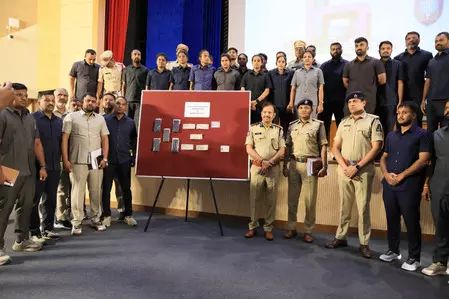
Nepali gang arrested for murder of retired IPS officers wife in Hyderabad
Digital Desk | Hyderabad, Oct 26 (IANS) More than five months after Tanuja Ranjan, wife of retired Indian Police Service (IPS) officer Ray Vinay Ranjan, was brutally murdered at their residence in Hyderabad, police on Monday arrested four Nepalese. Those arrested include the domestic worker, Dharma Tiruwa alias Kalpana, who had worked at the victims residence. The arrests were made following a five-month-long investigation spanning several states and the India-Nepal border. Hyderabad Police Commissioner V. C. Sajjanar announced the arrests at a press conference. A Special Investigation Team (SIT), probing rising property offences committed by Nepali gangs across the three Police Commissionerates, arrested four accused near Nampally Railway Station on Monday (October 26). Dharma alias Kalpana, 26, is from Surkhet district in Nepal. Ganesh B.K. alias Ganesh Bishwakarma alias Dinesh Thapa, 31, is a labourer who was residing in Pune; Chandra Bahadur Tamang alias Ranjeet Thapa alias Shanker Chandra Lama alias Kancha, 44, a cook whose listed Indian address is in Gurugram, Haryana; and Ganesh Bahadur Shahi, 37, a watchman who was residing in Pune. Police said two other accused remained absconding and that teams were continuing efforts to trace them. The police had earlier arrested two other accused in the case. Police said the accused entered the house in Prashasan Nagar on the night of May 78, restrained Tanuja Ranjan and smothered her. They allegedly escaped with 225 grams of gold jewellery and other valuables. The police investigation revealed that Dharma came to Hyderabad in June 2025 through a relative and began working as a domestic help at the Jubilee Hills residence for a monthly salary of about Rs 20,000. During her employment, she allegedly remained in contact with Bikas, a Nepal national based in Pune, who repeatedly asked about her employer, the households assets and the valuables inside the house. He eventually proposed a robbery in return for a share of the proceeds. In April 2026, Dharma travelled to Pune to visit her ailing father and came into contact with other members of the alleged gang. On May 4, when her employer left for Bengaluru, she allegedly alerted the group. The police account says Ganesh Bahadur Shahi, Shanker Chandra Lama and Sunil Pariyar met at Kalamboli in Raigad district, Maharashtra, on May 4 and travelled to Pune in a hired Maruti Ertiga. The next day, they met other alleged accomplices, including Ganesh B.K., before setting out for Hyderabad. On the morning of May 7, Ganesh B.K. and Suresh Shahi allegedly met Dharma near her workplace, surveyed the premises and discussed how the group could enter the house. Two groups allegedly carried out the operation. According to police, the gang assembled at Ravindra Bar near the Mahatma Gandhi Bus Station area on the evening of May 7. It allegedly split into two groups under a plan devised by Sujan Shahi, also known as Suresh Shahi. One group, comprising Ganesh B.K., Suresh Shahi and Shanker Lama, was assigned to enter the house and carry out the robbery. The other, comprising Ganesh Bahadur Shahi, Sunil Pariyar and Netra Shahi, allegedly remained near Nampally railway station as a lookout team. During the intervening night of May 7 and 8, Dharma allegedly opened the door to let the others in. Police said Tanuja woke up during the incident. The attackers allegedly gagged and restrained her, causing her death by suffocation. The group then searched the house, broke open cupboards and took gold jewellery and other valuables. After leaving through the rear gate, the accused allegedly travelled to Nampally and joined the lookout team. Investigation revealed that the group subsequently travelled towards Kazipet, moved into isolated hilly terrain and divided the stolen property into nine equal shares. Members then split into smaller groups, fled towards Nepal and disposed of the valuables at different locations. On May 22, Task Force teams arrested Sunil Bahadur Aauji alias Sunil Pariyar and alleged receiver Dilip Bahadur Mijar alias Sonar. Police recovered 26 grams of the stolen property from them. The investigation continued across Bengaluru, Mumbai, Pune, Surat, Patna, Delhi, Lucknow and Uttarakhand. The SIT also carried out field inquiries near the India-Nepal border, spending more than five months gathering intelligence in remote and hilly areas. Police said local informers helped the team track the suspects alleged hideouts, travel routes, employment and contacts.
Ranji Trophy: Ton-Up Raghuvanshi, Musheer Script Mumbai's Strong Start
Angkrish Raghuvanshi's maiden first-class century and Musheer Khan's 109 powered Mumbai to 290/3 against Haryana, while Raghuvanshi credited coach Abhishek Nayar with helping overcome red-ball doubts.
Maharashtra BBA Student Rescued from Haryana After Crypto Ransom Kidnapping in Jaipur
High Court Orders Haryana to Regularize Service and Clear Salary Arrears

Ranji Trophy: Raghuvanshi, Musheer help Mumbai take opening days honours
The two hit hundreds and put on 208 for the second wicket as the home side reaches 290 for three; Haryana bowlers find the going tough after captain Ankit elects to field

Ranji Trophy: Raghuvanshi, Musheer help Mumbai take opening days honours
The two hit hundreds and put on 208 for the second wicket as the home side reaches 290 for three; Haryana bowlers find the going tough after captain Ankit elects to field
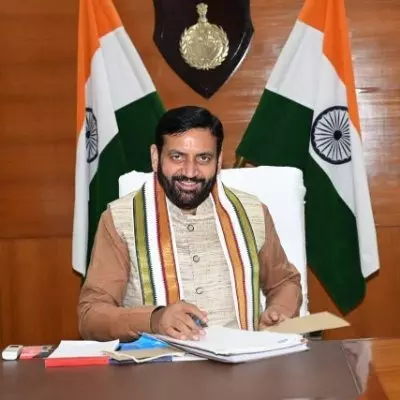
Haryana CM Saini to lead investment outreach in Gujarat
Digital Desk | Chandigarh, Oct 26 (IANS) Haryana Chief Minister Nayab Singh Saini will lead a high-level delegation to Gujarat on October 27-28 to attract investments, strengthen industrial cooperation and promote business opportunities in the state, the state government said on Monday. The delegation will visit Surat and Gandhinagar, where it will hold meetings with investors, engage with industry representatives and organise the Haryana Investment Roadshow. Haryana Industries and Commerce Minister Rao Narbir Singh will also accompany the Chief Minister. The outreach comes as Haryana seeks to attract investments worth around Rs 5 lakh crore and generate more than 10 lakh employment opportunities by 2030-31 under its Make in Haryana Industrial Policy -- 2026. Amit Agrawal, Commissioner and Secretary (Industries and Commerce), said Saini would hold one-to-one meetings with investors in Surat on October 27 to discuss investment prospects, industrial expansion and opportunities for setting up businesses in Haryana. The programme will also include a Pravasi Milan Samaroh, bringing together members of the Haryana diaspora and prominent business representatives. The event will highlight the state's cultural heritage, development trajectory and industrial capabilities. On October 28, Haryana will organise an investment roadshow in Gandhinagar, bringing together industrialists, investors and representatives from various sectors. The roadshow will showcase Haryana's industrial infrastructure, investor-friendly policy framework, connectivity and skilled workforce, while highlighting opportunities across sectors, Agrawal said. The delegation will hold discussions with industry representatives on prospective investments, projects and business partnerships. The state will also explore the possibility of signing memoranda of understanding (MoUs) linked to investment proposals. The government aims to use the engagements to establish direct links with investors and encourage companies to consider Haryana for new industrial units and expansion projects. The Make in Haryana Industrial Policy -- 2026 is aimed at accelerating industrial development, strengthening manufacturing and creating a conducive environment for domestic and international investors, according to the state government. Under the policy-led investment push, Haryana has set a target of attracting approximately Rs 5 lakh crore in fresh investments and creating more than 10 lakh jobs by 2030-31. The Gujarat outreach is intended to familiarise investors with the state's industrial ecosystem and encourage investment proposals that could support manufacturing growth, technological innovation and employment generation. The government expects the engagements in Surat and Gandhinagar to open avenues for new industrial ventures, expansion of existing businesses and partnerships with companies across sectors. The visit forms part of Haryana's broader effort to widen investor engagement and position the state as a destination for industrial investment and business expansion.

Tiger Shroff's Attackers Had A Return Plan For Weapons. It Failed In Surat
The four accused -- Sumit, Kunal, Radha and Babita, who were arrested in Delhi and Haryana last week -- were sent to police custody until October 28 today.

Rohtak (Haryana) [India], October 26: What began as a small juice centre has grown into a retail network of more than 500 mobile stores. The journey of Bhatia Mobile is a story of resilience, family dedication and customer trust. After establishing a strong presence in Gujarat, Maharashtra, Rajasthan and Madhya Pradesh, the company has now opened its first Haryana store in Rohtak, the hometown of the Bhatia family.
22-Year-Old Kupwara Resident Dies in Haryana Road Accident
SRINAGAR: A 22-year-old man from Kupwara district in north Kashmir died in a road accident in Haryana on Sunday while travelling back from Delhi. Aashiq Hussain Baig, son of late Habibullah Baig, hailed from Jahama village in Qalamabad tehsil. He had been working as a driver for the past one to two years to provide []
Haryana electricity row: How a private licence triggered a statewide crisis
A 25-year licence for Eleven Power has put Haryana's power regulator and government at odds, raising concerns over parallel distribution and the financial health of state-run discoms

DC's Main Priority In WPL 2027 Auction Will Be To Get An Experienced Keeper: Reema Malhotra
Former India cricketer Reema Malhotra feels landing an experienced wicketkeeper-batter will be the foremost task on the mind of Delhi Capitals (DC) in the 2027 Womens Premier League (WPL) mini auction, adding that the four-time runners-up cannot afford to go without a proven hand behind the stumps if they are serious about lifting the trophy. DC, who have a purse of Rs 1.10 crore, released both Taniyaa Bhatia and Lizelle Lee ahead of the auction, leaving young Mamatha Madiwala as the only keeping option in the squad. With other teams also vying for keeping options, the likes of Taniyaa, Uma Chetry, Nuzhat Parween, Sushma Verma, G Kamalini, Bhavika Ahire and Sarah Bryce can expect big paydays in the auction starting from 5:30pm in Kochi on Wednesday. Delhi Capitals will be heading into the mini-auction thinking about how they can win the trophy after losing three times in a row and what gaps they need to fill to achieve that. The biggest gap is that they dont have a wicketkeeper batter. Taniya Bhatia was there before but has been released, and Lizelle Lee has been let go of too, so Delhis main priority will be to sort out that spot. This WPL auction is going to be a jackpot for the wicketkeepers, because almost every team needs one, said Reema on JioStar. Though Reema backed Mamathas ability to don the keeping duties for DC, she felt the role demanded the kind of composure and leadership that only comes with experience. Mamatha Madiwala is there in the squad, but shes quite young. She has the talent required to excel, but shes not that experienced, and Delhi require an experienced wicketkeeper batter to get their hands on the trophy. In a tournament like the WPL, you need someone who can handle the pressure behind the stumps and contribute with the bat. An experienced wicketkeeper can guide the bowlers, set the field, and keep the team calm in tight situations. That kind of leadership is difficult to find in a young player. If DC want to end their wait for the trophy, they need someone who has been there and done it before. Otherwise, they will keep falling short in the big moments. Reema further opined that DCs overseas contingent needed no tinkering, but the bowling unit needed reinforcements after the exits of Alana King and Sneh Rana. In this Delhi team, the overseas players are sorted with Laura Wolvaardt, Annabel Sutherland, Marizanne Kapp and Chinelle Henry, so there is no problem there. In the spin department, they have Shree Charani, and Nandni Sharma will lead the pace attack. But they need support bowlers as they have released Alana King and Sneh Rana, because Shree Charani cannot be the lone spinner. Either a leg spinner, an off-spinner, or an Indian all-rounder would help Delhi, because without that, they wont have a sixth bowling option, she said. She also named Australian all-rounder Grace Harris as a likely target, though she felt an Indian spin-bowling all-rounder would be the other key piece alongside a keeper. Grace Harris is a name Delhi Capitals could look at. A lot of teams will go for her, but I feel Delhi will put in a good fight to secure her services. She can strengthen their middle order. But I still feel DC need an Indian all-rounder, someone who can bat in the middle order and give the option of spin in the middle overs. So, an all-rounder and a wicketkeeper complete this team. On the Indian options already in DCs squad, Reema said, If they want an Indian batter in the top order, they can think about introducing Deeya Yadav into the playing XI, who has played for Haryana under Shafalis leadership, so you can see her playing a part at some point in the season. They have Minnu Mani, but shes not known for her batting. She bowls well and is a good fielder too, so if Delhi make her play, she can fill in somewhere. But I still feel they need a stronger option for that Indian spin-bowling all-rounder. While assessing the needs of Gujarat Giants, who have a purse of Rs 1.25 crore, Reema said she expects them to stay away from the big-ticket buys and focus instead on adding depth to their pace attack, which looks thin after the release of Titas Sadhu. Gujarat Giants are not going to be in the hunt for many big players. They mainly need backups for their main players. Renuka Singh Thakur and Kashvee Gautam are their main pacers, but Kashvee is injury-prone and Renuka is struggling for form. Its a long tournament, so you need a backup pacer, because they have released Titas Sadhu. While assessing the needs of Gujarat Giants, who have a purse of Rs 1.25 crore, Reema said she expects them to stay away from the big-ticket buys and focus instead on adding depth to their pace attack, which looks thin after the release of Titas Sadhu. Also Read: Special Cricket Stories Article Source: IANS
Forensic Science Laboratory, Haryana (FSL Haryana) has published the Recruitment 2026 notification for 20 vacancies, including Senior Scientific Officer, Senior Scientific Assistant, Scientific Assistant, and Lab Attendant Support Staff posts. The offline application process will be conducted from 27 October 2026 to 10 November 2026. For complete details, candidates can visit haryanapolice.gov.in.
Z Flip6 screen went black in warranty: Samsung told to pay Rs 98,000 plus interest
In a recent ruling by a consumer commission in Haryana, Vicky Kapoor emerged victorious in his case against Samsung concerning his defective Samsung Z Flip6. The company was ordered to reimburse Kapoor Rs 88,000 following identified service gaps tied to warranty shortcomings. Just after purchase, the phone showcased severe issues, which Samsung disputed by placing blame on alleged physical damages, but the commission found their evidence lacking.

From Abusive Marriage To DSP: Haryana
After returning to her parental home, raising her son and losing her husband, Haryanas Anju Yadav pursued competitive examinations and became a DSP in Rajasthan.

15 women among 17 injured after speeding car rams into tempo carrying labourers in Gurugram
At least 17 people, including 15 women labourers, were injured in a road accident on Sunday morning after a speeding car rammed into a tempo carrying workers on the Sohna-Gurugram Road near Eldeco Society in Haryanas Gurugram.
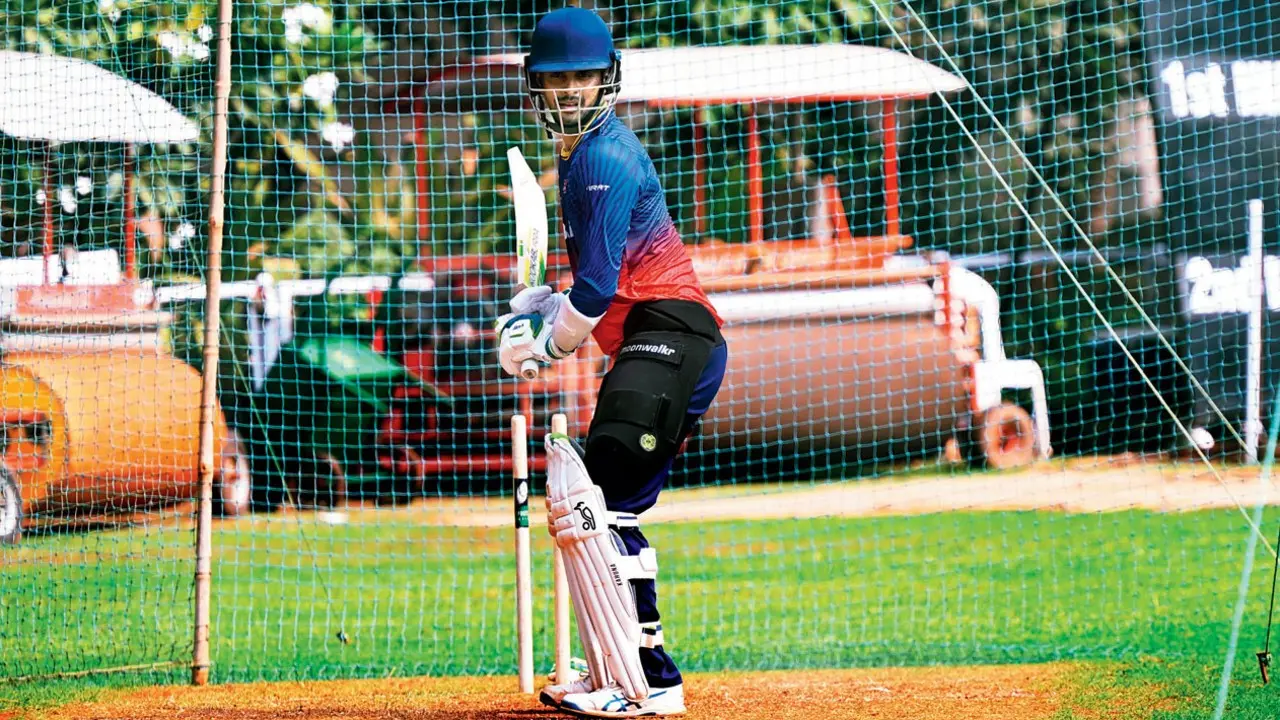
Ranji Trophy 2026 | Akash: Mumbai title first, India A can wait
In-form keeper-batter Anand insists his focus is on team goals and not personal milestones as Mumbai eye third straight win, hosting Haryana at MCA-BKC

Youth must embrace innovation while staying rooted in culture: Kavinder Gupta
Hisar, Oct 25: Himachal Pradesh Governor Kavinder Gupta on Sunday urged young people to embrace innovation, entrepreneurship and modern technology while remaining connected to their cultural roots, saying collective efforts were essential to achieving the vision of a developed India by 2047. Addressing the 43rd Annual Agroha Mela and Sammelan organised by the Agroha Vikas Trust in Hisar, Haryana, Gupta stressed the importance of social harmony, self-reliance and inclusive development in strengthening the country. Paying tributes to Maharaja Agrasen, the Governor said his ideals of equality, cooperation and service continued to hold relevance in contemporary society. He described Maharaja Agrasen as a visionary social reformer who advocated shared prosperity and equal opportunities, citing the traditional concept of 'one brick and one rupee' as an example of collective responsibility and community support. Highlighting the contribution of the Agarwal community, Gupta appreciated its role in trade, industry, education, healthcare and social welfare. He said institutions established by the community, including schools, hospitals and charitable facilities, reflected its longstanding commitment to public service. Referring to the country's development goals, the Governor said India was progressing towards Viksit Bharat 2047 under the leadership of Prime Minister Narendra Modi. He called upon citizens to contribute towards building a self-reliant and technologically advanced nation while upholding constitutional values, national unity and social harmony. Gupta said young people should pursue entrepreneurship and innovation, create employment opportunities and ensure that their achievements contributed to wider social progress. He also highlighted the shared cultural traditions of Himachal Pradesh and Haryana, saying both states reflected values of cooperation, harmony and collective welfare. The Governor emphasised that cultural values should translate into practical initiatives supporting education, healthcare, women, youth and underprivileged communities. Former Rajya Sabha MP Subhash Chandra also addressed the gathering and spoke about the continuing relevance of Maharaja Agrasen's teachings. Earlier, Gupta visited the Maha Lakshmi Temple at Agroha Dham and offered prayers for peace, prosperity and public well-being. Haryana Minister Vipul Goyal, Punjab Minister Virendra Goyal, religious leaders, representatives of Agroha Vikas Trust and other dignitaries attended the event.
202 National School Games taekwondo bouts held in Ganderbal on day 4
Ganderbal, Oct 25: The 70th National School Games (NSG) Taekwondo Championship continued with great enthusiasm at Ganderbal, witnessing 202 bouts involving 208 participants across different weight categories on the fourth day of the championship. The Directorate of Youth Services and Sports (YSS), Jammu and Kashmir, organised a medal ceremony to honour the outstanding performances of the participating athletes. Additional Secretary YSS TinnaMahajan, as per a statement issued, attended the ceremony as the chief guest and distributed medals among the gold, silver and bronze medal winners. Joint Director Kashmir, YSS, Mohammad Rashid Kohli, Principal of the Government College of Physical Education (GCOPE) and SGFI Field Officer were also present on the occasion. During the fourth day's competitions, 202 bouts were conducted across six weight categories. In the girls' section, 34 bouts were held in the -38 kg category, 35 in the -52 kg category and 36 in the -63 kg category. In the boys' section, 33 bouts were conducted in the -41 kg category, 36 in the -59 kg category and 33 in the -78 kg category. Among the gold medal winners, Sarfaraaz Ahmad, Uzair Aslam and Abdul Hadi represented Jammu and Kashmir, while Ayush Semwal of Delhi, Ayushman Chuchan of Uttar Pradesh, Pranava Raj of Tamil Nadu, Gunj Manish Pipaliya of Gujarat and Tejas Yadav of KVS also secured gold medals. Other gold medal winners included Ananya A of Tamil Nadu, Soloni Umesh Prasad of Maharashtra, Nikesha Singh of CISCE, Rishika of Haryana, Joyshree Chetia of Haryana, Sai Prashant Kadhi of Maharashtra, Aaniya of Haryana, Aekta Kapoor of Jammu and Kashmir, and Sanatani Dey of West Bengal. Silver and bronze medal winners were also honoured during the ceremony in recognition of their performances and achievements in the championship. The medal distribution ceremony celebrated the dedication, discipline and sporting excellence of young athletes representing different states, Union Territories and school boards across the country. The 70th National School Games Taekwondo Championship is being hosted by the Directorate of Youth Services and Sports, Jammu and Kashmir, under the aegis of the School Games Federation of India (SGFI).
Update real-time medicine stock info on online portal, govt hospitals across Haryana told
Haryana cities breached annual PM10 limit every year since 2019
Teen stages abduction to extort 5L from family, traced to Haryana
Drug-free society key to Viksit Bharat: Haryana governor
Selja targets Haryana govt over cyber crime surge, pending farmer payments

Haryana Singer Masoom Sharma Criticizes Gun Culture, Advocates for Local Arts
Masoom Sharma speaks out against gun culture in India, urging support for Haryanas language and culture during a recent press conference. Haryana Singer Masoom Sharma Criticizes Gun Culture, Advocates for Local Arts

New Delhi, October 25, 2026: Delhi is being planned as a major hub for the Namo Bharat Regional Rapid Transit System (RRTS), with eight proposed corridors intended to Namo Bharat Rapid Rail Network: 8 Corridors to Connect Delhi with Haryana, Uttar Pradesh and Rajasthan
Haryana guest teachers demand regularisation of services, march to Chandigarh
The teachers said they held three major rallies, submitted memoranda to Chief Minister Nayab Singh Saini, and held four rounds of talks with the State government, but there has been no resolution.
Union Home Minister Amit Shah will partake in a foot march in Karnal on November 5. This initiative is part of the Bharatiya Janata Party's campaign to raise awareness about electoral processes and voter lists. The campaign will include public outreach programs and foot marches across various districts. Preparation for the event involves collaboration between party officials and supporters at the local level.
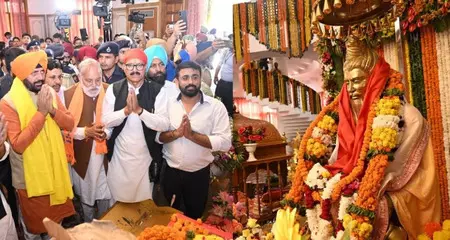
Haryana CM pays obeisance at Bhagwan Valmiki Tirath Sthal in Amritsar
Digital Desk | Amritsar, Oct 25 (IANS) Haryana Chief Minister Nayab Singh Saini paid obeisance at the sacred Bhagwan Valmiki Tirath Sthal in Punjabs Amritsar city on Sunday and prayed for the peace, prosperity and well-being of the people of the country and the state. The Chief Minister received a warm welcome upon arrival at the sacred site. On the occasion, the Chief Minister extended his heartfelt greetings and best wishes to the people of the country and Haryana on the auspicious occasion of Bhagwan Valmikis birth anniversary. He said that the life and teachings of Bhagwan Valmiki were a source of inspiration for all humanity. His teachings convey the message of strengthening equality, harmony, brotherhood and moral values in society. The Chief Minister said that the Ramayana, composed by Bhagwan Valmiki, is an unparalleled scripture embodying Indian culture, ideal values of life and human sensitivities. The thoughts of Bhagwan Valmiki inspire people to follow the path of truth, righteousness, duty and humanity. His teachings continue to play an important role in uniting society and promoting social harmony. On the occasion, Chief Minister Saini also distributed tricycles to beneficiaries in need. He said that providing assistance to needy people and creating opportunities for them to become self-reliant was a collective responsibility of society. Providing essential facilities to persons with disabilities, making their lives easier and ensuring their inclusion in the mainstream of society were among the government's priorities. The Chief Minister said that by adopting the teachings of Bhagwan Valmiki in our lives, we should work together for the dignity, welfare and upliftment of every section of society. This, he said, would be the true expression of reverence and respect for Bhagwan Valmiki.
Himanshu 'Bhau' Detained In US, Faces Deportation
Himanshu 'Bhau', a notorious gangster from Haryana with 64 criminal cases, has been detained by US authorities for misrepresentation of facts. The kingpin of a global syndicate involved in murder and extortion, he operated from abroad after fleeing India in 2022. Haryana Police are coordinating with CBI for his deportation.
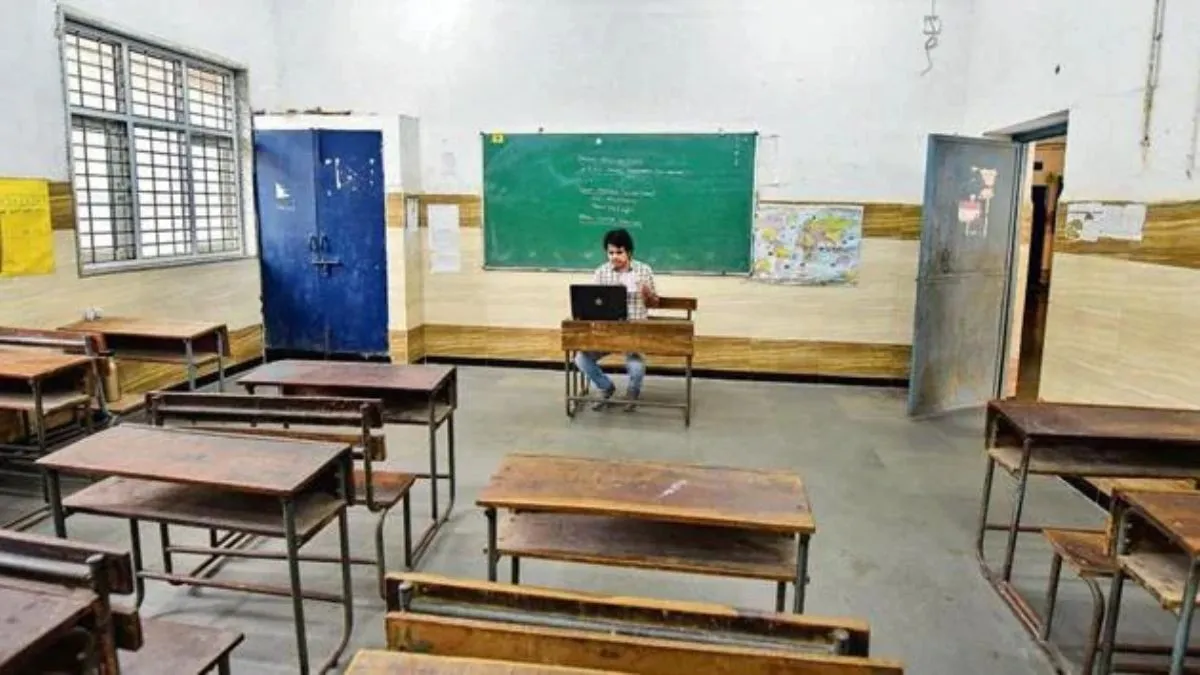
Schools closed in Delhi, UP, these states for Maharishi Valmiki Jayanti 2026; check list
Delhi, Uttar Pradesh, Haryana, various states will observe a public holiday on the occasion of Maharishi Valmiki Jayanti on Monday, October 26. On the occasion of Valmiki Jayanti, the schools, educational institutes will remain closed in the national capital, Uttar Pradesh, Haryana, Himachal Pradesh,other states. State-wise schools closure list 2026 Delhi: Schools in Delhi will also observe a public holiday on October 26. All schools, colleges, and other educational institutions in the national capital will remain closed on this day. This order applies to all government and private schools and colleges. According to the Delhi government, several programmes, processions and tribute meetings will be organised across the capital in which Chief Minister Rekha Gupta will take part. The Delhi government will organise a special programme on Monday at the Secretariat. The event, being held under the aegis of the Department of Social Welfare, will include discussions on the life, personality and teachings of Maharishi Valmiki, the statement said. Uttar Pradesh: Schools and colleges will remain closed in Uttar Pradesh on October 26 to mark the birth anniversary of Maharishi Valmiki, the revered sage and author of the Ramayana. Delhi Holiday Uttar Pradesh Holiday Haryana Holiday Himachal Pradesh Holiday Madhya Pradesh Holiday Manipur Holiday (Mera Houchongba) Punjab Holiday Tripura Holiday (Laxmi Puja)

Ranji Trophy: Will Haryana find a way to blunt Mumbais pace attack?
Both teams come into this contest on the back of two resounding wins each; this encounter presents itself as the first significant test of the season for visitor and much will depend on whether its pace attack, without Anshul Kamboj, can put the hosts formidable batting line-up under sustained pressure
Rs 1.25 Crore Ganja Seized In Mathura Drug Bust
Mathura police, in a joint operation with the Agra Anti-Narcotics Task Force, arrested three alleged interstate drug smugglers and seized 250 kg of ganja worth Rs 1.25 crore from a container truck on Sunday. The consignment was reportedly en route from Odisha to Haryana.
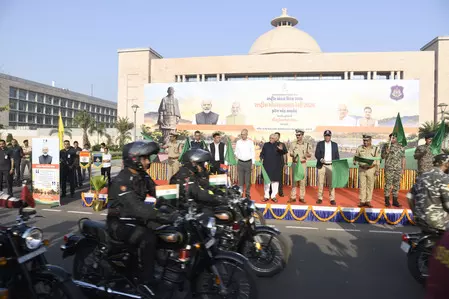
Nationwide anti-drug bike rally heads to Statue of Unity to join parade on October 31
Digital Desk | Gandhinagar, Oct 25 (IANS) More than 550 personnel from states, union territories and Central Armed Police Forces (CAPFs) are taking part in a national motorcycle rally to spread awareness against drug abuse ahead of the National Unity Day parade at Ekta Nagar on October 31. Gujarat Chief Minister Bhupendra Patel on Sunday flagged off the rally from the Secretariat complex in Gandhinagar, with participants set to travel to the Statue of Unity in Ekta Nagar, also known as Kevadia, under the theme Fight Against Drugs. Director General of Police (DGP) Gyanendra Singh Malik said 45 teams are participating in the rally through four zones, with more than 275 motorcycles. Five bikers from each participating state had joined the event, including participants from Ladakh, Jammu and Kashmir, Punjab, Delhi, Uttar Pradesh and Rajasthan, alongside CAPF personnel. Teams from across the country will reach Ekta Nagar today with the message Fight Against Drugs, DGP Malik said, adding that awareness programmes and pledge-taking activities were being organised at various locations along the route to encourage people, particularly young people, to stay away from drugs. The rally is part of preparations for the National Unity Day celebrations on October 31, which mark the birth anniversary of Sardar Vallabhbhai Patel, widely regarded as the architect of India's political integration after Independence. The annual event is held at Ekta Nagar, home to the Statue of Unity. The motorcycle rally follows the flag-off of the North Zone contingent by Union Home Minister Amit Shah in New Delhi on October 21. The contingent travelled through Haryana and Rajasthan before reaching Gandhinagar. From there, the rally will proceed through Anand and Vadodara before reaching Ekta Nagar. Participants are scheduled to take part in the National Unity Day parade on October 31. The campaign carries the message, Say No to Drugs, Say Yes to Life, with a focus on discouraging drug abuse through public awareness and community engagement. Sanjeev Kumar, Principal Secretary of the Home Department and Principal Secretary to the Chief Minister, along with senior police officers, government officials and security personnel, was present at the flag-off ceremony. The National Unity Day parade is held annually to commemorate Sardar Patel's contribution to national unity and integration. The celebrations bring together security forces and other contingents at Ekta Nagar, in Gujarat's Narmada district.
Sajjan Singh Yadav, is a 1995-batch IAS officer of the AGMUT cadre, who has been appointed Chief Secretary of Jammu and Kashmir. He will take charge from November 1, 2026, (or the date of joining, whichever is later), succeeding 1989-batch Atal Dulloo, who retires on October 31. Yadav will be the first officer from the AGMUT cadre to hold the post in J&K. Born on January 5, 1969, in Haryana, Yadav brings a strong academic profile having done an MBA in Finance from Delhi Universitys Faculty of Management Studies, an MPA in Public Policy from the Hubert H Humphrey School at the University of Minnesota, an MPA in Economics from Harvard University, and a doctorate in Public Health from the London School of Hygiene and Tropical Medicine. He is also an author whose national bestseller Indias Vaccine Growth Story: From Cowpox to Vaccine Maitri has been translated into multiple languages, alongside Scaling Mount UPSC on aspirants journeys. He has received many awards including the National e-Governance Award (2017-18) and the Presidents Medal for census work. His service record spans more than 30 years across field and policy roles. His early postings included Assistant Commissioner in Mizoram and Deputy Commissioner in Arunachal Pradesh districts like East Kameng and Tawang, and South Delhi. His central deputation featured key roles as Mission Director of POSHAN Abhiyan (National Nutrition Mission), Director of the National Rural Health Mission, and senior positions (Joint Secretary, Additional Secretary, and Special Secretary) in the Department of Expenditure, Ministry of Finance. In Delhi, he served as Finance Commissioner, Commissioner of Food and Supplies, VAT, Excise and Luxury Tax, East Delhi Municipal Corporation, and CEO of the Delhi Jal Board, a role he resumed in June 2026 after repatriation from the Centre at the MHAs request. On seniority, Yadav ranked around 20th on the AGMUT gradation list. Officers from the 1991-1995 batches, including 1992-batch Shaleen Kabra, the Additional Chief Secretary and Financial Commissioner in J&K, was speculated as a frontrunner due to his local experience, stood ahead of him. The appointment surprised observers tracking the succession, underscoring that the Centre weighs competence, domain expertise, especially in finance, public health, nutrition, and urban governance, and institutional confidence alongside pure seniority. He has no prior direct posting or specific engagement with Jammu and Kashmir and his experience has been concentrated in other AGMUT areas and the Centre. As the first AGMUT-cadre Chief Secretary, Yadavs tenure will test how an outsider navigates the J&Ks unique administrative, developmental, and political landscape.
Experts stress AI skills amid technological shift
Srinagar, Oct 24: Experts at the University of Kashmir have stressed the need for people to upgrade their skills and adapt to emerging technologies as Artificial Intelligence (AI) reshapes education, employment, creativity and communication. The observations were made during a two-day National Seminar-cum-Workshop titled Artificial Intelligence, Creativity and Content Generation: Opportunities and Challenges of a New Tomorrow, organised jointly by the Consortium for Educational Communication (CEC), New Delhi, and the Educational Multimedia Research Centre (EMRC), University of Kashmir, on October 21 and 22. The deliberations focused on the growing role of AI, the need for responsible adoption of the technology, and the importance of critical thinking, effective communication and continuous skill development. Director EMRC, Prof Syeda Afshana, said AI imitates human intelligence and emphasised that its future should not be shaped by technologists alone. Educators, researchers and scholars also have an important role in determining how the technology develops and is used, she said. Registrar, University of Kashmir, Prof Naseer Iqbal, observed that challenges posed by AI could also create new opportunities, adding that the education system was responding to the emerging technological landscape. Delivering the keynote address, Director CEC, New Delhi, Prof Parikshat Singh Manhas, said AI should not be viewed merely as a threat to employment, but also as a technology capable of generating new opportunities. He stressed that people who learn to use AI effectively would be better positioned in the future job market. Effective prompting, clear thinking and strong communication skills, he said, would be essential to improving productivity and completing tasks with fewer resources. Vice-Chancellor of the University of Kashmir, Prof Nilofer Khan, said AI had significance for humanity as a whole and could simplify complex educational concepts and help address everyday challenges. On the first day, Director EMRC, University of Calicut, Dr Damodar Prasad, described AI as a paradigm shift with significant implications for learning and professional development. Dr Asif Assad of the Islamic University of Science and Technology (IUST) introduced participants to locally developed AI tools and chatbots, including PashmNet and RiceNet, highlighting their potential to address local needs. Prof Umesh Arya of Guru Jambheshwar University of Science and Technology, Haryana, said AI differed from earlier technologies because of its ability to perform tasks associated with human thinking. He noted that its impact on employment could vary across countries depending on workforce skills. On the second day, Dr Archana Kumari of Jawaharlal Nehru University (JNU) discussed concerns about AI replacing human workers and cautioned against growing dependence on algorithms at the expense of human judgement. The legal implications of AI-generated content were discussed by Dr Mir Junaid Alam of the Department of Law, University of Kashmir, who highlighted complex questions concerning copyright, authorship and ownership. Dr Jatinder Jit Kour, Senior Producer at EMPC, IGNOU, stressed the judicious use of technology, noting that the quality of AI-generated responses depends significantly on the user's understanding and ability to frame prompts. Dr Bilal Ahmad Malik of the University of Kashmir discussed emerging regulatory concerns surrounding AI users and AI-generated products, underlining the need for appropriate legal frameworks. During the valedictory session, academicians, media professionals and researchers reflected on the implications of AI for education and creative practices. Shafqat Habib, Senior Producer, EMRC, University of Kashmir, spoke about AI's transformative impact on society, while Prof Tariq Ahmad Chisti, Dean, School of Open Learning, and Prof M Tariq Banday, Dean, School of Engineering, stressed the need for educational institutions to adapt to technological advancements. Delivering the valedictory address, Prof Sharief-ud-din Pirzada, Dean Academic Affairs, University of Kashmir, emphasised the importance of engaging with emerging technologies in higher education and equipping educators and learners to navigate an increasingly AI-enabled environment. The programme concluded with the distribution of certificates among participants and resource persons. The organisers reiterated their commitment to promoting capacity-building, innovation and technology-enabled learning.
Haryana clears Rs 220cr projects, saves Rs 18cr through negotiations
Haryana clears 320cr Kurukshetra cluster under PM-SETU skill scheme
10,757 Haryana guest teachers seek regularisation
Tiger Shroff firing case: 11th arrest made as Haryana man detained in Indore

HTET 2025: BSEH Gives Candidates Another Chance for Biometric Verification
The Board of School Education Haryana (BSEH), Bhiwani, has announced another opportunity for candidates who have not completed their biometric verification for the Haryana Teacher Eligibility Test (HTET) 2025. Eligible candidates can visit the Board headquarters on November 6 and

Tiger Shroff firing case: 2 firearms, 10 live cartridges recovered in Surat; total arrests reach 10
Mumbai Crime Branch recovered two firearms and 10 cartridges from Surat on Friday in connection with the October 18 firing involving Tiger Shroff in Juhu. Police arrested three more Haryana residents, taking total arrests to 10.

Haryana Police, CBI working to expedite deportation of gangster Himanshu Bhau from U.S.
The Special Task Force of Haryana Police is in close coordination with the CBI, India's nodal agency for Interpol, to expedite his deportation from the United States, officials said

Haryana gangsters Himanshu Bhau, Neeraj Faridpuria detained in U.S.
Confirming the development, Haryana STF Inspector General Simardeep Singh told that both gangsters had been detained in Las Vegas

Haryana gangsters Himanshu Bhau, Neeraj Faridpuria detained in U.S.
Confirming the development, Haryana STF Inspector General Simardeep Singh told that both gangsters had been detained in Las Vegas
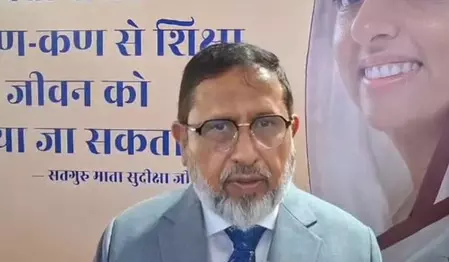
79th Sant Nirankari Samagam begins in Haryana; expected to draw over 10 lakh devotees
Digital Desk | Samalkha, Oct 24 (IANS) The 79th Sant Nirankari Samagam commenced in Samalkha, with approximately 10 lakh devotees expected to participate in the four-day spiritual gathering. The event that began on October 23 will continue until October 26. The central theme of this year's Samagam is 'Jagriti (Awakening)', focussing on the need to awaken humanity and promote love, compassion and selfless service. Held in the divine presence of Mata Sudiksha Ji Maharaj, the Samagam aims to inspire people to recognise the true purpose of human life, strengthen bonds of mutual love and incorporate the values of selfless service and hospitality into their daily lives. Through spiritual teachings and collective participation, the gathering seeks to encourage people to rise above prejudices and embrace a more compassionate approach towards others. According to Joginder Sukhija, Secretary of the Sant Nirankari Mission, extensive arrangements have been made across the sprawling 650-acre venue to accommodate the large number of devotees expected to attend the event over four days. To ensure the convenience of the devotees, four large community kitchen halls, four cooking areas, and six food distribution zones have been set up. Additionally, the site includes 22 toilet blocks, numerous drinking water stations, and a medical facility, Sukhija told IANS. He said that more than 100,000 volunteers, known as 'sevadars', from the Sant Nirankari Mission have been deployed at various locations across the venue. The volunteers are working to ensure that the event proceeds smoothly and that devotees receive the necessary assistance throughout the gathering. Comprehensive arrangements have been made to manage the movement of devotees, as well as the provision of food, drinking water, and other essential amenities, he stated. Special attention has also been given to security, emergency response and medical support to deal with the large gathering. Sukhija said that the government has extended assistance by providing ambulances, while the Mission has also deployed its own emergency medical vehicles to strengthen the arrangements at the venue. The government has provided 25 ambulances. Furthermore, the Mission has deployed 10 of its own ambulances, including five specialised life-saving ambulances. To address any potential emergencies, 14 fire tenders have also been stationed at various points across the venue, he said. The extensive arrangements have been put in place to ensure the safety and convenience of devotees throughout the four-day programme. The primary objective of this year's Samagam is to encourage individuals to awaken to the deeper meaning and purpose of their lives. The grand four-day event is expected to draw devotees from across India as well as from overseas, making it a significant gathering for followers of the Sant Nirankari Mission.
Haryana gangster Himanshu Bhau has been arrested by US Immigration and Customs Enforcement in Nevada. His associate Neeraj Faridpuria was also detained after removing an ankle monitor. Both men are wanted in multiple criminal cases in India, including murder and extortion. India is seeking to expedite deportation proceedings for the detained fugitives. Their immigration cases will determine the next steps in their return to India.
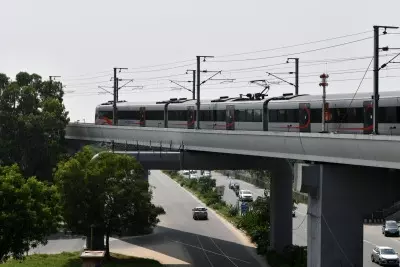
FIR registered after posters questioning govt performance found pasted inside Delhi Metro
Digital Desk | New Delhi, Oct 24 (IANS) An FIR has been registered against unidentified persons after two posters against the government were found pasted inside a train on the Delhi Metro's Airport Express Line, police said on Saturday. The FIR was registered under Sections of the Delhi Prevention of Defacement of Public Property Act, 2007, and the Metro Railway (Operations and Maintenance) Act, 2002. The black-and-white posters raised various issues and listed nine claims about changes in the country over recent years. They also carried a QR code inviting people to join an online group, police said. Officials said that police seized the posters, and the Special Cell is also involved in the investigation. This comes amid the anti-Election Commission of India (ECI) protests in the National Capital over the alleged irregularities in the Special Intensive Review (SIR) of electoral rolls. Several Opposition parties, student activists, as well as the Cockroach Janata Party (CJP) organised protests across the city demanding a rollback of the SIR protest and resignation of Chief Election Commissioner (CEC) Gyanesh Kumar. Meanwhile, the INDIA Bloc has scheduled a mega rally against 'vote chori' on November 1 in New Delhi. All India Congress Committee General Secretary, K.C. Venugopal on Friday said the party held high-level meetings with senior leaders from Uttar Pradesh and Haryana to intensify mobilisation for the rally. In a post on X, Venugopal said that he, along with Congress leader Priyanka Gandhi Vadra, met AICC in-charge for Uttar Pradesh Rajendra Pal Gautam, UP PCC president Aradhana Misra Mona and other senior leaders from the state to discuss strategies for building large-scale participation in the rally. The November 1 rally is being projected as one of the largest mobilisations by the Opposition alliance in recent times, with a special focus on drawing participation from northern states. The Congress has appealed to supporters and citizens concerned about democratic processes to join the march and the Ramleela Maidan gathering in large numbers.
Congress Reviews Nov 1 INDIA Bloc Rally to Drive Vote Chors Out of Power
Congress general secretaries Priyanka Gandhi Vadra and K C Venugopal on Friday met party leaders from Uttar Pradesh and Haryana at the AICC headquarters to review preparations for the rally

Haryana Gangster Himanshu Bhau and Accomplice Detained in U.S. Custody
Notorious Haryana gangster Himanshu Bhau and his associate are in U.S. custody as India seeks their extradition. Haryana Gangster Himanshu Bhau and Accomplice Detained in U.S. Custody
SKUAST-K connects agri-startups with research, industry, export opportunities
Srinagar, Oct 23: More than 360 stakeholders registered for Agri-Startup Stakeholders Connect 2026, organised by Sher-e-Kashmir University of Agricultural Sciences and Technology of Kashmir (SKUAST-Kashmir) in collaboration with the National Institute of Agricultural Extension Management (MANAGE), Hyderabad, to explore partnerships, market linkages and entrepreneurship opportunities in agriculture. Held at Nund Reshi Hall, Shalimar, under the theme Fostering Collaboration & Partnerships, the programme brought together participants from Jammu and Kashmir, Himachal Pradesh, Rajasthan, Delhi and Haryana. Vice-Chancellor Prof. Nazir Ahmad Ganai, who was also the chief guest, highlighted the importance of connecting research and innovation with entrepreneurship and markets to unlock the regions agricultural potential. The programme was attended by Prof. Raihana Habib Kanth, Director Extension; Prof. Syed Zameer Hussain, Director Research; Prof. Khwaja Naved Qaisar, Director Education; and Prof. Ashaq Hussan Pandit, Dean, Faculty of Horticulture, along with other university scientists and officers. Complementing this institutional perspective, Dr. Saravanan Raj, Director, MANAGE, Hyderabad, joined online and outlined the organisations approach to strengthening agricultural entrepreneurship through capacity building, innovation and institutional collaboration. Mr. Muthu Krishnan M represented MANAGE at the event. Earlier, Abdul Rouf Khan, Incubation Manager (Startups), SKUAST-Kashmir, stressed the need to strengthen linkages among farmers, Farmer Producer Organisations (FPOs), startups, research institutions, industry and markets. The discussions also focused on translating entrepreneurial potential into market opportunities. Dr. Azra Mufti, Business Development Manager, APEDA, highlighted export prospects for Jammu and Kashmirs agricultural and horticultural produce, emphasising branding, value addition, quality standards and market access. Adding practical perspectives, Abdul Manan Koul, Founder, Poshte Foods, shared insights into building an agri-food enterprise through innovation, value addition and market-oriented business development. Khalida Rasool, Founder, K.R. Mushroom, highlighted opportunities in exotic mushroom cultivation, medicinal plants and value-added products across the agriculture and allied sectors.

Haryana gangster Himanshu Bhau, associate held by ICE in Nevada
Haryana gangster Himanshu Bhau, associate held by ICE in Nevada Washington: Haryana gangster Himanshu Bhau, one of Indias most wanted fugitives, and an associate are being held by US Immigration and Customs Enforcement (ICE) in Nevada, officials have confirmed. The US governments online detainee locator, checked on Friday night, lists two Indian-born men, Himanshu Sigroha [] The post Haryana gangster Himanshu Bhau, associate held by ICE in Nevada appeared first on Mangalorean.com .
79th Sant Nirankari Samagam begins in Haryana
79th Sant Nirankari Samagam begins in Haryanas Samalkha; 10 lakh devotees expected on 650-acre site Panipat/Samalkha: The 79th Annual Sant Nirankari Samagam has commenced in Samalkha near Panipat in Haryana, with organisers expecting nearly one million devotees to attend the four-day spiritual congregation that will continue until October 26. Held under the divine presence of [] The post 79th Sant Nirankari Samagam begins in Haryanas Samalkha; 10 lakh devotees expected on 650-acre site appeared first on Mangalorean.com .

Himanshu Bhau, Haryana gangster wanted in multiple murder and extortion cases, arrested in US
Haryana gangster Himanshu Bhau, who is wanted in several criminal cases across India, has been arrested by the FBI in the United States. The gangster, who hails from Ritoli village in Rohtak, is accused of...
FBI detains gangster Himanshu Bhau, India may get custody soon
Himanshu Bhau, a notorious gangster from north India, was recently captured by the FBI in Las Vegas. He has been wanted for a series of violent offenses, including multiple murders and extortion schemes that have plagued Delhi and Haryana. After escaping juvenile detention in 2020, he maintained his criminal operations through illegal networks.

Sikh Youth Killed in Head-On Collision on Canadian Highway, Three Others Injured
A 24-year-old man from Haryanas Karnal district lost his life in a road accident The post Sikh Youth Killed in Head-On Collision on Canadian Highway, Three Others Injured appeared first on Khalsa Vox .
Rs 31,427 cr power project to give Ladakh second link to national grid
Srinagar, Oct 23: Ladakh, which currently relies on a single transmission line passing through Kashmir for its connection to the national electricity grid, could get an alternative power corridor under a Rs 31,427 crore project proposed by the Central Transmission Utility of India Limited (CTUIL). The project, which will come up for discussion at a special meeting of the Northern Regional Power Committee (NRPC) on October 27, seeks to strengthen Ladakh's electricity network while creating infrastructure to transmit renewable energy generated in the region to other parts of the country. According to the additional agenda issued by the NRPC on October 23, copy of which lies with Rising Kashmir, Ladakh currently draws power from the national grid through POWERGRID's 220-kV Srinagar (Alusteng)Leh single-circuit line, which feeds substations at Drass, Kargil, Khalasti and Leh. The proposed network would give Ladakh another route to the national grid through Himachal Pradesh, reducing its dependence on the existing Kashmir-linked corridor. The plan includes a new 149-km, 220-kV transmission line between Pang and Leh's Phyang substation. From Pang, two 400-kV double-circuit transmission lines, each approximately 273 km long, are proposed towards Sundernagar in Himachal Pradesh, with further connections to Mohali and other parts of the northern grid. The project is designed to integrate 7.5 gigawatts of renewable energy, with 3.75 GW available during solar hours and an equivalent capacity during non-solar hours through battery storage. The revised plan follows technical difficulties encountered in implementing an earlier transmission scheme approved by the Union Cabinet in 2023. That project, estimated at Rs 20,773.70 crore, was designed to evacuate power from 13 GW of renewable energy projects in Ladakh through a high-voltage direct current system connecting Pang with Kaithal in Haryana. However, technical assessments subsequently found that the proposed system could not be implemented in its original form. The NRPC document records that Pang, situated at an altitude of about 4,700 metres, experiences temperatures as low as minus 35 degrees Celsius. The extreme altitude, equipment limitations and difficult transportation conditions made the earlier technology technically infeasible. Following consultations involving the Central Electricity Authority, CTUIL, POWERGRID and other agencies, an alternative system using extra-high-voltage alternating current technology was worked out. The revised proposal carries an estimated cost of Rs 31,427.54 crore and has been divided into two phases. The first phase, costing Rs 25,225.87 crore, would provide 2,000 MW of transmission capacity, while the second, estimated at Rs 6,201.67 crore, would add another 1,750 MW. The proposed implementation period is 48 months. The project will nevertheless have to overcome considerable construction difficulties. POWERGRID has identified heavy snowfall, avalanche-prone stretches, narrow mountain corridors and poor road connectivity as major challenges along the route. The document states that nearly 35 different tower designs may be required because of variations in altitude, wind conditions, soil characteristics and snowfall. Construction work could also be limited to five or six months a year, particularly along high-altitude stretches crossing Baralacha, Lachung-La, Tangla-La and Rohtang. Despite these challenges, preparatory work has already been undertaken. POWERGRID has completed surveys for parts of the transmission route, identified roads and bridges requiring strengthening and made arrangements for work at high altitudes. The corporation has reported expenditure of approximately Rs 400 crore on preparatory activities. The proposed corridor is significant for Ladakh because the existing SrinagarLeh transmission line remains its only connection to the national grid. A second route would provide another option for supplying power if the existing corridor faces operational difficulties. The new network would also connect Ladakh's proposed renewable energy projects with electricity demand centres outside the region. The NRPC is expected to consider the revised proposal at its October 27 meeting before further decisions on its implementation are taken.
Haryanas war on drugs: 19cr assets attached, 6.8K arrests in 9 months
Smriti Irani tells Haryana BJP leaders to shun showmanship, focus on performance