


Who named Cyclone Arnab and why? Where it will hit, states on alert & preparedness
Cyclone Arnab is intensifying and is forecasted to hit the Andhra Pradesh coastline by Wednesday morning. The India Meteorological Department has issued alerts for severe winds and torrential rainfall affecting multiple states. Emergency shelters and control rooms are set up as beach access is prohibited to ensure public safety. Heavy rains are also impacting Odisha and Jharkhand. Residents are urged to stay updated and minimize travel during the cyclone's effects.

A yellow alert (be updated) of heavy rain has been issued for eight districts for 24 hours starting from 8.30 a.m. on October 28, the IMD said

Cyclone Arnab: Andhra braces for landfall, 3 states on alert
Schools were shut, fishing was banned, and thousands of people were moved to safety in Andhra Pradesh and Odisha on Tuesday, while Jharkhand and West Bengal were put on alert for three days of heavy rain, as very severe cyclonic storm Arnab closed in on the Andhra Pradesh coast, according to PTI. The India Meteorological Get the latest updates in Hyderabad City News , Technology , Entertainment , Sports , Politics and Top Stories on WhatsApp & Telegram by subscribing to our channels. You can also download our app for Android and iOS .

Jharkhand and Delhi eye a spruce-up after middling start to the season
While the host is fifth in Group C with four points from two matches, Ayush Badoni & Co., languishing at sixth, have three points in their kitty

Good for Jharkhand that the bench is being tested: coach Ratan
While he is chuffed for Kushagra and Shikhar, having worked with them since their u-16 days, he is left with a depleted outfit now
One-run defeat sparks controversy! BCCI receives complaint over scorer's blunder
In a dramatic turn of events during the Women's Under-19 cricket clash, Jharkhand encountered a major setback due to a scoring mishap against Uttarakhand. Allegations have surfaced from the Jharkhand Cricket Association suggesting that a run was erroneously left off, altering their results from a draw to a narrow loss.

In a major boost to rail connectivity and industrial logistics in Jharkhand, Union Railway Minister Ashwini Vaishnaw on Monday shared details of extensive infrastructure projects underway to transform Tatanagar into a major railway hub, including multi-line track expansions, world-class station redevelopment, and maintenance facilities for Vande Bharat trains. Highlighting the scope of the development, the Railway Minister stated that the redevelopment of Tatanagar station will significantly enhance its terminal capacity, bridge connectivity between both sides of the city, and facilitate the launch of additional train services in the future. Under the comprehensive station redevelopment blueprint, the number of platforms at Tatanagar is proposed to be increased from five to nine. The revamp includes new station buildings, an air concourse, circulating areas, and parking facilities, which are being developed at both the northern and southern ends of the station. Additionally, to enhance...
Jamshedpur police arrest 15 for gambling, seize cash and phones
Dumka police arrest youths father, stepmother in murder case
In search for missing Bihar student, Koderma police find skeletal remains at waterfall

CSK Part Ways With Strength And Conditioning Coach Greg King
Chennai Super Kings: Five-time Indian Premier League (IPL) champions Chennai Super Kings (CSK) continued their coaching overhaul ahead of the 2027 season, announcing the departure of strength and conditioning coach Greg King on Monday. Earlier on Monday, CSK had confirmed the exits of batting coach Michael Hussey, bowling coach Eric Simons, assistant batting coach Rajiv Kumar and long-serving physiotherapist Tommy Simsek. In an official announcement late in the evening on Monday, the franchise thanked King for his contribution to the teams physical preparation and performances across seasons. Every successful campaign is built on countless hours of preparation, discipline, and hard work. Greg King, your expertise in strength and conditioning has helped our Super Kings overcome physical challenges and perform at the highest level across seasons. We appreciate everything you have brought to the Yellow Army, Greg King, CSK said in a statement on its social media accounts. Kings departure adds to the list of changes in CSKs backroom staff as the franchise looks to reshape its coaching setup ahead of the next IPL season. The team has already appointed former India left-arm pacer Zaheer Khan as head coach and brought in former England off-spinner Gareth Batty as an assistant coach. Former India pacer Mohit Sharma is also set to take over as bowling coach, replacing Simons, who had been associated with the franchise since the 2018 IPL season. Simons, a former South African bowler, previously served as Indias bowling consultant between 2010 and 2012, a period that included the countrys triumph in the 2011 ODI World Cup at home. CSK acknowledged his contribution to the development of its bowling unit during his tenure. Simons has since joined Englands Test team as bowling coach, alongside former CSK fielding coach James Foster. Stephen Fleming, who stepped down after spending 18 years as head coach of the Chennai-based franchise, is also part of Englands coaching setup. Kumar, meanwhile, joined CSK in 2018 as fielding coach, replacing Steve Rixon, before taking on responsibilities as assistant batting coach. The former Jharkhand captain brought considerable coaching experience from the United Kingdom and had also led the state side in first-class cricket, with MS Dhoni among the players who played under his leadership. In its announcement of Kumars departure, CSK acknowledged his role in the teams preparation and player development. Kumar, meanwhile, joined CSK in 2018 as fielding coach, replacing Steve Rixon, before taking on responsibilities as assistant batting coach. The former Jharkhand captain brought considerable coaching experience from the United Kingdom and had also led the state side in first-class cricket, with MS Dhoni among the players who played under his leadership. Also Read: Special Cricket Stories Article Source: IANS
Centre creating anarchy, alleges CPI(ML)
Man killed, two hurt as car dragged 6km under trailer in Giridih
BJP-Congress face-off over Kharges remarks against PMs father
Ex-servicemen to take charge of security at Jamshedpur medical college by year-end

Kin against them, interfaith couple found dead on Jamtara tracks
The recovery of the bodies of an interfaith couple on the railway tracks between Vidyasagar and Madankata stations in Jharkhands Jamtara district a couple of days ago has triggered a police investigation. They have been identified as Rocky Mandal, 20, and Nazia Khatoon, 17, both residents of the Ringochingo village under the Karmatand police station. Get the latest updates in Hyderabad City News , Technology , Entertainment , Sports , Politics and Top Stories on WhatsApp & Telegram by subscribing to our channels. You can also download our app for Android and iOS .
State proposes higher bonus on paddy procurement
HC orders DSP-rank probe into woman advocates death

Major Cyber Fraud Ring Busted in Jharkhand, Two Arrested Including a B.Tech Graduate
Police in Jharkhand have arrested two individuals linked to a cyber fraud ring, including a B.Tech graduate, for credit card scams. Major Cyber Fraud Ring Busted in Jharkhand, Two Arrested Including a B.Tech Graduate

Ranji Trophy: Badoni Slams Second Successive Ton, Saranshs Seven-for Puts MP On Top
JSCA International Stadium: Batting all-rounder Ayush Badoni continued his rich vein of form by hitting a second consecutive hundred, while India off-spinner Saransh Jains seven-wicket haul gave Madhya Pradesh firm control on day one of the third-round Ranji Trophy matches on Monday. Fresh from a career-best 217 against Gujarat, Badoni struck an unbeaten 106 off 122 balls, laced with 11 fours and two sixes, to take Delhi to 309/5 against Jharkhand at the JSCA International Stadium in Ranchi. Badoni, 26, previously hit 205 against the same opponents in the 2024/25 season. A chanceless knock, Badonis sixth first-class hundred, anchored Delhis recovery. He found a reliable ally in all-rounder Sumit Mathur, who was unbeaten on 50, as the pair put together an unbroken 128-run stand for the sixth wicket. Mathur had a lucky escape on 36 when he was caught at long-on, only to be recalled because Anukul Roy had overstepped. At Holkar Stadium in Indore, Saranshs 7-40 helped Madhya Pradesh bowl Bihar out for just 99. The hosts, still looking for their first win of the season after two draws, then reached 261/3 with a lead of 162, after bowling out Bihar for 99. Wicketkeeper-batter Saksham Purohit was unbeaten on 113, and his opening partner Yash Dubey made 84. At the BKC Ground, Mumbai also made a strong start against Haryana at home after being put in to bat first. Angkrish Raghuvanshi made 114 off 180 balls with 13 fours and a six, while Musheer Khan scored 109 off 185 balls with 12 fours and a six. The pair added 208 runs for the second wicket to steer Mumbai to 290/3 at stumps. Defending champions Jammu and Kashmir, also in search of their first win, were frustrated by Priyanshu Moliya at the Reliance Ground in Vadodara. Moliyas patient unbeaten 113 lifted Baroda to 259/6 after they had slipped to 197/6 at one stage. Vidarbha, who have two wins so far, had Goa in trouble at 84/6 after Nachiket Bhute ripped through the top order with four wickets. But Darshan Misal and Yash Kasvankar then struck half-centuries and shared a stand of 104 runs for the seventh wicket to help the visitors reach 204/8. On a rain-hit day, Pondicherry reduced Uttar Pradesh to 67/4. In Mysuru, Karnataka recovered from a sluggish start to bowl Tripura out for 194 at the SDNR Wadiyar Stadium. The hosts, who sprang a surprise by leaving out pacers Vidwath Kaverappa and Abhilash Shetty to accommodate spinners Shikhar Shetty and Ritesh Bhatkal, failed to make use of the new ball as Tripura moved comfortably to 88/2 in the first session. Left-arm spinner Shikhar then claimed his third first-class five-wicket haul, while pacer Manvanth Kumar took three. Karnataka lost Mayank Agarwal early and were 10 for one at stumps. At the DVR Ground in Mulapadu, Chhattisgarhs spinners made full use of a helpful pitch to bowl Andhra out for 231. Veteran off-spinner Jayant Yadav led the way with 4-75, while Ajay Mandal and Dharmendrasinh Jadeja took three and two wickets respectively. In reply, Chhattisgarh lost Ayush Pandey early when he was run out going for an unnecessary quick single. Captain Anuj Tiwary and Mayank Verma then negotiated the final half-hour to take the visitors to 35/1. Wicketkeeper-batter Prabhsimran Singh laid the foundation with 81 off 126 balls, hitting nine fours and a six, while fifties from Salil Arora and Ramandeep Singh then guided Punjab to 289/6 against Hyderabad in Secunderabad. Denish Das made 90 off 165 balls, with 14 fours, to take Assam to 235/6 against Saurashtra in Rajkot. For the hosts, veteran pacer Jaydev Unadkat picked up three wickets, while Ravindra Jadeja and Arth Yadav took one wicket each. In Thiruvananthapuram, where only 50 overs were possible due to rain, Kerala reduced Bengal to 172/6, with Aditya Sarwate taking three wickets and Nedumankuzhy Basil two scalps. Maharashtra bowled out Gujarat for 233 in Pune, with Siddhesh Veer taking four wickets, while Rajvardhan Hangargekar and Vicky Ostwal claimed three apiece. Maharashtra were 24/1 when stumps were called. Services off-spinner Pulkit Narang returned 6-47, his second five-wicket haul of the season, to bowl Odisha out for 194 in Bhubaneswar. The visitors were 13/0 at stumps. Tamil Nadu bowled out Railways for 184 in Chennai, with R Sai Kishore and Sonu Yadav taking three wickets each, but slipped to 71/3 till stumps arrived. Devendra Singh Boras six-wicket haul helped Uttarakhand dismiss Rajasthan for 272 in Dehradun despite skipper Kartik Sharmas 73. Uttarakhand were 18/0 at stumps. Centuries from Arjun Azad and Nehal Pajni powered Chandigarh past 350 for the loss of three wickets against Himachal Pradesh. In the Plate group, Meghalayas Ajay Duhan (167) and Kishan Lyngdoh (144) shared an unbroken 308-run stand for the second wicket as their side piled up 385/2 against Mizoram in Nadiad. Tamil Nadu bowled out Railways for 184 in Chennai, with R Sai Kishore and Sonu Yadav taking three wickets each, but slipped to 71/3 till stumps arrived. Devendra Singh Boras six-wicket haul helped Uttarakhand dismiss Rajasthan for 272 in Dehradun despite skipper Kartik Sharmas 73. Uttarakhand were 18/0 at stumps. Also Read: Special Cricket Stories Article Source: IANS

BJP protests Kharges remark on PMs father in Bihar and Jharkhand
Party leaders stage marches in Patna and Ranchi; burn effigies of Congress president
Nine booked in Gumla project site assault case
Dhanbad police continue public parade of arrested accused
Ranchi Chhath Puja committees seek lighting, road repairs ahead of festival

Captain Badoni hits century as Delhi take control on Ranji Day 1
Ayush Badoni struck his second successive century, sharing an unbeaten 124-run stand with Sumit Mathur to lift Delhi from 181/5 to 309/5 against Jharkhand on Day One.
Para-military teams dominate all India police archery meet
Dhanbad MLA visits Baramuri amid eviction concerns
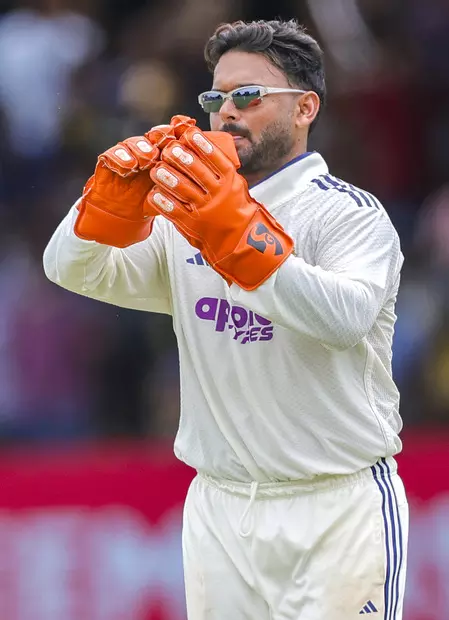
Pant on course to play third red-ball game against New Zealand A; Bumrah also likely to play
Digital Desk | New Delhi, Oct 26 (IANS) Wicketkeeper-batter Rishabh Pant is likely on track to recover from his side strain in time for India As third red-ball game against New Zealand A in Lincoln from November 7 to 10, 2026. Pant has been out of action since suffering a left-side strain while leading the Rest of India to victory over Jammu and Kashmir in Srinagar earlier this month. The injury kept him out of Delhis Ranji Trophy commitments and the first two four-day games against New Zealand A. It is understood that Pant has been at the BCCI Centre of Excellence (CoE) in Bengaluru for rehab and starting light skill-based work. He is on the road to recovery and is likely to be available for the third India A game, provided that he gets his fitness certificate. If everything goes as planned, then he may leave for New Zealand in the first few days of November, said a source to IANS on Monday. In Pants absence, the selectors had picked Jharkhand wicketkeeper-batter Kumar Kushagra as his replacement for the first two four-day games. Kushagra has been recently called up as a cover when his Jharkhand captain, Ishan Kishan, was selected for the T20I series in New Zealand, after the latter sustained a low-grade right adductor strain. It is understood that ace fast bowler Jasprit Bumrah is also likely to feature in the India A's third red-ball game, to be played at the Bert Sutcliffe Oval in Lincoln. Bumrah last played at the Asian Games in Japan in early October, where India retained its gold medal. He was then rested for the home white-ball series against the West Indies and the T20I and ODI legs of the ongoing New Zealand tour. It is also understood that fast bowler Prasidh Krishna is on track to play in New Zealand after being out of action since the ODI against the West Indies in Guwahati, where he sustained a hamstring injury. Pant, Bumrah and Prasidh (whos also a part of the first three ODIs) are part of Indias squad for the two-Test series against New Zealand, to be played at Basin Reserve, Wellington from November 19 to 23 and in Hagley Oval, Christchurch from November 27 to December 1.
City roads stay clogged as Durga Puja arches remain after deadline
SIR: 25L logical discrepancy, 10L no-mapping cases await disposal
Jharkhand High Court Upholds Decision, Dismisses Plea to Cancel 11th-13th Main Exam Results
Ayush Badoni sends selectors a message, follows double ton with century vs Jharkhand
Ayush Badoni sends selectors a message, follows double ton with century vs Jharkhand
BJP holds nationwide protests over Kharge's remarks against PM Modi, demands apology
BJP organized nationwide protests following Congress president Mallikarjun Kharge's controversial remarks about Prime Minister Modi. These protests involved party members across various states, demanding an apology from Kharge. In Delhi, attendees rallied near Kharge's residence while protests spread to states like Karnataka and Jharkhand. Leaders in multiple regions criticized Kharge's comments and emphasized respect for the Prime Minister.
Man trampled to death by elephant in Gumla village
AIIMS Deoghar gets dedicated power substation
Two swept away at Datam Patam waterfall, bodies recovered
2 arrested for murder of woman in Sahibganj

Teenager Aman Chaudhary set for debut as Delhi take on depleted Jharkhand
RANCHI, Oct 25: Teenaged left-arm spinner Aman Chaudhary will be making his first-class debut when Delhi take on a depleted Jharkhand in a third round Group C fixture of the Ranji Trophy starting here on Monday. Bowling has been an issue with Delhi for the past few seasons. Head coach Vijay Dahiya and selectors are []
Witch Doctor, 3 Others Held For Murder In Jharkhand
Four individuals, including a witch doctor, have been arrested in Jharkhand's West Singhbhum district for the murder of a 46-year-old woman. The victim was allegedly killed on suspicion of practising black magic. Police found her body on Saturday morning and have registered a case under the BNS and Witchcraft Prevention Act.
Jharkhand: Couples Die In Tragic Incidents
Two separate tragic incidents in Jharkhand saw couples die. In Lohardaga, a newly married couple died by self-immolation on Saturday, suspected due to mental stress. In Jamtara, an interfaith couple allegedly died by suicide on railway tracks on Saturday, reportedly due to family opposition to their relationship.
BJP to intensify campaign against govt failures; Congress hits back
Crumbling DMC office puts daily visitors at risk as repairs await
Six booked for illegal bridge on river for coal transport
Rabid dog bites 16 in Latehar, victims given anti-rabies shots
Cyclone threat: Jharkhand to face thunderstorms, heavy rain from Oct 27
Man held for hacking wife to death, burying body in house
Police probe firing incident at Gumla project site
SIR meet today to reveal number of hearings, not just electoral forms digitised
TS UISL launches ReLife to resell used goods in Jamshedpur
SKMU forms Senate under Jharkhand Universities Act
Residents, motorists warned as elephant herd moves in Bokaro
Seasonal illness cases rise in Hazaribag hosps as temperatures fluctuate
Ranchi likely to get 300-auto stand at Rs 1.80cr
Official Found Murdered In Ranchi
A 40-year-old revenue department official, Lakshmikant Munda, was allegedly killed at his home in Ranchi, Jharkhand, by unidentified persons. Police have launched an investigation, considering angles like robbery and old enmity, and a Special Investigation Team has been formed to nab the culprits.
RMC sets seven-day deadline to complete Morabadi vending zone wall
Jharkhand survey to document native livestock, poultry breeds
Palamu MP seeks central team to inspect MMCH functioning
17 from Dhanbad secure govt jobs through TSF coaching programme
Medininagar forest patrol finds nilgai carcass in paddy field
Last rites of advocate Anushka held in Varanasi
Woman who went viral for barefoot run in sari clears home guard test
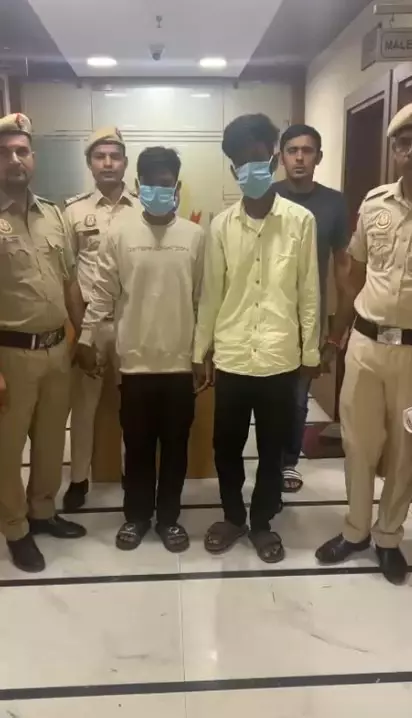
Delhi Police bust Jamtara-based cyber fraud syndicate, 2 held for credit card fraud
Digital Desk | New Delhi, Oct 25 (IANS) Delhi Police have busted an alleged cyber fraud syndicate operating from Jharkhand and arrested two men, including a B.Tech graduate, for allegedly cheating more than 50 people through fraudulent credit card transactions while impersonating as bank officials, officials said on Sunday. The accused were identified as Aftab Ansari, age 24, and Abdul Majid, age 23. The Cyber Police Station of Shahdara district arrested the two in Jharkhands Dhanbad district after a four-day operation. They recovered three mobile phones allegedly containing WhatsApp chats and other digital evidence linked to fraud. According to police, the investigation began after a complaint by Tarnjeet Singh, who alleged that unidentified persons posing as HDFC Bank officials contacted him over the phone and WhatsApp, claiming they could help him update his credit card Know Your Customer (KYC) details. The complainant subsequently discovered unauthorized transactions on his credit cards The police traced a Samsung Galaxy S26 Ultra worth Rs 1,39,999, purchased using the disputed credit card transactions on JioMart, to a delivery address in the Jharia area of Dhanbad district. After conducting surveillance and field verification for four days, the team devised a trap with the assistance of a delivery agent. Police arranged a decoy mobile phone delivery at a location allegedly used by the suspects. The two accused arrived to receive the purported delivery and were apprehended, officials said. During the operation, two mobile phones were recovered from Ansari and one from Majid. The devices reportedly contained WhatsApp conversations and other digital material relevant to the investigation. According to the police, the accused and their associates used social media platforms, including Facebook, to advertise assistance with credit card KYC updates to lure victims. Interested people were directed to online forms through which their personal and contact details were collected. Mostly, unsuspecting individuals above 50 years of age were targeted by the fraudsters, who posed as bank officials and offered supposed assistance with KYC verification through video calls. In these video calls, victims were asked to display their credit card details, including card numbers and CVV, on camera and share their mobile phone screens under the pretext of completing electronic verification. Police suspect that this enabled the accused to access the one-time passwords received on the victims' devices and carry out unauthorised online transactions. The fraudsters allegedly used compromised credit card details to purchase expensive mobile phones through online shopping platforms. The devices were delivered to locations in Jharkhand and West Bengal, away from the accuseds home district, to avoid detection. Police said the phones were subsequently sold in local markets at comparatively lower prices. Since the devices were sealed and accompanied by a purchase invoice, they appeared legitimate. Preliminary investigation suggests that almost 50 people were deceived like that. Police are still verifying the number of victims and the total number of people involved in the crime, presuming that it could be a whole network of other members. Delhi police have advised the public not to share credit card details, CVVs, OTP or PINs over phone or video calls, or share mobile screens with unknown people.

Delhi U-19 Coach Nayyar Seeks Two-week Camp To Iron Out Flaws Before Cooch Behar Trophy
Cooch Behar Trophy: New Delhi, Oct 24 (PTI) Delhi U-19 mens team coach Rajeev Nayyar said he has requested the Delhi and District Cricket Association (DDCA) to set up a two-week camp for improving their fielding and fitness for the Cooch Behar Trophy. He added that the association has assured him of time for having a camp ahead of the red-ball competition starting on November 26. The development comes after Delhi had a disappointing Vinoo Mankad Trophy campaign, where they finished at the bottom of their group. These kids have not grown up yet. They listen to their coaches. A 16 to 19-year-old kid listens. So, I had time and spoke to the officials. I said, See, its Diwali, and there are more holidays in between, like Karva Chauth. I told them that I want a camp for one to two weeks. We are lacking in fielding and fitness, so we will work on it, as well as do match simulations, because when you play practice matches, you are playing against each other, and you have already played against each other before. We are not playing friendly matches against other states. We will be playing intra-squad games because we dont have time. I told them this is better. The rest is up to the DDCA officials - the final call is theirs. It will be as per what they say. Whenever the camp is set up, I will share my playing experiences of 20 years with all the players, Nayyar told IANS in a free-wheeling chat. Nayyar said fielding and fitness would take priority over skills whenever the camp happens. When a kid plays cricket, I first check whether he is fit or not. If he is fit, then he will bat, bowl and field. Secondly, I will look at his fielding. Fielding is very important because even after making 100 runs, if you give away 10 runs in the field and drop a catch, that batter can go on to score a hundred. So, skills come later, and thats why I was thinking that this time, God willing, we will get a camp of two weeks, and I will work on our fielding and fitness. After that, skills work will continue, but I will pay more attention to fielding and fitness. Nayyar wants his players to use the camp to identify their own weaknesses, so they head into the four-day competition without any glaring flaws. Being a coach, no matter how the team is, I have to share my experiences and keep the players motivated, because we are in a very good pool. We have Himachal and Chandigarh. Our first match is against Punjab at Ropar. Then we have a match in Hyderabad, and then a match against Rajasthan. There are five good teams. But we dont say their team is good and our team isn't. We will say our team is better than theirs. I always tell the kids to believe in themselves. You have to believe in yourself. You are the best. When you walk onto the ground, you shouldnt have any flaws. Errors should be rectified before the match, in the nets. If there is a camp, players should tell us, Sir, I want high catches. I want slip catches. I want short catches. I am weak against left-arm bowling, off-spin, or the short ball. I just want the boys to practise a lot so that there are no weaknesses when the Cooch Behar Trophy begins. The request for a longer build-up to the Cooch Behar Trophy comes after Delhi were left short of preparation time for the Vinoo Mankad Trophy. The side opened with a commanding chase of 339 against Gujarat but then lost to Himachal Pradesh by 35 runs and were routed by Karnataka by 198 runs. Their match against Jharkhand was washed out, and a five-wicket defeat to Chandigarh left them at the bottom of the Group E table. Nayyar said the team had only a brief period to come and practise together, before playing for the age-group tournament. In the elite stage, all the teams were good Karnataka, Jharkhand, Himachal Pradesh, Chandigarh and Gujarat. But our start to the season was good. We won the first game against Gujarat by chasing 339. I was so happy with such a good start, because I had been a coach with the UTCA team before, and then I was the coach of the Ranji Trophy team. When I got the responsibility of coaching the under-19 teams, I understood that this is the phase where we get to know whether a kid will play for India or not and whether he is focused or not. In the under-19s, players can get to play for India in the World Cup as well. That is a very important tournament for them. He also felt the washout against Jharkhand proved costly. In the remaining four matches, we had to win the fourth game. They batted first and scored 280. But what happened? I mean, with VJD, we needed 80 runs in 10 overs. We should have changed that. But, unfortunately, by the time we had 230 runs, it rained heavily. So, we missed out on that game. If we had won that match, we would have got two points, and we would automatically have finished third, ahead of UTCA. This happened because they won two matches from the fourth game onwards. If we had won the fourth match against Jharkhand, we would have got the two points as well and finished third. That was it. With the Cooch Behar Trophy next on the calendar, Nayyar stressed the importance of red-ball cricket in young players by stating that the IPL alone would not take them into the Indian team. I was in Delhi and had a word with the officials, because I know a lot about red-ball cricket. I have played more than 100 matches. But nowadays, players are not interested in playing four-day games. They just love to play T20s and are more interested in it because they are only watching the IPL. But we have to make the kids understand that red-ball and first-class cricket are very important, because the IPL alone wont take you into the India team. How many people get to play for India? In the IPL, they perform well. They are selected for Indias T20 and one-day teams as well. But Indias Test teams are selected on the basis of four-day matches. See, if you know how to play a four-day game, you can play one-day and T20 cricket easily. But for those who only know how to play one-day and T20 cricket, the longer format is difficult. There are very few kids who are able to play T20, one-day, Test and four-day games. It is very difficult to play all of them, but it is not impossible. Nayyar said Delhis talent pool had thinned since his playing days but credited the DDCA for taking the initiative to create more playing opportunities. At one time, when I used to play Ranji Trophy, there were 10 Test players in the Delhi dressing room who had played for India. It is not like that now. But there is potential. The DDCA is doing a lot for the players. Now there is the DPL, which is just like the IPL. I am very thankful to the president, Rohan Jaitley Sir, who has done such a great job for the kids and the officials as well. I was watching all the games. Every year, the DPL is improving. When players are getting everything from the association, they have to give back to the association as well. This is very important. It is a very good platform. I am not blaming the academies, but kids go to an academy, bat, bowl and come back home. The DDCA is doing a lot for the players. Now there is the DPL, which is just like the IPL. I am very thankful to the president, Rohan Jaitley Sir, who has done such a great job for the kids and the officials as well. I was watching all the games. Every year, the DPL is improving. Also Read: Special Cricket Stories Article Source: IANS

Congress Never Followed Constitution, Trying To Create Anarchy: BJP Chief
Nabin, who is on a three-day visit to Jharkhand, addressed party workers and leaders at the inaugural session of the BJP's state executive committee meeting.
Revenue sub-inspector murdered at Ranchi home
Five arrested after fake firing claim unravels in Hazaribag
Congress torn Constitution to shreds: Nabin; JMM & Cong hit back
Three held for raping 13-year-old in Garhwa
Woman Killed In Jharkhand Over Black Magic Accusations
A 46-year-old tribal woman, Rendai Sumbrai, was allegedly beaten to death by unidentified persons in Koljomro village, West Singhbhum district, Jharkhand. Police suspect the motive behind the killing is related to accusations of practising black magic. Two suspects have been detained, and a search is on for others involved.
Five held in Godda teen gang-rape case
CEO directs officials to speed up SIR hearings, digitisation of forms
Woman beaten to death over witchcraft suspicion in West Singhbhum
Sheikh Bhikhari Medical College refers body to Rims after forensic expert Resigns
Family ends 50-hour standoff, takes advocates body for last rites after SIT probe assurance
BCCL GM injured in Dhanbad, probe on: Cops
Kolhan University reopens admission portal for UG programmes

BJP Aims for Success in Jharkhand, Inspired by West Bengals Achievements
BJP President Nitin Naveen outlines plans for Jharkhand, drawing inspiration from West Bengals success during a meeting in Ranchi. BJP Aims for Success in Jharkhand, Inspired by West Bengals Achievements
Ranchi airport to add Bhubaneswar, Hyderabad flights in winter schedule
Teen climbs 160-ft tower in Palamu, comes down after boyfriends appeal
State transport dept drives home traffic safety message in rural areas

Congress ruled country as per wishes, alleges BJP chief Nabin
Ranchi: BJP chief Nitin Nabin on Saturday, October 24, attacked the Congress, alleging that the party never followed the Constitution and ruled the country as per its wishes. Nabin, who is on a three-day visit to Jharkhand, addressed party workers and leaders at the inaugural session of the BJPs state executive committee meeting here. Today, Get the latest updates in Hyderabad City News , Technology , Entertainment , Sports , Politics and Top Stories on WhatsApp & Telegram by subscribing to our channels. You can also download our app for Android and iOS .
Dhanbad womans brain tumour removed at RIMS
Wife among four held for mans murder in Ramgarh
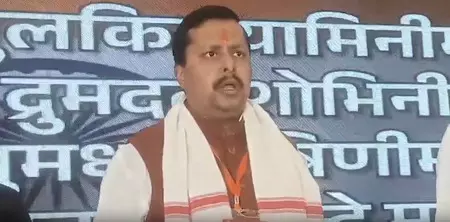
BJP workers will make mission Jharkhand a success, just like in Bengal: Nitin Nabin
Digital Desk | Ranchi, Oct 24 (IANS) BJP President Nitin Nabin on Saturday expressed confidence that the party would replicate its organisational success in Jharkhand, just like it did in West Bengal. Addressing a meeting of the BJP Jharkhand State Working Committee in Ranchi, he said the party is committed to ensuring that the saffron flag flies from the panchayat level to Parliament. Drawing a parallel with West Bengal, Nabin said BJP workers worked tirelessly to strengthen the party's base in the state and now is the time for Mission Jharkhand. He urged party workers to speed up efforts to expand the party's reach and strengthen its grassroots presence. Praising Prime Minister Narendra Modi's leadership, Nabin said the country is fortunate to have a leader who has not only provided a new direction to the BJP and India but also enhanced the nation's standing globally. He said 1.4 billion Indians placed their hopes, aspirations and trust in the Prime Minister. He alleged that certain forces within the country, as well as elements operating from abroad, are attempting to obstruct India's rapid progress and development. However, he asserted that the people of India continued to stand firmly with PM Modi. Launching a sharp attack on the Congress and the opposition, Nabin accused Rahul Gandhi and the Congress party of promoting disorder and undermining constitutional institutions. He said those invoking the Constitution today should remember history. Congress, in the past, had weakened constitutional values through the imposition of the Emergency and President's Rule in states, he said. He further alleged that the Congress governed the country according to the interests of a single family rather than the principles of the Constitution. Nabin also claimed that Rahul Gandhi and the Congress are functioning as a oolkit for anti-national and foreign forces. Citing Bihar as an example, he said Congress leaders levelled allegations of irregularities during the voter list revision exercise but failed to file claims or objections in any district. Nabin said he regretted that Jharkhand, a state where he had spent a significant part of his life and which he described as his birthplace, was currently not governed by the BJP. He said BJP workers have already taken to the streets and are determined to end an oppressive system and establish a welfare-oriented BJP government in the state.
Jharkhand Pollution Control Board limits firecracker noise to 125 dB(A)
AIIMS Deoghar makes ISI helmets mandatory for all on campus
Ramgarh Murder: Wife, In-Laws Held Over Extramarital Affair
Police in Ramgarh, Jharkhand, have arrested the wife of a 38-year-old man and three of her relatives in connection with his murder. The victim, Rohit Kumar, was found dead on October 21, and investigations revealed that frequent quarrels over his wife's alleged extramarital affair were the motive.

Cong never followed Constitution, ruled country as per its wishes: Nabin
BJP chief Nitin Nabin on Saturday attacked the Congress, alleging that the party never followed the Constitution and ruled the country as per its wishes. Nabin, who is on a three-day visit to Jharkhand, addressed party workers and leaders at the inaugural session of the BJP's state executive committee meeting here. Today, in the country, there is an attempt to challenge constitutional institutions and democracy. Those who swear by the Constitution have shredded it to pieces. From imposing Emergency to President's Rule in many states, Congress never followed the Constitution and ruled the country as per its wishes. Today, those who tried to finish off democracy are lecturing us about it, he added. Nabin accused the Congress of trying to create anarchy in the country. For this, they are getting support not only from within the country but also from foreign powers. Rahul Gandhi now questions the country's constitutional institutions, but he never questioned them when the Congress
15,000 aspirants, 284 home guard posts and one determined run

Apply Now for Jharkhand Home Guard Positions: Key Details and Steps
The Jharkhand Home Guard Corps has opened applications for Home Guard positions, with a deadline set for October 26. Candidates must meet specific educational and age requirements, with a selection process that includes physical and written tests. This article outlines the eligibility criteria, selection process, and detailed steps for applying online. Don't miss your chance to serve as a Home Guard in Jharkhandapply now!