


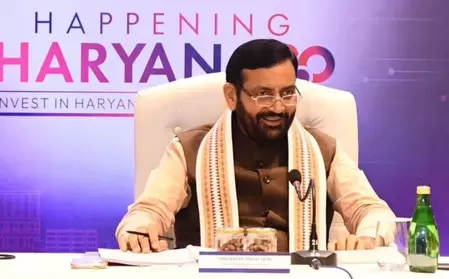
Haryana signs MoUs worth Rs 12,000 crore on first day of Gujarat visit
Digital Desk | Chandigarh/Surat, Oct 27 (IANS) Haryana signed memorandums of understanding (MoUs) involving proposed investments of around Rs 12,000 crore on Tuesday, with commitments spanning defence textiles, renewable energy, industrial machinery and waste-to-energy projects, as the state seeks to attract fresh industrial investment ahead of its global summit in April 2027. The agreements were signed on the first day of a high-level delegations visit to Gujarat, led by Haryana Chief Minister Nayab Singh Saini. The proposed investments include Rs 5,000 crore in defence textiles, Rs 2,000 crore in technical textiles and Rs 500 crore in industrial machinery. A further Rs 4,000 crore has been proposed for the waste-to-energy sector, while solar energy and cosmetics manufacturing together account for investments worth Rs 400 crore. During the visit, Saini held one-to-one meetings with founders, managing directors and chief executive officers of various companies to discuss the expansion of their existing operations in Haryana, the establishment of new industrial units and potential investment proposals. Industries and Commerce Minister Rao Narbir Singh also attended the meetings. The Chief Minister said the state government was committed to supporting investors and entrepreneurs and attracting investment to generate employment opportunities for young people. Haryana is working to improve the ease of doing business and provide a favourable environment for industrial development. The government aims to offer investors a combination of supportive policies, industrial infrastructure, connectivity and essential facilities, while simplifying procedures and ensuring time-bound approvals, he said. Saini said the state is focusing on better coordination between government departments to reduce procedural hurdles and facilitate the establishment and operation of industrial projects. Haryanas single-window clearance system, investment promotion schemes and plug-and-play industrial facilities were among the measures intended to make the state more attractive to businesses. The government is also seeking to ensure that industries investing in Haryana receive applicable incentives, necessary approvals and departmental assistance in accordance with the rules. Feedback from industry representatives would be considered to improve policies and procedures and help companies implement projects on schedule, he said. He described the MoUs signed on Tuesday as steps towards expanding industrial activity, developing ancillary industries and encouraging new business partnerships. Their implementation could create employment opportunities, strengthen the local economy and increase Haryanas industrial capacity. The Chief Minister invited industrialists and investors to attend the 'Happening Haryana Global Summit', scheduled to be held in April 2027. During the meetings, industry representatives discussed investment opportunities across various sectors and expressed interest in Haryanas industrial infrastructure, business facilitation measures and investment promotion policies.

48-year-old man found dead at his home in Surathkal

Dr. Suresh Surathkal memorial programme on Oct. 29
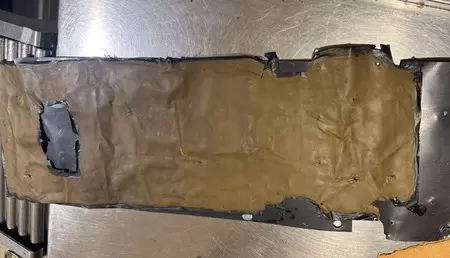
Ahmedabad Customs seize gold paste worth Rs 72.28 lakh concealed inside trolley bag
Digital Desk | Ahmedabad, Oct 27 (IANS) Ahmedabad Customs officials seized 495.04 grams of 24-carat gold worth Rs 72.28 lakh from a passenger arriving from Sharjah at Sardar Vallabhbhai Patel International Airport (SVPIA) on Tuesday after detecting gold paste concealed beneath a plastic sheet inside a trolley bag. The Air Intelligence Unit (AIU) intercepted the passenger on October 27 after profiling passengers arriving on Air Arabia flight G9-418 from Sharjah, according to Customs. During X-ray screening of the passengers checked-in baggage, officers noticed a suspicious image. A detailed examination revealed an additional layer or patch inside the trolley bag. When the bag was opened, officers removed its inner plastic layer and found a thin, black-coloured plastic sheet pasted along its inner side. Gold paste had been uniformly concealed beneath the sheet, the release stated. Officers carefully extracted the material and melted it to recover 495.04 grams of 24-carat gold, with a market value of Rs 72,28,574. The recovered gold was seized under the relevant provisions of the Customs Act, 1962, and the passenger was arrested under the Act. Further investigation is underway. The seizure comes amid a series of gold smuggling cases detected at Ahmedabad airport, where officials have found gold concealed in luggage and other everyday items. On October 19, Customs officials seized 133.45 grams of 24-carat gold worth around Rs 20.12 lakh from a passenger arriving from Dubai. The gold paste was concealed beneath a cloth patch inside a trolley bag and was recovered after officers examined the suspicious section of the luggage. In another case reported on October 16, a passenger arriving from Abu Dhabi was arrested after officials found 282.9 grams of 24-carat gold worth Rs 42.5 lakh concealed in metal strips fitted to three trolley bags. The strips contained six gold wires coated with white rhodium, which were recovered during a detailed examination of the luggage. Separately, the Directorate of Revenue Intelligence announced on October 19 that it had dismantled an alleged gold smuggling syndicate operating through Ahmedabad and Surat airports. The investigation involved 13.017 kg of foreign-origin gold valued at approximately Rs 19.41 crore, with three people arrested. The latest seizure at Ahmedabad airport is being investigated further by Customs officials.

Idca 10th T20 national cricket championship for deaf begins in Surat
The News Mill

IDCA 10th T20 National Cricket Championship for Deaf 2026 opens in Surat
The Indian Deaf Cricket Association (IDCA), in association with the Deaf Cricket Association Surat (DCAS), has commenced the IDCA 10th T20 National Cricket Championship for Deaf 2026 in Surat, Gujarat. Scheduled from October 26 to November 1, 2026, the championship is being held for the first time in Surat, bringing together 14 teams from across India for a week of competitive cricket, as per a press release. Bringing together 14 teams from across India, the championship highlights the breadth of talent within the country
Man arrested with country-made pistol, live cartridge
Doctors certificate alone not enough for skin disorder exclusion
Undertrial in murder-robbery cases found hanged in Lajpore jail
Task scam leaves accountant poorer by 2L
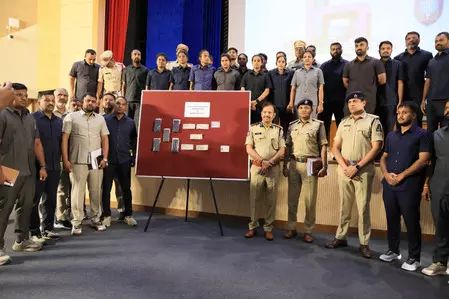
Nepali gang arrested for murder of retired IPS officers wife in Hyderabad
Digital Desk | Hyderabad, Oct 26 (IANS) More than five months after Tanuja Ranjan, wife of retired Indian Police Service (IPS) officer Ray Vinay Ranjan, was brutally murdered at their residence in Hyderabad, police on Monday arrested four Nepalese. Those arrested include the domestic worker, Dharma Tiruwa alias Kalpana, who had worked at the victims residence. The arrests were made following a five-month-long investigation spanning several states and the India-Nepal border. Hyderabad Police Commissioner V. C. Sajjanar announced the arrests at a press conference. A Special Investigation Team (SIT), probing rising property offences committed by Nepali gangs across the three Police Commissionerates, arrested four accused near Nampally Railway Station on Monday (October 26). Dharma alias Kalpana, 26, is from Surkhet district in Nepal. Ganesh B.K. alias Ganesh Bishwakarma alias Dinesh Thapa, 31, is a labourer who was residing in Pune; Chandra Bahadur Tamang alias Ranjeet Thapa alias Shanker Chandra Lama alias Kancha, 44, a cook whose listed Indian address is in Gurugram, Haryana; and Ganesh Bahadur Shahi, 37, a watchman who was residing in Pune. Police said two other accused remained absconding and that teams were continuing efforts to trace them. The police had earlier arrested two other accused in the case. Police said the accused entered the house in Prashasan Nagar on the night of May 78, restrained Tanuja Ranjan and smothered her. They allegedly escaped with 225 grams of gold jewellery and other valuables. The police investigation revealed that Dharma came to Hyderabad in June 2025 through a relative and began working as a domestic help at the Jubilee Hills residence for a monthly salary of about Rs 20,000. During her employment, she allegedly remained in contact with Bikas, a Nepal national based in Pune, who repeatedly asked about her employer, the households assets and the valuables inside the house. He eventually proposed a robbery in return for a share of the proceeds. In April 2026, Dharma travelled to Pune to visit her ailing father and came into contact with other members of the alleged gang. On May 4, when her employer left for Bengaluru, she allegedly alerted the group. The police account says Ganesh Bahadur Shahi, Shanker Chandra Lama and Sunil Pariyar met at Kalamboli in Raigad district, Maharashtra, on May 4 and travelled to Pune in a hired Maruti Ertiga. The next day, they met other alleged accomplices, including Ganesh B.K., before setting out for Hyderabad. On the morning of May 7, Ganesh B.K. and Suresh Shahi allegedly met Dharma near her workplace, surveyed the premises and discussed how the group could enter the house. Two groups allegedly carried out the operation. According to police, the gang assembled at Ravindra Bar near the Mahatma Gandhi Bus Station area on the evening of May 7. It allegedly split into two groups under a plan devised by Sujan Shahi, also known as Suresh Shahi. One group, comprising Ganesh B.K., Suresh Shahi and Shanker Lama, was assigned to enter the house and carry out the robbery. The other, comprising Ganesh Bahadur Shahi, Sunil Pariyar and Netra Shahi, allegedly remained near Nampally railway station as a lookout team. During the intervening night of May 7 and 8, Dharma allegedly opened the door to let the others in. Police said Tanuja woke up during the incident. The attackers allegedly gagged and restrained her, causing her death by suffocation. The group then searched the house, broke open cupboards and took gold jewellery and other valuables. After leaving through the rear gate, the accused allegedly travelled to Nampally and joined the lookout team. Investigation revealed that the group subsequently travelled towards Kazipet, moved into isolated hilly terrain and divided the stolen property into nine equal shares. Members then split into smaller groups, fled towards Nepal and disposed of the valuables at different locations. On May 22, Task Force teams arrested Sunil Bahadur Aauji alias Sunil Pariyar and alleged receiver Dilip Bahadur Mijar alias Sonar. Police recovered 26 grams of the stolen property from them. The investigation continued across Bengaluru, Mumbai, Pune, Surat, Patna, Delhi, Lucknow and Uttarakhand. The SIT also carried out field inquiries near the India-Nepal border, spending more than five months gathering intelligence in remote and hilly areas. Police said local informers helped the team track the suspects alleged hideouts, travel routes, employment and contacts.

ICA | GemLab India Launches Gemological Laboratory in Surat
The facility will offer testing and reporting services for diamonds, coloured gemstones and jewellery Surat (Gujarat) [India], October 26: ICA | GemLab India, an internationally recognised organisation specialising in diamonds,
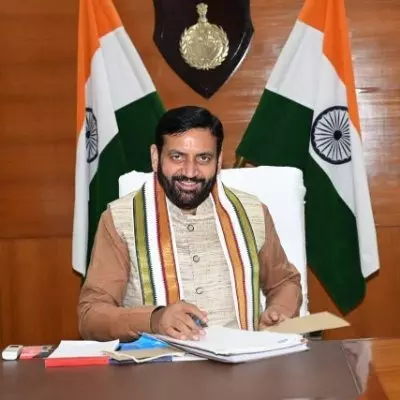
Haryana CM Saini to lead investment outreach in Gujarat
Digital Desk | Chandigarh, Oct 26 (IANS) Haryana Chief Minister Nayab Singh Saini will lead a high-level delegation to Gujarat on October 27-28 to attract investments, strengthen industrial cooperation and promote business opportunities in the state, the state government said on Monday. The delegation will visit Surat and Gandhinagar, where it will hold meetings with investors, engage with industry representatives and organise the Haryana Investment Roadshow. Haryana Industries and Commerce Minister Rao Narbir Singh will also accompany the Chief Minister. The outreach comes as Haryana seeks to attract investments worth around Rs 5 lakh crore and generate more than 10 lakh employment opportunities by 2030-31 under its Make in Haryana Industrial Policy -- 2026. Amit Agrawal, Commissioner and Secretary (Industries and Commerce), said Saini would hold one-to-one meetings with investors in Surat on October 27 to discuss investment prospects, industrial expansion and opportunities for setting up businesses in Haryana. The programme will also include a Pravasi Milan Samaroh, bringing together members of the Haryana diaspora and prominent business representatives. The event will highlight the state's cultural heritage, development trajectory and industrial capabilities. On October 28, Haryana will organise an investment roadshow in Gandhinagar, bringing together industrialists, investors and representatives from various sectors. The roadshow will showcase Haryana's industrial infrastructure, investor-friendly policy framework, connectivity and skilled workforce, while highlighting opportunities across sectors, Agrawal said. The delegation will hold discussions with industry representatives on prospective investments, projects and business partnerships. The state will also explore the possibility of signing memoranda of understanding (MoUs) linked to investment proposals. The government aims to use the engagements to establish direct links with investors and encourage companies to consider Haryana for new industrial units and expansion projects. The Make in Haryana Industrial Policy -- 2026 is aimed at accelerating industrial development, strengthening manufacturing and creating a conducive environment for domestic and international investors, according to the state government. Under the policy-led investment push, Haryana has set a target of attracting approximately Rs 5 lakh crore in fresh investments and creating more than 10 lakh jobs by 2030-31. The Gujarat outreach is intended to familiarise investors with the state's industrial ecosystem and encourage investment proposals that could support manufacturing growth, technological innovation and employment generation. The government expects the engagements in Surat and Gandhinagar to open avenues for new industrial ventures, expansion of existing businesses and partnerships with companies across sectors. The visit forms part of Haryana's broader effort to widen investor engagement and position the state as a destination for industrial investment and business expansion.

Tiger Shroff's Attackers Had A Return Plan For Weapons. It Failed In Surat
The four accused -- Sumit, Kunal, Radha and Babita, who were arrested in Delhi and Haryana last week -- were sent to police custody until October 28 today.

Rohtak (Haryana) [India], October 26: What began as a small juice centre has grown into a retail network of more than 500 mobile stores. The journey of Bhatia Mobile is a story of resilience, family dedication and customer trust. After establishing a strong presence in Gujarat, Maharashtra, Rajasthan and Madhya Pradesh, the company has now opened its first Haryana store in Rohtak, the hometown of the Bhatia family.

Surat-Made Steel Powers INS Mangrol, Strengthening Indias Naval Defence Capabilities
Surat/Hazira (Gujarat) [India], October 26: The Indian Navys newly commissioned Anti-Submarine Warfare Shallow Water Craft INS Mangrol carries a strong Surat connection, having been built using 100% specialised steel supplied

22, 24 carat Gold prices up across other cities on October 26
A National Unity Rally comprising 150 motorcycles was flagged off in Surat on Monday as part of an anti-drug campaign, with participants from different states joining the initiative to mark National Unity Day (Rashtriya Ekta Diwas). Surat SP Rajesh Gadiya highlighted the participation of representatives from different states and the welcome extended to them by local groups, including NCC cadets, college students, industrial workers and village heads. Speaking to ANI, he said,

150-motorcycle national unity rally flagged off in Surat to promote anti-drug campaign
The News Mill
Gujarat willing to trade electricity for water: Union minister C R Paatil
CM launches projects worth 410 crore in Surat
Man murdered after name-calling dispute in Rander
10 booked in five NDPS cases during 72-hour crackdown in Surat
BJP Accuses Congress of Protecting Intruders During Save Democracy March in Surat
BJP leaders in Surat claim Congress is undermining democracy by protecting intruders and opposing voter list revisions. BJP Accuses Congress of Protecting Intruders During Save Democracy March in Surat
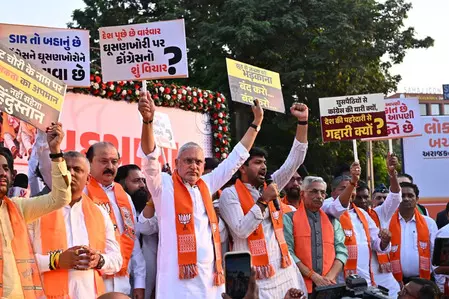
'Congress protecting infiltrators: BJP launches Save Democracy, Remove Anarchy' march in Gujarat
Digital Desk | Surat, Oct 25 (IANS) The Gujarat unit of BJP on Sunday accused the Congress of protecting infiltrators and opposing their removal from electoral rolls, as it launched a Save Democracy, Remove Anarchy campaign in Surat, alleging that the Opposition party is attempting to undermine public confidence in democratic institutions and the election process. State BJP president Jagdish Vishwakarma made the remarks while addressing a march held in the presence of Union Jal Shakti Minister C. R. Patil. The campaign, according to the BJP, aims to counter what it described as misleading propaganda against democratic institutions, the Special Intensive Revision (SIR) of electoral rolls and the election process. Congress is working to protect infiltrators. It does not want infiltrators to be removed from electoral rolls, Vishwakarma said, accusing the party of attempting to create unrest and disrupt the country's atmosphere. He alleged that Congress is unwilling to accept the people's mandate and is instead spreading confusion and distrust about the country's democratic institutions. He also accused the party of attempting to incite young people by acting at the behest of foreign forces. India's youth stand with Prime Minister Narendra Modi, and the public has complete faith in the country's democratic institutions, Vishwakarma said, adding that the alleged designs of Rahul Gandhi and his associates would never succeed. The state BJP president further alleged that Congress is using what he described as a politics of lies to create an atmosphere of anarchy. The people are aware of the party's political tactics and would not forgive it for allegedly conspiring to defame India, he said. Referring to PM Modi's leadership, Vishwakarma said the country is moving towards becoming a developed nation and achieving self-reliance under the 'Make in India' initiative. He also noted that PM Modi had recently completed 25 years of public service and dedication. According to Vishwakarma, the BJP and the National Democratic Alliance (NDA) are in power in 22 states. The march began near Prime Market in Adajan and passed through Presidency Circle, Machhli Circle and Varun Hospital Circle before concluding at Bhulka Bhavan Circle. Participants raised slogans including Congress supports infiltrators, Those who are friends of infiltrators are traitors to the country and The country will not tolerate the insult to the people's mandate in the name of vote theft. The march was attended by state Minister Naresh Patel, BJP state general secretary Prashant Korat, Surat city BJP president Paresh Patel, party office-bearers, MPs, MLAs, elected representatives, religious and community leaders, traders' association representatives, women, NGO representatives and other citizens.

A 26-year-old Flipkart delivery agent in Gujarat was arrested after Bhavnagar police recovered goods worth Rs 4.60 lakh, including 13 mobile phones, Apple AirPods, watches and perfumes. Police allege he stole customer parcels in Surat around 15 days earlier and was caught selling the products without bills.
Tiger Shroff firing: Turkish, desi pistols recovered in Surat, youth held in MP
Cops have arrested Pranjal Thakaran, a 22-year-old student, regarding the recent firing incident involving actor Tiger Shroff. The police recovered a Turkish-made Zigana pistol and a country-made firearm during the investigation. Thakaran is believed to be linked to the weapon supply chain and the shooter involved in the case. The weapons were found in Surat after an extensive search effort by the authorities over several hours.
Two held for Dubai-linked cyber-laundering racket
2,779kg of cannabis tablets worth Rs 14cr seized in Valsad, Dadra
IT firm employee drowns in SMC-run pool
Tiger Shroff shooting: Sonipat youth held in Indore; firearms recovered from Surat
Police arrested Pranjal Thakran in Indore for his involvement in the October 18 shooting targeting Tiger Shroff. Investigations revealed that the assailants were informed about police movements via television updates. Two firearms related to the attack were recovered in Surat during targeted raids by security forces. Eleven individuals have been arrested, including direct shooters and their logistical supporters from various states.

Tiger Shroff Attack: 11 Arrested, Firearms Seized
Mumbai Police have arrested a 22-year-old man in Indore and recovered two firearms from Surat in connection with the shooting incident targeting Bollywood actor Tiger Shroff's car. The total number of arrests in the case has now reached 11, with police also revealing that assailants received real-time updates on the investigation via news channels.

The Mumbai Crime Branch recovered the weapons on October 23 in connection with the October 18 firing at the actors car in Juhu; police have not disclosed the identity of the detained suspect or his alleged role

The Mumbai Crime Branch recovered the weapons on October 23 in connection with the October 18 firing at the actors car in Juhu; police have not disclosed the identity of the detained suspect or his alleged role
Three Arrested For Vande Bharat Stone Pelting
Three labourers were arrested in Surat for allegedly throwing stones at the Vande Bharat Express, damaging windows but causing no injuries. The accused, who claimed they acted for fun, were identified via CCTV footage and booked under the Railways Act.
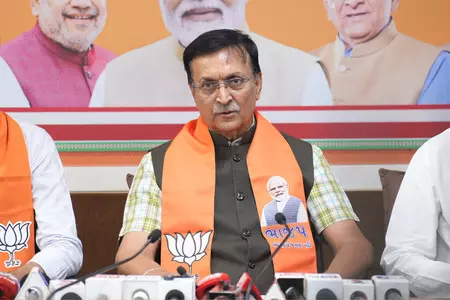
Rahul Gandhi is Liar of Opposition, not Leader of Opposition: Gujarat BJP
Digital Desk | Ahmedabad, Oct 24 (IANS) Gujarat Bharatiya Janata Party (BJP) chief spokesperson Anil Patel on Saturday accused Congress leader Rahul Gandhi of spreading misleading information about constitutional institutions, as the party announced a statewide campaign to counter the Oppositions allegations over the Special Intensive Revision (SIR) of electoral rolls. The BJPs Save Democracy, Remove Anarchy campaign will begin on Sunday, with a march in Surat, followed by programmes in Ahmedabad and Rajkot on October 27 and Vadodara on October 28. The party said it would organise further marches across districts and cities in Gujarat, along with press conferences and public outreach programmes. Addressing a press conference at the BJPs state headquarters in Gandhinagar, Patel accused the Congress and other Opposition parties of attempting to create distrust in constitutional institutions, including the Election Commission, through what he described as false and misleading information about SIR. Opposition is acting out of political frustration and attempting to mislead the public rather than accepting the peoples mandate and playing a constructive role, he said. Referring to Rahul Gandhis functioning, Patel said: Rahul Gandhi is behaving not as the Leader of Opposition but as the Liar of Opposition. Patel also accused the Congress of placing political interests above national interest in its pursuit of power. The partys allegations against constitutional institutions and its position on issues such as infiltration are turning matters of national interest into political confrontations, he said. He maintained that the Opposition would not succeed in creating an atmosphere of anarchy or misleading the public. The campaign is intended to present facts in response to the Oppositions claims about SIR and strengthen public confidence in democratic and constitutional institutions, the party said. The first march will take place at Adajan in Surat at 5 p.m. on Sunday in the presence of state BJP president Jagdish Vishwakarma and Union Minister C. R. Patil. State general secretary Prashant Korat will also attend. On October 27, Chief Minister Bhupendra Patel will attend the march in Ahmedabad, where state general secretary Ajay Brahmbhatt will also be present. A separate march in Rajkot on the same day will be attended by Vishwakarma, state co-in-charge Ajay Mahawar, Union Minister Mansukh Mandaviya, Union Minister Nimuben Bambhaniya and state general secretary Aniruddh Dave, among other leaders. Deputy Chief Minister Harsh Sanghavi will attend the Vadodara march on October 28, along with state general secretary Hitendrasinh Chauhan. The marches would bring together state ministers, MPs, MLAs, party office-bearers, elected representatives, workers, community leaders, traders association representatives, women, non-governmental organisation representatives and other citizens. Similar programmes will subsequently be organised across the state, party leaders said. The campaign will also include press conferences in districts and cities to address the Oppositions claims regarding SIR, discussions with eminent citizens, and youth interactions on the theme Democracy vs Mobocracy. Competitions for students on strengthening democracy and outreach programmes involving influential citizens and social media influencers are also planned. Youth discussions will cover Indias democratic history, the role of constitutional institutions, the Congress past use of Article 356 and the imposition of Presidents Rule in various states. Restrictions on the press and media during the Emergency will also feature, alongside discussions on institutional autonomy, infiltration and issues concerning national interest.

Surat University Installs 375 Special Fans In Hostels For Suicide Prevention
Veer Narmad South Gujarat University in Surat is installing around 375 spring-equipped fans in hostel rooms as part of a suicide prevention initiative. Each fan costs 2,247 and is designed to tilt downwards when a load exceeding 10 kg is applied.

Tiger Shroff Shooting: How TV News Alerts Guided Fleeing Suspects as Police Uncover Weapons Network
Mumbai Police recovered two firearms and 10 live cartridges from Surat on Friday as investigators pursued the alleged weapons network behind the October 18 shooting at actor Tiger Shroffs car in Juhu. Police are also examining whether unidentified handlers warned the fleeing suspects about developments in the investigation through internet-based calls and messages. The crime [] The post Tiger Shroff Shooting: How TV News Alerts Guided Fleeing Suspects as Police Uncover Weapons Network appeared first on Tfipost.com .
Tiger Shroff shooting: Firearms recovered from Surat
Mumbai crime branch has recovered two firearms and ten live cartridges in Surat, Gujarat, allegedly used in the attack on actor Tiger Shroff's car. The weapons are undergoing forensic examination. Gangster Anil Pandit, an alleged associate of the Lawrence Bishnoi gang, has been named as a wanted accused after claiming responsibility for the October 18 incident where gunshots were fired at Shroff's car, injuring his driver and a bystander. Ten individuals have been apprehended in connection with the case.

Tiger Shroff firing case: 2 firearms, 10 live cartridges recovered in Surat; total arrests reach 10
Mumbai Crime Branch recovered two firearms and 10 cartridges from Surat on Friday in connection with the October 18 firing involving Tiger Shroff in Juhu. Police arrested three more Haryana residents, taking total arrests to 10.

22, 24 carat Gold prices up across other cities on October 24

Two Pistols Used in Tiger Shroff Shooting Recovered in Surat
Mumbai Crime Branch recovers two pistols linked to the shooting incident involving actor Tiger Shroff in Surat. Two Pistols Used in Tiger Shroff Shooting Recovered in Surat
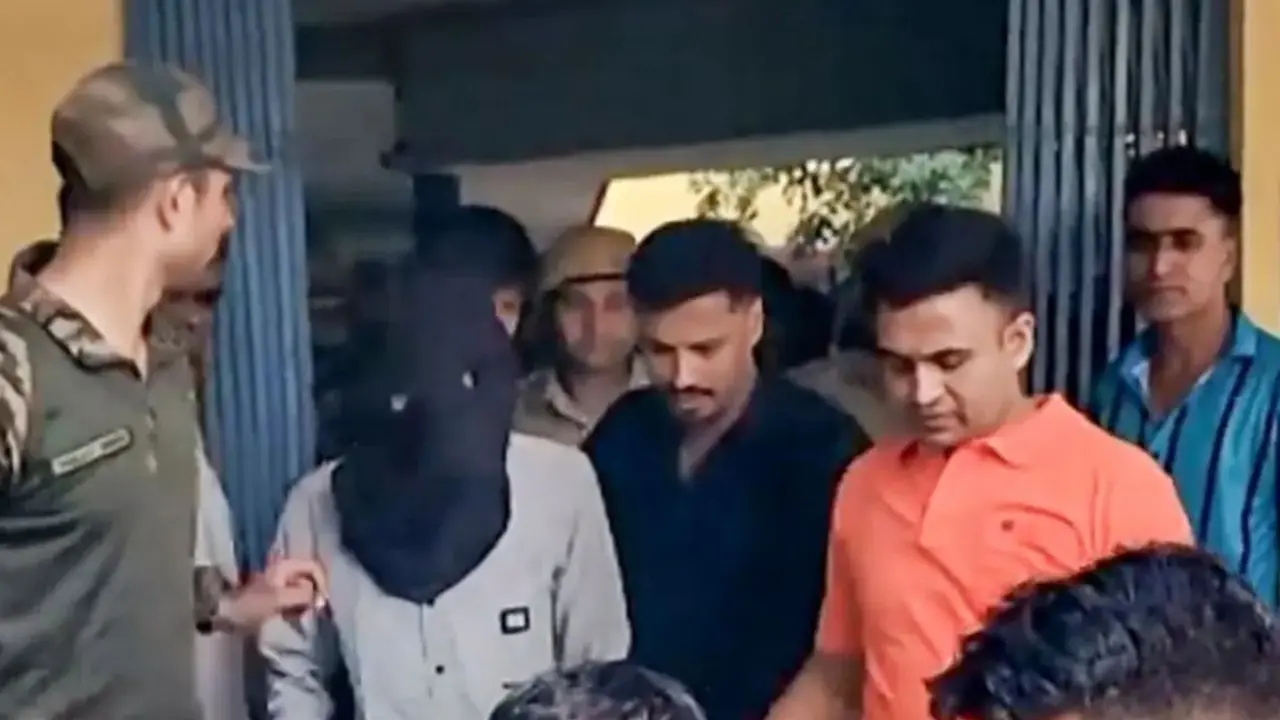
Tiger Shroff firing: Mumbai Crime Branch recovers 2 firearms in Surat
The Mumbai Crime Branch has recovered two firearms and 10 live cartridges from Surat in connection with the October 19 firing incident near Tiger Shroffs Juhu football turf. Investigators are also probing allegations that the shooters received real-time updates

Tiger Shroff shooting: Mumbai cops recover two firearms from Surat
According to a police official, crime branch teams tracked the logistical trail of the weapons provided to the assailants, leading them to a hideout in Surat where the firearms were recovered

Tiger Shroff firing case: Weapons used by accused recovered from Gujarat's Surat
The Crime Branch of Mumbai Police has seized two firearms, along with 10 live rounds, from Gujarat's Surat that investigators believe was likely used by the accused to attack Bollywood actor Tiger Shroff last Sunday,...
CJP Leaders Await Crime Branch Response, Say Next Steps Will Be Decided Collectively
Following a verification process in Surat, CJP leaders Saurav Das and Ashutosh Ranka said the proceedings went smoothly and the next hearing has been scheduled for November. Responding to questions on the Crime Branch notice, they said they are awaiting a fresh date, while urging restraint over leaks linked to the case and reiterating that any future decisions will be taken collectively by those associated with the movement.
Power staggering withdrawn after industrys objections
Delivery worker steals 89 parcels worth 4.5L
Ex-husband rapes woman on pretext of paying fees
Invalid papers grounds emigration hopes at Heathrow
Delivery boy swaps garments worth 4L with cheaper varieties, cops launch probe
SMC launches food safety drive ahead of Chandi Padva

13 Students Injured as Tourist Bus Hits School Bus in Surathkal
13 Students Injured as Tourist Bus Hits School Bus in Surathkal Mangaluru: Thirteen students were injured after a tourist bus rammed into a school bus from behind near the Sundar Ram Shetty Convention Hall at Kolnadu in Surathkal on Friday evening. The school bus belonged to a private School in Kulai and was carrying 16 [] The post 13 Students Injured as Tourist Bus Hits School Bus in Surathkal appeared first on Mangalorean.com .

Indian economy anchored by solid macroeconomic fundamentals, policy interventions: RBI Bulletin
Digital Desk | New Delhi, Oct 23 (IANS) Navigating the global uncertainty, the Indian economy has been anchored by solid macroeconomic fundamentals and policy interventions to cushion downside risks, the Reserve Bank of India (RBI) said in its October 2026 issue of its monthly Bulletin on Friday, adding that the domestic economy continues to demonstrate strength as evidenced by high-frequency indicators across both industry and services. Despite being a net energy importer, GDP growth has been supported by sustained domestic demand and services. Headline CPI inflation edged up over the months and showed signs of greater generalisation across commodities, calling for a commensurate change in the monetary policy stance. The external headwinds are also being dealt with a slew of regulatory measures by the Reserve Bank to curb speculative activity in the foreign exchange market, the RBI Bulletin stressed. Strong inflows under the FCNR (B) swap window augmented reserves, while FDI, ECB, and remittance flows strengthened in August. With strong export growth, the trade deficit narrowed in September, it added. According to the monthly document, the headline Consumer Price Index (CPI) inflation edged up in September, driven by a broad-based increase in food, fuel, and core components. Double-digit growth in merchandise exports during the first six months of 2026-27 helped in narrowing the trade deficit. FDI, ECB, and remittance flows strengthened in August. Strong inflows under the FCNR(B) swap window augmented reserves, it said. On the supply side, manufacturing grew at a robust pace, while services activity strengthened further on the back of buoyant domestic and external demand. The kharif sowing concluded with total acreage above its normal level amidst a deficient and uneven southwest monsoon. After a depreciating bias till early October, the Indian rupee gained following the Reserve Banks measures to curb speculative activity in the forex market, said the Bulletin. External commercial borrowing (ECB) activity strengthened during April-August 2026, with both registrations and net inflows marking an improvement over the previous year. External sector vulnerability indicators remained contained, supported by adequate foreign exchange reserves, it added. The Indian economy has withstood the shocks well. The IMF raised Indias growth projection for 2026-27 by 60 basis points (bps) to 7.0 per cent, from its July estimate, citing stronger-than-expected momentum, driven by resilient domestic demand and robust services activity.

Yashvi Navratri 3.0 Draws Garba Enthusiasts in Surat
Surat (Gujarat) [India], October 23: This years Navratri turned out to be a memorable and spiritually uplifting celebration for the people of Surat. The ten-day grand Garba festival, Yashvi Navratri

Veer Narmad South Gujarat University (VNSGU) in Surat has installed 354 specially designed anti-suicide fans in its hostels. The fans feature a spring-loaded mechanism that releases under excessive weight, making them a new safety addition to the university's student accommodation.
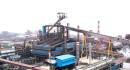
AM/NS Indias Hazira Blast Furnace Reaches Historic 30 Million Tonne Mark
30 million tonnes of hot metal from a single blast furnace equivalent to weight of 3,000 Eiffel Towers underscores Haziras contribution to Indias steelmaking journey Surat (Gujarat) [India],

Surat Municipal Corporation (SMC) has published the Recruitment 2026 notification for 18 vacancies across various posts. The online application process will be conducted from 03 November 2025 to 23 November 2026. Eligible candidates can apply through the official website, suratmunicipal.gov.in. The recruitment drive includes Supervisor, Director, Radiologist, Pathologist, and other positions.
CA Inter exam: City lad ranks 3rd in India
Parents protest at shift change at Piplod school
Streetlights burn bright during day amid power crisis
Husband, 4 relatives booked for abetment after womans suicide
Content creator becomes TTE for reel, arrested
Road caves in during creek bridge construction

Tiger Shroff firing incident: 4 accused sent to Police custody till Oct 26
Digital Desk | Mumbai, Oct 22 (IANS) The four accused, including two women, arrested in connection with the Tiger Shroff firing case were produced before a magistrate's court on Thursday. The court has now sent the suspects to Police custody till Oct 26. The Delhi Polices Special Cell, NDR unit, arrested four accused in the firing incident on October 20. The four suspects arrested have been identified as Kunal, 21, and Sumit, 19, from Sonipat (Haryana), Radha, 23, from Sitapur (Uttar Pradesh), and Babita, 23, from Azamgarh (Uttar Pradesh). If the reports are to be believed, the accused fled to Surat in Gujarat after the incident and boarded a Jaipur-bound train from there. The suspects reportedly planned to go to New Delhi and eventually escape to Nepal from there. However, they were arrested by Mumbai Police in Kota, Rajasthan, before they reached Delhi. Meanwhile, the police sources also claimed that the accused practised shooting before the attack. The reports also suggest that a misfire took place while they were testing the weapon in their hotel room in Mumbai's Andheri area. The Mumbai Police sources further revealed that the accused disclosed during the interrogation the location where they had test-fired the weapon. The weapons were reportedly test-fired as the accused wanted to ensure that the firearm was functioning properly before carrying out the attack on Tiger. Both the suspects are believed to have successfully fired the weapon during the practice session. It was also revealed during the investigation that a misfire occurred while the accused were testing the gun in their hotel room in Andheri. Sources claim that one of the bullets was fired onto the bed during the incident. However, the shot failed to raise any suspicion among hotel staff or anyone else in the hotel.
No Instagram, 8-10 Hours of Study: How Prem Agarwal Secured All India Rank 3 In CA Intermediate
Surat's Prem Agarwal secured All India Rank 3 in the CA Intermediate September 2026 examination with 490 marks. He credits consistent revision, limited social media use, teachers' guidance and family support for his success.

Swiss climate investor responsAbility commits up to 190 cr to Surat-based Navitas Solar
The growth capital will support Navitas Solars entry into solar cell manufacturing through a planned 2.2 GW facility.

The Group of Concerned Citizens (GCC) welcomes the debate on Jammu and Kashmirs Ease of Doing Business Act, 2026. The concerns articulated by Shakeel Qalandar Sahib in From Control to Facilitation and Apprehensions, and the Safeguards Within, alongside the perspectives of Javid Hussain Mir and Malik Daniyal, raise important questions about enterprise facilitation, governance and the public interest. GCC recognises that bureaucratic delays, overlapping permissions and arbitrary discretion have burdened entrepreneurs. Investment, employment and economic opportunity are essential to Jammu and Kashmirs future. We therefore support time-bound approvals, digital single-window systems, transparent procedures and the removal of genuinely redundant clearances. The issue is whether these objectives can be achieved without weakening statutory planning, building safety and public accountability. Section 22 warrants particular scrutiny. Section 22(1) provides for relaxation of Master Plan conditions; Section 22(2) provides for deemed change of land use following approval; and Section 22(3) appears to require permission for an enterprise notwithstanding the Master Plan, building bye-laws and other applicable laws, subject to the Negative List. Section 30(2) must be read conjointly with Section 22 to clarify the scope of this overriding effect. The Act should expressly establish whether any override is confined to the specific relaxation lawfully approved, and ensure that substantive planning controls are not displaced by implication. The protection afforded under Section 30(4) to specified environmental laws is welcome. However, comparable clarity is required for statutory urban and regional planning laws, Master Plans, development-control regulations and building-safety provisions. Environmental protection and planned urban development are complementary safeguards. Protecting one while leaving the other open to displacement would create an avoidable regulatory imbalance. The Negative List is not a substitute for spatial planning. If it is exhaustive, activities outside it may in practice become permissible through the facilitation mechanisms in Schedules III and IV, even where a location lacks the road access, drainage, sewerage, utilities or environmental capacity to accommodate them. An activity may not be prohibited in itself and yet be unsuitable at a particular site. The absence of a prohibition must not be treated as sufficient justification for development; enforceable land-use controls and infrastructure-capacity tests must remain in place. Schedule IIIs provision for residential buildings up to 24 metres without prior permission raises a related concern. Unless the provision expressly preserves compliance with FAR, ground coverage, setbacks, access, road width, fire and life safety, and infrastructure capacity, it could be read as allowing substantial construction without adequate planning control. The Government should clarify the scope of the exemption and confirm that exemption from prior permission does not mean exemption from substantive planning and building standards. The proposed moratorium on inspections by competent authorities also requires clear safeguards. It must not prevent action when a violation is reported or discovered, including after construction is completed. The law should specify exceptions to the moratorium, the authority empowered to inspect, procedures for dealing with complaints and remedies for unauthorised or unsafe construction. Facilitation must not create immunity from enforcement or leave unlawful construction without an effective remedy. Removal of selected No Objection Certificates may simplify procedures, but must not extinguish the substantive requirements those clearances were intended to verify. The Act and its rules should identify the responsible authority, verification process, technical scrutiny and accountability mechanism. This is particularly important for schools and colleges, where a procedural exemption must not dilute minimum standards for site suitability, access, open space, sanitation, fire and life safety, or other essential infrastructure. School education is a matter of particular concern. The Acts operation must be reconciled with the J&K School Education Act, 2002, and the Rules framed under it, and assessed against the National Education Policy (NEP) 2020, including its emphasis on the physical and functional infrastructure of schools. NEP 2020 envisages an independent State School Standards Authority in each State/UT to ensure that public and private schools meet minimum standards relating to safety and security, basic infrastructure, availability of teachers, financial probity and sound governance. Streamlined approvals must not undermine these requirements or permit institutions to operate without infrastructure commensurate with their enrollment. The Government should clarify how these statutory and policy standards will be preserved under the EoDB framework. Industrial parks require a clear and enforceable framework for allotment and use of plots. Transparent eligibility criteria, time-bound implementation, safeguards against speculative holding or unauthorised change of use, and obligations to establish and operate the approved industrial activity are necessary if the policy is to support genuine industry, investment and employment. The provision allowing professionals registered or empanelled outside Jammu and Kashmir to operate without local registration should be accompanied by clear standards for qualifications, professional accountability, insurance where appropriate, and disciplinary or grievance mechanisms enforceable within the Union Territory. Mutual recognition can reduce unnecessary barriers, but should not create a regulatory vacuum. Employment generation is a central justification for facilitating investment. The Government should clarify how the Act will promote employment for local residents, including whether lawful and transparent local recruitment or training commitments can be incorporated into industrial-park allotments and other appropriate incentives, consistently with applicable law. The principle governing delegated legislation is equally important: Rules cannot exceed, amend or contradict the parent Act. If the Act mandates that an enterprise shall be allowed, notwithstanding the Master Plan or regulatory delays, subject to the Negative List and other express statutory conditions, subordinate rules cannot introduce restrictions inconsistent with that mandate. Conversely, facilitation provisions should not be interpreted as silently extinguishing substantive planning and safety requirements. The Act itself must clearly distinguish between removing procedural delays and displacing statutory development controls; this essential balance cannot be left entirely to subsequent Rules. Deficiencies in existing Master Plans and enforcement are real. The remedy is to update plans, strengthen institutions, eliminate arbitrary procedures and improve compliancenot to make statutory planning optional. Any exceptional relaxation should be based on objective criteria, recorded reasons, technical assessment and transparent accountability. GCC therefore urges the Government to: Clarify the relationship between Sections 22 and 30, including the scope of any overriding effect, and expressly preserve applicable urban and regional planning legislation, Master Plans and development-control standards. Ensure that the Negative List and Schedules III and IV do not displace location-specific planning, infrastructure-capacity assessment or environmental safeguards. Clarify the 24-metre residential-building exemption and preserve enforceable requirements for FAR, ground coverage, setbacks, access, road width, fire and life safety, and infrastructure capacity. Define the inspection moratorium, including exceptions for complaints and suspected violations, and provide effective post-construction enforcement against unauthorised or unsafe development. Expressly protect the requirements of the J&K School Education Act, 2002, its Rules, and relevant NEP 2020 standards for school safety, infrastructure, teachers, financial probity and governance. Notify transparent rules for industrial-plot allotment, approved use, implementation obligations and employment outcomes. Establish clear qualification, accountability and grievance standards for professionals recognised through registration or empanelment elsewhere. Publish departmental responsibilities, technical capacity, verification procedures and enforcement mechanisms, with public consultation wherever required by law. The choice before Jammu and Kashmir is not between entrepreneurship and ecology, or between Ease of Doing Business and Ease of Living. It is between arbitrary administration and transparent, accountable regulation. GCCs position is clear: simplify procedures, eliminate unnecessary delays and facilitate responsible enterprisebut do not compromise statutory planning, educational standards, public safety or the public interest. Sustainable investment requires not only speed today, but also regulatory certainty, resilient infrastructure and well-planned towns and cities tomorrow. Hakim Iftikhar Ahmed, Member, Group of Concerned Citizens (GCC), Jammu and Kashmir
Four plunge off rail overbridge after motorcycle hits parapet, three dead
Robbery suspect escapes from lock-up, caught in 2 hours
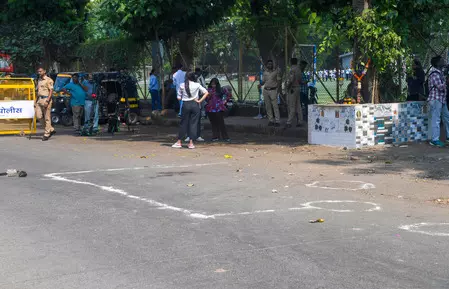
Tiger Shroff firing case: Four more people, including two women, arrested
Digital Desk | New Delhi, Oct 21 (IANS) The investigation into the firing incident involving Bollywood actor Tiger Shroffs car has taken a new turn, with Delhi Polices Special Cell arresting four people allegedly linked to the supply of weapons and efforts to help the shooters escape. Delhi Polices Special Cell, NDR unit, arrested four accused on October 20. They have been identified as Kunal, 21, and Sumit, 19, both residents of Sonipat district in Haryana, along with Radha, 23, from Sitapur in Uttar Pradesh, and Babita, 23, from Azamgarh in Uttar Pradesh. The investigation is examining the alleged movement of a pistol and ammunition from Amritsar to Mumbai, the role of intermediaries in delivering the weapon and the reported attempts to help the shooters leave the city after the incident. According to the police, investigators are examining the alleged roles of the four in transporting the weapon. Kunal had recently been released from jail on bail. He allegedly met Anil Pandit through a friend. The two subsequently began communicating through an encrypted messaging application, according to Delhi Police. Police allege that, on Pandits instructions, Kunal brought a pistol and 20 cartridges from Amritsar. Sumit reportedly accompanied him during the journey. According to the police account, Kunal met Radha around two months before the incident. He allegedly told her about his activities and subsequently persuaded her to carry the weapon to Mumbai. On October 15, Kunal reportedly took Radha and Babita to New Delhi railway station. The pistol was allegedly placed inside Radhas bag. On October 17, Radha and Babita reportedly arrived in Dadar and checked into a hotel. At around 11 am that day, a minor boy allegedly collected the bag from Radha near the hotel. Police are investigating who received the bag afterwards and how the weapon was allegedly used in the firing. The firing incident took place on the evening of October 18. According to Delhi Police, Anil Pandit subsequently told Kunal that the shooters were stranded in Mumbai and allegedly asked him to arrange their escape. On the same day, Radha and Babita reportedly left Dadar for Delhi aboard the Haridwar Express. The women were apprehended at New Delhi railway station on October 20, while Kunal and Sumit were detained in Sonipat. Following the firing incident, the accused reportedly fled to Surat in Gujarat, from where they boarded a Jaipur-bound train. Their alleged plan was to travel to New Delhi by bus before escaping to Nepal. Three accused were arrested by Mumbai Police in Kota, Rajasthan, in connection with the case. Further investigation is underway.
2-year-olds head stuck in metal cauldron, rescued
Man shares provocative post, FIR filed

Surat businessman to fund Rs 5 cr clean energy centre at AMU
Aligarh:Surat-based industrialist Faruk G Patel has announced a KP Excellence Centre at Aligarh Muslim University (AMU) with an initial corpus of Rs 5 crore, focussing on renewable energy and emerging technologies. Patel, chairman and managing director of the KP Group, made the announcement on October 17 as guest of honour at AMUs Sir Syed Day Get the latest updates in Hyderabad City News , Technology , Entertainment , Sports , Politics and Top Stories on WhatsApp & Telegram by subscribing to our channels. You can also download our app for Android and iOS .
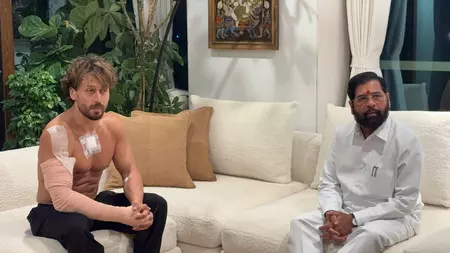
Digital Desk | Mumbai, Oct 20 (IANS) A new angle has emerged in the firing at Bollywood actor Tiger Shroff's car, with preliminary interrogation of the arrested accused reportedly revealing that the actor was not their original target and that they had initially planned to attack another prominent Bollywood personality. Mumbai Police sources said the accused had travelled to Mumbai with the intention of targeting another celebrity. However, after finding it difficult to reach their intended target, they allegedly shifted their focus to Tiger Shroff. Investigators have reportedly found that the accused learned about the actor's security arrangements through Instagram reels uploaded by his fans. The videos allegedly indicated that the 36-year-old actor did not usually have police security accompanying him, prompting the attackers to consider him an easier target, sources added. During preliminary questioning, the accused, according to sources, disclosed that they wanted to kill the actor to spread fear in the Bollywood industry. According to sources, the attackers also conducted reconnaissance by monitoring Tiger Shroff's movements through his Instagram account and posts and videos shared by his fans. The firing took place on a busy Sunday evening and was captured on video. The actor, son of veteran Bollywood star Jackie Shroff, escaped relatively unhurt. However, his driver and a bystander sustained injuries in the incident. According to Mumbai Police, five to six rounds were fired at the actor's car. A motorcycle allegedly used by the shooters was subsequently recovered in an abandoned condition in Andheri. Following the attack, the accused reportedly fled to Gujarat's Surat, from where they boarded a Jaipur-bound train. Their alleged plan was to travel to New Delhi by bus before escaping to Nepal. However, Mumbai Police arrested the three accused in Rajasthan's Kota in connection with the case. Two of the arrested accused have been identified as Ritik, alias Roshan, from Begusarai in Bihar, and Rehan from Sonipat in Haryana. Police have registered a case under charges of attempted murder and relevant provisions of the Arms Act. Investigators are also examining the alleged links between the accused and members of organised criminal networks. Police said Rehan was in contact with Anil Pandit, an alleged associate of the Lawrence Bishnoi gang, which claimed responsibility for the attack in an unverified social media post. Meanwhile, a purported audio clip allegedly featuring Pandit, a 32-year-old US-based gangster from Panipat, has circulated widely on media platforms. In the recording, he allegedly claims that Tiger Shroff was targeted for ignoring warnings against working with Bollywood superstar Salman Khan. However, the authenticity of the audio clip has not been independently verified. Police are continuing to interrogate the arrested accused to establish the motive, identify the original intended target and ascertain the wider conspiracy behind the attack.
Why embroidery workers in Surat are protesting and what are their demands?
Surat's embroidery workers are preparing to intensify the ongoing 3-month long protest to get 8 hr shifts, paid weekly holidays and wage protections, as talks with factory owners remain inconclusive

22, 24 carat Gold prices down across other cities on October 20
CCTV captures Tiger Shroff shooters boarding train in Surat
New CCTV footage from Surat station shows two suspects in the Tiger Shroff firing case rushing to board a Pune-Jaipur express train. The suspects travelled by road from Mumbai to Surat after the gun attack, before being nabbed later at Kota station in Rajasthan. The incident involved gunshots fired at Tiger Shroff's car in Mumbai, injuring his driver and a bystander.

Tiger Shroff Firing Case: CCTV Footage Traces Suspects' Movements At Surat Railway Station
The incident took place when Tiger Shroff was leaving a football club in Mumbai's Juhu area in a car.

Tiger Shroff Firing Case: CCTV Captures Suspects Rushing to Board Train at Surat Station
CCTV footage shows suspects in the Tiger Shroff firing case rushing to board a Pune-Jaipur Express at Surat station before their arrest at Kota.
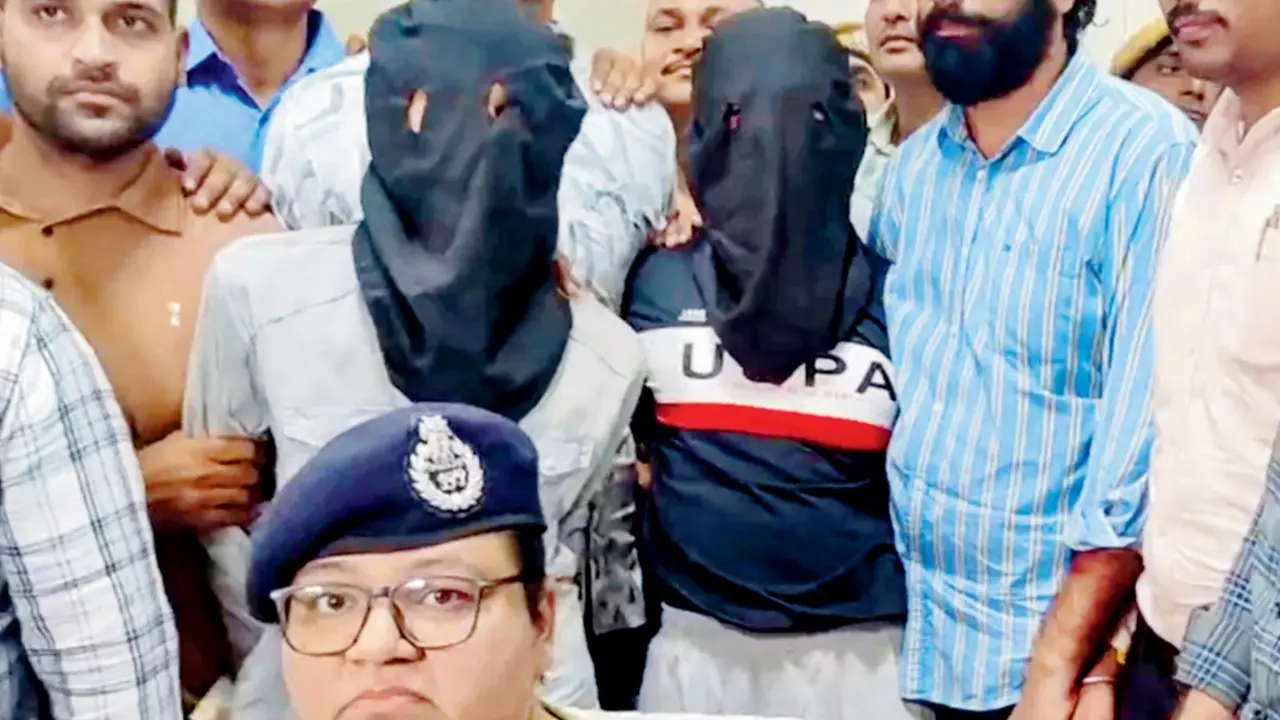
Tiger Shroff firing: Three suspects arrested on train in Rajasthans Kota
CCTV footage and technical inputs help Crime Branch track suspects via Surat; but firearms remain missing
NCH launches EEG diagnostic services
Fire in textile market chars large stock of goods
Homeopaths certificate not valid to reject mediclaim
SMC inspects fafda outlets ahead of Dussehra
FIR against two for assault over loan repayment
Tiger Shroff murder bid: CCTV shows suspects sprinting to board moving train at Surat station
Tiger Shroff Attack: Suspects Intercepted At Kota
New CCTV footage from Surat station purportedly shows two suspects in the Tiger Shroff firing case boarding a Pune-Jaipur express train, hours after the attack in Mumbai. Three individuals were later nabbed from a train at Kota station on Monday morning, following a coordinated police operation.