



Manipur suffer 36 77 loss in 41st Youth National Basketball C
Manipur went down 36 77 to Chhattisgarh in their Group F opening match of the 41st Youth Boys

Chhattisgarh Hockey League: Nyayadhani Knights enter semis; Sanskardhani Strikers secure first win
Digital Desk | Raipur, Oct 27 (IANS) It was another eventful day in Raipur, as Nyayadhani Knights entered the semis by virtue of continuing to be top of the points table, after they played out a 4-4 draw against Chakradhar Champions in the first match; the second witnessed a maiden win for Sanskardhani Strikers, as they got the better of Rajdhani Royals 4-2. Talking about Match No. 10, Yuvraj Walmiki emerged as the hero for the Champions with three goals, while Ketan displayed his best hockey for the Knights. The first quarter was the one where teams just tested the waters and played conservative hockey. Come the second, Ketan and Adarsh opened the scoring for Nyayadhani, when the former beat at least four defenders in his run from the right flank, entering the circle with much ease. He then passed the ball to Adarsh in the last moment, who netted it. The second goal didnt take much time to come; again Ketan entered the circle through the left this time, and Sonu Nishad was the one who came up with the deflection, to take their team to 2-1 at half-time. A similar story started unfolding in the third quarter. Chirag missed, but Ketan found himself right in front of the goal to score his first, bringing their tally to four. Meanwhile, Walmiki scored two via penalty strokes, and the third one was a field goal, after being injected a ball from Sunil just outside the circle. The former went in for a reverse flick that landed in the post. Completing his second hat-trick of the tournament, he looked good for his fourth as well...but Khogeshwar was awarded for a deflection. Strikers finally arrived. After struggling in the first three encounters, the Shamsher-led Strikers struck top form, with two goals each coming from Ashish Tani Purti and Shahrukh. In this battle, both sides had a lot at stake. It was their only chance to stay alive, with neither having managed to secure a win before this encounter. And the pressure showed initially. Both teams had a slow start. Attacks and circle penetrations were hard to come by for them, while the focus was on maintaining possession. Still, Ashish managed to open the scoring through a PC for Strikers. After a bit of a struggle, Royals too came back in the match, just before the half-time hooter, with Raushan scoring on the reverse. It was an excellent run of play as he dodged a few in the circle, found some space on the left, and then executed the shot to draw parity. Rajdhanis defence was largely good, but the slightest of mistakes of leaving Shahrukh unmarked meant he scored from just inside the circle, through a reverse flick. There was no looking back from that moment for Sanskardhani. Ashish converted yet another PC to take his tournament total to 9 goals. Shahrukh again struck, with a minute left in the third quarter, after getting a solid pass right in front of the post from the right flank. It was only a question of increasing the lead now. Nonetheless, Lalit got on the scorers sheet too for Rajdhani, when he got one into the net, on the rebound from a PC. That also marked the end of the proceedings, with Ashish winning the striker of the match award, and Shahrukh clinching the Player of the Match award.

District Project Livelihood College Solar Panel Installation Technician Recruitment 2026
District Project Livelihood College, Bastar, Chhattisgarh has invited eligible candidates to attend a Walk-in Interview for the post of Solar Panel Installation Technician (Guest Trainer). The walk-in interview will be held on 04 November 2026. Candidates should report at 10:00 AM. Further details are available at bastar.gov.in.
School holiday due to cyclone Arnab: Odisha and Andhra Pradesh have closed schools and Anganwadi centres in multiple districts due to Cyclone Arnab. The cyclone is predicted to bring heavy rain and strong winds starting October 27. Rains are anticipated in Chhattisgarh and Jharkhand as the storm approaches the coast. Authorities have established relief measures including cyclone shelters and medical teams on standby.
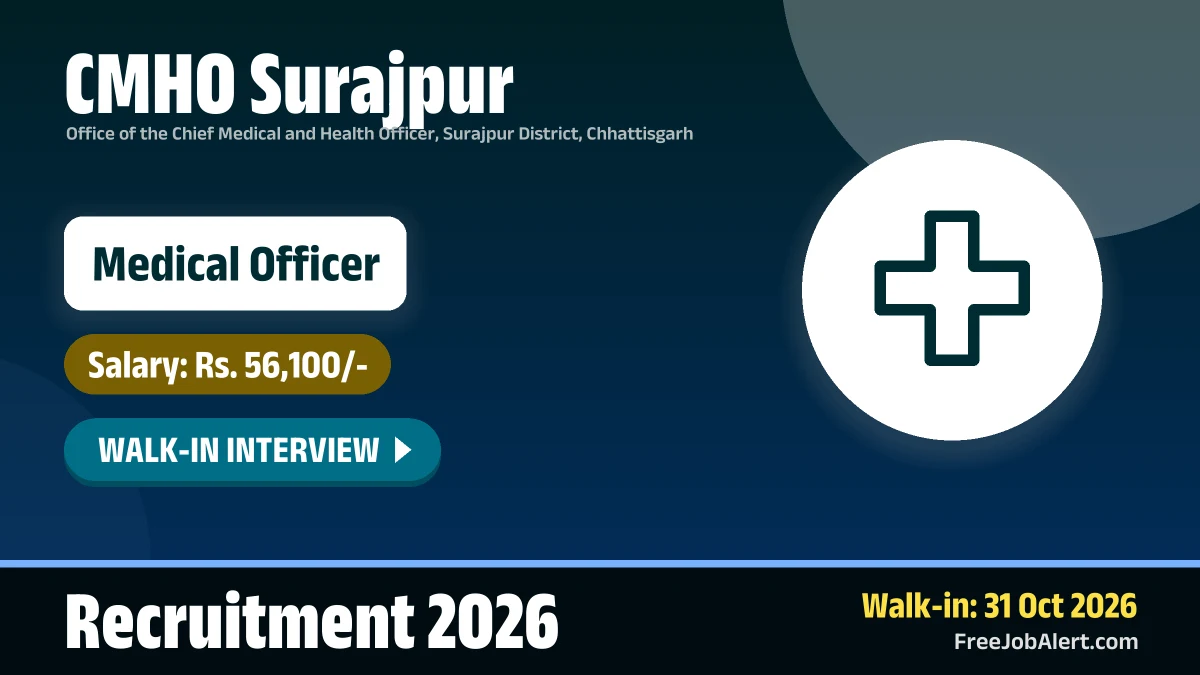
CMHO Surajpur Medical Officer Recruitment 2026
Office of the Chief Medical and Health Officer, Surajpur District, Chhattisgarh (CMHO Surajpur) is conducting a Walk-in Interview for 3 Medical Officer posts. Candidates meeting the prescribed eligibility criteria can attend the interview on 31 October 2026. Candidates should report at 10:30 AM. Further details are available at surajpur.nic.in.

Ranji Trophy: Khares patient knock keeps Chhattisgarh in the hunt
The No. 4 batters unbeaten 74 puts the visitor just 15 runs behind Andhras first-innings total with two wickets in hand; Vijay is the pick of the home teams bowlers with three scalps
Chhattisgarh High Court Grants 80 Days Extra Child Care Leave to Jail Guard
CM Vishnu Deo Sai Unveils 'Chhattisgarh Herbals' Diwali Gift Packs to Empower Women SHGs
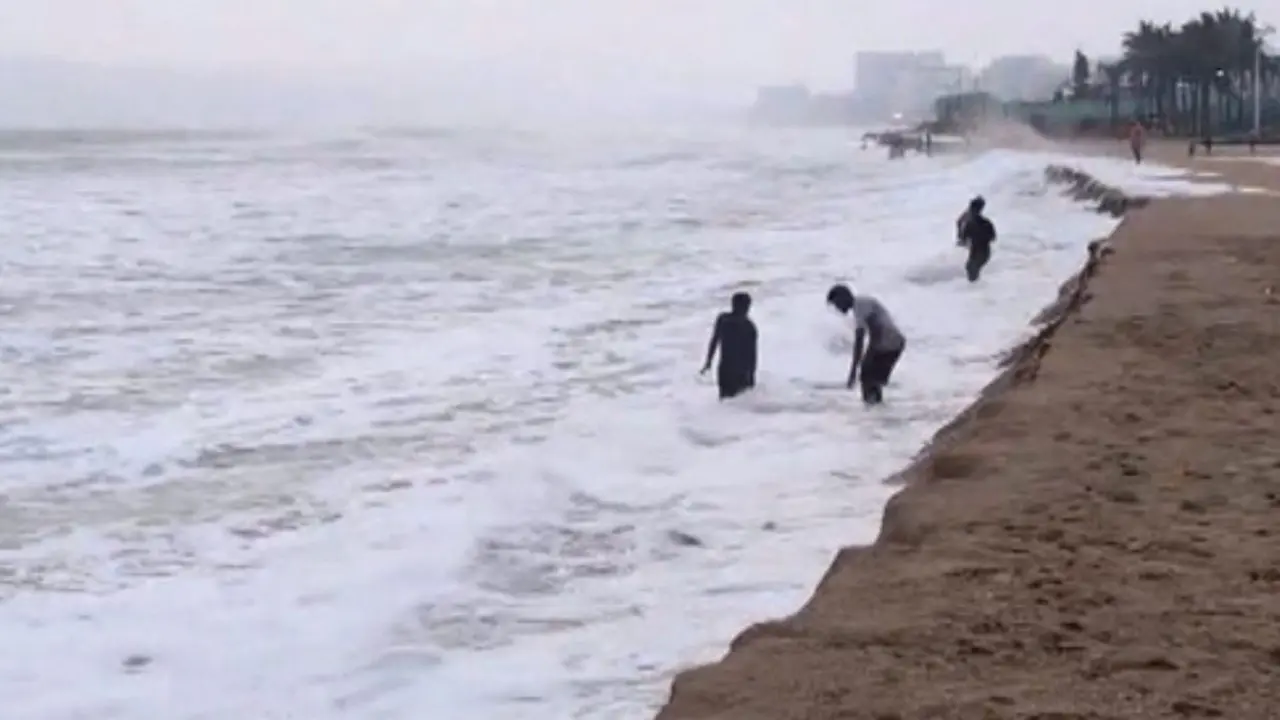
Cyclone Arnab: Chhattisgarh puts districts on alert as heavy rain threatens
Chhattisgarh has directed district collectors to prepare for heavy to extremely heavy rain from Cyclone Arnab on Wednesday and Thursday. Officials have been told to keep relief camps operational, ensure medical services, prepare evacuations and protect crops, livestock and vulnerable residents, with zero casualties the goal
Chhattisgarh: Durg Police seize 4 crore cash, Additional SP shares details

Police in Bilaspur, Chhattisgarh, have registered an FIR against the manager and employees of a Malabar Gold & Diamonds showroom following allegations that a 22-carat gold bracelet was repeatedly shown as 20-carat on the showrooms testing machine before registering the correct purity after an alleged adjustment to the machines settings. The case concerns a 22-carat, [] The post When Malabar Gold Was Booked For Alleged Gold Purity Fraud: Old Video Showing 22-Carat Bracelet Testing As 20-Carat, Then 22-Carat Again Goes Viral appeared first on The Commune .

Smriti Irani Kicks Off 2028 Poll Push Around Booth Cadre
BJP national general secretary in-charge of party affairs in Chhattisgarh: Reports

Mainpat Titans defeat Chakradhar Champions 3-1 in Chhattisgarh Hockey League
The News Mill

Ranji Trophy: Jayant shows his mettle as Chhattisgarh takes opening-day honours
Veteran off-spinner makes an immediate impact upon returning to the XI as he bags a four-wicket haul in the first innings against Andhra

Odisha: Cyclone Arnab to bring widespread rain; govt steps up preparedness
Digital Desk | Bhubaneswar, Oct 26 (IANS) Odisha government is on its toes as the state braces for heavy rainfall accompanied by strong winds due to the impending cyclonic storm Arnab, which is likely to hit the Andhra Pradesh coast on October 28. Speaking to media persons, Revenue and Disaster Management Minister Suresh Pujari said that all 30 districts of Odisha will experience widespread rainfall, with heavy to very heavy rain in some places. According to the India Meteorological Department, the system, which has been intensified into a cyclone, has been moving at 15 km/h and will intensify, generating wind speeds between 120 km/h and 150 km/h near Visakhapatnam before recurving southwestward. Malkangiri is projected to be the first district in Odisha hit, while heavy downpours are forecast across undivided Koraput, undivided Ganjam, Sundargarh, Jharsuguda, Kalahandi, Kandhamal, Puri, and Nayagada. The Minister said that rainfall will commence on Sunday, with heavy downpours expected on October 27 and 28, intensifying to heavy or very heavy rainfall by Monday night. He added that following the system's landfall on October 28, strong winds and rain would persist through October 29. He further stated that with wind speeds expected to reach 4050 km/h in some districts of the state, district administrations have been instructed to dismantle temporary installations wherever necessary. Large hoardings/boards have been ordered to be taken down to prevent injury or damage to people if they fall due to the wind. Instructions have also been given to dismantle all festival pandals (medhas) and stages wherever they have been erected. The minister said that Odisha is coordinating closely with Chhattisgarh and Jharkhand regarding upstream rainfall into the Mahanadi, Brahmani, Baitarani, and Budhabalanga systems. Pre-positioning of ODRAF, NDRF, and Fire Services personnel is complete. As many as eight NDRF teams have been deployed alongside 40 ODRAF teams on the ground, with additional units placed on standby in Koraput and Ganjam to deal with the impacts of the cyclonic storm. Senior IAS officers have been stationed in different districts, alongside experienced ministers overseeing eight vulnerable districts. Public transport buses under the LAccMI scheme have been mobilised for evacuations, and health centres have been stocked with anti-venom medicines alongside stationed doctors. District and state control rooms are operating round the clock. Speaking to media persons, Chief Secretary Anu Garg said that approximately 3,000 pregnant women nearing their delivery dates have been line-listed for hospital transfer. Garg confirmed that all marine fishermen have returned safely from the sea. Meanwhile, the Odisha revenue minister again appealed to the people not to panic over the impending cyclonic storm and cooperate with the state government.

Chhattisgarh police seized 4 crore in cash and 95 lakh in illegal wood, arresting key suspects in smuggling operations. Chhattisgarh Police Seize 4 Crore in Cash and Target Smuggling Operations
The India Meteorological Department forecasts turbulent weather across several Indian states starting October 26. A developing cyclonic storm will bring heavy rainfall, thunderstorms, and lightning, with Andhra Pradesh and Odisha likely facing the worst of it. Meanwhile, Karnataka and Chhattisgarh will see fluctuating weather patterns, and although Uttar Pradesh is set for dry conditions at first, storms are expected to emerge by the week's conclusion.

Manpat Titans Triumph Over Capital Royals 5-2 in Chhattisgarh Hockey League
Manpat Titans secured a decisive 5-2 victory against Capital Royals in the Chhattisgarh Hockey League, marking a tough tournament for the Royals. Manpat Titans Triumph Over Capital Royals 5-2 in Chhattisgarh Hockey League
UNESCO has added three Indian properties to its World Heritage Tentative List: the Karst-mud-volcano Complex of Baratang, the Andaman Subduction Volcanoes and the Sirpur Cultural and Archaeological Landscape. Located in the Andaman and Nicobar Islands and Chhattisgarh, the sites represent Indias geological diversity and archaeological heritage. Tentative-list inclusion is a preliminary step, not final World Heritage recognition.

Three diverse Indian sitesspanning ancient archaeological temple ruins in Chhattisgarh to unique volcanic and karst formations in the Andaman and Nicobar Islandshave officially been added to UNESCOs World Heritage Tentative List. Indias 81st Inclusions on the Tentative List The new additions bring Indias total count of properties on the UNESCO World Heritage Tentative List to [] The post UNESCO Adds Three New Indian Sites to Tentative List, Highlighting Chhattisgarh Temples and Andaman Volcanic Landscapes appeared first on Pragativadi I Latest Odisha News in English I Breaking News .

Mainpat Titans beat Rajdhani Royals 5-2 in Chhattisgarh Hockey League
The News Mill

Ranji Trophy: Chhattisgarhs Consecutive Home Games Shifted Out Due To No NGT Clearance
Shaheed Veer Narayan Singh International: Chhattisgarhs back-to-back home matches against Andhra and Hyderabad, in the 2026/27 Ranji Trophy have been moved out of the Shaheed Veer Narayan Singh International Stadium in Raipur after the National Green Tribunal (NGT) did not give them the clearance for hosting the games. As a result, Chhattisgarhs Elite Group B clash against Andhra, which begins on Monday, will now be played at the DVR Ground in Mulapadu, near Vijayawada, as what was meant to be a home fixture for them has turned into an away one. The sides fourth-round game against Hyderabad has also been shifted out of the state capital and is likely to be played in their opponents city. Yes, the consecutive home games of Chhattisgarh in Ranji Trophy have been moved out of Raipur. Its because the NGT has not yet given them clearance to host games, a source aware of the developments said to IANS on Sunday. It is not to be noted that in July, the tribunal had allowed for Raipur to host the three womens T20Is between India and Zimbabwe, which were played last week, on the condition that it deposits Rs 20 lakh for groundwater recharge with the Chhattisgarh Environment Conservation Board. But for the Ranji Trophy games, it didnt get the green signal, with the tribunal setting next hearing date on December 9. They had given special permission only for three womens T20Is between India and Zimbabwe held last week. For hosting the two home Ranji Trophy games, it could have been done, as they have completed all the compliance. But the NGT is asking for a heavy amount for staging those games around Rs 20 lakhs per match, added the source. The development has also cast a shadow over the other fixtures Chhattisgarh is lined up to host this season. There are a few more board games Chhattisgarh is due to host so lets see what happens to it in the future. There are more grounds present in the state, but its just that they are not upto that level of the stadium situated in Raipur. Chhattisgarh has struggled in its two away outings so far, drawing with Saurashtra before going down to Punjab in New Chandigarh. With just one point from two matches, Chhattisgarh is seventh in the group and needs favourable results to move up in the points table. The development has also cast a shadow over the other fixtures Chhattisgarh is lined up to host this season. There are a few more board games Chhattisgarh is due to host so lets see what happens to it in the future. There are more grounds present in the state, but its just that they are not upto that level of the stadium situated in Raipur. Also Read: Special Cricket Stories Article Source: IANS

Adani Group refutes social media claims over alleged tree felling near Bhimashankar Temple
Digital Desk | Ahmedabad, Oct 25 (IANS) The Adani Group has refuted social media claims linking the Group to alleged tree felling near the Bhimashankar Temple in Maharashtra's Pune district, calling them false and misleading as they have no project in the area. In a statement posted on X, a company spokesperson said the videos circulating on social media linking Adani Group to alleged tree felling and displacement near the Bhimashankar Temple are false, misleading and fabricated. The group has no project, proposed or ongoing, in the area or its vicinity, and is in no way associated with the activities depicted in the circulating videos, according to an Adani Group spokesperson. We strongly urge everyone to verify facts and refrain from sharing false and unverified content, the spokesperson added. The Adani Group statement came in response to misleading social media posts. Meanwhile, Adani Enterprises Ltd (AEL) has planted more than 1.6 million trees and saplings across 568 hectares at the Parsa East and Kanta Basan (PEKB) mine in Chhattisgarh's Surguja district, transforming the area into a green landscape. Once an active mining site, the area has now been transformed into a lush green landscape. Under the ecological restoration, 40 trees are planted for every tree removed for mining activities. Native species, including Sal, Mahua, Tendu, Amaltas and Sidha have been replanted, with the company reporting a survival rate of about 88 per cent. AEL operates the mine as developer and operator for Rajasthan Rajya Vidyut Utpadan Nigam Ltd (RVUNL). According to officials, its greening project has demonstrated how mined land can be restored after coal extraction. It aims to increase the green cover to more than 4 million trees by the end of the decade. The Adani Group has also developed a 3.5-hectare nursery, housing about 5,00,000 saplings and achieved successful regeneration of Sal forests in the area. According to officials, it has undertaken compensatory afforestation across more than 4,000 hectares in the Surguja, Korea, Balrampur and Surajpur forest divisions, while over Rs 259 crore has been deposited with the Chhattisgarh government towards afforestation, wildlife management and other environmental measures.

Railways yet to clarify alcohol testing norms a year after Bilaspur crash
The Railway Board is yet to decide whether a loco pilot is fit to operate a train if a certain amount of alcohol is detected in their blood, given the current policy requiring zero alcohol presence, a senior official has told PTI, asserting that a decision in this regard should be taken at the earliest. The issue gained significance after a Commissioner of Railway Safety (CRS) investigation report noted that blood tests conducted on the running crew of two trains involved in a collision in Chhattisgarh's Bilaspur in 2025 showed alcohol concentrations ranging from 3 to 10 milligrams per 100 mL (mg/dL) of blood. On November 4, 2025, the Gevra-Bilaspur MEMU passenger train rammed into the rear of a stationary goods train near Bilaspur, killing 12 people including the loco pilot of the passenger train and injuring around 20. The CRS investigation found that the passenger train had overshot a red signal, also noting that the loco pilot had previously failed a mandatory aptitude test and

Chhattisgarh High Court Recruitment for Legal Assistant: Apply by October 31
The Chhattisgarh High Court has opened applications for the Legal Assistant position, offering a monthly salary of 30,000. With 11 vacancies available, including reserved categories, eligible candidates can apply offline until October 31. This opportunity is ideal for those with a bachelor's degree in Law. Interested applicants should ensure their applications are submitted on time, following the outlined process. Don't miss this chance to join the government sector!
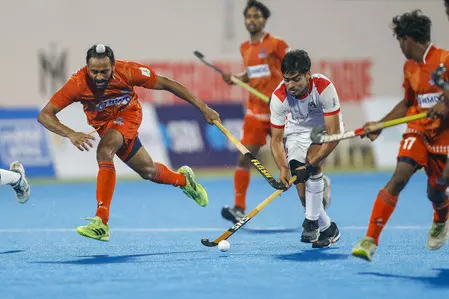
CHL 2026: Yuvraj Walmikis hat-trick sinks Sanskardhani Strikers; Chakradhar Champions go to top
Digital Desk | Raipur (Chhattisgarh), Oct 23 (IANS) It was yet another great day for hockey at the Chhattisgarh Hockey League (CHL) with Chakradhar Champions blazing past Sanskardhani Strikers 6-4 in a lopsided evening match in Raipur. The proceedings were witnessed by the Deputy Chief Minister of the state, Shri Arun Sao, which only motivated the players to deliver their best at the state-of-the-art Sardar Vallabhbhai Patel International Hockey Stadium, Raipur. The match started with seasoned Indian player SV Sunils brilliance. When chances weren't coming for Chakradhar, all he needed was a pass from the midfield. From there, he sent down a precise pass to Yuvraj Walmiki in the circle, who attempted a shot and scored on the rebound. Just a minute later, CC created another opportunity that resulted in a goal. Arjun Yadav managed to steal the ball from the Strikers defender just outside the circle and passed it in front of the goalpost. Kartik Yadav was ready with a big dive to swell the lead to 2-0. It did not take long in the 2nd quarter for the Champions to come up with their third goal. This time, it was a PC conversion, a rare combination where the ball was directed towards Sunil by the drag-flicker, and then to Walmiki, who just guided the ball into the post. But despite the setbacks, Strikers did pull one back in the quarter when Shahrukh sounded the board on the rebound. Vaibhav Singh Chandel could not stop the bullet strike from inside the circle. Things further went downhill for the Strikers when keeper Aditya Kumar Netam went for a tackle against Kartik. As a result, Walmiki received a penalty stroke and struck another goal. The third quarter was a complete turnaround for Sanskardhani Strikers, where they produced two more goals. The first was a field goal by Shahrukh, while the other came in the form of a late penalty stroke by Shamsher, bringing the score to 4-3. Come the fourth, CC came all guns blazing, and Manish scored through a fine deflection in the circle. That goal, in a way, ended all hopes for the Strikers. Another PC meant another scoring opportunity for Sunils team; the goal did come, albeit on the rebound by Walmiki, who went on to score his third of the night. Shamsher concluded the proceedings with a field goal, with the score reading 6-4. Shahrukh won the striker of the match award, while Walmiki won the player of the match. Mainpat Titans, Bailadila Bulls play out close 3-3 draw Earlier in the day, Mainpat Titans and Bailadila Bulls played out a closely fought 3-3 draw. It was Pradeep Mors Titans who dominated the proceedings in the first two quarters, while Chinglensana Singhs Bulls were the better side in the last two. Titans led by two goals until halftime, but Jaskaran Singh and Rahul Yadav brought their team back when no one expected them to. The match was so evenly poised that both the sides managed to score twice in the dying minutes of the match. For his excellent play, Prahalad was awarded the striker of the match, while Karan Dhanuk won the player of the match.
Chhattisgarh High Court Opens Applications for Legal Assistant Posts with 30,000 Stipend

President Murmu addresses Bastar Dussehra festival in Chhattisgarh
The News Mill

Smriti Irani tells Haryana BJP leaders to drop VIP culture and take politics to the ground
BJP in-charge for Haryana Smriti Irani used her first round of meetings with state leaders in Panchkula on Friday to send a clear message: the Haryana organisation needs tightening. Irani held separate meetings with groups of state BJP leaders. BJP president Nitin Nabin appointed her in-charge of Haryana and Chhattisgarh last month. Bhola Singh, a [] The post Smriti Irani tells Haryana BJP leaders to drop VIP culture and take politics to the ground appeared first on Tfipost.com .

IPS Officer Ankita Sharma Gets Show-Cause Notice Over AK-47 Firing
Chhattisgarh Police Headquarters issued a show-cause notice to senior IPS officer #AnkitaSharma after a video showing her firing an AK-47 rifle into the air during a traditional weapon-worship ritual on #Dussehra in Rajnandgaon went viral. The incident involving Rajnandgaon superintendent of police (SP) Sharma has triggered a debate over safety, discipline and weapon-handling protocols.The video showed Sharma, dressed in a saree, firing several rounds from an AK-47 after the weapon-worship ritual, news agency PTI reported.Rajnandgaon Range inspector general of police Ajay Yadav said Sharma fired the rifle after the traditional 'Shastra Puja' at Police Lines on October 20, on the occasion of Vijayadashami.

President Murmu offers prayers at Maa Danteshwari temple in Chhattisgarhs Jagdalpur
She was accompanied by Governor Ramen Deka and Chief Minister Vishnu Deo Sai

Korba Girl Raped, Murdered; Accused Arrested
A seven-year-old girl who went missing three days ago in Chhattisgarh's Korba district was found raped and murdered. Police arrested a 42-year-old man after a sniffer dog tracked him down. The accused confessed to the crime, and further investigation is ongoing.
Chhattisgarh CM Sai welcomes President Murmu to Bastar, criticises Congress over tribal policies
The News Mill

The incident, filmed during Dussehra at the Rajnandgaon Police Lines, drew widespread criticism on social media, including from a former senior Army officer
6 Killed, 40 Hurt As Bus Hits Tree In Chhattisgarh
Six people, including four women, were killed and 40 injured after a passenger bus crashed into a roadside tree in Chhattisgarhs Manendragarh-Chirmiri-Bharatpur district.

Murmu hails youth joining mainstream after breaking free from Maoism
It is a matter of joy that, through the efforts of Central and State governments and their own willpower, Chhattisgarhs youth are freeing themselves from the misguided path of Maoism, says the President
Chhattisgarh: President Murmu Releases Rs 200 Coin To Honour Sindhi Spiritual Figure
Says food, not merely means to satisfy hunger, but symbol of hard work of farmers, gift of Mother Earth
Bus Crashes Into Tree in Chhattisgarh, 6 Lose Lives and 20 Injured
The accident took place shortly after noon near Semarmathani turn when the bus, carrying more than 40 passengers, was heading towards Kelhari village, Superintendent of Police Ratna Singh said.
Six dead, 40 injured as bus hits tree in Chhattisgarh; CM announces compensation
Prima facie, the bus driver appeared to have lost control of the vehicle, causing it to crash into the roadside tree, police said, citing the account of an injured passenger
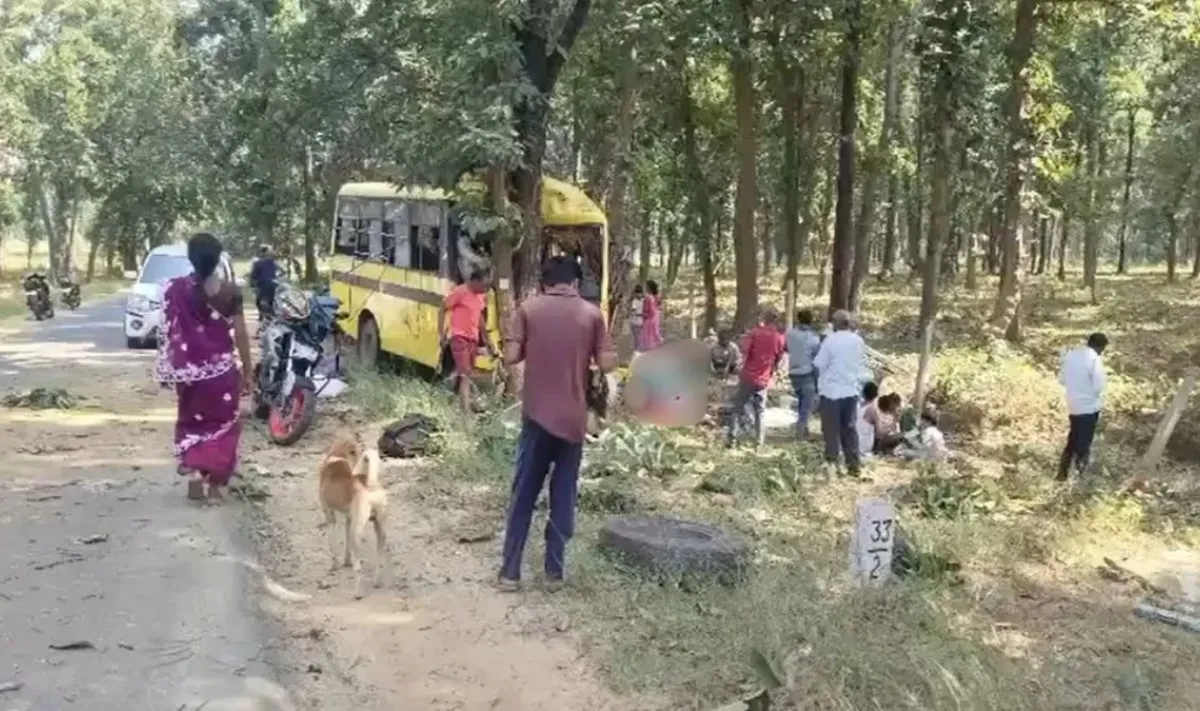
Six killed, 39 injured as bus crashes into tree in Chhattisgarh's Manendragarh
At least six people were killed, and more than 35 people were injured after a bus lost control and crashed into a tree in Manendragarh, located in the Manendragarh-Chirmiri-Bharatpur (MCB) district of Chhattisgarh on Thursday (October 22), officials said.The accident took place within the jurisdiction of the Kelhari police station.
Beyond Folk Dance: How Chhattisgarh's High-Energy Panthi Dance Champions Equality
Directorate of Agriculture Chhattisgarh State Project Officer Recruitment 2026
Directorate of Agriculture Chhattisgarh has invited eligible candidates to attend a Walk-in Interview for 4 vacancies, including State Project Officer (State Head), Remote Sensing Specialist, Data Analyst & MIS Specialist, and IT & Technical Specialist posts. The walk-in interview will be held on 17 November 2026 at Directorate of Agriculture (PMFBY Cell), Indravati Bhawan, 2nd Floor, Block-2, Nava Raipur, Atal Nagar, Raipur. Candidates should report at 12:00 PM. Further details are available at agriportal.cg.nic.in.
Chhattisgarh High Court Legal Assistant Recruitment 2026
Chhattisgarh High Court has released the notification for 11 Legal Assistant posts. Eligible candidates can submit their offline applications till 31 October 2026. Further details are available at highcourt.cg.gov.in.
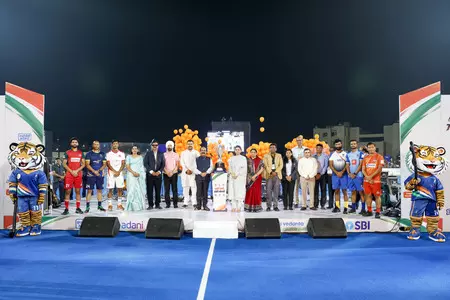
Lalit Upadhyay-led Rajdhani Royals take on Nyayadhani Knights in Chhattisgarh Hockey League opener
Digital Desk | Raipur, Oct 22 (IANS) Olympian Lalit Upadhyay-led Rajdhani Royals will take on Nyayadhani Knights, led by Olympic medallist Surender Kumar, in the inaugural Chhattisgarh Hockey League (CHL) on Thursday. A women's exhibition match opens the day's play, putting women's hockey on the CHL stage from the start. The CHL is organised by the Department of Sports and Youth Welfare, Government of Chhattisgarh, and sanctioned by Hockey India. It is the first hockey league in the country run by a state government. The season runs until the final on 1 November under the tagline Chalo Re Sangi, Hockey Khelbo. The league starts during one of Indian hockey's best seasons in decades. At the Asian Games in Aichi-Nagoya earlier this month, both the men's and women's teams won gold, the first time India has won both titles at the same Games. The women beat China 10 for their first Asian Games gold since 1982. The men beat Malaysia 51 to keep their title. Both teams have now qualified directly for the Los Angeles 2028 Olympics. The men's team also won Olympic bronze at Tokyo 2020 and Paris 2024. I proudly recall that exactly 25 years ago on this very day, the Indian Junior Hockey Team won the World Cup; notably, a distinguished member of that golden, victorious squad, Devesh Chauhan, is serving as the head coach for the Chhattisgarh team in this tournament. This competition would prove to be a milestone in establishing hockey at an excellent, professional level within the state. Chhattisgarh has gifted the nation with legendary hockey players such as Vincent Lakra, Mrinal Chaubey, Renuka Yadav, and Saba Anjum and this league will ensure that many such names will be established through this league in the future, said Arun Sao, Deputy Chief Minister, Chhattisgarh. The CHL follows the Khelo India approach of wider participation and building excellence from the ground up. Earlier this year, Chhattisgarh hosted the first Khelo India Tribal Games, where hockey was a medal sport. Under Chief Minister Vishnu Deo Sai, the state aims to become a sporting state. The league gives Chhattisgarh's players a structured, competitive route to state, national and international hockey. Each franchise is led by an Olympian marquee player who will play alongside Chhattisgarh's young players; Lalit Kumar Upadhyay (Rajdhani Royals), Surender Kumar (Nyayadhani Knights), Shamsher Singh (Sanskardhani Strikers), SV Sunil (Chakradhar Champions), Pradeep Mor (Mainpat Titans) and Chinglensana Singh Kangujam (Bailadila Bulls). Each 22-member squad was picked from 132 players chosen through open trials. All six assistant head coaches are from Chhattisgarh, which builds coaching depth in the state. The league builds on a strong hockey heritage. Bilaspur-born Leslie Claudius won three Olympic golds and a silver and captained India at the 1960 Rome Olympics. Renuka Yadav of Rajnandgaon, a district long called the hockey nursery of India, became Chhattisgarh's first woman Olympian at Rio 2016.

DPR Chhattisgarh Anganwadi Worker Recruitment 2026
Chhattisgarh Jansampark has released the official notification for the post of Anganwadi Worker. The online application process will begin on 23 October 2026, and the last date to apply is 06 November 2026. Candidates can apply through the official website, aww.e-bharti.in.
Drug menace next target, says Amit Shah; eyes 2029 deadline
Stating that an environment conducive to development has emerged in Kashmir, Northeast and LWE-hit regions, Shah particularly thanked CRPF and its CoBRA battalion as well as Chhattisgarh Police for their role in the decisive fight against LWE. The home ministry will dedicate the remaining part of 2026 and three years after that to freeing the country from the drug menace, Shah said.
Video of IPS officer firing AK-47 in Chhattisgarh goes viral
While some social media users defended Rajnandgaon superintendent of police Ankita Sharma saying that she was merely following a tradition, others criticised her handling of the weapon. The viral video showed Sharma, dressed in a saree, firing several rounds from an AK-47.
Chhattisgarh, Andaman sites among three on Unesco's tentative heritage list
Karst-mud-volcano Complex of Baratang in Andaman and Nicobar Islands and Sirpur Cultural and Archaeological Landscape in Chhattisgarh are among the three new sites which have been added to the UNESCO Tentative List of World Heritage for India, officials said on Wednesday. Another site -- Andaman Subduction Volcanoes, Narcondam & Barren Islands -- has also been added to the list. A site should first be recognised on the UNESCO Tentative List before it can be considered for the World Heritage tag. India's heritage shines brighter! 3 new sites added to India's @UNESCO Tentative List: Baratang Karst-Mud Volcano Complex Andaman Subduction Volcanoes (Narcondam & Barren Islands) Sirpur Cultural & Archaeological Landscape, Chhattisgarh @MinOfCultureGoI @ASIGoI, PIB Culture posted on X. According to the UNESCO website, the Permanent Delegation of India to UNESCO had sent these submissions on September 28. Four sites, including Udaigiri Caves in Madhya Pradesh and places linked to
IPS officer's AK-47 firing during Dussehra ritual sparks debate
A video of a senior woman IPS officer firing an AK-47 during a Dussehra weapon worship ritual in Chhattisgarh has gone viral, sparking a debate about weapon handling safety, police discipline, and traditional practices. The incident has drawn criticism from experts and social media users, while others defend the officer.

President Droupadi Murmu to Visit Chhattisgarh on October 22-23
President Droupadi Murmu will visit Chhattisgarh on October 22-23, participating in cultural events and honoring local traditions. President Droupadi Murmu to Visit Chhattisgarh on October 22-23
President Murmu Begins 2-Day Chhattisgarh Visit To Attend Bastar Dasara Finale
President Droupadi Murmu will attend the Bastar Dasara finale, interact with tribal leaders at Muria Durbar and participate in cultural events during her two-day Chhattisgarh visit.

Indian Railways links Chhattisgarhs Rowghat to national network for first time since independence
Indian Railways links Chhattisgarhs Rowghat to national network for first time since independence

Chhattisgarh CM Backs PM Modis Call, Opposition Responds
Chhattisgarhs Chief Minister supports PM Modis statements, while opposition leaders voice their concerns and critiques. Chhattisgarh CM Backs PM Modis Call, Opposition Responds

President Murmu to visit Chhattisgarh from October 22 to 23
President Droupadi Murmu will visit Chhattisgarh from October 22 to 23, where she will attend events for the Nuakhai festival and Bastar Dussehra, the President's Secretariat said in an official statement released on Wednesday. On October 22, the President will release a commemorative coin in honour of Pujya Mata Hasi Devi Ji at Lok Bhavan, Raipur. On the same day, she will grace
Chhattisgarhs Sirpur Moves Closer To UNESCO World Heritage Status
Sirpurs archaeological landscape in Chhattisgarh has entered UNESCOs World Heritage Tentative List, recognising its rich Buddhist, Jain and Hindu heritage.
Smriti Irani Issues Strict Gag to Chhattisgarh BJP Ahead of Crucial Raipur Strategy Visit
Namo Bharat Rapid Rail Fast-Tracked; 240 E-Buses Cleared for Chhattisgarh
Ex-Naxalite Dies By Suicide In Bijapur
A 26-year-old surrendered Naxalite allegedly committed suicide by hanging himself at a rehabilitation centre in Bijapur, Chhattisgarh. Police are investigating the incident, and a case of unnatural death has been registered.
Who is IPS Ankita Sharma? AK-47 video goes viral; UPSC AIR 203 on third attempt
IPS officer Ankita Sharma is in the spotlight after a video showed her firing an AK-47 during Dussehras traditional weapon worship ceremony in Rajnandgaon, Chhattisgarh. The incident drew mixed reactions on social media, with some praising her confidence while others raised safety concerns. A 2018-batch officer, Sharma secured All India Rank 203 in the UPSC Civil Services Examination on her third attempt. Her journey includes early academic struggles, two unsuccessful UPSC attempts and a career in policing.
Andaman, Chhattisgarh Sites Added to UNESCO Tentative List
Barren Island lavas are recorded to be mainly basalts and basaltic andesites, whereas Narcondam rocks are dacite-andesite-rhyolite and contain evidence of magma mixing of both mantle and crustal material.

IPS Officer Ankita Sharma Fires AK-47 During Dussehra Puja: Why This Incident Has Triggered A Debate
A video of Rajnandgaon Superintendent of Police Ankita Sharma firing an AK-47 during Dussehra celebrations in Chhattisgarh has triggered a debate on social media over the use of firearms during religious ceremonies. Sharma was taking part in the traditional Shastra Puja
Two Andaman, one Chhattisgarh site added to Unesco World Heritage tentative list
Railway minister announces new projects to expand Chhattisgarh rail network
The News Mill

Chief Minister Vishnu Deo Sai Flags Off Tadoki-Rowghat And Abhanpur-Kurud Rail Lines In Chhattisgarh

Chhattisgarh Expands Rail Network with Historic Train Arrival in Ravghat
Chhattisgarhs rail network strengthens as a train reaches Ravghat for the first time since independence, boosting local connectivity and economy. Chhattisgarh Expands Rail Network with Historic Train Arrival in Ravghat
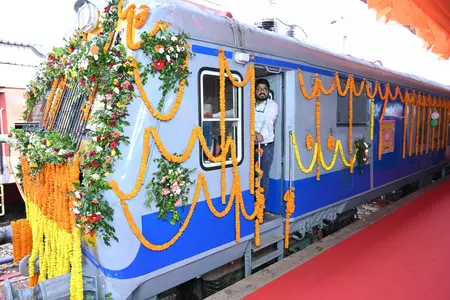
Chhattisgarh: Train reaches Raoghat for first time since Independence
Digital Desk | Bilaspur, Oct 20 (IANS) In a landmark development for Chhattisgarhs rail network, Indian Railways on Tuesday inaugurated the TadokiRaoghat and AbhanpurKurud broad-gauge lines. New passenger services between RaoghatRaipur and RaipurKurud were also flagged off, while the foundation stone for an electric locomotive maintenance facility was laid in Raipur. The events were held in the presence of Chief Minister Vishnu Deo Sai and Union Railway Minister Ashwini Vaishnaw, who joined via video conferencing. The arrival of a train at Raoghat for the first time since Independence marks a historic milestone in connecting the remote southern regions of the state to the national rail grid. The 95-km Dalli-RajharaRowghat line, completed for Rs 1,628 crore, reached full operational status with the 17.5-km TadokiRaoghat stretch. This connectivity will ease access to education, healthcare, employment and trade for local residents while accelerating iron ore transportation from the Rowghat region to support the Bhilai Steel Plant and the wider iron and steel industry. Chief Minister Sai thanked Prime Minister Narendra Modi and Minister Vaishnaw on behalf of the states three crore people. He highlighted that Chhattisgarh has received over 7,000 crore in the railway budget this year, reflecting sustained focus on infrastructure, connectivity and passenger amenities. The projects, he said, will give fresh impetus to industrial, commercial and socio-economic growth in remote areas. Minister Vaishnaw congratulated the people of Chhattisgarh and listed key ongoing and completed works, including the Dalli-RajharaRowghat line, gauge conversion of the KendiAbhanpurRajimDhamtari section, multi-tracking projects and the recently approved Pendra RoadBilaspurUslapur third line. The KharsiaParmalkasa double-line work is also in progress. Under the AbhanpurDhamtari gauge conversion, the 22-km AbhanpurKurud section has been completed, expanding travel options to Raipur and boosting regional trade and daily commuting. Remaining work on the KurudDhamtari stretch is expected soon. The new RaipurRaoghat service will cost passengers only 55, offering affordable travel for students, youth and daily commuters. The proposed electric locomotive maintenance facility in Raipur will handle up to 300 high-horsepower locomotives, improving availability, meeting growing freight needs and strengthening overall rail operations. These initiatives collectively enhance connectivity, passenger facilities and economic opportunities across Chhattisgarh.
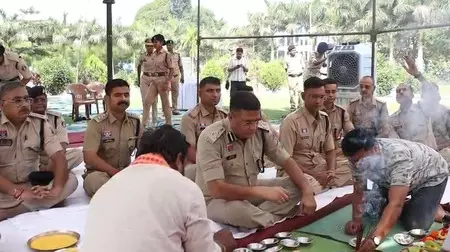
Police perform 'Shastra Pooja' in Durg, Mumbai on Vijayadashami
Digital Desk | Durg (Chhattisgarh)/Mumbai, Oct 20 (IANS) Police personnel performed the traditional Shastra Pooja at the Durg Police Lines in Chhattisgarh and the Naigaon Armoury in Mumbai on Tuesday on the occasion of Vijayadashami, reaffirming their commitment to protecting citizens and serving the nation. In Durg, Senior Superintendent of Police Vijay Agrawal led the rituals, which were attended by senior officers and police personnel. The weapons were worshipped according to traditional rites, followed by aerial firing to mark the occasion. During the puja, officers were seen performing all the rituals ardently while the priest chanted the mantras. Today we marked Vijaydashami, and on the occasion we did Shahstra Puja (worshipping of weapons) along with worshipping our vehicles according to all the rituals, the SSP said. The event was attended by Additional SP, Durg City, Shobharaj Agrawal, Additional SP, Rural, Manishankar Chandra, Additional SP, Traffic, Kaushalendra Patel, Reserve Inspector Neelkanth Verma and several station house officers, among others. Agrawal described Vijayadashami as a symbol of the victory of truth over falsehood and good over evil. He extended festive greetings to residents and appealed to them to celebrate Dussehra in an atmosphere of peace, harmony and brotherhood. He also reiterated that the Durg Police remained committed to ensuring public safety. A similar ceremony was held at Naigaon Armoury, a vital security and logistics hub of the Mumbai Police located in the Dadar-Naigaon area. It was attended by Joint Commissioner of Police, Administration, Suvez Haque, Additional Commissioner of Police, Armed Police, Dikshit Gedam, Deputy Commissioner of Police, Armed Police, Anand Bhoite, and DCP, Central Region, Zone 2, Anurag Jain. In a message marking the occasion, the police said the Shastra Pooja honoured the tradition and spirit of Vijayadashami and served as a reminder of their paramount duty to protect citizens and serve the nation. Shastra Pooja is traditionally performed on Vijayadashami, which is associated with the triumph of good over evil. The ritual holds significance for police and security forces as a symbol of duty, courage and their commitment to public protection.

Chhattisgarhs Ramnami community gains recognition through its centuries-old tradition of inscribing Rams name on skin, inspiring a documentary and Kolkatas Durga Puja theme.

Historic Rail Link to Ravghat Marks New Era for Chhattisgarh Development
Chhattisgarhs rail network expands as the new Ravghat line opens, promising growth in education, health, and trade for the region. Historic Rail Link to Ravghat Marks New Era for Chhattisgarh Development

Chhattisgarh CM Vishnu Deo Sai prays at Mana Camp Durga Pandal
The News Mill

Rinku Singh Shines Again with Century as Ranji Trophy Heats Up
Rinku Singh scores a brilliant century in the Ranji Trophy, while Uday Saharan leads Punjab to a strong position against Chhattisgarh. Rinku Singh Shines Again with Century as Ranji Trophy Heats Up
Snares, arrows recovered from Damchua forests near Jharkhand-Chhattisgarh border
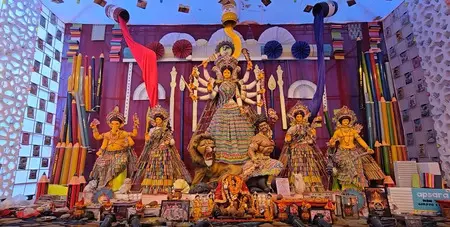
Chhattisgarh: Notebooks and pens used in Durga Pandal to be distributed among children
Digital Desk | Bilaspur (Chhattisgarh), Oct 18 (IANS) Showcasing a unique blend of devotion and education, a Durga Puja Association in Chhattisgarhs Bilaspur has crafted a pandal using stationery items. Interestingly, a host of stationery items have been used to decorate the pandal with a purpose. According to the organisers, these stationery items, including notebooks, books, pens, pencils, and school bags, will be distributed among the children from marginalised and disadvantaged families to support them in pursuing education. This will be done after organising a public function, days after the idol immersion. A member of the organising committee told IANS, Our committee has been installing the Durga idol here for 58 years. This year, we have created a very unique pandal. It was decorated by all the committee members using various stationery items. Another member added, The theme is 'Stationery World.' All the stationery items used in the decoration will be distributed to children from various areas on the day of the immersion. Devotees were not just amazed by the beautiful creation but also lavishly praised the idea to empower children. Every year, there is a different theme; this time, it is 'Stationery World.' Even the adornment of the Goddess (Mata Rani) has been crafted using stationery items. While it is quite challenging to create, the artisans have decorated the Goddess with great beauty. The entire pandal is decorated with stationery supplies. It is a one-of-a-kind pandal in our city. Since a child's future is linked to stationery, this initiative serves as a form of blessing from the Goddess, said one of the devotees. While pandals are typically decorated with flowers and lights, this one in Masanganj typically stands out for promoting education and support for others.

Chhattisgarh Hockey League to start with Rajdhani Royals vs Nyayadhani Knights on October 22
The News Mill

Shubman Gills Disappointing Return in Ranji Trophy Against Chhattisgarh
Shubman Gills much-anticipated return in the Ranji Trophy ended in disappointment, scoring just one run against Chhattisgarh. Shubman Gills Disappointing Return in Ranji Trophy Against Chhattisgarh
Gill falls for 1 run: India Test captain fails on Ranji return ahead of NZ Tests
Shubman Gill scored just one run for Punjab against Chhattisgarh in his Ranji Trophy return ahead of Indias Test series against New Zealand, starting November 19. Ajay Mandal dismissed him after five deliveries. Gill will play the first three New Zealand ODIs before preparing for the Tests. Despite the setback, he has scored 1,095 international runs this year, including four centuries.
IAF helicopter rescues 12 stranded overnight by Indravati floods in Chhattisgarh
An Indian Air Force helicopter rescued 12 people stranded by flooding of the Indravati River. The rescue operation followed a distress call regarding civilians trapped in kutcha huts. Doctors at Jagdalpur Medical College are treating flood-affected patients, including children with illnesses. Relief teams are closely monitoring the river levels and providing assistance to affected families. Previous heavy rains in September exacerbated the flooding situation in several villages.

Kangana Ranaut embraces indigenous traditional craft as she celebrates feminine energy on Navratri
Digital Desk | Mumbai, Oct 18 (IANS) Actress Kangana Ranaut celebrated the spirit of Navratri by embracing India's indigenous traditional craft and cultural heritage. Taking to Instagram, the Queen actress shared behind-the-scenes (BTS) moments from the photoshoot and expressed her joy at wearing traditional attire that reflects the country's rich cultural heritage. It is such a joy to wear our own indigenous traditional craft and cultural heritage. Also lovely to be in Chhattisgarh for garba festivities. Heres a lil BTS of the photo shoot, she wrote. Ranaut also shared a heartfelt message about the significance of Navratri and Garba, highlighting the festival's connection with feminine energy and the divine feminine. Navratri is the celebration of feminine and Garba is the dance of life. And at the center of it all is Devi (Shakti). Navratri ki shubhkamnaen, she added. Kangana also shared a video from the photoshoot, in which she is seen striking different poses and dancing while showcasing her traditional outfit. The Tanu Weds Manu actress wore a heavily embellished multicolored lehenga choli, which she paired with black bangles and silver jewelry, adding to her festive look. Kangana also added the song Nagada Sang Dhol, composed by Sanjay Leela Bhansali and sung by Shreya Ghoshal and Osman Mir, with lyrics by Siddharth-Garima, to the video. Notably, several of her friends and colleagues from the film industry took to the comments section to react to her post. Anupam Kher commented, You are the bestest. Orry dropped heart emojis. On a related note, Sharad Navratri began on October 11, with Ghatasthapana, and will conclude on October 20, with Vijayadashami, also known as Dussehra. Interestingly, Kangana Ranaut takes pride in her Himachali roots and often expresses her faith during Hindu festivals, especially Navratri. The actress and BJP MP, who hails from Bhambla in Himachal Pradeshs Mandi district, often celebrates festivals by following traditions and visiting temples.

Shubman Gill to Play for Punjab in Ranji Trophy Before New Zealand Tour
Shubman Gill will represent Punjab in the Ranji Trophy against Chhattisgarh before heading to New Zealand for ODIs. Shubman Gill to Play for Punjab in Ranji Trophy Before New Zealand Tour
Rajnandgaon: Ten Held For Cow Slaughter
Ten individuals were arrested and a minor girl detained in Rajnandgaon, Chhattisgarh, for allegedly slaughtering two cows and selling their meat. The investigation began after severed cow heads were discovered on October 12 and two days later. Police used CCTV footage to identify and apprehend the suspects, who confessed to the crime.

Ranji Trophy: Gill, Prabhsimran boost for Punjab against Chhattisgarh
The former will be keen to make it count before leaving for New Zealand while the latter is back from India-A duty; the top-order needs to fire for the visiting side
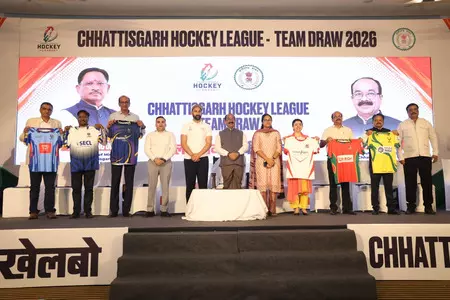
Rajdhani Royals to face Nyayadhani Knights in landmark first Chhattisgarh Hockey League
Digital Desk | Raipur, Oct 17 (IANS) Rajdhani Royals will be taking on Nyayadhani Knights in the first Chhattisgarh Hockey League as the tournament kicks off on October 22 at the Sardar Vallabhbhai Patel International Hockey Stadium here. The league is India's first official state hockey league and will feature a total of 18 matches with six teams playing in the tournament. The final is set to take place on November 1 to crown the inaugural champion of the league. League Ambassador, Sardar Singh, highlighted that the league will help players from Chhattisgarh get a platform to prove themselves. The inception of the Chhattisgarh Hockey League is an initiative that sets the benchmark for everyone to follow, and Im confident that the hockey players from Chhattisgarh will benefit from this greatly, Singh said. He also emphasised that his role gives him the chance to nurture talent in Chhattisgarh. Becoming CHLs League Ambassador is a great opportunity for me to help Chhattisgarhs talented players develop into potential national and international stars. The eyes of the entire hockey fraternity is going to be on this league. All the squads are well balanced with the perfect mix of experience and raw talent. Im confident that the level of hockey on display in the inaugural season is going to be special, he added. The league is organised by the Sports and Youth Welfare Department, Government of Chhattisgarh. The tournament will see 132 aspiring and marquee players participating. The selection was held over extensive trials. The marquee players include India's Olympians Surender Kumar, Pradeep Mor, SV Sunil, Lalit Kumar Upadhyay, Shamsher and Chinglensana Singh Kangujam, headlining the six franchises. Apart from Rajdhani Royals and Nyayadhani Knights, the other franchises that will participate are Bailadila Bulls, Sanskardhani Strikers, Chakradhar Champions and Mainpat Titans. The squads were recently finalised and have covered representation from different regions of the state. The coaches and the assistant coaches were also announced recently. Check the support staff of the franchises: Nyayadhani Knights: Rajnish Mishra (Head Coach) Mrinal Choubey (Assistant Head Coach) Gopeshwar Kahara (Team Manager) Mainpat Titans: Rajinder Singh Jr. (Head Coach) Amitabh Manikpuri (Assistant Head Coach) Deepesh Choubey (Team Manager) Chakradhar Champions: Devesh Chauhan (Head Coach) Ravi Pareek (Assistant Head Coach) Dhaniram Yadav (Team Manager) Rajdhani Royals: Ajitesh Roy (Head Coach) Rashmi Sandhya Ekka (Assistant Head Coach) Anis Ahmed (Team Manager) Sanskardhani Strikers: Ajay Kumar (Head Coach) Anuraj Shrivastava (Assistant Head Coach) Yogesh Dwivedi (Team Manager) Bailadila Bulls: Md. Riyaz (Head Coach) Rakesh Toppo (Assistant Head Coach) Jahangir Khan (Team Manager) Check the complete fixtures: 22nd October: 5:30 pm: Womens Exhibition Match 7:30 pm: Rajdhani Royals vs Nyayadhani Knights 23rd October: 5:30 pm: Mainpat Titans vs Bailadila Bulls 7:30 pm: Chakradhar Champions vs Sanskardhani Strikers 24th October: 5:30 pm: Rajdhani Royals vs Chakradhar Champions 7:30 pm: Nyayadhani Knights vs Sanskardhani Strikers 25th October: 5:30 pm: Nyayadhani Knights vs Bailadila Bulls 7:30 pm: Rajdhani Royals vs Mainpat Titans 26th October: 5:30 pm: Sanskardhani Strikers vs Bailadila Bulls 7:30 pm: Chakradhar Champions vs Mainpat Titans 27th October: 5:30 pm: Nyayadhani Knights vs Chakradhar Champions 7:30 pm: Rajdhani Royals vs Sanskardhani Strikers 28th October: 5:30 pm: Nyayadhani Knights vs Mainpat Titans 7:30 pm: Rajdhani Royals vs Bailadila Bulls 29th October 5:30 pm: Sanskardhani Strikers vs Mainpat Titans 7:30 pm: Chakradhar Champions vs Bailadila Bulls 30th October: Rest day 31st October: 5:30 pm: Semi-final 1 League 1st vs League 4th 7:30 pm: Semi-final 2 League 2nd vs League 3rd 1st November: 7 pm: Finals

Shubman Gill Back In Ranji Trophy Action As Punjab Face Chhattisgarh
India's Test and ODI captain Shubman Gill's return to Ranji Trophy action for Punjab will be the main attraction when the second round of the domestic first-class tournament gets underway across the...

ECI orders Special Summary Revision of electoral rolls in 14 states and three UTs
The Election Commission (ECI) has ordered a Special Summary Revision of electoral rolls in 14 States and three Union Territories with the 1st of January next year as the qualifying date. These states and UTs are Andaman and Nicobar Islands, Assam, Bihar, Chhattisgarh, Goa, Gujarat, Kerala, Lakshadweep, Madhya Pradesh, Manipur, Puducherry, Punjab, Rajasthan, Tamil Nadu, []
Chhattisgarh to Launch Online Coaching for NEET-JEE in Surguja
Surguja district in Chhattisgarh will offer free online coaching for NEET and JEE aspirants from government schools, starting October 17. Chhattisgarh to Launch Online Coaching for NEET-JEE in Surguja
Reminding the Chief Minister that even schoolchildren were taking to the streets to voice their concerns in the State, Mr. Mahant wrote that such developments were a cause for concern not only for the government but for the entire State
Chhattisgarhs Surguja District Launches Online Coaching for NEET and JEE Aspirants
Surguja District in Chhattisgarh introduces free online coaching for NEET and JEE to support students from government schools. Chhattisgarhs Surguja District Launches Online Coaching for NEET and JEE Aspirants

Chhattisgarhs Free Solar Power Scheme Transforms Lives in Dhamtari
The Prime Ministers free solar power initiative is significantly reducing electricity bills for residents in Dhamtari, Chhattisgarh. Chhattisgarhs Free Solar Power Scheme Transforms Lives in Dhamtari