



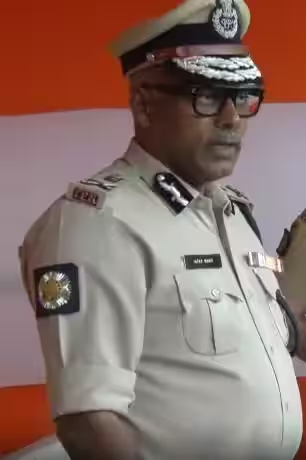
Kolkata police inspector suspended over alleged derogatory social media remark against Bengal CM
Digital Desk | Kolkata, Nov 10 (IANS)A Kolkata Police Inspector has been suspended pending an inquiry into allegations that he posted derogatory remarks against West Bengal Chief Minister Suvendu Adhikari on social media, a senior official said on Tuesday. According to an order issued by Kolkata Police Commissioner Ajay Nand, Inspector Ekhlaque Ahmed, who was serving at the Calcutta Medical College Hospital Out Post under the Central Division and was recently transferred to the 1st Battalion of the Kolkata Armed Police, has been placed under suspension with effect from November 9, 2026. The order said, Inspector Ekhlaque Ahmed, IVC, Calcutta Medical College Hospital Out Post, Central Division, Kolkata Police (since transferred to 1st Battalion, Kolkata Armed Police), is placed under suspension with effect from 09.11.2026 as his continuance in office pending enquiry into his conduct over the issue of making derogatory remarks indicating the Government Authorities of West Bengal, on a social media platform, is prejudicial in the interest of public service. It further said that the Inspector will draw half of his basic pay and other admissible allowances as subsistence allowance during the period of his suspension. The order also asked him to deposit his government kits with the Reserve Officer, Central Division, Kolkata Police, immediately. According to a police officer, a complaint was lodged against the officer over certain recent social media posts and comments allegedly targeting Chief Minister Suvendu Adhikari. Following the complaint, authorities initiated an investigation to examine the nature of the remarks and whether they were inconsistent with the conduct expected from a serving police officer. The officer had earlier been transferred from the Central Division to the Kolkata Armed Police after the controversy surfaced. Officials said the transfer did not affect the ongoing inquiry, which continues independently. Authorities maintained that allowing the officer to remain in active service during the investigation could be contrary to the public interest. Given the seriousness of the allegations, disciplinary action in the form of suspension was deemed necessary until the inquiry reaches its conclusion.
Kolkata Police inspector suspended over 'derogatory' remarks against Bengal government, CM
The suspension order, issued by Police Commissioner Ajay Kumar Nand, said his alleged remarks on a social media platform, indicating derogatory views about the West Bengal government, were prejudicial in the interest of public service
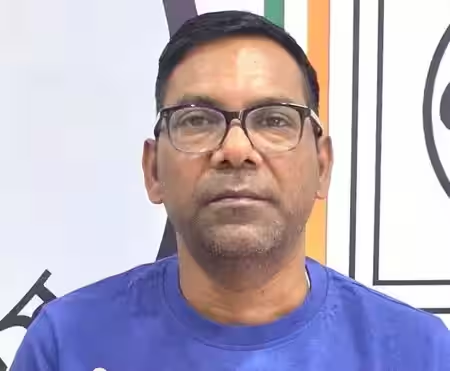
11 high-end phones, Rs 2 lakh seized from Trinamool MLA during arrest at airport
Digital Desk | Kolkata, Nov 10 (IANS) The sleuths of the Special Operations Group of Baruipur Police District in South 24 Parganas district in West Bengal seized 11 high-end mobile phones and Rs 2,00,000 in cash from a Trinamool Congress Legislator at Netaji Subhas Chandra Bose International Airport in Kolkata on Monday evening. Pares Ram Das, the Legislator from Canning (Paschim) Assembly Constituency in the same district, was attempting to escape to Mumbai, at the time of his arrest. Among the 11 mobile phones seized from his possession, some are extremely high-priced iPhones, while others are high-end Android phones of other reputed brands. At the same time, Rs 2,00,000 was recovered from the handbag he was carrying, said a district police officer. Das had been accused in various cases, the most important of which is related to the charge of rape of a woman in 2023. He is one of the few Trinamool Congress legislators who are still maintaining allegiance towards former West Bengal Chief Minister, Mamata Banerjee, and her nephew, Abhishek Banerjee. He had remained absconding for the last 17 days and was not responding to the summons from the Criminal Investigation Department (CID) of the state police. Finally, the members of the Special Operations Group of the Baruipur Police District were tipped off by their sources that Das would be making an escape attempt to Mumbai from Kolkata Airport on Monday evening. Accordingly, the members of the Special Operations Group waited within the airport premises, and as soon as the absconding accused entered the airport, he was arrested. He will be presented at a lower court later on Tuesday, and the Public Prosecutor will seek his police custody for further interrogation. Neither Mamata Banerjee nor Abhishek Banerjee had given any reaction to the arrest of Das since Monday evening. The investigation into the rape originates from a complaint filed in September this year with the Sub-Divisional Police Officer of Canning. Das is an accused in Canning Police Station Case No. 561/2026, registered on September 5, 2026, under Sections 376 (rape), 323 (voluntarily causing hurt), 420 (cheating), 120B (criminal conspiracy), and 506 (criminal intimidation) of the previous Indian Penal Code.
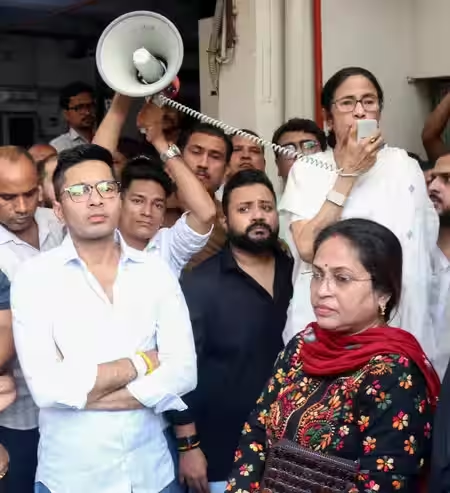
Digital Desk | Kolkata, Nov 10 (IANS) The Detective Department (DD) of Kolkata Police has taken over the investigation into the clashes and tension that erupted outside the Kalighat residence of Trinamool Congress National General Secretary and Diamond Harbour MP Abhishek Banerjee on the night of November 6-7. The police have already arrested three persons in connection with the clashes, and on Tuesday morning the Detective Department officials visited the spot to reconstruct the sequence of events as part of the ongoing investigation. The arrested individuals, identified as Muhammad Tauqir Alam, Muhammad Ershad and Srideep Das, are in police custody now. They are associated with the minority faction of Trinamool Congress led by former West Bengal Chief Minister Mamata Banerjee and her nephew Abhishek Banerjee. A total of four FIRs have been registered at the Kalighat Police Station, out of which two were suo motu by the Kolkata Police. The third FIR is based on a complaint by the Diamond Harbour MP. The fourth FIR had been registered based on a complaint lodged at the same police station by a local woman and a BJP activist, Guria Hari. Diamond Harbour MP Abhishek Banerjee has been named in two of the four FIRs registered in the case. The clashes broke out during celebrations marking the MP's 39th birthday on the intervening night of November 6 and November 7. Local residents and BJP workers alleged that roads were blocked for the event, causing inconvenience to idol-makers and devotees collecting Kali idols ahead of Kali Puja. However, the MAITC activists alleged that the local BJP workers launched an unprovoked attack while they were celebrating Abhishek's birthday peacefully without causing inconvenience to others. Clashes broke out between the two groups, in which several people from both groups were injured. A huge police contingent reached the spot, and the cops had to resort to baton charges to disperse people. At that time, the Diamond Harbour MP was seen engaging in a heated conversation with police officers.
Dilip Ghosh Criticizes Rahul Gandhis Statements as Meaningless
West Bengal Minister Dilip Ghosh dismisses Rahul Gandhis remarks, asserting they have no impact on the public or political discourse. Dilip Ghosh Criticizes Rahul Gandhis Statements as Meaningless

Firecrackers Kill Germs, Critics Target Sanatan Dharma? Bengal BJP's Diwali Double Twist
In West Bengal, firecrackers appear to have acquired a rather ambitious job description this Diwali. Apart from lighting up the night sky, they were credited with killing germs, while those raising concerns over the resulting pollution were accused of having a

Sonia Gandhi's memoirs Belonging: A Journey of Love has hit the bookstores across the country on Tuesday. According to publisher Harper Collins India, the memoir is being released across several bookstores nationwide, including Higginbotham in Chennai, Bahrisons and Midland in Delhi, The White Crow and Title Waves in Mumbai, Mathrubhumi Books in Kerala, Blossoms and The Bookworm in Karnataka, and Crossword outlets across Maharashtra, Karnataka, Delhi-NCR, Telangana, Tamil Nadu, West Bengal, Gujarat and Kerala. On Tuesday, the CPP Chairperson shared excerpts of her newly released memoirs. Posting an article written in the Indian Express, Sonia Gandhi referred to her refusal to take on the mantle of Prime Minister when the UPA government was voted to power in 2004. In her post on X she shared, My mind suddenly cleared itself of the last shreds of doubt.
Bengal Minister Assures Womens Safety Amid Criticism of Previous Government
West Bengal Minister Nisith Pramanik emphasizes womens safety, contrasting current measures with past government failures. Bengal Minister Assures Womens Safety Amid Criticism of Previous Government

5 Hyderabad Fertility Centres Get Notices Over Egg Donation Racket
The police had rescued women who were brought from West Bengal, Chhattisgarh, Delhi, Assam, Uttar Pradesh, Jharkhand and Odisha.

300 arrested, 73 brought back in a year
New Delhi, Nov 9:As the first anniversary of the brazen Red Fort blast approaches, central security agencies have tightened vigilance nationwide, backed by a fortified counterterrorism architecture and a sweeping crackdown on cross-border terror syndicates over the past year, officials said on Monday. On the eve of the first anniversary of the Red Fort blast, central security agencies have intensified vigilance following a year-long crackdown that led to over 300 arrests and the deportation of 73 high-value fugitives from abroad, the officials said. The terror strike on November 10 last year had exposed a 'Doctor Module' operated by highly educated professionals. Security agencies cracked the case within 24 hours, subsequently filing a formal charge sheet against 13 accused, including absconding paediatrician Dr Muzzafar Rather, who is currently believed to be hiding in Afghanistan. Central investigation agencies and Jammu and Kashmir police, with the help of the National Investigation Agency (NIA), identified the principal conspirator and nabbed the key perpetrators. The Red Fort blast prompted central intelligence agencies to formulate a policy to prevent such attacks. This thought led to the unveiling of 'PRAHAAR: National CT Policy and Strategy' on February 23 this year, in which policy was formulated for zero tolerance towards terrorism. The comprehensive policy sets a unified agenda for central and state machinery and its operational impact was further cemented during a high-level conference of state DGPs and central agency chiefs in September 2026. The efficacy of the PRAHAAR framework was visibly demonstrated in a massive, coordinated nationwide clampdown against the Pakistan-based ISI-backed Shahzad Bhatti Network (SBN). The Red Fort case was unique because highly qualified professionals were involved. Now, many regulations are in place, including periodic surprise checks on the sale of ammonium nitrate and other materials, an official said on condition of anonymity. The network, which utilised domestic nodes and local foot soldiers, faced severe setbacks as agencies registered over 100 First Information Reports (FIRs) and arrested more than 300 operatives. Security forces recovered improvised explosive devices (IEDs), hand grenades carrying Pakistan Ordnance Factory markings, and illicit firearms. Following these extensive operations, the SBN was formally designated as a terrorist organisation under the Unlawful Activities (Prevention) Act (UAPA) on September 26 this year. Concurrently, multi-agency operations successfully dismantled several radical modules and dented the support frameworks of proscribed outfits such as Jaish-e-Mohammed (JeM) and Lashkar-e-Taiba (LeT). Action against pro-Khalistan elements (PKEs) has similarly blunted the network designs of outfits like Babbar Khalsa International and Khalistan Zindabad Force, disrupting cross-border arms smuggling and leading to key arrests. The security agencies also stepped up containment of Bangladesh-based terror threats, arresting 27 radical operatives inspired by the Jamaat-ul-Mujahideen Bangladesh (JMB) ideology across Assam, West Bengal, Tripura, Tamil Nadu and Kerala. On the diplomatic and international front, counterterror cooperation with foreign governments has been significantly scaled up to cut off external sanctuaries and fast-track the deportation of fugitives. A dedicated extradition portal launched in September this year optimised inter-agency coordination. The officials confirmed that these sustained diplomatic efforts successfully secured the return of 73 high-value fugitives from abroad over the past year. As security forces maintain a high state of alert ahead of the anniversary, officials emphasise that the enhanced synergy between central intelligence and state police forces has substantially hardened the nation's defences against future threats. The emphasis has remained on preventing terror attacks, identifying the wider ecosystem, quick disruption, timely investigation including collection of clinching evidence - and successful prosecution to tackle the threats, the officials said. The investigation into the entire Red Fort terror network run by the 'Doctor Module' started after posters of the banned Jaish-e-Mohammed terror outfit were pasted on the outskirts of Srinagar city during the intervening night of October 18-19 last year. The posters warned of attacks on police and security forces in the Valley. Srinagar police treated the matter as a serious issue, not just a one-off incident and Senior Superintendent of Police (Srinagar) G V Sundeep Chakravarthy formed several teams to investigate the case thoroughly. Srinagar police registered a case and reviewed CCTV footage, leading to the arrest of three locals -- Arif Nisar Dar alias Sahil, Yasir-ul-Ashraf, and Maqsood Ahmad Dar alias Shahid -- all with prior stone-pelting cases. Their interrogation led to the arrest of Maulvi Irfan Ahmad, a former paramedic turned Imam from Shopian, who allegedly supplied the posters and used his access to radicalise the doctors. Piecing together the interrogation of the arrested accused, the investigation led Srinagar police to Al Falah university in Faridabad. There, two doctors Dr Muzammil Ahmad Ganaie alias Musaib, a resident of Koil in South Kashmir's Pulwama and Dr Shaheen Sayeed, a woman hailing from Lucknow - were arrested and a huge quantity of arms and ammunition, including 2,900 kg of ammonium nitrate, potassium nitrate and sulphur, was seized. Aware of the crackdown by the police and central agencies, Dr Umar-un Nabi, driving an explosive-laden car, started shifting his base to avoid arrest. Nabi, a 28-year-old doctor from Pulwama, emerged as the most radicalised and key operative in the network spanning Kashmir, Haryana, and Uttar Pradesh, and officials believe he was planning a powerful Vehicle-Borne Improvised Explosive Device (VBIED) blast timed around the Babri Masjid demolition anniversary on December 6 last year. However, his plan was to place a VBIED near a crowded place either in the national capital or at a site of religious importance, and then disappear, the officials said. Authorities are closely monitoring the radicalisation of youth and have been asked to flag any noticeable behavioural change in any individual immediately, said the official cited above. It may be recalled that Dr Rather and Dr Nabi reportedly held radical views even during their student days; however, both managed to stay under the radar at that time. According to the co-accused's interrogation, Nabi's transformation took a dangerous turn after a 2021 trip to Turkiye with co-accused Dr Muzammil Ahmad Ganaie, where they allegedly met JeM overground workers. Following the trip, Nabi and Ganaie, who taught at Faridabad's Al Falah University, began accumulating vast quantities of chemicals from the open market, including ammonium nitrate, potassium nitrate, and sulphur. Much of this was stored near the university campus. That plot fell apart when a meticulous investigation resulted in the arrest of many from the 'Doctor Module' and seizure of explosives, causing panic to Nabi and ending in a premature blast outside the Red Fort, killing over a dozen people.

Postpone panchayat, municipal elections to April-May next year: Ladakh group
We suspect that this government is up to some mischief. We saw vote chori in West Bengal, Bihar, Haryana, Maharashtra etc. In entire India 13 crore voters were dropped from the voter list. Ladakh is a small region and fraud is easy, said Ladakh Buddhist Association (LBA) chairman Tsering Dorjey Lakrook
Raiganj rape-murder suspect 4th to be killed in encounter since July in West Bengal
12 fire incidents in Kolkata: NRS Med College & Hosp hostel & Beleghata building affected
Fire at shop near Kolkata Durga Puja stampede spot on Diwali
Cracker sets fire to 24th-floor flat in Sector V
FIR against man for running water racket
SSC nod for 79 teachers for special upper primary counselling
Govt guidelines for standardised medical practices
Bengali Indie film wins award at film festival in Siberia
SRFTI alumni in Tollywood divided over protest
Focus on sustainability at schools puja event
Bypass racing claims two on Diwali night in Kolkata
KMC morning garbage volume rises by 15%, follows spike in cracker use across city
KP boosts security as immersions see noise violations
Roopa appeals for cop help, Agnimitra hits streets as banned crackers shake city
9 months on, KMC panel may meet this week, decide on big realty projects
74 to 409, 115 to 444 in 2 hours: AQI spike reflects Kols descent
Siliguri AQI sees sharp spike on Diwali night
After night of missing strays, some reunited with their humans
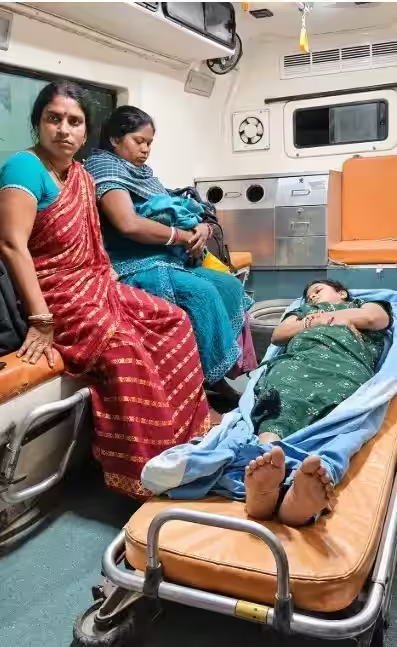
NFRs RPF rescues eight children, assists two women during childbirth
Digital Desk | Guwahati, Nov 9 (IANS) The Railway Protection Force (RPF) of the Northeast Frontier Railway (NFR) rescued eight children, including six boys and two girls, from different locations across its jurisdiction and provided assistance to two women during childbirth, railway officials said on Monday. The RPF also apprehended four persons and made recoveries valued at approximately Rs 2.08 crore during various operations, the officials added. NFRs Chief Public Relations Officer (CPRO) Kapinjal Kishore Sharma said that the eight children were rescued at Rangiya, New Bongaigaon, Katihar (in Bihar), New Jalpaiguri (in North Bengal) and Guwahati railway stations between November 4 and 6. During the same period, RPF personnel provided medical assistance to two women who gave birth aboard trains at Agartala and Lumding. Sharma said that the RPF personnel and the Sashastra Seema Bal rescued a girl aboard at Rangiya and handed her over to the Government Railway Police on November 4. At New Bongaigaon, personnel rescued another girl and placed her in the care of the Sakhi One Stop Centre. Teams also rescued one boy each at Katihar, New Jalpaiguri and Guwahati on November 4. On November 6, the RPF personnel rescued two more boys at Rangiya and one at New Jalpaiguri. All six boys were entrusted to child protection agencies for further care, the CPRO said. In another incident on November 4, RPF personnel at Agartala assisted a passenger who gave birth to a boy aboard a train. An ambulance took her to hospital in Agartala for further care. On November 5, a lady head constable and a team from the Railway Protection Force assisted a passenger who gave birth to a baby girl aboard a train at Lumding Railway Station. In separate security operations, the teams apprehended four persons in four cases. They recovered four pistols and four magazines at Badarpur, four pieces of fake gold valued at approximately Rs 20,000 at Harmuti, 1.031 kilograms of brown sugar valued at approximately Rs 2 crore at New Jalpaiguri and a stolen mobile phone valued at approximately Rs 17,000 at Kamakhya, near Guwahati. Other recoveries included 13.06 kilograms of ganja valued at approximately Rs 6.80 lakh and 449 bottles of liquor. A further 6,750 litres of liquor were seized at Katihar. Northeast Frontier Railway remains committed to safeguarding children and providing timely assistance to passengers through close coordination with police, healthcare providers and child protection agencies, an official statement said. The Northeast Frontier Railway (NFR), headquartered at Maligaon near Guwahati, operates across the Northeastern states as well as in seven districts of West Bengal and five districts of North Bihar.
A political row has erupted in West Bengal after the prime accused in the alleged rape and murder of a 12-year-old girl in Raiganj was killed in a police encounter. Police said Dilip Roy opened fire on the team sent to arrest him, prompting retaliatory firing.
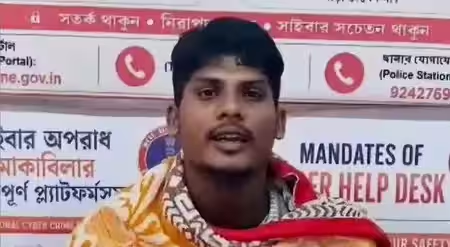
Bangladeshi national travels to Bengal to return lost smartphone
Digital Desk | Kolkata, Nov 9 (IANS) In a rare display of cross-border honesty and law enforcement coordination, a Bangladeshi citizen travelled to West Bengal to return an expensive smartphone that had been stolen in India and smuggled into Bangladesh, police said on Monday. The mobile phone was originally reported missing on June 30 from the premises of Burdwan Medical College and Hospital. The owner, Payel Dhara, a resident of Bankura district, lodged a formal complaint with the Burdwan police station, triggering an investigation. Using technical surveillance and cyber cell tracking, police sleuths traced the device's International Mobile Equipment Identity (IMEI) signal across the international border into Bangladesh. Investigators made a breakthrough when the buyer, identified as Mohammad Ahad Ali, a resident of Rajshahi district in Bangladesh, inserted an Indian SIM card into the handset while visiting India for medical treatment. The cyber cell picked up the active location and established direct contact with him. Upon being informed by the Burdwan police that the handset he had purchased from a local shop in Naogaon district was stolen property, Ahad offered his full cooperation. On Monday, he personally visited the Burdwan police station carrying his passport and visa to hand over the device to law enforcement officials. I did not know that the phone was sold in Bangladesh like this, Ahad stated. I bought it from a shop. The police contacted me. I came to India with my passport and visa and submitted the phone to the police station. Commending the visitor's integrity and assistance, the Burdwan police noted that the operation highlights the efficacy of cross-border technical tracking in criminal investigations. Authorities confirmed that legal formalities are underway to restore the smartphone to its rightful owner.
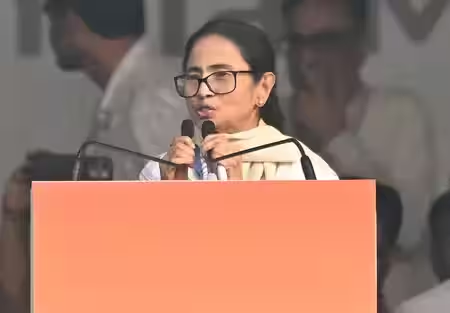
Delhi Police issues notice to Mamata Banerjee in 13-year-old heckling case
Digital Desk | Kolkata, Nov 9 (IANS) The Delhi Police on Monday served a notice for interrogation to former West Bengal Chief Minister Mamata Banerjee in connection with a 2013 criminal case registered at the Parliament Street Police Station in the national capital. Investigators seek to question the former Chief Minister as a witness in the case, which pertains to a violent protest demonstration staged in front of Banga Bhavan in New Delhi, where government officials were allegedly assaulted. A team from the Delhi Police, accompanied by personnel from the local Kalighat Police Station, arrived at Banerjee's official residence at 30B Harish Chatterjee Street in South Kolkata on Monday to deliver the notice. The document, delivered in a white envelope, was received by Subhasish Chakraborty on her behalf. Sources aware of the development confirmed that the notice asks Banerjee to travel to New Delhi at her convenience to meet investigating officers as a witness under Section 160 of the Code of Criminal Procedure (CrPC). The case dates back to April 2013, when activists belonging to the Students' Federation of India (SFI) - the student wing of the CPI(M)-staged a protest outside New Delhi's Banga Bhavan following the death of SFI activist Sudipta Gupta in Kolkata earlier that year. During the demonstration, the then West Bengal Finance Minister, Amit Mitra, was reportedly heckled and physically assaulted by protesters. The agitation was led by the then SFI General Secretary Ritabrata Banerjee, who currently serves as the Leader of the Opposition in the West Bengal Legislative Assembly. Following the incident, a formal complaint was registered at the Parliament Street Police Station on April 9, 2013. Thirteen years after the event, the Delhi Police issued the summons to Mamata Banerjee, noting that she was present in the national capital alongside Mitra when the assault occurred.
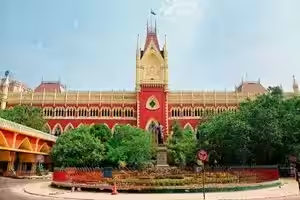
B.Ed colleges approach Calcutta HC over Bengal govts admission freeze
Digital Desk | Kolkata, Nov 9 (IANS) Around 57 Bachelor of Education (B.Ed) colleges in West Bengal have moved the Calcutta High Court, challenging the state governments decision to halt their admission process for failing to meet prescribed eligibility criteria. An official confirmed on Monday that the petition is likely to be taken up for hearing on Tuesday. The petitioner colleges claimed that the authorities issued no explicit notice outlining the specific reasons behind stopping their admissions. The legal challenge follows the recent publication of an official list identifying institutions ineligible for affiliation renewal for the 2026-27 academic year. State authorities stated that 205 listed colleges failed to meet requisite infrastructure and administrative standards, barring them from admitting new students for the 2026-28 session. The government noted, however, that institutions resolving their infrastructure and faculty shortages could re-apply to prove eligibility for the 202729 academic cycle. The move comes amid a broader regulatory crackdown. State Higher Education Minister Jagannath Chattopadhyay previously affirmed that the commercialisation of education would not be permitted and that academic quality must be strictly maintained. Consequently, the Higher Education Department and the Technical Education Department conducted joint inspection drives across B.Ed, ITI, Polytechnic, and Pharmacy colleges. In the initial phase of the drive, 156 B.Ed colleges were cleared for admissions, while 415 colleges failing to satisfy the criteria were issued 21-day show-cause notices to rectify deficiencies. Nine institutions failed to respond to the notices. Following a second round of inspections, 237 B.Ed colleges received approval to admit students for 202627, while the remaining 205 non-compliant institutions were barred from enrolling fresh batches.

Mamata Banerjee gets Delhi Police notice in 13-year-old case, asked to appear as witness
The Delhi Police on Monday issued a notice to West Bengal's former Chief Minister Mamata Banerjee, asking her to join investigation and record her statement in connection with a case registered at the Parliament Street...

BJP MLA says crackers kill germs, clarifies after row
West Bengal BJP MLA Papiya Adhikari has defended her controversial statements about firecrackers killing germs and viruses, claiming her words were twisted for TRP. She clarified that she was referring to traditional beliefs about firecrackers during Diwali-Kali Puja. Adhikari also alleged political opponents were using her statements and noted reduced firecracker use in her constituency this year.
Rape-Murder Accused Killed In West Bengal Police Encounter
A man accused of raping and murdering a 12-year-old girl in West Bengal's Uttar Dinajpur district was killed in a police encounter early on Monday. Dilip Roy allegedly opened fire at a police team attempting to arrest him, leading to police retaliation. This marks the fourth reported police encounter in West Bengal since the BJP came to power in May, with Chief Minister Suvendu Adhikari stating police are allowed to retaliate in self-defence in certain cases.
Same excuse repeatedly peddled after every encounter
Congress leader Adhir Ranjan Chowdhury on Monday strongly criticised West Bengal Chief Minister Suvendu Adhikari's remarks defending the police encounter in the Raiganj rape and murder case, accusing the state government of encouraging a

Crackers cure diseases: BJP MLA Papia Adhikary retracts claim
Kolkata: Facing backlash for crediting firecrackers with curing some diseases, BJPs MLA from Tollygunge in West Bengal, Papia Adhikary, on Monday, November 9, sought to take her statement back. Speaking to ANI, she said, There is an old saying from our ancestors regarding these traditions. In essence, this is a festival of lightsa festival of Get the latest updates in Hyderabad City News , Technology , Entertainment , Sports , Politics and Top Stories on WhatsApp & Telegram by subscribing to our channels. You can also download our app for Android and iOS .

2 New Coast Guard Hovercrafts In West Bengal
The two hovercrafts reached the ICG hoverport at Haldia on November 7. They are scheduled for commissioning shortly. Built by M/s Chowgule and Company Pvt Ltd in Goa under the Government of Indias vision of Aatmanirbhar Bharat, these state-of-the-art vessels represent a major step towards enhancing the operational capabilities of the ICG
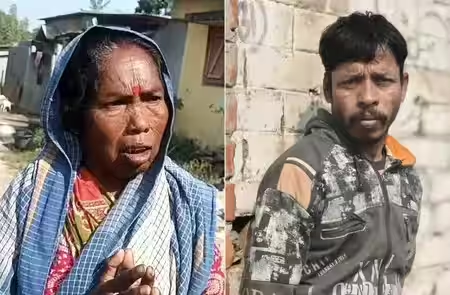
Bengal: Mother refuses to attend last rites of son killed in Raiganj encounter
Digital Desk | Kolkata, Nov 9 (IANS) The mother of Dilip Roy, the prime accused in the alleged rape and murder of a 12-year-old girl in West Bengal's North Dinajpur district, who was shot dead in a police encounter in Raiganj, on Monday stated that she would not attend her son's final rites. Speaking to media persons, Chania Roy expressed deep shame over her son's actions, stating, It is better not to have such a sinful son; I will not even go to the crematorium. She added, He has done such a thing; he is no longer in a position to show his face in the village. He is gone. It is good. That's what I want. Describing him as her only son, Chania Roy said he had left home at a very young age and maintained little contact with his family, offering no support to his ageing father. She noted that the grief of losing a child was completely overshadowed by the heinous nature of the crime. Residents revealed that allegations against Dilip were not unprecedented. Sixteen years ago, he was accused of physically abusing the six-year-old daughter of a relative, which caused widespread outrage in the village. At that time, neighbours attacked his home and assaulted him, following which Dilip sold one katha of his mother's land to pay compensation to the victim's family. A resident remarked that such severe crimes cannot be forgiven and that justice had been served. Dilip Roy was killed during the intervening night of Sunday and Monday after police launched a raid near Gauri Gram Panchayat around 3 a.m., following a tip-off that he was attempting to flee across the nearby Bihar border. According to law enforcement officials, officers moved to arrest Roy after tracking his whereabouts, but the accused opened fire on the raiding team. Police retaliated in self-defence, inflicting fatal injuries. Roy was transported to Raiganj Medical College & Hospital, where he was pronounced dead, with an autopsy scheduled for later in the day. The encounter follows the recovery of the victim's semi-decomposed body on November 6 from the nearby Kulik forest, two days after the 12-year-old went missing on November 3 after leaving her home on a bicycle. This incident marks the fourth fatal police encounter in West Bengal since July this year, three of which involve cases related to the rape and murder of minors.
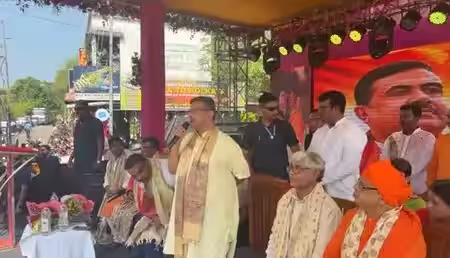
Bengal CM defends Raiganj encounter, warns rapists and criminals of similar action
Digital Desk | Kolkata, Nov 9 (IANS) West Bengal Chief Minister Suvendu Adhikari on Monday defended the police encounter in which a rape and murder accused, Dilip Roy, was killed in Raiganj. The Chief Minister asserted that law enforcement agencies have been given a free hand to deal with those involved in heinous crimes against women. Dilip Roy was accused of raping and killing a 12-year-old girl on the intervening night of Sunday and Monday at Raiganj in North Dinajpur district of West Bengal. CM Adhikari also cautioned that in the future too, criminals involved in such heinous crimes against women will meet a similar fate. The cops are provided with firearms not just to keep them as a showpiece or to keep them in their pockets. Drug mafias, rapists, and infiltrators have no place in this state, the Chief Minister said while interacting with the media persons on Monday afternoon at the sidelines of a programme at Digha in his native district of East Midnapore. He also indirectly attacked those who are raising their voices against such encounters. Some people are continuing with such activities. Among them are 'Dimagi Naxals', Jamaatis' and Communists'. There are cockroaches and bedbugs. Our nationalists have to be careful about them. The police have been given free hand to tackle rapists & murderers, drug smugglers and infiltrators. We are maintaining a zero-tolerance approach in such cases, the Chief Minister said. Meanwhile, the North Dinajpur District Police claimed that the accused killed in the encounter have a history of crime against women. Earlier, he was accused twice of sexual offenses. However, he managed to escape arrest and punishment on both occasions for some reasons, said a district police officer. According to him, three years back, Roy was accused of sexual harassment at Kamtabari-2 Gram Panchayat area in the North Dinajpur district. A couple of years ago, there were similar allegations against him in the Sialmani area in the same district. On both these occasions, the matter was settled at a local Kangaroo Court, and the complaint did not reach the police level, the district police officer said. This is the fourth encounter killing in West Bengal since July this year, three of which are related to minors' rape & murder cases. First, in July, Prabhas Mondal, accused of raping and murdering a six-year-old girl in Baruipur in South 24 Parganas, was shot dead by the police in an encounter. The police claimed that he was taken to the crime scene to reconstruct the crime. From there, he snatched the police gun and opened fire. The police resorted to counter-firing in self-defence, killing the accused. After that, in October, Prahlad Das, accused in the rape & murder of a 17-year-old girl at Gaighata in South 24 Parganas district, was killed in a similar encounter following retaliatory firing by the police. In this case too, it was alleged that the accused tried to escape while reenacting the incident. On the same day, Samiul Sheikh, who was arrested for murdering a BJP worker in Samserganj in Murshidabad district, was killed in an encounter. The Raiganj incident is the fourth on the list of encounters since July.

Delhi-Varanasi-Guwahati: India's North Bullet Train Corridor Plan | Route, Stops & Travel Time
Indias proposed North Bullet Train Corridor is set to connect Delhi with major cities across Uttar Pradesh, Bihar, West Bengal and Assam, extending up to Guwahati. Railway Minister Ashwini Vaishnaw has shared indicative travel times, including 59 minutes between Delhi and Agra, 3 hours and 33 minutes between Delhi and Varanasi, and around six hours between Delhi and Siliguri. Assam Chief Minister Himanta Biswa Sarma has said the Delhi-Guwahati journey could take less than eight hours. The proposed route also includes the strategically important Chicken Neck corridor. However, the project remains at the planning stage, with its final alignment, stations, construction schedule and detailed project report yet to be finalised.

WB HS 3rd Semester Final Answer Key 2027 Released; Download Subject-Wise PDF
The West Bengal Council of Higher Secondary Education (WBCHSE) has released the WB HS 3rd Semester Final Answer Key 2027 for students who appeared in the Higher Secondary (HS) 3rd Semester Examination. Candidates can now access and download the
Rs 11.5 Crore Army Supply Fraud Busted In Assam
Assam Police have dismantled an interstate financial fraud network that swindled a Guwahati-based company, Global Traders, out of over Rs 11.5 crore. The fraudsters impersonated Army suppliers and officers using forged documents. One alleged mastermind, Harsh Agarwal, has been arrested from Siliguri, West Bengal, and over Rs 2 crore has been frozen as investigations continue.
Fact-Check: Unrelated Videos Falsely Linked to Recent Attack on BSF in Tripura
We found that both videos are from West Bengal and are unrelated to the recent attack on BSF personnel in Tripura.

WB HS 3rd Semester Final Answer Key 2027 PDF released, check details
The West Bengal Council of Higher Secondary Education (WBCHSE) has declared the WB HS 3rd semester final answer keys 2026-27. Students can download the answer key PDF at official website

Two men arrested in Rajasthan, West Bengal for cybercrimes targeting Chennai residents
The Cyber Crime Police, East Zone arrested a man in Rajasthan for allegedly cheating a Chennai-based businessman by promising high returns through an online trading platform and a man in West Bengal for allegedly cheating a Chennai resident by promising to provide a premium credit card with attractive benefits.
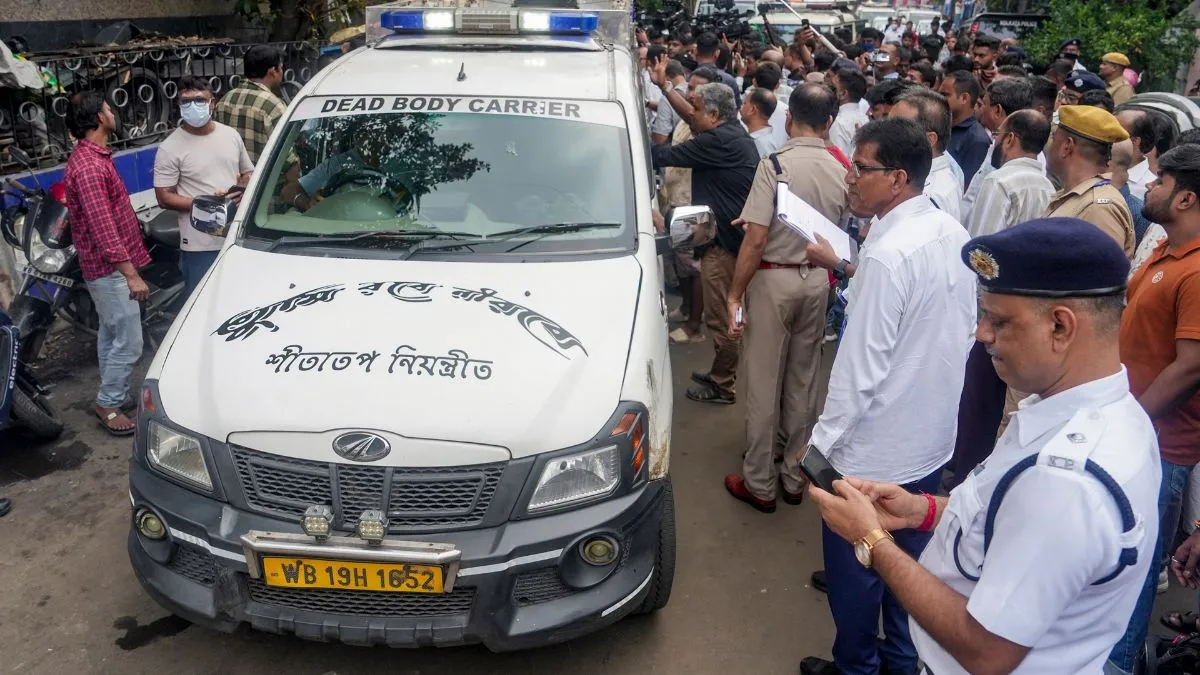
A man accused of raping and murdering his 12-year-old niece in West Bengal's Uttar Dinajpur district was killed in an exchange of fire with police early on Monday (November 9). The accused, identified as Dilip Roy, allegedly opened fire at a police team during a raid near the Bengal-Bihar border, prompting personnel to retaliate in self-defence.

Cases booked on all seen attackers in Kalighat clash, West Bengal CM says
Those who tried to slap police, raised their fists and hurled threats have been booked under various sections. Police personnel were injured and were obstructed in discharging their official duty, says CM Adhikari
Rape-murder accused gunned down in Bengal; 4th encounter since BJP came to power
Dilip Roy, accused of raping and murdering his 12-year-old niece, was killed in an encounter with police. The incident occurred as police attempted to arrest him in the Raiganj area of West Bengal. Police stated that Roy opened fire on their team, prompting them to retaliate in self-defense. This marks the fourth police encounter since the BJP assumed power in West Bengal in May.
West Bengal HS Semester 3 Final Answer Key 2027 Out: Check Next Procedure
The WB HS Semester 3 final answer key has been released on the official website, wbchse.wb.gov.in. The result is expected to be released soon.
'I can't take it anymore': Govt doctor found dead in Kolkata hostel; kin alleges murder

Rape-murder accused killed in police encounter; fourth case in West Bengal since BJP came to power
Police had been on the lookout for Dilip Roy for four days following the recovery of the girls decomposed, unclothed body from a forest near the Kulik river
Bikers snatch mans phone on Camac Street in Kolkata
Cops probe assault on man after road rage in Kolkata
One family sticks to phanush tradition, another goes fireless
Papia Adhikari claims firecrackers cure diseases at Kali Puja event
Illegal crackers eat into Bazi Baazar sales
Dont stock up food for over 2 days: Food association tells restaurants in Kolkata
Diwali gifts arrive without orders
WBRERA portal returns to life after 2-month outage but backlog causes logjam
Bengal forest dept starts shift to green-maroon colour code
Fewer Kolkata metro services on day after Diwali
Kids learn at school, work for a green fesival
At housing complexes, residents balance celebrations with safe-firecracker rules
Chorbagan lesson: Cops close crowd access to Barasat pandal
Engineer hacked to death, live-in partner, mom held
VB forms multiple panels for 6-day Poush Mela
SIT records statements in Chorbagan probe
Suvendu celebrates Diwali with forces along India-Bangladesh border, names new award
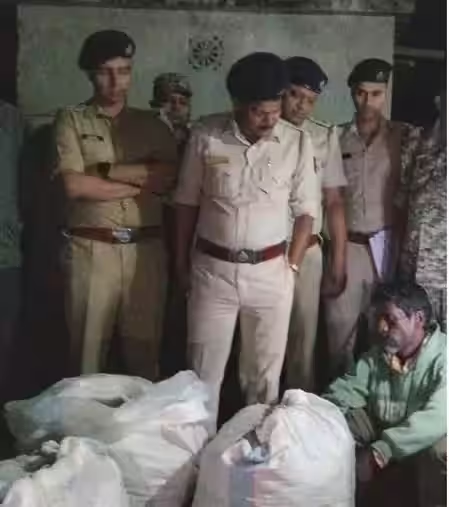
Digital Desk | Kolkata, Nov 8 (IANS) Huge quantities of marijuana and other narcotics substances were recovered by the West Bengal Police from two locations in two districts on Sunday, officials said. The first seizure took place early this morning at Chandipur village under Jhargram Police Station in Jhargram district, where the police seized three sacks full of marijuana. Being tipped off by their sources, the cops of Jhargram Police Station conducted a raid and search operation at the residence of a person named Biswajit Shil of Chandipur village. Initially, nothing was found in the house. However, during the detailed search, the police became suspicious after seeing the floor of the house, which was quite uneven after they started digging the soil. After removing the soil, three sacks were arranged in rows. After removing the soil, the police took out the sacks. When the sacks were opened, they saw huge quantities of marijuana packed there. An officer of the Jhargram Police station confirmed that a total of 43 kg and 222 gm of marijuana were recovered from the three sacks. Jhargram Sub-Divisional Police Officer (SDPO) Rishabhraj Dev said that Biswajit has been arrested and has been booked under the Narcotic Drugs and Psychotropic Substances (NDPS) Act, 1985. In a separate development, the state police arrested one person at Lalgola in Murshidabad district on Sunday with 324 gm of heroin in his possession. The estimated price of the narcotics seized from his possession is around Rs 37 lakh. The person arrested in this connection had been identified as Muhammad Mahfuz Alam. The police have also seized his mobile phone and motorcycle. He is currently being questioned, and the investigating officers are trying to squeeze information from him about his aides in the racket. He had also been booked under the NDPS Act, 1985. On Saturday, Chief Minister Suvendu Adhikari issued a social media message complementing the roles of West Bengal Police and Kolkata Police of busting organised narcotics rackets in different parts of the state. In his social media message, the Chief Minister claimed that the Bharatiya Janata Party (BJP) government maintained a zero-tolerance policy against illicit narcotics. During a statewide Special Drive conducted from October 31 to November 7, our law enforcement forces achieved decisive results, making 378 arrests across 212 NDPS cases and seizing illicit narcotics valued at Rs 64 crore (along with Rs 17 lakh in cash) and disposed of seized drugs worth Rs 101 crore, CM Adhikari said. During the same period, the Chief Minister claimed that the police destroyed illicit marijuana cultivation to the tune of 10,000 kg and attached Rs 1 crore in property and launched 68 financial probes against 110 accused. I commend our police personnel for their relentless commitment to keeping West Bengal safe and drug-free in line with the #NashaMuktBharat Abhiyan, he added.
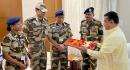
West Bengal to institute 'Seema Mitra' award for BSF, SSB, police personnel from 2027: Suvendu
A selection committee would be constituted to decide the awardees, he said, while addressing BSF personnel at a border outpost in Hingalganj in North 24 Parganas district, which shares a boundary with Bangladesh
Bengal's push to bring workers home raises concerns in Keralam
Building contractor Vijayakumar is keenly awaiting the return of his expert worker, a native of Murshidabad district in West Bengal, after he left for home to celebrate Durga Puja. Only, the worker's return remains uncertain now. The uncertainty stems from an appeal by West Bengal Chief Minister Suvendu Adhikari asking workers to stay back, citing livelihood opportunities under the VB-G RAM G scheme, which guarantees 125 days of work and enables them to earn a livelihood while living with their families. His employee in question has been working in the construction sector in Keralam for years. He left for his native village a few weeks ago to celebrate Durga Puja. He is an expert in building houses in the traditional Keralam style, according to Vijayakumar, from Veliyanadu village in this district. The West Bengal government's announcement has triggered anxiety in Keralam, which depends heavily on migrant workers across several sectors, particularly construction, where their service
Mamata Banerjee Offers Prayers At Kali Puja Pandal In Kolkata
ormer West Bengal Chief Minister Mamata Banerjee visits a Kali Puja pandal near her residence in Kalighat, Kolkata, and offers prayers during the festive celebrations.
Rajnath Singh Celebrates Diwali With IAF Personnel At Bagdogra
Defence Minister Rajnath Singh celebrates Diwali with Indian Air Force personnel at Bagdogra Airport in West Bengal, as IAF air warriors sing songs during the festive gathering.
FairPoint: A mother's defence cannot hide a son's electoral failures
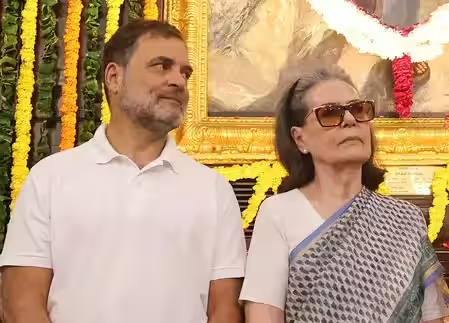
Digital Desk | New Delhi, Nov 8 (IANS) It is not uncommon for a mother to defend her child, whatever the circumstances. It is a deeply ingrained human instinct. So, when Sonia Gandhi says Congress and other Opposition parties have not had a level playing field since 2014, it appears to be little more than a mother coming to her son's defence. She says the BJP has a complete stranglehold over all institutions, particularly the Election Commission. The veteran leader also claims that the mainstream media has been controlled, and that the ruling party is using money power and exploiting religion. No doubt, this is a mother's explanation for her son's inability to gain power despite having been in politics and 'working so hard' since 2004, when Rahul Gandhi took the political plunge. A mother's defence of her son is understandable and, in many ways, even praiseworthy. But the repeated electoral defeats since she and, subsequently, her son took charge of the Congress party raise a much bigger question. Sonia Gandhi became the party president in 1998, several years after the death of Rajiv Gandhi in a major terror attack in Tamil Nadu on May 21, 1991. Since then, Congress has seen a steady decline, except once, in 2009, when it went past 200 in the Lok Sabha on its own. No matter whom she blames for the losses, the truth about the grand old party today is that its decline has been gradual, with each successive election taking it further down the political ladder. Over the past three decades, the party has struggled to retain its position as the country's dominant political force. In 2004, Congress won 145 of the 543 Lok Sabha seats, with a vote share of 26.53 per cent (10,34,08,949 votes). The BJP won 138 seats. Congress, along with its allies, formed the government at the Centre under the UPA banner, with outside support from the Left Front, the Samajwadi Party and the Bahujan Samaj Party. Sonia Gandhi became UPA chairperson, while Manmohan Singh took over as Prime Minister. It was also in 2004 that Rahul Gandhi entered active politics by contesting and winning his first Lok Sabha election from Amethi in Uttar Pradesh. He did not hold any ministerial portfolio or formal Cabinet position, but his political standing within the party was already significant. In 2009, Congress won 206 of the 543 Lok Sabha seats, gaining 61 seats over its 2004 tally. Its vote share rose to 28.55 per cent (11,91,11,019 votes). Sonia Gandhi continued as UPA chairperson, and Manmohan Singh remained Prime Minister in UPA-II. Rahul Gandhi, meanwhile, had become the General Secretary of the party in September 2007 and was given charge of the Indian Youth Congress (IYC) and the National Students' Union of India (NSUI). He was appointed Congress Vice-President on January 19, 2013, and, four years later, in December 2017, succeeded his mother as party president. The party lost power in 2014, and when the defeat was repeated in 2019, Rahul Gandhi resigned as Congress president, taking moral responsibility for the party's electoral performance. In a four-page open letter, he stressed that accountability was critical for the party's future and called upon the Congress Working Committee (CWC) to find his successor. Since Rahul began exercising considerable influence over the party's decision-making, particularly from 2009 onwards, Congress has reportedly lost 71 of the 83 Assembly elections it has contested. This is apart from its continued inability to return to power at the Centre. From being in power in 11 states in 2014, the party is now down to four. The success of any political leader is ultimately measured by electoral victories, and Rahul Gandhi's record falls woefully short. Considering his political lineage, his performance so far has been particularly disappointing. His great-grandfather Jawaharlal Nehru's Congress dominated the country's political landscape and ruled more than three-fourths of the states. His grandmother, Indira Gandhi, won three Lok Sabha elections, two of them with huge majorities, and under her leadership, Congress ruled over more than two-thirds of the states. Even his mother, Sonia Gandhi, did a commendable job, achieving what had seemed almost impossible. Despite the party being out of power at the Centre from 1996 to 2004, she managed Congress's return in 2004. Rahul Gandhi may no longer be the president of his party, but he continues to remain its principal power centre and de facto chief. No major or minor decisions are taken without his involvement and approval. So, when the party continues to slump, he cannot escape responsibility. Yet, he has failed to find the right strategy or take the necessary steps to arrest the decline, let alone bring about a revival. He has consistently failed to present an alternative model of governance. Instead, his principal political ammunition has been to demean Prime Minister Narendra Modi, launch personal attacks, question Indian democracy on foreign shores, and even hold meetings and parleys with individuals known for their anti-India positions. There has been little in the way of a positive political narrative or a credible governance model that the electorate can look forward to. His politics has largely revolved around attacking the ruling dispensation rather than presenting what a Congress government would do differently. What he has found instead is the SIR and 'vote chori' narrative. He tried hard to make it a major electoral issue in Bihar and West Bengal, but the results did not go his way. Despite the lack of any widespread public acceptance of these allegations, Rahul continues to raise the issue of vote theft. And standing firmly behind him is his mother, Sonia Gandhi, who appears equally convinced that her son is losing elections because of electoral manipulation. The decline of Congress as the country's dominant political party is a fact. Blaming institutions, the media or the ruling party may provide temporary political comfort, but it cannot explain away repeated electoral failures. A political party cannot keep fighting elections on the premise that the system is against it. At some point, it has to look within and ask why voters are unwilling to give it another chance. There cannot be a bigger disappointment than watching a rocket firecracker fail to take off, only to fizzle out near the very glass bottle from which it was supposed to make a grand launch. The excitement disappears, the claps stop midway, and the expected spectacle never materialises. Yet, there are always voices urging another attempt, hoping that the next launch will finally succeed. But merely lighting another firecracker will not change the outcome. Sometimes the entire approach needs to change, and a fresh beginning is required to get the desired result. It is high time Sonia Gandhi understood this. A mother can certainly help her child find the right direction, but she cannot keep defending every failure. In a democracy, it is the people's mandate that decides who governs the country. No amount of street protests, allegations, or political rhetoric can substitute for that mandate. (Deepika Bhan can be contacted at deepika.b@ians.in)

Bengal migrant worker harassed for selling halal food in Punjab
Mohali: A West Bengal native, working in Punjabs Mohali district, was subjected to harassment for selling halal-based food items. The owner, whose name is not mentioned, runs Khan Chicken Shop. Two young Nihang Sikhs questioned him about whether the non-vegetarian food he served was halal. When he replied assertively, one of them said he should Get the latest updates in Hyderabad City News , Technology , Entertainment , Sports , Politics and Top Stories on WhatsApp & Telegram by subscribing to our channels. You can also download our app for Android and iOS .
New Delhi, Nov 7:Defence Minister Rajnath Singh on Saturday called upon the armed forces to maintain the highest level of operational readiness, with particular focus on domain awareness, cyber resilience and information integrity to effectively counter emerging security threats. Interacting with Indian Air Force (IAF) personnel at Air Force Station Bagdogra in West Bengal on the eve of Diwali, he said the security environment had become increasingly complex, with warfare extending beyond conventional border engagements to include asymmetric warfare, proxy wars, cyber-attacks, drone swarms and information operations. He cautioned that adversaries were increasingly avoiding direct confrontation and attempting to exploit vulnerabilities through misleading information and social media campaigns. Through social media, the adversary may attempt to sow doubt in the minds of the local population and our soldiers by spreading misleading information. In such a scenario, your role extends beyond that of an ordinary soldier, he said. Describing Bagdogra as a strategically important location and a crucial link in Indias security framework, particularly for the North-Eastern region, Rajnath Singh praised the courage and dedication of the personnel deployed there. He said the Air Warriors stationed in the region served as a strong shield for the security of the eastern sector and that their preparedness was essential for maintaining regional stability. The Defence Minister also stressed that discipline and courage remained indispensable despite rapid technological advancements. He said the conduct, language and restraint of armed forces personnel shaped the militarys image among local communities. Urging the personnel to strengthen their engagement with people in and around Bagdogra, he said building public trust was equally important for national security. The more you engage with the local community, the weaker the adversarys conspiracies will become, he said. Reaffirming the governments commitment to Aatmanirbhar Bharat, Rajnath Singh highlighted the growing contribution of Indian start-ups and industries to the development of drones, anti-drone systems and advanced military equipment. He appreciated the armed forces for adopting indigenous technologies and acquiring new skills in drone operations and cyber security, emphasising that the military must become increasingly technology-driven to meet future challenges. Referring to the Cabinets approval of the Second Tour of Duty for Agniveers, the Defence Minister said the decision would provide them another opportunity to serve the country. He said that after completing the two-year engagement period, all Agniveers would have an opportunity to be enrolled as regular soldiers, subject to their willingness and fulfilment of selection criteria. He described the decision as a significant Diwali gift for Agniveers. Rajnath Singh also extended Diwali greetings to the Air Warriors and their families, acknowledging the sacrifices made by personnel who remain away from their homes during festivals to protect the country. He expressed gratitude to their families for their contribution and assured them that the nation would always stand by them and look after their welfare. Chief of the Air Staff Air Chief Marshal Ashutosh Dixit, Air Officer Commanding, Air Force Station Bagdogra, Air Commodore Manish Sharma, and other senior IAF officials were present on the occasion.

The National Conference (NC), one of Jammu and Kashmirs oldest political parties, is once again witnessing an internal revolt against the Abdullah family. Nearly two dozen party legislators have openly raised the banner of rebellion against Chief Minister Omar Abdullah and party president Dr Farooq Abdullah, while former Srinagar Lok Sabha MP Aga Syed Ruhullah Mehdi has taken the confrontation a step further by resigning from the party and his parliamentary seat. What makes the latest political crisis particularly significant is its historical context. This is not the first time that the Abdullah family has faced an open revolt within the National Conference. In fact, over the past eight decades, the party has witnessed three major rebellions against three generations of the Abdullah familyfrom its founder Sheikh Mohammad Abdullah, to his son Dr Farooq Abdullah, and now his grandson Omar Abdullah. The unfolding crisis raises a fundamental question: Is the National Conference heading towards another historic split, or will Dr Farooq Abdullah succeed in containing the rebellion before it threatens the stability of the government? The first major rebellion against the Abdullah family dates back to August 1953, when Sheikh Mohammad Abdullah, the founder of the National Conference and then Prime Minister of Jammu and Kashmir, was removed from office. At that time, Jammu and Kashmir had a Prime Minister rather than a Chief Minister, as the constitutional nomenclature had not yet been changed. Sheikh Abdullahs government was dismissed on August 8, 1953, amid serious political differences with the Centre and allegations that he was pursuing an independent political course for Kashmir, including the possibility of independence and contacts with Pakistan. On August 9, 1953, Sheikh Abdullah was arrested and Bakshi Ghulam Mohammad, his close associate and then Deputy Prime Minister, was appointed in his place. Bakshis political break with Sheikh Abdullah marked the beginning of a major division within the National Conference. A section of the party's legislators supported the new leadership, while Sheikh Abdullah remained in detention for nearly 22 years, apart from periods of release. In 1975, following the historic Indira-Sheikh Accord, Sheikh Abdullah returned to power as Chief Minister. The then Congress Chief Minister, Mir Qasim, resigned to facilitate his return. The 1953 episode became the first major example of a political revolt that fundamentally altered the leadership of Jammu and Kashmir. The second major rebellion against the Abdullah family occurred on July 2, 1984, when 12 legislators withdrew their support from the government headed by Dr Farooq Abdullah. The political crisis had been building for months. Farooq Abdullah was facing growing opposition from within his own party, but he failed to address the grievances of the dissident legislators. The political atmosphere of that period was also marked by controversy surrounding Farooq Abdullah's personal style and public image. His association with film personalities, including actress Shabana Azmi, and his public motorcycle outings became subjects of political and media discussion. Shabana Azmi was later associated with the popular description of Farooq Abdullah as the Disco Chief Minister. However, the fall of his government was the result of a political and legislative revolt rather than these social controversies. With 12 legislators withdrawing support, Farooq Abdullah lost his majority in the 78-member Assembly. Governor Jagmohan dismissed his government, paving the way for another dramatic political realignment. His brother-in-law, Ghulam Mohammad Shah, led the rebellion and formed a government with Congress support. Shah remained Chief Minister for approximately 20 months, until his government was dismissed in March 1986. He became popularly known as Gul Shah, while his tenure was also associated with the controversial political expression Gul Curfew because he did not allow protests in Kashmir and put Srinagar city under strict curfew. He was known as the best administrator during his 20-month tenure. The 1984 revolt demonstrated that even a powerful political family could lose control of its own legislators when internal grievances were allowed to accumulate. Eighty years after Sheikh Abdullah founded the National Conference, and more than four decades after Farooq Abdullah lost power following an internal rebellion, the third major confrontation has emerged against Omar Abdullah. This time, nearly 24 National Conference legislators and one Member of Parliament have reportedly joined hands to challenge the leadership of both Omar Abdullah and his father, Dr Farooq Abdullah. The irony is that the rebellion gathered momentum at a time when Omar Abdullah was occupied with his personal life and his reported second marriage to television journalist Nidhi Razdan in Delhi. At the forefront of the political challenge was Aga Syed Ruhullah Mehdi, a prominent Shia leader and the National Conference MP from Srinagar. On November 3, Ruhullah resigned from the National Conference as well as his Lok Sabha membership, accusing the Abdullah leadership of betraying the people of Kashmir after securing votes in the 2024 Assembly elections. Ruhullah's principal allegation is that the National Conference sought public support by promising to fight for the restoration of Article 370 and Article 35A, besides restoring Jammu and Kashmir's statehood. However, he argues that after forming the government, the Abdullah leadership has effectively pushed the demand for the restoration of Article 370 and Article 35A into the background and is now concentrating primarily on the restoration of statehood. The issue has become a major source of political dissatisfaction among a section of the party's legislators and supporters. The dissident legislators have placed several demands before Omar Abdullah and Dr Farooq Abdullah, making it clear that they want substantial changes in both the party organisation and the government. Their principal demand is the immediate removal of Chief Minister's Advisor Nasir Aslam Wani, who is considered one of Omar Abdullah's closest associates. Wani previously served as Home Minister during Omar Abdullah's earlier tenure as Chief Minister and continues to enjoy considerable influence within the Chief Minister's inner circle. The dissidents are also reportedly seeking changes in the Chief Minister's political team, including the role of Rajya Sabha MP Shammi Oberoi, and have raised questions about Deputy Chief Minister Surinder Choudhary. Another major demand is a Cabinet reshuffle. The legislators want ministers who have been in office for the past two years to be replaced with leaders having a clean public image and a stronger political standing. They also want the National Conference to revive its political campaign for the restoration of Article 370, Article 35A and full statehood for Jammu and Kashmir. The dissident group reportedly met on October 30 at the residence of Lolab MLA Qaisar Jamsheed Lone 8n Srinagar . During the meeting, the legislators decided that no member would independently negotiate with the party leadership or take a separate political decision. Instead, they would collectively maintain pressure on the leadership until their demands were addressed. One of the immediate triggers for their resentment was Omar Abdullah's public statement that the decision regarding Cabinet appointments had already been taken. The Chief Minister reportedly remarked that legislators were sending their biodata through WhatsApp, making telephone calls and using political pressure to secure ministerial positions. The statement reportedly offended several legislators, who felt that their political concerns and grievances were being dismissed as an exercise in ministerial lobbying. The biggest question now confronting Jammu and Kashmir politics is whether the rebellion can actually bring down Omar Abdullah's government or whether Dr Farooq Abdullah will manage to extinguish the political fire within the party. Political observers believe that the government faces no immediate threat unless the BJP succeeds in engineering a major political realignment through what is commonly described as 'Operation Lotus'. Dr Farooq Abdullah has reportedly convened a meeting with the dissident legislators in Srinagar on Friday, November 6. Omar Abdullah is also expected to participate in the meeting. The meeting is being viewed as crucial because the party leadership will have to decide whether to accommodate the dissidents' demands or risk allowing the internal confrontation to escalate. Among the dissident legislators is Mubarak Gul, a six-time MLA and former Speaker of the Jammu and Kashmir Legislative Assembly. He was reportedly preparing to address a press conference in Srinagar on November 4 but did not go ahead with it following efforts by the party leadership to manage the situation. This suggests that both Omar and Farooq Abdullah are already engaged in behind-the-scenes negotiations to prevent the rebellion from becoming an organised political movement outside the party. Political analysts believe that the dissident legislators may continue to criticise the leadership, but are unlikely to formally split the National Conference. They understand that openly joining hands with the BJP could carry serious political consequences in the Kashmir Valley. The historical experience of the 1953 and 1984 rebellions is also an important consideration. On both occasions, internal divisions in the National Conference resulted in alternative political arrangements involving Congress support. However, the political circumstances in Kashmir today are very different. The BJP faces a major political challenge in the Kashmir Valley because of the widespread resentment following the August 2019 constitutional changes, when the Centre abrogated Article 370 and Article 35A and reorganised Jammu and Kashmir into two Union Territories. The National Conference has consistently maintained that restoration of special status and statehood remains central to its political position. Consequently, any attempt by dissident National Conference legislators to form a government with BJP support could expose them to serious political backlash among their constituents. Salman Sagar, son of senior National Conference leader and Cabinet Minister Ali Mohammad Sagar, has expressed confidence that the internal dispute will be resolved within the party. He has argued that the BJP's alleged Operation Lotus, which has been discussed in connection with political developments in Punjab, West Bengal and Maharashtra, will not succeed in Jammu and Kashmir. According to Salman Sagar, several agencies and BJP leaders may be attempting to exploit the differences within the National Conference, but their efforts will not succeed. He has also drawn attention to the Jammu visit of BJP national vice-president Ram Madhav, which coincided with the meeting of dissident National Conference legislators in Srinagar. Salman Sagar questioned Madhav's reported remarks suggesting that the BJP had its blessings behind the public meetings organised by Aga Syed Ruhullah. He believes that such statements reveal the BJP's interest in exploiting divisions within the ruling party. Salman Sagar further alleged that since the BJP came to power at the Centre, efforts have been made to weaken and divide the National Conference. He, however, acknowledged that the BJP had succeeded to some extent in weakening the party's political base in Jammu by inducting two prominent former National Conference leaders, Devender Singh Rana and Surjit Singh Slathia, into its ranks. But he remains convinced that a similar political strategy will not work in the Kashmir Valley. Kashmir-based political observers believe that Ram Madhav's reported statement about the BJP's blessings behind Ruhullah's public meetings could prove politically damaging for the former National Conference MP. They argue that once Ruhullah's political activities become associated with the BJP in the public perception, it could become difficult for him to maintain his independent political identity in the Kashmir Valley. Ruhullah has emerged as an important voice among sections of the Kashmiri electorate, particularly on the question of Article 370 and the political promises made during the 2024 Assembly elections. However, any perception that he is working in coordination with the BJP could complicate his political position. The dissident legislators are also aware of the political consequences of the 2014 alliance between the BJP and the People's Democratic Party (PDP). The BJP had formed a coalition government with the PDP under Mufti Mohammad Sayeed, followed by Mehbooba Mufti after his death. However, the PDP suffered a major electoral setback in the 2024 Assembly elections. Mehbooba Mufti's party was reduced to just three seats, reflecting the erosion of its political influence. Political observers believe that the National Conference dissidents would be reluctant to repeat the PDP's experience by entering into an alliance with the BJP. They also point to the political decline of several leaders who were once influential in Jammu and Kashmir but subsequently struggled to retain their political relevance. These include former Chief Minister Ghulam Nabi Azad, former Deputy Chief Minister and PDP leader Muzaffar Hussain Baig, PDP leader , Dr Mehboob Beigh, Peoples Conference Chairman Sajad Gani Lone and Apni Party president Altaf Bukhari. The argument among political observers is that the dissident NC legislators know that breaking away from the party and aligning with the BJP would not necessarily guarantee them political survival. Moreover, without substantial political backing from New Delhi, they may find it difficult to split the National Conference and establish an alternative government. Muzaffar Ahmad Shah, vice-president of the Awami National Conference and son of former Chief Minister Ghulam Mohammad Shah, also believes that there is little possibility of the Omar Abdullah government collapsing at this stage. Interestingly, Muzaffar Shah is Dr Farooq Abdullah's nephew, but the two reportedly do not share cordial relations. Despite these family differences, Muzaffar Shah believes that the present dissident legislators do not have the political strength that the 12 rebel legislators possessed in 1984 when his father brought down Farooq Abdullah's government. He expects Dr Farooq Abdullah to cool down the dissidents during Friday's meeting and persuade them to remain within the party. According to political assessments, the party leadership may agree to some of their demands, particularly those concerning changes in the Chief Minister's advisory team and the distribution of Cabinet responsibilities. However, removing Deputy Chief Minister Surinder Choudhary altogether could prove politically difficult. Choudhary is currently the only Hindu minister in the Omar Abdullah Cabinet and represents an important political face for the government in the Jammu region. Political observers believe that the government may consider withdrawing the Public Works Department (PWD) portfolio from him or redistributing some of his responsibilities, while retaining him as Deputy Chief Minister. Such a compromise could allow the leadership to address some of the dissidents' concerns without creating another political controversy in Jammu. The numbers in the 90-member Jammu and Kashmir Legislative Assembly are another important factor in assessing the possibility of a government collapse. According to the political arithmetic cited by the ruling alliance, the National Conference has 41 MLAs, while Congress has six, the CPI(M) one and six independent legislators are supporting the government. This gives the ruling arrangement a strength of 54 legislators, against the 46 required for a simple majority in a fully constituted 90-member Assembly. National Conference(41 ) Congress (6 ), CPI(M) (1 ), Supporting independents (6) and Majority mark in 90-member House is 46 MLAs Political analysts argue that even if around 20 National Conference legislators resign, the government would not automatically collapse. The actual outcome would depend on whether the remaining legislators continue supporting Omar Abdullah and whether the resignations are formally accepted. There is, however, an important distinction in the Assembly arithmetic. If 20 NC legislators actually resign and their seats become vacant, the effective strength of the House would fall to 70 and the majority requirement would ordinarily become 36. But the government's support would also have to be recalculated: it cannot continue to count the support of legislators who have resigned. Therefore, the government could survive such a development only if it retained the support of at least the required number of remaining members. At present, however, there is no clear indication that the dissident legislators are preparing to resign from the Assembly. Their principal strategy appears to be putting pressure on the party leadership from within. For the past several months, BJP Legislature Party leader and Leader of Opposition Sunil Sharma has repeatedly predicted that the Omar Abdullah government would fall. However, when asked about the latest internal rebellion within the National Conference, Sharma has maintained that the BJP has nothing to do with the party's internal affairs. His position is significant because the National Conference leadership has been alleging that the BJP is attempting to exploit the situation to destabilise the elected government. The BJP, on the other hand, has publicly distanced itself from the internal developments within the ruling party. Political observers believe that Omar Abdullah's government is not facing an immediate threat of collapse, but the rebellion has exposed serious differences within the National Conference leadership. The dissident legislators appear determined to extract political concessions, including changes in the Cabinet, removal or curtailment of the influence of certain political advisers, and a renewed commitment to the restoration of Article 370, Article 35A and statehood. The November 6 meeting in Srinagar could determine whether the crisis is resolved through negotiations or develops into a prolonged confrontation between the party's younger leadership and its traditional political establishment. The National Conference has survived two major revolts against the Abdullah family in 1953 and 1984. On both occasions, the rebellion fundamentally changed the political direction of Jammu and Kashmir. The present crisis, however, is different. The dissidents are not yet openly seeking an alternative government, nor have they demonstrated the numbers necessary to bring down Omar Abdullah. Their immediate objective appears to be to force the Abdullah family to share political authority, reconsider its governing style and restore the party's focus on the promises made during the 2024 Assembly elections. The central political question is no longer simply whether Omar Abdullah will remain Chief Minister. It is whether the Abdullah family can continue to exercise unquestioned control over the National Conference, as it has done for generations. The November 6 meeting could provide the first clear indication of whether this third rebellion will end in a compromise or become another defining chapter in the eight-decade political history of the Abdullah family. (The Author is the former bureau chief at Aaj Tak TV, Jammu) ence, as it has done for generations
Policemen guard Baguiati jewellers hub for Dhanteras