


SIR exercise trims Mysuru voter list; 22.8L remain
Total voters in Mysuru district down to 22.80 lakh from 27.99 prior to SIR
Mysuru Kambala winner turns prize gold into gift of compassion

Mysuru Dasara -Karnataka's Pride, A Living Tradition, Carried Forward Through Generation
Mysuru Dasara, Karnataka's Naada Habba, is a celebration of the state's rich heritage, traditions and cultural diversity. From the historic Mysuru Palace and its spectacular illumination to Raitha Dasara, traditional wrestling, cultural performances and Kambala, the festival brings together the many facets of Karnataka's identity. Discover how Mysuru Dasara continues to preserve its legacy while embracing new traditions, celebrating its people and showcasing the spirit of Karnataka.
KSRTC Mysuru proposes new depots to meet rising demand
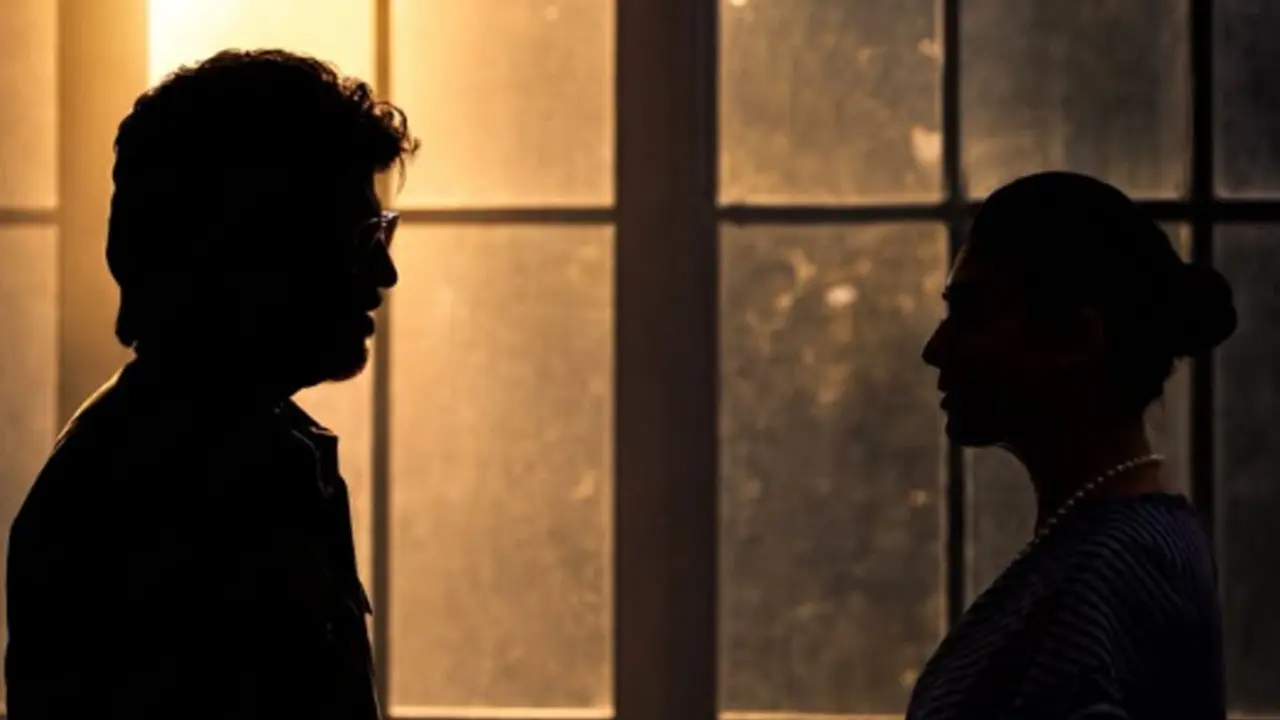
Rajinikanths Dharman gets bigger as Nayanthara joins the cast
Nayanthara has joined Rajinikanths Dharman, with director Ashwath Marimuthu welcoming her on board after the makers teased her arrival. Raashii Khanna, who plays a key role, also shared glimpses of her time with Rajinikanth and Ram Pothineni in Mysuru
Procession marks Maharshi Valmiki Jayanthi in Mysuru


Multiple attractions draw visitors to Dasara Exhibition Ground in Mysuru

Mysuru (Karnataka) [India], October 26: Bisleri International, India's leading packaged drinking water company, has signed a Letter of Association (LOA) with Maharaja's College and Yuvaraja College, two of the constituent colleges of the University of Mysore, under its flagship sustainability initiative, Bottles for Change. The partnership aims to promote responsible plastic waste management, source segregation, and recycling practices across both campuses by engaging students through various activities.

DK Shivakumar to Meet Sugarcane Farmers First, Then Sugar Factory Owners Amid Protests
The CM said he had heard their views and the concerns they were facing as representatives of farmers and the public, while officials and legislators from the Mysuru and central Karnataka regions, Bagalkot, Vijayapura and Belagavi had also shared their inputs

Mysuru Dasara drone show sets Guinness World Record with 3473 drones
Mysuru: Mysurus grand Dasara celebrations have entered the Guinness World Records with a spectacular drone show featuring 3,473 drones. The display, held at the Torchlight Parade Grounds in Bannimantap on October 18, created the worlds largest aerial image of a bird, depicting a dancing peacock in the night sky. Thousands of colourful drones flew in Get the latest updates in Hyderabad City News , Technology , Entertainment , Sports , Politics and Top Stories on WhatsApp & Telegram by subscribing to our channels. You can also download our app for Android and iOS .
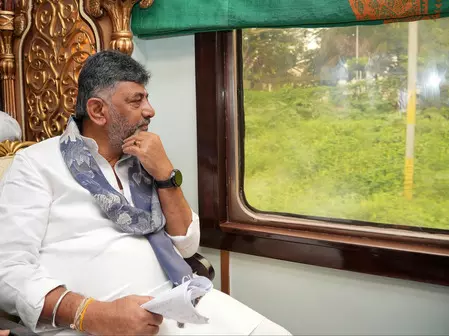
CM Shivakumar to hold talks with mill owners, protesting sugarcane farmers today
Digital Desk | Belagavi, Oct 26 (IANS) Whether sugarcane farmers in Karnataka will get justice remains to be seen as Chief Minister D.K. Shivakumar arrived in Belagavi to hold a series of meetings with sugar mill owners and farmers amid protests over sugarcane prices on Monday. CM Shivakumar will meet sugar factory owners at 11 a.m. and hold a separate meeting with representatives of sugarcane farmers at 3.30 p.m. The meetings will be held at the Suvarna Vidhana Soudha in Belagavi. Meanwhile, farmers have launched protests by blocking a state highway in Belagavi, demanding a fair price for their sugarcane and other demands. Speaking to the media in Kittur in Belagavi, Shivakumar said the survival of Karnataka's farmers was his priority and that he had come to Belagavi to discuss the issue with both farmers and sugar mill owners. I will not talk about what governments in other states are offering their sugarcane farmers. First, our farmers in Karnataka must survive. I will discuss this issue. That is why I have come here, rather than holding a meeting in Bengaluru, he said. I will speak to sugar mills and farmers. I must also listen to their views. Earlier, we gave farmers an additional amount of Rs 300 per quintal, and the previous Siddaramaiah government provided Rs 50. We have also asked mill owners to contribute. There is a problem here. I have discussed this issue with other states as well. I will discuss it with everyone and decide on the way forward, he added. CM Shivakumar said he will have to speak to owners first since they are the ones who will give money to farmers. The farmers are primarily demanding the fixing of a Rs 1,000 subsidy for each tonne of sugarcane. Secondly, they are urging the fixing of a price of Rs 5,500 per tonne of sugarcane. They are also demanding to reserve a sum of Rs 500 crore. The outcome of Monday's discussions is expected to be crucial in determining whether the ongoing protests will be resolved and whether the farmers' demand for a remunerative price for sugarcane will be addressed. Sugarcane farmers in North Karnataka -- led by organisations like the Karnataka Rajya Raitha Sangha and Hasiru Sene -- have staged widespread protests and highway blockades, including on the Pune-Bengaluru and Bengaluru-Mysuru highways, demanding higher prices and policy changes for the 2026-27 crushing season. Farmers are demanding a total sugarcane price of Rs 5,500 per tonne, an additional State Advised Price (SAP) of Rs 1,000 per tonne from the Karnataka government, and a higher Minimum Support Price (MSP) for sugar. The Central government fixed the Fair and Remunerative Price (FRP) at Rs 365 per quintal for 2026-27 (up from Rs 355), which farmers argue is insufficient to cover rising fertiliser, labour, and transport costs. While some farmer groups temporarily paused specific agitations, farmer leaders have warned of a potential Karnataka Bandh on October 27 if concrete decisions are not reached, alongside a broader deadline set for November 26 for the Union government to respond to MSP and committee demands. Karnataka BJP has urged the state government to step in and address acute grower distress amid the ongoing drought and cultivation debt.
Mysuru City Corporation approves street food hub under PM SVANidhi scheme
Pramoda Devi Wadiyar warns that the royal family may reconsider allowing the Golden Howdah procession over alleged police misconduct and interference during Mysuru Dasara.
MCC seeks free toilet access for public at hotels, restaurants in Mysuru
MCC seeks free toilet access for public at hotels, restaurants in Mysuru
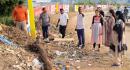
MCC renews push for flex-free city beyond Dasara
The MCC said the campaign had helped preserve Mysurus cleanliness, aesthetic appeal and heritage character during Dasara
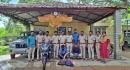
Elephant tusk allegedly meant for Tamil Nadu sale; two arrested
Mysuru: The forest department has arrested two men for allegedly attempting to sell an elephant tusk, while a third suspect remains on the run. The arrested men, J. Ravichandra, 35, of Ballenahalli in Hunsur taluk, and Rajesh, 33, of Kyathanamaranahalli, were remanded in judicial custody on Saturday, October 24. Forest officials said the case began Get the latest updates in Hyderabad City News , Technology , Entertainment , Sports , Politics and Top Stories on WhatsApp & Telegram by subscribing to our channels. You can also download our app for Android and iOS .
Excess Oct rain eases farmers concerns in Mysuru
Police extend traffic restrictions for Mysuru Dasara Illumination

Udaipur-Mysuru Express to Run 30 Minutes Late from 26 October Due to Tumkur Station Work
The Udaipur-Mysuru Express will run about 30 minutes late from 26 October to 2 November due to construction work at Tumkur station, affecting passenger schedules. Udaipur-Mysuru Express to Run 30 Minutes Late from 26 October Due to Tumkur Station Work
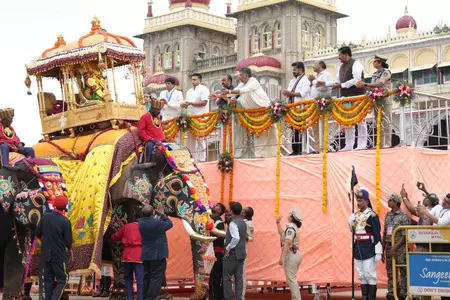
Royal scion Yaduveer Wadiyar seeks clear protocol for Mysuru Dasara rituals amid controversy
Digital Desk | Mysuru (Karnataka), Oct 24 (IANS) Mysuru-Kodagu BJP MP and Mysuru royal scion Yaduveer Krishnadatta Chamaraja Wadiyar on Saturday questioned the presence of a large number of people during the Nandi Dhwaja worship ritual at Mysuru Dasara and called for a clear protocol for the ceremony. A political controversy erupted in Karnataka during the Mysuru Dasara celebrations after police officers briefly blocked senior Dalit ministers from attending the traditional Nandi Dhwaja Puja. Speaking on the issue to reporters in Mysuru, Yaduveer said the presence of the Chief Minister and one or two officials would be sufficient for the ritual. He said the participation of a large number of people was not required. First, let them clarify what the protocol is. I am not aware of the existence of any such protocol. It is enough if two people accompany the Chief Minister on the occasion. Why should everyone want to go there? he asked. He said he had represented the Mysuru royal family at the rituals for the past 12 years at the direction of Rajamata. In earlier years, the Chief Minister and one or two officials would normally attend the rituals, he said. This is a programme organised by the government, and it has to decide and proceed accordingly. I feel that having fewer people would be better, as the rituals must be prioritised and conducted appropriately, he said. Yaduveer said the Chief Minister's presence was sufficient to represent the entire state and that everyone need not attend the ceremony. He added that the royal family had never insisted on their presence. Observing that some Dasara programmes had been reformed while others offered considerable scope for improvement, he said lessons should be drawn from this year's celebrations while planning the festival next year. We will offer suggestions, and action must also be taken. Merely making allegations would not be appropriate. I will raise these issues at the proper forum, he said. He called for the government to clearly define the protocol and announce that it would be followed from next year onwards. On the participation of the Chief Ministers of Kerala and Telangana in the Dasara celebrations, Yaduveer said their invitation was a good move that brought publicity to the festival. He also said there was nothing wrong with the Chief Ministers offering floral tributes to Goddess Chamundeshwari if they had been invited to do so. If they are invited and then not allowed to offer floral tributes, how is that possible? That is why I insist a clear protocol should be in place. Having a framework would be better, he said. Asked about the cancellation of the traditional Jatti Kalaga event, Yaduveer said his mother would provide clarification on the matter and that further reactions would follow after her statement. Meanwhile, Rajamata Pramodadevi Wadiyar said she had been concerned about elephant Prashanth, which carried the golden howdah of Goddess Chamundeshwari for the first time during the Mysuru Dasara celebrations. However, she said the elephant performed well, remained calm throughout the procession and did not cause any trouble. She added that both the elephant and the golden howdah were beautifully decorated. There had never been any concern earlier, but this time I was worried, she said.

Karnatakas most backward districts see low applications for inclusion after SIR draft deletions
In several historically backward districts, including Kalaburagi, Mysuru, Raichur and Ballari, deletions at the draft stage exceeded 18% of the electorate.

Mysuru hospital introduces AI-powered heart imaging

Siddaramaiah says sting operation was designed to blackmail him
Mysuru: Former Karnataka chief minister Siddaramaiah has described the alleged sting operation against him as a systematic blackmail conspiracy, naming a journalist and Krupa Alva of Mangaluru as people he believes were behind it. His remarks have added fresh momentum to the controversy, which has now reached the national political arena amid competing allegations about Get the latest updates in Hyderabad City News , Technology , Entertainment , Sports , Politics and Top Stories on WhatsApp & Telegram by subscribing to our channels. You can also download our app for Android and iOS .

Siddaramaiah alleges sting operation was a blackmail conspiracy
Mysuru: Former Karnataka Chief Minister Siddaramaiah has described the alleged sting operation against him as a systematic blackmail conspiracy, naming a journalist and Krupa Alva of Mangaluru as people he believes were behind it. His remarks have added fresh momentum to the controversy, which has now reached the national political arena amid competing allegations about Get the latest updates in Hyderabad City News , Technology , Entertainment , Sports , Politics and Top Stories on WhatsApp & Telegram by subscribing to our channels. You can also download our app for Android and iOS .
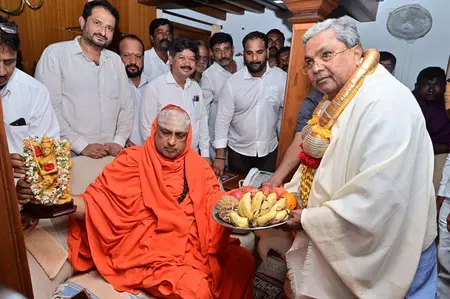
Blackmail plot: Siddaramaiah names Congress leader, journalist in sting op case
Digital Desk | Bengaluru, Oct 23 (IANS) Former Karnataka Chief Minister and Congress Working Committee (CWC) Member Siddaramaiah on Friday named a journalist and Congress leader, Krupa Alva of Mangaluru, as those allegedly behind the sting operation, describing it as a systematic conspiracy to blackmail him and tarnish his image through false allegations. Speaking to the media at the Suttur branch mutt in Mysuru, Siddaramaiah, who filed a complaint in the case, said the matter had come to his notice in September this year. A journalist and Krupa Alva of Mangaluru have joined hands to carry out this operation. I voluntarily lodged a complaint with the police so that the truth would come out before the public. There is no substance in the allegations, and they are completely far from the truth, he said. He said he had approached the court to prevent the spread of false allegations and a smear campaign against him. Siddaramaiah said no such incidents had occurred during his eight-year tenure as Chief Minister and that he had never faced such baseless allegations during his long political career. Such blackmail tactics are being employed in the present political system. I have committed no wrongdoing. Since I have done nothing wrong, I do not need anyones moral support, nor is there any need for anyone to stand by me, he said. Taking a swipe at those allegedly seeking political mileage from the controversy, he said some people were making statements for political gains and were free to continue doing so. However, he maintained that the investigation should establish who was behind the alleged conspiracy. Only after the investigation will it be known whether people from within our own party or those from the Opposition were involved. I have complete faith in the governments investigation. There is no need for an SIT or any other high-level probe, he said. Siddaramaiah asserted that the alleged conspiracy would not succeed in achieving its intended objective. The case, which appeared to have lost momentum over the past two or three days, has taken a fresh turn following the allegations by Siddaramaiahs son, Yathindra Siddaramaiah, that leaders from within the Congress were behind the sting operation. Karnataka Minister for Urban Development Yathindra Siddaramaiah on Friday morning alleged that insiders had carried out the sting operation involving his father, former Chief Minister and Congress Working Committee member Siddaramaiah, to tarnish his image, destroy his 40-year political legacy and blackmail him. He said the investigation would establish whether the people seen in the video had acted on their own or at someone else's behest. Speaking to the media, Yathindra said the video purportedly showed the involvement of some Congress leaders and a senior media person, making it necessary to investigate the circumstances under which the sting operation was carried out. This sting operation has been carried out to tarnish his image, destroy his legacy and blackmail him. Of course, the video indicates the involvement of our own party leaders and a media head. The investigation should establish whether they did it themselves or whether someone else asked them to do it, he said. However, Yathindra said he did not suspect anyone in particular and maintained that the investigation should establish the facts. Asked about the alleged involvement of Congress leaders, he said the reference was to a woman leader whose involvement was purportedly indicated in the video. According to him, she had reportedly spoken about seeking a Congress ticket to contest from the Puttur Assembly constituency. Prima facie, it appears that the sting operation may have been carried out for that reason. But we cannot say that the entire party conspired against us just because one party worker was involved, he said.
Elephant Squad Bids Farewell to Mysuru Palace After Dasara Jumbo Savari
Elephants Abhimanyu, Prashantha, Dhananjaya, Ekalavya, Mahendra, Gopi, Srirama, Srikantha, Sugriva, Kaveri, Chaitra, Roopa and Lakshmi took part in the puja. The squad was given a farewell with fruits and betel leaves

Mysuru among 17 cities selected for street food hub as part of PM SVANidhi
The initiative of the Union Ministry of Housing and Urban Affairs (MoHUA) seeks to provide organised spaces for street food vendors, improve food safety and hygiene, and offer better facilities to customers
Mysuru-Bengaluru highway blocked at toll plaza for two hours due to farmers protest
A large number of farmers led by Melukote MLA Darshan Puttannaiah and Karnataka Rajya Raitha Sangha (KRRS) leader Badagalapura Nagendra gathered at the Toll Plaza.

Video indicates involvement of our own party leaders: Minister Yathindra on sting Op targeting father Siddaramaiah Mysuru: Karnataka Minister for Urban Development Yathindra Siddaramaiah on Friday alleged that insiders had carried out the sting operation involving his father, former Chief Minister and Congress Working Committee member Siddaramaiah, to tarnish his image, destroy his 40-year political [] The post Video indicates involvement of our own party leaders: Minister Yathindra on sting Op targeting father Siddaramaiah appeared first on Mangalorean.com .
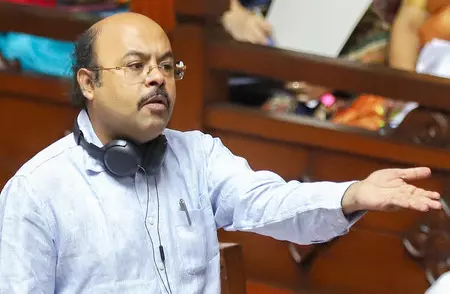
Digital Desk | Mysuru, Oct 23 (IANS) Karnataka Minister for Urban Development and Mysuru district in-charge Yathindra Siddaramaiah on Friday expressed confidence in the investigation being conducted by the state police into the alleged sting operation involving his father Siddaramaiah, stating that everyone involved in the case must be arrested and investigated. Speaking to media in Mysuru, Yathindra said his father had made it clear to Chief Minister D.K. Shivakumar and Home Minister Priyank Kharge that the investigation must be conducted effectively and that those responsible must be brought to justice, irrespective of their identity. Two persons, including a journalist, have been detained and questioned. My father has been briefed about the detention of the persons and the summoning of the media person for questioning. He has told the Chief Minister and the Home Minister that the investigation should be conducted effectively and that whoever is behind this must be arrested, he said. Expressing faith in the ongoing investigation, Yathindra said the government was committed to ensuring a transparent probe and that the police were handling the case effectively. We have faith in the investigation being conducted by our government. We expect the probe to be conducted transparently. At present, we believe the police investigating the matter are doing their job effectively. If the investigation is not conducted properly, we will demand a high-level probe, he said. On the controversy surrounding the participation of the Chief Minister's wife in the Mysuru Dasara festivities, Yathindra defended her floral tribute to Goddess Chamundeshwari placed in the golden howdah during the Jamboo Savari procession. He said there was nothing wrong with the Chief Minister's wife offering floral tributes to the deity, arguing that she had not undertaken any government-related work. In this context, he maintained that there was no violation of protocol warranting criticism. Yathindra also criticised the police for preventing ministers from attending the Nandi Dhwaja puja during the Dasara celebrations in Mysuru. He said the police officer concerned had acted excessively and questioned why an officer of Inspector General of Police (IGP) rank had taken such a decision. The police officer should not have prevented ministers from attending the Nandi Dhwaja puja. I do not know why an officer of the rank of IGP did this. The police have acted overboard in this matter, he said. Yathindra added that the state government had ordered an enquiry into the incident and that an investigation was underway. He said the officer concerned would have to explain his actions before the enquiry team, maintaining that ministers should not have been stopped from participating in the religious ceremony as per protocol. He further said that Ministers H.C. Balakrishna and C. Puttarangasetty had also been prevented from attending the ceremony. Yathindra said he intervened and allowed them to enter after speaking to Chief Minister Shivakumar. The minister reiterated that the government would examine the circumstances surrounding the incident and that the officer concerned would be required to answer the questions raised during the investigation.
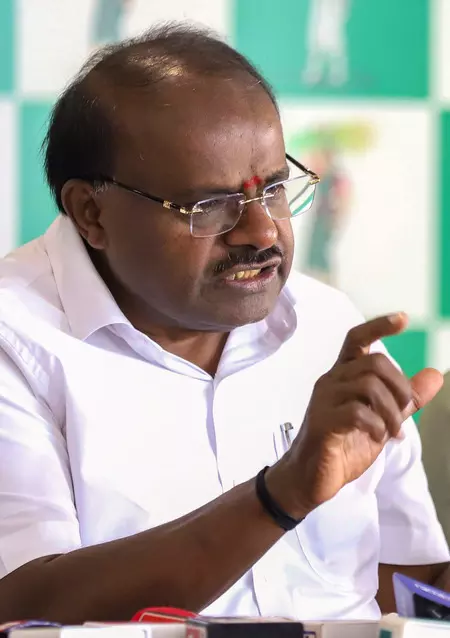
Kumaraswamy accuses K'taka govt of taking 'sting Op' lightly, warns against helping accused get bail
Digital Desk | Bengaluru, Oct 23 (IANS) Union Minister for Heavy Industries and Steel H.D. Kumaraswamy on Friday accused Karnataka Chief Minister D.K. Shivakumar of taking the alleged sting operation involving former CM and Congress Working Committee (CWC) member Siddaramaiah lightly, alleging that the police had issued summons to a key person in the case merely as a formality. Addressing a press conference at the Janata Dal (Secular) headquarters, JP Bhavan, in Bengaluru, Kumaraswamy alleged that a media person was involved in the sting operation video intended to tarnish Siddaramaiah's image. He questioned the state government's handling of the investigation and warned that the JD(S) would not remain silent if the government helped the person concerned secure anticipatory bail. Kumaraswamy's remarks came amid reports that Shivakumar had met AICC General Secretary (Organisation) and Congress MP K.C. Venugopal during his visit to Delhi on Thursday. The Chief Minister had reportedly said that the JD(S) was politicising the sting operation controversy. Responding to the allegation, Kumaraswamy said Shivakumar had visited Delhi to meet Union Ministers and raise various issues concerning Karnataka in the state's interest. However, he alleged that the Chief Minister had also met Congress high command leaders in connection with the ongoing controversy. Kumaraswamy referred to Shivakumar's explanation that Home Minister Priyank Kharge had also visited Venugopal's residence and that their presence there was coincidental. The Union Minister questioned the circumstances of the meetings and accused the Chief Minister of downplaying the alleged involvement of the media person. The issue is not whether the JD(S) is using this matter politically. The question is whether the truth will come out and justice will be done, Kumaraswamy said. He alleged that the objective of the sting operation was to damage Siddaramaiah's public image and claimed that the person involved was being treated leniently because of his proximity to the Chief Minister. He further alleged that the media person had easy access to Shivakumar. According to the information I have, the person was staying at the Radisson Hotel in Mysuru the day before yesterday, and they brought him in. Yesterday, summons were issued to him merely as a formality, Kumaraswamy alleged. The Union Minister also raised questions about the investigation and referred to senior IPS officer Ajay Hilori, who is heading the probe. Kumaraswamy referred to Hilori's alleged connection with the IMA ponzi scheme case and questioned the circumstances surrounding the appointment of the same lawyer, who had fought his case earlier, by the person seeking anticipatory bail in the sting operation case. Kumaraswamy alleged that the sting operation controversy was aimed at tarnishing Siddaramaiah's image and said the government must ensure that the investigation proceeded fairly. He warned that the JD(S) would not remain silent if the government remained passive and facilitated the accused in obtaining bail. I am warning the government. If it remains silent and helps him secure bail in the anticipatory bail petition he has filed, we will not sit quietly, he said. Rejecting allegations that the sting operation was a JD(S) conspiracy, Kumaraswamy questioned the Congress leadership's response to the controversy and defended Siddaramaiah's political stature. Who else is there in the Congress party, apart from Siddaramaiah, who is such a tall leader? Siddaramaiah has been forced to sit at home, and now they claim that this is a JD(S) conspiracy. Who else can bring votes apart from Siddaramaiah? You were saved because of him, he alleged. Kumaraswamy also anticipated questions about why he was speaking in support of Siddaramaiah despite their political rivalry. You may ask why I am speaking in favour of Siddaramaiah. Yes, I have fought against him, he said, maintaining that the issue should not be dismissed as political manoeuvring and that the allegations required a serious investigation.
Shivakumar takes Mekedatu, Sharavathi project proposals to Delhi
Bengaluru: Chief Minister D.K. Shivakumar on Thursday, October 22, met Union Environment Minister Bhupender Yadav in New Delhi and requested the Centre to expedite the examination of Karnatakas proposals for the Mekedatu project and the Sharavathi pumped storage project. The Chief Ministers Delhi visit followed the conclusion of the Mysuru Dasara celebrations. He met Union Get the latest updates in Hyderabad City News , Technology , Entertainment , Sports , Politics and Top Stories on WhatsApp & Telegram by subscribing to our channels. You can also download our app for Android and iOS .
Two men returning from Mysuru Dasara die as bike hits electric pole
Special screening of Return of the Jungle in Mysuru on October 24 and 25
The film will be screened at 6 p.m. on October 24 and at 11 a.m. on October 25. Entry is free and seating will be available on a first-come, first-served basis, the statement said.
Mysuru zoo achieves record Dasara gate collection at Rs 1.9cr
Mysurus green cover stands at just 13.3%
Two youngsters die as bike rams pole on Mysuru road
BJP MLA Objects To CMs Wifes Presence On Dais At Mysuru Event
BJP MLA T.S. Srivatsa alleged a protocol violation over Chief Minister D.K. Shivakumars wife Usha joining dignitaries on the dais during Mysurus Jumbo Savari ceremony.

Animals steal the show at Mysuru Dasara 2026
As the city of palaces and royals, Mysuru is known for horse riding, and continued to keep that tradition alive this year.
Grand Mysuru Dasara celebrations appreciated by other state CMs; sugarcane growers
Grand Mysuru Dasara celebrations appreciated by other state CMs; sugarcane growers meeting in Belagavi on October 26: Karnataka CM Shivakumar Bengaluru: Karnataka Chief Minister, D.K. Shivakumar, on Thursday said the world-famous Mysuru Dasara celebrations had been a grand success, earning appreciation from the Chief Ministers of Kerala and Telangana, who attended the festivities. He also [] The post Grand Mysuru Dasara celebrations appreciated by other state CMs; sugarcane growers meeting in Belagavi on October 26: Karnataka CM Shivakumar appeared first on Mangalorean.com .
Mysuru: MLA alleges protocol violations during Vijayadashami procession
T.S. Srivatsa, Krishnaraja MLA, questions the presence of Chief Secretary Shalini Rajneesh, Chief Minister D.K. Shivakumars wife Usha, and the Chief Ministers of neighbouring Keralam and Telangana, on special platform to shower flower petals on Goddess Chamundeshwaris idol
Mysuru: MLA alleges protocol violations during Vijayadashami procession
T.S. Srivatsa, Krishnaraja MLA, questions the presence of Chief Secretary Shalini Rajneesh, Chief Minister D.K. Shivakumars wife Usha, and the Chief Ministers of neighbouring Keralam and Telangana, on special platform to shower flower petals on Goddess Chamundeshwaris idol
Mysuru Railway Division ramps up services, security for Dasara rush
Five pairs of additional trains were operated to cater to increased demand on key routes, including Bengaluru, Arsikere, Chamarajanagar and the DavangereHospet section.
Over 53% of Dasara travellers opt for digital ticketing at Mysuru station
The South Western Railways Mysuru division says 53.4% of departing passengers used Automatic Ticket Vending Machines and the UTS mobile application for ticketing, helping reduce rush

Energy Minister K.J. George, who also holds the Tourism portfolio, says the initiatives had enhanced Dasaras global visibility and strengthened Mysurus position as a major tourism destination.

The protesters, led by K.S. Shivaram, State president of the Karnataka State Backward Classes Awareness Forum, sought action against the persons responsible for the alleged violation of protocol by omission of Mr. Yathindras name.
Dasara elephants return to jungle camps after a memorable Mysuru sojourn
After routine weight checks and a customary puja at the Mysuru palace, the elephants, led by golden howdah-bearer Prashanth, were loaded onto separate trucks for their journey back to their respective camps.
Mysuru Dasara: Police stop Dalit ministers from performing pooja
Bengaluru: Three ministers from the Dalit community were allegedly stopped by police from participating in the festivities at the Mysuru Dasara celebrations. The incident took place near the Kote Anjaneya Swamy temple on October 21, during the Jamboo Savari procession. Kannada and Culture Minister Shivaraj Tangadgi, Agriculture Minister PM Narendra Swamy and Muzrai Minister KS Get the latest updates in Hyderabad City News , Technology , Entertainment , Sports , Politics and Top Stories on WhatsApp & Telegram by subscribing to our channels. You can also download our app for Android and iOS .

Investigation Ordered After Ministers Blocked from Ritual at Mysuru Dasara Festival
Karnataka CM orders probe after ministers were barred from participating in a key ritual during the Mysuru Dasara festival. Investigation Ordered After Ministers Blocked from Ritual at Mysuru Dasara Festival
Karnataka: DK Shivakumar orders probe after ministers stopped from entering Mysuru Palace event
Chief Minister DK Shivakumar has ordered an inquiry regarding an incident involving three Karnataka ministers. These ministers were allegedly prevented by police from attending the Nandi Dhwaja Pooja at Mysuru Palace. The event is a vital part of the Mysuru Dasara festivities, which hold cultural significance in Karnataka. Shivakumar stated that the behavior of the officials was unacceptable and ordered accountability.
Giving caste angle to Mysuru Dasara incident is low-level thinking; cops act on orders of senior officers: Dy CM Parameshwara Bengaluru: Karnataka Deputy Chief Minister, G. Parameshwara, on Thursday said giving a caste angle to the incident in which three ministers were stopped from participating in the Nandi Dhwaja puja during Mysuru Dasara was low-level [] The post Giving caste angle to Mysuru Dasara incident is low-level thinking; cops act on orders of senior officers: Dy CM Parameshwara appeared first on Mangalorean.com .
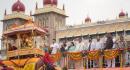
The incident had drawn criticism, with the opposition BJP alleging caste prejudice
Shivakumar Orders Probe Into Denial of Ministers' Entry During Mysuru Dasara Puja
According to the statement, Shivakumar said he intervened personally to facilitate the ministers' entry, but expressed displeasure over the conduct of the officials concerned
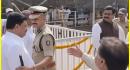
Controversy Erupts as Dalit Ministers Barred from Participating in Mysuru Dasara Rituals
A dispute arises in Karnataka after Dalit ministers are allegedly prevented from joining a key ritual during the Mysuru Dasara celebrations. Controversy Erupts as Dalit Ministers Barred from Participating in Mysuru Dasara Rituals

Dasara 2026: The grandeur of Karnatakas Naada Habba
A collection of stories on the celebration of Navaratri and Dasara from Mysuru, Mangaluru, Kodagu, Shivamogga and other districts of Karnataka.
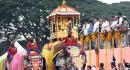
Telangana CM participates in Mysuru Dasara festivities
Karnataka BJP questions Dasara lighting extension, urges CM Shivakumar to ensure daily 3-phase power supply to farmers Bengaluru: Senior BJP leader R. Ashoka on Thursday criticised the Karnataka government for extending the decorative lighting of Mysuru Dasara, urging Chief Minister D.K. Shivakumar to ensure daily three-phase electricity supply to farmers struggling amid drought conditions. In [] The post Karnataka BJP questions Dasara lighting extension, urges CM Shivakumar to ensure daily 3-phase power supply to farmers appeared first on Mangalorean.com .

Swati Patil from Belagavi wins gold in wrestling at Mysuru Dasara sports
She was the runner-up for the prestigious Mysuru Dasara Kishori title
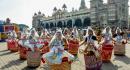
Mysuru: Tableaux captivate spectators at Jamboo Savari
The procession featured 53 tableaux and 46 traditional folk art forms and lasted around two to three hours.
Mysuru Dasara goes pan-India in historic celebration
We won't have to pay rent: Family moving from Canada to Mysuru asks if Rs 1.5 lakh a month is enough
Mysuru tourism launches multilingual web app
Abhimanyu makes final appearance at Mysuru Dasara
Revanth attends Mysuru Dasara festivities
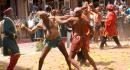
Vajra Mushti Kalaga cancelled at Mysuru Dasara; wrestlers blame police restrictions
The Vajra Mushti Kalaga is a centuries-old sporting tradition patronised by the Wadiyars of Mysuru.
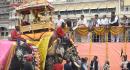
Mr. Shivakumar said people speaking Telugu from Andhra Pradesh, Malayalam from Keralam, and Tamil from Tamil Nadu were among those participating in the festival.
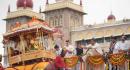
Telangana, Keralam CMs attend grand Dasara celebrations in Mysuru
Mysuru: The world-renowned Mysuru Dasara celebrations ended in the palace city on Wednesday, October 21, with a spectacular Vijayadashami procession, the grand finale of the 11-day festivities. Celebrated as Nada Habba (state festival), the Dasara, or Sharan Navaratri, festivities were a grand affair this year, showcasing Karnatakas rich culture and traditions, reminiscent of royal pomp Get the latest updates in Hyderabad City News , Technology , Entertainment , Sports , Politics and Top Stories on WhatsApp & Telegram by subscribing to our channels. You can also download our app for Android and iOS .
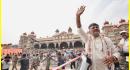
Mysuru Dasaras 417th Jambu Savari Kicks Off with CM Shivakumars Tribute to Goddess Chamundeshwari
The historic Jambu Savari parade begins in Mysuru as CM Shivakumar pays homage to Goddess Chamundeshwari during the Dasara festival. Mysuru Dasaras 417th Jambu Savari Kicks Off with CM Shivakumars Tribute to Goddess Chamundeshwari
Mysuru Dasara: Grand Vijayadashami Procession Marks Finale Of 11-Day Festivities
Mysuru witnessed grand Vijayadashami celebrations as the iconic Dasara festivities culminated in the city's spectacular Jamboo Savari procession. Celebrated as Karnataka's Nada Habba, the 11-day festival showcased the state's rich culture, traditions and royal heritage. Thousands gathered to witness the grand procession, featuring a dozen elephants led by the decorated lead elephant, as the celebrations brought Mysuru's royal splendour to life.
Mysuru Dasara 2026 Ends with Jumbo Savari
Police tightened the security and traffic movement on the procession route was diverted for a couple of hours before it was reopened.
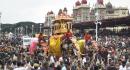
Jamboo Savari brings curtains on Mysuru Dasara
While 54-year-old tusker Prashanth carried the iconic golden howdah, veteran tusker Abhimanyu featured as the Nishane Ane, followed by eight other caparisoned elephants guided by their mahouts in the grand procession
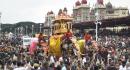
Jamboo Savari brings curtains on Mysuru Dasara
While 54-year-old tusker Prashanth carried the iconic golden howdah, veteran tusker Abhimanyu featured as the Nishane Ane, followed by eight other caparisoned elephants guided by their mahouts in the grand procession
Mysuru Dussehra Concludes, Jambo Savari,Tableaux Enjoyed by Thousands
Keralam and Telangana Chief Ministers V D Satheesan and Revanth Reddy took part in the celebrations at the invitation of their Karnataka counterpart D K Shivakumar
Foreign Dignitaries Attend Mysuru Dasara Celebrations
Among those welcomed were European Union Ambassador Jean-Eric Paquet, Chinese Ambassador Xu Feihong, Ecuador's Ambassador to India Fernando Bucheli, Mozambique High Commissioner Armando Pedro, Bulgarian Ambassador Nikolay Yankov and British Deputy High Commissioner Harshbir Sangha
Mysuru Dasara Celebration Reaches Grand Finale With Jamboo Savari
Celebrated as 'Nada Habba' (state festival), the Dussehra, or 'Sharan Navaratri', festivities were a grand affair this year, showcasing Karnataka's rich culture and traditions
Mysuru Dasara cake exhibition honours Indian pilot Captain Smit Machchhar for saving 174 lives
Mysuru Dasara cake exhibition honours Indian pilot Captain Smit Machchhar for saving 174 lives Mysuru (Karnataka): The world-famous Mysuru Dasara festival, known for its diverse and spectacular events, has paid a unique tribute to Indian pilot Captain Smit Machchhar, who displayed extraordinary courage in the face of danger and saved the lives of 174 passengers [] The post Mysuru Dasara cake exhibition honours Indian pilot Captain Smit Machchhar for saving 174 lives appeared first on Mangalorean.com .

Karnataka Chief Minister Shivakumar Attends Historic Jamboo Savari in Mysuru
Karnataka CM Shivakumar joins family for the historic Jamboo Savari parade, marking the conclusion of the grand Dasara festival in Mysuru. Karnataka Chief Minister Shivakumar Attends Historic Jamboo Savari in Mysuru
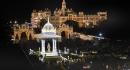
Dasara 2026: With poojas and processions, Mysuru gears up for grand finale
Prashantha to carry golden howdah for the first time; over 6,000 police personnel deployed
Anger over fewer Dasara elephants visiting Mysuru dargah
Mysuru: In a reflection of Mysurus longstanding tradition of religious harmony, the golden howdah elephant Prashantha and kumki elephants Kaveri and Roopa visited the Hazrat Imam Shah Wali Dargah in Chamaraj Mohalla on Tuesday evening, a day before the grand Dasara Jamboo Savari. The elephants arrived at the dargah amid preparations for the Vijayadashami procession Get the latest updates in Hyderabad City News , Technology , Entertainment , Sports , Politics and Top Stories on WhatsApp & Telegram by subscribing to our channels. You can also download our app for Android and iOS .
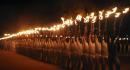
Motorcycle stunts, horse riding shows await spectators at Mysuru Torchlight Parade
Eighteen platoons, each comprising 28 cadets, along with two horse platoons, will participate in the parade

Captain Smit Machchhar's courage honoured with special cake at Mysuru Dasara 2026
A cake celebrating the courage of Captain Smit Machchhar, the Indian pilot who fought back after being attacked inside a cockpit during a flight, was among the highlights of the Mysuru Dasara festival celebrations in...
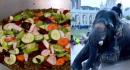
Special diet keeps Mysuru Dasara elephants fit for Jamboo Savari
Mysuru: As Mysuru gears up for its famous Dasara Jamboo Savari, mahouts are working meticulously to keep the participating elephants healthy, energetic and ready for the grand procession. A specially prepared diet rich in nutrients and energy is being provided to help the animals cover the nearly five-kilometre route without excessive fatigue. The elephants are Get the latest updates in Hyderabad City News , Technology , Entertainment , Sports , Politics and Top Stories on WhatsApp & Telegram by subscribing to our channels. You can also download our app for Android and iOS .
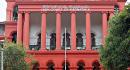
Justice M. Nagaprasanna made these observations while dismissing a criminal petition filed by Nadeem of Mysuru, who sought to quash the charge sheet against him
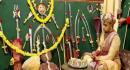
Yaduveer Wadiyar performs Ayudha Puja ahead of Mysuru Dasara
Mysuru: The historic Amba Vilas Palace witnessed traditional Ayudha Puja celebrations as Mysurus annual Dasara festivities gathered momentum. Yaduveer Wadiyar performed special worship of the royal familys ceremonial weapons, preserving customs followed by the rulers of the erstwhile Mysuru kingdom. The days rituals commenced at 6 am with a Chandika Homa at the palace. This Get the latest updates in Hyderabad City News , Technology , Entertainment , Sports , Politics and Top Stories on WhatsApp & Telegram by subscribing to our channels. You can also download our app for Android and iOS .
Veteran Jumbo Prashantha To Feery Golden Howdah On the Finale Of Mysuru Festivities, Mahout Happy
The jumbo savari is scheduled to start at around 4 pm as per auspicious timing
Two Army Riders Thrown Off Bikes After Collision During Mysuru Dasara Rehearsal
The incident took place during preparations for the Torchlight Parade, one of the major events marking the conclusion of the Mysuru Dasara festivities.