
 17 C
17 C Phys.org
Elections 2026National / Phys.org

In 1987, biologists captured the last free-flying condor to transfer it to captivity, and the largest flying North American bird species was officially declared extinct in the wild. Today, after decades of coordinated efforts and millions of dollars spent on captive breeding and reintroduction efforts, more than 300 condors have been restored to their natural environment.

Raw, grilled, roasted, stuffed
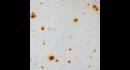
Stainless steel is widely used for its corrosion resistance, but it is not invincible. In environments containing chloride ions, such as seawater, pitting corrosion can occur. These pits often start at tiny particles called inclusions embedded in the steel.
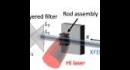
Understanding instabilities and turbulence in plasmas is one of the key challenges across a wide range of plasma research fields, including nuclear fusion, astrophysics and laser-plasma physics. In plasmas, slight disturbances can grow due to instabilities, and energy is transferred between structures of various sizes due to turbulence. These phenomena give rise to structures ranging from very small to large, which significantly influence the overall motion and energy flow of the plasma.

Many topics in astronomy and astrophysics are esoteric. There
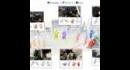
Humanoid robots, robotic systems with a body shape that resembles that of humans, could tackle various chores and everyday manual tasks. To successfully complete these tasks, however, the robots should be able to reliably coordinate their movements, posture and how they touch or grasp different objects.

Current HIV medicines are effective at suppressing the virus in the blood. However, HIV can remain
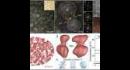
Metallic materials used in extremely cold environments must maintain high strength, ductility and fracture toughness to support applications in aerospace, clean energy, superconducting systems and deep-space exploration. However, traditional alloys often suffer performance degradation at ultralow temperatures because of the long-standing trade-off between strength, ductility and toughness. Although metals may become stronger at lower temperatures, they can also become more brittle and prone to f
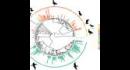
What seabirds eat might seem like a good starting point for identifying species that tend to accumulate plastic in their digestive systems. Yet a recent global analysis suggests that mapping the evolutionary relatives of birds could offer better clues than their diets or feeding methods alone.
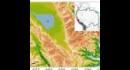
In places like South Asia, Africa and parts of the Americas, monsoon rains supply water for drinking, crops and hydropower for billions of people. Understanding the patterns that monsoons tend to follow can help people plan for drought risks affecting agriculture, reservoirs and hydropower across distant regions.

Relatively simple changes to the way traditional brick kilns operate in Bangladesh can reduce pollution, save fuel and improve the quality of bricks they produce.
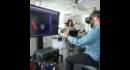
Punching a virtual response box or swinging a virtual lightsaber can dramatically improve learning on certain tasks, according to new research from Florida Atlantic University

The U.K. government on Saturday outlined plans to expand funding for artificial intelligence safety amid growing concerns over the cyber risks posed by the increasingly advanced technology.

Emergency crews scrambled on Saturday to restore power to tens of thousands of homes in Taiwan after Typhoon Champi

In one alarming announcement after another, artificial intelligence companies in recent months have shared examples of their technology acting in ways that appeared to evade instructions from humans.
The Malik Lab thrives on competition. But for HHMI investigator Harmit Malik and his team at the Fred Hutchinson Cancer Center, it

Pollution from human-generated waste in marine ecosystems has reached critical levels, with cigarette butts (CBs) among the most persistent and harmful pollutants. Globally, an estimated 4.5 trillion cigarette butts are discarded annually, making them the most common type of litter on beaches over the past three decades.

Researchers at the University of Helsinki wanted to understand which is the dominant factor for species occurrence and abundance: the climate or habitat-related variables, such as their natural state and the share of land shaped by human activity. Solutions to mitigate biodiversity loss depend on the answer to this question.
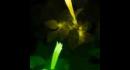
Researchers at the MRC Laboratory of Medical Sciences (LMS) have developed a new way to make glowing biological reporters more accurate, allowing scientists to track gene activity in living plants over days, weeks and potentially even months and years. The approach could help researchers study how plants respond to disease, pests and environmental stress, while opening the door to similar applications in animal and human disease models.

When heavy rain hits a city, knowing where water will accumulate is only part of the picture. Who lives in the affected buildings? How might flooding disrupt their lives? And where could additional support make the greatest difference?
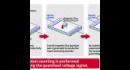
Researchers at AIST have directly observed magnetic flux quanta generated in a superconductor by photon absorption and demonstrated a new principle of photon detection that identifies the number of photons based on the number of these flux quanta.
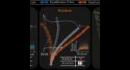

A review by Tohoku University researchers identifies key molecular features that could guide the development of more effective materials for removing PFAS from water. The study is published in the journal ACS Materials Au.

As politics in America become more polarized and each voting cycle seems more fraught than the last, a common narrative in the media is that each election is unique and increasingly unpredictable. But new research shows that congressional elections follow strong statistical patterns, even when individual races produce surprises.

Many of the most potent antibiotics originate from bacteria. A large proportion belong to a class of compounds known as nonribosomal peptides (NRP). They are produced by large bacterial enzyme machineries
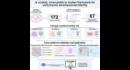
How can the identity of pluripotent stem cells be determined more reliably during their differentiation? Researchers from the IUF
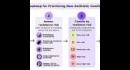
What if we could predict early in drug development which antibiotics bacteria are most likely to become resistant to? In a review published in Nature Reviews Microbiology, researchers from the HUN-REN Biological Research Centre, Szeged (HUN-REN BRC Szeged) and the Hungarian Centre of Excellence for Molecular Medicine (HCEMM) in Szeged propose a five-step decision-making framework that could help identify resistance risks early, refine promising drug candidates and prevent costly failures.

Potatoes could hold the key to making better gluten-free plant-based meat, according to a new study.
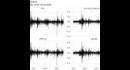
Research shows that crises do more than cause financial market volatility and falling share prices

The Orion Nebula is a large star-forming region visible to the naked eye. Some of the young stars in the nebula are surrounded by disks of gas and dust in which planets form. Radiation from the massive central star, 1 Ori C1 (Theta-1 Orionis C1), gradually strips material from these disks, giving them shapes that resemble tadpoles.

Mitochondria are the tiny powerpacks that supply most of the energy our cells need. Their ability to generate this energy relies on a distinctive architecture: two membranes, one tucked inside the other, separated by a narrow gap called the intermembrane space (IMS). This tiny space helps sustain the chemistry of energy production, making its organization critical to how these cellular powerpacks function.
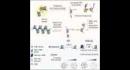
When DNA is damaged, cellular processes respond and repair the DNA. Inhibiting DNA damage repair can be therapeutically beneficial in cancers with genetic vulnerabilities related to DNA damage response. Scientists at St. Jude Children

Venture capital firms can help young businesses expand internationally by providing funding as well as market knowledge, expertise and access to professional networks, according to a research literature review published in the International Journal of Management and Enterprise Development.
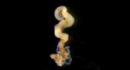
Every egg cell and sperm cell depends on meiosis, a tightly choreographed process in which chromosomes find their partners, exchange genetic material and then divide. When meiosis goes awry in humans, the consequences can include infertility, miscarriage and birth defects.
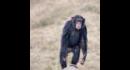
Humans and chimpanzees share almost all their genes. Despite this, our brains have developed in different ways. Researchers at Lund University in Sweden have now shown that a viral pandemic dating back several million years is likely to be part of the explanation.

Climate change is increasing flood risk across the U.K. As floods become more frequent and intense, communities are increasingly encouraged to become resilient and

More than 30,000 years ago, people associated with one of Europe

Scientists have identified the conditions that make it possible to predict some El Ni

Hundreds of the nation
A new study led by University of Hawai

Deep brain stimulation (DBS) is a therapeutic technique that delivers electrical pulses to specific areas of the brain via an implant to modulate neural activity. It is already widely used for movement disorders such as Parkinson
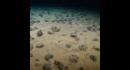
Protected areas have been set up to shield deep-sea life from the impacts of seabed mining in the Pacific Ocean. However, new research led by scientists at Plymouth Marine Laboratory (PML) and published in Nature Ecology
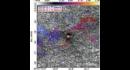
Astronomers identified an exceptionally tiny core that may represent an early stage in the formation of a massive star. Located in an infrared-dark area called Dragon Cloud, the core is nicknamed the
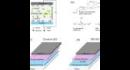
Researchers at Umea university thought gold particles would make electronic components emit more light. Instead, they discovered an unexpected effect that could be important for the future of organic electronics.


The 67th Supplement to the American Ornithological Society

All neutron stars have intense magnetic fields. The typical magnetic field of a neutron star is about 100,000 times stronger than the strongest magnetic fields we can create on Earth. But about 1% of neutron stars have even stronger magnetic fields. Known as magnetars, their magnetic fields can be 1,000 times stronger than a regular magnetic field. They are a likely cause of powerful transient events such as soft gamma-ray repeaters and fast radio bursts. A new study looks at how magnetars might

Most people who have an electric car have access to a driveway or private parking. In England, 90% of EV owners can park easily and charge theirs from home. But roughly 40% of U.K. households don

Large language models (LLMs) like OpenAI