
 23 C
23 C Phys.org
Elections 2026Sports / Phys.org

Community-led archaeology has uncovered the remains of an early medieval monastery in Argyll, western Scotland, identifying it as the high-ranking ecclesiastical center of Lios M

Researchers at AIST, in collaboration with the Institute of Science Tokyo and the National Institutes for Quantum Science and Technology, have developed a

You pick up a fragile glass from the table. Without thinking about it, you feel its surface against your fingertips and continuously adjust your grip. You hold it firmly enough to keep it from slipping out of your hand, but not so tightly that it breaks.
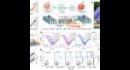
Neuromorphic devices, which are designed to emulate aspects of biological neural networks, are promising candidates for low-power, intelligent sensing technologies, including wearable applications.

AI-generated summaries are becoming increasingly prevalent


Researchers at the Institute of Information Security at Graz University of Technology (TU Graz) have uncovered security risks in the file notification systems of the widely used operating systems Windows, Linux, Android and macOS. Through side-channel attacks, attackers can track system-wide changes to files, keystrokes and visited websites, and spoof password prompts to intercept entries.
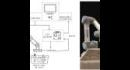
Researchers in the Bio-Inspired Robotics Laboratory at Cambridge are exploring how soil behaves as an intelligent system. By studying its structure, chemistry and biological network of microbes and fungi, they aim to inspire new technologies in bio-inspired computing, precision agriculture and environmental sensing.


For a wearable device to distinguish walking from a brief swing of the arm, it must recognize how movement changes over time. Korean researchers have developed a technology that stacks semiconductor devices with different response speeds, allowing them to recognize both a change that has just occurred and earlier changes.
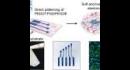
Collagen is the most abundant protein in the human body, making up about 30% of total protein and providing structure, strength and elasticity to skin, bones and soft tissues.

Radio frequencies needed for weather forecasts, early warning systems, climate monitoring and water management must be safeguarded against the growing threat of interference from emerging technologies, the United Nations said Monday.

Proton-exchange membrane fuel cells are promising clean power-generation technologies that do not emit carbon dioxide during operation. However, issues such as flooding (i.e., the accumulation of water generated during operation) and dry-out (i.e., when the electrolyte membrane becomes dehydrated) can result in an uneven internal current distribution. This uneven distribution can impair cell performance and accelerate localized material degradation.

Nvidia on Monday unveiled a new security platform that the chipmaker said can stop artificial intelligence agents from going rogue.

Researchers from the National University of Singapore (NUS) have developed a next-generation electronic skin that can sense and directly visualize pressure in real time, addressing key limitations of current wearable sensing technologies.