facebook

Maharashtra

...

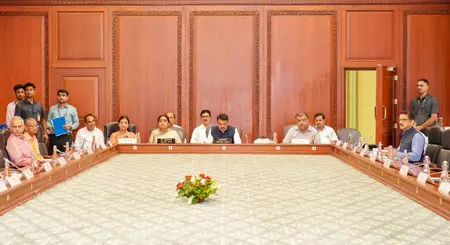
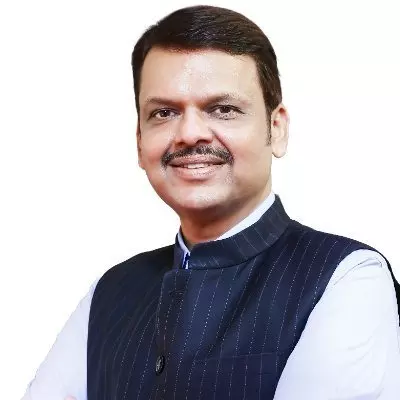
Fadnavis Pays Last Respects to Nana Patekar in Pune

Maharashtra CM Devendra Fadnavis paid his last respects to veteran actor Nana Patekar in Pune. Nana Patekars mortal remains were taken to his residence in Donje village, Pune Rural, following his death in Goa.

The Times of India 9 Oct 2026 3:25 pm

Police send notices to students, CJP supporters ahead of October 10 Delhi protest

Maharashtra police have sent notices and made calls to students and CJP supporters, invoking Section 168 of the Bharatiya Nagarik Suraksha Sanhita, asking them not to join the Saturday (October 10, 2026) protest in Delhi

The Hindu 9 Oct 2026 3:10 pm

Maharashtra Leases 1,200-Acre Land To Firm Owned By Supriya Sule's Son-In-Law

Sarang Lakhani is the son-in-law of Supriya Sule and son of BJP MLC Arun Lakhani, who is considered close to Devendra Fadnavis.

NDTV 9 Oct 2026 2:47 pm

Fadnavis criticises Congress on SIR; releases parliamentary footage of Kapil Sibal defending process

Digital Desk | Mumbai, Oct 9 (IANS) Maharashtra Chief Minister, Devendra Fadnavis, on Friday delivered a scathing rebuttal to the Congress party as high-octane protests led by Leader of the Opposition in the Lok Sabha, Rahul Gandhi, and Congress MP Priyanka Gandhi against the Election Commission and the Special Intensive Revision (SIR) process brought central Delhi to a standstill. Taking to social media, CM Fadnavis released archival parliamentary footage of former Union Law Minister Kapil Sibal speaking in official support of the SIR framework during the Congress-led UPA tenure. The clipwhich has rapidly gone viraldirectly counters the Oppositions current claims that the voter roll revision is a conspiracy or an unconstitutional procedure. The Opposition parties have alleged that over 13 crore names have allegedly been left out in the draft poll rolls and has been protesting against it. In his direct hit at the Congress leadership, CM Fadnavis highlighted the stark contrast between the party's historic stance and its current street demonstrations. Congress is busy shouting against SIR from every possible stage, only to have its own former Law Minister Kapil Sibal's words come back to expose the drama. The Parliament record doesnt change with political convenience. Perhaps Congress should first check their own history before manufacturing new conspiracy theories. Sometimes, the best rebuttal comes from your own partys past! CM Fadnavis captioned the video as 'Congress' double standards', urging citizens to listen to official parliamentary proceedings from the UPA era and judge who is telling the truth. The video shared by the Chief Minister shows then-Law Minister Kapil Sibal explaining the three precise categories under which the SIR process removes or updates names on the voter list. Deletion of duplicate entries take place when a voter shifts from one constituency to another, followed by seamless re-registration at the new address. Also during updating old electoral rolls during boundary reorganisations. There will be routine deletion of names of deceased individuals upon verification, said the former law minister in the video. In the footage, Sibal emphasised that no legitimate voter could be barred by registration officers, noting that millions of citizens routinely applied for inclusion under established statutory provisions. The video comes at a sensitive moment as Congress leaders Rahul Gandhi and Priyanka Gandhi Vadra lead sustained street demonstrations demanding the halting of the SIR process and the resignation of Chief Election Commissioner Gyanesh Kumar over what they claim is the disenfranchisement of 13 crore people during the recent SIR process. The protests near Jantar Mantar and Election Commission headquarters have seen tense scuffles with law enforcement, leading to police complaints and political trade-offs. BJP leaders have rallied around CM Fadnavis's statement, asserting that the Opposition is attempting to manufacture a non-existent controversy over a standard voter roll hygiene drive that their own government previously endorsed and defended on the floor of Parliament. The CM's comments come a day after the Office of the Chief Electoral Officer (CEO), Maharashtra, in a major push to ensure maximum voter participation and clean electoral rolls, has launched targeted registration drives and door-to-door verification campaigns across the state. Operating under the guidelines of the ECI, election authorities have committed to ensuring that no eligible citizen is left off the electoral roll and no ineligible entries remain. The extensive outreach forms a crucial leg of the ongoing SIR process. Special voter registration camps have been conducted across all colleges and universities in Maharashtra from October 5 to October 9. Booth Level Officers (BLOs) are deployed at campus sites to assist eligible students with completing application forms and to resolve queries regarding the SIR workflow, said the Office of the Chief Electoral Officer (CEO), Maharashtra release. BLOs are conducting home visits to identify eligible citizens missing from the Draft Electoral Roll and collect Form 6 following verification. For residents unavailable during home visits, special voter registration camps will be held at all designated polling stations on October 10 and October 11, 2026. Citizens whose names appear on the list of absent or migrated voters (compiled during house-to-house enumeration) can apply for re-enrolment or correction. The official list of absent/shifted voters has been published online at ceoelection.maharashtra.gov.in for public verification.

bhaskarlive 9 Oct 2026 2:38 pm

Maharashtra Congress Leader Urges Extension for Voter Registration Issues

Congress leader Amin Patel requests an extension for resolving voter registration issues in Maharashtra, citing difficulties faced by constituents. Maharashtra Congress Leader Urges Extension for Voter Registration Issues

Daily Kiran 9 Oct 2026 2:34 pm

Swastika Infra gets over Rs 600 crore order from Maharashtra power distribution company

Swastika Infra Ltd has received a significant order worth over Rs 600 crore from MSEDCL. This order focuses on developing distribution infrastructure and strengthening existing systems in Maharashtra. The scope of work includes constructing substations, HT/LT lines, and distribution transformers. Completion of the project is scheduled for 24 months from the date of the award. This initiative reflects the company's commitment to improving electrical distribution networks in the region.

The Economic Times 9 Oct 2026 2:30 pm

Delhi Police arrests two absconding MCOCA accused; recovers Rs 30 Lakh

Digital Desk | New Delhi, Oct 9 (IANS) The Outer North District Police has arrested two absconding accused in a case registered under the Maharashtra Control of Organised Crime Act (MCOCA) at Narela police station and recovered Rs 30 lakh, allegedly proceeds of crime, along with a Mahindra Thar vehicle, officials said on Friday. The police also busted a gambling den operated by one of the accused in the Lampur area, leading to the arrest of 10 people and the registration of a separate case under the Gambling Act. The case pertains to FIR No. 411/2020, registered under Sections 3 and 4 of MCOCA at Narela Police Station against an organised crime syndicate active in the area. Four accused had been arrested in the case before the latest arrests, according to the police. A dedicated team from Narela police station, acting on specific Intelligence and working under the supervision of senior officers, conducted raids following sustained efforts to trace the absconding accused. The arrested men have been identified as Vinod alias Khalifa, 39, son of Ishwar, and Vikas alias Vikky, 43, son of Naresh Kumar. Both are residents of Bakner in Delhi's Narela area. According to the police, Vinod has been previously involved in 10 criminal cases, while Vikas has six cases registered against him. During the investigation, police conducted a raid at the alleged gambling den in the Lampur area following Vinod's disclosure. Ten people were apprehended from the spot, and a separate case was registered under the Gambling Act. Acting on further information provided by Vinod, the police also raided his residence in Murthal, Sonipat district, Haryana. During the operation, they recovered Rs 30 lakh in cash, proceeds of crime, and seized a Mahindra Thar vehicle. The police said further investigation is underway to identify and trace other properties and assets acquired through criminal activities.

bhaskarlive 9 Oct 2026 1:57 pm

Police Appeal To Minor Victims In Latur School Sexual Harassment Case

Police in Latur, Maharashtra, have appealed to minor girl students who may have been sexually harassed by the founder of Adarsh International School, Bashir Usman Shaikh, to come forward. Shaikh was arrested on Wednesday under the POCSO Act, and authorities assure protection and confidentiality for victims.

Rediff 9 Oct 2026 1:56 pm

Sting operation: Karnataka CMs warning to ministers raises questions over credibility, claims BJP

Digital Desk | Vijayapura (Karnataka), Oct 9 (IANS) Karnataka BJP President and MLA, B.Y. Vijayendra, on Friday criticised the state government, saying reports that Chief Minister D.K. Shivakumar had warned his Cabinet colleagues to be cautious as BJP leaders might try to trap them, raised serious questions about the governments credibility. B.Y. Vijayendra alleged that corruption charges against the state government had increased and accused it of attempting to divert public attention from its administrative failures by targeting BJP workers through FIRs and other intimidation tactics. Speaking to reporters in Vijayapura, Vijayendra alleged that the government had neglected farmers, the poor, youth and women while failing to deliver development. At a time when farmers were struggling with drought and the states financial condition was deteriorating, the government was resorting to intimidation to silence the Opposition, Vijayendra alleged. If the government is genuinely concerned about corruption, it should allow an impartial investigation. Allegations of corruption cannot be made to disappear by accusing the Opposition or registering cases against party workers, he said, stressing the need for transparency and accountability in governance. Vijayendra said the BJP was organising the 'Seva Sankalpa Abhiyan' across the country and Karnataka from September 17 to October 17 to mark Prime Minister Narendra Modis 25 years in public life. As part of the campaign, sanitation workers were felicitated in Vijayapura, he said. He said that Modi had been engaged in public service since becoming Gujarat Chief Minister in 2001 and Prime Minister in 2014, and was working towards the countrys overall development for a third consecutive term. He recalled that the BJP had organised the Ballari Chalo padayatra from Lingasugur to Ballari to highlight farmers distress and demand relief of Rs 50,000 per hectare, a farm loan waiver of up to Rs 5 lakh and eight hours of three-phase electricity supply daily for agricultural activities. However, the government had failed to respond adequately to farmers problems, he alleged. Even the Rs 2,500 compensation announced for affected farming families had not been distributed properly, Vijayendra alleged. Criticising Chief Minister D.K. Shivakumar, Vijayendra said that expressing concern for farmers was not enough and that the government should demonstrate the same interest in resolving agricultural distress as it did in setting up townships. Citing Maharashtra as an example, Vijayendra demanded a farm loan waiver in Karnataka. He also sought the release of pending incentives for milk producers announced during former Chief Minister B.S. Yediyurappas tenure and an additional incentive of Rs 5 per litre for at least five months until the drought situation improved. Farmers were facing crop losses, mounting debt and water shortages, while reports of suicides among distressed farmers were a matter of concern, he said.

bhaskarlive 9 Oct 2026 1:55 pm

After Oscar entry, Hombale Films brings acclaimed Marathi film Gondhal to global audiences

After national acclaim and its selection as Indias official entry for the 99th Academy Awards, Hombale Films expands its global footprint by bringing the Marathi drama Gondhal to international cinema screens. Written and directed by Santosh Davakhar, Gondhal is a Marathi folk-thriller starring an ensemble cast, including Kishor Kadam, Ishita Deshmukh, Yogesh Sohoni, and Nishad Bhoir, with music composed by Ilaiyaraaja. Based on a traditional overnight devotional ritual in rural Maharashtra, the film tells a story of faith, human passion, power, and betrayal that aims to keep viewers on the edge of their seats. Ever since its release, Gondhal has won critical acclaim, winning top honors at major film festivals, including the Silver Peacock for Best Director at the 56th International Film Festival of India (IFFI), and earning love from movie lovers for its storytelling, cultural backdrop, and visual depth. Adding another feather to its cap, the film was recently selected as Indias official entry for the Oscars 2027 (99th Academy Awards) in the Best International Feature Film category. Pan-India banner Hombale Films has now officially backed the film to handle its overseas theatrical distribution, ensuring that this project reaches moviegoers worldwide. Taking to their social media handles, Hombale Films made the announcement along with a poster, writing: From an award-winning Marathi film to Indias official entry for the Oscars 2027, #Gondhal. We are proud to bring this powerful story to audiences across the globe. Overseas Release by @hombalefilms. SOON IN CINEMAS. The production house is behind blockbuster franchises and films such as the KGF, Kantara and Salaar franchise, and Mahavatar Narsimha, while also having internationally distributed Hanuman Ansh. Looking ahead, the production house has an interesting line-up of films, including Salaar: Part 2 Shouryaanga Parvam, Mahavatar Parshuram, Suriya 48, Yeto Ka Naay, and an upcoming collaboration with Hrithik Roshan. Also Read: Mrunal Thakur celebrates Marathi Film Gondhal as Indias official Oscar entry for 2027; says, What a moment of pride

Bollywood Hungama 9 Oct 2026 1:41 pm

Centre Likely to Finalise Critical Minerals Stockpiling Policy in a Month

The government is also working on four dedicated critical minerals processing parks across Gujarat, Maharashtra, Andhra Pradesh and Odisha to fast-track value addition for key battery materials

Deccan Chronicle 9 Oct 2026 1:30 pm

Prostitution Racket Busted In Latur

Police in Latur district, Maharashtra, have booked three men for allegedly operating a prostitution racket from a lodge in Ausa town. The bust occurred on Thursday after a decoy customer was used.

Rediff 9 Oct 2026 1:26 pm

CyberTech Asia to Make India debut in Mumbai in 2027: CM Fadnavis

Maharashtra CM Fadnavis discussed the state's MahaCyber initiative, emerging technologies and cybersecurity practices with CyberTech Global founder and CyberMania author Amir Rapaport

Deccan Chronicle 9 Oct 2026 12:17 pm

Tetra Pak Enables 73 Million Litres of Annual Groundwater Recharge Potential in Khed; Hands Over Rejuvenated Ponds to the Community

Pune (Maharashtra) [India], October 9: Tetra Pak, in partnership with Alternative Development Initiatives (ADI), today handed over rejuvenated community ponds in Pur and Rase villages of Khed Taluka, Pune, marking a key milestone under its Integrated Water Resource Development and Management (IWRDM) Programme. The handover, held in the presence of Gajanan Patil, CEO, Zilla Parishad Pune, places the assets in the stewardship of the local communities, following a phased programme of water conservation and community-led interventions undertaken since 2024.

Business Standard 9 Oct 2026 12:05 pm

Promised share trading returns, cheated Gujarat man of Rs 27 lakh; two held

Digital Desk | Surat, Oct 9 (IANS) Two men have been arrested in Ahmedabad for allegedly facilitating a cyber fraud in which a Surat-based complainant was cheated of Rs 27 lakh on the pretext of earning high returns through share trading, with police finding that a bank account allegedly used in the fraud was linked to 14 complaints of online cheating involving Rs 8.93 crore across different states. The arrests were made by the Cyber Crime Cell of Surat City Police following a technical investigation into the case, registered under Sections 318(4), 336(2), 338, 336(3), 340(2), 61(2) and 3(5) of the Bharatiya Nyaya Sanhita, 2023, and Section 66(D) of the Information Technology Amendment Act, 2008. According to the police, the accused contacted the complainant through WhatsApp and sent a link to a fake website, where an account was created for him. They allegedly promised attractive returns from share trading and persuaded him to transfer a total of Rs 27 lakh to different bank accounts. The complainant was subsequently prevented from withdrawing the money, police said. The arrested men have been identified as Sameerkhan Pathan, 30, and Mohammad Sheikh, 31, both residents of Jamalpur area in Ahmedabad. Pathan works as a casual labourer and studied up to Class 10, while Sheikh is also a casual labourer and holds a B.Com degree. Police said Pathan allegedly handed over a savings account in his name with the Bank of Maharashtra to Sheikh in exchange for a commission of Rs 8,000. Sheikh allegedly passed the account to an absconding accused for use in cyber fraud, receiving a commission of Rs 15,000. Investigators found that transactions totalling Rs 30,09,057 were carried out through the bank account between May 3 and June 7, 2025. A check of the National Cyber Crime Reporting Portal using the account details revealed 14 complaints registered in different states, involving alleged online fraud of Rs 8,93,80,922, police said. Police have urged people to exercise caution when approached with online investment schemes promising high returns and to verify the credentials of unknown individuals before transferring money. Victims of financial cyber fraud have been advised to call the national cybercrime helpline, 1930, immediately to improve the chances of funds being frozen in the relevant bank accounts.

bhaskarlive 9 Oct 2026 11:59 am

Amitabh Bachchan pays emotional tribute to Nana Patekar; recalls actors memorable Kaun Banega Crorepati appearance

Amitabh Bachchan paid an emotional tribute to veteran actor Nana Patekar following his sudden demise, remembering him as an exceptional performer, a dear friend and a committed social worker. Reflecting on Patekars legacy, Bachchan highlighted the qualities that set him apart, including his fearlessness, simplicity and courage to speak his mind. In his tribute, Bachchan said, Deviyo aur sajjano, Nana Patekar ji ka achanak aaj subah swargwas ho gaya. Ek adwitiya kalakar, mitra, shubhchintak, aur ek utkrisht samaj sevak aaj hamare beech nahi rahe. Ye na keval Bharatiya film udyog ke liye, balki ek vyaktigat taur par, jinka bhi unke saath sampark hua, usne hum sabko stabdh kar diya hai. Unki bebaki, unki sadgi, aur sach ko sach kehne ka unka saahas, ye sari baatein unko sabse alag banati thi ((Ladies and gentlemen, Nana Patekar ji passed away suddenly this morning. An unparalleled artist, a friend, a well-wisher, and an exceptional social worker is no longer among us. This is not only a monumental loss for the Indian film industry, but also a deeply personal loss for everyone who had the privilege of knowing him. His sudden departure has left us all stunned. His fearlessness, his simplicity, and his courage to call the truth exactly as it was these qualities made him truly different from everyone else). He went on to continue, Kuch log hamare jeevan se chale jaate hain, lekin unki aawaz, unke paropkar, unki sikhai hui seekh hamare bhitar reh jaati hai. Nana unhi logon mein se ek the. Aapko, Nana, vyaktigat roop se mera naman. Aur aapki us kala ko pranam, jise aapne puri imandari se jeeya aur hum sabko samarpit kiya (Some people leave our lives, but their voice, their acts of compassion, and the lessons they have taught us remain within us. Nana was one of those rare people. Nana, I offer you my personal respects. And I salute the art that you lived with complete honesty and devoted wholeheartedly to all of us). Recalling Patekars appearance on Kaun Banega Crorepati Season 16, Bachchan also spoke about the actors commitment to humanitarian work. He remembered the special episode as a memorable evening, particularly because Patekar dedicated his prize money to a cause close to his heart. Bachchan said, Iss manch par hamare vishesh karyakram mein ek atithi ke roop mein unka aagman hua tha. Wo yaadgar shaam sada hamare saath rahegi. Unki baaton ne na keval hume prabhavit kiya, balki jis nek kaaj ke liye unhone jeeti hui dhanrashi ko samarpit kiya, wo unki samaj seva ka udaharan tha. Maharashtra ke un gaon mein jo varsha ke abhav se peedit the, unhone wahan ke kisanon ke saath sampark kiya aur vyakatigat roop se unki seva ki (He had come to this stage as a guest for our special episode. That memorable evening will always remain with us. His words not only touched and inspired us, but the noble cause to which he dedicated the prize money he had won was a powerful example of his commitment to social service. In the villages of Maharashtra that were suffering because of a lack of rainfall, he reached out to the farmers and personally extended his support and service to them). View this post on Instagram A post shared by sonytvofficial (@sonytvofficial) The megastar concluded his message by extending his condolences on behalf of the shows team, saying, KBC parivaar ki aur se hardik shradhanjali (On behalf of the entire KBC family, our heartfelt tribute). Beyond his celebrated film career, Patekar was widely associated with social initiatives supporting drought-affected farmers and rural communities in Maharashtra. His work through the Naam Foundation, which he co-founded with Makarand Anaspure, became an important part of his public legacy. About Nana Patekars demise Nana Patekar, a Padma Shri recipient, passed away on October 8, 2026, at the age of 75. According to reports, he suffered a cardiac arrest at his residence in Dona Paula, Goa, and was declared dead at approximately 5:20 AM IST after efforts to revive him proved unsuccessful. Also Read: Salman Khan postpones Mumbai event after the death of Khamoshi co-star Nana Patekar: Report

Bollywood Hungama 9 Oct 2026 11:41 am

Nana Patekars son Malhar explains why actors last rites were held after sunset in Pune

Veteran actor Nana Patekars last rites were performed with full state honours at his Donje farmhouse in Pune on Thursday evening, hours after his mortal remains were transported from Goa. The cremation took place after sunset, leaving several Bollywood celebrities and industry colleagues unable to attend the final rites. Following the cremation, Nana Patekars son Malhar spoke to the media and explained the reason behind the delay. He said the family had to transport the actors mortal remains from Goa to Pune, which took considerable time because of the distance involved. We expected that we would arrive earlier, but it took us some time. He passed away early in the morning so a lot of time had already passed, and it was not advisable to keep the mortal remains for long. Hence, we had to do the cremation after sunset, Malhar said. Nana Patekars mortal remains brought from Goa Nana Patekar passed away at the age of 75 in Goa on October 8 after suffering a severe cardiac arrest at his residence in Dona Paula. He was subsequently taken to Manipal Hospital, where doctors attempted to revive him. His mortal remains were later taken to Goa Medical College for the required procedures before being transported to Maharashtra. The journey from Goa to Pune resulted in the last rites being held later in the day. The actor was cremated with full state honours at his farmhouse in Donje, Pune. His funeral was attended by family members, close friends and several members of the film industry. However, because of the timing, a number of Bollywood colleagues who wished to pay their final respects could not make it to the venue. VIDEO | Pune: Actor Nana Patekar cremated with full state honours at his farmhouse in Donje. His son Malhar Patekar says, The most important thing is that a person like Nana Sahib never really leaves us. I said this for the past two days as well: a person like Nana Sahib lives on through his workIn Marathi, we call such people ajaramar, meaning immortal. That is one thing. The second thing is that he always had one thought. He used to repeat one line again and again: Lets get together in the name of humanity and work for the betterment of the world. (Full video available on PTI Videos - https://t.co/bIyFWTfmBd) Press Trust of India (@PTI_News) October 8, 2026 Malhar says Nana Patekars work will live on Speaking about his fathers legacy, Malhar said Nana Patekars contribution through his work had made him immortal. He also highlighted the actors commitment to social causes and said that his vision would continue even after his passing. Nana Patekar was closely associated with the Naam Foundation, which he co-founded with actor Makarand Anaspure. The organisation has worked on issues including drought relief, water conservation and support for farmers in Maharashtra. Nana Patekars death has led to an outpouring of tributes from across the film industry, political circles and his fans. Several prominent personalities remembered the veteran actor for his intense performances, distinctive voice and contribution to both Hindi and Marathi cinema. Also Read:Nana Patekar cremated at Pune farmhouse with Full State Honours; son Malhar Patekar performs last rites

Bollywood Hungama 9 Oct 2026 11:41 am

Rs 54 Lakh Gutka Seized In Palghar

Police in Palghar district, Maharashtra, have seized banned gutka worth over Rs 54 lakh in two separate operations, leading to the arrest of five individuals. The seizures occurred in Vasai and Nalasopara East.

Rediff 9 Oct 2026 10:46 am

CJP protest: Delhi Police urges people to stay away from October 10 gathering

Deputy Commissioner of Police (DCP) Shrishti Pandey said protests were not permitted at Jantar Mantar or any other location while the restrictions remained in force. She warned that unauthorised gatherings would invite legal action

Mid Day 9 Oct 2026 9:55 am

West Bengal bypolls: BJP leads in Nandigram and Rejinagar

BJP was leading in the Nandigram and Rejinagar Assembly bypolls in early counting trends on Friday. Hasirani Rath was ahead in Nandigram, while Sakharav Sarkar led in Rejinagar as postal ballots were counted following polling on October 6

Mid Day 9 Oct 2026 9:47 am

Nana Patekar's last rites held late at night with full state honours; son Malhar reveals the reason

Veteran actor Nana Patekar was cremated with full state honours at his farmhouse in Pune late on Thursday night. His son, Malhar Patekar, performed the last rites at around 11.30 pm in the presence of several dignitaries, including Maharashtra Chief Minister Devendra Fadnavis, and thousands of fans who gathered to pay their final respects.

India TV 9 Oct 2026 9:15 am

There's a new Bengaluru-led dining space in Mumbai; here's all you need to know

With their first outlet in Mumbai, a chain introduces the Darshini-style of dining, a key facet of Bengalurus QSR ecosystem, to Juhu

Mid Day 9 Oct 2026 9:10 am

Delhi liquor shops shut for two days ahead of CJP protest

The Abhijeet Dipke-led CJP movement has planned protests across the nation over a number of days

Mid Day 9 Oct 2026 9:02 am

JD Vance says US wants elite talent, not H-1B worker replacements

The Vice-President also defended the administration's decision to impose an additional fee on H-1B applications

Mid Day 9 Oct 2026 8:59 am

US Congress to honour Indian pilot Captain Smit Machchhar for bravery

The Congressman also drew attention to the families whose loved ones survived the incident

Mid Day 9 Oct 2026 8:54 am

EAM S Jaishankar arrives in Ethiopia to advance strategic partnership

In an earlier statement, the MEA said EAM Jaishankar would hold bilateral meeting with his counterpart to review close ties of friendship and cooperation

Mid Day 9 Oct 2026 8:49 am

Bypoll counting begins across six seats in four regions

The contests carry considerable political significance for TVK, which came to power after winning 108 seats in the Assembly election, short of the 118 required for a majority

Mid Day 9 Oct 2026 8:45 am

Indian pilot Captain Smit Machchhar recovering well after surgery, MEA says

Our Embassy in the UAE has been in regular touch with his family, his doctors, and hospital and local authorities there, so as to get the latest update about his health, said MEA spokesperson Randhir Jaiswal

Mid Day 9 Oct 2026 8:34 am

France protests disrupt hundreds of schools, police use tear gas

The Helene Boucher Lycee has been a flashpoint for clashes in the French capital, and is one of hundreds of schools disrupted by protesters Thursday

Mid Day 9 Oct 2026 8:30 am

Pakistan reaches preliminary USD 1.2 billion deal with IMF

The money includes $1 billion under the IMFs main loan programme and another $210 million under a separate programme aimed at helping Pakistan become more resilient to climate and other long-term risks

Mid Day 9 Oct 2026 8:23 am

Volodymyr Zelenskyy says Russian strike kills 25, injures 100 in Ukraine

It was a combined attack, involving ballistic and cruise missiles, Zelenskyy said. This is the kind of gift Putin gave himself for his birthday, Zelenskyy said

Mid Day 9 Oct 2026 8:18 am

Canada indefinitely bars assisted dying for mental illness alone

While there is not a perfect consensus on this issue, we believe this is the correct approach at this particular time, Fraser said

Mid Day 9 Oct 2026 8:14 am

US military told to prepare for possible renewed strikes on Iran, report says

Officials said renewed combat operations could take place before US midterm polls or Israeli elections

Mid Day 9 Oct 2026 8:12 am

UBE2N enzyme may help protect liver from fatty liver disease, study finds

Around 100 million in the US have nonalcoholic fatty liver disease, American Liver Foundation said

Mid Day 9 Oct 2026 8:09 am

ViRash and the optics of love

A lovey-dovey Rashmika Mandanna-Vijay Deverakonda interview has most netizens gushing. But can we really judge a couple by their captured chemistry and what they show the world on social media?

Mid Day 9 Oct 2026 8:03 am

Maharashtra: 3.7 magnitude earthquake recorded in Palghar district

A 3.7 magnitude tremor was recorded in Maharashtras coastal Palghar district at 7:16 pm on Thursday, with its epicentre in Talasari taluka at a depth of 7 km. No loss of life or property damage was reported, officials said

Mid Day 9 Oct 2026 8:02 am

Prevent tourists from being fleeced at scenic spots

Scenic spots and historical landmarks are all very good, but it is amenities basics like a washroom and transport ease, besides safety, that will make this place a magnet.

Mid Day 9 Oct 2026 8:01 am

Maharashtra: Rare white wolf spotted in Dhule grasslands

Rare white predator sighted in Dhule grasslands, sparking scientific interest in its unusual appearance

Mid Day 9 Oct 2026 7:54 am

Maharashtra: Nana Patekars water project made Dhondalgaon tanker-free

Decade after Patekar backed a water conservation project in Dhondalgaon, villagers say work changed farming, boosted dairy production, ended dependence on tankers

Mid Day 9 Oct 2026 7:50 am

Makarand Anaspure says working well to resolve Maharashtras drought crisis would be the best tribute to Nana Patekar

Digital Desk | Mumbai, Oct 9 (IANS) Actor Makarand Anaspure, who shared a close bond with veteran actor Nana Patekar and worked alongside him for years on their social initiative NAAM Foundation, paid an emotional farewell to the late actor in Pune on Thursday. Makarand Anaspure said that he had known Nana Patekar for 11 years and that doing more to help Maharashtra deal with the drought situation would be the best tribute to the actor. The news is heartbreaking. Whatever is happening is heartbreaking, and its going to take time for us to come to terms with the loss. But meanwhile, helping, helping, but doing a lot more, doing a lot more to help Maharashtra deal with the drought situation, would be the best way to pay tribute to Nana, said Makarand while talking to IANS. For the uninitiated, Makarand Anaspure was among the early members of Nana Patekar's close circle to reach Pune as the actor's mortal remains were brought to his farmhouse in Donje for his final journey. The Maharashtra government accorded Nana Patekar a state funeral in recognition of his contribution to Indian cinema and theatre. His mortal remains were brought from Goa, where he passed to Pune, where the final rites were held at his farmhouse in Donje. The emotional farewell saw Makarand Anaspure visibly overcome with grief. He was seen breaking down in tears at the funeral as he stood alongside Nana Patekar's family members and loved ones. In heartbreaking visuals from the ceremony, the actor was seen hugging a relative of the late actor while struggling to hold back his emotions. He was also seen consoling another distraught member of Nana's family, who embraced Makarand and cried while mourning the loss. For the uninitiated, Nana Patekar's death came as a shock to the film fraternity and Maharashtra. The veteran actor died at the age of 75 at his residence in Goa on October 8, 2026, after suffering a massive cardiac arrest. According to the doctors at Manipal Hospital, Goa, the actor was found unconscious after experiencing sudden discomfort and was rushed to Manipal Hospital, where doctors attempted to revive him with CPR for around 45 minutes. He was declared dead at around 5:20 am.

bhaskarlive 9 Oct 2026 7:48 am

Nana Patekar accorded state funeral, says Maharashtra minister

Actors mortal remains reached Pune on Thursday night, where his final darshan was held before the last rites at his farmhouse; state funeral accorded

Mid Day 9 Oct 2026 7:45 am

Sajad Lone raises concern over lack of awareness about Forest Rights Act

Srinagar, Oct 8:A delegation comprising members of the National Alliance on Community Forest Resources & Minor Forest Produce (NACM) and the J&K Climate Action Group met Sajad Gani Lone, MLA Handwara, and submitted a memorandum seeking his intervention for the effective implementation of the Forest Rights Act (FRA), 2006 in Jammu & Kashmir. Sajad Lone during the meeting raised concern about lack of awareness about this great rights based legislation and assured that he will pay his great role to get this law implemented in J&K. The delegation, as per a statement issued on Thursday, apprised MLA Sajad Gani Lone about the proceedings and key findings of the two-day National Workshop on the Forest Rights Act, organised by the J&K Climate Action Group in collaboration with NACM in Poonch, which concluded on October 4. The workshop brought together rights advocates, legal experts, environmentalists, civil society representatives and forest-dependent community members from several states, including Himachal Pradesh, Madhya Pradesh, Odisha, Maharashtra and Jharkhand.

Greater Kashmir 9 Oct 2026 7:06 am

Weak rains clouds recovery in Rs 3.3 lakh crore microfinance sector

India's microfinance sector, with a market worth 3.30 lakh crore, is encountering credit risk hurdles. Key factors include inconsistent rainfall and drought in critical states such as Karnataka and Maharashtra, which deeply influence the agricultural economy tied to rural borrowers. In response, some institutions are exercising caution by closely monitoring high-risk areas, yet the lack of loan protection further exacerbates the financial risks involved.

The Economic Times 9 Oct 2026 6:55 am

The Genius of Bharat

Diversity, by itself, does not produce unity. A society may contain many languages, religions, customs and communities without granting them equal dignity or a meaningful place in common public life. Diversity becomes pluralism only when difference is accepted as legitimate, when communities encounter one another without seeking to erase one another, and when citizens recognise that their distinct identities can coexist within a shared national framework. That transformation requires more than cultural tolerance. It requires fraternitythe civic willingness to regard those who are different as fellow members of the same political community. And fraternity requires constitutionalism: the discipline that places every citizen, community and government under the authority of equal rights, lawful institutions and accountable public power. Indias diversity is visible everywherein its languages, religions, philosophies, customs, cuisines, dress, literature, music and regional traditions. But beneath this extraordinary variety lies a long, though uneven, history of accommodating difference. The Indian achievement is not that conflict or exclusion disappeared. It is that the subcontinent repeatedly generated cultural practices, intellectual traditions and political arrangements through which difference could be negotiated rather than permanently converted into separation. That is the foundation on which Indian pluralism must be understood. Diversity is a fact. Pluralism is a philosophy. Fraternity is its civic ethic. Constitutionalism is the rule that makes it durable. A diverse society may simply contain many communities. A plural society develops the ethical and institutional capacity to allow those communities to coexist with dignity, engage with one another and contribute to a common public life. Indias achievement has often been to turn diversity into a civilisational resource, although this achievement has never been complete or free from conflict. For thousands of years, the subcontinent has been a site of intellectual disagreement. Its philosophical traditions did not develop around a single universally authorised doctrine. Vedic and Upanishadic texts explored questions about existence, the self and ultimate reality. Buddhism and Jainism challenged established assumptions and developed influential alternative traditions. The schools commonly classified as Vedanta, Samkhya, Yoga, Nyaya and Mimamsa, among others, developed distinct arguments and often debated one another. The Buddhist emperor Ashoka gave one expression to this principle in his edicts. In the 12th Rock Edict, generally dated to the third century BCE, he urged people not to disparage other sects and argued that honouring ones own tradition should not involve denigrating others. His message was not that all beliefs were identical. It was an appeal for restraint, learning and mutual respect in a religiously diverse society. The edict should be understood as evidence of an imperial ethical and political ideal, not as proof that all communities throughout the subcontinent practised equal tolerance. Yet disagreement itself became part of the intellectual culture. This is a significant feature of many Indian traditions. Truth was not always presented as something that could be exhausted by one formulation. The search for truth could proceed through dialogue, debate, experience and contemplation. The dialogues preserved in some Upanishads, Buddhist and Jain traditions of disputation, and the later debates associated with figures such as Adi Shankaracharya reflect the importance accorded to argument. They do not, however, prove that Indian society was uniformly tolerant or free from hierarchy and exclusion. Intellectual openness and social inequality often coexisted. That intellectual pluralism also found expression in Indias literary and cultural traditions. The Ramayana and Mahabharata travelled across the subcontinent, acquiring regional languages, interpretations and artistic forms. Kambans Tamil Ramavataram, Tulsidass Awadhi Ramcharitmanas and Krittibasis Bengali Ramayana are among the best-known examples of retelling. The many versions found across South and Southeast Asia demonstrate how a shared narrative could be adopted without being reproduced identically. Sanskrit interacted with Tamil, Prakrit, Pali and later with Indias many regional languages. Local traditions absorbed wider civilisational themes while retaining their distinctive character. The result was not cultural uniformity. It was a form of cultural federation. Indias diversity is therefore not merely the consequence of geography. It is also the product of centuries of migration, exchange, adaptation and political change. Kashmir provides a particularly important example. The Valley became a major centre of Sanskrit learning, philosophy, aesthetics and spiritual inquiry. Kashmir Shaivism is associated with thinkers such as Vasugupta, Utpaladeva and Abhinavagupta. Abhinavaguptas writings on aesthetics, including his interpretation of rasa, influenced later Indian thinking about drama and artistic experience. Lal Deds verses have been read across religious boundaries, while the teachings associated with Sheikh Noor-ud-din Noorani, or Nund Rishi, became an important part of Kashmirs spiritual heritage. The term Kashmiriyat is often used to describe an ideal of shared Kashmiri belonging across religious communities. Its meaning and historical application are debated, and the regions history includes periods of coexistence as well as conflict, displacement and political violence. Nevertheless, the ideal reflects an aspiration toward a common civic and cultural identity. It should not be presented as an uncontested description of all periods of Kashmiri history. The larger lesson is important. Civilisations can become richer when communities do not merely coexist but encounter one another. Indian pluralism has also been shaped by communities that arrived from outside the subcontinent. Jewish communities established settlements in places including Kerala and Maharashtra, preserving their religious traditions while participating in local society. The Bene Israel community in the Konkan region and the Cochin Jews in Kerala are examples of communities that made India their home over many centuries. Parsis, members of the Zoroastrian faith, migrated to western India from Iran over successive periods, particularly after the Arab conquest of Persia, although the precise chronology and scale of these migrations are matters of historical study. A well-known Parsi tradition recounts that a local ruler symbolised the limits of his kingdom with a vessel filled with milk, and that the Parsi leader responded by adding sugar to it, suggesting that the newcomers would blend into society while enriching it. The story is best treated as cultural memory rather than independently verified history. It nevertheless captures an important element of Parsi self-understanding. Parsis later made major contributions to Indias industrial, philanthropic and public life. The Tata family helped build important enterprises and supported scientific, educational and cultural institutions. Parsi figures such as Dadabhai Naoroji, the first Asian elected to the British House of Commons, played a significant role in public life and the freedom movement. Their history shows how a small community can preserve its identity while contributing substantially to a wider national project. Christianity also has a long history in India. The Saint Thomas Christian tradition in Kerala traces its origins to the early centuries of the Common Era, although the precise historical details of its earliest beginnings remain debated. Christian communities and institutions have contributed significantly to education, healthcare, printing and social reform. Institutions such as St. Xaviers College in Mumbai and Christian Medical College in Vellore are prominent examples, alongside numerous schools, hospitals and charitable organisations serving people of many faiths. Indias Muslim communities have likewise shaped the countrys shared identity in countless ways. Urdu poetry, Hindustani music, qawwali, architecture, cuisine, crafts and scholarship are not external additions to Indian culture; they are part of its living inheritance. Bhakti and Sufi traditions sometimes created spaces of spiritual exchange, although the relationship between them varied across regions and periods. Figures such as Kabir, Guru Nanak, Khwaja Moinuddin Chishti and Amir Khusrau are remembered across community boundaries, even though their historical contexts and religious affiliations should not be collapsed into a single syncretic narrative. The cultural histories of Bengal, Punjab, the Deccan and Kashmir show how interaction produced new forms of language, music and devotion. The Indian experience demonstrates that national identity need not require cultural erasure. One can preserve ones language and still be Indian. One can practise ones faith and still be fully committed to the Republic. One can celebrate ones regional heritage while embracing a larger national identity. This layered belonging is not a weakness. It is one of Indias greatest strengths. The Constitution gave this aspiration a modern democratic and legal framework. It did not simply codify an uninterrupted ancient tradition; it also responded to colonial rule, social inequality, Partition and the demands of a modern republic. The Preamble commits the Republic to justice, liberty, equality and fraternity. Fundamental Rights protect equality and several forms of individual and collective freedom. Article 14 guarantees equality before the law and equal protection of the laws. Article 15 prohibits discrimination by the State on specified grounds, including religion, race, caste, sex and place of birth, subject to constitutionally permitted affirmative-action provisions. Article 16 guarantees equality of opportunity in public employment, again subject to specified exceptions and reservations. Article 17 abolishes untouchability and makes its practice an offence. Article 25 protects freedom of conscience and the freedom to profess, practise and propagate religion, subject to public order, morality, health and the other provisions of Part III. Articles 29 and 30 protect certain cultural and educational rights, including the rights of sections of citizens with a distinct language, script or culture to conserve it, and the rights of religious and linguistic minorities to establish and administer educational institutions of their choice, subject to constitutional interpretation and regulation in the public interest. These provisions are not abstract declarations. They have shaped public life, although their implementation has been uneven and contested. In Kesavananda Bharati v. State of Kerala, decided in 1973, the Supreme Court held that Parliaments power to amend the Constitution does not extend to destroying its basic structure. The judgment did not provide a single exhaustive list of basic-structure features, but later decisions have treated principles such as constitutional supremacy, judicial review, democracy and secularism as part of that doctrine. In S.R. Bommai v. Union of India, decided in 1994, the Supreme Court treated secularism as a basic feature of the Constitution and held that the exercise of Article 356 is subject to judicial review. The judgment also addressed the constitutional limits on the use of state power in circumstances involving partisan or communal politics. Its precise holdings should not be reduced to a general judicial prohibition on all political appeals based on religion, but it remains a major authority on secularism, federalism and constitutional accountability. In cases concerning minority educational institutions, including T.M.A. Pai Foundation v. State of Karnataka and subsequent decisions, the Court has examined the scope of minority rights, the meaning of minority, and the extent to which educational autonomy may be regulated to maintain academic standards and prevent maladministration. The law in this area is detailed and continues to evolve. The constitutional framework has also enabled affirmative action for historically disadvantaged communities. Reservations for Scheduled Castes and Scheduled Tribes were provided from the beginning of the constitutional order, while reservations for Other Backward Classes in central educational institutions and public employment followed later constitutional, legislative and judicial developments. These measures seek to advance substantive equality, although their design, scope and effects remain subjects of public debate. The Constitutions Fifth and Sixth Schedules provide different forms of protection and autonomy for Scheduled Areas and tribal communities. The Sixth Schedule establishes autonomous district and regional councils in specified areas of Assam, Meghalaya, Tripura and Mizoram. These arrangements do not amount to unrestricted self-government, but they recognise that national unity can accommodate differentiated forms of local governance and cultural protection. These constitutional guarantees should not be misunderstood as instruments of fragmentation. They are among the means through which a diverse nation can preserve unity without demanding uniformity. But constitutionalism is the rule that gives pluralism its durable form. It means that no community, majority or minority, stands above the Constitution; that public power must be exercised within legal limits; that rights cannot depend solely on the goodwill of those who govern; and that institutions must protect citizens against arbitrary authority. Constitutionalism converts the moral aspiration of coexistence into an enforceable discipline of government. Without it, pluralism may remain a cultural ideal, vulnerable to the changing preferences of rulers and majorities. With it, diversity can become a foundation for equal citizenship, accountable power and democratic unity. The constitutional idea of India is therefore neither majoritarianism nor competitive communalism. It is equal citizenship under a constitutional order. This distinction is increasingly important. A democracy cannot survive merely by counting numbers. It must also protect the dignity and rights of those who are numerically smaller. The majority has the right to govern through constitutional procedures; it does not have the right to diminish the equal citizenship of others or to disregard constitutional limits. Indias public life offers many reminders of this principle. Citizens from minority communities have served as Presidents, Vice-Presidents, judges, ministers, diplomats, scientists, artists and military leaders. Dr. Zakir Husain and Fakhruddin Ali Ahmed served as Presidents of India. Justice M. Hidayatullah served as Chief Justice of India and later as Vice-President. Sikh, Christian, Parsi, Buddhist, Jain and Muslim citizens have held high constitutional and public offices and contributed to institutions across the country. These examples do not prove that discrimination has disappeared, nor do they by themselves establish equal social or economic outcomes. They do demonstrate that the constitutional imagination of India is larger than any single religious or cultural identity. That is why fraternity is such a profound constitutional value. Equality tells us that every citizen possesses equal civic worth. Liberty protects individual freedom. Fraternity asks citizens to recognise one another as members of a common national community. The Preamble links fraternity with the dignity of the individual and the unity and integrity of the nation. Fraternity does not demand sameness. It demands solidarity despite difference. The freedom movement offered several examples of this solidarity, though it was never free of internal conflict or exclusion. Mahatma Gandhis campaigns drew participation from Hindus, Muslims, Sikhs, Christians, Parsis and people of many regional and linguistic backgrounds. Maulana Abul Kalam Azad argued that Indian nationalism could not be reduced to religious identity. Khan Abdul Ghaffar Khan linked non-violent resistance with an Islamic ethical tradition. The Indian National Army brought together soldiers from different regions and communities under a common political objective, although its composition, political significance and historical legacy require careful study. The national movement contained competing visions, but one of its most influential strands was unmistakably plural. This is where Indias civilisational inheritance can speak powerfully to its constitutional future. Indias diversity, however, should not be romanticised. Pluralism is not automatic. Differences can become sources of mistrust, prejudice and conflict. Caste discrimination, communal tensions, linguistic antagonisms and regional rivalries have all tested Indias social fabric. The Partition of 1947 was accompanied by mass killings, abductions and the displacement of millions, although estimates of the death toll vary widely. The anti-Sikh violence of 1984, the communal violence in Gujarat in 2002, the violence against Christians in Kandhamal in 2008 and recurring violence in different parts of the country show that constitutional ideals require constant defence. The causes, legal findings and historical interpretations of these episodes differ, and each requires careful sourcing rather than rhetorical equivalence. The answer is not to deny these realities. It is to strengthen the institutions and civic culture capable of addressing them. Indias linguistic reorganisation after independence offers an instructive example. Many leaders feared that creating states on linguistic lines would encourage separatism. The States Reorganisation Act of 1956, together with subsequent legislation, reorganised much of the countrys internal boundaries and helped accommodate linguistic aspirations within the Union. Andhra State had already been created in 1953, and later changes created or reshaped states including Maharashtra, Gujarat, Karnataka and Kerala. The process was neither simple nor uniformly peaceful, but it demonstrated that recognition of linguistic identity could, under appropriate constitutional conditions, strengthen rather than weaken the Union. The same principle can be seen in the constitutional accommodation of tribal and regional identities. The Sixth Schedule provides autonomous district and regional councils in specified parts of the Northeast, with powers that include aspects of local administration and, subject to constitutional limits, customary law and cultural affairs. The Eighth Schedule currently lists 22 languages. Its inclusion does not confer exclusive official status at the Union level, nor does it exhaust Indias linguistic diversity. Article 350A directs states and local authorities to provide adequate facilities for instruction in the mother tongue at the primary stage for children belonging to linguistic minority groups, while Article 350B provides for a Special Officer for linguistic minorities. Pluralism requires equal protection of law. It requires political restraint. It requires an independent judiciary, responsible public discourse, effective democratic institutions and an education system that teaches citizens to understand Indias diversity rather than fear it. It also requires political leaders to recognise that social divisions can be easy to exploit but difficult to repair. A nation of Indias scale cannot afford a politics permanently organised around the manufacture of the other. Indias civilisational genius is not that it has always expanded the boundaries of belonging. Rather, its history contains both expansion and exclusion. Its enduring promise lies in the capacity of its people and institutions to widen belonging and correct injustice. This is why Indias national identity should not be understood as a narrow cultural template. It is better understood as a constitutional and civilisational framework capable of accommodating multiple traditions, provided that all citizens remain equal before the law. The idea of Bharat has evolved through successive political and cultural formations. It has shown continuity, but that continuity should not be treated as unbroken or uniform. There is another dimension to this inheritance that deserves attention. Indian society has repeatedly absorbed external influences without becoming culturally indistinguishable from them. Persian, Central Asian, European and other influences entered Indian life in different periods. They changed Indian society, but Indian communities also adapted and transformed what they received. The Mughal period, for example, produced new forms of architecture, painting, administration, literature and cuisine through interaction among Persianate, Central Asian and Indian traditions. The Taj Mahal, the miniature-painting traditions associated with Mughal and Rajput courts, the development of Urdu and the evolution of Hindustani music all reflect complex cultural exchange rather than one-way influence. In the Deccan, Persian, Marathi, Telugu, Kannada and local Islamic traditions interacted in distinctive ways. Under colonial rule, universities, print culture, railways and legal institutions were introduced or expanded within an imperial framework and were subsequently appropriated, contested and reshaped by Indian actors. This is not cultural weakness. It can be a form of cultural confidence. A confident civilisation does not necessarily fear exchange. A contemporary example is Indias scientific and technological life. The Indian Space Research Organisation has conducted significant missions, including Chandrayaan and the Mars Orbiter Mission, and India is among the relatively small number of countries to have demonstrated substantial space-launch and planetary-mission capabilities. It is not possible to attribute these achievements to any single cultural group; they reflect the work of institutions drawing talent from across the country. Indias digital public infrastructure, including Aadhaar and the Unified Payments Interface, has also enabled large-scale participation in common national systems. These systems have expanded access in important ways, but they have also raised legitimate questions concerning privacy, exclusion, cybersecurity, regulation and accountability. Their existence therefore demonstrates institutional scale and integration, not an unqualified success. Indias cultural pluralism is also visible in its public celebrations. Diwali, Eid, Christmas, Gurpurab, Buddha Purnima, Mahavir Jayanti, Onam, Bihu, Pongal, Navratri and many other festivals are observed in different parts of the country, often with participation beyond the communities most closely associated with them. This does not mean that every festival is experienced identically or that social tensions disappear. It does show that Indian public culture has repeatedly created shared spaces around distinct traditions. The India of the 21st century needs precisely this confidence. As Bharat becomes an important economic power, a significant technological actor and an increasingly influential voice in world affairs, its greatest asset will not be its ability to project power alone. Its deeper strength will be its capacity to hold together an extraordinarily diverse population within a democratic constitutional framework. The world is becoming more interconnected, but it is also becoming more anxious about identity. Societies across continents are struggling with migration, religious difference, ethnicity, language and nationalism. India has something valuable to contribute to this global conversation. Its message should not be that differences do not matter. They do. The message should be that differences need not become divisions. The challenge before Bharat is therefore to modernise without homogenising, to strengthen national identity without narrowing it, and to pursue development without sacrificing social trust. This requires a renewed emphasis on fraternity. Economic prosperity cannot by itself create national cohesion. Infrastructure can connect cities; technology can connect people; markets can connect economies. But only mutual respect, equal citizenship and the credible rule of law can create a durable sense of belonging. The young generation must therefore inherit not only Indias achievements but also its civilisational confidence. They must learn that being Indian does not require them to surrender their linguistic, regional, religious or cultural identities. It requires them to place those identities within a larger constitutional and national framework, while respecting the equal rights of others. Indias unity should consequently be understood not as the disappearance of differences but as their coexistence within a shared constitutional order. That is perhaps one of the most distinctive ideas India can offer the modern world. The genius of Bharat is that unity can be spacious enough to accommodate plurality. Its civilisational strength lies not in having produced one way of being Indian, but in having made room for manywhile continuing to struggle over the boundaries of that belonging. The task of our generation is to preserve and deepen this inheritance while adapting it to the demands of a modern constitutional democracy. We should neither romanticise the past nor apologise for our diversity. We should build upon it. A Bharat that guarantees equal citizenship, protects freedom of conscience, encourages dialogue and celebrates its many cultural traditions will be strongernot weakerfor its diversity. For ultimately, diversity becomes pluralism only when difference is treated as legitimate, fraternity turns strangers into fellow citizens, and constitutionalism ensures that this fellowship is protected by rights, institutions and the rule of law. That is the genius Bharat must preserve and deepen: not diversity alone, but the continuing work of converting diversity into pluralism, pluralism into fraternity, and fraternity into constitutional national unity. That is not merely Indias inheritance. It can be Indias gift to the world. Author is a public intellectual and a noted Senior Advocate of Supreme Court of India.

Greater Kashmir 9 Oct 2026 6:53 am

A Life of Art and Compassion

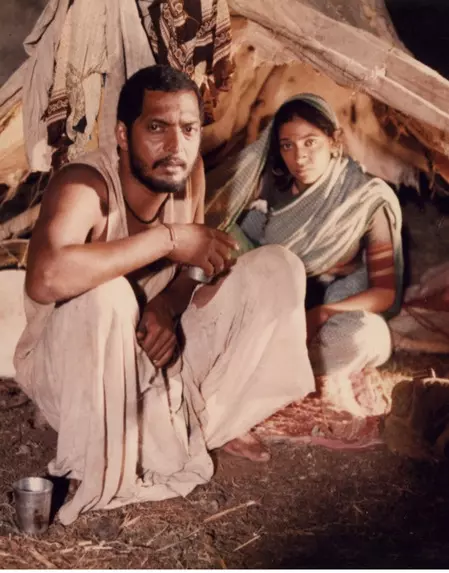
One of my earliest memories of Nana Patekar is his National Award-winning performance in Krantiveer. I still remember the scene where he confronts a frenzied crowd with those unforgettable lines: Yeh Musalman ka khoon, yeh Hindu ka khoon... bata, ismein Musalman ka kaunsa, Hindu ka kaunsa, bata! As Pratap Narayan Tilak, he gave a performance that stayed with me long after the film ended. His courtroom speech on Hindu-Muslim unity was fierce, angry and deeply human. I was quite young when I first saw it but those words stayed somewhere in my mind. They shaped the way I came to look at religious and communal differences. The scene made me realise that no identity should be allowed to make us forget our shared humanity. For me that was the power of Nana Patekar. He was not merely acting a part, but seemed to be saying things that needed to be said and saying them in a way that made you listen. He was first and foremost an artist and perhaps it is apt that his life and work also be seen through three roles that he played the movie actor, the theatre personality and the social worker. Each brought out a different side of Nana Patekar, the actor who could command the screen, the theatre artist who remained rooted in his craft and the social worker who chose to use his voice and resources for people in need. Known for his intense performances and unmistakable dialogue delivery, Patekar brought something raw and deeply human to the screen. He did not merely play characters he inhabited them. He made his film debut with Gaman in 1978 and spent several years doing relatively small roles. Then came Parinda in 1989. His portrayal of the volatile gangster Anna changed everything. The performance earned him his first National Film Award and a Filmfare Award. The 1990s saw him at his finest. He was Major Chauhan in Prahaar, a film he also directed. He played the menacing Majid Khan in Angaar. In Tirangaa, he became the fiery patriot audiences remembered. And just when audiences thought they had understood his range, he surprised them again. In Khamoshi-The Musical, he played a deaf and mute father with extraordinary restraint. There were no long speeches. His silence did the talking. His finest performances were repeatedly recognised at the highest level, three National Film Awards for Parinda, Krantiveer and Agni Sakshi and four Filmfare Awards, including Best Actor for Krantiveer. But perhaps his greatest achievement was that audiences rarely saw the star. They saw the character. However, before cinema made Nana Patekar a household name there was theatre. The stage was where he learnt his craft. It taught him discipline, timing and the importance of every word, every pause and every gesture. These lessons stayed with him throughout his film career. Patekar became closely associated with Marathi theatre and worked with some of its finest practitioners including the celebrated director Vijaya Mehta. His performance in Hamidabai Chi Kothi established him as an actor of unusual intensity and depth. He went on to appear in important productions such as Maha Sagar and Purush. His association with Purush lasted for many years. The play also reflected something fundamental about Patekar as an artist. He was never afraid of difficult subjects or uncomfortable questions. Even after becoming a major film star, he retained the instincts of a theatre actor. His performance in Natsamrat was a later reminder of this. As an ageing stage actor confronting loneliness, rejection and the loss of identity, he brought to the role a lifetime of theatrical experience. For Patekar, acting was never simply about fame. It was a craft and theatre remained the place where that craft was forged.His contribution to Indian cinema was recognised with the Padma Shri in 2013. There was yet another side to Nana Patekar that audiences saw less often. Away from the cameras, he increasingly devoted his time and public standing to people struggling far from the world of cinema. Farmers, rural families and communities affected by drought became an important part of this journey particularly Maharashtra. In 2015, Patekar joined hands with fellow actor Makarand Anaspure to establish the NAAM Foundation. The initiative emerged at a time when Maharashtra was witnessing severe agrarian distress and a painful number of farmer suicides. The response was not limited to writing cheques. NAAM worked with affected families and rural communities. Its efforts included financial assistance, water conservation and restoration of water resources and village development. The larger aim was to help rural communities become more secure and self-reliant. The actor who had spent much of his career playing angry men, rebels and troubled characters showed a different kind of intensity in his social work. It was quieter, more personal and often far away from the cameras. Nana Patekar will not only be remembered for Anna in Parinda, Pratap Tilak in Krantiveer, Major Chauhan in Prahaar and many other unforgettable characters but will also be remembered as a theatre actor who never forgot where he came from. Beyond all of that, he will still be remembered for trying to use his fame for people who had none. The applause will belong to the actor. The gratitude will belong to the people he helped. Dr Arun Manhas, Director Industries & Commerce, Jammu

Greater Kashmir 9 Oct 2026 6:42 am

GCC Summit raises hopes of reversing J&Ks youth exodus

Srinagar, Oct 8:As Jammu and Kashmir prepares to host the Global Capability Centre (GCC) Summit at IIM Jammu on October 9 and 10, the initiative outlined by Chief Secretary Atal Dulloo has rekindled memories of an ambitious technological vision conceived nearly five decades ago, when Kashmir was being developed as a destination for advanced electronics, precision manufacturing and export-oriented industries. In a recent article 'Building J&K's Place in India's GCC Future', Dulloo emphasised attracting major multinational enterprises through dedicated facilitation, time-bound approvals, ready infrastructure and industry-linked skill development. Industry stakeholders believe that securing even a few pioneering GCC investments could build confidence among other global companies, opening opportunities in software development, artificial intelligence, engineering, research, financial services and other knowledge-based sectors. Veteran industrialists and former officials associated with Kashmir's industrial development recall that the Electronic Industrial Estate at Rangreth was conceived after Sheikh Muhammad Abdullah's return to power in 1975 as a hub for technology-driven, export-oriented manufacturing. Developed through SIDCO, the estate attracted ventures in integrated circuits, computer discs, television sets, push-button telephones, electronic racks and precision engineering, at a time when such industries were still emerging elsewhere in India. Among the pioneering investments recalled by veteran industrialists was a project reportedly involving approximately Rs 20 crore by the Goenka group in the early 1980s, which incorporated robotic technology through collaboration with an American company. Continental Devices India Ltd was associated with integrated-circuit manufacturing, while another enterprise imported sophisticated machinery from the United States for computer-disc production. Diamond cutting and polishing units, including Swiss-linked ventures reportedly employing around 300 workers, also formed part of Rangreth's technological landscape. The estate's relatively dust-free environment was considered an advantage for precision electronics, and veterans even recall a visiting Japanese delegation comparing its potential with that of Silicon Valley. Rangreth later accommodated software enterprises and institutions, including NIELIT and Software Technology Parks of India, reflecting the original vision of an integrated electronics and technology ecosystem. Although some early investment details await documentary verification, the history of Rangreth shows that Kashmir had envisioned a technology-driven industrial economy long before Bengaluru, Hyderabad and other cities emerged as India's principal technology centres. The turmoil that followed, however, disrupted this journey and deprived successive generations of opportunities that might otherwise have developed at home. Stakeholders point to the transformation of Karnataka, Telangana, Maharashtra and Tamil Nadu through IT, engineering, research and GCC operations as evidence of what sustained policy support, dependable infrastructure and responsive governance can achieve. They believe that establishing just a few credible anchor enterprises in J&K could set off a wider investment ecosystem, generating direct professional employment alongside opportunities for local entrepreneurs and supporting services. The urgency, they say, extends well beyond economic growth. Thousands of highly educated and skilled young people from J&K have built successful careers in metropolitan cities across India and abroad, largely because comparable opportunities remain unavailable at home. Their achievements have often come at a considerable emotional and social cost. Families increasingly find themselves separated across cities and continents, with ageing parents left without the everyday companionship and care of their children. Young professionals gradually settle their own families elsewhere, weakening their ties with ancestral homes, neighbourhoods, language and cultural traditions. What begins as economic migration, stakeholders say, is increasingly becoming a social concern with consequences across generations. The predicament is particularly difficult for qualified young people who cannot relocate because of responsibilities towards elderly parents or dependent family members. At the same time, many experienced professionals working outside J&K would welcome the chance to return, bringing expertise, international exposure and entrepreneurial capabilities. Representatives of educated youth believe that competitive professional opportunities within J&K could address both concerns, allowing talented young people to pursue meaningful careers without sacrificing family responsibilities or cultural roots. Industry representatives have welcomed the recently unveiled Ease of Doing Business reforms, undertaken with the active support of the Chief Secretary, and the progress towards finalising the new Industrial Policy. They caution, however, that even these measures may fall short of the expectations of major technology investors, who require assured infrastructure, reliable utilities, transparent regulations, competitive operating conditions and uninterrupted administrative support. Another concern is continuity beyond the tenure of the present administrative leadership. Stakeholders maintain that prospective investors must be assured that the current enthusiasm, commitment and responsiveness will become permanent institutional features rather than depend on individual officers. Long-term investments, they argue, require confidence in enduring policies and reliable institutions. The summit, they suggest, should therefore culminate in a measurable, time-bound programme that identifies prospective anchor companies, ready-to-occupy facilities, dedicated facilitation mechanisms, and partnerships involving multinational enterprises, local entrepreneurs, universities and technical institutions. Active engagement by the Lieutenant Governor, the Chief Minister and senior administrative leadership would further reinforce confidence in a coordinated governmental commitment, they added. Ultimately, stakeholders say, the success of the initiative must be judged not by investment announcements or agreements signed, but by functioning enterprises and sustainable, well-paid employment generated within J&K. Nearly five decades after Rangreth was envisioned as a pioneering electronics and technology centre, Jammu and Kashmir once again stands before an opportunity to take part in a major transformation of India's knowledge economy. Having already lost decades of industrial and technological opportunity, the region can scarcely afford another missed chance. For thousands of young professionals working away from home, and for countless parents longing for their return, the GCC initiative holds a promise that extends well beyond industrial development: a future in which professional success no longer demands separation from home, family and roots.

Greater Kashmir 9 Oct 2026 6:34 am

Earthquake Rattles Palghar, Maharashtra with a Magnitude of 3.7

A mild earthquake measuring 3.7 on the Richter scale struck Palghar, Maharashtra, causing no reported damage or injuries. Earthquake Rattles Palghar, Maharashtra with a Magnitude of 3.7

Daily Kiran 9 Oct 2026 4:14 am

Nana Patekars son Malhar Patekar explains why his final rites were held after sunset

Digital Desk | Mumbai, Oct 9 (IANS) The late actor Nana Patekars son Malhar Patekar has shared the reason behind the final rites of the actor being held after the sunset. As per the traditions, the cremation isnt done after sunset. Malhar Patekar spoke with the media after the cremation, and explained that the family and his mortal remains were in Goa, and bringing them to his farmhouse took some time considering the long travel. He also shared that the actor passed away early in the morning, and a lot of time had already passed, and it wasnt advisable to keep the mortal remains for long. He told the media, We were in Goa, and his mortal remains were to be brought to the farmhouse in the village. We expected that we would arrive earlier but it took us some time. He passed away early in the morning so a lot of time had already passed and it was not advisable to keep the mortal remains for long. Hence, we had to do the cremation after the sunset. The actor was cremated with full state honours at his farmhouse in Donje in Pune district on Thursday. The actor was given a 3-gun salute. He also spoke about carrying forward the late actors legacy of social work, he shared, People like him don't go anywhere, they live forever through the work they are immortal. He always told us one thing that we should get together for humanity and work for the betterment of the world. He used to think on the global level. Our social work covered Maharashtra, pan-India including Jammu and Kashmir, we are doing all our social work there in the education and the health sector. He further mentioned, He had already passed on the responsibilities to every single person who deserved it. He had already delegated a lot of work to people who could do justice to it. And, he wanted to start everything from scratch and he wanted to spend his life at a place which demanded something from him in terms of social work. I'll make sure that whatever unfinished business is there, it gets completed. His dreams and my dreams collectively is to work for the people, I will ensure that it gets done, he added. The late actors friends and members of the film fraternity including Jackie Shroff, directors Anil Sharma, Aneez Bazmee, and producer Firoz nadiadwala arrived at Donje village to attend the last rites of Nana Patekar. A huge crowd also turned up to bid adieu to the departed soul. Maharashtra Chief Minister Devendra Fadnavis also paid his last respects to Nana Patekar at Pune airport before leaving for Mumbai. Maharashtra Deputy Chief Minister Eknath Shinde went to the actors Pune farmhouse to pay his respects. Nana Patekar passed away at the age of 75 in Goa. The actor suffered cardiac arrest. The actor was taken to hospital where doctors attempted CPR and resuscitation for about 45 minutes. However, he was later declared dead on arrival. Prominent members of the Indian film industry mourned the loss of the actor, as they expressed grief through social media. Bollywood superstar Salman Khan took to the Stories section of his Instagram, and wrote, Nanaaaaa... Rest in peace bhau. Salmans fellow superstar Ajay Devgn shared his condolences over the demise of the acting legend. He took to his X, formerly Twitter, and shared a still from their film Apaharan. He also penned a long note, as he lauded the late actor for his powerful presence. He wrote, Not many made us happy, sad and feel anger quite the way Nana did. His presence was powerful, his performances unforgettable, and his absence will now be deeply felt. Rest well, Nana. Om Shanti. Kamal Haasan took to his X, formerly Twitter, and shared a throwback picture with the screen legend. He also penned a long note, as he wrote, Heartbreaking news of Nana Patekar Jis passing. An extraordinary artist and an even greater human being. The man was a force of nature, and he uplifted the lives of those around him. Beyond the screen, his work helping farmers in Maharashtra and his volunteer service during the Kargil War spoke volumes about his deep sense of duty. My deepest condolences to his family and his legions of fans.

bhaskarlive 9 Oct 2026 3:33 am

Five injured in gas leak flare-up at IIT Bombay hostel in Maharashtra

The News Mill

The News Mill 9 Oct 2026 2:57 am

Pune school bus owners shift UPI MDR fee burden on parents

The Times of India 9 Oct 2026 12:54 am

A season on the rise, a Games gone wrong

The Times of India 9 Oct 2026 12:54 am

Rat Seen Swimming In Vessel Full Of Gulab Jamun In Maharashtra

The department took note of a viral video that showed the rodent swimming in the sugar syrup and trying to climb out of the vessel.

NDTV 9 Oct 2026 12:37 am

Raigad cops begin safety audit of beaches

The Times of India 9 Oct 2026 12:37 am

Pune man loses 5.42 lakh in crypto trading scam

The Times of India 9 Oct 2026 12:28 am

45-year-old loses 10L to RTO challan scam

The Times of India 9 Oct 2026 12:28 am

Rebel without a pause: Actor Nana Patekar no more

The Times of India 9 Oct 2026 12:25 am

Nana Patekar's State Funeral: Maharashtra Bids Farewell To Cinema Legend

Veteran actor Nana Patekar was accorded a state funeral in Pune, honouring his extraordinary contribution to Marathi theatre, Marathi cinema and Hindi cinema. From powerful performances in films such as Parinda, Krantiveer and Apaharan to his work as a philanthropist, Nana Patekar leaves behind a remarkable legacy. His last rites were held at his native Nanci Valley village in Pune, as Maharashtra paid its final respects.

NDTV 9 Oct 2026 12:25 am

Mumbai swelters at 37.6C, IMD warns of heatwave on Oct 9

The Times of India 9 Oct 2026 12:21 am

Nana Patekar cremated with full state honours at his village farmhouse

Digital Desk | Mumbai, Oct 9 (IANS) The late actor Nana Patekar was cremated with full state honours at his farmhouse in Donje in Pune district on Thursday. The actor was given a 3-gun salute. The late actors friends and members of the film fraternity including Jackie Shroff, directors Anil Sharma, Aneez Bazmee, and producer Firoz nadiadwala arrived at Donje village to attend the last rites of Nana Patekar. A huge crowd also turned up to bid adieu to the departed soul. Maharashtra Chief Minister Devendra Fadnavis also paid his last respects to Nana Patekar at Pune airport before leaving for Mumbai. Maharashtra Deputy Chief Minister Eknath Shinde went to the actors Pune farmhouse to pay his respects. Nana Patekar passed away at the age of 75 in Goa. The actor suffered cardiac arrest. The actor was taken to hospital where doctors attempted CPR and resuscitation for about 45 minutes. However, he was later declared dead on arrival. Prominent members of the Indian film industry mourned the loss of the actor, as they expressed grief through social media. Bollywood superstar Salman Khan took to the Stories section of his Instagram, and wrote, Nanaaaaa... Rest in peace bhau. Salmans fellow superstar Ajay Devgn shared his condolences over the demise of the acting legend. He took to his X, formerly Twitter, and shared a still from their film Apaharan. He also penned a long note, as he lauded the late actor for his powerful presence. He wrote, Not many made us happy, sad and feel anger quite the way Nana did. His presence was powerful, his performances unforgettable, and his absence will now be deeply felt. Rest well, Nana. Om Shanti. Kamal Haasan took to his X, formerly Twitter, and shared a throwback picture with the screen legend. He also penned a long note, as he wrote, Heartbreaking news of Nana Patekar Jis passing. An extraordinary artist and an even greater human being. The man was a force of nature, and he uplifted the lives of those around him. Beyond the screen, his work helping farmers in Maharashtra and his volunteer service during the Kargil War spoke volumes about his deep sense of duty. My deepest condolences to his family and his legions of fans.

bhaskarlive 9 Oct 2026 12:20 am

Totladoh Storage Plunges To 49%, Lowest In 4 Years

The Times of India 9 Oct 2026 12:18 am

15 illegal residences on SAI land razed

The Times of India 9 Oct 2026 12:16 am

CR staffer kin get Rs1cr financial aid

The Times of India 9 Oct 2026 12:16 am

Trace supply source of nylon manja: HC to state govt

Asks authorities to investigate whether banned kite string is entering city through rail, road or courier networks

The Times of India 9 Oct 2026 12:14 am

Nana Patekar cremated with full state honours, fans bid tearful farewell

The Indian film industry mourns the loss of Nana Patekar, who succumbed to cardiac arrest as confirmed by his son. The actor's passing, attributed to natural causes, prompted the Maharashtra government to orchestrate a state funeral fitting his legacy in cinema. Tributes poured in from fans and fellow actors in Pune, with many sharing their fond memories of the beloved artist on social media.

The Times of India 8 Oct 2026 11:32 pm