


Mahayuti vs MVA: Counting under way for five Maharashtra Legislative Council seats
Polling for the Pune Graduates, Nagpur Graduates, Chhatrapati Sambhajinagar (Aurangabad) Graduates, Pune Teachers and Amravati Teachers constituencies took place on October 23, recording a voter turnout of 72.96%, as per officials

Maharashtra MLC Polls: Gadkari, Family Cast Votes in Nagpur Graduates' Constituency
The biennial elections are also being held in the Pune Division Graduates', Chhatrapati Sambhajinagar (Aurangabad) Graduates', Pune Teachers' and Amravati Teachers' constituencies

How Parwati Duttas Mahagami turned Aurangabad into a cultural centre
Set in a lush landscape, the Mahagami gurukul, which recently celebrated its three-decade journey, has been nurturing the next generation into the classical arts.
Bombay High Court Peon Result 2026 has been released for the Physical Fitness and Special Skill Test held on 4 October 2026 for Peon, Hamal and Farash posts. Candidates can download the physical test results for Bombay, Nagpur and Aurangabad, check their marks out of 10 and view the viva-voce shortlisted candidates lists to confirm their eligibility for the next selection stage.
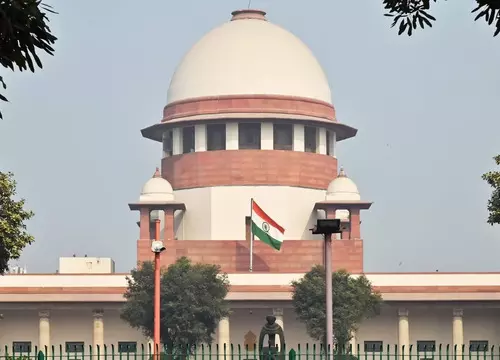
PIL in SC seeks uniform judicial terms, abbreviations and court fees across India
Digital Desk | New Delhi, Oct 14 (IANS) A public interest litigation (PIL) has been filed in the Supreme Court seeking directions to the Law Commission of India to prepare a comprehensive report in consultation with the apex court and all High Courts to standardise judicial terminology, abbreviations, phrases, norms, court fee structures, and case registration processes across the country. The plea, filed by advocate Ashwini Kumar Upadhyay under Article 32 of the Constitution, alternatively sought the constitution of an expert committee or directions to the Union Law Ministry to prepare a report to ensure uniformity in judicial procedures and nomenclature. The petition, which has arrayed the Union government, the Secretary General of the Supreme Court, the Registrars General of all High Courts, and the Law Commission of India as respondents, contended that significant variations in judicial terminology, case classifications, abbreviations, procedures and court fees across High Courts cause inconvenience to litigants, advocates and authorities, despite courts operating under the same constitutional and legal framework. The terminology used by different High Courts for different types of cases is not uniform. This causes inconvenience not only to the general public but also to advocates and the authorities as well, the petition stated. It further said that even where courts deal with similar categories of cases, the terms and abbreviations used to identify them differ, making the existing system difficult to navigate. Citing examples from various High Courts, the petition pointed out that criminal appeals are abbreviated as CRA, CR.A, CRAPL and CRL.A in different jurisdictions, while contempt appeals are referred to as CONTA, CONTAPP, CPTA, and ConApp. The plea also highlighted variations in the classification of writ petitions, stating that the Delhi High Court has multiple categories of writ petitions, while the Gujarat High Court deals with such matters under a single category of WRIT PETITION (PIL). Similarly, the petition said, the Gauhati and Himachal Pradesh High Courts have several categories of writ petitions, while the Jammu and Kashmir and Ladakh High Court follows its own classification system. It also flagged differences in the nomenclature of company matters, with COMPET used in the Gauhati High Court, COMP in the Gujarat High Court, and COP in the Himachal Pradesh High Court. The plea referred to further inconsistencies within the Bombay High Court and its Benches at Nagpur, Aurangabad, and Panaji, arguing that different terminologies and descriptions for similar case types create difficulties for advocates practising across these jurisdictions. According to the petition, the Bombay High Court's principal seat has 330 case types with descriptions but without abbreviations, while its Nagpur and Aurangabad benches have 77 and 61 such case types, respectively. The petitioner also raised concerns over the absence of uniformity in court fees for similar matters of comparable valuation across different states and High Courts, arguing that such disparities adversely affect access to justice. Judicial equality is a matter of constitutional right, its differentiation based on the jurisdiction of courts violates the Right to Equality enshrined under Articles 14-15 of the Constitution, the plea stated. Citing examples, the petition said that a criminal miscellaneous application under Section 482 of the Code of Criminal Procedure, 1973, attracts a court fee of Rs 2.65 in the Punjab and Haryana High Court, compared with Rs 2.50 in the Delhi High Court. It further highlighted that the court fee for a first appeal in matrimonial cases is Rs 19.50 in Punjab and Chandigarh, while the same appeal attracts a fee of Rs 24.50 in Haryana. The plea also highlighted differences in fees for transfer applications and company petitions, arguing that litigants are required to pay different amounts for similar legal proceedings depending on the jurisdiction. Unequal Court Fees in different States discriminate among citizens based on their place of birth and residence, the petition contended, adding that such differences also promote regionalism. It further referred to various state-specific amendments to the Court Fees Act, 1870, arguing that the resulting disparities underscore the need for a uniform court fee structure. The petition stated that the petitioner had submitted a representation to the Chairman of the Law Commission on September 5, seeking uniformity in judicial terminology, abbreviations, norms, phrases, court fees and case registration processes. However, claiming that the authorities had not taken steps to address the issue, the plea said the need for judicial standardisation continued to remain unaddressed. The petitioner has sought directions for a comprehensive exercise involving the Supreme Court and all High Courts to establish uniform standards for case classifications, judicial terminology, abbreviations, court fees and registration procedures across the country.
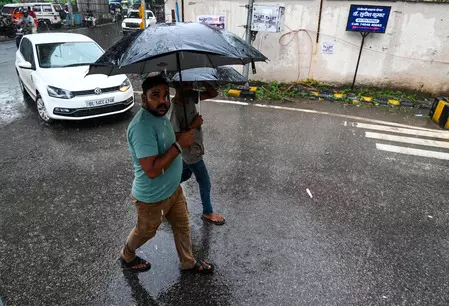
Yellow alert for rain, thunderstorms issued in 18 Bihar districts
Digital Desk | Patna, Oct 9 (IANS) Bihar is likely to experience unsettled weather on Friday, with rain, thunderstorms and strong winds forecast in several parts of the state. According to the Meteorological Centre, Patna, districts in North Bihar, particularly the Seemanchal region, may receive rainfall, and parts of north-western, north-central and south-western Bihar face a possibility of thunderstorms and lightning. The changing weather comes as the southwest monsoon withdrawal nears completion. Atmospheric moisture and local weather conditions are expected to contribute to fluctuations in rainfall and humidity across the state. The Meteorological Department has issued a yellow alert for 18 districts, warning of thunderstorms and strong winds that could reach speeds of 40-50 kmph. The districts listed in the alert are Gopalganj, Siwan, Bhojpur, Buxar, Arwal, Aurangabad, Saran (Chhapra), Vaishali, Samastipur, Darbhanga, Madhubani, Sitamarhi, Sheohar, Kaimur, East Champaran, West Champaran, Rohtas and Muzaffarpur. Rainfall is also possible in northern and eastern districts, including Purnea, Katihar, Araria, Supaul, Madhepura, Saharsa and Kishanganj. While several districts may experience rain and thunderstorms, Patna and its adjoining areas are expected to remain mostly dry on Friday. However, isolated light showers cannot be ruled out because of local cloud formation. Weather activity is expected to be more pronounced in parts of North Bihar and the state's border districts. According to the forecast outlined in the report, weather activity is likely to weaken from Saturday, with isolated rainfall remaining possible in parts of the Kosi, Seemanchal and eastern Bihar. By Sunday, conditions are expected to improve across most parts of the state, although light rain may persist in isolated areas, particularly in Kishanganj. No major changes in maximum or minimum temperatures are expected across most districts over the next five days. In view of the possibility of lightning and strong winds, residents have been advised to remain alert and follow official weather advisories. People should take shelter inside substantial buildings during thunderstorms and avoid open fields, isolated tall trees, electric poles and transformers. Residents are also advised to avoid unnecessary outdoor movement during severe weather and stay away from exposed locations until thunderstorms pass.
BJP announces 3 candidates for Maha Legislative Council polls
Digital Desk | Mumbai, Oct 4 (IANS) The Bharatiya Janata Party (BJP) on Sunday announced its candidates for three Teachers' and Graduates' constituencies for the upcoming Maharashtra Legislative Council elections, while the ruling MahaYuti alliance has finalised its seat-sharing arrangement for the polls. The BJP has fielded Smita Yogesh Jadhav from the Pune Division Graduates' constituency, Sudhakar Vitthalrao Kohle from the Nagpur Division Graduates' constituency and Kaustubh Muralidhar Gawde from the Pune Division Teachers' constituency. The announcement comes after discussions within the ruling alliance over the distribution of the five seats going to polls. According to MahaYuti leaders, the alliance has finalised a 3:1:1 formula for the elections. Under the arrangement, the BJP will contest three seats, while the Nationalist Congress Party (NCP) will contest one seat and the Shiv Sena will contest the remaining one seat. The NCP has been allotted the Chhatrapati Sambhajinagar Graduates' constituency, while the Shiv Sena will contest the Amravati Teachers' constituency. Meanwhile, the Congress on Saturday announced its candidates for the upcoming elections, renominating two sitting members and fielding a new candidate for the third seat allotted to the party. In a release, the Congress said sitting MLC Abhijit Wanjari will contest from the Nagpur Division Graduates' constituency, while sitting member Jayant Dinkar Asagaonkar will seek re-election from the Pune Division Teachers' constituency. The party has also fielded newcomer Aditi Pohare from the Amravati Teachers' constituency. Voting for the Maharashtra Legislative Council elections across the three Graduates' and two Teachers' constituencies will take place on October 23. The Graduates' constituencies going to polls are Pune Division, Nagpur Division and Chhatrapati Sambhajinagar, formerly known as Aurangabad Division. The two Teachers' constituencies are Pune Division and Amravati Division.
Mahayuti, MVA Struggle To Resolve Seat-Sharing
The Shiv Sena (UBT) has staked a claim to the Aurangabad Graduates and Amravati Teachers constituencies: Reports

Former Tax Officer Sentenced to Five Years for Accepting Bribe in Aurangabad
A former tax officer in Aurangabad has received a five-year prison sentence for accepting a bribe of 40,000 from a taxpayer. Former Tax Officer Sentenced to Five Years for Accepting Bribe in Aurangabad

Pilgrims Flock to Aurangabads Punpun Ghat for Ancestor Worship
Thousands gather at Punpun Ghat in Aurangabad for Pind Daan rituals during the 15-day Pitru Paksha festival, seeking peace for their ancestors. Pilgrims Flock to Aurangabads Punpun Ghat for Ancestor Worship

Biennial elections for five MLC Graduate, Teachers seats to be held on October 23
The five seats include Graduate and Teachers constituencies across the Aurangabad, Pune, Nagpur and Amravati divisions
Bihar Police Uncover Inter-State Chain Snatching Gang, Two Arrested in Aurangabad
Bihar police apprehend two suspects linked to an inter-state chain snatching gang in Aurangabad, recovering stolen items and weapons. Bihar Police Uncover Inter-State Chain Snatching Gang, Two Arrested in Aurangabad

RBI orders removal of Maharashtra minister, 7 others from Latur DCC Bank
The Reserve Bank of India (RBI) has ordered removal of Maharashtra Cooperation minister Babasaheb Patil and seven other directors of the Latur District Central Cooperative Bank for exceeding the 10-year tenure limit. Patil belongs to the Nationalist Congress Party (NCP) led by Deputy Chief Minister Sunetra Pawar. The central bank's order followed directions passed by the Aurangabad bench of the Bombay High Court in response to a petition filed by bank member Satish Sheshrao Jadhav. RBI Assistant General Manager Kapil Goswami issued the order on Friday. Directors of District Central Cooperative Banks (DCCBs/Central Cooperative Banks) have a maximum tenure cap of ten years under the Banking Regulation Act, 1949, as amended by the Banking Laws (Amendment) Act, 2025. Earlier, State Cooperation Department Deputy Secretary Sudhir Amrite had written to the Cooperation Commissioner, Pune, seeking action against directors of district central cooperative banks who had completed more than 10
Two Sentenced to 10 Years for Opium Trafficking in Aurangabad
Two men have been sentenced to 10 years in prison for trafficking over 5 kg of opium in Aurangabad, Bihar. Two Sentenced to 10 Years for Opium Trafficking in Aurangabad
NCB Mumbai secures conviction in inter-state drug trafficking case, two get 10 years jail
Digital Desk | Mumbai, Sep 9 (IANS) In a significant blow to an inter-state drug trafficking network, the NDPS Special Court in Biloli, Maharashtra's Nanded district, has convicted two traffickers and sentenced them to 10 years of rigorous imprisonment along with a fine of Rs 1 lakh each in a case involving the seizure of 1,127 kg of ganja, a statement of the NCB said on Wednesday. The convicts, identified as Gokul Narayan Rajput (32), a truck owner-driver from Maharashtra's Aurangabad district, and Sunil Yadav Mahajan (35), a co-driver from Jalgaon district, were arrested by the Narcotics Control Bureau's (NCB) Mumbai Zonal Unit on November 15, 2021, while transporting a large consignment of the contraband. Acting on specific intelligence, an NCB team intercepted an Ashok Leyland truck at Manjram village in Nanded district. During a search, officers recovered 49 polythene gunny bags concealed beneath a load of industrial iron rods. The bags contained 112 packets of ganja weighing a total of 1,127 kg. According to the NCB, the investigation revealed that the contraband had been loaded at Ankampalli in Andhra Pradesh's Visakhapatnam district and was being transported to Jalgaon district in Maharashtra. Probe findings also showed that Rajput had previously been booked in criminal cases related to attempted murder and kidnapping. The truck used for transporting the narcotics, which was owned by Rajput, had already been blacklisted by the Regional Transport Office (RTO), but continued to be used for illegal transportation activities, investigators said. During the trial, the prosecution established that both accused were in conscious possession of a commercial quantity of ganja and failed to provide a satisfactory explanation for its possession. The Additional Sessions Judge, Biloli, found both accused guilty under various provisions of the Narcotic Drugs and Psychotropic Substances (NDPS) Act, 1985, and sentenced them to 10 years of rigorous imprisonment along with a fine of Rs 1 lakh each. The court also ordered confiscation of the seized truck. The NCB said the conviction underscores its commitment to dismantling drug trafficking networks through effective investigation and prosecution, contributing to the goal of a drug-free India.
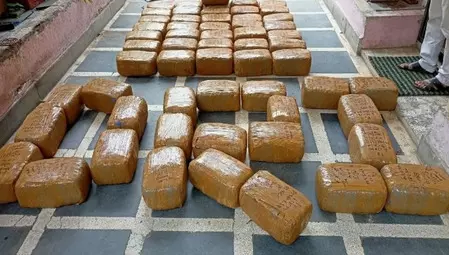
DRI seizes about 740 kg of cannabis in eight operations; 13 held
Digital Desk | New Delhi, Sep 9 (IANS) The Directorate of Revenue Intelligence conducted eight major operations across the country in the last fortnight and seized around 740 kg of cannabis and charas and arrested 13 people, an official statement said on Wednesday. The seizures included 709.6 kg cannabis (ganja), 24.5 kg highgrade hydroponic cannabis and 5 kg charas, the statement from the Ministry of Finance said. After receiving inputs, officers of DRI intercepted two trucks coming from Vishakhapatnam at Old Dhamtari Road near Raipur, leading to a recovery of 61 packets, concealed in 10 sacks kept in the loading areas of the trucks. A total of 375.95 kg cannabis, along with the two trucks, was seized under the NDPS Act, 1985, and four persons were arrested. Acting on specific intelligence during September 56, DRI intercepted a truck on the AurangabadPatna Highway near Patna, upon which officers were attacked and one was injured while the driver escaped, the statement noted. A search revealed 90 packets confirmed as ganja, and 140.5 kg and the vehicle was seized. Earlier, on August 26, 2026, officers seized about 124 kg of cannabis concealed in a truck near Raipur and arrested one person. On September 3, 2026, DRI intercepted three persons travelling in the general compartment of Amarnath Express train at Gorakhpur Railway Station. Personal search resulted in the recovery of around 5 kg charas (hashish), concealed by two of the passengers in knee-cap-like coverings wrapped around their thighs and hidden inside their sarees. Investigations indicated that the charas had been smuggled from Nepal. The recovered charas or hashish was seized and all three persons were arrested under the NDPS Act, 1985. Further, 3 passengers, arriving from Hanoi, Vietnam and Bangkok, Thailand at Hyderabad and Bengaluru airports were held in the last 15 days, collectively resulting in the seizure of approximately 24.6 kg high potency cannabis.
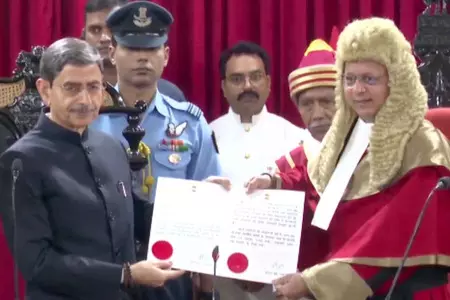
Justice Ravindra Vithalrao Ghuge takes oath as 45th Chief Justice of Calcutta High Court
Digital Desk | Kolkata, Sep 9 (IANS) Justice Ravindra Vithalrao Ghuge took the oath as the 45th Chief Justice of the Calcutta High Court during a formal ceremony held on the court premises here on Wednesday. West Bengal Governor R.N. Ravi administered the oath of office to Justice Ghuge in the presence of Chief Minister Suvendu Adhikari, West Bengal Assembly Speaker Rathindra Bose, and senior members of the state cabinet. Former and serving judges of various High Courts also attended the oath-taking ceremony. The appointment fills the permanent vacancy created after the retirement of former Chief Justice T.S. Sivagnanam, during which Acting Chief Justice Tapabrata Chakraborty managed the judicial duties of the High Court. There was a demand for the appointment of a permanent Chief Justice for the Calcutta High Court. In the meantime, the Supreme Court Collegium, led by Chief Justice Surya Kant, made recommendations in this regard. The Supreme Court Collegium recommended his elevation as the permanent Chief Justice of the Calcutta High Court on August 6, and his appointment was cleared by the government on September 5. Union Law Minister Arjun Ram Meghwal said on X Handle that the President, in consultation with the Chief Justice, has given his consent to Justice Ghuges appointment as the new Calcutta High Court Chief Justice under the powers granted by the Indian Constitution. Justice Ghuge started his legal career as an advocate in 1990. He has appeared in more than 2,000 cases, a majority of them representing labour unions. Over the years, he has also represented several industrial organisations and multinational companies. He also served as a contributory professor for the PG LL.M course at Dr. Babasaheb Ambedkar Marathwada University (BAMU) from 2005 to 2008. Justice Ghuge had also served as secretary of the Bar Association of Industrial Lawyers, Aurangabad for five years, as well as its president from July 2010 to December 2011. His judicial career began in June 2013, with his appointment as an Additional Judge of the Bombay High Court. He became a permanent judge there in March 2016. He was appointed the Acting Chief Justice of the Bombay High Court in June 2026.

Bihar, Jharkhand End 25-Year Dispute, Sign Sone River Water-Sharing Agreement
Bihar and Jharkhand have signed a water-sharing agreement for the Sone river, resolving a 25-year-old dispute between the two states. Union Home Minister Amit Shah, along with Bihar Chief Minister Samrat Choudhary and Jharkhand Chief Minister Hemant Soren, witnessed the signing. The agreement is expected to provide irrigation and drinking water to millions across both states. In Bihar, districts including Bhojpur, Buxar, Rohtas, Kaimur, Aurangabad, Arwal, Gaya and Patna will benefit, while Palamu, Garhwa and other areas of Jharkhand will receive water for irrigation and drinking. Shah described the agreement as an example of cooperative federalism and the Team Bharat vision.

Thieves tape pet dog's mouth before stealing jewellery worth lakhs and cash from Bihar house
Bihar's Aurangabad district has seen a disturbing theft in which thievestaped a pet dog's mouth shut before breaking into a house, apparently to stop it from barking and alerting anyone nearby. The incident took place in Bharwar village under the jurisdiction of the Muffasil Police Station late at night amid heavy rain.
Sterlite Technologies transitions to 100% green power glass manufacturing operations
Sterlite Technologies (STL), recently, has moved a significant share of its electricity sourcing away from conventional fossil-fuel-based grid power to '100% Green Power' generated from wind and solar sources. The transition covers four of the company's four manufacturing plants in Chhatrapati Sambhaji Nagar (Aurangabad), Maharashtra. The shift has been enabled through Maharashtra State Electricity Distribution Company (MSEDCL). This transition is expected to deliver a ~65% market-based scope 2 emission reduction in OF & OFC plants, representing a significant reduction in the emissions across participating plants.

Farmers Misled by Fake Fertilizers: Promod Kumar Singh
Aurangabad, August 23: Promod Kumar Singh, a legislator from the Janata Dal United (JD(U)), has raised concerns about the reliance of farmers on DAP fertilizers. He emphasized the need for farmers to diversify their fertilizer usage. In an interview on Saturday, Singh warned that excessive focus on DAP could empower syndicates engaged in black marketing. ... Read more Farmers Misled by Fake Fertilizers: Promod Kumar Singh
NCW Chairperson Leads Discussion on Womens Empowerment and Cybercrime Prevention
Aurangabad, August 22: Vijay Rahatkar, the Chairperson of the National Commission for Women (NCW), led a discussion on womens empowerment and policing against cybercrime for Maharashtra police officials during a capacity-building program on Saturday. An official confirmed this information. Rahatkars two-day visit included a poetry evening titled Nari Hunkar, organized in collaboration with the Maharashtra ... Read more NCW Chairperson Leads Discussion on Womens Empowerment and Cybercrime Prevention

Tejashwi Yadav Demands FIR and CBI Investigation in Bihars Vimal Kumar Murder Case
Patna, August 3: Tejashwi Yadav, the leader of the opposition in Bihar, has criticized the state government following the murder of Vimal Kumar, the executive officer of the Dehri-Dalmianagar Municipal Council in Aurangabad district. Yadav spoke with the victims wife over the phone, offering condolences and assuring her that his party would stand by the ... Read more Tejashwi Yadav Demands FIR and CBI Investigation in Bihars Vimal Kumar Murder Case
Shocking Murder of Bihar Municipal Officer Vimal Kumar Sparks Investigation
Aurangabad, August 2: The murder of Vimal Kumar, the Executive Officer of the Dehri-Dalmianagar Municipal Council, has sent shockwaves through the administrative sector in Bihars Aurangabad district. The incident occurred late Saturday night near the Dhanouti Bridge in the Barun police station area. The police have launched an investigation and are currently questioning a suspect ... Read more Shocking Murder of Bihar Municipal Officer Vimal Kumar Sparks Investigation

Vigilance Bureau Arrests Sub-Inspector for Bribery in Aurangabad, Bihar
Patna, August 1: The Vigilance Investigation Bureau has achieved another significant success in its anti-corruption campaign in Bihar. A police sub-inspector was caught red-handed while accepting a bribe of 50,000. The accused has been identified as Umesh Kumar, who was stationed at the Risiya police station in Aurangabad district. He was arrested on Friday near ... Read more Vigilance Bureau Arrests Sub-Inspector for Bribery in Aurangabad, Bihar
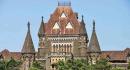
NEET candidates challenge results, Bombay HC fines each Rs 5K
The Bombay High Court on Thursday, July 30, dismissed the petitions filed by four candidates challenging the results of the National Eligibility cum Entrance Test (NEET) conducted in June. Justices N B Suryawanshi and A D Shinde of the Aurangabad bench here also imposed a cost of Rs 5,000 on each of the petitioners for Get the latest updates in Hyderabad City News , Technology , Entertainment , Sports , Politics and Top Stories on WhatsApp & Telegram by subscribing to our channels. You can also download our app for Android and iOS .

Bihar Police use tear gas, baton charge as NEET bandh turns violent
Patna: Left-wing student organisations held demonstrations across Bihar, some of which turned violent, on Saturday, July 25, in support of a statewide bandh against NEET question paper leak and police action on protesting students. According to police, the bandh turned violent in Patna, Saran, Siwan, Aurangabad and Bhagalpur, while protests in Samastipur, Nawada and Nalanda Get the latest updates in Hyderabad City News , Technology , Entertainment , Sports , Politics and Top Stories on WhatsApp & Telegram by subscribing to our channels. You can also download our app for Android and iOS .

Left-wing students hold demonstration, clash with police in support of Bihar bandh
The bandh turned violent in Patna, Saran, Siwan, Aurangabad and Bhagalpur, while districts like Samastipur, Nawada and Nalanda witnessed mild protests, police said

RJD MP Abhay Kushwaha Dismisses BJP Rumors Amid Political Speculations
Patna, July 18: Amid rising political speculations regarding his alleged closeness to Bihar Chief Minister Samrat Chaudhary, Abhay Kushwaha, the Member of Parliament from Aurangabad representing the Rashtriya Janata Dal (RJD), has firmly denied rumors of joining the Bharatiya Janata Party (BJP). Addressing a press conference, Kushwaha reiterated his commitment to the RJD and its ... Read more RJD MP Abhay Kushwaha Dismisses BJP Rumors Amid Political Speculations

Serious Blot On Civilised Society: Bombay High Court On Manual Scavenging
The Aurangabad bench of the high court held the state responsible for ensuring Rs 30 lakh compensation reaches the victims' families.