

 21 C
Phys.org
Elections 2026Others / Phys.org

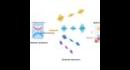
Intense laser light can make a crystal emit new colors at frequencies many times higher than that of the original beam. This process, known as high-harmonic generation, provides a powerful way to investigate the rapid motion of electrons in solids. Researchers usually study the brightness and spectrum of the emitted light. Yet those measurements capture only part of the available information. Fluctuations between individual laser pulses can also reveal how the emission is produced.

In recent years, public discussion has focused on the increasingly conservative values of young men. A recently published study indicates that this is primarily a phenomenon prominent in social and conventional media, not an overall trend.

In the twelfth century, the English-speaking world underwent a major change: Old English gave way to Middle English. In his dissertation, Ph.D. candidate Amos van Baalen uses sermons to reconstruct how this change took place.

In 2024, researchers at the Ultracold Quantum Gases group at ICFO built a quantum-gas microscope capable of imaging individual atoms in strontium quantum gases for the first time, marking a key enabling step for quantum simulation. At that time, the researchers imaged strontium-84, a boson that has no spin.
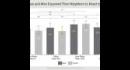
Imagine a group of newcomers in your local area. Would you expect your neighbors to welcome them or react with reluctance? Would it make a difference how many men and women were in the group, or whether they appeared white or nonwhite?

Researchers at the FAMU-FSU College of Engineering have developed a gel that delivers therapeutic particles to injured spinal cord cells, a potential step toward new treatments for spinal cord injuries.
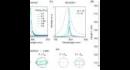
From tracking how cancer develops to exploring how the brain works, scientists need ways to observe biological processes at increasingly smaller scales. Beyond tracking how cells move and interact, researchers need to understand how tiny structures within cells, including organelles and molecular complexes, behave and change over time. However, identifying and tracking these microscopic targets individually remains a major challenge.
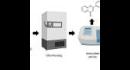
Passion fruit can travel thousands of kilometers before it reaches international markets. Along the way, one of the food industry
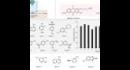
The process of producing essential medicines and fine chemicals has long been powered by reactions involving intense heat, heavy-metal catalysts and hazardous hydrogen gas. Now, a team of Harvard chemists and engineers has demonstrated that these critical transformations can be driven cleanly by electricity, right at the boundary where oil and water meet.
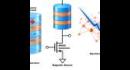
Researchers have designed an electronic neuron that combines two simple elements, a conventional transistor and a nanoscale magnetic device, to reproduce the behaviors of biological neurons. Unlike conventional electronic neurons, these behaviors emerge naturally from the magnetic properties of the device, without requiring complex control circuitry. The circuit can generate precisely timed electrical pulses that resemble those of biological neurons and, in a small demonstration, perform machine
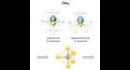
Gold nanoclusters, composed of a small number of gold atoms, can exhibit optical, electronic and catalytic properties distinct from those of bulk gold. One intriguing family consists of carbon-centered gold(I) clusters, in which a carbon atom is surrounded by several gold atoms. Unlike the familiar four-coordinate carbon in methane, the central carbon in these clusters can be coordinated by five or even six gold atoms.
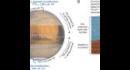
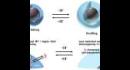
The acidity of tissues can provide important clues about a disease. Tumors and inflamed tissues often become more acidic than their surroundings because of changes in cellular metabolism. Measuring these pH variations could help researchers understand disease progression, identify abnormal tissue environments and evaluate treatment responses. However, detecting small pH differences inside the body remains challenging because magnetic resonance imaging (MRI) signals are affected by the concentrat
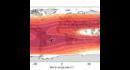
We rely on satellites every day for communications, weather forecasts and security, and more than 13,000 are currently circling the planet in low Earth orbit. But they could be more vulnerable than previously thought. Researchers have found that a single nuclear explosion in space could disable almost all of them.
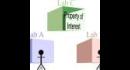
Two observers can start with the same description of a quantum system, follow the same probability rules and still disagree about the chance of the same outcome

Astronomers have measured the orbit, masses and distance of a pair of small, active stars with extraordinary precision, using the U.S. National Science Foundation

Nearly 200 major websites, including those of the BBC, HSBC UAE bank, Air France and IKEA, were targeted by a malicious cyberattack seeking to steal financial information and infect Apple devices, specialist media reported Tuesday.


The holiday season is a time for gatherings with family and friends


A new supernova has been spotted in NGC 1433, a spiral galaxy about 50 million light-years away. That
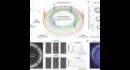
A ruler turns length into a position on a scale. A thermometer converts temperature into the height of a liquid column. In each case, a physical quantity becomes easier to read because an instrument gives it a visible reference. We wanted to bring the same idea to light, whose properties are usually measured with separate optical components and then interpreted through additional data processing.

A theoretical study expands classic game-theory models of cooperation by allowing payoffs to change with available environmental capacity. Games such as the prisoner

As of Oct. 30, the Sentinel-6B satellite has been calibrated to serve as the world


Sitting here on the outskirts of our Milky Way galaxy, it
Quantum light sources that emit light with special quantum properties, such as single photons, are critical for quantum photonic technologies, including quantum communication, computing and sensing. In this regard, monolayer tungsten diselenide (WSe

Hiding behind an anonymous handle or a blank profile picture on a messaging app might feel safe, but new University of Maryland research shows that what someone posts on one chat service can easily blow their cover on another.
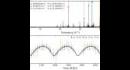
Massive stellar companions can be difficult to detect because they emit little visible light or show no obvious signs of accretion. Their gravitational pull, however, can be traced through the motion of nearby stars. In pulsating stars, regular brightness variations act as natural clocks, offering a way to find these hidden objects.

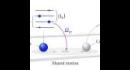
Quantum technologies, devices that can process, store or collect information leveraging the laws of quantum mechanics, could potentially outperform their classical counterparts on some tasks. Yet these devices are highly sensitive to changes or disturbances in their surrounding environment, which can disrupt quantum effects and lead to errors.

Elementary particles and the forces governing their interactions are described by relativistic quantum field theory, in which symmetry serves as a fundamental guiding principle. For more than half a century, the possible symmetries of such theories were believed to be restricted by the Coleman

Can you tell the difference between a scam text and a real one?

Coupons promise savings, but not every shopper sees them as clear-cut bargains. For some consumers, such discounts may lead them to ask,

The telephone book started as a one-page list of 50 telephone subscribers in 1878 in New Haven, Connecticut. It was later, in the late 1900s, when it became the utilitarian device that was ever-present in my household.
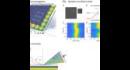
For centuries, optical systems have relied on lenses, mirrors and other components that manipulate light through their shape and size. Today, advances in nanotechnology are enabling a different approach. Researchers can now engineer materials at scales smaller than the wavelength of light, creating ultrathin optical components that offer new ways to control how light behaves.
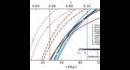
When the universe was less than 700 million years old, the supermassive black hole powering a quasar called J0313-1806 had already grown to about 3 billion times the mass of the sun. It is one of the most extreme examples of a puzzle that has occupied astrophysicists for two decades: How did supermassive black holes grow so big so quickly?
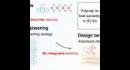
Stacking chips on top of one another could keep computers getting faster, but it creates a heating problem. Now, researchers from Japan have found that simply flipping atom-thin layers upside down could help steer that heat where it needs to go.

As early as 130,000 years ago, the first human societies were built on morality and cooperation within groups. The same is true today. Even young children exhibit a distinctly human desire to be seen as morally good. That is the conclusion of a new article by researchers at Leipzig University. Humboldt Research Fellow Dr. Leon Li and Junior Professor Dr. Sebastian Gr
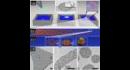
Forget about how the zebra got its stripes. For a group of Cornell engineers, an equally important question is: What drives the formation of such eye-catching patterns?
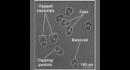
A UCLA-developed technology that is like a test tube but on the cellular scale has led to a number of biomedical discoveries in recent years, including revelations about cancer, heart disease and the genetic levers that push cells to release proteins.
As the demand for sustainable alternatives to conventional plastics continues to grow, biodegradable polymers such as poly(lactic acid) (PLA) are attracting increasing attention for applications ranging from packaging to consumer products.

From light switches to transistors, many kinds of switches have exactly two states: on or off, conducting or insulating, zero or one. Researchers at TU Wien are working with unusual materials that challenge some of the standard assumptions of materials physics. Using one of these materials, they have developed a tiny switch with four distinct states and several ways to move between them. This opens up new ways to process and store information. The study is published in the journal Communications
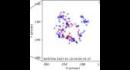
Using high-resolution observations from the New Vacuum Solar Telescope (NVST), a research team from the Yunnan Observatories of the Chinese Academy of Sciences (CAS) has systematically studied the kinematic properties of dynamic fibrils around a sunspot and the mechanisms that drive them. The study was published in The Astrophysical Journal on Nov. 10.

Researchers from the Okinawa Institute of Science and Technology (OIST) have created a spin-based microwave amplifier that operates near absolute zero, boosting signals by more than 1,000-fold while adding noise close to the bare minimum required by the laws of physics. As a more robust alternative to current state-of-the-art devices, the OIST device can handle much stronger signals and operate in magnetic fields, paving the way for practical quantum computing and higher-resolution sensing techn
Researchers at the University of Massachusetts Amherst have discovered how, during a bank-to-bank transfer, money can be deposited into one bank account without the funds ever leaving the second bank. This new class of cyberthreat is called credit without debit (CWD), and the researchers have demonstrated three ways hackers can use it to steal money.

Researchers at the UCLA Samueli School of Engineering and Auburn University have achieved a scientific first: They measured atomic vibrations that carry heat and sound waves, and connected them to a quantum property called spin, which is a way of characterizing a subatomic particle

Antiferromagnets are regarded as important materials for next-generation electronics. It is difficult, however, to accurately measure some of their properties. A new study by a team of researchers from Martin Luther University Halle-Wittenberg (MLU) and the Max Planck Institute for Microstructure Physics, working as part of the Cluster of Excellence Center for Chiral Electronics, explains why this is the case.