
 23 C
23 C Phys.org
Elections 2026Football / Phys.org

A research team led by Professor Jiwoong Yang of the Department of Energy Science and Engineering at DGIST has developed the world

Some of the giant marine reptiles that ruled the seas during the age of dinosaurs were better built for surprise attacks, while their relatives were better suited to chasing prey through open water, according to a Rutgers-led study.

Ahead of World Mental Health Day on Oct. 10, attention is turning to the question of what causes psychological strain at work. A study by Bielefeld University shows that inappropriate tasks are not the only factor associated with exhaustion. Changes in day-to-day work can also leave employees feeling exhausted, even when the number of burdensome tasks decreases. Perceived uncertainty plays an important role.

A research team has developed a photocatalytic technology that improves the stability of MXene, an emerging material vulnerable to water, to efficiently convert carbon dioxide into methane.

Astronomers have confirmed a powerful radio galaxy from nearly 12.5 billion years ago. The source, TXS 2354+015, was originally identified as a high-redshift candidate from its characteristic drop in optical light, and follow-up spectroscopy placed it at a redshift of 4.946. Their paper was posted to the arXiv preprint server on Sept. 23.

The discovery of an unexpectedly hot rock beneath Earth

When scientists discovered that increasing the ocean
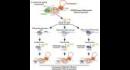
A new engineered gene-editing system, proven in bacteria and showing promise for use in plants, animals and humans, addresses some limitations of current gene-editing tools, with the goal of improving their use in research, crop development and disease treatment.
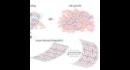
A team of engineers led by the University of Massachusetts Amherst has designed an ultrathin, flexible mesh that seamlessly integrates electronics with human cells to provide a continuous, reliable, powerful electrical supply. The study, published in Science Advances, provides a potential solution to one of the most difficult problems in wearable and implantable electronics: how to get rid of batteries.

Over the past few decades, electronics engineers have developed increasingly sophisticated implantable medical devices. Reliably powering some of these devices, however, can be challenging, particularly when they are based on stretchable materials that move along with the body.

Drivers alerted to police presence by others using a popular global app appear to be learning how to avoid speeding penalties