theleaflet
Elections 2026Entertainment / theleaflet

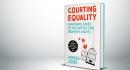
Raju Z. Morays thirty stories, narrated by Gobble D. Gook, find the wit and humanity that court reports and judgments leave out.
By warning the youth against mistaking freedom for unrestrained liberty, Doval invokes Lokmanya Tilaks name even as his own record, from civil society as a frontier of war to the crackdown on dissenters, stands in direct contradiction to everything Tilak stood and suffered for.
Clarifying its earlier order, which was being misconstrued to deny the benefit of no coercive action against student protestors accused in minor offences, the Court also mulled over the possibility of setting up an SIT to investigate police excesses.
The finding by the Commission headed by Justice S. Murlidhar provide a substantial evidentiary basis for investigating war crimes and crimes against humanity and, more controversially, reopen the debate on the interpretation of genocide in contemporary international law.
A deluge of videos document the Delhi police resorting to pellet shots, nail-studded lathis, tear gas, and even assaulting women protestors on July 20. By every metric, it impinged the principles of proportionality and minimal use of force.
With no public document recording what was agreed between the CJP and Union Ministers J.P. Nadda and Dr. Jitendra Singh, the withdrawal of cases against protesting students will turn on prosecutorial discretion and judicial consent, not on the informal assurance itself.
The petition filed by a former Special Director in the Intelligence Bureau and two victims of the RAF firing claims that the RAF fired metallic pellets suddenly into the crowd on July 20.
The Court directed that no coercive action be taken against protesting students, ordered preservation of CCTV and drone footage, and issued notices to Delhi and six other states over the crackdown.
AMERICAN DEMOCRACY remains robust as it marked its remarkable 250-year commitment to the ideal of self-government earlier this month. This endurance is not merely a matter of administrative convenience, but a testament to a nation that has projected itself as placing human dignity at the epicenter of the democratic experiment. It has sustained a constitutional structure that has securely housed democracy for two and a half centuries. Celebrating this milestone is not a license for erasure of his
The education ministers resignation happened because the young believed there is no wrong season for justice, no convenient hour at which a wrong at last becomes worth calling out.
A new report by the Peoples Union for Democratic Rights reveals that records pertaining to arrests and killing by security forces in the Maosit crackdown in Chhattisgarh raise questions on the true magnitude of arbitrary arrests and encounter killings.
After a controversial elevation superseding three judges in the Nepalese Supreme Court under the Balen Shah regime, Nepals Chief Justice Manoj Sharma is on his first official visit to India, as courts across South Asia reel through varying forms of executive pressures.
Justice Mathur noted that the governments response to the ongoing student protests amounted to repression rather than democratic engagement, and called on the government to treat criticism as central to governance.
The Bombay Bar Association condemned the use of force against protesting students while also cautioning against violence by protesters, and called for dialogue over confrontation.
While the Supreme Court called it a waste of its time to examine videos of the crackdown, the SCBA and SCAORA demanded an impartial inquiry into the police action against Chalo Sansad protesters.
Across the globe, history shows us that the right to protest has never depended on the States permission whether it be Dandi, Birmingham, or Jantar Mantar.

27 C