



DMK, AIADMK Slam Sleep Mode TVK Govt Over Rising Crimes Against Women
The criticism followed a series of crimes reported over a short span, including the alleged sexual harassment of a college student near Nagercoil in Kanyakumari district by a TVK functionary

A functionary of Tamilaga Vettri Kazhagam (TVK) has been booked by Thakkalai police in Kanyakumari district for allegedly sexually assaulting a college student after offering her a ride in his car. The accused, identified as Christopher, is reportedly absconding, and police are searching for him. According to reports, the victim is a second-year MA student [] The post TVK Model: Party Functionary Booked For Allegedly Sexually Assaulting College Student In Kanyakumari, Goes Absconding appeared first on The Commune .
India's longest train journey, the Vivek Express, connects Dibrugarh in Assam to Kanyakumari in Tamil Nadu, covering around 4,188 km in approximately 75 hours. The journey takes passengers through several states, from Assam's tea gardens and the plains of Bengal to the cities of Odisha and Andhra Pradesh, before reaching the greener landscapes of Kerala and the southern coastline. Here is what travellers can see along the route and how to plan the trip.
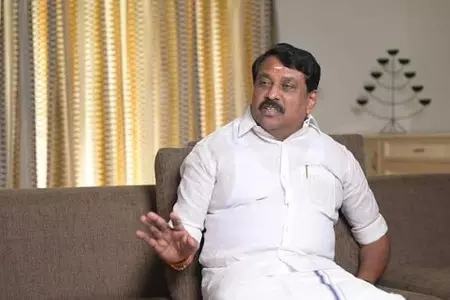
TN BJP chief alleges religious discrimination in two schools, demands action
Digital Desk | Chennai, Oct 19 (IANS) Tamil Nadu BJP president Nainar Nagenthran has demanded criminal action against the heads of two schools in Thoothukudi and Kanyakumari districts, alleging that students were subjected to religious discrimination for observing Hindu customs. In a post on X, Nagenthran referred to incidents in Athur in Thoothukudi district and Thakkalai in Kanyakumari district, accusing the government led by Chief Minister C. Joseph Vijay of failing to protect students religious identities and freedom of worship. According to his post, the headmaster of a school in Athur allegedly ordered the removal of religious garlands worn by more than 30 students observing a fast for Dasara. He also alleged that the incident involved an assault. The post did not provide details about the alleged assault. In the second incident, Nagenthran claimed that a headmistress in Thakkalai had instructed a Class 10 girl to conceal the bangles she was wearing. He described both episodes as disturbing examples of interference with students religious and cultural practices. The BJP leader argued that actions of this nature could hurt children during their formative years and undermine their sense of identity. He characterised the alleged incidents as violations of human rights and called for immediate accountability from the school authorities. Nagenthran further alleged that instances of religious suppression had increased since the Vijay government assumed office. He accused ministers of displaying religious partiality and claimed that such conduct had encouraged school administrations to act similarly. His post did not offer evidence to substantiate the allegation of an increase in such incidents. Educational institutions should promote equality and religious harmony, he said, adding that schools must respect students identities and their right to worship. He urged the government to ensure that institutions did not become places where children belonging to a particular religion felt their beliefs were being targeted. Calling for criminal proceedings against the school heads involved in the Athur and Thakkalai incidents, Nagenthran demanded that the ruling Tamilaga Vettri Kazhagam government and its ministers end what he described as a one-sided religious approach.

From Delhi to Kanyakumari and back, a ride for mental health
New Delhi: When Seher Hashmi, a mental health survivor, fashion stylist, visual artist and motivational speaker, rode back into Delhi on Friday, October 15, bringing her 56-day Delhi-Kanyakumari-Delhi journey to a close, she also wrapped up a nationwide campaign to raise awareness about mental health. Aptly titled Beyond the Horizon: A Ride for Resilience, the Get the latest updates in Hyderabad City News , Technology , Entertainment , Sports , Politics and Top Stories on WhatsApp & Telegram by subscribing to our channels. You can also download our app for Android and iOS .
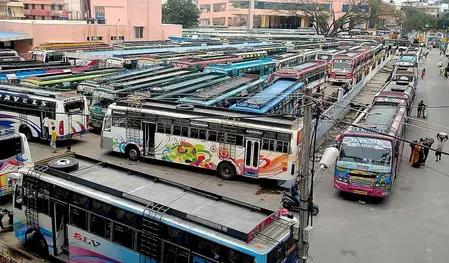
Bus fares, airfares soar in TN ahead of Ayudha Puja holiday rush
Digital Desk | Chennai, Oct 15 (IANS) Passengers travelling out of Chennai for the Ayudha Puja holidays face sharply higher transport costs, with private omni bus fares rising several times above normal levels and airfares surging on several routes. The four-day holiday stretch begins with the weekend on October 17 and 18, followed by Ayudha Puja on October 19 and Vijayadashami on October 20. With train reservations already full, many residents heading to their hometowns are seeking seats on buses and flights. Passengers complained that the omni bus fares from Chennai to southern districts and other destinations had increased substantially ahead of the festive rush, making travel increasingly expensive for those yet to book tickets. On the Chennai-Kanyakumari route, tickets normally priced between Rs 800 and Rs 1,200 are now being quoted at Rs 3,420. Fares to Tirunelveli have risen from around Rs 1,300 to Rs 3,000, while those to Madurai have increased from Rs 800 to Rs 2,500. For Chennai-Coimbatore services, fares usually ranging between Rs 600 and Rs 1,000 have climbed to Rs 3,500, adding to the financial burden on holiday travellers. Air passengers are also facing steep increases, particularly for departures on October 16 and 17, when demand is building ahead of the extended break. Chennai-Madurai flight tickets available at approximately Rs 3,500 to Rs 5,500 for October 16 are being quoted between Rs 12,026 and Rs 18,626 for October 17. Fares on the Chennai-Coimbatore route, normally around Rs 3,500 to Rs 4,500, have reached approximately Rs 11,000 for October 16 and 17. Tickets to Thoothukudi, usually costing between Rs 4,000 and Rs 5,500, are now priced from Rs 11,736 to Rs 13,626. Chennai-Kolkata fares have increased from the usual Rs 6,000-Rs 7,000 range to Rs 14,117. The increase extends to shorter routes within Tamil Nadu. Chennai-Tiruchirappalli tickets, normally priced between Rs 2,300 and Rs 3,500, are being quoted at Rs 6,500 to Rs 9,500 for October 16 and 17. On the Chennai-Salem route, fares have risen from approximately Rs 1,900-Rs 3,800 to between Rs 5,600 and Rs 12,000. ' The simultaneous increase in bus and flight prices has left passengers with limited affordable options, particularly as the full train bookings reduce alternatives for families planning to travel together during the consecutive holidays and festival celebrations across Tamil Nadu and other popular destinations.
Weather Chennai: Chennai is likely to receive moderate rain in some areas on October 14, accompanied by thunderstorms and lightning, according to the India Meteorological Department (IMD). Heavy rain is forecast at isolated places in Ramanathapuram, Thoothukudi, Tirunelveli and Kanyakumari districts.
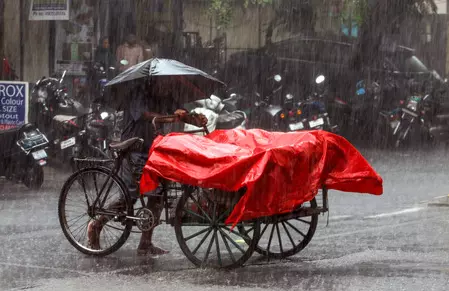
Heavy rain forecast for four TN districts today
Digital Desk | Chennai, Oct 14 (IANS) Heavy rain is likely in four southern districts of Tamil Nadu on Wednesday, the Regional Meteorological Centre in Chennai said, as a low-pressure system persists over the southwest Bay of Bengal. Ramanathapuram, Thoothukudi, Tirunelveli and Kanyakumari are expected to receive heavy rainfall during the day. The weather system, described in the bulletin as extending from the central Bay of Bengal towards the southwest Bay, is influencing rainfall across parts of the state. The forecast also indicates moderate rain in several northern, coastal, central and western districts on Wednesday, with Chennai among the areas likely to receive showers. Some parts of the capital could experience moderate rain accompanied by thunder and lightning. Chennais maximum temperature is expected to reach around 34 degrees Celsius. The forecast points to rainfall in some localities rather than uniform conditions across the city, with thunderstorms possible alongside the showers throughout the day, according to the weather centre. Other districts identified for moderate rainfall include Tiruvallur, Chengalpattu, Villupuram, Cuddalore, Thanjavur, Tiruvarur, Mayiladuthurai, Nagapattinam and Pudukkottai. Rain is also expected in the Nilgiris, Coimbatore, Tiruppur, Theni, Dindigul, Virudhunagar, Tenkasi, Perambalur and Ariyalur. The rainfall outlook for Thursday covers a wider geographical area, with heavy showers forecast in parts of southern Tamil Nadu, the western belt and several districts in the central region. The hilly areas of Tenkasi and Tirunelveli are among the locations expected to receive heavy rain. Kanyakumari, Madurai, Dindigul, Tiruppur, Coimbatore and the Nilgiris are also included in Thursdays heavy-rain forecast. Further inland, the districts of Erode, Salem, Namakkal and Karur could receive heavy showers, according to the outlook. The forecast extends to Tiruchirappalli, Perambalur, Ariyalur, Pudukkottai and Nagapattinam, indicating that rainfall activity could affect both inland districts and sections of the coastal belt on Thursday. The two-day outlook shows a shift from heavy rainfall concentrated in four southern districts on Wednesday to a broader spread of heavy showers on Thursday. Meanwhile, moderate rainfall is expected across several other parts of Tamil Nadu on Wednesday. For Chennai, the immediate forecast remains moderate rain with possible thunder and lightning in some areas. Elsewhere, the intensity of rainfall is expected to vary by district, with the southern districts facing the principal heavy-rain spell on Wednesday and a larger group of districts included in the following days weather outlook.
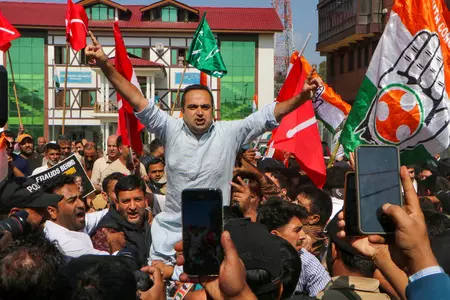
INDIA bloc leaders in J&K hold protest under Save Democracy Week campaign
Digital Desk | Srinagar, Oct 10 (IANS) INDIA Bloc leaders belonging to different political parties in Jammu and Kashmir on Saturday carried out a joint protest under the nationwide Save Democracy Week and Vote Bachao, Desh Bachao campaign. For the first time, political rivalries belonging to the Congress, National Conference (NC) and the Peoples Democratic Party (PDP) on Saturday came out together to stage a joint protest here. The protesters attempted to start a protest march from the Congress headquarters on the Maulana Azad Road, but were stopped by police personnel deployed in strength to prevent the march. They were forced to withdraw into the compound of the Congress, where they subsequently staged a symbolic protest within the office premises. The INDIA bloc protesters were carrying flags of the Congress, NC and PDP. Congress leaders accused the BJP-led government at the Centre of undermining the Constitution and democratic institutions. Protesters said they were holding a joint peaceful protest and that there is one united voice from Jammu and Kashmir to Kanyakumari that Gyanesh Kumar, Prime Minister and Home Minister, should go. The leaders also criticised restrictions imposed in Delhi, including curbs on movement and internet services, and alleged that democratic freedoms were under threat. The INDIA bloc leaders urged people across the country to unite in defence of the Constitution and democratic institutions. The Save Democracy Week campaign (also known as the Vote Bachao, Desh Bachao or Save Vote, Save Country campaign) is a nationwide political movement launched by the opposition INDIA bloc, being held from October 2 to October 8, 2026 (with extended regional demonstrations following into mid-October). The protests and rallies target the Election Commission of India (ECI) over the Special Intensive Revision (SIR) of electoral rolls, following reports that millions of voters faced exclusion or list modifications. The demands include the removal of Chief Election Commissioner Gyanesh Kumar, halting or reviewing the SIR process of voter lists, restoring the selection process for Election Commissioners based on the Supreme Court's committee model (comprising the Prime Minister, Leader of the Opposition, and Chief Justice of India), and protecting Article 326 and citizens' universal adult suffrage. Opposition parties organised marches and protests aimed at the ECI and Parliament, demanding institutional transparency. In J&K, joint protests by the INDIA bloc (including Congress, NC, and PDP) took place in Srinagar and Baramulla, featuring rallies and effigy-burning demonstrations outside party offices. Rallies, press meets, and collectorate marches were organised across states including Jharkhand (Ranchi), Telangana (Hyderabad), Assam (Diphu and Karbi Anglong), Haryana (Chandigarh) and Andaman and Nicobar Islands.
Kanyakumari: Church Teacher Arrested Under POCSO For Allegedly Sexually Harassing 12-Year-Old Boy
A 55-year-old church teacher was arrested under the Protection of Children from Sexual Offences (POCSO) Act in Kanyakumari district on Monday, 6 October 2026, for allegedly sexually harassing a 12-year-old boy who attended Sunday Bible classes, as reported in Times of India. The accused, identified as Roslin Vedhakannan, a resident of Palapallam near Colachel, was [] The post Kanyakumari: Church Teacher Arrested Under POCSO For Allegedly Sexually Harassing 12-Year-Old Boy appeared first on The Commune .

Can't defend the indefensible: Priyanka Kakkar quits AAP, joins Congress
AAP national spokesperson Priyanka Kakkar on Saturday quit the party and joined the Congress, saying she could no longer defend the indefensible. Kakkar joined the Congress along with former Uttar Pradesh MLA Shyam Sunder Sharma and Rajat Rakesh Tandon in the presence of senior party leaders, including Rajiv Shukla, Pawan Khera and the party's Delhi unit chief Devendra Yadav. Welcoming her and others into the party, Congress general secretary Naseer Hussain said Kakkar has been a former chief national spokesperson of AAP, Shyam Sundar Sharma is a former MLA from Uttar Pradesh, while Rajat Rakesh Tandon hails from the family of freedom fighter Purushottam Das Tandon. Today, from Ladakh to Kanyakumari, people are placing their trust in the leadership of Congress president Mallikarjun Kharge and Leader of Opposition (in the Lok Sabha) Rahul Gandhi and joining the Congress. We welcome everyone with open hearts, Hussain said. Today is a day of great joy. Shyam Sundar Sharma, who is .

Gujarat: Ahmedabad railway division cleans around 3,000 km of tracks
Digital Desk | Ahmedabad, Oct 2 (IANS) Around 3,000 km of railway tracks across the Ahmedabad division of Western Railway were cleaned in a single day on Friday as part of a large-scale Swachh Track Mega Campaign organised on the occasion of Mahatma Gandhi Jayanti under 'Swachhta Pakhwada-2026'. The distance covered in the cleanliness drive is described by the division as roughly equivalent to the distance between Kashmir and Kanyakumari. The campaign was conducted under the leadership of Divisional Railway Manager Ved Prakash, with officers and employees from various departments participating in cleaning activities across the division. At Sabarmati Railway Station, Ved Prakash administered a cleanliness pledge to railway officers, employees, sanitation workers and members of the Scouts and Guides. Participants pledged to work towards maintaining clean railway premises and tracks and to promote cleanliness and public participation. As part of the drive, station masters and supervisors, cleaning staff and other railway employees participated in cleaning tracks and station premises between their respective home stations and the next stations. Simultaneous shramdaan and special cleanliness drives were also conducted at stations, yards, railway colonies and areas along the tracks. The drive covered several locations across the Ahmedabad division, including Ahmedabad, Sabarmati, Viramgam, Maliya Miyana, Radhanpur, Dhrangadhra, Mehsana, Palanpur, Bhuj, Gandhidham, Asarva and Himmatnagar. Cleaning activities were carried out at railway stations, yards, colonies, health units and trackside areas. Railway employees and their families, the Railway Protection Force, Scouts and Guides, voluntary organisations and other participating groups also took part in the campaign. The activities were conducted without affecting railway operations and with prescribed safety precautions being followed while working near running lines. The Ahmedabad division is conducting a series of cleanliness and awareness activities from October 1 to 15 under Swachhta Pakhwada-2026. From October 3 to 5, intensive cleaning drives are scheduled at major locations, followed by cleaning of trackside areas and legacy waste from October 6 to 8. A campaign to remove unnecessary posters and banners and gutkha stains is scheduled for October 9 and 10. Activities focused on awareness and compliance with the Solid Waste Management Rules, 2026, are scheduled from October 11 to 15. The division said the fortnight-long programme is aimed at strengthening cleanliness at railway stations, tracks, railway premises and surrounding areas, alongside creating greater awareness among passengers, railway employees and the public.
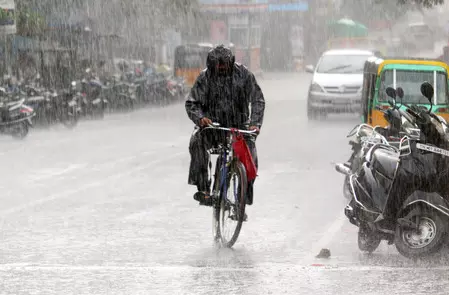
TN: Heavy rain forecast in Nilgiris, Coimbatore, Erode today
Digital Desk | Chennai, Oct 1 (IANS) Heavy rain accompanied by strong winds is likely in Nilgiris, Coimbatore and Erode districts on Thursday, the Meteorological Department said, as a trough extending across Tamil Nadu is expected to bring rainfall to several parts of the state. The trough runs from south interior of Karnataka to the Gulf of Mannar through Tamil Nadu. Under its influence, the three western districts could receive heavy showers, while several other districts are likely to experience moderate rain accompanied by thunder and lightning. The forecast places Nilgiris, Coimbatore and Erode among the areas expected to receive the heaviest rainfall. Strong winds could accompany the showers in these districts, according to the department. Moderate rain with thunderstorms is likely in Tiruchirappalli, Namakkal, Theni, Tenkasi, Tirupattur, Dindigul, Madurai and Virudhunagar. Tirunelveli and Kanyakumari districts could also receive moderate showers accompanied by thunder and lightning. The forecast indicates that rainfall will extend beyond the western districts, covering parts of central and southern Tamil Nadu. However, the intensity is expected to vary, with heavy rain predicted for the three western districts and moderate showers for the other districts mentioned by the department. Elsewhere in Tamil Nadu, light to moderate rain is likely at a few places. Similar conditions are expected in Puducherry and Karaikal, where the department has forecast light to moderate showers. For Chennai, the forecast points to a chance of light rain during the evening or night. The city is therefore expected to see milder rainfall than the heavy showers predicted in Nilgiris, Coimbatore and Erode. The departments outlook for the capital is limited to the possibility of light showers later in the day. It has not indicated heavy rainfall for Chennai in the forecast provided. Thursdays weather outlook highlights differing conditions across the region, ranging from heavy rain with strong winds in western Tamil Nadu to thunderstorms in several inland and southern districts and lighter showers elsewhere. The trough passing through the state is the weather feature associated with the expected rainfall. The department has linked the likelihood of heavy rain in Nilgiris, Coimbatore and Erode to its influence. While rain is possible across several districts, the forecast does not suggest uniform rainfall throughout Tamil Nadu. It identifies particular districts for heavier or thunderstorm activity and predicts scattered light to moderate showers in the remaining areas.

Swell waves reach west coast; red alert continues along Keralam coast
According to KSDMA, swell waves with a period of 20 to 24 seconds and a height of up to 1.5 metres reportedly hit parts of Kanyakumari on September 26, while precursor waves began reaching the Keralam coast
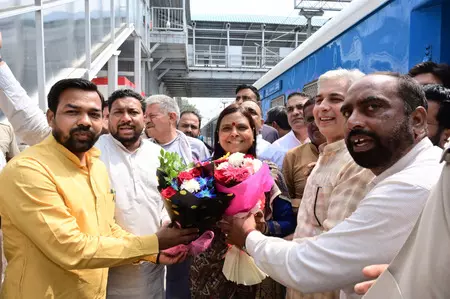
Smriti, Bholas capabilities will provide direction: Haryana BJP chief
Digital Desk | Chandigarh, Sep 23 (IANS) Former Union Minister and Bharatiya Janata Party (BJP) national general secretary Smriti Irani was on Wednesday appointed the partys in-charge for Haryana, while national secretary and MP Bhola Singh has been named co-in-charge, as part of organisational changes announced by the BJPs central leadership. Welcoming the two leaders on behalf of the Haryana BJP, state president Archana Gupta said their experience and organisational capabilities would bring new energy and direction to the state unit. In a statement, she said Iranis extensive experience in national politics, government and the organisation would provide important guidance to the state BJP. She added that Bhola Singhs long organisational experience and ability to work closely with party workers would further strengthen the unit. Gupta said the BJPs organisation is continuously working to expand and strengthen its network from the booth level to the state level, adding that the process would gain further momentum under the guidance of the new in-charge and co-in-charge. Meanwhile, Gupta said Prime Minister Narendra Modi has strengthened the countrys unity and integrity while undertaking the historic task of connecting Kashmir with Kanyakumari through the railway network, often described as the poor mans mode of transport. She noted that the transformation of Indian Railways over the past 12 years, ranging from indigenous hydrogen-powered trains to the worlds highest railway bridge over the Chenab, has strengthened public confidence in the national transporter. As part of the Kahani Badlav Ki (story of change) campaign under the Seva Sankalp Abhiyan, which marks 25 years of PM Modis public life of service, dedication, sacrifice and commitment, Gupta travelled by a hydrogen train from Gohana to Jind on Wednesday. Accompanied by members of the BJP state executive, she interacted with youths, women, children and other passengers during the journey and sought their experiences and suggestions. She also discussed issues including womens safety, modern railway facilities, cleanliness and the expectations of young people. She said the hydrogen train introduced in Haryana was not merely a new train but a symbol of Indias progress towards a clean, green and self-reliant future.

Indian Oil board approves Kochi-Kanyakumari-Thoothukudi gas pipeline
IOCLs Board cleared the investment approval for laying, building and operating KTPL at an estimated project cost of 2,448.70 crore
IOCL to invest 2,449 cr in Kochi-Kanyakumari-Thoothukudi gas pipeline
The 424.5-km pipeline will have a capacity of 6.84 mscmd and transport regasified LNG from the Kochi terminal to key demand centres in Kerala and Tamil Nadu
Indian Oil to invest 2,449 crore for Kochi-Thoothukudi natural gas pipeline
The 424.65-kilometre pipeline will pass through Kochi, Kanyakumari and Thoothukudi and will have an overall capacity of 6.84 million standard cubic metres per day

Jagga Reddy lauds advocate on padayatra seeking Rahul as PM
Hyderabad: Telangana Pradesh Congress Committee (TPCC) working president Jagga Reddy on Thursday, September 17, lauded Venkateshwarulu, an advocate of the Andhra Pradesh High Court, for initiating a padayatra from Kanyakumari to Kashmir with the objective of seeing Congress leader Rahul Gandhi become the Prime Minister of India. On Thursday, the advocate reached the TPCC district Get the latest updates in Hyderabad City News , Technology , Entertainment , Sports , Politics and Top Stories on WhatsApp & Telegram by subscribing to our channels. You can also download our app for Android and iOS .
Moderate rain forecast in 17 TN districts after heavy downpour
Digital Desk | Chennai, Sep 13 (IANS) Several parts of Tamil Nadu, including Perambalur, Vellore, Virudhunagar and Dindigul districts, received heavy rain accompanied by strong winds, bringing relief from the prevailing heat. The Regional Meteorological Centre has forecast moderate rain in 17 districts on Sunday. Heavy rain lashed Perambalur and surrounding areas, including Arumadal, Kavulpalayam, Eraiyur, Perali and Thuraimangalam. Several parts of Tiruvannamalai district, including Arani town, Kannamangalam, Sandavasal and Sevur, also witnessed intense showers. In Vellore district, rain was reported in Vellore city, Katpadi, Sathuvachari, Ponnai, Vallimalai, Latheri and Gudiyatham. Heavy rain at Pernambut caused severe waterlogging along the State Highway connecting Tamil Nadu with Andhra Pradesh and Karnataka. Rainwater accumulated like a large pool along a half-kilometre stretch, leaving motorists struggling to navigate the road. Sivakasi and its neighbouring areas, including Tiruthangal, Satchiyapuram and Vilampatti in Virudhunagar district, received heavy rain accompanied by gusty winds. Similar conditions prevailed in Vathalakundu, Pattiveeranpatti, Old Vathalakundu and Mallanampatti in Dindigul district. Evening showers in Kodaikanal brought down temperatures and delighted tourists. Moderate rain was recorded in Periyakulam, Allinagaram and Aranmanai Pudur in Theni district. Nagapattinam and nearby areas, including Kilvelur, Devur, Thirumarugal, Nagore, Sikkal and Valivalam, experienced rain accompanied by strong winds. The showers cheered farmers preparing their fields for samba paddy cultivation. Nannilam and adjoining areas in Tiruvarur district also received rain. Residents of Mettupalayam and Kallar in Coimbatore district welcomed the sudden showers after days of hot weather. Udhagamandalam also experienced a noticeable drop in temperature following rain after several unusually warm days. The weather office said moderate rain was likely in the Nilgiris, Coimbatore, Tiruppur, Dindigul, Theni, Tirunelveli, Tenkasi, Virudhunagar, Kanyakumari, Madurai, Sivaganga, Tiruchi, Ariyalur, Perambalur, Pudukkottai, Tiruvannamalai and Vellore districts on Sunday. Chennai and its suburbs may receive moderate rain during the evening or night. Heavy rain is forecast in the Nilgiris on September 15 and 16, while Coimbatore could experience heavy showers on September 16.
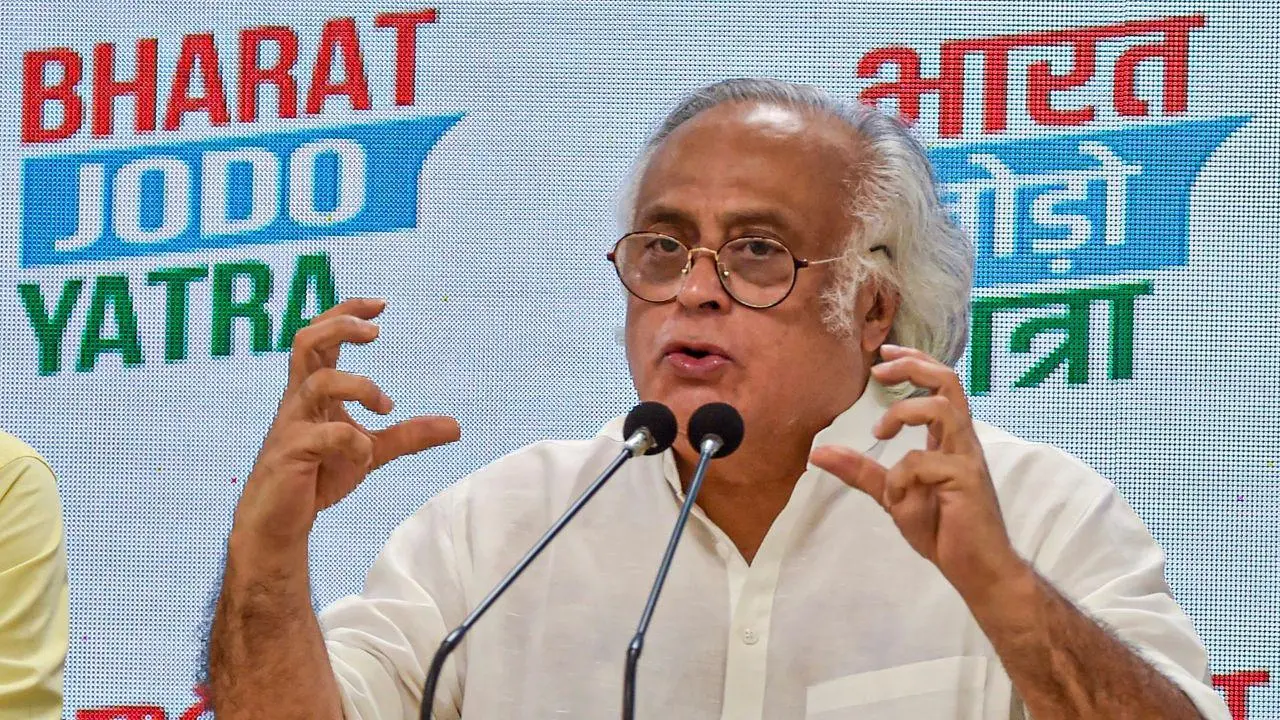
Rahul-led Bharat Jodo Yatra was not to sermonise
New Delhi, Sep 7 (PTI) The Congress on Monday hailed the Rahul Gandhi-led Bharat Jodo Yatra as a decisive turning point that infused new hope, and said it was not to sermonise a Mann ki Baat but to listen to Janta ki Chinta. Congress general secretary in-charge communications Jairam Ramesh said today is the fourth anniversary of the launch of the truly historic Bharat Jodo Yatra under the leadership of Gandhi, who visited the Vivekananda Memorial at Kanyakumari before embarking on the epic journey with around 120 other Bharat Yatris. This padyatra was a transformational event in contemporary Indian politics

The integration should be a springboard for active development with push for new projects, speeding up stalled works and ensuring fair budgetary support

17 Tons of Ration Rice Seized Near Kerala Border; Revenue Officer Attacked
Kanyakumari, August 23: Police have launched a manhunt for a gang accused of attacking a revenue officer and threatening his life. This incident occurred when officials attempted to seize 17 tons of ration rice stored in a warehouse within the Kerala border. Authorities reported the details on Sunday. The event unfolded when a flying squad, ... Read more 17 Tons of Ration Rice Seized Near Kerala Border; Revenue Officer Attacked

Indian worker returns from Saudi Arabia after serious site fall
Hyderabad: An Indian worker from Tamil Nadu, who suffered severe head, neck and shoulder injuries after falling from the second floor of a building site in Saudi Arabia, returned to Kerala on Friday, August 14, after three months of treatment. Shiju, a diploma holder in mechanical engineering from Kulasekaram town in Kanyakumari district, was working Get the latest updates in Hyderabad City News , Technology , Entertainment , Sports , Politics and Top Stories on WhatsApp & Telegram by subscribing to our channels. You can also download our app for Android and iOS .
Thousands Perform Ancestral Rites at Water Bodies on Aadi Amavasya
Major holy sites like Rameswaram and Kanyakumari, besides Chennai coastal areas and the Cauvery and Thamirabarani river banks saw huge crowds performing the rituals
Chit Fund Cheat From Kanyakumari Held in Chennai After 2 Years
Paulraj, a resident of Kattavilai, near Kadayalumoodu, had been running Divine Chit Fund, collecting deposits ranging from Rs. 10,000 to Rs. 50 lakh from people in Kadayalumoodu, Pechiparai, Thirparappu and other adjoining hill areas
This 3,500-km-wide icy cloud band from China to India is bringing rain from Kashmir to Kanyakumari
A giant 3,500-km-wide cloud band stretching from western China across the Tibetan Plateau, Himalayas and into India has been captured by INSAT-3DS. The icy cloud canopy is not one massive storm but the combined outflow of dozens of monsoon thunderstorms, whose high-altitude ice clouds merge and stretch across the region.

A. Kanyakumaris unique year-long Tyagaraja series comes to a close
Delhi P. Sunderrajan brought the curtain down on the Ekaika Raga Kritis of Tyagaraja series, navigating the challenge of a nearly exhausted repertoire.

Heavy Rain and Strong Winds Expected in Tamil Nadus Western Districts Until August 6
Chennai, August 1: The India Meteorological Department (IMD) has forecast heavy rainfall accompanied by strong winds in parts of Tamil Nadu, particularly in the western region, due to a weakened low-pressure system over the coastal areas of the state. According to the weather department, districts such as Coimbatore, Tirunelveli, Nilgiris, Theni, and Kanyakumari are likely ... Read more Heavy Rain and Strong Winds Expected in Tamil Nadus Western Districts Until August 6