Call for restoration of Chettipalayam Railway Station in Coimbatore
Anna Universitys TANCET/ CEETA PG 2026 exams to take place at four sub-centres in Coimbatore region
Barrage maintenance near Pilloor III headworks may affect Coimbatores water supply
The Coimbatore Corporation has arranged to draw additional water from the Pilloor II scheme to maintain drinking water supply in the city and minimise disruptions during the maintenance period
Coimbatore secures 96.66% overall pass percentage, drops to 13th in State ranking
Work Easy Space Solutions Private Limited (WorkEZ) has expanded its managed workspace portfolio to 1.7 million sq. ft. across South India. This growth is driven by strategic additions in Chennai and Kochi, and a significant new development in Coimbatore, reflecting the company's focus on high-growth commercial markets.
8 posh residential areas in Coimbatore for property investment
Coimbatore has established itself as a promising real estate location due to its booming industries, IT growth, and infrastructure development. High-end residential locations within Coimbatore include luxury, connectivity, and good return on investment.
Police to conduct security audit of gated communities in Coimbatore
Cable networks link 350 surveillance cameras to Coimbatore City Police control room
Russia is the only foreign country in the world that fully complies with the National Medical Commission - Indias latest norms set for medical education overseas.The All-India Russian Education Fair for the academic year 2026-2027 will take place on 9 th and 10 th May at the Russian Centre of Science and Culture in Chennai, 10 am to 5 pm. Featuring the direct participation of as many as seven leading higher educational institutions, all belonging to the Russian government, the fair offers as many as 10,000 MBBS seats for the Indian students. The rise in the number of seats reflects the growing demand for medical education in Russia, the only foreign country at present to fully comply with the National Medical Commission of Indias latest norms set for medical education overseas. (L-R): Mr. Ravi Chandran. C, Mr. Valerii Khodzhaev, Mr. Alexander Dodonov, Dr. Berezhanskiy Pavel Viacheslavovich Spot admissions for MBBS and other programs can be made at the fair, which is scheduled to take place also in many locations in Tamil Nadu. It will be held between 10 am and 5 pm in Madurai on May 12 at Hotel Royal Court; Trichy on May 13 at Hotel Femina; Salem on May 14 at GRT Hotel Zibe; and Coimbatore on May 15 at The Grand Regent Hotel. There is no entry fee for the fair. For details about the programs and fair, students can call: 9282 221 221. The MBBS courses in Russia are designed to provide students with a strong foundation in theoretical knowledge and practical skills, preparing them to meet the challenges of a rapidly evolving healthcare landscape. As the courses are highly-subsidised by the government, they are also the most affordable, with the total fee, starting from as low as Rs. 3.5 lakh per annum. Indian students who have cleared National Eligibility cum Entrance Test (NEET) and who have a minimum of 50% marks in the relevant core subjects/degrees (in the case of SC/ST and OBC students, the minimum marks is only 40%), can apply for MBBS courses in Russia. Tamil medium students can also apply. There are no pre-qualifying exams like CET, IELTS, etc. for admissions to universities in Russia. The education fair 2026 also features the participation of science, technology, and engineering education institutions that offer programs in emerging and cutting-edge domains such as bio-technology, artificial intelligence, and data science. The universities participating in the Education Fair include: Volgograd State Medical University, Volgograd; National Research Nuclear University MEPhI, Moscow; Immanuel Kant Baltic Federal University, Kaliningrad; Kazan State Medical University, Kazan; North Caucasus Federal University, Stavropol; Moscow Aviation Institute, Moscow; and Pirogov Russian National Research Medical University, Moscow. Managing Director, Study Abroad Educational Consultants, the authorised Indian representative for Russian Universities. In his address, Mr. Valerii Khodzhaev said, Russian universities have a long-standing reputation of providing high-quality medical education in the world. Students from India have been admitted to Russian universities for the last 60 years. Russia continues to be the top choice for Indian students seeking medical education abroad, as Russian universities proactively adhere to the changing norms and guidelines of Indias National Medical Commission (NMC) to ensure that their MBBS programs are well recognised in India. Every year thousands of Indian students step into Russia to get prestigious, globally recognised and affordable education. With a comprehensive curriculum, experienced faculty, and advanced facilities, Russian universities offer a robust learning environment for Indian students pursuing medical education in the country . Talking about scholarship programs, Mr. Alexander Dodonov said, As in the past, the Russian Government's annual 100% scholarship programs will award grants to more than 200 Indian students this year as well. This will enable them to pursue Bachelor's, Master's, Specialist, and Postgraduate Programs in Russia's leading universities free of cost. The cost of higher education is relatively cheaper because it is highly subsidised by the Government of the Russian Federation. Our universities also provide assistance as many have special adaptation programs and support systems for Indian students. Mr. Ravi Chandran commented that, There are more than 300,000 international students from 200 different countries enrolled in the 600-odd government universities across Russia. By and large, medicine is the most popular area of study among Indian students who choose to pursue their higher education in Russia. Currently, there are about 25,000 Indian students studying medicine in about 30 Russian universities that offer M.D, a degree equivalent to MBBS in India. All the Russian universities adhere to NMC guidelines - including the latest one issued by it in November, 2021 relating to the duration of the MBB program and internship, curriculum, medium of instruction (English), among others. The institutions have made sure that the safety of Indian students and their education are not impacted by the external geopolitical situations . Moreover eight weeks of intense training offered every year by Academy for Foreign Medical Graduates, Delhi, from second year of study to final year is a promising feature that guarantees increase in pass percentage of students , he added. For more details and spot admissions students can attend All India Russian Education Fair 2026. They can furnish valid credentials supporting their eligibility to pursue Bachelors / Post-graduate degree programs for 2026-27 academic year, scheduled to start from September, 2026.
What my grandmother taught me about language
It began in the most unremarkable way, like many things in childhood do, without any sense that what I was seeing would stay with me for years, and yet, looking back now, I realize that what seemed ordinary at the time was quietly teaching me something I would only understand much later. My grandmother, my dadi amma, was a deeply conversational person, someone who carried within her a natural warmth, an ease with people that did not depend on shared backgrounds or formal introductions. She had a way of sitting with someone and, within minutes, dissolving the distance that usually exists between strangers. And yet, she knew only one language, Kashmiri, and that was the world she inhabited, the world she carried with her wherever she went. In our neighborhood, there lived an elderly Hindu couple, known to everyone for their simplicity and quiet dignity. The husband, Bhagat Lal Chand, was a respected and sincere man, someone who spoke both Kashmiri and Sarazi, a local colloquial language, and who moved through life with a kind of grounded gentleness. His wife, however, spoke only Sarazi; she did not know Kashmiri at all, not even in fragments. And yet, over time, a quiet but deeply meaningful friendship formed between her and my grandmother. After my fathers passing, my grandmother came to live with us, and from that point on, my childhood unfolded largely in her presence, shaped in quiet but lasting ways by her personality, her stories, and her way of being with the world. She was not just someone who lived with us; she became, in many ways, the emotional and cultural center of that phase of my life. She was a natural storyteller, and much of my childhood was carried along by those nightly moments when I would sleep beside her, waiting for what felt like the most anticipated part of the day. She seemed to carry within her memory hundreds of stories, and they flowed effortlessly, without pause or hesitation. There were stories of Shala Kaak, of Aziz Joo, of Himal Nagrai, and of many other characters whose names I may not fully remember now, but whose presence shaped my imagination in ways that have stayed with me. She did not read from a book, nor did she ever seem to search for the next line; the stories simply emerged, alive and complete, albeit with the added spice of her made-up humour, as though they had always been a part of her. In many ways, she was the keeper of our familys memory, a living archive of its past, its struggles, its peculiar characters, and its quiet inheritances. At the same time, she was a deeply strong and courageous woman, someone who had endured more than she ever chose to speak about openly, and yet carried herself with a quiet dignity and resilience that left a lasting impression on me. After my fathers passing, her health did begin to change, and she developed problems with her heart, but even then, there was something in her spirit that remained untouched, something that refused to be defined by illness or loss. It was during those same years that her bond with that neighbor, the elderly woman who spoke only Sarazi, became something I began to notice more closely. They would sit together in the lawn for long stretches of time, often in the soft light of the afternoon or as evening quietly settled in, and they would talk, or at least, that is what it appeared to be. My grandmother would speak in Kashmiri, and the other woman would respond in Sarazi, and neither of them understood the others language in any formal or structured sense. There was no shared vocabulary, no grammar that connected them, no linguistic bridge as we ordinarily understand it. And yet, they would sit for hours, exchanging words, gestures, expressions, pauses, as if no such barrier existed at all. Sometimes they would laugh together, in a way that suggested something deeply understood, and at other times, they would grow quiet, their voices softening, and they would begin to cry. As a child, I found this both fascinating and confusing. I remember asking my grandmother, with the kind of insistence that children have when something does not make immediate sense, how she could possibly understand what the other woman was saying. I told her quite plainly that she did not know Sarazi, and therefore, she could not understand her. And she responded in a way that seemed almost effortless, as if the question itself was unnecessary. She said, no, no, she was telling me about her son, about her life, about the difficulties she has faced, and there was no hesitation in her voice, no sense that she was guessing or imagining. She spoke with the quiet certainty of someone who had truly understood. That stayed with me. Years later, when my grandmother passed away, that same woman came to our home, and she wept for hours, not as someone fulfilling a social obligation, but as someone grieving a deeply personal loss, a connection that had been real, intimate, and meaningful, despite the absence of a shared language in the conventional sense. For a long time, I did not have the words to understand what I had witnessed in those moments, but much later, I came across a reflection attributed toHazrat Inayat Khan, and something in it immediately brought me back to those afternoons in the lawn: There is the story of the Apostles who instantly knew many languages. This does not mean they knew French, English, German, or Spanish. Rather, they knew the language of every soul, that every soul began to speak to them, and they began to communicate with every person. The meaning of revelation is the understanding of the language of the soul. And when I read this, I began to realize that perhaps what I had witnessed was not something extraordinary in the sense of being rare, but something fundamental that we often fail to recognize, because we are too accustomed to thinking of language only in terms of words, grammar, and formal understanding. There is a verse of Holy Quran that has stayed with me as well, one that seems to echo this idea from another direction: And He taught Adam the names of all things This Quranic verse is often read as a religious statement, but it points to something far deeper, something that touches the very origin of human consciousness. To be human is not simply to exist, but to name, to relate, to bring order to what would otherwise remain chaotic through the act of meaning-making. Language, then, begins to appear not merely as an invention of mankind, but as a kind of revelation, a way through which we participate in the ongoing process of becoming. In every act of naming, something within us also takes shape. I was reminded of this again in a different context when a friend of mine, who now lives in Europe but has roots in the Indian subcontinent, shared a thought that lingered with me long after the conversation ended. He said that nowhere else in the world carries the kind of diversity that the subcontinent does, not only in terms of languages, but in terms of philosophies, sensibilities, and ways of life, all blending together with a unique intensity. And as I listened to him, I realized that this was not something I had merely observed from a distance, but something I had lived through, in ways that were both subtle and profound. At home, I spoke Urdu and Kas hmiri, each carrying its own emotional texture, its own way of holding memory and belonging. In school, I learned English and Hindi, each offering a different structure of thought, a different rhythm of expression. Over time, I found myself drawn toward Punjabi, not through formal study, but through the verses of Bulleh Shah, Shah Hussain, and Waris Shah, whose poetry seemed to resonate at a level that did not require translation, as if it was speaking to something already present within me. Later, I encountered the qawwalis ofNusrat Fateh Ali Khan, and there, language seemed to dissolve into something more expansive, something that moved beyond words and entered directly into feeling. His music did not ask to be translated; it asked to be experienced. That experience, in turn, led me into the world of Farsi literature, where I found myself in the company of Ferdowsi, Rumi, Saadi, and Hafez, whose works did not feel like distant literary artifacts, but like living companions, offering metaphors for lifes deepest wounds and consolations, shaping ways of thinking, feeling, and even praying. Similarly, during my university years, when I spent time in Tamil Nadu, walking along Marina Beach, speaking to locals, and absorbing the atmosphere around me, I encountered the writings of Periyar and the poetry of Mahakavi Bharati, and through them, I began to see how language is not only culture, but also conscience, carrying within it a moral and philosophical force that shapes how we understand the world. Over the years, I have studied Arabic, learned fragments of Spanish, and engaged with other languages in different ways, but I have never approached them with the intention of mastering them completely. The goal has always been something more intimate, more attentive, to listen deeply, to connect, to understand the rhythm of another mind, another world. Each time I encounter a new language, I feel as though I am stepping through a doorway into the human soul, entering a different way of being, even if only briefly. Through all of these experiences, this is what I have come to understand: language is not merely a tool that we use, but a world that we inhabit. Every language carries within it its own metaphysics, shaping how a people grieve, celebrate, remember, and dream. The unconscious of a culture speaks through its language, through its metaphors, its silences, its laughter, and there are dimensions of meaning embedded within linguistic memory that cannot be translated without some degree of loss. When we speak in our mother tongue, we are not simply communicating, we are inhabiting a history of gestures, emotions, and ways of seeing that have been passed down through generations. Our instincts themselves carry the rhythms of the words that shaped us. From a psychoanalytic perspective, language also forms the structure of the unconscious. It is through language that we come to desire, to relate, and even to suffer. To lose ones language, then, is not merely to lose a means of communication, but to lose access to a part of ones own psyche. The deepest forms of trauma often emerge not only from material loss, but from the erosion of ones symbolic world. When a language is taken away, something far more intimate is disrupted, and we are, in a sense, left spiritually unanchored. There is, therefore, a subtle but profound violence in the idea that one language should replace another. Language is deeply personal, and it cannot, and should not, be imposed. Learning must arise from curiosity, from affection, from a genuine desire to connect, never from coercion. We must remain rooted in the languages that have shaped us, because language is not simply grammar or vocabulary. It is memory, worldview, an unconscious structure that underlies our conscious thought. It is the music of childhood, the idiom through which we mourn, the architecture through which we imagine. Often, the imposition of a dominant language is presented as progress, as unification, as administrative necessity, but beneath these justifications lies a tendency to simplify what is complex, to flatten what is alive, to impose uniformity where there was once plurality. When one language overtakes another, it is not merely words that disappear, but entire ways of being, ways of thinking, ways of imagining the world. It is, in many ways, an erasure of memory. And yet, the response to this cannot simply be resentment, because resentment often conceals a deeper sense of helplessness. What is required instead is affirmation, not a retreat into nostalgia, but a return to vitality. To speak ones language is to reclaim ones inheritance, not as a relic of the past, but as a living continuity. It is a conscious choice to exist authentically, in alignment with ones origins, ones textures, ones inner voice. Preserving language, then, is not merely an act of cultural conservation, but an ethical and psychological commitment, a quiet resistance against the gradual erasure of meaning. To defend ones mother tongue is not simply to protect a mode of speech, but to safeguard a way of life, a continuity of thought and feeling that cannot be replicated elsewhere. This is not nostalgia. It is fidelity. To forget a language is to lose a way of being, and to allow it to disappear is to let an entire cosmos fade with it. The struggle for language, therefore, is not about exclusion, but about survival, about the freedom to exist fully, without fragmentation. Because when a language disappears, it is not only words that vanish, but metaphors, dreams, humour, lullabies, prayers, and ways of naming the world that cannot be replaced. Language, in the end, transcends borders, not by erasing them, but by opening them. Each language unlocks a different door into the architecture of the human soul, and to truly speak, to truly listen, is to ensure that these doors remain open, not just for ourselves, but for generations to come. (Dr. Mirza Jahanzeb Beg is a psychologist and author and heads the Center for Advanced Behavioral Policy Innovation and Leadership (CABPIL), KI, Coimbatore. He is a professor of psychology with research interests in behavioural science, AI, technology, public policy, geopolitics, and philosophy. The views expressed are personal.
Man held for hacking neighbour woman to death near Coimbatore
How independent candidates fared in Coimbatore district
T.R. Shanmugasundaram, who was allegedly denied a ticket by the DMK in Mettupalayam, got the highest number of votes polled by an independent candidate; his entry into fray split the DMK votes in the constituency, leading to the party losing a potentially winnable seat to the newcomer TVK
Bharathiar University in Coimbatore extends UG, PG admissions deadline to May 15
HC directs civic body to clear encroachment, retrieve 5 cents of OSR land in Coimbatore
Laundry shop supervisor arrested for elderly womans murder in Coimbatore apartment
AIADMK sees erosion of its voter base in Coimbatore district
Man arrested for murdering platform dweller in Coimbatore
New-age campaign helps TVK win six seats in Coimbatore district
The partys campaign strategy and the election result have stunned the rivals as its founder C. Joseph Vijay did not even conduct a road show or public meeting in Coimbatore district
Speaking to reporters at Coimbatore International Airport, Sengottaiyan attributed the partys success to the immense love and support shown by the people of Tamil Nadu to TVK leader Vijay. He said the foundation of any growing movement lies in sacrifice.
Kolkata, May 4:In a mandate as sweeping as it is symbolic, the BJP on Monday scripted history by winning 202 seats to secure more than a two-thirds majority in the West Bengal assembly polls, ending the TMCs 15-year rule, and decisively shifting the states ideological and political centre of gravity. The verdict acquired added political drama and symbolic heft as Chief Minister Mamata Banerjee was defeated in the prestigious Bhabanipur seat by BJPs Suvendu Adhikari, capping a stunning turnaround after initial trends appeared to favour the TMC supremo. What began as tentative early leads soon hardened into a decisive wave, with the BJP winning 202 seats and leading in five, while the TMC trailed far behind, managing to win 73 and leading in eight seats, according to Election Commission data at 11.10pm. The scale, spread and speed of the BJP surge -breaching the halfway mark of 148 in the 294-member House well before counting reached its midpoint- pointed not merely to a change of guard but to a structural realignment in Bengal politics. For the first time since 1972, West Bengal appears set to be governed by a party that is also in power at the Centre -a shift with deep administrative and political implications. The result also marked the BJPs decisive breach of its last major eastern bastion, completing its saffron arc across 'Anga, Banga and Kalinga' (Bihar, Bengal and Odisha) and significantly altering the national political balance. Prime Minister Narendra Modi hailed the mandate, saying the Lotus blooms in West Bengal and that the party would work to fulfil the aspirations of the people. At the heart of the BJPs campaign was Modi himself, whose high-voltage rallies and direct voter connect made him the central face of the partys push in Bengal, while Union Home Minister Amit Shah functioned as the chief strategist -stitching together booth-level networks, candidate selection and social coalitions. The partys rise in Bengal has been neither sudden nor accidental. Since its 2019 Lok Sabha breakthrough, the BJP has treated the state not merely as another electoral target but as a political and ideological challenge. From a marginal vote share of around four per cent in 2011, the BJP surged to nearly 40 per cent in 2019 and then secured 77 seats in the 2021 Assembly elections, displacing the Left and Congress as the principal challenger to the TMC. Yet, converting that expansion into power had remained elusive until now. As counting progressed through the day, early leads consolidated into a near sweep. The BJPs advance cut across geographies -from north Bengal to Junglemahal to south Bengal, from border districts to industrial belt- indicating a statewide wave rather than region-specific gains. Seats such as Dinhata, Gosaba, Baghmundi, Bankura, Binpur and Nayagram pointed to deep inroads in tribal and rural belts, while gains in Asansol Dakshin, Durgapur Purba and other urban pockets reflected consolidation in industrial and semi-urban regions. Early wins in Kalimpong, Darjeeling, Monteswar, Bhatar, Medinipur and Asansol Dakshin reinforced the breadth of the surge. In contrast, the TMCs resistance appeared fragmented. District-level patterns pointed to a sharp erosion, with the TMC struggling to hold ground in several regions of north Bengal and Junglemahal. The vote share data underscored the depth of the shift. The BJPs vote share climbed to around 45 per cent from 38 per cent in 2021, while the TMCs dropped to nearly 40.94 per cent from 48 percent. A key point lay in the 177 constituencies where voter deletions had exceeded past victory margins -a latent factor that appears to have translated into a decisive political shift. In these seats, the BJP not only retained its earlier gains but also made significant inroads into TMC-held territories, suggesting a deeper realignment rather than a mere swing. The scale of the setback was also reflected in the fortunes of senior TMC leaders. At least 20 ministers were defeated, including Bratya Basu, Manas Ranjan Bhunia, Shashi Panja and Chandrima Bhattacharya. In Sabang, Bhunia, a multi-term winner, lost, while in Dinhata, Udayan Guha was defeated. In Kolkata, BJPs Purnima Chakraborty defeated state industry minister Shashi Panja, pointing to cracks even in urban bastions. For a party that had built its dominance on welfare delivery, centralised authority and booth-level control, the erosion appeared simultaneous across organisational layers. In a dramatic, high-stakes contest that mirrored the political theatre of Nandigram five years ago, Adhikari defeated Banerjee in Bhabanipur by 15,105 votes after all 20 rounds of counting, according to Election Commission data. I thank the people of Bhabanipur for voting for me and ensuring a margin of over 15,000 votes, Adhikari said after securing victory and collecting his winning certificate. The outcome was a replay of the 2021 Nandigram election, where Adhikari had unseated Banerjee in a fiercely fought battle that reshaped Bengals political narrative. Adhikari, once a close aide of Banerjee and a key architect of the TMCs rise in districts like East Midnapore, now emerges as a frontrunner in discussions over the chief ministerial face of the BJP government. Other names, including state president Samik Bhattacharya, Union minister Sukanta Majumdar and Swapan Dasgupta, are also doing the rounds. The verdict represents a watershed moment for the BJP. From a marginal presence in Bengal in the late 1990s -aided initially by its alliance with the TMC -the party has now completed a steady climb to power and dismantled the very party that once facilitated its entry in the state, three decades ago. Politically, the Monday poll verdict reinforced the BJPs ability to dislodge entrenched regional forces. However, the mandate also brings challenges governing a politically polarised state, managing local leadership equations, and delivering on promises related to development, law and order and administrative reform. For the TMC, the verdict signals a structural rupture. After 15 years in power, the party faces the difficult transition from a dominant ruling force to an opposition formation, with anti-incumbency, corruption allegations, governance fatigue and organisational centralisation converging into a decisive setback. West Bengal, long defined by extended phases of single-party dominance, now appears to be entering a more competitive, bipolar political phase. For the BJP, Bengal is no longer a frontier; it is a governance test. For the TMC, the battle shifts from retaining power to reclaiming relevance. And for Bengal, the moment marks not just a change in government, but a reordering of its political landscape. NDA set to form Govt in Assam for 3rd straight term The ruling NDA is set to form the government in Assam for the third consecutive term after securing a two-thirds majority, with a record high of 102 seats in the 126-member assembly, while the Congress-led Opposition delivered its worst performance in recent times on Monday. The BJP, which contested 90 seats, won 82, while its allies -- the Bodoland People's Front (BPF), which contested 11 seats, and the Asom Gana Parishad (AGP), which fought in 26 seats -- bagged 10 constituencies each. The saffron party secured a majority on its own for the first time in the state. It had won 60 seats in the previous two polls in 2021 and 2016. In the Opposition camp, the Congress, which contested 99 seats, won 19 constituencies, while the Badruddin Ajmal-led AIUDF and Akhil Gogoi-led Raijor Dal secured two seats each, and the Trinamool Congress bagged one constituency. Raijor Dal, an opposition alliance partner, had contested 13 seats, while the other parties in the camp -- Assam Jatiya Parishad (AJP), CPI(M) and APHLC -- drew a blank. Assam Chief Minister Himanta Biswa Sarma won the Jalukbari constituency for the sixth consecutive term, defeating Congress candidate Bidisha Neog by 89,434 votes. In a major blow to the Congress, its state president Gaurav Gogoi lost in Jorhat to veteran politician and sitting BJP MLA Hitendranath Goswami by 23,181 votes. Among the prominent BJP winners are ministers Ajanta Neog (Golaghat), Ranoj Pegu (Dhemaji), Pijush Hazarika (Jagiroad), Ashok Singhal (Dhekiajuli), Kaushik Rai (Lakhipur), Prashanta Phukan (Dibrugarh), Krishnendu Paul (Patharkandi) and Bimal Borah (Tingkhong). Assembly Speaker Biswajit Daimary won from Tamulpur constituency by defeating former BTC chief Pramod Boro of the UPPL. Sitting BJP MLAs Mrinal Saikia (Khumtai), Bhuban Pegu (Jonai), Rama Kanta Dewri (Morigaon), Rupak Sarmah (Nagaon-Batadraba), Paramanda Rajbongshi (Sipajhar), Utpal Borah (Gohpur), Biswajit Phukan (Sarupathar), Binod Hazarika (Chabua-Lahowal), Taranga Gogoi (Naharkatia), Bhaskar Sharma (Margherita), Rupjyoti Kurmi (Mariani) and Bhuban Gam (Majuli) also emerged victorious. AGP ministers Atul Bora and Keshav Mahanta retained their Bokakhat and Kaliabor constituencies, respectively, while first-timer Tapan Das won the Dimoria seat. Among the BPF candidates, cabinet minister Charan Boro retained his Mazbat constituency while the others who won are Maneswar Brahma (Baksa), Paniram Brahma (Sidli-Chirang), Thaneswar Basumatary (Manas), Rihon Daimary (Udalguri) and BTC chief Hagrama Mohilary's wife Sewli Mohilary from Kokrajhar. Prominent Congress candidates who won the polls are sitting MLAs Wajed Ali Choudhury (Birsing Jarua), Jakir Hussain Sikdar (Pakabetbari), Rekibuddin Ahmed (Chamaria) and Nurul Huda (Rupahihat). Other winners from the party include Aminul Haque Laskar (Sonai), Joy Prakash Das (Nowboicha), Tanzil Hussain (Samaguri), Asif Mohammad Nazar (Laharighat) and Aftabuddin Mollah (Jaleswar). AIUDF chief Badruddin Ajmal won from Binnakandi and his party member Mazibur Rahman from Dalgaon. Raijor Dal president Akhil Gogoi retained the Sibsagar seat, while another party member Mehboob Muktar won the Dhing seat and Trinamool Congress' Sherman Ali Ahmed won from Mandia. Among the prominent candidates who lost the polls are Leader of the Opposition in the outgoing assembly, Debabrata Saikia, Assam Jatiya Parishad president Lurinjyoti Saikia, and former Rajya Sabha MP and senior Congress leader Ripun Bora. Among the 59 women who contested the polls, only six could manage to win, with four from the BJP, and one each from its allies AGP and BPF, while only one won from Congress. Polling in all 126 assembly constituencies in the state was held in a single phase on April 9 with 722 candidates in fray. UDF sweeps to power in Kerela Lotus blooms in 3 seats Kerala on Monday witnessed a sharp political reset as the state electors voted out the last Left government in the country, bringing back the Congress to the ruling saddle after a gap of 10 years, while the BJP broke through a long-standing electoral drought by winning three seats. The Congress-led UDF swept aside a decade of Left rule under Pinarayi Vijayan with a decisive Assembly victory, with the national party adding the third southern state to be ruled by it, in its kitty. The party is in power in Karnataka and Telangana. While Congress' vote share stood at 28.79 per cent, that of CPI (M) was 21.77 per cent. Congress ally IUML had a voteshare of 11.01 per cent. Apart from strong anti-incumbency against the government, the results of the April 9 polls also indicated a consolidation of support across sections of society in favour of the United Democratic Front, which had been in opposition to the Left dispensation for the past decade. The UDF won 102 seats, while the CPI(M)-headed LDF netted 35 seats, according to Election Commission data on counting of votes for 140 constituencies. The outcome also marked the absence of the Left from governance in any Indian state for the first time in five decades. The ire against the government was so strong that 13 ministers in the cabinet suffered defeat in the political tsunami unleashed by the UDF. Not only the Congress, but its key allies, including the IUML, the Kerala Congress also secured massive victory in the polls, which saw the complete erasure of the LDF in some key districts. At the same time, the LDF partners, including the CPI(M), lost many seats, while a key partner, Kerala Congress (M), was reduced to zero in a humiliating outcome in the polls. Top contenders for the Chief Minister's post, senior Congress leader Ramesh Chennithala and Leader of Opposition V D Satheesan, won their seats with comfortable margins, setting the stage for the next step in discussions on the post. Of the 21 cabinet members, only Chief Minister Pinarayi Vijayan, P A Mohamed Riyas, K Rajan, G R Anil, K N Balagopal, P Prasad, and Saji Cherian emerged victorious. The ministers who lost the election included Veena George, M B Rajesh, O R Kelu, R Bindhu, J Chinchurani, P Rajeev, K B Ganesh Kumar, V N Vasavan, V Sivankutty, V Abdurahiman, Kadannappally Ramachandran A K Saseendran and Roshy Augustine. LDF convenor T P Ramakrishnan also lost his sitting seat of Perambra in Kozhikode district. The BJP's bid to make strong inroads in Kerala dominated by UDF and LDF got a slight push with the party winning three seats-- Nemom and Kazhakoottam in Thiruvananthapuram district and Chathannoor in Kollam. BJP candidate from Chathannoor, B B Gopakumar, won by 4,398 votes. In Nemom, party state chief Rajeev Chandrasekhar triumphed with a margin of over 3,000 votes, while former Union Minister V Muraleedharan won Kazhakoottam with a narrow margin. Congress general secretary and Wayanad MP Priyanka Gandhi Vadra thanked the people of the state for their overwhelming support and vowed to work diligently towards building a better future for them. In a post on X, Vadra said, To all my brothers and sisters in Keralam, thank you for your faith and for your overwhelming support. The trust you have placed in us will be the UDF's guiding force as we work hard towards building a better future for each one of you. I sincerely hope that our gratitude to you will be evident each day of the next five years as we strive to fulfil our commitments to you with honesty and humility, she added. Reacting to the outcome, AICC General Secretary K C Venugopal said the UDF's sweeping victory was a clear verdict against the arrogance, corruption, and nepotism of the CPI(M)-led government headed by CM Vijayan. Addressing a press conference, Venugopal said the outcome reflected public anger against what he termed 10 years of misrule by the Left government. He claimed that Vijayan's victory in his home constituency, Dharmadam, was only technical, alleging that the CM trailed the UDF candidate in the initial rounds of counting and failed to secure a majority in his own village. He just escaped. He suffered a setback even in his home turf. He was the only person who did not realise the people's mood in this election, Venugopal claimed. In a major political upset for the CPI(M), leaders who had revolted against the party just ahead of the polls and joined the UDF camp, including veteran leader G Sudhakaran, P V Kunhikrishnan and T K Govindan, breached the Left strongholds of Ambalappuzha, Payyannur and Taliparamba seats. CPI(M) state secretary M V Govindan said the LDF would examine the reasons behind its defeat and take corrective measures. Speaking to reporters, Govindan said every aspect that led to the defeat would be analysed. He thanked LDF workers and the people who voted for the front. The LDF will evaluate and study the defeat, after which required corrections will be made. We expect the support of the people for it, he said. On defeats in traditional party strongholds, Govindan said the LDF had suffered a major setback across Kerala. We will carry out effective organisational work to correct the issues that led to the defeat, he said. BJP leader Chandrasekhar told reporters that as contended by him from the beginning his was an anti-CPI(M) election as the people were fed up with their corruption and alleged misappropriation of gold from Sabarimala. Chandrasekhar said that right from the start of the election campaign, both the Congress and CPI(M) said that BJP will not get even one seat. He also said that he knew right from the beginning that the CPI(M) will not win this time, no matter what it does. Meanwhile, the 16th Kerala Legislative Assembly will have 11 women MLAs, one less than in the previous House. The outgoing Assembly had 12 women legislators, a majority of them from the CPI(M). Vijay's TVK emerges giant slayer in Tamil Nadu Actor-politician Vijay's TVK on Monday created a record of sorts in the electoral history of Tamil Nadu and emerged as the single largest party by delivering a shock defeat to incumbent DMK and its president, Chief Minister MK Stalin in his Kolathur constituency, while the AIADMK was pushed to a distant third spot. This was the first time since 1967, when the first non-Congress government (DMK) came to power in the state, that a party other than the two Dravidian heavyweights emerged victorious in the hustings. Vijay and TVK have many firsts to their credit and the the party founder will be the first person from a minority religion -Christianity- to helm the state. While Vijay won from both Perambur and Tiruchirappalli East constituencies, his party has netted 89 seats and was leading in 18 more and is on course to become the single largest party in the 234-member House. Elections were held on April 23 and the counting of votes done on Monday. Perhaps the biggest shock was CM Stalin being defeated by a margin of 8,795 votes in his Kolathur constituency by little known V S Babu, who was formerly with the DMK and an ex-MLA. More than 10 ministers including Geetha Jeevan and Ma Subramanian were defeated. Stalin had last tasted defeat in 1991. Even Deputy CM Udhayanidhi's prospects appeared dim for a while as he trailed behind the TVK nominee in Chepauk-Thiruvallikeni. Eventually, he won. As soon as it became clear that TVK was inching towards an unprecedented, huge win in its debut polls, party workers and supporters gathered in front of party office at Panaiyur here and burst firecrackers and distributed sweets. Also, Vijay's victory and often-repeated assurance of share in power to like-minded parties is expected to open a new chapter in the history of the state and TVK supporters expect the Congress (5), IUML (2), Left parties (4), VCK (2) and PMK (5) as well to offer support and have a share in power. Together such parties have won or leading in a total of 18 seats. TVK needs 118 seats to form government. This will the first time in Tamil Nadu that a party will assume power a little over two years after its founding. TVK has clocked nearly 35 per cent (34.92) vote share in its debut polls. The TVK was launched in February 2024. While the DMK has won 48 seats and is leading in 12 constituencies (24.20 per cent voteshare), AIADMK chief Edappadi K Palaniswami won by a record margin of 98,110 votes in his home segment of Edapadi in Salem district. The AIADMK has won 41 seats and is leading in six segments (21.25 per cent voteshare). While the party's seniors, including C Ve Shanmugam and SP Velumani won hands down, many others, such as former minister P Thangamani, suffered shock defeats. Interestingly, the TVK made heavy inroads in the AIADMK's bastion, western Tamil Nadu that includes Coimbatore, even as DMK emerged victorious in some seats. DMK President and outgoing Chief Minister Stalin took the defeat in his stride and said that his party bowed and accepted the people's verdict. He said he was truthful to all sections of people and had acted as per his conscience and also worked beyond his capacity for people's welfare. He asserted that his party, which worked well as the ruling party would from now on work well as the main opposition party. Stalin said in his public life, he had seen lot of victories and defeats as well and DMK's political journey will continue without any slackness. He said ideology is important rather than victories and defeats alone. AIADMK general secretary Palaniswami said that he accepts the people's verdict in the elections. In a statement here, he said, I express my gratitude to all the people, who rose up and performed their democratic duty in the assembly elections. Stating that the people were judges here, he said, Therefore, I wholeheartedly accept the decision given by the people. He said, We will soon recover from this setback. Meanwhile, scores of tinsel town names, including 'superstar' Rajinikanth greeted Vijay on his poll show. National award winner Dhanush, musician Anirudh Ravichander and many others extended their greetings. Interestingly, among the TVK winners was actor-director Srinath, who defeated state minister P Geetha Jeevan in Thoothukudi. NDA retains Puducherry Riding a pro-incumbency wave, the AINRC-led NDA emerged victorious in the April 9 Puducherry Assembly elections, all set to form the government for a successive term. AINRC leader and Chief Minister N Rangasamy won from both the seats that he contested--Thattanchavady and Mangalam, even as the party won a total of 11 seats and was leading in one, according to latest Election Commission figures. Elections to 30 seats were held on April 9. The territorial assembly also has three nominated members to the House. NDA constituent BJP won from four seats while other coalition members--AIADMK and LJK, won from one seat each. Winners from BJP included party senior and incumbent minister A Namassivayam. The NDA's victory came on a day when actor Vijay-led TVK won in neighbouring Tamil Nadu and also emerged victorious from two seats in the UT. Puducherry, a tiny UT located about 160 km from Chennai, borders Tamil Nadu districts Cuddalore and Villupuram on either sides. Opposition DMK won five seats and Congress one. While the CM trounced Neyam Makkal Kazhagam rival E Vinayagam by 4441 votes in Thattanchavady, his pocket borough seat, Rangasamy emerged victorious in Managalam too, defeating DMK's SS Rangan by 7050 votes. This is not the first time that Rangasamy has sought to contest from two seats. He contested in Yanam and Thattanchavady in the 2021 Assembly polls. He however was trounced in Yanam and was successful in Thattanchavady. He may have to now vacate one of the seats. Key losers include former CM Ve Vaithilingam at the hands of Rangasamy. Time for change, not revenge: PM Modi As the BJP swept the assembly elections in West Bengal for the first time, Prime Minister Narendra Modi on Monday said the state has been finally freed from fear and that it was a time for change, not revenge, as he appealed to all parties to shun the culture of political violence and focus on the future of the state. Addressing the jubilant party workers at the BJP headquarters after the win in assembly elections in West Bengal, Assam, and Puducherry, PM Modi said the Congress, TMC, and others had been punished severely for opposing the recent women's reservation bill. He said that the Samajwadi Party would also face the wrath of women very soon, in an apparent reference to the 2027 assembly elections in Uttar Pradesh. In his nearly 50-minute speech, the PM said the elections in West Bengal had been special this year, as earlier they were marred by violence, fear, and the death of innocent people. But this time the news was different as peaceful voting took place in West Bengal and for the first time, no one lost their life during voting, he said. As Bengal enters a new phase of change, I also want to make an earnest appeal to every political party in Bengal. Over the past decades in Bengal, countless lives have been ruined due to political violence. I firmly believe that this election culture of Bengal must change from today onwards. Today, when the BJP has won, the talk should not be of revenge, but of change; not of fear, but of the future, he said and urged the parties to end the vicious circle of violence. PM Modi said it was a special day in many ways as it heralds a bright future for the country. It is a day of trust in the great democracy of India, trust in the politics of performance, trust in the resolve of stability, trust in the spirit of Ek Bharat, Shrestha Bharat. I bow before the people of West Bengal, Assam, Puducherry, Tamil Nadu and Keralam, he said at the victory celebration event where BJP President Nitin Nabin, Union ministers Amit Shah and Rajnath Singh, among others, were present. PM Modi said on November 14 last year, when the Bihar election results came in, he told the BJP workers from this very spot that the Ganga flows onward from Bihar all the way to Ganga Sagar (in West Bengal). And today, with victory in West Bengal, from Gangotri (Uttarakhand) to Ganga Sagar (West Bengal), it is nothing but the lotus in full bloom. Uttarakhand, Uttar Pradesh, Bihar, and West Bengal today, in these states surrounding Mother Ganga, there are BJP-NDA governments, he said. The PM said winning and losing are a natural part of democracy and politics, but the people of the five states have shown the world why the country is the mother of democracy. He said women's participation in this election had been exceptionally high and this was emerging as the brightest picture of Indian democracy. Women power is now rapidly progressing towards building a developed India. However, a few days ago, the Congress and its allies blocked this momentum of women's power. These anti-women parties prevented the amendment to the Nari Shakti Vandan Adhiniyam from being passed in Parliament. That is why I said a few days ago that parties opposing the women's reservation bill will have to face the wrath of women. Today, sisters and daughters have punished the Congress, TMC, and DMK, PM Modi said. He said the Congress had certainly benefited from the 10 years of misrule by the Left in Kerala, but expressed confidence that the mothers and sisters of Kerala will also definitely teach the Congress a lesson in the next elections. The Samajwadi Party, which has blocked women's reservation in Parliament, will also have to face the opposition of the women of Uttar Pradesh. No matter what the anti-women Samajwadi Party does, it will never be able to wash away its sins, the PM said. Referring to Assam, he said that along with the river Ganga, the Brahmaputra has also showered immense blessings upon the BJP, and the blessings of Maa Kamakhya have been with the party. The people of Assam have trusted the BJP-NDA for the third consecutive time, he said. PM Modi said that in 2021, the NDA put forward the vision of BEST Puducherry. The people of Puducherry trusted in the vision and blessed the alliance. I want to assure the youth and fishermen of Puducherry that we will keep working for your bright future. The prosperity of Puducherry is our resolve, he said. The PM said the BJP-NDA governments are in power in more than 20 states of the country. Our mantra is 'citizen is god'. We are dedicated to serving the people; therefore, the people are placing more and more trust in the BJP. The people are clearly seeing that where there is BJP, there is good governance. Where there is BJP, there is development, he said. PM Modi said that with the BJP's victory in West Bengal, the soul of Jan Sangh founder Syama Prasad Mookerjee must be at peace now. I respectfully bow to the people of Bengal, the people of Assam, the people of Puducherry, and the people of Tamil Nadu and Kerala today; I salute them all. Today, I also heartily congratulate the countless workers of the BJP. Every small and big worker of the BJP has once again performed a miracle, has made the lotus bloom. You have created a new history, he said. After his speech, the PM held a meeting at the BJP headquarters with Nabin, Shah, Singh and former party chief J P Nadda. Result aftershocks to be felt all the way up to 2029: CM Omar Chief Minister Omar Abdullah Monday, while describing the stunning assembly election results in the West Bengal and the Tamil Nadu as political earthquakes, cautioned that their (results') aftershocks would be felt far and wide for a long time, probably all the way up to 2029. CM Omar shared this measured reaction on his personal X handle - where earlier in his instant first reaction, presumably also to the early trends vis--vis assembly election results, he actually created a flutter with his two-word tweet. Bloody hell!! was his ambiguous (the very first) tweet, which he posted with emoticons sharing an expression of disbelief on X handle at 11:01 am on Monday, May 4, 2026. Though the Chief Minister left ample scope for its (tweets) interpretations yet it was read directly in relation to the assembly election result trends by millions of his followers. By evening, CM Omars enigmatic two-word post had already garnered 1.8 million views and 23,200 plus likes. However, later, he posted a guarded post wherein he, probably hinting towards current cacophony that has crept in news bulletins, talked about his imagery of sane and sensible interpretation of the trends and results identifying them with those presented by ace veteran broadcaster Prannoy Roy. In the same post, he mentioned the after-effects of the political-earthquake that shook West Bengal and Tamil Nadu and their lingering impact to be experienced for a long time. Elections in India have always meant @PrannoyRoy7749 for sane, sensible interpretation of the trends & results and thats why today the screens in my office have been tuned to @DeKoderAI to watch the unfolding political earthquake in West Bengal & Tamil Nadu. The aftershocks of these results will be felt far & wide for a long time, probably all the way up to 2029, CM Omar posted. This post too had garnered 380,000 views 4900 plus likes by evening. Notably Chief Minister Omar Abdullah and his father Farooq Abdullah, during media interactions in the past couple of days, had exuded confidence about the victory of TMCs Mamata Banerjee, even after the exit poll results, some of which had predicted her partys rout in West Bengal. As far as DMK was concerned, even the exit polls generally had not predicted the defeat of DMK. The NC is part of the INDIA bloc led by Congress. Trinamool Congress and DMK are also constituents of this alliance.
AIADMK loses impregnable fortress in Coimbatore district, reduced to one seat
DMKs V Senthil Balaji clinches narrow victory in Coimbatore South
The TVK provided a formidable challenge, with its candidate V Senthilkumar nearly pulling off an upset by securing a massive 57,176 votes.
TVKS Vignesh leads in Kinathukadavu after second round of counting
According to the official data released at the end of round 1, Vignesh is leading, marking a strong debut for actor-turned-politician Vijay's party in the Coimbatore district.
Coimbatore South Election Results 2026 News: Coimbatore South's election results are being released today, May 4, 2026, with a tight contest expected between DMK's V Senthil Balaji and AIADMK's Amman K Arjunan. Balaji, making a comeback after legal troubles, faces a challenging race in this key urban swing seat. Most exit polls have predicted that DMK is on its course to come back to power again in Tamil Nadu.
Man found dead inVelliangiriHills inCoimbatoredistrict
The Forest Department suspects the deceased trekked the hills alone as no one has approached the staff with complaints of a missing pilgrim
Road caves in due to underground drainage pipe breakage on Puttuvikki Road in Coimbatore
Over 6,800 candidates appear for NEET-UG 2026 in Coimbatore
Activists urge Coimbatore Corporation to begin canal desilting ahead of monsoon
Found near Tamil Nadu's Kovai: 'Pit houses' that stored grain, protected people 3,500 years ago
Excavations near Coimbatore have unveiled fascinating 'pit houses' from the Neolithic era, approximately 3,500 years old. These ancient dwellings, accompanied by grinding stones and the remains of infants, are believed to have been integral to an agro-pastoral society. The findings point to a lifestyle involving millet cultivation, livestock rearing, and hunting, with shell artifacts hinting at vibrant coastal trade networks.
Youth drowns as car skids into pond in Coimbatore
Traffic diversions announced in Coimbatore for vote counting on May 4
House sites, land support extended to workers and students in Coimbatore
Vidya Vanam school to host conference on AI in education in Coimbatore
Coimbatore City Police conduct flag march ahead of vote counting
Tender coconut price shoots up in cultivation regions as wholesale traders adopt new system
Tender coconut sellers are now buying it from Tiruchi market which receives stocks from Pollachi and Coimbatore areas with prices ranging between 80 and 100
20,265 postal ballots recorded across 10 constituencies in Coimbatore
Track maintenance works begin in Coimbatore; Podanur station to be originating point till May 5
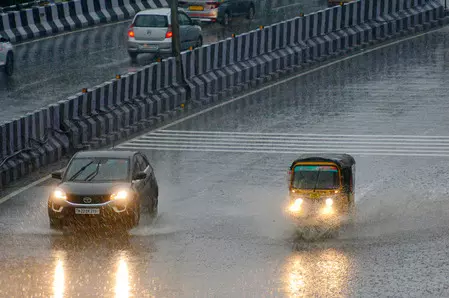
Summer rain drenches forest areas of Coimbatore, reduce fire risks
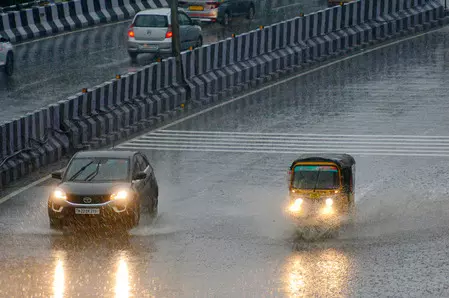
IMD predicts moderate to heavy rain across Western Ghats, South TN
The IMD has predicted moderate to heavy rainfall across parts of Tamil Nadu, especially in Western Ghats districts and southern coastal regions, due to a low-pressure trough. Heavy showers are expected in Nilgiris and Coimbatore, with several other districts likely to see rain over the coming days
Coimbatore airport sees 5.2% rise in passenger traffic
Spread of organic farming on gradual rise in Coimbatore district
BIS conducts awareness programme for MSME furniture manufacturers in Coimbatore
Organs from brain-dead man save seven in Coimbatore
VGM Hospital launches dyspepsia centre in Coimbatore
Places around GCT Coimbatore declared red zones; ban on flying drone
Electronic voting machines and VVPAT units used in the April 23 polling for the Tamil Nadu Legislative Assembly election are kept in strong rooms on the campus
Tamil Nadu election 2026: Women turned out in large numbers to vote in Coimbatore district
Women voter turnout was relatively lower in Coimbatore North. Of the total 1,51,061 women voters in this constituency, only 76.2% (1,15,190) had polled this year. This constituency registered only 75.51 % voting
Palamalai FPO opens fourth outlet at Thondamuthur in Coimbatore
Liquor outlets to remain closed in Coimbatore, Tiruppur on May 1
Coimbatore stares at groundwater stress in pre-monsoon period
Athulya Senior Care , Indias largest assisted living provider, has entered into a Memorandum of Understanding (MoU) with SingHealth, Singapores largest public healthcare cluster, to explore collaboration across medical services, professional training, research, and knowledge exchange. Ms. J. Krishna Kavya Founder - Director, Athulya Senior Care with Ms. Vijaya Rao, Director, International Collaboration Office, SingHealth SingHealth brings together an extensive network of institutions spanning acute hospitals, specialist centres, polyclinics, and community hospitals. These include Singapore General Hospital, KK Women's and Children's Hospital, Changi General Hospital, and Sengkang General Hospital, alongside national specialty centres, the National Cancer Centre Singapore, National Dental Centre Singapore, National Heart Centre Singapore, National Neuroscience Institute, Singapore National Eye Centre, and National Skin Centre, as well as SingHealth Polyclinics and SingHealth Community Hospitals. The MoU partnership reflects a shared commitment to advancing the quality and accessibility of senior care amid growing demand driven by ageing populations. Bringing together Athulya's expertise in senior living and continuum care with SingHealth's internationally recognised clinical and academic capabilities, the partnership aims to strengthen care delivery and build institutional capacity across both organisations. Under the MoU, both organisations will explore structured training programmes for doctors, nurses, and allied healthcare professionals, aiming to train capable professionals annually, focused on strengthening clinical competencies and caregiving standards. The collaboration will also facilitate the exchange of scientific, academic, and technical information, including relevant materials protected by intellectual property rights in accordance with agreed protocols, while enabling the identification of opportunities for joint research and development, co-authored publications, and participation in academic and scientific forums such as seminars and conferences. In addition, the partnership will support the organisation of and participation in medical conferences, courses, workshops, exhibitions, and other forums of mutual interest, with plans to conduct joint programmes annually. It will further promote the operation of joint medical training and education programmes to raise competency levels. It will also enable the exchange of information relating to medicine, subject to confidentiality obligations, and promote ongoing engagement between the two organisations through knowledge-sharing platforms and regular interactions, including periodic bilateral meetings to review progress and expand areas of cooperation. Speaking on the collaboration, Mr. Srinivasan G, CEO & Founder, Athulya Senior Care, said, This collaboration with SingHealth represents an important milestone in our journey to enhance senior care in India. By integrating Athulyas care delivery experience with SingHealths clinical expertise, we aim to further strengthen our capabilities across medical services, training, and research. This partnership will support the adoption of global best practices while contributing to the development of a more robust and responsive senior care ecosystem . Ms. Vijaya Rao, Director, International Collaboration Office, SingHealth , said, We are pleased to collaborate with Athulya Senior Care in exploring opportunities to advance medical services, education, and research. This partnership underscores our commitment to international collaboration and knowledge exchange. Through this engagement, we look forward to supporting capability building, sharing clinical expertise, and contributing to improved care outcomes, particularly in the area of senior and community care . Adding to this, Mr. London Lucien Ooi, Group Director, International Collaboration Office, SingHealth, said, This collaboration reflects SingHealths ongoing commitment to building meaningful international partnerships that drive the exchange of knowledge, clinical expertise, and best practices. By working closely with Athulya Senior Care, we see strong potential to support capability development in senior care, while fostering shared learning and innovation across healthcare systems. The collaboration is expected to lay the foundation for sustained engagement between the two organisations, with a focus on improving care standards, advancing professional development, and enabling research-led innovation in senior care. About Athulya Senior Care Athulya Senior Care, Indias Largest Assisted Living Provider, headquartered in Chennai, India, with 1,500+ beds across 12+ locations in five cities Chennai, Bengaluru, Kochi, Hyderabad, and Coimbatore, has proudly served over 45,000+ seniors. Athulya delivers a comprehensive senior care ecosystem encompassing Assisted Living, Mind & Memory Care, Transition Care, Rehabilitation, and Palliative Care. Designed to meet international safety & quality standards, Athulya is transforming eldercare in India by prioritizing dignity, comfort, and compassionate support. www.athulyaseniorcare.com .
Surya Kutty from Coimbatore crowned Miss Koovagam at annual Koothandavar festival in Villupuram
The beauty pageant is one of the main attractions ofthe festival celebrating transgender people, which culminates with the crowning of Miss Koovagam
New UG, PG courses remain elusive for Government Arts and Science College for Women in Coimbatore
Absence of PG programmes hinders plans of students, mostly from socially and economically disadvantaged families, to continue studies in the college without break
Notice issued to Coimbatore Collector over delay in removing caste-based locality name
Brick placement for traffic islands on trial basis raises safety concern in Coimbatore
Cauvery riverfront project at Karungalpalayam awaits government nod after Assembly poll results
Chief Minister M.K. Stalin, during his visit to Pollachi in Coimbatore district on March 13, 2024, announced nine new projects for the district. One of them envisages developing the riverfront and establishing effluent treatment facilities to prevent the discharge of sewage into the river
Tamil Nadu election 2026: Cash and liquor worth 27.31 lakh seized in 24-hour drive in Coimbatore
No seizures were reported in Kavundampalayam, Coimbatore North, Thondamuthur, Singanallur, Kinathukkadavu and Pollachi constituencies.
IMD Warning : Heavy Rain Alert for Western Tamil Nadu Till May 2
Chennai, April 27 (Udaipur Kiran): The Regional Meteorological Centre has issued a forecast of heavy rainfall in parts of western Tamil Nadu, including Nilgiris, Coimbatore, and Erode, starting Friday, with conditions likely to persist for at least three days. According to the weather bulletin, a low-pressure system prevailing over Tamil Nadu and adjoining regions is ... Read more IMD Warning : Heavy Rain Alert for Western Tamil Nadu Till May 2
Impact of Middle East Crisis: Coconut Exports from Pollachi Halted Due to Shipping Disruptions
Coimbatore, April 27: The ongoing tensions in the Middle East and disruptions in maritime routes have severely affected the export of raw coconuts from Pollachi, Tamil Nadu. For the past two months, shipments to major international markets have nearly come to a standstill. Traders are increasingly worried about rising freight costs and significant delays in ... Read more Impact of Middle East Crisis: Coconut Exports from Pollachi Halted Due to Shipping Disruptions
Stranded elephant calf approaches herd near Coimbatore; under watch
300-crore Periyar Arivulagam in final stage of construction in Coimbatore
Plastic scrap warehouse gutted near Coimbatore
Women turned out in large numbers to vote in the Assembly elections in Coimbatore district in 2026
Women voter turnout was relatively lower in Coimbatore North. Of the total 1,51,061 women voters in this constituency, only 76.2% (1,15,190) had polled this year. This constituency registered only 75.51 % voting
Poll duty for conservancy workers leads to garbage piles in Coimbatore
With door-to-door collection disrupted, waste piles up along roadsides, near bustops and market stretches; officials say conservancy workers deployed for election work have returned to duty
L&T enters industrial electronics with production in Coimbatore
Children from Coimbatore take a flight for the first time
Inter-State coordination, preventive measures to prevent wildfire in Coimbatore division
EVMs sealed, secured in strong rooms on GCT campus in Coimbatore
The strong rooms will be opened on May 4, 2026, in the presence of candidates or their representatives and observers, for counting of votes
L&T forays into industrial electronics manufacturing space
NEW DELHI, Apr 24: Infrastructure major Larsen & Toubro (L&T) on Friday announced its foray into the industrial electronics manufacturing space, with the beginning of operations at its Coimbatore campus in Tamil Nadu. The new business vertical L&T Electronic Products & Systems (LTEPS) will be headquartered in Bengaluru, while manufacturing will be carried out in Coimbatore. To begin with, two manufacturing lines have been commissioned, offering electronics manufacturing services to both domestic and overseas clients, L&T said in [] The post L&T forays into industrial electronics manufacturing space appeared first on Daily Excelsior .
First time and young voters in Coimbatore vote for change
Coimbatore registers 84.78% voter turnout
Cash and liquor worth 27.31 lakh seized in 24-hour drive in Coimbatore
Watch: Is your city growing or just spreading its problems? | Focus Tamil Nadu
Urban expansion in Tamil Nadu is reshaping cities like Coimbatore and Maduraibut not without consequences. This video explores how peri-urban areas, often outside municipal governance, are facing rising pressure on groundwater, increasing flood risks, and weak infrastructure planning.
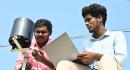
Tamil Nadu Polls: Student-Built Robot Greets Voters In Coimbatore
Voter's great response to robot; promotes 100% turnout.
Tamil Nadu sees 56.81 pc turnout by 1 pm; Tiruppur leads polling
Polling in Tamil Nadu crossed 56.81 pc by 1 pm, with Tiruppur recording the highest turnout. Cities like Chennai, Madurai, and Coimbatore also witnessed strong voter participation across key constituencies
Efforts on to control forest fire near Coimbatore
All set for voting across 3,540 polling stations in Coimbatore district
Coimbatore activist does water yoga to keep democracy afloat
The 57-year-old activist says only when such acts take place will people realise how important the vote is
Coimbatore surgeon wins award at ISDE conference
Madukkarai goods shed upgraded to boost freight movement
Madukkarai station links Coimbatore and Palakkad, helping to divert freight from congested terminals
Allegations of Cash for Votes Shake Coimbatore Ahead of Tamil Nadu Elections
Chennai, April 22: Serious allegations of cash distribution to voters have emerged from several constituencies in Coimbatore ahead of the Tamil Nadu Assembly elections. A formal complaint has been filed demanding the cancellation of voting in Coimbatore South. A team of lawyers representing AIADMK candidate Amman Arjunan met with election observer Pratap Singh at the ... Read more Allegations of Cash for Votes Shake Coimbatore Ahead of Tamil Nadu Elections
As Cauvery river runs dry, cash floods Tamil Nadu elections
Tamil Nadu Assembly Elections 2026: Ahead of polls in Coimbatore and nearby districts, widespread allegations of cash for votes have surfaced, with voters reportedly receiving 1,0005,000 or coupons. Despite police checks, parties are accused of covert distribution, highlighting electoral malpractice concerns and intense competition among DMK and AIADMK.
Election campaigning in Coimbatore city concludes with rallies and meetings