

 27 C
Phys.org
Elections 2026Hardware / Phys.org

Researchers at Keele University have developed a physics-inspired AI model that achieved high accuracy in tests distinguishing genuine facial images from AI-generated or manipulated images.

I spend my days looking inside chip packages to find out why they failed. With X-ray tomography or an acoustic microscope, I can see through a finished package without opening it: every solder bump, every copper trace, every buried layer. It is satisfying detective work. Somewhere along the way, I realized it is also exactly what a reverse engineer does.
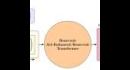
Large language models have transformed natural language processing through their ability to generate and interpret humanlike text. Most modern language models rely on transformer architectures, whose self-attention mechanisms provide powerful capabilities for learning relationships within long sequences. However, training and running these models can require substantial computational resources and energy, creating challenges for their wider use in embedded systems, edge devices and other environ

When you think of archives, you probably think of dusty old boxes of paper documents, photos, diaries, letters and flyers, filed away in storage. But increasingly, our archival materials are digital, and material from the 1980s, 1990s and 2000s is often stored on formats like floppy disks and CD-ROMs.