 34 C
34 C Phys.org
Elections 2026Bengaluru / Phys.org
The orangutan clings to the top of a mostly leafless tree in Indonesia
Scientists in Australia trained sea lions and seals to respond to a hearing test for research into how the marine mammals are affected by human-made noise.
Malaysia closed schools in Kuala Lumpur and other parts of the country Friday as haze from fires in neighboring Indonesia again pushed local air quality to some of the world
Blue damselfish, with their striking blue hue, are easy to spot, even along Okinawa

Octopuses, squid and cuttlefish, collectively known as coleoid cephalopods, have evolved exceptionally large and elaborately structured nervous systems capable of complex behaviors such as problem-solving and rapid camouflage. A new study by scientists at the University of Vienna suggests that the origins of this complexity may lie not just in the genes themselves, but in how the genome is organized in 3D.
Isaias strengthened to a Category 2 hurricane on Thursday as it headed toward the U.S. Gulf Coast, the U.S. National Hurricane Center said, prompting mandatory evacuations and disrupting oil and gas production.
A new academic paper by Paul Hanson and Matthew Joeckel of the Conservation and Survey Division in the University of Nebraska

Can literature foster greater acceptance of LGBT people among elementary school students? This is the core question behind a study conducted by researchers Guillermo Soler, Mar
A leading U.S. beef industry trade association knew by 1989 that cattle contributed to global warming but focused its response on protecting consumer demand through public relations, according to a new study that examined a decade of industry records.
Many insects see the world through hundreds of tiny lenses that are grouped together in a visual organ known as the compound eye. Behind each lens sits a cluster of eight light-detecting cells arranged in a pattern that scientists believe has existed for hundreds of millions of years.
For decades, scientists have believed that a protein called interferon tau (IFNT) is indispensable for pregnancy in cattle. Produced by the early embryo, it was thought to signal its presence to the mother and prevent the hormonal changes that would otherwise end the pregnancy.
A breakdown of normal polar winds in winter raises the chance of extreme cold
A new paper published in the journal Phytotaxa describes a new species in the genus Victoria, the Colombian giant water lily (Victoria colombiana). With only three other known species in the genus, V. colombiana joins the pantheon of nature
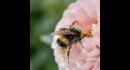
Bees, moths and other pollinating insects have a harder time smelling flowers in polluted air, according to research led by the University of Reading. Scientists analyzed 22 experimental studies on how the air pollutants ozone and nitrogen oxides (NOx) affect pollinators. Both pollutants make it harder for pollinators to find flowers by breaking down or altering the scents that flowers give off.
There is a strong national and international commitment to large-scale carbon removal from the atmosphere (Carbon Dioxide Removal, CDR) to achieve climate goals. But how do you do that responsibly? A study commissioned by the Climate Research Initiative Netherlands (KIN) and led by the University of Twente shows which ecological and social effects and preconditions must be taken into account.
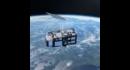
Just two weeks after it was launched, the Copernicus Sentinel-3C satellite returned its first images and measurements from two of its key instruments
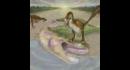
A prehistoric cold case near Drumheller reveals either a small-time raptor scavenged on an apex predator, or a baby Albertosaurus engaged in a shocking act of cannibalism. These two possible explanations for what happened to an Albertosaurus after its death near Drumheller are wildly divergent.
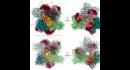
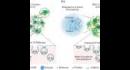
A cell sitting in fluid looks like one of the most passive things in biology. Nutrients drift toward it on the aimless currents of molecular motion, and now and then one bumps into the right spot on the cell
A substantial loss of plant diversity could mean that grasslands worldwide, including meadows and pastures, would absorb around 15% less CO