
 27 C
27 C theleaflet
Elections 2026Crime & Justice / theleaflet

ON FRIDAY, THE SUPREME COURT asked the Union government not to completely shut Delhi Metro stations and train services ahead of a protest announced by the Cockroach Janata Party (CJP) and opposition parties in Delhi. The protest seeks the resignation of Gyanesh Kumar as Chief Election Commissioner. The Bench, comprising Chief Justice of India (CJI) Surya Kant and Justices Joymalya Bagchi and V. Mohana, said that there could not be a complete ban on these services. The government could regulate h

Justice Narimans anxieties that right to vote, as heart of democracy, is in peril and Justice Bhuyans concerns that mass scale disenfranchisement reverses the first step taken to achieve equality in India through right to vote deserve serious consideration to save democracy in India

Bench headed by CJI Surya Kant refuses to restrain him from functioning or to insist on unanimous EC decisions for now, and seeks replies from the Centre, the Election Commission and the Commissioners.
LAST MONTH, the Division Bench of Justices Manoj Misra and Manmohan of the Supreme Court pronounced its judgment in Santosh Associate (P) Ltd. v. Haryana SIIDC Ltd. (2026) in which it made reference to a larger bench the question of whether an arbitration clause that requires a refundable pre-deposit to be made by a claimant as a precondition to arbitration is legally valid. The reference was necessitated by the fact that the Division Bench expressed disagreement with a decision of a full bench

B.D. Borkars petition says the MHA orders of January 28 and July 9, 2026 undo a Constituent Assembly decision, violate secularism and expose singers to prosecution under the BNS.

WHEN the country is celebrating the birth anniversary of Mahatma Gandhi on 2nd October 2026 it is of crucial significance to hark back to his vision articulated in 1937 that voting age in India should be fixed for all eligible voters at the age of 21 or 18.
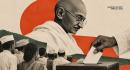
MANY who had hitherto no concern with Council elections will be shortly called upon to vote for the reformed Councils. The powers, too, of elected members will be found to have increased.

ON the occasion of the birth anniversary of Mahatma Gandhi on 2nd October this year several opposition parties including Cockroach Janata Party (CJP) have launched massive protests across the country demanding resignation of Chief Election Commissioner (CEC) Gyanesh Kumar who according to the Indian Express expose flagrantly violated the constitutional provisions and rules leading to the appalling erosion of independence of the Election Commission of India for implementing SIR without involving
With the recent formation of the UCC panels in Maharashtra, Rajasthan and West Bengal, it becomes necessary to revisit the Constituent Assembly debates on the UCC and question the BJPs selective invocation of Ambedkar to legitimise its divisive and majoritarian pursuits.

Asmita: The idea of speaking with you is that the histories of the Domestic Violence Acts in Bangladesh and India are somewhat intertwined, since they developed around the same time. Could you speak to the history of law-making in Bangladesh on domestic violence? Sara: Sure. I think there were two impetuses to the development of the law on domestic violence. First, there was already an understanding in the womens movement and among legal aid groups that domestic violence was a real issue, but we

ONE CANNOT HELP BUT DRAW painful parallels to the 2012 Nirbhaya case, calling into question whether systemic law enforcement mechanisms have made any meaningful progress in the decade since then, said Supreme Court on September 28 while taking a suo moto cognisance of the recent rape cases in Delhi NCR to evaluate systemic, preventive, and monitoring frameworks currently in place to ensure safety in public spaces across Delhi-NCR. The bench of Justices Pardiwala and K. Vinod Chandran adduced ne

A 2015 BBC REPORT on the victims of marital rape in India starts with the harrowing account by a 25 year old woman, I was only a toy for him which he thought he could use differently every night. Whenever we had a fight, he would take it out on me in bed. He would not take a no for an answer not even during my periods. The act of rape generally attracts a significant amount of outcry from the people at large with sections of society being terribly outraged and nauseated with the recurring occurr
THE SUPREME COURT COLLEGIUM has recommended the elevation of three Chief Justices of High Courts as judges of the Supreme Court. Chief Justice of the Gujarat High Court Sunita Agarwal, Chief Justice of the Delhi High Court D.K. Upadhyaya, and Chief Justice of the Telangana High Court Aparesh Kumar Singh have been recommended for elevation as judges of the Supreme Court. The decision was taken by the Collegium comprising Chief Justice of India (CJI) Surya Kant and Justices Vikram Nath, B.V. Nagar
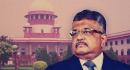
A Solicitor Generals stray word about Naxalites turned a courtroom argument about a penal laws vagueness into a question about the petitioners character instead.

THE FIRST ARGUMENT by R.K. Garg I encountered was in Ranjit D. Udeshi v. State of Maharashtra , which was part of our criminal law course in the Faculty of Law. Garg was counsel for Udeshi, the owner of the Popular Book Stall in Bombay, who had been convicted for obscenity under S.292 of the Indian Penal Code, 1860 for selling D.H. Lawrences novel Lady Chatterleys Lover. Garg argued that S.292 was an unconstitutional restriction on the freedom of speech and expression under Article 19(1)(a). The