



Man Facing Case Over Beach Incident Dies By Suicide, Protest Outside Surathkal Police Station
The protesters alleged that the couple was responsible for Somanath's death and demanded that an FIR be registered against them.
Malabar Gold & Diamonds Launches Bridal Jewellery Show In Somajiguda
The exhibition features a wide range of bridal jewellery in gold, diamonds and precious gemstones: Reports

Dozens of Somali soldiers killed in battle with al Shabaab, soldiers say
Dozens of Somali soldiers were

Hidden chromosome structures reveal greater complexity in how roundworms organize DNA
Almost every cell in our body contains around two meters (6.6 feet) of DNA, packed into a tiny nucleus. Yet for the cell to function, this enormous amount of genetic material must remain organized and accessible. Researchers at the University of Basel have now discovered three distinct types of large chromosomal domains that help organize DNA in nuclei.

Ghost daycares in Minnesota: Nick Shirley, Dexter drop Somali fraud bombshell at House Hearing
Ghost daycares in Minnesota: Nick Shirley, Dexter drop Somali fraud bombshell at House Hearing
98% of Somalis here dont work: Trumps fiery immigration rant at Georgia rally ahead of Midterms
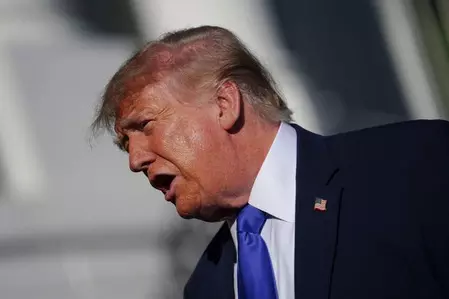
Digital Desk | Washington, Oct 25 (IANS) President Donald Trump revived his shithouse countries remark at a campaign rally in Perry, Georgia, saying the US should take immigrants from Nordic nations such as Norway, Sweden and Denmark. He also claimed that Democratic Congresswoman Ilhan Omar had openly admitted to fraud. Trump spoke on Saturday evening after landing at Robins Air Force Base, ten days before the November 3 midterm elections. Recalling a meeting with Democratic senators during his first term, Trump told the crowd: And I said, why do we always have to take people from shithouse countries? Why cant we take people from like, well, Norway, Sweden. Why not Denmark? He spoke of armies of migrants from terror infested countries like Libya, Yemen, Haiti, Somalia, and asked the crowd: Remember what I call them? Shithouse countries. Remember the heat I took from the Democrats? Trump singled out the Somali community, claiming that 98% of the people that we have here now in Somalia dont work and that they all have a Mercedes Benz. Turning to the border, Trump claimed his administration had achieved the most secure border in American history. He said: In the past 17 months, zero illegal aliens have been admitted to the United States. He also claimed that the murder rate was at the lowest level its been in 125 years. Pointing to France, Trump said it was right now burning down because it opens its borders to people who hate it. And you know what you do with those people? Never let them come into your country. And thats what we do, he said. On the economy, Trump claimed that the poverty rate had reached the single best level in American history. He listed African-American poverty, Hispanic-American poverty, and Native-American poverty, and added: And by the way, Asian-American poverty, all those rates are at the best levels ever recorded. Asian Americans, among them more than five million people of Indian origin, are a closely watched voting bloc in Georgia, where the community has grown fast in the Atlanta suburbs. Trump also took aim at Omar, the Somali-born Democrat from Minnesota. Please inform the Speaker of the House of Representatives James Michael Johnson that the Democrat Party has just conceded her seat, he said, adding that Omar has openly admitted to fraud and she will not be legally allowed to be a member of this August body. House Democratic Leader Hakeem Jeffries condemned the remarks. Donald Trump has consistently trafficked in vile and xenophobic rhetoric against the Somali American community, targeting Congresswoman Ilhan Omar with unhinged personal attacks and baseless accusations, he said in a statement. After lawlessly sending his violent DHS machine to Congresswoman Omars home earlier this month, the President is once again peddling sick propaganda against her at a moment when political violence is surging, Jeffries said. Accountability is coming for the Trump Cartel and all of their lawless sycophants, he added. Immigration has been a central theme of Trumps campaign for Republican candidates ahead of the midterms, which will decide control of both chambers of Congress.

'My Real Name Is...': Ilhan Omar Confirms Trump Was Right About Her Name? | Watch
Democratic Congresswoman Ilhan Omar has directly responded to questions about her real name after a federal court filing identified her as Ilhan Nur Said Elmi, also known as Ilhan Abdullahi Omar. Confronted by Fox News Digital at a Somali shopping mall in Minnesota, Omar insisted, Ilhan Abdullahi Omar, you know it. The filing has revived disputed allegations surrounding her identity and former marriage, which Omar's office has strongly denied. The controversy comes amid a federal immigration fraud investigation involving the Minnesota lawmaker. The alternative name listed in the filing does not itself establish identity fraud, and no wrongdoing has been proven against Omar.

Man held for threatening customers with gun at Somajiguda bar
Hyderabad: A 24-year-old liquor businessman was taken into police custody for allegedly brandishing a revolver and threatening bouncers and customers at a bar and restaurant in Somajiguda in the early hours of Saturday, October 24. According to a complaint lodged by Bachu Bunty, a bouncer at Head Quarters Bar & Restaurant, an argument broke out Get the latest updates in Hyderabad City News , Technology , Entertainment , Sports , Politics and Top Stories on WhatsApp & Telegram by subscribing to our channels. You can also download our app for Android and iOS .
BJP leader Kirit Somaiya stages Jail Bharo Satyagraha over mosque near Mumbai airport
The News Mill

Chandrababu Naidu's 'Kansa Mama' Jab At Jagan Reddy Over Wedding Venue Row With Sister
Anjili Reddy is set to marry Dr Somala Raghuram Reddy. The wedding is planned for November 25, with a reception in Hyderabad on December 5. Sharmila personally invited several guests to the Bengaluru event.
Low Intensity Quake Recorded in Parts of Chikkaballapur
The epicentre was located near Somasettyhalli village in Gouribidanur taluk. The quake occurred at 3.29 am at a depth of 5 km
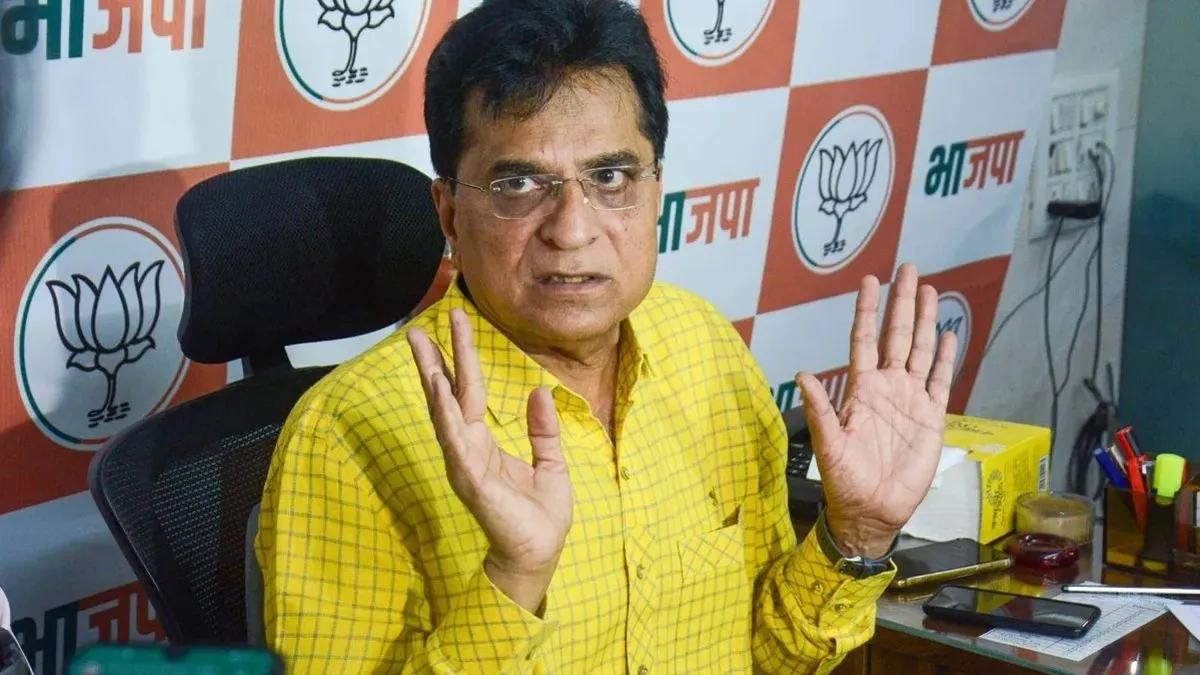
Mumbai Airport Mosque case: Kirit Somaiya, BJP workers taken into custody amid protests
BJP leader and former MP Kirit Somaiya staged a protest on Saturday regarding a mosque located near Terminal 2 (T2) of the Mumbai International Airport. Some BJP workers arrived at the protest site carrying hammers. The police took Kirit Somaiya and the BJP workers into custody. Kirit Somaiya claimed that the mosque is illegal and that the truth is being misrepresented in this matter. He stated that no one has approached the court, and all relevant authoritiesincluding the MMRDAhave declared the structure illegal. Somaiya asserted that action will be taken against the mosque and that it will be demolished.
Cabinet Secretary didnt act on EC plaint as it was unofficial: RTI
According to documents shared as part of an RTI response, two ECs in their separate but near-identical letters to Somanathan on July 29 objected to Gargs conduct and an order he issued revising allocation of work among senior officers. The two ECs alleged the changes were made without prior discussion with the commission or officers concerned.
'Somali Thieves Robbing American Taxpayers': Sen. Kennedy Rips Apart Ilhan In Minnesota Fraud Case
Republican Senator John Kennedy of Louisiana takes aim at Minnesota Democrats over alleged fraud involving federal taxpayer funds and makes controversial claims about money allegedly reaching a terrorist organisation in Somalia. In his remarks in Washington, D.C., Kennedy discusses alleged billion-dollar schemes, claims involving the Somali community, and the political implications for Democrats in Minneapolis. Watch the full segment for Kennedys statements and the controversy surrounding these allegations.
Kittur Rani Chennammas courage continues to inspire Indias soldiers, says MoS V Somanna
At Parliament House, Union Minister V Somanna paid tribute to Kittur Rani Chennamma during her birth anniversary festivities. He highlighted her courage and resistance against the British in the 19th century, underscoring her status as a beacon of women's leadership in Karnataka. The ceremony saw attendance from esteemed leaders and Kannadigas who support this annual homage to her remarkable contributions.
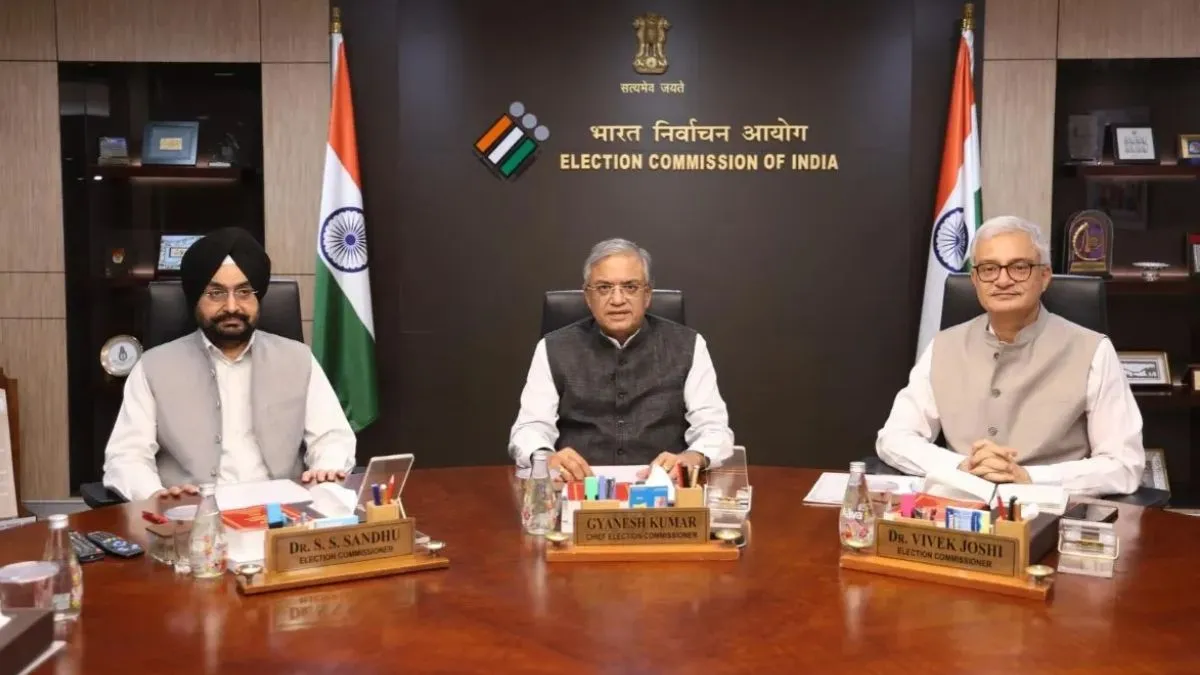
Two Election Commissioners, Sukhbir Singh Sandhu and Vivek Joshi, has sent two separate letters to Cabinet Secretary TV Somanathan against working of a senior official of the poll body, but the top bureaucrat refrained from taking action, an RTI reply has revealed.
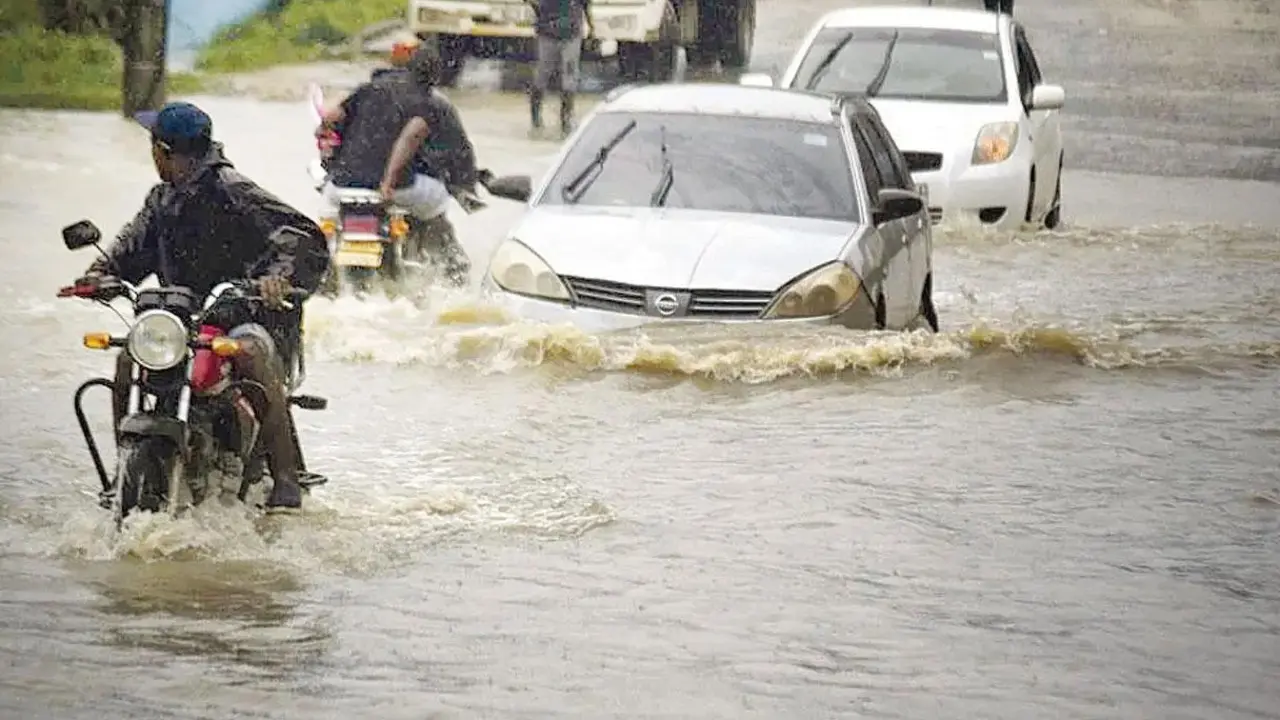
Somalia could face flood crisis as nearly 874,000 people risk displacement
Despite the mounting crisis, IOM said it has secured just 14.4 per cent of the 16.62 million dollars needed to respond to the impending El Nino floods.

Cabinet Secretariat took no action on EC officers' complaints: RTI reply
The Cabinet Secretariat refrained from taking any action on complaints sent by two Election Commissioners against the conduct of an officer in the Commission, noting that the communications were in their individual capacity and in the absence of any official communication from the Commission as a whole, any action at this stage may be inappropriate, records made public in an RTI reply show. Election Commissioners Sukhbir Singh Sandhu and Vivek Joshi had sent two separate communications on July 29 to the top bureaucrat of the country TV Somanathan, on the working of Senior Deputy Election Commissioner (Sr. DEC) Maneesh Garg, IAS, who was posted in the Commission by the Appointments Committee of the Cabinet since September 2, 2024, the letters provided in the RTI reply to activist Commodore Lokesh K Batra (retd) show. The Indian Express had reported in September that Sandhu and Joshi wrote separately to Cabinet Secretary TV Somanathan after issuance of a work allocation order withi
2 Election Commissioners Complained Against Senior Panel Officer, RTI Shows
ECs Sukhbir Singh Sandhu and Vivek Joshi wrote to Cabinet Secretary TV Somanathan objecting to the conduct of Deputy Election Commissioner Maneesh Garg
'Answer the question!': Senators torch Soros-funded witness at fiery Minnesota Somali fraud hearing
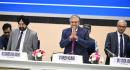
Election Commissioners S.S. Sandhu and Vivek Joshi wrote to Cabinet Secretary T.V. Somanathan on July 29 regarding the working of Senior Deputy Election Commissioner Maneesh Garg
Elephant Somanna panics, damages vehicles in Shivamogga Dasara
The News Mill
Trump Vs Ilhan Omar: Can U.S. Really Deport Her? 'Somali Fraud' War, Legal Hurdles Explained
Donald Trumps long-running feud with Ilhan Omar is entering a new phase. The Minnesota congresswoman, one of Trumps fiercest Democratic critics, is reportedly facing scrutiny amid a federal immigration fraud investigation after agents searched her Washington residence. But Omar says the probe is an attempt to target political enemies and weaponize federal law enforcement.In this video, we examine the reported investigation into Ilhan Omar, her response to the federal probe, and the legal hurdles the Trump administration would face if it sought to strip her of U.S. citizenship or deport her to Somalia. Can a U.S. president deport a sitting congresswoman who became a naturalised American citizen? What does denaturalisation law say, and what would the government have to prove?
Elephant goes out of control during Shivamogga Dasara procession
Shivamogga: The Dussehra Jamboo Savari procession was cut short on Wednesday, October 21, after an elephant carrying the howdah went out of control, triggering panic among spectators. No one, including the mahout, was injured, sources said. The elephant, Somanna, was carrying the silver howdah bearing the idol of Goddess Chamundeshwari when it suddenly changed direction Get the latest updates in Hyderabad City News , Technology , Entertainment , Sports , Politics and Top Stories on WhatsApp & Telegram by subscribing to our channels. You can also download our app for Android and iOS .
Shivamogga Jamboo Savari: Scary scenes as howdah elephant Somanna runs amok
Elephant Sagar had carried the howdah for the last six years, but Somanna was chosen for the task on October 21 morning.
'Somalian': Trump Taunts Ilhan Omar Again As Vance & Co Burst Out Laughing
Donald Trump has turned up the heat on Ilhan Omar, warning the Minnesota Democrat she could be jailed as a federal investigation into her citizenship paperwork intensifies. During a fiery Oval Office exchange, Trump took fresh aim at the congresswoman, while Vice President JD Vance and others appeared to laugh during the remarks. The clash follows a federal search of Omars Washington-area home on October 12, fuelling questions about the probe and her recent public appearances. Omar has denounced the investigation as political intimidation and denied the allegations, as the controversy threatens to become a major flashpoint ahead of the November midterms.
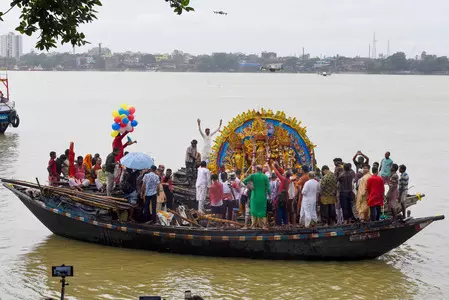
18 IPS officers to supervise immersion process in Kolkata, three other cities
Digital Desk | Kolkata, Oct 21 (IANS) Eighteen IPS officers have been given the responsibility of supervising the immersion process of Durga idols in four cities of West Bengal, including Kolkata, said a senior police officer on Wednesday. Out of them, 12 have been stationed in Kolkata alone. A notification in this regard was issued by the state police late Tuesday night. It said that IPS-rank officers will supervise the immersion, which will take place in different parts from 'Dashami' on Wednesday till October 24. The names of each IPS officer and their duties on which day have been shared. In addition to Kolkata, the state government is giving extra importance to the immersion in Howrah, Barrackpore and Chandannagar. A total of six IPS officers have been sent, two each in those three cities. IPS officers Gaurav Sharma, Soma Das Mitra, Rashid Munir Khan, Akash Magharia, Suresh Kumar Chadive and Dhritimaan Sarkar will supervise the immersion in the Kolkata police area on October 21 and 23. Apart from this, IPS officer Praveen Kumar Tripathi, Imran Wahab, Sheesh Ram Jhajharia, Soumya Roy, Parijat Biswas and Siddharth Dhapola will be in charge of supervision in the Kolkata Police area on October 22 and 24. IPS officer Indra Chakraborty will supervise the immersion on October 21 and 23 in Howrah Police District. Avaru Rabindranath will be in charge in Howrah on October 22 and 24. Palash Chandra Dhali and Duteeman Bhattacharya have been given the responsibility of the Barrackpore Police District. Abhijit Banerjee and Sandeep Mandal have been given the responsibility in Chandannagar. On October 17, the first Saptami, 19 visitors were killed in a stampede in the Chorebagan Sarbojonin Durga Puja pandal in Kolkata. Eyewitnesses claimed there was a stampede due to sudden rain. It is also being alleged that panic spread after announcements were made by the puja organisers. Kolkata Police have already formed a Special Investigation Team (SIT) to investigate the incident. Seven people have been arrested in connection with the incident. Since the pandal stampede, the administration has been extra cautious about pujas in Kolkata and adjacent areas. Surveillance is being carried out at popular puja pandals. Additional arrangements have been made to control the crowd. The government is being careful to ensure that no untoward situation arises during the immersion process; therefore, IPS officers have been deployed to supervise the arrangements.
They Came To Loot & Plunder!: Stephen Miller Unleashes On Somali Fraud Amid Ilhan Omar Probe
Stephen Miller has launched a blistering attack on fraud involving taxpayer-funded programs, accusing scammers, refugees, illegal immigrants and foreign nationals of exploiting the American system for personal gain.Miller argued that ordinary Americans spend years paying taxes only to see some of that money siphoned off by fraudsters who abuse welfare and social-service programs.
'Somalis were stealing': Trump praises Nick Shirley, announces $25m fraud whistleblower program
'Somalis were stealing': Trump praises Nick Shirley, announces $25m fraud whistleblower program
PATHETIC, MAD, LOW IQ: Trump Unleashes Vicious Attack On Ilhan Omar Amid Immigration Probe
US President Donald Trump has launched another attack on Democratic Congresswoman Ilhan Omar, describing her birthplace, Somalia, as possibly the worst country in the world. Speaking at a rally, Trump criticised Omar and questioned her attitude towards the United States. Omar, who was born in Somalia, has been an American citizen since 2000. The remarks mark another escalation in Trump's long-running confrontation with the Minnesota Democrat.
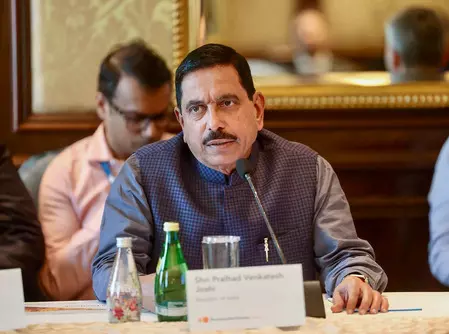
Karnataka NDA leaders extend Maha Navami, Ayudha Puja, Dussehra greetings
Digital Desk | Bengaluru, Oct 20 (IANS) Union Ministers, H.D. Kumaraswamy and Pralhad Joshi, BJP Karnataka President and MLA B.Y. Vijayendra, and other leaders on Tuesday extended greetings to the people on the occasion of Maha Navami, Ayudha Puja and Dussehra, wishing them prosperity, peace and success. Union Minister for Heavy Industries and Steel H.D. Kumaraswamy extended Maha Navami and Ayudha Puja greetings to the people. In his message, Kumaraswamy prayed that Goddess Chamundeshwari would bless everyone with happiness, peace, success, tranquillity and prosperity. He said people should worship with devotion the tools and equipment that formed the foundation of their professions and livelihoods, recognising the divine in them. Union Minister for Education Pralhad Joshi extended Dussehra greetings, highlighting the victory of truth and righteousness over evil. Dussehra reminds us that no matter how powerful evil may seem, the victory of truth and righteousness is inevitable, he said. Joshi said the ideals of Lord Shri Ram should inspire people to overcome challenges with courage, uphold India's civilisational values and strengthen their resolve to build a strong, united and self-reliant India. He wished everyone a blessed and joyous Dussehra. Union Minister of State for Micro, Small and Medium Enterprises and Labour and Employment Shobha Karandlaje shared moments from her visit to Chamundi Hills in Mysuru during the Navaratri celebrations. She said she had climbed the hill with her family and offered prayers to Goddess Chamundeshwari, the presiding deity of the state. Union Minister of State for Jal Shakti and Railways V. Somanna also extended Maha Navami and Ayudha Puja greetings to the people of Karnataka. In a separate message, he prayed that the Navadurgas, the nine forms of Goddess Durga worshipped during Navaratri, would bless everyone with good health and peace of mind. In his message, Vijayendra said Ayudha Puja was a sacred occasion to honour labour, professions and knowledge. On the auspicious occasion of Ayudha Puja, which pays tribute to labour, professions and knowledge, I extend my heartfelt greetings to all the people of the state, he said. He said Karnataka had a great tradition of worshipping tools and equipment that supported people's daily lives, livelihoods and progress, recognising them as divine. Following the principle that work is worship, let us honour the labour of workers and the dedication of professionals on this day. I pray that all the people of the state are blessed with wealth, prosperity and continued success in their work, he added.
Weather update for tomorrow October 20, 2026: The IMD has forecast heavy to very heavy rainfall at isolated places over Tamil Nadu, Puducherry and Karaikal, with heavy rain likely over the Andaman and Nicobar Islands, Coastal Andhra Pradesh, and Kerala and Mahe. Thunderstorms, lightning and gusty winds are expected across several states, including Andhra Pradesh, Telangana, Karnataka, Madhya Pradesh, East Rajasthan, Odisha, Konkan and Goa, and Madhya Maharashtra. A well-marked low-pressure area over the southwest Arabian Sea is likely to move towards the Somalia coast by October 22.
Kirit Somaiya Challenges Congress Over Voter List Integrity
Kirit Somaiya questions Congress on voter registration issues and challenges claims of election fraud related to Bangladeshi voters. Kirit Somaiya Challenges Congress Over Voter List Integrity
Indian Man Arrested For Posing As US Citizen, Voting In 2024 General Election
Mukeshkumar Somabhai Chaudhari was charged with knowingly furnishing false information in voting and making a false claim of citizenship in order to register to vote or vote last month.
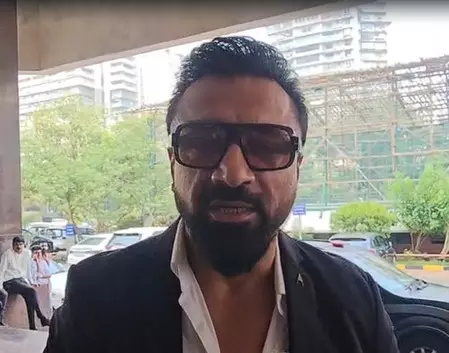
Ajaz Khan on Imran Khan being asked to leave India: I consider him to be an American
Digital Desk | Mumbai, Oct 16 (IANS) Actor Ajaz Khan has reacted to Imran Khan being asked to leave India after he recently attended a protest in Mumbai. While speaking exclusively to IANS, Ajaz said that given that Imran has an American citizenship, he considers to him to be an American. Imran Khan has taken American citizenship. I will consider him American, he said. Ajaz added that if Imran had participated in the protest as an Indian citizen, it would not have been an issue. When asked, Do you think it is right that he participated in the protest after becoming an American citizen?, he told IANS, If he had an Indian passport and went to protest, there would have been no problem. Now I have also come to know that he has American citizenship, which is wrong. I hate America, and I hate Elon Musk. Ajaz further talked about the ongoing Starlink controversy. He expressed his support for Prime Minister Narendra Malhotra's decision, calling it a matter of National security. It is a matter of India's security, and India's security should be the first priority for the Prime Minister, he shared. Talking about Imran, he was directed by the Foreigners Regional Registration Office (FRRO) to leave India by October 28 over his allegedly unlawful participation in the recent August Kranti Maidan protests, demanding the resignation of the Chief Election Commissioner Gyanesh Kumar. The FRRO mentioned in its order that Imran allegedly violated the Foreigners Act by participating in the protest, as he is not an Indian citizen, but is an Overseas Citizenship of India (OCI). Additionally, on October 13, BJP leader and former MP Kirit Somaiya approached the Union Ministry of Home Affairs and immigration authorities, urging them to issue a Look Out Circular (LOC) against the 'Delhi Belly' actor. Imran now reportedly plans to file a Writ Petition in the Bombay High Court against the notice from FRRO.
Kiran Rao Backs Imran Khan After FRRO Directs Him to Leave India
The FRRO notice against the actor was issued following a complaint by Bharatiya Janata Party (BJP) leader Kirit Somaiya
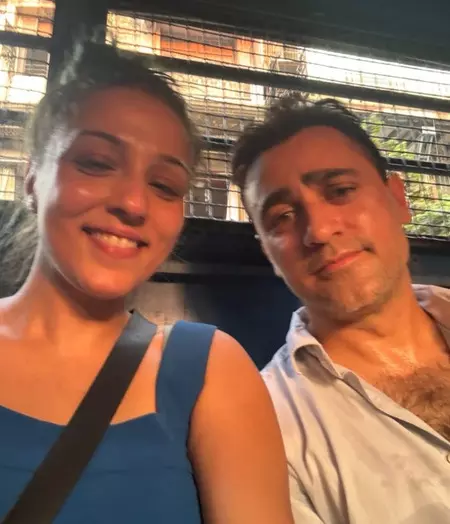
Imran Khans partner Lekha Washington breaks silence after actor asked to leave India
Digital Desk | Mumbai, Oct 16 (IANS) Actor Imran Khans partner, Lekha Washington, has shared her maiden reaction after superstar Aamir Khans nephew was asked to leave India for attending a protest in Mumbai, marking her first response to the development. On October 15, Imran was issued a notice by the Mumbai Police asking him to leave India by October 28, days after he participated in a protest demanding the resignation of Chief Election Commissioner Gyanesh Kumar. Action has been taken against Imran under Sections 7 and 29 of the Immigration and Foreigners Act, and the actor has received a copy of the notice. The actor was detained by the police on October 10 in connection with the protest. The action has been taken against Imran under the relevant provisions of the Immigration Act for allegedly participating in such a protest despite not being an Indian citizen. After the actor was ordered to leave India, his partner Lekha shared a picture of them from the prison van after they were detained on October 10. Lekha captioned the picture: Just along with a gamut of heart emojis. Imran Khan is now set to approach the Bombay High Court to challenge the notice issued by the FRRO. Imran is considering filing a Writ Petition in the Bombay High Court against the notice from FRRO and for which he has engaged MZM Legal LLp as his counsel. Zulfiqar Memon, the managing partner of MZM Legal, was contacted for his input on the matter. He refused to comment at this stage. On October 13, BJP leader and former MP Kirit Somaiya approached the Union Ministry of Home Affairs and immigration authorities, urging them to issue a Look Out Circular (LOC) against actor Imran Khan. Talking about Imran, he first appeared as a child artist in the films Qayamat Se Qayamat Tak in 1998 and Jo Jeeta Wohi Sikandar in 1992. He made his adult acting debut in 2008 with the romantic comedy Jaane Tu... Ya Jaane Na, which was a success. After the failure of his next two films, he then starred in a number of commercially successful romantic comedies such as I Hate Luv Storys, Mere Brother Ki Dulhan and Ek Main Aur Ekk Tu and the action comedy thriller Delhi Belly. This was followed by a series of box-office flops and a hiatus. He was seen in a cameo appearance lately in the Vir Das film Happy Patel: Khatarnak Jasoos. It also stars Mithila Palkar, Mona Singh, Sharib Hashmi and Srushti Tawade. The film marked Imran's comeback roughly ten years after he last starred in Katti Batti in 2015.
'$14 million autism fraud & $465K meal scheme': Somali woman Asha Farhan Hassan charged in Minnesota
Chat While You Squat with actor, fitness icon Milind Soman
Ironman Milind Soman talks fitness, endurance and discipline and all while holding a static squat.
Somalia says it will hold a presidential election in May 2027
Somalia's electoral commission
Ilhan Omar Raid Bombshell: Feds Seize Phone, Subpoena Family In Explosive Somali Fraud Probe
New details have emerged in the federal criminal investigation involving US Democratic Congresswoman Ilhan Omar. Authorities seized Omar's phone during Monday's search of her Washington, DC, home, while more than a dozen grand jury subpoenas were issued, including to some of her relatives. Investigators are examining possible fraud involving immigration paperwork, although the full scope of the investigation remains unclear and no criminal charges against Omar have been announced. Washington US Attorney Jeanine Pirro has also confirmed investigations concerning the congresswoman's financial disclosures. President Donald Trump called Omar otally crooked and a errible person but denied involvement in the investigation. Omar has accused the Trump administration of political intimidation, with the developments coming just weeks before the November midterm elections.
'Ilhan Omar goes back to Somalia': Trump torches Congresswoman in fiery rant | MN Somali fraud
Imran Khan Told To Leave India By October 28 After Protest Against CEC
Actor Imran Khan has been directed to leave India by October 28 following a notice issued by Mumbai's Foreigners Regional Registration Office (FRRO). The action follows his participation in a protest demanding the resignation of Chief Election Commissioner Gyanesh Kumar. Maharashtra Minister of State for Home Yogesh Kadam says the notice was issued under the Foreigners Act and follows due legal process. The opposition has criticised the move, arguing that someone should not face deportation for protesting. The action follows a complaint by BJP leader Kirit Somaiya, who alleged violations of OCI rules. Imran Khan is likely to challenge the order in court.
'It's taxpayers VS fraudsters!': Nick Shirley 'exposes' Walz, Ilhan Omar at MN Somali fraud hearing
'It's taxpayers VS fraudsters!': Nick Shirley 'exposes' Walz, Ilhan Omar at MN Somali fraud hearing
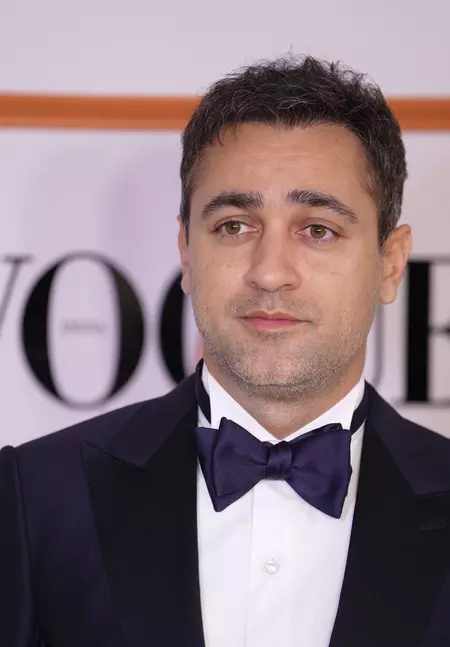
American citizen getting funds from Pak: BJP leader after Imran Khan asked to leave India
Digital Desk | New Delhi, Oct 15 (IANS) Bharatiya Janata Party leader Kirit Somaiya, while making a shocking claim on Thursday, alleged that Bollywood actor Imran Khan received funding from Pakistan and support from some other nations for spreading anarchy and engaging in conspiracies to destabilise the country. Kirit Somaiyas sensational charge came hours after the actor was asked by the Mumbai Police to leave India by October 28 over participation in the recent anti-CEC stir. American citizen Imran Khan, receiving Pakistani funding and foreign support, and such foreign citizens are spreading conspiracies to create anarchy in India, Kiriti Somaiya claimed in a self-recorded video. He further said, I welcome Mumbai Police & Immigration Dept action asking Imran Khan to leave India by 28 October All such Foreign Citizens, Persons using Foreign Fund to create Anarchy in India should face such action, he wrote on his X handle. It was the BJP leader who filed a complaint against Imran Khan and sought travel restrictions on the actor until the Mumbai Police completed their investigation, suggesting that the actor may leave the country. Actor Imran Khan is the nephew of Bollywood superstar Aamir Khan and is best remembered for his roles in movies like 'Jaane tu Jaane na' and 'Delhi Belly'. He is reportedly an American citizen and holds an Overseas Citizen of India (OCI) card. The Mumbai Police, earlier in the day, issued a notice to the actor, asking him to leave the country by October 28, over his participation in the anti-EC protest on October 10, claiming that it was in violation of the Foreigners Act. The actor had joined the stir at Mumbai's August Kranti Maidan on October 10, along with his partner Lekha Washington and cousin Zayne Marie Khan, to protest against the Chief Election Commissioner (CEC) Gyanesh Kumar. The three were briefly detained by the police before being released a few hours later. Following this, BJP leader Kirit Somaiya had approached the Mumbai Police, arguing that the actor should face charges for participating in an illegal political agitation and violating OCI provisions and visa conditions.
Actor Imran Khan to move Bombay HC against order to leave India
Actor Imran Khan has approached the Bombay High Court against an order for his deportation from India. The order was issued after his participation in a protest supporting the Cockroach Janata Party. BJP leader Kirit Somaiya filed a complaint to the Mumbai Police regarding Khans actions. As an Overseas Citizen of India, Khan is subject to specific rules and regulations.
Mary Millben can back BJP, Imran Khan cant criticise it: CJP's Abhijit Dipke flags contrast
CJP activist Abhijit Dipke drew a comparison between American singer Mary Millben and Imran Khan regarding political speech. Mumbai Police issued a 'Leave India' notice to Imran Khan, directing him to exit by October 28. Allegations against Khan include participating in protests despite his Overseas Citizen of India status. BJP leader Kirit Somaiya demanded his arrest over alleged violations of OCI provisions and visa conditions.
Imran Khan asked to leave India: What rights do OCI cardholders have?
Actor Imran Khan faces deportation from India by October 28 due to his involvement in a protest. This action stems from a complaint lodged by BJP leader Kirit Somaiya regarding legal violations during the demonstration. Khan, a US citizen and OCI cardholder, was detained at the protest site in Mumbai. His participation raises questions about the rights of foreign nationals involved in political activities.
Mumbai Police ask actor Imran Khan to leave India by October 28
Former BJP MP Kirit Somaiya had sought action against Imran Khan, after the actor participated in anti-CEC protest in Mumbais August Kranti Maidan on October 10, where protesters demanded the resignation of CEC Gyanesh Kumar

Moments after Mumbai Police asked Bollywood actor Imran Khan to leave India for taking part in a recent CJP protest, BJP leader Kirit Somaiya has accused the nephew of Aamir Khan of taking funds from Pakistan and conspiring with foreign powers

Mumbai Police Issues Leave India notice to Bollywood actor Imran Khan
Mumbai , October 15 : Mumbai Police has issued a Leave India notice to actor Imran Khan, nephew of Bollywood superstar Aamir Khan, directing him to leave the country by October 28. According to reports, Imran Khan holds an American passport. Imran had participated in a protest at Mumbais August Kranti Maidan demanding the resignation of Chief Election Commissioner Gyanesh Kumar. According to the information provided, action has been initiated against Imran Khan under Sections 29 and 7 of the Immigration Act over allegations that he participated in the protest despite not being an Indian citizen. He was detained by Mumbai Police on Saturday while he was protesting. Following his detention, the actor shared a picture of himself apparently seated inside a police van, accompanied by the caption, Apparently Im going for a drive.Speaking to the media, Khan said he had come to the location as a citizen of Mumbai and was not present with any specific demands. He questioned the restrictions on freedom of movement and the suppression of people's voices.I don't have demands. I am here as a citizen, as a person who lives in this city. I am here to see why freedom of movement is being restricted. Why are people's voices being suppressed? That is why I am here, the actor said. Earlier, Bharatiya Janata Party (BJP) leader Kirit Somaiya had demanded the immediate arrest and deportation of actor Imran Khan over his participation in a protest in Mumbai, alleging violations of Overseas Citizen of India (OCI) provisions and visa conditions. Somaiya said he had submitted evidence to the police regarding the actor's speeches during the demonstration and his earlier remarks. He also called for immediate police action, alleging that Khan had misused his OCI status by participating in what he described as an illegal political agitation. Speaking to the media, Somaiya accused Khan of displaying what he described as political extremism. He alleged that the actor, whom he described as an American citizen holding an OCI card, had misused his status by participating in the protest. The citizens of India cannot tolerate the political extremism that Imran Khan has been displaying during his recent stay in the country. He is an American citizen holding an OCI card, yet he has attempted to misuse his status. Today, we submitted all proofs and evidence to the police regarding his conductspecifically the speeches he delivered during the protest and his earlier comments, Somaiya said.

Protest fallout: Mumbai Police ask actor Imran Khan to leave India by Oct 28
Mumbai, Oct 15: The Mumbai Police have issued a notice to Bollywood actor Imran Khan, an American national, directing him to leave India by October 28 for allegedly violating provisions of the Immigration and Foreigners Act, officials said on Thursday. The action follows the actor's participation in an agitation at Mumbai's August Kranti Maidan on October 10, where protesters demanded the resignation of Chief Election Commissioner Gyanesh Kumar. Police had briefly detained Khan during the demonstration. Imran Khan (43), who has acted in several Bollywood films, is the nephew of superstar Aamir Khan. Former BJP MP Kirit Somaiya, who had sought action against Imran Khan after he participated in the protest, welcomed the police notice against him. Imran Khan holds foreign citizenship and is not an Indian national. Under relevant provisions of the Foreigners/Immigration Act, foreign nationals are prohibited from participating in political protests or political activities on Indian soil, a police official said. A formal notice directing the actor to leave the country by October 28 has been served on him, and he has received a copy of it, the police said. Further administrative procedures are underway, they added. The actor was unavailable for a response in the matter. He has acted in several films, including I Hate Luv Storys (2010) and Mere Brother Ki Dulhan (2011). He recently had a cameo appearance in Happy Patel: Khatarnak Jasoos, a Bollywood film backed by Aamir Khan. Following the agitation last week, a video surfaced showing the actor responding to a reporter's query about his participation in the protest as he was being escorted to a police vehicle. I have no demands. I am not part of any organisation, he said. Somaiya had urged Mumbai police to act against Imran Khan for joining a protest here in support of the Cockroach Janta Party despite being a foreign citizen, and sought clarity on whether he can participate in such agitations. The BJP leader on Thursday welcomed the police action against the actor and demanded that others involved in similar activities also be deported. There are thousands of Imran Khans in India. They want to live here and defame the country. Action should be taken against all such people, and they should be deported, Somaiya told reporters, while thanking the police for acting on his complaint. Imran Khan had taken part in political activities against the government despite being a US citizen, he said, adding that a thorough investigation into the matter would expose others. Somaiya said he had complained to the Union government's immigration authorities, the Airport Authority and Mumbai Police after the actor participated in the protest, and also urged Maharashtra Chief Minister Devendra Fadnavis to intervene in the matter. I filed a complaint on Saturday and followed it up on Sunday. I had sought a report on how long Imran Khan had been a US citizen, Somaiya said, adding that he was grateful to the authorities for taking action. The actor was born and educated in the US, but earned his livelihood in India while participating in political and diplomatic activities opposing the government, the BJP leader charged. Action against Imran Khan should serve as a warning to others engaged in similar activities, Somaiya said and demanded that authorities identify and take action against all such individuals.

Mumbai Police have directed actor Imran Khan to leave India by Oct 28 following his participation in a contentious protest at August Kranti Maidan. The demonstration, which called for the resignation of Chief Election Commissioner Gyanesh Kumar, led to Khans brief detention. Action was initiated under the Immigration Act after former BJP MP Kirit Somaiya [] The post Actor Imran Khan Faces Leave India Notice After Joining Mumbai Anti-CEC Demonstration appeared first on Pragativadi I Latest Odisha News in English I Breaking News .
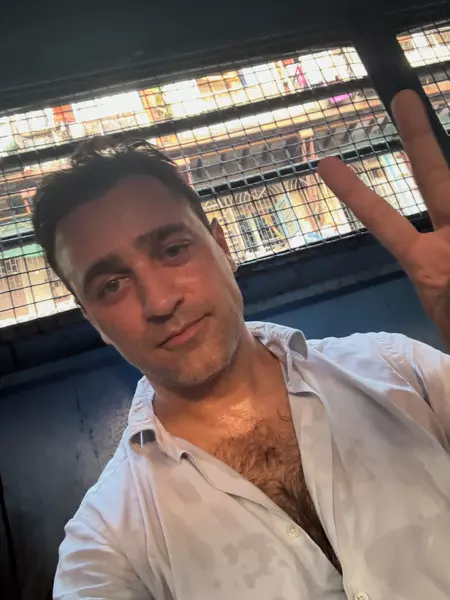
Aamir Khans nephew Imran Khan asked to leave India by October 28
Digital Desk | Mumbai, Oct 15 (IANS) Bollywood superstar Aamir Khans nephew Imran Khan has been issued a notice by the Mumbai Police asking him to leave India by October 28, days after he participated in a protest demanding the resignation of Chief Election Commissioner Gyanesh Kumar. Action has been taken against Imran under Sections 7 and 29 of the Immigration and Foreigners Act, and the actor has received a copy of the notice. The actor was detained by the police on October 10 in connection with the protest. According to the information provided, action has been taken against Imran under the relevant provisions of the Immigration Act for allegedly participating in such a protest despite not being an Indian citizen. On October 13, BJP leader and former MP Kirit Somaiya approached the Union Ministry of Home Affairs and immigration authorities, urging them to issue a Look Out Circular (LOC) against actor Imran Khan. He has also requested that the actor be barred from leaving the country until an inquiry into his complaint and the investigation into a Mumbai police case are completed. In a letter dated October 13 to Union Home Secretary Govind Mohan, Somaiya called on the Ministry of Home Affairs to issue directions preventing Khan from travelling abroad under the Immigration and Foreigners Act, 2025. He also asked the Bureau of Immigration to issue an LOC against the actor and notify the police should he attempt to leave India. The move comes after a protest at Mumbais August Kranti Maidan on October 10 where demonstrators demanded the resignation of Chief Election Commissioner Gyanesh Kumar. In his letter, Somaiya claimed that the gathering had taken place without the necessary permission. He further alleged that Khan had attended and participated in the protest before Mumbai Police detained him at the venue. According to the letter, Gamdevi Police Station registered an FIR, numbered 813 of 2026, in connection with the incident, with Khan named in the case. Somaiya also stated that he had not received a copy of the FIR. Somaiya claimed in his letter that Khan is a US citizen and reportedly holds an Overseas Citizen of India (OCI) card. He urged the Ministry of Home Affairs and the Bureau of Immigration to assess whether the actors participation in the protest calls for action under Section 7D of the Citizenship Act, 1955, and the Immigration and Foreigners Act, 2025. Talking about Imran, he first appeared as a child artist in the films Qayamat Se Qayamat Tak in 1998 and Jo Jeeta Wohi Sikandar in 1992. He made his adult acting debut in 2008 with the romantic comedy Jaane Tu... Ya Jaane Na, which was a success. After the failure of his next two films, he then starred in a number of commercially successful romantic comedies such as I Hate Luv Storys, Mere Brother Ki Dulhan and Ek Main Aur Ekk Tu and the action comedy thriller Delhi Belly. This was followed by a series of box-office flops and a hiatus. He was seen in a cameo appearance lately in the Vir Das film Happy Patel: Khatarnak Jasoos. It also stars Mithila Palkar, Mona Singh, Sharib Hashmi and Srushti Tawade. The film marked Imran's comeback roughly ten years after he last starred in Katti Batti in 2015. The film followed Happy Patel, who is a clumsy but enthusiastic spy whose missions trigger unexpected consequences. He was seen in a full-fledged role in the 2015 Katti Batti, a romantic comedy film directed, co-produced, and written by Nikhil Advani. The film stars Imran Khan and Kangana Ranaut in the lead roles.
WATCH: Trump Attacks Somalis For 'Destroying' Minnesota Amid Ilhan Omar Row
Donald Trump has launched another blistering attack on Rep. Ilhan Omar and Minnesotas Somali community, accusing Somali immigrants of having fleeced the state and saying they had destroyed Minnesota.Trump also revived his long-running attacks on Omar, again invoking allegations surrounding her past marriage and immigration history as he tied her to wider claims of fraud and corruption in Minnesota.The remarks come amid renewed political scrutiny around Omar following the federal search of her Washington-area home and an investigation linked in reporting to immigration paperwork from her childhood.

Attacking heritage is prejudice, not politics
SIR KEIR STARMER did not want to stick around in the Commons after being removed from Downing Street. It was the shared achievement of his national and local successors that Labour did not slip up in the Holborn and St Pancras byelection to replace him. Andy Burnhams confident start as prime minister put voters in a mood to give his government a chance, not a warning shot. Labour candidate Sagal Abdi-Wali localised the hopeful message , having risen to council leader in three decades, after arriving as a young child refugee born 4,000 miles from St Pancras. The frontrunner being foisted on the people of Holborn by Labour to replace Keir Starmer was born in Somalia. Do you understand whats happening? Reforms Zia Yusuf tweeted. The partys home affairs spokesman struggled to explain why attacking a candidates birthplace was politics, not prejudice. His ugly attack did not hinder Labour electorally, but motivated members to campaign on how to send Reform a message in a by-election race mainly against the Greens. Party leader Zack Polanski stood, reflecting early Green optimism about a famous upset. The post-election aftershocks were less about being runner-up than the deep rift between Green MPs and activists after a split party conference narrowly passed a motion declaring Zionism is racism, while the party leader skipped that debate to campaign in London. This is Camden and this is London, Abdi-Wali declared in her warm acceptance speech. Constituency polling by Persuasion UK suggested she was as much of a campaign asset as the prime minister. Was her victory just a snapshot of north Londons liberalism in polarised times? Abdi-Wale is the first British MP of Somali origin. But she is also the 91st ethnic minority MP in this parliament, there were just four when she first came to London, and joins 25 colleagues of Muslim faith in the Commons. Kemi Badenochs defeat of Robert Jenrick in the 2024 Conservative Party leadership contest did most to prove how the new norm of ethnic diversity in public life stretches across the party spectrum. Yet, two years on, Badenochs conference speech pushed back punchily against ethnonationalist identity politics on the right. She challenged those who see British or English identity as racially exclusive. Badenoch identifies as British, not English, herself, but was rejecting Suella Bravermans insistence that nobody, neither herself nor Rishi Sunak, should ever call themselves English without multiple generations of ancestry. Badenochs emphatic statement that we are not uniting with that angered Reform. They think this may rebound badly, like Hillary Clintons speech about US president Donald Trumps deplorable voters. But early research found this challenge did resonate strongly with public audiences, reflecting broad concern at a resurgence of racism. Badenochs attack may even have been a little unfair on Reform leader Nigel Farage. He does not support Bravermans rules that exclude almost all ethnic minorities from English identity. Farage realises it is politically bonkers to be questioning if Englands black footballers really count. Nor would he doubt that Badenoch is British, though the young ethnonationalist staff for Rupert Lowes Restore Britain do. Campaign director Charlie Downes mocks both Badenoch and Farage as deluded for believing that ethnic and faith minorities can ever be equally British. Yet Badenoch gave Lowe a Tory spot on a key Commons committee: a tactical alliance to amplify his spoiler impact on Reform. Restore refuses to set any boundaries at all for overt racists. Active Restore members could even share Britain Firsts online petition to deport Badenoch over her speech, confident their party will take no action. For two decades, Farage has projected his Asian and black colleagues to show how he is different from the BNP. I have always found complaints about some British Asians being right-wing a bit patronising: there Cricket on the Mall ahead of Earthshot event are bound to be people with left-wing, centrist and right-wing views. What crosses the line is when minority politicians use their own characteristics to make racially exclusionary arguments that white British colleagues would avoid as prejudiced. That seems to be becoming a Reform pattern. I doubt Richard Tice MP would make Yusufs attack on Abdi-Wali's heritage, nor Bravermans rejection of Sunaks English identity. Now Raheem Kassam, a close associate of Farage for years, promotes online attacks on Badenoch as a Nigerian scammer, declaring that a woke anchor baby can never be prime minister. Kassam has no official party role, but Reforms London mayoral candidate, Laila Cunningham, used his content to accuse Badenoch of being in politics to promote Nigerias interests, not Britains. Reform is moving further right at pace. Farage began this week pledging to abolish asylum entirely. Lowe bid higher, arguing the priority must be to deport millions of legal migrants too. Reforms Jenrick proposed the Royal Marines use lethal force to stop Channel boats. Badenochs challenge to Reform primarily reflected Restores hardcore ethnonationalism, but it may become ever harder to spot the difference.

Can Imran Khan Be Deported For Taking Part In Protest?
The controversy surrounding actor Imran Khan's participation in a Mumbai protest, and BJP leader Kirit Somaiya's demand for his deportation, raises critical questions about the legal rights of Overseas Citizen of India cardholders to engage in political dissent and the grounds for their expulsion from India.

Centre sanctions Rs 9,000 cr for Karnataka
Bengaluru: The Centre has sanctioned Rs 9,000 crore for the continued development of the Konkan Railway and other railway projects in Karnataka, Union Minister of State for Railways and Jal Shakti V Somanna said. The allocation is expected to support infrastructure development and improve connectivity between the coastal and Malnad regions of the state. Approx Get the latest updates in Hyderabad City News , Technology , Entertainment , Sports , Politics and Top Stories on WhatsApp & Telegram by subscribing to our channels. You can also download our app for Android and iOS .
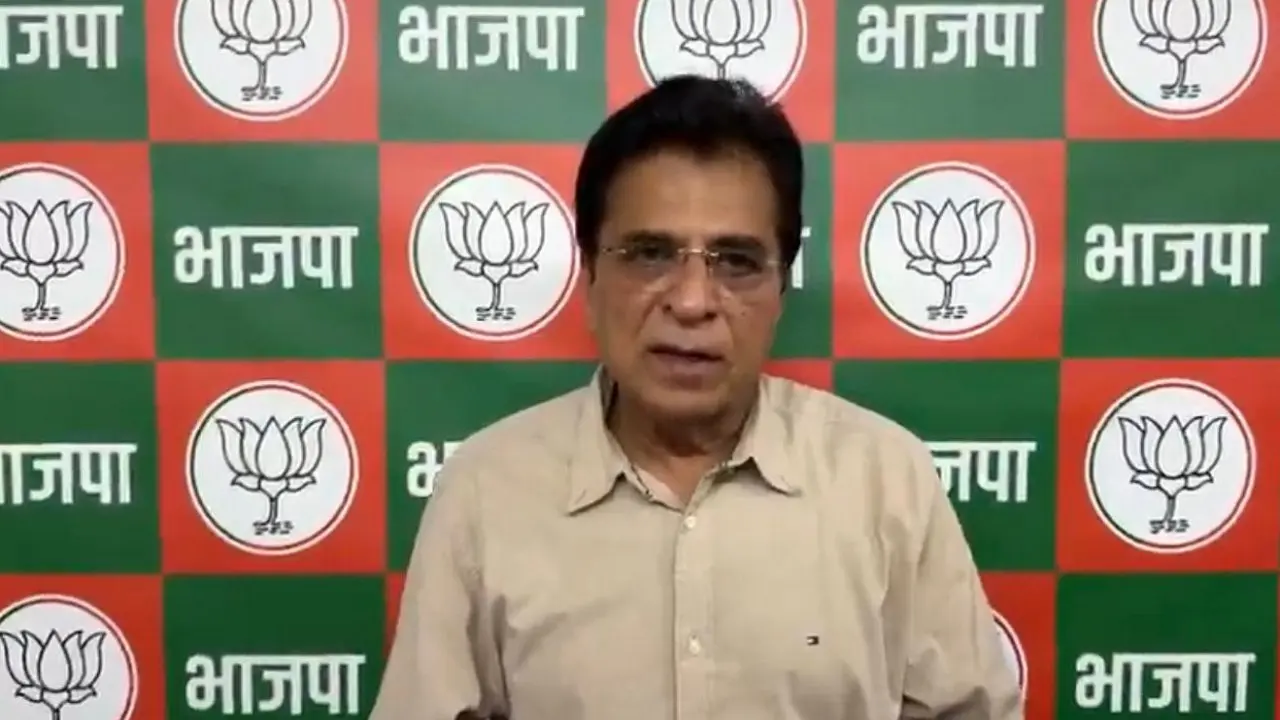
Kirit Somaiya seeks LOC against actor Imran Khan over Mumbai protest case
In a letter dated October 13 to Union Home Secretary Govind Mohan, Somaiya urged the ministry to issue directions restricting Khans overseas travel under the Immigration and Foreigners Act, 2025
'They dont have pants to wear...': Trump attacks Somali immigrants, Ilhan Omar at Ohio rally

Kirit Somaiya seeks look out circular against Imran Khan, urges MHA to stop him from leaving India
BJP leader and former MP Kirit Somaiya has written to the Union Ministry of Home Affairs and immigration authorities, seeking the issuance of a Look Out Circular (LOC) against actor Imran Khan and requesting that...
Trump attacks immigrants from Somalia and Haiti while rallying in Ohio for Republican candidates
If you want to stop Ohio from being plundered, ransacked and destroyed like Minnesota is being destroyed, we're going to stop it, says U.S. President Donald Trump
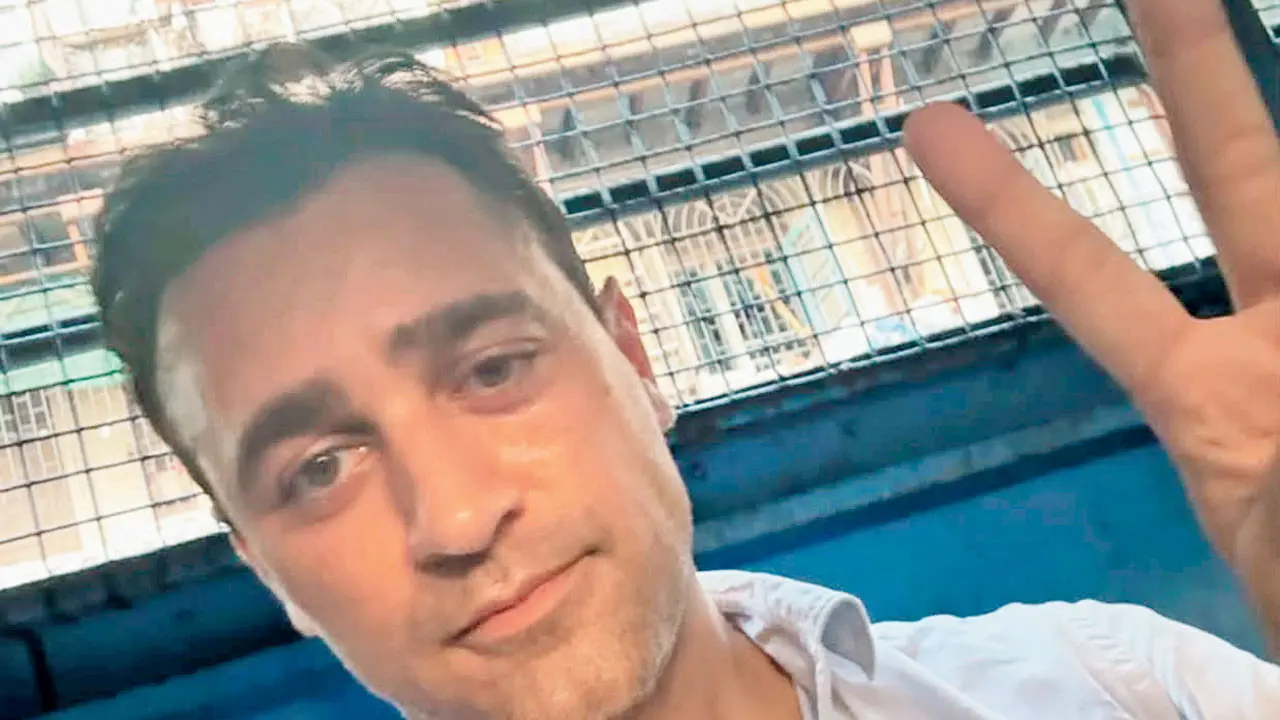
Kirit Somaiya seeks Imran Khan's deportation, files complaint with Mumbai FRRO
BJP leader Kirit Somaiya demands that actor be deported
'Back To Somalia': Trump Unloads At Ilhan Omar; Brings Up Minnesota Marriage Fraud
Donald Trump launched a fresh attack on Rep. Ilhan Omar and Minnesotas Somali community during a rally in Tennessee, just as the Democratic congresswoman faces intense scrutiny following a federal search of her Washington-area home.Trump singled out Omar by name, saying: She comes from Somalia. He went on to describe Somalia as a country without functioning government or police and claimed all they have is crime and squalor. Trump then mocked Omar for invoking the U.S. Constitution, saying: She comes into our country and she says, my Constitution allows me shes talking about our Constitution.
Gamdevi cops send Somaiyas plea against actor to FRRO
Married My Brother?: Ilhan Omar On Back Foot Amid Raid On DC Home & Trumps Stinky Somali Dig
Rep. Ilhan Omar is facing renewed scrutiny after federal agents searched her Washington-area home as part of an ongoing criminal investigation, reviving years-old allegations over her immigration history and past marriage.The Justice Department confirmed that Homeland Security Investigations executed a judicially authorized search warrant at Omars home. DOJ has not publicly disclosed the precise evidence behind the warrant.
Somaiya targets actor Imran Khan over US citizenship claim
BJP leader Kirit Somaiya has claimed actor Imran Khan, who participated in a protest, holds US citizenship and questioned his motive. Somaiya lodged a complaint, alleging a conspiracy to create anarchy through protests against electoral roll revisions and stating police assured him of summoning Khan for citizenship documents.
Ilhan Omar to Be Arrested? Trumps Agents Raid Democrats Home as Midterm Battle Explodes
A predawn federal raid on Democratic Congresswoman Ilhan Omars Washington-area home has ignited a political firestorm, putting President Donald Trumps bitter feud with one of his fiercest critics back in the spotlight. According to Fox News Digital, the operation followed a criminal fraud investigation involving immigration paperwork reportedly completed by Omars late father when she was a child. The Department of Justice confirmed that Homeland Security Investigations executed a judicially authorised search warrant as part of an ongoing federal investigation. However, authorities have not publicly disclosed further details, and no conclusion of wrongdoing can be drawn from the raid alone. The development comes after Trump repeatedly attacked Omar, accused her of fraud and said she should be thrown out of the country. He has also made inflammatory remarks about the Somali community, fuelling accusations of anti-immigrant rhetoric.
'What they've done to Minnesota': Trump goes after Ilhan Omar, Somali gangs over migration fraud
'What they've done to Minnesota': Trump goes after Ilhan Omar, Somali gangs over migration fraud
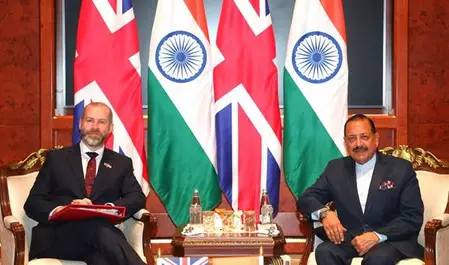
India, UK explore cooperation in space, civil nuclear energy and emerging technologies
Digital Desk | New Delhi, Oct 12 (IANS) Union Minister of State Dr Jitendra Singh on Monday held bilateral talks with UK Secretary of State for Business, Innovation, Science and Trade Jonathan Reynolds to explore avenues for strengthening cooperation in space, civil nuclear energy, scientific research and emerging technologies. According to the Ministry of Science & Technology, the Indian delegation -- led by the minister -- comprised Prof. Umesh Waghmare, Secretary of the Department of Science and Technology (DST) and Dr. Praveenkumar Somasundaram, Adviser and Head, International Bilateral Cooperation, DST. On the other side, the UK delegation comprised Reynolds, British High Commissioner to India Lindy Cameron and Interim Permanent Secretary of the Department for Business, Innovation, Science and Trade Amanda Brooks, according to the ministry. The minister said that India's space-sector reforms had opened new opportunities for private industry and startups, enabling research institutions to focus on advanced research. Building on this experience, India and the UK can expand cooperation through research partnerships and greater industry participation, he added. Moreover, discussions covered collaboration in space science, satellite development and stronger engagement between scientific institutions and technology enterprises. With around 800 space-tech startups in India, Singh proposed greater connectivity between Indian and British startups to facilitate innovation and expand commercial opportunities, according to the ministry. On civil nuclear energy, Singh spoke about India's nuclear-sector reforms including SHANTI Act, 2025. Drawing on experience of opening up space sector, India is creating avenues for wider participation in nuclear energy, he said. In addition, the two sides explored opportunities for cooperation in small modular reactors (SMRs), advanced nuclear technologies and associated industrial capabilities amid growing energy and data-centre demand. The minister spoke about wider applications of India's nuclear programme beyond electricity, particularly in nuclear medicine and healthcare, offering scope for engagement with British expertise in life sciences. Notably, artificial intelligence (AI), quantum technologies, cyber-physical systems and cybersecurity also featured in discussions. However, Reynolds welcomed closer engagement and emphasised scope for regular interaction between institutions and commercial cooperation.

Actor Imran Khan is an American citizen, alleges former BJP MP
Mumbai: Bollywood actor Imran Khan has landed in a fresh controversy after former Lok Sabha MP Kirit Somaiya alleged that the actor holds an American passport and questioned his participation in a political protest in Mumbai. Somaiya has approached the police and the Foreigners Regional Registration Office (FRRO), seeking action over the actors participation in Get the latest updates in Hyderabad City News , Technology , Entertainment , Sports , Politics and Top Stories on WhatsApp & Telegram by subscribing to our channels. You can also download our app for Android and iOS .

Mother's 3-day walk with sick child highlights Somalia's child malnutrition emergency
A Somali mother walked for three days carrying her severely malnourished 3-year-old daughter nearly 90 kilometers to a hospital in Kismayo
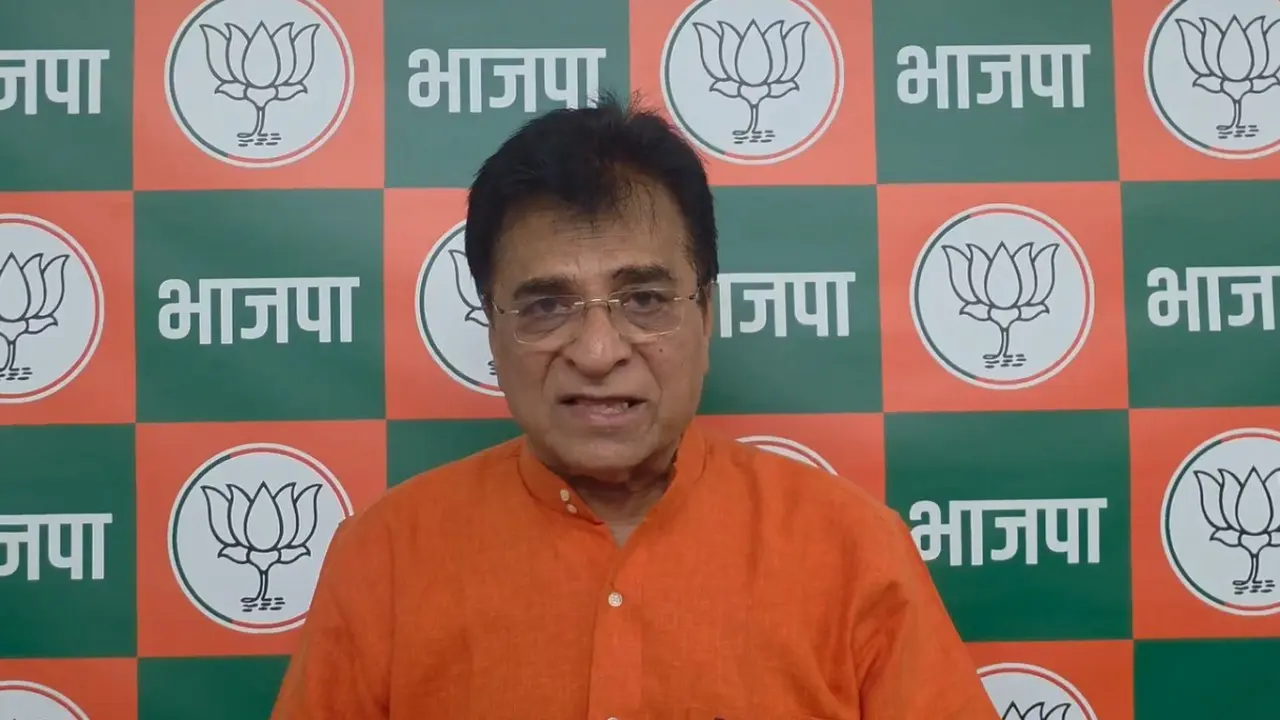
Kirit Somaiya to approach Mumbai police over Imran Khan's alleged OCI violations
Somaiya said he had written to and spoken with Gamdevi Police Station about the FIR against the actor. He announced that he would visit the police station at 12.30 pm on Monday

Kirit Somaiya to file complaint over actor Imran Khan
The News Mill
V. Somanna to hold meeting on railway projects in Shivamogga
'Where is Ilhan Omar?': Ex-Minnesota trooper turns up heat as Somali violence erupts | Midterms 2026
'Where is Ilhan Omar?': Ex-Minnesota trooper turns up heat as Somali violence erupts | Midterms 2026
Union minister V Somanna criticises CM DK Shivakumar, urges focus on drought and governance
The News Mill
Trump online: A burst of anti-Somali and anti-Muslim rhetoric
In a burst of anti-Somali and
The Eken: Kerala-e Kurukshetra - Official Trailer
Watch the Official Trailer from Bengali movie 'The Eken: Kerala-e Kurukshetra' starring Anirban Chakrabarti, Suhotra Mukhopadhyay, Somak Ghosh, Ritwick Chakraborty and Raima Sen. 'The Eken: Kerala-e Kurukshetra' movie is directed by Joydeep Mukherjee. To know more about 'The Eken: Kerala-e Kurukshetra' trailer watch the video. Check out the latest Bengali trailers, new movie trailers, trending Bengali movie trailers, and more at ETimes - Times of India Entertainment.
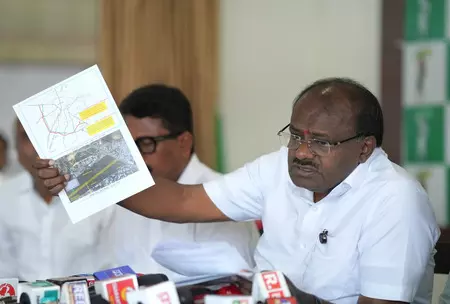
Kumaraswamy seeks halt to NICE toll collection, cites Rs 4,756 crore revenue
Digital Desk | Bengaluru, Oct 7 (IANS) Union Minister for Heavy Industries and Steel H.D. Kumaraswamy on Wednesday alleged that NICE had collected Rs 4,756.48 crore in toll revenue since 2008 despite the project remaining incomplete and demanded that toll collection be stopped immediately. Therefore, I demand that toll collection be stopped immediately. The State government should also take urgent action in this regard. I also appeal to the public not to pay tolls under any circumstances, Kumaraswamy said. NICE (Nandi Infrastructure Corridor Enterprise) project is a long-running controversy in Karnataka involving the development and land acquisition for the Bengaluru-Mysuru Infrastructure Corridor (BMIC). The project was conceived as an expressway and peripheral road network connecting Bengaluru and Mysuru, along with townships and related infrastructure. The main controversy concerns land acquisition, alleged excess acquisition, compensation and the use of land acquired for purposes allegedly beyond those originally approved. Addressing a press conference at the JD(S) headquarters, JP Bhavan, Kumaraswamy argued that despite the High Court making strong observations against toll collection, and the Supreme Court not issuing any stay on the matter, the continued collection of toll was illegal. The original project cost of the NICE road was Rs 1,583.76 crore. However, the company has so far collected Rs 4,756.48 crore in toll revenue. He alleged that toll collection was being carried out in violation of the terms governing the NICE project. He referred to the Karnataka High Court's observations on the project and said the Supreme Court had not stayed the High Court judgment. According to figures cited by him, annual toll collections stood at Rs 5.59 crore in 2008-09 and had risen to Rs 734.97 crore in 2024-25. He alleged that a total of Rs 4,756.48 crore had been collected between 2008 and 2025. 'How many more years will toll collection continue?' Kumaraswamy strongly objected to suggestions that toll collection could continue for another decade. How many more years will this alleged collection continue? They say there are still another 10 years of toll collection. On what basis? This cannot continue, he said. He reiterated his demand that toll collection on the NICE road be stopped immediately and that the State government take appropriate action in light of the court proceedings and the terms of the original agreements. Kumaraswamy said the issue had been pursued by the JD(S) and former Prime Minister H.D. Deve Gowda for nearly two decades and claimed that the matter was now reaching a decisive stage. Kumaraswamy said a Toll Concession Agreement (TCA) was signed on September 4, 2000, between the State Public Works Department and NICE. He said the agreement required the project to be implemented in accordance with the original Framework Agreement (FWA) dated April 3, 1997. In the event of any conflict between the TCA and the terms of the FWA, the provisions of the Framework Agreement were to prevail, he said. According to Kumaraswamy, the agreement also envisaged construction of a four-lane concrete road, service roads and maintenance areas before toll collection could begin. He alleged that these conditions were not fully complied with and that toll collection nevertheless began in 2008. NICE has been collecting toll despite not completing the project and has also acquired land belonging to farmers. The company cannot continue collecting toll without complying with the conditions of the original agreements, he said. Kumaraswamy also raised allegations concerning lake areas within the project. Referring to the H.T. Somashekar Reddy case, he said NICE had sought 6,999 acres before the Supreme Court, including 2,193 acres for the Peripheral Road. He said the land cited at the time comprised various categories of agricultural and government land and did not include lake areas. He further said engineer Kapil Sharma had, in 2021, used the Dishaank application to identify instances where roads had allegedly been constructed over lake areas and had submitted a complaint. Kumaraswamy said documents relating to the alleged encroachment of lakes were also released at the press conference. Kumaraswamy alleged that the project alignment was altered through the Outline Development Plan (ODP) on February 12, 2004, without obtaining the required Cabinet approval. He alleged that the changes resulted in an expansion of the land allocated to different components of the project. According to the documents cited by him, the land earmarked for the Peripheral Road was increased from 2,193 acres to 2,747 acres, while the land for the toll road was increased from 6,999 acres to 9,468 acres. Kumaraswamy alleged that these changes were made unilaterally and without Cabinet approval. He also referred to the Karnataka High Court's judgment of July 29, which, according to him, held that altering the original agreement through the ODP amounted to a fraud on statute and the Constitution and also criticised State authorities for their role in the matter. Kumaraswamy said NICE had approached the Supreme Court through a Special Leave Petition challenging the High Court judgment. He said the Supreme Court had not granted a stay on the High Court judgment and had adjourned the matter for further hearing to November 2. He added that 25 lawyers, including those representing the State government, had appeared before the court in connection with the matter. Kumaraswamy argued that, in view of the High Court judgment and the absence of a stay from the Supreme Court, toll collection should be stopped immediately. He also pointed to a Cabinet decision taken during the S.M. Krishna government on November 4, 2002, under which toll collection was to be withdrawn if the four-lane concrete road was not completed within six years. Kumaraswamy alleged that NICE had generated revenue through avenues other than toll collection, in violation of the original Framework Agreement. He cited Rs 384 crore allegedly generated through land sales, Rs 108 crore received as advances towards joint development of land and construction projects, and Rs 338 crore from convention centres. He also referred to the recommendations of former Minister and Congress MLA T.B. Jayachandra, who chaired a House committee in 2016. According to Kumaraswamy, the committee had recommended taking over the NICE project and recovering excess land. Kumaraswamy questioned the change in Jayachandra's position, noting that while he had stated in August 2023 that the NICE road was not required, he subsequently wrote to the Chief Minister in May 2025 seeking completion of the project. This raises questions about what is happening behind the scenes, Kumaraswamy alleged.
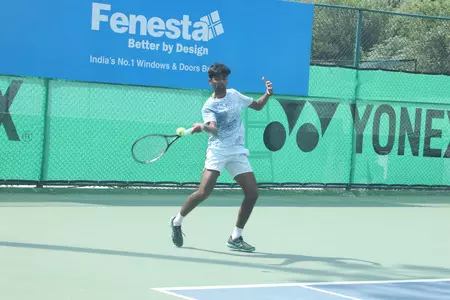
Fenesta Open: Karthik upsets Kamboj; top seeds Manish Sureshkumar, Vaidehee Chaudhari in QF
Digital Desk | New Delhi, Oct 7 (IANS) Pranav Karthik, the 21-year-old from Tamil Nadu, caused a major upset on Wednesday at the 31st Fenesta Open National Tennis Championship, rallying from a set down to defeat No. 4 seed Udit Kamboj in the second round at the DLTA in New Delhi. Kamboj won the first set 6-1 and was neck-and-neck with his younger rival in the second set, which went to a tiebreak. Karthik won the tiebreak 7-3 and carried that momentum into the decider to win 1-6, 7-6 (7-3), 6-2 in 2 hours and 31 minutes. To be honest, I was thinking I was going to lose for sure after the horrible first set, Karthik said after the win. I just kept serving well and maintaining my service games. And when it came to the tiebreak, it was 50-50. Then I just pulled it off with 3-4 good points. When I pulled off the tiebreak, I got more confidence and started going for my shots. The first game of the third set is always important because you have to keep pushing through and keep the momentum because you don't want to give him the breathing space. And thankfully, I got the break in the first game, and then I was able to run away with the match after that, he said. Meanwhile, the mens top seed Manish Sureshkumar had little trouble defeating Lakshit Sood 6-0, 6-1 to advance to the quarterfinals. He was joined in the last eight by No. 6 seed Maan Kesharwani, No. 8 seed Rohan Mehra and Suraj Prabodh, who knocked out second seed Aditya Balsekar in the previous round on Tuesday. Sureshkumar and partner Nitin Sinha are also top seeds in the mens doubles draw and are scheduled to play their quarter-final match later in the evening. Also, the top five players in the womens singles draw booked their spots in the quarterfinals, with Vaidehee Chaudhari defeating 16-year-old Ahaan Ahaan 6-4, 6-1, while Shruti Ahlawat beat Parthsarthi Mundhe 6-2, 6-2. It was not easy or comfortable. I think the opponent was very good, Ahlawat said after the victory. I had to do everything to close the game, win the points. The score might look easy, but the match was good. I'm thinking point by point, match by match rather than thinking, I'll win the tournament. I would focus on my next round match and then see how it goes, he added. Third seed Akanksha Nitture also advanced, coming back after dropping the second set to defeat Yubrani Banerjee 6-1, 4-6, 6-1. I started well in the second set, Nitture said. I was hoping to finish it in two sets. She played well on the crucial points. But I had to reset for the third set. I knew that I needed to change a few things that I did wrong in the second set. I changed it in the third set, and it worked for me. I started keeping more balls in and started playing more consistently and mindfully. There was also a big upset in the Boys' U-18 singles draw as top seed Praneel Sharma was bundled out 7-6 (7-4), 6-4 by Veer Jiten Madam. Fourth seed Om Ramesh Patel and fifth seed Aditya Mor won their third-round matches in straight sets to join Madam in the quarterfinals. In the Girls' U-18 event, top seed Savitha Bhuvaneswaran was stretched to the limit by 14th seed Aahida Singh. The two battled for 2 hours and 45 minutes before Singh was forced to retire, with Bhuvaneswaran leading 3-6, 7-6 (7-5), 3-0. Bhuvaneswaran was joined by second seed Parthsarthi Mundhe and third seed Shreeniti Chowdhury in the quarterfinals. Results: Mens Singles Second Round (Round of 16): Manish Sureshkumar [1] def. Lakshit Sood 6-0, 6-1 Pranav Karthik def. Udit Kamboj [4] 1-6, 7-6 (7-3), 6-2 Maan Kesharwani [6] def. Rohith Gobinath 6-1, 6-2 Rohan Mehra [8] def. Ajay Malik 7-6 (7-3), 6-3 Suraj R Prabodh def. Debasis Sahoo 6-4, 6-4 R Jaisinghani def. Prakaash Sarran 6-5, 7-6 (9-7) Parth Aggarwal def. Deep Munim 7-5, 6-2 Womens Singles Second Round (Round of 16): Vaidehee Chaudhari [1] def. Aahan Aahan 6-4, 6-1 Shruti Ahlawat [2] def. P Mundhe 6-1, 6-3 Akanksha Nitture [3] def. Yubrani Banerjee 6-1, 4-6, 6-1 Sonal Patil [4] def. Akansha Ghosh 6-3, 6-7 (4-7), 6-4 Aditi Rawat [5] def. A Sonkusare 6-3, 3-6, 6-2 Laxmi Siri Dandu [7] def. Bela S Tamhankar 6-0 (retd.) Sohini Mohanty [8] def. A Jadhav 6-3, 6-2 Soha Sadiq def. Saily Thakkar 6-1, 6-0 Mens Doubles Quarterfinal: Aditya Balsekar [3] / Pranav Karthik [3] def. Sandesh D Kurale / Prasad Ingale 6-1, 6-4 Jagmeet Singh [4] / Parth Aggarwal [4] def. Nain / Choudhary 6-3, 7-6 (7-3) Rohith Gobinath / Srikar Doni def. Karan Singh/ Aryan Chauhan 6-3, 7-5 Boys U-18 Singles Third Round (Round of 16): Veer Jiten Madam def. Praneel Sharma [1] 7-6 (7-4), 6-4 Om Ramesh Patel [4] def. Sharan Somasi [11] 6-3, 6-1 Aditya Mor [5] def. Lakshya Chukka [16] 6-2, 7-5 Yashwin Dahiya [15] def. Parjanya Adury [7] 6-4, 6-2 Ribhav Saroha [10] def. N Kirbakaran 6-0, 6-3 Raghav Sarode [12] def. Srivaant Mummadi 6-3, 6-3 N Badrinarayanan def. Aarav Bharat 6-4, 6-0 Srikar Doni def. Govardan Suresh 6-1, 6-3 Girls U-18 Singles Third Round (Round of 16): S Bhuvaneswaran [1] def. Aahida Singh [14] 3-6, 7-6 (7-5), 3-0 (retd.) Parthsarthi Mundhe [2] def. Manvi Gupta 6-0, 6-0 Shreeniti Chowdhury [3] def. Aaradhya Meena [9] 6-3, 0-6, 6-4 Aahan Aahan [7] def. Aashi Kashyap [12] 6-3, 6-1 Anjhalle Meka def. Shibani Gupte [10] 6-1, 4-6, 6-3 Harsha Oruganti def. Ranjhana Sangram [13] 6-3, 6-2 Riddhi Shinde def. Heera V [16] 6-1, 6-2 Iha Joshi def. Miraya Agrawal 6-0, 7-6 (7-5) Boys U-18 Doubles Quarterfinal: Praneel Sharma / Aditya Mor [1] def. Sharan Somasi / Lakshya Chukka 6-4, 7-5 Girls U-18 Doubles Quarterfinal: Ranjhana Sangram / Sarena Gahlot def. Vaishnavi Singh / Aaradhya Meena [1] 7-5, 6-1 Shibani Gupte / Tanusshri Sathesh [2]def. Aashi Kashyap / Vrandika Rajput 4-6, 6-4, 10-6 Sanmitha Harini / S Bhuvaneswaran [3] def. Manvi Rathi / Paavani Bisht 6-1, 6-0 Sree Syleswari Velmanikandan / Riddhi Shinde [4] def. Heera V / Sree Sasthayini Velmanikandan 4-6, 6-4, 10-6
'Send her home to Somalia': Rep. Fine targets Ilhan Omar amid probe over immigration fraud claims
Koppal : Two Officials Arrested While Allegedly Accepting Rs 40,000 Bribe
The arrested accused have been identified as Somanath T, the administrative officer of Sangapur, and village assistant Hanumesh Bandi Anjaneya.
'I'm still waiting': Rep. Gill questions mass migration from Somalia, asks 'wheres the benefit?'
K'taka DIG held over life convict release by forging SC order
A Deputy Inspector General (Prisons) in Karnataka, M Somashekar, has been arrested for allegedly facilitating the release of a life convict in 2018 by forging a Supreme Court order. The convict's wife, also arrested, accused Somashekar of sexual exploitation. The case came to light after a complaint from the Bengaluru Central Prison Superintendent, revealing a complex conspiracy involving a prison assistant who forged the order.
Ktaka: Prison DIG held over fake SC order used to free convict
Digital Desk | Bengaluru, Oct 5 (IANS) Parappana Agrahara police in Bengaluru have arrested Prison Department North Zone DIG Somashekar on charges of allegedly releasing a life-term prisoner from jail on the basis of a fake Supreme Court order, police said on Monday. Police are questioning Somashekar as part of the investigation into the alleged forgery and illegal release of the prisoner. The prisoner, identified as Shankar, was serving a life sentence in a murder case. According to the police, a fake document resembling a Supreme Court order was allegedly prepared in 2018 to facilitate his release from prison. Police have alleged that Srikanth, a Second Division Assistant (SDA), prepared the fake order. Shankar and Srikanth have also been arrested in connection with the case. At the time of the incident, Somashekar was serving as the Jail Superintendent of Parappana Agrahara Central Prison. Shankar, who had been convicted in the murder case, was released from the prison on November 13, 2018, allegedly based on the forged Supreme Court document. Police are investigating the circumstances surrounding the preparation and use of the fake order and the role of the accused in facilitating the prisoners release. Investigators are also looking into the possible involvement of the accused in other similar incidents and are examining whether any other prisoners may have been released using forged documents. Further questioning of Somashekar and the other accused is under way as police continue their investigation. It may be recalled that, according to data shared by then Chief Minister Siddaramaiah and former Home Minister G. Parameshwara, criminal cases were registered against 88 police personnel and officers in Karnataka for their alleged involvement in various criminal activities. Siddaramaiah had termed the involvement of police personnel in criminal cases as shameful and unpardonable. Parameshwara presented the official figures during a session of the state legislature, highlighting accountability within the force. Speaking at an annual conference of police officers, Siddaramaiah also expressed strong displeasure over criminal cases registered against members of the state police force. He referred to high-profile incidents, including an ATM cash van robbery in Bengaluru in which a head constable was allegedly identified as the kingpin. He also cited drug cases in Karnataka being cracked by police forces from other states instead of local law enforcement, which he had described as embarrassing. The state government had stated that it was examining stricter legal measures and seeking greater vigilance within the department to prevent such incidents.
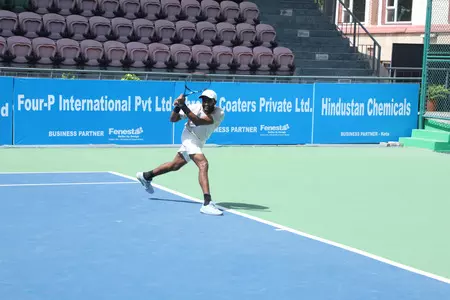
Digital Desk | New Delhi, Oct 5 (IANS) Top seeds in the mens and womens singles draws, Manish Sureshkumar and Vaidehee Chaudhari, kicked off their respective campaigns with comfortable straight-sets wins on the opening day of the 31st Fenesta Open National Tennis Championship at the DLTA Complex in New Delhi on Monday. Sureshkumar, the defending champion, needed just 61 minutes to defeat Prasad Ingale 6-1, 6-2, while Chaudhari, a two-time former champion who missed last years edition due to injury, dropped just one game in a 6-0, 6-1 win over Riya Sachdeva in 56 minutes. It was a good start. I just tried to be solid because it was the first match, Sureshkumar said after his win. I tried to put as many balls on the court and get the rhythm. Today's match was more about being solid and trying to force the opponent to make an error. I think I was serving really well today. Hopefully, I can continue the momentum to the upcoming rounds. Gunning for his third Fenesta Open title, Sureshkumar is feeling confident playing at what he described as one of his favourite venues. I have won this tournament twice already. Last year was pretty good. I didn't start pretty well last year, but I was able to end it well. I have always liked playing on these courts in Delhi. This is one of my favourite venues. I feel confident playing here, and that's what I will be looking forward to, the 27-year-old from Tamil Nadu added. Chaudhari won the first 11 games of her first-round match before her opponent got on the scoreboard. I played really well; I was 6-0, 5-0 up. I wanted to finish in love and love, she told the media after the win. But Riya played a good game, and it was 6-0, 6-1. Now Im looking forward to my second-round match tomorrow. Like Sureshkumar, Chaudhari also has fond memories of the tournament and is hoping to create some more this year. This place is very special for me. I won my first title in 2022 and the second one in 2024. And whenever I come here, I always go back with the trophy. I feel really good, and hopefully I create some more good memories here this year, she added. Meanwhile, Soha Sadiq caused the first big upset of the tournament with a 6-4, 6-1 win over No. 6 seed Jennifer Luikham in 86 minutes. I feel really good, I feel really positive, Sadiq said after her win. Jennifer is not an easy player to play against. She is very persistent and is a very good player. I am happy I won. The 28-year-old had been training hard in preparation for the event and was happy to see her work pay off on court on Monday. I was training just for this tournament, and I just did everything (in the match) I practised for. This is one of the biggest tournaments in India, and this win is a good start for me, she said. Elsewhere in the mens singles draw, third seed Nitin Sinha, sixth seed Maan Kesharwani and eighth seed Rohan Mehra all advanced to the second round. However, No. 7 seed Madhwin Kamath was knocked out by Parth Aggarwal in three sets. In the womens singles draw, second seed Shruti Ahlawat reached the second round with a 6-4, 6-0 win over Chevika Sama, while third seed Akanksha Nitture battled past Lakshmi Gowda 7-6, 7-6. Suraj Prabodh, the top seed in the mens qualifying draw, was one of eight players to come through qualifying and earn a place in the main draw. Others included 35-year-old veteran Lakshit Sood and rising juniors Aditya Mor and Prakaash Sarran, who are both among the seeded players in the Boys Under-18 singles draw, which also commenced on Monday. In the Boys Under-18 singles draw, top seed Praneel Sharma was impressive as he defeated Ritvik Dutt 6-0, 6-0 in less than an hour. Fourth seed Om Ramesh Patel, seventh seed Parjanya Adury and No. 8 seed Kushagra Arora also won their first-round matches in straight sets. The Girls' Under-18 singles draw also got underway on Monday. The top 16 seeds received a bye into the second round. They were joined by first-round winners Riddhi Shinde, Paavani Bisht, Pooja Nagaraj and Sanidya Karantoth, among others. Results at the time of writing this report: Mens Singles First Round (Round of 32): Manish Sureshkumar [1] (TN) def. Prasad Ingale (MH) 6-1, 6-2; Nitin Sinha [3] (WB) def. K Suresh (TN) 6-2, 6-2; Maan Kesharwani [6] (UP) def. Vansh Bisht (DL) 6-4, 6-4; Parth Aggarwal (DL) def. Madhwin Kamath [7] (GJ) 7-5, 1-6, 6-2; Rohan Mehra [8] (DL) def. A Senthilkumar (TN) 6-3, 5-7, 6-2; Pranav Karthik (TN) def. Suhith Lanka (TG) 6-4, 6-4; Debasis Sahoo (OD) def. Irfan Husain (TN) 7-5, 7-6 Womens Singles First Round (Round of 32) Results Vaidehi Chaudhari [1] def. Riya Sachdeva 6-0, 6-1 Shruti Ahlawat [2] def. Chevika Sama 6-4, 6-0 Akanksha Nitture [3] def. Lakshmi Gowda 7-6, 7-6 Soha Sadiq def. Jennifer Luikham [6] 6-4, 6-1 Akansha Ghosh def. Divya Bhardwaj 6-4, 6-2 Saily Thakkar def. Pooja Ingale 6-3, 6-3 Yubrani Banerjee def. Hasini Davunaboina 6-1, 6-0 Boys U18 First Round (Round of 64) Results Praneel Sharma [1] def. Ritvik Dutt 6-0, 6-0 Om Ramesh Patel [4] def. Gyansh Manchanda 6-2, 6-0 Parjanya Adury [7] def. Gaurish Madaan 6-0, 6-4 Kushagra Arora [8] def. Aritra Sasmal 6-3, 6-0 Sharan Somasi [11] def. Chandra Kopparapu 6-1, 6-3 Veer Jiten Madam def. Yaj Malik [14] 6-1, 6-1 Yashwin Dahiya [15] def. Ryan Mehta 6-2, 6-0 Lakshya Chukka [16] def. Lakshay Drall 6-0, 6-2 C Yale def. Rehaan Theodore 6-4, 6-4 Sarthak Gaikwad def. Ahaan Khanna 4-6, 6-3, 6-1 Tejas Ravi def. Nithik Sivakumar 6-3, 6-4 Anay Pandey def. Raunak Gilra 6-2, 7-5 Sangram Bhadury def. Harsh Nandal 6-2, 6-1 Mehul Jothish def. Ashwin Kabilan 7-5, 6-3 Aryaveer Sharma def. Gurrshan Mehta 6-1, 7-5 Rishi Yadav def. Arnav Bhuyan 6-3, 6-2 Srikar Doni def. Aksh Jood 6-1, 6-3 Girls U18 First Round (Round of 64) Results Riddhi Shinde def. Zoha Qureshi 6-2, 6-1 Paavani Bisht def. Ruhin Kaushal 6-2, 6-0 Pooja Nagaraj def. Vrandika Raput 6-1, 6-3 Sanidya Karantoth def. Mahi Raulji 6-0, 6-3 Mehul Malik def. Dyuti Jain 7-5, 6-1 Anjhalle Meka def. Aafreen Rahil 6-0, 6-4 Diya Chaudhary def. Vani Bansal 6-1, 6-0 Aniha Gavinolla def. Sanmitha Harini 4-6, 6-1, 6-3 Harsha Oruganti def. Sherry Sharma 6-1, 6-2 Tejaswi Manneni def. Chanchal Malik 6-1, 6-0 Iha Joshi def. Aarnavi Tomar 6-1, 6-0 Miraya Agrawal def. Mehr Muralidass 6-1, 6-0 Manvi Gupta def. Anarva Shyamraj 6-1, 6-0 Thatiparthy Hemaza def. Rathi Manvi 6-1, 6-3
Prisons DIG Arrested Over Assisting Convicted Prisoners Release Through Forged SC Order
Bengaluru police arrested Prisons DIG M. Somashekar for allegedly assisting a life convicts release using a forged Supreme Court order in 2018.