



UTAA plans state-wide campaign for ST political reservation
Margao: The United Tribals Associations Alliance (UTAA) will hold a meeting on Saturday to plan a state-wide campaign demanding political reservation for Goas Scheduled Tribe (ST) community. Addressing a press conference on Tuesday, UTAA president Prakash Velip, executive members advocate John Fernandes, Vishwas Gaude and Joseph Vaz, and other members said the organisation would visit []
Ladakh government reaches out to protesters demanding liquor ban

Maheshwar Reddy Accuses Revanth Of Favouring Kodangal
The BJP staged a protest at the ROB site on Tuesday, demanding the release of funds.
NRR Questions Delay In Jawaharnagar Capping
Rajender launched the four-day, 60-km padayatra from Lakshminarayana Cheruvu, demanding relocation of the dumpyard: Reports

Mirchowk Inspector, Home Guard caught for taking Rs 3L bribe
Hyderabad: A police Inspector and a Home Guard attached to Mirchowk police station were caught by the Anti-Corruption Bureau (ACB) on Tuesday, October 27, for allegedly demanding and accepting a bribe of Rs 3 lakh. According to an ACB, Inspector M. Kondal Rao allegedly demanded Rs 6 lakh from a complainant in exchange for closing Get the latest updates in Hyderabad City News , Technology , Entertainment , Sports , Politics and Top Stories on WhatsApp & Telegram by subscribing to our channels. You can also download our app for Android and iOS .

Maritime Training Institute in Jaipur loses DGMA approval following irregularities
Digital Desk | Kolkata, Oct 27 (IANS) Approval granted to a Maritime Training Institute (MTI) in Jaipur, Rajasthan, has been withdrawn by the Directorate General of Maritime Administration (DGMA) for alleged irregularities. M/s R R Marines Academy, located at Singhu Nagar, Murlipura, Jaipur, was granted approval by the DGMA for conducting Basic Safety Training, Proficiency in Survival Craft and Rescue Boats (PSCRB), Refresher for Proficiency in PSCRB, Refresher Training for Proficiency in FPFF, Refresher Training for Proficiency in PST, and Security Training for Seafarer with Designated Security Duties. After receiving complaints, the directorate had issued a Show Cause Notice dated November 14, 2025, to the MTI for alleged violation in the conduct of the exit examinations. Furthermore, the Directorate General, Shipping (DGS) had advised the MTI against admitting any new candidates, pending completion of the investigation. The MTI has, however, knowingly admitted a fresh batch of candidates who would not be able to appear for the exit exams and therefore cannot be issued with the certificate of the courses to which they had enrolled. The response to the show cause notice received from the MTI clearly indicates serious dereliction on the part of the MTI, and the explanation that it was the manager who had committed all the violations is difficult to comprehend and accept, the DGMA has stated in an order. It has been clearly noted that the DGMA's established procedures for approval of any maritime training institutes in India are underpinned by strict compliance and quality control. The DGMA directives are issued for the MTIs to implement the same in the interest of the Indian seafarers without any negligence, willful or otherwise. The DGMA monitors the institutes to ensure they maintain the set standards and may take disciplinary action if they do not comply. The DGMA has received complaints from three seafarers who had undertaken the basic safety courses at the MTI and have alleged that the promoter of the MTI had promised them jobs onboard ships and has been demanding lakhs of rupees as service charge. These seafarers claimed to have paid the promoter in cash and by electronic means. They have shared documents to support their claim, the order stated. The directorate claimed that the evidence available prima facie indicated serious illegality in the actions of the MTI. Taking cognisance of the aggregated violations, and in the interest of limiting further damage to the seafarers, the MTI was suspended, pending investigation. It was served with another show cause notice, to which the institute replied. Meanwhile, the Mercantile Marine Department in Kandla carried out a detailed investigation into the matter and submitted a report to the DGMA. This was regarding alleged malpractices detected during the exit examination of the MTI. The MMD also recommended the withdrawal of the approval accorded to the MTI. The recommendation of MMD Kandla was deliberated before the 72nd Standards of Training, Certification, and Watchkeeping (STCW) Compliance Board Meeting. The recommendation of MMD Kandla was accepted by the STCW Board. Accordingly, the MTI approval, which was under suspension, has been withdrawn on the e-governance system, the DGMA has said. In the notice, the directorate has clearly announced that all existing approvals granted to M/s R R Marines Academy for all DGMA-approved courses stand withdrawn.

Apple unveils 14-inch MacBook Pro with M6 chip, promises up to 30 pc faster graphics
Digital Desk | New Delhi, Oct 27 (IANS) Apple on Tuesday announced the new 14-inch MacBook Pro powered by its M6 chip, promising significant improvements in processing speed, graphics performance, on-device artificial intelligence (AI) capabilities and connectivity. The new MacBook Pro is aimed at college students, business professionals and creators, with Apple positioning it as a performance-focused laptop offering enhanced capabilities for demanding workloads. The company said the M6-powered device delivers up to 30 per cent faster graphics performance and up to 25 per cent faster AI workloads compared with the previous-generation M5 model. The M6 chip features an advanced 12-core CPU, which Apple describes as having the world's fastest CPU core. The processor is designed to improve responsiveness across everyday productivity tasks as well as more demanding professional workflows. Its 12-core GPU further boosts graphics performance and AI processing capabilities. For users upgrading from MacBook Pro models powered by the M1 chip, Apple said the new device delivers up to 11 times faster graphics performance and up to 13 times faster AI performance. The M6 chip also incorporates additional Neural Accelerators within the GPU and a dual 16-core Neural Engine, strengthening the laptop's ability to handle AI tasks directly on the device. These capabilities are designed to support Apple Intelligence features across applications and macOS, as well as the local execution of large language models (LLMs), while maintaining user privacy. The new MacBook Pro also introduces Wi-Fi 7 and Bluetooth 6 connectivity. Apple said its faster storage is designed to improve workflows involving large files, project exports and computationally intensive AI applications. The new 14-inch MacBook Pro will run macOS 27 and be available in space black and silver finishes. Apple said pre-orders will begin on October 28, with availability starting November 6. The 14-inch MacBook Pro is the pro laptop of choice for a wide range of users from college students, to business professionals across every industry, to multidisciplinary creators doing it all on one device, said Shelly Goldberg, Apple's vice president of Hardware Engineering.

Mansa: Police Remove Body, Opposition Slams Govt
Police in Mansa, Punjab, forcibly removed the body of a 35-year-old man who allegedly died of a drug overdose, leading to clashes with his family and protesters. The family sought to join a protest demanding justice for an anti-drug activist. Police claim the death is being investigated as a murder and used mild force, while opposition parties have severely criticised the government and police for their handling of the situation and alleged disrespect to Sikh sentiments.

Delhi lawyers call indefinite work abstention demanding suspension of Shahdara ACP and SHO
The News Mill

Punjab Drug Crisis | Man's Death Due To Suspected Drug Overdose Sparks Road Blockade In Mansa
Protests erupted in Punjab's Mansa district after 35-year-old Daljit Singh was found dead, with his family suspecting a drug overdose and alleging that narcotics remain easily available in the region. Relatives blocked the Sirsa-Mansa road, demanding arrests and action against alleged drug peddlers. Police intervened as protesters headed towards Mansa and took the body into their possession. Officials said a post-mortem examination would establish the cause of death and assured the family that action would be taken against those involved in drug trafficking.

Kerala Pradesh Congress Committe apologises to CJI for post on X
KPCC chief Sunny Joseph says post demanding resignation of the Chief Justice was published without prior approval or consultation
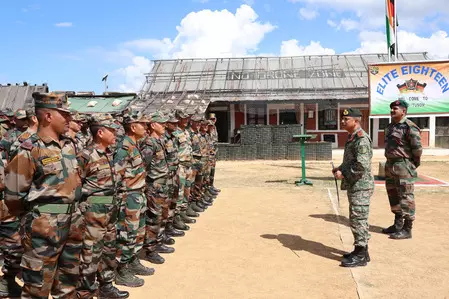
Assam Rifles DG reviews security grid in Manipur at high-level meeting
Digital Desk | Imphal, Oct 27 (IANS) Assam Rifles Director General Lieutenant General Vikas Lakhera on Tuesday chaired a high-level security review meeting to assess and strengthen the security grid in Manipur, officials said. A defence spokesman said that the Assam Rifles chief, accompanied by Major General Gaurav Sharma, Inspector General, Assam Rifles (South), carried out a comprehensive operational review across Somsai Garrison and Tusom Company Operating Base (COB) in mountainous Ukhrul district. A similar operational review meeting was also held at Chassad Garrison in hilly Kamjong district. The visit was conducted on Tuesday to evaluate the readiness of the Ukhrul Warriors in light of the prevailing security scenario in Manipur. The spokesman said that during the visit, the leadership received detailed briefings on operational deployments, the local security environment, and key administrative arrangements across these strategically vital posts. The Director General stressed the imperative of maintaining continuous vigilance, executing effective area domination, and bolstering seamless coordination with civil administrative authorities and fellow security agencies to preserve stability. He further emphasised establishing a robust and responsive security grid capable of adapting to emerging regional challenges. Interacting directly with personnel during these reviews, Lieutenant General Lakhera praised all ranks for their steadfast dedication, resilience, high morale, and exemplary professionalism under demanding field conditions. To honour extraordinary performance, he presented Commendation Cards to four Assam Rifles personnel who demonstrated exceptional service and devotion to duty. According to the defence spokesman, the high-level review meetings underscore the Assam Rifles enduring commitment to maintaining operational excellence, safeguarding troop welfare, and fostering constructive engagement with local communities to ensure long-term peace across Manipur. Meanwhile, Manipur Chief Minister Yumnam Khemchand Singh and Border Security Force (BSF) Director General Praveen Kumar recently reviewed the prevailing law and order situation in the state. These meetings assume significance in view of the recent ethnic violence involving Naga and Kuki-Zo community members in Manipurs hill districts. More than 50 people have reportedly been killed and dozens of houses torched in clashes between the Naga and Kuki-Zo communities since February this year. The violence has largely been concentrated in Ukhrul, Kamjong, Kangpokpi and Tamenglong districts, Noney district and parts of Senapati district.

Mbapps China Meltdown: French Soccer Star's Dictator Mao Joke Triggers Outrage, Brands Scrap Deals
A meme has cost Kylian Mbapp millions in Chinese endorsements. The footballer reportedly joked about an image showing his face on Mao Zedongs body and referred to the former Chinese leader as a dictator. Chinese netizens reacted furiously, demanding an apology and urging a boycott. Mbapp later apologised, but the damage had already spread. Dongpeng, Mengniu and Milkground reportedly ended their partnerships with him. Real Madrid also issued an apology. Chinas Foreign Ministry said remarks hurting the feelings of the Chinese people would face collective opposition. The incident underlines the risks global celebrities face in China. One careless comment can turn a football icon into a cancelled brand ambassador overnight.

Apple's latest iMac skips the M5 chip and moves directly to the M6, bringing faster performance, improved connectivity, and faster storage. So how much has changed since the M4 model arrived in 2024, and is it worth upgrading? The M6 iMac starts at $1,499 in the United States, with the four-port configuration starting at $1,699. While the entry price is $200 higher than the M4 model's original $1,299 launch price, the outgoing model had already risen to $1,499 earlier in 2026. With much of the iMac experience unchanged, existing M4 owners may be weighing up whether the performance improvements justify replacing their machine, while new buyers may be considering a discounted older model. Here are the key differences between the M4 and M6 iMac: iMac (M4, 2024) iMac (M6, 2026) M4 chip made using TSMC's second-generation 3nm process (N3E) M6 chip made using TSMC's first-generation 2nm process (N2) FinFET transistors Gate-all-around nanosheet transistors Two-port model : 8-core CPU with 4 performance cores and 4 efficiency cores Four-port model : 10-core CPU with 4 performance cores and 6 efficiency cores Two-port model : 10-core CPU with 2 super cores, 3 performance cores, and 5 efficiency cores Four-port model : 12-core CPU with 2 super cores, 4 performance cores, and 6 efficiency cores Two CPU core types: performance and efficiency Three CPU core types: super, performance, and efficiency Two-port model : 8-core GPU Four-port model : 10-core GPU Two-port model : 10-core GPU Four-port model : 12-core GPU Integrated Neural Accelerator in every GPU core GPU shader cores without dedicated Neural Accelerators GPU shader cores with a dedicated Neural Accelerator in every core First-generation Dynamic Caching Updated Dynamic Caching Second-generation hardware-accelerated ray tracing Hardware-accelerated ray tracing with up to 2x higher gaming performance compared with M4, according to Apple One 16-core Neural Engine Two 16-core Neural Engines, totaling 32 cores, which system frameworks can use simultaneously 120GB/s unified memory bandwidth Up to 170GB/s unified memory bandwidth SSD storage SSD storage with PCIe 5.0 support and up to 2x faster read and write performance Broadcom wireless networking chip Apple N1 wireless networking chip Wi-Fi 6E (802.11ax) Wi-Fi 7 (802.11be) Bluetooth 5.3 Bluetooth 6 Thread networking technology Two-port model : Optional Gigabit Ethernet Four-port model : Gigabit Ethernet as standard Two-port model : Optional 2.5Gb Ethernet Four-port model : 2.5Gb Ethernet as standard Two-port model : One external display up to 6K at 60Hz Two-port model : One external display up to 6K at 60Hz or 4K at 165Hz Four-port model : Two external displays up to 6K at 60Hz, or one external display up to 8K at 60Hz Four-port model : Two external displays up to 6K at 60Hz or 4K at 165Hz, or one external display up to 8K at 60Hz, 5K at 120Hz, or 4K at 240Hz Four-port model : Support for two external displays over a single Thunderbolt port 100% recycled gold plating and tin solder in multiple printed circuit boards 100% recycled gold plating and tin solder in all Apple-designed printed circuit boards Over 20% of manufacturing electricity sourced from low-carbon electricity 40% of manufacturing electricity sourced from renewable electricity Apple claims the following workflow improvements for the M6 iMac compared with the M4 model: Up to 1.5x faster performance in Microsoft Excel. Up to 2x faster graphics performance for photo editing in Affinity. Up to 5x faster prompt processing in LM Studio. Up to 2x higher gaming performance with ray tracing. Is It Worth Upgrading From the M4 to M6 iMac? For most M4 iMac owners, there is little reason to upgrade. The M6's performance improvements are substantial in certain tasks, but casual tasks such as browsing, email, video calls, and streaming are already comfortably within the M4's capabilities. With the same display, camera, speakers, and overall design, the new model is unlikely to meaningfully change how most households use their iMac. Occasional photo editing or gaming can benefit from the M6, but these improvements alone are difficult to justify replacing an otherwise capable computer. The faster networking similarly offers limited incentive unless your current connection is a particular frustration and the rest of your equipment can support the upgrade. For the typical M4 iMac owner, keeping the existing machine is the sensible choice. Should You Buy the M4 or M6 iMac? For buyers choosing a new family computer, the M6 iMac is the straightforward choice when comparable configurations are close in price. Its additional performance provides more room for demanding apps and games as your needs change, while retaining the familiar all-in-one experience. However, a substantially discounted M4 iMac remains an appealing purchase. Most households will get much the same everyday experience, making the saving more useful than the M6's additional processing power. Related Roundup: iMac Buyer's Guide: iMac (Coming Soon) Related Forum: iMac This article, M4 vs. M6 iMac Buyer's Guide: Should You Upgrade? first appeared on MacRumors.com Discuss this article in our forums

India's domestic air passenger traffic falls 6.5 pc in September
Digital Desk | New Delhi, Oct 27 (IANS) India's domestic aviation sector witnessed a further moderation in passenger demand in September, with domestic air passenger traffic falling 6.49 per cent to 1.18 crore passengers from the previous month, according to the latest data released by the Directorate General of Civil Aviation (DGCA). IndiGo continued to dominate the domestic skies, carrying 77.30 lakh passengers during the month and commanding a market share of 65.4 per cent. The airline maintained a significant lead over all competitors and accounted for nearly two-thirds of the country's domestic air traffic. The Air India Group remained the second-largest player in the market, carrying 31.65 lakh passengers and securing a market share of 26.8 per cent. Together, IndiGo and the Air India Group accounted for more than 92 per cent of total domestic passenger traffic during September. Akasa Air retained its position as the third-largest domestic carrier, transporting 6.64 lakh passengers and holding a market share of 5.6 per cent. SpiceJet continued to face challenges, with its market share slipping to 0.6 per cent after carrying around 73,000 passengers during the month. The September figures follow a similar trend witnessed in August, when domestic passenger traffic declined 6.34 per cent month-on-month to 1.21 crore passengers. During that month, IndiGo carried 78.87 lakh passengers with a 65 per cent market share, while the Air India Group flew 32.32 lakh passengers and held a 26.7 per cent share of the market. Akasa Air had transported 6.68 lakh passengers in August, accounting for 5.5 per cent of the market, while SpiceJet carried 1.40 lakh passengers and held a market share of 1.2 per cent. Domestic passenger traffic grew 13 per cent year-on-year to 153.6 million passengers in FY24 before moderating to 7.7 per cent growth in FY25, when traffic reached 165.5 million passengers. Growth slowed further to just 1.2 per cent in FY26, with passenger numbers rising to 167.5 million. The moderation has become more pronounced in the current financial year. Domestic passenger traffic declined 5 per cent year-on-year in April 2026 before rebounding with 9 per cent growth in May. However, demand weakened again thereafter, with traffic falling 1 per cent in June, 5 per cent in July, 6 per cent in August and 7 per cent in September.

CPI workers stage protest demanding resignation of CEC

CPI workers stage protest demanding resignation of CEC
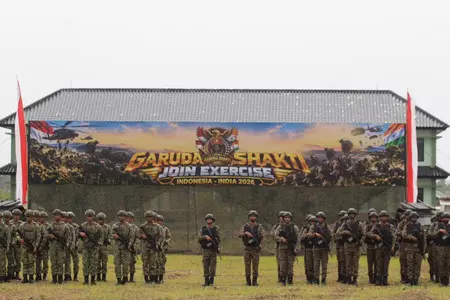
India-Indonesia Special Forces exercise Garuda Shakti begins in Banyuwangi
Digital Desk | New Delhi, Oct 27 (IANS) The India-Indonesia Joint Special Forces Exercise Garuda Shakti commenced at Banyuwangi in Indonesia on Tuesday, with the Special Forces of the two nations set to train together in jungle warfare operations until November 6, the Ministry of Defence (MoD) said. The Indian contingent comprises troops from the Parachute Regiment (Special Forces), while the Indonesian side is represented by personnel from the Indonesian Special Forces, the ministry said. The exercise aims to strengthen mutual understanding, cooperation and interoperability between the Special Forces of the two nations. The training focuses on tactics, techniques and procedures for special operations in jungle environments, including obstacle crossing, combat marksmanship, mountaineering, air assault training and combat-hardening sessions, the MoD stated. The training also includes the exchange of expertise and information on weapons, equipment and operational practices, it said. The joint training will culminate with a validation exercise designed to simulate realistic operational scenarios and assess the endurance, coordination and combat readiness of both contingents, the ministry added, noting that the exercise would further strengthen defence cooperation and bilateral ties between India and Indonesia. On Sunday, the Indian Army contingent, comprising Special Forces personnel, departed for Indonesias Banyuwangi to participate in the exercise. The exercise will enhance interoperability between the armies of the two nations through the exchange of tactics, techniques, and procedures for special operations in jungle terrain under counter-insurgency and counter-terrorism scenarios, according to an Indian Army statement. Indian Coast Guard Ship (ICGS) Shaunak was on a goodwill visit to Jakarta from October 17-19, strengthening cooperation between India and Indonesia, the Indian Coast Guard (ICG) stated. Its port call to Jakarta included productive professional interactions and mutual exchanges aimed at bolstering bilateral maritime cooperation and enhancing regional maritime security. Commanding Officer of ICGS Shaunak and the Defence Attach called on the Head of Bakamla and discussed augmenting bilateral Coast Guard cooperation, according to a statement released by the Indian Embassy in Indonesia. Indian Coast Guard and Bakamla just renewed the MoU for Maritime Safety and Security Cooperation, during the State Visit of Prime Minister Narendra Modi to Indonesia from 06-08 Jul 2026; signifying the importance the two maritime neighbours give to regional maritime safety and security, the Embassy stated on X.

Indian Navys First Training Squadron arrives in Colombo
Digital Desk | Colombo, Oct 27 (IANS) Ships of the Indian Navys First Training Squadron (1TS), that arrived in Colombo as part of their ongoing training deployment on Tuesday, were accorded a ceremonial welcome by the Sri Lanka Navy. The squadron comprises Indian Naval Ships INS Tir, INS Sujata and Indian Coast Guard Ship (ICGS) Sarathi, the Indian Navy said. Anchoring Friendship, Strengthening Maritime Cooperation. Ships of the Indian Navys First Training Squadron (1TS) - INS Tir, INS Sujata and ICGS Sarathi - arrived at Colombo to a ceremonial welcome from the Sri Lanka Navy, the Indian Navy posted on X. As part of the professional engagements during the port call, the DG Naval Training and the Commander, Eastern Naval Area, Sri Lanka Navy, interacted with sea trainees onboard, it added. Last week, ships from the Indian Navys First Training Squadron (1TS) concluded their training and military engagement in the Maldives, including a Passage Exercise (PASSEX) with the Maldives National Defence Force (MNDF) Coast Guard, the High Commission of India in Male said on October 24. The 1 TS of the Indian Navy (INS Tir, INS Sujata and ICGS Sarathi) successfully concluded their highly productive training and military engagement, including the PASSEX with the MNDF Coast Guard, reinforcing the enduring maritime partnership between India and the Maldives, the High Commission posted on X. Earlier, the 1TS ships concluded their port call at Seychelles Port Victoria, during which they conducted a PASSEX with Seychelles Coast Guard ship Andromache. INS Tir, INS Sujata and Indian Coast Guard Ship Sarathi departed Port Victoria on October 15 on completion of the port call, which commenced on October 12, as part of their ongoing training deployment. During the port call, the Senior Officer of 1TS, along with the Commanding Officers of the visiting ships, called on the Chief of Defence Forces of the Seychelles Defence Force (SDF), Major General Michael Rosette, with discussions focusing on the enduring partnership and bilateral cooperation between the two forces. The Indian Navys First Training Squadron 1TS conducted a PASSEX with Seychelles Coast Guard ship Andromache during its deployment. The exercise featured joint patrolling, communication drills and coordinated manoeuvres, the Indian Navy had posted on X. The deployment underscores the strong bonds of friendship between India and Seychelles and reflects the Indian Navys commitment to capacity building and regional partnerships in line with the vision of MAHASAGAR (Mutual and Holistic Advancement for Security and Growth Across Regions), the Ministry of Defence had said.
Watch: CPI demands CEC Gyanesh Kumars resignation over SIR row
The Communist Party of India (CPI) staged a protest in Delhi on Tuesday October 27, demanding the resignation of Chief Election Commissioner Gyanesh Kumar over the SIR row. CPI General Secretary D. Raja also called for Jantar Mantar to be restored as a designated protest site, asserting peoples right to protest and express their views.

Ladakh dry UT demand: Chief Secretary calls for consensus, middle path
Leh, Oct 27: Amid public outcry over the rising number of wine shops and demands for a dry Ladakh, Chief Secretary Ashish Kundra on Tuesday called for wider consultations with religious and industry representatives to build consensus and find a middle path balancing public sentiment with the region's cultural and economic interests. The chief secretary assured that the administration was flexible in its approach to public policy and would be amenable to a middle path solution in the matter. Kundra was speaking at a meeting with women representatives of various religious organisations to discuss issues relating to excise policy. The meeting was attended by Excise Commissioner Romil Singh Donk and representatives of All Ladakh Gompa Association, Ladakh Buddhist Association, Anjuman Imamia, All Ladakh Hotel and Guest House Association (ALGAHA) and All Ladakh Tour Operators Association (ALTOA), an official spokesman said. During the meeting, the women representatives put forth their views and concerns while demanding complete prohibition of liquor in the Union Territory (UT), highlighting the social and cultural considerations associated with the issue. They expressed concern over the large number of bar licences issued. The meeting was informed that in response to public sentiment, the Excise Policy 202627 had been rolled back and now the Excise Policy 202526 was in force, the spokesman said. He said the participants were apprised of the status of liquor licences under the reinstated policy. The meeting was informed that the number of retail liquor vends was two till last year but this year only one retail vend is functional. Similarly, the number of functional bars attached to restaurants offering retail sale of liquor, which was earlier 23, had increased by 17 newly issued licences, taking the total to 40, the spokesman said. The chief secretary acknowledged the concerns expressed by the women representatives and emphasised the importance of giving due consideration to the views and sentiments of the people of Ladakh. He observed that the demand for declaring Ladakh a completely dry UT is a significant matter that requires careful deliberation and consultation with all concerned stakeholders, to which all agreed. The chief secretary cited the experience of other states like Bihar and Haryana where complete prohibition had led to serious consequences of spurious liquor and drugs being proliferated. He suggested that this is also a cultural issue and the community needs careful consideration of the consequences of declaring Ladakh as a dry territory. There are also issues of employment, tourism and economic activity and consultation with the hotel industry is also crucial in this regard, particularly given that tourism is the primary economic activity in the territory, Kundra said. He said any decision on the matter would need to be taken through a broad-based consultative process involving religious organisations, hotel associations, tour and travel operators' associations and other relevant stakeholders, keeping in view the social, cultural and economic dimensions of the issue. He suggested that in the first instance, the Ladakh Buddhist Association (LBA) should convene a wider consultation and build consensus on the way forward, with an endeavour to find a middle ground. The chief secretary reiterated the importance of constructive dialogue and mutual understanding in addressing the concerns raised by the women representatives while ensuring that the perspectives of all affected stakeholders are duly considered. The meeting provided an opportunity for the representatives to present their views and underscored the need for continued engagement and dialogue towards a balanced and informed consideration of the issue, the spokesman said. The chief secretary said if required, another meeting with a larger set of stakeholders would be convened soon.
PG residents of GMC Handwara to begin protest over stipend hike demand
Srinagar, Oct 27: The All India Medical Students Association (AIMSA) has extended its full support to the postgraduate (PG) residents of Government Medical College (GMC), Handwara, who are set to begin a peaceful protest on Wednesday, October 28, demanding a long-pending hike in their stipends. AIMSA stands firmly with the PG residents in their legitimate demand for fair and adequate stipends and urges the Jammu & Kashmir Government to address the issue without further delay. Dr Mohammad Momin Khan, President of AIMSA, urged Chief Minister Omar Abdullah and the J&K Government to immediately revise the stipends of PG residents. He pointed out that the government has already enhanced the stipend for MBBS interns, and called for similar attention to the long-pending demands of postgraduate doctors. Dr Sanjeev Lather, RDA President, and Dr Abhijeet Gangasagar, RDA Vice President, GMC Handwara, confirmed that PG residents would begin their peaceful protest on Wednesday, October 28, to press for their demands. Dr Mohit, Vice President of AIMSA, along with AIMSA Chief Advisors Dr Owais, Dr Rajat, Dr Sanah and Dr Rouf, questioned the continued delay in revising PG residents stipends, highlighting the demanding working conditions, long duty hours and tireless service rendered by resident doctors. They stressed that PG residents play a crucial role in patient care and the functioning of government hospitals and deserve fair and adequate financial compensation for their work. AIMSA reiterated its unwavering support for the protesting residents and appealed to the J&K Government to intervene urgently and resolve the issue through a timely and concrete decision. Resident doctors work tirelessly to serve patients. Their legitimate demand for a stipend hike must not be ignored. AIMSA stands firmly with the PG residents of GMC Handwara until their concerns are addressed, the association stated.
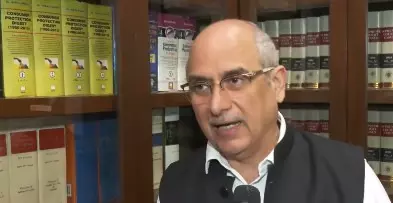
BJP slams Congress over sharing deepfake videos on China, Arunachal Pradesh
Digital Desk | New Delhi, Oct 27 (IANS) Senior advocate and BJP leader Nalin Kohli on Tuesday criticised the Congress for sharing videos falsely claiming Chinese incursions into Indian territory and alleged that the opposition party was spreading misinformation on matters concerning national security. Speaking to IANS, Kohli said the Congress leaders had posted the videos without verifying their authenticity and accused the party of using sensitive national security issues for political gains. It is very unfortunate that the Congress party and its leaders tweet false things without even gathering information, even when it is against the national interest, to spread fear by saying, Look at what is happening between India and China. This video itself is false. It is AI-generated and far from the truth. They posted it immediately without any application of mind, he said. The BJP leader also referred to the Congress's criticism of previous military operations, including Operation Sindoor, the Balakot airstrikes and the surgical strikes, questioning whether the party was placing political considerations above national interest. Do these Congress party leaders think it is right to put the national interest aside and do this for their own politics? Kohli asked. Earlier, Union Minister Kiren Rijiju also condemned the Congress after the Indian Army debunked videos shared by a Congress leader alleging that China had taken control of parts of Arunachal Pradesh. He demanded that Congress apologise for the move. Previously, a Congress spokesperson from Bihar, Ritu Choudhary, in a post, claimed that Chinese vehicles had entered Indian territory. In a fake video, it was alleged that China had taken control of areas in Arunachal Pradesh and that the Indian Army was being denied essential supplies. The Indian Army clarified that the video showed Chinese commercial vehicles at Nathu La Pass in Sikkim, an authorised India-China border trade point, and did not depict a military intrusion. The movement of commercial vehicles at an authorised border trade route is being misrepresented as evidence of a Chinese military intrusion, the Army said. In a separate fact-check issued on Sunday, the Army also dismissed a video circulated by Pakistan-linked social media accounts that purportedly showed Chinese soldiers searching Indian Army personnel in Arunachal Pradesh and claimed that Indian troops needed Chinese permission to move through the state. The Army clarified that the footage was actually from a counter-terrorism mock drill conducted in Bengaluru in May 2026 and had no connection with Chinese forces or military activity in Arunachal Pradesh. It cautioned people against confusing a security exercise with an actual military confrontation. The Army also debunked a video featuring Lieutenant General Girish Kalia, General Officer Commanding of the Spear Corps, which falsely portrayed him as saying that China had taken control of parts of Arunachal Pradesh. According to the Army, the original footage was from a press briefing in Kupwara, Jammu and Kashmir, on October 27, 2023, concerning foiled infiltration attempts across the Line of Control. The officer had made no statements about Chinese control over Arunachal Pradesh or the denial of supplies to Indian troops.
Punjab Passes Resolution Demanding Payments From Rajasthan, Eyes Supreme Court Over Yamuna

CPI forms human chain in Delhi demanding CECs resignation and rollback of SIR
CPI general secretary D. Raja said Mr. Kumar had lost the confidence of the people and that his continuation as Chief Election Commissioner posed a threat to the credibility of the electoral process

For Kiara Advani, a beauty routine does not always have to be elaborate to make an impact. Sometimes, it comes down to a non-negotiable skincare step, well-prepped skin and a lipstick shade that brings the entire look together. In a beauty interview with Lifestyle Asia, India, the actress opened up about the habits she swears by, her go-to festive makeup look and a character whose appearance gave her room to experiment. Makeup Removal Is Her Non-Negotiable Skincare Step Busy schedules and long shooting days can make elaborate skincare routines difficult to maintain, but Kiara has one rule she refuses to compromise on: removing her makeup before bed. Speaking about the one skincare step she never skips, she said, Taking my makeup off. Like no matter how late it is, I have to take my makeup off and then sleep. Her approach is a reminder that even when time is limited, taking off makeup remains an essential part of winding down after a long day. View this post on Instagram A post shared by Lifestyle Asia India (@lifestyleasiaindia) The Beauty Lesson She Learnt on Set When it comes to achieving a polished makeup look that lasts through demanding shooting schedules, Kiara credits good skin preparation. Asked about a beauty trick she learnt on set, she explained, I think good skin prep. You know, just to make sure your makeup stays on, looks flawless through the day. Definitely a long-wear lipstick. For the actress, preparing the skin and choosing a long-wearing lip colour are key elements of a look that needs to hold up throughout the day. Her Festive Makeup Formula: Mascara and a Bold Lip Kiaras festive beauty preferences revolve around two essentials: expressive lashes and a statement lip. She shared, My go-to festive makeup look is, lots of mascara, because I always like my lashes to do all the talking. And like a bold lip like I'm wearing today, so the Berry Bulfi. This shade is, I mean it's just, I think especially for Indian skin, it just brings out all your features and looks beautiful. So yeah, I think this would be my, I think my lashes and this beautiful lip and I'm good to go. The actress also revealed her current favourite makeup pick, saying, I mean right now for me, it's the Maybelline New York Vinyl Mithai Collection. It is like the yummiest, yummiest, yummiest colours. Kiara Advani on the beauty look she had fun exploring in Toxic Beyond her personal beauty preferences, Kiara is looking forward to experimenting with a more theatrical aesthetic on screen. Discussing her character Nadia in Toxic, she said, So I think my character Nadia in Toxic, we got to do a lot of fun performance makeup, because she's, you know, she's a circus performer. So we got to experiment with bold lips and bold eyes and just go for it, go for the kill. So I think that would be a look from a character of mine that was exciting. And when it comes to a beauty affirmation she would like to put out into the universe, Kiara kept it relatable and concise: May my concealer never crease. From everyday skincare discipline to bold festive makeup and experimental on-screen looks, Kiaras beauty philosophy combines practical essentials with a willingness to have fun. Also Read: Kiara Advani enjoys a beach getaway with Sidharth Malhotra and daughter Saraayah amid second pregnancy; see post

GMC Handwara PG Residents to Protest Tomorrow Over Stipend Hike; AIMSA Backs Demand
Srinagar, Oct 27: The All India Medical Students Association (AIMSA) has extended its full support to the postgraduate (PG) residents of Government Medical College (GMC), Handwara, who are set to begin a peaceful protest on Wednesday, October 28, demanding a long-pending hike in their stipends. AIMSA stands firmly with the PG residents in their legitimate demand for fair and adequate stipends and urges the Jammu & Kashmir Government to address the issue without further delay. Dr Mohammad Momin Khan, President of AIMSA, urged Chief Minister Omar Abdullah and the J&K Government to immediately revise the stipends of PG residents. He pointed out that the government has already enhanced the stipend for MBBS interns, and called for similar attention to the long-pending demands of postgraduate doctors. Dr Sanjeev Lather, RDA President, and Dr Abhijeet Gangasagar, RDA Vice President, GMC Handwara, confirmed that PG residents would begin their peaceful protest on Wednesday, October 28, to press for their demands. Dr Mohit, Vice President of AIMSA, along with AIMSA Chief Advisors Dr Owais, Dr Rajat, Dr Sanah and Dr Rouf, questioned the continued delay in revising PG residents stipends, highlighting the demanding working conditions, long duty hours and tireless service rendered by resident doctors. They stressed that PG residents play a crucial role in patient care and the functioning of government hospitals and deserve fair and adequate financial compensation for their work. AIMSA reiterated its unwavering support for the protesting residents and appealed to the J&K Government to intervene urgently and resolve the issue through a timely and concrete decision. Resident doctors work tirelessly to serve patients. Their legitimate demand for a stipend hike must not be ignored. AIMSA stands firmly with the PG residents of GMC Handwara until their concerns are addressed, the association stated.

American Citizen Imran Khan Gets Bombay HC Relief,
U.S. citizen and Bollywood actor Imran Khan received interim relief from the Bombay High Court on Tuesday, October 27, which stayed a Centre-issued notice directing him to leave India by October 28 over his participation in a protest demanding the resignation of Chief Election Commissioner Gyanesh Kumar.
Browns representative denied reports of a trade demand to Boston, saying he only asked for input on his destination once a deal was coming. Scalabrine first made the claim, then softened it, saying he does not know the exact demands.

Over 12,000 Maharashtra Farmers Begin Vehicle-Led March To Mumbai, Demand Drought Relief
More than 12,000 farmers from 20+ districts are marching towards Mumbai, demanding adequate drought compensation, loan relief, crop insurance and land rights.
Police apprehend 6 drug peddlers in Anantnag, contraband substance recovered
Srinagar, Oct 27: Continuing its sustained crackdown against drug trafficking and substance abuse, Jammu and Kashmir Police in Anantnag apprehended six drug peddlers at different locations across the district and recovered contraband substances from their possession. Cases have been registered under relevant provisions of law, and investigations have been initiated. A police spokesperson said that a police party from Police Station Bijbehara, during patrolling at Gadhanjipora, apprehended Bilal Ahmad Bader, son of Gh. Rasool Bader, resident of Housing Colony, Gadhanjipora, Bijbehara. During his search, approximately 2 kilograms of ganja-like substance were recovered. Accordingly, FIR No. 325/2026 under Sections 8/20 of the NDPS Act has been registered, and investigation has been taken up. In another action, a police party from Police Station Anantnag apprehended Ab Aziz Hajam, son of Bashir Ahmad Hajam, resident of Nazuk Mohalla, near Ganziwarda Bridge, Anantnag. Approximately 114 grams of charas-powder-like substance were recovered from his possession. A case has been registered, and further investigation is underway. Meanwhile, a police party from Police Post Janglatmandi, during patrolling at T-Point Ashajipora, apprehended Zahid Ahmad Sheikh, son of Bashir Ahmad Sheikh, resident of Sherpora. During his search, approximately 5.1 grams of charas-like substance were recovered. Accordingly, a case has been registered, and investigation has been initiated. In a similar action, a police party from Police Post Sangam apprehended Satendra Kumar, son of Harichandra Ram, resident of Bhawal, Bihar. Approximately 6.20 grams of charas-like substance were recovered from his possession. Cognizance has been taken, and further investigation has been initiated. Moreover, a naka party from Police Station Srigufwara, during naka checking at Poshkreeri, Srigufwara, apprehended Reyaz Ahmad Dar, son of Bashir Ahmed Dar, resident of Gur, Bijbehara. During his search, approximately 10 grams of charas-like substance were recovered from his possession. Cognizance under the relevant provisions of law has been taken. In another action, a police party from Police Post Sangam apprehended Mohd Subhan, son of Mohd Mohiuddin Sabrash, resident of Parmanandpur, Raghopur, Bihar, at Naina G.B. Khalil. During his search, approximately 18 grams of charas-like substance were recovered from his possession. Accordingly, a case has been registered, and investigation has been taken up, spokesperson said. Police reiterated its commitment to intensifying the crackdown against drug trafficking and taking strict action against those involved in the illicit drug trade. They said the drive will continue with the objective of dismantling drug networks, safeguarding the youth, and building a drug-free society.

Nation demanding account of Ram temple donations; chanda chors can't evade accountability: Congress
Jairam Ramesh also said that an engineer associated with the temple construction claimed that he was removed for raising a matter related to alleged financial irregularities
Rahul Gandhi's Fresh Attack On CEC Gyanesh Kumar, Demands Resignation
Congress leader Rahul Gandhi has launched a fresh attack on Chief Election Commissioner Gyanesh Kumar, demanding his resignation and questioning why the Election Commission has not addressed concerns raised over voter lists. Alleging that the names of poor voters have been removed from electoral rolls, Rahul Gandhi said he would not stop raising the issue until the CEC resigns. His remarks come amid the continuing political controversy over electoral roll revisions and the Election Commission's functioning.
IND vs NZ: Ton-up Abhishek Sharma surpasses Virat Kohli in major T20 record
In a remarkable display of batting prowess, Abhishek Sharma smashed a breathtaking century off just 35 balls in the T20I clash against New Zealand. This explosive innings propelled India to a six-wicket win, granting them a commanding 3-0 series lead. As New Zealand set a challenging target of 199 runs, Sharma, alongside Vaibhav Sooryavanshi, turned the tide in favor of India, solidifying Sharma's reputation as a top T20 century-maker.
118/0 in 36 balls! India script jaw-dropping record in 3rd T20I win over NZ
India crushed New Zealand in the third T20I, setting a world record with 118/0 in the powerplay while chasing 199. Abhishek Sharma smashed an unbeaten 57 off 20 balls, while Vaibhav Sooryavanshi scored 44 off 17 deliveries. India also reached 100 in five overs and 50 in 2.2 overs, winning by six wickets to take a commanding 3-0 series lead.

Jamia protest explained: Why students are demanding their union back
Jamia Millia Islamias October 26 notification has failed to end the student agitation. The university has agreed to revoke suspension orders and show-cause notices issued during the protests and has announced an inquiry into security personnels conduct. It also said it will hold students union elections 15 days after the constitution is approved.

Mistakes Are A Part Of Learning: Inside A School Built Around How Children Learn
We cannot prepare children for every situation they may face, but we can help them become confident learners who can adapt to change. It is a modest sentence with a demanding implication: that a school's job is no longer to hand

Punjab Chief Minister Bhagwant Mann on Tuesday accused the Congress of creating disruptions in the state Assembly, alleging that the opposition party repeatedly stages walkouts and fails to participate in proceedings despite demanding sessions. His remarks came amid escalating tensions between the ruling Aam Aadmi Party (AAP) and the Congress after Congress MLAs were blocked from entering the Legislative Assembly premises on Tuesday. Speaking to the reporters, Mann said,
PIL on 'Vande Mataram' song: SC notice to Centre on plea seeking transfer from Delhi HC
The Supreme Court on Tuesday sought the Centre's response to a plea seeking transfer of a Delhi High Court PIL demanding status equal to the national anthem for Vande Mataram. The petition also seeks directions for the national song and Jana Gana Mana to be sung in schools and educational institutions every working day.

Rahul Gandhi posted Satyam Shivam Sundaram on X ahead of the November 1 Save the Vote rally at Delhi's Ramlila Maidan. The Congress leader has invoked Lord Shiva's symbolism while alleging voter list irregularities and demanding CEC Gyanesh Kumar's removal.
Police Suspended After Triple Murder In Lucknow
Two police personnel in Lucknow have been suspended following the murder of three family members, including an RSS functionary, over a car parking dispute. The accused has been arrested, and an FIR has been registered against eight people under murder and rioting charges. The incident led to protests by BJP leaders demanding action against the police.
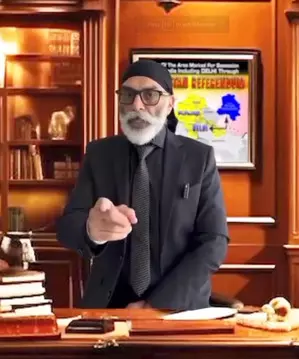
SFJ chief Pannun's protest funding offer under scanner, Punjab youth in focus
Digital Desk | New Delhi, Oct 27 (IANS) Proscribed terrorist and Sikhs for Justice (SFJ) chief Gurpatwant Singh Pannun reportedly announced financial assistance for ongoing protest movements in India, prompting security agencies to launch a thorough investigation into potential foreign interference. There have been allegations and counter-allegations when it comes to foreign funding that have been fuelling protests in India. Although Pannun does not make it clear why he wants to fund the protests, the Indian security agencies are looking into this offer. An Intelligence Bureau official stated that while Pannun routinely issues such statements during domestic agitations, authorities are treating the announcement with utmost seriousness rather than dismissing it as a mere publicity stunt. He had allegedly adopted a similar approach during the farmers protests and now appears keen to get involved in matters concerning the Cockroach Janta Party (CJP). However, Pannuns statement cannot be dismissed as a publicity stunt and needs to be investigated, the official said. Pannun is playing the long game, with the youth of Punjab as his ultimate target. He has been trying to influence and incite young people in the state to join the Khalistan movement. His offer to fund the CJP protests in India could be an attempt to test the waters and gauge the response, the official added. Another official said that if Pannun was indeed attempting to raise funds, it would amount to foreign interference and warrant a thorough investigation. The remarks come amid intelligence inputs flagging an increase in drug trafficking abroad, allegedly aimed at financing groups such as Sikhs for Justice (SFJ), Babbar Khalsa International (BKI) and the International Sikh Youth Federation (ISYF), the official said. Another official said Pannun wants to see what kind of traction he would get by interfering with the ongoing protests. The larger game is Punjab, and Pannun is of the view that if he gains traction with the youth of the ongoing protests, he could replicate the same in Punjab as well, the official said. With the Punjab Assembly elections approaching, youth-related concerns are likely to figure prominently in the political debate. Several surveys have highlighted the problems faced by young people in the state. For first-time voters and other young electors, unemployment, drug abuse and the lack of adequate opportunities are likely to be among the key issues demanding answers from political parties. These are very serious issues, and if the government in the state fails to act upon them, it could well rile up the youth, and they would eventually end up taking to the streets. This is something that Pannun is looking to capitalise on. He is trying to get the youth on to the streets by offering them morale and financial support. The SFJ chief hopes this could be channelised into anger and frustration, and eventually these youth will join the Khalistan movement on the pretext that the government has failed to live up to their expectations, an official said.
Desist from targeting Hindu festivals, economy: VHP to Opposition over November 1 rally
The remarks came a day after traders held a protest at Kashmere Gate in New Delhi, demanding that Congress defer the November 1 rally until after Diwali.
Jio Platforms shares to list on BSE, NSE tomorrow; GMP signals 22% premium
Jio Platforms shares are set to list on the BSE and NSE on October 28, with the IPO commanding a grey market premium of around 22%. The Rs 30,213-crore issue was subscribed 22.19 times, led by strong institutional demand. Investors will watch the listing amid Jios growth ambitions and financial performance.
Meet Arun Chauhan: Haryana farmer says sweet corn earns him Rs 25 lakh a year
In Manauli, Haryana, Arun Chauhan made a game-changing decision, shifting his farming focus from traditional paddy to sweet corn and vegetables. Inspired by a friend's successful strawberry venture, he now rakes in almost Rs 25 lakh yearly. His transition has sparked a village-wide movement, with more farmers embracing this profitable path. The local markets, notably Delhis Azadpur Mandi, provide lucrative selling avenues while strengthening community sales efforts.

Arunachal: Gorkha community protests near Hollongi over fatal shooting, accused absconding
Guwahati: Tensions rose near Hollongi along the Assam-Arunachal Pradesh border on Monday evening, October 26, after a man allegedly shot dead his wifes younger brother during a domestic dispute. Members of the Gorkha community later blocked a road near the interstate border, demanding action over the killing. The accused, identified as 42-year-old Kenba Kami, a [] The post Arunachal: Gorkha community protests near Hollongi over fatal shooting, accused absconding appeared first on NorthEast Now .
Polls have opened across Israel as the nation's 7,331,981 voters head to the ballot box to cast their votes; voting ends Tuesday night at 10 pm local time. Ahead of the polls, former IDF Chief of Staff and principal rival of incumbent Israel PM Benjamin Netanyahu, Gadi Eisenkot on Tuesday invoked imagery of the October 7 2023 Hamas massacre as he asked voters to come out and vote for his Yashar party. 6:29 Remember this hour when you go to vote. Today we have an opportunity to put a slip in the ballot box, to replace the government of October 7th and the shirking, and to set Israel on a new and better path. To be worthy. I am committed, he posted on X just ahead of the polls. The opposition bloc led by Eisenkot is pushing on the issues of accountability for October 7, and demanding an independent commission of inquiry. Eisenkot himself is characterised as a security hawk and his campaign is centred around calling Netanyahu dangerous for Israel's security. Benjamin Netanyahu will c...

Delhi traders flag potential impact on 21 markets from Nov 1 Congress rally, seek postponement
CTI has written to Congress leader Rahul Gandhi, demanding that the proposed rally, for which the party has claimed a turnout of 10 lakh people, be postponed until November 10

Jamia students refuse to call off stir, demand definite date for polls
The protest demanding restoration of the Jamia Millia Islamia Students' Union (JMISU) entered its 16th day on Tuesday, with students refusing to call off their agitation despite the university's decision to hold elections within 15 days of the approval of the union's constitution. The protesting students have maintained that the administration must announce a definite date for the polls, which have not been held since 2006, and set a timeline for approving the constitution. The agitation continued a day after the university issued an order stating that students' union elections would be held within 15 days of the approval of the union's constitution. The order also revoked suspension and show-cause notices issued to students during the ongoing protest and provided for a committee to inquire into the conduct of security staff during the agitation. However, the students said the decision fell short of their demands, questioning the absence of a deadline for approving the ...
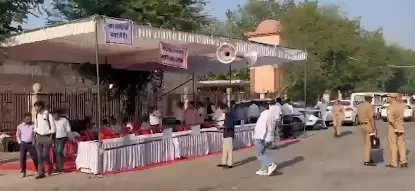
UP MLC polls: Counting underway for 11 seats, SP candidate expresses confidence in victory
Digital Desk | Lucknow, Oct 27 (IANS) Counting of votes for 11 Uttar Pradesh Legislative Council seats began on Tuesday, with Samajwadi Party (SP) candidate Sanjay Tripathi expressing confidence in his victory in the Gorakhpur-Faizabad Teachers constituency, citing years of hard work and the support of teacher voters. Speaking in Gorakhpur, Tripathi said he was hopeful of a favourable outcome, adding that the support he had received from teachers had strengthened his confidence. I am grateful to God and seek His blessings. This is the result of years of continuous hard work, and today is the time for it to bear fruit. The way I have received the cooperation and support of teacher voters has made me very confident, he said. Counting is underway at designated centres across the state amid tight security arrangements. In Lucknow, the counting process is being conducted at the Ramabai Ambedkar Rally Ground, where multi-layer barricading has been put in place. Candidates and their supporters have also gathered at the counting centre. In another development, counting for the Graduate and Teachers constituency elections is underway at Naveen Mandi Samiti. Security has been strengthened at the venue, while traffic diversions have been implemented for heavy vehicles to ensure smooth traffic movement around the counting centre. Earlier, DIG Shivhari Meena said the Varanasi Police Administration had prepared a three-tier security plan to ensure the peaceful and orderly counting of votes. The Varanasi Police Administration has prepared a three-tier security plan for the counting of votes in the MLC election. It includes outer, inner and isolation cordons... Security arrangements are being strengthened, and social media is being monitored. Drones and CCTV cameras have also been deployed to ensure tight security so that the vote-counting process can be conducted smoothly, he said. The elections cover five Graduates constituencies and six Teachers constituencies, with 152 candidates in the fray and 14,81,310 registered voters. A total of 2,697 polling stations were established across 72 districts, while Kanpur Nagar, Kanpur Dehat and Unnao were excluded from the electoral exercise. The main contest is between the ruling Bharatiya Janata Party (BJP) and the Samajwadi Party, although Independent candidates and party rebels are also in the race. Meanwhile, the Election Commission of India (ECI) on Monday ordered the immediate suspension of six supervisory officers and initiated disciplinary proceedings against five presiding officers and 16 police personnel over alleged dereliction of duty and supervisory lapses during the biennial election to the Uttar Pradesh Legislative Council from the Agra Teachers constituency, according to media reports.
Jamia students refuse to call off stir on 16th day, demand definite date for polls
Students at Jamia Millia Islamia remain on the 16th day of protests demanding their student union elections. The university announced elections will occur within 15 days after approving the constitution. Protesting students insist on a defined timeline for the constitution's approval and election dates. Various alumni and student organizations express solidarity with the protesters and urge for dialogue.
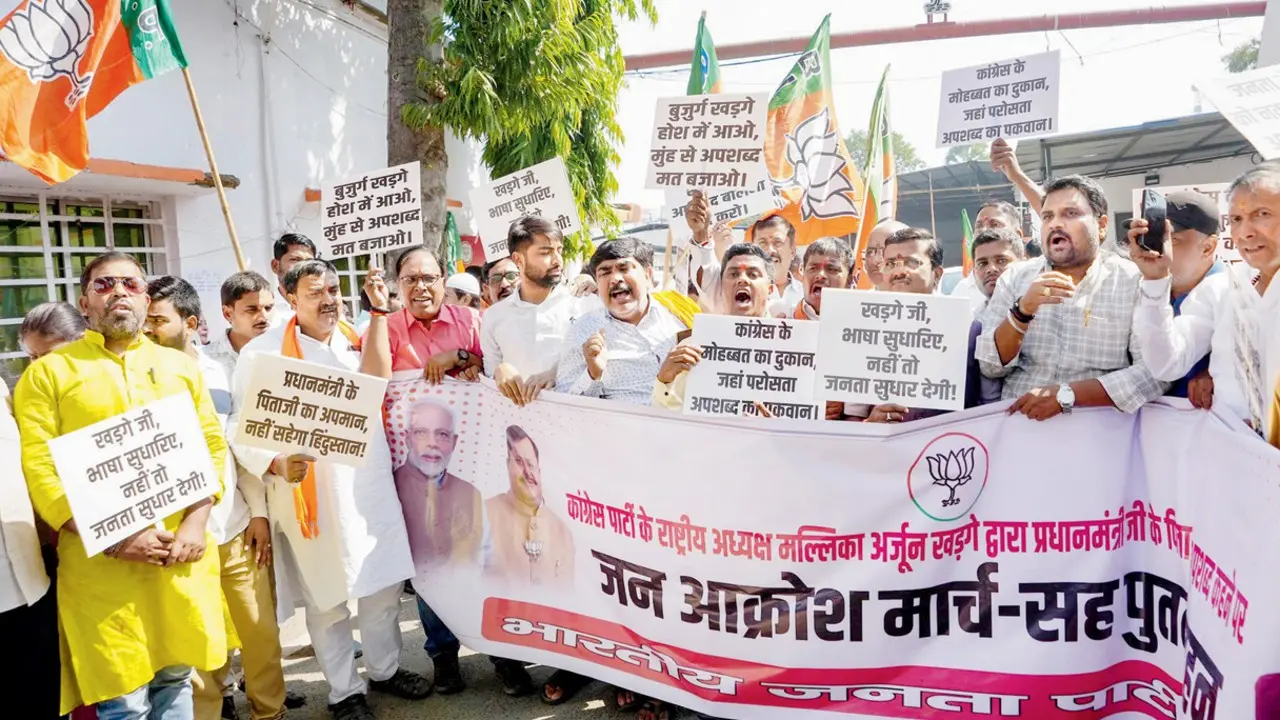
Kharges remarks on Modi triggers BJP protests across multiple cities
Delhi BJP leaders and workers raised slogans in protest of the alleged insult, demanding an apology from Kharge and Leader of Opposition in Lok Sabha Rahul Gandhi
Afghan returnees face raids, arbitrary arrests in Pakistan's KP after emergency
Afghan nationals deported from Pakistan have alleged arbitrary arrests, midnight raids and extortion in Khyber Pakhtunkhwa following the imposition of governors rule and a state of emergency by the Shehbaz Sharif government. Returnees said police were demanding bribes for release. Nearly 27,000 Afghan refugees have returned through Torkham in three months, amid resettlement efforts.
Western Command holds curtain raiser for Mechanisation Technology Seminar 2.0
New Delhi, Oct 26: Lieutenant General Pushpendra Singh, General Officer Commanding-in-Chief, Western Command, on Monday inaugurated the curtain raiser for Mechanisation Technology Seminar 2.0 (MTS 2.0) at the Manekshaw Centre in New Delhi. Organised by Western Command in collaboration with the Society of Indian Defence Manufacturers (SIDM), the seminar, themed CHAKRA Transforming Existing Platforms for Future Combat, will be held at Chandimandir Military Station on December 14-15. The seminar will bring together the Indian Army, defence industry and academia to explore technological upgrades to existing military platforms, enhance the combat capabilities of mechanised forces and promote indigenous defence solutions. It will focus on translating operational requirements into practical technological solutions, with emphasis on modernisation, innovation and Atmanirbharta (self-reliance) in defence.
PCCF reviews fire preparedness, forest protection in North Kashmir,
Kupwara, Oct 26: Principal Chief Conservator of Forests (PCCF) and Head of Forest Force (HoFF), Jammu and Kashmir, Sarvesh Rai, undertook a two-day tour of North Kashmir on October 25 and 26 to review developmental works, forest protection measures, eco-tourism initiatives and infrastructure development across forest divisions of the North Forest Circle. On the first day of the tour, the PCCF visited JV Forest Division, Baramulla, where he inaugurated the Trumgund Forest Check Post and inspected the ongoing construction work of the DFO office at Baramulla. He subsequently visited Langate Forest Division, where he laid the foundation stone for the second storey of the DFO office at Langate and inspected the Reshwari Eco-Tourism site. During the visit, the PCCF emphasised the importance of developing eco-tourism in a planned and sustainable manner, with a focus on responsible visitor management, conservation of natural landscapes and creation of livelihood opportunities for local communities. The tour further covered eco-tourism works in Bangus Valley, where the PCCF took stock of ongoing eco-development initiatives in the DringyariBungus area and reviewed the progress of works being undertaken to promote responsible eco-tourism and enhance visitor amenities. Emphasising effective implementation, he directed the concerned officers to ensure the timely and quality completion of all ongoing projects. He also stressed the need to strengthen forest protection measures, enhance field-level preparedness and intensify preventive interventions in view of the forthcoming forest fire season. At Lakut Bangus, the PCCF inspected the Forest Staff Quarters and Jungle Training Centre and released Mountain Trails of Kehmil, a publication highlighting trekking routes and nature-based tourism opportunities in Kehmil Forest Division. He also inaugurated the Range Office at Ramhall. The office will strengthen field-level administration and coordination, enabling more effective monitoring of forest resources and implementation of protection and developmental activities in the range. Later in the evening, the PCCF visited the Army Headquarters at Zangli, Kupwara, where he held an interactive session with the General Officer Commanding (GOC) of the Armys 28 Infantry Division and other Army officers. Discussions included forest diversion proposals associated with Army requirements and their progress. On the second day, the PCCF visited Kamraj Forest Division, Kupwara, to review field-level infrastructure, forest protection preparedness, livelihood initiatives and conservation-related activities. The visit commenced at Batpora Block, where he inaugurated the Block Officers Hut, a facility catering to three forest beats comprising 16 compartments. The infrastructure is expected to strengthen field coordination, monitoring and protection of forest resources. The PCCF subsequently visited Nagriwari Eco-Park at Hatmulla, where he inaugurated the Van Posh Mela, showcasing the linkages between forest conservation, traditional skills, local livelihoods and eco-tourism. A 1.5-kilometre student trekking route was also inaugurated, and students were flagged off for the trek to promote environmental awareness and appreciation of the regions natural heritage. During the programme, the PCCF initiated Resham Vann, a mulberry plantation initiative within an existing plantation closure, aimed at promoting location-specific livelihoods through mulberry cultivation and potential linkages with Bamboo and Mulberry Clusters (BMCs). He also inspected thematic stalls showcasing traditional crafts and products made from locally sourced raw materials, including Indigofera-based crafts, wood carving and pottery. Poplar saplings were also distributed among beneficiaries under the Social Forestry Departments agroforestry programme to encourage tree cultivation on private and agricultural lands. Students from local schools presented an environmental debate and skit highlighting the importance of forest conservation and biodiversity protection. Appreciating their awareness and understanding of environmental issues, the PCCF felicitated the participating students. A tribal heritage presentation showcased the traditional lifestyle, culture and indigenous practices of local tribal communities. Traditional beverages and a customary tribal dwelling, locally known as a Dhoka, were demonstrated, highlighting their potential to enrich eco-tourism experiences. The PCCF also attended a forest fire mock drill organised by Kamraj Forest Division to assess preparedness for the ensuing fire season. Later, the PCCF released the Forest Protection Plan of Kamraj Forest Division for 202627, outlining the divisions priorities and planned interventions for strengthening forest surveillance, preventing forest offences and safeguarding forest resources. He also released the booklet A Portrait of Paradise The Enchanting Forests of Lolab Valley, documenting the valleys ecological richness and the Forest Departments interventions in forest conservation, restoration, plantation development and eco-tourism promotion. The PCCF was accompanied during the tour by Irfan Rasool Wani, Chief Conservator of Forests, Kashmir; Dr. M. K. Kumar, Chief Conservator of Forests, Central; Irfan Ali Shah, Conservator of Forests, North Circle; Rafi Ahmed Bhat, Joint Director, Forest Protection Force; Zahid Mughal, Divisional Forest Officer, JV Forest Division; Owais Mir, Divisional Forest Officer, Kamraj Forest Division; Ahzah Pajwari, Divisional Forest Officer, Langate Forest Division; Faisal Farooq, Divisional Forest Officer, Kehmil Forest Division; Noorul Amin, Divisional Manager, Forest Development Corporation; Bilal Mir, Divisional Forest Officer, Social Forestry; Jan Mohd, Deputy Director, Forest Protection Force, Kehmil; and Javed Sheikh, Deputy Director, Forest Protection Force, besides Range Officers of the Forest Department and Assistant Directors of the Forest Protection Force.
PCCF reviews forest protection, eco-tourism works across North Kashmir
Kupwara, Oct 26: Principal Chief Conservator of Forests (PCCF) and Head of Forest Force (HoFF), Jammu and Kashmir, Sarvesh Rai, reviewed forest protection measures, infrastructure development and eco-tourism initiatives across North Kashmir during a two-day tour on October 25 and 26. The tour covered forest divisions in Baramulla, Langate, Kehmil and Kamraj, with a focus on strengthening field infrastructure, improving forest fire preparedness, promoting community livelihoods and developing sustainable tourism. On the first day, Rai visited JV Forest Division, Baramulla, where he inaugurated the Trumgund Forest Check Post and inspected the ongoing construction of the Divisional Forest Officers office. In Langate Forest Division, he laid the foundation stone for the second storey of the DFO office and inspected the Reshwari Eco-Tourism site. Emphasising sustainable tourism, Rai called for planned development, responsible visitor management and conservation of natural landscapes, while creating livelihood opportunities for local communities. He also reviewed eco-development works in the DringyariBungus area and took stock of initiatives to improve visitor amenities in Bangus Valley. He directed officers to ensure timely and quality completion of ongoing projects and strengthen forest protection measures ahead of the forthcoming forest fire season. At Lakut Bangus, Rai inspected the Forest Staff Quarters and Jungle Training Centre and released Mountain Trails of Kehmil, a publication documenting trekking routes and nature-based tourism opportunities in Kehmil Forest Division. He also inaugurated the Range Office at Ramhall, which is expected to improve field-level administration, coordination and monitoring of forest protection and developmental activities. Later, Rai visited the Army Headquarters at Zangli, Kupwara, where he held an interactive session with the General Officer Commanding of the Armys 28 Infantry Division and other officers. Discussions included forest diversion proposals linked to Army requirements and their progress. On the second day, Rai visited Kamraj Forest Division, Kupwara, to review infrastructure, forest protection preparedness, livelihood initiatives and conservation activities. At Batpora Block, he inaugurated the Block Officers Hut, which caters to three forest beats comprising 16 compartments. The facility is expected to strengthen field coordination, monitoring and protection of forest resources. At Nagriwari Eco-Park in Hatmulla, he inaugurated the Van Posh Mela, showcasing the links between forest conservation, traditional skills, local livelihoods and eco-tourism. A 1.5-kilometre trekking route for students was also inaugurated, with students flagged off to promote environmental awareness and appreciation of the regions natural heritage. Rai initiated Resham Vann, a mulberry plantation initiative within an existing plantation closure, aimed at promoting location-specific livelihoods through mulberry cultivation and potential linkages with Bamboo and Mulberry Clusters. He also inspected stalls displaying traditional crafts and products made from locally sourced raw materials, including Indigofera-based crafts, wood carving and pottery. Craftspersons demonstrated the use of tools provided under the Green India Missions livelihood initiative, showcasing opportunities for traditional skill development, value addition and income generation. Poplar saplings were distributed among beneficiaries under the Social Forestry Departments agroforestry programme to encourage tree cultivation on private and agricultural lands. Students from local schools presented an environmental debate and skit on forest conservation and biodiversity protection. Rai felicitated the participants and encouraged them to continue spreading conservation awareness in their communities. A tribal heritage presentation showcased the traditional lifestyle, culture and indigenous practices of local tribal communities. Traditional beverages and a customary tribal dwelling, known as a Dhoka, were demonstrated as potential additions to eco-tourism experiences. Such structures could also serve as guidance points, rain shelters and camping facilities along trekking routes, creating livelihood opportunities while preserving tribal heritage, subject to appropriate planning and environmental safeguards. Rai also attended a forest fire mock drill organised by Kamraj Forest Division ahead of the ensuing fire season. The control team demonstrated firefighting equipment, response procedures and first-aid techniques for injured personnel. The exercise focused on timely response, field coordination, equipment readiness and staff training to mitigate forest fires. Later, Rai released the Forest Protection Plan of Kamraj Forest Division for 202627, outlining priorities and interventions for strengthening surveillance, preventing forest offences and safeguarding forest resources. He also released A Portrait of Paradise The Enchanting Forests of Lolab Valley, a booklet documenting the valleys ecological richness and the Forest Departments work in conservation, restoration, plantation development and eco-tourism promotion. The tour highlighted the departments focus on strengthening field infrastructure, improving forest protection and fire preparedness, promoting sustainable livelihoods and developing responsible eco-tourism while conserving North Kashmirs ecological and cultural heritage. The PCCF was accompanied by Irfan Rasool Wani, Chief Conservator of Forests, Kashmir; Dr M. K. Kumar, Chief Conservator of Forests, Central; Irfan Ali Shah, Conservator of Forests, North Circle; Rafi Ahmed Bhat, Joint Director, Forest Protection Force; Zahid Mughal, DFO, JV Forest Division; Owais Mir, DFO, Kamraj Forest Division; Ahzah Pajwari, DFO, Langate Forest Division; Faisal Farooq, DFO, Kehmil Forest Division; Noorul Amin, Divisional Manager, Forest Development Corporation; Bilal Mir, DFO, Social Forestry; Jan Mohd, Deputy Director, Forest Protection Force, Kehmil; and Javed Sheikh, Deputy Director, Forest Protection Force, besides Range Officers of the Forest Department and Assistant Directors of the Forest Protection Force.
Congress seeks probe into alleged 90-minute delay, other lapses
Jammu, Oct 26: Senior Congress leader and former DDC member from Suchetgarh T S Tony has criticised the Fire and Emergency Services Department alleging serious lapses in the emergency response to the devastating fire at Shiv Market near Jammu Railway Station. He alleged that the delayed response might have contributed to the extensive destruction in the fire incident. Questioning the departments preparedness and response time, the Congress leader said it was deeply disturbing that a major fire broke out barely a short distance from the railway station, yet, according to allegations by traders and eyewitnesses, the fire brigade took nearly one-and-a-half hours to reach the affected market. He alleged the reported delay raised serious questions about the departments functioning, accountability and readiness to deal with emergencies. Remove the word Emergency from the Fire Department if it cannot reach the spot in time. Book all erring officials and fix responsibility for this alleged negligence. People cannot be left at the mercy of a system that fails to respond when every second matters, the Congress leader said. He further alleged that the first fire tender reportedly reached the site without an adequate water supply, while subsequent assistance also arrived too late to prevent the fire from spreading. He demanded a time-bound inquiry into the deployment of fire tenders, the availability of water, the response time of the control room and the conduct of the officials responsible for the operation. The Congress leader emphasised that these allegations must be investigated impartially and that any official found guilty of negligence or dereliction of duty should face strict departmental and legal action. He called for examination of emergency call records, dispatch logs, vehicle movement records and the operational readiness of the fire tenders deployed that night. The massive fire that broke out at Shiv Market on Sunday continued for over five hours before being brought under control. Around 30 shops were completely gutted in the blaze. The exact extent of the losses remained under assessment. The Congress leader said the incident had destroyed the hard-earned savings, merchandise and livelihoods of traders who had invested years of effort in building their businesses. He stressed that the administration must not allow affected families and shopkeepers to face the consequences alone. He urged the Jammu and Kashmir government to immediately conduct a comprehensive damage assessment and provide adequate compensation and relief to every affected shopkeeper. He also called for temporary financial assistance to help traders restart their businesses and support the families and workers whose livelihoods depended on the damaged establishments. Demanding a permanent solution, he said the Jammu Development Authority (JDA) should be directed to prepare a reconstruction and restructuring plan for the affected shops in consultation with the shopkeepers. The plan should prioritise safe construction, improved access for emergency vehicles, adequate fire-safety arrangements and proper infrastructure to prevent similar tragedies in the future. The Congress leader also called for a review of the Fire and Emergency Services Departments preparedness across Jammu, particularly in crowded commercial areas, markets and locations near major public facilities. He said emergency vehicles must remain operational, adequately equipped with water and fire-fighting equipment and capable of reaching incident sites without avoidable delays. This is not merely a case of shops being gutted by fire; it is a serious question of public accountability. If the alleged delay and equipment failures are established, those responsible must be held accountable. The government must ensure justice for the affected traders, provide meaningful compensation and rebuild the damaged market with proper safety measures, he asserted. Reiterating his demand for strict action, the Congress leader said an independent and transparent inquiry was essential to establish whether the response of the Fire and Emergency Services Department met the required standards. He urged the government to act decisively against any officials found responsible and ensure that such alleged failures are not repeated. He maintained that the immediate priorities must be accountability for the fire response, financial relief for affected shopkeepers and the safe reconstruction of the damaged market.
Saroori warns of protest over delay in Dachchan-Marwah road work
Ramban, Oct 26:Senior Congress leader G M Saroori visited Deharna in Marwah and interacted with residents to discuss long-pending developmental issues and listen to their grievances. During the interaction, residents expressed concern over the alleged delay in the DachchanMarwah road project, stating that work on the concerned stretch had not yet commenced. They sought accountability from the authorities and demanded a clear timeline for starting and completing the work. Saroori said people deserved tangible progress on essential development projects instead of repeated assurances. He warned that the Congress party would launch a protest at the district headquarters if work on the road did not commence and show satisfactory progress. Poor telecommunication connectivity was another major issue highlighted by residents, who he said inadequate communication facilities continued to cause difficulties in the remote area. They called for concrete measures to improve connectivity and address their long-standing concerns. During the visit, several people from different backgrounds joined the Congress party. The party said their joining reflected growing interest in raising local issues and strengthening its presence in the area. Saroori reiterated the Congress partys commitment to raising public concerns and demanding improved infrastructure, better telecommunication facilities and accountability in the implementation of development projects.
France Protests Return: 400,000 March As Debt Crisis And Political Uncertainty Rattle Markets
More than 400,000 people have taken to the streets across France for a second consecutive weekend of mass protests. Demonstrators are demanding an end to education cuts and action on the rising cost of living. Frances budget deficit remains around 5%, while bond yields have reached their highest level in 24 years. With presidential elections approaching and lawmakers divided over 43 billion in spending cuts, investors are watching Frances political and fiscal direction closely. The European Central Bank is also expected to keep interest rates unchanged.#France #FranceProtests #FranceEconomy #DebtCrisis #Eurozone #ECB #EuropeanMarkets #Macron #MarineLePen
A Crumbled Foundation: Why Anantnag Urgently Needs a New Maternity Hospital
Healthcare is the fundamental cornerstone of any advancing society, yet for the women of South Kashmir, the basic right to safe maternity services remains compromised. Anantnag district, which forms the medical backbone for over a million residents, is currently facing a silent crisis. Despite the regions growing population, maternal healthcare continues to depend heavily on the Maternity & Child Care Hospital (MCCH) in Sherbagh. Operating from a dilapidated facility that was declared structural and fire-deficient over a decade ago, the absolute need for a modern, dedicated maternity hospital in Anantnag has never been more urgent. The Suffocating Catchment Area The current infrastructure at Sherbagh does not just serve Anantnag town. It operates as the primary referral center for the entire South Kashmir belt, handling heavy patient flows from Kulgam, Shopian, and Pulwama, as well as remote hill communities from Ramban and the Chenab Valley. With only two labor wards, four surgical wards, and a single operating theatre, the existing system is overwhelmed. It is a daily occurrence to see multiple expectant mothers forced to share a single bed, while others wait for critical care in congested corridors. For a specialty that fundamentally demands hygiene, privacy, and stress reduction, the overcrowded environment poses severe health risks to both mothers and newborns. Economic Strain and the Private Exodus Due to the constraints of the public health facility, vulnerable families are frequently forced into a corner. Facing long queues and overstretched resources, many feel they have no choice but to turn to private nursing homes. This desperation feeds an expensive private market where families, often from low-income agricultural backgrounds, take on heavy financial debt to pay for emergency C-sections and neonatal care. A modern, fully-equipped government maternity hospital is vital to ensure that safe delivery is a universal guarantee, rather than a luxury reserved only for those who can afford private bills. Funding Ready, but Progress Stalled The tragedy of the situation lies not in a lack of administrative intent, but in logistical execution. The Jammu and Kashmir government allocated86 croreto construct a new250-bed Maternal and Child Care Hospital. However, the project has hit persistent bottlenecks. An initial plan to build the hospital at the Janglat Mandi site adjacent to theGovernment Medical College (GMC), Anantnagwas deemed unfeasible due to severe space constraints. During a recent review meeting, Chief Minister Omar Abdullah confirmed that while the funds are securely in place, the project is awaiting the finalization of a suitable alternative site. The Path Forward Every day spent searching for land is another day that pregnant women are exposed to an unsafe environment. The health administration, civil society, and local representatives must fast-track the acquisition of an accessible alternative location to break ground on construction. Building a state-of-the-art maternity hospital in Anantnag is no longer a standard development goal; it is a critical necessity. The mothers of South Kashmir deserve a safe space to give birth, staffed by the region's capable medical professionals, without compromising their dignity or their safety. Reimagining Public Space for Progress: A Comprehensive Blueprint for Healthcare and Sports in Anantnag The fundamental test of progressive governance lies in its capacity to adapt public infrastructure to the immediate, shifting realities of its people. As a representative of the National Students' Union of India (NSUI) from Anantnag, I am putting forward a dual-purpose infrastructure proposal to the Jammu & Kashmir National Conference (JKNC) government. The administrative discourse surrounding our district has reached a critical juncture, highlighted by Chief Minister Omar Abdullahs acknowledgment that the initially proposed site for the crucial 250-bedded Maternity and Child Care Hospital (MCCH) at Janglat Mandi faces severe space constraints. In light of this, the JKNC leadership must look beyond conventional options and consider an innovative, adaptive solution: repurposing the centrally located Sports Stadium at Anantnag into a state-of-the-art maternity hospital, while simultaneously shifting and elevating our athletic infrastructure by building an international-standard sports complex at the expansive Mattan Sports Ground. The arguments favoring this structural shift are grounded in emergency response logistics and urban necessity. For decades, the existing maternity facilities in South Kashmirsuch as the heavily congested Sherbagh locality facilityhave buckled under heavy patient loads, space constraints, and deteriorating conditions. Expectant mothers and families from peripheral villages face immense hardships navigating chaotic traffic to access emergency maternal care. The Lal Chowck Sports Stadium sits at a highly accessible nexus within the urban core. By converting this site into the district's primary maternity and childcare hub, the government can leverage a prime, centrally located plot to build high-capacity surgical theaters, neonatal intensive care units (NICUs), and specialized recovery wards. This provides a spacious, highly reachable medical sanctuary that completely bypasses the geographic limits hindering the Janglat Mandi proposal. Crucially, this plan does not abandon the athletic spirit or needs of the youth in Anantnag; instead, it upgrades them. While the Lal Chowk Stadium is a popular venue for local football and youth matches, its location within a dense commercial zone severely limits its potential for future physical expansion. True athletic advancement requires room to grow. The Mattan Cricket Ground, a historic and scenic sports venue situated just a short drive away along the KP Road corridor, offers the geographic canvas necessary to build a premier sports ecosystem. The site features expansive acreage, an open environment, and pre-existing community use for tournaments like the Mattan Champions League. It provides the perfect footprint for a multi-discipline sports complex complete with global-standard turf wickets, athletic tracks, modern pavilion galleries, and dedicated training academies. Implementing this comprehensive model allows the JKNC administration to resolve two persistent developmental challenges at once. Rather than exhausting resources on piecemeal renovations or compromised plots, this initiative balances urgent public welfare with visionary sports development. Repurposing the Lal delivers life-saving, accessible medical care to the heart of the town, while transforming the Mattan Ground gives our youth an elite arena that puts South Kashmir firmly on the national sports map. On behalf of the student body and the youth of Anantnag, I urge the government to adopt this adaptive reuse strategy to create a healthier, more progressive, and structurally sound district (The author is pursuing his M. Tech in Power Systems and is a member of NSUI. Feedback: fahadpeer07@gmail.com )
From courtroom to Kashmirs alpine lakes
For some, the mountains are places of escape; for others, they become a lifelong pursuit. For advocate Sameer Rather, the mountains represent a world of discovery, discipline and perseverance a passion that continues to grow alongside his professional life in the courtroom. His journey began with an unplanned childhood adventure to Zaji Marg when he was in Class 8. Years later, that first experience has evolved into an extensive exploration of alpine lakes, challenging summits and remote Himalayan landscapes. Having explored more than 200 alpine lakes and summited 14 peaks, Rather has developed a deep interest in documenting the regions natural geography and encouraging responsible mountain exploration. In this conversation with Rising Kashmir, he reflects on his journey, the people who inspired him and the lessons the mountains continue to teach him. RK: Your journey into the mountains began when you were in Class 8. Take us back to that first experience. SR: My journey began unexpectedly when my cousins and I decided to visit the meadows of Zaji Marg without any proper preparation. We never imagined that we would have to spend the night there. Suddenly, the weather deteriorated, leaving us with no option but to stay. Fortunately, we found shelter with some shepherds. I still remember paying just 100 to a Bakirwal for an overnight stay and food. It was a bitterly cold night. Early the following morning, a shepherd told us about a lake situated higher up in the mountains. We were curious to see it, so we made our way towards the lake without knowing its name or much about its surroundings. It was only five years later that I learnt it was called Brahma Sar. That unplanned adventure became my first trekking experience and marked the beginning of my lifelong connection with the mountains. RK: How did that childhood adventure develop into a serious interest in trekking and mountaineering? SR: After 2014, my friends and I started visiting Shankaracharya almost every Sunday. Gradually, my curiosity took me beyond familiar trails and into the surrounding meadows. Along with a friend, I began looking for trekking groups that could help us explore the mountains more systematically. Eventually, I discovered the Jammu and Kashmir Mountaineering and Hiking Club, which organised Sunday treks. I started joining its outings almost every weekend. Later, I also trekked with private groups such as Alpine Adventures, founded by the late Adil Shah; Harmukh Adventure, later renamed the All Jammu and Kashmir Mountaineering Foundation, led by Danish Darr; and Pathfinders, associated with Tani Khan. The trekking community was relatively small at that time, comprising approximately 40 members and regular trekkers. Those early years were important because I learnt not only about the mountains but also from the experiences of people who had spent years exploring them. RK: You have often spoken about late Adil Shahs influence on your journey. What role did he play in shaping you as an explorer? SR: Adil Shah was my greatest inspiration and mentor. His knowledge, dedication and approach to the mountains left a lasting impression on me. I followed numerous trails under his guidance and learnt valuable lessons from his experience. One memorable expedition was our ascent of Sunset Peak, where photographs shared by him helped guide our journey. For me, he was more than an experienced trekker. He helped me develop the confidence to explore unfamiliar routes and undertake challenging expeditions. The lessons I learnt from him continue to guide me whenever I step into the mountains. RK) When did trekking become something more challenging a pursuit of summits and serious mountaineering objectives? SR: A significant phase began when I started practising climbing at the artificial climbing wall in Nowgam. It was there that I met Nahida Manzoor, and during that period I also met Momin Mushtaq. Our shared passion for the mountains gradually developed into a more serious approach to trekking and mountaineering. Together with Momin Mushtaq and Adnan Amin, I planned and undertook several expeditions, including around six peak-summiting objectives. One of our significant achievements was a winter ascent of Mount Mahadev, during which we established what we regarded as the first summit camp on the peak. We summited Sunset Peak in 2018 and returned to it in 2019. Later, our expeditions took us to Kotwal Peak, Tattakuti and several other destinations. These experiences taught me that mountaineering is not simply about physical strength. Preparation, teamwork, endurance and the ability to make decisions in difficult situations are equally important. RK: You have explored more than 200 alpine lakes. What do these milestones mean to you personally? SR: June 2025 was an important milestone for me. During a trek in the Hirpora region, I completed my 100th alpine lake, Sanan Sar. Later that year, I reached my 150th lake at Nilgur. On October 11, 2025, I completed my 200th alpine lake, and by that point I had also reached a total of 14 summits. However, I do not look at these achievements simply as numbers. Every lake represents a goal that requires planning, preparation, physical effort and mental endurance. Sometimes, reaching a lake may take several days of walking through difficult terrain. Before beginning an expedition, we have to consider the route, weather, equipment, finances and the capabilities of the team. For me, the real achievement lies in the entire journey the preparation, the challenges we overcome and the knowledge we gain along the way. RK: You have undertaken several expeditions in the Kishtwar region. What makes exploring this area particularly challenging? SR: Kishtwar has some demanding and remote mountain landscapes. Exploring such areas requires considerable planning, patience and determination. We undertook three separate five-day expeditions in the region, with the objective of exploring targeted areas and locating alpine lakes. During these expeditions, we explored numerous lakes and identified approximately 12 that we considered new discoveries. Exploration in remote areas is never easy. The terrain can be difficult, routes may be unfamiliar, and the team must remain prepared for changing conditions. These experiences have taught me that every mountain has its own character. No two expeditions are exactly alike, and each one offers a different lesson. Our explorations have also taken us to Ladakh and Himachal Pradesh, allowing us to experience the diversity of the Himalayan landscape. RK: Trekking has become increasingly popular among young people. What advice would you give to those who want to explore Kashmirs mountains? SR: I strongly encourage young people to explore the mountains, but they must do so responsibly. Before venturing into unfamiliar areas, trekkers should learn map reading and navigation, understand weather conditions, carry appropriate equipment and assess the risks associated with their chosen routes. They should also plan their expeditions properly and, wherever necessary, travel with experienced team leaders and qualified local guides who understand the terrain. The mountains are beautiful, but they can also be unpredictable. Reaching a destination should never become more important than the safety of the team. Above all, trekkers must respect nature. They should never leave litter behind or disturb the environment unnecessarily. A successful trek is one in which everyone returns safely and the landscape remains as undisturbed as possible. RK: Beyond trekking, you have also been writing articles and working on a book. Tell us about your efforts to document these landscapes. SR: Over the years, my interest has extended beyond trekking itself. I have written approximately 30 articles covering alpine lakes, mountains, geography, topography, glaciers and related subjects. Although these articles remain unpublished, I hope to share them with a wider audience in the future. I am also working on a book that will bring together the information and observations I have collected over the years. I hope to complete and publish it within the next two years. My aim is to document the landscapes we explore and contribute to a better understanding of Jammu and Kashmirs mountain environment. Alongside this work, we also organise cleanliness drives in higher-altitude areas. I believe that exploring the mountains comes with a responsibility to protect them. The alpine lakes, glaciers, meadows and trails that inspire us deserve to be preserved for future generations. RK: You are an advocate by profession and a mountaineer by passion. How do you balance life between the courtroom and the mountains? SR: The courtroom and the mountains may appear to be two very different worlds, but I believe they share several important qualities. As an advocate, I have to be disciplined, patient, prepared and responsible. In the mountains, these same qualities are essential. Every expedition requires planning, careful assessment and the ability to make decisions under uncertain conditions. The courtroom teaches me to examine facts, remain composed and think critically. The mountains teach me humility, resilience and respect for nature. Balancing the two requires time management and commitment, but the mountains have become an inseparable part of my life. They offer a different perspective and constantly remind me that there is always more to learn. For me, both pursuits demand dedication and the willingness to keep improving. RK: After exploring more than 200 alpine lakes and summiting 14 peaks, what lies ahead for you? SR: I believe there is still so much left to explore, learn and document. The milestones I have achieved are important, but they are not the final destination. There are many trails to discover, landscapes to understand and stories to document. I want to continue exploring responsibly, share the knowledge I have gathered and contribute to preserving the natural heritage of our mountains. I also want young people to understand that exploration is not about competing with others or simply increasing the number of lakes and summits on a list. It is about discovering the unknown, challenging your own limits, learning from experienced people and respecting nature. Every expedition reminds me how far I have come since that first unplanned trek during my school days. At the same time, it reminds me how much remains unknown. For Sameer Rather, the courtroom may be where he practises his profession, but the mountains remain where his curiosity finds its direction. From a cold night in Zaji Marg to the remote alpine landscapes of Kashmir, his journey is a reminder that sometimes the most meaningful adventures begin without a plan and continue for a lifetime.
AIP backs casual employees regularisation demand
Srinagar, Oct 26: Awami Itihaad Party (AIP) chief spokesperson Inam Un Nabi on Monday joined a protest organised by the Jammu Kashmir Casual Labours United Front and expressed solidarity with casual employees demanding regularisation. Addressing the protesters, Inam said the employees struggle was about dignity, justice and the future of thousands of families who had served government departments for years without job security. If the government can depend on their services for years, why can it not provide them with job security? Families cannot survive on assurances and employees cannot spend their entire lives waiting for regularisation, he said. Questioning the governments priorities, Inam said the same urgency shown in official functions, publicity campaigns and administrative activities should be reflected in addressing the long-pending demands of casual employees. He urged Chief Minister Omar Abdullah to announce a transparent, legally sustainable and time-bound regularisation policy for eligible employees, with a clear roadmap and fixed timelines. Casual employees and daily wagers are not seeking charity. They are demanding justice for their years of service. The government must move beyond assurances and take concrete decisions to secure their future, he said. Reaffirming AIPs support, Inam said the party would continue to raise the employees concerns and seek accountability until meaningful steps were taken to address their demands. The employees need a policy, a timeline and implementation, not another assurance, he added.
DMK, Congress, Left parties walk demanding CECs resignation

A Rare Evening Spectacle Envelops Puri Jagannath Temple
A breathtaking sight unfolded over Shree Kshetra on Monday evening as the sky turned a striking shade of pink around the sacred Shrimandira (Jagannath Temple). The unusual colouring created an ethereal atmosphere that left devotees and residents in awe. Such atmospheric colour shifts are not entirely uncommon in the coastal temple town, yet this particular [] The post A Rare Evening Spectacle Envelops Puri Jagannath Temple appeared first on Pragativadi I Latest Odisha News in English I Breaking News .
Arunachal Pradesh Tense Over Siang Dam: Gen Z Calls 24-Hour Bandh, 34 CAPF Companies Deployed
Tensions are rising in Arunachal Pradesh over the proposed 11,200 MW Siang hydropower project, with Gen Z protesters calling a 24-hour bandh on Tuesday. Protesters are demanding the release of those arrested and the scrapping of the Siang project. Amid heightened security concerns, RAF personnel have been airlifted from Mumbai to Pasighat, while central forces have been rushed to the Siang Valley from Assam. A total of 34 CAPF companies have been deployed in the region, including women RAF personnel.

Over 12,000 farmers march towards Maharashtra CM's residence over loan waiver, drought relief
More than 12,000 farmers from over 20 districts of Maharashtra began a vehicle-led long march from Akole to Mumbai on Monday, demanding drought relief, loan waivers, forest rights and better wages and social security for...

Bengaluru: The Bharatiya Janata Party (BJP) on Monday, October 26, staged a protest at Freedom Park in Bengaluru against Congress president Mallikarjun Kharges remarks about Prime Minister Narendra Modi, demanding an apology and accusing the Congress leader of violating political decorum. The demonstration intensified when BJP leaders and workers attempted to march towards Vidhana Soudha. Get the latest updates in Hyderabad City News , Technology , Entertainment , Sports , Politics and Top Stories on WhatsApp & Telegram by subscribing to our channels. You can also download our app for Android and iOS .
Congress targets 10 lakh people for November 1 rally against 'vote theft' in Delhi: Alka Lamba
Addressing a press conference in Shimla, Lamba targeted the Election Commission and the Centre, demanding the resignation of Chief Election Commissioner Gyanesh Kumar, action against him and the cancellation of his decisions. She also demanded a halt to the SIR exercise and a return to ballot papers instead of Electronic Voting Machines (EVMs).
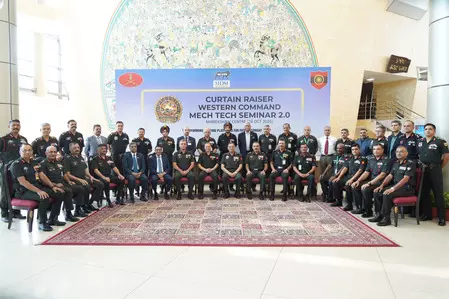
Western Command chief opens curtain raiser on mechanisation tech seminar
Digital Desk | New Delhi, Oct 26 (IANS) Lieutenant General Pushpendra Singh, General Officer Commanding-in-Chief, Western Command, Indian Army, on Monday inaugurated the curtain raiser for Mechanisation Technology Seminar 2.0 (MTS 2.0). The curtain raiser, organised at the Manekshaw Centre in Delhi, outlined the broad vision and key areas of focus for the forthcoming seminar, highlighting the importance of technology-driven modernisation, civil-military collaboration and Atmanirbharta in strengthening indigenous defence capabilities, said an official statement. The event was organised by Western Command in collaboration with the Society of Indian Defence Manufacturers (SIDM). The seminar, themed CHAKRA Transforming Existing Platforms for Future Combat, is scheduled to be held on December 14-15 at Chandimandir Military Station in collaboration with SIDM, the statement said. It will bring together stakeholders from the Indian Army, defence industry and academia to deliberate on technological advancements and capability enhancement of mechanised forces, it said. An initiative of Western Command, MTS 2.0 aims to enhance the combat effectiveness of mechanised forces by transforming existing military platforms into technologically advanced, capable and future-ready combat systems, it said. The seminar will focus on Combat Capability Enhancement, Harnessing Technology, Adaptability, Kinetics, Refurbishment and Atmanirbharta, with an emphasis on translating operational capability gaps and requirements into clearly defined Problem Definition Statements (PDS). The curtain raiser also provided a platform for interaction among military users, industry representatives, academia and other stakeholders to deliberate on the modernisation of existing platforms, indigenous technological innovation and emerging operational requirements, said the statement. MTS 2.0 reflects the Indian Armys continued commitment to capability enhancement, technological transformation and self-reliance in defence. By providing a focused platform to translate operational requirements into practical and implementable technological solutions, the seminar seeks to strengthen collaboration among the Armed Forces, defence industry and academia, while enhancing the operational effectiveness, resilience and combat readiness of mechanised forces in the evolving battlefield environment, said the statement.

IIT Mandi launches Science on Wheels for 50 Himachal schools
The News Mill

J&K Police arrests 7 drug peddlers in Anantnag; large quantity of contraband recovered
Digital Desk | Srinagar, Oct 26 (IANS) Jammu and Kashmir Police in Anantnag district said on Monday it has arrested seven drug peddlers from whose possession a large quantity of contraband substances was recovered. A police statement said today that continuing the sustained crackdown against drug trafficking and substance abuse, police in Anantnag intensified efforts to curb the drug menace across the district. During a series of operations, police teams apprehended seven peddlers and recovered a large quantity of contraband substances from their possession. A police party from Police Station Anantnag apprehended Sareer Ahmad Bhat son of Khazir Mohammad Bhat resident of Chirhama Mirbazar, at Nawvathoo Danter and recovered approximately 230 grams of charas powder-like substance from his possession. In another operation, police intercepted a Hyundai i10 bearing registration number JK05B-3181, driven by Mohd Altaf Bhat son of Abdul Majeed Bhat, resident of Mirdanter. Approximately 153 grams of charas powder-like substance was recovered during the search from his possession. Besides, the vehicle used in the commission of crime has also been seized. In separate operations at Wazirbagh and behind Police Station Anantnag, police apprehended Bittu Dantani son of Raju Dantani resident of Chapur Mehdi Kuwa, Ahmedabad, Gujarat, presently residing at Achabal Adda, Anantnag, and Ajay Kumar son of Kishan Kumar, resident of Verrugam Kadi, Gujarat. Approximately 17 grams and 22 grams of charas, respectively, were recovered from their possession. Meanwhile, acting on reliable information, Police Post Sangam conducted a raid at the residential house of Bilal Ahmad Bhat son of Abdul Wahab Bhat, resident of Baliyar Marhama, and recovered approximately 7.170 kilograms of ganja-like substance. Similarly, a naka party of Police Post Shairbagh apprehended Danish Manzoor Shaikh son of Manzoor Ahmad Shaikh, resident of Janglat Mandi, Anantnag, at High Ground and recovered approximately 205 grams of charas-like substance from his possession. Moreover, a naka party of Police Station Mattan apprehended Javid Mukhtiyaar Pashoo, son of Mukhtiyaar Ahmad Pashoo, resident of Gopalpora, Mattan, and recovered approximately 52.6 grams of charas-like substance from his possession. In a separate action, a police party of Police Post DK Pora apprehended Bashir Ahmad Bhat son of Mohd Abdullah Bhat, resident of Brinty, and recovered approximately 15 grams of charas from his possession. Accordingly, cases under relevant sections of law have been registered at respective police stations and further investigations have been initiated. Police reiterates its firm commitment to eradicating the drug menace and appeals to the general public to cooperate with police by sharing credible information regarding drug trafficking and peddling. Public participation remains vital in the collective effort to build a drug-free society, the statement added.
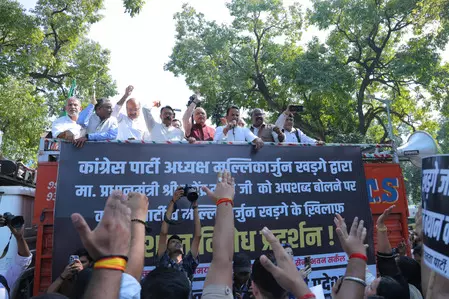
Delhi BJP protests near Kharges official residence over remark on PM Modi
Digital Desk | New Delhi, Oct 26 (IANS) Demanding an apology, Delhi BJP President Harsh Malhotra on Monday led a massive protest near the residence of Congress President Mallikarjun Kharge at Rajaji Marg, opposing his alleged insulting remarks about the late father of Prime Minister Narendra Modi during a meeting in Patna a day earlier. Malhotra said, We have gathered at Kharges residence today to tell him that PM Modi is not merely a senior leader of the Bharatiya Janata Party, but one of the top leaders in the world and the Prime Minister of India. Kharge must apologise for his remarks. Our movement and protest will continue till Kharge apologises, he said, adding that wherever Kharge goes to address the public, the citizens and BJP workers will demand answers from him. Malhotra said the entire Congress, whether it is Rahul Gandhi or Congress President Kharge, has become frustrated. After suffering continuous electoral defeats, they are unable to understand what to do. They repeatedly resort to creating an atmosphere of anarchy and behave as though they do not respect the law, he said. They want to stage protests outside the Supreme Court, organise rallies and attempt to enter the Supreme Court premises, and at times even reach the gates of Parliament. They are people who do not respect constitutional institutions or the laws of the country, he said. Malhotra said that a few months ago, they attempted to shut down Delhi, which affected the entire business community of the city. Even today, without caring about the law, they are continuously attempting to hold protests and demonstrations at various places in Delhi, including Connaught Place, in violation of the law. By mobilising disruptive and anarchic elements, they are attempting to create an atmosphere of anarchy in Delhi and across the country, he said. Malhotra said Congress leaders frustration is increasing because the people are not with them. Their own people and workers are not with them, and whenever by-election results are announced, and the Congress and opposition parties suffer defeats there as well, their frustration increases further, he said. The protest against Kharge was joined by Delhi BJP In-charge Vinay Sahasrabuddhe and 2,000 workers of the Delhi BJP Purvanchal, Yuva and OBC Morchas. The protest, conducted by Delhi BJP General Secretary Mohan Lal Gihara, saw party workers march towards Kharges residence after the leaders addressed the gathering. Police attempted to stop the workers by putting up barricades at the Kushak Road turn. When the workers broke through the barricades and proceeded further, a heavy police contingent stopped them near Sena Bhawan. The police then detained around 200 senior office-bearers and workers, including Delhi BJP President Malhotra, and took them to Mandir Marg Police Station in five buses. Sahasrabuddhe said that PM Modi comes from an ordinary family and is serving the country, reaching the office of Prime Minister after immense struggle. An attempt has been made to insult that journey. The kind of objectionable language used by the Congress President does not befit the president of the countrys oldest political party, he said. Delhi BJP Vice President Rajesh Bhatia said that the Congress cheap mentality has once again been exposed. Delhi BJP General Secretary Mohan Lal Gihara said that Kharge has crossed all limits of decency. Delhi Purvanchal Morcha President Santosh Ojha said that by insulting the Prime Ministers father, Kharge has also insulted the Purvanchal community. Yuva Morcha President Rajat Chaudhary said that the youth rejects Congress politics of abusive language.
BJP holds nationwide protests over Kharge's remarks against PM Modi, demands apology
BJP organized nationwide protests following Congress president Mallikarjun Kharge's controversial remarks about Prime Minister Modi. These protests involved party members across various states, demanding an apology from Kharge. In Delhi, attendees rallied near Kharge's residence while protests spread to states like Karnataka and Jharkhand. Leaders in multiple regions criticized Kharge's comments and emphasized respect for the Prime Minister.
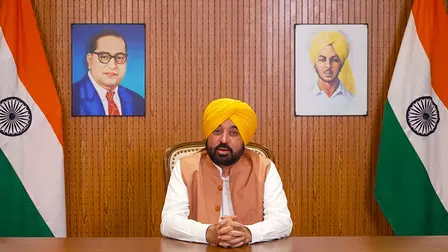
BJP seeking votes to snatch Panjab University and water, says CM Mann
Digital Desk | Patiala, Oct 26 (IANS) Punjab Chief Minister Bhagwant Mann on Monday tore into the BJP, pointing out it is seeking votes to snatch Panjab University in Chandigarh and Punjabs water, while making a habit of depriving the state of its rightful rights and financial dues. Slamming the Modi government for withholding the states RDF (Rural Development Fund) and VAT (Value-Added Tax) dues for four-and-a-half years, he also hit out at the Akalis and the BJP over the drug menace, accusing the two parties of damaging Punjab during their previous tenures and now preparing to reunite for electoral gains. The Chief Minister asserted that Punjab would not tolerate any compromise with its rights and interests, adding the Oppositions frustration stemmed from the continued public support for the Aam Aadmi Party. During a media interaction, CM Mann said, The BJP is seeking votes by conspiring to snatch Panjab University and Punjabs water. Denying Punjab its rightful claims has become an old habit of the BJP. The people of Punjab have made immense sacrifices for the country, contributed to its food security and stood firmly at the forefront of national defence, yet the state continues to face injustice at the hands of the BJP-led Union government. The Chief Minister said Punjab would never allow any political party to undermine its interests or compromise the rights of its people. Panjab University is an important institution associated with Punjabs history, identity and academic legacy, while our water resources are vital to our agricultural economy and the livelihoods of millions of farmers. The people of Punjab will not tolerate any conspiracy to weaken the states rights over its institutions, water or financial entitlements. Calling out the BJP-led Central government for Punjabs pending financial dues, CM Mann said the Modi government has withheld Punjabs RDF and VAT dues. This prolonged withholding of funds is deeply unjust to the people of Punjab and hampers the states ability to undertake essential development and rural infrastructure works. Punjab is demanding nothing beyond its legitimate entitlements, and the Union government must fulfil its financial obligations towards the state, he added.
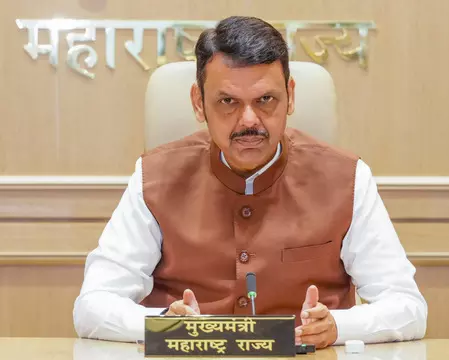
Digital Desk | Mumbai, Oct 26 (IANS) Maharashtra Chief Minister Devendra Fadnavis on Monday directed the Mumbai Police Commissioner to form a Special Investigation Team (SIT) and conduct a detailed forensic probe into controversial audio recordings released by Maratha quota activist Manoj Jarange Patil, which involve allegations of transactions worth Rs 500 crore. The SIT will conduct a complete forensic examination of the audio clips released by Manoj Jarange Patil to verify their authenticity, trace the origin of the audio recordings, and identify all voices heard in the multi-person conversations. Probe directives were issued after formal demands were raised by Shiv Sena leaders, BJP representatives, and activist Manoj Jarange Patil himself. Activist Manoj Jarange Patil urged the government to allow the SIT to operate independently without political interference and offered full cooperation with the investigation. Allegations in the controversial audio clip emerged, featuring conversations claiming that Rs 500 crore was delivered to Manoj Jarange Patil via Shiv Sena MP Shrikant Shinde. Senior Shiv Sena leader Ramdas Kadam alleged a conspiracy involving certain leaders to politically target Deputy Chief Minister Eknath Shinde. Manoj Jarange Patil stated the audio content was authentic and demanded answers on how specific leaders had prior knowledge of the clips before they surfaced publicly. Kadam launched a direct attack on the BJP during a press conference. He questioned whether certain elements within the BJP were attempting to marginalise Deputy CM Eknath Shinde due to his rising popularity. He asked who within the ruling alliance was working against the Chief Minister, demanding clarity from the BJP leadership. To back his claims, Kadam circulated photographs showing BJP leader Prasad Lad and Manoj Jarange Patil dining together. He further claimed to have written to Prime Minister Narendra Modi, Union Home Minister Amit Shah, Chief Minister Devendra Fadnavis, and RSS Chief Mohan Bhagwat, seeking a high-level probe into the matter. State Industries Minister and Shiv Sena leader Uday Samant echoed these concerns in Kolhapur, alleging that individuals linked to the BJP were involved in the audio clip conversation. He claimed the recording was part of a deliberate conspiracy to defame DCM Eknath Shinde, who had consistently handled the Maratha reservation issue with sensitivity and supported the community's demands. The BJP hit back firmly against the accusations. Senior BJP leader and MLC Pravin Darekar warned that his party would not tolerate baseless allegations from Ramdas Kadam. We are partners in the ruling alliance. It does not fit into Maharashtras political culture to stay in the government and continuously attack your own ally, he said. He asked why the BJP would attempt to politically undermine DCM Eknath Shinde, noting that the BJP had fully backed him for the chief ministership following the previous elections. Darekar warned that the BJP would not remain silent if painted as the villain in manufactured controversies. BJP MLC Prasad Lad also cautioned Kadam against making statements that could fracture the Mahayuti coalition. CM Devendra Fadnavis questioned why conversations from over two years ago surfaced at this junction, assuring that the investigation will uncover the full truth behind the motives and individuals involved.

Klusener Says Consistency Key For South Africa After Australia Test Turnaround
Abu Dhabi T10 League: Former South African all-rounder Lance Klusener believes consistency with the bat will be crucial for South Africa as they look to build on their emphatic response against Australia in the ongoing Test series, saying the teams World Test Championship triumph has already demonstrated their credentials but sustained contributions from the batting unit remain essential. South Africa bounced back from a heavy defeat in the opening Test in Durban with an innings victory in Gqeberha to level the series, setting up a decisive third contest. Klusener, currently serving as the head coach of the Arabian Aces in the Abu Dhabi T10 League, spoke to IANS on the sidelines of the tournament ahead of the series decider starting on Tuesday, assessing the Proteas response and the challenges facing both teams. For Klusener, South Africas success in the World Test Championship final against Australia had already answered questions about the teams ability to compete against the strongest opposition. The emphatic victory in the second Test, he said, further demonstrated the sides character, although he cautioned that one outstanding performance would not be enough to guarantee sustained success. The fact that South Africa won the World Test Championship really tells you that theyre a good team. There was obviously some talk that they hadnt played Australia and probably India enough. So, its nice to see that weve been able to silence a few critics. Obviously, theres a game to go. Were all looking forward to that tomorrow. But theyre a serious team. And to be able to bounce back and beat Australia by an innings as well just shows you the character, the challenges. Its always about scoring enough runs. Temba was outstanding, 170-odd in the last Test match. Theyll be looking to themselves, looking inwardly to make sure that more batters are contributing. Exciting things, obviously, two spinners and Keshav Maharaj and Simon Harmer, so we have those options. And then there are enough fast bowlers there to trouble any team. Theres a lot of good ingredients, but consistency is the key going forward, Klusener told IANS. South Africas victory in Gqeberha was built on a commanding batting performance led by captain Temba Bavuma, whose substantial contribution helped put the team in a position to dictate terms. Klusener identified the need for other batters to provide similar support, arguing that the presence of a strong bowling attack must be matched by reliable run-scoring across the series. He also highlighted the combination of spin and pace available to the Proteas, with Keshav Maharaj and Simon Harmer offering options in the slower-bowling department alongside a fast-bowling unit capable of challenging any opposition. Australia, meanwhile, will be looking to respond after being dismissed for 99 in their first innings in Gqeberha. Klusener attributed the collapse to a combination of effective South African bowling and conditions that favoured the attack, while also pointing to the importance of batting application in Test cricket. I thought it was a combination of some really good bowling on conditions that probably suited the bowlers a little bit. I suppose Australia would go and look at themselves in terms of application in that situation. And even if they had managed to squeeze out another 80 or 90 runs, that could have well been the difference in that Test match in terms of just batting a little bit more time. So, margins even in Test cricket are small. Im sure both teams would have had a look at a few things and, hopefully, going to read the conditions right when they get that opportunity tomorrow. But yeah, exciting times. Both teams have had a few things to look at. Im sure theyve done that. And I think the quality of the cricket in the third Test was going to be even better than what weve seen so far, he said. Even a modest addition to Australias first-innings total, he suggested, might have changed the course of the second match, underlining the importance of patience and decision-making when conditions favour the bowlers. Beyond the immediate contest, Klusener believes the series has demonstrated why Test cricket continues to hold a distinctive place in the sport despite the growing influence of franchise leagues and shorter formats. Theres a balance. Test cricket is the ultimate examination of technique and character. And theres always going to be a place for that. But at the same time, the game is moving forward. We need to accommodate not only what cricketers want, but also what spectators want. And thats the shorter ball format of the game. The spinoffs from T20 cricket, for example, have been immense, not just from a spectator or from a monetary point of view. We see those benefits in Test cricket now. Im sure there are people that have come back to watch Test cricket because T20 has maybe sparked their interest. So the shorter format has most definitely impacted cricket in general in a big way, not just from a cricketing skills point of view, but from a spectator point of view as well, he opined. And thats the shorter ball format of the game. Also Read: Special Cricket Stories Article Source: IANS

Coimbatore school students death case: probe transferred to CB-CID
Coimbatore city police handed over a copy of the order to family members of the deceased, who along with relatives and members of various political parties have been staging a protest for the past few days, demanding arrest of all persons who abetted the suicide.

BJP Protests Outside Congress Office in Ranchi Over Kharges Alleged Remarks About PM Modis Father
BJP staged a protest in Ranchi against Congress leader Kharges alleged comments about PM Modis father, demanding an apology. BJP Protests Outside Congress Office in Ranchi Over Kharges Alleged Remarks About PM Modis Father
Fresh Jamia Protests: Students Detained Hours After Union Election Announcement
Fresh protests erupted on the campus of Jamia Millia Islamia (JMI) on Monday, hours after the university administration announced plans to resume student union elections after a nearly two-decade hiatus. Demanding a time-bound election roadmap and the immediate appointment of a chief election officer, student groups refused to call off their ongoing agitation. Tensions escalated [] The post Fresh Jamia Protests: Students Detained Hours After Union Election Announcement appeared first on Pragativadi I Latest Odisha News in English I Breaking News .

WHEN PROTESTS ACROSS the world erupt regarding inequality within schools and neglected educational priorities, led primarily by students, there is hope that they are asking democracies to honour two connected promises: quality education for all and the freedom to demand it. Whether the questions revolve around missing teachers or broken infrastructure, the demand reflects the distance between equality promised within a democracy and the actual opportunity it provides or fails to provide. The school protests in France have been indicative of simple demands surrounding adequate staff, usable facilities, and fairer learning conditions. Reverberating these demands across multiple countries in Europe Spain, Portugal, even Germany - and in India, the Cockroach Janta Partys (CJP) School Thik Karo (Set Right the Schools) campaign makes a comparable demand by publicly scrutinising government schools. These demands fall within the scope of international defence of public education and democratic participation with a shared claim to equality, rather than evidence of a single, centrally organised worldwide movement. European Protests: What they Reveal, International Law, and Collective Rights In France, pupils in disadvantaged Paris suburbs have turned deplorable school conditions ranging from consistent teacher shortages, overcrowding, inadequate facilities, and inequality across neighbourhoods into a national political issue highlighting that ones address should not be the sole determinant of their future . Enrolment in public schools alone cannot ensure access to quality education. So the question is not merely about education budget or even policy, per se but rather who are the direct beneficiaries of an enhanced budget (if any)? Whether a mere national average is concealing the unequal burdens borne by particular communities, and even the unequal burdens of apparent neutral allocation may actually leave the children facing the greatest obstacles with the least institutional support. A placard in France read, Four riot police for one student/ One professor for thirty five. It underlined the pitiable conditions caused by shortage of teachers in French schools and heavy deployment of police forces to deal with protesters. Even though France seems to be leading the charge on the scale of protests, there seems to be a wider European concern regarding the state of schools ranging from Romanian teachers demonstrating against austerity measures, Greek students recurringly demanding better teachers, decent facilities, and meaningful investment in public education. Here, international law can be indicative, providing a framework for understanding these protests Article 21 of the International Covenant on Civil and Political Rights (ICCPR) protects peaceful assembly, and Article 19 protects freedom of expression. More often than not, in a democratic society, when read together, they safeguard essential means through which people question public decisions and organise demands for change. While this right is qualified by the touchstones of national security, public order, public safety, public health, morals, and the protection of others rights, these restrictions demand justification. Mere inconvenience or governmental embarrassment cannot be a substitute for showing why a particular restriction is necessary or proportionate . Even the mere disruption of traffic or everyday activity does not, by itself, constitute violence, and such a right to protest needs to be protected and enabled by the State. Peaceful disobedience , even with isolated violent acts, should not be automatically attributed to other participants or even to the entire assembly, which is largely peaceful. These distinctions matter when images of burning objects or clashes overwhelm discussion of a movements demands, where authorities have responded to violence and protect people from harm. However, the authorities have to assess individual conduct and the circumstances of the gathering and peaceful participants do not lose their rights individually or collectively simply because someone nearby commits an offence. Equally, a legitimate and overall peaceful educational demand does not make every protest tactic lawful, such as blocking access to a school, which can affect other childrens education; prolonged obstruction can raise serious competing interests. The legal task is to assess the actual conduct, harm, and available alternatives , as automatically organising every blockade is as inadequate as treating every disruptive gathering as a security threat. In this case, the European Convention on Human Rights (ECHR) serves as an indicator of the scope and legal application of the right to peaceful assembly, particularly under Article 11. The European Court of Human Rights guidance recognises that authorities must tolerate a degree of disruption, while the extent and duration of the disturbance remain relevant, and identifies duties to take reasonable measures to enable lawful demonstrations to proceed peacefully. Recently, there has been an international recognition of collective action from the International Court of Justices Advisory Opinion (ICJ AO) on the right to strike under ILO Convention No. 87. The Court confirmed that the Convention protects workers right to strike , while leaving the precise content, scope and conditions of its exercise unresolved by not expressly mentioning that right . Highlighting these different international legal instruments is important, as a teachers strike involves the withdrawal of labour, whereas a student demonstration or parents rally engages the separate protections of expression and peaceful assembly. These actions may converge around the same demand for functioning public schools, but their legal foundations remain distinct. While the ICJ AO did not establish a general right to protest or automatically legitimise every school blockade, its relevance to the wider argument is that international law recognises collective action as a protected means of defending interests. This recognition challenges the expectation that those affected by institutional failures should confine themselves to deferential requests. The Hungarian Protests showcase this collective action, as Teachers and students opposed changes to educators working conditions and restrictions affecting their collective action . In 2023, the European Trade Union Committee for Education criticised legislation adopted despite sustained protests and urged meaningful consultation; the ability of teachers to defend their profession belongs within the debate over the quality of education children receive. While these international legal instruments reflect the rights to peaceful assembly, freedom of expression, and collective rights in the European context, these rights have been contextualised in the context of Indias protests. The ICCPR binds its contracting states, including France and India ; the ECHR and ILO bind France and other European nations but not India. Its jurisprudence nevertheless offers a useful comparative perspective alongside the separate obligations India bears under the ICCPR. Hence, the legal case for protecting peaceful school protests rests on Indias own constitutional guarantees and its applicable international human rights obligations. Even with these restraints, European protests offer an uncomplicated model for India to emulate, as its own schools and governments face similar concerns regarding the quality of education and, therefore, equality of opportunity. The value of the comparison lies in recognising that material prosperity and an enhanced education budget (8.27% increase) or a new educational policy do not automatically secure a fair public education system. Political choices still determine which children receive reliable public provision and which are expected to tolerate its deterioration. Indias Parallel Demand In India, protests stemming from the NEET paper leak scandal (following irregularities in the medical entrance test) have now snowballed into the recent controversy over Special Intensive Revision (SIR) and questionable functioning of the Chief Election Commission er. However, between the two distinct protests, there was a call for a campaign often described as a movement to save schools, reported under the name School Thik Karo. Announced by CJP founder Abhijeet Dipke, the leader behind the NEET Protests and the SIR Protests, the initiative invites parents and village representatives to inspect government schools to ascertain if electricity, safe drinking water, toilet facilities, and mid-day meals are provided to children or not. It also calls them to document deficiencies through forms and videos. The method matters, as CJP asked for a social audit and turns a broad allegation of neglect into questions that an administration should answer. Is the water available? Do the toilets work? Who must authorise repairs? When will the deficiency be corrected? Such questions connect everyday experience with public responsibility. The campaign has also announced an Adivasi School Thik Karo initiative to document conditions in tribal areas across several states. Its announced focus on teachers and basic facilities makes the distributional question explicit: whose schools receive sustained public attention? There are important differences between a French suburban lyce and an Indian village school. Caste, tribal marginalisation, geography, language and household resources require attention on their own terms. Nevertheless, both settings invite the same democratic test: does the public system offer children a credible opportunity to learn, irrespective of the social position into which they were born? Community participation must also have limits, and the right to access equitable education should not be a mere burden on the parents. Parents should not have to finance essential repairs or repeatedly publicise deprivation before officials act to address it. Citizen audits can expose failures; responsibility for remedying them remains with public authorities. The substantive basis for the right to education also exists in international and national law. For instance Article 13 of the International Covenant on Economic, Social and Cultural Rights (CESCR), provides that education must be . At the national context in India Article 21A of the Constitution of India mandates that The State shall provide free and compulsory education to all children of the age of six to fourteen years in such manner as the State may, by law, determine. Article 2 of the ICESCR requires states to take steps towards realising Covenant rights using the maximum of their available resources, while guaranteeing non-discrimination. The requirements enshrined in Articles 2 and 13 of the ICESCR emphasise that there should be functioning institutions providing access without discrimination . These also underline the necessity for ensuring quality education, responsive to learners needs. While financial constraints are real and Governments must choose between competing demands, international law does not erase those choices. An appeal to limited resources should prompt scrutiny of spending decisions, rather than close discussion of neglected schools, especially with yearly increases in education allocations. As stated earlier India already has a constitutional foundation for this scrutiny through Article 21A, which guarantees free and compulsory education for children aged six to fourteen, and Article 19, which protects citizens freedom of expression and peaceful, unarmed assembly, subject to constitutional restrictions. Demands for better schools and the freedom to voice them therefore belong within Indias own constitutional commitments.These constitutional safeguards are also backed by legislative action under the Right to Education Act, which requires school norms to include access to drinking water and toilet facilities. Asking whether these exist is a request for compliance with and enforcement of an established legal framework, not merely an unnecessary demand. These protests or public audits are emboldened by the fact that children, and even future generations, have concrete rights, such as the right to express views on matters affecting them under Article 12 and the freedoms of association and peaceful assembly under Article 15 of the Convention on the Rights of the Child (CRC). These rights have been invoked by youth globally for climate change and affirmed by the Supreme Court of India for the rights of future generations, as well as by the ICJs Advisory Opinion on Climate Change. Democracy Must Answer Hence, peaceful protest is a hallmark of democracy because elections cannot communicate every grievance or correct every administrative failure. Between elections, collective action enables people with little individual influence to make neglected conditions visible. Its democratic value is especially clear when those people cannot vote at all. This wider international mobilisation around education contains different histories, organisations and demands, and Indias campaigns need no European endorsement. Their resonance with European struggles demonstrates how widely citizens are questioning the unequal provision of institutions that governments describe as universal. While European students can be admired as politically aware, Indian children making comparable demands are dismissed as manipulated or disruptive. The standard should remain consistent across borders. Ask whether participation is peaceful, whether the grievance deserves investigation and whether the states response respects rights. From France to India, those demanding decent schools are asking which lesson their governments intend to deliver. A well-functioning democracy teaches its children something through every response to protest: that public promises are open to challenge and that institutions must explain their failures, or it can teach them that equality belongs in textbooks while obedience governs everyday life.

Fatima Sana Shaikh pushes her fitness limits in new gym workout video; watch
Fatima Sana Shaikh has once again captured the internet's attention with her relentless dedication to fitness and health. Known for her stellar performances on the silver screen and her vibrant social media presence, the actor recently took to Instagram to share a high-octane video showcasing her rigorous gym workout routine. Adding a fun and appreciative touch to her post, Fatima captioned the video with enthusiasm: Lesssgooo! Agar @coachpankaj5 nahi hota toh bhai itni training toh nahi ho paati. By giving a special shout-out to her fitness trainer, coach Pankaj, she acknowledged the crucial role professional guidance plays in achieving rigorous fitness milestones and maintaining consistency. View this post on Instagram A post shared by Fatima Sana Shaikh (@fatimasanashaikh) The video, which highlights her intense training sessions, features Fatima pushing her physical boundaries through a variety of demanding exercises. From weight training with a Smith machine and executing precise Bulgarian split squats using kettlebells to explosive box jumps and core-strengthening mat routines, the actor leaves no stone unturned in maintaining her peak physical condition. Dressed in a sleek all-black athletic outfit, her focus and determination are palpable throughout the clip, serving as a major fitness motivation for her followers. Fans and fitness enthusiasts flooded the comment section with admiration for her work ethic, praising her commitment to a healthy lifestyle. As celebrities increasingly use their platforms to promote physical well-being, Fatima Sana Shaikhs latest update stands out as a powerful reminder of the hard work and discipline required behind the scenes to stay fit, energetic, and ready to take on new challenges. Also Read : EXCLUSIVE: Fatima Sana Shaikh says Bollywood became even more safer after MeToo; calls pay disparity a very mathematical approach

How Serbias student protests ended 14 years of political dominance | Explained
Serbias student-led movement has defeated Aleksandar Vucics ruling party in the October 25 parliamentary election, ending its 14-year hold on power. What began as protests demanding justice for 16 people killed in the 2024 Novi Sad railway station tragedy grew into a nationwide movement against alleged corruption. Heres how nearly two years of student protests led to a major political change in Serbia.

Global Tuberculosis Cases Reach 10.7 Million, Demanding New Solutions
Tuberculosis remains a significant global health threat, with millions affected and calls for innovative solutions to combat the disease. Global Tuberculosis Cases Reach 10.7 Million, Demanding New Solutions
BJP Launches Nationwide Protests Demanding Mallikarjun Kharge
The Bharatiya Janata Party (BJP) launched nationwide protests on Monday at party headquarters across all states, demanding the immediate resignation of Congress President Mallikarjun Kharge following his indecent and offensive remarks targeting Prime Minister Narendra Modi. The controversy erupted after Kharge, speaking at an event in Patna, retorted with Modi ka baap bhi jayega when [] The post BJP Launches Nationwide Protests Demanding Mallikarjun Kharges Resignation Over Remarks on PM Modi appeared first on Pragativadi I Latest Odisha News in English I Breaking News .
The recent arrest of Dr Randall Sequeiraa dedicated physician who has spent years delivering vital healthcare to neglected tribal communities in remote corners of Odishahas triggered widespread condemnation. Family members and social activist Siddharth Routray have launched a vociferous campaign demanding his immediate and unconditional release, labelling the police action an unjust crackdown. A Life [] The post Outrage Mounts as Family and Social Activists Demand Immediate Release of Dr Randall Sequeira in Odishas Rayagada appeared first on Pragativadi I Latest Odisha News in English I Breaking News .
Delhi BJP holds protest near Kharge's residence; demands apology for 'insulting' PM Modi
Delhi BJP organized a protest near Mallikarjun Kharge's residence in response to his remarks about Prime Minister Narendra Modi. Protesters attempted to march but were stopped by police at the Sena Bhawan Circle. They raised slogans demanding an apology from Kharge and Rahul Gandhi for the statements made during an event in Patna. Kharge's comments included a firm response to an audience member about Modi's future.
Anantnag Police Arrest 7 in Anti-Drug Crackdown, Recover Over 7.86 Kg of Contraband
Anantnag, Oct 26 : Continuing its sustained crackdown against drug trafficking and substance abuse, Anantnag Police intensified its efforts to curb the drug menace across the district. During a series of operations, police teams apprehended seven persons, registered eight cases under the relevant provisions of the NDPS Act, seized one vehicle and recovered over 7.86 kilograms of contraband substances. During the operations, a police party from Police Station Anantnag apprehended Sareer Ahmad Bhat, son of Khazir Mohammad Bhat, resident of Chirhama Mirbazar, at Nawvathoo Danter and recovered approximately 230 grams of charas powder-like substance from his possession. In another operation, police intercepted a Hyundai i10 bearing registration number JK05B-3181, driven by Mohd Altaf Bhat, son of Abdul Majeed Bhat, resident of Mirdanter. Approximately 153 grams of charas powder-like substance was recovered during the search. The vehicle was seized, and a case was registered under the relevant provisions of the NDPS Act. In separate operations at Wazirbagh and behind Police Station Anantnag, police apprehended Bittu Dantani, son of Raju Dantani, resident of Chapur Mehdi Kuwa, Ahmedabad, Gujarat, presently residing at Achabal Adda, Anantnag, and Ajay Kumar, son of Kishan Kumar, resident of Verrugam Kadi, Gujarat. Approximately 17 grams and 22 grams of charas, respectively, were recovered from their possession. Meanwhile, acting on reliable information, Police Post Sangam conducted a raid at the residential house of Bilal Ahmad Bhat, son of Abdul Wahab Bhat, resident of Baliyar Marhama, and recovered approximately 7.170 kilograms of ganja-like substance. The accused was not present at the time of the raid. FIR No. 323/2026 under Sections 8/20 of the NDPS Act has been registered, and efforts are underway to apprehend him. In another operation, a naka party of Police Post Shairbagh apprehended Danish Manzoor Shaikh, son of Manzoor Ahmad Shaikh, resident of Janglat Mandi, Anantnag, at High Ground and recovered approximately 205 grams of charas-like substance from his possession. Similarly, a naka party of Police Station Mattan apprehended Javid Mukhtiyaar Pashoo, son of Mukhtiyaar Ahmad Pashoo, resident of Gopalpora, Mattan, and recovered approximately 52.6 grams of charas-like substance from his possession. Accordingly, FIR No. 123/2026 under Sections 8/20 of the NDPS Act has been registered at Police Station Mattan. In a separate action, a police party of Police Post DK Pora apprehended Bashir Ahmad Bhat, son of Mohd Abdullah Bhat, resident of Brinty, and recovered approximately 15 grams of charas from his possession. A case has been registered, and further investigation has been taken up. Anantnag Police reiterates its firm commitment to eradicating the drug menace and appeals to the general public to cooperate with police by sharing credible information regarding drug trafficking and peddling. Public participation remains vital in the collective effort to build a drug-free society.
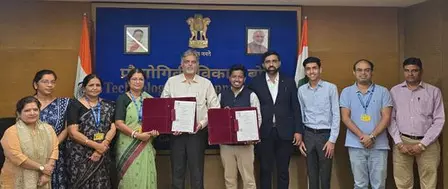
Digital Desk | New Delhi, Oct 26 (IANS) In a significant step towards strengthening Indias indigenous space technology capabilities and promoting sustainable access to space, the Technology Development Board (TDB), Department of Science & Technology (DST) on Monday signed an agreement with Manastu Space Technologies Private Limited, Navi Mumbai, Maharashtra for financial support of Rs 116 crore under the Research Development and Innovation (RDI) Fund. The project, with a total project cost of Rs 277.63 crore, focuses on developing a scalable, integrated green propulsion system for satellites and launch vehicles across the 5 mN to 300 N thrust class, the Ministry of Science & Technology said. The programme aims to advance the technology from Technology Readiness Level (TRL)-6 to TRL-9, supporting further development, validation and deployment of the propulsion system. The financial support will be provided through Optionally Convertible Debt (OCD), the ministry stated. Manastu Space is developing an indigenous green propulsion system designed to provide a complete propulsion solution for satellites and launch vehicles. The technology uses a hydrogen peroxide-based green propellant with additives, supported by an integrated engine and catalyst system. The system offers improved performance and cost efficiency while reducing the operational challenges associated with conventional propellants, as per the report. A key feature of the technology is its scalable architecture, serving propulsion requirements ranging from small satellite applications to higher-thrust systems. The project encompasses the development of propulsion engines and propellant feed systems, including an ultra-high-temperature ceramic catalyst designed for reliable operation under demanding conditions. Indigenous propulsion technologies are important for strengthening Indias capabilities across the space value chain. As the countrys space ecosystem continues to expand, there is a growing need for propulsion systems that combine performance, reliability, operational safety and cost efficiency, Rajesh Kumar Pathak, Secretary, TDB, said. The support from TDB under the RDI Fund will help us advance our green propulsion technology through further development, integration and validation. Our objective is to develop a scalable propulsion platform that combines performance, reliability and cost efficiency while addressing the need for safer and more sustainable propellant systems, Co-Founder & CTO, Manastu Space Technologies Private Limited, said.

Padikkal's 199 Puts India A In Command After Stunning Recovery Against NZ A
Devdutt Padikkal: Devdutt Padikkal came within one run of a double century as India 'A' overturned their first-innings deficit to seize control of the opening unofficial Test against New Zealand A in Lincoln on Monday. The left-handers 199 powered India A to 488/8 at stumps on Day 3, stretching the overall lead to 284 runs after the hosts had posted 317 in their first innings. Resuming on 56 alongside Sai Sudharsan, who was unbeaten on 39 overnight, Padikkal set the tone for Indias recovery with an aggressive approach that put the New Zealand A bowling attack under sustained pressure. Sudharsan contributed a steady 91, helping the visitors take the lead before falling to a short-ball ploy. Padikkal, meanwhile, continued to accelerate, bringing up his 12th first-class century with a six off Jayden Lennox. The pairs substantial partnership shifted the momentum towards India A, although Sudharsans dismissal and captain Dhruv Jurels departure briefly offered the hosts an opening. Yash Rathod ensured that the visitors did not lose their attacking intent. After joining Padikkal at the crease, Rathod took the attack to Lennox and later struck Kristian Clarke for two boundaries and a six. He raced to a half-century off 54 balls, complementing Padikkals commanding strokeplay as India A built a substantial advantage. Padikkal was then controversially adjudged caught behind down the leg-side on 199. The batter appeared to question the decision, gesturing towards the umpire over the apparent gap between his bat and the ball. His dismissal ended a magnificent innings just short of a landmark double-century. Rathod followed soon after Tea for 66, but Indias lower order continued to frustrate the hosts. Anshul Kamboj struck four boundaries before departing for 22, while Washington Sundar and Auqib Nabi added 69 runs to extend the lead further. Nabi contributed 38 before being dismissed, leaving Sundar unbeaten on 51 when fading light brought an early end to the days play. New Zealand A, already without injured seamer Simon Keene, who had claimed five wickets in the first innings, struggled to contain the scoring as Indias batters capitalised on the conditions. Zak Gibson was the pick of the bowlers with two wickets for 58 runs. With India 'A' holding a 284-run advantage and two wickets still remaining, the visitors are firmly positioned to push for victory on the final day. Whether they declare overnight or bat on to maximise their lead will determine how much time they have to bowl New Zealand A out. New Zealand A, already without injured seamer Simon Keene, who had claimed five wickets in the first innings, struggled to contain the scoring as Indias batters capitalised on the conditions. Zak Gibson was the pick of the bowlers with two wickets for 58 runs. Also Read: Special Cricket Stories Article Source: IANS
Albania: Edi Ramas Warning Defied; Protesters Torch Chairs, Clash With Police
Albania is witnessing escalating anti-government unrest as protesters set fire to chairs outside Prime Minister Edi Ramas office in Tirana, rejecting his offer of dialogue and demanding his resignation. The dramatic scenes unfolded on October 25, a day after violent clashes between demonstrators and riot police rocked the Albanian capital. Rama has announced a new legislative package targeting violence and urban disorder, warning that people involved in violent demonstrations could face administrative fines of up to 500,000 Albanian lek, approximately $6,170. While he maintains that peaceful opposition and protests are legitimate, he insists that violence cannot be used to force political change.