SENSEX
NIFTY
GOLD
USD/INR

Weather

image 20    C

World News

bhaskarlive

World / bhaskarlive

details

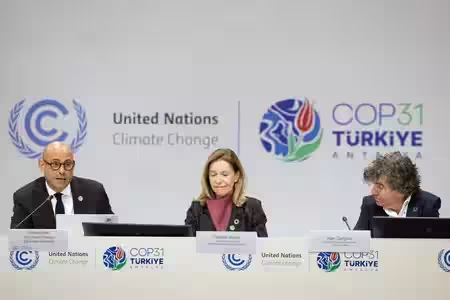
UN climate chief urges shift to renewable energy

Digital Desk | Antalya, (Turkey), Nov 16 (IANS) The Artificial Intelligence (AI) industry must tackle its growing energy consumption and carbon emissions, invest in renewable power and ensure the benefits of the technology reach developing countries, the United Nations' climate chief said on Monday. Simon Stiell, Executive Secretary of the UN climate change agency, warned that surging electricity demand from data centres was putting pressure on power systems, raising costs for households and businesses and threatening global climate goals. AI and other frontier technologies are a double-edged sword, Stiell said at a high-level Green Digital Action Roundtable on AI at UN Climate Change Conference (COP31) that entered its final week in Turkeys Mediterranean resort city. The task ahead is to blunt their dangerous edges, sharpen their catalytic ones, and put these technologies responsibly to work. He said the benefits of artificial intelligence must outweigh its growing environmental and economic costs, and must be shared by all countries. Stiell criticised companies turning to fossil fuels to meet rising electricity demand, including developers building gas-fired power plants at their own sites to bypass constraints on electricity grids. Taking fossil fuels off the grid does not take their emissions out of the atmosphere, he said, warning that unchecked global warming would threaten the economies on which technology companies depend. He also raised concerns about the social consequences of AI, saying the spread of disinformation, the undermining of science, social divisions and the concentration of wealth could erode public trust in the industry. Communities were already resisting data centre developments over concerns about water supplies, electricity bills and environmental impacts, he said. AI companies licence to operate is already on thin ice, Stiell said, warning that political shifts could bring tougher regulation. He urged chief executives and corporate boards to align their business and investment strategies with internationally agreed climate goals, including those set out in the 2015 Paris Agreement. Companies should establish credible climate targets, improve energy efficiency, disclose their energy and water consumption and give affected communities a meaningful voice in decisions, he said. Data centres should be powered by renewable energy, with new clean electricity generation added as demand increases without transferring costs to households or other economic sectors. Efficiency improvements must also translate into lower overall emissions, rather than simply enabling the industry to expand its energy consumption, Stiell said. Claims about future emissions savings cannot excuse rising pollution now, making climate disasters even worse, he added. Stiell said AI could play an important role in tackling climate change but warned that developing countries risked being left behind in the technology-driven energy transition. Access to finance, computing capacity and reliable data remained major barriers, he said, calling for affordable and efficient tools designed around the needs of developing countries. Such applications could provide families with earlier warnings of floods, help farmers prepare for droughts and improve the efficiency of electricity grids as they integrate more wind and solar power. Stiell highlighted the UN Climate Change AI for Climate Action Award, which promotes technology solutions supporting climate action. This years winner, CLIMAID, developed by Tanzania's Upendo Ernest Lyimo, combines Artificial Intelligence, satellite information and local data to support climate risk assessments and adaptation planning. The project demonstrated why developing countries must have a role in shaping the future of AI and share in its benefits, he said. The energy transition already risks moving at two speeds. AI must help to close that divide, Stiell noted. He described work by Turkey and the International Telecommunication Union as an initial step in a longer process, adding that AI would be a central issue during Britain's G20 presidency next year and in climate discussions for years to come. That is how AI earns public trust, and takes it to places as a climate solution, he added.

16 Nov 2026 5:13 pm