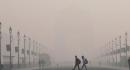
With Delhi under 'severe' air quality, Beijing offers its pollution-control playbook
Hazardous air quality, dense smog and a spike in respiratory illnesses have become a grim winter routine for Delhi. As the national capital chokes under severe air quality for much of the week, Chinas capital, once derided as the worlds smog capital, has emerged as a contrasting case study, and Beijing is now offering its playbook. In an extensive post on X, Chinese embassy spokesperson Yu Jing shared a step-by-step account of how Beijing curbed air pollution over the past decade, accompanied by before-and-after images of the city. Stressing that both India and China face the challenge of air pollution amid rapid urbanisation, Jing said cleaner air doesnt happen overnight, but it is achievable. The post included air quality readings from December 15, showing Delhis AQI at a hazardous 447, compared to a relatively moderate 67 in Beijing. Breaking down Beijings approach, Jing said China adopted ultra-strict vehicle emission standards comparable to Euro 6 norms and aggressively phased out old, high-emission vehicles. Vehicular pollution remains one of the biggest contributors to smog in Delhi. While India mandated BS-VI emission norms for vehicles manufactured after April 1, 2020, enforcement continues to be a weak link. How did Beijing tackle air pollution? Step 1: Vehicle emissions control Adopt ultra-strict regulations like China 6NI (on par with Euro 6) Phase-out retired old, high-emission vehicles Curb car growth via license-plate lotteries and odd-even / weekday driving pic.twitter.com/E0cFp4wgsV Yu Jing (@ChinaSpox_India) December 16, 2025 Delhi, which has battled toxic air since Diwali, banned the entry of non-BS VI vehicles only earlier this week and has also barred refuelling of overage vehicles. The Chinese embassy spokesperson also pointed to measures such as licence-plate lotteries, odd-even and weekday driving restrictions, and massive investments in metro and bus networks, alongside a rapid push for electric mobility. While Delhi has experimented with the odd-even scheme, its impact on pollution levels has been limited. Jing underlined that Beijings gains were made possible through coordinated policies across the BeijingTianjinHebei region, preventing pollution spillover from neighbouring areas. In contrast, one of Delhis biggest challenges remains stubble burning in Punjab, Haryana and Uttar Pradesh. Despite repeated directions from the Supreme Court for coordinated action, lapses and inter-state blame games have blunted enforcement. The second pillar of Beijings clean-air push was industrial restructuring. According to the embassy, more than 3,000 heavy industries were shut down or relocated. Relocating Shougang, one of Chinas largest steelmakers, alone cut inhalable particles by 20%, the post said. Vacated industrial sites were converted into parks, commercial districts and cultural or technology hubs. The former Shougang industrial complex, for instance, was transformed into a key venue for the 2022 Winter Olympics. Beijing also shifted wholesale markets, logistics hubs and even some educational and medical institutions to nearby cities, retaining only high-value research, development and service sectors in the capital. While the suggestions from the Chinese embassy have drawn attention, experts caution that Delhi has heard, and even attempted, many of these measures before, with marginal success. Beijings turnaround followed a five-year national action plan launched in 2013, which included shutting coal-fired boilers, expanding public transport, promoting new-energy vehicles and accelerating the shift to green energy. The citys last-mile connectivity now relies on micro-buses, shared mobility options such as bikes and e-scooters, ride-hailing services and even autonomous vehicles. How does Beijing tackle air pollution? Step 2: Industrial Restructuring Shut down or remove 3000+ heavy industries. Relocating Shougang, one of Chinas largest steelmakers, alone cut inhalable particles by -20%. Transform vacated factories into parks, pic.twitter.com/SYPOsoMaO1 Yu Jing (@ChinaSpox_India) December 17, 2025 Delhi governments, meanwhile, have relied on measures such as water sprinkling, anti-smog guns and short-term traffic curbs, but pollution levels remain dangerously high. Experts say that while Delhi and Beijing share some pollution sources, a straight replication of the Beijing model is impractical unless adapted to local realities. Year-long transport curbs, for instance, are not feasible in the national capital, and persistent disagreements among states over stubble burning continue to undermine progress. They argue that integrating rural agricultural policies to address crop residue burning, expanding public transport infrastructure and ensuring strict compliance are critical. A Comptroller and Auditor General (Comptroller and Auditor General of India) report tabled in the Delhi Assembly has found that Delhis worsening air pollution is driven largely by systemic failures within the city, particularly weak enforcement of vehicular pollution norms. The audit highlights widespread irregularities in the Pollution Under Control (PUC) regime, noting that over 1.08 lakh vehicles were issued certificates despite exceeding permissible limits for carbon monoxide and hydrocarbons. In several instances, certificates were issued to multiple vehicles within seconds, raising doubts about the integrity of testing. Between 2015 and 2020, nearly 4,000 non-compliant diesel vehicles continued to operate due to lax certification. The report also flags major lapses in removing end-of-life vehicles. Of the 47.51 lakh vehicles meant to be deregistered between 2018-19 and 2020-21, only 2.98 lakh were actually removed, leaving over 93% still officially registered and potentially in use. None of the vehicles impounded for pollution violations had been scrapped, while scrapping and impounding infrastructure remains grossly inadequate. Enforcement has been further hampered by staff shortages, lack of mobile testing equipment, and the absence of real-time data to guide deployment of teams. The audit concludes that Delhis air crisis cannot be blamed solely on external factors like stubble burning, but has been significantly worsened by poor implementation of policies, weak monitoring, and failures in governance. The broad lesson from Beijing, experts say, is not that solutions are unknown, but that implementing them requires sustained political will, regional coordination and rigorous enforcement, several stars that must align for Delhi to breathe easier.

 15 C
15 C