Uttarakhand infants face nutrition emergency: Study
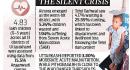
DEHRADUN: A new analysis of nearly half a million children across Uttarakhand has exposed a nutrition emergency, revealing widespread child malnutrition that threatens the states future economic potential. The study, which reviewed data from 4.83 lakh children aged up to 5 years across all 13 districts, shows that despite previous accolades, the states nutritional health has severely deteriorated. The findings, compiled by Dr Kirti Kumari, scientist at Krishi Vigyan Kendra, Tehri Garhwal, and brand ambassador for Beti Bachao, Beti Padhao, pinpoint four districts requiring immediate, targeted intervention based on data from 15,514 Anganwadi centres. Almora has emerged as the epicentre of the crisis. Despite not being among the most remote Himalayan regions, Almora registered a wasting rate of 5.34%, affecting 949 children. More critically, its Severe Acute Malnutrition (SAM) rate stands at 1.94%nearly double the state average of 0.72%. The district administration must declare a nutrition emergency immediately, Kirti said. Almora and Uttarkashi have crossed critical WHO thresholds. The study also highlighted a hidden cost associated with massive infrastructure projects. Tehri Garhwal shows high levels of malnutrition, with 4.17% of children wasted and 25.55% stunted. Researchers suggest that this is tied to the displacement caused by the Tehri dam. Tehri Garhwals children bear the unseen burden of the Tehri dam, Kirti Kumari explained. Displaced families, moved from fertile valleys to rocky, low-yield lands, have lost traditional livelihoods and support networks. Harish Negi, a displaced resident, said, We had 2 acres of rich land. Now we have 0.5 acre of rock. How do we feed our children? Kamla Bisht, an elderly resident in a resettlement colony, added, Before the dam, we had milk from our cows, vegetables from our fields... Now we buy everything at double the price on rocky land that grows nothing. Three grandchildren are malnourished. Is this the price of development? The consequences extend beyond health. The analysis estimates that child malnutrition currently costs Uttarakhand `7,000 crore annually, equivalent to 2.5% of the states Gross State Domestic Product. Malnutrition costs more than Uttarakhands health budget (`4,500 crore), Kirti said. Every day of delay costs the state `19 crore. This money is simply lost, not invested anywhere. Uttarkashi records high moderate acute malnutrition (3.80%), while Pithoragarh hovers close to WHO thresholds. Experts stress that action must be taken swiftly, as irreversible damage occurs after age two.

 12 C
12 C