SENSEX
NIFTY
GOLD
USD/INR

Weather

image 17    C

Top News

The New Indian Express News

Top / The New Indian Express

details

Supreme Court ruling on Aravalli definition triggers huge protests in Rajasthan

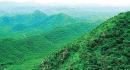
JAIPUR: The Supreme Courts recent acceptance of the Union Environment Ministrys definition of the Aravalli hills -- restricting the range to landforms with an elevation of more than 100 metres -- has triggered widespread protests across Rajasthan. Political leaders, environmental activists, social media influencers and citizens have expressed strong opposition and warned that the move will entail serious ecological and economic consequences. Under the revised definition, nearly 90 per cent of the Aravalli range in Rajasthan, consisting of hills lower than 100 metres, will no longer be classified as part of the protected range. According to available data, only 1,048 out of nearly 1.6 lakh hillocks in the state meet the 100-metre criterion, effectively excluding the vast majority from regulatory safeguards. SC ruling on Aravalli definition sparks opposition in Rajasthan, former CM Gehlot warns of ecological disaster Laxmikant Sharma, professor at the Department of Environmental Sciences, Central University of Rajasthan, said the governments stance that only hills above 100 metres qualify as Aravalli would automatically exclude most of the range. In Rajasthan, the Aravalli hills are largely between 30 and 80 metres in height. This means nearly 90 per cent of the range is directly under threat, he said. Though the Supreme Court order states that new mining is not permitted, critics argue that illegal mining continues unabated. A 2018 report by the Supreme Court-appointed Central Empowered Committee (CEC) revealed that around 25 per cent of the Aravalli hills in Rajasthan had already been destroyed. Against this backdrop, the Aravalli Heritage Peoples Campaign was launched a few days ago from Vinoba Gyan Mandir in Bapu Nagar in Jaipur. Kavita Srivastava, national president of the Peoples Union for Civil Liberties (PUCL), urged the government to repeal the uniform definition of the Aravalli proposed by a committee under the Ministry of Environment, Forest and Climate Change, calling it a threat to Indias ecological and cultural heritage. SC ruling on Aravalli definition sparks opposition in Rajasthan, former CM Gehlot warns of ecological disaster 'Road to hell is paved with good intentions': Congress slams government over new Aravalli definition Activists have demanded that the Aravalli rangespread across Gujarat, Rajasthan, Haryana and Delhibe declared an Ecologically Critical Area and that the use of raw stone mined from the hills be stopped. Neelam Ahluwalia, founding member of People for Aravalli, said the recent court decision would leave more than 90 per cent of the range unprotected and vulnerable to mining. The situation is particularly alarming in Alwar district, where 31 of the 128 identified hills have reportedly been completely flattened due to mining. Environmental experts warn that excluding large parts of the Aravalli range from protection could further embolden mining mafias. Experts have also cautioned that extensive degradation of the Aravallis could alter regional rainfall patterns. Some warn that if the range is destroyed, monsoon moisture could shift westwards towards Pakistan, adversely affecting rainfall in Rajasthan. Nearly 80 per cent of the 700-kilometre-long Aravalli range passes through 27 districts of Rajasthan, forming the ecological backbone of eastern Rajasthan. Agriculture and farmers livelihoods in these regions depend heavily on the hills, as several seasonal riversincluding the Chambal, Banas, Sahibi, Sota, Katli, Kasavati, Gambhiri and Moreloriginate from the Aravallis. Modi government has 'nearly signed death warrant' for Aravalli hills: Sonia Gandhi Rainwater stored in the hills flows through streams and underground channels, sustaining these rivers and supporting small-scale farming and animal husbandry throughout the year. The Aravallis are also home to diverse plant species and vegetation. As the worlds oldest mountain range, their rock formations have a strong water-holding capacity, allowing groundwater to be stored for long periods. Rajasthan has around 32 major potable water reservoirs, many of which depend on the Aravalli system. In a desert state like Rajasthan, environmentalists point out that nearly 22 per cent of the Aravalli hills have already been destroyed due to excessive mining. According to studies, the unique structure of the Aravallis helps recharge nearly two million litres of groundwater per hectare annually, making the range the largest source of water in the region. As protests intensify, environmental groups have demanded an immediate review of the definition, warning that Rajasthans ecology, water security and rural economy are at serious risk. It remains to be seen how the agitation unfolds in the coming days. On International Mountain Day, campaign launched to save India's oldest mountain range Aravalli

20 Dec 2025 9:21 pm