SENSEX
NIFTY
GOLD
USD/INR

Weather

image 10    C

Top News

The New Indian Express News

Top / The New Indian Express

details

Parliament passes nuclear energy Bill

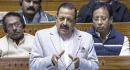
NEW DELHI: Parliament on Thursday passed the Sustainable Harnessing and Advancement of Nuclear Energy for Transforming India (SHANTI) Bill with the Rajya Sabha giving its nod to the legislation by a voice vote. The Bill, which was passed in the Lok Sabha on Wednesday, seeks to open the tightly-controlled civil nuclear sector for private participation. Initiating the discussion in the Upper House, the Minister of State of the Department of Atomic Energy, Jitendra Singh, said that nuclear energy is a reliable 24/7 power supply source. He asserted that no compromise would be made with the safeguard mechanism in place. Replying to a discussion on the Bill, Singh also sought to allay fears of radiation, stating that so far there has been no report of any radiation-related hazards to the public. It is for the first time after 2014, priority is being given to global concerns, be it climate, energy, energy security or clean energy, the minister added. Singh told the House that there would be a diversion towards clean energy for a number of reasons, as the entire world is moving towards it, and it is important for us to achieve the goal in toto, so that India becomes less dependent on petroleum resources or fossil fuel sources. However, the Opposition questioned the government for allowing private operators into the nuclear power sector, stating that it could impact the sovereignty of the country. While participating in the discussion on the Bill, the Congress MP Jairam Ramesh took a jibe at the Centre for coining catchy acronyms and colourful titles for legislation. He further stated that an impression is made that everything in India started in 2014, especially programmes related to atomic energy, space and technology. SHANTI Bill: Opposition slams 'oligarchisation' of nuclear energy, raises serious safety, liability concerns He noted that the first Bill about atomic energy in Independent India was passed not in 1962, but on April 6, 1948, and stated that there was a debate after Jawaharlal Nehru moved the Bill. At least 30-40 members participated in the debate. On April 06, 1948, the first Atomic Energy Act was passed. On May 22, 1948, PM Nehru presented a cabinet note on what the countrys atomic energy policy should be. On August 15, 1948, the Atomic Energy Commission was established with Dr Homi Bhabha as its chairman, and KS Krishnan and Shanti Swarup Bhatnagar as members, and it reported directly to the Prime Minister, said the Congress MP, who is also general secretary of the party. He opposed the Bill, saying there is a need for further consultations before bringing such crucial legislation. He further stated that the government may have many compulsions, such as the US, foreign firms, and domestic private firms, but a Bill should not be introduced under compulsion. 'Dangerous leap': Opposition flags risks as ruling MPs back private push in nuclear energy Bill If we ignore our public sector and promote the private sector, then it is not in the interest of our nation. I am a supporter of the private sector. But it cannot be a growth engine, Ramesh said. Trinamool Congress (TMC) MP Sagarika Ghose said that the Bill is not just flawed but fundamentally dangerous. As a country, are we now prepared to abdicate our sovereign responsibility, gamble with public safety and place one of the most sensitive sectors of the nation at the mercy of crony capitalism and government-friendly oligarchs as well as foreign pressure?... This Bill is not a reform; it is recklessness. This Bill is not for the public, it's for profit, she said. DMK MP P Wilson said that the Bill is a nuclear bomb that threatens the country's peace and security. The nuclear supply chain is sought to be removed from the sovereign functions and from the Union of India government's active oversight. There is nothing peaceful, nothing sustainable, nothing transformative about this legislationOn the contrary, it is a reckless, dangerous and deeply flawed attempt to privatise one of the most sensitive and high-risk sectors of a nation, he said.

18 Dec 2025 9:09 pm