India-UK ties in 2025 shaped by trade pact, migration shifts and shared crises
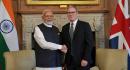
As the year comes to a close, IndiaUK relations saw a renewed push that went well beyond trade and investment, marked by a series of political, economic and people-to-people developments. The most significant milestone was the long-awaited Free Trade Agreement finally reaching fruition. Alongside it, the ambitious IndiaUK Vision 2035 roadmap also took shape, signalling a broader effort to reset and deepen bilateral ties over the next decade. FTA negotiations dominated headlines for much of the year, with both sides determined to take the deal across the line. The agreement was formally signed during Prime Minister Narendra Modis visit to the UK in July. British Prime Minister Keir Starmer, marking his own first year in office, extended a notably warm welcome to Modi at his countryside residence, Chequers, near London, where the two leaders met over cups of chai. We have agreed a landmark deal with India, one of the fastest growing economies in the world, Starmer said, as he accepted Modis reciprocal invitation to lead what he described as the biggest British trade delegation to India ever during a visit planned for October. According to analysis by the UK Department for Business and Trade, the Comprehensive Economic and Trade Agreement is expected to boost bilateral trade by more than 25 billion pounds, up from the current 44.1 billion pounds, once it comes into force following ratification by the UK Parliament. This process is expected to be completed in the first half of 2026. India is a growing force on the world stage, on track to have the third largest economy by 2028, Starmer told the House of Commons after his Mumbai visit. Starmer calls India-UK FTA best secured; UK bets big on education, aviation Beyond trade, both governments repeatedly highlighted the ambitious and future-focused IndiaUK Vision 2035, a 10-year roadmap that sets out strategic goals for sustained cooperation across sectors ranging from innovation and defence to education and climate action. One area set to see tangible outcomes from the New Year is higher education. At least nine British universities are finalising plans for overseas campuses in India, reflecting growing demand for UK-linked education options closer to home. These developments have also been viewed as a partial counterbalance to the UK governments increasingly strict immigration policies. According to the latest Home Office data, around 45,000 Indians on study visas and 22,000 professionals on work-related visas left the UK this year, contributing significantly to the downward trend in net migration. Immigration is expected to remain a sensitive issue in 2026, particularly with tougher rules doubling the wait for permanent residency to 10 years for most applicants, a move that could accelerate the exodus of Indian nationals. Another less welcome trend was the growing number of wealthy individuals leaving Britain amid a high-tax environment. Rajasthan-born steel magnate Lakshmi N Mittal, founder of ArcelorMittal and ranked eighth on The Sunday Times Rich List with an estimated fortune of 15.4 billion pounds, was among several super-rich figures reported to be relocating to lower-tax destinations such as Dubai. These moves followed a year of major tax changes under Chancellor Rachel Reeves, including the abolition of the long-standing non-dom status, which had allowed overseas nationals to reduce their UK tax liabilities. Pillar of global stability: India, UK deepen ties with trade push The year also marked the end of an era for the Indian diaspora in Britain, with the passing of several prominent figures. These included hotelier Joginder Sanger, aged 82, and Hinduja Group co-chairman G P Hinduja, aged 85. Caparo Group founder Lord Swraj Paul, 94, and economist Lord Meghnad Desai, 85, both long-serving members of the House of Lords, also died during the year. Tributes poured in from across the IndiaUK corridor, recognising their contributions to business, philanthropy and public life, as well as their enduring role in strengthening bilateral ties. These themes were echoed at a special IndiaUK relations event hosted by the UKs Foreign, Commonwealth and Development Office in London. At the same event, Deputy Prime Minister David Lammy expressed condolences over the Delhi car blast in November. That month also saw both countries come together to underline their shared commitment to counter terrorism through a Human Cost of Terrorism exhibition hosted by the High Commission of India in London. This sense of shared concern had earlier been reflected in the UKs response to the Pahalgam attack in Kashmir in April, followed by calls for a swift, diplomatic path forward after India launched Operation Sindoor targeting terror camps across Pakistan. UK Foreign Office Minister Hamish Falconer noted the deeply personal aspect of the conflict for Britains large Indian diaspora. That community was also directly affected by one of the years darkest tragedies: the Air India crash involving a London Gatwick-bound flight that crashed shortly after take-off from Ahmedabad on June 12. All but one of the 242 passengers and crew were killed. Vishwas Kumar Ramesh, the sole survivor from seat 11A of the Boeing 787-8 Dreamliner, later returned to his home in Leicester and spoke publicly about his struggle with post-traumatic stress disorder following the loss of his brother, who was also on board. Investigations into the crash are ongoing in India, with UK aviation authorities granted expert status due to the presence of 53 British nationals on the flight. Meanwhile, long-running legal battles continued in UK courts as several fugitive economic offenders sought by India fought extradition. Vijay Mallya remains out on bail, while diamond merchant Nirav Modis appeal to reopen his extradition case from a London prison was adjourned until March. Arms consultant Sanjay Bhandari won a High Court appeal against extradition on human rights grounds and was discharged from bail. In a separate move, the UK government imposed sanctions on British Sikh businessman Gurpreet Singh Rehal and a group linked to him, marking the first use of the countrys Domestic Counter-Terrorism Regime to disrupt funding networks associated with the pro-Khalistan militant group Babbar Khalsa. Taken together, the year reflected a complex IndiaUK relationship, marked by historic agreements and shared grief, growing economic ambition alongside tightening borders, and a diaspora whose experiences continue to shape the ties between the two countries. (With inputs from PTI) UN at 80: Marked by wars, waning authority, Trump tensions and Indias push for a 'greater role'

 19 C
19 C