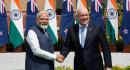
India, New Zealand conclude Free Trade Agreement talks
NEW DELHI: India and New Zealand on Monday concluded a Free Trade Agreement (FTA) , marking a significant step in strengthening bilateral economic and strategic ties. Prime Minister Narendra Modi held a telephone conversation with his New Zealand counterpart, Prime Minister Christopher Luxon, during which the two leaders jointly announced the conclusion of what they described as a historic, ambitious and mutually beneficial pact. Negotiations for the IndiaNew Zealand FTA were initiated during Prime Minister Luxons visit to India in March 2025, and the leaders said the agreements completion in a record nine months reflected strong political will and a shared ambition to deepen engagement between the two nations. According to them, the FTA will enhance bilateral economic cooperation by improving market access, boosting investment flows and strengthening strategic cooperation, while creating new opportunities for innovators, entrepreneurs, farmers, micro, small and medium enterprises, students and youth in both countries across multiple sectors. Building on the momentum of the agreement, the two sides expressed confidence in doubling bilateral trade over the next five years and projected investments of about $20 billion from New Zealand into India over the next 15 years. Prime Ministers Modi and Luxon also welcomed progress in cooperation in areas such as sports, education and people-to-people ties, and reaffirmed their commitment to further strengthening the IndiaNew Zealand partnership, agreeing to remain in close touch as the relationship moves into a new phase following the FTAs conclusion. Under the comprehensive, balanced and forward-looking agreement, New Zealand will eliminate tariffs on 100 per cent of its tariff lines, granting duty-free market access for all Indian exports, a move expected to significantly boost Indias export competitiveness and deepen its integration into global value chains. India has offered tariff liberalisation in 70 per cent of tariff lines, covering 95 per cent of bilateral trade. The agreement is among Indias fastest-concluded FTAs and aligns with the vision of Viksit Bharat 2047. Negotiations were formally launched on March 16, 2025, during a meeting between Commerce and Industry Minister Piyush Goyal and New Zealands Minister for Trade and Investment Todd McClay, and were concluded after five formal rounds along with several in-person and virtual inter-sessional discussions. Goyal said the agreement was about building trade around people and launching opportunitiesfor our farmers, entrepreneurs, students, women and innovators. He added that the pact would boost agricultural productivity and farmer incomes, open doors for Indian businesses in the region and provide Indian youth with global learning and employment opportunities. With 100 per cent duty-free access, labour-intensive sectors such as textiles, apparel, leather, footwear, marine products, gems and jewellery, handicrafts, engineering goods and automobiles are expected to see a sharp rise in exports, directly benefiting workers, artisans, women, youth and MSMEs through deeper integration into international value chains. To protect farmers and domestic industry, market access excludes dairy, coffee, milk, cream, cheese, yoghurts, whey, caseins, onions, sugar, spices, edible oils and rubber. The FTA delivers New Zealands most ambitious services commitments in any trade agreement to date, with India securing market access in high-value sectors including IT and IT-enabled services, professional services, education, financial services, tourism, construction and other business services. It also includes a future-ready mobility framework with improved entry and stay provisions for Indian professionals, students and youth. A new Temporary Employment Entry Visa pathway will allow up to 5,000 Indian professionals at any given time to work in New Zealand for up to three years, covering professions such as AYUSH practitioners, yoga instructors, Indian chefs and music teachers, as well as high-demand sectors including IT, engineering, healthcare, education and construction. Commerce Secretary Rajesh Agrawal described the pact as a new-generation trade agreement built on tariffs, agricultural productivity, investment and talent, noting that Indias strengths in exports and services would support labour-intensive growth while New Zealand would gain predictable access to Indias large and expanding market. On agriculture, dedicated agri-technology action plans for kiwifruit, apples and honey will focus on productivity enhancement, research collaboration, quality improvement and value-chain development, strengthening domestic capabilities and supporting income growth for Indian farmers. Bilateral merchandise trade between India and New Zealand stood at $1.3 billion in 2024-25, while total trade in goods and services reached about $2.4 billion in 2024.

 21 C
21 C