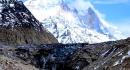
Himalayan snow drought threatens water security: Study
DEHRADUN: New research indicates a significant snow drought across the Hindu Kush-Himalayan (HKH) region, with specific findings from Dehraduns Wadia Institute of Himalayan Geology (WIHG) pointing to alarming melt rates in key Uttarakhand glaciers. The combined analysis, incorporating data from IIT Jammu and IIT Mandi focusing on the entire HKH belt between 1999 and 2016, suggests that winter snowfall is decreasing, and the snow that does fall is melting too quickly. The WIHG study mirrors these concerns, focusing intensely on glaciers sourced from Uttarakhand, Ladakh, and Zanskar. Dr Manish Mehta, Senior Scientist at WIHG, highlighted the dramatic shift: In the last 15 to 20 years, there has been a major change in snowfall patterns. Previously, most snow fell in December-January, and it was denser, drier snow. Now, precipitation is occurring later, between February and April, and this snow has a higher water content, causing it to melt rapidly. This rapid melt means glaciers are not being adequately recharged, leading to a substantial loss of mass. The revelation comes in addition to the already established retreat of the Gangotri Glacier, which is known to be receding at approximately 19 meters per year. Dr Mehta linked these changes directly to climate change. We used to record 4 to 5 feet of snowfall in areas like Joshimath, but now even one foot is rare, he stated, noting similar trends across the state's hill stations. The HKH study further revealed that the duration of snow cover is shrinking by 0.6 to 1.5 days annually over the 17 years analyzed, indicating shorter, weaker winters. The fastest melting is occurring between 3,000 and 6,000 meters altitude. When glaciers lose mass rapidly, we will first see an increase in river flow, followed by a gradual descent into drought conditions, Dr Mehta warned. He stressed the immediate need for robust water management and climate-adaptive strategies in the mountain regions. Scientists categorize a loss of 0.3 to 0.5 meters of water equivalent per year as seriousa category that now includes Uttarakhands Dukrani Glacier. The Chorabari Glacier, however, falls into the extremely dangerous category, losing over 0.5 meters annually, signaling a critical threat to downstream water security.

 10 C
10 C