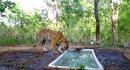
Gujarat regains 'Tiger State' status after 33 years as NTCA confirms resident tiger
AHMEDABAD: After 33 years, Gujarat has officially reclaimed its 'Tiger State' identity as the National Tiger Conservation Authority (NTCA) confirmed the permanent presence of a tiger in Ratanmahal Wildlife Sanctuary in Dahod district. Gujarat has quietly but decisively scripted a historic turnaround in Indias wildlife and political narrative, with the NTCA confirming the permanent presence of a tiger and restoring the states long-lost Tiger State status after more than three decades. The confirmation has transformed Gujarats identity overnight from being known solely as the land of the Asiatic lion to becoming Indias only state where lions, leopards and tigers coexist in the wild, a rare ecological convergence with both conservation significance and political symbolism. The breakthrough came from Ratanmahal Wildlife Sanctuary, where a male tiger has not merely passed through but settled. Forest officials said the story began quietly in February, when the young tiger crossed into Gujarat from neighbouring Madhya Pradesh. Instead of retreating, the animal stayed. After nearly ten months of continuous presence, backed by camera traps, repeated sightings and consistent movement patterns, the NTCA concluded that the tiger was not a transient visitor but a resident. Reacting to the development, Gujarat Forest and Environment Minister Arjunbhai Modhwadia struck a note of measured confidence. We have not yet received a formal letter from the NTCA, but the preliminary report prepared after a detailed study has confirmed the presence of a tiger in Ratanmahal and included Gujarat in the national tiger census. This is a matter of pride for every Gujarati, he said. Modhwadia also recalled Gujarats long ecological setback. Gujarat once had tigers. But in the 1989 census, only pugmarks were found and no cubs. In 1992, Gujarat was excluded from the tiger census and lost its Tiger State status, he said. He added that even a brief hope in 2019, when a tiger cub was spotted, ended within 15 days due to its death, underlining how fragile earlier revival attempts had been. This time, however, the evidence is stronger and undeniable. Modhwadia said the tiger was first camera-trapped on February 22, 2025, at 2.40 am. The very next morning, during routine patrolling in the Pipalgota Round of the Kanjeta Range, our staff noticed unusually large pugmarks, clearly bigger than a leopards. When we rechecked the camera data, the tigers image was confirmed, he said. Following this, the NTCA deputed a team to Gujarat to conduct a detailed habitat assessment. The findings went beyond confirming the tigers presence, concluding that Gujarats ecosystem is viable for sustaining tiger life and recommending measures to further strengthen it. That report became the basis for Gujarats inclusion in the 2026 All India Tiger Census, effectively restoring its Tiger State identity after three decades. Importantly, the state moved swiftly even before formal declarations. As soon as the tigers presence was confirmed, monitoring was intensified. Water sources were strengthened, security increased, fire-prevention measures enhanced and prey availability ensured, Modhwadia said, adding that camera traps across the region have been significantly expanded. Detailing the ecological groundwork, he said species such as wild boar, nilgai and monkeys already inhabit the sanctuary, while sambar and chital were released during the monsoon to reinforce the prey base. Our officers and frontline staff will receive special training in tiger conservation and breeding. We are also exploring the possibility of introducing female tigers to build a sustainable population, the minister added. All efforts are being made to eventually declare Ratanmahal Wildlife Sanctuary a Tiger Reserve, Modhwadia added, signalling that Gujarats return to the tiger map is not symbolic but structural.

 10 C
10 C