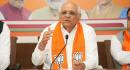
BJPs new Gujarat state executive triggers debate over factional balance, regional representation
AHMEDABAD: The BJPs long-awaited announcement of its Gujarat state executive has reshaped the partys internal power structure, with the new team under state president Jagdish Vishwakarma triggering fresh debate over leadership influence, factional balance, and regional representation within the party. The Gujarat BJP saw a major organisational reshuffle late Saturday night after newly appointed state president Jagdish Vishwakarma announced his full team, ending weeks of speculation and setting off fresh discussions within the party. Ten leaders have been appointed as state vice presidents, while Anirudh Dave, Dr Prashant Korat, Hitendrasinh Chauhan, and Ajay Brahmabhatt have been elevated as general secretaries, positions that form the partys command structure. The BJP leadership insists the intent is organisational strengthening. According to the party, seasoned leaders have been entrusted with vice-presidential roles, while a representative mix has been created among general secretaries and ministers to sharpen booth-level efficiency and message delivery ahead of upcoming political wars. Simultaneously, state presidents of the Kisan Morcha, Yuva Morcha, Mahila Morcha, SC-ST, OBC, and Minority Morcha were announced, completing the social and political architecture of the party. Gujarat BJP chief spokesperson Dr Anil Patel sought to set the tone, revealing that a meeting was held with the newly appointed office bearers, the state president, and the organisation's general secretary immediately after the announcement. They were formally introduced and guided on their responsibilities, Patel said, underlining the partys expectations. Our focus is clear. how to strengthen the organisation and how to take the development work of the Gujarat government to the people. Every office bearer must understand what their role is in that mission. New responsibilities have been assigned with one objective - to support the government and ensure the party is ready for every program. Old and new office bearers will work in coordination. This is about teamwork, not titles, he added. However, the newly announced executive committee has once again brought allegations of factionalism to the surface. Several leaders considered close to former state BJP president CR Patil are conspicuously absent from the list, fuellign speculation of a deliberate sidelining. In contrast, leaders perceived to be from camps opposing Patil appear to have gained prominence, suggesting an intentional recalibration of internal power. The new BJP state executive has also drawn criticism over regional imbalance, with no general secretary appointed from South Gujarat, a long-time party stronghold, while Saurashtra has secured three of the posts, triggering allegations of geographical favouritism. The announcement has also sparked discontent at the local level. The elevation of a Surendranagar district leader to the post of state general secretary has drawn attention, as he had earlier faced opposition from party workers in his home district. The decision has surprised party cadres and reinforced concerns that grassroots feedback was overlooked. The appointment of Ajay Brahmabhatt from Kheda as general secretary has similarly led to murmurs within the party, with leaders from Vadodara and North Gujarat feeling they were sidelined. The reshuffle has also revived memories of past internal battles. Leaders who had publicly differed with CR Patils working style or whose names surfaced during controversies such as the Patrika episode have now found space in the new structure. Former minister Ganpat Vasava, widely seen as a Patil opponent, has been appointed state president of the Scheduled Tribes Morcha, while Zhankhanaben Patel, whose Assembly ticket was earlier cut, has been rewarded with a vice-presidential post in the state committee. The new executive has also renewed debate over the BJPs stated principle of one person, one position. Party critics note that several leaders who already hold organisational or governmental responsibilities have been included again in the state executive. This has raised questions within party circles about consistency in applying the rule and about internal discipline in the formation of the expanded committee.

 14 C
14 C