SENSEX
NIFTY
GOLD
USD/INR

Weather

image 11    C

Science/Tech News

Macworld

Science/Tech / Macworld

details

Did Apple just save the iPhone Duo?

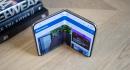
Macworld The tech industry is obsessed with change, but most customers feel much more ambivalent about the concept. The announcement of a tweak to Facebooks algorithm or Netflixs interface is rarely the cause of celebration: Why did they change it? is the motto of casual tech users across the planet. And when it comes to hardware, the world can be divided into a tiny minority of novelty seekers, and a vast majority who just want a product that does the same as the last generation in a new color and with fewer bugs. The iPhone Duo is designed to appeal to the first demographic far more than the second, which is why it will struggle to achieve mainstream appeal. It is, by the standards of iPhones at any rate, remarkably different from its predecessors, and I dont mean that as a compliment. Its aggressively, confrontationally new, and the word that keeps occurring to me is difficult. Ive been using one as my primary device for a month. Id never claim to be a fast learner, but by this point in the testing cycle Im generally up to speed. (Switching from the Home button on the iPhone 8 to the upward swipe on the iPhone XS, for example, felt natural within days.) That isnt the case with the Duo. The folding and unfolding process still doesnt come naturally; I havent found a comfortable way to hold it when open and in landscape orientation; its more difficult to jump up to the top of webpages and to summon the Control Center; and my brain is yet to fully take on board the shift of many interface elements from the bottom or top to the side of the screen. The onboarding speed bump thats caused me the most annoyance, however, is Touch ID. This is surprising, because I would consider myself a fan of that technology. When Touch ID began its transition to Face ID way back in 2017, I was in the Why did they change it? crowd. Touch ID was reliable, and not noticeably slow. Face ID sometimes went wrong and was not appreciably more convenient. I recognized that the change allowed Apple to ditch the Home button and claw back more screen space, but facial recognition itself struck me then as a means to an end rather than a positive evolution of the user experience. Wheres the Touch ID sensor? Its on the right. This time. Britta OBoyle/Foundry However, my love of Touch ID is because the conventional iPhone design suits Touch ID. With other devices and in other contexts, its not quite as convenient. Such is the case with my 5th-gen iPad Air, which sits most of the time on a stand next to my MacBook with its power button awkwardly placed slightly behind the laptop. Any time I have to log in, Im reminded of how much easier life would be if the iPad Air had Face ID, and I sometimes even look up prices of second-hand iPad Pros. Or the MacBook Pro itself, which has a raised-up stand of its own and therefore forces me to reach up to access its in-keyboard fingerprint sensor, evoking similar reservations to those I have about touchscreen laptops . The iPhone Duo is the worst of all. Its a nightmare for accessing the Touch ID sensor precisely because of its formal versatility. If its closed and in portrait orientation, or open and landscape, the sensor is two-thirds of the way up the right-hand edge (where no such sensor has ever previously been on an Apple product, as far as Im aware), so realistically you have to use your right index finger. But it doesnt feel natural, and certainly isnt comfortable. When closed, you can just about reach behind the phone and use your left index fingertip, but the angle makes it very unreliable. The opposite two modes, closed in landscape and open in portrait, put the sensor partway along the top edge. Both are inconvenient, but in subtly different ways. For closed/landscape, when you hold it a little like a game controller, the left index can reach up without moving the hand, although the angle is suboptimal. For open/portrait, your hands most likely sit at the lower end to avoid the camera module, so you have to reach upwards, and the right index is probably your best choice. Now, I worry that the preceding two paragraphs may have strained the readers patience. But such is the experience of using Touch ID on the iPhone Duo: tedious and complicated. Its essential to record at least two fingerprints (you may also want to include your right thumb for occasional use in open/landscape), and the methods of accessing the sensor vary so much from each other and from whats come before that you have no hope of depending on, or building, muscle memory. Add in the fact that, unlike the Home button, the power button is not visible from the front of the device, and it becomes clear why Apple feels it necessary to add on-screen indicators to help you find the sensor. Setting up Unlock with Front Camera is easy, and well worth doing. David Price / Foundry My dissatisfaction with all this turned to delight, however, when Apple found a way to achieve the impossible and retrospectively add a hardware feature to an already released product. Well, sort of. The iPhone Duo is obviously not getting Face ID, because the necessary sensors are not there. But its getting the next best thing. As of the second beta of iOS 27.3, the Duo gets a new feature called Unlock with Front Camera that was borrowed from HomeView. I explain how to get this in a separate article , but Ill tell you here: Its a game-changer. Facial unlock doesnt have the same access privileges as Face ID, because it depends on sensors that arent as sophisticated and cannot offer the same level of security. Quite a lot of the time, including sensitive app unlocks, the Duo will insist that you use the more secure Touch ID instead (or enter your passcode). But many phone unlocks can now be performed by looking at the front camera, and a glance can also uncover details of previously hidden notifications. For removing a large number of small pain points, and for making a difficult device significantly less difficult, Apple deserves tremendous praise.

26 Nov 2026 5:00 pm