SENSEX
NIFTY
GOLD
USD/INR

Weather

image 14    C

National News

bhaskarlive

National / bhaskarlive

details

From cattle rearing to global markets: How Lakhpati Didi initiative is transforming rural women entrepreneurs

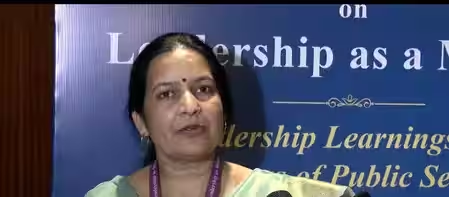
Digital Desk | New Delhi, Nov 17 (IANS) From rearing cattle in a village in Haryana to showcasing products at national exhibitions and selling them in international markets, Pooja Sharma's journey reflects how rural women are increasingly turning livelihood opportunities into entrepreneurial ventures under the Lakhpati Didi initiative. Speaking to reporters, Sharma described herself as Haryana's first Lakhpati Didi and said she began her journey as a homemaker, managing cattle and household responsibilities, before stepping into entrepreneurship and eventually getting an opportunity to visit Rashtrapati Bhavan. Recalling the challenges faced by women in rural Haryana, she said opportunities for education and economic independence remained limited, particularly for daughters. I come from a village where daughters are not allowed to study much. Women in Haryana are not given much freedom, and their lives are often limited to the gas stove. I started my journey as a homemaker, rearing cattle, Sharma said. Her entrepreneurial journey gained momentum after she became associated with government livelihood initiatives and established the Kshitij Self-Help Group. She subsequently received training from a Krishi Vigyan Kendra and became associated with the Haryana State Rural Livelihoods Mission. Participation in exhibitions, including the Surajkund Mela and trade fairs, gave the group opportunities to showcase its products beyond the local market. Exposure to exhibitions organised in different states helped the women develop a wider customer base and establish better market linkages. Today, Sharma said, the group has developed more than 80 products, many of which are sold internationally. We are women farmers and grow the same crops as other farmers. Along with the women in our self-help group, we have developed a range of products. Today, women do not have to depend on loans from outside at high interest rates. They can support themselves financially and no longer have to ask anyone for help to meet their basic needs, she said. Sharma said the initiative had also brought a significant change in the confidence and knowledge of women who had limited access to formal education. Today, women who could not receive formal education understand what flax seeds and walnuts are. It makes me very happy to see them, she said. She has received several awards at the state and national levels and now travels across the country to deliver lectures and conduct training programmes. Sharma said she had trained more than 5,000 people, including women, men and children. Another example of women-led rural entrepreneurship comes from Kotgarh village in Himachal Pradesh's Shimla district, where Poonam Chauhan has helped develop a food-processing enterprise under the brand name 'Kotgarh Kitchen'. Chauhan said she initially lived in cities but returned to her village after the Covid-19 pandemic, when she and others began exploring ways to revive local agriculture and create livelihood opportunities. In 2022, I joined Apple Valley One. Initially, we started by selling our local snacks along with the local village women. That was the beginning, she said. As demand for their products grew, the women established their own brand, Kotgarh Kitchen, focussing on locally grown agricultural produce, particularly fruits cultivated in Himachal Pradesh. The enterprise processes apples, kiwis, apricots and plums into products such as jams and chutneys. Chauhan said the group had recently received government support through IFC and CFC funding and was installing a dehydration unit to increase production capacity. The proposed expansion will allow the enterprise to explore new product categories, including fruit powders. The group has also experimented with making soaps using food powders, which, according to Chauhan, received a positive response. Another product developed by the women is detox tea made from 14 different herbs collected from local forests and farms. Women from the village gather the herbs, which are then processed into the tea blend. Chauhan credited the National Rural Livelihoods Mission (NRLM) with helping the group access financial assistance and institutional support. She also referred to assistance received under the Pradhan Mantri Formalisation of Micro Food Processing Enterprises (PMFME) scheme, which enabled them to enter food processing. We received a lot of help from NRLM. We received funding without even asking. After we received PMFME support, we started food processing. We are really thankful to the government for giving us these grants and trusting us, she said. The Lakhpati Didi initiative was announced by the government with an initial target of enabling two crore women from rural Self-Help Group (SHG) households to achieve an annual household income of at least Rs 1 lakh. The target was increased to three crore in the Interim Budget 2024-25. Implemented under the Deendayal Antyodaya Yojana-National Rural Livelihoods Mission (DAY-NRLM), the initiative seeks to strengthen women's economic independence through livelihood diversification, skill development, financial inclusion and entrepreneurship. The experiences of Sharma and Chauhan illustrate how access to training, institutional support, finance and markets can help rural women move beyond traditional livelihood activities and build enterprises of their own.

17 Nov 2026 6:20 pm