The art of balance
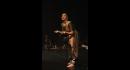
There was a subtle poise on stage as a danseuse with delicate features described the beauty of a lotus in bloom. Her movements gathered pace gradually, building into a swiftness that reflected in her precise footwork. All the while, her expressions balanced with the speed of her moves and never wavered from the imagined lotus held gently in her hands. The performance garnered her applause, and it was also widely featured on social media reels. The balance of emotions, even while showcasing the technical prowess of the artform, demanded a kind of balance that seemed as effortless as a flower blooming. Meera had perfected this not just through her practice but by the way she made Bharatanatyam her forever and ever since her late teenage years. Now, in her early 30s,Meera Sreenarayananlives in Mumbai. She has emerged as a rising star in the Bharatanatyam circle. However, as a four-year-old in Guruvayur, she had no art legacy to claim when she was inducted into dancing, in a state where art is mainly studied for competitions and showmanship. My parents had a different vision. I did begin learning the conventional way, but slowly grew exasperated and wanted to understand and imbibe the essence. My parents had taught me to treat every education in this way. Dance was never an extracurricular; it was an everyday affair, she says. Her early training reflected this. Meera began her lessons in Mohiniyattam with Akshara Mohandas and in Kuchipudi with Geeta Padmakumar, alongside her Bharatanatyam classes with RLV Anand. But Bharatanatyam was the language I identified with more, she recalls. Her interest grew as she approached her late teens. I felt I had to unlearn many things if I wanted to go deep, she recalls. That need for deeper study eventually led her to Chennai and to Kalakshetra, where she trained under Nirmala Nagaraj. This marked a turning point. Thats where my real lessons in balance began, she says. While pursuing a Physics degree at Sree Krishna College, Guruvayur, Meera travelled to Chennai every weekend. Two days were devoted entirely to dance; the train became her study room. Initially, many, including my guru, were unsure whether it would work. But it did. Now even I wonder how, she smiles, recalling. Meeras professional dance journey took a positive turn there, and her academics did tooshe graduated as the topper of her university. My parents have told me that if there is a will, there is always a way. Their grooming stuck, Meera analyses. Her family then moved to Chennai so that Meera could concentrate and progress better in her dance. However, she did not leave her academics behind and pursued a postgraduation in Physics from the Womens Christian College, where she topped her course, again. She also completed an MA in Bharatanatyam from the University of Madras. By then, her art had reached a precision that her guru sensed as best. She told me not to ask when I can perform, in the beginning. I began with the basics, from tattadavu . In about a year and a half, she asked me to apply for the Spirit of Youth competition in the Music Academy. I won it and began performing. She took away from my body all that I had learnt so far. It was humbling. I still carry the idea of manodharma instilled in me by RLV Anand sir, but Nirmala teacher helped me unlearn, she recalls. After marriage, Meera shifted to Mumbai but continued her pursuit with equal determination, this time travelling to Bengaluru to learn under guru Indira Kadambi. She taught me the joy of dancing, says Meera. The result is visible today an abhinaya that stays alive even through complex footwork, a balance honed through the basics Nirmala teacher instilled and the freedom to dance that Indira teacher opened up. There were several other inner journeys, too, that she undertook. Dance is never a separate thing for me. And it is not just the movements; even its thought is dancing. When I was pregnant with my first child, I danced till my eighth month. Those were the Covid days, and most of my performances were online. I took to Kalaripayattu after my frist preganancy to bring myself back to active dancing. The dancing continued during my second pregnancy, two years later. And during my rest period after pregnancy, I kept the dance on---this time, in my mind, says Meera. See, pregnancy is not a sickness. I did some modifications, like avoiding jumps or jerky moves, to suit my comfort. While sitting in the Aramandi position (the half-sitting posture in Bharatanatyam), I would keep my feet positioned in a V shape rather than the fully spread-out way. In fact, Aramandi is an excellent posture to practise during the phase. In the postpartum period, especially after her second child was born, Meera struggled with a back issue. Diligent practice of yoga, Bharatanatyam adavus and strength training put her back on track. Her travel for dance continues.Only now, they are to stages in India and abroad with her lecture demonstrations and productions such as Harinie, Akansha and Hantha Bhagyam Jananam. It is again a race to balance again; with two kids whom I have to look after, she chuckles, remembering all the balancing acts she has done for dance since her teenage years. Meera has plans for maybe a PhD in Physics when my kids grow up. But dance would be my forever. Life has now begun to aid my dance. I draw on my individual experiences in my abhinaya and club it with my technical skills. It is again a balance, and I dont know how balance has always happened in my dance, she concludes.

 11 C
11 C