New patented technology makes possible fairer grading of rubber
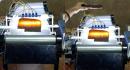
THIRUVANANTHAPURAM: Researchers in Kerala have developed a technology that could significantly reshape the countrys rubber marketing sector by ensuring more accurate grading and fairer pricing for farmers. The innovation, the outcome of two years of meticulous research conducted at the College of Engineering Trivandrum (CET), has won the institution a patent from the Indian government. Natural rubber from Kerala is graded mainly into ribbed smoked sheet (RSS) 4 and 5, with vastly varying prices. Yet, the grading process still relies on crude, traditional methods that are subjective. As a result, cultivators often fail to realise fair prices even for high-quality sheets. The new technology addresses this gap by enabling fully objective and impartial grading. It was developed by a team led by Prof Binu L S of the department of electronics and communication, CET. It also comprised Prof Sanil K Daniel of the Govt Engineering College Barton Hill and CET MTech robotics and automation alumni Anu A Lal and Surabhi S. The researchers focused on two most important factors that determine the quality of a rubber sheet: Transparency and surface properties. Their task was to establish a system that could accurately grade the ribbed smoked sheets, The inter-disciplinary research touched upon various domains including mechanics, electronics, artificial intelligence (AI), and information technology. We adopted a two-tier grading approach, consisting of qualitative as well as quantitative evaluations, Binu told TNIE. For the task, the team sourced various grades of rubber from MRF Tyres. The samples were used to develop accurately labelled data sets for surface characteristics-based qualitative assessments and transparency-based quantitative assessments. Our first challenge was to find the most suitable wavelength of light for determining transparency related information. Spectroscopic studies conducted at Kerala University were helpful in determining the correct wavelength, Binu said. The team also used advanced image processing methods to detect precise surface characteristics. Using this transparency and surface information along with AI tools, we were able to arrive at highly accurate and impartial classification of rubber grades, the researcher added. The team then developed a prototype that has a transparent conveyor belt through which the rubber sheets are passed. The image processing section of the system is activated first, followed by the transparency detection step to arrive at results. Industry tie-ups planned CET plans to develop the prototype into a full-fledged product in partnership with industry. Such a product, if deployed in large numbers by various procurement agencies, could fetch fairer prices for cultivators, who are otherwise at the mercy of traditional human-centric methods, Prof Binu said

 13 C
13 C