SENSEX
NIFTY
GOLD
USD/INR

Weather

image 23    C

Kerala News

The New Indian Express News

Kerala / The New Indian Express

details

Lost in time, Dracula returns to Kerala after half a century

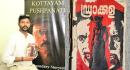
KOCHI: After decades in the shadows, the Malayalam translation of Bram Stokers Dracula first published in 1975 will return to print in January 2026. For publisher Rayan Pushpanath, the rediscovery of the long-lost book felt less like routine archival work and more like cracking a cold case. Written by his grandfather, legendary Malayalam crime and horror writer Kottayam Pushpanath, the translation had virtually vanished from circulation. No major library had a copy. Collectors drew blanks. Even detailed bibliographies listed the book, but none could produce it. Yet this missing volume was no ordinary translation. It was the spark that opened the door to gothic horror for generations of Malayali readers and quietly reshaped popular fiction in the state. Printed in 1975, Dracula arrived in Kerala at a time when Malayalam popular literature was dominated by social novels, family sagas and romantic melodrama. For readers who had never encountered a full-fledged gothic horror novel, it was a revelation. Fear, mood and the supernatural suddenly became part of mainstream reading, recalls Rayan. Pushpanaths engagement with Dracula did not end with translation. The book became the foundation for what can now be described as the Malayalam Dracula universe. Over the years, he wrote nearly 10 interconnected novels, including Dracula Asiayil , Draculayude Makal , Dracula Unarunnu , Dracula Brazilil and Dracula Kotta . In these works, the vampire count was uprooted from Victorian England and placed in Indian and global settings, encountering local folklore, belief systems and anxieties. Long before people spoke about cinematic universes or franchise storytelling, my grandfather was doing it through novels, says Rayan. Holding the 1975 edition for first time was an emotional moment He took a Western myth and made it intimate, local and recognisably ours, says Rayan. In these stories, Dracula could walk through mist-covered hills reminiscent of Kerala, confront Eastern mysticism, or surface in unfamiliar geographies without losing his gothic core. Pushpanath did not merely adapt Stokers creation; he reimagined it, reclaiming the myth for a Malayalam-reading audience. Decades later, this literary experiment drew international attention. In 2025, British author Ann Morgan, known for A Year of Reading the World , highlighted Dracula Asiayil in her book Relearning to Read . She described it as a fascinating cultural phenomenon, noting how a Western character was reshaped through Indian emotional logic and narrative traditions. For Rayan, the recognition was affirming rather than surprising. For Kerala readers, Dracula became part of shared cultural memory. As familiar as popular fictional heroes, and as thrilling as stories told around a campfire, he says. Yet the absence of the original 1975 translation remained a troubling gap. It felt symbolic. As if the first chapter of a very large story had been torn out. The search for the book spanned seven years, taking him to libraries, ancestral homes, book fairs and private collections. The explanation he heard repeatedly was the same: the book had been borrowed endlessly, read until it fell apart, and never returned. It didnt disappear because people ignored it. It disappeared because people loved it, says Rayan. The breakthrough came in 2024 at a book fair in Kannur, when a collector casually confirmed he had a copy. Holding the fragile 1975 edition for the first time was an emotional moment. I wasnt just holding a book, Rayan recalls. I was holding a piece of my grandfathers imagination, travelling across generations. The rediscovery has now led to a carefully planned reprint, bringing the original translation back to readers after half a century.

17 Dec 2025 8:27 am