Fund allotment to local bodies declining in Kerala
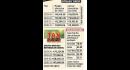
THIRUVANANTHAPURAM: The state governments actual fund allotment to local self-government institutions (LSGI) has seen a significant drop in recent years. The total amount sanctioned to the three-tier LSGIs steadily declined from Rs 11,400 crore in 2020-21 to Rs 9,050 crore in 2023-24. In the latest year for which actual accounts are available, 2023-24, the transfer was Rs 5,100 crore less than the Budget allocation. The core of Keralas decentralisation is a formula-based equitable devolution of untied funds to local bodies. The sanction is in three streams a general purpose fund to meet traditional functions and establishment expenses, maintenance fund for assets management, and a development fund to meet development expenditures. Other LSGI revenue sources are Central Finance Commission awards and own funds. As per the formula devised by the State Finance Commission (SFC), the state government is bound to transfer 4% of States Own Tax Revenue (SOTR) to the general purpose fund and 6.5% to the maintenance fund. A portion of the state plan outlay is devolved as the development fund. An analysis of fund transfers in recent years showed that the government failed in its devolution commitment. In 2023-24, Budget allocations for the general purpose fund, maintenance fund and the development fund were Rs 2,244.30 crore, Rs 3,646.99 crore and Rs 8,258 crore respectively. At the same time, the actual receipts were lower Rs 1,675.96 crore, Rs 1,344.81 crore and Rs 6,029 crore respectively. The drop, however, was not due to a decline in the SOTR. In fact, the tax revenue, Rs 74,329.01 crore, was 3% higher than the previous year. Based on the tax revenue, local bodies were eligible for amounts even higher than the budget allocation Rs 2,973.16 crore as the general purpose fund and Rs 4,831.39 crore as the maintenance fund. Sources in the LSG department attributed the declining share to the fiscal strain of the government and the unprofessional functioning of LSGIs. Treasury restrictions were in place for most of the year, which slowed bill payments. Also, most of the LSGIs do not plan and execute work in a timely manner. They undertake a major portion of work in the latter half of the financial year, and by that time, treasury restrictions would be severe, said an officer. The State Finance Commission does not have a role in ensuring that the devolution formula is followed intact. The commissions responsibility ends with the submission of recommendation on the formula, said a source. Devolution index: Kerala ranked 2nd Even as the state governments share declines, Kerala still fares better than most of its counterparts in devolution to panchayats. The state is positioned second, after Karnataka, in the devolution index in Status of Devolution to Panchayats in States 2024 published by the Indian Institute of Public Administration. Kerala occupies first place in Framework, second position in Accountability and Finances, and ranks third in the dimension of Functionaries. The dimension of Finances carried the maximum weightage in the index. This dimension was based on several indicators like timely release of the 15th Finance Commission grants to panchayats, regular and effective functioning of SFC, SFC transfer to panchayats, power to collect revenue, funds available with panchayats, expenditure by panchayats as percentage of states public expenditure, and accounts and budget. The state has tried to devolve most of its functions to panchayats and has at the same time maintained a transparent system of transferring money under the panchayats window. The institution of the State Finance Commission in Kerala has emerged to be the most effective in the recent past. Panchayats in Kerala utilise funds adequately and share the top slot as far as the indicator related to fund utilisation is concerned, the report said.