SENSEX
NIFTY
GOLD
USD/INR

Weather

image 18    C

Cricket News

CNMSports

Cricket / CNMSports

details

150 Years of Bombay Gymkhana: The Venue of Indias First Home Test Match

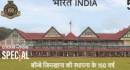
Recently, in a tribute to one of Indias most iconic sporting institutions, the Department of Posts issued a commemorative postage stamp (of Rs.5 denomination) marking the 150th anniversary of the Bombay Gymkhana , Mumbai celebrating its rich legacy of sporting excellence and enduring cultural contribution to the nation. Incidentally the commemorative stamp, beautifully depicting the iconic campus and grounds of the Gymkhana, was unveiled at the historic Bombay Gymkhana itself by Union Minister for Communications and Development of North Eastern Region, Shri Jyotiraditya M Scindia. The Bombay Gymkhana, not only fostered cricket and rugby, other sports also. The iconic venue had hosted India's first-ever Test match on Indian soil in December 1933. It was played against England from December 15-18, 1933. Even then, BCCI missed this historic 150th anniversary event.Lala Amarnath had scored a hundred in this first ever Test match held in India. The enthusiastic crowds in attendance reflected Indias growing passion for the sport and established Bombay Gymkhana as a landmark in the countrys cricketing journey. This Institution is one of the world's oldest multi-sports clubs which is active till date. However Indian cricket has forgotten its glorious past linked with this Bombay Gymkhana. Bombay Gymkhana was established on 19 June 1875 and was once a preserve of white colonials, and is more than a sports club. On 10 January 2025, the Bombay Gymkhana unveiled its new logo as part of its grand 150th-anniversary celebrations. The ceremony was attended by former India captain Dilip Vengsarkar and Vicaji Taraporevala, the oldest member of the club. It was established with a foundation fund of Rs 18,625 including Rs 1,800 from Sir Cowasjee Jehangir, a Parsi philanthropist. Its an irony that once completed, the chief contributor Sir Jehangir was not accorded its membership as the Indians were not permitted. The first pavilion was a modest wooden structure, which partly collapsed in 1904 and was replaced by a grand brick and timber double-storey pavilion (designed by CF Stevens) in 1907. Its design is a replica of pavilions of various grounds in the English countryside. One can see the building from the famous Azad Maidan. Few shots of Richard Attenboroughs Gandhi showing the colonial era were filmed here. It was only after 1901 that cricket started to be played here during the winter months. Now, cricket matches are only played over the weekends. The Bombay Gymkhana premises are now recognised as a 2A heritage structure. When first Test against visiting MCC in December 1933 was scheduled here, the MCC (Marylebone Cricket Club) insisted on the Gymkhana lifting its whites-only rule for the duration of the match (this was necessary otherwise India team also couldnt have played here) and the locals for the first time enjoyed the cricket here, in English setting and the atmosphere was described as unprecedented. India lost, but Lala Amarnaths hundred, the first by an Indian in Test cricket, that too on home soil, was the talk of the whole India. As soon as the Test ended, the whites-only rule was restored by the Gymkhana. After Independence, the power was transferred but the Gymkhana remained under the control of Indian elites, keeping its colonial traditions alive. Vicaji Taraporevala, a 102 old member of the Gymkhana is one of those alive who not only saw this historic Test, is alert enough to narrate the few stories from the Test. He says that the excitement of being there was absolutely magical. He watched this Test as a 10 years old from the general stands erected around the ground. In 1966 he became a member of the Gymkhana. His first story is related to Lala Amarnath hundred: When Lala made a hundred in the second innings, CK Naidu, the India captain and the non-striker, in excitement returned to congratulate Amarnath, without completing the run (first going back into his crease). An English fielder was preparing to run out Naidu but Douglas Jardine, the England captain, shouted and stopped him from doing so indicating that it will not be an act of sportsmanship. This was the same Jardine, who had adopted Bodyline to stop Bradman from scoring runs during 1932-33 ashes. Just for record: Jardine was born in Bombay and had great love for the city as his father was Advocate General in the Bombay High Court and Jardine had spent many years in the city. His second story is related to India batsman Vijay Merchant: Vijay was hit on the chin by a fast ball. Vijay was a family friend and much later, Vicaji asked Vijay Merchant as to what had happened? Vijay Merchant told him that when he went into the pavilion, an English Major helped and attended to his wound. He then urged Vijay to go back on the field to continue his innings as he was batting beautifully. Vijay Merchant bravely agreed and resumed his innings. The Test witnessed some historic firsts: *Bombay Gymkhana became the first venue in all of Asia to host a Test match. *For the first time a Test was played on a Sunday. Also Read: Live Cricket Score *The only Test where two batsmen (Lala Amarnath and Bryan Valentine) reached their debut hundreds on the same day.

13 Jan 2026 11:01 am