The year 2025 in art
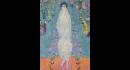
The year we are leaving behind will be mostly remembered for the conflicts that escalated, the political landscapes that changed, the technological advancements that pushed all known boundaries, and for a multitude of things for which we must feel grateful. Here's a look back at the year in art. Portrait of Elisabeth Lederer by Gustav Klimt When the hammer came down to smash records It was a good year at the auction house. After 20 minutes of intense bidding, Gustav Klimts Portrait of Elisabeth Lederer sold for a record $236.4 million, making it the second most expensive artwork ever sold at an auction, with da Vincis Salvator Mundi obviously occupying the first place. The painting is a full-length portrait of the daughter of Klimts patrons. Confiscated by the Nazis after Austrias annexation in 1938, the painting was acquired by a private collector when it resurfaced in the market in the early 80s. After decades out of public view, the artwork made a splash when it appeared at a Sothebys auction in November. It was more than just a good year for women artists at art auctions. Mexican artist Frida Kahlos self-portrait from 1940, titled The Dream (The Bed), fetched $54.7 million at Sothebys in November, making her painting the most expensive artwork by a female artist ever sold at an auction. As for the living women artists, South African artist Marlene Dumass painting from 1997, titled Miss January, sold for $13.63 million at Christies, shattering previous auction records for contemporary female artists. Although we still have a long way to go to bridge the gender pay gap, these records are positive signs of the growing recognition of female artists in an otherwise male-dominated art market. Best drama of the year The Louvre Heist, without a doubt was dubbed the drama of the year. Not just that, the theft of priceless crown jewels in broad daylight from the Louvre Museum in Paris will perhaps go down in history as the heist of the century. Petty local criminals executed this daring plan by gaining access to the first floor with a mechanical ladder and cutting through the glass, before escaping on a scooter with their loot. 2025 saw the rise of several such museum robberies. Another audacious raid that even used explosives happened at the Drents Museum in the Netherlands in January, which led to the loss of invaluable Dacian gold artefacts. In September, a museum in Bristol reported the theft of 600 artefacts linked to the British Empire. In true Hollywood style, two masked gunmen walked into an exhibition at the Museum of Contemporary Art in So Paulo one December morning, seized eight artworks by Henri Matisse and five by Brazilian modernist Portinari and fled on foot. In November, a Roman museum was robbed, and numerous Roman-era gold coins were taken away, while more than 1000 items were stolen from the Museum of California in October. There has been an increasing interest in cultural artefacts and masterpieces by renowned artists among criminal networks, and it is time for all institutions to reassess their security measures to ensure the protection of their collections. Statue of Liberty by Amy Sherald Crackdowns on art The change in the political climate in many countries has left museums and cultural institutions in a state of instability. Governments used their authoritarian control over the budgets allocated to institutions to interfere with the institutions programmes. Threats to cut funding were used to coerce museums to align with government approved ideologies. In the US, the Trump administration used this tactic with the Smithsonian Museum in order to force it to comply with a content review. Most institutions also face the pressure of censorship, with strict orders being given indirectly to avoid controversial topics. American artist Amy Sherald cancelled her show at the Smithsonian National Portrait Gallery after officials expressed doubts about the inclusion of her portrait of a Black Transgender woman as the Statue of Liberty, as they did not want to antagonise President Trump. Germany also witnessed the cancellation of several shows which had the crisis in Gaza as the primary theme, as it went against the states pro-Israel stance. The Indian government denied permission to screen 19 films at the 2025 International Film Festival of Kerala, held in December, without stating any concrete reasons to do so. Films that focused on Palestine were on the list, along with a few, like the Spanish film Beef , that were banned merely for their titles. The tensions within federally funded institutions due to political interference have definitely affected artistic expression, and 2025 was certainly a tough year for most museums that struggled to retain their autonomy and integrity. Ram V Sutar A world lost forever The world of art bid adieu to many luminaries this year. While the world mourned the loss of renowned filmmaker David Lynch, iconic architect Frank Gehry, artist Alison Knowles (a prominent figure in the Fluxus Movement) and several other artists, collectors and museum directors, India also said farewell to many who left enduring legacies. Himmat Shah, one of Indias foremost sculptors, passed away in March, Mohammad Abdul Rauf, a national award-winning craftsman in Bidri art, left us in February, while Ram V Sutar, who became internationally famous for the worlds tallest statue, the monumental Statue of Unity, died in December. Although these brilliant minds may no longer physically exist, they will continue to inspire and influence art for generations. Despite a year that felt like a roller coaster ride, there is a yearning for peace and clarity as we await the brand new year. It is heartening to have the Kochi Biennale which opened on December 12, as a wonderful experience to end the year with or perhaps to welcome 2026! So go ahead and indulge in some art and culture to kick start the year!

 13 C
13 C